

Introduction
Baccalieu Island, along Canada’s Newfoundland and Labrador’s east coast, hosts the world’s largest population of the planktivorous seabird, Leach’s Storm-petrel Hydrobates leucorhous (Sklepkovych and Montevecchi Reference Sklepkovych and Montevecchi1989). Despite the global significance of this population, the estimate of 3.36 ± 0.12 (SE) million breeding pairs obtained in 1984 by Skleplovych and Montevecchi (Reference Sklepkovych and Montevecchi1989) stands as the single published population estimate for this massive colony. A number of potential threats face storm-petrels in Newfoundland, and the extent to which these threats impact populations is currently not well understood. The North-west Atlantic ecosystem has undergone major shifts in demersal and pelagic food webs (Head and Pepin Reference Head and Pepin2010, Buren et al. Reference Buren, Koen-Alonso, Pepin, Mowbray, Nakashima, Stenson, Ollerhead and Montevecchi2014). Furthermore, storm-petrels are known to bear high levels of mercury (Bond and Diamond Reference Bond and Diamond2009, Burgess et al. Reference Burgess, Hedd, Pollet, Mauck, Diamond, Burke, McFarlane Tranquilla, Montevecchi, Valliant, Wilhelm and Robertson2016, Pollet et al. Reference Pollet, Leonard, O’Driscoll, Burgess and Shutler2016), while threats associated with offshore oil and gas activities primarily related to flaring and light attraction (Wiese et al. Reference Wiese, Montevecchi, Davoren, Huettmann, Diamond and Linke2001, Ronconi et al. Reference Ronconi, Allard and Taylor2015, Gjerdrum et al. Reference Gjerdrum, Burgess, Hedd, McFarlane Tranquilla, Pollet, Ronconi and Wilhelm2018) and increased predation from food-stressed large gulls (Stenhouse and Montevecchi Reference Stenhouse and Montevecchi1999) may also be having impacts.
Recent surveys at several large (>10,000 pairs) breeding sites have shown significant population declines in Canada’s Atlantic Region (e.g. Wilhelm et al. Reference Wilhelm, Mailhiot, Arany, Chardine, Robertson and Ryan2015, Pollet and Shutler Reference Pollet and Shutler2018, Bond et al. submitted, this study) and formed the basis of Leach’s Storm-petrel being assessed as globally threatened and listed as ‘Vulnerable’ on the International Union of Conservation of Nature (IUCN)’s Red List in 2016 (BirdLife International 2017). In this study, we present the details which served to update the status of storm-petrels breeding on Baccalieu Island (BirdLife International 2017), which account for more than 60% of the North-west Atlantic population (Robertson et al. Reference Robertson, Russell, Bryant, Fifield and Stenhouse2006) and may be an important source for the entire metapopulation breeding in the North Atlantic (Bicknell et al. Reference Bicknell, Knight, Bilton, Reid, Burke and Votier2012). Furthermore, we also increase what is known of the breeding population size estimates for Leach’s Storm-petrels on Baccalieu Island in the mid-1980s, by analysing data from surveys conducted by Environment and Climate Change Canada’s Canadian Wildlife Service in 1984 and 1985. Despite surveys occurring during the same breeding season, the 1984 data were collected independently from those analysed by Sklepkovych and Montevecchi (Reference Sklepkovych and Montevecchi1989) who were affiliated with Memorial University.
Methods
Study site
Baccalieu Island (48.13°N, 52.80°W) is located off the north-western tip of the Avalon Peninsula, on the island of Newfoundland, Canada. This large island (∼ 6 km x 1 km; Sklepkovych and Montevecchi Reference Sklepkovych and Montevecchi1989) contains the highest diversity of breeding seabirds in Newfoundland and Labrador (Montevecchi and Tuck Reference Montevecchi and Tuck1987). The topography is steep, with 60% of the island estimated to lie more than 75 m above sea level (Sklepkovych and Montevecchi Reference Sklepkovych and Montevecchi1989). Accounting for topography, the surface area of Baccalieu was estimated at 832 ha (Sklepkovych and Montevecchi Reference Sklepkovych and Montevecchi1989). Using aerial photographs, maps and surveys of storm-petrel habitat use, Sklepkovych and Montevecchi (Reference Sklepkovych and Montevecchi1989) estimated 688 of the 832 ha provided potential nesting habitat for storm-petrels on Baccalieu Island in four major habitat types: 1) coniferous forest (dominated by Black Spruce Picea mariana, White Spruce Picea glauca, and Balsam Fir Abies balsamea); 2) hard ground heath and soft ground heath (see Table 1 for description); 3) mixed grasses, and 4) herbaceous plants dominated by fern. Further information on Baccalieu Island can be found in Cairns et al. (Reference Cairns, Elliot, Threlfall and Montevecchi1989), Sklepkovych (Reference Sklepkovych1986) and Sklepkovych and Montevecchi (Reference Sklepkovych and Montevecchi1989).
Habitat types recorded during Leach’s Storm-petrel surveys on Baccalieu Island, Newfoundland, 1984 and 1985. A breakdown of the total area surveyed according to habitat type is provided for each year. Sample size (n) is the number of plots containing any proportion of the particular habitat.
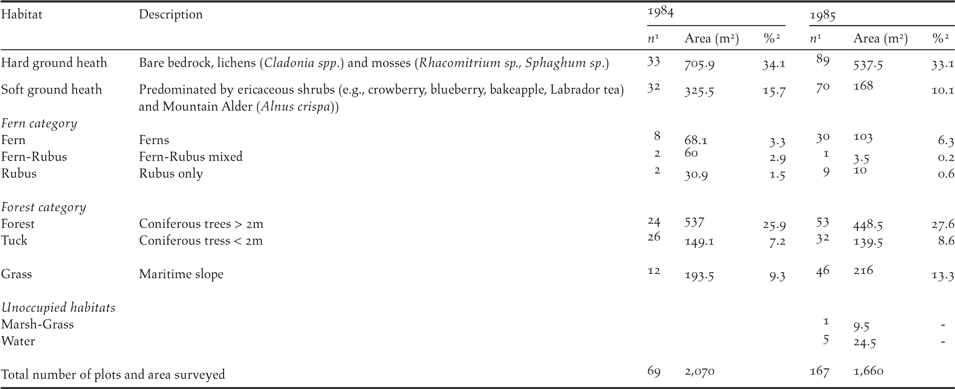
1 Number of plots containing any proportion of the particular habitat.
2 Calculated as % of occupied habitats only (ie, excluding marsh-grass and fresh water).
1984 and 1985 breeding population estimates
Leach’s Storm-petrel burrow densities and occupancy rates were assessed from 13 to 30 August 1984 using 30 m2 plots. In 1985, surveys were initiated from 6–20 June and completed from 21–29 August using 10 m2 plots. A grid was placed over a map of the island and a random number table was used to generate 69 plot locations in 1984 and 167 plot locations in 1985. Within each plot, the proportion of area represented by nine habitat types was estimated (see Table 1 for descriptions). Every hole in the ground that could potentially lead to a Leach’s Storm-petrel burrow was searched by hand (‘grubbed’) in each plot. All holes were assigned a habitat type and categorized as either an entrance to another burrow, a burrow too short to hold a pair of breeding petrels (< 30 cm), an empty burrow, an occupied burrow or a burrow where the contents could not be assessed. Burrows were considered occupied if they contained some combination of an egg, adult or chick, but also lower-quality indicators such as the presence of fresh faeces, eggshells, down or nesting materials were used.
We used Sklepkovych and Montevecchi’s (Reference Sklepkovych and Montevecchi1989) estimate of 688 ha as the total area of habitat occupied by storm-petrels on Baccalieu Island. To estimate population size in each year, we made the assumption that the relative frequencies of habitat types within the surveyed plots (detailed in Table 1) represented the area of habitat types island-wide. For each habitat type, occupied burrow densities (calculated by multiplying the burrow density with the occupancy rate at the plot level) were multiplied by habitat area (m2) to generate a population estimate. These estimates were summed across habitat types to provide an overall estimate of the number of pairs of Leach’s Storm-petrels breeding on Baccalieu Island in 1984 and 1985. Initial analyses indicated a broad degree of similarity for burrow densities and occupancy rates within similar habitats. Accordingly, and for ease of presentation and interpretation, forest and tuck (tuckamore) were categorized as ‘forest’ and fern, fern-Rubus and Rubus were categorized as ‘fern’. Habitat areas and burrow information were summed at the plot level.
2013 breeding population estimate
Colony mapping and occupied area analysis
We digitised two vertical high-resolution photographs of Baccalieu Island (one centered on the northern part of the island and the second centered on the southern part of the island with overlap) taken during the summer of 2008 and obtained from Surveys and Mapping Division, Department of Environment and Conservation, Government of Newfoundland and Labrador. Following the same approach as detailed in Wilhelm et al. (Reference Wilhelm, Mailhiot, Arany, Chardine, Robertson and Ryan2015), these images were georeferenced in ArcGIS by using the locations of 27 distinct landmarks around the periphery of the island obtained from Google Earth 5.1. Similar to the habitat mapping approach used by Sklepkovych and Montevecchi (Reference Sklepkovych and Montevecchi1989), this raster layer was used to delineate a polygon of the area not utilised by storm-petrels (i.e. areas with no vegetation, or grassy areas exclusively occupied by Atlantic Puffins Fratercula arctica which we identified during field activities to assess burrow density and occupancy; see below). The remaining vegetated areas were delineated as four separate polygons, namely the prominent types of habitat utilized by storm-petrels on Baccalieu Island that can be distinguished with confidence from the digitised aerial photographs: heath, forest, grass, and fern. Unlike Sklepkovych and Montevecchi (Reference Sklepkovych and Montevecchi1989), however, we were not able to distinguish meadow and mixed habitats from other low-lying vegetation.
Total storm-petrel occupied area for each habitat type was calculated following methods described in Wilhelm et al. (Reference Wilhelm, Mailhiot, Arany, Chardine, Robertson and Ryan2015). Briefly, 15.24 m (50’) contour intervals obtained from an Esri topographic basemap (source: Esri, HERE, DeLorme, Intermap, Increment P Corp., GEBCO, USGS, FAO, NPS, NRCAN, GeoBase, IGN, Kadaster NL, Ordnance Survey, Esri Japan, METI, Esri China (Hong Kong), swisstopo, MapmyIndia, OpenStreetMap contributors, and the GIS User Community) were digitised into polyline format in ArcGIS to produce a three-dimensional (3D) island based on elevation. The digitized boundaries of the periphery of the entire island and each of the four habitats occupied by storm-petrels were draped over the 3D island and formed the basis of the 2D and 3D area calculations.
Sampling effort
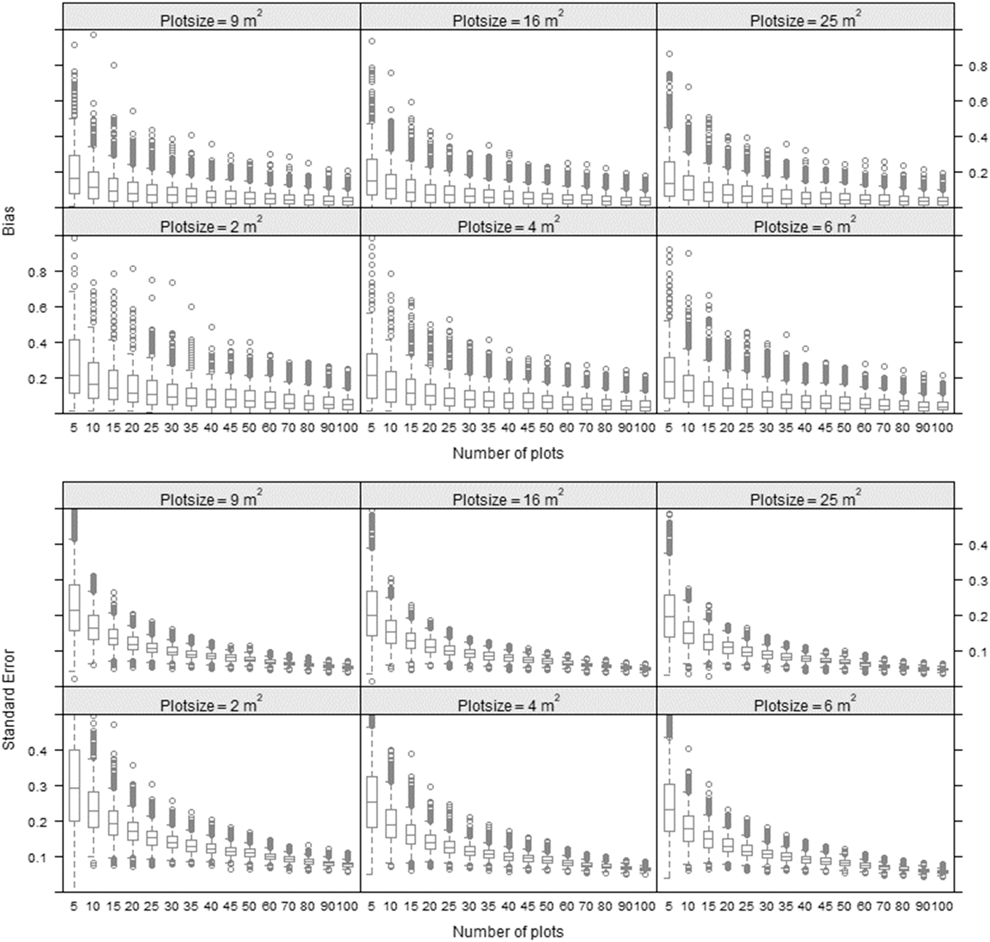
Given the considerable logistical effort to survey the large colony on Baccalieu Island and to increase sampling efficiency, various simulations were conducted to examine the relationships between plot size and plot number, and resulting standard errors and biases in estimates of occupied burrow densities. Data from 80 occupied 16 m2 plots collected on nearby Gull Island in 2001 (Robertson et al. Reference Robertson, Russel and Fifield2002) were used as the basis for the simulation. Occupied burrow densities were calculated from these 80 plots; this distribution had a mean of 0.813 occupied burrows per m2, but deviated from a normal distribution by including a longer right tail, and a small peak of plots with densities close to 0. At each simulation run, random values were chosen from this vector, depending on the number of plots used in the simulation. A random draw from a Poisson distribution with a mean equal to the random value drawn from the vector of 80 observed occupied burrow densities was taken for each of up to 25 1 m2 in the simulated plot. The total number of occupied burrows was summed according to the size of the simulated plot (2, 4, 6, 9, 16 or all 25 m2) and divided by the plot size to obtain a simulated occupied burrow density. This process was repeated 1,000 times to obtain a distribution of mean occupied burrow densities across a range of plot sizes and plot numbers. The bias in each simulation (|simulated mean – 0.813|) and the standard error in the mean occupied burrow density were then plotted against plot size and plot number. Ideally a set maximum bias and acceptable standard error would be selected beforehand and the number of plots in each habitat to be sampled would be selected based on those criteria. However, since Baccalieu Island had not been surveyed in 30 years and the resources (people and time) available for the 2013 survey were somewhat restricted, we were unsure what was achievable. Instead, we used the simulations more as a guideline to set minimums for plot numbers and sizes. These simulations showed that the mean standard error decreased as plot size increased from 2 m2 to 6 m2; however, once the plot size reached 9 m2 in area, the standard error distribution across the number of plots was similar to those of larger plot sizes (Figure 1). Therefore, 9 m2 was chosen as the plot size for the 2013 survey.
Simulations of bias and standard errors in occupied burrow densities across a range of plot sizes and plot numbers. Based on 1,000 simulations for each plot size and number of plots, with source distribution of occupied burrow densities coming from 80 plots sampled on Gull Island, Newfoundland and Labrador, in 2001.
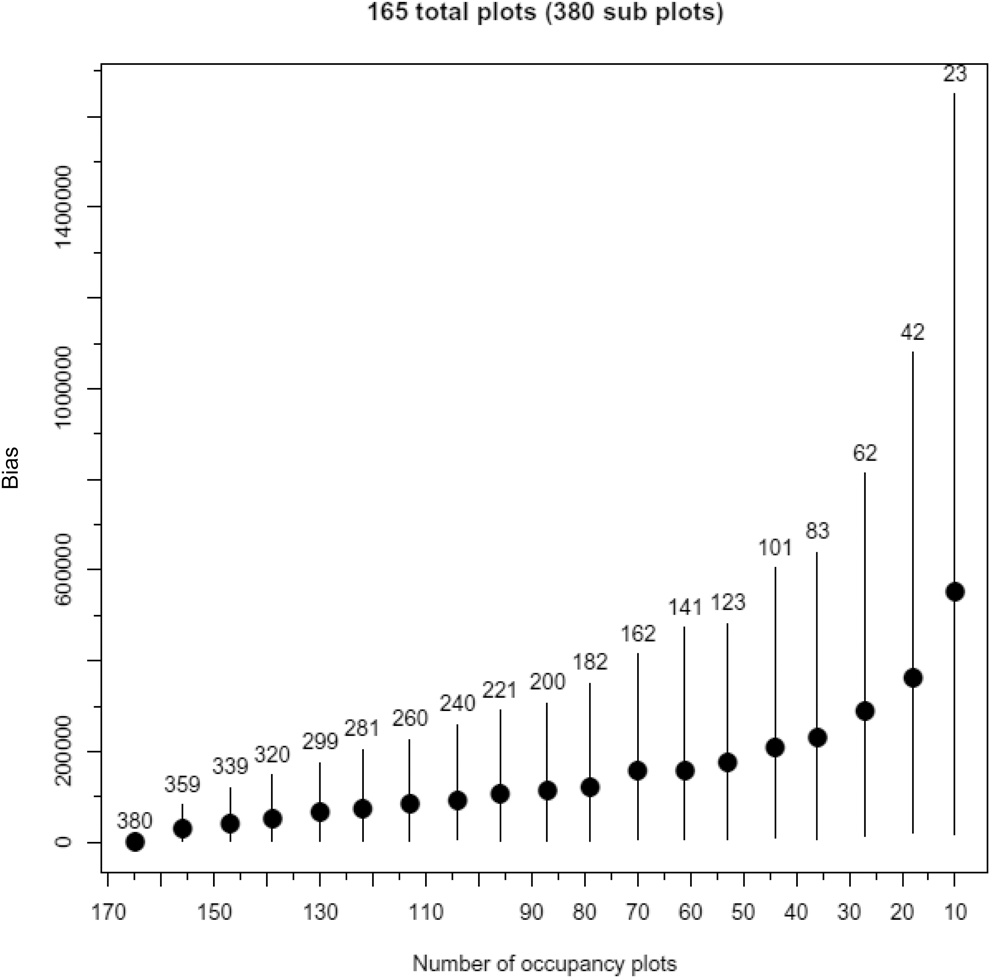
To corroborate this sampling protocol, the 1985 Baccalieu Island data were re-sampled to examine bias by reducing the number of plots from the 165 original plots sampled. Bias was calculated as the absolute difference between the 1985 estimate and the estimate based on the reduced number of plots. The resampling occurred 1,000 times at each reduction in plot numbers, and the distribution of biases was plotted. Visual inspection of the results showed that bias slowly increased from 0 to 100,000 pairs as the number of occupancy plots decreased from 165 to 80 plots, after which, the bias exceeded 100,000 pairs and accelerated at a faster rate (Figure 2), suggesting that the approach of sampling 20 plots in each of the four main habitats should produce satisfactory levels of precision and acceptable bias. Baccalieu Island was stratified into the four main habitat types, and random coordinates were selected in each polygon to identify plot locations. A total of 400 coordinates were chosen, more than the planned 20 plots per habitat, to give field crews the option to exclude plots that were difficult to access, or add plots if operations allowed.
Estimated bias in total population size estimate (pairs) for Leach’s Storm-petrels on Baccalieu Island in 1985, based on reduced number of plots sampled. The ‘true’ population size was assumed to be the population size estimate obtained from all 165 plots sampled in 1985. Bars represent the range of values from the 1,000 simulations at each reduced number of plots, while numbers above the bars represent the number of subplots used in the analysis (each plot was divided into up to four main habitat types).
Burrow density and occupancy rates
Storm-petrel burrow density and occupancy rate surveys were conducted from 3 to 7 July 2013, coinciding with late incubation/early chick-rearing period. A total of 115 plot locations were visited in the four habitat types (heath = 29 plots, forest = 46 plots, grass = 19 plots and fern = 21 plots) further stratified by geographic location (northern, central, or southern part of the island) to avoid a bias of sampling exclusively in the more accessible southern part of the island. The decision to double the sampling effort for forest habitat was made during the 2013 field season to confirm the initial field observations that burrow densities appeared much lower than in the 1984 and 1985 surveys (see Results below). At each plot location, a 3 m x 3 m square was created using rope anchored by pegs at each corner. All holes located within the boundary of the plot were categorised as either an entrance to another burrow, a burrow too short to hold a pair of breeding petrels, an empty burrow, an occupied burrow containing either some combination of egg, adult or chick or a burrow where the contents could not be assessed (i.e. contents unknown). The predominant habitat type found in each plot (heath, forest, grass or fern) was also recorded and served to ground-truth the habitat map developed by GIS methods. All plots were thoroughly searched by carefully combing through the vegetation, and given the relative small size of the plot (9 m2), we assume that all holes were detected. Although the highest burrow densities were consistently found in fern habitat in all years (see Results), this habitat type was the most difficult to search for holes due to the fern’s height (up to 1 m) and density; results should therefore be interpreted as minimum estimates. Burrow densities, occupancy rates and occupied burrow densities were calculated by habitat type, in the same manner as described for the 1984 and 1985 surveys.
Data analyses
For the 1984 and 1985 surveys, the total number of burrows found in each habitat type within each plot (empty, occupied and unknown) was divided by the estimated area occupied by the relevant habitat type in each plot to obtain a burrow density estimate (burrows per m2). For the 2013 survey, the total number of burrows found in each plot for each habitat type was divided by the size of the plot (9 m2) to obtain a burrow density estimate. Since some habitats had relatively few burrows that could be assessed for contents, we followed Lormée et al. (Reference Lormée, Delord, Letournel and Barbraud2012) and calculated occupancy rates and associated variances as the proportion of occupied burrows for all burrows where the contents could be assessed in each habitat. As noted above, occupied burrow densities tended to have skewed distributions, so mean occupied burrow densities and associated standard errors and 95% confidence limits were based upon bootstrapping, where a random selection (with replacement) of plots equal to the number sampled in each habitat was taken and a mean occupied burrow density was extracted. This process was repeated 10,000 times, from which the overall mean occupied burrow density standard error and 95% confidence limits was extracted. A further randomization procedure was included within the bootstrapping procedure, to address the potential occupancy of burrows with unknown contents. When a plot was selected for entry into the bootstrap sample, unknown burrows were assigned as occupied or not with a two-step randomization procedure, the first step based on uncertainty in the occupancy rate and the second based on stochastic realization of a Bernoulli (occupied or not) process. First, the habitat-specific occupancy rate was sampled from the probability distribution function based on burrows of known occupancy, next a random Bernoulli sample was drawn based on that sample drawn of the occupancy rate. By sampling the probability density function (pdf) itself and not maximum likelihood estimates (MLE) of occupancy rates, we could include occupancy rates of 1.0 for which the pdf is not fixed at 1.0 (unlike the MLE).
Numbers, with associated measures of error, of breeding pairs of storm-petrels were estimated by multiplying the surface area by each of the 10,000 bootstrap samples of mean occupied burrow density for each of the habitat types separately, and summed to obtain a total population estimate for Baccalieu Island.
Results
1984 and 1985 population estimates
Based upon habitat proportions in plots surveyed in 1984 and 1985, Baccalieu Island consisted largely of hard ground heath (33–34%) and forest (33–36%) habitats, with soft ground heath (10–15%), grass (9–13%) and fern (6–7%) comprising the remainder (Table 1). Burrow densities varied widely among habitat types, being highest in fern (2.5 to 4.1 burrows/m2) and grass (1.1 to 1.9 burrows/m2), intermediate in forest (1.0 burrows/m2) and lowest in hard ground heath (< 0.1 burrows/m2; Tables 2 and 3). Although fern and grass habitats comprised ≤ 20% of the occupied area, 49–51% of storm-petrels were found there, indicating a strong preference for those habitat types. Occupancy rates ranged from 0.76 to 0.94 among habitats and years (Tables 2 and 3).
Occupied area (m2), burrow density (per m2), occupancy rate, occupied burrow density (per m2) and estimated breeding pairs (with corresponding ± 1 SE) of Leach’s Storm-petrels breeding on Baccalieu Island, Newfoundland in 1984. Upper (UCL) and lower (LCL) confidence limits (95%) are also provided for habitat-specific and overall breeding pairs.

1 Number of plots containing any proportion of the particular habitat.
2 Total number of 30 m2 plots sampled.
3 Total number of burrows assessed for occupancy across all plots in that habitat.
4 Based on 10,000 bootstrap samples of plots in each habitat type, and assigning unknown burrows as occupied based on randomized occupancy rates.
Occupied area (m2), burrow density (per m2), occupancy rate, occupied burrow density (per m2) and estimated breeding pairs (with corresponding ± 1 SE) of Leach’s Storm-petrels breeding on Baccalieu Island, Newfoundland in 1985. Upper (UCL) and lower (LCL) confidence limits (95%) are also provided for habitat-specific and overall breeding pairs.

1 Number of plots containing any proportion of the particular habitat.
2 Total number of 10 m2 plots sampled.
3 Total does not equal 6,880,000 as 140,916 m2 was estimated to not be occupied by Leach’s Storm-petrels (see Table 1).
4 Total number of burrows assessed for occupancy across all plots in that habitat.
5 Based on 10,000 bootstrap samples of plots in each habitat type, and assigning unknown burrows as occupied based on randomized occupancy rates.
Breeding population size estimates were 5.12 ± 0.73 (SE) and 4.60 ± 0.42 (SE) million breeding pairs of Leach’s Storm-petrels in 1984 and 1985, respectively (Tables 2 and 3). With the exception of the grass habitat, occupied burrow densities were higher in 1985 than in 1984, contributing to the higher overall population estimate in that year (Tables 2 and 3).
2013 population estimate
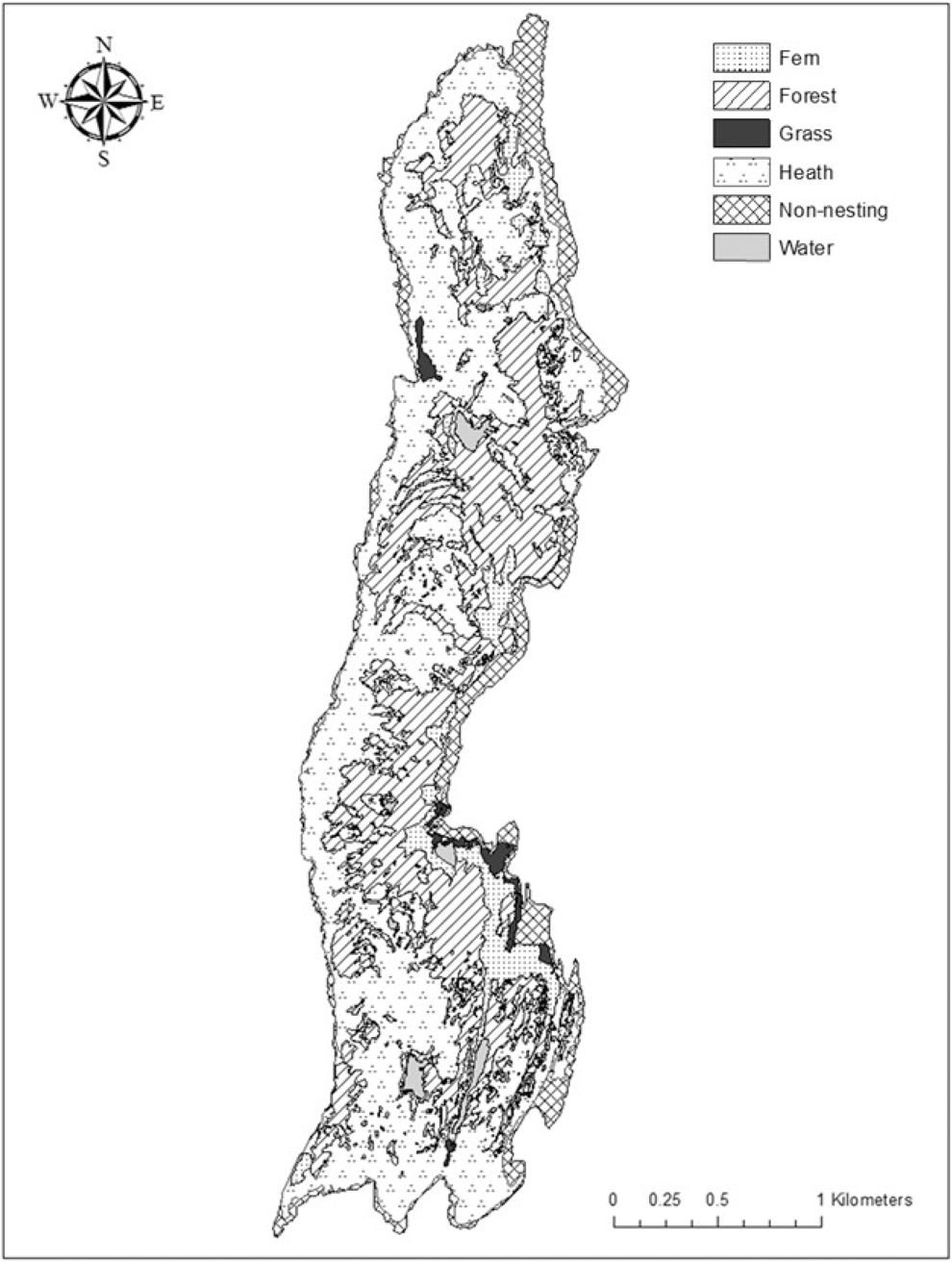
Using a Geographic Information System (GIS) approach, we estimated the total 2D surface of Baccalieu Island at 511 ha. Incorporating the contour intervals into the GIS analysis, the 3D approach increased the total surface to 827 ha. In 2013, we estimated 681 ha (corrected for slope) as suitable nesting habitat to Leach’s Storm-petrels, with heath making up the largest proportion (59%), followed by forest (32%), fern (8%) and grass (2%; Table 4, Figure 3).
Estimated surface area (corrected for slope; m2), burrow density (per m2), occupancy rate, occupied burrow density (per m2) and estimated breeding pairs (with corresponding ± 1 SE) of Leach’s Storm-petrels breeding in four habitat types on Baccalieu Island, Newfoundland in 2013. Upper (UCL) and lower (LCL) confidence limits (95%) are also provided for habitat-specific and overall breeding pairs.

1 Total number of burrows assessed for occupancy across all plots in that habitat.
2 Based on 10,000 bootstrap samples of plots in each habitat type, and assigning unknown burrows as occupied based on randomized occupancy rates.
Extent of non-nesting habitat and four habitat types (heath, forest, fern and grass) occupied by Leach’s Storm-petrels, on Baccalieu Island in 2013.
Similar to previous surveys, burrow density varied by habitat type, with the highest densities found in fern (2.6 burrows/m2) and grass (1.5 burrows/m2) and lowest in heath (< 0.1 burrows/m2); however, burrow densities in forest were also low in 2013 (0.4 burrows/m2; Table 4). Occupancy rates ranged from 0.64 to 1.00 across habitat types, with the lowest occupancy rate observed in forest (Table 4).
The total Leach’s Storm-petrel population for 2013 was estimated at 1.95 ± 0.14 (SE) million pairs (Table 4). Despite the high availability of forest cover on the island, only 26% of the population occurred in forest habitat; in contrast, 54% of breeding birds were found in fern habitat (Table 4). The higher occupied burrow densities found in fern and grass habitats suggest a preference for these two habitat types, which collectively only comprised 10% of the total available nesting storm-petrel habitat in 2013 (Table 4).
Discussion
This study validates the findings that Baccalieu Island hosted the largest Leach’s Storm-petrel colony in the world in the mid-1980s, with a minimum of 3.36 million breeding pairs (Sklepkovych and Montevecchi Reference Sklepkovych and Montevecchi1989). Results from the 2013 survey estimate the current breeding population at 1.95 million pairs, representing a 42% decline over 29 years (-1.4% per year) compared to Sklepkovych and Montevecchi’s original and widely referenced 1984 estimate (e.g. Cairns et al. Reference Cairns, Elliot, Threlfall and Montevecchi1989, Huntington et al. Reference Huntington, Butler, Mauck, Poole and Gill1996, Lormée et al. Reference Lormée, Delord, Letournel and Barbraud2012, Robertson et al. Reference Robertson, Russell, Bryant, Fifield and Stenhouse2006). Neither the original 1984 estimate from Sklepkovych and Montevecchi (Reference Sklepkovych and Montevecchi1989) nor the 1984, 1985, and 2013 estimates from this study took into account breeding failure prior to the surveys or the probability of detecting all burrows, particularly in the dense fern vegetation. Lormée et al. (Reference Lormée, Delord, Letournel and Barbraud2012) reported that these two factors combined would contribute to underestimating the total population size of the current second largest Leach’s Storm-petrel colony in the north-west Atlantic by up to 18%. Therefore, the number of pairs of Leach’s Storm-petrels breeding on Baccalieu Island presented in this study should be viewed as minimum estimates.
Comparison of 1984 and 1985 surveys
Surveys analysed in this study for Leach’s Storm-petrels conducted on Baccalieu Island in 1984 and 1985 indicated population sizes of 5,121,700 and 4,602,600 breeding pairs, respectively, with standard errors representing 14.3% and 9.1% of the population size. Because of the differential availability of habitats and use by Leach’s Storm-petrels, random plot sampling resulted in some important habitats being poorly sampled, in 1984 in particular, and contributed to the relatively high variance estimates for occupied burrow densities (Table 2). Nonetheless, the degree of variability observed suggests that stratified sampling within the major habitats is required to generate robust estimates of population size.
Despite differences between years, our population size estimates were 37–51% greater than the 3.36 million pairs of Leach’s Storm-petrels estimated to breed on Baccalieu Island by Sklepkovych and Montevecchi (Reference Sklepkovych and Montevecchi1989) in 1984. Similar population estimates were generated for the forest and grass habitats. Rather, the discrepancy is primarily driven by population estimates generated for the fern habitat, which yielded between 1 and 1.9 million pairs in this study compared to the original 1984 estimate of 385,000 pairs (Sklepkovych and Montevecchi Reference Sklepkovych and Montevecchi1989; Figure 3). Occupied burrow densities were high for this habitat type in all survey years (this study: 2.1–3.6 occupied burrows/m2; Sklepkovych and Montevecchi Reference Sklepkovych and Montevecchi1989 = 2.5 occupied burrows/m2), suggesting that discrepancies among estimates were largely driven by assumptions of how the available habitat was partitioned. Habitat scaling in this study indicated that 48.3–52.8 ha (7–8%) of the island utilised by nesting storm-petrels was covered by ferns; however, using maps and aerial photographs, Sklepkovych and Montevecchi (Reference Sklepkovych and Montevecchi1989) estimated fern to cover just 15.5 ha (2%) of Baccalieu’s surface area. Although this increase in surface area may seem negligible in light of the total surface area available to nesting birds, it translates into a significant increase in the estimate of population size, due to the importance of this habitat type to Leach’s Storm-petrels breeding on Baccalieu Island.
This study also produced higher population estimates for the heath habitat (350,000–580,000 pairs) compared to the original 1984 estimate of 54,000 pairs (Sklepkovych and Montevecchi Reference Sklepkovych and Montevecchi1989). This discrepancy may be due to a combination of having generated different occupancy and density rates between hard ground and soft ground heath in this study and applying a habitat-scaling approach to estimate surface area, which may have increased the amount available of high density, but less prevalent, soft ground heath (Tables 2 and 3), as was observed with fern. Alternatively, it is possible that the original 1984 study underestimated the number of storm-petrels breeding in heath habitat if sampling effort was not even between soft and hard ground heath.
Updated population status
The application of newer tools such as high-resolution photographs, digital elevation models and GIS can yield significantly higher surface areas compared to non-GIS techniques, particularly for species breeding on moderate and steep slopes, such as Leach’s Storm-petrels (see Wilhelm et al. Reference Wilhelm, Mailhiot, Arany, Chardine, Robertson and Ryan2015). In this study, however, the 2D and 3D total surface area estimates using the GIS approach differed by 2% or less compared to the non-GIS approach used by Sklepkovych and Montevecchi (Reference Sklepkovych and Montevecchi1989) in 1984 (2D = 523 ha; 3D = 832 ha). Even at a reduced estimate of 1.95 million pairs, Baccalieu Island likely remains the largest colony in the world with Daikokujima in Japan as the next largest colony, previously documented at 1 million pairs (Hasegawa 1986, as cited in Sklepkovych and Montevecchi Reference Sklepkovych and Montevecchi1989).
Since the original 1984 survey, the most prominent change has occurred in the number of storm-petrels breeding in the forest habitat, which dropped by 70% compared to the 1984 survey (Figure 4), driven by lower burrow densities (0.4 burrows/m2; Table 4) compared to previous surveys (0.9–1.1 burrows/m2; Tables 2 and 3, Sklepkovych and Montevecchi Reference Sklepkovych and Montevecchi1989). While the amount of forest habitat available to Leach’s Storm-petrels declined by 25% compared to 1984 (surface area estimated at 286.2 ha in 1984; Skelpkovych and Montevecchi Reference Sklepkovych and Montevecchi1989), which in part is being replaced by fern (see below), forest nonetheless remains the second most abundant habitat available to nesting Leach’s Storm-petrels, following heath. In other Newfoundland colonies where both habitat types are available, burrow densities tend to be higher in forest habitat than in open grass or fern habitats (Stenhouse et al. Reference Stenhouse, Robertson and Montevecchi2000, Robertson and Elliot Reference Robertson and Elliot2002, Wilhelm et al. Reference Wilhelm, Mailhiot, Arany, Chardine, Robertson and Ryan2015). Higher nesting densities in forest have been attributed to predator avoidance behavior by storm-petrels in response to high levels of predation by Herring Gulls Larus argentatus nesting among storm-petrels (Stenhouse et al. Reference Stenhouse, Robertson and Montevecchi2000). Baccalieu Island has until recently been free of ground-nesting avian predators, which suggests that in the absence of avian predators, storm-petrels prefer to occupy open grass or fern habitats, which may provide a more desirable substrate for excavating burrows and allow better access when arriving at or departing from the colony. The presence of a resident year-round red fox Vulpes vulpes population for a minimum of 25 years, until at least 1985, likely deterred gulls from establishing a breeding population on the island (Sklepkovych Reference Sklepkovych1986). During the 2013 ground surveys, we did not see any evidence of fox being present on the island, and consistent with this, confirmed the presence of one small Herring Gull colony (estimated between 50 and 100 pairs) on the north-eastern part of the island. Since 2013, annual field work revealed river otters Lutra canadensis as the only mammal currently known to be present on Baccalieu Island (A. H. pers. obs).
Estimated number of breeding pairs (with SE bars) of Leach’s Storm-petrels nesting on Baccalieu Island in five habitat types (heath, forest, grass, fern, and other) in 1984 (Sklepkovych and Montevecchi Reference Sklepkovych and Montevecchi1989 and this study), 1985 and 2013 (this study).

Changes have also occurred in other habitat types since 1984. In 1984, 52 ha of open grass, found primarily along the eastern side of Baccalieu Island, supported 1.1 million pairs of storm-petrels (Sklepkovych Reference Sklepkovych1986, Sklepkovych and Montevecchi Reference Sklepkovych and Montevecchi1989). Although grass habitat is still present along the eastern side of the island, most grassy slopes are now occupied by Atlantic Puffins, with only 12.5 ha supporting 150,000 pairs of storm-petrels in discrete areas on the south-east and north-west sides (Figure 3). The Atlantic Puffin population on Baccalieu Island was estimated at 30,000 pairs in the mid-1980s (Montevecchi and Tuck Reference Montevecchi and Tuck1987) with more recent estimates reporting the current population at over 75,000 pairs (Natural Areas, Fisheries and Land Resources, Government of Newfoundland and Labrador). The highest breeding densities of puffins were and continue to be observed along the eastern and northern sides of Baccalieu (Montevecchi and Tuck Reference Montevecchi and Tuck1987, S.I.W. pers. obs.), which overlap with the grassy slopes previously occupied by storm-petrels (Sklepkovych Reference Sklepkovych1986). Puffins have been observed encroaching onto habitats used by storm-petrels in at least one other colony in Newfoundland (Wilhelm et al. Reference Wilhelm, Mailhiot, Arany, Chardine, Robertson and Ryan2015). Fortunately, the amount of fern on Baccalieu Island has increased since 1984 (Sklepkovych and Montevecchi Reference Sklepkovych and Montevecchi1989, Table 4), providing storm-petrels with alternative high-density nesting habitat not utilised by puffins. Previously undocumented large areas of fern were observed in decaying forests along the eastern side of the island (Sklepkovych Reference Sklepkovych1986, Figure 3), with fern currently supporting 54% of the total storm-petrel population. The high densities of occupied burrows in fern and grass suggest that storm-petrels preferentially breed in these open habitats on Baccalieu Island, with forest acting as overflow once fern and grass are saturated.
The current status of the Leach’s Storm-petrel population on Baccalieu Island, coupled with declines of similar magnitude in Canada’s second and third largest storm-petrel colonies (Great Island, Newfoundland: 61% decline in 18 years, Wilhelm et al. Reference Wilhelm, Mailhiot, Arany, Chardine, Robertson and Ryan2015; Gull Island, Newfoundland: 49% decline in 11 years, Bond et al. submitted) raises concerns about the overall health of the western Atlantic Leach’s Storm-petrel population. Population declines on Great and Gull Islands were primarily attributed to the large number of storm-petrels being consumed by predatory gulls (49,000–143,000 adult Leach’s Storm-petrels per breeding season; Stenhouse at al. 2000, Bond et al. submitted), with both islands hosting large numbers of Herring and Great Black-backed Gulls Larus marinus (Bond et al. Reference Bond, Wilhelm, Robertson and Avery-Gomm2016) prior to the detection of declining storm-petrel numbers. During the presence of a resident fox population on Baccalieu Island, it was estimated that 31,000 individual storm-petrels were being consumed annually (Sklepkovych Reference Sklepkovych1986). However, these predation rates were considered to have a relatively low impact on the storm-petrel population due to the massive size of the colony (predation was estimated to impact < 0.5% of the total adult breeding population) and the inability of the fox population to increase due to limited food sources in winter when seabirds are not present on the island (Sklepkovych Reference Sklepkovych1986), which likely led to their extirpation. Although it is unknown when the small Herring Gull colony was established, boat-based surveys around Baccalieu Island in 2003 did not reveal the presence of gulls (S. I. W. pers. obs.), suggesting this colonisation was relatively recent. Furthermore, predation pressure from a small gull colony (less than 100 pairs) on the reduced but still large population of storm-petrels on Baccalieu Island would likely be relatively low, and unable to cause the observed reduction in numbers since 1984.
Unfortunately, it remains unclear as to why the Leach’s Storm-petrel colony on Baccalieu Island has declined. Apparent adult survival rates (< 0.8) at three colonies in Atlantic Canada, including on Baccalieu Island, are well below the expected values for this normally long-lived species (Fife et al. Reference Fife, Pollet, Robertson, Mallory and Shutler2015; A. H. unpubl. data). However, ongoing long-term studies in Newfoundland, including on Baccalieu Island, show high reproductive success, suggesting that foraging conditions around Newfoundland breeding colonies are favourable (A. H. unpubl. data). One hypothesis, consistent with the decline in burrow density in the widely available forest habitat, is that fewer young birds are recruited into the colony, and those that do, are choosing other habitats. Little is known about the immature stage of Leach’s Storm-petrels, however, based on genetics studies, pre-breeders appear to disperse widely across the Atlantic Ocean Basin (Bicknell et al. Reference Bicknell, Knight, Bilton, Campbell, Reid, Newton and Votier2013) with very few (1%) returning to their natal colony (Huntington et al. Reference Huntington, Butler, Mauck, Poole and Gill1996). This implies that the Baccalieu Island population may rely to some extent on recruitment from smaller colonies in the North-west Atlantic, some of which are showing more variable reproductive success attributed to general warming ocean conditions (Pollet Reference Pollet2017, Mauck et al. Reference Mauck, Dearborn and Huntington2018), as well as colonies in Europe (e.g. Iceland and the United Kingdom), which are also in decline (Newson et al. Reference Newson, Mitchell, Parsons, O’Brien, Austin, Benn, Black, Blackburn, Brodie, Humphreys, Leech, Prior and Webster2008, E. Snær Hansen pers. comm.). The observed low burrow densities may also be explained by a decline in breeding adults returning to the colony in the spring.
Although storm-petrels breeding on Baccalieu Island do not currently face significant threats related to predation at the colony, other concerns have been identified which may affect adult survival and recruitment, including high mercury loading (Burgess et al. Reference Burgess, Hedd, Pollet, Mauck, Diamond, Burke, McFarlane Tranquilla, Montevecchi, Valliant, Wilhelm and Robertson2016), and mortality due to interactions with oil and gas platforms (e.g. collisions, flaring; Hedd et al. Reference Hedd, Pollet, Mauck, Burke, Mallory, McFarlane Tranquilla, Montevecchi, Robertson, Ronconi, Shutler, Wilhelm and Burgess2018). Furthermore, studies of migratory patterns of Leach’s Storm-petrels breeding in Atlantic Canada, including on Baccalieu Island, have revealed that they over-winter in tropical waters as well as off the coasts of Africa and South America (Pollet et al. Reference Pollet, Hedd, Taylor, Montevecchi and Shutler2014, Pollet et al. Reference Pollet, Ronconi, Leonard and Shutler2019, A. H. unpubl. data), emphasising the need to consider threats occurring outside Canadian waters.
Future research should focus on initiating or maintaining demographic studies (i.e. of reproductive success, recruitment rates, adult survival and offspring survival) on Baccalieu Island and explore adult mortality at finer geographic and temporal resolutions, to better understand what is driving the population decline of this internationally important Leach’s Storm-petrel colony. Furthermore, in light of current and expanding offshore oil and gas exploration and production activities in Canadian and international waters used by Leach’s Storm-petrels, there is an urgent need to assess the overall impacts of this industry on storm-petrels, particularly those related to collisions with infrastructure and incineration in flares, as these remain poorly understood (Ronconi et al. Reference Ronconi, Allard and Taylor2015). Finally, investigations of the impacts of climate change and resulting marine ecosystem shifts are required to better understand a broader suite of factors that may collectively be contributing to the observed population declines of Leach’s Storm-petrels across the Atlantic basin.
Acknowledgements
We are extremely grateful to the following individuals who assisted with field surveys: E. Noseworthy and P. Linegar (1984-1985); D. Fife, J. Graham, D. Pirie-Hay and S. Roul (2013). We also thank T. Doyle and Newfoundland Helicopters for transportation to and from the island in 2013. Permission to work in the Baccalieu Island Seabird Ecological Reserve was granted by the Parks Division of the Government of Newfoundland and Labrador’s Fisheries and Lands Department. This study was supported by Environment and Climate Change Canada and received no specific grant from any funding agency, commercial or not-for-profit sectors. Finally, we would like to thank two anonymous reviewers for providing constructive comments on a previous version of this manuscript.








