

Introduction
Sen conceptualised the capability approach (CA) as a theoretical framework emphasising the importance of agency and freedom in achieving well-being [Reference Sen1]. Agency refers to “what a person can do in line with his or her conception of the good” [Reference Sen2, p. 206]. Individuals with high levels of agency are known for actively engaging in actions that are aligned with their values. The CA defines well-being in terms of individuals’ capabilities, functionings, and conversion factors [Reference Robeyns, Berik and Kongar3]. Capabilities refer to what individuals can achieve, such as maintaining good health, receiving an education, and earning a good income. Functionings are the real achievements of these capabilities (e.g., flourishing at work). An individual’s ability to convert resources into capabilities and functionings depends on certain personal, sociopolitical, and environmental conversion factors [Reference Di Fabio, Medvide, Kenny, Carr, Hopner, Hodgetts and Young4].
The sustainable employability (SE) model [Reference Van der Klink, Bültmann, Burdorf, Schaufeli, Zijlstra and Abma5] operationalises the CA in the workplace by encouraging structures that support workers’ agency, long-term development, and alignment between personal values and work roles, thereby fostering employability, decent work, and the potential for flourishing. Van der Klink et al. extended the application of the CA to the work environment, identifying seven core work capabilities that encapsulate the qualities that people value in their work [Reference Van der Klink, Bültmann, Burdorf, Schaufeli, Zijlstra and Abma5]. The resulting capability set was validated by Abma et al. [Reference Abma, Brouwer, De Vries, Arends, Robroek and Cuijpers6].
Decent work (DW) plays a crucial role in meeting basic needs for survival and relationships while also creating opportunities for humans to flourish [Reference Teng-Calleja, Bertulfo, Clemente, Carr, Hopner, Hodgetts and Young7]. However, when work is precarious – characterised by insecurity, instability, and lack of protection – it undermines these opportunities. The CA highlights that freedom from precariousness is essential for reducing poverty and enabling individuals to lead lives they value. By focusing on capabilities, the CA reframes how we understand and design work environments, promoting conditions that support both DW and flourishing.
Decent Work within the Capability Approach
Origins and Dimensions of Decent Work
The concept of DW originated from a public policy initiative developed by the International Labour Organization [8, 9]. It is deeply rooted in economic, political, and philosophical traditions [Reference Blustein, Lysova and Duffy10]. The indicators of DW include “employment opportunities; adequate earnings and productive work; decent working time; combining work, family, and personal life; work that should be abolished (such as child labour); stability and security of work; equal opportunity and treatment in employment; safe work environment; social security; and social dialogue, employers’ and workers’ representation” [11, p. 12].
For work to be meaningful, it must first be decent [Reference Allan, Autin, Duffy and Sterling12]. Blustein et al. included DW in the psychology-of-working theory framework and defined it in terms of five job characteristics: adequate compensation; a healthy and safe physical and psychological work environment; sufficient rest/free time; organisational values that incorporate family and social values; and reasonable access to healthcare [Reference Blustein, Lysova and Duffy10].
A literature review on DW across eighty-two countries and seventeen sectors (between 2003 and 2017) revealed that empirical research on DW was grounded in various disciplines and was still in its early stages [Reference Pereira, Dos Santos and Pais13]. Most of these studies focused on developed countries, indicating that others are under-researched and highlighting the need to include a broader scope of occupations and contexts in DW research and consider its antecedents to develop effective interventions and policies [Reference Pereira, Dos Santos and Pais13].
Various interconnected factors are increasingly shaping access to DW [Reference Di Fabio and Blustein14]. One major factor is the lasting impact of the Great Recession (2007–9), which significantly affected regions worldwide. Another is the exponential growth of information technology, which reduces the number and quality of jobs across the occupational spectrum [Reference Standing15]. As work changes rapidly, people are increasingly seeking connection and meaning. Therefore, it is vital to develop and foster modern understandings of how individuals derive meaning from their work and lives [Reference Van der Klink, Bültmann, Burdorf, Schaufeli, Zijlstra and Abma5, Reference Di Fabio and Blustein14].
Informal employment remains a significant component of global work, representing most jobs in Latin America, the Caribbean, Africa, and Asia. It is characterised by unregulated work, precariousness, fixed-term contracts, and minimal to negligible social and legal protection [Reference Dhakal and Burgess16, 17]. Consequently, the administrative impact and effectiveness of DW policies for the formal sector are limited. Developed countries also face challenges ensuring DW for all. Not everyone in developed countries can exercise the right to work, freely choose employment, enjoy just and favourable working conditions, or be protected against unemployment. Additionally, equal pay for equal work is not guaranteed, and those employed may not receive just and favourable remuneration, ensuring the existence of human dignity [Reference Athanasou18]. Therefore, DW should be seen as a global issue requiring collaborative approaches [Reference Pereira, Dos Santos and Pais13].
Certain jobs may inherently lack the elements necessary for DW, primarily owing to their nature, the work environment, or the social context in which they are performed [Reference Martínez and García19]. When these conditions are systematically lacking, achieving ‘decency’ becomes almost impossible. Examples include the following: precarious work in the gig economy [Reference Cieslik, Banya and Vira20]; forced labour (in agriculture, mining, or illicit industries such as sex trafficking); workers in illegal mining operations; work that exploits children, especially in dangerous industries such as agriculture, manufacturing, or construction; jobs in e-waste and toxic waste disposal; domestic work with abusive employers; and jobs in war zones or conflict areas [Reference Jaiswal21]. These jobs often lack basic labour rights, social protection, and decent living standards [Reference Jaiswal21, Reference Elmas-Atay22]. To address this issue, some propose focusing on worker influence over work conditions [Reference Ahlquist23] or redefining DW as jobs valued by those the worker respects [Reference Naidu24]. Others suggest promoting grassroots initiatives for sustainable, community-based work [Reference Selçuk, Nircan and Coşkun25] and exploring ways to facilitate the transition of informal workers towards formality [Reference Cieslik, Banya and Vira20].
Framing of Decent Work in the Capability Approach
Capabilities are often a prerequisite for accessing DW, but once DW has been attained, it serves as a platform to expand and strengthen those capabilities. Therefore, capabilities are fundamental for accessing and sustaining DW [Reference Ragadu and Rothmann26, Reference Su and Chan27]. Individuals with the necessary capabilities are better prepared to seek, negotiate, and maintain roles that provide fair wages, safe conditions, and personal meaning. Thus, a well-developed capability set empowers people to pursue work that is aligned with their values and meets the standards of DW [Reference Ragadu and Rothmann26]. However, DW provides opportunities for individuals to develop their capabilities further. Employees can build and expand their skills and knowledge in workplaces that offer fair treatment, job security, and professional growth opportunities. Decent work, thus, catalyses capability development, enabling individuals to grow personally and professionally, further enhancing their employability and adaptability. This bidirectional relationship means that investing in either capabilities or DW has the potential to reinforce and support the other, creating a positive cycle of empowerment and sustainable employment.
The CA emphasises the importance of individual capabilities and functionings in assessing DW [Reference Stephens28]. Decent work should provide resources and enhance individuals’ capabilities to achieve meaningful lives [Reference Blustein, Lysova and Duffy10, Reference Blustein29]. This framework advocates for measuring work quality by considering intrinsic functionings, such as meaningful engagement, and instrumental functionings, such as life fulfilment. Integrating the CA into the discourse on DW provides a multidimensional perspective that considers both intrinsic and instrumental aspects of work.
Capabilities empower individuals to pursue meaningful, secure, and safe work, which is essential to achieving DW [Reference Blustein29]. Without a strong capability set, people may be restricted to less fulfilling, precarious jobs, diminishing their well-being and security [Reference Barnard, Rothmann, De Beer, Lubbe and Mrayyan30, Reference Barnard, Rothmann, De Beer and Lubbe31]. Capabilities enhance workers’ agency, enabling them to make choices aligned with their values and needs and fostering autonomy, control, and career engagement [Reference Murangi, Rothmann and Nel32]. They also buffer against job market challenges, promoting stability and fair employment. Investing in employee capability development improves productivity and loyalty and addresses workplace inequalities, particularly for disadvantaged groups. At a societal level, capability-driven DW reduces unemployment and poverty and fosters a stronger, more equitable economy, benefiting individuals, organisations, and society.
As organisations become more virtual, a hidden form of poverty – relational poverty – is emerging, marked by a loss of belonging and connection [Reference Khan, Williams, Williams and Mayes33]. Relational poverty goes beyond financial deprivation, with a focus on the lack of high-quality, trustworthy relationships [Reference Halpern-Meekin34]. This erosion undermines the social foundations of well-being and DW. While virtual jobs may offer income and flexibility, they often fail to support key human capabilities such as developing and maintaining meaningful relationships and agency [Reference Khan, Williams, Williams and Mayes33]. The CA highlights that DW should enable people to lead lives they value. To address this, organisations must go beyond transactional interactions and intentionally foster trust, inclusion, and community, ensuring that employees feel seen, heard, and connected in meaningful ways.
Research Insights: Capabilities and Decent Work
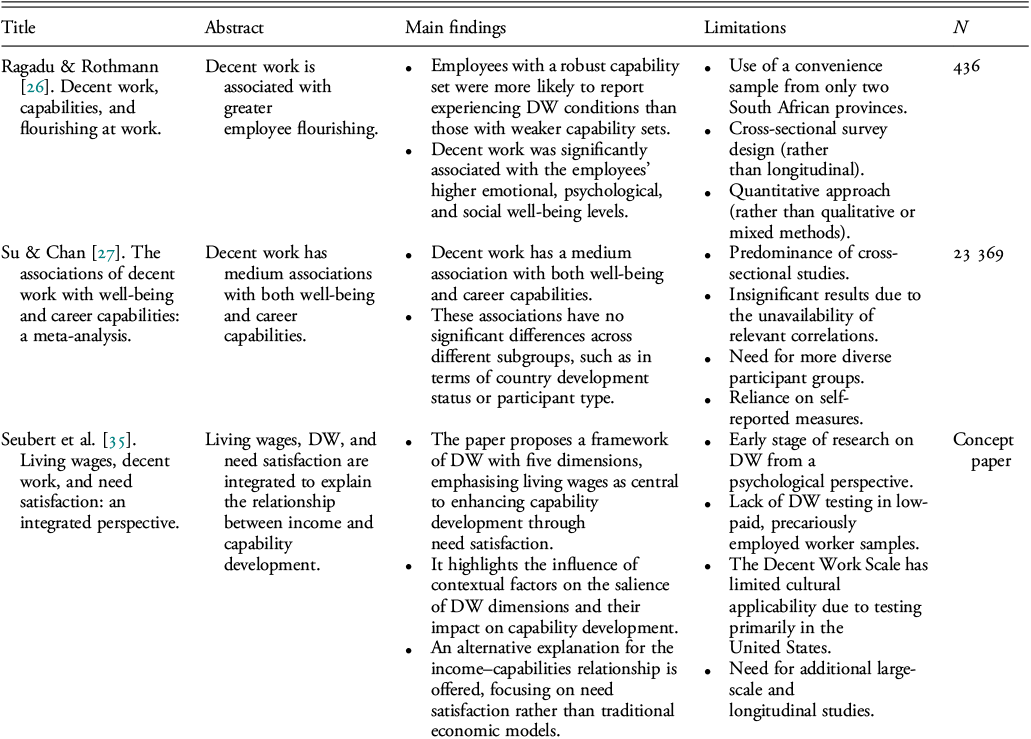
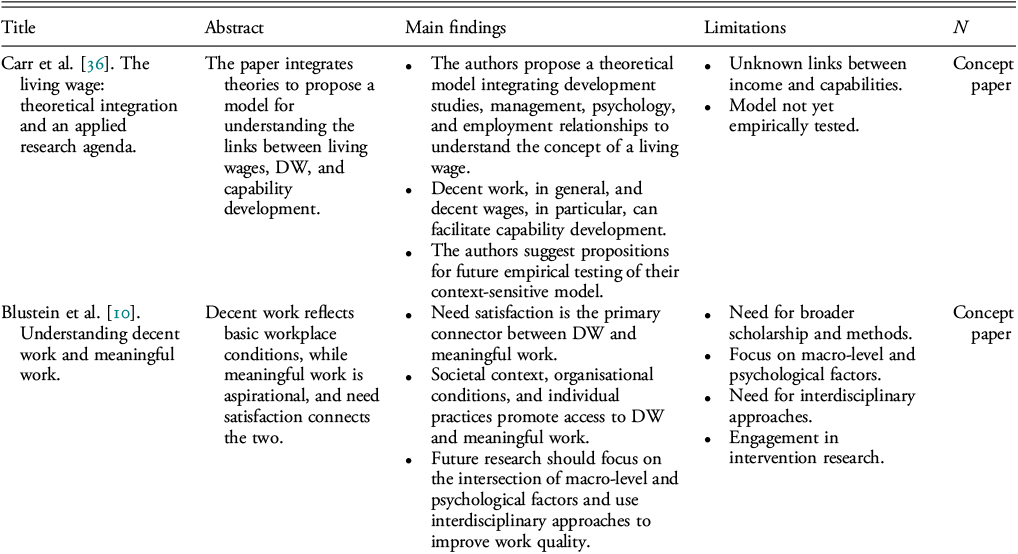
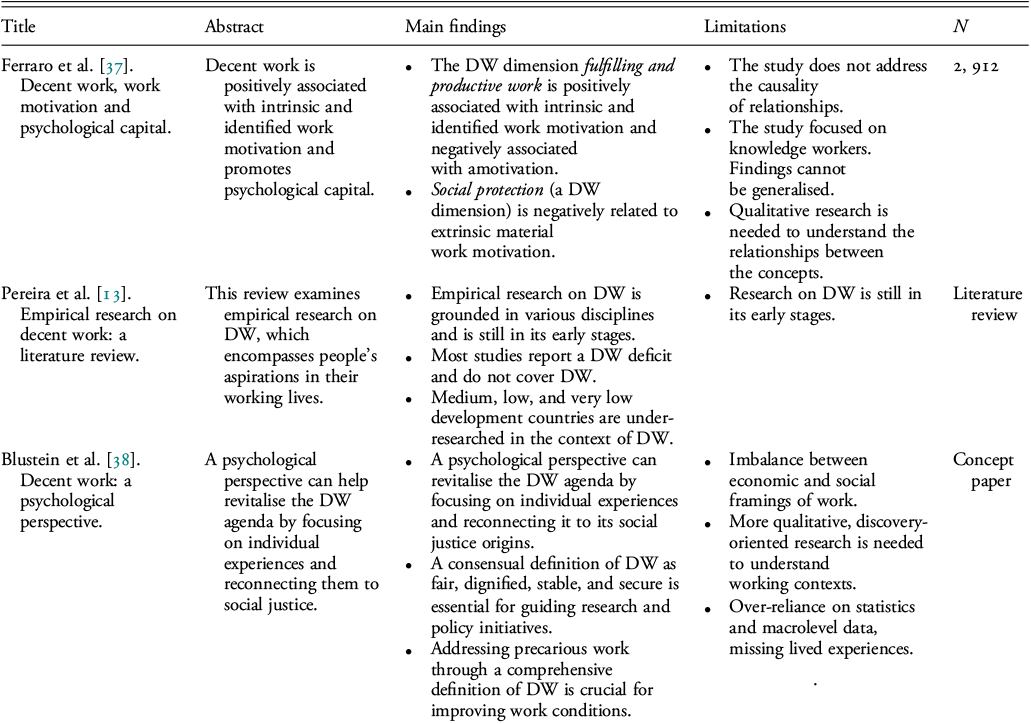
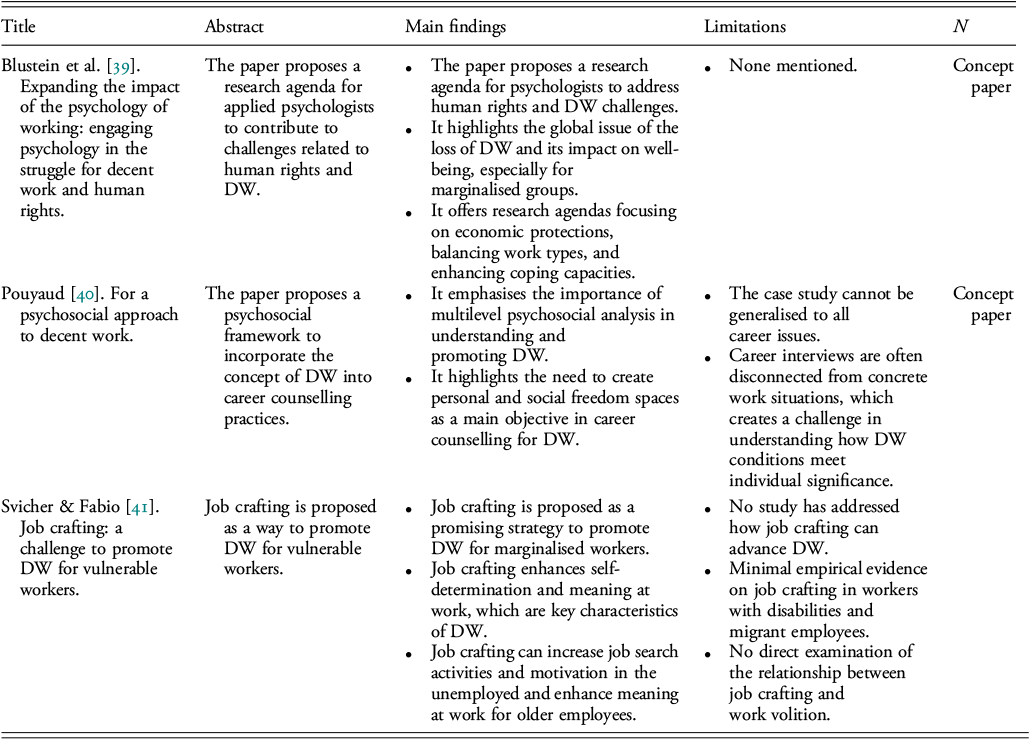
Table 9.1 shows the results of studies on capabilities and DW.

Table 9.1(a) Long description
The table is organized into five columns labeled Title, Abstract, Main Findings, Limitations and the Sample Size N. The data included in the page are as follows.
Ragadu and Rothmann. Decent work, capabilities, and flourishing at work.
Abstract. Decent work is associated with greater employee flourishing.
Main findings. Employees with a robust capability set were more likely to report experiencing D W conditions than those with weaker capability sets. Decent work was significantly associated with the employees’ higher emotional, psychological, and social well-being levels.
Limitations. Use of a convenience sample from only two South African provinces. Cross-sectional survey design (rather than longitudinal). Quantitative approach (rather than qualitative or mixed methods).
Sample Size N. 436
Su and Chan. The associations of decent work with well-being and career capabilities: A meta-analysis.
Abstract. Decent work has medium associations with both well-being and career capabilities.
Main findings. Decent work has a medium association with both well-being and career capabilities. These associations have no significant differences across different subgroups, such as in terms of country development status or participant type.
Limitations. Predominance of cross-sectional studies. Insignificant results due to the unavailability of relevant correlations. Need for more diverse participant groups. Reliance on self-reported measures.
Sample Size N. 23369
Seubert et al. Living wages, decent work, and need satisfaction: An integrated perspective.
Abstract. Living wages, DW, and need satisfaction are integrated to explain the relationship between income and capability development.
Main findings. The paper proposes a framework of DW with five dimensions, emphasising living wages as central to enhancing capability development through need satisfaction. It highlights the influence of contextual factors on the salience of DW dimensions and their impact on capability development. An alternative explanation for the income-capabilities relationship is offered, focusing on need satisfaction rather than traditional economic models.
Limitations. Early stage of research on DW from a psychological perspective. Lack of D W testing in low-paid, precariously employed worker samples. The Decent Work Scale has limited cultural applicability due to testing primarily in the United States. Need for additional large-scale and longitudinal studies.
Sample Size N. Concept paper

Table 9.1(b) Long description
The data included in the page are as follows.
Carr et al. The living wage: Theoretical integration and an applied research agenda.
Abstract. The paper integrates theories to propose a model for understanding the links between living wages, D W, and capability development.
Main findings. The authors propose a theoretical model integrating development studies, management, psychology, and employment relationships to understand the concept of a living wage. Decent work, in general, and decent wages, in particular, can facilitate capability development. The authors suggest propositions for future empirical testing of their context-sensitive model.
Limitations. Unknown links between income and capabilities. Model not yet empirically tested.
Sample Size N. Concept paper.
Blustein et al. Understanding decent work and meaningful work.
Abstract. Decent work reflects basic workplace conditions, while meaningful work is aspirational, and need satisfaction connects the two.
Main findings. Need satisfaction is the primary connector between DW and meaningful work. Societal context, organisational conditions, and individual practices promote access to DW and meaningful work. Future research should focus on the intersection of macrolevel and psychological factors and use interdisciplinary approaches to improve work quality.
Limitations. Need for broader scholarship and methods. Focus on macrolevel and psychological factors. Need for interdisciplinary approaches. Engagement in intervention research.
Sample Size N. Concept paper.

Table 9.1(c) Long description
The data included in the page are as follows.
Ferraro et al. Decent work, work motivation and psychological capital.
Abstract. Decent work is positively associated with intrinsic and identified work motivation and promotes psychological capital.
Main findings. The D W dimension fulfilling and productive work is positively associated with intrinsic and identified work motivation and negatively associated with amotivation. Social protection (a D W dimension) is negatively related to extrinsic material work motivation.
Limitations. The study does not address the causality of relationships. The study focused on knowledge workers. Findings cannot be generalised. Qualitative research is needed to understand the relationships between the concepts.
Sample Size N. 2912
Pereira et al. Empirical research on decent work: A literature review.
Abstract. This review examines empirical research on D W, which encompasses people’s aspirations in their working lives.
Main findings. Empirical research on D W is grounded in various disciplines and is still in its early stages. Most studies report a D W deficit and do not cover D W. Medium, low, and very low development countries are under-researched in the context of D W.
Limitations. Research on DW is still in its early stages.
Sample Size N. Literature review.
Blustein et al. Decent work, A psychological perspective.
Abstract. A psychological perspective can help revitalize the D W agenda by focusing on individual experiences and reconnecting them to social justice.
Main findings. A psychological perspective can revitalise the DW agenda by focusing on individual experiences and reconnecting it to its social justice origins. A consensual definition of D W as fair, dignified, stable, and secure is essential for guiding research and policy initiatives. Addressing precarious work through a comprehensive definition of D W is crucial for improving work conditions.
Limitations. Imbalance between economic and social framings of work. More qualitative, discovery-oriented research is needed to understand working contexts. Overreliance on statistics and macrolevel data, missing lived experiences.
Sample Size N. Concept paper.

Table 9.1(d) Long description
The data included in the page are as follows.
Blustein et al. Expanding the impact of the psychology of working: Engaging psychology in the struggle for decent work and human rights.
Abstract. The paper proposes a research agenda for applied psychologists to contribute to challenges related to human rights and D W.
Main findings. The paper proposes a research agenda for psychologists to address human rights and DW challenges. It highlights the global issue of the loss of DW and its impact on well-being, especially for marginalised groups. It offers research agendas focusing on economic protections, balancing work types, and enhancing coping capacities.
Limitations. None mentioned.
Sample Size N. Concept paper.
Pouyaud. For a psychosocial approach to decent work.
Abstract. The paper proposes a psychosocial framework to incorporate the concept of DW into career counselling practices.
Main findings. It emphasises the importance of multilevel psychosocial analysis in understanding and promoting D W. It highlights the need to create personal and social freedom spaces as a main objective in career counselling for D W.
Limitations. The case study cannot be generalised to all career issues. Career interviews are often disconnected from concrete work situations, which creates a challenge in understanding how D W conditions meet individual significance.
Sample Size N. Concept paper.
Svicher and Fabio. Job crafting: A challenge to promote D W for vulnerable workers.
Abstract. Job crafting is proposed as a way to promote DW for vulnerable workers.
Main findings. Job crafting is proposed as a promising strategy to promote D W for marginalised workers. Job crafting enhances self-determination and meaning at work, which are key characteristics of D W. Job crafting can increase job search activities and motivation in the unemployed and enhance meaning at work for older employees.
Limitations. No study has addressed how job crafting can advance D W. Minimal empirical evidence on job crafting in workers with disabilities and migrant employees. No direct examination of the relationship between job crafting and work volition.
Sample Size N. Not mentioned.
As the CA emphasises the importance of context, external factors such as DW play a crucial role in people’s work capabilities and functionings [Reference Ragadu and Rothmann26]. For example, among early childhood development practitioners (ECDPs) in South Africa, safe working conditions and organisational values that complement family and social values are linked to robust capability sets. Those with a robust capability set are also more likely to report sufficient access to healthcare and sufficient free time. Decent work components, such as safe working conditions, access to healthcare, free time and rest, and complementary values are positively associated with their capability set [Reference Ragadu and Rothmann26].
Su and Chan reported an association between DW, career capabilities, and well-being [Reference Su and Chan27]. They reported that DW fits in with a CA model. Their study revealed that DW and capabilities improved individuals’ working life and enhanced individual long-term career development.
Lavagnini and Mennella contributed to the debate on DW as an instrument for measuring human development [Reference Lavagnini and Mennella42]. Decent work is interpreted here in line with Sen’s CA. Therefore, work “can be a liberator”, unless working defects prevent that.
The concept of DW has been integrated with living wages and need satisfaction theories [Reference Seubert, Hopfgartner and Glaser35, Reference Carr, Parker, Arrowsmith and Watters36]. Research has also explored connections between DW, work motivation, and psychological capital [Reference Ferraro, Moreira, Dos Santos, Pais and Sedmak37]. Despite growing interest, empirical research on DW remains limited, with most studies focusing on DW deficits [Reference Pereira, Dos Santos and Pais13]. Scholars have argued for incorporating psychological perspectives to revitalise the DW agenda and reconnect it to its social justice origins [Reference Blustein, Lysova and Duffy10, Reference Di Fabio and Blustein14, Reference Blustein, Olle, Connors-Kellgren and Diamonti38].
The labour market has long been characterised by inequality, lack of access to DW, harassment, marginalisation, and overwork [Reference Blustein, Lysova and Duffy10]. Therefore, prioritising DW is a moral imperative and strategic approach to building resilient and prosperous societies [Reference Blustein, Kenny, Di Fabio and Guichard39]. Decent work enhances economic stability and growth by improving productivity when workers receive fair wages and work under safe conditions. Promoting DW also helps reduce social inequalities by fostering the inclusion of marginalised groups. Access to DW allows marginalised individuals to integrate into society, reducing social tensions and bridging gaps related to gender, ethnicity, and socio-economic status. Furthermore, DW is an effective tool for reducing poverty and is central to achieving the United Nations’ Sustainable Development Goals, especially Goal 8, which promotes sustained and inclusive growth [11].
Research insights into capabilities and DW highlight innovative approaches to enhancing work quality and personal agency. Pouyaud presents a psychosocial framework that integrates DW into career counselling, addressing personal and contextual factors to support individuals’ career development [Reference Pouyaud40]. In a complementary approach, Svicher and Fabio identify job crafting as a valuable strategy for fostering DW, especially for marginalised workers [Reference Svicher and Di Fabio41]. Through job crafting, individuals can reshape their roles to enhance self-determination and meaning at work, both of which are central to the concept of DW.
Decent work for individuals emphasises that their capabilities are not determined by their resources (e.g., income), but rather by how they utilise them to gain freedom of choice [Reference Yao, Parker, Arrowsmith and Carr43]. According to Seubert et al., subjective experiences related to DW (including earning a living wage) fulfil various needs and promote the development of capabilities [Reference Seubert, Hopfgartner and Glaser35].
Flourishing at Work within the Capability Approach
Flourishing at work emerges as the combination of feeling good and acting effectively and is considered a measure of subjective well-being [Reference Fabricio, Kaczam, Obregon, De Almeida, Lopes and Da Veiga44]. According to Diener and Chan, flourishing refers to a combination of positive emotions and positive functioning, characterised by an employee’s psychological and social adjustment to the work environment in which they are placed [Reference Diener and Chan45]. Rothmann et al. suggest that flourishing implies high levels of well-being and define flourishing as a subjective state of emotional well-being, psychological well-being, and social well-being [Reference Rothmann, Van Zyl, Rautenbach, Van Zyl and Rothmann46]. Specific capabilities (e.g., using knowledge and skills, developing new knowledge and skills, and being involved in decision-making) enable individuals to experience flourishing at work [Reference Van der Klink, Bültmann, Burdorf, Schaufeli, Zijlstra and Abma5, Reference Abma, Brouwer, De Vries, Arends, Robroek and Cuijpers6].
Blustein et al. assert that work is a source of identity and meaning for people and provides individuals and their families with economic and social stability [Reference Blustein, Lysova and Duffy10, Reference Deng, Wang, Frasso, Ran, Zhang and Kong47]. When opportunities for DW are not available, individuals may be forced to take available jobs, even if such jobs are non-standard or of poor quality [Reference Blustein, Lysova and Duffy10]. It can be argued that the earlier assertions on poor-quality work erode an employee’s capability and, inevitably, their functioning. Decent work is a crucial bedrock for employees’ capabilities and functioning because it allows individuals’ capabilities to be enhanced and sustained. These capabilities can range from meaningful work [Reference Blustein, Lysova and Duffy10] to meaningful relationships at work, earning a good income, contributing to something meaningful at work or in families and communities, and opportunities for professional development [Reference Abma, Brouwer, De Vries, Arends, Robroek and Cuijpers6, Reference Murangi, Rothmann and Nel32].
Training opportunities that allow for harnessing twenty-first-century knowledge and skills in various occupations for sustainable employment and organisational sustainability are thus necessary [Reference Kopp, Kinkel, Schäfer, Kieslinger and Brown48]. Organisations must constantly innovate, develop, and adapt to changing external surroundings and global competition [Reference Truitt49]. Therefore, work is a place of development.
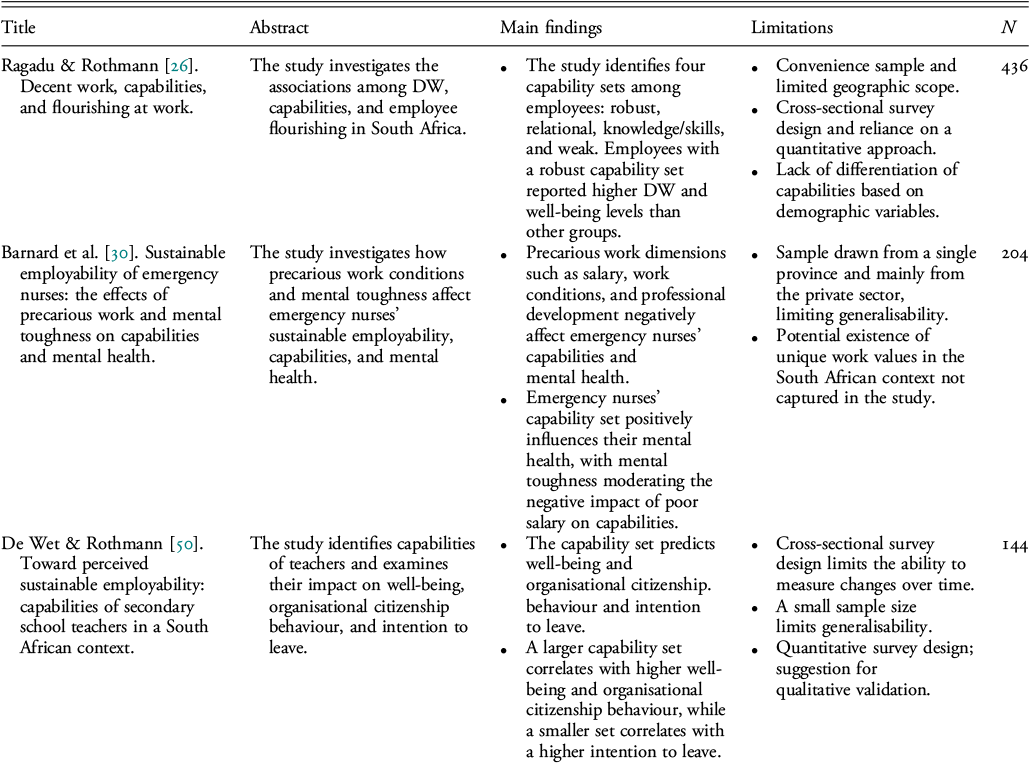
Table 9.2 summarises studies on DW, capabilities, and human flourishing.

Table 9.2(a) Long description
The table has 5 columns labeled Title, Abstract, Main Findings, Limitations, and N.
The data included in the page are as follows.
Ragadu and Rothmann involves decent work, capabilities, and flourishing at work. The study investigates the associations among decent work (D W), capabilities, and employee flourishing in South Africa. In the Main Findings section, the study identifies four capability sets among employees, robust, relational, knowledge slash skills, and weak. Employees with a robust capability set reported higher D W and well-being levels than other groups. The limitations include convenience sample and limited geographic scope, cross-sectional survey design and reliance on a quantitative approach, and lack of differentiation of capabilities based on demographic variables. The study utilizes a sample size of N = 436.
Barnard et al. involves sustainable employability of emergency nurses and the effects of precarious work and mental toughness on capabilities and mental health. The study investigates how precarious work conditions and mental toughness affect emergency nurses’ sustainable employability, capabilities, and mental health. In the Main Findings section, the study identifies that precarious work dimensions such as salary, work conditions, and professional development negatively affect emergency nurses’ capabilities and mental health, and emergency nurses’ capability set positively influences their mental health, with mental toughness moderating the negative impact of poor salary on capabilities. The limitations include sample drawn from a single province and mainly from the private sector, limiting generalisability, and potential existence of unique work values in the South African context are not captured in the study. The study utilizes a sample size of N = 204.
De Wet and Rothmann involves perceived sustainable employability such as capabilities of secondary school teachers in a South African context. The study identifies capabilities of teachers and examines their impact on well-being, organizational citizenship behavior, and intention to leave. In the Main Findings section, the study identifies that the capability set predicts well-being and organisational citizenship behaviour and intention to leave and a larger capability set correlates with higher well-being and organisational citizenship behaviour, while a smaller set correlates with a higher intention to leave. Cross-sectional survey design limits the ability to measure changes over time, a small sample size limits generalisability, quantitative survey design and suggestion for qualitative validation. The study utilizes a sample size of N = 114.

Table 9.2(b) Long description
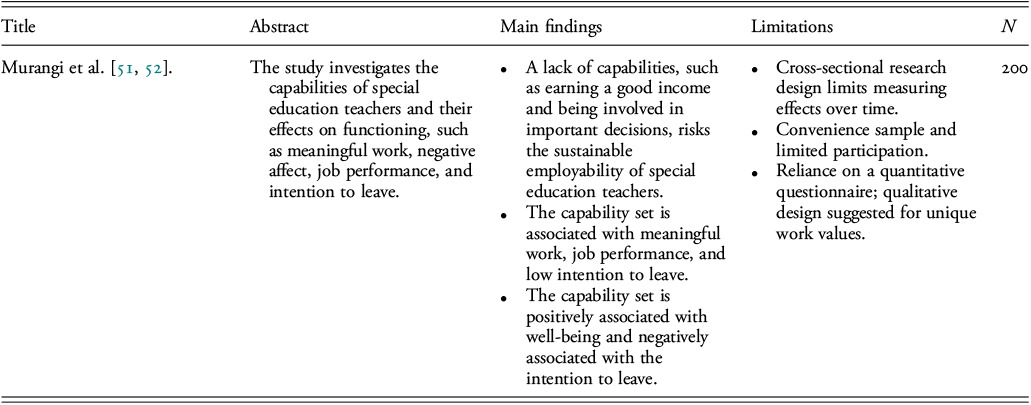
Murangi et al. The study investigates the capabilities of special education teachers and their effects on functioning, such as meaningful work, negative affect, job performance, and intention to leave. In the Main Findings section, the study identifies that a lack of capabilities, such as earning a good income and being involved in important decisions, risks the sustainable employability of special education teachers, the capability set is associated with meaningful work, job performance, and low intention to leave, and the capability set is positively associated with well-being and negatively associated with the intention to leave. The limitations include cross-sectional research design limiting measuring effects over time, convenience sample and limited participation, reliance on a quantitative questionnaire and qualitative design suggested for unique work values. The study utilizes a sample size of N = 200.
Studies have identified links between DW, capabilities, and flourishing at work, emphasising the importance of robust capability sets for employee well-being [Reference Ragadu and Rothmann26]. A study by Ragadu and Rothmann revealed that earning a good income was valued by most ECDPs and that more than one-third of ECDPs felt that they could earn a good income [Reference Ragadu and Rothmann26]. Although earning a good income was not the only determinant of flourishing, it affected ECDP dissatisfaction. The impact of dissatisfaction is evident in the fact that earning a good income affects the livelihood of ECDPs and their realised capabilities. Ragadu and Rothmann argued that better insight into DW conditions would contribute to the flourishing of ECDPs at work [Reference Ragadu and Rothmann26]. According to De Wet and Rothmann, the capability set and specific work capabilities significantly predict secondary school teachers’ emotional, psychological, and social well-being [Reference De Wet and Rothmann50]. The specific work capabilities revealed medium effect sizes, whereas the capability set showed a large effect size. Interestingly, having a good income did not significantly predict the well-being dimensions.
Studies have shown the effects of external factors (such as job resources and demands, work precariousness, and DW) on employees’ work capabilities (enabled and achieved work values) and their impact on their functionings at work (such as flourishing, burnout, engagement, and performance). These studies among diverse professions, such as emergency nurses [Reference Barnard, Rothmann, De Beer, Lubbe and Mrayyan30, Reference Barnard, Rothmann, De Beer and Lubbe31], secondary education teachers [Reference De Wet and Rothmann50], ECDPs [Reference Ragadu and Rothmann26], and special education teachers [Reference Murangi, Rothmann and Nel32, Reference Murangi, Rothmann and Nel51], demonstrate the effects of external factors on work capabilities and flourishing.
DW positively affects mental health and well-being [Reference Su and Chan27]. Research has shown a link between job quality and lower levels of stress, anxiety, and depression, emphasising the importance of safe working conditions and work‒life balance.
Promoting Decent Work, Capabilities, and Flourishing at Work
Policymakers and organisations can adopt various strategies that are aligned with the CA to increase workers’ capabilities and promote decent work. These recommendations focus on creating an environment where workers have the freedom and opportunities to achieve their potential, live with dignity, and experience personal growth and well-being [Reference Di Fabio, Medvide, Kenny, Carr, Hopner, Hodgetts and Young4, Reference Teng-Calleja, Bertulfo, Clemente, Carr, Hopner, Hodgetts and Young7, Reference Su and Chan27, Reference Meyer and Maleka53]. Ensuring financial stability, job security, and worker well-being is central to this goal, as these factors provide the foundational conditions necessary for individuals to pursue their chosen life paths.
Human flourishing must be supported through strengthened occupational health and safety standards, as well as the provision of mental health services and workplace well-being programmes. These initiatives ensure workers’ physical, emotional, and psychological health, which is essential for achieving a good quality of life. To foster resilience and adaptability in changing labour markets, policies should enhance individuals’ access to vocational training, continuous learning opportunities, and subsidised educational programmes, thereby enabling the development of skills that expand their employment options and career trajectories.
Targeted support for marginalised groups and informal economy workers is critical for reducing precarious employment and enabling workforce participation [Reference Benavides, Silva-Peñaherrera and Vives54]. By focusing on these groups, policies can expand their capabilities, ensuring that they have the resources, opportunities, and freedoms necessary to pursue meaningful and productive lives. For example, self-employed workers value autonomy, flexibility, and self-direction [Reference Warr55]. However, many face insecurity, lack social protection, and have a limited collective voice, highlighting that autonomy alone does not ensure decent work [Reference Rossetti and Heeger56]. Decent work balances freedom with protection and allows people to perform meaningful work, connect with others, and plan their futures [Reference Blustein, Olle, Connors-Kellgren and Diamonti38]. In the Netherlands, policy is moving towards inclusive models that offer portable rights, social protection, and access to learning, regardless of employment status [Reference Baker and Gielens57, Reference Buschoff and Schmidt58]. Additionally, co-operatives and freelancer unions are being promoted as hybrid support structures to increase voice and representation among freelancers [Reference Pitts, Borghi and Murgia59]. Decent work enables workers to achieve security, dignity, and freedom to lead valued lives [Reference Conigliaro60].
Achieving DW requires strategies to support employees and foster fair, stable work environments. Research on job demands, job resources, and job crafting by Demerouti and Bakker [Reference Demerouti and Bakker61], Murangi et al. [Reference Murangi, Rothmann and Nel62], and Van den Broeck et al. [Reference Van den Broeck, De Cuyper, Luyckx and De Witte63] highlights how resources mitigate high demands, improving employee well-being and performance. Fair compensation, equal pay, and job stability are critical; organisations should prioritise long-term contracts over temporary roles to ensure security.
Future Directions and Areas for Research
Given the persistence of informal and low-quality employment, the greatest challenge in countries characterised by poverty, unemployment, and inequality is to create both employment and quality and remunerative jobs [Reference Jaiswal21].
Globalisation, technological advancements, and the gig economy offer opportunities for skill acquisition, job flexibility, and economic growth, but also present significant challenges to DW [Reference Cieslik, Banya and Vira20]. Globalisation and the gig economy can lead to low-wage, insecure jobs with limited benefits, especially in developing economies. Automation and artificial intelligence enhance productivity but displace low-skilled workers, causing job losses and skill mismatches that require robust upskilling programmes. Gig workers often lack the protection and stability of traditional jobs and face irregular hours and limited social security. The green economy and remote work trends also introduce new risks, such as job displacement and blurred work–life boundaries [Reference Selçuk, Nircan and Coşkun25]. Ensuring DW amid these shifts requires adapting labour policies to support continuous learning, inclusivity, worker well-being, and meaningful employment [Reference Randev and Jha64].
Research on DW, work capabilities, and flourishing reveals critical gaps, especially in low- and middle-income countries. Existing studies have focused mainly on high-income settings, neglecting how DW and flourishing apply to the Global South and various work sectors, such as informal and gig economy roles [Reference Jaiswal21]. The experiences of marginalised groups, such as women, racial minorities, and individuals with disabilities, are underexplored, as is the impact of intersecting identities on work capabilities.
Blustein et al. assert that qualitative research is essential to understanding experiences of decent work [Reference Blustein, Olle, Connors-Kellgren and Diamonti38]. Concerning quantitative studies, measurement inconsistency challenges research, as no standardised tools capture the multidimensional aspects of DW across diverse populations. Longitudinal studies are scarce, with extant studies providing only static snapshots rather than tracking work capabilities over time or through career transitions. Research on DW in relation to sustainable practices and green economies is emerging, with significant potential for the CA to contribute to these intersections.
A social justice perspective applies to researching and promoting decent work and the flourishing of workers [Reference Blustein, Olle, Connors-Kellgren and Diamonti38]. Social scientists should be aware of and address the political and economic systems that threaten the realisation of decent and flourishing work.
Conclusion
Considering how this chapter contributes to advancing the literature on DW, capabilities, and flourishing at work is essential. First, the CA expands the understanding of DW beyond conventional economic measures such as wages and productivity by focusing on what individuals can do and be in their work lives. Specifically, the CA redefines DW by emphasising opportunities and freedoms, shifting the focus from wages and productivity to meaningful work that fosters personal fulfilment, skill development, and well-being. It prioritises work-related well-being, advocating for job security, safety, learning, and overall quality of life.
Secondly, DW supports the development of individual capabilities by creating an environment where individuals can exercise their agency, develop skills, and pursue meaningful goals. Decent work provides education, training, and on-the-job learning opportunities, helping individuals develop skills and remain adaptable in a changing labour market. It promotes personal growth and autonomy by allowing workers to choose tasks, conditions, and career paths, enhancing self-efficacy and alignment with personal values. Decent work ensures job security and fair wages, reduces financial stress, and enables a focus on long-term goals, such as further education or career advancement. The CA redefines quality employment by prioritising freedom, agency, and well-being [Reference Duong and Pham65]. It offers a comprehensive and human-centred perspective on DW by shifting the focus from narrow economic measures to a broader understanding of human well-being.
Decent work can be a cause and an effect of capabilities. First, decent work can broaden an individual’s capability sets by providing financial security, skills development, personal growth, and a sense of purpose and belonging. A decent job, by providing security and rights, frees individuals from constant survival anxieties, allowing them to plan and act towards longer-term life objectives. Decent work expands the capabilities essential for a flourishing life [Reference Ragadu and Rothmann26]. Second, individuals with a strong (compared with a weak) capability set are significantly more inclined to report DW. Work is not just instrumental for income; it is central to human flourishing. Decent work and capabilities are mutually reinforcing; the CA provides a justice-oriented lens to evaluate work, whereas the pursuit of DW grounds the CA in concrete labour rights and conditions. The relationship between DW and capabilities is fundamentally bidirectional and synergistic. Decent work acts as a catalyst for expanding capabilities; it provides income, security, inclusion, and opportunities for growth, all of which allow individuals to achieve valuable functionings. Simultaneously, capabilities are often a prerequisite for accessing DW; education, skills, health, and agency enable people to obtain and make the most good job opportunities.

 Open access