


Mental health services develop to meet societal needs and have largely been reactive to demand, not proactive in deciding how they might best reduce the burden of disease. The new wave of mental health surveys (Reference KesslerKessler, 1999; Reference Andrews, Henderson and HallAndrews et al, 2001) has determined how many people had which mental disorder(s), how disabled they were, what services they used and the barriers to better service use. Accounts of services used and treatments received make it possible to estimate the diagnosis-related treatment costs, but estimates of the health gain that results from these interventions are missing. A method to estimate the likely health gain attributable to an intervention was developed by Andrews et al (Reference Andrews, Sanderson and Corry2000) and Sanderson et al (Reference Sanderson, Andrews and Corry2004). Using data from the Australian mental health surveys, they examined the cost-effectiveness of current and optimal treatments for schizophrenia (Reference Andrews, Sanderson and CorryAndrews et al, 2003a ), affective disorders (Reference Sanderson, Andrews and CorrySanderson et al, 2003), anxiety disorders (Reference Issakidis, Sanderson and CorryIssakidis et al, 2004) and alcohol use disorders (Reference Corry, Sanderson and IssakidisCorry et al, 2004) and concluded that optimal treatment was uniformly more cost-effective than current treatment. The present paper summarises these findings to assess the relative efficiency of treatment across these disorders, then calculates the cost-effectiveness of optimal treatment at optimal coverage and, finally, estimates the proportion of the burden of mental disorders that appears to be unavertable in the light of current knowledge.
METHOD
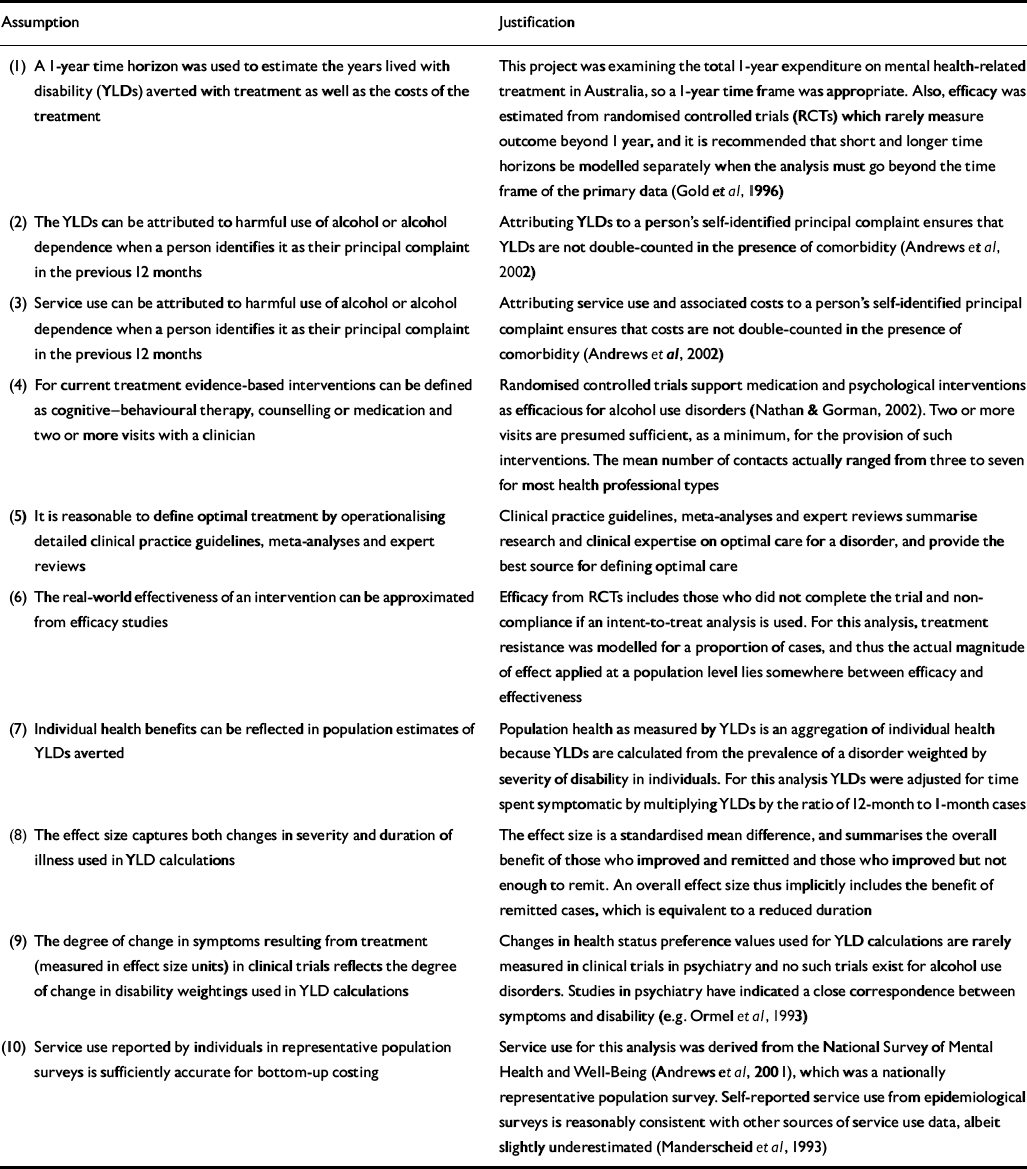
The general method for these studies is given in Andrews et al (Reference Andrews, Sanderson and Corry2003a ) and a summary is presented here. The general assumptions, and the evidence for them, are listed in Table 1.
Assumptions and justifications used in modelling
| Assumption | Justification |
|---|---|
| (1) A 1-year time horizon was used to estimate the years lived with disability (YLDs) averted with treatment as well as the costs of the treatment | This project was examining the total 1-year expenditure on mental health-related treatment in Australia, so a 1-year time frame was appropriate. Also, efficacy was estimated from randomised controlled trials (RCTs) which rarely measure outcome beyond 1 year, and it is recommended that short and longer time horizons be modelled separately when the analysis must go beyond the time frame of the primary data (Reference Gold, Siegel and RussellGold et al, 1996) |
| (2) The YLDs can be attributed to harmful use of alcohol or alcohol dependence when a person identifies it as their principal complaint in the previous 12 months | Attributing YLDs to a person's self-identified principal complaint ensures that YLDs are not double-counted in the presence of comorbidity (Reference Andrews, Slade and IssakidisAndrews et al, 2002) |
| (3) Service use can be attributed to harmful use of alcohol or alcohol dependence when a person identifies it as their principal complaint in the previous 12 months | Attributing service use and associated costs to a person's self-identified principal complaint ensures that costs are not double-counted in the presence of comorbidity (Reference Andrews, Slade and IssakidisAndrews et al, 2002) |
| (4) For current treatment evidence-based interventions can be defined as cognitive-behavioural therapy, counselling or medication and two or more visits with a clinician | Randomised controlled trials support medication and psychological interventions as efficacious for alcohol use disorders (Reference Nathan and GormanNathan & Gorman, 2002). Two or more visits are presumed sufficient, as a minimum, for the provision of such interventions. The mean number of contacts actually ranged from three to seven for most health professional types |
| (5) It is reasonable to define optimal treatment by operationalising detailed clinical practice guidelines, meta-analyses and expert reviews | Clinical practice guidelines, meta-analyses and expert reviews summarise research and clinical expertise on optimal care for a disorder, and provide the best source for defining optimal care |
| (6) The real-world effectiveness of an intervention can be approximated from efficacy studies | Efficacy from RCTs includes those who did not complete the trial and noncompliance if an intent-to-treat analysis is used. For this analysis, treatment resistance was modelled for a proportion of cases, and thus the actual magnitude of effect applied at a population level lies somewhere between efficacy and effectiveness |
| (7) Individual health benefits can be reflected in population estimates of YLDs averted | Population health as measured by YLDs is an aggregation of individual health because YLDs are calculated from the prevalence of a disorder weighted by severity of disability in individuals. For this analysis YLDs were adjusted for time spent symptomatic by multiplying YLDs by the ratio of 12-month to 1-month cases |
| (8) The effect size captures both changes in severity and duration of illness used in YLD calculations | The effect size is a standardised mean difference, and summarises the overall benefit of those who improved and remitted and those who improved but not enough to remit. An overall effect size thus implicitly includes the benefit of remitted cases, which is equivalent to a reduced duration |
| (9) The degree of change in symptoms resulting from treatment (measured in effect size units) in clinical trials reflects the degree of change in disability weightings used in YLD calculations | Changes in health status preference values used for YLD calculations are rarely measured in clinical trials in psychiatry and no such trials exist for alcohol use disorders. Studies in psychiatry have indicated a close correspondence between symptoms and disability (e.g. Reference Ormel, Von Korff and Van den BrinkOrmel et al, 1993) |
| (10) Service use reported by individuals in representative population surveys is sufficiently accurate for bottom-up costing | Service use for this analysis was derived from the National Survey of Mental Health and Well-Being (Reference Andrews, Henderson and HallAndrews et al, 2001), which was a nationally representative population survey. Self-reported service use from epidemiological surveys is reasonably consistent with other sources of service use data, albeit slightly underestimated (Reference Manderscheid, Rae and NarrowManderscheid et al, 1993) |
Estimating the prevalence and burden of mental disorders
Data on the 1-year ICD–10 (World Health Organization, 1992) prevalences of anxiety, affective and alcohol use disorders as a principal complaint were obtained from the Australian National Survey of Mental Health and Well-being (Andrews et al, Reference Andrews, Henderson and Hall2001, Reference Andrews, Slade and Issakidis2002), and data on the prevalence of schizophrenia were obtained from a survey of low-prevalence disorders (Reference Jablensky, McGrath and HerrmanJablensky et al, 2000). A 1-year time horizon (1997–1998) was used to estimate the total burden, the burden averted with current and optimal interventions and the costs. The burden of a disease can be estimated in disability-adjusted life-years (DALYs) lost but because mortality data were rarely attributed to the underlying mental disorders, and treatment intervention studies never used death as an outcome, we present data in terms of years lived with disability (YLDs). The YLDs account for 95% of the total DALYs lost owing to mental disorders (Reference Mathers, Vos and StevensonMathers et al, 1999) and were calculated as the prevalence of the only or principal complaint weighted by the disability weighting associated with that disorder. The disability weighting is a health state preference value that reflects the relative severity of a condition on a 0–1 continuum between perfect health and death (Reference Murray and LopezMurray & Lopez, 1996). The YLDs were adjusted for time spent symptomatic using the ratio between current and 12-month cases.
The true burden of a disorder, defined as the burden in the absence of treatment, is calculated from the burden observed in the population under study plus the burden presently averted by the current population coverage and mix of interventions. We identified the YLDs averted by the current mix of services from the prevalent cases (i.e. active in the past year) deemed to have received an effective treatment in that time, calculating their change in disability weighting from the effect sizes associated with the type of treatment they had received (Reference Andrews, Sanderson and CorryAndrews et al, 2000; Reference Sanderson, Andrews and CorrySanderson et al, 2004). To enable us to do this, Sanderson et al had general practitioners provide health state preference values for vignettes of people with each mental disorder, with levels of severity set one standard deviation apart. This enabled a linear transfer factor to be computed for each disorder in order to convert the improvement due to treatment measured in standard deviation units (effect sizes) to the improvement measured in disability weighting change units. The YLDs averted by current treatment were added to the observed burden in order to give the burden that would exist in the absence of treatment. This provides the baseline from which the proportion of burden averted can be calculated.
Describing and costing current treatment for mental disorders
The respondents to the survey listed the services used and the treatments received for a mental problem during the previous 12 months. ‘Coverage’ means the proportion of people reporting a consultation for a mental disorder. When people met the criteria for two or more disorders, they were asked to identify which set of symptoms troubled them the most (Reference Andrews, Slade and IssakidisAndrews et al, 2002). Costs and benefits were attributed to the principal complaint. Effective treatment means that they saw the same type of clinician two or more times and received medication or an efficacious psychological intervention such as cognitive–behavioural therapy. Unit costs for direct health care provided by the public or private sector were obtained from published sources, converted to 1997 Australian dollars (AUS$). The cost of services and treatments used was calculated for each person and attributed to a person's only or principal complaint. The average 12-month cost of treatment per case for each disorder was calculated and, when divided by the number of YLDs averted, gave a cost-effectiveness ratio in dollars per YLD averted for each disorder. The YLDs averted by current treatment were estimated as described above.
Describing and costing optimal treatment for mental disorders
Next we calculated the proportion of burden that could be averted with evidence-based medicine. We used a number of sources listed in the relevant papers, but relied heavily on the Schizophrenia Patient Outcomes Research Team (PORT) study recommendations to define optimal treatment for schizophrenia (Reference Lehman and SteinwachsLehman & Steinwachs, 1998); the clinical practice guidelines from the Royal Australian and New Zealand College of Psychiatrists (Reference Andrews, Oakley-Browne and CastleAndrews et al, 2003b ; Reference Ellis, Hickie and SmithEllis et al, 2003), the Clinical Research Unit for Anxiety and Depression (Reference Andrews, Craemer and CrinoAndrews et al, 2003c ) and the International Society for Traumatic Stress Studies (Reference Foa, Keane and FriedmanFoa et al, 2000) to define optimal treatment for the anxiety and affective disorders; and reviews by Moyer et al (Reference Moyer, Finney and Swearingen2002), Nathan & Gorman (Reference Nathan and Gorman2002) and Proudfoot & Teesson (Reference Proudfoot and Teesson2002) to define optimal treatment in alcohol use disorders. Optimal treatment scenarios were modelled for varying levels of severity for each mental disorder, the levels based on epidemiological data as described in the relevant papers.
For the current analysis we modelled three optimal treatment scenarios for each disorder.
-
(a) Optimal treatment at current coverage. We assumed that coverage and severity levels remained constant and that clinicians only used evidence-based treatments. We calculated the YLDs averted, the total cost and the cost per YLD averted of optimal treatment.
-
(b) Optimal treatment at optimal coverage. We modelled the cost and cost-effectiveness of evidence-based medicine at hypothetical optimal attainable coverage, total coverage for all disorders being impractical. Optimal treatment strategies were kept constant and optimal coverage was arbitrarily defined as 100% for schizophrenia, 70% for the anxiety and affective disorders and for harmful use of alcohol, and 30% for alcohol dependence. Severity levels were kept constant for those currently in treatment and were varied for the ‘extra cases’ in treatment under optimal coverage to reflect the severity one would expect if those not currently in contact with services were covered. Finally, we calculated the change in cost per YLD of these additional strategies to reduce the burden of mental disorders.
-
(c) Optimal treatment at 100% coverage. To generate the proportion of burden theoretically avertable with existing knowledge, we modelled the YLDs averted for each disorder given the impossible scenario of 100% coverage, keeping optimal treatment strategies constant and defining severity on the basis of that observed among all cases in the surveys. The remaining burden is that which is unavertable with existing knowledge and is an indication of the need for investment in research and development. Cost and cost-effectiveness ratios were not computed for this hypothetical scenario.
Sensitivity analyses
A sensitivity analysis conducted with @RISK version 4 software (Newfield, NY: Palisade Corporation) for Microsoft Excel provided confidence intervals around the YLDs averted, the total cost of treatment and the cost per YLD averted for each disorder and disorder group at current coverage. Multivariate stepwise linear regressions were conducted for each disorder to identify the important contributors to variance around the cost-effectiveness ratios, and univariate analyses assessed the impact of changing various investigator-modelled parameters on the cost-effectiveness estimates. Confidence intervals around the cost-effectiveness or efficiency estimates for current and optimal treatment are presented in Tables 2 and 3. The results of univariate modelling and regression analyses are reported in the disorder-specific papers.
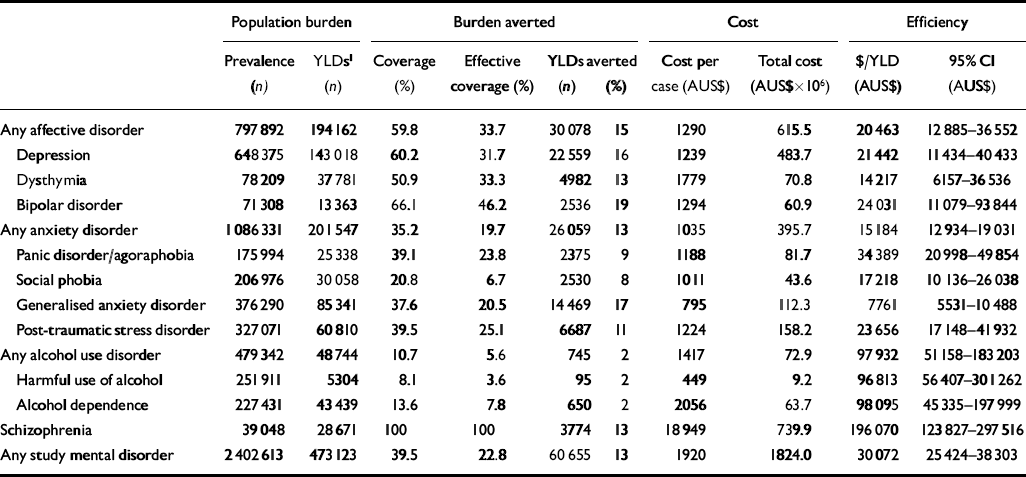
Cost-effectiveness of treatment given the current coverage and mix of interventions
| Population burden | Burden averted | Cost | Efficiency | |||||||
|---|---|---|---|---|---|---|---|---|---|---|
| Prevalence | YLDs1 | Coverage | Effective | YLDs averted | Cost per | Total cost | $/YLD | 95% CI | ||
| (n) | (n) | (%) | coverage (%) | (n) | (%) | case (AUS$) | (AUS$×106) | (AUS$) | (AUS$) | |
| Any affective disorder | 797 892 | 194 162 | 59.8 | 33.7 | 30 078 | 15 | 1290 | 615.5 | 20 463 | 12 885-36 552 |
| Depression | 648 375 | 143 0 18 | 60.2 | 31.7 | 22 559 | 16 | 1239 | 483.7 | 21 442 | 11 434-40 433 |
| Dysthymia | 78 209 | 37 781 | 50.9 | 33.3 | 4982 | 13 | 1779 | 70.8 | 14 217 | 6157-36 536 |
| Bipolar disorder | 71 308 | 13 363 | 66.1 | 46.2 | 2536 | 19 | 1294 | 60.9 | 24 031 | 11 079-93 844 |
| Any anxiety disorder | 1 086 331 | 20 1 547 | 35.2 | 19.7 | 26 059 | 13 | 1035 | 395.7 | 15 184 | 12 934-19 031 |
| Panic disorder/agoraphobia | 175 994 | 25 338 | 39.1 | 23.8 | 2375 | 9 | 1188 | 81.7 | 34 389 | 20 998-49 854 |
| Social phobia | 206 976 | 30 058 | 20.8 | 6.7 | 2530 | 8 | 1011 | 43.6 | 17 218 | 10 136-26 038 |
| Generalised anxiety disorder | 376 290 | 85 341 | 37.6 | 20.5 | 14 469 | 17 | 795 | 112.3 | 7761 | 5531-10 488 |
| Post-traumatic stress disorder | 327 071 | 60 810 | 39.5 | 25.1 | 6687 | 11 | 1224 | 158.2 | 23 656 | 17 148-41 932 |
| Any alcohol use disorder | 479 342 | 48 744 | 10.7 | 5.6 | 745 | 2 | 1417 | 72.9 | 97 932 | 51 158-183 203 |
| Harmful use of alcohol | 251 911 | 5304 | 8.1 | 3.6 | 95 | 2 | 449 | 9.2 | 96 813 | 56 407-30 1 262 |
| Alcohol dependence | 227 431 | 43 439 | 13.6 | 7.8 | 650 | 2 | 2056 | 63.7 | 98 095 | 45 335-197 999 |
| Schizophrenia | 39 048 | 28 671 | 100 | 100 | 3774 | 13 | 18 949 | 739.9 | 196 070 | 123 827-297 516 |
| Any study mental disorder | 2 402 613 | 473 123 | 39.5 | 22.8 | 60 655 | 13 | 1920 | 1824.0 | 30 072 | 25 424-38 303 |
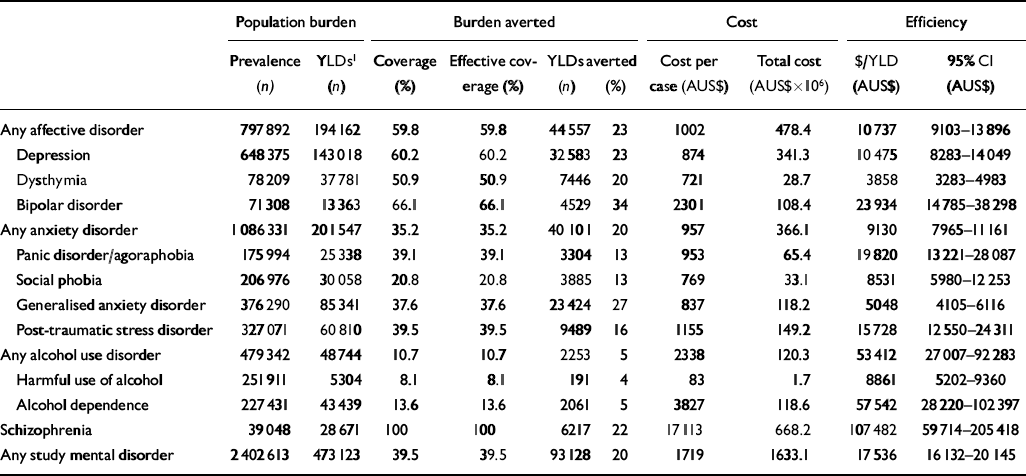
Cost-effectiveness of treatment given the current coverage and optimal treatment with evidence-based medicine
| Population burden | Burden averted | Cost | Efficiency | |||||||
|---|---|---|---|---|---|---|---|---|---|---|
| Prevalence | YLDs1 | Coverage | Effective cov- | YLDs averted | Cost per | Total cost | $/YLD | 95% CI | ||
| (n) | (n) | (%) | erage (%) | (n) | (%) | case (AUS$) | (AUS$×106) | (AUS$) | (AUS$) | |
| Any affective disorder | 797 892 | 194 162 | 59.8 | 59.8 | 44 557 | 23 | 1002 | 478.4 | 10 737 | 9103-13 896 |
| Depression | 648 375 | 143 0 18 | 60.2 | 60.2 | 32 583 | 23 | 874 | 341.3 | 10 475 | 8283-14 049 |
| Dysthymia | 78 209 | 37 781 | 50.9 | 50.9 | 7446 | 20 | 721 | 28.7 | 3858 | 3283-4983 |
| Bipolar disorder | 71 308 | 13 363 | 66.1 | 66.1 | 4529 | 34 | 2301 | 108.4 | 23 934 | 14 785-38 298 |
| Any anxiety disorder | 1 086 331 | 20 1 547 | 35.2 | 35.2 | 40 10 1 | 20 | 957 | 366.1 | 9130 | 7965-11 161 |
| Panic disorder/agoraphobia | 175 994 | 25 338 | 39.1 | 39.1 | 3304 | 13 | 953 | 65.4 | 19 820 | 13 221-28 087 |
| Social phobia | 206 976 | 30 058 | 20.8 | 20.8 | 3885 | 13 | 769 | 33.1 | 8531 | 5980-12 253 |
| Generalised anxiety disorder | 376 290 | 85 341 | 37.6 | 37.6 | 23 424 | 27 | 837 | 118.2 | 5048 | 4105-6116 |
| Post-traumatic stress disorder | 327 071 | 60 810 | 39.5 | 39.5 | 9489 | 16 | 1155 | 149.2 | 15 728 | 12 550-24 311 |
| Any alcohol use disorder | 479 342 | 48 744 | 10.7 | 10.7 | 2253 | 5 | 2338 | 120.3 | 53 412 | 27 007-92 283 |
| Harmful use of alcohol | 251 911 | 5304 | 8.1 | 8.1 | 191 | 4 | 83 | 1.7 | 8861 | 5202-9360 |
| Alcohol dependence | 227 431 | 43 439 | 13.6 | 13.6 | 2061 | 5 | 3827 | 118.6 | 57 542 | 28 220-102 397 |
| Schizophrenia | 39 048 | 28 671 | 100 | 100 | 6217 | 22 | 17 113 | 668.2 | 107 482 | 59 714-205 418 |
| Any study mental disorder | 2 402 613 | 473 123 | 39.5 | 39.5 | 93 128 | 20 | 1719 | 1633.1 | 17 536 | 16 132-20 145 |
RESULTS
In Table 1 we present the assumptions that underlie this set of studies. In Table 2 we present the results for the current situation in Australia using data that appear in each of the individual papers for each of the ten mental disorders studied and for the four disorder groups. In the present paper we provide additional estimates summed across all ten mental disorders. Data are tabulated by diagnostic group, by the estimated numbers of cases in the population and by the estimated total YLDs that would be lost in the absence of treatment in the Australian population. Next in the table are data on the percentage coverage, percentage effective or evidence-based medicine coverage and absolute number and percentage of YLDs averted. Lastly, there are data on the average cost per case, the total cost and the efficiency (including confidence intervals) in 1997 Australian dollars per YLD averted, again by the various diagnostic groupings. Only a proportion of people who met the criteria for an ICD–10 mental disorder reported receiving an evidence-based intervention.
The current mix of coverage and interventions was estimated to reach two-fifths of cases, although only one-fifth received a potentially effective treatment. The remaining cases were presumed to generate a treatment cost but no benefit. This mix of interventions was estimated to avert some 61 000 YLDs, which is one-eighth of the YLDs attributed to these mental disorders. About one-fifth of the burden of bipolar disorder was deemed to be averted by effective treatment, whereas only one-fiftieth of the burden of alcohol use disorders was averted, in part owing to the very low rate of effective coverage. The total cost of current interventions was AUS$1800 million, with the cost per case of schizophrenia being ten times the average.
In Table 3 we present data for optimal treatment, that is, patients are expected to receive optimal or evidence-based treatment, now defined and costed on the basis of established guidelines. Coverage and severity are held at the same level as in Table 2. Effective coverage is deemed to reach two-fifths of people with mental disorders and the replacement of ineffective with effective treatment results in an extra 30 000 YLDs being averted, so one-fifth of the YLDs attributed to these mental disorders could be averted. One-third of the burden of bipolar disorder was deemed to be averted by effective treatment, whereas only one-twentieth of the burden of alcohol use disorders was averted, again in part owing to the very low rate of effective coverage.
The total cost of an optimal treatment that included more therapies was AUS$1600 million, which is close to the cost of current treatment, principally because of a reduction in in-patient stays recommended by the clinical practice guidelines. Treatment of schizophrenia was still ten times the average cost per case. The average cost-effectiveness was AUS$18 000 per YLD gained. On average, the cost of providing evidence-based medicine to the people currently seeking treatment is within the present budget.
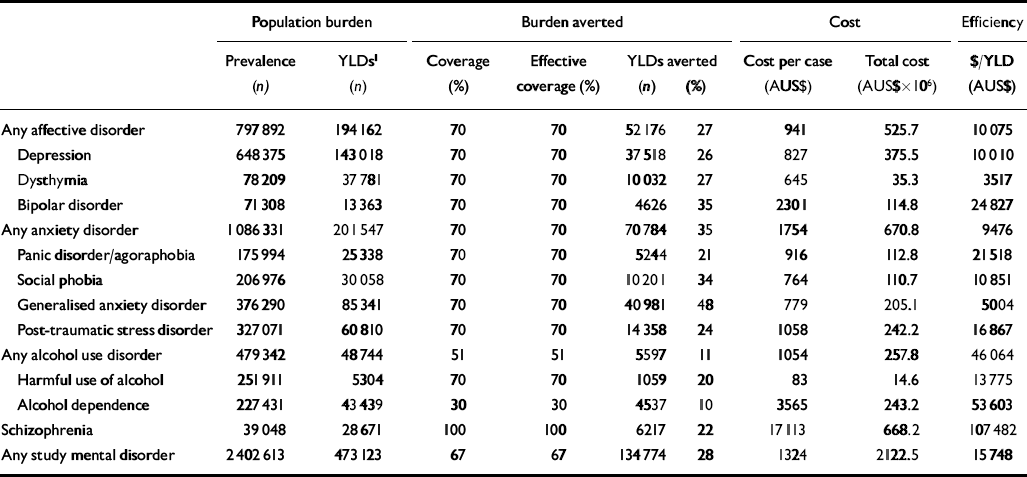
In Table 4 we present data for optimal treatment, but now coverage is increased to practical levels as defined in the method, and severity is assumed to reflect that among those in treatment as well as those who are not currently in contact with services. Coverage overall is now two-thirds, and in this situation 28% of the burden could be averted at a cost-effectiveness ratio of AUS$16 000 per YLD averted. The total cost rises by some AUS$300 million over the current level of expenditure on these disorders.
Cost-effectiveness of treatment given optimal coverage and optimal treatment with evidence-based medicine
| Population burden | Burden averted | Cost | Efficiency | ||||||
|---|---|---|---|---|---|---|---|---|---|
| Prevalence | YLDs1 | Coverage | Effective | YLDs averted | Cost per case | Total cost | $/YLD | ||
| (n) | (n) | (%) | coverage (%) | (n) | (%) | (AUS$) | (AUS$×106) | (AUS$) | |
| Any affective disorder | 797 892 | 194 162 | 70 | 70 | 52 176 | 27 | 941 | 525.7 | 10 075 |
| Depression | 648 375 | 143 0 18 | 70 | 70 | 37 518 | 26 | 827 | 375.5 | 10 0 10 |
| Dysthymia | 78 209 | 37 781 | 70 | 70 | 10 032 | 27 | 645 | 35.3 | 3517 |
| Bipolar disorder | 71 308 | 13 363 | 70 | 70 | 4626 | 35 | 2301 | 114.8 | 24 827 |
| Any anxiety disorder | 1 086 331 | 20 1 547 | 70 | 70 | 70 784 | 35 | 1754 | 670.8 | 9476 |
| Panic disorder/agoraphobia | 175 994 | 25 338 | 70 | 70 | 5244 | 21 | 916 | 112.8 | 21 518 |
| Social phobia | 206 976 | 30 058 | 70 | 70 | 10 20 1 | 34 | 764 | 110.7 | 10 851 |
| Generalised anxiety disorder | 376 290 | 85 341 | 70 | 70 | 40 981 | 48 | 779 | 205.1 | 5004 |
| Post-traumatic stress disorder | 327 071 | 60 810 | 70 | 70 | 14 358 | 24 | 1058 | 242.2 | 16 867 |
| Any alcohol use disorder | 479 342 | 48 744 | 51 | 51 | 5597 | 11 | 1054 | 257.8 | 46 064 |
| Harmful use of alcohol | 251 911 | 5304 | 70 | 70 | 1059 | 20 | 83 | 14.6 | 13 775 |
| Alcohol dependence | 227 431 | 43 439 | 30 | 30 | 4537 | 10 | 3565 | 243.2 | 53 603 |
| Schizophrenia | 39 048 | 28 671 | 100 | 100 | 6217 | 22 | 17 113 | 668.2 | 107 482 |
| Any study mental disorder | 2 402 613 | 473 123 | 67 | 67 | 134 774 | 28 | 1324 | 2122.5 | 15 748 |
In Table 5 we present data that presume the impossible situation of perfect coverage and complete evidence-based medicine, simply to show the proportion of mental disorder burden that could be averted and, as a corollary, the proportion that is unavertable given current knowledge. On average only two-fifths of the burden appears to be avertable within the limits of current best practices in mental health. The most optimistic finding is that two-thirds of the burden of generalised anxiety disorder is theoretically avertable; the most pessimistic finding is that only one-fifth of the burden of schizophrenia is avertable. Three-fifths of the burden of mental disorders therefore remains unavertable, which is a sobering fact about the limitations of current knowledge in psychiatry but one that is consistent with clinical practice.
Cost-effectiveness of treatment given 100% coverage and optimal treatment with evidence-based medicine
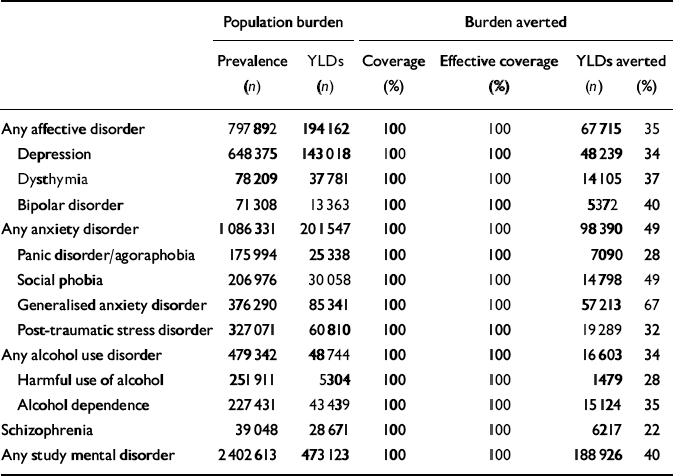
| Population burden | Burden averted | |||||
|---|---|---|---|---|---|---|
| Prevalence | YLDs | Coverage | Effective coverage | YLDs averted | ||
| (n) | (n) | (%) | (%) | (n) | (%) | |
| Any affective disorder | 797 892 | 194 162 | 100 | 100 | 67 715 | 35 |
| Depression | 648 375 | 143 0 18 | 100 | 100 | 48 239 | 34 |
| Dysthymia | 78 209 | 37 781 | 100 | 100 | 14 105 | 37 |
| Bipolar disorder | 71 308 | 13 363 | 100 | 100 | 5372 | 40 |
| Any anxiety disorder | 1 086 331 | 20 1 547 | 100 | 100 | 98 390 | 49 |
| Panic disorder/agoraphobia | 175 994 | 25 338 | 100 | 100 | 7090 | 28 |
| Social phobia | 206 976 | 30 058 | 100 | 100 | 14 798 | 49 |
| Generalised anxiety disorder | 376 290 | 85 341 | 100 | 100 | 57 213 | 67 |
| Post-traumatic stress disorder | 327 071 | 60 810 | 100 | 100 | 19 289 | 32 |
| Any alcohol use disorder | 479 342 | 48 744 | 100 | 100 | 16 603 | 34 |
| Harmful use of alcohol | 251 911 | 5304 | 100 | 100 | 1479 | 28 |
| Alcohol dependence | 227 431 | 43 439 | 100 | 100 | 15 124 | 35 |
| Schizophrenia | 39 048 | 28 671 | 100 | 100 | 6217 | 22 |
| Any study mental disorder | 2 402 613 | 473 123 | 100 | 100 | 188 926 | 40 |
DISCUSSION
This was a modelling exercise based on good epidemiological data. The summary results are that optimal treatment would avert a greater proportion of the burden of mental disorders and, even though more comprehensive, would cost no more than current treatment because of fewer in-patient stays and no use of treatments that generated costs but no benefits. Because all treatment was deemed to generate benefit, we should implement clinical practice guidelines for the treatment of mental disorders, despite resistance from the profession (Reference AndrewsAndrews, 1999). The costs presented are the direct treatment costs, sometimes equated to those of the government or provider perspective. Like many others, we have shown elsewhere that the indirect costs of illness are five or more times greater than the direct treatment costs (Reference Andrews, Hall and GoldsteinAndrews et al, 1985). By not including these costs we may have underestimated the wider costs of disorders in current care, as well as the potential cost reductions under optimal care. Whether the ratios of indirect to direct costs are likely to differ by disorder is beyond the scope of this paper.
The present findings suggest that even if everyone was treated in the best possible fashion, about 60% of the burden of mental disorders appears to be unavertable in the light of current knowledge. Throughout all calculations about current, optimal or targeted optimal (Tables 2, 3, 4), the treatment of schizophrenia costs significantly more than the treatment of the other disorders. It is difficult to express the cost-effectiveness in other currencies simply because the unit costs are based on prices paid for services in Australia in 1997 and the prices in other countries can be markedly different. The strength of the present set of calculations is the ability to compare the cost of current and optimal treatment across the ten disorders, a relationship that may well apply in other countries. The cost of one unit of health gain in schizophrenia seems likely to be an order of magnitude greater than the cost of one unit of health gain in anxiety or depressive disorders, whatever the currency involved.
The limitations of this series of studies are many. Although the surveys from which the data are derived are good, it must be remembered that the data are based on self-reported symptoms to establish diagnosis and self-reported treatments to establish costs. The threshold for the proportion of people currently receiving evidence-based medicine in Table 2 is optimistic (‘two visits from the same professional and the receipt of medication or cognitive–behavioural therapy’) and a stricter definition would have resulted in less efficiency and less burden averted. Nevertheless, few patients reported the minimum of two visits, with seven visits to a general practitioner being the mean and additional visits of the same frequency being reported to psychiatrists or psychologists. Optimal treatment, as costed in Tables 3, 4, 5, incorporated the recommendations of clinical practice guidelines and their operationalisation by the investigators, both of which may be imperfect. Adherence, calculated from the results of intention-to-treat analyses in randomised controlled trials, even compensated by our inclusion of treatment-resistant groups, may overestimate the real situation. The present data are therefore optimistic, but to correct for these biases would require data that do not exist.
A number of other diagnoses were identified in the surveys. Data on obsessive–compulsive disorder, drug use disorders and neurasthenia were not included because of the small numbers of people identifying these disorders as their principal complaint. Data on personality disorders were not included because of the lack of evidence-based guidelines for treatment. Nevertheless, the four disorder groups studied represent 80% of the identified costs of treatment for mental disorders. This study has a 1-year time horizon and there is evidence that a longer time horizon might have shown a greater proportion of burden able to be averted. But because the data for all disorders were only available for the 1-year period, and the evidence about burden averted in the longer term is only available for depression, this is a necessary limitation. The method to estimate YLDs averted from effect sizes is new, and although the magnitude of change is consistent with the few studies in mental health that have measured changes in symptoms and health state preference values (e.g. Reference Hatziandreu, Brown and RevickiHatziandreu et al, 1994; Reference Lonnqvist, Sintonen and SyvalahtiLonnqvist et al, 1994), the method would benefit from replication. The confidence intervals are wide, reflecting uncertainty in some parts of the analysis, but even so the confidence intervals around some interventions, especially those for schizophrenia, indicate that differences in efficiency between some disorders are real.
The strength of the study is that it is based on two population surveys that have the capacity to provide a view of health service efficiency in Australia around 1997. Assumptions allow the cost and effectiveness of evidence-based medicine to be examined. Importantly, the method will allow replication in other data-sets as well as comparison with the cost-effectiveness of current and optimal treatment for a number of physical disorders. Current work is under way to compare these results with three physical disorders chosen to resemble mental disorders in prevalence, burden and natural history.
The results in Tables 2, 3, 4, 5 are displayed according to the burden presently averted, the burden averted by improvement in intervention and coverage and the burden unavertable in the light of existing knowledge. We would like to review these results, commenting on each of the disorders in turn.
-
(a) Affective disorders. Current coverage is 60%, with about half of those with affective disorders receiving medication or cognitive–behavioural therapy. Fifteen per cent of the burden is averted, at an average cost of AUS$20 000 per YLD. When all receive treatment according to the clinical practice guidelines, the burden averted climbs to 23% at an average of AUS$11 000 per YLD. The gratifying result is that coverage of bipolar disorder is nearly optimal and that evidence-based medicine could avert one-third of the burden of that disorder at reasonable cost. Optimal treatment for the affective disorders is cost-effective, and that for dysthymia (at AUS$4000 per YLD) is especially so.
-
(b) Anxiety disorders. Current coverage is low, too low for what are the most treatable disorders, with, for example, only 7% of people with social phobia receiving notionally effective treatment. We do not know why coverage is so low: these patients identified anxiety as their principal complaint and treatment with selective serotonin reuptake inhibitors is not difficult. Increasing the coverage to 70%, with all getting evidence-based medicine, changes the picture. One-third of the burden is averted (half of the burden in generalised anxiety disorder) at an average cost of AUS$9000 per DALY. Nevertheless, even with perfect coverage and treatment, half the burden of anxiety disorders would remain unavertable (Table 5).
-
(c) Alcohol use disorders. Coverage, at 11%, is appalling. Only 2% of the burden is averted and, at AUS$97 000 per YLD, efficiency is low, not because the cost per case is especially high but because the calculated healthgain is low. Increasing the coverage of interventions for harmful use to 70% and for dependence to 30% would result in one-ninth of the burden being averted, but the average cost per YLD remains high. Nevertheless, a campaign to encourage recognition and brief intervention in primary care for cases of harmful use may well be a sensible investment of funds, given the potential efficiency of AUS$14 000 per YLD gained for such a treatment. On the other hand, evidence-based medicine for alcohol dependence is costly, even though in-patient detoxification was considered only for people with hallucinations or seizures in our model.
-
(d) Schizophrenia. Coverage of schizophrenia was deemed to be complete because the data were obtained from catchment area studies in which every effort was made to identify all cases in contact with any of a wide range of services. We have argued elsewhere that there are probably an additional 10–20% of undiagnosed cases in the community (Reference Andrews, Sanderson and CorryAndrews et al, 2003a ) but for the purposes of this exercise we have accepted the coverage at a notional 100%. Current treatment with effective agents relieves 13% of the burden at a cost close to AUS$200 000 per YLD gained, due in part to the high cost per case. The sampling strategy for this group was different from that for the other disorders and may have resulted in a scarcity of milder cases. Even so, it is unlikely that the inclusion of such people would increase the efficiency of treatment or the burden averted to levels comparable with the other disorders. Schizophrenia is an expensive disease, a fact that has been known for some time (Reference Andrews, Hall and GoldsteinAndrews et al, 1985). Adoption of clinical practice guidelines could increase the proportion of YLDs averted to 22%, but the cost per YLD would still remain somewhere between AUS$60 000 and AUS$205 000. It would be important to examine the detail of this expenditure to determine whether the same clinical outcome could be achieved with less use of the high-cost elements, giving greater efficiency overall. Nevertheless, there are societal and humanitarian needs that make the treatment of schizophrenia imperative, no matter what the cost (see discussion in Reference Andrews, Sanderson and CorryAndrews et al, 2003a ).
It would be simple to look at these results and argue for a health system that would return the greatest health gain for the least money. Certainly we would recommend that the coverage of anxiety and depressive disorders be increased, given that treatment is so cost-effective. Given the affordability of evidence-based treatment we would recommend that clinicians be encouraged to practise evidence-based medicine, even if the budgetary and organisational requirements of implementation are considerable. However, setting priorities for service delivery is about equity, need and societal demand, as well as about efficiency (Reference CalmanCalman, 1994; Reference Callahan, Boyle and CallahanCallahan, 1995). Although there is extensive consideration of the tension between these elements in the literature, there is little consensus as to how they should be operationalised or whether such priority setting should be implicit or explicit (Reference MusgroveMusgrove, 1999; Reference RosenheckRosenheck, 1999; Reference JackJack, 2000). Moreover, the existence of a hierarchical relationship among the grounds thought to justify public expenditure is also widely debated (Reference MaynardMaynard, 1999; Reference MusgroveMusgrove, 1999; Reference RosenheckRosenheck, 1999). A detailed analysis of these questions is warranted, but is best reserved until the present results have been discussed and the benefits and gains of each element in the treatment process carefully assessed (see Reference GoldbergGoldberg, 2003; Reference WarnerWarner, 2003; Reference Haby, Carter and MihalopolousHaby et al, 2004). In the meantime, the high cost of schizophrenia (AUS$200 000 per YLD) is a signal that cannot be ignored. We need to invest serious money into research on the mechanism behind this disease, exactly as we are doing for Alzheimer's disease, and did for HIV/AIDS. Further, given that 60% of the burden of mental disorders appears to be unavertable with current knowledge, it would be reasonable to conclude that further research into both the prevention and the mechanisms of these diseases is required.
Clinical Implications and Limitations
CLINICAL IMPLICATIONS
-
▪ The proportion of the burden of mental disorders averted by current treatment and coverage is low: optimal treatment to all who met the criteria for a mental disorder would still leave 60% of the burden unaverted.
-
▪ Treatment of the affective and anxiety disorders is very cost-effective but that of alcohol dependence and schizophrenia is markedly less so.
-
▪ There are external factors that override efficiency as a determinant of who should be treated.
LIMITATIONS
-
▪ These data come from modelling studies based on good epidemiology tempered by the assumptions listed in Table 1.
-
▪ Optimal evidence-based treatment presumes treatment concordance by physician and patient, as seen in efficacy studies, discounted for treatment resistance. This may be optimistic.
-
▪ The potential benefits of interventions from outside the health system are not included, so the health gain estimate may be too low.
Acknowledgements
This study was supported by a grant from the National Health and Medical. Research Council of Australia (99-113 807) and by a contract from the. Australian Department of Health and Ageing.




eLetters
No eLetters have been published for this article.