

Organizations in the 21st century are characterized by ever-increasing global competition, greater customer expectations and constant change. In this situation, the most risky strategy is inaction (Wind & Main, Reference Wind and Main1999; Beer & Nohria, Reference Beer and Nohria2000; Farjoun, Reference Farjoun2007) or predictability (Rindova, Ferrier, & Wiltbank, Reference Rindova, Ferrier and Wiltbank2010). Thus, the strategic fit is still central to strategic management nowadays. Understanding this process can facilitate prompt decision making at a time when speed has become a competitive weapon and it may also facilitate the strategic fit that all organizations desire (Rajagopalan & Spreitzer, Reference Rajagopalan and Spreitzer1997).
According to the resources- and capability-based theory, strategic change can be understood as a dynamic process that takes place in the firm, in response to managerial interpretations of external or internal events (Adner & Helfat, Reference Adner and Helfat2003; Gedajlovic, Lubatkin, & Schulze, Reference Gedajlovic, Lubatkin and Schulze2004; Clark & Soulsby, Reference Clark and Soulsby2007; Boyne & Meier, Reference Boyne and Meier2009). According to this perspective, the capability of a firm to respond to its environment is linked to the aptitude, experience and competence of its top managers (Adner & Helfat, Reference Adner and Helfat2003; Gedajlovic, Lubatkin, & Schulze, Reference Gedajlovic, Lubatkin and Schulze2004). Some researchers have pointed out that top managers become blind to the need for change (Miller & Shamsie, Reference Miller2001), because they are committed to current strategies (Miller, Reference Miller1993). Therefore, senior managerial turnover is the primary agency by which strategic change can occur (Barker, Patterson, & Mueller, Reference Barker, Patterson and Mueller2001; Bigley & Wiersema, Reference Bigley and Wiersema2002; Boyne & Meier, Reference Boyne and Meier2009). Nevertheless, greater attention has to be paid to the role of managers in strategic change (Adner & Helfat, Reference Adner and Helfat2003), because there is still considerable ambiguity over what top managers actually do in the strategic planning process (Jarzabkowski, Reference Jarzabkowski2008). In this sense, our investigation sets out the following research question: Is it necessary to incorporate new knowledge and capabilities in the top management team (TMT) to achieve strategic change? A response to this question implies: (i) delving deeper into the sequence between managerial change and strategic change; and, (ii) taking a closer look at the concept of strategic change, considering it as a complex construct with multiple interactions between its components. Both the sequence and the content of these changes as a process have been overlooked by researchers (Van de Ven & Poole, Reference Van de Ven2005).
Establishing the temporal sequence of change is per se one of the most important research questions in the field of management, because its implementation may speed up in increasingly dynamic and turbulent environments (Rajagopalan & Spreitzer, Reference Rajagopalan and Spreitzer1997). We first need to establish the sequences between both processes (Van de Ven & Poole, Reference Van de Ven and Poole1995), in order to establish a causal relationship between managerial change and strategic change. Prior research in this field has led to inconclusive results. Although some authors have contended that managerial change precedes strategic change (Gordon, Steward, Sweo, & Luker, Reference Gordon, Stewart, Sweo and Luker2000; Barker, Patterson, & Mueller, Reference Barker, Patterson and Mueller2001; Bigley & Wiersema, Reference Bigley and Wiersema2002; Datta, Rajagopolan, & Zhang, Reference Datta, Rajagopolan and Zhang2003; Boyne & Meier, Reference Boyne and Meier2009), others have placed strategic change before managerial change (Wiersema & Bantel, Reference Wiersema and Bantel1993; Jarzabkowski, Reference Jarzabkowski2003; Zhang, Reference Zhang and Rajagopalan2006). The inconsistency of the results may perhaps be explained by the different ways of measuring strategic change. Most empirical studies on corporate governance and strategic change have adopted a narrower approach in their definition of strategic change (Brunninge, Nordqvist, & Wiklund, Reference Brunninge, Nordqvist and Wiklund2007). According to Van de Ven and Poole (Reference Van de Ven2005), this work considers the concept of strategic change as a process that describes, (1) the temporal order and sequence of events (narrative process); and, (2) the analysis of differences in the different dimensions of strategic change over time: strategy, structure, power and control system.
Our results show that the reorganization of roles between the members of the team, a previously unused typology of change in the TMT, permits the renewal of the capabilities and knowledge of the top managers. The majority of previous studies on the literature have centred on the incorporation of new capabilities and knowledge through the incorporation of new members in TMT, excluding the perspectives considered in this work. Our investigation shows how the assignment of new responsibilities to current top managers increases their awareness of change in their environment, because they analyse it from a new approach, in a new role. In this way, renewed use of the capabilities and the knowledge of the TMT provoke strategic change, without any need to change the composition of the TMT.
Furthermore, our research has identified key orientations in the development of strategy and structure, which means that we may improve our knowledge of the construct of strategic change. The proposed analysis has allowed the identification of key orientations in the strategy (linked to growth and innovation) and the structure of the firm (visible in its organizational chart and business unit reorganization) that are always present when strategic change takes place.
Finally, following the suggestions of various authors (Pettigrew, Reference Pettigrew, Woodman and Cameron1990, Reference Pettigrew1997; Van de Ven & Huber, Reference Van de Ven and Poole1990; Van de Ven, Reference Van de Ven and Huber1992; Van de Ven & Poole, Reference Van de Ven and Poole1995, Reference Van de Ven2005; Pettigrew, Woodman, & Cameron, Reference Pettigrew2001), a longitudinal qualitative analysis was performed, to take into consideration both the dynamic character of the firm and the specific nature of the change itself. Qualitative information enables propositions and hypotheses to be put forward. This information will then form the basis of future research (Noda & Bower, Reference Noda and Bower1996).
The remainder of this paper is structured into four sections. The next section presents a review of the literature on strategic change and managerial succession. The following section describes the methodology employed in the study, followed by a presentation of the findings. The paper concludes with a summary of the conclusions and their implications, including suggestions for future avenues of research.
Theoretical Framework
Direction of change
The resource- and capability-based theory of the firm supports the view that the capability of a company to respond to its environment is linked to the aptitude, experience and competence of its TMT (Dutton & Duncan, Reference Dutton and Duncan1987; Adner & Helfat, Reference Adner and Helfat2003; Gedajlovic, Lubatkin, & Schulze, Reference Gedajlovic, Lubatkin and Schulze2004), which in turn determine priorities regarding its resources and capabilities (Mosakowski, Reference Mosakowski1998). Since this perspective, TMT change is considered as an adaptive mechanism to assure strategic change (Wiersema & Bantel, Reference Wiersema and Bantel1993; Hayward & Shimizu, Reference Hayward and Shimizu2006; Decker & Mellewigt, Reference Decker and Mellewigt2012). Taking these arguments into account, our work begins with the idea that managerial change precedes strategic change. The literature points out that managers possess different qualities and quantities of generic, industry-specific, firm-specific (Castanias & Helfat, Reference Castanias and Helfat1991, Reference Castanias and Helfat2001) and related industry skills (Bailey & Helfat, Reference Bailey and Helfat2003) that are at the same time valuable, rare, inimitable, nonsubstitutable and difficult to transfer. In the case of managerial change, only some of these skills are transferable. So, firm-specific and industry-specific skills held by managers are difficult to exploit, if the top managers change their firm or industry. On the contrary, if top managers change positions within the firm, they can exploit all of their skills. Nevertheless, researchers indicate that new top managers who have arrived at their posts through internal promotion, from within the firm, are accustomed to the way of doing things in the firm, and are less likely to initiate strategic change (Hambrick, Geletkanycz, & Fredrickson, Reference Hambrick and Mason1993). In contrast, an employee from another firm who accesses a top manager post provides a fresh perspective that favours strategic change (Bailey & Helfat, Reference Bailey and Helfat2003), although not all of their capabilities may be exploited, especially firm-specific skills (Harris & Helfat, Reference Harris and Helfat1997). Our research question takes this idea further. In particular, we question whether changes in the composition of the TMT are necessary to achieve strategic change.
Changes in senior management enrich the number of perspectives and increase the resource base, which gives the TMT the means to recognize the need for strategic change (Castro, de la Concha, Gravel, & Periñan, Reference Castro, de la Concha, Gravel and Periñan2009). New capabilities usually require knowledge that is likely to differ from the current knowledge base of the company (Zahra & Filatotchev, Reference Zahra and Filatotchev2004). In short, the arguments of the resource- and capability-based theory of the firm point to the importance of renewal of the resources and capabilities of the TMT, through changes in the composition of the TMT. Hence, the strong influence of top managers, from this perspective, on the response of the firm to external changes (Virany, Tushman, & Romanelli, Reference Virany, Tushman and Romanelli1992; Tushman & Rosenkopf, Reference Tushman and Rosenkopf1996; Rosenbloom, 2000). Accordingly, some authors point out that Chief Executive Office (CEO) succession (Decker & Mellewigt, Reference Decker and Mellewigt2012) and TMT turnover (Tushman & Rosenkopf, Reference Tushman and Rosenkopf1996; Barker, Patterson, & Mueller, Reference Barker, Patterson and Mueller2001; Bigley & Wiersema, Reference Bigley and Wiersema2002; Boyne & Meier, Reference Boyne and Meier2009) are key factors to overcome organizational inertia and facilitate strategic change. In practical terms, any change in the TMT provides an opportunity to evaluate the role played by the senior executives in formulating and executing company strategy. If changes in top management precede strategic change, it is logical to suppose that a causal relation may exist between top managers and strategic change.
TMT changes and the components of strategic change
Strategic change involves simultaneous and discontinuous shifts throughout the organization in strategy, power, structure and control (Virany, Tushman, & Romanelli, Reference Virany, Tushman and Romanelli1992). But, the majority of studies about corporate governance and strategic change have focussed on only one component of change – such as strategy (Miller, Reference Miller1993; Boeker, Reference Boeker1997; Greve & Mitsuhashi, Reference Greve and Mitsuhashi2007; Zhang & Rajagopalan, Reference Zhang2010), structure (Balogun & Johnson, Reference Balogun and Johnson2004), power distribution (Weisbach, Reference Weisbach1988; Miller, Reference Miller1993) and control systems (Simons, Reference Simons1994). Such a narrow definition of strategic change prevents the complexity of interactions between the different organizational and environmental variables from being captured (Rajagopalan & Spreitzer, Reference Rajagopalan and Spreitzer1997). Some authors have also contended that ‘strategic change’ implies ‘radical modifications’ that take place within a short space of time – perhaps 2 years (Tushman & Romanelli, Reference Tushman and Romanelli1985; Romanelli & Tushman, Reference Romanelli and Tushman1994; Tushman & Rosenkopf, Reference Tushman and Rosenkopf1996; Gordon et al., Reference Gordon, Stewart, Sweo and Luker2000). However, more recent studies have shown that the critical factor is the magnitude of change, rather than the time taken to implement it (Amis, Slack, & Hinnings, Reference Amis, Slack and Hinings2004).
In the literature, several studies have linked managerial succession to changes in one or more of the above-listed variables in the definition of strategic change – that is, strategy, structure, power distribution and control systems (Table 1). CEO succession (Miller, Reference Miller1993; Simons, Reference Simons1994; Pitcher, Chreim, & Kisfalvi, Reference Pitcher, Chreim and Kisfalvi2000) and TMT changes have a positive influence on strategy formulation (Boeker, Reference Boeker1997; Barker, Patterson, & Mueller, Reference Barker, Patterson and Mueller2001); on structure (Lant, Milliken, & Batra, Reference Lant, Milliken and Batra1992; Barker, Patterson, & Mueller, Reference Barker, Patterson and Mueller2001); on power distribution (Weisbach, Reference Weisbach1988; Miller, Reference Miller1993; Romanelli & Tushman, Reference Romanelli and Tushman1994); and on control system (Simons, Reference Simons1994; Barker, Patterson, & Mueller, Reference Barker, Patterson and Mueller2001). However, their results have been inconsistent. Furthermore, some have referred to changes in ‘corporate strategy’ when discussing such matters (Boeker, Reference Boeker1997), while others have considered changes to the level of ‘business tactics’ (Barker, Patterson, & Mueller, Reference Barker, Patterson and Mueller2001).
Literature review
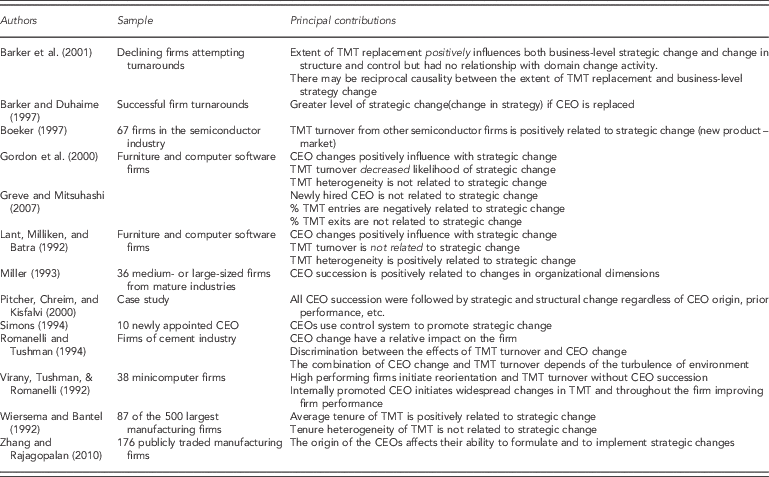
Note. CEO=Chief Executive Officer; TMT=top management team.
It is apparent from this brief review of previous studies (see Table 1) that empirical evidence exists to show that CEO succession, in particular, and, to a lesser extent, TMT turnover both affect a range of variables that can be considered components of strategic change. However, considerable ambiguity persists over the actual activities of top managers in the process of strategic change (Jarzabkowski, Reference Jarzabkowski2008). Besides, most of these studies have focussed on only one of these components of change, and especially on strategy. This paper includes all the components of strategic change and analyses the essential modifications that have to be present, so that we may consider change as strategic change.
Methodology
A response to our research question implies: (i) in the first place, an examination of the relation between managerial change and strategic change in greater depth, by analysing the sequence between these processes; and, (ii) in second place, it implies looking at both the concept and the content of strategic change in greater depth.
Certain authors have analysed the most suitable research methods for the study of company change. These methods take into consideration both the dynamic character of the firm and the nature of change itself. Prominent among these methods are those proposed by Pettigrew (Reference Pettigrew, Woodman and Cameron1990, Reference Pettigrew1997), Van de Ven and Huber (Reference Van de Ven and Poole1990), Van de Ven (Reference Van de Ven and Huber1992), Van de Ven and Poole (Reference Van de Ven and Poole1995; Reference Van de Ven2005) and Fox-Wolfgramm (Reference Fox-Wolfgramm1997). Two definitions of change are often used in organizational studies: (i) an observed difference over time in an organizational entity on selected dimensions; and, (ii) a narrative describing a sequence of events on how development and change unfold (Van de Ven & Poole, Reference Van de Ven2005). The second approach is often associated with a process theory explanation of the temporal order and sequence, in which events occur based on a story or historical narrative that involve change (Pettigrew, Reference Pettigrew, Woodman and Cameron1990, Reference Pettigrew1997; Pentland, Reference Pentland1999; Poole, Van de Ven, Dooley, & Holmes, Reference Poole, Van de Ven, Dooley and Holmes2000). From this point of view, events represent changes in the variables and these changes constitute stages in the process within an input–process–output model. Thus, as a process unfolds, its sequence of events, inherent causes and consequences can be observed, and the proverbial ‘black box’ is opened to establish the antecedents and the results of the changes that have been observed (Van de Ven & Huber, Reference Van de Ven and Poole1990). This analysis calls for longitudinal research in which files, documents and reports illustrate the company’s objectives, as well as the visible results of the changes that have been implemented in them.
Sample and data collection
The initial information was constituted by all the firms listed on the Madrid Stock Exchange (Spain). We selected those firms because they provide greater access to information on the composition of their governance organs. Moreover, the listed firms are much more visible than other firms and therefore, any relevant strategy-related event would be reported in the press. Likewise, the availability of information in annual reports, relevant acts, etc., has helped us to contrast and to verify the data extracted from the press (Churchill, Reference Churchill1999).
The period of study ran from 1993 up until 2000, a period chosen for two fundamental reasons. In the first place, an important change occurred over this period in the business setting, driven by globalization and the technological revolution, which prompted many large Spanish firms to introduce strategic change (Sánchez, Galán, & Suárez, Reference Sánchez, Galán and Suárez2006). On the other hand, unlike in the earlier decade, the number of mergers over the aforementioned period was not excessive, which would otherwise have introduced bias into our investigation, when including changes in senior management due to mergers. We therefore consider that the period is suitable to pursue the objective of our study.
We began by analysing the management changes that the firms listed on the Bolsa de Madrid (Spanish Stock Exchange) experienced during the 8-year period under study. The data on these changes were collected by comparing the lists of managers in the firms’ annual reports on a year-by-year basis. Three types of managerial change were identified (Tushman & Rosenkopt, Reference Tushman and Rosenkopf1996; Gordon et al., Reference Gordon, Stewart, Sweo and Luker2000; Barker, Patterson, & Mueller, Reference Barker, Patterson and Mueller2001): succession: when the CEO changed or a CEO post appeared; turnover: when there were changes in other personnel of the TMT; and reorganization: when posts or people in positions of responsibility within the team appeared or disappeared. Turnover, which implies changing a person in a particular post, was initially considered more important for the induction of strategic change, from the point of view of the resource- and capability-based theory, because it implies a change in the set of resources and capabilities of the TMT. Therefore, reorganization was considered a minor change, because it may imply a redistribution of duties among the same employees, rather than a change in the members of the management team. Thus, the set of resources and capabilities of the TMT are maintained, although their use and application can change with reorganization. Hence, we only classified companies by CEO succession and turnover. Using qualitative data methods, we selected those companies that we expected to yield the most explanatory results. This list included those with the least typical data (Yin, Reference Yin1993; Silverman, Reference Silverman2005; Eisenhardt & Graebner, Reference Eisenhardt and Graebner2007; Siggelkow, Reference Siggelkow2007), such as CEO succession without TMT turnover and TMT turnover without CEO succession, which were relatively less frequent and would not fit in with the relations that we wished to establish (Gibbert & Ruigrok, Reference Gibbert and Ruigrok2010), in order to ensure internal validity. Our objective was to provide a wide range of examples of succession and TMT turnover. The two extremes of high-turnover companies and firms with no change in their TMT were included to further our understanding of the relations under analysis (Eisenhardt & Graebner, Reference Eisenhardt and Graebner2007). Finally, a sample was constituted of 10 Spanish companies on the basis of qualitative information over the 8-year period of the study.
Of the 10 selected firms, four – the first to the fourth in Table 2 – had undergone CEO succession and TMT turnover; two firms – the fifth and the sixth – had undergone CEO succession but no TMT turnover; two firms – the seventh and the eighth firms – had experienced TMT turnover, but no CEO succession; and two companies – the ninth and the tenth firms – had neither experienced CEO succession nor significant turnover in the TMT throughout the entire period under study. Four examples were placed in CEO succession and TMT changes to diversify the range in this section. Eisenhardt (Reference Eisenhardt1989) suggested that four to ten case studies may provide a sound basis for analytical generalization. Besides, different subperiods of change for each company could be identified over the extensive time span of our study. This breakdown into subperiods increased the number of observations for each type of change, thereby enriching the analysis and facilitating conclusions. The subperiods were chosen because of a certain degree of continuity in the events within each period and specific discontinuities at the frontiers of the time frame (Langley, Reference Langley1999; Langley, Smallman, Tsoukas, & Van de Ven, Reference Langley, Smallman, Tsoukas and Van de Ven2013). Table 2 shows the selected firms, their classification in terms of the managerial changes they have undergone and the fundamental characteristics of each one.
Sample characteristics
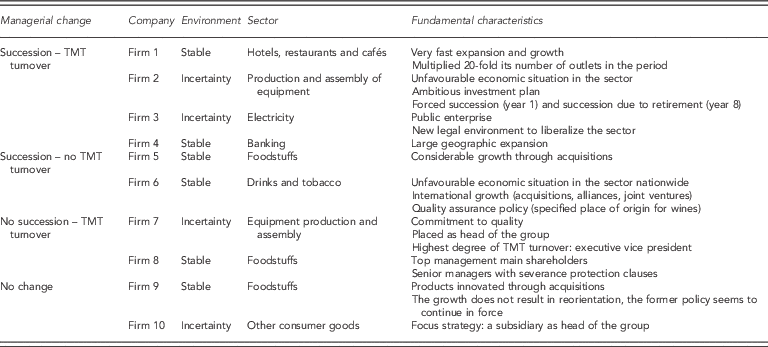
Note. TMT=top management team.
Having selected the cases, in reference to earlier studies (Miller, Reference Miller1993; Romanelli & Tushman, Reference Romanelli and Tushman1994; Rindova, Ferrier & Wiltbank, Reference Rindova, Ferrier and Wiltbank2010; Durukan, Ozkan, & Dalkilic, Reference Durukan, Ozkan and Dalkilic2012), we used information published in the press about each of the companies to detect strategic changes. As Klarner and Raisch pointed out, these archival data provide ‘consistent information for longitudinal studies, but data from questionnaires and interviews can be contaminated by the “biased recall” of respondents’ (Reference Klarner and Raisch2013: 165).
Strategic change includes modifications in strategy, structure, power distribution and control systems. Following an exhaustive review of the literature on strategic change, as well as the measures added by different authors, these four factors were assessed as follows:
-
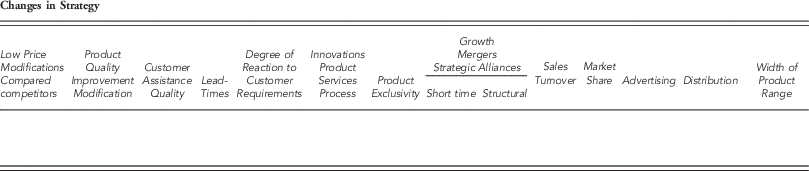
∙ Strategy changes were understood as modifications to one or more of 14 variables: price, product quality, quality of service, delivery time, degree of reaction to customer needs, product innovation, differentiation or exclusiveness of the product, structural or short-term company expansion, target sales, market share, advertising spending, company distribution system, and width of product range (Lant, Milliken, & Batra, Reference Lant, Milliken and Batra1992).
-
∙ Structural changes included modifications to one or more of the following four variables: organization chart, subsidiary grouping criteria, business unit size and reorganization, and opening or closure of plants (Pitcher, Chreim, & Kisfalvi, Reference Pitcher, Chreim and Kisfalvi2000). Another variable traditionally included as part of this group is the creation or the elimination of senior management positions (Tushman & Rosenkopf, Reference Tushman and Rosenkopf1996). However, in our study, this event was considered a managerial change and is therefore omitted in this section.
-
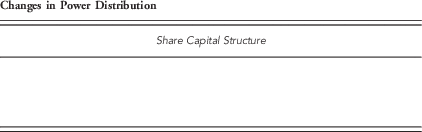
∙ Power changes refer to change in the company’s capital structure (Weisbach, Reference Weisbach1988). Power distribution refers to changes in the shareholders, the board of directors and the TMT. Public firms publish annual information on the composition of their corporate governance bodies. Therefore, we only used the news items to identify changes in the company’s capital structure (Weisbach, Reference Weisbach1988).
-
∙ Changes in control systems involved modifications to one of more of the following variables: (i) incentive systems; (ii) budget (Barker, Patterson, & Mueller, Reference Barker, Patterson and Mueller2001); (iii) information systems (Lant, Milliken, & Batra, Reference Lant, Milliken and Batra1992; Miller, Reference Miller1993); (iv) inventory control (Lant, Milliken, & Batra, Reference Lant, Milliken and Batra1992); (v) planning systems (Barker, Patterson, & Mueller, Reference Barker, Patterson and Mueller2001); and, (vi) administration expenses (Simons, Reference Simons1994).
The source of this information was the Baratz database, which provides a summary of articles published in the main Spanish financial journals. In total, 3,909 news items were identified for the 10 firms in the sample. We also looked at any relevant facts held by the Madrid Stock Exchange relating to the period of our study, so as to corroborate the data, and compared them with the information from the Baratz database. The search for information was oriented towards content related to the parameters of strategic change – strategy, structure, power distribution and control system (Tushman & Romanelli, Reference Tushman and Romanelli1985). This comparison between archival data sources showed that the relevant facts relate above all to the distribution of power with almost no reference to strategy, structure and control systems. Different data sources may perhaps provide different information (Gibbert & Ruigrok, Reference Gibbert and Ruigrok2010). Accordingly, we created organizational event histories by reviewing information published in the press on each of the companies during the relevant time span.
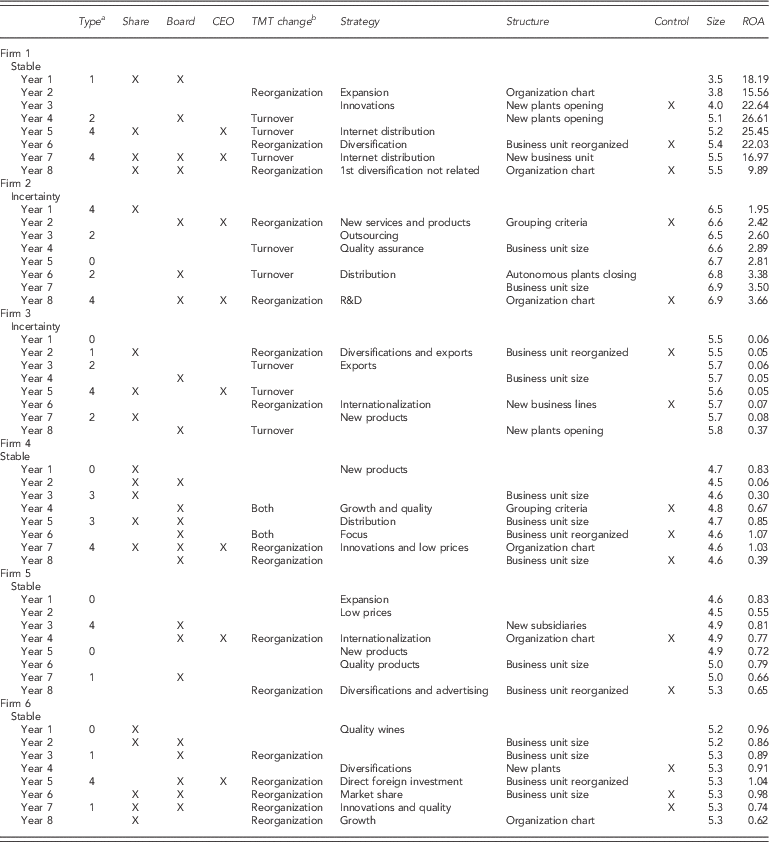
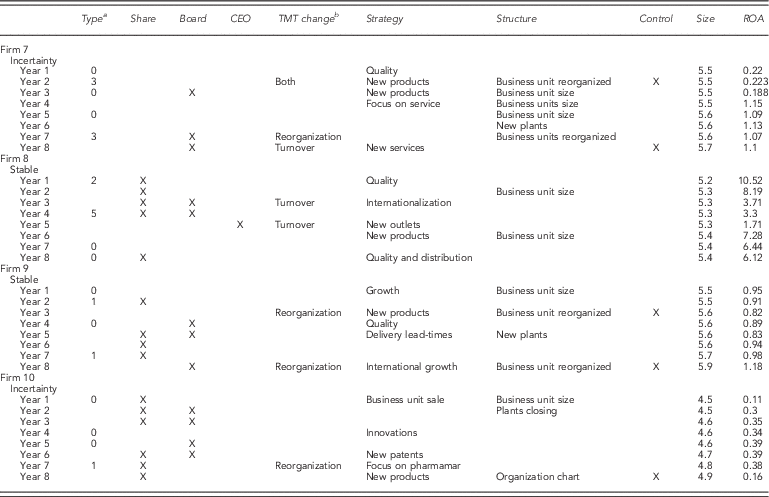
Further studies have indicated that the relation between managers and strategic change is contingent, among other aspects, on the environment (Virany, Tushman, & Romanelli, Reference Virany, Tushman and Romanelli1992; Tushman & Rosenkopf, Reference Tushman and Rosenkopf1996), the industrial effect (Geletkanycz & Hambrick, Reference Geletkanycz and Hambrick1997) and the temporal effect (Adner & Helfat, Reference Adner and Helfat2003). So, contextual data such as uncertainty in the industry and firm performance and size were collected. These data were extracted from information published in annual reports. Among the firms in the sample, six compete in stable business environments, while four others are innovative firms that compete in a business environment with greater uncertainty. Return on assets (ROA) was taken as the specific measure of performance, because it captures the degree to which top managers have effectively deployed firm assets (Geletkanycz & Hambrick, Reference Geletkanycz and Hambrick1997) and it is useful to value the effectiveness of the strategy of the firm (Oster, Reference Oster1990). The ROA for 1992 and 2001 was also included in the study to evaluate both previous performance and performance after the changes to the firms that took place at the start and at the end of the period under analysis. Firm size was calculated by the logarithmic transformation of their sales volumes for each year. These data are shown in Tables 3 and 4.
Chronological summaries of the most relevant events of the sample firms (Firms 1-6)
Note.
a Top management team (TMT) changes typologies: 1, reorganization; 2, turnover; 3, turnover+reorganization; 4, Chief Executive Officer (CEO)+reorganization; 5, CEO+turnover; 0, no TMT changes.
b Both: reorganization and turnover.
Chronological summaries of the most relevant events of the sample firms (Firms 7-10)
Note.
a Top management team (TMT) changes typologies: 1, reorganization; 2, turnover; 3, turnover+reorganization; 4, Chief Executive Officer (CEO)+reorganization; 5, CEO+turnover; 0, no TMT changes.
b Both: reorganization and turnover.
Data analysis
A quantitative data analysis strategy was used to reduce the complex mass of information to a set of quantitative time series, in combination with synthetic strategy, so that we could deduce the sequences (Langley, Reference Langley1999) between management change and strategic change.
We listed and coded qualitative incidents according to a predefined set of coding instructions on the parameters of strategic change (Appendix 1). In all, 3,909 news items were independently sorted by three coders (one author and another two experts who had not participated in the study). The coders developed a profile sheet for each company from information on the types of change or events under consideration (see Appendix 2). All news items in which a substantial change in any of these dimensions was observed were assigned a value of 1 in the appropriate category alongside the particular date; otherwise, a 0 was recorded. The various events concerning each company published in the press were sorted into chronological order. The coders then exchanged documents and wrote independent event histories. After this, the three classifications from each coder were compared. Silverman defined reliability as ‘the degree of consistency with which instances are assigned to the same category by different observers’ (Reference Silverman2005: 2010). The lowest level of congruence between coders was 0.97. Disagreements were discussed and resolved. Their high level of congruency indicates construct validity and methodological reliability (Gibbert & Ruigrok, Reference Gibbert and Ruigrok2010). Table 5 includes some examples of the news collected from the press and its coding for the purposes of this study.
Examples of data collection of news
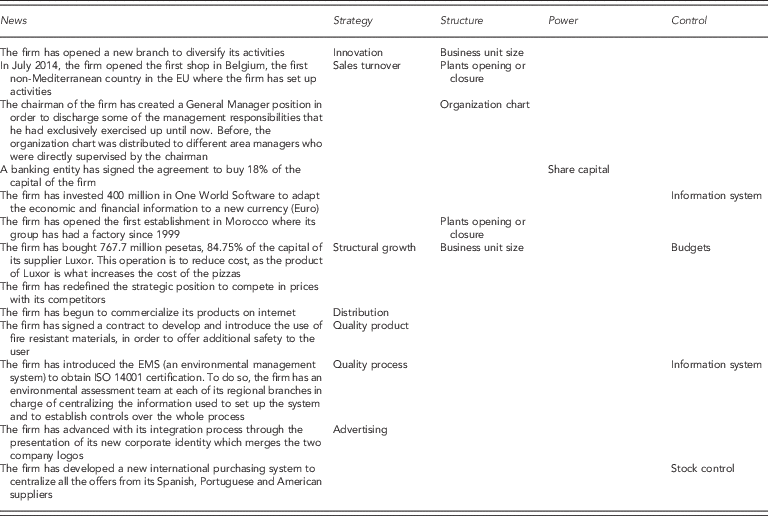
Note: EMS = environment management system.
Results and Discussion
Managerial change and strategic change
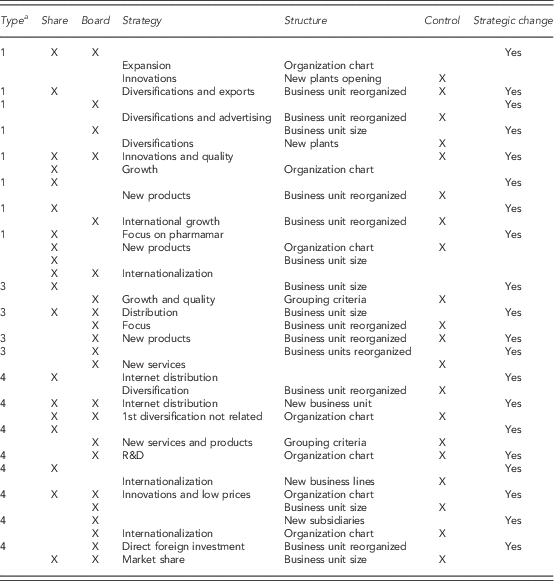
Tables 3 and 4 contain chronological summaries of the most relevant events experienced within the company during the period under consideration, as well as the implications of each change that was observed. Managerial change and strategic change may take place in the same year. Given that quantitative studies usually evaluate the annual situation, the researcher might consider that these changes are simultaneous (Virany, Tushman, & Romanelli, Reference Virany, Tushman and Romanelli1992; Barker & Duhaime, Reference Barker and Duhaime1997). This observation has led some authors to suggest that the term ‘strategic change’ implies that modifications have taken place simultaneously (Amis, Slack, & Hinnings, Reference Amis, Slack and Hinings2004). By using the data from the news items, we were able to determine the order of precedence of the changes in the strategic change components within the firms. This information allowed us to establish the sequence of events that took place in each company over the entire length of the study. The information shown in Tables 4 and 5 is reflected in Tables 6 and 7 in a particular order. Table 6 only includes the firm-period in which four parameter of strategic change were modified: the firm-period in which strategic change took place. Table 7 shows the firm-period in which no strategic change took place.
Firm-periods with strategic change
Note.
a Top management team (TMT) changes typologies: 1, reorganization; 3, turnover+reorganization; 4, Chief Executive Officer (CEO)+reorganization; 5, CEO+turnover.
Firm-periods without strategic change

Note.
a Top management team (TMT) changes typologies: 2, turnover; 5, CEO+turnover; 0, no TMT changes.
No strategic change was observed in the firms in which only TMT turnover had taken place, with neither CEO succession nor reorganization (Type 2 in Tables 6 and 7). Nevertheless, this was not the case for the firms that had experienced TMT reorganization without CEO succession (Type 1 in Table 7). In this regard, it should be noted that other firms, which developed strategic changes had all reorganized their management teams (Types 1, 3 and 4 in Table 6). Conversely, firms that did not undergo strategic change had no TMT reorganization (Types 2, 5 and 0 in Table 7). These findings suggest that TMT reorganization appears to be necessary to induce strategic reorientation, because it always precedes strategic change. In fact, none of the firms in this study would be able to initiate strategic change through CEO succession alone. So, CEO succession was perhaps not the main determining factor of strategic change in the firms under study. The change in the set of resources and capabilities of the TMT, when only the CEO changes, is not sufficient in itself to initiate strategic change. Some papers have described how major changes in the firms can occur even in the absence of CEO succession (Virany, Tushman, & Romanelli, Reference Virany, Tushman and Romanelli1992). These findings might reflect the complexity of modern companies, whereby any single individual, even a CEO, is unable to impose significant change without an accompanying change in TMT (Pfeffer, Reference Pfeffer1981; Hambrick & Mason, Reference Hambrick, Geletkanycz and Fredrickson1984; Wiersema & Bantel, Reference Wiersema and Bantel1992).
Our study has identified a new measurement of management change – reorganization – which has not been used in prior studies. Managerial reorganization does not necessarily imply a change of the TMT members. Rather, it refers to a reshuffling of responsibilities that perhaps involve the same people. The findings of this study suggest that a reorganization of responsibilities might be sufficient to prompt change, without altering the composition of the TMT. Reorganization is a new typology of change in the TMT that manifests itself in a new arrangement of TMT capabilities. From the point of view of the resource- and capability-based theory, reorganization does not imply immediate renovation of the set of resources and skills of top managers. But the new combination of human capital, social capital and cognition, following the reorganization of the posts in the TMT, can strengthen the capability of the firm to initiate strategic change. Change occurs when the directors face new experiences or new interactions with the business environment, which allows them to pursue new possible lines of action (Tsoukas & Chia, Reference Tsoukas and Chia2002). Even though they participate in similar functional or business areas, each manager will make a personal assessment of the correct course of action, so their decisions on content and timing will vary (Adner & Helfat, Reference Adner and Helfat2003). When reorganizing the knowledge and capabilities of the managers, by assigning them other roles, it is possible to overcome inertia and resistance to change. On assuming a new post with new responsibilities, managers who analyse the business environment from a different functional perspective will lend it greater attention. The value of a resource that may have been overlooked can increase when exploited in another way (Newbert, Reference Newbert2008), as managers can acquire some knowledge and develop expertize and abilities through work experience (Bailey and Helfat, Reference Bailey and Helfat2003). Accordingly, top managers acquire new human capital via learning and experience (Adner & Helfat, Reference Adner and Helfat2003) in their new posts. Therefore, TMT reorganization will facilitate the discovery of new opportunities in the business setting, provoking strategic change.
On the basis of the above analysis, the following propositions may now be advanced:
Proposition 1a: Managerial change precedes strategic change in firms that are seeking to adapt strategically to their environments.
Proposition 1b: TMT reorganization is a sufficient condition to provoke strategic change.
In this study, whenever CEO succession took place, subsequent TMT reorganization and sometimes TMT turnover were observed. These results reflect those of previous studies (Kesner & Dalton, Reference Kesner and Dalton1994; Shen & Cannella, Reference Shen and Cannella2002). This change in managerial arrangements occurred regardless of whether the CEO successor was an outsider or an insider, or whether the change was forced or voluntary.
Strategic change
Our analysis of 3,909 press items showed that there are some rare periods with no change. All of the companies had made frequent modifications to their strategy and structure (Tables 3 and 4). In fact, changes in both strategy and in strategy and structure occurred on many occasions, on the same calendar date. This information supports the thesis of continuous change and the vision of the organization, as emerging patterns arise of continuous adaptation to the business environment (Tsoukas & Chia, Reference Tsoukas and Chia2002). Changes in power distribution were also very frequent, but we think that these changes are more customary in this sample, because it consisted of listed firms. Some authors have suggested that the term ‘strategic change’ implies that modifications in company strategy, structure, power distribution and control system have taken place within a certain time – for instance, within a period of no longer than 2 years (Tushman & Romanelli, Reference Tushman and Romanelli1985; Romanelli & Tushman, Reference Romanelli and Tushman1994; Gordon et al., Reference Gordon, Stewart, Sweo and Luker2000). However, we have adopted the view in the present study that the key consideration should not be time. Instead, it should be the magnitude of change taking place in the company (Amis, Slack, & Hinnings, Reference Amis, Slack and Hinings2004). We considered the magnitude of strategic change in terms of the content and scope of the change that takes place. According to some authors (Romanelli & Tushman, Reference Romanelli and Tushman1994), strategic change implies modifications in strategy, structure, power distribution and control. In Tables 6 and 7, the changes that occurred are grouped by whether they modified the four parameters of change or, in other words, whether strategic change took place. Adopting this criterion, the qualitative analysis in this study revealed that each time the four parameters were modified in a related way, companies shared a series of specific changes in both strategy (aspects linked to the company’s growth and innovation) and structure (the firm’s organization chart and subsidiary grouping criteria). The reorganization was needed for strategic change to takes place. The new use of TMT knowledge and capabilities permits strategic reorientation, because TMT capabilities are dynamic over time. (Adner & Helfat, Reference Adner and Helfat2003). Furthermore, all human capital is transferable when top managers remain in the same firm (Harris & Helfat, Reference Harris and Helfat1997). Therefore, new challenges faced by managers in their new roles increase their human capital. When managers access new posts, the differences in the human capital that they bring with them and those that they acquire at work (Adner & Helfalt, Reference Adner and Helfat2003) become evident. The reorganization of roles means that top managers have a broader view of the firm, linking experience acquired in their earlier post to the challenges in their new role. Besides, strategic change gives managers an opportunity to move organizations into strategic areas in which they can exercise their expertize and talents (Greve & Mitsuhashi, Reference Greve and Mitsuhashi2007). The possibility of exploiting all TMT capabilities – generic, industry-specific, firm-specific and related industry skills – at the same time as overcoming organizational inertia through reorganization, may help a TMT to detect synergies that favour innovation and growth in the firm. The appointment of managers to post that best suit their potential can facilitate the strategic fit between the firm and the business environment (Gordon et al., Reference Gordon, Stewart, Sweo and Luker2000; Bigley & Wiersema, Reference Bigley and Wiersema2002; Jarzabkowski, Reference Jarzabkowski2003; Greve & Mitsuhashi, Reference Greve and Mitsuhashi2007; Brauer, Reference Brauer2009). Additionally, the reorganization helps to explain the importance of outliner structural changes. A new arrangement of senior posts that is implicit in reorganization will necessarily be reflected in the organigram of the firm and will probably be linked to the creation of new strategy-related business units. On the contrary, changes in the composition of the team are not usually reflected in the organigram of the firm, because only the senior management changes, while the posts remain unchanged. Accordingly, if we are to consider that strategic change has taken place, it would appear necessary to identify these specific modifications in strategy and structure that support the intrinsic link between TMT reorganization and strategic change. In formal terms, this proposition can be expressed as follows:
Proposition 2: Strategic change that follows TMT reorganization implies modifications (as necessary evidence) of both its strategy (growth and/or innovation) and its structure (an organizational chart and/or subsidiary grouping criteria and/or business units that are reorganized), which must be accompanied by a change in both its power distribution and its control systems (sufficient condition).
The proposed model that connects the above propositions is summarized in Figure 1.
Theoretical model Note. BUR=business unit reorganization

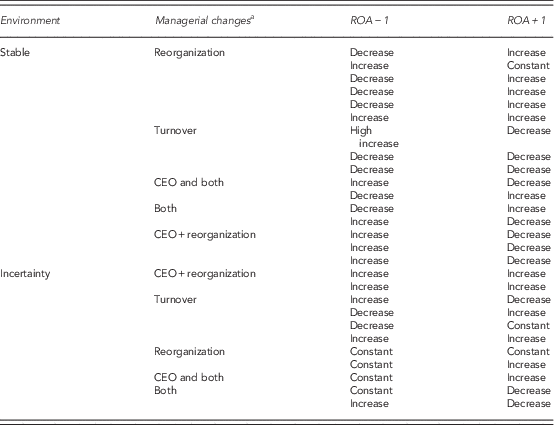
If we group the types of change that occurred in the competitive business environment of the firms (Table 8), we see that the firms used TMT reorganization in an isolated way (six times) or combined with turnover and/or CEO (13 periods in total), in a stable environment. On the contrary, turnover was used more often in uncertain business environments, where one type of change takes place (four times); although this number was too small to generalize. Moreover, if uncertainty exists in the business environment, changes in top management generally have a positive influence on performance. On the contrary, if the environment is stable, changes in top management are usually negative for ROA except when TMT reorganization is the only change. Our analysis shows that managerial change precedes strategic change. Therefore, we may say that if strategic change is solely initiated through the reorganization of the management team, it always has a positive effect on ROA. It is striking that ROA subsequently diminishes in stable environments, if the reorganization is used in combination with CEO succession to initiate strategic change. However, if the environment is uncertain, the combination of CEO succession and reorganization to initiate strategic change subsequently improves ROA. In stable business environments, firms that exclusively use the reorganization of TMT to initiate strategic change appear to show improvements in their performance. In contrast, in turbulent business environments, firms that use both reorganization or CEO succession and reorganization to initiate strategic change appear to show improvements in their performance. Accordingly, some studies have pointed out that CEO succession (and subsequent modifications to the management team) can lead to a considerable improvement in business performance for the firm (Wiersema & Bantel, Reference Wiersema and Bantel1993; Kesner & Dalton, Reference Kesner and Dalton1994; Castanias & Helfat, Reference Castanias and Helfat2001; Gong & Wu, Reference Gong and Wu2011). From the point of view of the resource- and capability-based theory, TMT reorganization helps to exploit all managerial capital, because all the capabilities are transferable within the same firm (Harris & Helfat, Reference Harris and Helfat1997). This can explain our results that show better performance after reorganization, both in stable environments and in more dynamic environments if accompanied by CEO succession. However, more evidence on these issues is needed. Their development as future lines of investigation would therefore be of interest.
Types of managerial change and environment. effects on performance
a Both: reorganization and turnover.
Other possible future avenues of research relate to the board. Changes in the management team were apparently related to turnover in the board of directors in the present study, which coincides with the findings of previous studies (Westphal & Fredrickson, Reference Westphal and Fredrickson2001; Aivazian, Ge, & Qiu., Reference Aivazian, Ge and Qiu2005). The board of directors can play an important role in prompting better strategic adjustment of the firm, contributing diverse knowledge and expanding its absorptive capacity (Zahra & Filatotchev, Reference Zahra and Filatotchev2004). New managers are often appointed by boards of directors with a view to instigating change in firms. This suggests that the board of directors may be a decisive factor in strategic decision making (Zhang, Reference Zhang2010). Future research might therefore also examine the influence of the board on strategy formulation, to determine whether strategy is either a function of the board alone or a function of the board and management acting together (Castro et al., Reference Castro, de la Concha, Gravel and Periñan2009).
Our study has contributed to the development of theory in this field, because it has highlighted that when a firm seeks a better strategic fit with the business environment, it might need to draw on the entire set of resources and capabilities within the TMT, including firm-specific skills; an implicit but as yet underdeveloped hypothesis in the literature (Bailey & Helfat, Reference Bailey and Helfat2003). As Miller (Reference Miller and Shamsie2003) indicated, firms can obtain competitive advantage from the resources and the skills that they already possess. Individual capabilities of reflection and reinterpretation can adapt personal behaviour to new situations and experiences (Tsoukas & Chia, Reference Tsoukas and Chia2002), which favours strategic change. In addition, this work has highlighted the importance of human capital and its development when the TMT faces the experience of new roles. Rare and valuable resources are insufficient in themselves for the firm to adjust to the business environment. It is necessary to develop new ways of combining the actual set of resources and capabilities, to exploit new market opportunities and to neutralize threats (Newbert, Reference Newbert2008). The demographic composition of the TMT might be less important for change (Dalton, Daily, Ellstrand, & Johnson, Reference Dalton, Daily, Ellstrand and Johnson1998) than the appointment of managers to posts that best suit their potential (Gordon et al., Reference Gordon, Stewart, Sweo and Luker2000; Bigley & Wiersema, Reference Bigley and Wiersema2002; Greve & Mitsuhashi, Reference Greve and Mitsuhashi2007; Brauer, Reference Brauer2009). Therefore, it is possible to match each person’s behaviour and experience to the role that suits them best (Jarzabkowski, Reference Jarzabkowski2003) without changing the composition of the TMT.
This study has some limitations. Change is not usually caused by any one factor; even though there may be a dominant factor (such as the vision of the managerial team), most strategic change occurs for a number of significant reasons (Grouard & Meston, Reference Grouard and Meston1995; Tsoukas & Chia, Reference Tsoukas and Chia2002). As Langley (Reference Langley1999) pointed out, the synthetic strategy of qualitative analysis implies a sparser level of detail in process tracing for each case and has the advantage of producing relatively simple theoretical formulations. It contributes a generalization of the moderated data that only makes sense if dealing with a number of cases that should be over five. Although 10 firms were analysed in this study, in-depth case studies and empirical analyses should be undertaken with a view to verifying the relations that we have observed in this study.
Conclusions
Following the arguments of the resource- and capability-based theory, it has been shown that the managers as depositories of capabilities, knowledge and background can orient their decisions to initiate strategic change. However, is it necessary to incorporate new knowledge and capabilities in TMT to initiate strategic change? That is not so in our investigation, because the reorganization of roles between the members of the team renews the capabilities and the knowledge of top managers.
This study has affirmed that strategic change may be initiated by exploiting the actual set of resources and skills of the TMT, if these resources and knowledge are focussed on other management roles through its reorganization, which permits new ways of combining those resources and capabilities, to obtain a better adjustment to their business environment. So, it may be sufficient to initiate strategic change in stable business environments through the reorganization of the TMT to improve firm performance, without it being necessary to change the composition of the TMT. In second place, we contribute to knowledge in this field, because analysis of the content of the changes has enabled us to identify key modifications within the strategy and the structures that are always present when a strategic change takes place, which improves our knowledge of the theoretical construct of strategic change. Besides, identification of the sequence between top management change and strategic change may mean that we can accelerate the implementation of change in the present business environment, in which the speed of response is itself a competitive advantage.
The findings of this paper have numerous implications in this field.
First, this study clarifies the temporal sequence of TMT change and strategic change. In particular, the study demonstrates that TMT reorganization is a sufficient condition for strategic change. Practitioners need to know that strategic change can be achieved without having to dismiss members of the TMT. It may be more profitable to exploit the entire set of resources and capabilities, including firm-specific skills, within the TMT when strategic change is initiated. This situation underlines the importance of seeking the best fit between the knowledge and the experience of the TMT and the nature of their role in the firm.
Second, the analysis of strategic change indicates that the periods without change are scarce or inexistent, which supports the thesis that change is immanent in organizations (Tsoukas & Chia, Reference Tsoukas and Chia2002). This work helps to distinguish the momentum of strategic change within that process of continual change. These findings enable the identification of the variables that bring about strategic change. The study has defined strategic change in a firm in terms of specific modifications of its strategy (growth or innovation) and structure (organization chart or subsidiary grouping criteria), which must be accompanied by changes in both its distribution of power in the firm and in its control systems. This, in turn, facilitates construction of relevant indicators to measure the level or degree of change that is achieved.
Third, CEO succession was not the main determining factor of strategic change, because subsequent TMT reorganization and TMT turnover were observed in most cases of CEO succession. The CEO might therefore need TMT collaboration to develop strategic change. In stable business environments, the reorganization of TMT without CEO succession appears be a better way of initiating strategic change to improve the performance of the firm. However, in turbulent environments, the combination of both CEO succession and reorganization initiates strategic change and may improve the performance of the firm.
Acknowledgements
This research was supported by the Ministerio de Economía y Competitividad, Spain (ECO2013-45329-R). The authors are grateful to both the editor and the reviewers for their helpful comments and suggestions in preparing this paper for publication. This research has been financed by Spanish Ministry of Education (ECO2013-45329-R).
APPENDIX 1: MEASURING ORGANIZATIONAL CHANGE: DEFINITION OF VARIABLES
Changes in Strategy
Low price: change in the company’s price strategy, which means a significant drop in prices to leave the company in a more attractive position compared with its competitors. It should be distinguished from forced price change resulting from environmental changes affecting all companies in the sector, for example, a drop in fuel prices as a result of a reduction in the price of a barrel of crude oil.
Product quality: change in the firm’s product quality strategy, which means actions the company takes and specifically designs for this type of effect, such as positive modifications and improvements to the end product. It includes quality assurance certificates obtained by the company as indicators of the changes it has made in this respect.
Customer assistance quality: change in the company’s customer assistance strategy and covers specific measures taken in this regard, for example, an improvement in personal customer assistance or customer welcoming protocols at the plant.
Delivery lead-times: change instigated by the company in its delivery lead-time strategy.
Degree of reaction to customer requirements: change in the company’s degree of reaction to customer requirements, that is, the company is continuously geared and prepared to modify its products and its service provision, in order to adapt itself to new market requirements and customer tastes and preferences.
Innovation: change in innovation within the company. Innovation is understood to refer to adopting new products, services or processes – new in that they have never been implemented in the company before – whether in-sourced or outsourced, generally with the aim of improving performance and efficiency, including significant changes in the R&D budget.
Product exclusivity: change in the exclusive nature of the product that the company puts on the market; clearly a step towards a differentiation strategy.
Growth: change in the strategic size of the company. The most common means of achieving this are mergers, takeovers and strategic alliances. In this regard, a distinction should be made between what is known as short-term alliances (joint ventures) and structural alliances. The former refers to agreements, normally short or fixed term, with other companies, designed to jointly cover some specific plan of action on the market. The second type is characterized by being permanent, which affects the core competitive essence of both firms; not to be confused with high-turnover operations, which form part of the company’s ordinary operations.
Sales turnover: change in the company’s sales turnover strategy. This specifically covers all actions aimed at entering new markets in which the company, until now, has not been present.
Market share: change in the company’s strategy regarding the achievement of a larger share of its current markets. Unlike the previous variable, the aim now is to achieve a stronger position and participation in markets where the company already operates.
Advertising and publicity: change in the strategy related to significant components of communications. Among other items, it encompasses changes in advertising and public relations variables (image and sponsorship).
Distribution: change in the distribution strategy for the company’s products and services. Distribution is understood to mean a series of tasks and operations that take place from the point at which the product goes into the storage warehouse until its delivery to the customer. It includes changes to wholesalers and the supply chain.
Breadth of product range: change in the company’s product range. It is important to distinguish between the concepts of product line and product range. Line refers to a set of products with common characteristics, whereas product range refers to the number of different lines the company sells; thus the number of product lines determines the breadth of the product range.
Changes in Structure
Organization chart: change in the firm’s organization chart, which depicts a summary of its hierarchical structure, mainly reflecting the positions and relationships of authority among the different items on the chart, formal communication channels, formal structuring (divisions, departments, sections) and a diagram of the formal distribution of responsibilities.
Grouping criteria: change in the grouping criteria adopted by companies to determine the design of their organizational structure or business units. Grouping by function is aimed at putting those job positions that perform similar content-related tasks in the same department, so that departments will then correspond to different functions – marketing, production, finance and so on. Grouping by markets is aimed at structuring job positions on the basis of the product for which they are working, that is, the organization is divided into sections equivalent to market segments for the different products and services sold by the company. Finally a matrix structure indicates when groupings by function or by market are set up under the same chain of command so that subordinate job positions are covered by dual supervision.
Business unit size: change in the absolute and relative size of the different business units in a diversified company, also known as its ‘organization portfolio’. Examples of these include taking a larger shareholding in a subsidiary by the holding company (see Note 2), or the acquisition, disposal, investment in or disinvestment in a fringe business line. It includes setting up new business lines and includes increases or reductions to overall headcount.
Reorganization of business units: change to the mix of business lines operated by the company. Examples include the creation of central management offices for subsidiary companies or the horizontal integration of different related parts into one larger business.
Structurally autonomous plants and other divisions: structural change in structurally autonomous plants and other divisions – such as opening, expanding or closing them. (To distinguish the difference between actions relating to the holding company and its subsidiaries, see Note 2 below.)
Changes in Power Distribution
Share capital structure: change in the company’s share capital structure, which means a modification in percentage holdings as a result of buying or selling shares. Special mention should be made of equity-based share capital extensions, which, given the nature of these operations, should not be considered as changes in power distribution because they do not represent modifications of shareholding percentages. Neither should reductions in share capital represent changes. Extensions can be considered as such only when they cause significant changes in shareholding percentage. Split operations (modification of share face value) are not considered changes in power distribution. Announcements of share capital extensions should not be computed as changes until they become effective.
Changes in Control Systems
Administrative procedures: change in the company’s administrative procedures, which is understood to mean a series of interrelated steps that need to be taken sequentially to perform different administrative tasks. An example is a change of procedures carried out in the procurement of raw materials. Changes to the incentive system are also covered under this heading.
Budgets: changes to budgeting, which is the written numeric expression of the business plan, that is, the allocation of resources to the different business lines in the company. Budgets reflect where resources are to be used and how the company is to be managed, while also serving as a means for establishing priorities.
Information systems: change in the company’s information systems, especially its accounting system, which is the fundamental basis for decision taking.
Stock control: change in the stock control systems and warehouse management (inventory storage and maintenance, product turnover and so on).
Planning systems: change in the planning systems, which means modifications to the target setting systems (how they are established), decision-taking criteria, policies or regulations on what the company should or should not do.
Difference ≥1% in Selling General Administrative expenses (SGA) costs/sales: change in the ratio between general and administrative expenses compared with sales, a result which would be evidence of a change in the firm’s control systems.
Notes
1. It should be remembered that the objective is to measure change, so that only those items of news that correspond to modifications in the company’s life as per the different sections described above should be recorded.
2. A company may be considered a subsidiary of another company when a significant percentage of its share capital belongs to the latter. Generally, changes in the subsidiary will be covered as business units under the option for the structure variable. However, when a holding company owns the majority of the shares in a subsidiary and it is a unique business (the business of the subsidiary coincides with the holding company’s main business line or one of its main activities), then changes in the subsidiary should be recorded as changes in the main holding company under the relevant category corresponding to the nature of such change.
3. It is possible that one item of news represents changes in different variables at the same time. In such cases, the modifications shall be recorded for all those variables affected in any one of the relevant categories. However, it should be remembered that such cases are exceptional and not the norm.
APPENDIX 2: MEASURING ORGANIZATIONAL CHANGE