


Impact statement
Groundwater serves as India’s critical lifeline, directly supporting agriculture, industry and the daily existence of millions across the country. However, this vital resource is under immense pressure from increasing demand and climate vulnerabilities, leading to a growing water security crisis. Here, we provide a crucial step forward by offering a comprehensive overview of how researchers are currently working to locate hidden groundwater reserves across the country. Instead of just adding another map, this study takes a broader look, reviewing and collating numerous existing efforts to identify areas with high groundwater potential. By analyzing the common factors used (like land features, geology and rainfall), the evolving scientific techniques – from traditional methods to advanced statistical modeling – and how these findings are verified, this research documents the current state of groundwater exploration in India. The real impact of this work lies in its ability to guide future efforts. We highlight what is working well, but more importantly, we pinpoint persistent challenges like limited data availability and the complex nature of groundwater systems. Moreover, by synthesizing current knowledge and identifying key areas for improvement – such as the need for higher-quality data, more sophisticated three-dimensional subsurface modeling and climate-resilient approaches – we aim to provide a clearer roadmap for researchers, policymakers and water management authorities across India. Ultimately, we envision this research to support effective and sustainable groundwater management practices, ensuring India’s groundwater resources are available for future generations, and offering valuable lessons for other nations facing similar water scarcity challenges.
Introduction
Groundwater is a fundamental resource that is vital for sustaining life and supporting the water-food-energy nexus (Margat and van der Gun, Reference Margat and van der Gun2013). Globally, about 2.5 billion individuals rely on groundwater for their daily needs, which reflects its significance (Chen et al., Reference Chen, Li, Tsangaratos, Shahabi, Ilia, Xue and Bian2020; Grönwall and Danert, Reference Grönwall and Danert2020; Yousefi et al., Reference Yousefi, Sãdhasivam, Pourghasemi, Nazarlou, Golkar, Tavangar and Santosh2020; Chen et al., Reference Chen, Chen, Pal, Saha, Chowdhuri, Adeli, Janizadeh, Dineva, Wang and Mosavi2021; Arabameri et al., Reference Arabameri, Santosh, Moayedi, Tiefenbacher, Pal, Nalivan, Costache, Ahmed, Hoque, Chakrabortty and Cerdà2022; Kaushik et al., Reference Kaushik, Ndehedehe, Kalu, Burrows, Noll and Kennard2023). In India, groundwater resources are critical, as the country is the largest user of groundwater globally (~230 km3 yr−1) – roughly equivalent to nearly one-quarter of the global use (Margat and van der Gun, Reference Margat and van der Gun2013; Díaz-Alcaide and Martínez-Santos, Reference Díaz-Alcaide and Martínez-Santos2019; Halder et al., Reference Halder, Roy and Roy2021; Ghosh et al., Reference Ghosh, Adhikary, Bera, Bhunia and Shit2022; Thanh et al., Reference Thanh, Thunyawatcharakul, Ngu and Chotpantarat2022). It supports more than 60% of irrigation and provides 85% of India’s domestic drinking water needs (Al-Abadi et al., Reference Al-Abadi, Fryar, Rasheed and Pradhan2021; Paria et al., Reference Paria, Pani, Mishra and Behera2021; Tamiru et al., Reference Tamiru, Wagari and Tadese2022; Shandu and Atif, Reference Shandu and Atif2023).
Apart from water security, groundwater is also central to the sustainable socioeconomic and environmental resource pillars underpinning India, providing 50% of urban and over 80% of rural water needs (Bhattacharya et al., Reference Bhattacharya, Polya and Jovanovic2017). Consequently, groundwater depletion is a critical concern not only for India (Sadhasivam et al., Reference Sadhasivam, Ohenhen, Khorrami, Werth and Shirzaei2025) but also at the global level, especially in arid and semi-arid areas (Hasan et al., Reference Hasan, Smith, Vajedian, Pommerenke and Majumdar2023; Herrera-García et al., Reference Herrera-García, Ezquerro, Tomás, Béjar-Pizarro, López-Vinielles, Rossi, Mateos, Carreón-Freyre, Lambert, Teatini, Cabral-Cano, Erkens, Galloway, Hung, Kakar, Sneed, Tosi, Wang and Ye2021). Most large aquifers are suffering from alarming rates of depletion due to overpumping (Figure 1a,b). For instance, the High Plains (Ogallala) Aquifer of the United States was depleted at 27.6 mm yr−1 (12.5 km3 yr−1) between 2003 and 2013 (Scanlon et al., Reference Scanlon, Faunt, Longuevergne, Reedy, Alley, McGuire and McMahon2012). Similarly, aquifers of Iran, Iraq, Syria and Turkey in the northern Middle East declined at 17.3 mm yr−1 (13.0 km3 yr−1) from 2003 to 2009 (Voss et al., Reference Voss, Famiglietti, Lo, de Linage, Rodell and Swenson2013), while the Arabian Aquifer System and the Canning Basin (Western Australia) lost 9.1 mm yr−1 (15.5 km3 yr−1) and 9.4 mm yr−1 (3.6 km3 yr−1), respectively, over the period 2003–2013 (Richey et al., Reference Richey, Thomas, Lo, Reager, Famiglietti, Voss, Swenson and Rodell2015). Australia’s largest aquifers, the Murray Darling Basin and the Great Artesian Basin, were also depleted significantly between 2002 and 2010 due to prolonged droughts (George et al., Reference George, Tan, Baldwin, Mackenzie and White2009; Leblanc et al., Reference Leblanc, Tweed, van Dijk and Timbal2012; Seoane et al., Reference Seoane, Ramillien, Frappart and Leblanc2013; Kaushik et al., Reference Kaushik, Ndehedehe, Burrows, Noll and Kennard2021; Castellazzi et al., Reference Castellazzi, Ransley, McPherson, Slatter, Frost and Shokri2024).
(a) Global map of selected major aquifers focusing on arid and semi-arid regions showing (b) annual groundwater depletion rates in terms of depth decline and volume loss (sourced from Famiglietti, Reference Famiglietti2014).

India, specifically, is facing an acute groundwater crisis, with the northwestern states of Punjab, Haryana and Rajasthan registering an average depletion rate of 40 mm yr−1 (17.7 km3 yr−1) from 2002 to 2008 (Rodell et al., Reference Rodell, Velicogna and Famiglietti2009). Other heavily affected regions include the North China Plain, which dropped by 22.0 mm yr−1 (8.3 km3 yr−1) from 2003 to 2010 (Feng et al., Reference Feng, Zhong, Lemoine, Biancale, Hsu and Xia2013), and California’s Central Valley, which declined at 20.4 mm yr−1 (3.1 km3 yr−1) during the same period (Famiglietti et al., Reference Famiglietti, Lo, Ho, Bethune, Anderson, Syed, Swenson, de Linage and Rodell2011). The primary causes of increasing groundwater depletion are the accelerated growth in population, intense competition between agriculture and urbanization, dietary shifts, overallocation or over-appropriation and the changing hydroclimatic patterns, particularly precipitation and evaporative demands, which have resulted in greater reliance on groundwater for irrigation and drinking purposes (Tan et al., Reference Tan, Baldwin, White and Burry2012; George et al., Reference George, Clewett, Lloyd, McKellar, Tan, Howden, Rickards, Ugalde and Barlow2019; Meza et al., Reference Meza, Siebert, Döll, Kusche, Herbert, Eyshi Rezaei, Nouri, Gerdener, Popat, Frischen, Naumann, Vogt, Walz, Sebesvari and Hagenlocher2020; Liu et al., Reference Liu, Li, Wei, Xu, Gou, Luo and Yang2022; Masroor et al., Reference Masroor, Sajjad, Kumar, Saha, Rahaman, Choudhari, Kulimushi, Pal and Saito2023; McDermid et al., Reference McDermid, Nocco, Lawston-Parker, Keune, Pokhrel, Jain, Jägermeyr, Brocca, Massari, Jones, Vahmani, Thiery, Yao, Bell, Chen, Dorigo, Hanasaki, Jasechko, Lo and Yokohata2023; Gupta et al., Reference Gupta, Saharia, Joshi and Nath Goswami2024; Ott et al., Reference Ott, Majumdar, Huntington, Pearson, Bromley, Minor, ReVelle, Morton, Sueki, Beamer and Jasoni2024; Paul and Roy, Reference Paul and Roy2024; Kukal and Hobbins, Reference Kukal and Hobbins2025; Ndehedehe et al., Reference Ndehedehe, Kalu, Ferreira, Onojeghuo, Adeyeri, Tourian, Currell and Jackson2025; Thirumalai et al., Reference Thirumalai, Clemens, Rosenthal, Conde, Bu, Desprat, Erb, Vetter, Franks, Cheng, Li, Liu, Zhou, Giosan, Singh and Mishra2025; Womble et al., Reference Womble, Gorelick, Thompson and Hernandez-Suarez2025).
Groundwater acts as the principal water supply during dry spells and erratic monsoons, providing a critical hedge against crop loss and ensuring national food security (Prasad et al., Reference Prasad, Loveson, Kotha and Yadav2020; Masroor et al., Reference Masroor, Sajjad, Kumar, Saha, Rahaman, Choudhari, Kulimushi, Pal and Saito2023; Talukdar et al., Reference Talukdar, Bhattacharjya and Sarma2023). Also, the decline in surface water supplies has aided the growing dependency on groundwater. Rivers, dams and reservoirs are subject to over-abstraction, contamination and climate volatility, which is driving the enhanced use of groundwater as a protective measure (Dar et al., Reference Dar, Ramanathan, Mir and Pir2024). Water quality, sanitation and hygiene problems also attest to this trend. Discharge of industrial effluent, agricultural runoff and municipal waste contamination has degraded surface water quality, rendering groundwater a more coveted source for secure drinking water supply and irrigation (Paria et al., Reference Paria, Pani, Mishra and Behera2021; Seifu et al., Reference Seifu, Ayenew, Woldesenbet and Alemayehu2022). Sustained exploitation of groundwater resources poses not just water security but also food security, economic stability and sustainable development threats (Thakur et al., Reference Thakur, Nikam, Srivastav, Wint Khaing, Zaw, Garg, Dhote, Sharma and Aggarwal2021; Dar et al., Reference Dar, Ramanathan, Mir and Pir2024). Nearly two billion individuals currently rely on groundwater for domestic drinking water, and nearly half of the world’s population is confronted with seasonal water shortage (Intergovernmental Panel on Climate Change [IPCC], Reference Masson-Delmotte, Zhai, Pirani, Connors, Péan, Berger, Caud, Chen, Goldfarb, Gomis, Huang, Leitzell, Lonnoy, Matthews, Maycock, Waterfield, Yelekçi, Yu and Zhou2021).
Overuse of groundwater has resulted in accelerated depletion and deteriorating water quality (Erban et al., Reference Erban, Gorelick, Zebker and Fendorf2013; Smith et al., Reference Smith, Knight and Fendorf2018; Hasan et al., Reference Hasan, Smith, Vajedian, Pommerenke and Majumdar2023), leading to water table declines (Jasechko et al., Reference Jasechko, Seybold, Perrone, Fan, Shamsudduha, Taylor, Fallatah and Kirchner2024) that have reportedly affected crop yields (Mieno et al., Reference Mieno, Foster, Kakimoto and Brozović2024) and raised risks of contamination (Smith et al., Reference Smith, Knight and Fendorf2018). Moreover, agricultural and other anthropogenic activities bring in contaminants, rendering groundwater unsuitable for consumption (Abascal et al., Reference Abascal, Gómez-Coma, Ortiz and Ortiz2022; Knierim et al., Reference Knierim, Kingsbury, Belitz, Stackelberg, Minsley and Rigby2022; Wang et al., Reference Wang, Liu, Beusen and Middelburg2023). Most countries that rely on this resource are concerned about its degrading quality and quantity. In the global south, the use of untreated groundwater subjects people to toxic substances such as fluoride, arsenic and nitrates (Erban et al., Reference Erban, Gorelick, Zebker and Fendorf2013; Kar et al., Reference Kar, Rathore, Ray, Sharma and Swain2016; Verma et al., Reference Verma, Sharma, Kumar and Sharma2023; Pal et al., Reference Pal, Biswas, Jaydhar, Ruidas, Saha, Chowdhuri, Mandal, Islam, Islam, Pande, Alam and Islam2024; Piwowarska et al., Reference Piwowarska, Kiedrzyńska and Jaszczyszyn2024). Hence, proactive monitoring and management of groundwater systems are critical for sustainable development, highlighting the need for robust hydrologic modeling frameworks.
Addressing this complex problem of groundwater depletion requires a multifaceted approach. As the World Bank (2018) outlines, sustainable water reform rests on five interconnected pillars: (1) enhancing the legislative foundation, (2) strengthening water governance at national and basin levels, (3) optimizing economic policy instruments, (4) building and implementing adaptive capacity practices to address climate change and (5) improving data collection and information-sharing. While this article focuses specifically on the fifth priority – advancing the scientific basis for data collection through improved groundwater potential zone (GWPZ) mapping – we acknowledge that it is a foundational component of a much larger strategy. The other four pillars, although critical for translating scientific insights into effective policy and action, fall beyond the scope of this review. Nevertheless, strengthening the technical and data-driven aspects of groundwater assessment is an essential prerequisite for enabling meaningful progress across all areas of water governance.
GWPZ modeling is instrumental for the sustainable management of water resources, enabling fair and rational allocation of the valuable resource in agriculture, industry and household uses. GWP zoning allows the definition of optimal areas for exploitation with maintenance of long-term sustainability and resilience against climatic extremes like drought (Priya et al., Reference Priya, Iqbal, Salam, Nur-E-Alam, Uddin, Islam, Sarkar, Imran and Rak2022; Sarkar et al., Reference Sarkar, Esraz-Ul-Zannat, Das and Ekram2022a, Reference Sarkar, Talukdar, Rahman, Shahfahad and Roy2022b). Conventional methods include costly and time-consuming ground surveying (Sarkar et al., Reference Sarkar, Esraz-Ul-Zannat, Das and Ekram2022a), whereas Geographic Information System (GIS) and remote sensing geospatial technologies have now revolutionized the field. For example, the Indian Space Research Organization (ISRO, 2011, 2015, 2025) provides 1:50,000 scale (500 m ground resolution) GWPZ maps throughout India that have been developed by integrating multisource datasets derived from remote sensing, hydrologic and hydrogeologic surveys, GIS techniques and rigorous ground-truthing. In addition, several researchers have relied on more complex methods, including Multi-Criteria Decision-Making (MCDM) Analytical Hierarchy Process (MCDM-AHP; Arulbalaji et al., Reference Arulbalaji, Padmalal and Sreelash2019; Sarkar et al., Reference Sarkar, Esraz-Ul-Zannat, Das and Ekram2022a; Borah and Bora, Reference Borah and Bora2025), weighted overlay analysis (WOA; Gyeltshen et al., Reference Gyeltshen, Tran, Teja Gunda, Kannaujiya, Chatterjee and Ray2020), fuzzy logic (Roy et al., Reference Roy, Basak, Mohinuddin, Biswas Roy, Halder and Ghosh2022; Das and Pal, Reference Das and Pal2019), GIS-fuzzy logic integration (Bhadran et al., Reference Bhadran, Girishbai, Jesiya, Gopinath, Krishnan and Vijesh2022; Shahid et al., Reference Shahid, Nath and Maksud Kamal2002) and hybrid multi-criteria methods in Google Earth Engine (Gorelick et al., Reference Gorelick, Hancher, Dixon, Ilyushchenko, Thau and Moore2017; Singha et al., Reference Singha, Swain, Pradhan, Rusia, Moghimi and Ranjgar2024), to enhance GWP estimation.
With the emergence of machine learning (ML) and increased availability and accessibility to multisource geospatial datasets (Gorelick et al., Reference Gorelick, Hancher, Dixon, Ilyushchenko, Thau and Moore2017; Ndehedehe, Reference Ndehedehe2022; Roy et al., Reference Roy, Jensen, Majumdar and Saah2025), GWPZ modeling has been greatly enhanced with better ability to separate complex, nonlinear relationships in hydrogeologic, hydrologic and hydroclimatic data. In contrast to conventional practices, ML algorithms adjust automatically to shifting conditions with greater predictive accuracy and autonomy (Yadav et al., Reference Yadav, Gupta, Patidar and Himanshu2020; Gómez-Escalonilla et al., Reference Gómez-Escalonilla, Martínez-Santos and Martín-Loeches2022; Radhakrishnan and CA, Reference Radhakrishnan and CA2023). Since supervised ML approaches leverage the statistical correlations and complex nonlinear relationships across multiple predictors and the response or target variables (Hastie et al., Reference Hastie, Tibshirani and Friedman2001), the ML model performances depend on dataset characteristics, requiring comparative studies to determine the most appropriate method (Majumdar et al., Reference Majumdar, Smith, Hasan, Wilson, White, Bristow, Rigby, Kress and Painter2024; Talib et al., Reference Talib, Desai and Huang2024; Akbar et al., Reference Akbar, Mirchi, Arshad, Alian, Mehata, Taghvaeian, Khodkar, Kettner, Datta and Wagner2025; Asfaw et al., Reference Asfaw, Smith, Majumdar, Grote, Fang, Wilson, Lakshmi and Butler2025; Parasar et al., Reference Parasar, Moral, Srivastava, Krishna, Majumdar, Bhattacharjee, Mishra, Mustafi, Rathore, Sharma and Mustafi2025). Typical ML algorithms used for GWPZ mapping and related applications (e.g., predicting groundwater levels and irrigation mapping) include artificial neural networks (ANNs; Rahman, Reference Rahman2016; Al-Waeli et al., Reference Al-Waeli, Sahib and Abbas2022), ensemble trees, such as Random Forests (RFs; Breiman, Reference Breiman2001; Belgiu and Drăguţ, Reference Belgiu and Drăguţ2016; Rahmati et al., Reference Rahmati, Pourghasemi and Melesse2016; Raisa et al., Reference Raisa, Sarkar and Sadiq2024) and Extreme Gradient Boosting (XGBoost; Chen and Guestrin, Reference Chen and Guestrin2016; Janssen et al., Reference Janssen, Tootchi and Ameli2025), function models (Beheshtirad, Reference Beheshtirad2021), decision trees (Lee and Lee, Reference Lee and Lee2015; Gómez-Escalonilla et al., Reference Gómez-Escalonilla, Martínez-Santos and Martín-Loeches2022), Shannon entropy (SE) combined with GIS (Wahile et al., Reference Wahile, Arsène, Mbarga, Moukété and Owono2022), deep learning (Wunsch et al., Reference Wunsch, Liesch and Broda2022; Pranjal et al., Reference Pranjal, Kumar, Soni and Chatterjee2024; Talib et al., Reference Talib, Desai and Huang2024; Sadeghi et al., Reference Sadeghi, Alesheikh, Jafari and Rezaie2025) and Support Vector Machines (SVM; Radhakrishnan and CA, Reference Radhakrishnan and CA2023). Of particular significance are RFs, XGBoost and ANNs, as these have shown to identify subtle spatial patterns, with improved predictive skills (Yadav et al., Reference Yadav, Gupta, Patidar and Himanshu2020; Wunsch et al., Reference Wunsch, Liesch and Broda2022; Majumdar et al., Reference Majumdar, Smith, Hasan, Wilson, White, Bristow, Rigby, Kress and Painter2024; Raisa et al., Reference Raisa, Sarkar and Sadiq2024; Janssen et al., Reference Janssen, Tootchi and Ameli2025; Hasan et al., Reference Hasan, Smith, Majumdar, Huntington, Alves Meira Neto and Minor2025; Asfaw et al., Reference Asfaw, Smith, Majumdar, Grote, Fang, Wilson, Lakshmi and Butler2025).
This review article gives a systematic and comprehensive overview of GWPZ mapping in India, noting its chronological progression, methodological evolution and contextual changes in modeling approaches during the last few decades (from 2000 onward). Diverse hydrogeological, climatic and socioeconomic conditions in India have necessitated an increasing demand for credible groundwater resource estimation. With the rising pressure on groundwater from overexploitation, urbanization and climate change (Meza et al., Reference Meza, Siebert, Döll, Kusche, Herbert, Eyshi Rezaei, Nouri, Gerdener, Popat, Frischen, Naumann, Vogt, Walz, Sebesvari and Hagenlocher2020; Hasan et al., Reference Hasan, Smith, Vajedian, Pommerenke and Majumdar2023), GWPZ mapping is now a key instrument in sustainable groundwater management as well as policy planning. The main thrust of this review is to examine the best ways to monitor, ratify and validate the critical input parameters that control GWPZ mapping over diverse Indian landscapes.
In particular, we highlight six key thematic groups that strongly affect model quality and consistency: topographic, geomorphic, geological, hydrological, climatic, land cover and aquifer-related parameters. Collectively, these represent the surface and subsurface realms that impact recharge, storage and extraction capacity of the aquifers over spatial and temporal domains (Bhanja et al., Reference Bhanja, Mukherjee, Rangarajan, Scanlon, Malakar and Verma2019; Chatterjee et al., Reference Chatterjee, Pranjal, Jally, Kumar, Dadhwal, Srivastav and Kumar2020) India-specific GWPZ mapping studies, over time, have employed an array of methodological platforms, from classic expert-based systems to advanced ML and hybrid systems. Earlier research tended to utilize mainly statistical models like the AHP and Frequency Ratio (FR), enabling efficient MCDM from existing thematic maps. With increasing data quality and availability due to advances in satellite remote sensing and GIS, research then turned toward ML models like RF, SVM and more so in recent times, ensemble or hybrid models that included fuzzy logic, decision trees and deep learning frameworks. The ML-based approaches have been shown to have greater predictive accuracy and better generalization in geologically and climatically diverse parts of India (Prasad et al., Reference Prasad, Loveson, Kotha and Yadav2020; Parasar et al., Reference Parasar, Moral, Srivastava, Krishna, Majumdar, Bhattacharjee, Mishra, Mustafi, Rathore, Sharma and Mustafi2025).
An important aspect of GWP studies is model validation that proves spatial and statistical reliability of groundwater potential predictions. In this review, both the parameters and methods of validation used in Indian settings have been discussed. Physical and hydrological data like borehole/well yield, groundwater level fluctuations, specific capacity, spring occurrence, discharge rates, aquifer transmissivity, aquifer type and thickness and geophysical resistivity surveys are the common validation indicators. These are the inputs required for ground-truthing the output of statistical and ML models. From the point of view of statistical assessment, model quality and dependability are measured with the help of performance metrics like precision, recall, F1-score, overall accuracy, receiver operating characteristic (ROC) curves, area under the curve (AUC), Kappa index, root mean square error (RMSE), mean absolute error (MAE), and consistency ratio (CR).
In addition, this review describes the timely advancement of GWPZ mapping research in India, including how methodological paradigms, data sources and thematic emphases have responded in reaction to evolving environmental stresses, technological improvements and policy requirements. Transformation from low-resolution, field-high methods to high-resolution, multisource geospatial modeling paradigms indicates both scientific progress and escalating groundwater management needs.
Apart from compiling past research, this review also assesses the status and prospects of GWPZ mapping in India today and in the future. It underlines the recurrent issues – such as regional inconsistency of data, climatic uncertainty and heterogeneity of aquifers – and encourages the incorporation of high-resolution inputs, sophisticated model algorithms and region-specific calibration of models. Since India is still facing increasing water scarcity and climate uncertainty, this review will act as a substantive reference guide for researchers to improve GWPZ mapping, ultimately informing and supporting policymakers involved in sustainable groundwater resource planning. Our article focuses on: (a) a conceptual framework and definitions of GWPZ; (b) the essential factors for GWPZ mapping; (c) GWPZ mapping model techniques; (d) GWPZ validation parameters; (e) GWPZ model validation techniques and (f) the current status and issues in future GWPZ mapping.
Conceptual framework and definitions of GWPZ
GWP lacks a uniform, universally applicable definition since its meaning is largely context-dependent and influenced by its purpose of use, with characteristics that are unique to each zone being examined. Some authors define GWP as the capacity for subsurface groundwater storage, while others define it as the likelihood of groundwater occurrence or extractable yield in a given area. Moreover, a number of articles highlight its importance in the determination of the best locations for borehole drilling and abstraction of groundwater.
Despite these definitional refinements, a common methodological underpinning lies in that GWP is determined by combining secondary indicators based on hydrogeological, topography, climatic and land-use parameters. GWP measurement is goal-specific, determined by its intended final use, which spans domestic water supply, irrigation, urban consumption and industrial usage. Each use involves specific hydro-environmental demand – for example, areas with abundant groundwater supply might be unsuitable for potable water because of geogenic contamination or anthropogenic pollutants.
Thus, a strong GWP assessment needs to consider several dimensions, such as aquifer storage, recharge capacity, sustainable yield and groundwater quality, to enable informed and sustainable groundwater management. “Potential” inherently refers to a probabilistic and latent capability that is dynamic in time and space and whose development may be submaximal. Its assessment, consequently, demands a methodology that effectively addresses spatial heterogeneity, data uncertainty and temporal variation. GWPZ mapping is, therefore, a spatially explicit estimation of the probability and capability of a place to support sustainable groundwater abstraction under current hydrogeological conditions for a given time frame.
Due to the highly variable and multifaceted nature of groundwater systems, a single criterion is insufficient for the comprehensive assessment of total GWP. MCDM, geospatial modeling techniques and combined hydrogeological methodologies have thus been broadly used to outline groundwater potential areas with improved accuracy. Some methodologies prioritize long-term storage and potential recharge, while others prioritize extractive potential, water quality limitations and ecological viability. Considerations such as aquifer contamination risk, land use change and climatic variability further refine GWPZ delineation. Taking all of these into account, we define GWP as “the estimated capacity of an aquifer to supply groundwater for a particular use without compromising long-term sustainability, yield or water quality.” Realizing this potential requires time-limited abstraction allocations that are subject to mandatory, periodic review based on predefined trigger points (e.g., critical water-level declines) to proactively ensure sustainability. This definition highlights the necessity for an integrated, multidisciplinary approach to GWP assessment that harmonizes availability with sustainability thresholds. As global water scarcity and demand pressures only increase, particularly in semi-arid and arid regions, scientifically sound GWP estimates are crucial to guaranteeing long-term water security and sustainable groundwater use worldwide.
Systematic selection and thematic structuring of Indian studies on GWPZ mapping
GWPZ mapping is significant for the delineation of areas suitable for groundwater exploration, conservation and sustainable use. In India, the growing pressure on groundwater resources owing to climatic variability, agricultural intensification and rapid urbanization has fueled a significant research effort directed toward finding and GWPZ modeling with various techniques. In order to provide a targeted and high-quality synthesis of this literature, this review is limited to studies carried out in India and adheres to a systematic selection protocol.
The literature collection process was guided by the Preferred Reporting Items for Systematic Review and Meta-Analysis (PRISMA) framework (Moher et al., Reference Moher, Liberati, Tetzlaff and Altman2009; Basche and DeLonge, Reference Basche and DeLonge2019; Page et al., Reference Page, Moher, Bossuyt, Boutron, Hoffmann, Mulrow, Shamseer, Tetzlaff, Akl, Brennan, Chou, Glanville, Grimshaw, Hróbjartsson, Lalu, Li, Loder, Mayo-Wilson, McDonald and McKenzie2021; Afrifa et al., Reference Afrifa, Zhang, Appiahene and Varadarajan2022; Uc Castillo et al., Reference Uc Castillo, Martínez Cruz, Ramos Leal, Tuxpan Vargas, Rodríguez Tapia and Marín Celestino2022), which ensures transparency and repeatability in systematic reviews. In line with standard procedures (Alfadil et al., Reference Alfadil, Kassem, Ali and Alaghbari2022), the process comprised four main phases: (a) Identification – comprehensive collection of relevant Indian GWPZ studies from databases such as Scopus, Web of Science and Google Scholar using keywords including “groundwater potential zone,” “AHP,” “MCDM,” “machine learning,” “hybrid models,” “deep learning,” “model validation,” “remote sensing” and “GIS”; (b) Screening – removal of duplicates and nonrelevant articles based on titles and abstracts; (c) Eligibility – applying inclusion criteria to retain only those studies that directly emphasize GWPZ mapping in India and (d) Inclusion – final selection of articles used for review and thematic analysis (see Figure 2 for the PRISMA flow diagram).
Systematic selection and thematic structuring of studies on groundwater potential zone mapping in India.

All included publications focus specifically on GWPZ mapping in India, employing a range of modeling methods and input parameters appropriate for Indian hydrogeology. From this systematic selection, we have found five major thematic areas that are consistently recurring throughout the literature focused on India and constitute the fundamental structure of this review: (a) main driving factors in GWPZ mapping, (b) methods and models applied for GWPZ delineation, (c) parameters used for model validation, (d) methods for validating GWP models and (d) challenges and future directions in GWPZ mapping in India. By classifying the literature under this thematic order, this review offers a systematized snapshot of the methodology, approaches and issues relating to GWPZ mapping in India.
Essential factor for GWPZ mapping
GWPZ mapping in India is fundamentally shaped by the integration of multiple thematic parameters derived from physical, climatic, hydrological and geological domains. These parameters are selected based on their relevance to infiltration, storage and movement of groundwater, and are commonly extracted from diverse sources such as remote-sensing data, field surveys, legacy maps and government databases (Supplementary Table 1). Indian GWP studies consistently utilize key input variables – primarily topographic, geological, hydrological, climatic, land cover and aquifer-related parameters – across varied terrains and climatic zones. Topographic factors, particularly slope, slope aspect, altitude, topographic wetness index (TWI) and slope length, are crucial in determining runoff behavior, percolation potential and groundwater recharge zones.
Gently sloping areas are generally associated with higher infiltration and groundwater retention, while steep slopes tend to facilitate rapid surface runoff and erosion, reducing percolation opportunities (Magesh et al., Reference Magesh, Chandrasekar and Soundranayagam2012; Ali et al., Reference Ali, Priju and Prasad2015; Pradhan et al., Reference Pradhan, Guru, Pradhan and Biswal2021). The orientation of slopes (aspect) influences evapotranspiration and soil moisture, especially in hilly or forested terrain, which directly impacts recharge dynamics (Waikar and Nilawar, Reference Waikar and Nilawar2014; Rajasekhar et al., Reference Rajasekhar, Ajaykumar, Raju and Bhagat2021). Lower altitudes have been observed to accumulate more groundwater due to favorable gravitational and hydrological conditions (Agarwal and Garg, Reference Agarwal and Garg2016; Prasad et al., Reference Prasad, Loveson, Kotha and Yadav2020). TWI helps identify potential surface water accumulation areas and has shown a strong inverse correlation with groundwater yield in Indian conditions (Chowdhary et al., Reference Chowdhury, Jha, Chowdary and Mal2008; Ghosh et al., Reference Ghosh, Bandyopadhyay and Jana2016). Parameters such as slope length, which relate to runoff velocity and erosion risk, also refine recharge zone delineation (Singh et al., Reference Singh, Panda, Kumar and Sharma2013; Murmu et al., Reference Murmu, Kumar, Lal, Sonker and Singh2019). These topographic variables are primarily derived from high-resolution Digital Elevation Models (DEMs) such as the Shuttle Radar Topography Mission (SRTM) and Advanced Spaceborne Thermal Emission and Reflection Radiometer (ASTER) datasets, widely used in Indian studies (Waikar and Nilawar, Reference Waikar and Nilawar2014; Agarwal and Garg, Reference Agarwal and Garg2016; Pradhan et al., Reference Pradhan, Guru, Pradhan and Biswal2021).
Geological factors are equally vital, as they govern subsurface conditions such as permeability, porosity and structural controls on water movement. Parameters such as lithology, lineament density and distance to faults are widely applied in India. Unconsolidated sediments – like alluvium and weathered basalt – generally exhibit high porosity and recharge capacity, whereas hard crystalline rocks like granites and gneisses depend on secondary porosity through fractures, faults and joints for water movement (Ali et al., Reference Ali, Priju and Prasad2015; Ibrahim-Bathis and Ahmed, Reference Ibrahim-Bathis and Ahmed2016). In southern and central India, where hard rock terrain dominates, the influence of lineaments and fault systems on groundwater availability is especially pronounced. High lineament density typically correlates with enhanced groundwater movement due to increased secondary permeability (Abijith et al., Reference Abijith, Saravanan, Singh, Jennifer, Saranya and Parthasarathy2020; Golla et al., Reference Golla, Badapalli, Etikal, Sivakumar and Telkar2022). Fault zones also act as significant recharge conduits in weathered and fractured zones.
While traditional geological data were collected via field surveys and topographic sheets (Bagyaraj et al., Reference Bagyaraj, Ramkumar, Venkatramanan and Gurugnanam2013), advancements in remote sensing now enable accurate lineament mapping using satellite datasets like ASTER DEM and Landsat ETM, further refined through GIS-based analysis (Das and Pal, Reference Das and Pal2018; Singh et al., Reference Singh, Kumar and Singh2011). Hydrological parameters are indispensable in GWP assessment as they directly influence groundwater recharge and surface water interactions. Commonly used variables include vegetation cover, hydrogeologic information, drainage density (DD), river density, flow accumulation and distance to rivers or drainage networks (Chowdhury et al., Reference Chowdhury, Jha, Chowdary and Mal2008). In Indian studies, DD is frequently used as a proxy for runoff and infiltration potential. A low DD often indicates higher permeability and infiltration capacity, while high DD is associated with poor recharge and rapid runoff (Ghosh et al., Reference Ghosh, Bandyopadhyay and Jana2016; Das, Reference Das2019). These patterns are particularly notable in regions like the Indo-Gangetic Plains and deltaic areas, where river networks are dense, but flat terrain and suitable lithology support effective recharge. Distance to rivers is another widely used factor, as proximity to surface water bodies enhances recharge potential through direct and lateral infiltration, especially in alluvial and semi-arid zones (Mukherjee et al., Reference Mukherjee, Singh and Mukherjee2012; Ibrahim-Bathis and Ahmed, Reference Ibrahim-Bathis and Ahmed2016). Such hydrological features are typically derived using GIS tools applied to DEMs, which help generate flow direction, flow accumulation and stream order data (Bagyaraj et al., Reference Bagyaraj, Ramkumar, Venkatramanan and Gurugnanam2013; Waikar and Nilawar, Reference Waikar and Nilawar2014; Singh et al., Reference Singh, Thakur and Kumar2013).
Climatic factors – primarily rainfall and land surface temperature (LST) – play a dominant role in controlling recharge patterns, particularly in India’s monsoon-dependent climatic zones. Rainfall acts as the principal recharge driver, and regions with higher annual precipitation tend to demonstrate greater groundwater accumulation (Mukherjee et al., Reference Mukherjee, Singh and Mukherjee2012; Shekhar and Pandey, Reference Shekhar and Pandey2015; Agarwal and Garg, Reference Agarwal and Garg2016). Recharge is typically seasonal, with a significant rise in groundwater level observed during monsoon months. In addition to rainfall, LST, derived from thermal satellite imagery, has been used to estimate antecedent soil moisture conditions affecting recharge rates. Warmer land surfaces indicate drier soil with low recharge potential, while cooler zones are generally more conducive to infiltration and storage (Mallick et al., Reference Mallick, Singh, Al-Wadi, Ahmed, Rahman, Shashtri and Mukherjee2015). This is particularly relevant in arid and semi-arid zones like Bundelkhand, western Rajasthan and parts of Telangana, where climatic variability significantly impacts aquifer recharge dynamics. Land cover parameters, such as land use/land cover (LULC), soil type, soil depth and vegetation indices like the Normalized Difference Vegetation Index (NDVI), are also critical for GWPZ mapping.
These parameters influence both the rate of water percolation and the intensity of groundwater withdrawal. Land use significantly affects recharge and abstraction; urban areas often exhibit reduced infiltration due to impervious surfaces, while agricultural lands (depending on the management practices and irrigation systems) enhance recharge through improved infiltration (Bos et al., Reference Bos, Kselik, Allen and Molden2009; Basche and DeLonge, Reference Basche and DeLonge2019; Hall et al., Reference Hall, Currell and Webb2020; Robinson et al., Reference Robinson, Nemes, Reinsch, Radbourne, Bentley and Keith2022). Soil characteristics – especially texture and depth – are central to recharge estimation. Sandy and loamy soils, common in the Indo-Gangetic Plain, allow for higher percolation, while clayey soils, widespread in the Deccan Plateau, restrict water movement due to low permeability (Agarwal and Garg, Reference Agarwal and Garg2016; Saha et al., Reference Saha, Baranval, Das, Kumaranchat and Reddy2022). Detailed soil data for Indian studies are frequently obtained from the National Bureau of Soil Survey and Land Use Planning (NBSS&LUP), which provides standardized maps on soil type, texture and depth across various agroclimatic zones. Additionally, NDVI, derived from satellite platforms like MODIS or Landsat, is used to estimate vegetation cover and infer subsurface moisture conditions. Higher NDVI values often indicate healthier vegetation and, indirectly, better groundwater availability (Shekhar and Pandey, Reference Shekhar and Pandey2015; Mandal et al., Reference Mandal, Sahoo, Munusamy, Dhar, Panda, Kar and Mishra2016).
Aquifer-related parameters – such as aquifer thickness, resistivity, groundwater depth, confined or unconfined pressure conditions and chemical quality – further enhance the spatial resolution and accuracy of GWP models. Aquifer thickness, typically inferred from weathered zone data, directly correlates with storage potential; thicker zones yield more water and are common in fractured crystalline and weathered sedimentary terrains like those in Karnataka and Chhattisgarh (Shekhar and Pandey, Reference Shekhar and Pandey2015). Electrical resistivity surveys, such as Vertical Electrical Sounding (Halder et al., Reference Halder, Karmakar, Maiti, Roy and Roy2024), are often conducted to identify saturated zones. Low resistivity indicates water-saturated strata, whereas high resistivity suggests dry or compact layers (Jha et al., Reference Jha, Chowdary and Chowdhury2010). Groundwater depth is another essential variable; shallower water tables generally reflect active recharge and accessibility, while deeper levels may indicate stress or overexploitation, particularly in drought-prone regions (Machiwal et al., Reference Machiwal, Jha and Mal2011). Groundwater quality fundamentally influences potential, with two distinct threats degrading this resource. Saline intrusion is a major concern in coastal zones such as Tamil Nadu and Odisha due to excessive pumping, while high nitrate levels from agricultural fertilizers degrade water quality in productive aquifers of belts like Punjab and Haryana (Central Ground Water Board, 2024).
Altogether, the integration of these multidisciplinary input parameters provides a comprehensive framework for GWP modeling across India’s varied terrains and climatic zones. Their consistent use, supported by robust geospatial and field-based datasets – including those from NBSS&LUP, SRTM, ASTER and remote-sensing missions – has enabled researchers to delineate GWPZs with increasing accuracy and utility for sustainable water resource management.
GWPZ mapping model techniques
GWPZ mapping of India has undergone a swift methodological change in the last decades from the conventional expert-based methodologies toward advanced ML and hybrid models. The advancements have been pushed by changes in computational power, enhanced geospatial data availability and enhanced requirements for accurate estimation of groundwater resources in variable climatic and geological environments.
A variety of studies across India have utilized these modeling approaches – spanning from statistical models, such as AHP and FR, to advanced ML models, such as RF, XGBoost, SVM and fuzzy-neuro and decision tree hybrids. A detailed summary of such models, methodological frameworks, spatial context, input parameters and validation procedures is provided in Supplementary Table 1, which gives the most significant contributions to Indian GWP studies based on MCDM, statistical, ML and ensemble methods.
These models represent the multidimensional character of groundwater systems, especially in India, where the availability of groundwater is determined by the intricate interaction of terrain, land use, geology and monsoonal variability. MCDM-AHP is one of the most applied statistical techniques because of its structured decision process and possible embedding of expert wisdom. It has been used widely for areas like Tamil Nadu, Jharkhand and West Bengal, and upon application with GIS for thematic mapping (lithology, slope, drainage and land cover), it has delivered promising results (Selvam et al., Reference Selvam, Dar, Magesh, Singaraja, Venkatramanan and Chung2016; Jenifer and Jha, Reference Jenifer and Jha2017; Singh et al., Reference Singh, Jha and Chowdary2020). MCDM-AHP’s self-restrictive parameter, subjectivity in setting weightages, in certain publications, has been lessened by utilization of model-predicted output verification through field-verifiable boreholes and well yields.
The FR model ranks among the most prevalent statistical models for Indian GWP studies. Its simplicity and capacity to forecast groundwater occurrence probability using past well or spring distribution and thematic conditioning factors like geology, geomorphology, DD and slope are reasons for its popularity. FR has been successfully applied for eastern states like Odisha and West Bengal with strong predictive potential (Mandal et al., Reference Mandal, Sahoo, Munusamy, Dhar, Panda, Kar and Mishra2016; Balamurugan et al., Reference Balamurugan, Seshan and Bera2017). The weights of evidence (WOE) model, which is based on Bayesian theory, has also been used for Tamil Nadu and Jharkhand to estimate the probabilistic impact of spatial characteristics on the occurrence of groundwater. It has the benefit of minimizing human bias but presumes independence between the variables, which may be a drawback in cases where landscapes are hydrologically connected (Bagyaraj et al., Reference Bagyaraj, Ramkumar, Venkatramanan and Gurugnanam2013).
Because of the increased prevalence of data-rich situations and satellite-derived data, ML models have also gained popularity in their ability to detect complex nonlinear relationships. RF is one ML model that has been largely used to apply to map GWP between Indian states like Gujarat, Maharashtra and regions of Andhra Pradesh. RF’s ability to handle high-dimensional data and rank variable importance has been helpful in consolidating diverse factors such as rainfall, NDVI, topographic index and lithology (Pham et al., Reference Pham, Jaafari, Prakash, Singh, Quoc and Bui2019; Singh et al., Reference Singh, Jha and Chowdary2020). Though simpler, logistic regression remains an option due to its interpretability and transparency. It has been used for Uttar Pradesh and Tamil Nadu, particularly in those projects where there was a need for binary classification of groundwater presence/absence (Shekhar and Pandey, Reference Shekhar and Pandey2015). Other ML models, such as SVM and Boosted Regression Trees (BRT), have also been used widely in India-specific GWPZ mapping research. SVM has been used in Indian peninsular hard rock areas where groundwater availability is controlled significantly by fracture networks and weathered zones, whereas BRT has been used in areas of abundant data due to its capability to prevent overfitting and handle environmental interactions of higher complexity. Over the last few years, ensemble and hybrid models have been a strong trend in GWPZ mapping in India because these effectively combine outputs from several modeling approaches to improve prediction accuracy and spatial consistency.
For instance, Singh et al. (Reference Singh, Jha and Chowdary2020) proposed a hybrid model that integrated Catastrophe Theory with MCDM-AHP to delineate GWP zones in West Bengal for better management of qualitative and quantitative variables. Pham et al. (Reference Pham, Jaafari, Prakash, Singh, Quoc and Bui2019) proposed several hybrid models in Gujarat using Decision Stump (DS) with RF, Bagging and other ensemble learners, and achieved improved classification performance over single models. Some studies have used soft computing techniques such as Adaptive Neuro-Fuzzy Inference Systems (ANFIS) optimized by genetic algorithms or Particle Swarm Optimization to improve performance in complicated hydrogeological conditions, such as in central and southern India. Such hybrid models have been particularly encouraging in the harder-rock regions where groundwater availability is very heterogeneous and difficult to estimate by any simple model alone. As India struggles with increasing groundwater depletion, pollution and spatial heterogeneity in recharge problems, the constant mixing of data-driven models with field validation, high-resolution satellite inputs and regional modifications continues to be a priority. The models explained in Supplementary Table 1 reflect the development of GWP research in India and provide a body of methodological tools prone to regional and thematic demands. The modeling techniques not only contribute to the improvement of space decision-making but also provide a scientific platform for sustainable groundwater management across different Indian ecosystems.
GWPZ validation parameters and techniques
Validation is a crucial step in determining the scientifically obtained results and applicability of GWPZ models. In various studies, field-based conventional indicators as well as contemporary geospatial techniques have been employed to determine the accuracy of both. Most frequently utilized validation parameters include borehole and well yield, groundwater level data, specific capacity, spring discharge rates and spatial distribution of wells or springs. Besides, geophysical parameters like resistivity surveys, aquifer transmissivity, aquifer thickness and groundwater level fluctuation are widely utilized to corroborate forecasted zones. Increasingly, parameters like weathered zone storage volume and satellite-derived groundwater storage volume have been utilized, especially for huge or data-deficient areas.
At the same time, researchers applied quantitative validation techniques increasingly to measure model performance quantitatively. ROC curve and AUC are utilized extensively to measure classification accuracy. Other measures of evaluation, such as accuracy, sensitivity, specificity, the Kappa coefficient and RMSE, provide additional information regarding prediction consistency and reliability. Also, for checking advanced models – mainly ML, deep learning and hybrid-based models – the metrics of performance like precision, recall, F1-score and overall accuracy have been widely utilized. Together, these determine the modeled GWPZs to be statistically sound and hydrogeologically accurate.
Drawing on the need for validation in determining the scientific strength and real-world applicability of GWPZ models, there is a need to examine more closely the specific tools and methods that facilitate this process. Robust validation strategies not only lend credibility to the modeled zones but also to their usability in actual groundwater management. Here, we categorize the validation strategies as (a) GWPZ validation parameters that consist of physical, geophysical and hydrological indicators, and (b) GWPZ model validation techniques used to measure model accuracy, from traditional statistical techniques to sophisticated computational performance measures. The subsequent sections specify the main indicators widely utilized for GWPZ validation (Section “GWPZ validation parameters”), with a description of the most prevailing qualitative and quantitative validation approaches afterward (Section “GWPZ model validation techniques”). Such methodical analysis illustrates the entire knowledge about how scholars make delineated GWPZs scientifically viable as well as operationally efficacious.
GWPZ validation parameters
Accurate identification and validation of GWPZ have increasingly become crucial for sustainable groundwater management in India’s diverse geological and climatic conditions. Effective delineation is largely dependent on robust validation parameters that truly represent real aquifer conditions (Figure 3). Among these parameters, well and borehole yield data are particularly important due to their quantifiable, direct representation of aquifer productivity that can be rigorously tested through the accuracy of groundwater models. Early studies by Pradhan (Reference Pradhan2009) showed good spatial agreement between mapped areas of groundwater potential and borehole yields, providing the first empirical evidence for such models.
A schematic diagram illustrating the workflow for groundwater potential zone (GWPZ) mapping in India and the key parameters used for model validation. The flowchart depicts the standard process, beginning with model application, followed by results generation and validation. The lower panel details a suite of essential field-based parameters for validating GWPZ models, including borehole/well yield, groundwater level, specific capacity, spring discharge rate, aquifer thickness data and aquifer transmissivity from resistivity surveys. The number or the presence of existing boreholes, wells and springs is also a critical validation component.

Follow-up research, such as Machiwal et al. (Reference Machiwal, Jha and Mal2011), Agarwal et al. (Reference Agarwal, Agarwal, Garg and Garg2013), Singh et al. (Reference Singh, Panda, Kumar and Sharma2013) and Agarwal and Garg (Reference Agarwal and Garg2016), went on to further improve model performance by strategically reserving yield data subsets to cross-validate predictions separately, significantly improving the reliability and scientific merit of groundwater estimates. These initial methods were subsequently supported through rigorous verification in subsequent studies by Jhariya et al. (Reference Jhariya, Khan, Mondal, Kumar and Singh2021), Thapa et al. (Reference Thapa, Gupta, Guin and Kaur2017), Kumar and Krishna (Reference Kumar and Krishna2016), Arulbalaji et al. (Reference Arulbalaji, Padmalal and Sreelash2019), Das (Reference Das2019), Nithya et al. (Reference Nithya, Srinivas, Magesh and Kaliraj2019), Mukherjee and Singh (Reference Mukherjee and Singh2020), Qadir et al. (Reference Qadir, Bhat, Alam and Rashid2020), Kumar et al. (Reference Kumar, Mondal and Ahmed2020), Arunbose et al. (Reference Arunbose, Srinivas, Rajkumar, Nair and Kaliraj2021), Singh et al. (Reference Singh, Jha and Chowdary2020), Singha et al. (Reference Singha, Swain, Pradhan, Rusia, Moghimi and Ranjgar2024), Sutradhar et al. (Reference Sutradhar, Mondal and Das2021), Kumar et al. (Reference Kumar, Elango and Schneider2022) and Goswami et al. (Reference Goswami, Gor, Borah, Chauhan, Saha, Kothyari, Barpatra, Hazarika, Lakhote, Jani, Solanki and Thakkar2023), who consistently demonstrated high correlations between yield observations and forecasted groundwater availability zones in various Indian environments.
Groundwater level data are also essential, as lesser depths have been found to represent higher aquifer potential, a fact verified by various researchers like Nagarajan and Singh (Reference Nagarajan and Singh2009), Mallick et al. (Reference Mallick, Singh, Al-Wadi, Ahmed, Rahman, Shashtri and Mukherjee2015), Maity and Mandal (Reference Maity and Mandal2019), Patra et al. (Reference Patra, Mishra and Mahapatra2018), Kumar et al. (Reference Kumar, Mondal and Ahmed2020), Pal et al. (Reference Pal, Kundu and Mahato2020), Singh et al. (Reference Singh, Jha and Chowdary2020), Chatterjee and Dutta (Reference Chatterjee and Dutta2022), Priya et al. (Reference Priya, Iqbal, Salam, Nur-E-Alam, Uddin, Islam, Sarkar, Imran and Rak2022), Sarkar et al. (Reference Sarkar, Talukdar, Rahman, Shahfahad and Roy2022b), Goswami et al. (Reference Goswami, Gor, Borah, Chauhan, Saha, Kothyari, Barpatra, Hazarika, Lakhote, Jani, Solanki and Thakkar2023), Moharir et al. (Reference Moharir, Pande, Gautam, Singh and Rane2023), Saikia et al. (Reference Saikia, Nath and Dhar2023) and Yadav et al. (Reference Yadav, Malav, Jangir, Kharia, Singh, Yeasin, Nogiya, Meena, Meena, Tailor, Mina, Alhar, Jeon, Cabral-Pinto and Yadav2023). Borehole/well-specific capacity, measuring borehole productivity per unit drawdown, though less common, was effectively employed by Jasrotia et al. (Reference Jasrotia, Bhagat, Kumar and Kumar2013, Reference Jasrotia, Kumar and Singh2016), yet again validating GWPZ calculations. Where quantitative yield data are limited in specific regions, the presence or number of boreholes, wells and springs has been effectively employed as a surrogate validating technique. High correspondence between field-surveyed positions of groundwater facilities and calculated potential areas has been achieved by Singh et al. (Reference Singh, Panda, Kumar and Sharma2013, Reference Singh, Jha and Chowdary2018), Balamurugan et al. (Reference Balamurugan, Seshan and Bera2017), Mallick et al. (Reference Mallick, Khan, Ahmed, Alqadhi, Alsubih, Falqi and Hasan2019), Das (Reference Das2019), Pal et al. (Reference Pal, Kundu and Mahato2020), Dar et al. (Reference Dar, Rai and Bhat2020), Qadir et al. (Reference Qadir, Bhat, Alam and Rashid2020), Maity et al. (Reference Maity, Mallick, Das and Rudra2022), Bhuyan and Deka (Reference Bhuyan and Deka2022), Hasanuzzaman et al. (Reference Hasanuzzaman, Mandal, Hasnine and Shit2022), Goswami et al. (Reference Goswami, Gor, Borah, Chauhan, Saha, Kothyari, Barpatra, Hazarika, Lakhote, Jani, Solanki and Thakkar2023) and Gandhi and Patel (Reference Gandhi and Patel2022), creating the feasibility of this method.
In addition, borehole/well/spring discharge rates have been corroborated directly with GWP models, showing good correlation between high discharge values and groundwater-rich modeled areas identified by Mallick et al. (Reference Mallick, Singh, Al-Wadi, Ahmed, Rahman, Shashtri and Mukherjee2015), Murmu et al. (Reference Murmu, Kumar, Lal, Sonker and Singh2019), Mandal et al. (Reference Mandal, Saha, Bhattacharya and Paul2021), Singh et al. (Reference Singh, Jha and Chowdary2020), Ashwini et al. (Reference Ashwini, Verma, Sriharsha, Chourasiya and Singh2023), Goswami et al. (Reference Goswami, Gor, Borah, Chauhan, Saha, Kothyari, Barpatra, Hazarika, Lakhote, Jani, Solanki and Thakkar2023) and Kumar et al. (Reference Kumar, Singh and Singh2023). Geophysical resistivity surveys further complemented verification through studies by Murasingh et al. (Reference Murasingh, Jha and Adamala2018), Gyeltshen et al. (Reference Gyeltshen, Tran, Teja Gunda, Kannaujiya, Chatterjee and Ray2020), Jhariya et al. (Reference Jhariya, Khan, Mondal, Kumar and Singh2021) and Prabhu and Sivakumar (Reference Prabhu and Sivakumar2018), which verified that regions of high groundwater are highly correlated with low-resistivity saturated rocks. Aquifer transmissivity, while scarce in data, was found to be useful by Jasrotia et al. (Reference Jasrotia, Kumar and Singh2016) for the simulation of groundwater mobility in aquifers. Moreover, aquifer thickness data have been effectively utilized by Pal et al. (Reference Pal, Kundu and Mahato2020) and Rashid et al. (Reference Rashid, Lone and Ahmed2012), who reported that thicker saturated layers are associated with increased groundwater availability.
Finally, the degree of variations in groundwater levels can indicate recharge mechanisms with complex spatiotemporal relationships (Bera et al., Reference Bera, Mukhopadhyay and Barua2020; Kumar et al., Reference Kumar, Mondal and Ahmed2020; Saranya and Saravanan, Reference Saranya and Saravanan2020; Rajasekhar et al., Reference Rajasekhar, Ajaykumar, Raju and Bhagat2021; Saravanan et al., Reference Saravanan, Saranya, Abijith, Jacinth and Singh2021; Verma and Patel, Reference Verma and Patel2021; Chatterjee and Dutta, Reference Chatterjee and Dutta2022; Senapati and Das, Reference Senapati and Das2022; Moharir et al., Reference Moharir, Pande, Gautam, Singh and Rane2023). Collectively, these general scientific validations demonstrate the inherent significance of integrating different parameters – borehole/well yield, groundwater level, specific capacity, number or presence of boreholes/wells/springs, discharge rates, resistivity surveys, aquifer transmissivity, aquifer thickness and groundwater level changes – to effectively ensure scientific accuracy, functional usability and context strength of GWP evaluations.
GWPZ model validation techniques
Model validation is also key to assessing the predictive capacity and generalizability of GWPZ models. As more sophisticated computational tools are being used in groundwater exploration, use of different model techniques from data-driven to decision-based techniques has grown substantially. Relying on ML, MCDM and other modeling techniques (Supplementary Table 1), researchers have established more precise and credible spatial prediction models for GWPZ assessment.
To evaluate the performance of such models, several statistical validation measures are used, as a function of the model form and the kind of its output – categorical or continuous. For models that are of a classification type, precision, recall, F1-score, accuracy and ROC–AUC are the most widely used measures of performance (Hastie et al., Reference Hastie, Tibshirani and Friedman2001). These give comprehensive information regarding the capacity of a model to differentiate between various groundwater potential classes (Supplementary Table 2). Accuracy is correctly predicted positive instances divided by the total predicted positive instances. Accuracy can be utilized where false positives are expensive, that is, overestimating GWP over unsuitable localities. Moreover, the sensitivity or true positive rates (TPRs) are correctly predicted positives divided by the total actual positives. This is particularly very useful where missed high-potential areas will have fatal repercussions.
The harmonic mean of precision, recall and F1-score provides a trade-off among them, particularly for imbalanced classes (Hastie et al., Reference Hastie, Tibshirani and Friedman2001). While easy to use and intuitive, accuracy may, in some instances, not be a suitable measure for imbalanced data since correctly classifying the majority class can mask poor performance on the minority class. To address these shortcomings, the ROC curve is widely employed. It is the point at which the TPR and false positive rate curve for all possible classification thresholds intersect. AUC estimated from the ROC curve indicates model performance; typically, AUCs between 0.5 and 0.6 are poor, 0.6–0.7 average, 0.7–0.8 good, 0.8–0.9 very good and 0.9–1.0 excellent. AUC is particularly beneficial for model comparison over class distribution and is among the best measures of binary classification problems. Cohen’s Kappa statistic is also frequently used to estimate the level of agreement between predicted and actual classes, adjusting for chance agreement. An agreement measure above 0.8 indicates high agreement, and below 0.4 indicates inconsistent models.
For continuous output models, that is, groundwater level prediction, irrigation water use, aquifer transmissivity or recharge, statistical error-based measures are employed (Wunsch et al., Reference Wunsch, Liesch and Broda2022; Majumdar et al., Reference Majumdar, Smith, Hasan, Wilson, White, Bristow, Rigby, Kress and Painter2024; Talib et al., Reference Talib, Desai and Huang2024; Hasan et al., Reference Hasan, Smith, Majumdar, Huntington, Alves Meira Neto and Minor2025). These include RMSE, which penalizes the model strongly for large errors, MAE and bias, which measures systematic over- or underestimation of the model. These are most applicable in regression-based ML models and physically based hydrological models (Majumdar et al., Reference Majumdar, Smith, Hasan, Wilson, White, Bristow, Rigby, Kress and Painter2024).
Validation of MCDM models – particularly AHP – is typically done with internal consistency analysis. Consistency Ratio (CR) is employed for ascertaining whether the decision-makers’ pairwise comparisons are or are not logically consistent. Any CR below 0.1 is generally regarded as the threshold for a consistent judgment matrix. CR in hybrid methods that blend data-driven models and expert-based systems, the use of a blend of agreement-based, classification and error-based validation methods provides a stable and equitable evaluation. It is particularly important in spatial decision-making applications where accuracy, reliability and interpretability should be balanced. Choice of validation methods should thus be determined by model type used, data structure and purpose of model results. To summarize, validation checks through precision, recall, F1-score, accuracy, ROC, AUC, Kappa, RMSE, MAE and CR offer are key to gauging model performance and assessing spatial generalizability for operational GWPZ mapping and groundwater management.
Current status, future issues, and challenges in GWPZ mapping
Groundwater is a crucial resource in India, supporting agriculture, drinking water supply to rural and urban areas and industrial activities. With a growing reliance on this finite resource and rising indicators of aquifer depletion in numerous regions, the scientific community has focused significantly on finding and defining GWP areas. These areas assist in indicating where groundwater will likely occur and be extracted sustainably.
This review provides an in-depth analysis of the existing methods practiced in GWPZ mapping in the Indian context, the data and models utilized, their accuracy levels and validation and challenges emerging – most notably those environmentally and climatically induced. GWPZ mapping studies typically classify the regions into five categories depending on groundwater availability: very high, high, moderate, poor and very poor potential areas (Mukherjee et al., Reference Mukherjee, Singh and Mukherjee2012; Kumar et al., Reference Kumar, Elango and Schneider2022; Thanh et al., Reference Thanh, Thunyawatcharakul, Ngu and Chotpantarat2022). This classification is generally made from the integration of various thematic factors affecting groundwater occurrence and movement. In the Indian context, eight thematic layers are typically employed, such as geology, slope, LULC, soil type, DD, lineament density, altitude and rainfall.
Collectively, these parameters broadly represent the factors controlling recharge and groundwater storage over a wide range of terrains. Preparation of these thematic layers is highly dependent on satellite-based remote-sensing data and hydrogeological field surveys. Remote-sensing technologies improved remarkably in India during the recent decades, providing large datasets to monitor Earth’s surface and atmosphere at sufficiently high spatiotemporal scales. Consequently, these tools have weakened dependence on long-term field surveying for preliminary GWPZ delineation. Yet, field-level data from well and borehole drilling, production logging, aquifer tests and water-level measurements are beyond replacement for the calibration and testing of models that deliver localized and accurate description of subsurface conditions.
Nevertheless, such data collection is still cumbersome, costly and regionally inconsistent. Mapping methodologies of GWP zones in India are categorically divided into three types: statistical approaches, ML models and ensemble or hybrid models. Statistical models like MCDM, AHP, WOA, FR, Evidence Belief Function and WOE have been extensively used in Indian studies (Gaur et al., Reference Gaur, Chahar and Graillot2011; Singh et al., Reference Singh, Panda, Kumar and Sharma2013; Ghosh et al., Reference Ghosh, Bandyopadhyay and Jana2016; Murmu et al., Reference Murmu, Kumar, Lal, Sonker and Singh2019; Gyeltshen et al., Reference Gyeltshen, Tran, Teja Gunda, Kannaujiya, Chatterjee and Ray2020; Dandapat et al., Reference Dandapat, Chatterjee, Das, Patra, Manna, Ghosh, Pal, Towfiqul Islam, Costache, Alam and Islam2024). These models are easy to use and involve lesser inputs of data, hence are more appropriate for areas with sparse hydrogeological data. As computation power and availability of data improved, ML methods gained momentum in groundwater research. Methods like RF, XGBoost, BRT and SVM are widely used in India-specific GWPZ mapping. These enable researchers and practitioners to work with vast, intricate data sets and determine nonlinear correlations between variables, often showcasing superior predictive capabilities compared to traditional statistical techniques.
Based on these developments, ensemble and hybrid models have become very effective tools. These integrate multiple statistical and ML methods to improve model stability and prediction accuracy. Some notable examples include the combination of RF with SVM, RF with DS and the integration of ANFIS with GA, showing promising results (Pham et al., Reference Pham, Jaafari, Prakash, Singh, Quoc and Bui2019; Malik et al., Reference Malik, Kumar, Salih, Kim, Kim, Yaseen and Singh2020; Prasad et al., Reference Prasad, Loveson, Kotha and Yadav2020). Such hybrid approaches are especially effective in addressing the complex and region-specific factors that drive groundwater availability distribution in India.
While robust model validation strategies have been employed across most the studies reviewed, GWPZ mapping in India still encounters several significant challenges. For example, the extreme heterogeneity between regions in terms of geological, hydrological, climatic and socioeconomic conditions poses a key issue to develop generalizable models through a single modeling paradigm. To address this, localized models specific to physiographic regimes are often required. Inconsistent quality and availability of data also worsen the problem, as detailed or recent hydrogeological records are not available for most regions, which can negate model precision, repeatability and, thus, reliability.
An increasing problem for future GWPZ mapping in India is the complex effect of climatic variabilities. Changes in precipitation patterns, rising temperatures and the increase in extreme weather phenomena are already affecting the hydrologic cycle in profound ways. These changes have a direct impact on groundwater recharge processes (Bhanja et al., Reference Bhanja, Mukherjee, Rangarajan, Scanlon, Malakar and Verma2019; Chatterjee et al., Reference Chatterjee, Pranjal, Jally, Kumar, Dadhwal, Srivastav and Kumar2020), surface runoff (i.e., overland flow) dynamics (Chuphal and Mishra, Reference Chuphal and Mishra2023; Ketchum et al., Reference Ketchum, Hoylman, Huntington, Brinkerhoff and Jencso2023; Kuntla et al., Reference Kuntla, Saharia, Prakash and Villarini2024) and evapotranspiration rates (Kukal and Hobbins, Reference Kukal and Hobbins2025). For instance, irregular monsoonal rainfall – both volume and timing – can decrease effective recharge, particularly in areas reliant on seasonal water buildup (Gupta et al., Reference Gupta, Saharia, Joshi and Nath Goswami2024; Mishra et al., Reference Mishra, Dangar, Tiwari, Lall and Wada2024; Thirumalai et al., Reference Thirumalai, Clemens, Rosenthal, Conde, Bu, Desprat, Erb, Vetter, Franks, Cheng, Li, Liu, Zhou, Giosan, Singh and Mishra2025). At the same time, extended dry periods and increased evapotranspiration caused by increased temperatures might result in net groundwater losses, potentially affecting groundwater-dependent ecosystems (Rohde et al., Reference Rohde, Albano, Huggins, Klausmeyer, Morton, Sharman, Zaveri, Saito, Freed, Howard, Job, Richter, Toderich, Rodella, Gleeson, Huntington, Chandanpurkar, Purdy and Famiglietti2024). While the 1:50,000 scale GWPZ maps developed by ISRO provide valuable information, these climate-driven disruptions add to uncertainty in groundwater modeling and pose a threat to the long-term reliability of current GWPZ maps, which are predominantly static (ISRO, 2011, 2015). Therefore, these static GWPZ maps can become obsolete in the near future unless they are operationally updated with state-of-the-art climate-responsive data and integrated with national geospatial portals like the Bhuvan-Bhujal groundwater prospects and quality information system (ISRO, 2025).
Future groundwater modeling endeavors need to incorporate climate variables and projections into their platforms to accommodate resilience and accuracy. This may include the integration of rainfall trend analysis, drought indices, future land-use scenarios and seasonal variability data into GWP estimates. Without such adaptive modeling strategies, groundwater management plans relying on outmoded or partial maps stand the risk of further aggravating water scarcity, particularly in climate-vulnerable areas like central and peninsular India. Future groundwater research in India must target improving the quality, resolution and variety of input data. High-resolution satellite imagery combined with strong field-based hydrogeological data can dramatically enhance the detail and precision of GWP maps.
There is also a compelling demand for integrated modeling practices that combine statistical and ML methods to take advantage of their respective strengths. Region-specific model modifications, dynamic data integration and utilization of three-dimensional subsurface modeling can provide a deeper insight into groundwater systems, especially in more densely populated or water-scarce areas. In conclusion, the GWPZ mapping in India has made tremendous progress with the advancement of data acquisition, computational methods and interdisciplinary research. However, addressing the emerging challenges of data heterogeneity, regional variability and climate change impacts will require a shift toward more dynamic, adaptive and localized modeling approaches. A future-proofed groundwater mapping structure – able to incorporate real-time data, high-resolution imagery and climate-resilient modeling tools – will be critical to allow sustainable groundwater management in India’s complex and quickly changing environmental system.
Conclusions
This review has produced a general synthesis of the development and status of GWPZ mapping in India, its theoretical significance and practical utility to sustainable water resource management. The relation between changing controlling factors – ranging from geological and topographic characteristics to climatic and hydrologic conditions – has enabled scientists to construct strong tools to demarcate regions that are rich in groundwater, particularly when the geology and data are inferior.
With increased use of geospatial datasets derived from remote sensing, climate models, GIS and other sources, GWPZ studies in India are leveraging state-of-the-art methods such as MCDM and AHP, ML algorithms and hybrids, enhancing both accuracy and usefulness of boundary delineation for groundwater potential regions.
This research emphasizes the necessity of model validation in guaranteeing the credibility and usability of groundwater potential estimates. Varying validation criteria are applied in Indian studies that range from empirical measurements like borehole and well yields, variation in groundwater level, specific capacity and spring flow rates. Geophysical measures like aquifer transmissivity, resistivity, aquifer thickness and satellite-groundwater storage volumes are increasing in popularity in providing supportive results that are modeled. Employment of statistical performance indicators like precision, recall, F1-score, accuracy, ROC-AUC and others also lends scientific credibility to groundwater potential models. All the multiparametric and multimodel solutions provide spatially consistent, statistically valid and application-compatible groundwater potential maps. These solutions are not only vital to groundwater management and informing water conservation policies under the mounting stresses of urbanization, agriculture and climate variability.
Limitations and future scope
The scope of our recommendations in Section “Current status, future issues and challenges in GWPZ mapping” represents a limitation in the immediate applicability of this work for policymakers. We primarily focus on improving the analytical rigor and methodology of GWPZ mapping – a necessary precursor to effective policy. However, we do not explicitly detail the subsequent steps required to operationalize these findings. For this review to serve as a complete reference guide, it would benefit from a more developed section on translating improved mapping techniques into tangible governance tools and actionable public policy.
In addition, sustained enhancement of data aggregation, computational complexity and local model calibrations is necessary to meet India’s changing groundwater needs. Future research must target adaptive modeling approaches with the application of high-resolution spatial data, historical and future climate projections and real-time monitoring networks. The ultimate purpose of refining GWPZ mapping is not merely an academic exercise in model improvement, but to provide the foundational knowledge required to address the most pressing challenges in groundwater governance. These key challenges include determining regional-scale volumetric extraction limits and establishing maximum drawdown criteria for aquifers (Cook et al., Reference Cook, Shanafield, Andersen, Bourke, Cartwright, Cleverly, Currell, Doody, Hofmann, Hugmann, Irvine, Jakeman, McKay, Nelson and Werner2022; Ott et al., Reference Ott, Majumdar, Huntington, Pearson, Bromley, Minor, ReVelle, Morton, Sueki, Beamer and Jasoni2024), quantifying the water needs of groundwater-dependent ecosystems (Rohde et al., Reference Rohde, Albano, Huggins, Klausmeyer, Morton, Sharman, Zaveri, Saito, Freed, Howard, Job, Richter, Toderich, Rodella, Gleeson, Huntington, Chandanpurkar, Purdy and Famiglietti2024; Campbell et al., Reference Campbell, Cartwright, Webb, Cendón and Currell2025) and managing groundwater pumping impacts on surface water (Ketchum et al., Reference Ketchum, Hoylman, Huntington, Brinkerhoff and Jencso2023). While the specific nuances of solving these issues go beyond the scope of this article, the reliable GWPZ delineation is the indispensable first step. It provides the essential spatial data upon which all subsequent sustainable yield calculations and effective, evidence-based management decisions must be built. These efforts will render GWPZ mapping an ever-changing science-based and policy-relevant instrument for India’s groundwater issues.
Finally, it is critical to recognize that technical sophistication alone is insufficient for achieving sustainable outcomes. Adhering to the principle that “all models are wrong, but some are useful” (Box, Reference Box1976), the ultimate value of any GWPZ model is determined not by its precision alone but by its integration into real-world decision-making (Cox et al., Reference Cox, James, Hawke and Raiber2013). This article’s focus on modeling techniques must be contextualized by the overriding importance of the “human factor,” authentic water planning involving key stakeholders and end-users and robust governance (George et al., Reference George, Tan, Baldwin, Mackenzie and White2009; Reference George, Tan and Clewett2016). Without embedding these advanced tools within robust frameworks of governance and participatory stakeholder engagement from the very beginning, even the most accurate scientific efforts risk yielding unrealistic expectations, flawed water allocation policies and a repetition of historical management failures. Therefore, the future success of groundwater management in India hinges on coupling these improved models with inclusive planning processes that ensure the science is not just accurate, but also actionable, equitable and trusted by the communities it is meant to serve.
Open peer review
For open peer review materials, please visit https://doi.org/10.1017/dry.2025.10008.
Supplementary material
The supplementary material for this article can be found at http://doi.org/10.1017/dry.2025.10008.
Data availability statement
The codes used for producing Figure 1 are available from https://github.com/santanuremote/Groundwater_plot.
Acknowledgments
The authors are grateful to their institutions for providing the necessary resources to perform this study. They are also thankful to their colleagues and families for their unwavering motivation and support throughout this endeavor.
Author contribution
S.M. conceived the idea. S.B. conducted the comprehensive review and produced the visualizations with support from J.S. S.B. and S.M. wrote the manuscript, with feedback from other co-authors.
Funding support
This work received no funding support.
Competing interests
The authors declare none.
AI contributions to research content
To improve language flow and clarity, the authors utilized Gemini (Google’s AI model) during the manuscript’s preparation. All content generated with this tool was subsequently reviewed, edited and approved by the authors, who assume full responsibility for the content of this publication.
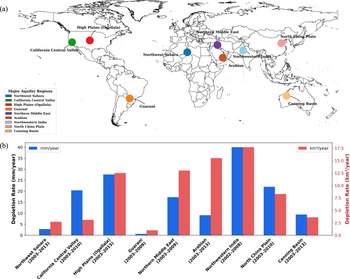

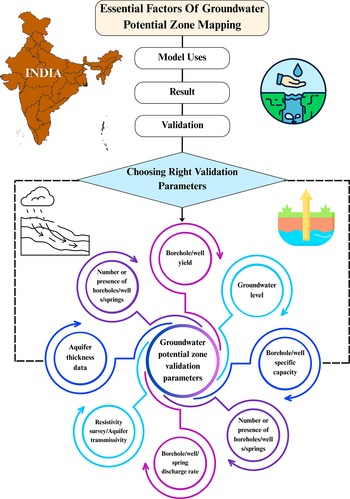


 Open access


Comments
Dear Editors-in-Chief,
We are writing to submit our invited manuscript, “Groundwater Potential Zone Mapping for Sustainable Water Management in India: A Systematic Review of Methods, Validation Techniques, and Future Directions, ” for consideration as a review article in Cambridge Prisms: Drylands. This research confronts the critical issue of groundwater security in India’s dryland regions, where this resource is vital for agriculture, industry, and daily life but is under severe pressure from increasing demand and climate change. Our manuscript provides a comprehensive and systematic review of the current landscape of Groundwater Potential Zone (GWPZ) mapping in India, analyzing input parameters, the evolution of scientific techniques from traditional to advanced machine learning models, and prevalent validation methods.
The primary impact of our study is its capacity to guide future research and policy by meticulously documenting methodological advancements, pinpointing persistent challenges like data scarcity and system complexity, and proposing a clear roadmap towards sustainable groundwater management; this includes advocating for higher-resolution data, 3D subsurface modeling, and climate-resilient approaches. We believe this manuscript strongly aligns with Cambridge Prisms: Drylands' focus on cross-disciplinary science for dryland ecosystems and management with global impact, as our review offers insights relevant to other nations facing similar water scarcity. We confirm this manuscript is original, unpublished, and not under consideration elsewhere, with all authors approving its submission.
Sincerely,
Sayantan Majumdar, Ph.D.
Assistant Research Professor
Hydrologic Sciences and Remote Sensing
Desert Research Institute, Reno, NV, USA