


Introduction
Adolescence is a transformational phase in human development as it represents a transition from childhood to physical, psychological, and social maturity (OECD and World Health Organization, 2020). It includes ages from 10 to 19 years and is considered a critical window of opportunity to enhance the health of the next generation (Blakemore, Reference Blakemore2019; Prentice et al., Reference Prentice, Ward, Goldberg, Jarjou, Moore, Fulford and Prentice2013), as preferences and behaviours adopted during this period can influence lifelong physical activity habits (Patton et al., Reference Patton, Sawyer, Santelli, Ross, Afifi, Allen, Arora, Azzopardi, Baldwin, Bonell, Kakuma, Kennedy, Mahon, McGovern, Mokdad, Patel, Petroni, Reavley, Taiwo, Waldfogel, Wickremarathne, Barroso, Bhutta, Fatusi, Mattoo, Diers, Fang, Ferguson, Ssewamala and Viner2016a) and health outcomes later in life (Hanson and Gluckman, Reference Hanson and Gluckman2011). With 1.2 billion adolescents worldwide, of which 90 per cent live in low- and middle-income countries (LMICs), policy support for the healthy development of adolescents becomes crucial to leverage the demographic dividend that is necessary to building human capital, economic growth, and achieving the Sustainable Development Goals (SDGs).
With 243 million adolescents, India is the country with the largest number of adolescents in the world. The economic development the country has experienced in the past decades has affected the livelihood and lifestyle of adolescents. Diet, physical activity, and time use have changed as rural transformations have altered the socio-economic dynamics of agricultural households. An increase in disposable income, market development, and a change in access to processed food has brought an increase in overweight prevalence. The latest Comprehensive National Nutrition Survey of India (2016–2018) reported a growing prevalence of overweight in rural areas (3.2 per cent of adolescents). At the same time, traditional livelihood opportunity coexists with greater educational opportunities for adolescents.
This study uses a combination of quantitative and qualitative methods, namely accelerometer data, time-use questionnaires, and qualitative interviews to describe the sources, quantity, and quality of physical activity among adolescents in Khammam and Mahbubnagar districts of rural Telangana, one of the fastest-growing states in India. With an emphasis on making comparisons between boys and girls, this mixed-method approach complements patterns and trends observed in the quantitative data with contextual information, e.g. social and cultural norms, and bridges the individual-level analysis with broader social processes and gendered relations that take place within the household and in the community. The objectives of this study are
-
a) To examine how adolescents allocate their time and energy to different physical activities and analyse the underlying trade offs faced by them in their time use.
-
b) To explore the qualitative vis-à-vis quantitative nature of adolescents’ physical activities and time use.
By outlining the nature and patterns of physical activities and time use among rural adolescents across age groups and gender, findings can inform and target appropriate policy interventions, crucial for the health and well-being of adolescents in rural India.
Review of literature
With a focus on women and infants in the past decades, adolescents’ health in LMICs has received less attention (Patton et al., Reference Patton, Viner, Linh, Ameratunga, Fatusi, Ferguson and Patel2016b). However, how societies conduct work, entertain and move have changed dramatically in the past few decades (Popkin, Reference Popkin2006), and adolescents are often at the forefront of these changes (Brody, Reference Brody2002). A recent study on the global trends on physical activity levels among 1.6 million school-going adolescents across 146 countries showed that more than 80 per cent of them did not meet current WHO recommendations for daily physical activity (Guthold et al., Reference Guthold, Stevens, Riley and Bull2020), which for a population aged 5–17 years includes an average of at least 60 minutes of moderate- to vigorous physical activity per day and limiting the amount of sedentary recreational screen time (WHO, 2020). Srivastav et al. (Reference Srivastav, Broadbent, Nayak and Bhat2020) attribute less family outdoor recreation time, and family safety concerns about children playing outdoors, together with greater involvement in digital entertainment (mobile phones, social media, television, and internet) for such a shift. Lack of insufficient physical activity is associated with overweight and obesity, whereas regular physical activity is beneficial for long-term health, longevity, and well-being and can surpass the effectiveness of drugs or other medical treatment (Kumar et al., Reference Kumar, Robinson and Till2015).
In many rural areas of LMICs studies have gauged the prevalence of recommended physical activity levels of adolescents across different life domains. Shridhar et al. (Reference Shridhar, Millett, Laverty, Alam, Dias, Williams and Dhillon2016) analysed physical activity levels among 564 rural South Asian children in India and Bangladesh in areas of active travel to school, leisure activities, and sedentary activities. A systematic review of the literature undertaken by Elshahat et al. (Reference Elshahat, O’Rorke and Adlakha2020) looked at how built-in environments such as land uses, residential density, street infrastructure, and crime and traffic safety determined physical activity behaviours related to the domains of travel and leisure. The study further expressed the need to investigate how such attributes affected behaviours in the domains of domestic or home-based physical activity and occupational or work-related physical activity. A meta-analysis undertaken by Muzenda et al. (Reference Muzenda, Kamkuemah, Battersby and Oni2022) through 292 LMIC studies reported physical activity behaviours under the four domains of transport, household, occupation, and leisure. A study based on perspectives of adolescents and their caregivers on physical activity in rural Gambia (Janha et al., Reference Janha, Hardy-Johnson, Kehoe, Mendy, Camara, Jarjou, Ward, Moore, Fall, Barker and Weller2021) examined the daily chores of adolescents in domains such as farming and food production, household chores such as fetching water, cooking and cleaning, travel such as walking or cycling to school and leisure activities such as playing football, partying and dancing, watching TV, or using mobile phones.
Furthermore, studies have shown that adolescent engagement in physical activity varies across gender and is greatly influenced by prevailing socio-cultural norms in the region. A study by Cislaghi and Heise (Reference Cislaghi and Heise2019) developed a ‘dynamic framework for social change’ to understand how social norms interacted with other factors such as individual beliefs, institutional setups and material assets and services in fostering harmful gender and power-related health practices and behaviours. The study by Janha et al., (Reference Janha, Hardy-Johnson, Kehoe, Mendy, Camara, Jarjou, Ward, Moore, Fall, Barker and Weller2021) in rural Gambia found daily household chores, typically arduous in nature being completed by girls while sporting activities were dominated by boys. The study by Guthold et al. (Reference Guthold, Stevens, Riley and Bull2020) highlighted the tedium involved in domestic work where countries like India and Bangladesh reported the lowest prevalence of insufficient physical activity among girls due to their greater involvement in laborious domestic chores as dictated by societal norms. Islam et al. (Reference Islam, Trenholm, Rahman, Pervin, Ekström and Rahman2019) in their paper did a qualitative study of socio-cultural influences on physical activity behaviours of rural adolescents in Matlab, Bangladesh and found ‘internalization and rigidity of gender norms’ to majorly affect sub-optimal physical activity practices. A study by Dang et al. (Reference Dang, Ho and Weiss2022) of 431 adolescents in Vietnam showed that girls received less peer support for engaging in physical activity, especially sports compared to boys due to perceived social norms of physical activity. Similarly, a study in 49 LMICs with 164,771 adolescents showed significant differences in physical activity levels between boys and girls notably in the Middle East and North African region, mainly attributable to cultural and gender norms (Darfour-Oduro et al., Reference Darfour-Oduro, Buchner, Andrade and Grigsby-Toussaint2018).
Thus, in many rural areas of LMICs, the amount of physical activity needs to be contextualised with the quality of physical activity among adolescents. Changes associated with modern and more sedentary lifestyles often coexist and enter in conflict with more ‘traditional’ occupations, where adolescents’ labour is part of households’ livelihoods (Regis et al., Reference Regis, Oliveira, Santos, Leonidio, Diniz and Freitas2016). For example, adolescents pursuing labour both within and outside households to support livelihoods may meet recommended physical activity levels, but activities may be tedious in nature. Therefore, the concept of arduousness of labour or the nature of work is fundamental to the experience of well-being across gender and is determined by work intensity and other psycho-social characteristics of work (Jackson and Palmer-Jones, Reference Jackson and Palmer-Jones1999). In this paper, the quality of physical activity is described as the absence of tedium and drudgery, and it is a qualitative concept derived from thematic insights of qualitative data. Therefore, linking the nature of the activities with the effort involved has the potential to provide new insights into the livelihood of adolescents.
Materials and methods
The study design is based on a mixed-method approach integrating quantitative information on energy expenditure and time use of adolescents with granular insights from interviews and focus groups of adolescents and their caregivers. Ethical and safeguarding protocols were developed based on guidelines for research with adolescents (Brady and Graham, Reference Brady and Graham2019; Santelli et al., Reference Santelli, Rosenfeld, DuRant, Dubler, Morreale, English and Rogers1995), and informed written consent was obtained by the participants (and their caregivers for underage participants). The data were collected from October 2019 to March 2020. The research and study design were reviewed and approved by the Ethics Committee at the University of Reading (Application #1113D). The National Institute of Rural Development & Panchayati Raj (NIRDPR)Footnote 1 and Bharti Integrated Rural Development Society (BIRDS)Footnote 2 , Hyderabad, India, assisted this study by facilitating the field survey, establishing contact with communities, government officials, and other stakeholders.
Quantitative data collection and analysis
The quantitative data collection commenced with an initial survey of households in Khammam and Mahbubnagar districts in which the respondent adolescent boys and girls were residents. The household survey was administered to the head of the household and collected information on the socio-demographic characteristics of the household, including household composition, dwelling characteristics, employment and labour force activities, land and agriculture, and access to public health infrastructure. Among the households surveyed, some households had more than one adolescent respondent (sibling households). This was followed by a survey of the individual adolescent boys and girls included in the study which collected information about their educational, occupational, and household activities. The height and weight of the adolescent respondents were also recorded. The initial household and individual surveys were followed by a daily time use and activity survey for six consecutive days for the respondent adolescents based on a 24-hour recall. These daily questionnaires were administered in person by trained enumerators in the mornings to capture time use and activity information for the previous day at half-hourly intervals from 5.30 AM to 10 PM. The time-use data were first converted into a standardised list of activities obtained from previous studies on adolescents (Chatzitheochari et al., Reference Chatzitheochari, Fisher, Gilbert, Calderwood and Clearyn.d.). These activities, termed ‘mini activities’ were grouped into ‘micro activities’, which were further grouped into ‘macro activities’. There are 43 different types of mini-activities, grouped into 14 micro-activities and 6 macro-activities, thereby generating a granular dataset (Table 4). After the completion of the individual survey, the respondent adolescents were invited to wear an accelerometer to record their physical activity over the course of the daily survey. Accelerometers were not expected to be worn during sleep at night and were to be removed during the course of activities such as bathing or swimming. Therefore, the average wearing time of the accelerometer was 16.5 hours or 990 mins/day. To improve compliance with the wearing of accelerometers, the respondents were reminded daily at the time of the daily survey.
Research-grade tri-axial Actigraph GT3X accelerometers were used to capture physical activity. The units were worn on the waist, positioned over their right iliac crest, using an elastic band. Accelerometery devices have been used extensively for research purposes in different settings (Berger et al., Reference Berger, Wielgus, Young-McCaughan, Fischer, Farr and Lee2008) and actigraph devices have been used to monitor physical activity in children and adolescents (Robusto and Trost, Reference Robusto and Trost2012). Accelerometers record data on movement (acceleration) along the three axes continuously at a specified frequency. The amount of physical activity as measured by the accelerometer is presented as (1) mean ‘counts’Footnote 3 per minute and (2) estimates of the time spent in physical activity according to count thresholds. The mean counts per minute can be converted into energy expenditure using several alternative algorithms that are embedded in the ActilifeTM softwareFootnote 4 . These algorithms provide estimates only of activity energy expenditure (AEE) and do not take into account the basal metabolic rate (BMR). Basal metabolic rate (BMR) is the number of calories required to keep the body functioning at rest and was estimated in this study by using the Henry–Rees formula (Loureiro et al., Reference Loureiro, Fonseca, Castro, Dos Passos, Porto and Pierucci2015). The estimated BMR was added to the AEE to derive estimates of the total energy expenditure (TEE). The computation of the time spent in sedentary, light, moderate, and vigorous/very vigorous activities is based on the application of count thresholds (or cut offs) for different levels of activity. The cut offs used in this study were based on the age-specific criteria (6-17 years) developed in Trost et al. (Reference Trost, Pate, Freedson, Sallis and Taylor2000) and used in Troiano et al. (Reference Troiano, Berrigan, Dodd, Mâsse, Tilert and Mcdowell2008). Based on the best practices suggested in Ward et al., (Reference Ward, Evenson, Vaughn, Rodgers and Troiano2005), the data on days when the non-wear time of the accelerometer exceeded two hours during the waking hours of 5.30 AM to 10 PM were excluded from the dataset. The ActilifeTM software has a built-in algorithm to detect periods of non-wear. The study respondents achieved a compliance rate of 82 per cent on a day/person level which is higher than that reported in similar studies from Europe/USA (Troiano et al., Reference Troiano, Berrigan, Dodd, Mâsse, Tilert and Mcdowell2008) but lower than that in other similar studies reported in Zanello et al. (Reference Zanello, Srinivasan, Picchioni, Webb, Nkegbe, Cherukuri and Neupane2020).
As the data in the time use survey were collected at half-hourly intervals, the data on energy expenditure and physical activity from the accelerometers were also aggregated at half-hour intervals. The data on time use from the time use and activity surveys were linked to the data on energy expenditure and physical activity from the accelerometer data for each individual for each day using STATA software. The final dataset yielded data on time use and energy expenditure for 395 adolescents from 342 households. After excluding days when the non-wear duration was in excess of two hours over the course of waking hours, the dataset had 75,972 half-hour observations spread over 1619 person days.
The sample was stratified for boys and girls within age groups (early adolescence (10–12 yrs), mid-adolescence (13–16 yrs), and late adolescence (17–19 yrs)) and geographical area (Khammam and Mahbubnagar districts). Statistical differences between age-groups and within sex were computed with a F-test, and independent sample t-tests were used to capture statistical differences between boys and girls. Statistical differences within categorical variables were computed using a chi-square test.
Qualitative data collection and analysis
The qualitative data captured how individual adolescents’ physical activity and time-use choices are influenced by social norms. Qualitative information was gathered through interviews with adolescents and their caregivers, mostly mothers who felt that they took more care and responsibility for their children’s activities compared to fathers. This module engaged a sub-sample drawn from the participants of the quantitative survey. In total, 10 focus group discussions (FGDs) and 21 in-depth interviews (IDIs) were conducted across gender and age groups of adolescents and their caregivers. The FGDs and IDIs for adolescents were carried across the three age groups listed above. The information from caregivers was collected across two age groups of adolescents, i.e. caregivers of younger boys and girls (10-14 yrs) and caregivers of older boys and girls (15-19 yrs). Further, the FGDs and IDIs were conducted in the local language, Telugu and transcripts were subsequently translated into English. All adolescent and caregiver responses were number coded for anonymity (Table A and B in the Appendix). The FGDs and IDIs guides are available upon request to the corresponding author.
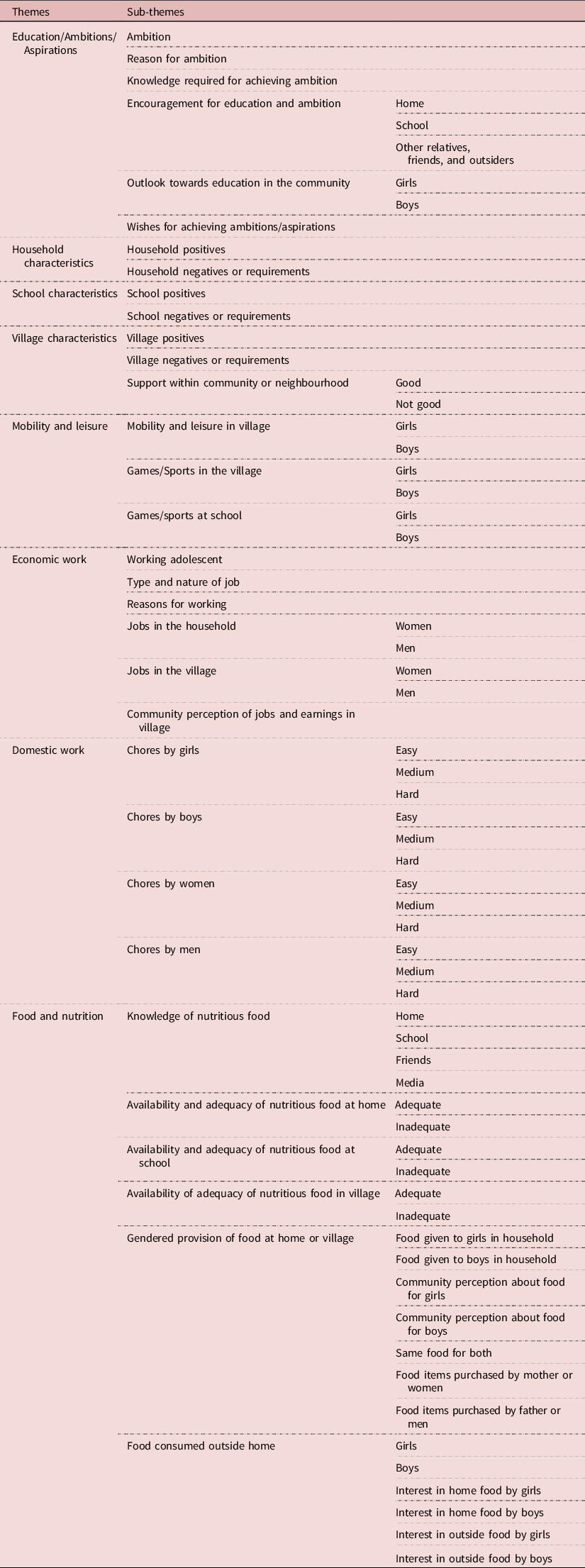
For the qualitative information, prevailing themes and sub-themes were identified from the review of the literature and qualitative interviews and analysed through the research process using the NVivo software. The themes were identified through coding patterns in interview responses covering topics such as education, ambitions, perceptions about surroundings such as household, school and community, economic work, domestic chores, mobility, leisure, perceptions about the quality of work, and food and nutrition (Table C in the Appendix). The themes derived from qualitative data were compared with activity groups in the quantitative data and are shown in Table 4. Predominant issues were highlighted using respondent narratives.
Study area and sample characteristics
Telangana is a landlocked state in the south-central stretch of the Indian subcontinent. With a GDP growth rate of 13.84 per cent per annum between 2015-16 and 2020-21, Telangana is one of the fastest-growing states in India. The data were collected in the districts of Khammam and Mahbubnagar. Khammam district is situated in the eastern part of Telangana. Home to 2.5 million people, 77 per cent of them live in rural areas. Situated in the western part of the State, Mahbubnagar is more populated with most people living in rural areas (88 per cent). With a relatively high population from lower castes (backward class, scheduled castes, and scheduled tribes), both districts are associated with economic backwardness. In 2003, the Government of India launched the ‘Backward Districts Initiative’ to develop 100 districts that had a high incidence of poverty characterised by low agricultural productivity and underdevelopment. Mahbubnagar was one of these (Nayyar, Reference Nayyar2005).
Table 1 provides an overview of the sample characteristics. First, an approximately equal proportion of boys and girls were included in both districts (around 50% each). The average household size and wealth were similar for boys and girls, as indicated by a statistically insignificant independent samples t-test. Most adolescent boys and girls identified with the Hindu religious group (81 per cent), followed by Christians and Muslims. Regarding social classification, most adolescents belonged to the Backward Class (52 per cent), followed by Scheduled Castes (44 per cent), with a smaller percentage belonging to Scheduled Tribes (4 per cent). The largest proportion of adolescents fell within the mid-adolescence age group (47 per cent). In terms of body mass index (BMI, a ratio of the weight in kilograms, divided by height squared), calculated based on the WHO BMI-for-age (5-19 years)Footnote 5 cut off points for adolescents, a higher proportion of underweight compared to normal-weight adolescents was observed, with a higher prevalence among boys compared to girls. Additionally, a small portion of the sample consisted of overweight boys, while most girls were within the normal-weight range. The difference in BMI between boys and girls is statistically significant.
Sample characteristics

Notes: Data on boys and girls are given as counts and percentages (in parenthesis).
¥ Wealth is computed by constructing an asset index
$ BMI cut offs for adolescents is up to 1 standard deviation as provided by the WHO
‡ Differences for categorical variables computed with a Chi-squared test and differences for continuous variables (average household size and wealth) computed with an independent sample t-test. Significance levels: *** p < 0.01, ** p < 0.05, * p < 0.1.
Table 2 presents the anthropometric characteristics of boys and girls. According to the results of an independent samples t-test, the average height, weight, and energy expenditures (AEE and TEE) of boys were significantly higher than those of girls. Furthermore, ANOVA F-statistic indicated statistically significant differences within the age groups of boys and girls, as adolescents continue to grow. Regarding energy expenditures, AEE was found to be higher in the younger age groups, while TEE showed the reverse pattern. Wearing time captures the time duration of wearing accelerometers, and its difference is not significant among boys and girls or within their age groups. Table 2 also provides information on the proportion of time adolescents spend in various intensities of physical activities across different age groups. It is observed that they spent approximately 11 per cent to 16 per cent of their time (equivalent to roughly two hours based on a maximum 990-minute daily accelerometer wearing time) engaging in moderate to vigorous physical activities, which meets the current WHO global recommended levels. These activities were more prevalent in the younger age groups and predominantly undertaken by boys. Additionally, adolescents spent around 21 per cent of their time (approximately four hours) participating in light physical activities. The majority of adolescents’ time, accounting for nearly 60 per cent or approximately 10 hours, is spent on sedentary activities. These sedentary activities were more prevalent among the older age groups, especially among girls. All statistical differences in physical activities, both between and within sexes, were found to be statistically significant.
Anthropometric characteristics of the sample
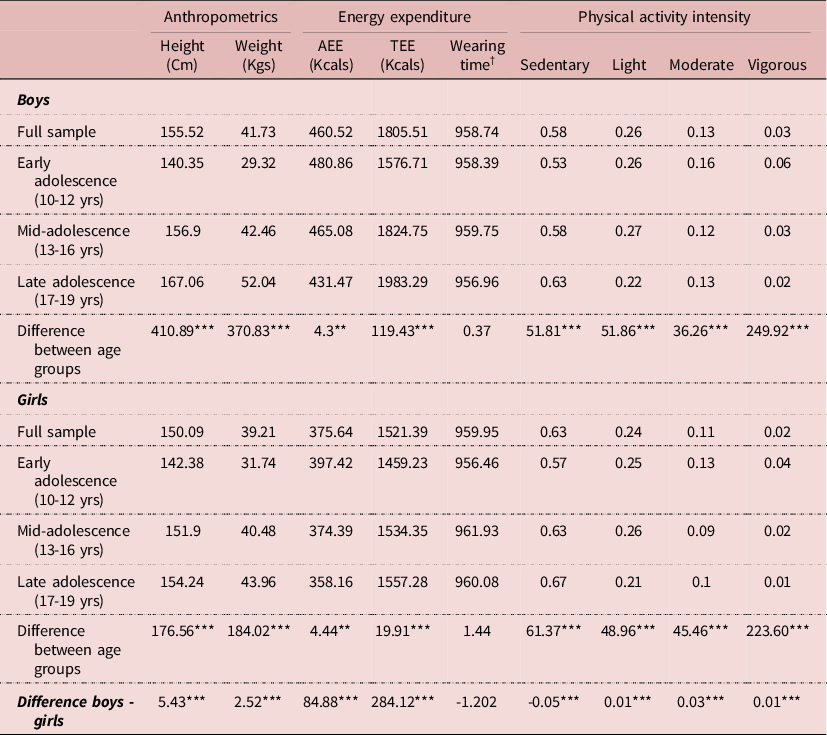
Note: AEE: activity energy expenditure (kcal/d); TEE: total energy expenditure (kcal/d).
†Wearing time refers to the number of minutes the participants wore the device during awake time (5.30am to 10pm for a 990 mins/day). Statistical differences between age groups and within sex were computed with an F-test and independent sample t-tests were used to capture differences between sex. Significance levels: *** p < 0.01, ** p < 0.05, * p < 0.1.
Results
Patterns and trends of energy and time use
The integration of time-use surveys and accelerometer data provides insights into the activities and energy requirements of adolescents. Tables 3 and 4 show the shares of energy expenditure and time use across 6 macro, 14 micro, and 43 mini activities among adolescents by sex and age groups. Comparing both tables, the disaggregated data shows that in the sample around half of the time of adolescents (approximately 51 per cent) was spent on well-being activities (napping, rest, and personal care), followed by an average of five hours a day (21 per cent) in educational activities for the younger cohorts (up to 16 years). Boys and girls devoted similar time and energy to education, especially in the earlier stages of adolescence. However, in late-adolescence engagement with education decreased, mainly in boys, with an increase in economic activities (7 per cent of time), while girls of this age group too compromised studies to prioritise domestic work (9 per cent of time). Economic activities comprised paid works, such as agricultural work or labour in construction sites and unpaid work like helping in family-owned small farms. Within economic work, the share of unpaid work was larger than paid work among both girls and boys, highlighting the role of adolescents in family-owned small farms (Table 4).
Share of energy expenditure and time use spent in macro-activities among adolescents (percentages) and energy/time ratio (E/T) by sex and age groups

Notes: AEE: activity energy expenditure; E/T captures the proportion of energy to time allocated to each activity. AEE and time are reported in percentage.
Share of energy expenditure and time use across macro, micro, and mini activities among adolescents by sex and age groups (percentages)
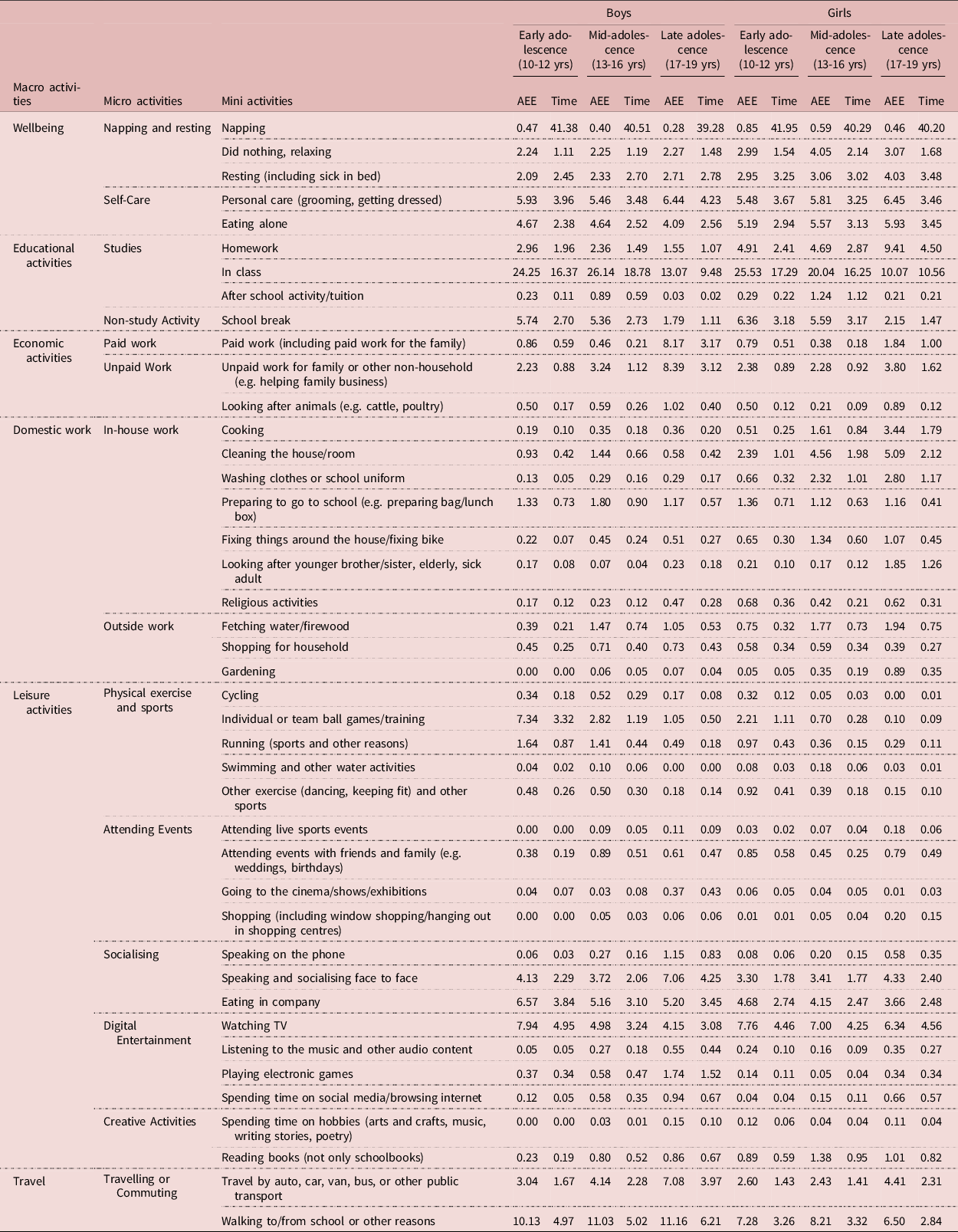
Notes: Percentages. AEE: activity energy expenditure.
Domestic activities were predominantly female activities and included household chores such as cooking, cleaning, washing, preparations for school, fixing things around the house, child care, caring for the elderly or sick family members and religious activities at home. It also included chores done outside the house such as fetching water or firewood, shopping for the household and gardening (Table 4). Girls across all ages spent nearly twice the time and energy taken by boys in doing domestic work. The shares of time use and energy expenditure in doing household chores increased with age for both boys and girls. However, in late adolescence, the shares of girls in domestic work continued to increase, while it declined for boys.
Travel and commute indicated adolescents’ level of mobility. This included undertaking journeys by own vehicles (cycles and motorbikes), using public transport and walking. Leisure activities included activities such as exercising and sports, attending events, socialising, engaging in digital entertainment, and creative activities like pursuing hobbies and reading. Across age groups, boys enjoyed a higher proportion of time on leisure and travel activities, which increased as they grew older. The allocation of energy expenditure on the different activities showed that for girls the greater share of time and energy devoted to domestic activities came at the expense of economic work, leisure and travel, while for boys, the greater share of time and energy spent in doing economic activities came at the expense of education and well-being activities.
Further, the proportion of energy expended in a particular activity in relation to the time spent on that activity was calculated using ‘energy to time-use ratios’ (E/T ratios). The ratio provides an index of the relative energy intensity of the different activities. Among all activities, the E/T ratio for economic activities was the highest followed by travel, domestic work, leisure, education, and well-being activities. Boys appeared to do more energy-demanding work, though the level of effort on activities around the house was similar across adolescents. The level of effort in travelling was more for girls than boys, and this was possibly a reflection of their limited access or the cumbersome nature of public transport. The E/T ratios also changed over time. They decreased for education and leisure activities for both boys and girls as they grew and increased for domestic activities and travel for girls and economic work among boys. This shows the significance attributed to economic and domestic work in the economically backward study region. E/T ratios also showed a tendency to increase marginally in well-being activities for both boys and girls indicating the importance attributed to personal care and grooming as adolescents grow (Table 3).
Activity Themes
The thematic analysis of the qualitative data builds on the quantitative insights to arrive at several more themes and sub-themes that are reflective of the social conditioning of adolescents (Figure 1).
Emerging themes from the in-depth interviews and focus groups, under main activities

Educational Activities
Four key sub-themes emerged within the theme of educational activities, namely (i) preference of girls towards studies; (ii) marriage of girls limiting their education; (iii) mismatch in quantitative data and qualitative information on education of adolescents; and (iv) gendered nature of job aspirations.
Education-related activities were considered very important among adolescents, with nearly 30.24 per cent energy expenditure and 21 per cent time (Table 3). Caregivers stressed their support of children’s education and ambitions irrespective of their gender. ‘We should get our children educated well, whether girl or boy. We should get them educated to the extent that we can economically afford and make them become whatever they want, doctor or engineer or whatever. We should get them educated and make them stand on their feet’ (IDI_CYB_01). Quantitative data shows that the share of time spent on education-related activities was greater for girls, especially in late adolescence. However, social and cultural norms in the region restricted girls’ freedom to leave the house for pursuits outdoor or leisure activities as much as boys and therefore they spent more time studying. ‘As soon as girls go home, they work, take bath and study. When boys go home, they throw the bag and go out to play’ (FGD_MAB_01).
While girls devote more time to educational pursuits, some adolescents opined that the encouragement for studying was still skewed towards boys. As girls entered the late-adolescence phase, discussions about marriage and alliances in families intensified. ‘Parents mostly encourage boys because he will do a job. For girls they say, tomorrow after marriage, she has to go off to another home, why encourage her? If there is a younger or elder brother, they are getting him educated more. They don’t pay enough attention to girls or care for them. Girls are unable to express feelings’ (IDI_COB_01). Similarly, girls’ engagement with higher levels of education is considered an impediment to their marriage. ‘For my son’s marriage, if the girl does agricultural and household works then it will be good. But if it’s an educated girl, we have to do everything for her, give her tea, wash her clothes’ (IDI_COB_02). Boys are expected to earn and take care of their parents after retirement, and hence some cargivers consider educating boys more than girls. ‘When boys get well educated, and do a job, it would feel good to us, and the family would come to a higher level. Boys should study and do job. If it is girl she should be given in marriage to someone who has job, good family, should talk well, should take care of her well’ (FGD_CYB_01). Such narratives indicate a mismatch in quantitative data and qualitative information on the education of adolescents. While the quantitative data shows girls devoting more time to education, the qualitative findings point out tensions between marriage aspirations for girls and their education.
The level of educational attainment is also directly associated with job aspirations and ambitions, and for both girls and boys, these seem to conform to predefined ideas. Girls preferred to undertake relatively sedentary careers such as teachers, doctors or bankers. Boys supported by caregivers indicated occupations such as police members, army personnel, or sportsperson that required displaying physical fitness. ‘Boys in the villages think about joining the army or police. Girls think of doing teacher job and becoming a madam’ (FGD_COG_01). A girl who wanted to join the police said, ‘some of them say you can do it, and some say do you really need this job, you are a girl, why do you want it, what will you do, you will have to stand all day long, why do you need those hardships?’ (IDI_LAG_02).
Economic Activities
The predominant sub-themes among economic activities centred around (i) financial constraints in households; (ii) activities conforming to masculine/feminine roles; (iii) the perception of boys having more physical strength than girls; and (iv) the arduous nature of economic work.
Economic hardships in the study region pushed adolescents to help supplement household earnings by engaging in economic activities. ‘Because of difficulties at home, even though mother and father go for work, money is not coming’ (IDI_MAB_01). Following gendered roles, boys spent more time and energy on economic work compared to girls as it was associated with masculinity. Girls participated in relatively lower intensity economic activities as traditionally they were expected to engage more with domestic work which was associated with femininity. Late-adolescent boys usually worked at construction sites, did paint jobs, or worked as agricultural labourers. It was assumed that boys had the physical strength and stamina to engage in such strenuous work. Girls tended to work more around their household’s family enterprises doing relatively less strenuous work such as tying crop bundles or weeding. ‘Compared to girls, boys are a bit strong, so boys do all the work that girls do not do, like lifting heavy things, working in factories and construction sites. These works girls do lesser’ (FGD_MAG_03). Regarding the arduous nature of work, boys reported that they found economic work difficult. ‘For paint jobs and all we have to put more energy. It feels hard as we become sick’ (FGD_MAB_01). In a few instances, late-adolescent girls also did strenuous economic work, but as a last resort to generate some extra income for the family. ‘While carrying cow dung on the head, my neck becomes stiff and there is lot of pain’ (FGD_EAG_03).
Domestic Activities
The predominant sub-themes under domestic activities are (i) the perception of domestic work being ‘easy’; (ii) being a prerequisite for the marriage of girls; or (iii) associated with family reputation; (iv) the arduous nature of domestic work; and (v) the role of boys in household activities.
As they grew older, girls were expected to spend more time and energy in domestic work as it was considered ‘easier’ compared to economic work and compatible with the social restrictions posed on working outside. ‘There is effort in boys work as they can lift more heavy things and so they mostly do outside work. Girls do household work as they should not go outside and do cooking and washing dishes and clothes. Boys do outside work. They can lift heavy things either at home or outside as they are a bit stronger than girls’ (FGD_CYB_01). Boys too found housework ‘girly’. ‘Boys can’t wash dishes, but they can get drinking water or cut wood. As they get older they do not like to wash dishes. They say ‘what is it, am I a girl or what, I will not do this’’ (FGD_CYG_01).
Housework skills were considered an essential prerequisite for the marriage of girls and so they were encouraged to do it. ‘In the future girls will have children and take care of home, that is why girls are made to get habituated with household works’ (FGD_CYG_02). Good knowledge of household chores was directly related to the reputation of the girl’s family, especially after marriage. ‘Girls think that when they go to another home and are unable to do housework, they’ll be beaten up and their parents will get a bad name. So they work hard’ (IDI_COB_02). However, the domestic work done was tedious. A boy mentioned, ‘While washing clothes at home girls have to sit for a long time, for which they get pain in the back, hands and legs and so it is difficult work for them’ (FGD_LAB_01).
Though domestic work was considered a prerogative for girls, in some cases boys also offered to help. A caregiver said, ‘girls anyway have to learn household works, but my son helps his elder sister a bit by fetching water, taking care of the younger brother etc’ (IDI_CYG_01). During the FGDs, boys spoke about doing in-house chores like cooking and filling water, sweeping the house, and generally helping their sisters and mothers with domestic work. Most boys mentioned having some basic cooking skills, especially cooking rice.
Mobility
Travel and commute among adolescents indicated their level of mobility. The main issues around mobility included (i) the lack of good transportation facilities; (ii) family reputation; (iii) the lack of trust in girls about travelling; and (iv) mobility restrictions on girls’ education and aspirations.
While boys spent more time and energy travelling and commuting as compared to girls, the energy intensity or the effort involved in travelling (captured by E/T ratios) was higher for girls than boys (Table 3). This could be due to a lack of adequate public transport facilities or the cumbersome nature of public transport. Boys preferred using private transport like motorbikes ‘Autos will be there, but there is lots of difficulties. If anybody has to go anywhere they have to go at least one kilometre from the village first and then get a bus. Boys can go on bikes. But girls have to take either bus or auto’ (IDI_LAG_03).
Because of societal restrictions, girls mostly stayed at home. ‘Boys can go at whatever time and they say he is a boy, wherever, whenever, anywhere he can go and come. They go for cinema or joy trip and nobody asks them’ (IDI_LAG_01). Some cases of street harassment of girls were also reported in the community, and there was a social stigma around eloping with boys. Thus, the reputation of girls and their families became an important factor in restricted mobility for girls. ‘If daughter does love marriage (elopes) and fled away, then their mother and father will feel shameful. The parents will have a bad name and unable to bear it some parents also die’ (FGD_CYG_03).
Gendered restrictions prevented girls to travel more than what was deemed essential. The societal norms of girls lacking courage or being incapable of tackling situations outside of the home were instrumental in them not being trusted with travelling. Girls were discouraged to undertake education or jobs in places far from home, limiting their education and aspiration choices. A boy spoke about ‘lack of freedom’ for girls. ‘Parents of girls put them in the hostel. Boys are sent to the Mahbubnagar (city) College and boys commute. Boys have the freedom to come and go. But girls don’t have much freedom, so they are put in hostels. Some parents completely stop their education after 10th class as they think about getting them married’ (IDI_LAB_01).
Leisure Activities
Social and cultural norms have a significant influence on the leisure activities of adolescent boys and girls. The key sub-themes are (i) physical strength; (ii) family reputation; and (iii) sedentary activities among girls.
Across age groups, boys tend to spend more time and energy than girls in leisure activities (Table 3 and 4). Physical exercise and sports are more common amongst boys and they are encouraged to play and pursue outdoor activities as they are considered to be physically stronger than girls ‘Boys play lots of games and sports and meet friends. One of the reasons girls are weak is because they do not play much sports. They are not encouraged. There will be some good players, but they keep them at home and their growth gets hindered. Their parents do not bother about it’ (IDI_LAB_01). The notion that girls are considered weaker than boys manifests in the gendered nature of play or sports. For example, girls usually play musical chairs and skipping while boys play ‘kabaddi’ (an Indian-origin contact sport) and cricket.
Unlike girls, boys are allowed by society to spend time with friends, have street food, and party. ‘Boys largely eat outside food, chicken, mutton and some of them make parties. Girls adjust and eat whatever is there at home. Girls do not make parties’ (FGD_MAG_01). The stigma attached to girls’ socialising and affecting the family’s reputation is a major factor in girls spending relatively less time and energy than boys in socialising. ‘If girls want to do sports, play games or want to become a PT (physical trainer) coach, they should be encouraged. But the people at home say, what will she do playing games or singing songs? She is going to be anyway taken away for another home. Then they look for alliances. That is why girls are lagging behind’ (IDI_LAG_02). Girls try to make up for socialising with friends by engaging more in sedentary leisure activities like watching TV, cell phones, or just studying. ‘Boys come from school early and play cricket and other games. They also play at school. Girls have lot of work at home and so they do not play’ (IDI_MAB_03). ‘Nowadays children see a lot of cell phones like TikTok and others’ (IDI_COG_02) ‘After coming back from playing, boys write and see cell phones. Girls also see cell phone a lot’ (FGD_MAB_05).
Well-being Activities
Adolescents spent most of their time in well-being activities, i.e. napping, resting, and to a much smaller extent in self-care (like personal grooming or eating alone). The main sub-themes derived from the qualitative data were (i) loneliness among girls and (ii) personal grooming.
The time spent in well-being activities was greater for girls compared to boys across all age groups. Within self-care activities, girls spent more time eating meals alone at home compared to boys, reflecting the societal norms where boys were used to socialising after returning from school, while girls stayed alone at home. Moreover, with parents away at work, girls were left alone at home doing domestic work and eating meals alone ‘Boys usually do lot of parties like birthday parties. Girls are at home. They do not go outside anywhere and are mostly not invited’ (FGD_MAG_02).
Girls and boys spent nearly equal time in personal grooming and the shares increased with age. In late adolescence, both girls and boys showed a tendency to engage more with their looks and body image. ‘If I go outside, I take the motorbike, to look stylish in front of friends’ (FGD_MAB_02). Girls spent time dressing up at the late-adolescence stage. A boy said, ‘Boys make their hair quickly, but when girls make their hair, put makeup, it gets late’ (FGD_MAB_01).
Activity Trade-offs and Cross-cutting Themes
Several cross-cutting themes emerged from the activities pursued by girls and boys at various stages of adolescence (Figure 2).
Trade-offs and cross-cutting themes from the analysis of the in-depth interviews and focus groups.
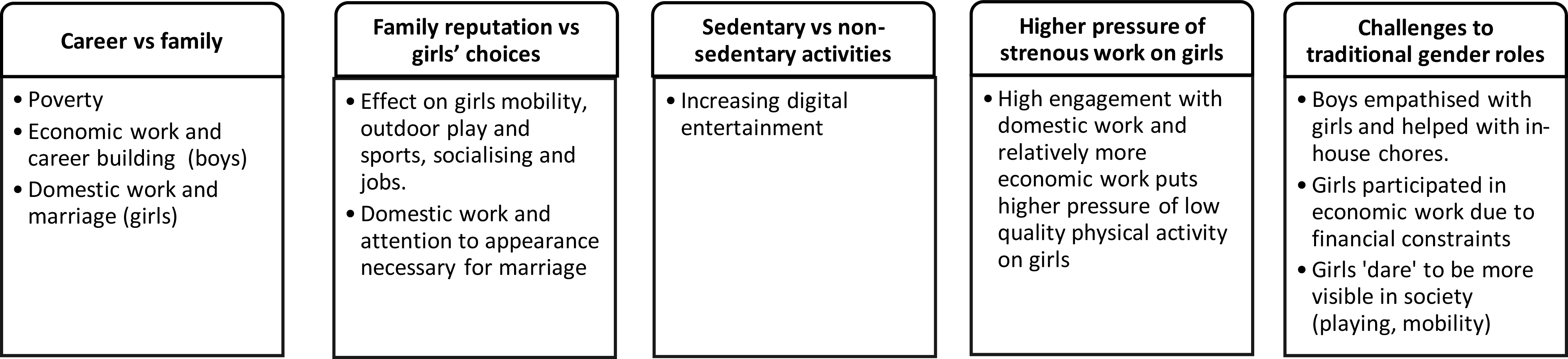
In the dichotomy between career and family, though education and career building were considered critical by adolescents and their caregivers alike, poverty forced them (especially at late adolescence) to supplement household incomes by either working or helping with household chores. As traditional gender roles pushed boys to do economic work while girls were expected to adhere to domestic duties, time for education and career-building is compromised.
Social and cultural norms have a heavy bearing on family reputation and many aspects of girls’ lives, including their mobility and preparedness for marriage. Encouragement for outdoor play, sports, and socialising activities is skewed towards boys. ‘In the villages they say you [girls] have to work, why do you need games, why are you doing like boys? There is no equality. They send boys for games. That is why girls are facing disadvantages’ (IDI_LAG_03). As regards career choices girls were expected to take up non-physical careers like teacher or doctor, while boys were encouraged to join non-sedentary jobs like the police or pursue serious sports. ‘I want to become a police officer. People say negative and positive things about it. Some say you can do it, and some say do you really need this job, you are a girl, you will have to stand all day long, why do you need those hardships? Because of talks like this, girls are stepping down’ (IDI_LAG_03). According to prevalent social norms, girls were expected to perform domestic duties and pay attention to their appearance, as these are considered important for a marriage and could impact family reputation if not taken seriously. Thus, in the trade-offs between family reputation and girl’s choices and aspirations, the former was more important.
Structural and social changes in rural areas shifted physical activities towards more sedentary lifestyles. Engaging with digital entertainment was found to be comparatively more for home-bound girls as they had lesser avenues for pursuing leisure compared to boys (Table 4). ‘I sweep the house, brush my teeth, take bath and get ready to go to school. In the evening I return at 4:30, wash the dishes, sweep the house and yard and then study. After studying, I watch TV, then eat and sleep’ (IDI_MAG_01). Boys also spent time in sedentary leisure activities, but they also socialised with friends over street food, which was resulting in the prevalence of relatively more overweight adolescent boys in rural areas. ‘Outside, we drink juices, cool drinks, sweets and mostly junk food like pani puri (sour flavoured water with fried puffed crisp dough balls) and cutlet’ (FGD_MAB_03). ‘I play PUBG, cricket, and casually roam around with friends’ (FGD_LAB_03).
Another aspect that affects adolescent girl’s life was the higher pressure of low-quality physical work, which does not appeal to adolescents as they are tedious in nature. Adolescents would have preferred to spend time after school, playing or socialising with friends, but instead were expected to do economic or domestic work. The pressure on low-quality physical work tended to be greater for girls than boys, due to gendered norms that viewed girls’ time spent on play or socialising as contemptuous. A caregiver mentioned, ‘girls are the one, who do more work, sweeping the house, washing clothes and cooking, and if there are any outside wage works they go along with their mothers’. (FGD_CYB_02).
Finally, there is evidence of challenges to traditional gender roles, wherein some boys engaged in household chores or girls participated in economic work. In some instances, boys were aware of areas in which girls were discriminated against across various types of activities. They empathised with girls and helped with household chores. When girls engaged in economic activities mostly in family-owned small farms, they were motivated by adverse financial situations of the households rather than defying prevalent social norms. In other situations, there seem to be some tendencies to break away from traditional gender stereotypes where girls were being encouraged by their caregivers to develop ‘courage’ and ‘dare’ to be more visible in society: ‘Some girls who are courageous and daring think that what the community thinks about me, how does it matter to me, I have to settle in my life, for me my future is important. But those who are sentimental fall back. Mentally girls should not think like that. They should dare’. (IDI_COB_01). ‘My elder daughter has good enough interest on studies, she strongly aspires to become police and we strongly feel that she should become police’. (IDI_COG_02).
Summary and conclusions
Combining descriptive statistics with thematic insights from qualitative data, the study explored how household and community social norms influence the quality and quantity of physical activity and time use of 395 rural adolescents from Mahbubnagar and Khammam districts of Telangana, India. The allocation of energy expenditure to different activities reflected the trade-offs or compromises faced by adolescents in time use. On the one hand, results showed adolescents trading educational activities during late adolescence with domestic and economic work among girls and boys, respectively. Adolescents were expected to supplement household incomes by engaging mostly in unpaid labour in the household agricultural enterprise and domestic work mostly undertaken by girls. Boys were encouraged to study more and learn some practical work skills that would enable them to find good jobs and take care of their parents and families in the future. Girls were expected to hone their domestic skills to prepare for marriage. On the other hand, girls traded socialising with friends, attending social events, or playing and pursuing sports with digital entertainment avenues such as watching TV or cell phones. With parents out for work and social norms restricting their mobility, girls spent more time at home, often alone.
The study showed that rural transformation and changes associated with modern lifestyles, as suggested by Regis et al. (Reference Regis, Oliveira, Santos, Leonidio, Diniz and Freitas2016), were changing adolescent lives, such as the culture of eating out and preoccupation with digital forms of entertainment. The nature and patterns of physical activities and time use showed a cohabitation of sedentary and vigorous activities. Though there was some engagement with sedentary activities such as TV and mobile phone use, the energy and time expended in doing hard labour both within and outside the household for both boys and girls seemed to outweigh any imminent risk associated with sedentary lifestyles as indicated by Kumar et al. (Reference Kumar, Robinson and Till2015). Boys consumed more junk/street foods than girls, and there were more cases of overweight boys than girls. Similarly, girls may have spent some more time watching TV or cell phones at home, but that offered no compromise for the hard work that they put into domestic and economic work. Family safety concerns of children playing outdoors as mentioned by Srivastav et al. (Reference Srivastav, Broadbent, Nayak and Bhat2020) are a barrier to outdoor mobility, especially for girls, aggravated by the existing regressive social norms that restricted girls’ mobility compared to boys.
Results highlight the quality vis-à-vis quantity aspect of physical activities among adolescents and how it is motivated by financial constraints as well as social norms and ideas about femininity. Boys may be active by doing economic work on farms or construction sites, but still such strenuous activity was ‘low quality’ as it is physically taxing at that age (as opposed to sports activities, for example). However, boys were allowed by society to compensate for their time-consuming hard work by engaging in more leisure activities than girls. The domestic work done by girls was perceived as time consuming but less physically demanding, and hence considered ‘easier’ work. However, domestic work can be tedious with high energy expended, yet the burden of domestic work tends to be minimised. Girls are engaged in economic work as well, but it was usually of lower intensity than boys and used as a last resort to generate some extra income for the family. Domestic and economic work together resulted in ‘higher pressure of low quality’ physical work on girls. Studies focusing only on the quantity of physical activities may underestimate or may not capture the quality of activities, an important aspect of adolescence.
Social and cultural norms as highlighted by earlier studies are still important determinants of physical activity and time use. Culturally determined physical activities and time-use patterns reflect the persistence of gender inequity amongst adolescents and may limit the potential development opportunities for girls. As gendered norms and financial hardship influence access to healthy and fulfilling physical activity, policies and interventions can indirectly improve the quality of physical activities among adolescents in rural areas. For example, improving women’s safety in public spaces will promote mobility among girls and young women, and awareness campaigns on the burden of strenuous domestic work could sensitise gendered roles. Financial constraints are still a major determinant of adolescents’ activities that can be mitigated by valorising rural employment, enterprises, and improving the remuneration of rural paid work as well as providing consistent and quality education in rural areas.
Funding statements
The authors gratefully acknowledge the University of Reading Research England GCRF QR allocation project (Project E3584380) ‘Breaking the intergenerational cycle of malnutrition, food security, and poverty in low- and middle-income countries – making the case of adolescent girls and boys in India and Nepal’.
Competing interests
None.
Ethical Approval
Following the Helsinki Declaration of 1975, as revised in 2008, the free and informed consent of the subjects or their legal guardians was obtained and the relevant institutional or national ethics review board approved the investigation.
Appendix
Anonymised identifiers of participant adolescents by sex and age groups
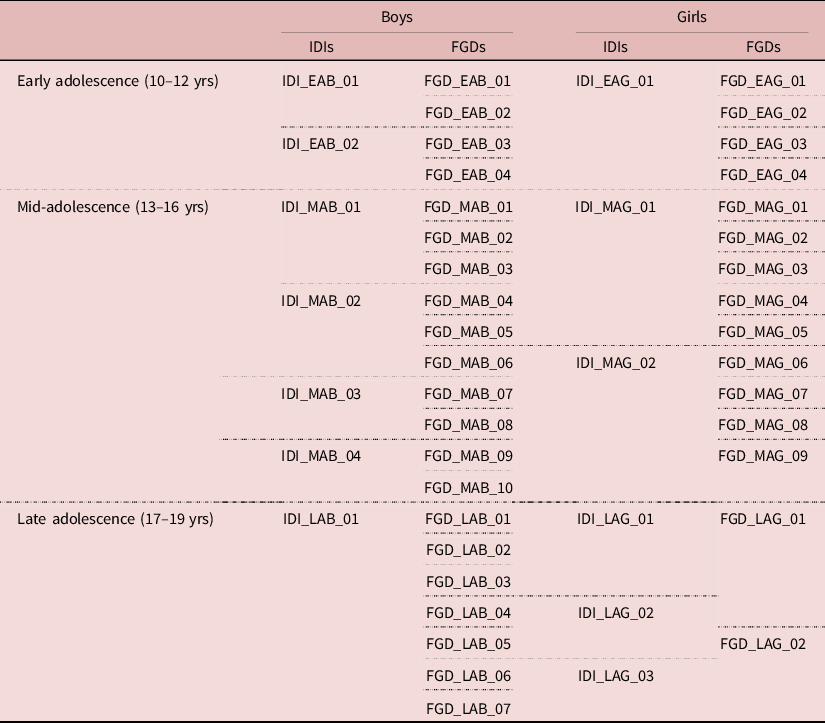
Note: IDI – in-depth interview, FGD – focus group discussion, EAB - early adolescent boy, MAB – mid-adolescent boy, LAB – late adolescent bBoy, EAG – early adolescent girl, MAG – mid adolescent girl, LAG – late adolescent girl.
Anonymised identifiers of participant caregivers, by sex and age groups of adolescents
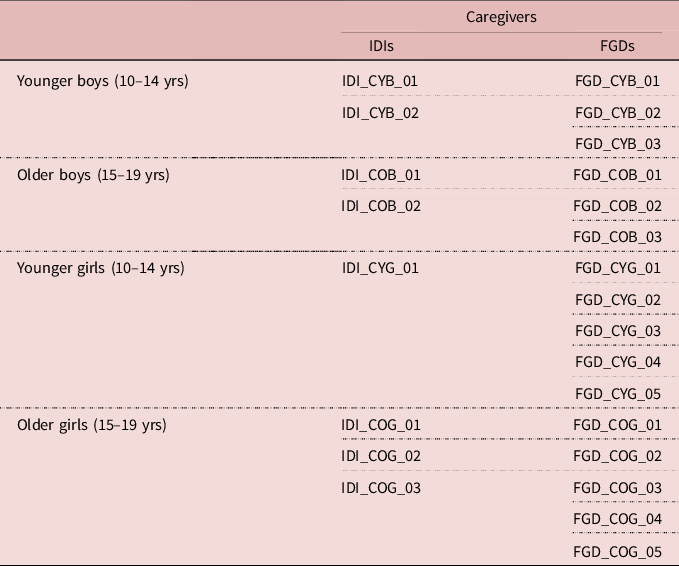
Note: IDI –in-depth interview, FGD – focus group discussion, CYB – caregivers of younger boys, COB – caregivers of older boys, CYG – caregivers of younger girls, COG – caregivers of older girls.
Activity themes and sub-themes based on qualitative interviews


 Open access

