


Introduction
Air pollution significantly jeopardises human health, and when concentrated within residential settings, it becomes even more deleterious. The World Health Organization (WHO) defines it as the ‘contamination of the indoor or outdoor environment by any chemical, physical or biological agent that modifies the natural characteristics of the atmosphere’ (WHO, 2017). The primary sources of outdoor pollution include transportation and industries, among others. In contrast, indoor pollution often arises from using unclean fuel for cooking and lighting, manure used in household activities, and lack of ventilation, among others (Balakrishnan et al., Reference Balakrishnan, Cohen and Smith2014).
Air pollution has become a leading environmental health issue today, responsible for seven million fatalities yearly at the global level. Asthma, cancer, lung conditions, and cardiovascular disease are just a few ailments that it causes and worsens (WHO, 2018b). It affects people’s health and costs the global economy $8 billion (USD) daily, that is, almost 3–4 per cent (%) of the gross world product (Farrow et al., Reference Farrow, Miller, Myllyvirta, Newport and Son2020). Compared to a world that complies with WHO recommendations, global air pollution shortens life expectancy by 2.2 years. The repercussions of air pollution on life expectancy are tantamount to smoking. In addition, air pollution reduces lifespan by more than three times as much as drinking alcohol or using unclean water, six times as much as HIV/AIDS, and 89 times as much as war and terrorism (Greenstone et al., Reference Greenstone, Hasenkopf and Lee2022). Even in India, air pollution is the biggest danger to people’s health. Furthermore, inaction on WHO recommendations by India may reduce citizens’ average life expectancy by five years (Greenstone et al., Reference Greenstone, Hasenkopf and Lee2022).
While the effects of ambient air pollution are well known, household air pollution (HAP) can be termed an invisible adversary. Routine household activities like cooking, cleaning, and others generate a significant level of volatile particulate molecules within an average dwelling, resulting in indoor air quality levels comparable with any severely polluted big city (Twilley, Reference Twilley2019). An estimated 846 million people in India (i.e., 60 per cent of the country’s population) were exposed to HAP in 2017 (Health Effects Institute, 2019). Unclean cooking and lighting fuels have both environmental as well as severe health concerns. The use of such fuels has harmful impacts not only on the individuals who use them but also on the people around them to such an extent that it can lead to mortality. Illnesses linked to indoor particle exposure take longer to manifest, such as lung cancer and cardiovascular disease, as well as acute lower respiratory (ALR) infections, chronic obstructive pulmonary disease (COPD), and asthma, among others (Lewtas, Reference Lewtas2007). Not only illnesses but unclean cooking fuel also accounts for approximately 1.6 million deaths worldwide (Health Effects Institute, 2019).
Many of the Sustainable Development Goals (SDGs) are associated directly or indirectly with indoor/household air pollution; therefore, it is the need of the hour to take the issue of HAP seriously (Amegah & Jaakkola, Reference Amegah and Jaakkola2016). SDG’s Goal 3 (good health and well-being) is related to reducing under-five (U5) deaths, early deaths of adults, and illnesses due to air pollution. Goals 4 and 5, that is, quality education and gender equality, respectively, are related to providing improved access to facilitating knowledge technologies to children and women who are common victims of air pollution concentrated within a household (WHO, 2018a). Similarly, Goal 7 (affordable and clean energy) talks about providing access to affordable, reliable, efficient modern power. In addition, Goal 13 (climate action) as well as Goal 15 (life on land) are also affected by indoor air pollution as the former aims at combating climate change, and the latter targets sustainably managing forests and halting land degradation (Rosenthal et al., Reference Rosenthal, Quinn, Grieshop, Pillarisetti and Glass2018).
Technological evolution supplementing rapid economic progress over the last few decades has further advanced the factors that lead to higher and more sustainable living standards. Moreover, this development has even extended to the markets of cooking fuel, where now various alternatives are accessible and affordable, such as liquified petroleum gas (LPG) and electric fuel, among others (Yu et al., Reference Yu, Lv, Qiu, Yu, Guo, Bian, Yang, Chen, Wang, Pan, Liang, Hu, Chen, Li, Wu, Chen, Clarke, Collins, Peto and Qiu2020). Governments usually offer schemes that provide celerity to environmentally sustainable economies. Even in India, the main motive behind launching schemes like Pradhan Mantri Ujjwala Yojana (PMUY) is to achieve SDGs by shifting towards clean fuel. PMUY aims to give LPG access to those who cannot afford it and progressively decrease their dependence on readily available, accessible, and affordable but harmful substitutes like coal, wood, biomass, and kerosene.
However, it is seen that most developing (including India) and developed countries do not adhere to the energy ladder hypothesis entirely; rather, they adopt fuel stacking. The energy ladder hypothesis explains the situation succinctly. According to it, developing economies tend to move up the energy ladder as their affluence increases, but they rarely transition completely from one fuel to another. Instead, households engage in the practice of ‘stacking’ or cooking with numerous stoves and fuels, all within the same dwelling (Energy Sector Management Assistance Program (ESMAP), 2020). So, despite multiple studies analysing the factors influencing household behaviour through cross-sectional and panel analysis, there remains a need for further research both globally (Paudel et al., Reference Paudel, Khatri and Pant2018; Pundo & Fraser, Reference Pundo and Fraser2006; Schunder & Bagchi-Sen, Reference Schunder and Bagchi-Sen2019) and in India (Cheng & Urpelainen, Reference Cheng and Urpelainen2014; Mani et al., Reference Mani, Jain, Tripathi and Gould2020; Ravindra et al., Reference Ravindra, Kaur-Sidhu, Mor and John2019; Talevi et al., Reference Talevi, Pattanayak, Das, Lewis and Singha2022).
Considering the problems of unclean cooking fuel, the study’s objectives are as follows: first, to interpret the distributional trend of unclean cooking fuel across various socio-economic determinants and subsequently explore the vital household-level determinants leading to the choice of cooking fuel. Second, to analyse how unclean cooking fuel affects the health of under-five children. The authors have taken rapid and short breathing issues from the past two weeks as a proxy of acute respiratory infection (ARI) in this research based on the definition of ARI in the NFHS survey. As per the authors’ knowledge, there is limited research that analyses both causes (determinants of unclean cooking fuel) and effects (health effects) in a single study in the context of developing or undeveloped countries (Owusu Boadi & Kuitunen, Reference Owusu Boadi and Kuitunen2006). Hence, the research contributes to the literature by integrating these objectives into a cohesive paper. Additionally, this paper adapts a novel approach by analysing the distributional changes in the use of unclean cooking fuel over the last three decades, an area that the existing literature has not previously investigated.
Rationale for choosing children’s health
Children, women, and the elderly are the most sensitive groups to air pollution (Mahalanabis et al., Reference Mahalanabis, Gupta, Paul, Gupta, Lahiri and Khaled2002; Sehgal et al., Reference Sehgal, Rizwan and Krishnan2014). Children, being more susceptible to the impact of air pollution, are particularly vulnerable to its effects as they inhale more rapidly than adults and draw in a higher amount of pollutants. They also reside near the surface, where some pollutants are most concentrated. Hence, children exposed to excessive levels of air pollution may be more susceptible to chronic ailments in later life. Around 40,000 children under five were estimated to have died in 2021 due to PM2.5Footnote 1 air pollution (IQAir, 2021).
Moreover, COVID-19Footnote 2 significantly worsened the situation, as exposure to PM2.5 elevates the risk of contracting and developing more severe illnesses, including fatalities, after infection (IQAir, 2021). PM2.5 levels that exceed the air quality limits set by the WHO expose 98 per cent of children under five in lower- and middle-income countries globally. Further, levels exceeding WHO air quality standards expose 52 per cent of children under five within high-income economies. One billion children under 15 and more than 40 per cent of the world are exposed to high HAP levels when households use polluting appliances and fuels (WHO, 2018a).
Additionally, a report released on the eve of the first WHO Global Conference on ‘Air Pollution and Health’ highlights that 1.8 billion children under 15 are at significant risk of compromised well-being and growth due to daily exposure to polluted air (WHO, 2018c). Tragically, many of them pass away; according to WHO estimates, six lakh children died in 2016 from ALR infections spurred on by contaminated air (WHO, 2018c). The research claimed that air pollution also influences cognitive capacity and neurodevelopment, and it can lead to asthma attacks and paediatric cancer (WHO, 2018c). So, comprehending the effect of unclean cooking fuel on children’s health is crucial in light of the aforementioned facts. The obtained results from the analysis would enable authors to draw informed conclusions from the research and advocate essential policy changes.
Data source and methods
This study uses the National Family Health Survey (NFHS) database for analysis. NFHS is a large-scale, national representative dataset with unit-level data resulting from a field survey incorporating a big budget and well-planned research covering pan India, with the International Institute for Population Sciences (IIPS) as the coordinator. Since its inception in 1992 and continuing until 2021, the NFHS series has conducted five survey rounds, providing data on India’s population, health, and nutrition. Moreover, it is the only Indian database that has covered approximately 30 years, from 1992 to 2021. So, the study utilises all rounds of the NFHS dataset for descriptive analysis and specifically employs the fifth round to achieve the remaining objectives. NHFS-5 covers information on 636,699 household sample units consisting of 825,954 individuals.
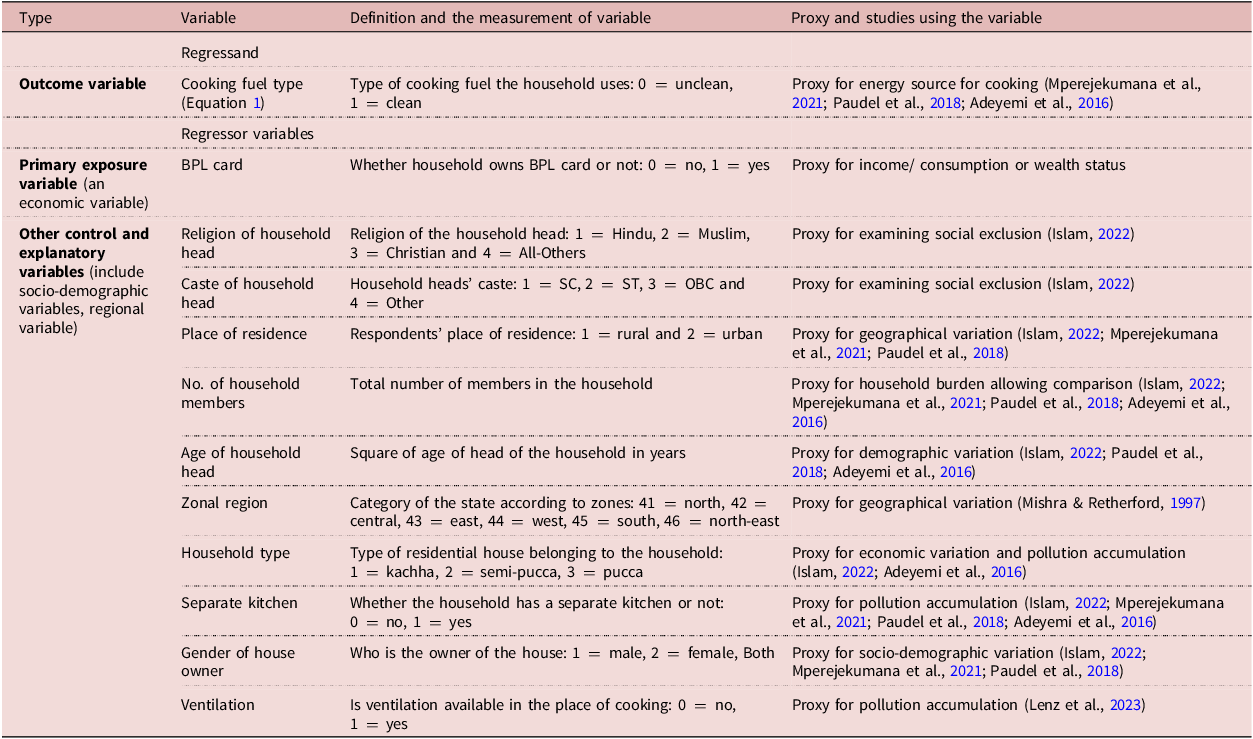
The study includes two different samples for objectives. The first objective is to study the clean fuel transition that occurred over the period using distributional analysis and simultaneously analysing the factors determining the choice of fuel for cooking among households. The household sample of NFHS-5 (including both rural and urban) is selected to analyse the determinants of cooking fuel. This is because cooking fuel is a household-level activity that depends on various household-level socio-demographic factors. To achieve the first objective, the study uses the variables (see Table 1 for details): type of cooking fuel as the regressand, which has two categories, that is, clean and unclean. The modified definition of WHO’s air quality guidelines is the basis for the division of clean and unclean in this study (WHO, 2021). The study considers electricity, LPG, and biogas as clean cooking fuels, while the unclean category comprises solid waste biomass such as wood, coal, lignite, animal dung, shrubs/grass, agricultural crops, and kerosene, which was once considered clean in the existing literature (Agrawal, Reference Agrawal2012; Mishra & Retherford, Reference Mishra and Retherford1997). Recent pieces of literature and WHO guidelines have considered kerosene to be unclean (Arku et al., Reference Arku, Brauer, Duong, Wei, Hu, Ah Tse, Mony, Lakshmi, Pillai, Mohan, Yeates, Kruger, Rangarajan, Koon, Yusuf and Hystad2020). The selection of independent variables for the study was based on several literature reviews related to the issue (Kroon et al., Reference Kroon, Brouwer and Van Beukering2013; Lenz et al., Reference Lenz, Bensch, Chartier, Kane, Ankel-Peters and Jeuland2023; Mishra & Retherford, Reference Mishra and Retherford1997) and the variable constraints of NFHS-5.
Variable description examining cooking fuel choice

Source Author’s computation based on NFHS 5 information and review of literature.
Acronyms NFHS (National Family Health Survey); BPL (Below Poverty Line); SC (Schedule Caste).
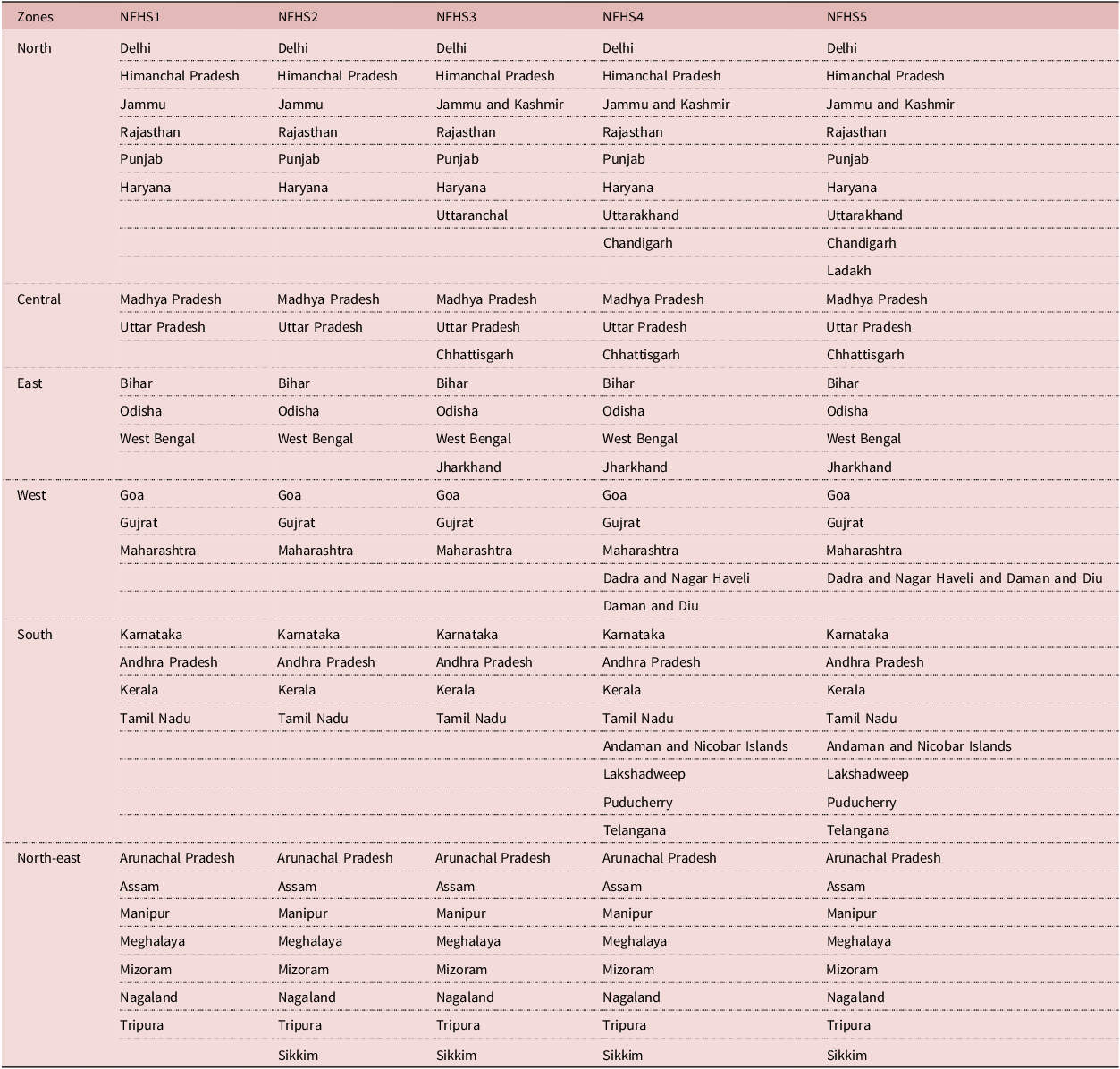
The primary predictor variable is whether BPL card holder, which is a categorical variable; here, BPL refers to people below the poverty line. The variable BPL card holders show two different classes of households based on income and living standards (i.e., poor and non-poor), which is taken as a proxy for income or consumption expenditure, as data on income and consumption expenditure is unavailable in NFHS. Zonal regions are the second independent variable, further classified into six zonal regions. Table 2 comprehensively summarises states grouped into six zonal regions across different NFHS rounds. Additionally, Table 1 presents a detailed description of variables encompassing the determining factors related to household cooking fuel choice. Further, the table includes the studies that have used these variables.
List of states and union territories included in NFHS5 and previous rounds
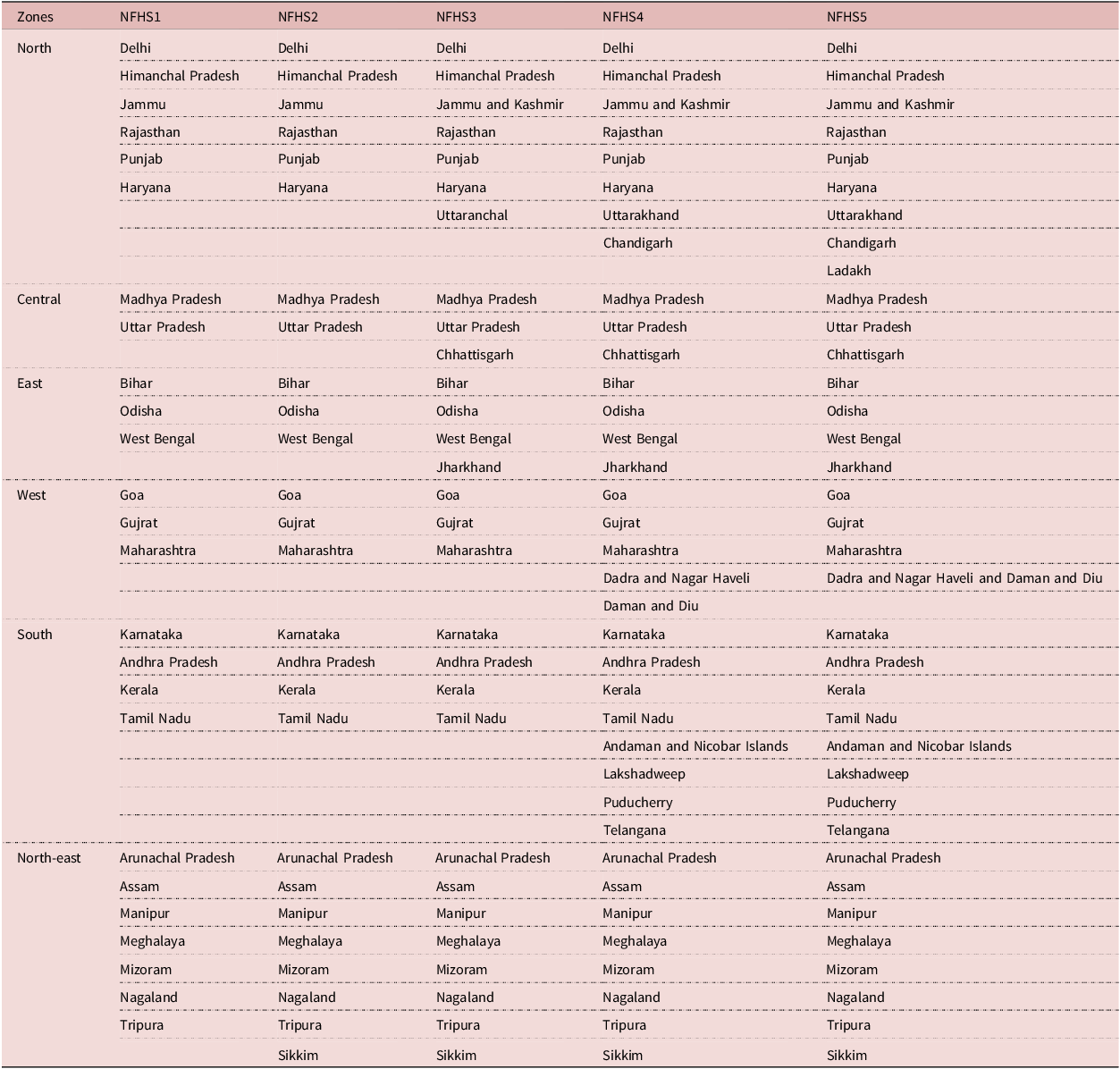
Source Authors construction using NFHS reports of all rounds.
The variable wealth index is made from a distinct set of variables.Footnote 3 The study drops the wealth index from the set of explanatory variables in Equation 1 to avoid correlation, as many of these variables are already present in the study.
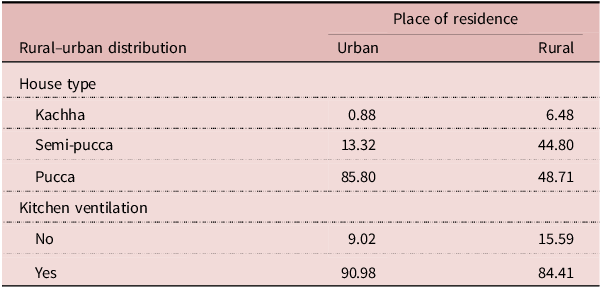
Furthermore, cooking fuel choices pertaining to house type and their ventilation facilities separately for rural and urban areas were analysed. As rural households are often assumed to have kachha houses, and urban houses are likely to have structured ventilation, such analysis would highlight the presence of urban–rural divide. This is explained using cross-tabulation of the variables in Table 3.
Rural–urban divide in terms of house-type and ventilation facilities
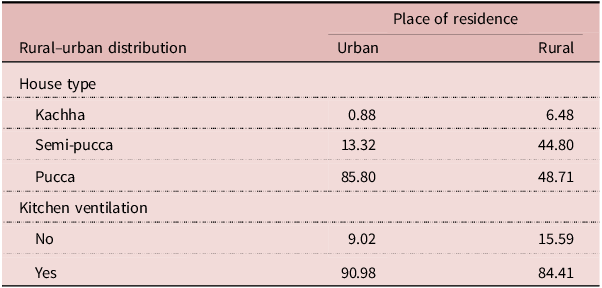
The distribution of rural households as per their house type shows that only 6 per cent of people live in kaccha houses (the rest of them live in either semi-pucca or pucca houses). On the other hand, in the urban scenario, around 86 per cent of houses are pucca, 14 per cent are semi-pucca, and only about 1 per cent are kaccha. Overall, the share of kaccha house type is quite low, irrespective of the location. Next, when the authors verified the ventilation facilities within these household types (separately for rural and urban areas), the results show that on an aggregate basis, around 91 per cent of the urban and 84 per cent of the rural houses responded to having ventilation facilities. Therefore, households have a higher share of ventilation facilities irrespective of location and house type. The data refuted the preconceived assumptions.
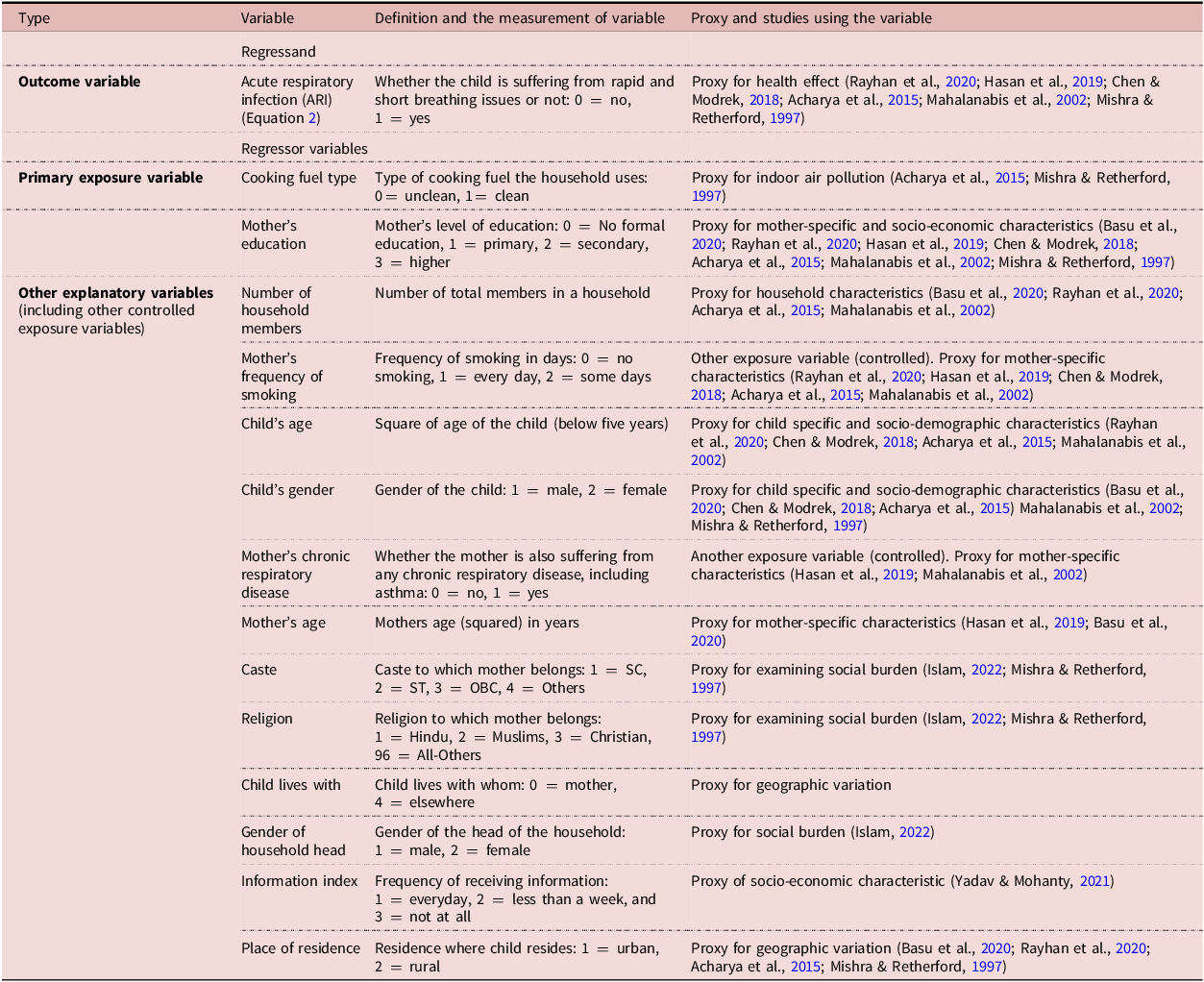
To achieve the second objective, that is, examining the effect of cooking fuel on child health, an individual-level file of children (0–4 years old) is used for the sample.Footnote 4 Acute respiratory infection (ARI) is the dependent variable,Footnote 5 and the primary predictor variable is the type of cooking fuel, categorised into clean and unclean. The details of these variables, along with other variables, are presented in Table 4. Table 4 also includes studies that have used these variables. The variable information index in this study is a comparatively new variable based on past literature,Footnote 6 which is added to know the effect of acquiring day-to-day information on cooking fuel preferences.
Variable description examining the effects of cooking fuel on children under five
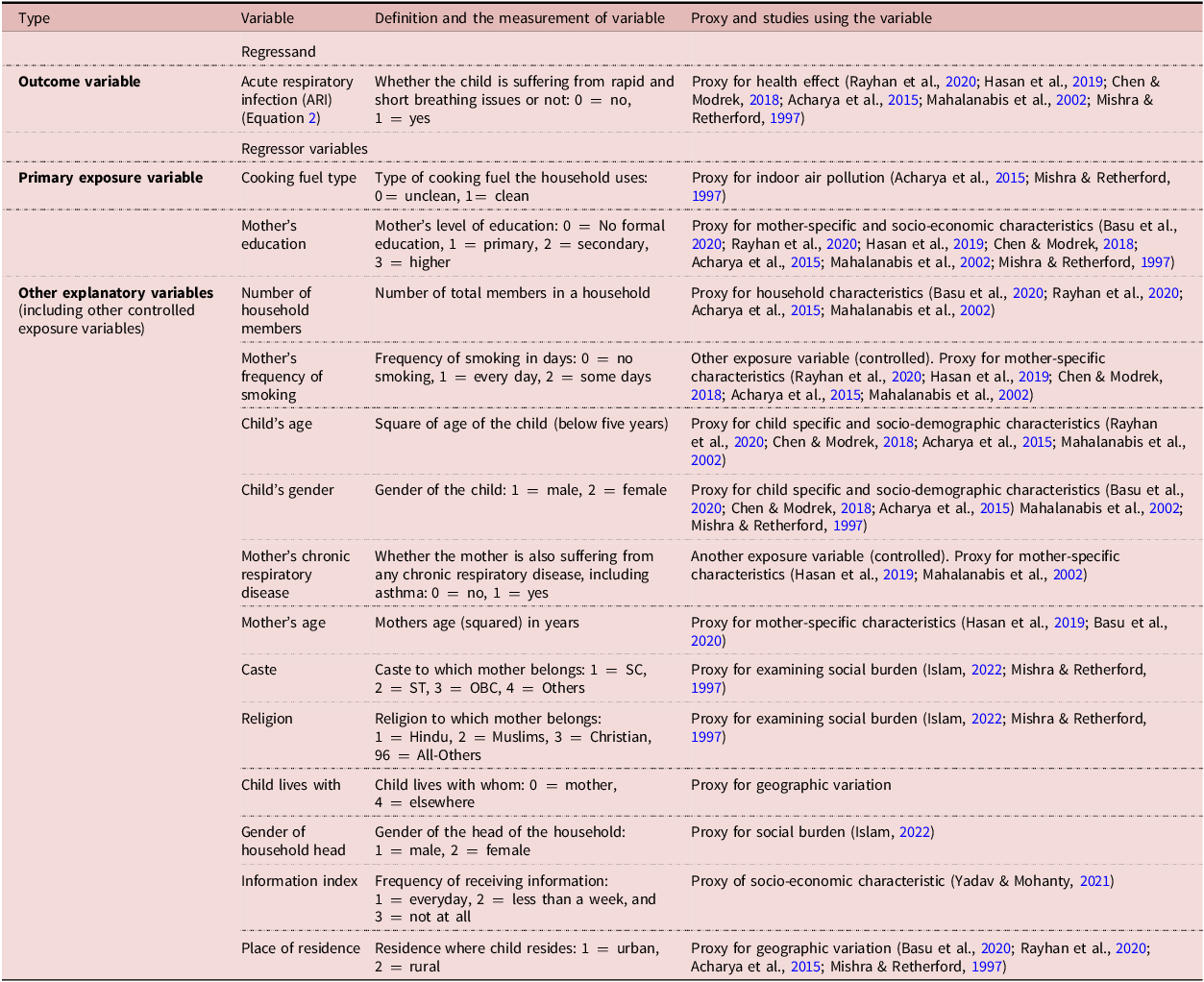
Source Author’s computation based on NFHS 5 information and review of literature.
Acronyms NFHS (National Family Health Survey); SC (Schedule Caste).
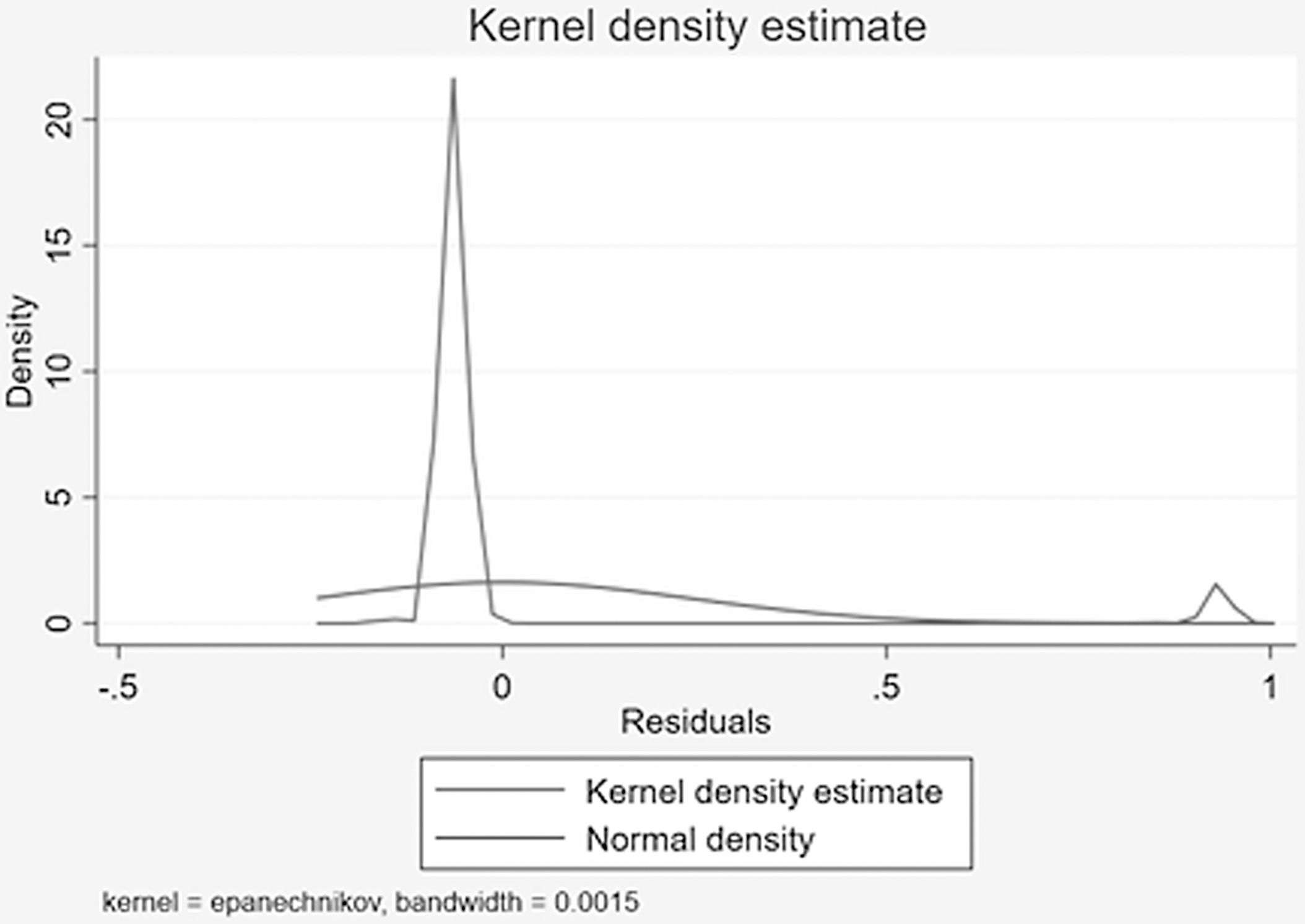
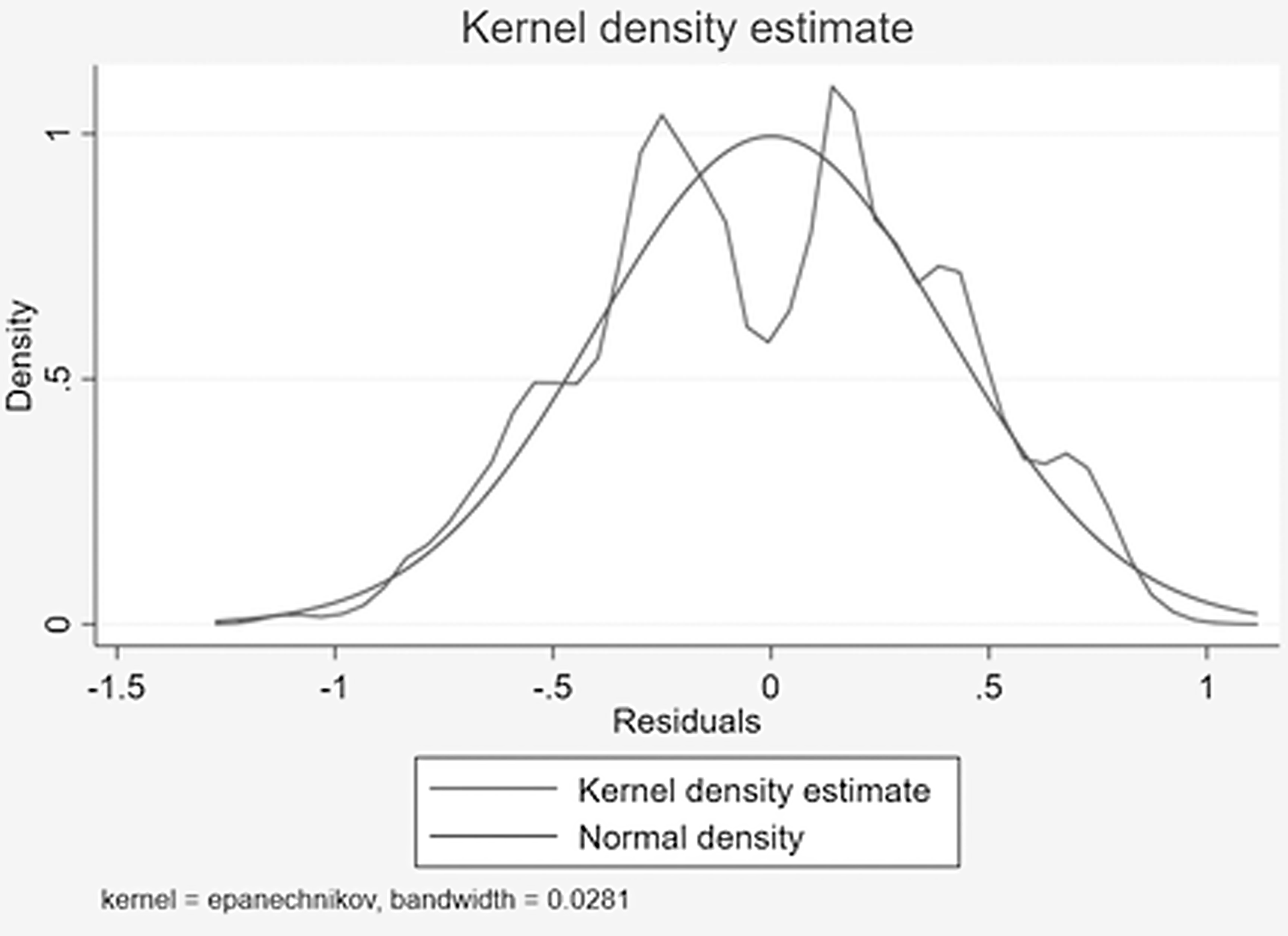
Further, the analysis process began with descriptive statistics and cross-tabulation techniques to capture changes in cooking fuel choices across India over the period by using data from all NFHS rounds at the household level. ‘N/A (non-available)’ is used to represent variables that are absent from earlier rounds. Because the regressand is a binomial variable and the distribution of error term follows a uniform distribution (see Figure 1), the study employs a probit regression model with conditional reference to investigate the variables that affect households’ decisions to use specific cooking fuel types.
Kernel density of Error Distribution of Equation 1.
Source Author’s calculation using NFHS 5 data.

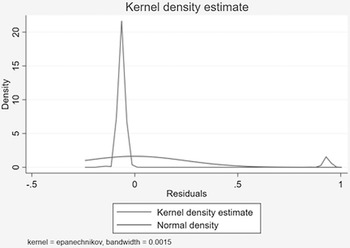
Next, using the logistic regression model, the probability of ARI occurrence among under-five children due to the choice of cooking fuel and other confounding variables was analysed in the later part of the study. The explanation acquired from the error term’s Kernel density (K(x) = $\Phi \left( x \right)$
) function (see Figure 2) is the basis for performing logit regression.
$\Phi \left( x \right)$
) function (see Figure 2) is the basis for performing logit regression.
Kernel density of Error Distribution for Equation 2.
Source Author’s calculation using NFHS 5 data.
Below are the two models, that is, Equation 1 for the first part based on the probit model and Equation 2 for the second part based on the logistic model.
Equation 1 The following model is the probit regression equation:
 $$\eqalign{CookingFuel_i & = {\Phi (\alpha + \beta_1 BPL_i+\beta_2 HhldHeadCaste_i+\beta_3 HhldHeadReligion_i} \cr & \quad + {\beta_4 Residence_i +\beta_5 NumOfHhldMem_i+\beta_6 HhldHeadAgeSq_i} \cr & \quad + {\beta_7 Zonal Region_i+\beta_8 SeparateKitchen_i+ \beta_9 HouseType_i}+\beta_{10} HouseOwner_i \cr & \quad +{\beta_{11} Ventilationn_i+ \varepsilon_i)}}$$
Here, ${\rm{\alpha }}$
is a constant,
${\rm{\alpha }}$
is a constant, $\beta $
’s are coefficients of regressors, and is the residual term. Equation 1’s regressand variable (cooking fuel type) shows the likelihood of adopting clean cooking fuel (1 = clean and 0 otherwise).
$\beta $
’s are coefficients of regressors, and is the residual term. Equation 1’s regressand variable (cooking fuel type) shows the likelihood of adopting clean cooking fuel (1 = clean and 0 otherwise). $\Phi \left( . \right)$
is the cumulative standard normal distribution function.
$\Phi \left( . \right)$
is the cumulative standard normal distribution function.
Equation 2 The following model is the logistic regression equation:
 $$ \small{\eqalign{ ARI & = \alpha + {\beta _1}CookigFue{l_i} + {\beta _2}MotherEd{u_i} + {\beta _3}NoOfHhldMe{m_i} + {\beta _4}SmokingFrequenc{y_i} \cr & \quad + {\beta _5}ChildAge\_S{q_i} + {\beta _6}ChildSe{x_i} + \;{\beta _7}Mother{\mathop{\rm Re}\nolimits} spHealt{h_i} + {\beta _8}MothersAge\_S{q_i} \cr & \quad + {\beta _9}Cast{e_i} + \;{\beta _{10}}{\mathop{\rm Re}\nolimits} ligio{n_i} + {\beta _{11}}ChildLivesWit{h_i} + {\beta _{12}}HhldHeadSe{x_i} + {\beta _{13}}InfoInde{x_i} \cr & \quad + {\beta _{14}}{\mathop{\rm Re}\nolimits} siden{t_i} + {\varepsilon _i}}}$$
Equation 2’s regressand variable ARI depicts disease occurrence (1 = yes and 0 otherwise).
STATA 16 statistical package was used to analyse the data.
Results
Distribution of cooking fuel use over time
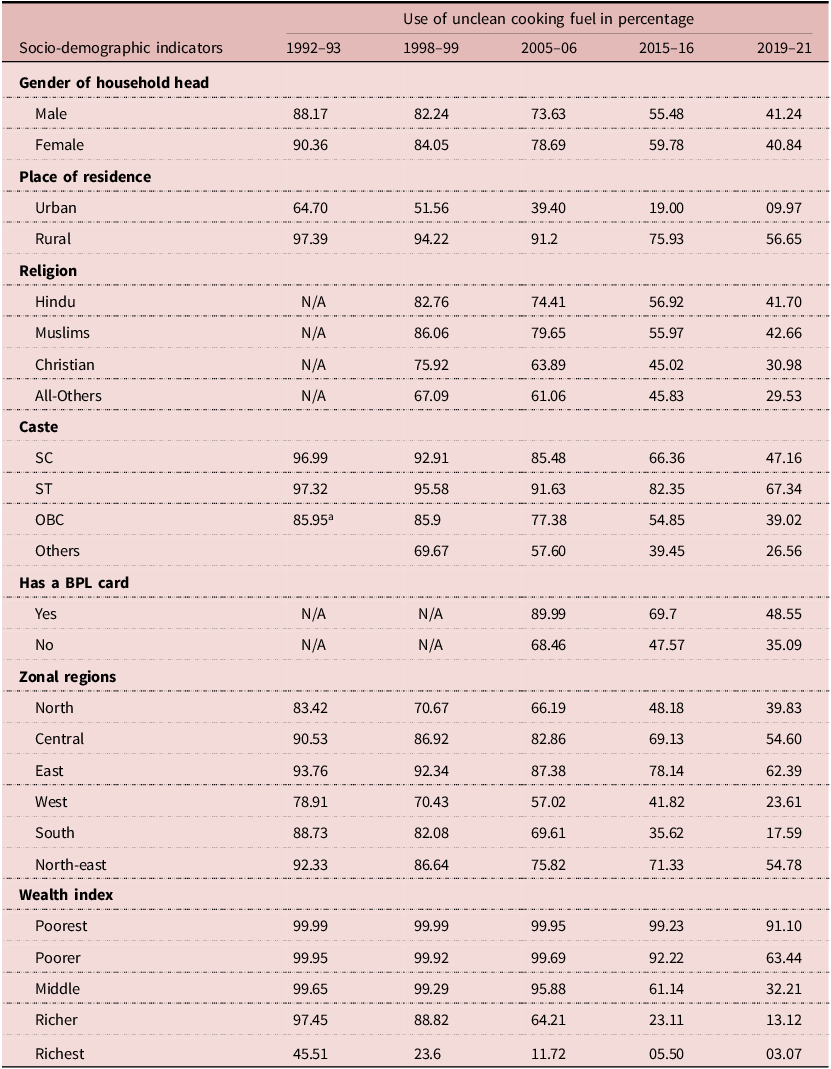
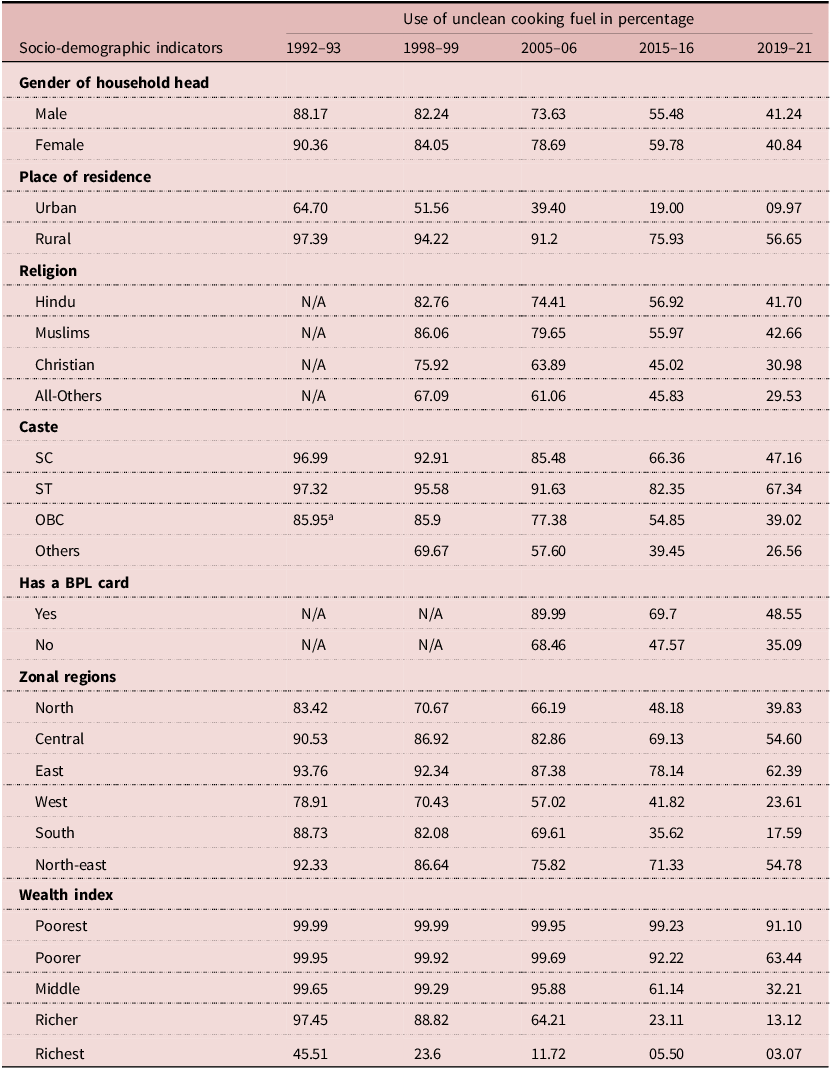
This section analyses the changes in the distribution of families using unclean fuel for various demographic and socio-economic factors across all NFHS rounds or a period of about 30 years (1991–2021) using appropriate weights suggested by NFHS to ensure data reliability (refer to Table 5). The data analysis demonstrates a decline in the proportion of households using unclean fuel over time, regardless of the household head’s gender, from around 88 and 90 per cent to about 41 and 41 per cent among male and female household heads, respectively. Similarly, the percentage share of unclean fuel users based on place of residence also decreased from approximately 65 and 97 per cent in NFHS 1 to about 10 and 57 per cent in NFHS 5 in urban and rural areas, respectively. However, this decline is steeper in urban households than in rural ones. One probable reason is that rural households have easy and cheap access to unclean cooking fuel.
Descriptive statistics of unclean fuel usage across different socio-economic factors (figures in per cent)
Source Author’s computation using NFHS data of all rounds.
Acronyms NFHS (National Family Health Survey); BPL (Below Poverty Line); SC (Schedule Caste); ST (Schedule Tribe); OBC (Other Backward Class).
a Unlike other rounds, the first round of NFHS provides combined data for ‘Others’ and ‘Other Backward Class’ (OBC).
In the case of religion, the initial data on households was missing during the first round of NFHS; the data from other rounds suggests that households of all the categories showed a decrease in unclean fuel users. Among religions, Hindus and Muslims showed the highest decline (82.76 per cent and 86.06 per cent to 41.70 per cent and 42.66 per cent) in the use of unclean cooking fuel compared to Christians and All-Others. Further, within religion, the results of the caste category showed that the transition towards clean energy took place in all the caste categories. However, in all rounds, households in the Others category face the least exposure to polluted cooking fuel and smoke compared to households in the ST category, which face the highest exposure.
The data defining the BPL category shows that households with BPL cards are the ones who choose to use unclean fuel more, with a slow decline rate over time as compared to households with no BPL cards. Among the six zonal regions (namely north, central, east, west, south, and north-eastFootnote 7 ), there is a decline in households using unclean fuel from NFHS-5 compared to NFHS-1. The transition is highest among the southern regions and slowest among the north-east regions. Further, most unclean fuel users belong to the eastern region in all the NFHS rounds. Finally, the wealth index category demonstrates that there is not much improvement in the poorest section of the households that use unclean fuels to cook as they have the slowest declining trend over the period. Only about 8 per cent of households in the poorest category transitioned towards clean fuel in the NFHS-5 survey compared to the previous round. In contrast, the transition from unclean to clean fuel is highest among richer and middle-class households. Therefore, the standard of living of the households has a strong bearing on the preference for fuel use.
Result determining factors influencing the choice of fuel for cooking
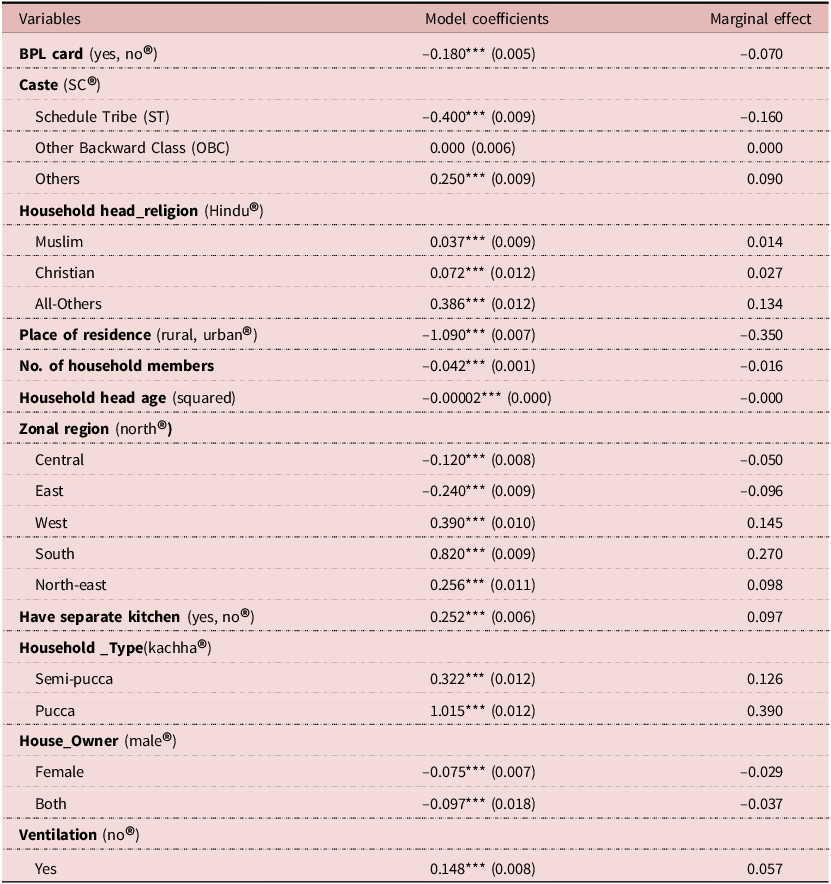
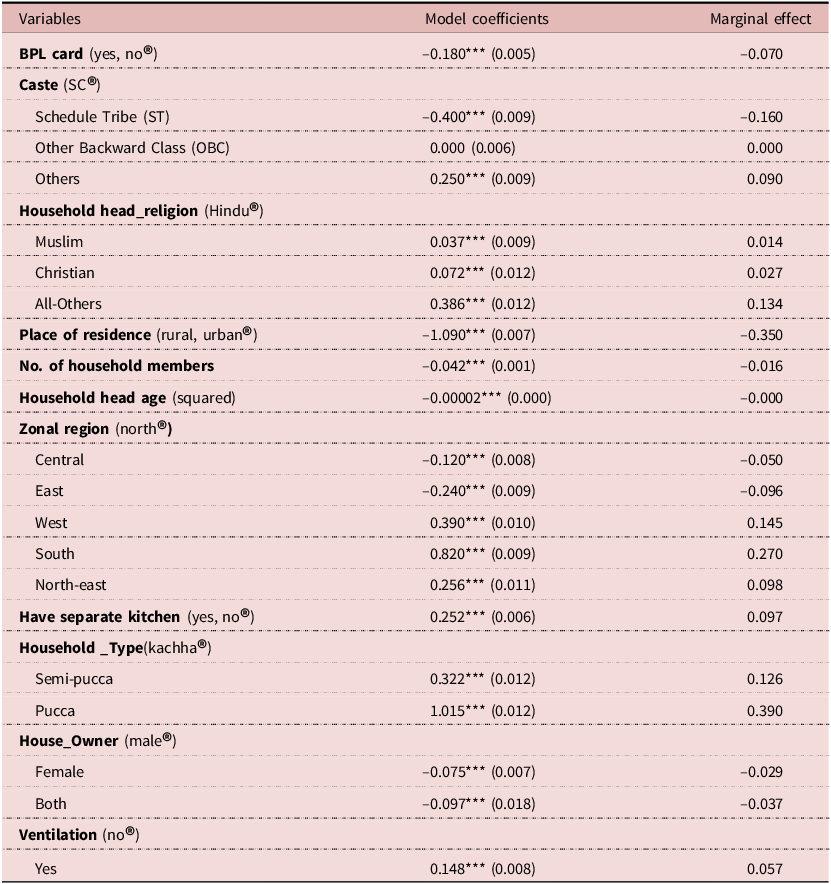
Understanding the factors that influence the choice of cooking fuel in India is crucial. So, using the probit regression model, authors evaluate the coefficients and the marginal effects of various factors responsible for cooking fuel choice (Adeyemi & Adereleye, Reference Adeyemi and Adereleye2016; Mperejekumana et al., Reference Mperejekumana, Li, Wu, Lu, Tursunov, Elshareef, Gaballah, Nepo, Zhou and Dong2021; Muller & Yan, Reference Muller and Yan2018; Paudel et al., Reference Paudel, Khatri and Pant2018). The study tries to identify the demographic, socio-economic, informational, and region-specific factors influencing people’s decisions about cooking fuel in India. Table 6 displays the regressor coefficient along with its marginal effects using probit regression analysis on the Indian household’s choice between clean and unclean cooking fuel.
Probit regression estimates of the choice of cooking fuel
Note ® is Category of Reference; figures in parentheses illustrate standard errors (SE).
Source Author’s computation based on NFHS 5 information.
Acronyms NFHS (National Family Health Survey); BPL (Below Poverty Line); SC (Schedule Caste).
*p < 0.10; **p < 0.05; ***p < 0.01, Pseudo R2 = 0.2931.
The results presented in Table 6 reveal that households with BPL cards negatively and significantly affect the choice of clean cooking fuel at a 1 per cent significance level. This means that poor households are marginally 7 per cent less likely to use clean fuel as a means of cooking than non-poor households. Results (based on the probit regression) conveyed along with the research outcome of literature that took income status or wealth status as a proxy economic determinant (Islam, Reference Islam2022; Lewis & Pattanayak, Reference Lewis and Pattanayak2012; Muller & Yan, Reference Muller and Yan2018). Household heads from the ST category have fewer chances of choosing clean fuel than the SCs, with results indicating a negative and significant relationship with a marginal probability of 16 per cent. Meanwhile, household heads in the ‘Others’ category show a positive and significant relationship with the choice of clean cooking fuel and are 9 per cent more likely to use clean fuel when compared with the SCs (Islam, Reference Islam2022). Further, the likelihood of using clean cooking fuel is higher in other religions, such as Muslims, Christians, and All-Others, compared to Hindus (Islam, Reference Islam2022). This is probably due to the positive effects of the complementary socio-economic schemes like Nai Manzil, USTTAD,Footnote 8 and PMJVK,Footnote 9 among others, that the government has launched over the years for the minority section of India to uplift their social and economic standards.
Since the sources of unclean fuel are readily available to rural households, their chances of using it are higher, and the results also support the argument (Islam, Reference Islam2022; Rahut et al., Reference Rahut, Behera and Ali2016). As the number of household members rises, the likelihood of choosing unclean cooking fuel increases as clean fuel sources are costly and not readily available to everyone (Islam, Reference Islam2022; Waleed & Mirza, Reference Waleed and Mirza2022). The age (squared) of the household head showed a negative and significant effect on the choice of clean fuel for cooking, but the values of standard error (0.000) and the marginal effect (–0.000) are negligible. Based on the zonal region, the west (14 per cent), south (27 per cent), and north-east (10 per cent) are more likely to opt for cooking fuel that is clean compared to the northern region. Meanwhile, households in the central (5 per cent) and eastern regions (10 per cent) are less likely to use clean cooking fuel than those in the northern region.
Apart from this, households with separate kitchens are more probable to choose clean cooking fuel in comparison to those that do not have a separate kitchen (Owusu Boadi & Kuitunen, Reference Owusu Boadi and Kuitunen2006; Rayhan et al., Reference Rayhan, Rasooly and Barua2020). In the case of house type, compared to the unfinished kachha houses, the semi-kachha/semi-finished and pucca/households with complete finishing are more inclined towards choosing clean cooking fuel. The probit estimates in the case of the gender of house owner show that if the females are house owners or if both the male and female are house owners instead of male alone, then the chances of choosing clean fuel over unclean fuel are less likely. These results align with the other literature the authors studied during the research (Adusah-Poku et al., Reference Adusah-Poku, Adams and Adjei-Mantey2022). In addition, a household with ventilation facilities is more likely to choose clean cooking fuel over unclean cooking fuel than when a ventilation facility is unavailable.
Effect of unclean fuel on the health of under-five children
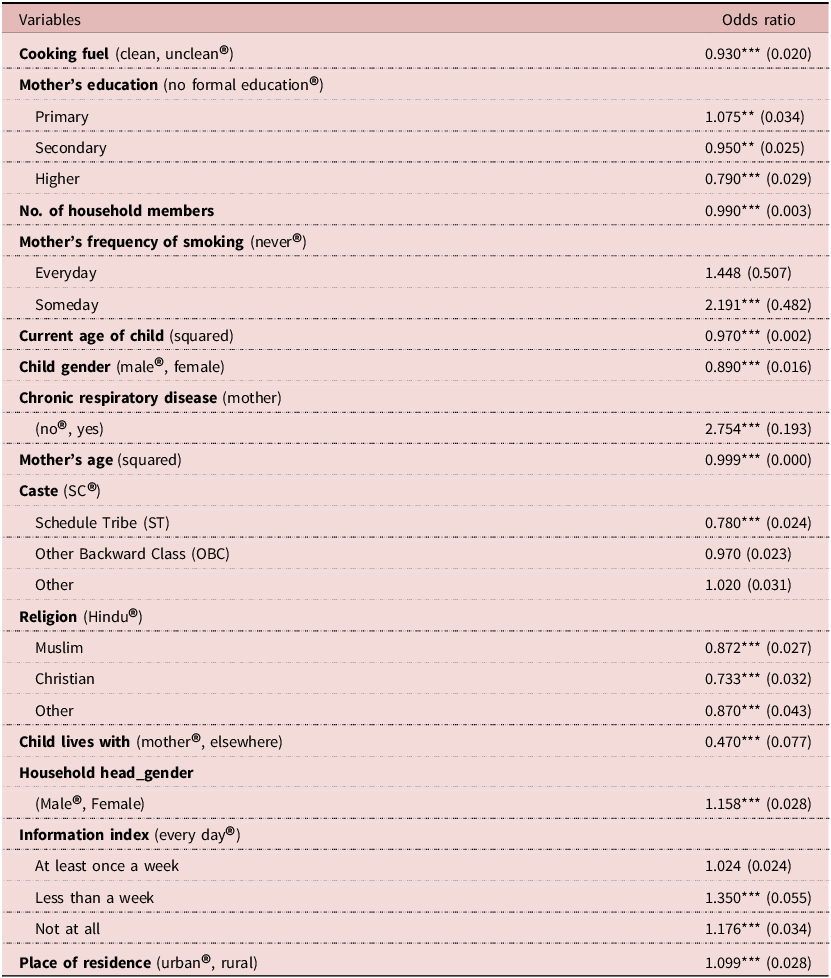
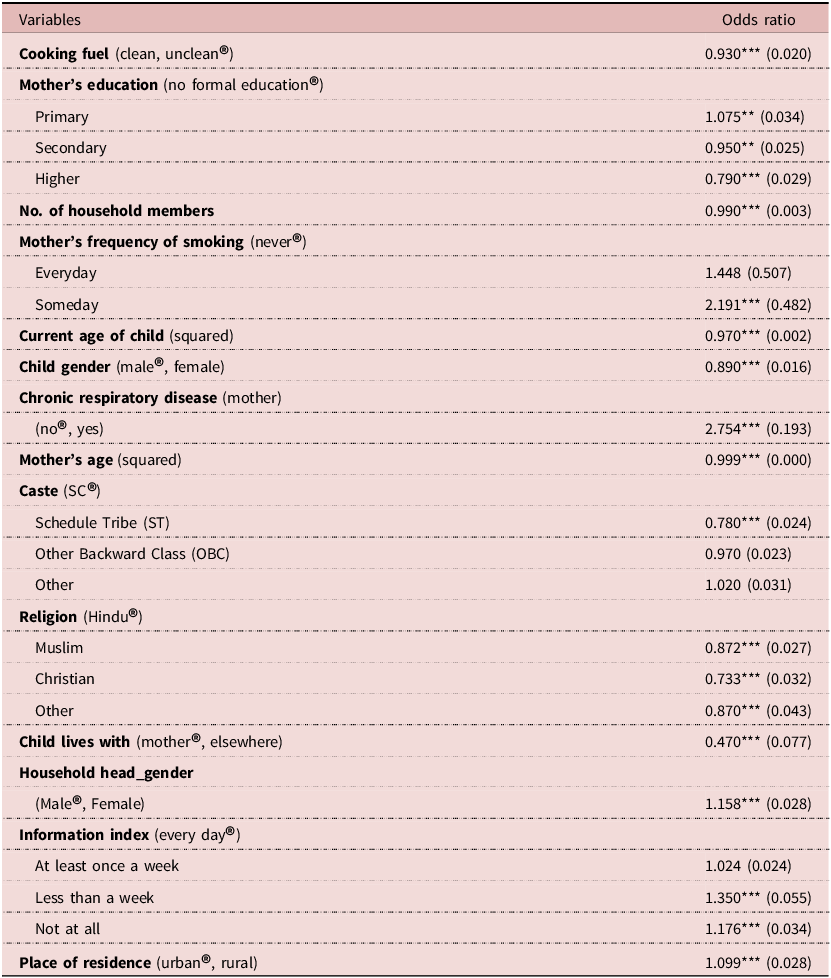
In general, the factors that influence fuel choice for cooking are insufficient to comprehend the real-world context of why fuel choice matters. It is because the choice of cooking fuel has severe health impacts on the lives of individuals, especially children, the elderly, and women who live most of the day at home (Arku et al., Reference Arku, Brauer, Duong, Wei, Hu, Ah Tse, Mony, Lakshmi, Pillai, Mohan, Yeates, Kruger, Rangarajan, Koon, Yusuf and Hystad2020; James et al., Reference James, Shetty, Kamath and Shetty2020; Khan et al., Reference Khan, Nurs, Islam, Islam and Rahman2017; Liao et al., Reference Liao, Tang and Wei2016; Liu et al., Reference Liu, Hou, Ma and Liao2018; Liu et al., Reference Liu, Chen, Zheng, Li and Wang2021; Mahalanabis et al., Reference Mahalanabis, Gupta, Paul, Gupta, Lahiri and Khaled2002; Mishra & Retherford, Reference Mishra and Retherford1997; Sinha & Ray, Reference Sinha, Ray, Roberts, Kehrer and Klotz2015). Henceforth, understanding the effects of cooking fuel selection on the health of children younger than five is another goal of this study. Given the covariates, the logit model calculates the probabilities of under-five-year children developing an acute respiratory illness. Table 7 presents the odds ratio resulting from the logistic model.
Logistic regression estimates on the effect of cooking fuel choice on the health of under-five children
Note ® is Category of Reference; figures in parentheses are standard errors (SE).
Source Author’s computation based on NFHS 5 information.
Acronyms NFHS (National Family Health Survey); SC (Schedule Caste).
*p < 0.10; **p < 0.05; ***p < 0.01, Pseudo R2 = 0.0114.
The logistic estimates indicate that using clean cooking fuels reduces the odds of under-five children suffering from ARI. The results show odds of less than 1 for clean fuel, with unclean fuel users as the base category (OR: 0.930 with 5% SE = 0.020). The result based on logistic regression conveys the research outcome in the literature (Acharya et al., Reference Acharya, Mishra and Berg-Beckhoff2015; Hasan et al., Reference Hasan, Tasfina, Haque, Saif-Ur-Rahman, Khalequzzaman, Bari and Islam2019; Imo & Wet-Billings, Reference Imo and Wet-Billings2021; Rayhan et al., Reference Rayhan, Rasooly and Barua2020). Other estimates, for example, mother’s education, showed that the children of women with a higher education degree are less likely to suffer from ARI, having odds less than 1 (OR: 0.790 with 5% SE = 0.029) compared to the children whose mothers had a little or lower level of education (Basu et al., Reference Basu, Byambasuren, Chau and Khanna2020; Mishra & Retherford, Reference Mishra and Retherford1997; Owili et al., Reference Owili, Muga, Pan and Kuo2017; Rayhan et al., Reference Rayhan, Rasooly and Barua2020). Further, the variable ‘number of household members’ showed surprising results. The children belonging to households with a higher number of members or individuals had lower chances of suffering from ARI (OR: 0.990 with 5% SE = 0.003). These findings were in line with those of Yahan et al. (2020) and Acharya et al. (Reference Acharya, Mishra and Berg-Beckhoff2015); however, they were against the findings of Ann Muthoni (Reference Ann Muthoni2017) and Von Linstow et al. (Reference Von Linstow, Holst, Larsen, Koch, Andersen and Høgh2008). One possible reason for the low odds of ARI could be that among larger families, there are more individuals to take care of the children; hence, they get proper attention. Children whose mothers had a history of smoking on some days have higher chances of suffering from ARI (OR: 2.191 with 5% SE = 0.482) (Cheraghi & Salvi, Reference Cheraghi and Salvi2009), while results for women who smoke every day are insignificant.
The variables square of child age (OR: 0.970 with 5% SE= 0.002) and child gender (OR: 0.890 with 5% SE= 0.016) are also negatively and significantly associated with the likelihood of a child suffering from ARI (Basu et al., Reference Basu, Byambasuren, Chau and Khanna2020; Mishra & Retherford, Reference Mishra and Retherford1997). However, these findings were against a few pieces of literature reviewed (Chen & Modrek, Reference Chen and Modrek2018; Hasan et al., Reference Hasan, Tasfina, Haque, Saif-Ur-Rahman, Khalequzzaman, Bari and Islam2019). Further, results showed that children whose mothers had chronic respiratory issues, including asthma, are more prone to suffering from ARI (OR: 2.754 with 5% SE = 0.193) (Mahalanabis et al., Reference Mahalanabis, Gupta, Paul, Gupta, Lahiri and Khaled2002). Apart from this, the square of mother’s age is significant but less likely factor that affects the likeliness of a child suffering from ARI (OR: 0.999 with 5% SE = 0.000) (Basu et al., Reference Basu, Byambasuren, Chau and Khanna2020; Owili et al., Reference Owili, Muga, Pan and Kuo2017). In the caste-wise category, children in the scheduled tribe category have a lower likelihood of experiencing ARI compared to those in the scheduled caste category (OR: 0.780 with 5% SE = 0.024) (Agrawal, Reference Agrawal2012; Mishra & Retherford, Reference Mishra and Retherford1997). At the same time, the results of other castes were found to be insignificant.
In the religion category, children of other religions showed a less likelihood of suffering from ARI when using unclean cooking fuel compared to Hindus. These findings are consistent with Mishra and Retherford’s findings (Mishra & Retherford, Reference Mishra and Retherford1997) but contradict Agrawal’s findings (Agrawal, Reference Agrawal2012). Another interesting estimate is that children living elsewhere are less likely to suffer from ARI than those living with their mother (OR: 0.470 with 5% SE = 0.077). Apart from all this, female-headed households are found to increase the likelihood of children suffering from ARI, indicating that children in households with female heads are more susceptible to ARI.
Those who received more information from newspapers, television, or radio are less likely to have children suffering from ARI than those who received less information, as revealed by the statistics on the variable – the information index. While the place of residence is concerned, those children living in rural regions are more likely to have ARI compared to the urban ones (OR: 1.099 with 5% SE = 0.028).
Robustness check
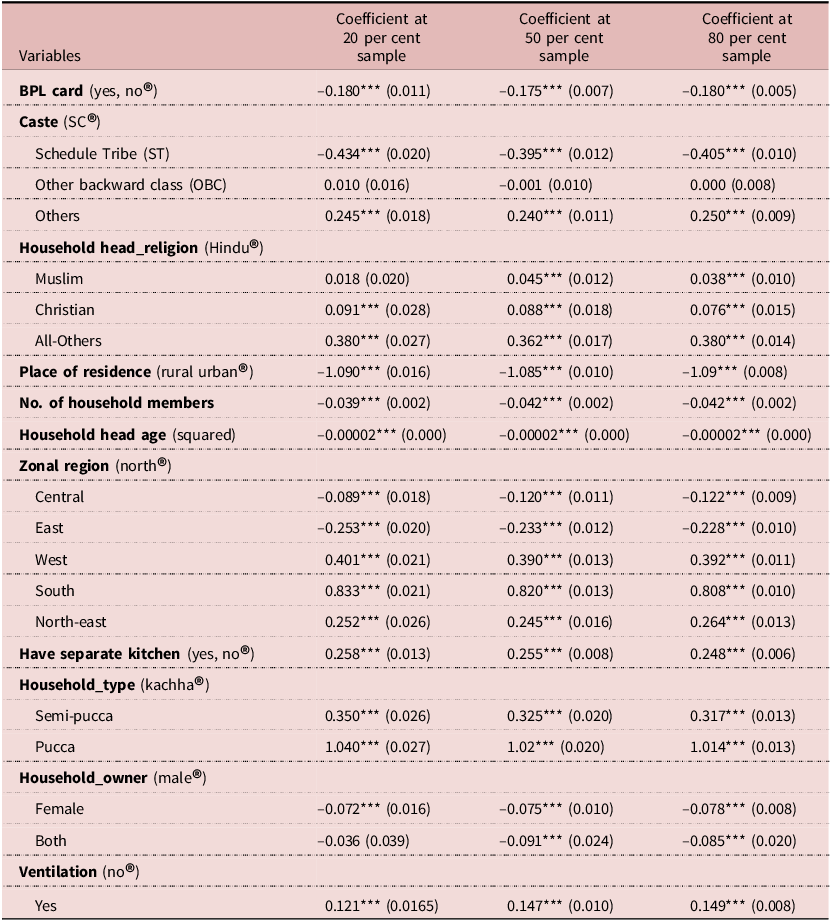
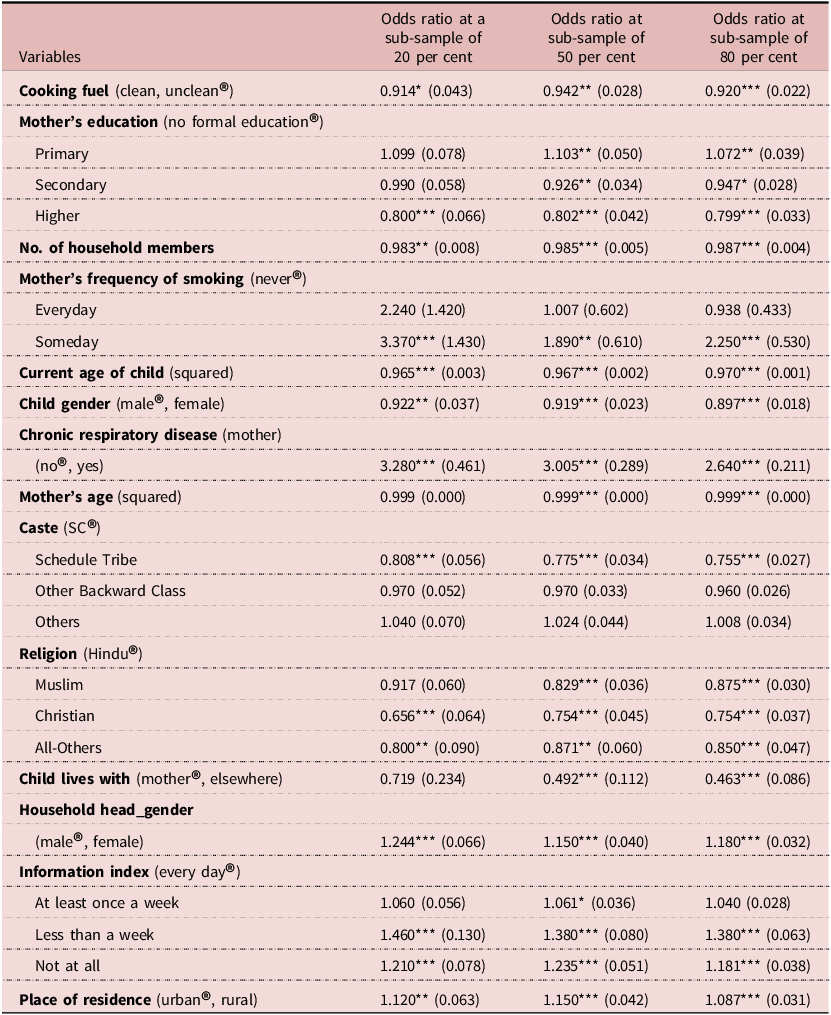
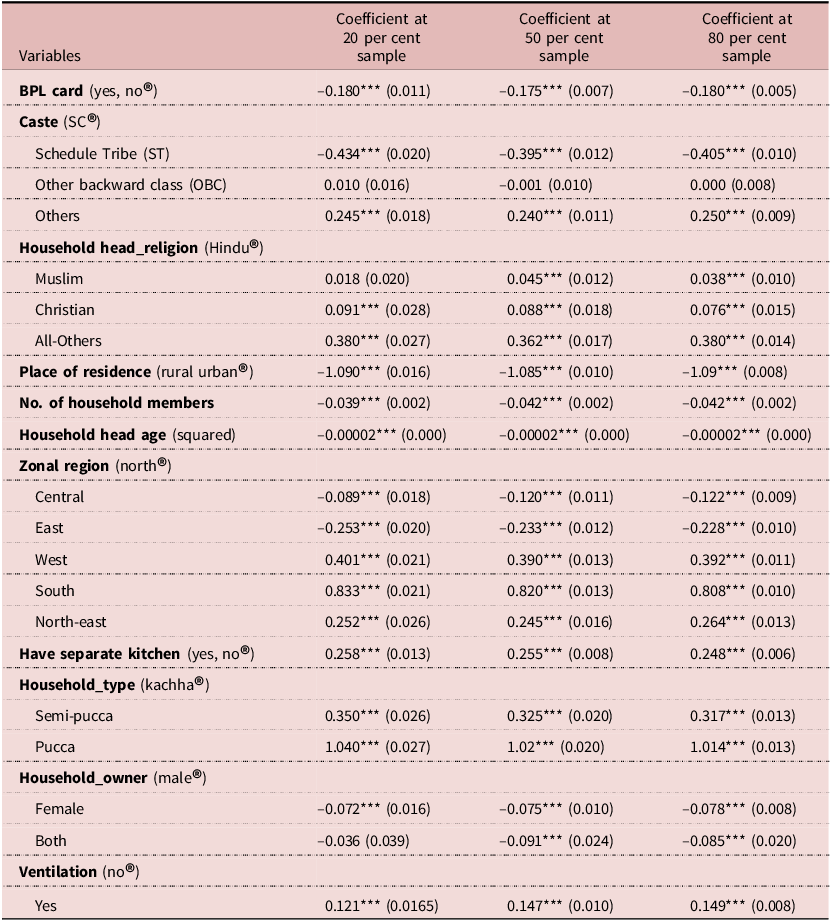
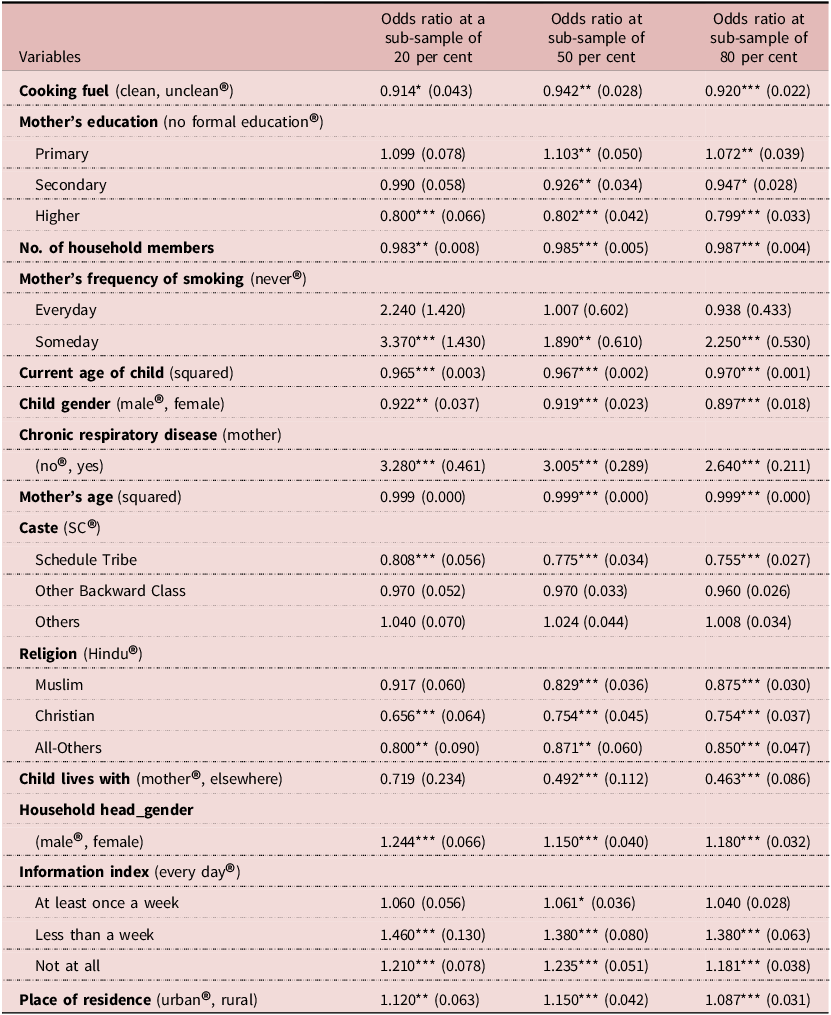
The current work has also examined the robustness of the probit and logistic models using sub-samples of 80, 50, and 20 per cent to assess the robustness.Footnote 10 In Tables 8 and 9, the results of the sub-samples used to demonstrate robustness are presented.
Probit estimates of 20 per cent, 50 per cent, and 80 per cent sample
Note: ® is Category of Reference; figures in parentheses are standard errors (SE).
Source Author’s computation based on NFHS 5 information.
Acronyms NFHS (National Family Health Survey).
*p < 0.10; **p < 0.05; ***p < 0.01.
Logistic estimates of the 20 per cent, 50 per cent, and 80 per cent sample
Note: ® is Category of Reference; figures in parentheses are standard errors (SE).
Source Author’s computation based on NFHS 5 information.
Acronyms NFHS (National Family Health Survey).
*p < 0.10; **p < 0.05; ***p < 0.01.
When using probit estimates, the variables in the sub-sample match the complete sample’s coefficient. Only the model with the 20 per cent sub-sample has some exceptions with a few variables. Within the category of the religion of household head, Muslims are found insignificant. And in the household ownership category, households that claimed to have both male and female as the head are found insignificant.
However, the logistic model’s coefficients are consistent throughout the entire sample. All are significant except for a few variables (primary and secondary education in the mother’s education category, mother’s age, child living with mother or elsewhere, and Muslims in religions category) that are insignificant in the 20 per cent sub-sample model. In other words, the result approaches the initial results as the sample grows. As a result, the variables found in the models are reliable when considering the fuel choice and how that choice affects the ARI of children under five.
Discussion and conclusion
Developing countries usually follow the fuel stacking theory since they adopt not one but various sources of cooking fuel, and India is no different. The trend analysis of all NFHS rounds showcases that mixed fuel has been part of the Indian kitchen for every economic section of society. Moreover, previous works of literature also indicate the same, especially in rural areas (Sehjpal et al., Reference Sehjpal, Ramji, Soni and Kumar2014; Waleed & Mirza, Reference Waleed and Mirza2022). On the one hand, if it is easily accessible and affordable, then on the other side, it brings immense hidden health hazards. However, these health hazards appear unharmful at first but are significant contributors to pollution-related diseases and even deaths in the long run (Basu et al., Reference Basu, Byambasuren, Chau and Khanna2020; Lewtas, Reference Lewtas2007). Indoor pollution from unclean cooking fuel is found mainly in underdeveloped and developing countries. In middle- and low-income countries, individuals have no choice but to use substitute fuels, as they cannot afford clean fuel energy like people in developed countries. The findings from the descriptive analysis at the household level indicate that the availability of clean cooking fuel has increased over time from 1991 to 1992. The use of unclean fuel declined at a steeper rate between the fourth (2015–16) and fifth NFHS rounds (2019–21). The Ujjwala scheme, launched in 2016 to provide LPG connections to poor BPL households and women, could be a plausible reason for the declining use of unclean cooking fuel in Indian households. It aims to reduce dependency on unclean fuel and pave the way for achieving related SDGs. However, transitions across rural–urban households, zonal regions, wealth quintiles, and castes differ significantly. These differences can be due to relative economic, social, and environmental differences.
The results of the probit regression model (Equation 1) confirm the descriptive trend analysis. They indicate that various factors, such as poverty status, caste, religion, place of residence, number of family members, type of house, ventilation, region, and house ownership, influence the choice of clean cooking fuel. Apart from these variables, the interaction of the type of house with both the place of residence and ventilation could also influence choices of cooking fuel, which is not considered in the final model as no significant association is observed between these variables in the survey data. In further analysis, the logistic estimates of Equation 2 reveal that if a household uses unclean cooking fuel, it can increase the likelihood of a child suffering from ARI. The simple reasoning can be that young children may be unable to leave their small and enclosed homes or their mother’s side, who typically cooks food in Indian households. This effect is significant even in the presence of other confounding factors like age and gender of the child, number of household members, mother’s respiratory health, location of residence, smoking frequency of the mother, caste, religion, and others. These are also significant and affect the chances of a child suffering from ARI in one way or another.
So, the analysis indicates that the child’s health is highly prone to the choice of cooking fuel. Furthermore, after adjusting for the impact of many potentially confounding variables, children residing in families using solid and biomass fuels have a considerably greater risk of ARI than children residing in dwellings using cleaner fuels. So, eliminating or minimising unclean fuel use can help the individual’s health and ease the way to achieving environmental goals.
Extant literature shows that only a limited number of studies have adopted an integrated approach to determining both factors and outcomes of choosing and using unclean cooking fuel. For developing countries, the findings have significant programme and policy implications and can contribute to further research, which seeks some basis for suggesting policy orientation. Especially for India, where, according to NFHS-5 reports, 41 per cent of individuals still utilise polluting fuels for heating and cooking, which is unequivocally a remarkable segment of the Indian population.
In conclusion, the study provides strong evidence to ameliorate the existing policies in a way that exhorts clean energy use. This paper shows that energy transition is very sluggish for socio-economically vulnerable households. Suggesting that the success of welfare policies is primarily confined to urban areas or households with higher socio-economic status. To facilitate a faster and more inclusive clean energy transition, the authors propose that it is imperative for the government to implement pro-poor and pro-rural policies (e.g., increasing the number of LPG service providers in rural areas) that ensure the availability and affordability of clean energy resources across the most vulnerable regions, households, and communities.
Limitations of the study
Nevertheless, the paper has certain limitations, implying it also has a further scope of research. The study’s first shortcoming is that the study applies only a quantitative research approach, which might not give us a complete picture of the factors or causes of the phenomenon determining the cooking fuel choice. And so, along with the quantitative approach, the simultaneous use of more individual and context-based qualitative analysis will provide reasons not captured in the quantitative analysis alone. Second, since the data on ARI is self-reported, the results need to be validated by more epidemiological studies using more accurate smoke exposure measurements and clinical assessments of ARI. Third, this study did not include the technology part (i.e., type of cook stove) of WHO’s definition of ‘clean fuel and technologies’ due to the unclear definition of the type of cook stove in the NFHS database. Lastly, due to data limitation and the absence of an appropriate instrument variable, the study did not address the endogeneity issue. Although, it is recognised that handling endogeneity among variables is virtually impossible in cross-sectional studies because all variables are measured simultaneously (Lynch & Brown, 2011). Further, finding appropriate variables (Instrumental Variables) is also difficult. Hence, cross-sectional studies usually draw their conclusions based on the temporal importance and theoretical validity of the factors under consideration. However, all these limitations pave the way for further research, where these shortcomings could be incorporated.
Data availability statement
Data from the National Family Health Survey that we analysed in the current study are accessible to the general public. More information is available here- https://dhsprogram.com/Countries/Country-Main.cfm?ctry_id=57&c=India&Country=India&cn=&r=4.
Acknowledgements
The authors are grateful for the immense help provided by DHS programmes, IIPS in terms of providing data on NFHS, and the reviewers for providing valuable insights.
Author contribution
PM Bajpayee conceptualised the research, designed the research instruments, filtered the data, established the model, carried out the empirical analysis, and wrote the initial draft of the manuscript. Pratap Mohanty conceptualised the study, proposed the methodology of research, refined the empirical analysis, reviewed the initial draft of the manuscript, monitored the language corrections, and provided overall supervision of the research. Milind Kumar Yadav refined the research framework, reviewed the literature, and discussed the study results. All authors have read and approved the final manuscript.
Funding statement
The authors declare that this research did not receive any specific funds or grants during the preparation of this manuscript.
Competing interests
The authors declare no conflicts of interest.
Ethics standard
Not applicable to this study.
Code availability
All analyses are conducted using the 16th version of the statistical software package STATA. The corresponding author can provide replication codes based on request.
Consent to participate
All authors consent to participate in this study.
Consent for publication
We confirm that consent for publication has been obtained from all authors.

 Open access

