INTRODUCTION
Pneumonia is a significant cause of morbidity and mortality worldwide [Reference Kornum1]. It has been demonstrated that hospitalizations with pneumonia have increased by 20–50% in Western populations during the last decade [Reference Fry2–Reference Trotter4]. Some lifestyle factors such as cigarette smoking and alcohol consumption and health conditions such as heart disease, diabetes, chronic obstructive pulmonary disease and cancer are considered to be strong risk factors for pneumonia [Reference Fry2–Reference Adams and Jordan9]. Nevertheless, there have been few studies about the relationship between obesity and the increased risk of pneumonia even though the prevalence of obesity has increased parallel to the pneumonia trend [Reference Formiguera and Canton10]. Moreover, the results of previous studies are inconsistent [Reference Kornum1, Reference Almirall6, Reference Baik11–Reference Blumentals13]. For instance, the increase in body mass index (BMI) was considered to be a protective factor for pneumonia by some authors [Reference Almirall6, Reference Inoue12, Reference Blumentals13] but a risk in other studies [Reference Kornum1, Reference Baik11].
Respiratory disease is the third leading cause of death in Australian Aboriginal people, and mortality caused by respiratory diseases in Aboriginal people is three times higher than that of non-Aboriginal people [Reference Thomson14]. Of respiratory diseases, pneumonia and influenza accounted for nearly 80% of hospitalizations in Aboriginal people, that is nearly a tenfold risk of hospitalization compared with non-Aboriginal people [Reference Plant, Condon and Durling15]. The lifestyle risk factors, including obesity, have been demonstrated to make significant contributions to chronic health conditions such as cardiovascular, renal diseases, and diabetes [Reference Thomson14, 16–Reference Wang and Hoy21]. However, no study has explored the relationship between obesity and pneumonia in Australian Aboriginal people.
The objective of this study was to assess the association between BMI and the risk of hospitalized pneumonia in Aboriginal people in a remote community in the Northern Territory of Australia.
METHODS
Study participants
A prospective cohort study was conducted in a remote Aboriginal community in the Northern Territory of Australia. Baseline data on demographic, lifestyle, anthropometric measurements and biochemical markers of 1490 residents aged 2–76 years were collected from a community-wide screening conducted from 1992 to 1995. For the purpose of this study, 698 adults aged 20–60 years were included, of these, 21 were excluded because they were known to have prior chronic medical conditions, which could have increased their risk of pneumonia, including heart disease (stroke, congestive heart failure), multiple sclerosis, Alzheimer's disease, AIDS, diabetes, cancer, asthma, and chronic obstructive pulmonary disease. A total of 677 participants (348 males, 329 females) were included in the final analysis.
Detailed baseline anthropometric measurements have been described previously [Reference Wang and Hoy22]. Height was measured to the nearest 0·5 cm without shoes using a stadiometer. Weight was measured to the nearest 0·1 kg with the participants wearing light clothes only without shoes. BMI was defined as weight divided by height squared (kg/m2).
Identification of pneumonia cases
All participants were followed up to 30 June 2012. During the follow-up period, we identified pneumonia cases through hospital records according to ICD-9 (480–486) and ICD-10-AM codes (J12-J18). Hypostatic cases were not included (ICD-9: 514; ICD 10: J18·2). Only the first-ever pneumonia incidents (fatal or non-fatal) during the follow-up period were included in the analysis to avoid using recurring cases from the same participant. For those participants who had pneumonia, the time of follow-up was counted from the date of their initial screening visit to the date of their first hospitalized admission with pneumonia. Patients who had been hospitalized for pneumonia before the study enrolment were excluded since BMI was measured after the occurrence of pneumonia. Participants who did not reach a pneumonia endpoint during the follow-up period were considered ‘censored’ at 31 May 2012.
Data analysis
Study participants were grouped according to BMI categories (<18·5, 18·5–24·9, 25–29·9, ⩾30 kg/m2), similar to the categories used by the World Health Organization [23]. We used the date of the initial screening visit, the date of hospitalized admission with the first pneumonia event, date of death, and the end date of follow-up (30 June 2012) to compute the time at risk for each participant. The pneumonia incidence rates were calculated by dividing the number of first-ever pneumonia events by the total person-years of follow-up. The hazard ratios (HRs) with 95% confidence intervals (CIs) were computed using Cox's regression with BMI 18·5–24·9 as the reference group. The potential confounders, such as age (continuous), smoking status (yes/no) and alcohol consumption (yes/no) were adjusted for using Cox proportional hazards models. All analyses were performed using Stata v. 12.0 [24].
The project was approved by the Behavioural and Social Science Ethical Review Committee of the University of Queensland.
RESULTS
Baseline characteristics of cohorts
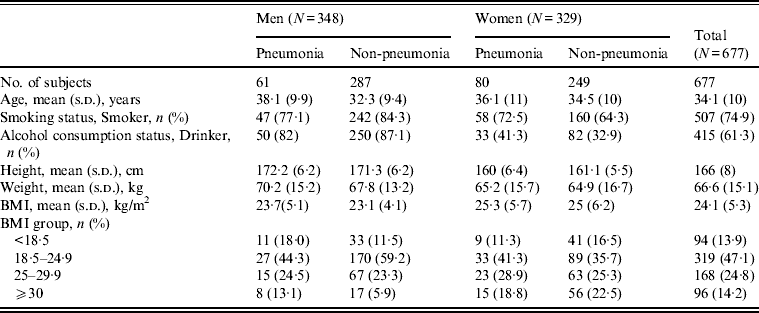
Of 677 participants, 81 males and 60 females had a first-ever pneumonia event during a mean follow-up time of 15·6 and 15·8 years, respectively. Of those 141 pneumonia cases, 23 were fatal. The baseline characteristics of those with and without pneumonia are shown in Table 1. Both males and females who developed pneumonia were older than those who did not develop pneumonia during the follow-up period. In terms of lifestyle factors, current smokers and alcohol drinkers appear to be more prevalent in non-pneumonia males; whereas, smoking was more prevalent in pneumonia than non-pneumonia females. In terms of anthropometric measurements, average weight, height, and BMI values were similar between pneumonia and non-pneumonia participants in both males and females.
Demographic data of the study cohort

BMI, Body mass index.
Incidence rates of pneumonia
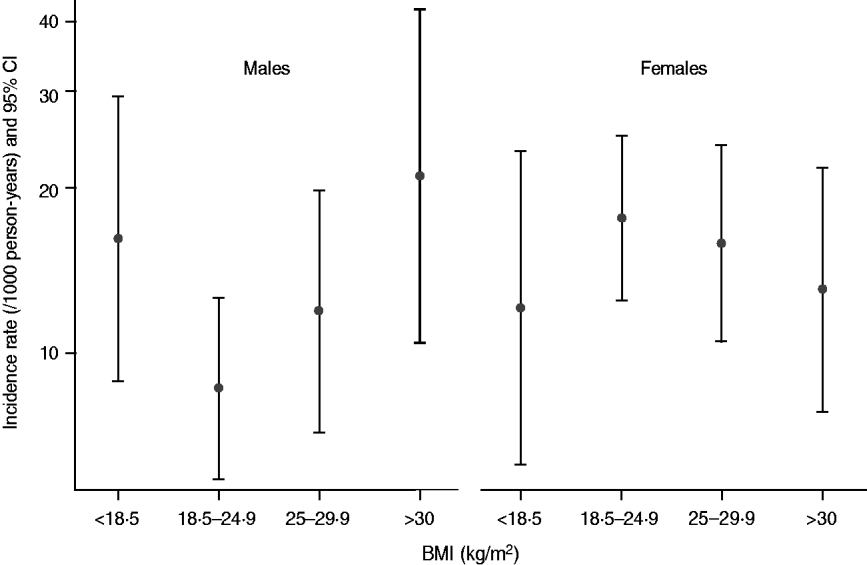
Overall, the incidence rate of first-ever pneumonia was 13·3/1000 person-years (95% CI 11·3–15·7). This rate is similar to the Australian adjusted rate (13·2/1000 person-years) in Australian Indigenous people reported by AIHW [16]. The rate for females (15·4/1000 person-years, 95% CI 12·3–19·1) was significantly higher than that for males (11·2/1000 person-years, 95% CI 8·7–14·5) with a HR of 1·5 (95% CI 1–2, P < 0·03). The incidence rates of first-ever pneumonia by BMI group and gender are shown in Figure 1. For males, the highest incidence rate of pneumonia (16·2/1000 person-years, 95% CI 8·9–29·2) was seen in the lowest BMI group (<18·5 kg/m2), and the lowest incidence rate (8·7/1000 person-years; 95% CI 5·9–12·6) in the normal BMI group (18·5–24·9 kg/m2). The incidence rate increased with the increase of BMI in males (11·9 and 21·1, for BMI 25–29·9 and >30 kg/m2 groups, respectively). On the contrary, no such a trend of pneumonia incidence rates was observed in females.
Incidence rate of pneumonia against body mass index (BMI) in the Aboriginal cohort.
Risk factors of pneumonia
Associations of age, smoking and alcohol consumption with pneumonia
For both men and women, age was a strong risk factor for pneumonia in the multivariate Cox model. A 1-year increase in age resulted in a 4% and 5% increase in the risk of pneumonia (men: HR 1·05, 95% CI 1·03–1·09; women: HR 1·04, 95% CI 1·02–1·09, P < 0·01). Smoking is significantly associated with increased risk of pneumonia for men (HR 1·8, 95% CI 0·9–3·4, P < 0·05) whereas this association was not significant for women (HR 1·03; 95% CI 0·7–1·5, P < 0·8). Alcohol consumption was positively associated with pneumonia in both men and women; however, the association was not statistically significant (men: HR 1·2, 95% CI 0·6–2·4; women: HR 1·2, 95% CI 0·8–1·7, P > 0·1).
BMI and the risk of pneumonia
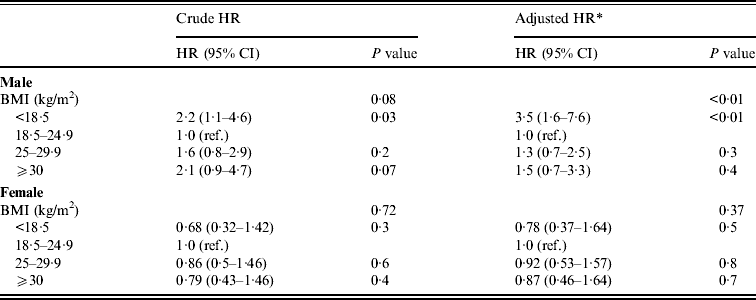
The crude and baseline adjusted HRs for hospitalized pneumonia according to BMI groups are presented in Table 2. The overall association between BMI and the risk of pneumonia was statistically significant in male participants (P < 0·01) but not in female participants (P = 0·37).
Hazard ratios (HRs) for hospitalized pneumonia by gender and body mass index (BMI)
CI, Confidence interval.
* Adjusted for baseline age, smoking, and alcohol consumption status.
Compared to males with normal BMI (18·5–24·9 kg/m2), the adjusted HR was 3·5 (95% CI 1·6–7·6) with a statistical significance (P < 0·01) for those with the lowest baseline BMI (<18·5 kg/m2). However, the HRs obtained from overweight and obese groups in males are 1·3 (95% CI 0·7–2·5) and 1·5 (95% CI 0·7–3·3), respectively, but not statistically significant. The association was weaker, with adjusted HRs of 0·8 (95% CI 0·4–1·6) for overweight and 0·9 (95% CI 0·5–1·6) for obese females. None of these were found to be statistically significant. The associations were different between crude and adjusted HRs, suggesting potential confounding by baseline age, smoking and alcohol consumption status. The association was stronger in males than in females.
DISCUSSION
Compared to previous studies, this is a long-term follow-up cohort study investigating the association between BMI and the risk of pneumonias. It is the first study of its kind in Australian Aboriginal people. Our results indicate that low BMI may play a role in the risk of pneumonia for male adults. Our findings are similar to the findings of major studies on this topic. A population-based case-control study by Almirall et al. [Reference Almirall6] found an increased risk of community-acquired pneumonia (CAP) associated with low BMI in Spanish urban males. One large cohort study by Inoue et al. [Reference Inoue12] illustrated that low BMI (<18 kg/m2) was confirmed as a risk factor of pneumonia in both Japanese males and females aged 40–79 years. Similarly, a recent retrospective cohort study by Blumentals et al. [Reference Blumentals13] indicates that those who are underweight are at a higher risk of developing pneumonia; whereas being overweight (BMI, 25·0–29·9 or ⩾30 kg/m2) was associated with a decreased pneumonia rate in British adults aged 18–70 years [Reference Blumentals13].
In this study, we found that abnormal BMI (low, overweight, obesity) was more strongly related to the risk of pneumonia in males than in females. There are still no clear explanations about gender differences in the association between BMI and the risk of pneumonia in this study, and similar findings have been reported in previous studies [Reference Kornum1, Reference Baik11, Reference Blumentals13]. Possible reasons for this include the difference in fat distribution, as abdominal obesity is more prevalent in males than in females, which can restrict the descent of the diaphragm and cause reduced ventilation at the lung bases [Reference Kornum1]. Moreover, the differences in the prevalence of other factors of pneumonia such as smoking, alcohol consumption, physical activities may also play a role in modifying the association between males and females. For instance, the influence of physical activities related to respiratory infection was different between males and females [Reference Baik11, Reference Nieman25–Reference Neuman, Willet and Curhan27].
The U-shaped relationship between BMI and risk of pneumonia in Aboriginal males in this study is biologically plausible. Low BMI is associated with an increased risk of infection such as pneumonia, possibly due to malnutrition or an underlying illness [Reference LaCroix28, Reference Saliva29]. On the other hand, obesity has also been suggested to cause an elevated risk of pneumonia because obesity was associated with impaired immune T- and/or B-cell function [Reference Tanaka30, Reference Gottschlich31]. Therefore, the results of this study were consistent with the evidence found in a cohort study conducted by Baik et al. [Reference Baik11] in the USA, which also reported a U-shaped relationship between BMI and immune dysfunction. Their results showed that not only the low BMI group but also those with BMI >27 kg/m2 had an increased risk of pneumonia compared to the reference group (BMI 21·0–22·9 kg/m2) in men aged 44–75 years.
The current study had several limitations. First, although some potential confounding factors were controlled for, residual confounding of these factors might have existed, since these were just measured as dichotomous variables (yes/no) rather than detailed amounts of cigarette smoking and alcohol consumption. For instance, Kornum et al. [Reference Kornum1] indicated that the association between obesity and elevated pneumonia risk appeared to be strongest in non-smoking males. Moreover, during the long follow-up period, we did not monitor the changing status of smoking and alcohol consumption status. People who might have quit smoking and drinking were not taken into consideration in the analysis. Amirall et al. [Reference Amirall32] found that ex-smokers who had ceased smoking for >4 years showed a statistically significant reduced risk of CAP compared to ex-smokers of < 1 year. Second, even though participants who had chronic medical conditions, which could have caused a long hospitalization for those patients and an increased risk of pneumonia, were excluded from analyses, there was no data to examine whether pneumonia was a sequence of long hospitalization with chronic medical conditions or if it occurred at the same time as the medical condition. Similarly, we might have failed to exclude some cases who had chronic medical conditions but were admitted into hospital for a first-ever pneumonia event. Schnoor et al. [Reference Schnoor33] indicated that more than one respiratory infection during the previous year, chronic pulmonary diseases, number of comorbidities, and number of children in the household are independent risk factors for CAP. Third, those with minor pneumonia might not have visited the hospital, and therefore were not identified as pneumonia cases. Such a misclassification is likely to dilute the true association between BMI and pneumonia. Finally, the baseline data did not include information in change of physical weight and activities which could have confounded the relationship between BMI and pneumonia [Reference Baik11, Reference Inoue12]. Previous studies [Reference Nieman25–Reference Neuman, Willet and Curhan27] indicated that physical activity is significantly associated with the risk of respiratory infection, including pneumonia.
In conclusion, the current study illustrates a possible relationship between low BMI and an elevated risk of pneumonia in Aboriginal adult males in the Northern Territory, Australia based on a long prospective cohort study. Our data do not support the association between BMI and the risk of pneumonia in female adults. Further studies with a larger sample size and better control for confounders are needed.
ACKNOWLEDGEMENTS
We thank the Aboriginal people who participated in this study. The baseline data were collected by the renal research team at the Menzies School of Health Research, Darwin, Australia. This project was supported by a National Health and Medical Research Council (NHMRC) project grant (APP1025350). Z.W. is supported by a NHMRC Research Fellowship (nos. 511013 and APP1042343).
DECLARATION OF INTEREST
None.