





Introduction
At Shanghai’s edge, buildings rise with deliberate precision, their glass facades mirroring a city convinced of its own destiny. However, when the observer turns from this spectacle and enters what remains of the old city, they encounter what official narratives omit: the intricate, intimate texture of lived urban experience, complex and irreplaceable.
The exploration into the decline of Shanghai’s old city reveals a loss of texture that unfolds through deliberate choices rather than inevitable decay. The intimacy of the alleyways, where life spilt across crowded courtyards, now provides the rationale for their demolition. Modernization and improved living standards have become the stated justifications. Uniform apartment blocks rise where century-old shikumen architecture stood.Footnote 1 New commercial projects occupy former residential quarters. The city dismantles the physical spaces that once housed particular forms of collective life.
Since 2023, Shanghai has promoted renewal that keeps more of the physical fabric, such as facades and street patterns, rather than rebuilding everything from scratch.Footnote 2 However, the impact can still be rapid because change is driven less by demolition than by fast relocation, enclosure of shared spaces, and quick replacement of living uses with new functions. When residents and small businesses leave quickly, and daily routines can no longer be practiced, community vitality and memory can fade even if the streets still look familiar.
In 2024, the main goal was to continue improving the “Two Old Types and One Village” program. This involved redeveloping three specific types of areas: scattered, substandard older neighborhoods; old, structurally unsound panel houses; and urban villages.Footnote 3 At the same time, the Shanghai Municipal Government’s requirements were that city plans call for finishing the renovation of 30 million square meters of these scattered older neighborhoods in the city center. Work was to accelerate on demolishing and rebuilding the old panel houses. Additionally, various urban village renovation projects were in progress.Footnote 4
In Shanghai’s old city, fire safety and public health are linked problems for urban safety management. The close arrangement of old buildings makes fire risk higher and causes poor airflow, insufficient light, old plumbing, and rubbish problems.Footnote 5 These conditions put residents’ health, safety, and quality of life at risk. Many of Shanghai’s old city areas still lack more effective or precise structural capacity analysis to support high-quality emergency response, especially in the context of population growth in developing regions.Footnote 6
Shanghai’s municipal government is planning to renovate these areas to improve fire safety by widening streets and upgrading equipment. The plans also address sanitation issues, improve infrastructure, and provide better health services.Footnote 7 This approach protects residents and property while supporting the sustainable development of historical areas, balancing preservation with improvements in urban governance.
The Shanghai Municipal Government wants Shanghai to focus on details and quality in its urban renewal and relocation work. The guiding principle behind this shift is to employ careful planning and implementation to improve both the living environment and the urban landscape.
Urban redevelopment’s human cost goes beyond just moving people from their homes. Longtime residents, especially older ones, face disrupted lives when forced to move. This can cause significant distress as they lose familiar surroundings and social ties.
These projects destroy the living culture of old areas. A place’s true character is in its daily life, like street vendors, local customs, and traditional foods.Footnote 8 This way of life needs continuity and the people who keep it going. When old areas are torn down, this heritage disappears.
This article uses the term “urban memory” to refer to shared memories closely connected to a specific place, constantly constructed and reshaped through daily activities within a particular alleyway space. Therefore, authenticity is not just about how well an old building is restored. It lies more in whether the building can continue to support people’s daily lives. This authenticity is the continuous, ordinary life that keeps it vibrant. Furthermore, when renovations preserve the original appearance of the alleyway but erase the daily activities and interpersonal relationships that bind the residents together, the cultural memory within the alleyway also disappears. The discord between cultural elements such as history and memory and economic drivers like tourism and trade can contribute to the erosion of city identity.Footnote 9
This article seeks to explore a specific case of heritage-led regeneration in Shanghai, specifically in the city’s Zhang Yuan, which was once a historic shikumen residential area with a garden, but is now a renovated commercial zone with historic facades, but without residents and social life. While the architectural heritage is conserved, its cultural value, embedded in its everyday life, is no longer present, moving away from lived heritage and toward a form of spectacle.
This article examines how Shanghai’s post-2023 urban renewal reshapes not only the physical fabric of lane neighborhoods but also the social practices through which urban memory is produced and sustained. Rather than treating “heritage” as a purely architectural matter, the study focuses on the lived infrastructures of memory: everyday routines, informal support systems, small businesses, and street-level practices that rely on dense spatial proximity.
Three research questions guide the inquiry:
-
1. How has Shanghai’s urban renewal specifically affected local shared memory in lane communities?
-
2. When demolition or relocation disrupts the physical settings of lane life, what vulnerabilities emerge for informal social ties and micro-economies (e.g., small shops, home-based food practices) that depend on those settings?
-
3. Can the preservation of a building’s exterior truly constitute the preservation of heritage when the life within it has been entirely replaced?
Finally, this article examines the challenges faced by Shanghai’s old city after renovation: new spaces often lose their original cultural significance, making it difficult to strike a balance between preserving historical memory and meeting the daily social and economic needs of residents.
Method
This study explores the aging alleyways of Shanghai by combining on-site fieldwork with photographic documentation. By spending considerable time in Shanghai’s historic districts, the investigation focuses on closely observing and carefully documenting the routines and housing situations of the people who call these places home. Using this method, the study seeks to transform cultural memories into tangible evidence of actual living conditions. It produces essential, first-hand source material that helps to clearly understand both the social framework and the emotional meaning that these older neighborhoods hold for their inhabitants. This approach allows for a deep understanding of how traditions and everyday life are intertwined in the urban environment.
This research is especially urgent because of the speed of urban changes. Fieldwork focuses on areas being torn down or about to disappear, like Suzhou Alley in summer 2025, following them to record the community’s transformation from active to empty. By documenting these areas at the moment before removal, the research produces a vital record, capturing spatial details and lived realities that broader narratives overlook.
This research uses interviews, photographs, and literature to connect what’s physically around Shanghai’s old city with how people act, showing why these things matter culturally. Rather than relying on theory-driven frameworks, this approach foregrounds the cultural importance of ordinary places and everyday actions that might otherwise seem unremarkable or outdated. It argues that researchers need to conduct careful fieldwork and produce visual records to properly document and value these small signs of daily life. This gives such signs the recognition and historical significance they deserve before they are erased by ongoing urban transformation.
Fieldwork was conducted between December 2023 and September 2025 with residents and local operators across five old-city lane areas. Interviewees were purposively sampled to reflect four relationships to the lane community: (1) property owners (non-resident), (2) owner-occupiers, (3) short-term renters, and (4) small business owners. Interviews were semi-structured, typically lasting 20–30 minutes, covering: (i) housing history and daily routines, (ii) neighbor relations and mutual-aid practices, (iii) experiences of renewal/relocation, and (iv) perceptions of what is lost or improved through renewal. A total of eight semi-structured interviews were conducted.
In this study, the photographs the author used were analytical materials, not merely illustrative images. During each site visit, the author documented the time and location of the photograph, along with the activities observed, such as food preparation, storing items in hallways, or informal buying and selling.
Analyzing these photographs, author focused on three main aspects:
-
1. How family life extended into public alleyways—e.g., drying food, cooking outdoors, and storing miscellaneous items.
-
2. Traces of informal governance and mutual assistance among neighbors—such as sharing tools, casual conversation, and discussing matters in the hallway.
-
3. The aesthetic presentation after the renovation—including lighting design, wall treatments, and the intervention of commercial culture.
By comparing photographs taken before, during, and after the renovation, the author aimed to see which everyday activities, laden with memories, were preserved, which were transferred elsewhere, and which disappeared.
This study takes Zhang Yuan in Shanghai as an example to explore its urban renewal process. Visual ethnography is a key methodology in this research, primarily based on original photographs taken at different times. These photographs showcase the changes in the appearance and atmosphere of Zhang Yuan after its renewal. As analytical tools, the photographs reveal how lighting, architectural preservation, and commercial activities have shaped the visual narrative of this historical site. Spatial analysis is an important component of this study, examining how the area transformed from a residential area to a commercial area. This transformation is reflected in building facades, street layouts, and shop signs. In summary, these methods collectively reveal how urban renewal alters both the appearance and cultural memory of old neighborhoods.
The cultural heritage and current predicament of the old town
Since 2023, Shanghai’s urban renewal has accelerated sharply. Locals’ daily routes became construction sites or were deserted. Only when these areas gained cultural recognition did it become clear that much of Shanghai’s historical fabric could now be accessed only through photographs.
Even though many lanes were already torn down or taken over, several culturally important spots could still be recorded. The aim was to photograph these places just before they vanished, creating a visual record of old Shanghai as it was being erased by the city’s redevelopment. This visual record shows what was lost and provides an archive for understanding the city’s ongoing change. This work became necessary as familiar places disappeared quickly, showing a need to document these vanishing urban settings. The project seeks to preserve the memories and stories of these old areas before they are gone from the city.
Figure 1 shows a distinct difference between an older housing area and Shanghai’s modern skyline. In the foreground, there are worn, short buildings with red roofs, visible wires, and added structures, which convey the idea of an old, crowded area. Behind these, apartment buildings lead to the smooth skyscrapers and a unique round-topped tower in the background. The clear sky makes the different building styles stand out.
Yusi Gao 高于思, Shadows under buildings, Mei Yuan Chun alleyways, Photography, 2025.

Figure 1: Long description
A landscape photo showing a contrast between old and new architecture. In the foreground, there are several old buildings with tiled roofs and visible wear and tear. These buildings are closely packed together, creating narrow alleyways. In the background, modern skyscrapers rise high into the sky, including a distinctive tower with a spherical observation deck at the top. The sky is clear with a few scattered clouds.
Figure 1 shows more than just buildings; it shows how Shanghai’s history exists in layers. Each layer was built at a different time, with its own plans and goals. The old houses, with their worn fronts and add-ons, show a slower, harder urban existence where space is changed to fit needs instead of being planned out. The bright towers in the background reflect the city’s current priorities of investment and efficiency, along with a newer emphasis on convenience and economic opportunity. When seen as a whole, these buildings suggest that growth happens at different rates, with some areas improving faster than others. The photo gently reminds people that progress is not always uniform; remnants of the past often remain intertwined with the present.
The pertinent question is not whether the Old City requires transformation, but whether such transformation must entail total erasure. However, Shanghai has repeatedly resolved this issue through systematic and large-scale demolition. The official discourse presents these interventions as simultaneous commitments to constructing a world-class city, improving residents’ material conditions, and honoring cultural heritage,Footnote 10 even as significant tensions persist among these objectives.
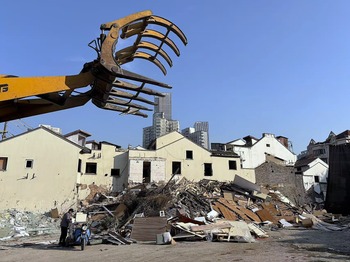
Figure 2 shows the Xiaonanmen area within Shanghai’s former Nanshi District. At the junction of Qiaojia and Ninghe roads, large demolition trucks were the most prominent presence. The grinding of wheels, the dust-laden air, and the acrid smells produced a visceral sense of destruction. When photographing this scene, the author felt that urban change was crushing the old urban space that had housed many generations of Shanghai residents.
Yusi Gao 高于思, The ruins behind the excavator, Qiaojia Road, Huangpu District, Photography, 2024.

This scene reflects the tangible results of urban renewal. The old city area, once a vibrant neighborhood for many Shanghai residents, seems to be experiencing problems due to fast development. This situation shows the struggle between progress and the protection of historical and cultural heritage. The contrast between the old and the new prompts reflection on the gains and losses that accompany urban change.Footnote 11 Figure 2 serves as a reminder of how urban change influences citizens. It encourages Shanghai residents to think about the need for careful planning in urbanization so that as the city grows, its original identity is preserved.
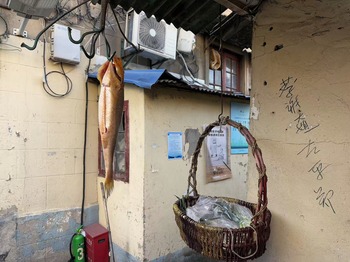
Figure 3 shows that Sang Yuan Street was among the few areas in the old Nanshi District that had not changed much. When the author visited on Lunar New Year’s Eve 2025, the alleys were full of activity as residents prepared for the Spring Festival. People were busy making holiday foods. Many had hung rows of fish, ham, and sausages to dry in the narrow lanes, preparing them for the family holiday meals. Since most homes were small and did not have balconies or indoor drying spaces, people used alleyways as home extensions. Daily life activities like cooking, drying clothes, and cleaning happened in public, building a community feeling where personal habits mixed into shared areas.
Yusi Gao 高于思, Salted fish under the eaves, Sang Yuan Street, Photography, 2025.

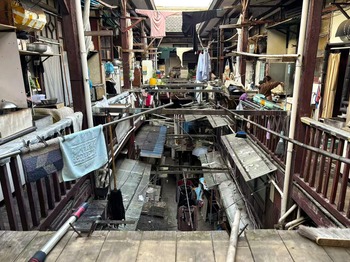
Figure 4 shows photos taken in a historic home’s courtyard. Upon entering the building, the author’s first impression was how intimate the design felt. The rooms are narrow, the walls are thick, and the layout is compact, like a small, fortified village. The two floors stack living spaces on top of each other, packing a lot of daily life into a small area. Instead of just being hallways, the corridors act as semi-private spaces where cooking, conversations, and personal routines flow into the shared area. The building’s density appeared not merely as a lack of space but rather as a system for survival and community, in which residents used every corner for their everyday needs.
Yusi Gao 高于思, Kitchen with clothes hangers, Yong An Road, Photography, 2024.

Figure 4: Long description
A view of a narrow alleyway between buildings with clothes hanging and various household items visible. The alleyway is flanked by buildings on both sides, with clothes hanging from lines strung across the space. Various household items, such as pots, pans, and containers, are visible on the balconies and in the alleyway. The ground appears to be made of wooden planks, and there are metal railings on the balconies. The scene is cluttered and gives a sense of a densely populated area.
Figures 3 and 4 show how residents in the narrow alleyways and limited spaces of the old town share kitchens and storage rooms, forming a network of mutual assistance and benefit. During mealtimes, the communal kitchens become sites of spontaneous exchange—a neighbor preparing a special dish offers portions to others, while a simple call brings the needed seasoning from someone nearby. In shared storage areas, provisions are arranged with tacit understanding, available without hesitation when the need arises. This proximity produces obligation and mutual aid: someone borrows water, someone else watches a child, a heated debate unfolds on a stair landing and is resolved over a borrowed cup of tea. Long-term relationships are woven into everyday chores—birthdays, funerals, laundry lines, and late-night repairs all happen in view of one another. That dense, overlapping network gives the building its resilience and meaning, creating an urban common built from daily routines rather than formal institutions.
This shared living situation in the old part of town builds strong communities but also causes problems with fire safety and cleanliness.
The compact design, while nice, makes fires more likely. Small paths and big walls can make fire spread faster. Hallways and stairs, which people need to escape, often have things in them. Shared kitchens use open flames and old wires, making fire risk higher.Footnote 12 Residents assist one another during emergencies, but such informal cooperation is no substitute for formal fire safety protocols.
Cleanliness is another big issue. Bad airflow traps cooking smells and germs, which can cause lung problems. Shared kitchens, bathrooms, and storage areas are heavily used, which can delay rubbish removal, cause food to spoil, cross-contaminate food, and attract pests.Footnote 13 Each household has a basic duty to keep common areas clean. If one household fails to do this, it can negatively impact the health of others living nearby.
Figure 5 shows how mutual aid shapes interactions in the alleyways, turning common spaces into social networks. Despite urban renewal, this spirit remains a key part of these neighborhoods and the residents’ memories.
Yusi Gao 高于思, Mutual help, Yinxian Alley, Photography, 2024.

The author’s photography and interviews suggest that the Shanghai old city has qualities absent in modern buildings. Daily familiar faces, strong friendships, and frequent mutual assistance build a communal life. This ingrained culture of support, threatened by urban changes, is a lasting social structure born from years of shared experiences.
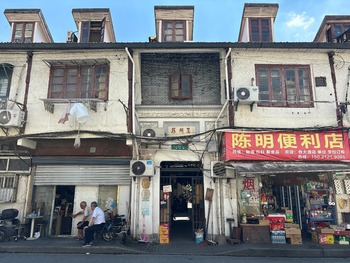
Figure 6 presents the Suzhou alleyways, composed of several lanes. The well-known Huanghe Road food street borders this area to the south and the Suzhou River to the north. Until 2020, a cluster of lanes, alike in size and architectural style, existed along the street that lay west of here. These were gradually demolished and replaced with imitation shikumen buildings. The Shanghai Municipal Government plans to develop this area into a commercial district.Footnote 14 In summer 2025, this place also witnessed the relocation of residents.
Yusi Gao 高于思, Afternoon shadows, Suzhou Alley, Huanghe Road, Photography, 2025.

Figure 6: Long description
A street scene in Suzhou Alley, Huanghe Road. The building has two stories with shops on the ground floor and residential windows above. On the left side of the building, there is a closed shop with a man sitting on a motorcycle in front of it. The right side of the building features an open shop with various items displayed outside. Above the shop, there is a sign with Chinese characters. The building has a mix of old and new elements, with some parts showing wear and tear while others have modern additions like air conditioning units.
The author frequented this spot from June to September 2025. The dense network of alleyways, packed with irregularly placed buildings, brought to mind a childhood memory for the author. The author noticed barbershops near the entrances, old mutton restaurants, home-based kitchens, and many cats and considered it one of the most representative examples of a Shanghai alleyway. Still, by the close of September, people had slowly moved away, and the place was deserted and closed off.
The impact of demolition on different people
For many long-term residents in Shanghai’s older neighborhoods, relocation is met not with outright resistance but with quiet pragmatism. They see it as a chance to leave behind damp walls, shared toilets, and the ever-present fear of fire for homes that are safer, cleaner, and more comfortable. Yet this exchange carries a quieter, more personal cost. As families move away, the spontaneous chats over washing lines, the trusted neighbor who keeps a spare key, and the familiar rhythm of daily life built over decades begin to fade. People may gain modern flats but lose the invisible architecture of community that once held them together. Some embrace the upgrade with relief, while others, unable or unwilling to leave, cling to the hope of fair compensation as their only recourse. Renewal brings not just new bricks and pipes, but a bittersweet trade-off between material comfort and the slow unravelling of a shared way of life.Footnote 15
Every demolition of an alley house is accompanied by the displacement of residents. To thoroughly understand the varied reactions to demolition, it is important to consider the specific circumstances of each resident. According to the interviews and fieldwork conducted for this study, those associated with the alley houses can be divided into four categories: property owners, owner-occupiers, short-term renters, and small business owners.
Property owners: These past dwellers of the old alleyways had already moved to better residential areas over ten years ago, with some even taking their families overseas. Even though they still owned their original properties, these homes were no longer part of their daily routines. The alley houses had become assets instead of living spaces, kept for sentimental reasons or as small investments.
As they no longer relied on the old homes, demolition caused little disturbance. Instead, relocation gave them a financial windfall via compensation or replacement housing, which was more than they got from renting out the properties. Because they did not face the practical or emotional difficulties endured by those still living in cramped conditions, they could view redevelopment as an uncomplicated benefit.
Owner-occupiers:
Reasons for reluctance to relocate:
-
1. Transportation and medical infrastructure
-
The alleyways are generally located in very accessible areas of the city; subway stations are usually within half a mile, and other major urban “living circles” can be accessed within 30 minutes. Additionally, the best medical facilities are predominantly found in these historical districts.
-
2. Neighbors, social networks, and lifestyle habits
-
These residents have lived in their respective alleyways for four to five decades; some have lived there since birth. It is in this environment that they enjoy the company of neighbors who have become lifelong companions.
-
3. Regional identity and emotional attachment
-
During the formation of Shanghai, people from different regions and industries settled in different areas. This created a sense of internal regional cultural identity for the people of Shanghai. According to interviews, residents of Nan Shi District consider themselves the most “authentic” Shanghainese due to their historical background; residents of Lu Wan District and Xu Hui District believe that their homes were located in the former French Concession and were historically considered upscale communities. Although these differences are gradually fading, a sense of identity and emotional attachment to the locality persists among residents. Some interviewees mentioned that even if they had to rent accommodation in future, they would not leave their respective districts.
Reasons for willingness to relocate:
-
1. Living conditions and sanitation
-
The rooms in the alleyways are generally small and sometimes require sharing of the kitchen and even the sanitary facilities.
-
2. A sense of shame regarding poverty
-
Residents of the area are ashamed of their poor living conditions. Their homes are often dilapidated due to years of neglect, and they lack the funds to maintain their homes and the community. Their living environment is incompatible with the urbanization process of “Beautiful Blocks.”Footnote 16
-
3. The decay of the established social order
-
Over the years, the original residents in this area have moved out as the city grew and wealth inequality increased. Consequently, migrants moved in and sometimes caused conflicts with the original occupants due to lifestyle differences. As a result, the original social relationships in the alleyways are breaking down, and the social order in the alleyways is decaying.
Short-term leases: These people from outside the city are a mobile group that can be easily missed in the demolition process. Most people rent rooms in old alleyways since the rent is much lower than in formal housing. This makes these areas one of the few affordable options in central Shanghai. Their relationship with the community is usually short and practical, based on work and not on plans to stay long. Because of this, they tend not to care about relocation. The alleyways were always meant to be temporary places to live so they could survive in an expensive city. Indifference does not negate impact. When housing is torn down, people lose affordable residences in central locations and must seek alternate lodgings. Given high rent costs, this frequently results in relocation away from downtown, increasing both commuting time and expenses. They deal with the trouble of moving without any help, but their displacement is rarely addressed in official plans or public talks.
Small business owners: These people, who open restaurants, grocery shops, or repair services for bicycles and appliances, depend on the daily life of the area. Some inherited their shops; others have been there for ten or more years. They have become part of the community, offering important services and building relationships through trust and everyday interactions.
For these shopkeepers, moving means losing more than just their shops. Demolition takes away their business locations but also breaks up their customer base, which is linked to the local community. Unlike commercial chain stores, these small shops rely on steady residents and people walking by. When the community scatters, their businesses fail. Starting over elsewhere is usually not an option because of prohibitive rents, intense competition, and the loss of the local connections that sustained them. Because of these problems, many decide to retire early or move back home, ending the work they have done for many years.
Though some benefit, others face problems. Property owners, who often moved to newer areas earlier, are usually the winners. Their former homes now serve as assets, and redevelopment gives them money with little personal trouble. For these owners, demolition is a good deal, strengthening their finances without upsetting their routines.
The four groups have different structural relationships with urban memory. Non-resident owners have property rights but appear to be less involved in the social life of the alleyways. Their memory is nostalgic and closely associated with their property. Owner-occupiers have property and practice memory but must make trade-offs between improving their housing and losing centrality, daily life, and infrastructure. Short-term tenants may make less of a contribution to collective memory, but their relocation demonstrates the impact of urban renewal on access to remaining affordable pathways to downtown living and urban core participation. Small businesses are an important carrier of community memory. Rooted in the streets and alleys, they provide stable support for residents’ daily lives and neighborhood interactions. Once these small shops disappear, the unique lifestyle and interpersonal ties among neighbors are also severed, and the unique charm and sense of identity of the neighborhood become difficult to maintain.
City renewal initiatives can bring financial benefits to non-resident property owners, but this often has adverse consequences for longtime residents. Those residents are the ones who often bear the brunt of the problems that can come with such initiatives. While property owners can profit without living in the area, displacement forces long‑term, often lower‑income families to relocate far from the city center. These people can lose their communities, which leads to their isolation and hardship. The uneven distribution of benefits from the demolition and renovation of the old city reflects the unfairness of the process, where some people have gained economic success while others have suffered losses exceeding the compensation they received.Footnote 17
Wang Chunlan points out:
Even in metropolises like Shanghai, residents of the central urban area generally harbour a sense of aversion and disdain towards the suburbs. Therefore, the surrounding environment and location of housing are also matters of vital interest to the public. While resettlement housing is larger than old houses, it is mostly located in the suburbs. This not only makes life inconvenient for relocated residents but also creates a sense of abandonment—a manifestation of a double loss of both material and spiritual benefits.Footnote 18
Wang’s research shows that urban demolition has varied impacts in older districts. Relocation is a complicated process of trade-offs for owner-occupiers. These people want better housing, but moving to the suburbs means they lose their city center spot, which affects their routines, support from others, and access to services. Older people face challenges because they often depend on local stores, public transit, and easy access to healthcare. So, relocation means losing familiar places to live and having less access to care and social connections. This displacement affects both what people own and how they feel.
The groups most at risk include renters with short-term leases and small business owners. Renters with short leases are deprived of affordable housing in central urban areas. They do not get compensation and are often ignored. When they are forced to move to the edge of the city, they face more money issues and longer commutes. Small business owners depend on busy, stable areas for their jobs. They not only lose their places of business but also their customers. Due to high rents and intense competition, some cannot sustain their businesses. They may have to retire early or return to their hometowns. This not only damages the local economy but also weakens the social networks and regular services that used to support these communities.Footnote 19
Relocating people to individual apartments disrupts community bonds. It negatively impacts the informal support systems and communal interactions that previously thrived in shared spaces. This can lead to a decline in social cohesion and a sense of isolation. The Old City represents a social and spatial foundation where familiarity and community flourished. Its design fostered interaction through shared courtyards, kitchens, and pedestrian-friendly alleys, encouraging regular contact. These conditions cultivated stronger social bonds based on mutual awareness, shared narratives, and a collective history.
Many of the owner-occupiers are willing to move, even while the process of urban renewal continues to siphon the cultural memory away from the urban landscape. That does not, however, mean that the cultural memory has no value. It only indicates that there are systemic issues that have to be addressed, issues such as the fact that the physical spaces that allow the memory to thrive are neglected and become run down so that the urban dweller has to choose between their need for comfort and their need to belong to their communities; it is not that they have chosen to leave their communities because they no longer care about these spaces, it is that the level of discomfort in the alleyways has become unbearable.
The renovation of Zhang Yuan as an example
The Shanghai government views the Zhang Yuan renovation as a template for its old city urbanization. Zhang Yuan is not selected as an exemplar of an existing alleyway but rather as an endpoint in terms of policy significance: it represents Shanghai’s most well-known approach to the conservation of facades and commercial reuse.Footnote 20 As such, the examination of Zhang Yuan allows for an exploration of how spaces are curated after resident relocation and whether architectural retention can support memory in practice.
Conserving just the fronts of old buildings after people have moved does not equal protecting the cultural history of old Shanghai. Zhang Yuan shows this contrast. The area is a century-old shikumen complex in the West Nanjing Road area, which was once called Shanghai’s best garden. Started in 1882 by Zhang Shuhe, a wealthy merchant, it became Shanghai’s main public garden and social center, offering recreation, entertainment, exhibits, and performances.Footnote 21 It blends Chinese and Western architectural styles, integrating garden aesthetics with commerce, and has produced a lively mixed-use hub. The houses here are diverse in style and building materials, seemingly recording the history of Shanghai’s urban development layer by layer, becoming a vivid and lively archive of the alleyway’s growth. This development, broader than typical Chinese gardens, has greatly shaped modern Shanghai culture.Footnote 22
Figure 7 shows the street scene before Zhang Yuan’s renovation. The photo captures the historic facade of Zhang Yuan, featuring grey brickwork, red‑brick decorations, and a curved gable. Masonry details on the upper wall and the arched windows are also visible. The old windows and other structures in Zhang Yuan’s buildings are all made of wood.
Yousen Shou 寿幼森, Zhang Yuan features a Baroque-style gable, Photography, 2017.

“Before Zhang Yuan’s preservation-oriented acquisition, around 280 households did not have private bathrooms. The buildings’ interiors were poorly subdivided and overused, causing them to age and deteriorate. Residents wanted better living conditions. To address these concerns and protect the city’s cultural heritage, Zhang Yuan underwent a post-acquisition renovation.”Footnote 23 This approach maintained the neighborhood’s structure, and after the acquisition, the historic buildings were renovated and reused as planned.
During the renovation of the preserved old windows, the restoration team removed layers of paint and reinstated the original color, retaining the marks of time on the wooden structure. For the glass restoration, the developer primarily chose etched glass as a design consideration for privacy. The aim was to preserve the original appearance: on the one hand, the old glass was removed and repaired during the restoration process; on the other hand, new etched glass crafted in a style similar to the original was also commissioned and installed.Footnote 24
Overall, the facades, rich in the style of Shikumen architecture, give a completely new feel. Although it is impossible to travel back to the old era, the restored facades, which preserve the original appearance, allow one to feel that the old exposed brick walls have been given new life amidst the vicissitudes of history. This treatment makes the buildings appear as if they have traveled back to the 1920s and 1930s.
Following renovation, the shikumen buildings retain their original texture, but their essence has been altered. The exteriors were preserved, while the interiors were transformed into upscale commercial spaces. For those unfamiliar with Shanghai’s history, this may resemble an authentic historical scene, but it represents heritage commodified; history converted into a consumable product and cultural memory replaced by retail.
Figure 8 shows a nighttime street scene at Zhang Yuan. The street is lined with dimly lit upscale residential buildings, while older Shikumen (stone-gate) buildings stand side-by-side. The old buildings and an archway are illuminated. The words “張園 ZHANG YUAN” are written on a brick wall; this is a renovated cultural and commercial district. Pedestrians walk on the sidewalks, and motorcycles and bicycles can be seen on the road. The scene presents a contrast between old and new architecture, showcasing both tranquil buildings and a constant flow of traffic.
Siyang Gu 顾思阳, Beyond the neon lights, Zhang Yuan, Huangpu District, Photography, 2025.

Figure 9 shows a close-up of a building facade at night, highlighting a wooden door, a window, and a flowerpot. The walls, constructed of light-colored stone, convey a sense of solidity and history. Soft, warm light filters through the window on the left, while a cooler, more focused beam of light illuminates the center of the image, emphasizing a cluster of green plants in a rectangular flowerpot. Above the flowerpot is a small, backlit sign bearing the Chinese characters “張園 ZHANG YUAN,” indicating that this entrance connects to the same building complex seen earlier. The contrast between the warm-toned window, the cool-toned spotlight, the textured stone, and the natural greenery creates a tranquil, private, and subtly sophisticated atmosphere.
Siyang Gu 顾思阳, Fleeting time, Zhang Yuan, Huangpu District, Photography, 2025.

Figures 8 and 9 show nighttime views of Zhang Yuan. Lighting and visual touches construct a particular mood. Spotlights bring out the architectural features of the shikumen fronts. This creates sharp contrasts between illuminated signs, brick textures, and shadows. This lighting plan stresses the heritage look of the place, making the buildings visually interesting while backing up the area’s change into a retail zone for leisure. The nighttime look suggests a space made to draw in visitors with scenery suitable for photos, which fits the business goals of the renovation.
Figure 10 shows the daytime view, with a clearly different feel. Without lighting, the updated buildings seem neat and intentionally kept up. Bright storefronts and big decorations—like oversized boots and umbrellas attached to fronts—show the strong presence of retail brands. The street is orderly, with wide pavements and resurfaced roads that suggest planning oriented toward pedestrians and tourist traffic. Nearby high-rise buildings, visible in the background, underscore the contrast between the historic street and the modern city surrounding it.
Yusi Gao 高于思, Shoes on the eaves, Zhang Yuan, Huangpu District, Photography, 2024.

Figure 10: Long description
A street scene with a row of brick buildings. The building on the right has a large sculpture of a red shoe on its roof. The street is lined with people walking and cycling. The buildings have various shop fronts, including one labeled HUNTER. Tall modern buildings are visible in the background.
From both time points, Zhang Yuan comes across as a very controlled setting. The focus is on fronts and looks, while business uses take the main floors. A once crowded living area has become a cultural business area, mainly shaped for shopping and visual interest, not daily community living.
Although the buildings seem physically intact, their cultural meaning has been systematically taken away. The people who lived there for generations, whose lives gave meaning to the buildings, have been forced to leave. Local businesses, such as family-run shops and street vendors, that made up the area’s economy and social fabric, have been replaced by chain stores and upscale establishments aimed at tourists.
Most importantly, everyday life has been wiped away. The history of ordinary life, the memories embedded in doorways, the social customs that grew organically, and the tacit knowledge of how to live in the area are all gone. The attempt to preserve Zhang Yuan has, ironically, ruined what made it important. It was not merely the architectural fabric that was significant, but how these buildings functioned as lived spaces for successive generations of residents over more than a century.
Zhang Yuan’s urban renewal plan shows how Shanghai deals with its old areas. It keeps what looks familiar but changes everything else to match today’s business and aesthetic ideas. This method uses selective memory, preserving certain building fronts, signs, and stylistic details that suggest old Shanghai, but it eliminates the daily life, crowded housing, and community ties that used to exist there. What remains is a carefully curated piece of history that highlights beauty and appeal but omits the crowded conditions, aging infrastructure, and real lives of people who used to live there.
The renovation depends on planned nostalgia. Brick building facades, narrow pathways, and old-style decorations are restored to attract tourists seeking an authentic cultural experience. It also addresses the fire safety problems that plagued the old town. However, this authenticity is mostly superficial. History and culture become design tools rather than living traditions. To avoid this pitfall, designers can take a more thoughtful and engaged approach to history and culture. This could involve working closely with communities to understand their traditions and values, conducting thorough research to learn about the historical context of design elements, and being mindful of the potential impact of design choices on cultural heritage.Footnote 25 In this way, these urban transformation projects create work that is not only visually appealing but also meaningful and respectful.
The redevelopment of Zhang Yuan replaced daily functionality with a tourist-centric consumption model. While commercial activities still exist in Zhang Yuan, its social role has shifted from sustaining a community to merely serving upscale consumers. Simultaneously, the redeveloped Zhang Yuan area typically introduces stricter security, sanitation standards, and signage management, which ironically diminishes the shared memories and informal customs that sustain the old city’s culture.
Pricing and access restrictions have disrupted the old commercial model. Zhang Yuan’s upgrades and rent increases have excluded original residents and small businesses, transforming the area into an upscale consumption venue. Even if original residents return, they are merely occasional consumers, not co-creators of the old city’s urban economy.
Zhang Yuan’s case demonstrates that a visually historic alleyway, lacking the warmth of residents’ lives, becomes merely a display of memory: recognizable to outsiders, but lacking in terms of continuity of life.
Conclusion
Since 2023, Shanghai’s urban renewal projects have shown a change in focus towards saving old buildings while updating the city. Instead of tearing everything down, the city is fixing up old areas, poor housing, and urban villages. These programs aim to make life better and fix safety and health problems.
The old city faces persistent problems, including overcrowding that raises the risk of fire. Poor ventilation contributes to respiratory problems, and basic infrastructure remains inadequate. Addressing these problems is essential, but projects like the Zhang Yuan renovation can destroy the cultural character of a place. Vibrant neighborhoods are converted into retail districts that prioritize visual appeal over the lived experience of residents.
This change affects different people in different ways. People who own property usually make money when they move. But people who live in their own homes, mostly older people, face emotional and practical difficulties. Renters and small business owners lose cheap housing, jobs, and friendships, which makes inequality worse. Not everyone benefits the same way. The city’s memories, such as those created through shared alleyway experiences, cannot be authentically reproduced in sterile copies.
To protect Shanghai’s true history, new policies must listen to local people, keep social ties strong, and minimize the loss of identity. By using inclusive plans, urban renewal can create lasting growth that respects history while meeting everyone’s needs. This ensures that the historic city’s contribution to global culture remains alive.
Supplementary material
The supplementary material for this article can be found at https://doi.org/10.1017/apj.2026.10047
Financial support
This research received no specific grant from any funding agency in the public, commercial, or not-for-profit sectors.
Competing interests
The authors declare that they have no competing interests.
Author Biograpies
Siyang Gu is a PhD candidate in History at Queen’s University Belfast. His research focuses on how cities in China have changed in modern times, along with the changes in the visual arts. His research examines the active relationships between art and cultural shifts in China.
Yusi Gao is a city photographer and researcher; his photographic work interrogates the processes of social transformation in contemporary China. His research explores how cities, public life, and shared memories are shaped in fast-changing societies.




 Open access

