


A striking feature of recent suicide trends in England has been a marked increase in suicide by hanging. It is now the most common single method of suicide, accounting for about 2000 deaths per year. Reference Brock and Griffiths1 This trend is most apparent among men but in the past few years, hanging has also eclipsed self-poisoning as the most common method used by women aged 15–34 years. Reference Biddle, Brock, Brookes and Gunnell2 Similar trends, particularly among young men, have been reported internationally. Reference Wilkinson and Gunnell3,Reference Beautrais4 This increase is of concern for two reasons. First, hanging is a lethal method with an estimated fatality rate of over 70%. Reference Gunnell, Bennewith, Hawton, Simkin and Kapur5 Second, hanging poses a challenge to current suicide prevention strategies, which place emphasis on restricting access to commonly used methods such as reducing paracetamol pack size and safety measures at regular jumping sites. 6,Reference Taylor, Kingdom and Jenkins7 A review of 162 completed hangings found that the majority occurred in private households, and in 90% of cases the ligatures and ligature points used were everyday items. Reference Bennewith, Gunnell, Kapur, Turnball, Simkin and Sutton8 Restricting access may thus only be possible for the minority of cases (approximately 10%) occurring within institutional settings. Reference Gunnell, Bennewith, Hawton, Simkin and Kapur5
Little is known about the factors influencing an individual's choice of suicide method, although these may include sociocultural acceptability, Reference Pounder9 media portrayals of suicide Reference Hawton and Williams10 andmethodsubstitution as common methods are restricted or become less lethal. Reference Amos, Appleby and Kiernan11 Using the narratives of people who had survived near-fatal suicide attempts, this study explored the factors influencing the decision to use or contemplate hanging as a method of suicide, with the aim of identifying approaches to prevention that may be developed to reduce its popularity.
Method
Semi-structured interviews were conducted with 22 individuals who had made near-fatal suicide attempts. Individuals who had attempted to die by hanging were the primary group of interest but individuals using other methods were also recruited to provide comparative data. Ethical approval was granted by Central and South Bristol Research Ethics Committee.
Sampling
The criteria used to define ‘near fatal’ were in keeping with other studies. Reference Kresnow, Ikeda, Mercy, Powell, Potter and Simon12,Reference Douglas, Cooper, Amos, Webb, Guthrie and Appleby13 They included suicide attempters who were likely to have died had they not received emergency medical intervention (e.g. people admitted to intensive care units for management of overdose) or who unequivocally employed a method with high case fatality and sustained an injury (e.g. jumping). Episodes of attempted hanging were included where the individual used whole or part of their body weight to apply pressure to a ligature round the neck and sustained injury providing evidence that the event had happened. Individuals were identified prospectively between 2006 and 2009 and, where possible, retrospectively (past 2 years) from systematic searches of the clinical records of the liaison psychiatry/self-harm assessment services in nine collaborating centres in England.
Eligible individuals were invited to participate via a letter sent by a member of the hospital psychiatric liaison team or the professional responsible for their continuing care. Healthcare professionals were asked to ensure that the potential participants were well enough to take part in an interview and that the interview would not be distressing for them. Recruitment of individuals who had survived hanging continued for the duration of the study and of people using other methods until a diverse group had been interviewed and a consistent and detailed understanding achieved.
Data collection
The research was conducted within the interpretive tradition, which aims to account for how people choose courses of action by exploring how people interpret, assess and make sense of their experiences and the world around them. Reference Schwandt, Denzin and Lincoln14 Interviews were in-depth and respondents were encouraged to talk at length and in their own words, raising issues they considered to be of importance with minimal prompting. A flexible topic guide (see online supplement) was employed to ensure that the main issues relating to the research question were discussed by all respondents. These focused on the decision-making surrounding their choice of method and included issues such as perceptions of the method used (e.g. lethality and likely experience of using), views and decision-making about other methods, sources of information such as the media and contacts with others who had made attempts, and the preparation involved in their attempt. Respondents were asked to identify methods they knew of or had considered and care was taken not to suggest others. The topic guide was reviewed at intervals throughout data collection to incorporate emerging issues from concurrent preliminary analyses for further exploration. In addition, the Suicide Intent Scale (SIS) Reference Beck, Schuyler, Herman, Beck, Resnick and Lettieri15 and a simple Likert scale were incorporated to assess the degree of suicidal intent associated with the act and to check on emotional well-being at the beginning and end of the interview. A protocol was devised to respond to any situation where an informant became distressed or disclosed information raising concern about potential future risk. Interviews took place at the respondent's home, the research base or a healthcare setting, according to the respondent's preference. Most lasted 1–2 hours and were conducted by L.B. (n = 17). Others were conducted by D.G., A.O.S. and J.D.
Data analysis
All interviews were audiotaped with the respondent's consent then transcribed in full. Transcripts were examined in detail and coded for emerging themes. All transcripts were coded by L.B., with a subsample also independently coded by D.G. The two sets of coding were then compared to check and refine the coding frame and ensure that interpretations corresponded with the data and had been applied in a consistent way. Analysis then proceeded according to the method of constant comparison, data relating to each code being retrieved, described and compared across individuals, and the relationships between codes explored. Reference Glaser and Strauss16 The accounts of respondents who had used hanging at the index episode or on another occasion or who had contemplated this, were compared with those of respondents who rejected hanging. Analysis and further data collection occurred simultaneously, facilitating an iterative approach. Reference Glaser and Strauss16
Owing to difficulties with recruitment we did not reach saturation and new data relating to the particular circumstances of informants were emerging in each new interview, but the key themes presented here had reached a point where new interviews were not contributing additional themes.
Results
Respondents
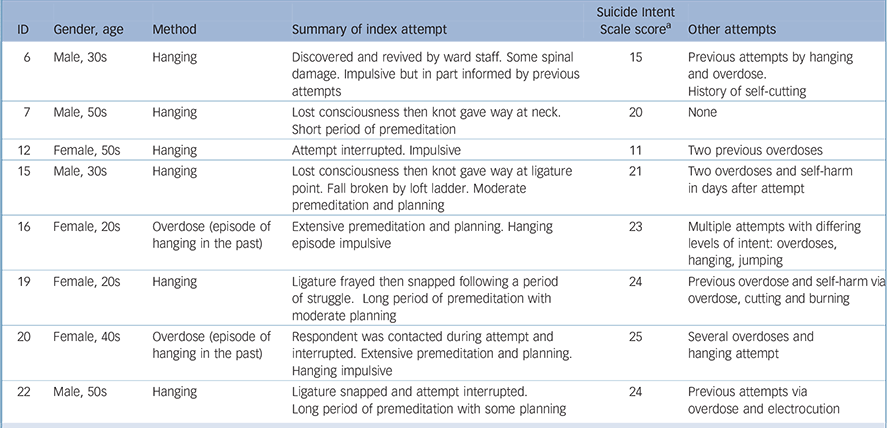
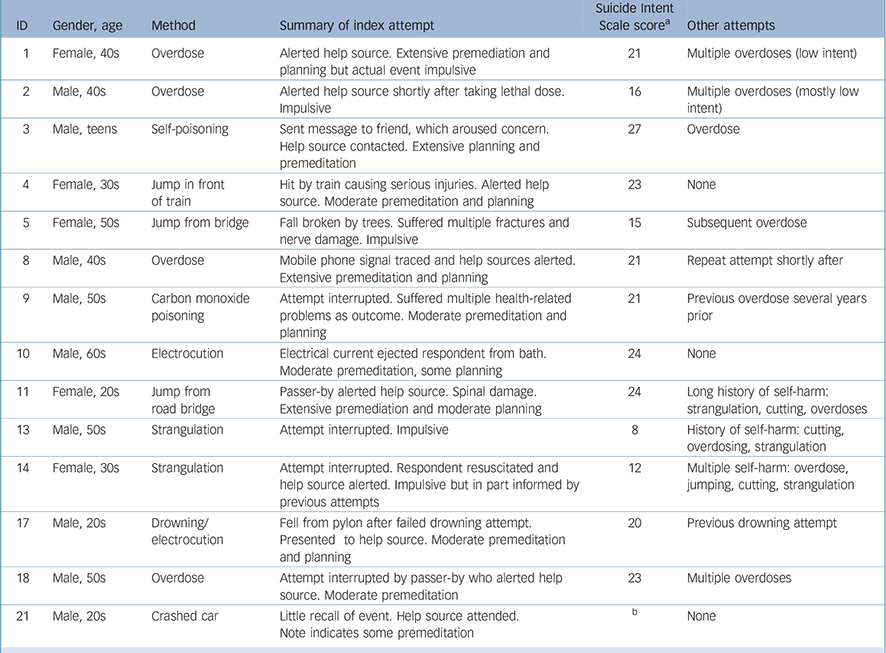
In total, 83 individuals were contacted and 22 (26.5%) took part in the study. Tables 1 and 2 summarise the characteristics of respondents and their attempts. In total, there were 12 men and 10 women with ages ranging from 19 to 60 years.
Characteristics of respondents who used hanging as the method of suicide
| ID | Gender, age | Method | Summary of index attempt | Suicide Intent Scale scorea | Other attempts |
|---|---|---|---|---|---|
| 6 | Male, 30s | Hanging | Discovered and revived by ward staff. Some spinal damage. Impulsive but in part informed by previous attempts | 15 | Previous attempts by hanging and overdose. History of self-cutting |
| 7 | Male, 50s | Hanging | Lost consciousness then knot gave way at neck. Short period of premeditation | 20 | None |
| 12 | Female, 50s | Hanging | Attempt interrupted. Impulsive | 11 | Two previous overdoses |
| 15 | Male, 30s | Hanging | Lost consciousness then knot gave way at ligature point. Fall broken by loft ladder. Moderate premeditation and planning | 21 | Two overdoses and self-harm in days after attempt |
| 16 | Female, 20s | Overdose (episode of hanging in the past) | Extensive premeditation and planning. Hanging episode impulsive | 23 | Multiple attempts with differing levels of intent: overdoses, hanging, jumping |
| 19 | Female, 20s | Hanging | Ligature frayed then snapped following a period of struggle. Long period of premeditation with moderate planning | 24 | Previous overdose and self-harm via overdose, cutting and burning |
| 20 | Female, 40s | Overdose (episode of hanging in the past) | Respondent was contacted during attempt and interrupted. Extensive premeditation and planning. Hanging impulsive | 25 | Several overdoses and hanging attempt |
| 22 | Male, 50s | Hanging | Ligature snapped and attempt interrupted. Long period of premeditation with some planning | 24 | Previous attempts via overdose and electrocution |
Characteristics of respondents who used other methods of suicide
| ID | Gender, age | Method | Summary of index attempt | Suicide Intent Scale scorea | Other attempts |
|---|---|---|---|---|---|
| 1 | Female, 40s | Overdose | Alerted help source. Extensive premediation and planning but actual event impulsive | 21 | Multiple overdoses (low intent) |
| 2 | Male, 40s | Overdose | Alerted help source shortly after taking lethal dose. Impulsive | 16 | Multiple overdoses (mostly low intent) |
| 3 | Male, teens | Self-poisoning | Sent message to friend, which aroused concern. Help source contacted. Extensive planning and premeditation | 27 | Overdose |
| 4 | Female, 30s | Jump in front of train | Hit by train causing serious injuries. Alerted help source. Moderate premeditation and planning | 23 | None |
| 5 | Female, 50s | Jump from bridge | Fall broken by trees. Suffered multiple fractures and nerve damage. Impulsive | 15 | Subsequent overdose |
| 8 | Male, 40s | Overdose | Mobile phone signal traced and help sources alerted. Extensive premeditation and planning | 21 | Repeat attempt shortly after |
| 9 | Male, 50s | Carbon monoxide poisoning | Attempt interrupted. Suffered multiple health-related problems as outcome. Moderate premeditation and planning | 21 | Previous overdose several years prior |
| 10 | Male, 60s | Electrocution | Electrical current ejected respondent from bath. Moderate premeditation, some planning | 24 | None |
| 11 | Female, 20s | Jump from road bridge | Passer-by alerted help source. Spinal damage. Extensive premediation and moderate planning | 24 | Long history of self-harm: strangulation, cutting, overdoses |
| 13 | Male, 50s | Strangulation | Attempt interrupted. Impulsive | 8 | History of self-harm: cutting, overdosing, strangulation |
| 14 | Female, 30s | Strangulation | Attempt interrupted. Respondent resuscitated and help source alerted. Impulsive but in part informed by previous attempts | 12 | Multiple self-harm: overdose, jumping, cutting, strangulation |
| 17 | Male, 20s | Drowning/electrocution | Fell from pylon after failed drowning attempt. Presented to help source. Moderate premeditation and planning | 20 | Previous drowning attempt |
| 18 | Male, 50s | Overdose | Attempt interrupted by passer-by who alerted help source. Moderate premeditation | 23 | Multiple overdoses |
| 21 | Male, 20s | Crashed car | Little recall of event. Help source attended. Note indicates some premeditation | b | None |
The median time between the suicide attempt and the research interview was 7.5 months (range 1–24). Most participants had a vivid recollection of the suicide attempt, although one or two were intoxicated at the time of the act and another two (ID12 and 21) seemed to have blanked out aspects of the event.
Suicide Intent Scale scores ranged from 8 to 27 (maximum score 30), and 13 respondents scored 21 or more demonstrating ‘very high’ intent on this scale. There were a small number of impulsive attempts (ID2, 5, 6, 12, 13, 14, 21) but most respondents had engaged in moderate (ID1, 4, 7, 9, 10, 15, 17, 18) or extensive (ID3, 8, 11, 16, 19, 20, 22) premeditation/planning.
Many respondents had made multiple suicide attempts and therefore presented more cases for analysis than their index episode. Eight respondents had attempted suicide by hanging, six at the index episode and two on another occasion (Table 1). One respondent using strangulation referred to this as a ‘hanging’ attempt. Four respondents (ID5, 17, 18, 21) made only passing reference to hanging and did not clearly indicate their own preferences or likelihood of using this as a method. The remaining respondents (n = 11) rejected hanging as a method either at the time of selecting a method or when discussing methods during the interview. Some dismissed the method entirely (n = 5), whereas others had contemplated using it or acknowledged circumstances where it could be an option (n = 5). In addition, three of the hanging attempts (ID12, 16, 20) had been impulsive and these respondents presented reasons why they would not choose this method in other circumstances. Gender and mean SIS scores were similar among respondents who had attempted hanging compared with those who had used other methods.
There were two main reasons for adopting or contemplating hanging as a method of suicide – the anticipated nature of a death from hanging and accessibility.
The anticipated nature of death
The type of death respondents expected to result from hanging was central to their decisions about whether or not to use this method.
Certainty
First, respondents considering or opting for hanging did so because they perceived it to be a certain method of suicide, whereas they recognised that alternatives might fail. This was particularly important for two respondents who had made previous attempts using other methods. Several participants were extremely surprised that their hanging attempt failed and only one respondent using this method noted an element of uncertainty associated with hanging, which was due to previous failed attempts.
‘I thought [use] something different ‘cos obviously tablets didn't work – that just put me in a coma. Um, the electrocution didn't work because someone saw me… I tried the other two times different ways and I thought this one [hanging] would have done it. I thought all my worries would be over.’ (ID22: male)
‘When I looked up at that straight rope, I thought well if I was to do that again… I'm sure I couldn't do it. I couldn't make that knot come out… I can't understand how it happened. But I woke up, I had um a mark, a red mark all around my throat. And I said to myself “I did it”. I couldn't believe that I was still alive.’ (ID7: male)
Experience of dying
Another prominent reason for choosing hanging, cited by six of the eight respondents who used this method, was that they expected to die very quickly, if not immediately. In contrast to other methods, they thought they would not have to wait for their suicidal act to ‘take effect’ once initiated and that they would have little awareness of dying or experience of pain. Hanging thus promised a rapid conclusion to feelings of desperation. Two respondents expressed this immediacy by clicking their fingers. Ideas about certainty and speed stemmed from a belief that hanging would instantly break their neck.
‘It's like when you walk across [local Bridge] and you look over and you think how the hell can they jump off of here? You know, all that time it takes to get down… it's the thought of hitting that water, it would be like hitting concrete. And I just I couldn't do that. I just, I couldn't do that.’
Interviewer: ‘What do you think is different about hanging that means that you felt you were able to do that?’
‘Um, well I thought it would have been quick. You know. You jump off of that stool and you see it's going to be quick, like that [clicks fingers]. You break your neck and then that's it.’ (ID7: male)
‘When you're desperate, you're desperate, and you want out you know, because it hurts you know. And you think it'll be just [clicks fingers], just like that, gone, you know, and I think – I mean the reason why I chose hanging was because I thought it would be quick – you know, neck breaks and you're done, gone, you know?’ (ID15: male)
Even those respondents who realised they might not die instantly still expected a quick, relatively pain-free and non-traumatic death.
‘I just felt I'd either break my neck or just choke to death quietly and that I'd be gone.’ (ID16: female)
‘If it [ligature] hadn't broken, I would have been dead in a matter of so many minutes… you wouldn't be able to breathe, then you would pass out… so I thought well, you know, that's that… you're not going to know much about it.’ (ID22: male)
A ‘clean method’
Most individuals selected hanging because they considered it to be a ‘clean’ method that would not involve blood or cause obvious damage to the body. This made it more ‘acceptable’ to them as a means of suicide than what they saw as ‘messy’ methods and less likely to affect those that might find or identify them. They did not expect an altered appearance to the body and so did not expect to leave a traumatic image.
‘I don't think I'd have the guts to do it on a bike [other method considered], to be honest with you. ‘Cos I'm facing it aren't I, if you know what I mean – full on… and again it's not very nice is it, you know, for mum and dad to identify the body. At least hanging, it's not really – it's nothing – apart from someone seeing you hanging there, your body's not cut, it's not um, it's not burnt is it?… it won't hurt your family when they go and identify you.’ (ID15: male)
‘Hanging you stay whole and everything, but if you jumped you'd have bits that come off and bones would break, and it's just a bit yucky… hanging is peaceful… just like your body all floppy, like a surrender to the world.’ (ID16: female)
Opposing views
Those who rejected hanging as a method held totally opposing images of the death that would occur. Seven respondents discounted hanging on the basis that the attempt might fail. Further, they all thought that death was most likely to occur due to asphyxiation rather than a broken neck and expected this to be a slow, painful, ‘horrible’ or ‘violent’ process, leaving room for the person to change their mind and to be ‘struggling’ or ‘gagging’ while unable to act. Some drew attention to this by contrasting hanging as a method of suicide with hanging as a form of capital punishment; others likened it to drowning or suffering a severe asthma attack.
‘There's some discomfort involved potentially with hanging yourself. You're going to have to hang there aren't you for a period of a few minutes when you can't ask for help, possibly in pain, knowing that you're dying and having to be aware of that… it's not a pleasant way to die. It'd be a very, I think, unpleasant way to die.’ (ID1: female, overdose)
‘Hanging yourself and death by asphyxiation doesn't strike me as a very nice way to go. I mean, whereas being hung as in capital punishment and your neck getting broken at the same time, you know, going through that drop, is much quicker than death by asphyxiation on the end of a rope. So I wouldn't consider hanging myself at all. I mean that would be at the end of my list of methods that I would consider.’ (ID9: male, carbon-monoxide poisoning)
Most of those rejecting hanging also categorised it as an ‘unclean’ method of suicide. They noted a possible mess from bodily excretions and expected the dead body to take on a horrific, changed appearance. Hanging was described as personally degrading and as ‘graphic’ or ‘violent’ for those left behind, offering no opportunity to preserve one's memory in death or to protect others.
‘I think it [hanging] would have been bottom of my list because like I said I think it can take some time and you do lose control of your bodily functions, which I would feel is quite degrading if you're hanging there and it's kind of dripping out of your trouser leg.’ (ID4: female, jumped in front of train)
‘I've thought about that [hanging] but I've always thought that must be a pretty unsightly sight, to be hanging there, when somebody comes in, you know, just hanging there dead. I couldn't do that to someone I love. I couldn't do it. That's a horrible way for someone to find you i'n't it? See, that's it with pills [respondent's chosen method]. There's nothing. You're just “you”. Asleep.’ (ID2: female, overdose)
‘Well, hanging's not clean. Um, you've got potential for defecation and all sorts of things if you hang yourself so in that context it's not clean, um, and you're left there with a body with potentially blue tongue sticking out and having this bulging and god knows what else, it's not going to be particularly nice having to cut down the body.’ (ID9: male, carbon-monoxide poisoning)
Accessibility
Access to means
All respondents agreed that the materials for hanging are highly accessible and most were aware of a variety of common objects that could be used for ligatures. This accessibility had been a clear factor for those respondents using hanging and for three individuals, the presence of materials had actually prompted them to consider hanging.
‘I found a load of bailing twine and I sort of had it in my head that I could hang myself with it ‘cos it's fairly strong.’ (ID19: female)
‘I put a sash cord… it was just that I had it in the garage. If I hadn't of had any then no, I don't even know if I would have done that either.’ (ID7: male)
This accessibility also meant that hanging was suited to impulsive attempts as was notable for three participants (ID12, 16, 20), two of which had taken place during psychiatric in-patient stays where alternative means were not available.
‘I was back on the mental health ward and when I'm in that sort of, um, mind I will try and do anything to, you know, make it [suicide] work, use whatever means that's available to me…’
Interviewer: ‘Can I ask what made you think of trying hanging?’
‘I just think it was I was in a ward where there wasn't many choices really. Can't overdose on tablets, you can't get to any. It was very limited on your options… I just woke up and just didn't want to be there anymore and just thought what can I do and went to the bathroom and did that. Impulsive really.’ (ID20: female)
Ease of implementation
Respondents who had used hanging, and some of those who contemplated it, also described it as ‘easy’ and ‘simple’ to carry out. They did not anticipate a need for much preparation or knowledge. In fact, none of those attempting hanging had considered it necessary to gather technical information and one described it as ‘just common sense’ (ID22). Only one acknowledged that hanging needed to be performed ‘properly’ following attempts where ligatures had given way (ID6). They thus viewed hanging as a method that could be acted upon quickly, at home, and without requiring the same degree of planning as other methods.
Interviewer: ‘Did it [hanging attempt] take much preparation?’
‘No, no, no… Its simple isn't it. All you need is a bit of rope.’ (ID7: male)
‘It [hanging] can be quite instantaneous like. Don't have to plan much about it really, it's not like going, not like going down to get some tablets from Tesco, shoplifting like. Bring them back in and take them and waiting for them to take effect.’ (ID6: male)
‘Didn't take long at all, no… simple. Err [ligature] from the cupboard you know. I knew it would be long enough, and strong enough, so I didn't need to think about it really.’ (ID15: male)
Hanging was also perceived as more accessible within the constraints imposed by time and space. It was thought not to require the same precautions as other methods to prevent discovery.
‘I got sleeping tablets at home and uh painkillers and that at home. “Um”, I thought, “oh well, last time [reference to previous overdose] someone found me”. I thought this way [by hanging],’cos when you take painkillers and all that you don't die straightaway, but I thought, “I got that cord” and well, let's face it, if it hadn't have broken, I would have been dead in a matter of so many minutes.’ (ID22: male)
‘In the first place I thought of um sitting in the car with a hosepipe and putting that in the van and just turning the engine on and just sit there, but then I thought well the wife is next door, somebody might hear the van going all the time in the garage right next door. Well I thought that's no good, then I started thinking about taking an overdose and I thought well, no, if I do that I might have to go somewhere to do it because if she comes in, obviously it takes a long time doesn't it. So she [wife] could come in and find me unconscious and they'd save me life there. I can't go off anywhere because she'd know that I've gone there. So that was the last resort. I'll go and get a bit of rope and hang meself.’ (ID7: male)
Opposing views
Those rejecting hanging as a possible method tended to believe that it was not easy to implement. They recognised a need for technical knowledge and preparation to ensure it was performed effectively and so regarded other methods as more accessible.
‘I wouldn't have been able to get that [hanging] together… I'm not quite sure how I would even go about it… I would have to find out how to do it. It wouldn't come to me naturally. I would think to myself right, you know, how do you actually make a hangman's noose, how do you actually do it… I would put hanging as the most determined and difficult thing to achieve. It's much simpler to jump or to take pills than it would be to hang yourself.’ (ID4: female, jumped in front of train)
There was a clear relationship between perceiving a need for knowledge and anticipated experience (above). Factors such as speed and certainty were seen as conditional upon correct implementation. For example, some recognised that a torturous and ‘unclean’ death may result from insufficient knowledge.
‘I've watched that Saddam Hussein, you know, the full video as it were, um, and ugh, I'm glad I didn't choose that way [hanging], that method… I think you've got to calculate quite carefully. You know, are you going to end up decapitating or just strangling to death… so no, I don't think I could do that.’
Interviewer: ‘Right. Why is that important?’
‘Um, well there's mutilation of the body if you get it wrong… that would be fairly awful for [wife] and everyone else and… I thinktheidea of strangling to death would be horrendous. So it's too risky you know, it's not um, it's not clean.’ (ID8: male, overdose by intravenous injection)
Identifying a need for knowledge was thus a deterrent since there was a fear that hanging could ‘go wrong’. Even some respondents who thought hanging might be a viable method dismissed it on the basis that possible ‘benefits’ relied on knowledge they did not possess.
‘Hanging yourself would be [a good method] although you'd have to be able to try and do it right so that it does kill you quite quickly… otherwise you'll just be dangling there not being able to breathe.’
Interviewer: ‘So that wouldn't be an option for you?’
‘No. Not unless I actually knew it was actually going to do it. I'd got it right.’ (ID11: female, jumped from bridge)
Discussion
Main findings
This study revealed starkly different perceptions of hanging as a method of suicide among those who had used or considered using it, compared with those who rejected it. Respondents favouring hanging thought it would be certain, quick, unlikely to damage the body or leave a harrowing image for others, and straightforward both in terms of access to materials and ease of implementation. The combination of these factors led them to conclude that it was ‘the quickest and easiest way’, with fewer barriers to completion than other methods. Those rejecting hanging anticipated a slow and traumatic dying process, thought the body and death scene would look horrific, and did not view hanging as accessible without sufficient preparation and technical knowledge, noting the potential for an attempt to fail or go wrong. These respondents therefore identified several barriers and some discussed lacking the ‘courage’ to instigate such an act. Respondents adopting or considering hanging tended to draw analogies between hanging as a form of suicide and hanging as a method of capital punishment, whereas some of those rejecting hanging explicitly contrasted the two.
However, hanging was not always the first method of choice of those who had used it. Two respondents had acted impulsively and stated that they would reject hanging in less chaotic circumstances and a third described it as a ‘last resort’ among the methods he was prepared to use. In a further two individuals, a progression towards hanging was evident following unsuccessful attempts using other methods. Hanging could thus be a later or default choice as alternative methods were eliminated or unavailable. Some of those who rejected hanging could rationalise its use in some instances, often because of easy access.
Strengths and weaknesses
To our knowledge, this is the first study to address the question of why hanging is a particularly popular method of suicide. The approach employed was also novel, gaining data from individuals surviving high-intent, near-lethal attempts. Such individuals can provide unique insights into the events leading up to suicide and the suicidal act itself in those who would not expect to survive. Reference Marzano, Rivlin, Fazel and Hawton17 Including them thus overcomes the main limitation of most qualitative research into suicide – that the key informants (those dying from suicide) are missing. Few other studies have obtained qualitative narratives from survivors of near-fatal suicide attempts Reference Marzano, Rivlin, Fazel and Hawton17–Reference Borrill, Snow, Medlicott, Teers and Paton19 and these have not focused on choice of method. Although the accounts may contain some post hoc reconstruction or justification, this seems less likely to occur when accounting for choice of method than in explaining motivations for the suicidal act itself. The SIS scores and gender ratio of those included indicate that a high-intent group was identified whose behaviour was closer to suicide than self-harm. However, it is possible that those surviving a suicide attempt may be different to those who die. For example, those completing hanging may be ‘more successful’, having engaged in more planning/research. Comparison of the individuals who attempted hanging recruited in this study with a recent case series of completed cases Reference Bennewith, Gunnell, Kapur, Turnball, Simkin and Sutton8 reveals that those in this study were more likely to have a history of self-harm and to use items of clothing as ligatures, but the suspension points were similar as was the location of the attempt and contact with psychiatric services.
Individuals who make near-fatal suicide attempts are difficult to access, particularly those using methods with high case fatality such as hanging. Recruitment was a multistepped process and could be hindered by gate keeping from healthcare professionals. However, the richness and originality of the data obtained and multiple episodes described by several participants counterbalance these limitations.
Implications and further research
This study demonstrates the importance of common perceptions about methods of suicide in determining whether or not they are adopted. Reasons for favouring hanging were based on some misconceptions about the ease with which it may be implemented and the likely nature of the ensuing death. Hanging is currently too easily viewed as a rapid, accessible and ‘tidy’ method of securing escape from difficulties and distress. Those rejecting hanging held negative images and these operated as barriers to using the method, even among respondents who in other respects considered it a viable method. The findings thus inform about the type of messages that could be conveyed to decrease the popularity of hanging. For example, prevention strategies could focus on providing more accurate information about the processes and consequences of hanging to counter perceptions of its hygienic rapidity, and introduce awareness of the possibility of neurological impairment on survival. Reference Gunnell, Bennewith, Hawton, Simkin and Kapur5 Messages might also be targeted at the strong emotions evoked by hanging as a method. Such messages might include the likely affect on family members of finding the body of a loved one who has hanged themselves and the body's appearance in death.
The findings also showed that impulsivity and access to means can override individuals' perceptions and preferences. This reinforces the importance of restricting access to hanging in institutional settings. The study also revealed that perceptions about the knowledge required and level of difficulty associated with implementation were further dimensions of access considered by individuals. Therefore, it may be possible to restrict access at a community level by emphasising how difficult effective implementation can be.
Prevention of suicide, particularly hanging, is extremely difficult. Messages that might deter some individuals could at the same time provide others with information, which may facilitate attempts. For example, drawing attention to the difficulties of implementing hanging might encourage some individuals to seek technical knowledge, in turn making their attempt more lethal. This problem is not restricted to hanging – one respondent in the present study had learnt the lethal dosage of her prescribed medicine during consultation with her doctor, which had been intended to prevent such an outcome. Detailed research needs to focus on developing and evaluating information interventions in this context. At a population level, the challenge is to devise disguised and implicit messages that can bring about subtle changes in lay knowledge. This might involve, for example, realistic portrayals of hanging in the popular media, news and elsewhere, but without the sensationalism that has characterised some past reporting. Another method might be for clinicians to explore reasons for choice of method with suicidal individuals who have made plans for taking their lives. Cues, such as clicking fingers, for example, might indicate that someone intends using such a high-lethality method. Further research is required to verify existing perceptions about hanging and to explore in detail the origins of these and the full range of sources of knowledge that people draw upon and are influenced by when planning a suicide attempt.
Acknowledgements
For assistance with recruitment we thank: psychiatric liaison/self-harm teams at Bath Royal United Hospital, Bristol Royal Infirmary, Royal Devon and Exeter Hospital, Frenchay Hospital, Manchester Royal Infirmary, Great Western Hospital, Musgrove Park Hospital, John Radcliffe Hospital and Weston General Hospital; the following individuals, Claudia Mastache, Tom Hulme, Jayne Cooper and the Manchester Self-Harm Monitoring Team (MaSH), Linda Whitehead, Robin Woodburn, Emily Klineberg; and numerous general practitioners, consultants and keyworkers. We are also extremely grateful to those who participated in the study. K.H. and D.G. are NIHR senior investigators.




eLetters
No eLetters have been published for this article.