


Patients with a primary diagnosis of personality disorder rarely gain access to adequate treatment from secondary mental health services (Department of Health, 2003). They are managed at the periphery of health care, through accident and emergency departments and emergency psychiatric assessment centres, with brief admission to in-patient psychiatric wards and limited follow-up by community teams that are already overburdened with patients with long-term psychotic disorders and that rarely have the skills required to treat personality disorder. Some services, for example assertive outreach, may specifically exclude patients with personality disorders, in the erroneous belief that they do not have a psychiatric disorder. Within forensic services, a number of regional medium secure units actively prohibit admission of patients with personality disorders. So, it seems that these patients remain the individuals that ‘psychiatrists dislike’ (Reference Lewis and ApplebyLewis & Appleby, 1988). But probable changes in the forthcoming Mental Health Bill for England and Wales, particularly the abolition of the ‘treatability test’ in relation to psychopathic disorder, the provisions enabling compulsory treatment in the community and the improving evidence of effective treatments for some patients will necessitate further consideration being given to services for patients with personality disorders. Clinicians will have to be trained and equipped to treat the very patients that they presently avoid, and services must be organised so that a disadvantaged group of the population have better access to treatment. Developments in forensic services such as personality disorder centres and multi-agency public protection panels (MAPPs) will require integration with general adult services as well as with the criminal justice system, if patients are to be treated effectively and safely. This article considers some of the principles of management and treatment that might inform service provision within general adult services.
Principles of management
There are some principles relevant to service organisation and management of patients within general adult psychiatric services that apply to all patients with personality disorders. The consequences of ignoring them are likely to be most serious for the treatment of patients from Cluster B and for those with paranoid personality from Cluster A (American Psychiatric Association, 1994). General principles cannot be evaluated in quite the same way as treatments and are best regarded as approaches following a particular model of service delivery.
Service models
A number of service models have developed over the years (Box 1). None of these has been rigorously studied and no formal comparisons of what are very complex psychosocial interventions have been made, even at the lowest tier of the evidence base (Reference Campbell, Fitzpatrick and HainesCampbell et al, 2000). Although we have divided them here into three models for clarity, there are ways of combining them and patients may move between them. A fully integrated service would provide treatment at all levels, with one point of entry for expert assessment, clear referral criteria and explicit indicators for treatment in different components of the service. It is not uncommon for a patient to be seen by an individual practitioner, who recognises the severity of the personality problem and level of risk only after treatment has started and subsequent events have revealed the dangers of working alone.
-
• Sole practitioner
-
• Divided functions:
-
a integrated between services
-
b integrated within the community team
-
c consultation/liaison
-
-
Specialist team:
-
a treatment expertise
-
b consultation/liaison
-
c research
-
Most of the experience of treating personality disorder has come from work with patients with borderline personality, and there is little consistent experience of service models with other personality disorders. In addition, there is almost no information about the influence of ethnicity on service provision for patients with personality disorders (although Black people attract a diagnosis of personality disorder relatively infrequently in the National Health Service (Reference NdegwaNdegwa, 2003)).
The problems of treating individuals with other personality disorders are often considerable, partly because of the severity of the disorder and partly because many do not want treatment, even though they create significant problems for themselves and society. It is tempting to assume that the different models can be matched to patients showing different levels of severity. However, assessment of severity is itself controversial and may not be the sole indicator for determining which patients should be treated within which service context. Indicators of severity include meeting criteria for two or more personality disorders from different DSM clusters (Reference Tyrer and JohnsonTyrer & Johnson, 1996), showing clinical characteristics of persistent self-harm and suicidal behaviour (Reference LinehanLinehan, 1993) and showing considerable risk to others (Home Office & Department of Health, 1999). Sometimes the most severely affected patients, often those with comorbidity, require the least treatment, whereas those with a non-comorbid personality disorder will benefit from intensive specialist treatment. Unless clearly unmanageable, patients should initially be offered the least intensive treatment and only move to more intensive and specialist treatment if this fails.
The sole-practitioner model
The sole-practitioner model involves a mental health practitioner acting as the primary treater, working alone. If that individual is a psychiatrist he or she may conduct psychotherapy, prescribe medication, write reports and organise social support. This combination of psychiatrist as therapist, prescribing pharmacotherapy and giving psychotherapy, is appropriate for patients with a less severe disorder and has the advantage of ensuring that psychiatric care is informed by transferences that develop (Reference Gabbard and KayGabbard & Kay, 2001). Prescribing medication can be viewed by some patients, for example those with borderline or paranoid personality disorder, as coercive treatment aimed at controlling, normalising and subduing them and so may be resisted, undermined and subverted. Unless such transferences and reactions are taken into account, treatment and social care are unlikely to be optimal. Appropriately trained psychiatrists conversant with psychotherapeutic techniques may have to take a sole practitioner role with some patients, particularly with regard to medication (Reference TasmanTasman, 2000). In general, basic training for psychiatrists (Reference Bateman and HolmesBateman & Holmes, 2001) and other mental health professionals is unlikely to equip practitioners to recognise, assess, diagnose and manage personality disturbance and specialist training is probably necessary.
Other mental health practitioners may also be the sole practitioners for patients with personality disorders, treating either the disorder itself or an aspect of their problems such as anger control. It may be possible for a sole non-medical practitioner to act as the primary treater if a patient has been carefully assessed, stabilised on medication and is in permanent accommodation. But under these circumstances it is difficult to integrate prescribing into the therapeutic relationship, so this is only likely to be useful for patients with less severe disorders or those with Cluster C personalities. For patients from Cluster B and many from Cluster A presenting to secondary care this model is rarely appropriate.
The divided-functions model
This model divides roles and functions. An experienced practitioner, for example a psychotherapist or psychologist, conducts therapy while a general adult psychiatrist, perhaps with a community team, prescribes, looks after other aspects of care, links with other agencies as required and offers support (Box 2). The two may be thrown together in a clinical shotgun marriage with little respect for or knowledge of each other (Reference Meyer and SimonMeyer & Simon, 1999), working separately and engaged in professional rivalry. Obviously, such a situation should be avoided. Within the terms of the care programme approach (CPA) a treatment plan, carefully considered within a multidisciplinary meeting, should be understood and agreed by everyone, including the patient. Deciding the appropriate level of support in a particular case involves consideration of a number of factors, including the range and complexity of the patient's needs, the risk of harm posed to self or to others and the extent of involvement with other statutory and non-statutory agencies.
-
• Development of a management plan agreed with the patient
-
• Referral to specialist services if necessary
-
• Risk assessment
-
• Coordination of a crisis plan
-
• Identification of a keyworker
-
• Access to acute in-patient care
-
• Family and social support
-
• Prescription of medication
Regular, planned CPA review meetings provide an important chance to reconsider with both the patient and members of the professional network the relevance and usefulness of the support and treatment offered in the care plan. Problems in coordinating a care plan can arise if patients are poorly engaged with the professionals working with them and are experiencing difficulty in using the treatment or support that is offered. This may extend to their engagement with CPA review meetings. In such a situation, it is important that the reviews proceed, both so that the patients are reminded of the opportunity for treatment and that the relevance of a multidisciplinary or multi-agency care plan can be properly reconsidered.
There is a conceptual price to pay for a division of roles, since it separates treatment of an individual, who is already psychologically fragmented, into discrete components at a time when the task is to improve integration within the person and to establish with them a more constructive place within society. Medication becomes split off from psychotherapy; housing and social care from mental health care. The therapeutic alliance may be weakened by being attached to a number of different mental health professionals, and treatment provision can develop into uncoordinated pockets of care. The community team and psychiatrist may intervene in crises, admitting the patient to hospital often without discussion with the psychotherapist, who may have been working with the patient to develop a capacity to remain out of hospital. The housing agency may begin an eviction process without discussion with the social support worker. However, this lack of coordination is not inevitable. The model can work well if the different parts of the system or the different practitioner roles are well integrated, there is good collaboration between all involved and a coherent message is given to the patient.
The divided-functions model can also be organised within a community mental health team, with one member of the team designated to manage patients with personality disorders, supported by other team members when necessary. This person needs special training for this role, regular supervision and access to appropriate support for each patient during crises. In particular, the element of the CPA concerned with action to be taken in a crisis, including the pathway to in-patient admission, access to a senior practitioner for assessment of suicide risk and risk to others and a forum for discussion of clinical problems, needs to be planned and agreed by the psychiatrist and the community team. It is unlikely that community team practitioners will have the resources available to implement effective treatment entirely unaided, and the benefits of good management to a patient's service usage and interpersonal function should not be underestimated.
Consultation/liaison
The consultation/liaison approach to personality disorder is in keeping with the divided-functions model, but might also fit into the specialistteam model. Patients continue to be treated within community mental health teams, which consult more experienced practitioners on a regular basis either about treatment interventions or within a case-discussion framework that allows them to think about on-going treatment. This might have the advantages of increasing the skills of the community team, facilitating integration of an overall treatment plan within a single team and allowing the team to maintain problematic patients within the community without feeling unskilled. But it also has disadvantages: it remains unclear who the ‘experts’ actually might be, where they developed their specialist skills and what experience they have in treatment of personality disorder. Being trained in a specific model of psychotherapy is inadequate, especially for patients who show comorbidity. Over the years most patients with personality disorders have been treated by community mental health teams, and some team members may be far more experienced in their management, if not treatment, than the ‘experts’ consulted. In addition, resentment might be directed at the consultation team, which would have no responsibility for the patient and might be seen to be self-appointed and pontificating rather than supporting. However, if sensitively developed and practised, the consultation model is likely to be an important component of service provision for personality disorder and may have a practical advantage of being relatively easy to develop at little additional cost.
The specialist-team model
In the specialist-team model, a group of specially trained practitioners work together (although they may divide their roles) to provide a specialist service. There are a number of arguments in favour of this approach. First, anecdotal reports from community mental health teams suggest that considerable time is taken up in management of patients with personality disorders. It might therefore be cost-effective to allocate clinician time from existing resources to the development of a specialist team and to make it clear that problematic patients should be transferred from the community mental health teams to be managed within the specialist team. Second, evidence from treatment trials suggests that specialist services show more successful outcomes than generic services. Third, drop-out rates (withdrawal from services) can be reduced substantially. Fourth, development of specialist skills becomes possible and can be maintained within a peer group, as the team can act as focus for treatment, education and training. Finally, the specialist group can make specific links with allied services such as housing, social services, probation and forensic services, leaving-care teams, community support agencies and voluntary organisations.
Patients need to feel that those responsible for their care communicate frequently and effectively, get on well together and are clear about boundaries of treatment. The problems discussed above relating to the divided-functions model can similarly disrupt treatment by a specialist team. One team member may provide individual psychotherapy, while another is primarily involved in working on behalf of the patient with courts, housing or social aspects of care and yet another provides the psychiatric care. In a well-functioning team, all work together and information is shared, allowing interventions and management to be informed fully by biological, psychological and social understanding. This approach probably gives the best chance of avoiding many of the problems associated with the sole-practitioner and divided-functions models operated by independent practitioners. However, as in the divided-functions model, good working relationships within the team and close collaboration are essential if treatment is to be consistent and implemented according to agreed protocols.
Some specialist teams employ what has been called the skills-share model of care (Reference TyrerTyrer, 2000), in which each member learns the skills of other members, at least at a basic level. The team is therefore never depleted of skills, and team members can substitute for each other if necessary. This is akin to the model commonly used in assertive outreach, in which staff have a generalist level of specialist skills (Reference Burns and GuestBurns & Guest, 1999). The skills-share model may remove rivalry between professional disciplines, but it needs trust, good management and leadership, especially if different team members are paid different salaries.
Leadership is necessary to ensure that agreed interventions and protocols are implemented within a team. Thus, the team has to be willing to assign the responsibility of leadership to one of its members and that member must be willing to undertake the leadership role. Underlying rivalries within a team will inevitably bring with them inconsistency as individuals attempt to develop greater influence. For effective teamwork, the natural tendency of any one person to want to make an individual contribution has to become subordinate to the contribution of the whole team. To achieve this, an iterative process of decision-making is necessary in which the individual members move towards a consensus that is then held by the team itself. New members can then be educated by their colleagues in the team's perspective.
The multidisciplinary approach of the specialist team does not simply avoid problems. It has significant advantages, particularly for patients with severe personality disorder who require frequent risk assessment, have multiple needs, demand continual engagement if they are to remain in treatment and provoke powerful countertransference reactions. Reactions of staff to patients with personality disorders commonly subvert the task of treatment and lead them to take inappropriate actions (Reference GabbardGabbard, 2001). Careful attention to countertransference can reduce the likelihood of unprofessional conduct, aid risk assessment (e.g. of the level of dangerousness) and inform treatment intervention. The team approach offers a protection against the overinvolvement of any one individual. In addition, a team model offers the potential to implement the CPA in a constructive and clinically sensitive manner.
General features of management
Within these different organisational or service approaches there are a number of features of management that need consideration.
Assessment
Perhaps the most important error in understanding the impact of personality disorder in clinical practice is the failure to recognise its presence when other psychiatric conditions are more prominent and often seem to be the only presenting problem. Much of the puzzlement encountered by professionals who cannot understand why their interventions are not met with a predictable response comes from the failure to consider the simultaneous presence of personality disorder, even though it is common. Populations presenting to emergency psychiatric clinics, living in hostels for the homeless, using emergency psychiatric services with multiple hospital admission, held in prison and on probation all contain a preponderance of individuals with personality disorders (Reference Singleton, Meltzer and GatwardSingleton et al, 1998). The necessity of recognising the presence of personality disorder in the context of other psychiatric disorder is underscored by recent findings implicating personality disorder as an important risk factor for violence in psychosis (Reference Moran, Walsh and TyrerMoran et al, 2003b ).
Assessment of personality should now form part of a diagnostic psychiatric interview and yet there is no reliable method of diagnosing a disordered personality in clinical practice. A full clinical assessment should include assessment of psychiatric domains along with an evaluation of primary personality dimensions.
Reference WestenWesten (1997) has drawn attention to the fact that clinicians rely on observations in a clinical interview and the patient's self-reports of interactions in intimate social relationships. Inevitably, reliability is low, but it might be improved by the following. First, practitioners should routinely assess all four domains necessary to make a diagnosis of personality disorder: symptoms, interpersonal function, social function, including work history, and the patient's inner experience. Second, an informant should be interviewed to shed light on the patient's self-assessment, which might be coloured by mental state and perturbations in personality functioning.
Although dimensional/trait approaches have gained support from specialists, they remain difficult to implement in standard clinical practice and a combination of a clinically based approach with the use of either semistructured interviewing or self-report screening measures may be more practical. Trait measures (Reference Costa and WidigerCosta & Widiger, 1994; Reference Livesley and JacksonLivesley & Jackson, 2000) are relevant to an understanding of personality and may be useful in assessment because of their implications for management. There are four higher dimensions (Box 3) that have immediate implications for clinical intervention. Emotional dysregulation may be evaluated from evidence of rapid mood changes following minimal stimulation, intense emotional responses, sudden angry outbursts and extreme irritability; inhibitedness by intimacy anxiety, restricted emotional expression, excessive self-reliance and poor affiliation; dissocial behaviour through a history of egocentrism, exploitation, contemptuousness, irresponsibility and disregard of the needs of others; and compulsivity by the presence of orderliness, parsimony and excessive conscientiousness.
-
• Emotional dysregulation: anxiousness, affective lability
-
• Inhibitedness: intimacy problems, restricted expression
-
• Dissocial behaviour: callousness, rejection
-
• Compulsivity: orderliness, precision
It is not possible to make concluding recommendations about assessment measures. There are no good screening instruments available to clinicians which can be used routinely and which reliably identify major aspects of personality disorder. However, this is a topic which is receiving increasing attention and improvement, and consensus on appropriate measures is likely in the near future. Screening instruments are available, and a recent preliminary report on an abbreviated version of the Standardised Assessment of Personality (Reference Mann, Jenkins and CuttingMann et al, 1981) given within a brief structured interview suggests its usefulness in routine clinical practice (Reference Moran, Leese and LeeMoran et al, 2003a ).
In clinical practice, the primary role of the assessor is to develop a comprehensive formulation that is understandable to himself, the patient and the treatment team. A useful format outlines vulnerability factors (genetic, environmental, presence of Axis I pathology, life history), evaluates strengths and weaknesses of personality dimensions from a behavioural and psychodynamic perspective, coherently argues how these different factors interact to form current problems and psychopathology, and provides a pathway to effective treatment with a hierarchy of goals and an understanding of factors that may interfere with treatment.
Engagement
The most common conscious reasons given by patients for failure to engage in treatment and to attend sessions are frustration with the treatment, lack of social support and logistical difficulties in attending appointments (Reference Gunderson, Frank and RonningstamGunderson et al, 1989). Engagement in treatment is the key to successful outcome and it requires the development of a constructive and progressive dialogue between patients and clinicians; even when patients seem to be involved with treatment, motivation fluctuates rapidly, sometimes within the course of a day, making it difficult to engage them in a constructive dialogue. At one moment they demand help, but at the next they reject it, which can lead clinicians to discharge them prematurely. The task of engagement is to negotiate constructively any rifts and ruptures in treatment whenever they occur and gradually to establish the therapeutic relationship on a more trusting level.
The development of a relational and working alliance is the most important aspect of the engagement process, and some aspects of management that encourage participation and maintenance in treatment are summarised in Box 4.
-
• Outline a pathway of admission to treatment and provide a leaflet about the programme and its ‘rules’
-
• Stabilise social aspects of care, for example housing and benefits
-
• Ensure that the treatment centre is easily accessible to the patient and that appointments are at times acceptable to both patient and treatment team
-
• Establish agreed short-term goals and an overall treatment plan at the outset
-
• Define and agree the roles of the mental health professionals and others (e.g. probation officers) involved in the patient's care
-
• Focus the initial work on formulation
-
• Help the patient early in treatment to recognise the onset of frustration and to develop ways of reducing it
-
• Clarify the pathway to care during crisis
Consistency
One of the reasons why those with personality disorders create so many problems in treatment is that they evoke inconsistency. From a psychodynamic perspective, inconsistency arises when ‘splitting’ occurs within teams. Splitting is thought to arise for a number of reasons and, if it does occur, the most important point is to try to establish its meaning. Sometimes, externally manifested splitting may simply be a result of poor team communication, but at others it may be a representation of the patient's inner processes. Splitting within therapists or teams can also result from their own unresolved transferences and have little to do with the patient. Different causes of splitting need different interventions. Splitting arising in the context of unresolved transferences needs work within the team rather than with patient, but splitting emanating from the patient's projections may need clinical discussion within the team followed by dialogue with the patient.
Restricting the people involved in care to those whose roles and tasks are clear reduces the chances of creating inconsistency. Consistency is likely to be improved either by a specialist-team approach (provided the team itself is cohesive, which may necessitate good team support) or by a divided-functions approach with good collaboration within a carefully crafted treatment plan within the CPA.
Constancy
In addition to keeping the number of practitioners involved in treatment to the minimum, it is helpful to avoid changes wherever possible. This is of particular relevance in the treatment of borderline personality disorder, in which changes in professionals might reawaken in patients the feelings of loss, abandonment and despair that have usually characterised their relationships (Reference GundersonGunderson, 1996). Senior figures who remain in post over time are clearly preferable. In the context of current working arrangements, these individuals are likely to be consultant practitioners, ideally consultant psychotherapists with skills in the treatment of personality disorder. Experienced practitioners are also likely to be able to work with the problematic presentations that are common in patients with personality disorders.
Adequate in-patient support
One long-standing belief among those involved in hospital care is that people with personality disorders should be kept out of hospital. Clinical experience suggests that during admission these patients create circumstances that make it difficult to discharge them, that they often regress (although there is limited empirical evidence for this (Reference Gabbard, Coyne and AllenGabbard et al, 2000)) and that risk, which is commonly the reason for admission, may actually be increased because of the high emotional stimulation of the ward environment. However, the situation is complex. This clinically derived view may have more to do with staff training than with clinical outcomes. There is evidence that patients with comorbid mental state and personality disorders actually have better outcomes under a hospital-oriented programme of care, whereas those with mental state disorders in the absence of personality pathology fare worse under such a regime (Reference Tyrer, Merson and OnyettTyrer et al, 1994). There can be no place for banning certain patients from in-patient admission. Indeed, it is often indicated on clinical grounds (Box 5) and, if it is necessary, it should be well organised (Box 6).
-
• Crisis intervention, particularly to reduce risk of suicide or violence to others
-
• Comorbid psychiatric disorder such as depression or brief psychotic episode
-
• Chaotic behaviour endangering the patient and the treatment alliance
-
• To stabilise medication
-
• To reviewing the diagnosis and treatment plan
-
• Full risk assessment
Admissions to a general psychiatric ward should be:
-
• informal, with patient-determined admission and discharge
-
• organised around specific goals agreed between the patient, psychiatrist and nursing staff
-
• arranged with the clear agreement of nursing staff
-
• brief, time limited and goal determined – the patient may be discharged if the goals of admission are not met
It has also been reported that people with personality disorders managed under an assertive community approach are more likely to show antisocial behaviour than are those managed under a more hospital-oriented policy (Reference Gandhi, Tyrer and EvansGandhi et al, 2001). People with personality disorders have fewer attachment and support figures in the community than do others (Reference Tyrer, Merson and OnyettTyrer et al, 1994), and few community teams can provide the level of support and treatment needed when function begins to disintegrate. The findings of differential outcomes have been replicated in three randomised trials with over 900 patients (Reference Tyrer and SimmondsTyrer & Simmonds, 2003) and cannot be lightly ignored.
Risk assessment
Risk assessment (Box 7) is now a standard aspect of the CPA and it is particularly important in personality disorder. Specific evaluation should be made of any current thoughts of suicide or harm to others and of any previous incidents. A detailed account of the context and interpersonal factors associated with previous events should be carefully documented and explicitly considered when developing current treatment plans and planning therapeutic interventions. Decisions can then be taken about how to manage each aspect of risk and staff can agree who is monitoring each component and who should be alerted if change occurs.
-
• Any risk assessment should include the following considerations:
-
• possible triggers
-
• emotional antecedents
-
• is the risk acute or chronic?
-
• use of drugs and/or alcohol
-
• who is at risk – is the risk general or specific?
-
• intensity, e.g. delusional or not, level of emotional pain (hopelessness)
-
• plans
-
• degree of planning and previous attempts
-
• reaction of interviewer/team, e.g. fear
Practitioner characteristics
Not everyone can treat patients with personality disorders. The skill, experience, attitudes and interpersonal ability of the psychiatrist or other mental health professional need to be taken into account. A number of studies of the process of psychotherapy, although not in the specific treatment of personality disorder, have suggested that the therapists’ behaviour, particularly their flexibility and competence, influence outcome even in manualised treatments (Reference Shaw, Elkin and YamaguchiShaw et al, 1999). It is likely that the interpersonal skills of the therapist may be a determining factor in patient retention and outcome.
Treatment of personality disorder relies on an interpersonal process, and the personality of the therapist might interact with that of the patient in a positive or a negative way (a hypothesis weakly supported by research evidence). Data from a study in which 67% of patients had an Axis II disorder suggest that the early parental relationships of both patients and therapists had an effect on the therapeutic process, which in turn has a direct effect on outcome (Reference Hilliard, Henry and StruppHilliard et al, 2000).
Evidence, albeit limited, suggests that some therapists achieve larger positive effects than others (Reference Blatt, Sanislow and ZuroffBlatt et al, 1996). A study of treatment for drug misuse (Project MATCH Research Group, 1998), in which it is likely that a large number of patients had a comorbid personality disorder, found that 4 out of 80 therapists produced substantial therapist effects as a result of poor outcomes, while one therapist showed markedly better outcomes (Reference Najavits and WeissNajavits & Weiss, 1994). This variation may arise from practitioner characteristics and interpersonal function rather than technical skill, and it is likely to be more pronounced in treatment of personality disorder, where the formation of a therapeutic bond between the mental health practitioner and patient is essential if the patient is to engage and remain in treatment. Gunderson suggests that practitioners who are effete, genteel or controlling are positively contraindicated in borderline personality disorder (Reference GundersonGunderson, 2001: p. 253). Stone believes that patients with borderline personality disorder ‘have a way of reducing us to our final common, human denominator, such that allegiance to a rigidly defined therapeutic system becomes difficult to maintain. They force a shift in us, as it were, from the dogmatic to the pragmatic’ (Reference StoneStone, 1990). But research suggests that a pragmatic approach to crisis management and supportive work, or ‘fire-fighting’, is ineffective (Reference Bateman and FonagyBateman & Fonagy, 1999). At the very least, the mental health professional therefore has to retain the capacity to be steady, skilful and competent despite provocation, anxiety and pressure to transgress boundaries. Reference Rosenkrantz and MorrisonRosenkrantz & Morrison (1992) concluded that ‘high-boundary’ therapists function well with patients who have borderline personality disorders. It remains to be seen whether all practitioners can be trained to develop many of these characteristics and treat patients equally successfully.
Training
Nowadays considerable attention is given to training and continuing professional development. Because the current standard training of mental health professionals is unlikely to equip them adequately to treat patients with personality disorders, development of further skills is necessary. But at present there is neither agreement about which additional skills are appropriate nor how to train in them. Although the Department of Health gives useful guidance within the Capable Practitioner Framework at the levels of recruitment, keyworker and clinical leader, many of the stated capabilities are general and lack specificity (Department of Health, 2003). Practitioners will have to be trained in assessment, treatment-specific techniques, crisis management and other areas if they are to treat patients competently. This can only be achieved through a national programme focusing on local training for the whole workforce. Only then will patients with personality disorders gain access to, and receive, the treatment that they merit and society deserves.
MCQs
-
1 Patients with personality disorders:
-
a are well served by present mental health services
-
b may be excluded from services on questionable grounds
-
c commonly seek treatment
-
d may view psychiatrists as coercive and agents of social control
-
e are more commonly African–Caribbean.
-
-
2 Effective models of care for patients with personality disorders include:
-
a professionals thrown together in a metaphorical shotgun marriage
-
b coordinated division of roles
-
c development of specialist teams with specific skills
-
d sole-practitioner working with Cluster A and Cluster B patients
-
e provision of treatment as required.
-
-
3 The specialist-team model:
-
a overcomes many of the problems associated with the divided-functions model
-
b allows careful attention to be paid to countertransference responses
-
c has been shown to be the most effective model
-
d may contain a skills-share model within it
-
e requires good leadership to ensure that protocols are implemented.
-
-
4 General features of good management of personality disorder include:
-
a careful clinical assessment
-
b adequate access to in-patient support
-
c treatment plans unilaterally decided by the treatment team
-
d using practitioners with authoritarian attitudes to ensure that boundaries of treatment are enforced
-
e maintaining consistency.
-
-
5 For patients with personality disorders:
-
a in-patient admission to general psychiatric wards is contraindicated
-
b community teams can rarely provide the level of support needed when a patient deteriorates
-
c a community approach is associated with more antisocial behaviour than is a hospital-oriented policy
-
d risk assessment is of limited value
-
e high-boundary therapists are better than effete, controlling therapists.
-
MCQ answers
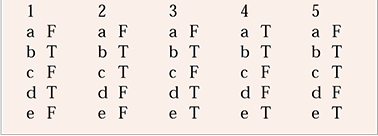
| 1 | 2 | 3 | 4 | 5 | |||||
|---|---|---|---|---|---|---|---|---|---|
| a | F | a | F | a | F | a | T | a | F |
| b | T | b | T | b | T | b | T | b | T |
| c | F | c | T | c | F | c | F | c | T |
| d | T | d | F | d | T | d | F | d | F |
| e | F | e | F | e | T | e | T | e | T |



eLetters
No eLetters have been published for this article.