

In the late 1960s, the intergenerational effect of gestational age and size at birth was observed (Ounsted & Ounsted, Reference Ounsted and Ounsted1973), although the mechanisms behind this remained unknown. To date, several studies have investigated the intergenerational effect of non-optimal birth characteristics, such as preterm birth and small-for-gestational-age (SGA) among singletons, although the intergenerational effect of preterm birth and SGA among twins in comparison to singletons remains unknown.
In the 1980s, Klebanoff et al. (Reference Klebanoff, Graubard, Kessel and Berendes1984, Reference Klebanoff, Meirik and Berendes1989) and Klebanoff and Yip (Reference Klebanoff and Yip1987) studied the effects on women's delivery outcome in relation to their birth weight, and whether they had been born preterm or SGA. They found that women's risk of delivering an SGA child or a low birth weight child increased as mother's own birth weight decreased. However, no evident relationship was found between mother's birth weight and preterm birth of the child.
More recent studies (Farina et al., Reference Farina, Dini, Mattioli, Rosa and Rizzo2010; Klebanoff et al., Reference Klebanoff, Sclusinger, Mednick and Secher1997) have shown that women born SGA had an increased risk of delivering an SGA child, or may be at risk of delivering preterm (Klebanoff et al., Reference Klebanoff, Sclusinger, Mednick and Secher1997). Other studies (Nordtveit et al., Reference Nordtveit, Melve and Skjaerven2009; Porter et al., Reference Porter, Fraser, Hunter, Ward and Varner1997) have established a relationship between mothers born preterm giving birth to preterm children. It has also been shown that the risk of preterm birth increased with higher parity, but the risk decreased with maternal age (Porter et al., Reference Porter, Fraser, Hunter, Ward and Varner1997). These findings were partly verified in a later study where women who were themselves SGA at birth had an increased risk of giving birth to an SGA infant, and the results were evident when socio-economic factors were adjusted for the same. Furthermore, women born SGA had an increased risk of giving birth to a preterm infant. There was, however, no consistent intergenerational effect of preterm birth (Selling et al., Reference Selling, Carstensen, Finnström and Sydsjö2006).
In all studies but one (Nordtveit et al., Reference Nordtveit, Melve and Skjaerven2009), both twin mothers and twin offspring were excluded from the analyses.
Several studies have also shown that socio-economic factors, such as age when giving birth, maternal educational level, and marital status are related to both preterm birth and SGA (Ancel et al., Reference Ancel, Saurel-Cubizolles, Di Renzo, Papiernik and Bréart1999; Clausson et al., Reference Clausson, Cnattingius and Axelsson1998). Socio-economic position, income, childhood health, and environment (Astone et al., Reference Astone, Misra and Lynch2007; Correia & Barros, Reference Correia and Barros2014), smoking habits, and body mass index (BMI) play an important role in the future child's birth weight and gestational age when born (Räisänen et al., Reference Räisänen, Gissler, Saari, Kramer and Heinonen2013a, Reference Räisänen, Gissler, Sankilampi, Saari, Kramer and Heinonen2013b).
Thus, the purpose of this study was to investigate the intergenerational effect of preterm birth and SGA among both twins and singletons in Swedish population-based registers. It was hypothesized that the intergenerational effect of preterm and SGA birth was less evident among twins compared with singletons.
Materials and Methods
Study Sample
Owing to the unique personal identification number assigned to each individual residing in Sweden, we were able to link information from several validated Swedish population-based registers. Registers included in this study were the Swedish Medical Birth Register (MBR), which contains medical information on all births since 1973 (National Board of Health and Welfare, Centre of Epidemiology, 2003), the Total Population Register (TPR), and the Multi-Generation Register. The TPR contains information on variables such as births, deaths, migrations, and marital status (Statistics Sweden, 2009a, 2009b) while the Multi-Generation Register (Statistics Sweden, 2003) enabled us to identify the fathers of the studied women. In addition, information was retrieved from the Cause of Death Register to access information on the cause of death (National Board of Health and Welfare, Centre of Epidemiology, 2010), and the Education Register and the Population and Housing Census were used to retrieve information on the educational level of the population (Statistics Sweden, 1974, 2009b).
All women born from 1973–1983 according to the Swedish MBR and TPR, who were alive and still living in Sweden at 13 years of age, served as the starting study population (n = 500,245). Women with missing values on birth weight and/or gestational length were excluded (n = 3,360), as were those with extremely high birth weight (≤2,000 g for gestational weeks of ≤28, ≥2,500 g for gestational weeks 29 and 30, ≥3,000 g for gestational weeks 31 and 32, and ≥3,500 g for gestational weeks 33 and 34; birth weights for other gestational weeks were within limit) or extremely low birth weights (≤400 g in gestational week 29, ≤800 g in gestational week 30, ≤1,000 g in gestational week 31, ≤1,150 g in gestational week 32, ≤1,250 g in gestational week 33, ≤1,450 g in gestational week 34, ≤1,600 g in gestational week 35, ≤1,700 g in gestational week 36, ≤1,800 g in gestational week 37, ≤1,950 g in gestational week 39, ≤2,000 g in gestational weeks 40, 41, and 42, and ≤2,500 g in gestational weeks 43 and 44) compared with the gestational length (n = 2,193). The final cohort therefore comprised 494,692 women who were followed up until the end of 2009 (at the time of data collection no further data were available); thus, the maximum follow-up time was 36 years and the minimum was 26 years. The final cohort of 494,692 women was then individually linked with maternal personal identification numbers for first births occurring in the MBR up to December 31, 2009. The analyses were limited to firstborns only since the birth weight of a child is related to mother's parity (Kramer, Reference Kramer1987), and including higher order parity could distort the findings since the parity ranged between 0 and 9. A total of 268,962 mother–firstborn offspring pairs were identified. A total of 47 triplets or higher order pregnancy children and 48 triplets or higher order pregnancy mothers were excluded. Thus, the final sample comprised 268,867 mother–offspring pairs. The mothers and children are mutually exclusive groups, none of the children of the mother--offspring pair were also included as a mother herself in a mother--offspring pair. The mothers and their firstborn offspring were born from 1973–1983 and 1986–2009, respectively.
Variables
The term SGA is defined, according to the Swedish standard definition, as a birth weight <-2 standard deviations (SD) of the mean weight for gestational length (Marsal et al., Reference Marsal, Persson, Larsen, Lilja, Selbing and Sultan1996). ‘Preterm birth’ is defined as being born before gestational week 37. ‘Grandmother's educational level’ and ‘mother's educational level’ were separated into elementary school, high school, and graduate/postgraduate. ‘Grandparents’ country of origin’ was dichotomized into ‘both grandparents from Nordic countries’ and ‘one or both from non-Nordic countries’. ‘Maternal grandmother's marital status’ and ‘mother's marital status’ had three levels: married, unmarried, and divorced/widowed. ‘Maternal grandmother's parity’ was defined as either ‘no previous deliveries’ or ‘one or more previous deliveries’. ‘Maternal grandmother's age when giving birth’ and ‘mother's age when giving birth’ were separated as follows: 13–19, 20–26, 27–33, and ≥34 years. ‘Nicotine use’ is defined as ‘yes’ and ‘no’, ‘Twin birth of child’ as well as ‘mother being born as a twin’ as ‘yes’ and ‘no’, and finally ‘mother's BMI at start of pregnancy’ was divided into the following four categories: <18.5, 18.5–24.9, 25.0–29.9, and ≥30.0.
Missing values on country of origin and marital status were all imputed with the most common value for each variable, since the sample was very large and there was a small number of missing values (167 cases were imputed on marital status, six cases on maternal country of origin, and eight cases on paternal country of origin).
Statistical Analyses
Pearson's chi-square statistic was used to evaluate the relationship between mother's own birth characteristics (preterm birth and SGA) and their mother's socio-demographic characteristics at the time of birth. It was also used to evaluate the relationship between the mother's birth characteristics and their own socio-demographics at the time of delivery of their own firstborn child.
Multiple logistic regressions were performed to analyze the odds ratio (OR) for the child being born preterm, and SGA among mothers born as twins and mothers born as singletons. These models were adjusted for socio-demographic variables of maternal grandmothers at the time of delivery of mothers as well as socio-demographic variables of mothers at the time of delivery of their firstborn child. In addition, single and multiple logistic regressions were performed to calculate the odds ratio for preterm birth and an SGA child. In these models, adjustments were made not only for maternal grandmothers’ and mothers’ socio-demographic data but also whether the mother was born preterm or SGA, to estimate the intergenerational effect of each birth characteristic. To evaluate whether the intergenerational effect of preterm birth and SGA differed between twins and singletons, an interaction term between twinning and the birth characteristic (preterm birth and SGA modeled separately) was included in the models. Finally, to increase power in the analyses, gestational age and birth weight were analyzed using linear regression.
Analyses were performed using IBM SPSS, version 20.0 (IBM SPSS Inc., Armonk, NY). A p-value < .05 (two-sided) was considered statistically significant.
Results
Socio-Demographic and Birth Characteristics on Grandmothers and Mothers
Mothers born preterm
Mothers born as twins and singletons were more likely to be born preterm if their own mothers (i.e., maternal grandmother of the child) were either young (13–19 years) or old (≥34 years), were widowed/divorced, and had no previous children compared with those who were born at term. In addition, mothers born preterm were more likely to be younger and have a lower education at the time of birth of their firstborn child, and they were more likely to give birth to a child that was SGA (Table 1).
Socio-Demographic Data of Mothers and Maternal Grandmothers Reported by Mothers’ Prematurity, and Whether They Were Born Singleton or Twin
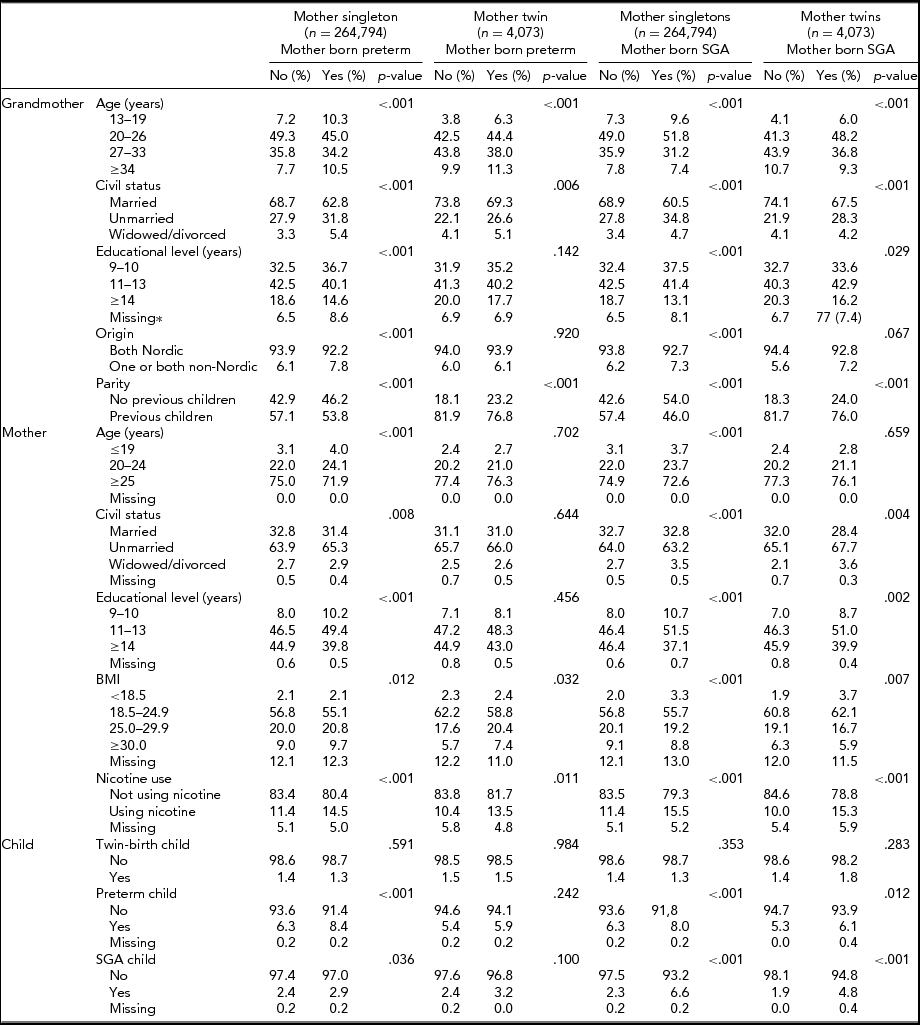
*Grandmothers with missing information on education were mainly immigrants and therefore included as a separate category in the analysis.
Mothers born SGA
Both twin and singleton mothers were more likely to be born SGA if their own mothers (i.e., maternal grandmother of the child) were younger, had a lower education, and had at least one parent born outside the Nordic countries. They were also more likely to have a lower education and a low BMI when giving birth to their firstborn child. Moreover, both twins and singletons born SGA were more likely to give birth to an SGA child. In addition, mothers born as an SGA singleton were also more prone to giving birth to a preterm child (Table 1).
Intergenerational Effect of Background Characteristics
Multiple logistic regressions, stratified by singletons and twins, estimating the odds ratio for delivering a preterm child showed that the odds for preterm birth among mothers born as singletons decreased if the grandmother of the child had a high level of education (≥14 years), or at least one maternal grandparent born outside the Nordic countries (Table 2a).
Current and Childhood Socio-Economic Data of Mothers and Maternal Grandmothers in Relation to Preterm Birth in the Frstborn Child, Reported by Mother Being Twin or Singletona
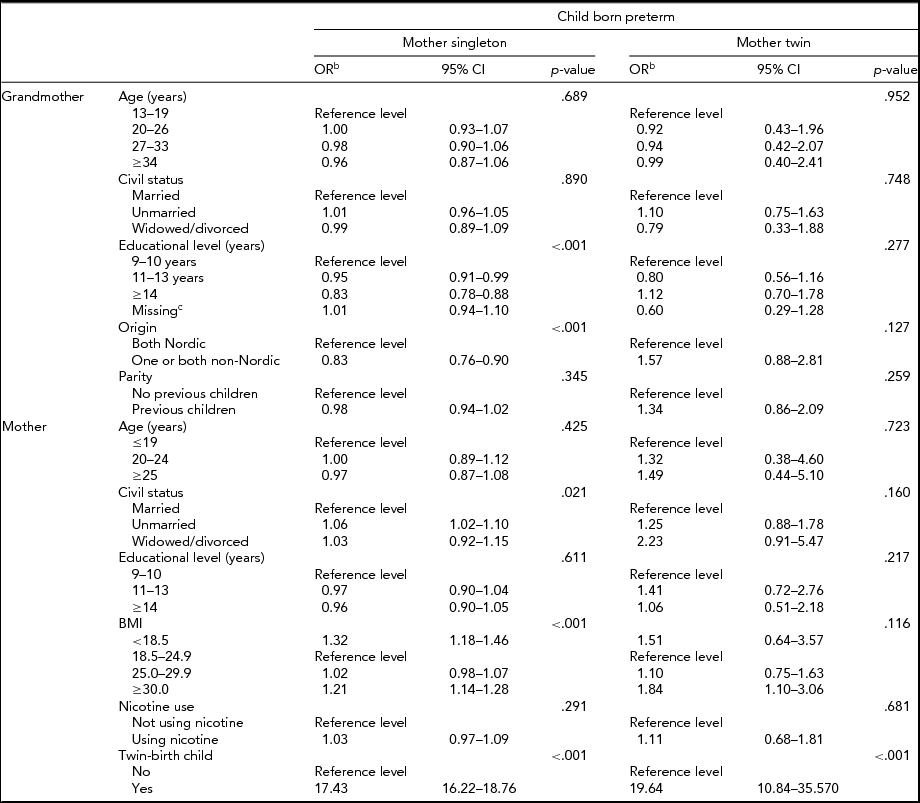
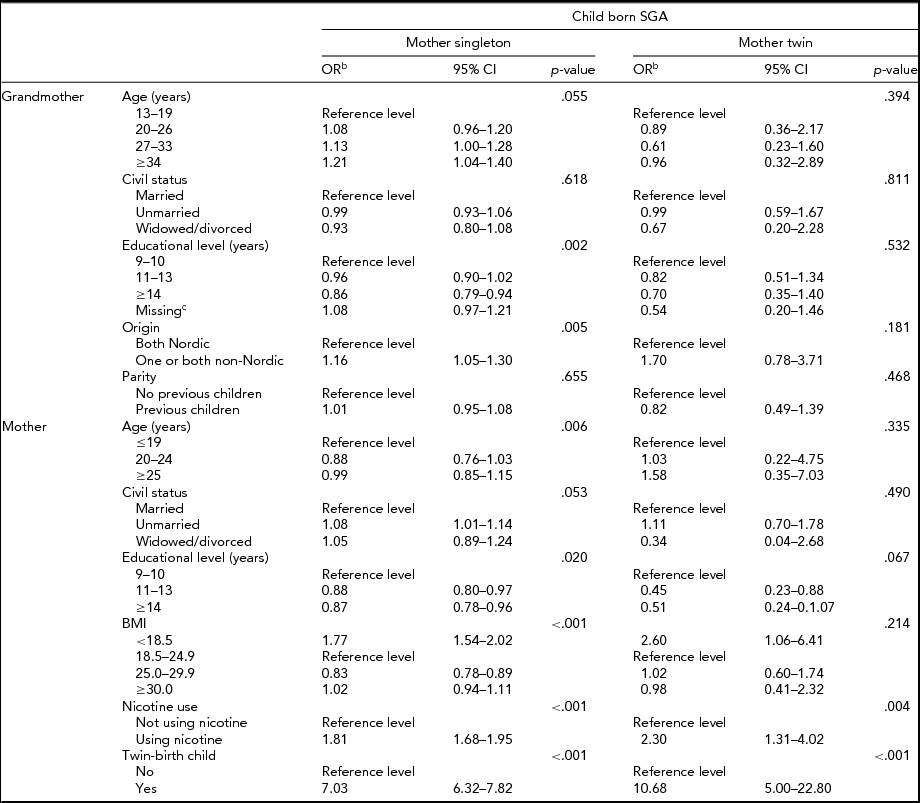
The analyses also showed that among singletons, maternal factors, such as higher level of education, higher age when giving birth, and using nicotine, increased the risk of delivering a child born SGA. Moreover, a low maternal BMI in early pregnancy increased the risk of delivering a preterm or SGA child, while a high BMI only increased the risk of delivering a child preterm. Among twins, the same findings hold true except that a low maternal BMI did not affect the risk of delivering a child who was preterm (Tables 2a and 2b).
Current and Childhood Socio-Economic Data of Mothers and Maternal Grandmothers in Relation to SGA Birth in the Firstborn Child, Reported by Mother Being Twin or Singletona
Intergenerational Effect of Preterm Birth and Small for Gestational Age
Single and multiple logistic regressions stratified by twins and singletons where the outcome was whether the child was born preterm or SGA was performed. An independent variable in the single logistic regression was the information on whether the mother had been born preterm or SGA; each birth characteristic for the mother was modeled separately for each of the birth characteristics of the child. In the multiple logistic regression, data on the socio-demographic factors of both grandmothers and mothers were included as independent variables.
The single logistic regression revealed that among mothers born as singletons, there was an increased risk of delivering a preterm or an SGA child if the mother herself was born preterm or SGA (Table 3). Adjusting for socio-demographic factors of maternal grandmother and mother altered the risk of one outcome: mothers born preterm no longer had an increased risk of delivering an SGA child (Table 3).
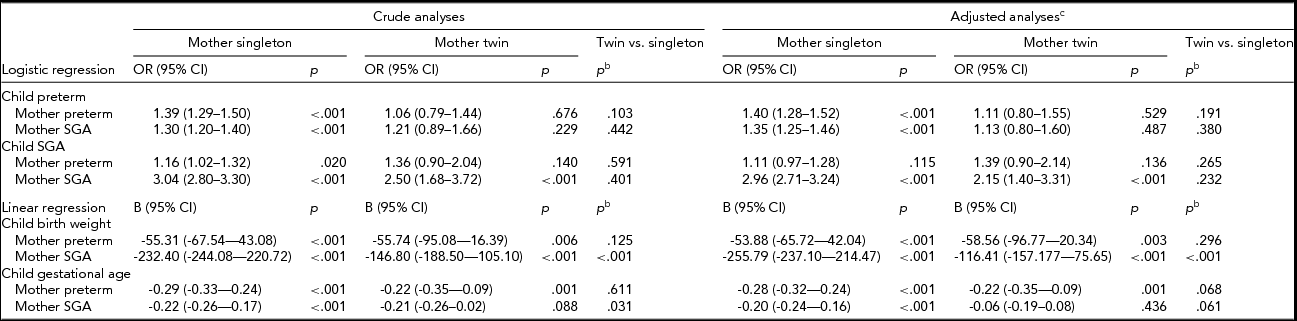
The intergenerational effect of non-optimal birth characteristics was also evident among mothers who were born as twins. The single logistic regression found an increased risk of delivering an SGA child if the mother herself was born SGA. Adjusting for maternal and grandmother's socio-demographic variables did not alter the findings.
To increase the power of analyses, univarite and multivariate linear regressions with the child's birth weight and gestational age as outcomes were performed. These analyses revealed that statistically significant interactions exist in the univariate models between mothers born SGA and twinning associated with the child's birth weight and gestational age. Mothers born as singletons had a more pronounced heritability of preterm birth and SGA compared with twins. Adjusting for socio-demographic factors, the only remaining interaction was found among mothers born SGA (Table 3). In general, the intergenerational effect of premature birth and SGA was lower among mothers born as twins compared with mothers born as singletons, although not always achieving statistical significance (Table 3).
Discussion
To date, several studies have shown that to some extent the non-optimal birth characteristics in terms of prematurity and SGA are ‘inherited’ from mother to child among singletons, and that socio-economic factors fail to fully explain these associations (Farina et al., Reference Farina, Dini, Mattioli, Rosa and Rizzo2010; Klebanoff & Yip, Reference Klebanoff and Yip1987; Klebanoff et al., Reference Klebanoff, Graubard, Kessel and Berendes1984, Reference Klebanoff, Meirik and Berendes1989, Reference Klebanoff, Sclusinger, Mednick and Secher1997; Nordtveit et al., Reference Nordtveit, Melve and Skjaerven2009; Porter et al., Reference Porter, Fraser, Hunter, Ward and Varner1997; Schaaf et al., Reference Schaaf, Hof, Mol, Abu-Hanna and Ravelli2012a, Reference Schaaf, Hof, Mol, Abu-Hanna and Ravelli2012b; Selling et al., Reference Selling, Carstensen, Finnström and Sydsjö2006). These studies were mainly based on singleton pregnancies. Regarding the risk of preterm birth and SGA, we found intergenerational effects for mothers born as twins but also for mothers born as singletons; however, the risk differed between these two groups. Twin mothers who were born SGA had an increased risk of delivering an SGA child, while singleton mothers born preterm or SGA had an increased risk of delivering a preterm or an SGA child. This result is supported by findings in a previous study (Selling et al., Reference Selling, Carstensen, Finnström and Sydsjö2006), which partly used the same data. However, unlike the previous study, we established that singleton women born preterm were significantly more likely to deliver their own children preterm or SGA compared with women born at term. These findings are also in accordance with a study where it was shown that women born preterm or with a sibling born preterm had an increased risk of having a preterm daughter themselves (Bhattacharya et al., Reference Bhattacharya, Raja, Mirazo, Campbell, Lee, Norman and Bhattacharya2010). The cause of differences in the intergenerational effect of preterm birth and SGA among twins and singletons could originate from different sources. Studies have shown that both genetic and environmental factors affect the birth weight, gestational age, and size of gestational age, resulting in a common finding that about 50% of variation can be explained by genetic factors (De Savona et al., Reference De Stavola, Leon and Koupil2011; Jaquet et al., Reference Jaquet, Swaminathan, Alexander, Czernichow, Collin, Salihu and Lévy-Marchal2005). Epigenetic factors have been shown to influence the risk of preterm birth, and several recent studies have focused on the epigenetics of non-optimal birth explaining the mechanisms that possibly could alter the expression of certain genes related to non-optimality at birth (Banister et al., Reference Banister, Koestler, Maccani, Padbury, Houseman and Marsit2011; Galjaard et al., Reference Galjaard, Devlieger and Van Assche2013; Gordon et al., Reference Gordon, Joo and Powell2012; Menon et al., Reference Menon, Conneely and Smith2012; Ollikainen et al., Reference Ollikainen, Smith, Joo, Ng, Andronikos, Novakovic and Craig2010; Souren et al., Reference Souren, Lutsik, Gasparoni, Tierling, Gries, Riemenschneider and Walter2013; Wu et al., Reference Wu, Imhoff-Kunsch and Girard2012).
Moreover, several socio-economic factors, including maternal educational level, marital status, BMI, and smoking, have been shown to be related to both preterm birth and SGA. These results are partly verified among singletons in this study; among twins, the relationship between maternal socio-economic factors and preterm birth and SGA is less evident. In addition, the etiology of preterm birth among singletons and twins can differ. Both infections and multiple pregnancies are known risk factors for premature delivery, as are maternal age and smoking (Goldenberg et al., Reference Goldenberg, Culhane, Iams and Romero2008; Romero et al., Reference Romero, Mazor, Munoz, Gomez, Galasso and Sherer2008; Tandberg et al., Reference Tandberg, Bjørge, Børdahl and Skjaerven2007). However, singletons are more often born preterm due to pregnancy complications such as infections or pre-eclampsia, while twins are more often born preterm due to mechanical reasons (e.g., lack of space and increased intrauterine pressure; Goldenberg et al., Reference Goldenberg, Culhane, Iams and Romero2008; Romero et al., Reference Romero, Mazor, Munoz, Gomez, Galasso and Sherer2008; Tandberg et al., Reference Tandberg, Bjørge, Børdahl and Skjaerven2007). Hence, this could also be an explanation for difference in the intergenerational effect of non-optimal birth characteristics between singletons and twins, although it does not always achieve statistical significance. This may suggest that although this was a national population-based study, the number of twin mothers was still too low.
The major strength of the study data was that these were prospectively collected from regularly evaluated registers maintained by the Swedish National Board of Health and Welfare and Statistics, Sweden. In addition, through unique personal identification numbers, we were able to link data on socio-demographic variables with data on births, which allowed for thorough/extensive analyses. An additional strength in this study is that by using register data we avoided recollection bias.
A potential problem in this study was the estimation of gestational length in twin pregnancies. It is possible that twins’ gestational age is sometimes underestimated due to a very early intrauterine growth restriction (IUGR), and hence this causes a bias in analyses. Moreover, since the start of infertility treatment with in vitro fertilization (IVF) and hormonal stimulation, we have had an increase in children born as twins and triplets or even higher order multiples. Another contributing factor to the increase in multiple pregnancies is the increasing maternal age when giving birth (Fellman & Erikson, Reference Fellman and Erikson2005; Imaizumi, Reference Imaizumi1997; National Board of Health and Welfare, Centre of Epidemiology, 2009; Tandberg et al., Reference Tandberg, Bjørge, Børdahl and Skjaerven2007). The improved neonatal and pediatric care of children born preterm/SGA has led to an increased number of surviving children who reach reproductive age (Kyser et al., Reference Kyser, Morriss, Bell, Klein and Dagle2012). Intrauterine growth restriction is known to cause long-term effects not only on health, including cardiovascular disease and diabetes (Barker, Reference Barker1998; Ekholm Selling et al., Reference Ekholm Selling, Carstensen, Finnström, Josefsson and Sydsjö2008; Hack, Reference Hack2006; Hodgson, Reference Hodgson2006; Mellemkjaer et al., Reference Mellemkjaer, Olsen, Sørensen, Thulstrup, Olsen and Olsen2003; Quinn et al., Reference Quinn, Gilbert, Darlow and Zin2010; Yuan et al., Reference Yuan, Basso, Sorensen and Olsen2001), but also on their reproductive outcome (deKeyser et al., 2012; Ekholm et al., Reference Ekholm, Carstensen, Finnström and Sydsjö2005; Ibáñez et al., Reference Ibáñez, Potau, Ferrer, Rodriguez-Hierro, Marcos and de Zegher2002; Swamy et al., Reference Swamy, Östbye and Skjaerven2008).
The mothers born from 1973–1983 were not the result of a successful IVF treatment, nor would hormone stimulation without IVF have had any major effect on the incidence of twinning (National Board of Health and Welfare, Centre of Epidemiology, 2009). Among the infants born from 1986 to 2009, a limited number could be the result of IVF. The initial high percentage of twins after IVF began to decline in 1991 in Sweden, and the total number is low. It is possible that in future there will be an over representation of IVF-born children among twins, and the intergenerational effect of non-optimal birth characteristics among these children requires a separate study as data become available.
In conclusion, the experience of being born preterm or SGA is to some extent transferred over generations. Singletons born preterm or SGA have an increased risk of both consequences. Twins have an increased risk of having SGA infants only, although the risk is lower than for singletons.
Ethical Approval
The study was approved by the Regional Ethical Review Board in Linköping (Nos. 03-556, 03-557, 07-M66 08–08-M233-8) prior to any data collection.
Acknowledgment
This study was funded by the Medical Research Council of Southeast Sweden.



