

Introduction
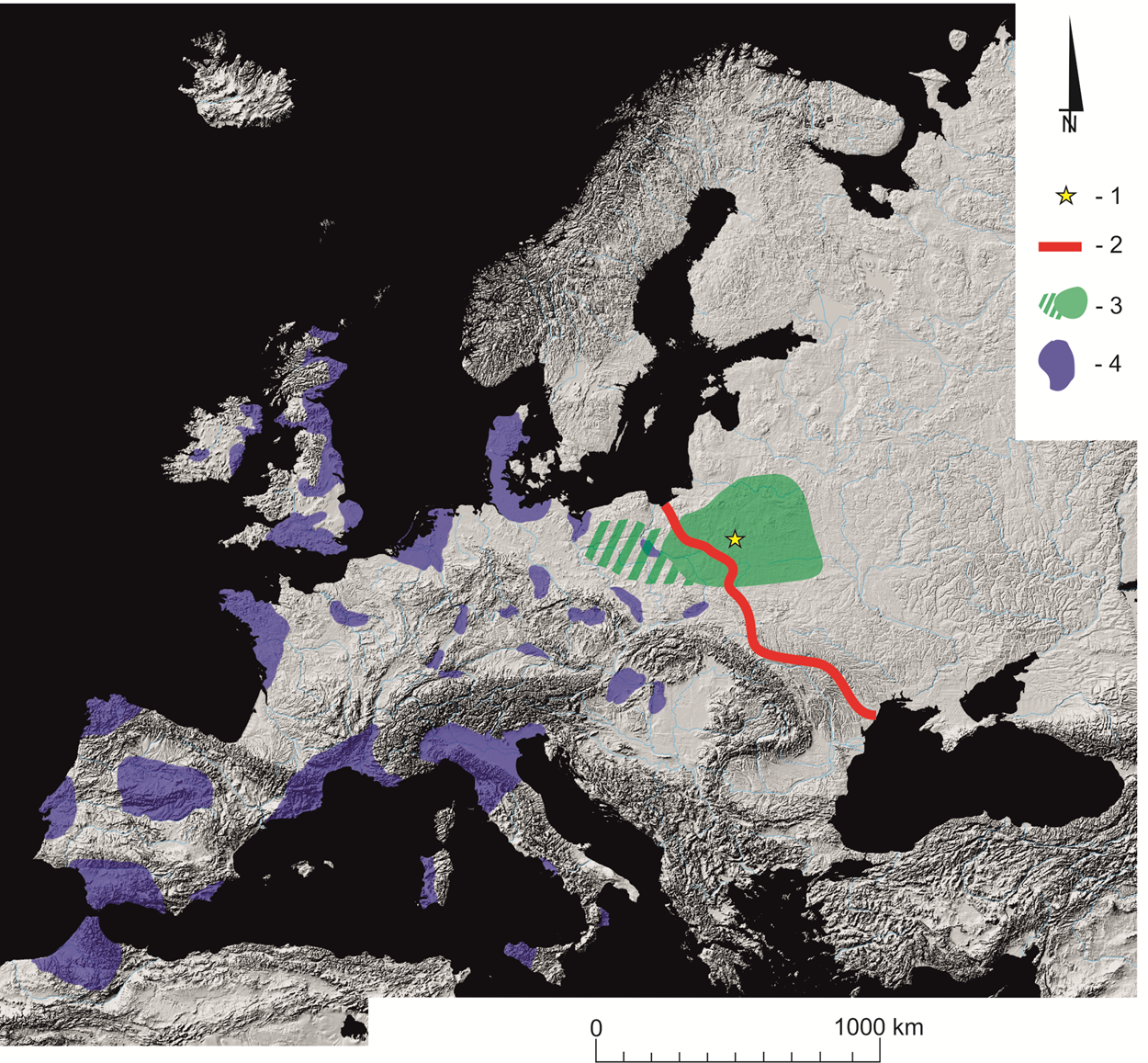
Rapid progress in scientific methods has opened new vistas for research, putting an array of modern analytical tools at the service of archaeologists examining behaviour that had previously been elusive. This is particularly true of ‘irrational’ practices, such as religious ceremonies, which leave little if any evidence in the archaeological record (e.g. Renfrew, Reference Renfrew, Renfrew and Zubrow1994: 50–53). The issue is all the more important in the case of ‘mute’ prehistoric communities, such as hunter-gatherer groups, where the material evidence of their presence is sparse and scattered, and burial rites leave no or few tangible archaeological traces. Groups from the Neman cultural circle (sensu Manasterski, Reference Manasterski2016: 21) in central and eastern Europe, still practising a hunter-gatherer mode of life in the Late Neolithic, are such an example. They occupied a region that was being penetrated in the Neolithic by groups of farmers and pastoralists, interactions with whom impacted local cultural processes of the local people. Site 6 at Supraśl in Podlachia (Figures 1 and 2A) constitutes one of the most interesting recent central-eastern European archaeological discoveries relating to the nature of these cultural interactions, including ritual practices
Location of Site 6 in Supraśl. 1: Site 6 at Supraśl; 2: Borderland between western and eastern Europe; 3: Neman cultural circle; 4: Bell Beaker phenomenon (sources: Józwiak, Reference Józwiak2003: map 8; Wawrusiewicz et al., Reference Wawrusiewicz, Januszek and Manasterski2015: fig. 5).
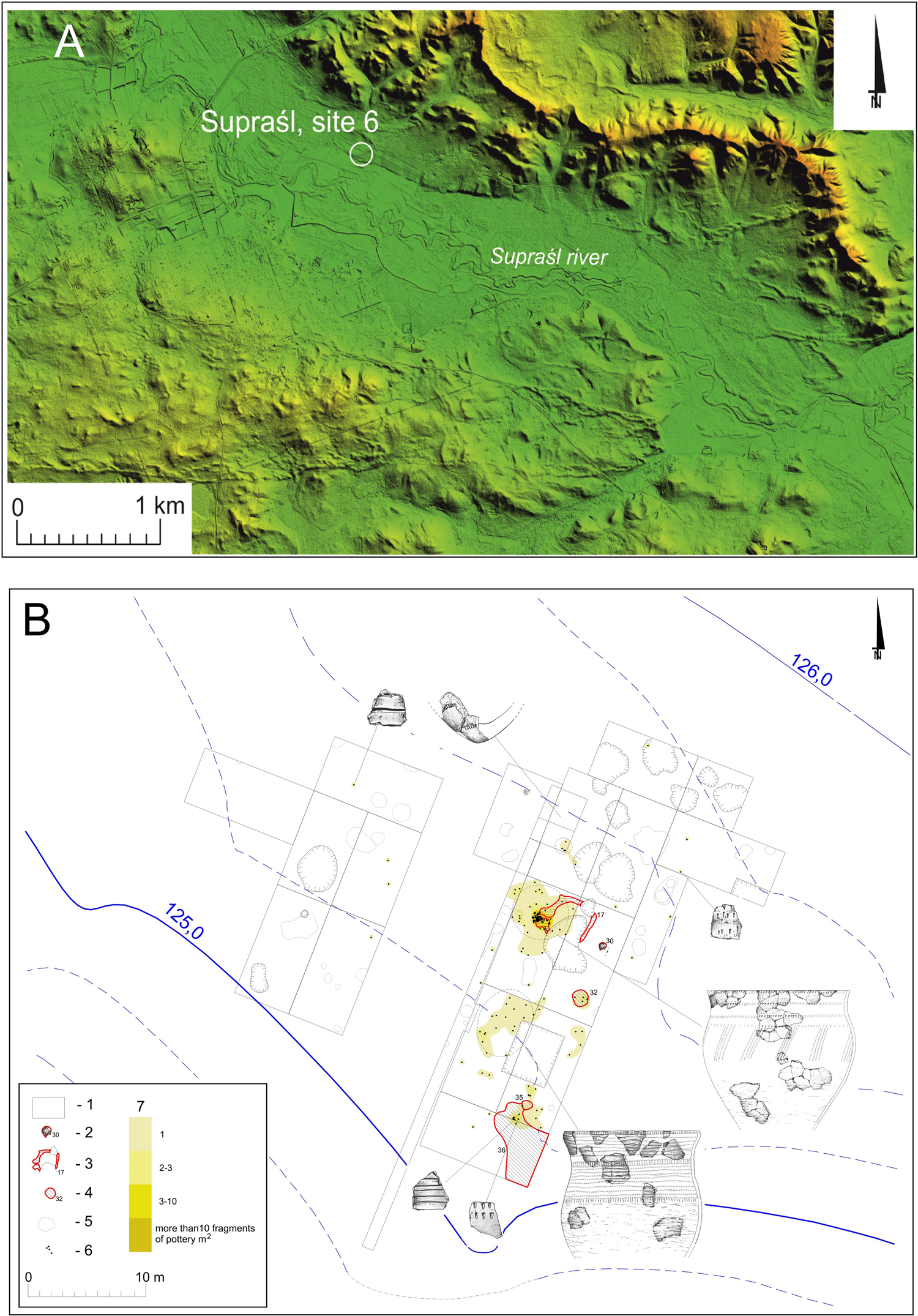
Supraśl, Site 6. A: Model of the relief around the town of Supraśl marking the location of the site; B: Site 6, excavated areas: trenches (1), stone hearth with ritual deposit Feature 30 (2), ephemeral shelter (3), domestic features (4), damaged area (5), Neman culture sherds (6), visualization of sherd clusters and density (7) (sources: Kwiatkowski, Reference Kwiatkowski, Wawrusiewicz, Januszek and Manasterski2015: fig. 1; Wawrusiewicz et al., Reference Wawrusiewicz, Januszek and Manasterski2015: fig. 69). Reproduced by permission of the Podlachian Museum in Białystok.
Podlachia, or Podlasie in Polish, is a geographical and historical region in north-eastern Poland on the border with Belarus, part of the wider North Podlasie Plain, one of the westernmost regions of eastern Europe (Kondracki, Reference Kondracki2002: 236). Podlachia is distinguished by its continental climate and forms a border zone between the Western and Eastern European Plains, the former characterized by its Atlantic climate, the latter by its continental climate. Aleksander Kośko and Marzena Szmyt noted the key role this distinction in climate played in the Neolithization of north-eastern Poland, as both an inhibitor and a stimulator (Kośko & Szmyt, Reference Kośko, Szmyt, Kośko and Kalyechyts2004: 81–82). It had serious consequences for the cultural make-up of the region, which remained a zone occupied by hunter-gatherer societies up to the beginning of the Bronze Age in the early second millennium bc. Traces of Neolithic farming and pastoral cultures have been found in Podlachia, but not in quantities that would indicate that the economic model based on hunting and gathering was significantly affected (Wawrusiewicz, Reference Wawrusiewicz, Stankiewicz and Wawrusiewicz2011; Wawrusiewicz et al., Reference Wawrusiewicz, Januszek and Manasterski2015: 15–16).
The communities of the Neman culture at Site 6 in Supraśl belonged to the sub-Neolithic Neman cultural circle, which consists, apart from the classic Neman culture, of the Linin group in Masovia and the Ząbie-Szestno group in Masuria, both in central north-eastern Poland (Manasterski, Reference Manasterski2016: 21, fig. 2). These communities made pottery while still practising a hunting-gathering economy. In the Late Neolithic, they occupied the vast territories between the upper Pripet river and the Vistula, sporadically reaching the Noteć and Oder rivers in western Poland (Charnyavski, Reference Charnyavski2011a: 49; Józwiak, Reference Józwiak2003: 189–95, map 11; Manasterski, Reference Manasterski2016: 19). Their material culture reveals Neolithic cultural influences and an Early Bronze Age impact in its final phase, which would seem a natural consequence of human interaction. Ceramic vessels constitute the chief evidence of cultural diffusion in the Neman cultural circle (e.g. Kempisty, Reference Kempisty1973, Reference Kempisty and Kieciński1989: 313–16; Józwiak, Reference Józwiak2003: 189ff.; Charnyavski, Reference Charnyavski, Stankiewicz and Wawrusiewicz2011b; Manasterski, Reference Manasterski2009: 62–64, Reference Manasterski2014a: 41–53, Reference Manasterski2014b), hence they are a key factor for identifying the cultural components of groups influencing change. Other types of archaeological evidence have yet to be clearly defined (Józwiak, Reference Józwiak2003: 69–76, 147, 151–53, 158–61; Manasterski, Reference Manasterski2016: 19–21). Evidence of spiritual life in the form of ceremonial or ritual features is uncommon (Wawrusiewicz et al., Reference Wawrusiewicz, Kalicki, Przeździecki, Frączek and Manasterski2017: 188). Feature 30 from Site 6 in Supraśl (Figure 2B) is one such extremely rare example. The context and the finds assemblage, coupled with results from archaeometric studies, suggest unique activities indicative of ritual practices.
In the Early Bronze Age, alongside other Late Neolithic and Early Bronze Age cultural units, including Bell Beaker elements, the Neman cultural circle fed into the formation of the western part of the Trzciniec cultural circle (sensu Makarowicz, Reference Makarowicz2010: 437). This latter represents the cultural community of the borderland between western and eastern Europe (Makarowicz, Reference Makarowicz2010: 24, 387).
Materials and Methods
Materials
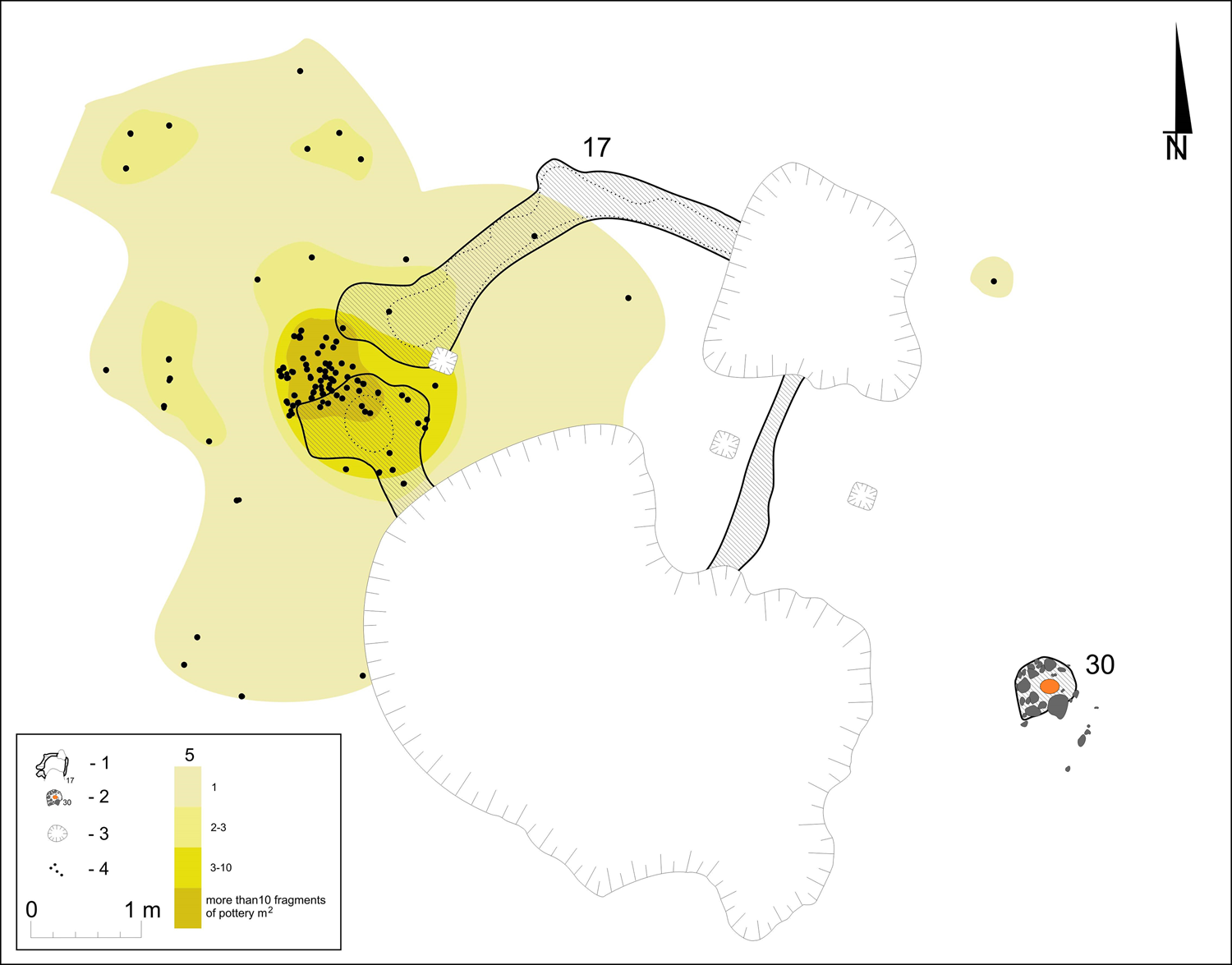
The feature known as Feature 30 at Site 6 in Supraśl formed an integral part of a Late Neolithic settlement and ritual complex (Figures 2B and 3; Wawrusiewicz et al., Reference Wawrusiewicz, Januszek and Manasterski2015: 90–94). It consists of a hearth, within which a bag made of unidentified organic material containing an array of ecofacts and artefacts was found. The only evidence of this ‘pouch’ was a ring of darker sand surrounding the contents (Figure 4B).
Supraśl, Site 6. Ephemeral gully for shelter (1); stone hearth with ritual deposit Feature 30 (2); damaged area (3); pottery sherds (4); density of sherd clusters (5).
Stone hearth with ritual deposit Feature 30 in plan (A) and in section during excavation (B); the white arrow marks the traces of an organic container (‘pouch’) (source: Wawrusiewicz et al., Reference Wawrusiewicz, Januszek and Manasterski2015: figs 51, 53). Reproduced by permission of the Podlachian Museum in Białystok.

The hearth (Figure 4A), which measured 0.50 m in diameter, was constructed of pebbles. These stones were fire-cracked. The deposit inside it, which must have been contained in a bag, included yellowish sand distinct from the surrounding sand matrix, heavily fragmented burnt bones, five small sherds of differently ornamented ceramic vessels, a small piece of metal plate with a thick patina, an amber pendant, and three flint tools.
The yellow sand (Figure 4) was clearly different from the surroundings in terms of grain structure and homogeneity. It must have come from elsewhere, from a location yet to be identified. The bones (presumed to be animal, but see below) mixed with it, as well as the ceramic sherds, flint artefacts, and amber pendant suggest that it formed an integral part of the deposit. The bones were the only organic macro-remains recovered, consisting of a small quantity of heavily fragmented burnt bone weighing 39.6 g, the larger fragments being cracked and deformed (Figure 5A). The strong fragmentation, porosity and white colour indicate burning at high temperatures of around 900–1000oC. Identification to species, possible only for a few larger fragments, determined the presence of domestic animals, i.e. cattle, goat/sheep, and pig (Gręzak, Reference Gręzak, Wawrusiewicz, Januszek and Manasterski2015: 247). Nothing can be said about the other bones; it is not even certain whether they all belong to animal species or whether some bones could be human.
Artefacts from the hearth Feature 30. A: burnt bone. B: pottery sherds: 1–3: Bell Beaker pottery; 4–5: Linin Group pottery. C: fragment of a metal plate attached to the inside of a bell beaker. D: amber pendant. E: flint artefacts (1: perforator, 2: burin, 3: arrowhead fragment).
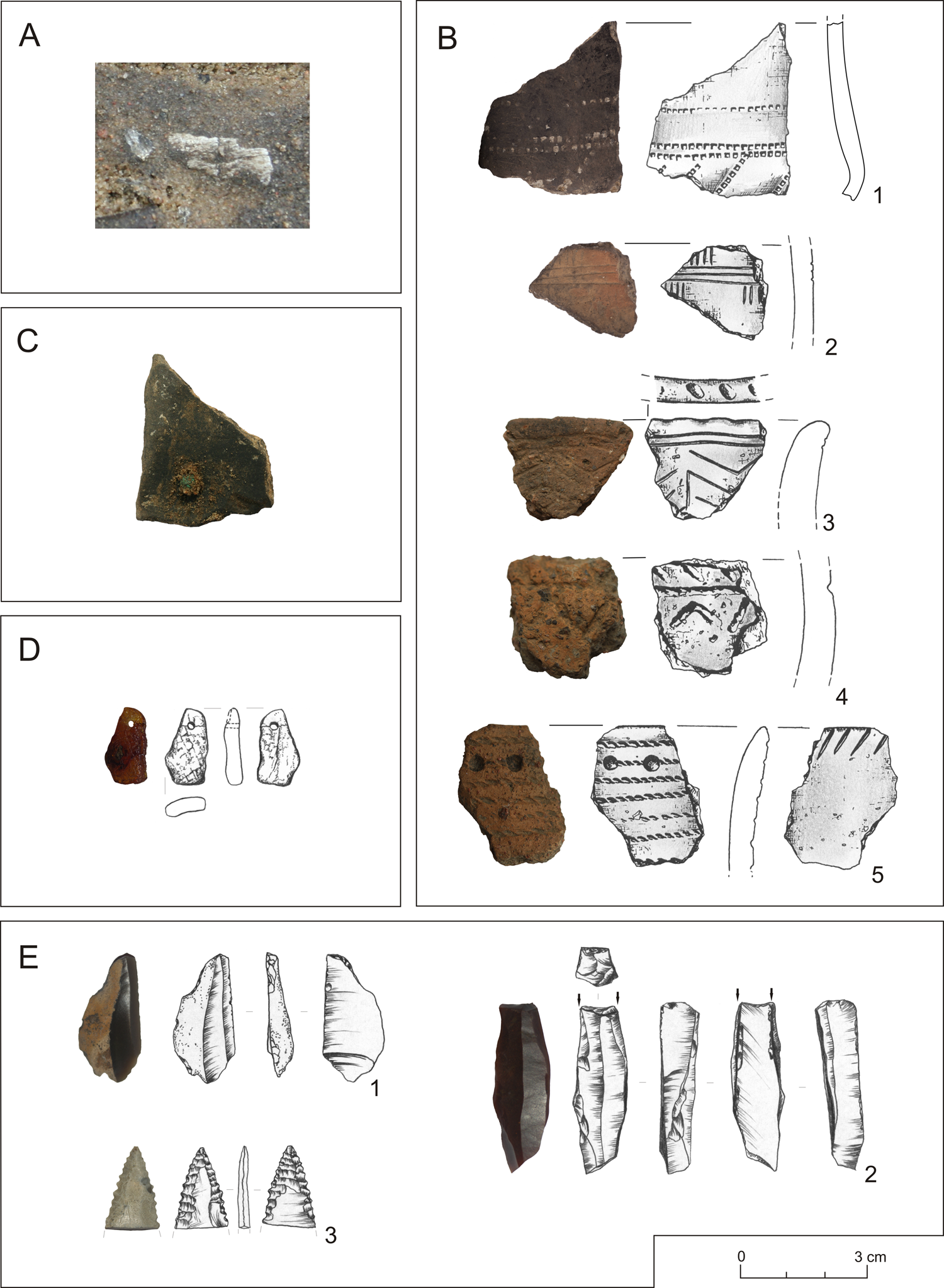
Five small sherds from decorated vessels were found, each with a different motif. They were probably brought to the site from elsewhere because the excavated part of the site yielded no other fragments belonging to these pots (Figure 2B). The varying surface condition of these sherds indicates that they had lain in different contexts before being deposited in the feature. One fragment, identified as a bell beaker, had remains of a white substance (calcium carbonate) adhering to the break and in the grooves of the comb- impressed decoration (Figure 5 B1 and C). A small piece of a heavily patinated metal plate, approximately 9 mm2, was stuck to the inside of this fragment (Figures 5C and 8C).
A pendant (Figure 5D) made of a natural lump of amber had a threading hole measuring 1.5 mm in diameter, drilled from both sides (Figure 8B). The irregular trapezoidal shape of this piece was slightly modified.
The three flint artefacts are a perforator (Figure 5E1), a burin (Figure 5E2), and the tip of an arrowhead (Figure 5E3). The first two are made of so-called chocolate flint, which does not occur naturally in the region, its outcrops being located on the north-eastern fringes of the Holy Cross Mountains further south in Poland (Budziszewski, Reference Budziszewski, Borkowski, Libera, Sałacińska and Sałaciński2008: 49–87). Their surface preservation differs, the perforator having a glossy sheen and the burin bearing evidence of overheating. The arrowhead fragment is covered with a white patina that makes it impossible to identify the raw material. Given these differences in surface preservation, the three artefacts must be considered as having been collected from different contexts.
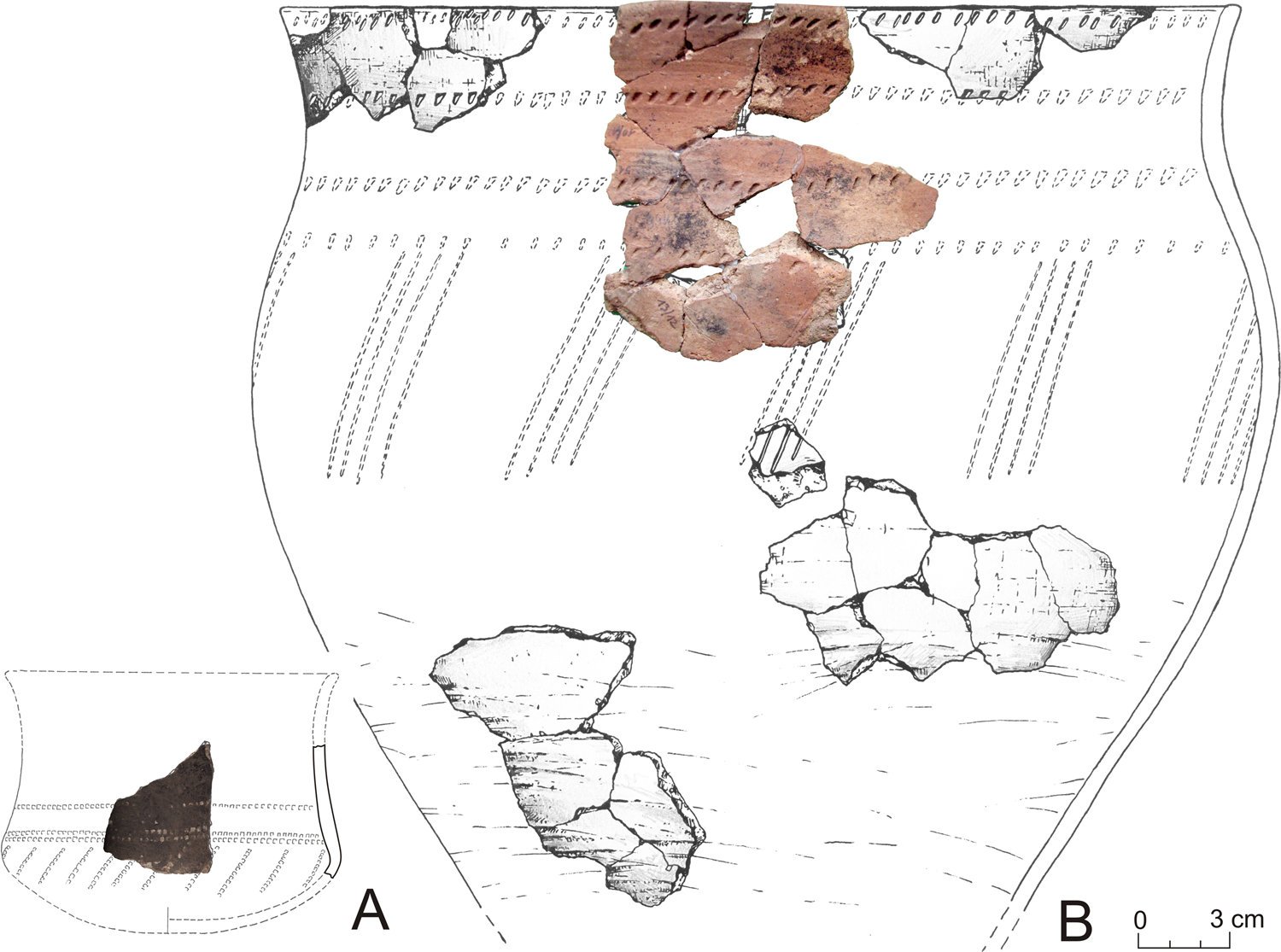
Feature 30 was located approximately 2 m south-east of a gully that encircled an area of 25 m2, interpreted as an ephemeral shelter-like structure with an approximate diameter of 4.5 m. This gully had clear evidence of posts at its base and an entrance at the west (Figure 3, no. 17 and Figure 6A). The feature was partly damaged by a modern disturbance. Numerous sherds from an S-shaped vessel (Figures 6B and 7B) were found concentrated in a small area just outside the presumed entrance to the ‘shelter’, while further fragments of this vessel were scattered around it (Figure 3, no. 4 in legend).
Concentration of vessel fragments in front of the entrance to the ‘shelter’. A: outline of the ephemeral shelter gully (1), damaged area (2), concentration of sherds from an S-shaped vessel (3). B: vessel reconstruction based on sherds from the cluster.

Reconstruction of the decorated vessels from Supraśl Site 6. A: bell beaker from the ritual deposit; B: S-shaped pot recovered in front of the entrance to the ‘shelter’.
The area of the settlement and ritual complex excavated at Site 6 did not yield any organic remains suitable for radiocarbon dating. Therefore, the dating of the site to the second half of the third millennium bc is based on the conventional pottery typology developed for the region (Wawrusiewicz et al., Reference Wawrusiewicz, Januszek and Manasterski2015: 160–62).
The formal characteristics of the broken vessel found in front of the entrance to the shelter-like structure have been used to date this feature. The technology, form, and ornamentation of the pot find many parallels in the ceramics of the Neman culture of the Neman river basin, specifically the Dobryj Bor type (Charnyavski, Reference Charnyavski1979: fig. 17 nos 3, 10, 13, fig. 18 nos 1, 11–14; Lakiza, Reference Lakiza2008: pl. 18 no. 6) dated from the second half of the third to the beginning of the second millennium bc (Charnyavski, Reference Charnyavski1979: 78). Our pot also closely resembles vessels classified as group IV (a stylistic Neman culture pottery grouping) of the well stratified site at Grądy-Woniecko (Wawrusiewicz et al., Reference Wawrusiewicz, Kalicki, Przeździecki, Frączek and Manasterski2017: 167–68). The chronological placement of this group in the second half of the third and beginning of the second millennia bc has been established chiefly by seriation, supplemented by radiocarbon dates. This concurs with earlier determinations made by Belarusian researchers (Wawrusiewicz et al., Reference Wawrusiewicz, Kalicki, Przeździecki, Frączek and Manasterski2017: 175–76). It is also consistent with the results of comparative analyses of two fragments of vessels with cord ornament from the deposit (Figure 5B: 4–5), especially a sherd with an impressed cord pattern linked to deep dots and incised decoration on the inside of the vessel under the rim (Figure 5B: 5). Vessels with such decoration fit the stylistic convention of group VIc identified in the material from Grądy-Woniecko (Wawrusiewicz et al., Reference Wawrusiewicz, Kalicki, Przeździecki, Frączek and Manasterski2017: 171, fig. IV.23) and are dated to the end of the third and beginning of the second millennium bc.
Methods and Results
A series of archaeological (including chronological and cultural identification as well as typological and technological classification) and archaeometric methods were used to examine the finds assemblage from Site 6 at Supraśl (Wawrusiewicz et al., Reference Wawrusiewicz, Januszek and Manasterski2015). The specific properties of the objects were determined as follows.
The stones from the hearth (Figure 4A) were analysed by non-invasive petrography, examining under stereoscopic microscope the rock surface immersed in water (Krajcarz, Reference Krajcarz, Wawrusiewicz, Januszek and Manasterski2015: 253). The analysis identified: Stockholm granite, Äland quartz porphyry, and Ragunda granite. Outcrops of these rocks are known on the northern Baltic shores. These are indicators of erratic rocks, from glacial/fluvioglacial deposits, also recorded in northern Podlachia. They bear traces of abrasion without aeolian polishing and glacial erosion, which denotes a riverine or alluvial provenance (Krajcarz, Reference Krajcarz, Wawrusiewicz, Januszek and Manasterski2015: 259–61). The most likely scenario is that the pebbles were brought to the site because no similar stones could be found within the 1000 m2 of the site excavated at Supraśl or in the nearby valley of the Supraśl river. The pebbles around the hearth were heavily cracked and crumbling, which indicates that they had been subjected to high temperatures for less than four hours (Krajcarz, Reference Krajcarz, Wawrusiewicz, Januszek and Manasterski2015: 261–62). Ethnographic sources suggest that this time is too short for natural cooling to be responsible for such damage, but it can be achieved by pouring water on the pebbles while still hot. Potters from nearby western Belarus were still using this technique for crushing rock in the first half of the twentieth century (Hołbowicz, Reference Hołbowicz1950: 33).
The metal plate fragment was subjected to metallographic analysis (Wawrusiewicz et al., Reference Wawrusiewicz, Januszek and Manasterski2015: 108–09). Given the state of preservation and small size of the artefact, X-ray fluorescence was the only analysis that could be undertaken. Chemical composition analyses of the metal, including Energy-dispersive X-ray spectroscopy (EDX-SEM) and a graph showing the spectrum of metal peaks, were conducted with a Tescan Vega scanning microscope. The metal plate was chiefly made of copper and tin (Figure 8C), which points to bronze as an alloy. However, spot analyses revealed different ratios of the two metals, perhaps indicating soldering of two surfaces or edges rather than an alloy. If so, it would be one of the oldest known examples of the technique (Wawrusiewicz et al., Reference Wawrusiewicz, Januszek and Manasterski2015: 109, fig. 62). A small hole, c. 1 mm in diameter, can be discerned in the X-ray image of the artefact (Figure 8C). It could suggest that the piece formed part of a larger object, perhaps a pendant. It is differentiated from contemporary finds from other regions of central and eastern Europe due to it being one of the oldest metal artefacts discovered in northern Podlachia and apparently being copper soldered with tin.
Selected images from analyses of artefacts from Supraśl Site 6. A: wood tar traces on the surface of the S-shaped pot recovered in front of the entrance to the ‘shelter’ under magnification (200× and 120×); B: traces of drilling with a metal tool of the threading hole in the pendant; C: fragment of a metal plate in an X-ray image and analyses of its chemical composition; D: impact marks on the tip of the arrowhead (magnification >50×) (sources: Pietrzak, Reference Pietrzak, Wawrusiewicz, Januszek and Manasterski2015: fig. 2, 6; Pyżewicz, Reference Pyżewicz, Wawrusiewicz, Januszek and Manasterski2015: fig. 5, 1A; Wawrusiewicz et al., Reference Wawrusiewicz, Januszek and Manasterski2015: figs 59–62, 71).

Infrared spectroscopy (IRS) was used to examine the amber pendant. It revealed that the pendant was made of succinite (Baltic amber); the diagnostic bands indicate strong weathering of this raw material (Kwiatkowska, Reference Kwiatkowska, Wawrusiewicz, Januszek and Manasterski2015: 330, fig. 1). Microwear trace analysis coupled with experimental research indicated that a tool with a sharp edge (possibly a metal knife, most probably a copper alloy, rather than flint; Popkiewicz, Reference Popkiewicz2016: 57–59) was used to modify the shape of the object (Popkiewicz, Reference Popkiewicz2016). The hole was drilled with a copper-alloy drill (Popkiewicz, Reference Popkiewicz2016: 59). The object is an asymmetric pendant belonging to sub-group 2A in Mazurowski's classification (Mazurowski, Reference Mazurowski1983: 31, table 2). Pendants with drilled suspension holes, made of natural or only slightly modified lumps of amber, appear for the first time on the Polish Plain in the Early Bronze Age and are linked to the Iwno and Únětice cultures (Bukowski, Reference Bukowski2002: 31–32). However, the drilling technique using a metal drill is completely unknown in central and eastern Europe at this time. This kind of precise perforation with a metal drill was an Early Bronze Age technological improvement in amber processing and was used in the British Isles and the Mediterranean region (Mazurowski, Reference Mazurowski1983: 113).
The flint artefacts were examined for use-wear traces using a metallographic microscope (Pyżewicz, Reference Pyżewicz, Wawrusiewicz, Januszek and Manasterski2015: 304). Their analysis revealed a variety of post-depositional changes that made it difficult to identify their function. In the case of the arrowhead, a characteristic ‘impact’ mark (Figure 8D) and weak linear traces on one of its surfaces suggest that it was used either for hunting or in combat (Pyżewicz, Reference Pyżewicz, Wawrusiewicz, Januszek and Manasterski2015: 304–05). The flint artefacts are not very distinctive, either chronologically or culturally; although the burin is close to Late Palaeolithic examples in terms of shape and the raw material employed (Schild et al., Reference Schild, Marczak and Królik1975: fig. 15.1).
The pottery sherds from the ‘shelter’ entrance were subjected to a series of analyses. The organic remains on the vessel wall were examined under a polarizing optical microscope (PZO) in low magnification. A detailed classification of the samples was performed using a polarization microscope coupled with a Boëtius PHMK 05 apparatus with a heating table. Thin-Layer Chromatography (TLC) was undertaken to identify the substance contained in the samples. Supplementary techniques involved infrared spectrophotometry (IR) and measurement of the electron paramagnetic resonance (EPR) spectra (see Pietrzak, Reference Pietrzak, Wawrusiewicz, Januszek and Manasterski2015: 284–85). As for the organic temper in the fabric of the ceramics, it was examined with a gas chromatographer (GC Agilent Technologies 6890N) coupled with a mass spectrometer (MS, 5973 Network Mass Selective Detector). The interpretation of the fractional analysis results was based on a determination of fatty acids and biomarkers using proportions proposed by English and American researchers (see Rosiak & Kałużna-Czaplińska, Reference Rosiak, Kałużna-Czaplińska, Wawrusiewicz, Januszek and Manasterski2015: 275, 279–80).
The sherds belonged to a large S-shaped pot with a rim diameter of c. 33 cm and a wall thickness of just 0.5 cm (Figures 6B and 7B). The fabric was tempered with selected crushed granite pebbles. The upper part of the vessel was ornamented with a pattern of repeated stamped motifs and tarred. The form, proportions, technique, and decoration bring to mind Late Neolithic Neman culture containers, identified with the Dobryj Bor type (see Charnyavski, Reference Charnyavski1979: fig. 17 nos 3, 10, 13, fig. 18 nos 1, 11–14; Lakiza, Reference Lakiza2008: pl. 18 no. 6). Regarding the decoration, the segmented composition consisting of diagonal lines engraved below a set of horizontal motifs is exceptional. The vessel is a typical Neman culture product, but the decoration resembles the ornament on a fragment of a bell beaker (Figure 7) found in the ‘pouch’ deposited in the nearby stone hearth.
Physico-chemical analyses of the fragments of the S-shaped pot revealed evidence of pine tar on its surface (Figure 8A). Tar production was typical of the communities of the Neman cultural circles in north-eastern Poland (Pietrzak, Reference Pietrzak, Wawrusiewicz, Januszek and Manasterski2015: 294–95, Reference Pietrzak, Wawrusiewicz, Kalicki, Przeździecki, Frączek and Manasterski2017: 312–14). Testing for organic substances preserved in the vessel body revealed only plant products (Rosiak & Kałużna-Czaplińska, Reference Rosiak, Kałużna-Czaplińska, Wawrusiewicz, Januszek and Manasterski2015: 280). A plant steroid, a morphine derivative, and ricinoleic acid all confirmed the presence of plants. These substances indicate that the pot was intended for either making or storing a psychoactive substance of vegetal origin (Rosiak & Kałużna-Czaplińska, Reference Rosiak, Kałużna-Czaplińska, Wawrusiewicz, Januszek and Manasterski2015: 280–81).
Of the five vessels from which the sherds from the deposit inside the hearth were derived, three had typical features of Bell Beaker pottery (Figure 5B: 1–3), whereas the other two combine components of the Neman and Corded Ware culture pottery (Figure 5B: 4–5). These syncretic forms are characteristic of the Linin and Ząbie-Szestno groups. Vessel form was identifiable in the case of only one bell beaker (Figure 7A). The fabric consisted of clay tempered with mineral substances (sand and crushed rock) in proportions and fractions that varied for each vessel. The bell beaker alone contained mica as temper in the fabric. Lipid residue analyses were not performed, as these would have required the total destruction of these small sherds.
The state of preservation of the various artefacts found in the ‘pouch’ indicates that they came from different pre-deposition contexts. Their post-deposition context did not affect their properties, nor did the high temperature in the hearth above the finds, as attested by the amber pendant which does not show any effects of thermal influence. Based on the analyses performed, we argue the material within the ‘pouch’ was an intentional assemblage. Although the materials were quite variable and fragmentary, they show signs of careful curation, as can be seen in the smoothed edges of the ceramic sherds or the choice of three flint items of very different origin.
The results of the various analyses performed on the ecofacts and artefacts indicate that the selection of the objects placed in the ‘pouch’ was intentional. We further want to tentatively link this pouch deposit to the vessel recovered in front of the shelter, which lipid residue analysis revealed as having contained a narcotic substance. This pot was decorated in a manner that recalls—and perhaps cites—one of the sherds of pottery in the pouch deposit. It may therefore have been used in the same practices as the materials found under the hearth, which we link to ceremonial rites.
Discussion
A typical hearth at first glance, Feature 30 from Site 6 at Supraśl nevertheless contained a unique deposit, comprising a number of objects that were exotic in the Podlachia region. The assemblage is homogeneous, although it is possible to distinguish a number of cultural components that differ from the Neman culture material recovered on the site as a whole.
Three of the five pottery sherds represent Bell Beaker pottery, while two are characteristic of the Linin and Ząbie-Szestno groups, which also had a good measure of Bell Beaker influence (see Manasterski, Reference Manasterski2016: 55–71, 83–90, figs 11–28). All the sherd breaks are smooth, but the degree of surface erosion varies. Only one fragment bears the remnants of calcium carbonate. These characteristics indicate that the pots were already broken for some time before being placed in the ‘pouch’ and derived from different, not yet identified contexts. Fragments belonging to the same vessels were not found anywhere else in the excavated part of the site, while the smoothed edges of the sherds suggest that they had been subjected to movement for a while. The three other objects in the deposit are neither culturally nor chronologically diagnostic. Two are made of chocolate flint, which is an exotic raw material in Podlachia. However, the burin has parallels among Late Palaeolithic communities who imported this raw material (Schild et al., Reference Schild, Marczak and Królik1975: fig. 15.1). The incomplete patinated arrowhead fragment is difficult to compare with fully preserved examples recorded in the material culture of various Late Neolithic and Early Bronze Age groups. The evident surface damage on these artefacts from different pre-depositional factors, and the morphological and material resemblance of one of the pieces to a Late Palaeolithic object, suggest that the artefacts came from different contexts, for instance as surface finds from other sites.
Amber and metal are completely unheard of in Podlachia at the end of the Neolithic and the beginning of the Bronze Age. The amber pendant is typical of the Early Bronze Age Iwno and Únětice cultures, but the drilling technique of the suspension hole, using a metal borer instead of a flint drill, is unusual. The metal itself, a piece of copper and tin, is equally exotic in this region and in the entire Neman cultural circle. The remains of domesticated animals are unusual among the finds from sites of the Neman cultural circle in northern Podlachia. Indeed, if the unidentifiable burnt bones also included human remains, the bone assemblage might have originated in a cremation burial in which animals were burnt together or commingled after burning with a human body.
The evidence for burial rites of the Neman cultural circle is too limited to fully characterize typical customs. Only a few significantly different burials have been found to date (see Manasterski, Reference Manasterski2009: 143–44; Wawrusiewicz et al., Reference Wawrusiewicz, Kalicki, Przeździecki, Frączek and Manasterski2017: 52–58). Nonetheless, cremation is not an unknown rite in the Neman culture, having been identified at Site 1 in Grądy-Woniecko in the valley of the Biebrza on the northern Podlachia Plain. Burnt bones with grave goods in the form of flint artefacts and ochre were discovered in one of the funerary features there (Wawrusiewicz et al., Reference Wawrusiewicz, Kalicki, Przeździecki, Frączek and Manasterski2017: 55). The few bones that could be identified belonged to a human and to a deer or elk (Makowiecki, Reference Makowiecki, Wawrusiewicz, Kalicki, Przeździecki, Frączek and Manasterski2017: 287; Więckowski, Reference Więckowski, Wawrusiewicz, Kalicki, Przeździecki, Frączek and Manasterski2017: 286). Numerous concentrations of burnt human and animal bones were recorded from this site's cultural layer, accompanied by Neman culture ceramics and flint. The excavators have suggested that it was a cremation site (Wawrusiewicz et al., Reference Wawrusiewicz, Kalicki, Przeździecki, Frączek and Manasterski2017: 56–57). These finds could indicate that burnt human and animal bones occur together in the context of funerary rites, but the animal bones were exclusively those of wild species at Grądy-Woniecko. It would constitute a significant difference between the burnt bones of domesticated animals from the Supraśl feature and other finds of a funerary nature from the Neman cultural circle.
The artefacts from the Supraśl deposit that can be attributed to a specific cultural unit are few. The Bell Beaker ceramic fragments are recognizable, but the other components are either syncretic in appearance (two pottery fragments of the Linin and Ząbie-Szestno group) or intercultural elements (the amber pendant and flint artefacts). Most, nonetheless, refer to the Bell Beaker set. Such artefacts, found in male burials, are considered to be status markers (Renfrew, Reference Renfrew2001: 122). The core version of the set includes a bell-shaped beaker with decoration in zones (or metopes and zones), occasionally found together with other similarly decorated pots, archery items, a copper tanged dagger or small flint daggers, button beads made of bone with a V-shaped threading hole, and gold and/or amber objects (e.g. Burgess and Shennan, Reference Burgess, Shennan, Burgess and Miket1976; Shennan, Reference Shennan1986; Garrido-Pena, Reference Garrido-Pena, Cacho, Maicas, Martinez and Martos2007: fig. 1; Heyd, Reference Heyd2007). The distribution of the set is linked to innovations introduced among local European communities (Kleijne, Reference Kleijne2019: 194). The spread is thus a dynamic process, regionally specific, but retaining certain similarities (Czebreszuk, Reference Czebreszuk2001: 46, 140; Turek, Reference Turek, Bartelheim, Peška and Turek2013: 9).
The assemblage of exotic artefacts from the Supraśl deposit shows many symbolic similarities with objects found in Bell Beaker graves, especially in the choice of raw materials, less so in their form. The Supraśl items consist of single pottery sherds (including a bell beaker fragment) instead of whole vessels, amber in the form of a pendant instead of the button beads with V-shaped hole common in the eastern provinces, a copper and tin metal plate instead of copper or gold artefacts, and a fragment of a flint arrowhead instead of a whole exemplar, all typical of the set, alongside burnt bones that are encountered in cremation rites in different areas within the reach of this cultural phenomenon. The nearest analogy for the Podlachia assemblage is a Bell Beaker feature with amber ornaments, flint artefacts, and cremated human bones without pottery discovered at the site of Solbakkegard IV in Denmark (Nicolas, Reference Nicolas2017: fig. 5b.5). A Bell Beaker deposit recovered at La Calzadilla (Valladolid, Spain) has a different significance. It contained fragments of broken vessels, food remains in the form of bones of domesticated animals, two human ribs, stone and bone tools, and the skull of an aurochs modified before deposition and interpreted as an ancestral symbol that was ultimately buried during the ceremony conducted at La Calzadilla (Liesau von Lettow-Vorbeck et al., Reference Liesau von Lettow-Vorbeck, Guerra Doce and Delibes de Castro2014).
Following a cognitive approach (see Hodder, Reference Hodder and Hodder1987; Renfrew, Reference Renfrew, Renfrew and Zubrow1994: 51–52; Minta-Tworzowska, Reference Minta-Tworzowska, Tabaczyński, Marciniak, Cyngot and Zalewska2012: 143–58) and studies in cultural anthropology and archaeology, defining and explaining concepts of symbols and ritual behaviour (e.g. Orphanides, Reference Orphanides1990; Renfrew & Bahn, Reference Renfrew and Bahn1991: 359–60; Burszta, Reference Burszta1998: 101–19; Insoll, Reference Insoll and Insoll2011), the characteristics, properties, and archaeological context of the Site 6 assemblages can be interpreted as ritual deposits. We suggest that the selection of material that was not native to Podlachia (a region characterized by the Neman culture) was intentional. The deposition appears to have been symbolic and ritual, not practical and utilitarian. Signs and symbols exist only because they are produced and reproduced by people who have a deep knowledge of their nature (Orphanides, Reference Orphanides1990: 15). Moreover, a symbol refers to any object that may serve as a carrier of ideas (Geertz, Reference Geertz and Mokrzycki1992: 503). The placement of the Supraśl objects in a ‘pouch’ together with river sand and the deposition of the container in a hearth argue in favour of this interpretation. The choice of artefacts for this purpose was also specific, as the items came from different locations and contexts. Some are fragmented (pottery sherds, a piece of metal plate, burnt bones) regardless of where the fragmentation took place; exotic raw materials, such as amber, chocolate flint, and metal, are also present. These characteristics must have had a symbolic significance, motivating the choice of objects assembled. Evidence of similar behaviour, in the form of fragmented pottery sherds, burnt human and animal bones, amber beads, and arrowheads made by exotic flint, has also been recorded in ritual and funerary Bell Beaker features from northern Podlachia (Supraśl, Site 3, Features 1, 2, 5, 6; Wawrusiewicz et al., Reference Wawrusiewicz, Januszek and Manasterski2015: 44–60, 164; Manasterski et al., Reference Manasterski, Januszek, Wawrusiewicz and KlechaIn press).
The selection of artefacts, chosen for their diverse origins, exotic character, peculiarity, and symbolic meaning, is indicative of a special, ritual significance. The objects, which are reminiscent of the Bell Beaker phenomenon and its specific cultural set, bring to mind associations with funerary rites (Burszta, Reference Burszta1998: 104). However, the presence of syncretic vessel sherds and burnt animal bones also points to links with the funerary rites of the Neman cultural circle known from Grądy-Woniecko (Wawrusiewicz et al., Reference Wawrusiewicz, Kalicki, Przeździecki, Frączek and Manasterski2017: 56–57, 188–89). Analyses of the pottery found in the context of funerary practices from that site uncovered traces of morphine derivatives (Wawrusiewicz et al., Reference Wawrusiewicz, Kalicki, Przeździecki, Frączek and Manasterski2017: 188, 301) similar to the traces found in the vessel from in front of the ‘shelter’ at Site 6 in Supraśl.
The data point to a funerary rite containing two cultural components: allochthonous connected with the Bell Beaker, and autochthonous deriving from the Neman cultural circle. The syncretic rites evidenced by these material remains should be considered as representing a peculiar diffusion of beliefs that continued to evolve and which are still visible in Early Bronze Age communities of the western branch of the Trzciniec cultural circle.
Evidence of similar behaviour was noted in a continuation of ritual elements in successive deposits at sites such as Skrzeszew and Pass in Masovia (Januszek & Manasterski, Reference Januszek and Manasterski2012; Manasterski & Januszek, Reference Manasterski and Januszek2017), within the area of the Linin group, which forms part of the Neman cultural circle. The deposits are, however, not identical, reflecting the changes that took place over time and in a different cultural environment. The Skrzeszew feature was not a hearth, but a small pit with a pointed base. Its fill consisted of river sand and heavily fragmented charred plant remains originating from a hearth (redeposited oval chunks of pine and alder wood charcoal; Michniewicz, Reference Michniewicz2012). A collection of artefacts was recovered near the pit's base: single sherds from eight different ornamented vessels, fifteen flint artefacts with different degrees of erosion on their surface, sections of bronze wire, and fragments of two amber beads (a cylindrical bead and a trapezoid pendant). The pottery included syncretic vessels of the Linin group with components of the Neman cultural circle, Bell Beakers, post-Corded Ware, and early Trzciniec cultural circle. The largest sherd in the assemblage came from a bell-beaker-shaped vessel decorated with a quasi-band-and-metope motif (Januszek & Manasterski, Reference Januszek and Manasterski2012: 116, pl. I). The flint forms a group of artefacts whose surface preservation indicates diverse provenances before their ultimate deposition in the feature (Januszek, Reference Januszek2015: 116–22). Among them is an arrowhead and two specimens of exotic chocolate flint alongside items made of local erratic flint (including two examples modified by high temperatures, one overheated and the other burnt through).
The Skrzeszew feature is similar to Feature 30 at Supraśl in that the context is connected with a hearth. As for the pottery, both features reveal the same choice of single sherds from ornamented vessels, with similar decorative components. The assemblage of flint artefacts is similar but larger, the similarity being chiefly based on the presence of a complete arrowhead, two items of rare chocolate flint and overheated and burnt exemplars. The similarity is also clear in the different post-depositional changes that reflect the diverse pre-depositional contexts of specific objects. Amber, was present in both features, including a trapezoid pendant. Such pendants are mostly known from burials of the Iwno culture and, to a lesser degree, the Únětice culture (Januszek & Manasterski, Reference Januszek and Manasterski2012: 129). The drilling technique used to make the pendant's perforation is what mainly differentiates the Skrzeszew from the Supraśl pendants, the former having been drilled with a flint tool. Finally, both features contained a metal artefact: the Skrzeszew item is a fragment like the piece from Supraśl but made of classic bronze.
There are fewer similarities between the Supraśl feature and a small pit discovered at Pass (Manasterski & Januszek, Reference Manasterski and Januszek2017). It contained a vessel placed upside down and a deposit of river sand and three flint artefacts. The vessel was a small S-shaped pot, resembling a slender bell beaker, decorated in its upper part with a quasi-band-and-metope ornament (Manasterski & Januszek, Reference Manasterski and Januszek2017: fig. 2). The ornamental motifs, their composition and disposition, correspond largely to the largest sherd from the Skrzeszew deposit. While already characteristic of the Trzciniec cultural circle, it still recalls bell beakers in its morphology and style. The flint artefacts include two made of local erratic flint and one fragmentary piece of chocolate flint, all from different contexts. The pieces of local flint are paralleled at Skrzeszew, whereas chocolate flint artefacts are found in earlier features.
The key difference between the small pit at Pass and earlier features at Supraśl and Skrzeszew is that a complete vessel made of non-organic material was placed in the pit. There are no traces of a hearth or burning in the Pass feature. The assemblage did not include amber artefacts, metal objects, or individual pottery sherds. The flint did not include an arrowhead. Thus, the Pass feature, the most recent among our three examples, may be a weaker reflection of an act that had become symbolic: making this feature was merely a manifestation of being part of a community, whereas it had once been performed as an expression of ‘living’ values (Burszta, Reference Burszta1998: 114–15).
The artefacts made of non-local raw materials found at Supraśl, especially those demonstrating the use of an advanced technology (use of metal drills, soldering) do not recur in the local community, most probably because there was no access to either copper or bronze. The earliest evidence of local bronze production in Podlachia comes from Suraż, a site connected with the Late Bronze Age Lusatian culture (Dąbrowski, Reference Dąbrowski1997: 167, map 11). Baltic amber was also not easily accessible in this region, hence the absence of amber artefacts from Neman culture sites in Podlachia. The only innovative element incorporated into this cultural circle is Bell Beaker pottery, chiefly its decorative style, less so its vessel shape, and hardly any elements of its production techniques. The initial stage consisted of more or less successful imitations of Bell Beaker ornamentation made according to local custom; the fragment found in front of the ‘shelter’ at Supraśl is such an example. This later evolved into a specific style combining a mixture of decorative components from Bell Beaker and other Late Neolithic and Early Bronze Age cultural entities. This led to the emergence of syncretic vessels described as ‘proto-Trzciniec’, which clearly recall the Bell Beaker style but with increasingly strong traits typical of the classic Trzciniec pottery style (Figure 9). A similar phenomenon is also observable in other regions of the Neman cultural circle, that is, in the territories occupied by the Linin and Ząbie-Szestno groups (Manasterski, Reference Manasterski2016: 116–20, figs 38–41).
Possible adaptation and transformation of the Bell Beaker style in the Neman cultural circle into the Trzciniec cultural circle in northern Podlachia. 1: bell beaker from Site 6 at Supraśl; 2: S-shaped pot of late Neman culture from Site 6 at Supraśl; 3–4: proto-Trzciniec vessels from Site 1 at Grądy-Woniecko; 5: Trzciniec culture vessel from Site 1 at Strękowa Góra (sources: authors (see Figure 7); Bugaj, Reference Bugaj2008: fig. 16; Wawrusiewicz et al., Reference Wawrusiewicz, Kalicki, Przeździecki, Frączek and Manasterski2017: pls XVIII.282, XVI.251).

Conclusion
Feature 30 from Site 6 at Supraśl is a rare example of a ritual practice performed by Late Neolithic hunters-gatherers within a Neman cultural circle environment. Elements of this feature point to a synthesis of rites practised by autochthonous and allochthonous groups. The components of the deposit, for the most part extraneous to the local community, are linked to the Bell Beaker cultural set and are a harbinger of innovations that would transform the hunter-gatherers’ world. Pottery was the chief vehicle of change. Initial imitations of various kinds were gradually transformed, to become a new syncretic form of vessel. The Bell Beaker component in this pottery was still discernible in the Early Bronze Age.
The Supraśl feature may be considered as the beginning of a process of transforming ritual behaviour. The rites were still performed, albeit with their initial symbolic components lost or modified, in the Early Bronze Age as the Neman cultural circle was fading, and can be traced in the formation of the western branch of the Trzciniec cultural circle. We offer this study as an example of a ritual practice that transcends narrow cultural criteria.
Acknowledgements
We would like to thank all the participants of the excavations in Supraśl and all the reviewers.


 Open access

