

Outline
1 Intuitive Knowledge: What Is a Grant?
1.1 Responses from New Grant Writers
“Happy 2023, everyone!” I sent my first email at the beginning of 2023 to several talented and hardworking graduate students. I then wrote: “I need help in answering short questions for my book on grants. Today, could you answer the following question quickly and briefly? What is a grant? There are no right or wrong answers, but your answers will be very helpful for me to think about how to write a book for readers like you. No identifiable information will appear in the book.” Below are some of the answers I have received from some of them.
Response 1: From my understanding, a grant is financial support from the government and industry that aims to explore and validate original and innovative research.
Response 2: A grant is a fund that is offered to people for basic and applied research purposes. It provides the monetary basis for research, but it also represents a recognition within certain fields of the potential contribution of a research proposal as well as the research and management skills of the researchers. For me, the term grant means recognition more than money. I see a grant as an important “brick” of my career development.
Response 3: I think a grant is funding from the university, government, organization, or even individuals to support researchers’ projects that have strong potential. A grant can support a lot on my research. First, receiving a grant means that I can have good equipment, an adequate budget, and more participants in my research. Furthermore, receiving a grant allows me to be more competitive in the job market. Last, I would have the opportunity to show my proposal to the public. This is a good approval before the project completes. I would be more confident in my research.
Response 4: First, a grant is an opportunity from a personal point of view. Each grant has a clear goal and name, which means that recipients of the grant should use it with appropriate goals. Therefore, receiving a grant means that students or researchers who have the ability and willingness to realize the goals of the grant will be given the opportunity to overcome financial barriers and realize their growth. Second, from a social point of view, a grant is a steppingstone to growth. Grant is money that doesn’t have to be returned, and may not get immediate results or desired results. However, with the accumulation of these studies in the future, academia can develop gradually, and this development can eventually lead to positive social growth.
1.2 Understanding Basic Elements and a Wide Diversity of Grants
These graduate students’ responses presented above are particularly interesting for four specific reasons. First, these responses are authentic, vividly representing their current genuine knowledge as novice grant writers who do not yet have much experience with grants. Second, these responses are thoughtful, showing some good understanding of grants. For example, they all know that grants are money “from the university, government, organization, or even individuals”. Third, these responses are limited, revealing their limited knowledge about grants. Grants can serve a wide variety of purposes, including but not limited to scientific research (e.g. there are various grants for social development). Even for scientific research grants, some of them could involve research training (e.g. undergraduate fellowship grants, predoctoral training grants, or postdoc training grants). Last, these responses are extremely useful to be used as baseline knowledge so that the first chapter of this book can be designed and written based on this baseline knowledge as the starting point to further develop a better understanding of grants.
Building on these intuitive responses as the baseline knowledge, this chapter aims to achieve two goals: to understand the basic elements of grants; and to understand the wide diversity of grants. Going deep, understanding the basic elements of grants can help us learn the fundamental features of a grant. Going broad, understanding the wide diversity of grants can help us see the complexity of a wide variety of grants in the real world. For new grant writers, completing the intellectual journey offered in this chapter will develop a good conceptual understanding of grants and help them pursue competitive grants effectively and efficiently.
To achieve our two learning goals, we will first look at multiple real-life examples of grants to analyze the basic elements and diversity features of each grant, then discuss the scientific knowledge on grants in detail to further develop a theoretical understanding of grants, then compare two basic concepts (i.e. article and grant) to see more clearly what a grant is in comparison to an article, and end the chapter with action suggestions. A five-step sequence will be followed in each chapter of the book, from intuitive ideas, to real-life examples, research summary, concept comparison, and action suggestions. Based on Nobel Prize winner Daniel Kahneman’s intuitive judgment theory,Footnote 1, Footnote 2 we hope to go through this five-step sequence to start with common intuitive thinking (System 1) that is based on our daily experience, then build rational thinking (System 2) that is based on scientific knowledge, and eventually foster intuitive rational thinking (System 3) that is based on deliberate and persistent training and practice using scientific knowledge.
2 Real-Life Cases: From Local Non-Profits to ERC Research Grants
It is theoretically challenging to define a grant in a way everyone would agree and accept, due to the complexity of various grants involved in the real-life world. However, it is methodologically feasible and practically useful to identify at least four basic elements that a grant must involve: (1) amount (e.g. a large grant vs. a small grant); (2) grantor (e.g. a public funder vs. a private funder); (3) grantee (e.g. an individual grantee vs. an institutional grantee); and (4) purpose (e.g. a basic research grant vs. a social development grant). While there could be other elements involved (e.g. a competitive grant vs. a non-competitive grant; a new grant vs. a continuous grant), the above four elements are essential and fundamental for any grant. While these elements are basic and fundamental, each of them has a particularly wide variety (e.g. there are different kinds of grantors and grantees in the world) and thus we need to understand the diversity of grants. Now, we will use ten real-life grant examples to understand the basic elements and wide diversity of grants.
2.1 A Non-Profit Grant from the Rhode Island Foundation
In 2022, when COVID-19 was fading and normal life started to resume, my family went to Rhode Island to attend my daughter’s high school basketball holiday tournament. At a cafeteria, I picked up a local newspaper, Newport This Week, published on December 15, 2022. On page 9, I saw an article on grants,Footnote 3 titled “Grants awarded for housing, hunger, and mental health.” It says that over $8 million from Rhode Island Foundation grants have been awarded to various local non-profits to address hunger, housing insecurity, and behavioral health across Aquidneck Island for recovering from COVID. The foundation encourages organizations to apply for the remaining $11.7 million, with the maximum grant being $150,000.
This grant has four basic elements: (1) the total amount of the grant program is about $20 million and the maximum amount for one project will be $150,000; (2) the grantor is Rhode Island Foundation, 1 of 800 community foundations in the United States and the largest funder of its non-profit organizations of Rhode Island; (3) the grantee will be local non-profits rather than research institutions; and (4) the purpose is to address urgent community needs rather than scientific research projects.
This grant also has a few unique features, showing three aspects of grant diversity: (1) it is a community grant or a social development grant rather than a science grant or a research grant; (2) it funds proposals through internal selection by program officers rather than through open competition via external reviewers or review panels; and (3) it is a time-sensitive, one-time grant responding to COVID related to the American Rescue Plan ActFootnote 4 rather than a regular or permanent grant.
2.2 The Esther Katz Rosen Fund Grant from the APF
In February 2023, I received an email regarding a grant opportunity. It was from Jolie Chaleff, Program Coordinator of the American Psychological Foundation. Her email states:
I am reaching out on behalf of the American Psychological Foundation (APF) to share info about our Rosen Grant. This grant is open to graduate students, psychologists, or doctoral-level researchers in a closely related field. It would be great if this could be shared with members of Division 7 who are looking for research funding. Let me know if there is anyone else who would be a better point of contact to share this with!
Regularly or casually, I have often received similar types of grant announcements, externally from funding agencies such as the National Institutes of Health (NIH), the National Science Foundation (NSF), and MacArthur Foundation, or internally from grant offices of my School of Education, the University at Albany, and the State University of New York.
This grant opportunity has four basic elements. First, the amount of this grant is up to $50,000. Second, the grantor is the APF. Located in Boston, the APF is affiliated with the American Psychological Association (APA). It is a grant-making foundation to fund early career psychologists and graduate students using psychology to solve important problems and improve people’s lives. Third, the eligible grantees are either early career psychologists or graduate students in psychology. The Rosen Grant or the Esther Katz Rosen Fund GrantFootnote 5 is one of the various APF grant programs. Fourth, established in 1974, the Rosen Grant has a specific purpose, supporting activities related to the advancement and application of psychological knowledge about gifted children. One actual example is that Dr. Tzu-Jung Lin at Ohio State University received the Rosen Grant for his study on “The Impact of the COVID-19 Pandemic on Gifted Students’ Academic Competence and Socioemotional Well-Being during the Middle School Transition.”
This grant also has several specific features. First, while generally it is a science research grant, it is a training grant rather than a research grant. This is a major type of research grant – for example, the NIH and NSF have two general goals, to advance science and to develop future scientists, and have various training grants to develop young researchers. Interestingly enough, recently, we had a scholar coming to our university for a campus interview. In her job talk, she presented her major study funded by the Rosen Grant. Second, it is a small research grant compared to average research grants by the NIH or NSF, but it is one of the largest offered by the APF.Footnote 6 Third, the APF is a private grant agency rather than a public one, with a specialized goal of training young researchers and an even more specialized goal of studying gifted children for the Rosen Grant. These specific features help us understand the wide diversity of grants.
Note that people often use the word “grant” in two ways, as the following two examples demonstrate: “NIH announced a new grant” and “Dr. Smith received a large grant.” In the first example, “grant” refers to a grant program or a funding opportunity where a grantor plans to give the grant money to a grantee. In contrast, in the second example, “grant” refers to a grant project or a funded project in which a grantor has given the grant money to a grantee. Thus, the Esther Katz Rosen Fund Grant is a grant program or a funding opportunity before application submission, grant review, and funding decision, whereas Dr. Tzu-Jung Lin’s received grant is a grant project or funded project after application submission, grant review, and funding decision. It is important to distinguish these two different meanings of grants used in daily conversion or scientific writing.
2.3 The STEM Research Grants from the Society for Science
In 2022, I saw a news headline that Alan Grinsteinner, a middle- and high school science teacher in Bison School District 52–1 of South Dakota, was among the 100 recipients of the US 2020–21 STEM Research Grant.Footnote 7 Using this grant, Alan Grinsteinner will buy new science lab equipment and motivate his students to seek science beyond high school. Here, the grant program is the US 2020–21 STEM Research Grant, and the grant project is Alan Grinsteinner’s new science lab project.
This grant has three basic elements of a grant. First, for the STEM Research Grants, the amount of each grant recipient is up to $5,000. Second, the grantor is the Society for Science. Third, the grantees are middle- and high-school educators. Fourth, the grant has a purpose to support middle- and high-school teachers in their science education to engage their students in authentic scientific research.
This grant also has several unique features. First, over six years, $775,000 has been awarded to 367 teachers. Teachers can apply for up to $5,000 to purchase specialized equipment or $1,000 in preselected equipment, including Arduino starter kits, camera traps, and PocketLab sensors.Footnote 8 Second, founded in 1921, the Society is a non-profit organization dedicated to the promotion of science through its science competition programs (e.g. International Science and Engineering Fair, the Regeneron Science Talent Search), publication programs (e.g. Science News, Science News Explores), and outreach programs (e.g. Middle School Research Teacher Conference, STEM Research Grants). Third, the eligible teachers come from twenty-nine states, the District of Columbia, the US territories of American Samoa, Guam, and Puerto Rico, as well as Mexico, Uruguay, and Peru. Priority consideration is given to teachers at schools that support students from low-income communities and demographics traditionally underrepresented in STEM fields. Alan Grinsteinner is one of these teachers. Fourth, the grant supports teachers to work with students on independent projects involving experimentation to answer one scientific question outside of regular classwork. These projects are frequently entered into the Society’s science fairs and science competition programs.
2.4 The Largest Grant from the Bill and Melinda Gates Foundation
The Bill and Melinda Gates Foundation (BMGF) is one of the largest private foundations in the world. It has given out $72 billion since 2000. If we go to its funded grant page,Footnote 9 we can access its grant database. Among all the committed grants, one will stand out: In 2021, BMGF awarded GAVI Alliance $1.6 billion to save lives and protect people’s health by increasing the equitable and sustainable use of vaccines.Footnote 10
This grant or funded project has all four basic elements. First, the amount committed is $1.6 billion, its grant ID is INV-015714, the time committed is 2021, and the duration is 53 months. Second, the grantor is BMGF’s Global Development Division, one of its six divisions. Third, the grantee is the GAVI Alliance, a Geneva-based global health organization aiming to increase access to immunization in poor countries.Footnote 11 Fourth, its purpose is to save lives and protect people’s health by increasing the equitable and sustainable use of vaccines.
The grant also has several unique elements that show grant diversity. First, this is a very large grant. In fact, it is one of the largest grants in the history of the BMGF. Second, the grantor BMGF is private rather than public. Specifically, it is a section 501(c)(3) organization or a charitable organization, one of twenty-nine types of non-profit organizations based on the tax-exempt definition by the Internal Revenue Service of the United States. It focuses on healthcare, education, and poverty reduction. Third, the grantee GAVI was founded in the same year as the BMGF and is among the top two grantees of the BMGF. As of 2015, GAVI has received $3.1 billion in funding, whereas the World Health Organization has received only $1.5 billion. Fourth, it is not a science grant or a research grant, but a development grant. Its purpose is to deliver vaccines rather than conduct basic or applied research.
2.5 A Federal Grant on Cyber Privacy from the NSF
If we go to the National Science Foundation (NSF) website,Footnote 12 we can find all the active or expired awards. Then we can search titles, abstracts, names, institutions, programs, and other information associated with an award from October 1959 to September 2023 (note that the NSF fiscal year is from October 1 to September 30). We can see one such funded project, “SaTC: CORE: Medium: Situation-Aware Identification and Rectification of Regrettable Privacy Decisions.”
This grant has the following four basic elements, which can be extracted straightforwardly from the database. First, as a multi-year grant, its total awarded amount between 2018 and 2021 is $904,133. Second, the grantor is the NSF. More specifically, it is awarded by the NSF’s program of Secure &Trustworthy Cyberspace (SaTC), Division of Computer and Network Systems (CNS), Directorate for Computer & Information Science and Engineering (CSE). The program manager is Dr. Kiesler. Third, the grantees are Xu, the principal investigator (PI) from American University, and Nan Zhang, the Co-PI from the same university. Fourth, the grant purpose focuses on cyber privacy, helping mobile phone users revisit and rectify past privacy decisions that they may regret, and developing a theory on how cognitive appraisal, affective states, and environmental cues lead to regrettable privacy decisions.
This grant also has several unique features. First, it is a “Continuing Grant” awarded in 2021. The grant was awarded for multiple years, starting in 2018, and will continue through 2021. Second, it is a grant under the designation of CORE. The program of SaTC has three designations: CORE, the focus of the multidisciplinary SaTC research program, EDU, focusing on cybersecurity and privacy education and training, and TTP, focusing on the Transition to Practice. Third, it is a grant of medium size. The program of SaTC has two classes of grant size: small projects – up to $600,000 for up to three years; and medium projects – $600,001–1,200,000 for up to four years. Note that the average annualized award size for the NSF in 2022 was $237,600.Footnote 13
2.6 A Large, Complex Federal Grant from the NIH
NIH is one of the largest public funding agents in the world. If we go to its grant database website called RePORT (Research Portfolio Online Reporting Tools), we can access a variety of tools, reports, data, and analyses of NIH research activities. One of the tools available on RePORT is the RePORTER (RePORT Expenditures and Results), which is an electronic tool that allows users to search a repository of both intramural and extramural NIH-funded research projects from the past twenty-five years and access publications since 1980, and patents resulting from NIH funding. After the close of each fiscal year on October 31, NIH will begin to update all data reported on an annual basis. Updated reports with the prior fiscal year’s data are typically posted to RePORT by the end of December. In general, the RePORTER database is updated weekly. Each update includes not only the addition of newly funded projects, but also revisions to prior awards (e.g. changing grantee institution or revising award amounts). Note that one can submit a written Freedom of Information Act (FOIA) application to request a copy of a specific grant.
Now using Reporter, we can locate a grant titled “RADx-UP CDCC, with Project Number: 5U24MD016258-03.”Footnote 14 It is one of the largest NIH grants in 2023. RADx-UP stands for Rapid Acceleration of Diagnostics-Underserved Populations. CDCC stands for Coordination and Data Collection Center. RADx-UP and CDCC are two key components of this major project. Specifically: (1) RADx-UP consortium is a multidisciplinary program, including three cores involved in management, test, exchange, and data analysis. The three cores are as follows: the COVID-19 Testing Core will advise and guide COVID-19 testing protocols; the Community and Health System Engagement Core provides support in exchanging best practices across communities on recruitment, engagement, and retention of study participants; the Data Science and Biostatistics Core will manage data collection, integration, and sharing. (2) The three units, Duke Clinical Research Institute, the UNC Center for Health Equity Research, and Community-Campus Partnerships for Health, serve as the CDCC to provide management, direction, and overall coordination of the RADx-UP consortium.
Note that NIH has provided other useful information. (1) Program Official (PO) is Dorothy Castille. It is always useful to know the PO. (2) The grant proposal responded to NIH’s Funding Opportunity Announcement (FOA) and Request for Applications (RFA),Footnote 15 specifically to an RFA, “Emergency Awards: RADx-UP Coordination and Data Collection Center (CDCC) (U24 Clinical Trial Optional).”Footnote 16 (3) The Study Section for this grant is a Special Emphasis Panel. It is very important to know it for peer review and fund recommendation. NIH has four groups of Study Sections, namely, All Study Sections, Standing Study Sections, Integrated Review Groups, and Special Emphasis Panels.Footnote 17
This grant has four basic elements. First, this project has funding for over $32 million in 2023, with direct costs of over $24 million and indirect costs of over $7 million. Second, the grantor is NIH, with its administering institute of the National Institute on Minority Health and Health Disparities, one of NIH’s thirteen institutes. Third, the grantee is Duke University. The contact PI/project leader (PL) is Michael Cohen-Wolkowiez at Duke University, along with two other PIs, Gaurav Dave at UNC and Warren Kibbe at Duke, and thirteen Co-PIs at Duke, all of whom are professors at Schools of Medicine. Fourth, the grant purpose is to respond to the declared public health emergency issued by the Secretary of Health and Human Services for COVID-19 through NIH’s expedited funding mechanism. It funded a single CDCC as an integral part of the consortium, the RADx-UP initiative, and a consortium of community-engaged research projects to understand factors that have led to a disproportionate burden of the pandemic on the underserved and/or vulnerable populations so that interventions can be implemented to decrease these disparities.
This grant also has several unique features. First, this $32 million grant is one of the largest by NIH, while the average size of research project grants in 2022 is around $600,000.Footnote 18 Second, the grantor used this as an emergency grant. Third, grantees are three PIs and Leaders as well as Co-PIs. NIH has various types of grantees as leaders, including PI, PL, and project manager (PM). Based on MIH, the Project Lead must devote a minimum of 20 percent effort (i.e. 20 percent of their total working time) to the Project. If the Project Lead is also a PD/PI for the Overall Program, they must devote a minimum of 5 percent effort to one other component (e.g. another Project or a Core) for a total minimum of 3.0 calendar months (25 percent effort). Fourth, the purpose is to fund comprehensive research rather than clinical research. This project is not a typical clinic research project. It is to build a CDCC for RADx-UP to transform COVID-19 research to eliminate health disparities accentuated by the pandemic. It is a science grant, but not a pure research grant. It could be considered as a mixed, large development grant.
2.7 A Research Network Grant from the IES
The Institution of Education Sciences (IES) is one of the federal research funding agencies under the US Department of Education (DoE). Through the IES’s website,Footnote 19 we can find a sample funded project called “MATHia: A Digital Learning Platform Supporting Core and Supplemental Instruction in Middle and High School Mathematics.”Footnote 20
This grant has four basic features. First, the award amount is $1,999,459 for five years between 2021 and 2026. Second, the grantor is IES, more specifically, the National Center for Education Research (NCER), one of the four major research centers of IES. It is from the grant program of Digital Learning Platforms to Enable Efficient Education Research Network, with Dr. Erin Higgins as the program officer. Third, the grantee is Carnegie Learning, a Pittsburgh-based K-12 education services company for math, literacy, English Language Arts, world languages, and applied sciences. The PI is Dr. Steven Ritter, one of the four co-founders and chief scientist of Carnegie Learning. Fourth, the grant purpose is, as a special type of grant on Methodological Innovation of IES, to meet an urgent need to improve mathematics outcomes in the United States. This project is to integrate MATHia, an established adaptive one-on-one math learning platform for grades 6–12 that mirrors a human coach, with UpGrade, a new open-source platform that supports fair and rigorous randomized field trials that compare innovative practices with various approaches.
This grant also has several unique features. First, it is a large grant in the field of education and learning. Second, the grantor is not the NSF or NIH, the two most common federal funding agencies in the United States. It is the DoE as one of twenty-six federal funding agencies.Footnote 21 Third, the grantee is a research firm rather than a research university. Fourth, it is like a research and development (R&D) type of grant, integrating two computer programs for real-life educational practices, rather than a basic research grant. Fourth, this project is also not a stand-alone program. It is part of the Digital Learning Platforms Network, more specifically, the Digital Learning Platforms to Enable Efficient Education Research Network. It currently includes a network lead team, five platform teams, and a research team.
2.8 A Comprehensive Research Grant from the MRC
The Medical Research Council (MRC) is the largest governmental funding agency for medical research in the United Kingdom. Through its grant database,Footnote 22 we can find a sample grant titled “Adolescent Mental Health and Development in the Digital World” (#MR/W002450/1).Footnote 23
The grant has only four elements. First, the grant amount is £3.9 million (about $4.8 million) for the funded period 2021–25. Second, the grantor is the MRC, under the Strategic Priorities Fund, which focuses on high-quality interdisciplinary research and innovative research that link up effectively with government departments’ research priorities and opportunities, under the category of Research Grant, one of about thirty categories (e.g. Training Grant, Grant of research and development, Large Project). Third, the grantee is the University of Nottingham as the lead research organization. The PI is Chris Hollis in the School of Medicine at the University of Nottingham, with ten Co-PIs. It involved around twenty collaborative organizations, such as the London School of Economics and Political Science and the National Institute for Health and Care Excellence. Fourth, the grant purpose is to address two key research challenges: (1) using digital technologies to identify young people at risk of mental health problems and developing personalized digital interventions and (2) understanding how the digital environment influences adolescent mental health problems and their brain and cognitive development.
This grant has several unique features. First, it is a large grant, especially for mental health research. Second, the grantor is MRC. MRC is responsible for coordinating and funding medical research in the United Kingdom. It is part of UK Research and Innovation, the governmental funding agency that directs research and innovation funding in the United Kingdom and brings together its seven research councils, including the MRC.Footnote 24 Third, the grantees are a large research team with diverse interdisciplinary researchers to address how the new “digital environment” affects young people’s mental health. Fourth, the grant is a comprehensive one, including basic and applied research.
2.9 A Young Scientist Grant from the NSFC
The National Natural Science Foundation of China (NSFC) was founded in 1986 and is the key governmental foundation in China, like the NSF in the United States. From its grant database,Footnote 25 I was able to find a sample grant titled “社交媒体中的品牌竞争扩散机理分析及影响因素研究” (Analysis of band competitive diffusions and influencing factors of social media) (#71702103).
This grant has four basic elements. First, its grant amount is ¥170,000 (about $23,630) between 2018 and 2020. Second, the grantor is the NSFC under the Young Scientist Grant Program, one of the NSFC’s three major funding programs, namely, research advances, talent development, and infrastructure construction for basic research. Third, the grantee is the Information Science Institute of Shanghai Academy of Social Science. The PI is Jie Gu, with three Co-PIs. Fourth, the grant purpose is to conduct a quantitative study on competitive mechanisms of commercial brands in social media.
This grant also has its uniqueness. First, it is a grant in social sciences from China. Second, it is a small research grant for promising young scientists, slightly similar to the NSF’s Faculty Early Career Development Program (CAREER).
2.10 A Grant to a Noble Prize Winner from the ERC
In 2023, Pierre Agostini, Ferenc Krausz, and Anne L’Huillier won the Nobel Prize in Physics “for experimental methods that generate attosecond pulses of light for the study of electron dynamics in the matter.”Footnote 26 As various major research foundations often do after the Prize announcement, the European Research Council (ERC), the flagship funding agency in the European Union, immediately congratulated these Noble Prize laureates and stated that it has been funding Ferenc Krausz and Anne L’Huillier for their multiple research projects over the past two decades.Footnote 27 Through the ERC’s grant database, we can locate one of the grants to Ferenc Krausz titled “Towards 4D Imaging of Fundamental Processes on the Atomic and Sub-Atomic Scale” (Grant agreement ID: 246799).Footnote 28
This grant has all the four basic elements. First, the grant amount is €2.5 million (around $2.7 million) for the grant period 2010–15. Second, the grantor is the ERC, under the grant program of the Specific Programme that funds “ideas” for implementing the Seventh Framework Programme of the European Community for research, technological development, and demonstration activities. Third, the grantee is Universität München, Germany. The PI is Ferenc Krausz, a physicist at the Max Planck Institute of Quantum Optics and the Ludwig Maximilian University of Munich, Germany. Fourth, the grant purpose is to fund a project that will develop a 4D-imaging technique to directly observe atoms and electrons in their natural state in motion within the topic area of fundamental constituents of matter.
This grant also has a few unique features that help us understand further grant diversity. First, the ERC is a public research foundation across various countries within the European Union. In the United Nations system, there are various international organizations with funding functions, such as UNICEF and UNESCO. Perhaps the ERC is the only region foundation of this kind in the world. Second, the grant is an Advanced Grant, one of the ERC’s three primary funding schemes to support researchers who have already established themselves as independent research leaders with excellent scientific track records. The other two primary schemes are: (1) Starting Grants to those who have completed a PhD within two to seven years and are showing promising talents to conduct early scientific independent research and (2) Consolidator Grants to those who have completed a PhD within seven to twelve years and are consolidating their own independent research.
2.11 A Typology of Grants
Novice grant writers or even often experienced grant writers could feel overwhelmed to find the right grant programs. Thus, it is particularly useful to develop a good typology of grants and then check a variety of funding sources and grant programs, for example, finding grant programs by public fundersFootnote 29 or private funders.Footnote 30
The grantology literature shows several existing typologies of grants. For instance, there is a popular typology of four types of federal grant funding: (1) Competitive Grants that are based on the merit of a proposed project; (2) Formula Grants that use predetermined formulas rather than application processes to distribute federal funding; (3) Continuation Grants as renewal of an existing grant; and (4) Pass-Through Grants, where a federal agency issues funding to a state agency or institution that is then transferred to other state agencies, local governments, or eligible groups.Footnote 31 The NIH’s well-known award mechanisms are another example of grant typology of biomedical funding: (1) Research training and career development (e.g. F series and K series); (2) Loan repayment programs (L series); (3) Program project grants (P series); (4) Research grants (e.g. R series); and (5) cooperative agreement grants (U series).Footnote 32
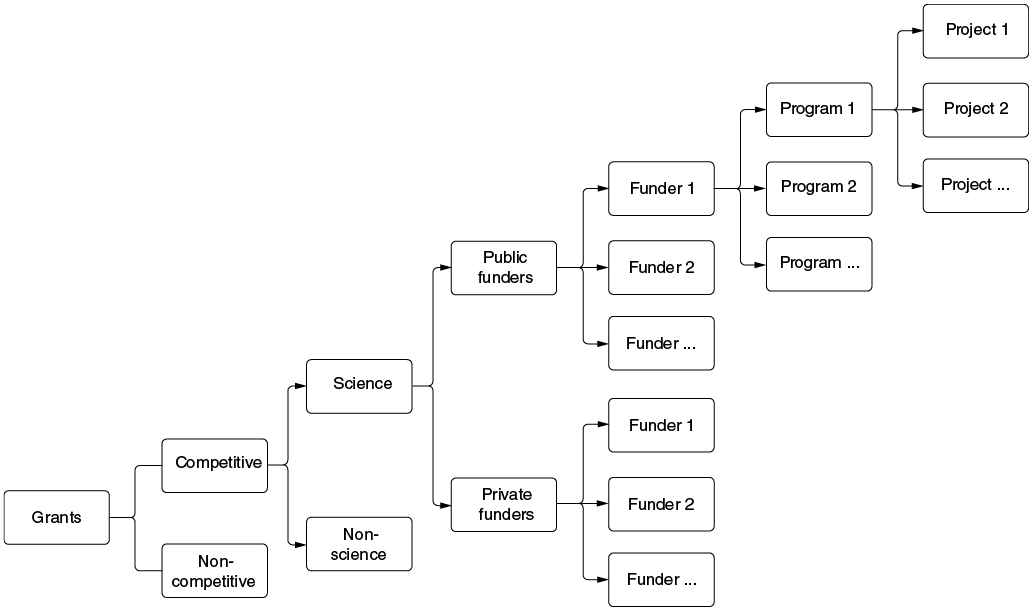
Figure 1.1 presents a new typology of grants that is based on the concepts of grantology and will be used in this book for new grant writers.
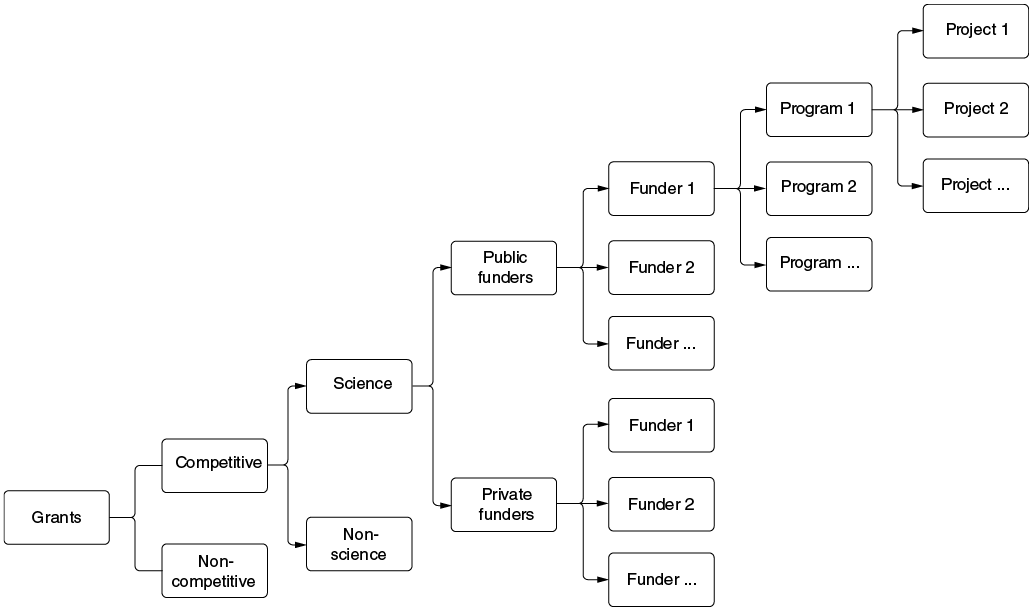
Figure 1.1 A new typology of grants primarily based on the four basic elements of a grant. These four basic elements are grant amount, grantor, grantee, and grant purpose.
Figure 1.1Long description
Flowchart illustrating the structure of grants based on four key elements: grant amount, grantor, grantee, and grant purpose. The chart begins with grants, which can be competitive or noncompetitive. Competitive grants are categorised into science and non-science. Science grants may have public funders or private funders. The chart shows several funders branching off from each, and then from each funder, there can be multiple programs, and from each program stems multiple projects.
Specifically, Figure 1.1 shows six basic features of the typology. First, the typology starts with grant-related activities. There are many activities, including some scientific research activities, that can be implemented successfully even without grants, but that is beyond the scope of the book. Second, the typology focuses on competitive grants. Various grants (e.g. Formula Grants and Pass-Through Grants) do not go through competitive application and selection. Again, the book will not discuss them. Note that even within competitive grants, some are highly competitive (e.g. NIH’s G01 grants), and others are much less competitive. Third, from the perspective of grant purposes, this typology distinguishes between scientific grants and non-scientific grants. While many grants support scientific investments (e.g. natural, social, and behavioral sciences; math, engineering, or biology), there exist various social grants, developmental grants, and other grants (e.g. vaccine distribution, social welfare provision, community development, and emergency responses) that serve societal purposes rather than support scientific investments. The book mainly focuses on scientific grants. Readers who are interested in social developmental grants might read extensive books on non-profit grants. Fourth, from the perspective of grantors, this typology distinguishes between public and private funders. In addition, other grantor-level elements could be related to whether a funder is national, regional, or international and whether a funder is disciplinary or multidisciplinary. Fifth, from the perspective of grantors, the typology covers different grant programs offered by a funder. For instance, a science-based funder may have research (e.g. basic, applied, and pilot research) vs. non-research grant programs (e.g. funding to support career development, equipment purchase, and infrastructure building). Additional elements at the grant program level include the grant amount (e.g. large, medium, and small grants) and the grant duration (e.g. short- and long-term grants). Last, from the perspective of grantees, the typology covers different grant projects under different grant programs. Note that grant projects differ from grant programs. The grant projects are related to the Post-Award phase and are funded grant projects where a grantor makes a monetary commitment to a grantee who will use this grant to complete a proposed project after the process of external review and funding decision, whereas grant programs are related to the Pre-Award phase and are grant opportunities developed by a funder to call for proposals. Additional elements at the grant project level could include the actual grant amount, actual grant length, and specific grant purposes. Note that here we do not discuss submitted but unfunded grants, a topic that will be discussed in more detail in Chapters 6 and 7.
Using this typology, we can analyze the basic important features of the ten grants we have discussed above. (1) The first grant, a non-profit grant from the Rhode Island Foundation, is a non-competitive, non-science, and non-research grant program from a private grantor. (2) The Esther Katz Rosen Fund Grant from the APF is a competitive, science-based, non-research (i.e. training) grant program from a private grantor. (3) The third grant, the STEM Research Grant from the Society for Science, is a competitive, science-based, non-research grant program from a private grantor. (4) The largest grant from the Bill and Melinda Gates Foundation is a non-competitive, non-science (delivering vaccine) funded grant project from a private grantor. (5) A federal grant on cyber privacy from the NSF is a competitive, science-based, and research-based funded grant project from a public grantor. (6) A large, complex federal grant from the NIH is a competitive, science-based, multi-purposed funded grant project from a public grantor. (7) A research network grant from the IES is a competitive, science-based, multi-purposed funded grant project from a public grantor. (8) A comprehensive research grant from the MRC is a competitive, science-based, multi-purposed funded grant project from a public grantor in the United Kingdom. (9) A young scientist grant from the NSFC, is a competitive, science-based, non-research (i.e. training) funded grant project from a public grantor in China. (10) A grant to a Nobel Prize winner from the ERC is a highly competitive, science-based, research-based funded grant project from a public grantor in the European Union.
The above analysis of the ten grants shows that the new typology can capture the fundaments and complexity of grants in the real world, help us understand the four basic elements of grants and the wide diversity of grants, and be used as a practice-oriented typology of grants for new grant writers to understand and pursue grants (e.g. learning what a competitive grant is, understanding the existence of non-science grants, knowing various public and private funders, and studying different grant programs and grant projects). The key message here is that we should broaden our views on grants and be open-minded in searching for a grant program, writing a grant proposal, and conducting a grant project.
3 Scientific Knowledge: Three Theoretical Articles on Grants
Generally speaking, very little literature exists examining the nature of grants theoretically and developing a fundamental understanding of grants as a basic concept, while the existing extensive literature addresses various specific topics in pursuing grants (e.g. how to find a grant and how to write a proposal). Here, we will discuss three interesting and valuable articles to further our theoretical understanding of the concept of grants. Let us study the first theoretical article.
3.1 Azoulay & Li (2020): Grants as a Science Policy Tool for Innovation
Overview
This articleFootnote 33 is titled “Scientific grant funding.” Clearly, it focuses on science grants rather than non-science grants. This article is one of the most clearly articulated, thoughtful theoretical reviews. As of October 2023, it has been cited fifty-nine times based on Google Scholar. While the citation is not high as of now, this paper should become a classic, worthy of reading many times to gain various inspirations. It is well-written and extremely helpful for us to understand grants.
The first author, Pierre Azoulay, is the International Programs Professor of Management at the MIT Sloan School of Management and a research associate of the National Bureau of Economic Research (NBER). His research areas are the economics of science, innovation, and technical change. His h-index is 34. He has published a series of influential articles on grant funding and is one of the leading scholars in grantology. The second author, Danielle Li, is the Class of 1922 Career Development Professor and an associate professor at the MIT Sloan School of Management. She is also a faculty research fellow of the NBER. Her research areas are the economics of innovation, productivity, organizational economics, and applied microeconomics. Her h-index is 15. Often co-authored with Pierre Azoulay, she has also published multiple widely cited articles on R&D investment and NIH peer review. She is an emerging leading scholar in the field.
In the Author Note section, they acknowledge four scholars: Ben Jones at Northeastern University, Bhaven Sampat at Columbia University, Georg von Graevenitz at Queen Mary University of London, and Austan Goolsbee at the University of Chicago.Footnote 34 Mindful graduate students in grantology should pay attention to these acknowledged scholars, besides Pierre Azoulay and Danielle Li.
Here are two brief notes on the NBER and its Working Papers. First, the NBER – founded in 1920 and located in Cambridge, Massachusetts, near the Harvard campus – is a world-class research organization conducting and disseminating non-partisan economic research. In a 2010 report by the University of Pennsylvania, the NBER was ranked as the second most influential domestic economic policy think tank after the Brookings Institution. The NBER includes more than 1,700 affiliated scholars based primarily at North American colleges and universities. NBER affiliates are selected through a rigorous and competitive process that begins with a call for nominations each February. Program directors, with the assistance of leading scholars in each field, review these nominations and recommend researchers for new affiliates. Among the NBER’s affiliates, 80 percent are Research Associates who have tenure at their home institutions; untenured scholars are appointed as Faculty Research Fellows. Thirty-nine affiliated scholars are the winners of the Nobel Memorial Prize in Economic Sciences, including the most recent one, Claudia Goldin at Harvard University. The NBER’s research activities are mostly identified by twenty research programs on different subjects (e.g. Economics of Aging, Productivity, Innovation, and Entrepreneurship) and fourteen working groups (e.g. Insurance and Urban Economics, Innovation Policy).
Second, this paper was initially published as an NBER Working Paper and later as a chapter of a book titled Innovation and Public Policy. Note that Working Papers are the NBER’s major presentation format to share the latest findings that are written by NBER affiliates, and these are circulated for discussion and comment. The NBER distributes more than 1,200 Working Papers each year. These papers have not been peer-reviewed. In addition to Working Papers, the NBER disseminates affiliates’ latest findings through a range of free periodicals (e.g. the NBER Reporter, the NBER Digest, the Bulletin on Retirement and Disability, the Bulletin on Health, and the Bulletin on Entrepreneurship), as well as online conference reports, video lectures, and interviews.
Highlights
While it is intended for the audience of science policymakers on scientific funding, this article provides an overview of grant funding as an innovation policy tool aimed at both practitioners and science policy scholars. It has five major sections, with a brief introduction containing two examples: (1) Why fund scientific research through grants (distinguishing grants from another four types of financial assistance, presenting five challenges, and discussing major functions); (2) A brief history of the scientific grant; (3) A guide to design grant programs; (4) Toward a science of scientific funding (using better methods); and (5) Conclusion.
Relevant to a basic understanding of basic elements or defining features of a grant, this article provides a series of important insights that are highlighted below.
First, its unusually short three-word title starts with an adjective, “scientific.” It is an important adjective because it specifies the focus of this article on scientific grants rather than non-scientific grants. This is a thoughtful classification. Grants are extremely diverse; many grants focus on scientific projects (e.g. exploring a potential treatment of a disease), yet many other grants focus on social or societal projects (e.g. providing free meals to the homeless during the pandemic by a non-profit), as showing in the new typology of grants mentioned earlier in this chapter. The phrase “grant funding” used in the title is also useful. The three terms, grant, funding, and grant funding are often used interchangeably in the literature,Footnote 35 including in this paper itself. Yet there are subtle differences among them where grant funding might have the broadest and safest coverage comparing grant and funding. We will discuss further the defining features of grants in this chapter.
Second, the abstract states, “the paper first discusses how grants relate to other contractual mechanisms such as patents, prizes, or procurement contracts, and argue that, among these, grants are likely to be the most effective way of supporting early-stage, exploratory science.” Here, the two authors used an effective strategy to define the key term grant by comparing a set of similar terms and real-life examples. After reading the paper, we will learn what is not a grant first and then we will understand what is a grant. The abstract also states: “We argue that, in making these choices, policy-makers might consider adopting a portfolio-based mindset that seeks a diversity of approaches, while accepting that high failure rates for individual projects are in fact part of an effective grant-making program act.” This statement concerns two critical points: portfolio and failure rates. Developing a diverse grant portfolio is extremely helpful not only for grantors, but also for grantees – a topic that will be discussed further in Chapter 3 on grant writers for their grant portfolio. It is widely considered that a high failure rate or a low success rate for grant applications is a sign of the effectiveness of a grant program, although this is still a debatable topic, as we will discuss further in Chapter 7 on grant decisions.
Third, the authors pointed out three key features of innovations as a core concept: (1) innovation projects are initially funded by public funders; (2) these projects were funded to conduct general inquiries rather than to generate immediate usefulness; and (3) while some innovation projects eventually successfully lead to tremendous societal gains, many other innovation projects might fail or generate only incremental benefits. These discussions of the key features of innovations are critical to understanding key features of scientific grants, and in fact can be immediately applicable to scientific grants in terms of importance, usefulness, and impact. Along with the conception of innovation, the authors explicitly stressed the essential nature of scientific grant funding as a special type of investment, one of the most important concepts in the science of grants. Innovation is the goal of grants, while investment is the means of grants. Thus, a grant carries all the benefits and risks of an investment, a key to understanding and examining grants scientifically and practically, while a scientific grant as a scientific investment to support and sustain a scientific innovation should still follow the rules of science.
Fourth, the authors repeatedly specified another important concept, the ecosystem of scientific funding. This concept is important and profound for grantology, the science of grants. It suggests that a grant involves a complex dynamic system with multiple inputs, multiple processes, multiple layers, and multiple outcomes rather than one single element. Related to this, the authors distinguished the two historic eras: (1) the traditional grant system that features a patron-oriented, donor-oriented, and society-member-oriented system, mainly in Europe and (2) the modern grant system that features a government-oriented, investigator-initiated, institution-managed, and peer-reviewed system, mainly in the United States. It also discusses the extramural system with a decentralized process vs. the intramural system with a decision-making hierarchy.
Fifth, footnote #2 raises an interesting but debatable point. That is, for scientific research in general and basic research in particular, private grantors are more unlikely to provide the necessary funding than public grantors. More broadly, it is related to the view that national spending should be invested more in scientific research, national defense, or life improvement. Scientific grants vs. non-scientific grants as well as public grants vs. private grants are two pairs of concepts useful for us to understand and discuss the definition and typology of grants.
Sixth, the authors raise another interesting point on supporting human capital as the research infrastructure, while explaining why scientific research is funded through grants. Two examples are used to discuss the importance and necessity of grants. One is grants on public goods and another is grants on training (e.g. fellowship grants and training grants). These human capital grants are part of non-scientific grants and training grants are part of scientific grants.
Seventh, the authors provide a brief guideline for policymakers to design or improve grant programs in the six major steps, from developing goals to assessing impacts. Although this was written for funders to develop grant programs, it is particularly useful to study these six major steps as the general process of a grant cycle, an important concept that will be discussed in Chapter 2. This is related to the overall organization of the present book. Various concepts used in this section are useful to learn, such as horizontal vs. vertical (e.g. a series of grants awarding a set of diseases horizontally vs. a series of grants funding projects from early-stage to scaling up vertically), and upstream vs. downstream (e.g. funding projects upstream by providing seed grants to early-stage ideas vs. funding projects downstream by providing funding to support a mature finding for translation).
Eighth, the authors explicitly discuss “a science of scientific funding,” an important research initiative launched by the NBER in 2018. As one of the outcomes of the NBER initiative, the authors focused on research with methods of evaluating the effectiveness of a program and on science funding and science policy. This discussion essentially concerns grantology formally, while it does not yet cover the entire field of grantology. Chapter 2 of this book contains a detailed discussion on grantology as a field of research.
Ninth, the references are comprehensive, including various major works by leading scholars (e.g. van Slyke, Price, Ottaviani), especially the literature on economics in science and the history of grants. For this and other reasons, it is ideal to read it as the first paper on grants to develop basic knowledge about grants.
Last, the paper has sixteen helpful footnotes. In the first footnote, while pointing out the limited literature on grants, the authors note: “Notable recent exceptions include the work of Price (2019), who offers a legal analysis of grant funding, and that of Ottaviani (2020), who provides a theoretical treatment of the challenges involved in allocating funds across heterogeneous fields.” Here, Price (2019) is referred to in another theoretical paper (Price II, W. Nicholson. 2018. “Grants.” Berkeley Technology Law Journal 34(1): 1–66), which will be discussed in the next section. However, Ottaviani (2020)Footnote 36 is not a theoretical paper, but rather an economic modeling paper that uses the supply and demand framework to characterize the grant-making equilibrium between applications and acceptance rates. Thus, it is too technical to discuss here.
3.2 Price (2019): Grants as Effective Innovation Levels
After discussing the first theoretical article, let us now study another.
Overview
This articleFootnote 37 has a short title, “Grants.” As of October 2023, it has been cited fifty-nine times based on Google Scholar. Like a small book, it is one of the longest journal articles on grants, with sixty-five print pages. It is also one of the earliest articles examining grants systematically and comprehensively from the legal perspective. Thus, this article is a must-read for scholars and students in grantology. It is one of the very few articles that exclusively and systematically discuss grants theoretically from the perspective of law.
The author Nicholson Price II is a professor of law at the University of Michigan Law School. His h-index is 30. His research areas are Patent Law, Innovation Policy, Pharmaceutical Industry, Genetic Testing, and Gene Patents. He had a JD and a PhD in biology from Columbia. The paper is his only journal article on grants published while he was an assistant professor at the University of Michigan.
Berkeley Technology Law Journal, established in 1985, is America’s first technology law journal. It publishes four issues annually on a broad range of topics at the intersection of technology and the law. It is a student-produced publication of the University of California, Berkeley School of Law. It also published the Annual Review of Law and Technology and was founded and is still supervised by Peter Menell Koret, Professor of Law and Co-Director of Berkeley Center for Law & Technology. Among fifty-eight journals in science, technology, and computing law, Berkeley ranked second based on combined ranking scores in W&L Law Journal Rankings.Footnote 38
Highlights
Nicholson Price’s article is a legal paper. It has five major sections, with a clear and coherent structure: (1) Introduction; (2) Grants in the innovation law literature, focusing on three critiques (bureaucratic decision-making, unaccountable ex-ante incentives, problematic risk allocation); (3) Grants in practice at the national institutes of health, using the NIH as a case, offering an overview of grants, testing the three grant-related critiques at the NIH; (4) Grants as innovation levels, discussing mismatches between social values and market value and defining grants as innovation enablers; and (5) Conclusion. This article helps us understand multiple aspects of grants from a law and policy perspective.
First, the title of the paper has only one word, grants. It could be among the shortest titles of all the existing journal articles. Why does it have such a short title? It is like a serious declaration. Based on personal communication (July 20, 2023), Price indicated that: “The law literature had so little on grants that I figured I’d go ahead and claim a big introduction (in that literature).” He further explained, based on personal communication (July 21, 2023), that: “I study how law shapes biomedical innovation generally. A lot of that is intellectual property (patents, trade secrets, etc.), but there are other areas too (tort, regulation, insurance reimbursement). And a chunk of the picture that wasn’t discussed in any thorough way in the literature was grants, and how they fit in with other tools (especially since the little I’d read on them seemed to ignore their strengths). So I figured I’d fill that gap.” He did exactly this in his 2019 paper!
Second, as indicated in the Abstract, the paper is built on three fundamental points: (1) innovation is a primary source of economic growth; (2) grants are a key tool to promote innovation; and (3) legal academic research is limited. This is very consistent with Azoulay and Li’s paper, placing economics, innovation, and grants in a logic chain. Perhaps this is the reason why Azoulay and Li’s 2020 article also cited Price’s 2019 paper. It is important, insightful, and effective to examine grants from the perspective of scientific innovation rather than general research as a key to understanding grants. Despite the importance and uniqueness of grants, the grant research has been limited in all four of the law, economic, sociology, and psychology literatures. It should be a timely call to further develop grantology.
Third, the paper has a clear structure. It first focuses on three wrong critiques of the law literature on grant decisions, grant management, and grant impacts, namely: (1) grant allocation and funding decisions by governments are not optimal; (2) grant accountability is limited because funding mechanisms are based on purely ex-ante priorities and therefore lack accountability; and (3) grants misallocate risk by loading the government with all the risk and giving the innovator all the benefits. The paper then uses the NIH as an example to explain why these three critiques are wrong. Lastly, the author discusses how to use grants to leverage innovation in two unique and important ways (supporting social values and supporting people).
Fourth, Price points out that while extensive literature compares patents, prizes, tax R&D incentives, and grants, the grant system literature is limited. The grant system is important because considering grants as a system or an eco-system can help to understand, conceptually, the complexity behind grants in a systematic way.
Fifth, at the end of the Introduction, the author summarized that the current innovation literature on grants is far too simple. “Grants form their own complex, massive set of innovation tools, with their comparative strengths, and are a far larger, better, and more varied part of the innovation system than the innovation law literature has recognized.” This point is critical and insightful to understand grants because he recognized that they actually are a complex system of grants rather than a simple system.
Sixth, the section on an overview of grants is an excellent concise summary of grants. The topics include mission-oriented funding vs. research-initiated funding, extramural grants vs. intramural grants, and different types of grants (e.g. governmental, federal, state, and local grants, private non-profit grants, internal grants, private industry grants, and national and international grants). The US government grants include basic research supported by the NIH and NSF, Department of Defense, Environmental Protection Agency, and DoE.
Seventh, the entire third section uses the NIH as an example to summarize the funding operation process, from seeking grant applications, and peer review, to grant decisions. It has over twenty print pages, one-third of the entire paper. It is a good section to read to find out how the NIH funds research projects. It is beautifully written.
Eighth, Price nicely describes a series of grant submissions (using the term repeated players for those researchers who will submit the next grant), a topic that is a little difficult to understand well, but important to know. Price explains that many researchers might submit a series of grant proposals, either an extension of the current grant, a new grant related to the current grant, or a totally different grant from the current one. Price further includes a helpful diagram showing a sequence of grants, from an F32 postdoc fellowship grant, to a K99/R00 career development grant at postdoc, an R03 small grant as junior faculty, and R21 and R23 exploratory grants, to R01 as an independent grant. This series of grants is dependent on the performance of previous grants.
Ninth, Price discusses in length how a grant can support exceptional researchers and young researchers to develop human capital (another important concept for the roles of grants). He used HHMI and MacArthur as two examples of organizations that select and fund exceptional researchers. He also uses the NIH’s F31 (doctoral fellowship grants), F32 (postdoc fellowship grants), and F33 (senior fellowship grants) as three examples of training grants (rather than research grants) to show how the NIH focuses on training and funding young researchers. In particular, he lists major reasons to fund young researchers: (1) young scientists often produce their best work when they are young; (2) early career funding can support them to continue their career; (3) and it is a solid investment in human capital to produce more and better benefits.
Tenth, the author advances two important concepts: the innovation ecosystem and the grant ecosystem. These ecosystems suggest a complex view to examine scientific innovation and scientific grants from a systematic complex perspective.
Eleventh, the paper has 347 footnotes, with various rich information. These footnotes can be grouped into three types: (1) mostly, the annotated citations with Price’s brief comments (e.g. #10 and #11); (2) simple direct citations of references used in the paper as a writing style in legal literature (e.g. #3 and #4); and (3) Price’s own comments (e.g. #18 on the NIH and #19 on the grant cycle). Note that Price has cited multiple articles by Pierre Azoulay and Danielle Li at MIT, including, in footnote #22, their 2019 article.
3.3 May (1998): Grants as Scientific Investments
Let us now study the final theoretical article.
Overview
This article is titled “The scientific investments of nations.”Footnote 39 As of October 2023, it has been cited ninety-five times based on Google Scholar. Compared with Price’s sixty-five-page article, it is very short, just three print pages, but it is particularly rich and thoughtful in helping us understand grants.
The author, Robert May, was Chief Scientific Adviser to the UK Government, based in the Office of Science and Technology, London. He is also Professor of Zoology at the University of Oxford. His main research areas are in ecology and environment and financial systems. His h-index is 171, indicating a high impact of his work. Among his over 500 articles, he has published three well-known short articles in grantology in science around 1995–97, which falls within the period he was chief adviser between 1995 and 2000.Footnote 40
Highlights
This paper is an overview of scientific investment in the world. This three-page short report has five short sections: (1) Introduction; (2) R&D investment; (3) Investment in the science base; (4) Private sector R&D; and (5) Discussion, with detailed notes and brief references. Reading it, we can gain four major insights into scientific investments.
First, the title, “The scientific investments of nations,” is very interesting. While “scientific investments” is the key phrase, “of nations” implies an international comparison approach that was used to study twelve countries for their national investment in R&D between 1981 and 1995. If we want to understand grants well at a macro level, it is necessary to have some basic knowledge about economics, especially scientific investments. Grants essentially concern an investment in science. This paper provides a large macro-level picture of grants as scientific investments.
In economics, investment is an important concept. It has three key points. First, it is traditionally defined as the commitment of resources to achieve later benefits, which concerns two key elements: expenditure and return. In finance, the purpose of investing is to generate a return from investment. If an investment involves money, then it can be defined as a “commitment of money to receive more money later.” From a broader viewpoint, an investment can be considered the use of expenditure and resources to optimize the desirable return. Second, investment has risks. Investors generally expect higher returns from riskier investments and a low return from low-risk investments. Third, to deal with risks, investors, particularly novices, are often advised to diversify their portfolios. Diversification has the statistical effect of reducing overall risk.
As a special type of investment, scientific investment can refer to the investment in science to receive various types of returns, scientific, economic, social, or societal. Scientific investments also have risks. In general, high risk leads to high return and low risk leads to low return. And good scientific investment might have to develop a diverse portfolio for grantors and grantees.
Second, to measure and report scientific investment, R&D, or specifically gross expenditure on R&D (GERD), has been typically used. GERD is a ratio between R&D expenditure and gross domestic product (GDP). The average GERD was 2.2 percent across twelve developed countries in 1996, while there is substantial variation in countries and years. Sweden, Japan, the United States, France, and Germany are the top five, with above 2.25 percent GERD, while Canada, Australia, and Italy are among the lowest, with around 1.75 percent GERD. Besides scientific investment, other national expenditures include defense spending, healthcare and medical research, infrastructure and investment, and public social spending. The general trends of R&D investment are that the public R&D investment has been substantially decreasing, while the private R&D investment has been substantially increasing.
Third, to measure and report a return on scientific investment, the article reports both journal articles published and patents approved. In 1996, in terms of articles published in natural science per £1 million of scientific investment, the top three countries were the United Kingdom (18.83 articles), Demark (16.35 articles), and Sweden (15.69 articles). In 1995, among all patents approved in the United States, the top two countries were the United States (55.0 percent) and Japan (21.5 percent); among all patents approved in Europe, the top three countries were the United States (34.3 percent), Germany (17.2 percent), and Japan (17.2 percent). We will discuss this topic further in Chapter 9.
4 Grantology vs. Journalology: Grant and Article
Put simply, grantology is the science of obtaining competitive grants and journalology is the science of publishing journal articles. We will discuss these two disciplines in detail in Chapter 2. For now, let us focus on comparing grants, the basic unit of analysis in grantology, and articles, the basic unit of analysis in journalology. It will be helpful to examine similarities and differences between a grant and an article from the perspectives of grantology and journalology so that we can develop a better understanding of grants.
4.1 Grant
A grant can be defined as a certain amount of money awarded to a grantee by a grantor to support a project. It is a basic unit of the grant-funding enterprise, like a brick in the large building of grant funding. Conceptually, it is also a fundamental concept in grantology. In section 1.2, we have discussed ten examples of grants and presented a typology of grants. In section 1.3, we further discussed three theoretical articles on grants and synthesized the existing theoretical knowledge about grants. Here, we will briefly review the four basic elements of a grant: grant content, grantor, grantee, and grant purpose. It is particularly useful to study these four basic elements of a grant in order to help better understand grant funding.
Grant Amount
There are different meanings for the grant amount. Before the funding decision, the grant amount means the proposed amount in the grant budget, whereas after the funding decision, the grant amount means the committed amount of funding by funders. In terms of the size of grants, grants can have a small, medium, and large size. Grant size is also related to grant duration: there are short-term grants, one-to-two-year grants, and multi-year grants.
Grantee
There are various types of grantees, for example, individual vs. institutional grantees, junior vs. senior grantees, predoc vs. postdoc grantees, domestic vs. international grantees, and female vs. male grantees.
Grantor
There are various types of grantors, such as small vs. large grantors, and specialized vs. comprehensive grantors. The more common type is public vs. private grantors. Grants are offered by governmental public funding agencies (such as the NIH, NSF, European Commission, and Australian Research Council) and non-governmental private funding agencies (e.g. Bill & Melinda Gates Foundation, Andrew Mellon Foundation, Rockefeller Foundation, Wellcome Trust, and Howard Hughes Medical Institute). Each funding agency may have various grant programs, and each program may have various funding projects.
Grant Purpose
There are various types of grant purposes. As shown in Figure 1.1 on the typology of grants, for example, there are science vs. non-science grants, research vs. non-research grants, early-career vs. independent researcher grants, and intramural vs. extramural grants.
4.2 Article
Compared to a grant, an article can be defined as a written work published by an author in a journal or newspaper to disseminate various contents. For instance, in 1974, Tversky and Kahneman published a seminal article titled “Judgment under uncertainty: Heuristics and biases” in Science to report their early findings on biases in judgments and reveal some heuristics of thinking under uncertainty.Footnote 41 An article is the basic unit of the journal publication enterprise and a fundamental concept in journalology. Similar to a grant, an article could have four basic elements: article content, author, journal, and purpose. It is particularly useful to study these four basic elements in order to help us better understand the journal publication enterprise.
Article Content
Articles have multiple specific features in their contents – for example, published articles vs. unpublished manuscripts, news articles vs. scientific articles, articles in print vs. articles online, and short articles vs. major articles. The most common categories of scientific articles are empirical, theoretical, methodological, and review. The number of citations of an article is often used as its article-level quantitative indicator.
Author
There are various types of authors – for example, journalists vs. scholars, amateur vs. professional authors, junior vs. senior authors. In the scientific community, the h-index and its large family are often used to quantitatively indicate the impacts of an author at the author level.
Journal
There are various types of journals published by different publishers – for instance, different academic publishers, such as Springer Nature, Elsevier, Wiley, PLOS, or Frontiers, publish thousands of journals, such as Nature, Cell, Child Development, PLOS Biology, or Frontiers in Psychology. These journals publish millions of journal articles per year. Based on one estimation in 2018, 10,000 journal publishers globally, with 33,100 active scholarly peer-reviewed English-language journals in mid-2018 (plus a further 9,400 non-English-language journals), collectively published over 3 million articles a year.Footnote 42 These specific articles become the bricks of the building of the journal publication enterprise. Impact Factor is often used as a journal-level quantitative proxy of a journal.
Scientific Contributions
There are various types of contributions to the literature. The common contributions include empirical, theoretical, methodological, synthesizing, synthetical, and practical contributions for empirical articles, theoretical articles, methodological articles, literature review articles, and practical articles, respectively.
In sum, there exist major differences between a grant and an article, especially a scientific grant and an academic article. First, a grant is an amount of money to invest in a project, whereas an article is an intellectual presentation to disseminate knowledge. Second, the aim of a grant is to achieve a specific purpose before a project is completed, whereas the aim of an article is to make scientific contributions and disseminate new knowledge after a project is completed. Thus, grants can be considered as the input of the scientific process, while articles are the output of this process. Third, a grant is an investment that has a risk of having no successful return, whereas an article is the final product of a completed project. If it has made significant contributions, it is almost certain that it will be recognized and published eventually. Fourth, there are different forms of products at different stages of the grant process (e.g. unsubmitted proposals, submitted proposals, reviewed proposals, rejected proposals, resubmitted proposals, awarded projects, implemented projects, completed projects). Similarly, there are different forms of products at different stages of the publication process (e.g. manuscripts in preparation, submitted manuscripts, reviewed manuscripts, rejected manuscripts, resubmitted manuscripts, accepted manuscripts, manuscripts in press, and articles published). Fifth, a grant is awarded by a grantor, whereas an article is published in a journal by a publisher, and a grant is received by a grantee, whereas an article is published by an author.
There also exist major similarities between a scientific grant and a journal article, especially a scientific grant and an academic article. First, in terms of typology, there exist different types of grants, grantors, grantees, and purposes (e.g. science vs. non-science, government vs. non-government, research vs. non-research). Similarly, there are different types of journal articles, different journals, different authors, and different contributions (e.g. empirical, theoretical, methodology, and review). Second, in terms of elements, grants have four basic elements (grant program, grantors, grantees, grant purposes). Similarly, articles also have four basic elements (article authors, journals, publishers, and contributions). Third, both grants and journals rely on various evaluation systems (e.g. numerous peer review systems) to control quality and make decisions. Fourth, both grants and journals involve scientific communication (e.g. writing grant proposals for funding vs. writing manuscripts for publication).
5 Action Suggestions: Searching and Analyzing Two Existing Grants
5.1 Understanding Basic Elements and a Wide Diversity of Grants
At the end of the chapter, let us first summarize the previous four sections before offering action suggestions.
First, we have presented intuitive thoughts by new grant writers. From these intuitive thoughts, we can see that new grant writers do have considerable knowledge about grants (e.g. they know grants are a certain amount of money given by a grantor to a grantee). However, their knowledge is based on their own limited experience and thus has several limitations, especially in their incomplete and narrow understanding of the basic elements and wide diversity of grants (e.g. they often over-simplify diverse grants as grants for research by government agencies).
Second, we have outlined ten real-life cases of grants, showing not only the four basic elements of grants, but, more importantly, the extremely wide diversity of grants. These grants are either competitive grants or non-competitive ones, scientific grants or non-scientific ones, and research grants or non-research ones. Often, the term grant itself in daily conversation can refer to different things, for example, a funding program (e.g. a researcher applies for an NIH grant) or a funded project (e.g. a researcher receives an NSF grant).
Third, we reviewed three important theoretical studies by three leading scholars on grants to further illustrate important and complex knowledge of grants. These three articles have addressed a wide variety of issues behind grants and pointed out the defining feature of grants as a high-risk investment for innovation.
Fourth, we have compared two concepts, grant and article, in the broad context of grantology and journalology. Through the comparison, we can see not only basic similarities and differences between these two basic concepts, but, more importantly, unique functions and operations of grants more clearly.
5.2 Locating and Analyzing Public and Private Grants
Based on the above summary, here are a few action suggestions for new grant writers.
First, develop a good understanding of the four basic elements of a grant. Grant amount, grantor, grantee, and grant purpose are the four basic elements of a grant. A grant is essentially a financial investment. There may be other elements (e.g. grant review, grant decision, or grant impact), but a grant should have at least these four basic elements. Knowing these basic elements has important practical implications – for example, helping new grant writers to understand and focus on essential features of a grant or to synthesize and compare different grants.
Second, develop a good awareness of the complex diversity of grants. While a grant has four basic elements, enormous diversity exists in grant amount, grantor, grantee, and grant purpose. The typology of grants presented in Figure 1.1 illustrates the diversity of the grants. We should overcome popular myths about grants – for example, grants are quite similar in their amount, grantor, grantee, and purpose, or most grants are scientific research grants offered by one or two well-known governmental grantor(s). Understanding the diversity of grants also has an important practical implication. That is, if we as new grant writers have this diversity mindset, then we will not just focus on pursuing one grant or one kind of grant. Instead, we will be quite open-minded in searching and applying for various types of grants that fit our professional or personal needs well.
Third, locate and analyze two real grant projects, one public and another private. As a particularly useful practice, a new grant writer should visit the websites of at least two grantors (ideally, one public grantor and one private grantor), find their grant databases, enter keywords related to their interest in the databases, and locate two interesting or relevant grant projects funded by the grant agencies. For these two identified grant projects, thoughtful analyses should be conducted to examine the basic elements and unique features of these grants and then the grant writer should specify and justify why and how to pursue two similar grants in the near future.