





1 Introduction
In the 1980s Alain Connes (see [Reference Rosenberg42, Conj. 4.1]) and Gennadi Kasparov [Reference Kasparov27, Sec. 5, Conj. 1] suggested a means of describing the $K$
-theory groups of the reduced
$K$
-theory groups of the reduced ${C}^{*}$
-algebra of an almost-connected Lie group using the index theory of Dirac-type operators. Their conjecture, now verified, is called the Connes-Kasparov isomorphism in
${C}^{*}$
-algebra of an almost-connected Lie group using the index theory of Dirac-type operators. Their conjecture, now verified, is called the Connes-Kasparov isomorphism in ${C}^{*}$
-algebra
${C}^{*}$
-algebra $K$
-theory. A proof of the Connes-Kasparov isomorphism for real reductive groups that borrows heavily from tempered representation theory was announced by Wassermann in [Reference Wassermann49]. See [Reference Clare, Higson, Song and Tang10, Reference Clare, Higson and Song9] for a full account of this, as well as for some remarks on the history of the Connes-Kasparov isomorphism. A second proof that uses only operator
$K$
-theory. A proof of the Connes-Kasparov isomorphism for real reductive groups that borrows heavily from tempered representation theory was announced by Wassermann in [Reference Wassermann49]. See [Reference Clare, Higson, Song and Tang10, Reference Clare, Higson and Song9] for a full account of this, as well as for some remarks on the history of the Connes-Kasparov isomorphism. A second proof that uses only operator $K$
-theory ideas was given by Lafforgue [Reference Lafforgue33]. The general case of all almost-connected Lie groups was settled by Chabert, Echterhoff and Nest [Reference Chabert, Echterhoff and Nest7].
$K$
-theory ideas was given by Lafforgue [Reference Lafforgue33]. The general case of all almost-connected Lie groups was settled by Chabert, Echterhoff and Nest [Reference Chabert, Echterhoff and Nest7].
If $G$
is a real reductive group with maximal compact subgroup
$G$
is a real reductive group with maximal compact subgroup $K$
, and if we make the simplifying assumptions (for this introduction only) that
$K$
, and if we make the simplifying assumptions (for this introduction only) that $G$
is connected, and that the symmetric space
$G$
is connected, and that the symmetric space $G/K$
carries a
$G/K$
carries a $G$
-equivariant spin structure, then the Connes-Kasparov isomorphism may be cast as an isomorphism of abelian groups
$G$
-equivariant spin structure, then the Connes-Kasparov isomorphism may be cast as an isomorphism of abelian groups
 $$\begin{align*}{R}({K}) \stackrel \cong \longrightarrow {K}_{{d}}({C}^{*}_{r}({G})) \end{align*}$$
from the representation ring of the maximal compact subgroup $K$
to the degree
$K$
to the degree ${d}{=}\dim (G/K) K$
-theory group of the reduced
${d}{=}\dim (G/K) K$
-theory group of the reduced ${C}^{*}$
-algebra of
${C}^{*}$
-algebra of $G$
(the conjecture also asserts that the other
$G$
(the conjecture also asserts that the other $K$
-theory group of
$K$
-theory group of ${C}^{*}_r(G)$
is zero). The isomorphism maps the class of an irreducible unitary representation
${C}^{*}_r(G)$
is zero). The isomorphism maps the class of an irreducible unitary representation $\tau $
to the index (in a sense made precise by Kasparov [Reference Kasparov26]) of the Dirac-type operator on
$\tau $
to the index (in a sense made precise by Kasparov [Reference Kasparov26]) of the Dirac-type operator on $G/K$
that is obtained by coupling the spinor Dirac operator to
$G/K$
that is obtained by coupling the spinor Dirac operator to $\tau $
.
$\tau $
.
Now, when $G$
is reductive, the
$G$
is reductive, the $K$
-theory of the reduced group
$K$
-theory of the reduced group ${C}^{*}$
-algebra decomposes as a direct sum of infinite cyclic groups, each labeled by a distinct component of the tempered dual of
${C}^{*}$
-algebra decomposes as a direct sum of infinite cyclic groups, each labeled by a distinct component of the tempered dual of $G$
; see [Reference Clare, Higson, Song and Tang10, Thm. 4.9]. Most, but not all, components occur as labels, and the index of any indecomposable Dirac operator is always a generator of one of the cyclic summands [Reference Clare, Higson, Song and Tang10, Thm. 8.8]. So the Connes-Kasparov isomorphism sets up a map from the irreducible representations of
$G$
; see [Reference Clare, Higson, Song and Tang10, Thm. 4.9]. Most, but not all, components occur as labels, and the index of any indecomposable Dirac operator is always a generator of one of the cyclic summands [Reference Clare, Higson, Song and Tang10, Thm. 8.8]. So the Connes-Kasparov isomorphism sets up a map from the irreducible representations of $K$
to the set of components of the tempered dual of
$K$
to the set of components of the tempered dual of $G$
that is one-to-one and mostly onto. See Figure 1 for an instance of this near-bijection.
$G$
that is one-to-one and mostly onto. See Figure 1 for an instance of this near-bijection.
The Connes-Kasparov labeling of most of the components of the tempered dual of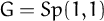 $G=Sp(1,1)$
by irreducible representations of the maximal compact subgroup
$G=Sp(1,1)$
by irreducible representations of the maximal compact subgroup $K \cong SU(2)\times SU(2)$
. The irreducible representations of
$K \cong SU(2)\times SU(2)$
. The irreducible representations of $K$
may be labeled by their highest weights, which in turn may be identified with ordered pairs of nonnegative integers. These are the nodes in the diagram. The circles indicate that the index of the corresponding Dirac operator is a discrete series representation; each discrete series occurs exactly once. The squares indicate that the index of the corresponding Dirac operator is supported on a principal series component; the components in question are precisely those that possess two minimal
$K$
may be labeled by their highest weights, which in turn may be identified with ordered pairs of nonnegative integers. These are the nodes in the diagram. The circles indicate that the index of the corresponding Dirac operator is a discrete series representation; each discrete series occurs exactly once. The squares indicate that the index of the corresponding Dirac operator is supported on a principal series component; the components in question are precisely those that possess two minimal $K$
-types (compare Figure 2), and each such component occurs precisely once. The principal series components with a single minimal
$K$
-types (compare Figure 2), and each such component occurs precisely once. The principal series components with a single minimal $K$
-type (compare Figure 2 again) do not contribute to
$K$
-type (compare Figure 2 again) do not contribute to $K$
-theory. These components are not in the range of the near-bijection mentioned in the text.
$K$
-theory. These components are not in the range of the near-bijection mentioned in the text.

This is strongly reminiscent of, but not the same as, Vogan’s theory of minimal $K$
-types for representations of a real reductive group [Reference Vogan46]. According to that theory, an irreducible representation of
$K$
-types for representations of a real reductive group [Reference Vogan46]. According to that theory, an irreducible representation of $K$
occurs as a minimal
$K$
occurs as a minimal $K$
-type in representations in a unique component of the tempered dual; and in most components a single minimal
$K$
-type in representations in a unique component of the tempered dual; and in most components a single minimal $K$
-type occurs. So, Vogan’s theory provides a map from the irreducible representations of
$K$
-type occurs. So, Vogan’s theory provides a map from the irreducible representations of $K$
to the components of the tempered dual of
$K$
to the components of the tempered dual of $G$
that is surjective and mostly one-to-one. See Figure 2 for an example.
$G$
that is surjective and mostly one-to-one. See Figure 2 for an example.
Vogan’s labeling of the tempered dual by minimal $K$
-types in the case of
$K$
-types in the case of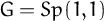 $G=Sp(1,1)$
, where
$G=Sp(1,1)$
, where $K = SU(2)\times SU(2)$
. The nodes in the diagram are the irreducible representations of
$K = SU(2)\times SU(2)$
. The nodes in the diagram are the irreducible representations of $K$
, as in Figure 1. The circles indicate that a given irreducible representation of
$K$
, as in Figure 1. The circles indicate that a given irreducible representation of $K$
occurs as the unique minimal
$K$
occurs as the unique minimal $K$
-type of a discrete series representation. The paired squares indicate pairs of irreducible representations of
$K$
-type of a discrete series representation. The paired squares indicate pairs of irreducible representations of $K$
that occur as minimal
$K$
that occur as minimal $K$
-types in the same principal series component of the tempered dual, while the triangles indicate irreducible representations of
$K$
-types in the same principal series component of the tempered dual, while the triangles indicate irreducible representations of $K$
that occur as the unique minimal
$K$
that occur as the unique minimal $K$
-type in a principal series component of the tempered dual. Every component of the tempered dual is listed in the diagram exactly once, except for the indicated pairings.
$K$
-type in a principal series component of the tempered dual. Every component of the tempered dual is listed in the diagram exactly once, except for the indicated pairings.

The purpose of this paper is to present a new view of the Connes-Kasparov isomorphism that brings the two pictures of the tempered dual still closer together.
Following a suggestion of Vogan (see the acknowledgments below), we shall consider a sort of enlargement of the reduced group ${C}^{*}$
-algebra, although it is a bit more natural to formulate this enlargement using
${C}^{*}$
-algebra, although it is a bit more natural to formulate this enlargement using ${C}^{*}$
-categories, rather than
${C}^{*}$
-categories, rather than ${C}^{*}$
-algebras (this is a minor point, and
${C}^{*}$
-algebras (this is a minor point, and ${C}^{*}$
-categories play a limited role in what follows; see Section 4 for further discussion).
${C}^{*}$
-categories play a limited role in what follows; see Section 4 for further discussion).
Let $G$
be an almost-connected Lie group (meaning that
$G$
be an almost-connected Lie group (meaning that $G$
is a Lie group with only finitely many path components), and let
$G$
is a Lie group with only finitely many path components), and let $K$
be a maximal compact subgroup of
$K$
be a maximal compact subgroup of $G$
. Form a
$G$
. Form a ${C}^{*}$
-category
${C}^{*}$
-category $\mathsf {P}^{*}_{G,K}$
as follows:
$\mathsf {P}^{*}_{G,K}$
as follows:
-
(i) The objects of the category are the finite-dimensional, unitary representations of the Lie group $K$
.
$K$
. -
(ii) If
$V_1$
and
$V_2$
are finite-dimensional unitary representations of
$K$
, then the Banach space
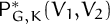
$\mathsf {P}^{*}_{G,K} (V_1,V_2)$
of morphisms from
$V_1$
to
$V_2$
in our
${C}^{*}$
-category is the completion, in the Hilbert space operator norm, of the space of equivariant, properly supported, order zero classical pseudodifferential operators acting between the sections of the homogeneous vector bundles over
$G/K$
associated to
$V_1$
and
$V_2$
.




The above ${C}^{*}$
-category includes the
${C}^{*}$
-category includes the ${C}^{*}$
-category generated by smoothing operators as a subcategory and an ideal, and this ideal is a
${C}^{*}$
-category generated by smoothing operators as a subcategory and an ideal, and this ideal is a ${C}^{*}$
-categorical variation on the reduced group
${C}^{*}$
-categorical variation on the reduced group ${C}^{*}$
-algebra of
${C}^{*}$
-algebra of $G$
. Now,
$G$
. Now, $K$
-theory groups may be defined for any
$K$
-theory groups may be defined for any ${C}^{*}$
-category in a way that closely mimics the definition for
${C}^{*}$
-category in a way that closely mimics the definition for ${C}^{*}$
-algebras (see Section 4 again), and our reworked version of the Connes-Kasparov isomorphism is as follows:
${C}^{*}$
-algebras (see Section 4 again), and our reworked version of the Connes-Kasparov isomorphism is as follows:
Theorem (Theorem 5.2.3 below)
Let $G$
be an almost-connected Lie group and let
$G$
be an almost-connected Lie group and let $K$
be a maximal compact subgroup of
$K$
be a maximal compact subgroup of $G$
. Denote by
$G$
. Denote by $R(K)$
the representation ring of the compact group
$R(K)$
the representation ring of the compact group $K$
. There is an isomorphism of abelian groups
$K$
. There is an isomorphism of abelian groups

under which the class in $R(K)$
of a finite-dimensional unitary representation
$R(K)$
of a finite-dimensional unitary representation $V$
of
$V$
of $K$
corresponds to the class of the identity operator on the bundle over
$K$
corresponds to the class of the identity operator on the bundle over $G/K$
with fiber
$G/K$
with fiber $V$
. In addition,
$V$
. In addition,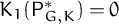 $K_1(\mathsf {P}^{*}_{G,K}) =0$
.
$K_1(\mathsf {P}^{*}_{G,K}) =0$
.
We shall prove the theorem above using the Connes-Kasparov isomorphism for $G$
. Conversely, the theorem implies the Connes-Kasparov isomorphism. Note that the statement involves no Dirac operators, and indeed the isomorphism in the theorem is defined using only identity operators. As we shall see, this makes it possible to calculate the isomorphism in simple, representation-theoretic terms.
$G$
. Conversely, the theorem implies the Connes-Kasparov isomorphism. Note that the statement involves no Dirac operators, and indeed the isomorphism in the theorem is defined using only identity operators. As we shall see, this makes it possible to calculate the isomorphism in simple, representation-theoretic terms.
For the rest of this introduction, we shall specialize from almost-connected Lie groups to the case of a real reductive group $G$
. Denote by
$G$
. Denote by $\mathsf {Fin}^{*}$
the
$\mathsf {Fin}^{*}$
the ${C}^{*}$
-category of finite-dimensional Hilbert spaces. If
${C}^{*}$
-category of finite-dimensional Hilbert spaces. If $\pi \colon G \to {U}({H}_\pi )$
is an irreducible, tempered unitary representation of
$\pi \colon G \to {U}({H}_\pi )$
is an irreducible, tempered unitary representation of $G$
, then there is a functor
$G$
, then there is a functor

that, on objects, maps a representation $V$
of
$V$
of $K$
to the space
$K$
to the space $ [ H_\pi \otimes V]^K$
. Taking
$ [ H_\pi \otimes V]^K$
. Taking $K$
-theory, the functor induces a morphism of abelian groups
$K$
-theory, the functor induces a morphism of abelian groups

Let us now introduce the following terminology, suggested to us by Alexandre Afgoustidis.
Definition A unitary representation of $G$
is tempiric if it is tempered, irreducible, and has real infinitesimal character, as in [Reference Vogan47], for example. Denote by
$G$
is tempiric if it is tempered, irreducible, and has real infinitesimal character, as in [Reference Vogan47], for example. Denote by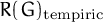 $R(G)_{\mathrm{tempiric}}$
the free abelian group on the set unitary equivalence classes of tempiric representations of
$R(G)_{\mathrm{tempiric}}$
the free abelian group on the set unitary equivalence classes of tempiric representations of $G$
.
$G$
.
A well-known and important theorem of David Vogan provides a bijection from irreducible unitary representations of $K$
to tempiric representations of
$K$
to tempiric representations of $G$
, given by minimal
$G$
, given by minimal $K$
-type (this follows from Vogan’s algebraic classification of the admissible dual in [Reference Vogan46], but for an explicit statement of the result see [Reference Vogan48, Thm. 1.2]). The bijection is illustrated in Figure 2, where the tempiric representations are precisely the discrete series and the irreducible constituents of the base principal series representations.
$K$
-type (this follows from Vogan’s algebraic classification of the admissible dual in [Reference Vogan46], but for an explicit statement of the result see [Reference Vogan48, Thm. 1.2]). The bijection is illustrated in Figure 2, where the tempiric representations are precisely the discrete series and the irreducible constituents of the base principal series representations.
Now, define a homomorphism of abelian groups

by means of the formula

where the sum is over representatives of the unitary equivalence classes of tempiric representations of $G$
(it is actually a finite sum, since all but finitely many of the integer multiplicities are zero). Using our first theorem, we may prove as a consequence of Vogan’s theorem that:
$G$
(it is actually a finite sum, since all but finitely many of the integer multiplicities are zero). Using our first theorem, we may prove as a consequence of Vogan’s theorem that:
Theorem (Compare (7.1.9) below)
The above group homomorphism  is an isomorphism of abelian groups.
Indeed, Vogan’s theorem implies that the composition

is an isomorphism of abelian groups; in effect, using Vogan’s bijection, the matrix of the composite homomorphism is lower-triangular with all diagonal entries equal to $1$
.
$1$
.
Our third theorem gives an explicit description of the category $\mathsf {P}^{*}_{G,K}$
in representation-theoretic terms, at least when
$\mathsf {P}^{*}_{G,K}$
in representation-theoretic terms, at least when $G$
has real rank one. In the paper [Reference Clare, Crisp and Higson8], an extensive amount of information from tempered representation theory, most of it due to Harish-Chandra, was combined to produce a
$G$
has real rank one. In the paper [Reference Clare, Crisp and Higson8], an extensive amount of information from tempered representation theory, most of it due to Harish-Chandra, was combined to produce a ${C}^{*}$
-algebra isomorphism
${C}^{*}$
-algebra isomorphism
 $$\begin{align} {C}^{*}_r (G) \stackrel \cong \longrightarrow \bigoplus _{[P,\sigma]} C_0\bigl (\mathfrak{a}^{*}_P, \mathfrak{K}(H_\sigma )\bigr ) ^{W_\sigma} \end{align} $$
that describes the reduced ${C}^{*}$
-algebra of any real reductive group in representation-theoretic terms. The notation is described in more detail in Section 6.4, at least in the cases of interest in this paper, but in brief,
${C}^{*}$
-algebra of any real reductive group in representation-theoretic terms. The notation is described in more detail in Section 6.4, at least in the cases of interest in this paper, but in brief, $\mathfrak {a}_P^{*}$
is a finite-dimensional real vector space,
$\mathfrak {a}_P^{*}$
is a finite-dimensional real vector space, $H_\sigma $
is a Hilbert space, and
$H_\sigma $
is a Hilbert space, and $W_\sigma $
is a finite group that acts on the bundle
$W_\sigma $
is a finite group that acts on the bundle $\mathfrak {a}_P^{*} \times H_\sigma $
. Now if
$\mathfrak {a}_P^{*} \times H_\sigma $
. Now if $\mathfrak {v}$
is a finite-dimensional real vector space, then denote by
$\mathfrak {v}$
is a finite-dimensional real vector space, then denote by $\overline {\mathfrak {v}}$
the compactification of
$\overline {\mathfrak {v}}$
the compactification of $\mathfrak {v}$
that adds a sphere at infinity.
$\mathfrak {v}$
that adds a sphere at infinity.
Theorem (See Theorem 6.5.2 below)
If $G$
has real rank one, then the isomorphism (**) determines isomorphisms
$G$
has real rank one, then the isomorphism (**) determines isomorphisms
 $$\begin{align*}\mathsf{P}^{*}_{G,K} (V_1, V_2) \stackrel \cong \longrightarrow \bigoplus_{[P,\sigma]} C \bigl (\overline{\mathfrak{a}^{*}_P}, \mathfrak{K} ([V_1\otimes H_\sigma]^K,[V_2\otimes H_\sigma]^K )\bigr )^{W_\sigma} . \end{align*}$$
The theorem allows us to directly compute the $K$
-theory of
$K$
-theory of $\mathsf {P}^{*}_{G,K}$
in terms of tempiric representations (without reference to either the Connes-Kasparov isomorphism or Vogan’s theorem). Indeed, by composing the isomorphisms in the theorem with evaluation at
$\mathsf {P}^{*}_{G,K}$
in terms of tempiric representations (without reference to either the Connes-Kasparov isomorphism or Vogan’s theorem). Indeed, by composing the isomorphisms in the theorem with evaluation at $0$
in each
$0$
in each $\mathfrak {a}_P^{*}$
we obtain a homotopy equivalence from
$\mathfrak {a}_P^{*}$
we obtain a homotopy equivalence from $\mathsf {P}^{*}_{G,K}$
to the
$\mathsf {P}^{*}_{G,K}$
to the ${C}^{*}$
-category whose objects are the finite-dimensional unitary representations of
${C}^{*}$
-category whose objects are the finite-dimensional unitary representations of $K$
and whose Hom-sets are the finite-dimensional spaces
$K$
and whose Hom-sets are the finite-dimensional spaces
 $$\begin{align*}\bigoplus_{[P,\sigma]} \mathfrak{K} ([V_1\otimes H_\sigma]^K,[V_2\otimes H_\sigma]^K )\bigr )^{W_\sigma}, \end{align*}$$
and the $K$
-theory of the latter may be identified with
$K$
-theory of the latter may be identified with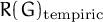 $R(G)_{\mathrm{tempiric}}$
. This gives an independent proof of our second theorem above, for real rank-one groups, that does not refer to Vogan’s theorem.
$R(G)_{\mathrm{tempiric}}$
. This gives an independent proof of our second theorem above, for real rank-one groups, that does not refer to Vogan’s theorem.
Let us remark, finally, that for any real reductive group $G$
, the map (*) is readily computed to be
$G$
, the map (*) is readily computed to be
 $$\begin{align*}\begin{aligned} R(K)\longrightarrow R(G)_{\mathrm{tempiric}} \\ [\tau]\longmapsto \sum _{\pi\,\mathrm{tempiric}} \operatorname{mult}(\tau, \pi) [\pi] , \end{aligned} \end{align*}$$
where $\operatorname {mult}(\tau , \pi )\in \{0,1,2,\dots \}$
is the multiplicity with which
$\operatorname {mult}(\tau , \pi )\in \{0,1,2,\dots \}$
is the multiplicity with which $\tau $
occurs in
$\tau $
occurs in $\pi $
. Our first and third theorems imply that this map is an isomorphism of abelian groups (at least for real rank-one groups); the isomorphism can be viewed as a
$\pi $
. Our first and third theorems imply that this map is an isomorphism of abelian groups (at least for real rank-one groups); the isomorphism can be viewed as a $K$
-theoretic version of Vogan’s theorem about minimal
$K$
-theoretic version of Vogan’s theorem about minimal $K$
-types. In a separate work that developed from this paper, this last statement is proved to be a consequence of the Connes-Kasparov isomorphism for all real reductive groups [Reference Bradd, Higson and Yuncken6]. One can speculate that by changing the type of pseudodifferential operators used, the method of pseudodifferential operators developed here might be extendable to new cases. But we shall not pursue that in this paper.
$K$
-types. In a separate work that developed from this paper, this last statement is proved to be a consequence of the Connes-Kasparov isomorphism for all real reductive groups [Reference Bradd, Higson and Yuncken6]. One can speculate that by changing the type of pseudodifferential operators used, the method of pseudodifferential operators developed here might be extendable to new cases. But we shall not pursue that in this paper.
2 Pseudodifferential Operators
In this section we shall rapidly review most of the facts about pseudodifferential operators that we shall need in the paper.
2.1 Pseudodifferential operators on Euclidean space
For our purposes, a convenient general reference for pseudodifferential operators is Chapter 18 of the treatise [Reference Hörmander22] of Hörmander. The pseudodifferential operators of order $m\in \mathbb {Z}$
on
$m\in \mathbb {Z}$
on $\mathbb {R}^n$
are precisely the operators
$\mathbb {R}^n$
are precisely the operators
 $$ \begin{align} A \colon C_c^\infty (\mathbb{R}^n) \longrightarrow C^\infty (\mathbb{R}^n) \end{align} $$
of the form
 $$ \begin{align} (A\varphi )(x) = (2\pi)^{-n} \int _{\mathbb{R}^n} e^{i\xi\cdot x} a(x,\xi) \hat \varphi (\xi)\, d\xi , \end{align} $$
for which the complete symbol function $a(x,\xi )$
belongs to the symbol class
$a(x,\xi )$
belongs to the symbol class $S^m (\mathbb {R}^n{\times } \mathbb {R}^n)$
defined in [Reference Hörmander22, Def. 18.1.1]. Here
$S^m (\mathbb {R}^n{\times } \mathbb {R}^n)$
defined in [Reference Hörmander22, Def. 18.1.1]. Here $\hat \varphi $
is the Fourier transform of
$\hat \varphi $
is the Fourier transform of $\varphi $
[Reference Hörmander21, Def. 7.1.1], normalized so that if
$\varphi $
[Reference Hörmander21, Def. 7.1.1], normalized so that if $a(x,\xi )\equiv 1$
, then
$a(x,\xi )\equiv 1$
, then $A\varphi = \varphi $
. Among other things, the conditions on the symbol class imply that the integrand is an integrable function. The operator
$A\varphi = \varphi $
. Among other things, the conditions on the symbol class imply that the integrand is an integrable function. The operator $A$
is continuous for the usual topologies on
$A$
is continuous for the usual topologies on $C_c^\infty (\mathbb {R}^n)$
and
$C_c^\infty (\mathbb {R}^n)$
and $C^\infty (\mathbb {R}^n)$
[Reference Hörmander22, Thm. 18.1.6].
$C^\infty (\mathbb {R}^n)$
[Reference Hörmander22, Thm. 18.1.6].
When the complete symbol function admits an asymptotic expansion in homogeneous functions of strictly decreasing integer order, as detailed in [Reference Hörmander22, Prop. 18.1.3 and Def. 18.1.5], the operator $A$
will be said to be classical. We shall be exclusively concerned with classical operators in what follows.
$A$
will be said to be classical. We shall be exclusively concerned with classical operators in what follows.
Every pseudodifferential operator $A$
on
$A$
on $\mathbb {R}^n$
is adjointable, in the sense that there is a linear operator
$\mathbb {R}^n$
is adjointable, in the sense that there is a linear operator
 $$\begin{align*}A^{*} \colon C_c^\infty (\mathbb{R}^n) \longrightarrow C^\infty (\mathbb{R}^n) \end{align*}$$
such that
 $$\begin{align*}\langle A\varphi,\psi \rangle_{L^2} = \langle \varphi, A^{*} \psi\rangle_{L^2} \qquad \forall \varphi,\psi\in C_c^\infty (\mathbb{R}^n). \end{align*}$$
If $A$
is a classical pseudodifferential operator, then the adjoint is a classical pseudodifferential operator, too, and it has the same order as
$A$
is a classical pseudodifferential operator, then the adjoint is a classical pseudodifferential operator, too, and it has the same order as $A$
. See [Reference Hörmander22, Thm. 18.1.7].
$A$
. See [Reference Hörmander22, Thm. 18.1.7].
The composition of properly supported,Footnote 1 pseudodifferential operators is again pseudodifferential (and classical if the factors are classical), and the order of the composite operator is the sum of the orders of the factors [Reference Hörmander22, Thm. 18.1.8].
2.2 Pseudodifferential operators on smooth manifolds
The space of all classical pseudodifferential operators is invariant under diffeomorphisms [Reference Hörmander22, Thm. 18.1.17]. Because of this, one can transport the definitions of pseudodifferential and classical pseudodifferential operators to any smooth manifold, as in [Reference Hörmander22, Def. 18.1.20].
Hörmander has given a coordinate-free definition of classical pseudodifferential operators that is conceptually helpful [Reference Hörmander20]. If $M$
is a smooth manifold without boundary, then a continuous linear operator
$M$
is a smooth manifold without boundary, then a continuous linear operator
 $$\begin{align*}A \colon C_c^\infty (M) \longrightarrow C^\infty (M) \end{align*}$$
is a classical pseudodifferential operator of order $m$
(according to the coordinate-free definition of Hörmander) if and only if for every
$m$
(according to the coordinate-free definition of Hörmander) if and only if for every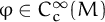 $\varphi \in C_c^\infty (M) $
and every bounded set of functions
$\varphi \in C_c^\infty (M) $
and every bounded set of functions $\ell \in C^\infty (M)$
with
$\ell \in C^\infty (M)$
with $d\ell $
nowhere zero throughout
$d\ell $
nowhere zero throughout $\operatorname { {Supp}}(\varphi )$
, there is a uniform asymptotic expansion
$\operatorname { {Supp}}(\varphi )$
, there is a uniform asymptotic expansion
 $$ \begin{align} e^{-i t \ell } \cdot A(e^{i t\ell }\varphi ) \sim \sum_{k=0}^\infty \alpha_k(\varphi ,\ell ) t ^{m-k}\qquad\text{as}\quad t \to +\infty, \end{align} $$
with $\alpha _k(\varphi ,\ell )\in C^\infty (M)$
, meaning that for every
$\alpha _k(\varphi ,\ell )\in C^\infty (M)$
, meaning that for every $N$
, the set of all functions
$N$
, the set of all functions
 $$ \begin{align} t ^{N-m}\cdot \left ( e^{-i t \ell } \cdot A(e^{i t\ell }\varphi ) - \sum_{k=0}^{N-1} \alpha_k(\varphi ,\ell ) t ^{m-k}\right ) \in C^\infty(M), \end{align} $$
for all $\ell $
and all
$\ell $
and all $t \ge 1$
, is a bounded set in
$t \ge 1$
, is a bounded set in $C^\infty (M)$
. See [Reference Hörmander20, Sec. 2] for further details and discussion.
$C^\infty (M)$
. See [Reference Hörmander20, Sec. 2] for further details and discussion.
Hörmander proves that when $M {=} \mathbb {R}^n$
, the compactly supported operators of the above type, meaning those for which there exists
$M {=} \mathbb {R}^n$
, the compactly supported operators of the above type, meaning those for which there exists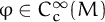 $\varphi \in C_c^\infty (M)$
with
$\varphi \in C_c^\infty (M)$
with
 $$ \begin{align} A \varphi\psi = A\psi = \varphi A\psi\qquad \forall \psi \in C^\infty _c(M) , \end{align} $$
are precisely the compactly supported pseudodifferential operators of the type considered in the previous section. The complete symbol function is characterized by
 $$\begin{align*}a(x,\xi) = \bigl ( e^{-i \xi } \cdot A( e^{i\xi}\varphi )\bigr ) (x) \end{align*}$$
where $\xi \in \mathbb {R}^n$
is regarded as a linear function on
$\xi \in \mathbb {R}^n$
is regarded as a linear function on $\mathbb {R}^n$
using the standard dot product on
$\mathbb {R}^n$
using the standard dot product on $\mathbb {R}^n$
, and
$\mathbb {R}^n$
, and $\varphi $
is as in (2.2.3) above.
$\varphi $
is as in (2.2.3) above.
It follows that the pseudodifferential operators in Hörmander’s coordinate-free definition are precisely the operators with the following property: for every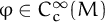 $\varphi \in C^\infty _c(M)$
and every diffeomorphism from a neighborhood of the support of
$\varphi \in C^\infty _c(M)$
and every diffeomorphism from a neighborhood of the support of $\varphi $
to an open subset of
$\varphi $
to an open subset of $\mathbb {R}^n$
, the operator
$\mathbb {R}^n$
, the operator $\varphi A \varphi $
transfers, via that diffeomorphism, to a (compactly supported) pseudodifferential operator on
$\varphi A \varphi $
transfers, via that diffeomorphism, to a (compactly supported) pseudodifferential operator on $\mathbb {R}^n$
in the sense of the previous section. These are the operators that we shall be considering from this point onward; they coincide with the operators on manifolds defined in [Reference Hörmander22, Def. 18.1.20].
$\mathbb {R}^n$
in the sense of the previous section. These are the operators that we shall be considering from this point onward; they coincide with the operators on manifolds defined in [Reference Hörmander22, Def. 18.1.20].
We shall work in slightly greater generality. If $M$
is a smooth manifold, and if
$M$
is a smooth manifold, and if $E$
and
$E$
and $F$
are smooth vector bundles over
$F$
are smooth vector bundles over $M$
, then using local coordinates on
$M$
, then using local coordinates on $M$
and local frames for
$M$
and local frames for $E$
and
$E$
and $F$
, one can define pseudodifferential and classical pseudodifferential operators
$F$
, one can define pseudodifferential and classical pseudodifferential operators
 $$ \begin{align} A \colon C_c^\infty (M;E)\longrightarrow C^\infty (M;F) \end{align} $$
that act between spaces of smooth sections of $E$
and
$E$
and $F$
; this is done in [Reference Hörmander22, Def. 18.1.32]. The operators are characterized by the property that for any local frames of
$F$
; this is done in [Reference Hörmander22, Def. 18.1.32]. The operators are characterized by the property that for any local frames of $E_1$
and
$E_1$
and $E_2$
over an open set
$E_2$
over an open set $U\subseteq M$
, the entries of the matrix of operators determined by
$U\subseteq M$
, the entries of the matrix of operators determined by $\varphi A \varphi $
and the frames are classical pseudodifferential operators on
$\varphi A \varphi $
and the frames are classical pseudodifferential operators on $U$
.
$U$
.
2.3 The principal symbol
Let $A$
be a pseudodifferential operator of order
$A$
be a pseudodifferential operator of order $m$
on a smooth manifold
$m$
on a smooth manifold $M$
. The value of the leading coefficient function
$M$
. The value of the leading coefficient function
 $$\begin{align*}\alpha_0(\varphi ,\ell)\colon M \longrightarrow \mathbb{C} \end{align*}$$
in the asymptotic expansion (2.2.1) at a point $x\in M$
depends only on the value of
$x\in M$
depends only on the value of $\varphi $
at
$\varphi $
at $x$
and the value of the differential
$x$
and the value of the differential $d\ell $
at
$d\ell $
at $x$
. So from
$x$
. So from $\alpha _0$
we obtain a function
$\alpha _0$
we obtain a function
 $$\begin{align*}a_0 \colon T^{*}M\setminus M \longrightarrow \mathbb{C} , \end{align*}$$
that is characterized by
 $$\begin{align*}a_0(x,\xi)\varphi (x) = \alpha_0(\varphi ,\ell)(x)\quad\text{if } (d\ell)(x) = \xi. \end{align*}$$
This is the principal symbol of $A$
. It is a smooth function on
$A$
. It is a smooth function on $T^{*}M\setminus M$
that is homogeneous of degree
$T^{*}M\setminus M$
that is homogeneous of degree $m$
on each cotangent fiber. See [Reference Hörmander20, Lemmas 2.2 & 2.3] or [Reference Hörmander22, pp. 82-83].
$m$
on each cotangent fiber. See [Reference Hörmander20, Lemmas 2.2 & 2.3] or [Reference Hörmander22, pp. 82-83].
It follows from Hörmander’s coordinate-free definition of classical pseudodifferential operators that the principal symbol may be characterized in terms of the operator $A$
by the formula
$A$
by the formula
 $$\begin{align*}a_0(x,\xi)\varphi (x) = \lim_{t\to +\infty} t^{-m} e^{-i\ell(x)} (A e^{it \ell}\varphi) (x) \quad \text{when }(d\ell)(x)=\xi, \end{align*}$$
and that the limit is uniform over bounded families of smooth functions $\ell $
.
$\ell $
.
In the case of a pseudodifferential operator
 $$\begin{align*}A \colon C_c^\infty (M;E) \longrightarrow C^\infty (M;F) , \end{align*}$$
acting on bundle sections, the principal symbol of $A$
is a smooth section of the pullback of the bundle
$A$
is a smooth section of the pullback of the bundle $\operatorname { {Hom}} (E,F)$
to
$\operatorname { {Hom}} (E,F)$
to $T^{*}M\setminus M$
that is homogeneous of order
$T^{*}M\setminus M$
that is homogeneous of order $m$
in each fiber [Reference Hörmander22, p. 92]. It is characterized by the formula
$m$
in each fiber [Reference Hörmander22, p. 92]. It is characterized by the formula
 $$ \begin{align} a_0(x,\xi)s(x) = \lim_{t\to +\infty} t^{-m}e^{-i\ell(x)}( A e^{it \ell}s)(x) \quad \text{when }(d\ell)(x)=\xi, \end{align} $$
for all smooth, compactly supported sections $s$
. Once again the limit is uniform over bounded families of smooth functions
$s$
. Once again the limit is uniform over bounded families of smooth functions $\ell $
.
$\ell $
.
For various purposes below, it will be convenient to use the following notion of compactification of a finite-dimensional real vector space, which adds to the vector space a “sphere at infinity.”
Definition 2.3.2. If $\mathfrak {v}$
is any finite-dimensional vector space, then we shall denote by
$\mathfrak {v}$
is any finite-dimensional vector space, then we shall denote by $\overline {\mathfrak {v}}$
the topological compactification of
$\overline {\mathfrak {v}}$
the topological compactification of $\mathfrak {v}$
(meaning a compact Hausdorff space including
$\mathfrak {v}$
(meaning a compact Hausdorff space including $\mathfrak {v}$
as a dense open subset) for which the continuous map
$\mathfrak {v}$
as a dense open subset) for which the continuous map
 $$\begin{align*}\mathfrak{v} \rightarrow \mathfrak{v} , \qquad v \mapsto (1{+}\|v\|) ^{-1} v \end{align*}$$
extends to a homeomorphism from $\overline {\mathfrak {v}} $
to the closed unit ball in
$\overline {\mathfrak {v}} $
to the closed unit ball in $\mathfrak {v}$
. Here
$\mathfrak {v}$
. Here $\|\,\cdot \, \|$
is any norm on
$\|\,\cdot \, \|$
is any norm on $\mathfrak {v}$
(the compactification is independent of the choice of norm).
$\mathfrak {v}$
(the compactification is independent of the choice of norm).
The action of $GL(\mathfrak {v})$
on
$GL(\mathfrak {v})$
on $\mathfrak {v}$
extends to a continuous action on the compactification above. With this, if
$\mathfrak {v}$
extends to a continuous action on the compactification above. With this, if $\mathfrak {V}$
is any real vector bundle, then we may define a space
$\mathfrak {V}$
is any real vector bundle, then we may define a space $\overline {\mathfrak {V}}$
by applying the compactification construction fiberwise (compare [Reference Atiyah3, Sec. 1.2]). We shall write the added boundary as
$\overline {\mathfrak {V}}$
by applying the compactification construction fiberwise (compare [Reference Atiyah3, Sec. 1.2]). We shall write the added boundary as $\partial \mathfrak {V}$
below.
$\partial \mathfrak {V}$
below.
The principal symbol of an order zero pseudodifferential operator on a smooth manifold $M$
, being homogeneous of order zero on each fiber of
$M$
, being homogeneous of order zero on each fiber of $T^{*}M\setminus M$
, extends to a continuous function (or section) on
$T^{*}M\setminus M$
, extends to a continuous function (or section) on $\overline {T^{*}M} \setminus M$
, and is determined by the restriction of this extension to
$\overline {T^{*}M} \setminus M$
, and is determined by the restriction of this extension to $\partial T^{*}M$
:
$\partial T^{*}M$
:
 $$\begin{align*}a_0 \colon \partial T^{*}M \longrightarrow \mathbb{C}. \end{align*}$$
If the fiberwise compactification is constructed using a Riemannian metric on $M$
, then
$M$
, then $\partial T^{*}M$
identifies with the unit sphere bundle in
$\partial T^{*}M$
identifies with the unit sphere bundle in $T^{*}M$
and therefore carries a canonical smooth structure, independent of the choice of metric. The principal symbol is then a smooth function. Moreover, it is evident from the definitions that if the principal symbol of a classical pseudodifferential operator of order
$T^{*}M$
and therefore carries a canonical smooth structure, independent of the choice of metric. The principal symbol is then a smooth function. Moreover, it is evident from the definitions that if the principal symbol of a classical pseudodifferential operator of order $0$
is identically zero, then
$0$
is identically zero, then $ A$
is in fact of order
$ A$
is in fact of order ${-}1$
. We therefore obtain a short exact sequence of algebras and algebra morphisms
${-}1$
. We therefore obtain a short exact sequence of algebras and algebra morphisms
 $$\begin{align*}0 \longrightarrow \Psi^{-1}_c (M) \longrightarrow \Psi^0_c(M) \longrightarrow C^\infty _c(\partial T^{*}M) \longrightarrow 0 , \end{align*}$$
where $\Psi _c^{-1}(M)$
and
$\Psi _c^{-1}(M)$
and $\Psi ^0_c(M)$
are the algebras of compactly supported order
$\Psi ^0_c(M)$
are the algebras of compactly supported order $-1$
and order
$-1$
and order $0$
classical pseudodifferential operators, respectively.
$0$
classical pseudodifferential operators, respectively.
2.4 The pseudodifferential extension of C*-algebras
It will be important for our purposes that compactly supported classical pseudodifferential operators of order $0$
extend to bounded Hilbert space operators:
$0$
extend to bounded Hilbert space operators:
Theorem 2.4.1 (See for instance [Reference Hörmander22, Thm. 18.1.1])
If $A$
is a compactly supported classical pseudodifferential operator of order
$A$
is a compactly supported classical pseudodifferential operator of order $0$
on a smooth manifold
$0$
on a smooth manifold $M$
, then
$M$
, then $A$
is
$A$
is $L^2$
-bounded: for any choice of smooth measure on
$L^2$
-bounded: for any choice of smooth measure on $M$
, there is a constant
$M$
, there is a constant $C\ge 0$
such that
$C\ge 0$
such that
 $$\begin{align*}\| A \varphi \|_{L^2(M)} \le C \| \varphi \|_{L^2(M)} \qquad \forall \varphi \in C_c^\infty (M). \end{align*}$$
Remark 2.4.2. Hörmander deals with the case of $M{=}\mathbb {R}^n$
in the reference cited, but the result is local in nature, so this suffices.
$M{=}\mathbb {R}^n$
in the reference cited, but the result is local in nature, so this suffices.
Theorem 2.4.3. If $A$
is a compactly supported classical pseudodifferential operator of order
$A$
is a compactly supported classical pseudodifferential operator of order $-1$
, then
$-1$
, then $A$
extends to a compact Hilbert space operator on
$A$
extends to a compact Hilbert space operator on $L^2 (M)$
.
$L^2 (M)$
.
Proof. This is again a local result, and we may assume that $M=\mathbb {R}^n$
. In [Reference Hörmander22, Thm. 18.1.1] is is shown that in this case, if
$M=\mathbb {R}^n$
. In [Reference Hörmander22, Thm. 18.1.1] is is shown that in this case, if $A$
is compactly supported and has order
$A$
is compactly supported and has order $-1$
, then
$-1$
, then $A$
in fact maps
$A$
in fact maps $L^2 (\mathbb {R}^n)$
into the Sobolev space
$L^2 (\mathbb {R}^n)$
into the Sobolev space $H^1 (\mathbb {R}^n)$
. The proof follows from this and the Rellich lemma in Sobolev space theory (see for instance [Reference Zimmer50, Thm. 5.2.8]).
$H^1 (\mathbb {R}^n)$
. The proof follows from this and the Rellich lemma in Sobolev space theory (see for instance [Reference Zimmer50, Thm. 5.2.8]).
We shall also require the following slightly more specialized results, related to ${C}^{*}$
-algebra theory.
${C}^{*}$
-algebra theory.
Theorem 2.4.4 [Reference Seeley43, Lem. 7.2]; see also [Reference Kohn and Nirenberg31, Thm. 5]
If $A$
is a compactly supported, classical pseudodifferential operator of order zero on a smooth manifold
$A$
is a compactly supported, classical pseudodifferential operator of order zero on a smooth manifold $M$
, then
$M$
, then
 $$\begin{align*}\| A\|_{L^2(M)\to L^2 (M)} \ge \sup \bigl \{\, |a_0(m,\xi)| : m\in M,\,\, \xi\in T^{*}_mM \setminus \{ 0\}\,\bigr \} \end{align*}$$
(the $L^2$
-operator norm of
$L^2$
-operator norm of $A$
is of course the best possible constant in Theorem 2.4.1; the supremum above is finite because
$A$
is of course the best possible constant in Theorem 2.4.1; the supremum above is finite because $a_0$
is homogeneous in
$a_0$
is homogeneous in $\xi $
of order
$\xi $
of order $0$
).
$0$
).
It follows from Theorem 2.4.4 that the principal symbol gives rise to a continuous homomorphism of Banach algebras, and in fact ${C}^{*}$
-algebrasFootnote
2
${C}^{*}$
-algebrasFootnote
2
 $$\begin{align*}\overline {\Psi^0_c(M)} \longrightarrow C_0(\partial T^{*}M), \end{align*}$$
where the overbar denotes the ${C}^{*}$
-algebra completion in the operator norm.
${C}^{*}$
-algebra completion in the operator norm.
The following result, or rather the equivariant version that we shall derive from it in Section 3.5, will play a crucial role in the paper.
Theorem 2.4.5 [Reference Seeley43, Thm. 14.1]; see also [Reference Kohn and Nirenberg31, Cor. 6.1]
The above extended principal symbol map fits into a short exact sequence of ${C}^{*}$
-algebras
${C}^{*}$
-algebras
 $$\begin{align*}0 \longrightarrow \mathfrak{K}(L^2 (M)) \longrightarrow \overline{\Psi^0_c(M)} \longrightarrow C_0(\partial T^{*}M) \longrightarrow 0. \end{align*}$$
3 Operators on Proper Homogeneous Spaces
We shall begin this section by considering any smooth manifold $M$
that is equipped with a smooth and proper right action of a Lie group
$M$
that is equipped with a smooth and proper right action of a Lie group $G$
. Later in the section we shall specialize to the case where
$G$
. Later in the section we shall specialize to the case where $M=K \backslash G $
and
$M=K \backslash G $
and $K$
is a compact subgroup of
$K$
is a compact subgroup of $G$
.
$G$
.
3.1 Sections of equivariant vector bundles
Let $E$
be a smooth, right-
$E$
be a smooth, right- $G$
-equivariant, hermitian vector bundle over
$G$
-equivariant, hermitian vector bundle over $M$
, and denote by
$M$
, and denote by $C^\infty (M;E)$
and
$C^\infty (M;E)$
and $C_c^\infty (M;E)$
its spaces of smooth sections, and smooth, compactly supported sections, respectively. Both spaces carry right actions of the group
$C_c^\infty (M;E)$
its spaces of smooth sections, and smooth, compactly supported sections, respectively. Both spaces carry right actions of the group $G$
that are defined by
$G$
that are defined by
 $$\begin{align*}(s \cdot g) (m) = s(mg^{-1})\cdot g \qquad \forall g \in G,\,\,\, \forall m \in M. \end{align*}$$
The right-hand side of the formula involves the action
 $$\begin{align*}E_{mg^{-1}} \to E_m, \quad e\mapsto e \cdot g \end{align*}$$
of the group element $G$
between the fibers of
$G$
between the fibers of $E$
.
$E$
.
Now fix a $G$
-invariant smooth measure on
$G$
-invariant smooth measure on $M$
and a left-invariant Haar measure on
$M$
and a left-invariant Haar measure on $G$
. Denote by
$G$
. Denote by $C_c^\infty (G)$
the space of smooth, compactly supported complex functions on
$C_c^\infty (G)$
the space of smooth, compactly supported complex functions on $G$
, equipped with the standard convolution multiplication and the involution that is used in groupoid
$G$
, equipped with the standard convolution multiplication and the involution that is used in groupoid ${C}^{*}$
-algebra theory [Reference Renault39, Sec. II.1]:
${C}^{*}$
-algebra theory [Reference Renault39, Sec. II.1]:
 $$ \begin{align} (f_1*f_2)(g) = \int _G f_1(gg_1)f_2(g_1^{-1} ) \, dg_1\quad\text{and}\quad f^{*}(g) = \overline{f(g^{-1})}. \end{align} $$
The spaces $C^\infty (M;E)$
and
$C^\infty (M;E)$
and $C_c^\infty (M;E)$
carry right module actions of the algebra
$C_c^\infty (M;E)$
carry right module actions of the algebra $C_c^\infty (G)$
defined by the formula
$C_c^\infty (G)$
defined by the formula
 $$ \begin{align} (s* f) (m) = \int _G ( sg_1^{-1}) (m) f(g_1^{-1}) \, dg_1 \quad \forall s \in C^\infty (M;E)\,\,\,\forall f \in C_c^\infty (G). \end{align} $$
Here the scalar $f(g)$
has been written on the right-hand side of the vector
$f(g)$
has been written on the right-hand side of the vector $(sg)(m)$
in an effort to make the formula easier to parse. When
$(sg)(m)$
in an effort to make the formula easier to parse. When $M{=}G$
and when
$M{=}G$
and when $E$
is trivial, so that
$E$
is trivial, so that $C_c^\infty (M,E) = C_c^\infty (G)$
, (3.1.2) agrees with (3.1.1).
$C_c^\infty (M,E) = C_c^\infty (G)$
, (3.1.2) agrees with (3.1.1).
The space $C^\infty (M;E)$
also carries the obvious
$C^\infty (M;E)$
also carries the obvious $L^2$
-inner product, and indeed a
$L^2$
-inner product, and indeed a $C_c^\infty (G)$
-valued inner product
$C_c^\infty (G)$
-valued inner product
 $$ \begin{align} \langle\,\,\,\,,\,\,\,\rangle_{C^\infty _c (G)} : C_c^\infty (M;E) \times C_c^\infty (M;E) \longrightarrow C_c^\infty (G) \end{align} $$
that is defined by
 $$\begin{align*}\langle s_1, s_2 \rangle _{C^\infty _c (G)} : g \longmapsto \langle s_1, s_2 g^{-1} \rangle_{L^2(M;E)}. \end{align*}$$
When $C_c^\infty (M,E) = C_c^\infty (G)$
, this is simply
$C_c^\infty (M,E) = C_c^\infty (G)$
, this is simply $s_1^{*}*s_2\in C_c^\infty (G)$
, where the involution and product are as in (3.1.1). In general, the inner product is complex-sesquilinear and satisfies
$s_1^{*}*s_2\in C_c^\infty (G)$
, where the involution and product are as in (3.1.1). In general, the inner product is complex-sesquilinear and satisfies
 $$\begin{align*}\begin{aligned} \langle s_1, s_2* f \rangle _{C^\infty _c (G)} & = \langle s_1, s_2 \rangle _{C^\infty _c (G)}* f\\ \langle s_1, s_2 \rangle _{C^\infty _c (G)} & = \langle s_2, s_1 \rangle _{C^\infty _c (G)}^{*} \end{aligned} \end{align*}$$
for all $s_1,s_2\in C_c^\infty (M;E)$
and all
$s_1,s_2\in C_c^\infty (M;E)$
and all $f\in C_c^\infty (G)$
.
$f\in C_c^\infty (G)$
.
We shall use the realization of the reduced ${C}^{*}$
-algebra of
${C}^{*}$
-algebra of $G$
from groupoid
$G$
from groupoid ${C}^{*}$
-algebra theory; see [Reference Renault39, Sec. II.1] again. The
${C}^{*}$
-algebra theory; see [Reference Renault39, Sec. II.1] again. The $*$
-algebra
$*$
-algebra $C^\infty _c (G)$
is represented faithfully by left-convolution (using the left Haar measure) as bounded operators on the Hilbert space
$C^\infty _c (G)$
is represented faithfully by left-convolution (using the left Haar measure) as bounded operators on the Hilbert space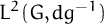 $L^2 (G,dg^{-1})$
(this is a
$L^2 (G,dg^{-1})$
(this is a $*$
-representation), and
$*$
-representation), and ${C}^{*}_r(G)$
is by definition the completion in the operator norm. When
${C}^{*}_r(G)$
is by definition the completion in the operator norm. When $G$
is unimodular, which is our main interest, this is the usual definition of the reduced
$G$
is unimodular, which is our main interest, this is the usual definition of the reduced ${C}^{*}$
-algebra [Reference Pedersen38, Sec. 7.2]. In general, pointwise multiplication by
${C}^{*}$
-algebra [Reference Pedersen38, Sec. 7.2]. In general, pointwise multiplication by $\Delta (g)^{-1/2}$
, where
$\Delta (g)^{-1/2}$
, where $\Delta $
is the modular function of
$\Delta $
is the modular function of $G$
, as in [Reference Pedersen38, Sec. 7.1], is an algebra automorphism of
$G$
, as in [Reference Pedersen38, Sec. 7.1], is an algebra automorphism of $C_c^\infty (G)$
that extends to a
$C_c^\infty (G)$
that extends to a $*$
-isomorphism from
$*$
-isomorphism from ${C}^{*}_r(G)$
as we have defined it to the standard version of the reduced
${C}^{*}_r(G)$
as we have defined it to the standard version of the reduced ${C}^{*}$
-algebra.
${C}^{*}$
-algebra.
The inner product (3.1.3) has the additional properties that
 $$\begin{align*}\langle s,s\rangle _{C^\infty_c (G)} \ge 0 \quad \text{and} \quad \langle s,s\rangle _{C^\infty_c (G)} = 0 \,\, \Rightarrow \,\, s =0 , \end{align*}$$
where the inequality indicates positivity in the ${C}^{*}$
-algebra
${C}^{*}$
-algebra ${C}^{*}_r (G)$
. The formula
${C}^{*}_r (G)$
. The formula
 $$\begin{align*}\| s\|^2 = \| \langle s,s\rangle_{C^\infty _c (G)} \|_{{C}^{*}_r (G)} \end{align*}$$
defines a norm on the complex vector space $C_c^\infty (M;E)$
. We shall denote by
$C_c^\infty (M;E)$
. We shall denote by ${C}^{*}_r(M;E)$
the Banach-space completion of
${C}^{*}_r(M;E)$
the Banach-space completion of $C^\infty _c (M;E)$
in this norm. The right action in (3.1.2) and inner product in (3.1.3) extend to completions to give
$C^\infty _c (M;E)$
in this norm. The right action in (3.1.2) and inner product in (3.1.3) extend to completions to give ${C}^{*}_r (M;E)$
the structure of a Hilbert
${C}^{*}_r (M;E)$
the structure of a Hilbert ${C}^{*}$
-module over
${C}^{*}$
-module over ${C}^{*}_r (G)$
. See [Reference Lance34] for background information on Hilbert
${C}^{*}_r (G)$
. See [Reference Lance34] for background information on Hilbert ${C}^{*}$
-modules. The above constructions are adapted from [Reference Baum, Connes and Higson5, Sec. 3], but they are due to Kasparov [Reference Kasparov28].
${C}^{*}$
-modules. The above constructions are adapted from [Reference Baum, Connes and Higson5, Sec. 3], but they are due to Kasparov [Reference Kasparov28].
For the rest of this section we shall specialize to the situation where $K$
is a compact subgroup of
$K$
is a compact subgroup of $G$
and
$G$
and $M = K \backslash G$
(the space of right
$M = K \backslash G$
(the space of right $K$
-cosets). Each finite-dimensional unitary representation
$K$
-cosets). Each finite-dimensional unitary representation $V$
of
$V$
of $K$
determines an induced
$K$
determines an induced $G$
-equivariant Hermitian vector bundle
$G$
-equivariant Hermitian vector bundle
 $$\begin{align*}K \backslash ( V \times G) \to K \backslash G. \end{align*}$$
Its fiber over $Kg\in K\backslash G$
is the set of all equivalence classes
$Kg\in K\backslash G$
is the set of all equivalence classes $[v,h]$
of elements in
$[v,h]$
of elements in $ V\times Kg$
under the equivalence relation
$ V\times Kg$
under the equivalence relation
 $$\begin{align*}(v,h)\sim (kv,kh). \end{align*}$$
If $C_c^\infty (G)$
is equipped with the usual left-translation action of
$C_c^\infty (G)$
is equipped with the usual left-translation action of $K$
(arranged to be a left action), then there is a unique isomorphism of
$K$
(arranged to be a left action), then there is a unique isomorphism of $G$
-vector spaces
$G$
-vector spaces
 $$ \begin{align} \bigl [ V \otimes C_c^\infty (G) \bigr ]^K \stackrel \cong \longrightarrow C_c^\infty \bigl (K \backslash G; K \backslash ( V {\times} G) \bigr) \end{align} $$
such that
 $$\begin{align*}\sum_j v_j \otimes f_j \longmapsto \Bigl [ Kg \mapsto \sum_j f_j(g) [ v_j,g]\Bigr]. \end{align*}$$
We shall mostly use this view of the sections of the induced bundle from now on.
Under the isomorphism (3.1.4), if $E$
is the Hermitian vector bundle over
$E$
is the Hermitian vector bundle over $M$
induced from
$M$
induced from $V$
, then the right action of
$V$
, then the right action of $C_c^\infty (G)$
on
$C_c^\infty (G)$
on $ C_c^\infty (M;E) $
given by (3.1.2) corresponds to the right action on the left-hand side in (3.1.4) given by the simple formula
$ C_c^\infty (M;E) $
given by (3.1.2) corresponds to the right action on the left-hand side in (3.1.4) given by the simple formula
 $$\begin{align*}\left ( \sum_j v_j \otimes f_j \right) * f = \sum_j v_j \otimes (f_j* f) , \end{align*}$$
while the inner product (3.1.3) corresponds to
 $$\begin{align*}\left \langle \sum_j v_j\otimes f_j , \sum_k w_k\otimes h_k \right \rangle_{C_c^\infty (G)} = \sum_{j,k} \langle v_j,w_k\rangle_{V} \ ( f_j{}^{*} * h_k ). \end{align*}$$
The isomorphism (3.1.4) extends to a unitary isomorphism
 $$ \begin{align} \bigl [ {C}^{*}_r (G) \otimes V\bigr]^K \stackrel \cong\longrightarrow {C}^{*}_r \bigl (K \backslash G, K \backslash ( V {\times} G) \bigr ) \end{align} $$
between right Hilbert ${C}^{*}$
-modules over
${C}^{*}$
-modules over ${C}^{*}_r (G)$
.
${C}^{*}_r (G)$
.
3.2 Properly supported operators
Let $M$
be a general smooth manifold (for a moment) and let
$M$
be a general smooth manifold (for a moment) and let $E_1$
and
$E_1$
and $E_2$
be smooth vector bundles over
$E_2$
be smooth vector bundles over $M$
. A complex-linear operator
$M$
. A complex-linear operator
 $$\begin{align*}T \colon C_c^\infty (M;E_1) \longrightarrow C^\infty (M;E_2) \end{align*}$$
is properly supported if for every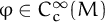 $\varphi \in C_c^\infty (M)$
there exists some
$\varphi \in C_c^\infty (M)$
there exists some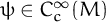 $\psi \in C_c^\infty (M)$
such that
$\psi \in C_c^\infty (M)$
such that
 $$\begin{align*}(1-\psi) T \varphi = 0 \quad\text{and} \quad \varphi T (1 - \psi) = 0. \end{align*}$$
In this case $T$
actually maps smooth, compactly supported sections of
$T$
actually maps smooth, compactly supported sections of $E_1$
to smooth, compactly supported sections of
$E_1$
to smooth, compactly supported sections of $E_2$
. Moreover there is a unique extension of
$E_2$
. Moreover there is a unique extension of $T$
to a linear operator
$T$
to a linear operator
 $$\begin{align*}T \colon C^\infty (M;E_1) \longrightarrow C^\infty (M;E_2) \end{align*}$$
with the property that if $\varphi $
and
$\varphi $
and $\psi $
are smooth compactly supported functions, and if
$\psi $
are smooth compactly supported functions, and if $\varphi T (1 {-} \psi ) = 0$
, then
$\varphi T (1 {-} \psi ) = 0$
, then
 $$\begin{align*}\varphi T s = \varphi T \psi s \quad \forall s \in C^\infty (M;E_1). \end{align*}$$
Now assume that $E_1$
and
$E_1$
and $E_2$
are equipped with Hermitian structures, and that
$E_2$
are equipped with Hermitian structures, and that $M$
is equipped with a smooth measure. The operator
$M$
is equipped with a smooth measure. The operator $T$
is adjointable if there exists an operator
$T$
is adjointable if there exists an operator
 $$\begin{align*}T^{*} \colon C_c^\infty (M;E_2) \longrightarrow C^\infty (M;E_1) \end{align*}$$
such that
 $$\begin{align*}\langle Ts_1,s_2\rangle _{L^2(M;E_2)} = \langle s_1,T^{*}s_2\rangle _{L^2(M;E_1)} \end{align*}$$
for all $s_1\in C_c^\infty (M;E_1)$
and
$s_1\in C_c^\infty (M;E_1)$
and $s_2\in C_c^\infty (M;E_2)$
. The property of being adjointable is independent of the choice of measure (but the adjoint operator depends on the choice).
$s_2\in C_c^\infty (M;E_2)$
. The property of being adjointable is independent of the choice of measure (but the adjoint operator depends on the choice).
Proposition 3.2.1. Let $K$
be a compact subgroup of
$K$
be a compact subgroup of $G$
and let
$G$
and let $V_1$
and
$V_1$
and $V_2 $
be finite-dimensional unitary representations of
$V_2 $
be finite-dimensional unitary representations of $K$
. If
$K$
. If $T\colon [C_c^\infty (G)\otimes V_1]^K \to [C_c^\infty (G)\otimes V_2]^K $
is properly supported, adjointable and equivariant, then
$T\colon [C_c^\infty (G)\otimes V_1]^K \to [C_c^\infty (G)\otimes V_2]^K $
is properly supported, adjointable and equivariant, then $T$
extends to a bounded operator
$T$
extends to a bounded operator
 $$\begin{align*}T\colon [L^2 (G)\otimes V_1]^K \to [L^2 (G)\otimes V_2]^K, \end{align*}$$
if and only if it extends to a bounded and adjointable operator between Hilbert ${C}^{*}$
-modules over
${C}^{*}$
-modules over ${C}^{*}_r (G)$
,
${C}^{*}_r (G)$
,
 $$\begin{align*}T\colon [{C}^{*}_r (G)\otimes V_1]^K \to [{C}^{*}_r (G)\otimes V_2]^K. \end{align*}$$
In this case, the two extensions have the same norm.
Proof. To simplify the notation let us consider only the case where $K =\{ e\}$
and the representations
$K =\{ e\}$
and the representations $V_1$
and
$V_1$
and $V_2$
are (necessarily) trivial, and of dimension one. Apart from issues of notation, the general case is no different.
$V_2$
are (necessarily) trivial, and of dimension one. Apart from issues of notation, the general case is no different.
If $f\in C_c^\infty (G)$
, then
$f\in C_c^\infty (G)$
, then
 $$\begin{align*}\| Tf \|_{{C}^{*}_r (G)} = \sup \, \bigl \{ \, \| (Tf)h\| _{L^2(G)} : h\in C_c^\infty (G),\,\, \| h\|_{L^2 (G)}=1\,\bigr \}. \end{align*}$$
But
 $$ \begin{align*} \| (Tf)h\| _{L^2(G)} & = \| T(fh)\| _{L^2(G)}\\ & \le \|T\|_{L^2 \to L^2} \|fh\|_{L^2(G)} \le \|T\|_{L^2 \to L^2} \|f\|_{{C}^{*}_r (G)}\|h \|_{L^2(G)}, \end{align*} $$
which shows that $\|T\|_{{C}^{*}_r \to {C}^{*}_r }\le \|T\|_{L^2 \to L^2} $
.
$\|T\|_{{C}^{*}_r \to {C}^{*}_r }\le \|T\|_{L^2 \to L^2} $
.
In the opposite direction let $\{f_n\}$
be an approximate unit for
$\{f_n\}$
be an approximate unit for ${C}^{*}_r(G)$
that consists of elements in
${C}^{*}_r(G)$
that consists of elements in $C^\infty _c(G)$
. If
$C^\infty _c(G)$
. If $k\in C_c^\infty (G)$
, then
$k\in C_c^\infty (G)$
, then $f_n k \to k$
in the
$f_n k \to k$
in the $L^2$
-norm, and so for any
$L^2$
-norm, and so for any $h\in C_c^\infty (G)$
,
$h\in C_c^\infty (G)$
,
 $$ \begin{align*} \| Th \|_{L^2(G)}^2 & = \bigl \langle Th , Th \bigr \rangle_{L^2 (G)} = \bigl \langle h , T^{*}Th \bigr \rangle_{L^2 (G)} = \lim_{n\to \infty}\bigl \langle f_n h , T^{*}Th \bigr \rangle_{L^2 (G)} \\ & = \lim_{n\to \infty}\bigl \langle T^{*}T (f_n h) , h \bigr \rangle_{L^2 (G)} = \lim_{n\to \infty}\bigl \langle (T^{*}T f_n) h , h \bigr \rangle_{L^2 (G)}. \end{align*} $$
So the Cauchy-Schwarz inequality gives
 $$ \begin{align*} \| Th \|_{L^2(G)}^2 & \le \limsup \| (T^{*}T f_n) h\| _{L^2(G)} \cdot \| h\| _{L^2(G)} \\ & \le \limsup \| (T^{*}T f_n)\| _{{C}^{*}_r(G)}\cdot \| h\|^2 _{L^2(G)} \le \|T\|^2 _{{C}^{*}_r \to {C}^{*}_r} \| h\|^2 _{L^2 (G)}. \end{align*} $$
This shows that $\|T\|_{L^2 \to L^2} \le \|T\|_{{C}^{*}_r \to {C}^{*}_r } $
.
$\|T\|_{L^2 \to L^2} \le \|T\|_{{C}^{*}_r \to {C}^{*}_r } $
.
3.3 Smoothing operators
Let $M$
be a smooth manifold. If k is a smooth section of the bundle
$M$
be a smooth manifold. If k is a smooth section of the bundle $\operatorname { {Hom}} (E_1, E_2)$
over
$\operatorname { {Hom}} (E_1, E_2)$
over $M\times M$
(where
$M\times M$
(where $E_2$
is pulled back to the product
$E_2$
is pulled back to the product $M\times M$
along the left coordinate projection, and
$M\times M$
along the left coordinate projection, and $E_1$
along the right), then the formula
$E_1$
along the right), then the formula
 $$\begin{align*}(T s)(x) = \int _M k(x,y)\cdot s(y) \, dy , \end{align*}$$
where the dot represents the contraction operation from $\operatorname { {Hom}} (E_1,E_2)\otimes E_1$
to
$\operatorname { {Hom}} (E_1,E_2)\otimes E_1$
to $E_2$
, defines a smoothing operator
$E_2$
, defines a smoothing operator
 $$\begin{align*}T \colon C_c^\infty (M;E_1) \longrightarrow C^\infty (M;E_2) \end{align*}$$
acting between sections of the bundles $E_1$
and
$E_1$
and $E_2$
. The operator
$E_2$
. The operator $T$
is properly supported if and only if k is properly supported, in which case
$T$
is properly supported if and only if k is properly supported, in which case $T$
is also automatically adjointable. It is equivariant if and only if k is a
$T$
is also automatically adjointable. It is equivariant if and only if k is a $G$
-equivariant section for the diagonal action of
$G$
-equivariant section for the diagonal action of $G$
on
$G$
on $M\times M$
.
$M\times M$
.
The purpose of this section is to describe the smoothing operators in the case where $M = K \backslash G$
, and where
$M = K \backslash G$
, and where $E_1$
and
$E_1$
and $E_2$
are the equivariant vector bundles induced from finite-dimensional unitary representations
$E_2$
are the equivariant vector bundles induced from finite-dimensional unitary representations $V_1$
and
$V_1$
and $V_2$
of the compact group
$V_2$
of the compact group $K$
.
$K$
.
The space of all smooth integral kernels may be described in this case as follows. Let $K{\times } K$
act by left translation on
$K{\times } K$
act by left translation on $G{\times }G $
in the obvious way, and on the vector space
$G{\times }G $
in the obvious way, and on the vector space $\operatorname { {Hom}} (V_1,V_2)$
by
$\operatorname { {Hom}} (V_1,V_2)$
by $(k_1,k_2) \cdot T = k_1 Tk_2^{-1}$
. There is a unique isomorphism of
$(k_1,k_2) \cdot T = k_1 Tk_2^{-1}$
. There is a unique isomorphism of $G$
-vector spaces
$G$
-vector spaces
 $$ \begin{align} [ C^\infty (G{\times} G)\otimes \operatorname{{Hom}} (V_1,V_2) ]^{K\times K} \stackrel \cong \longrightarrow C^\infty (M{\times} M; \operatorname{{Hom}} (E_1,E_2 )) \end{align} $$
for the diagonal action of $G$
such that
$G$
such that
 $$ \begin{align} \sum_j F_j \otimes T_j \mapsto h, \qquad h (Kg_1,Kg_2)\colon [v,g_1]\mapsto \sum_j F_j(g_1,g_2) [T_jv,g_1]. \end{align} $$
The action of $G$
on (3.3.1) is through the diagonal right-translation action on
$G$
on (3.3.1) is through the diagonal right-translation action on $G\times G$
and on
$G\times G$
and on $M\times M$
. The map in (3.3.1) determines an isomorphism
$M\times M$
. The map in (3.3.1) determines an isomorphism
 $$ \begin{align} [ C^\infty (G )\otimes \operatorname{{Hom}} (V_1,V_2) ]^{K\times K} \stackrel \cong \longrightarrow C^\infty (M{\times} M; \operatorname{{Hom}} (E_1,E_2 ))^G \end{align} $$
such that
 $$ \begin{align} \sum_j f_j \otimes T_j \mapsto h; \qquad h (Kg_1,Kg_2)\colon [v,g_1]\mapsto \sum_j f_j(g_2g_1^{-1}) [T_jv,g_1]. \end{align} $$
The image of the restriction of (3.3.3) to $C_c^\infty (G)$
is the space of properly supported,
$C_c^\infty (G)$
is the space of properly supported, $G$
-equivariant smooth integral kernels.
$G$
-equivariant smooth integral kernels.
Under the isomorphisms (3.1.4) and (3.3.4), the action of equivariant smoothing operators on the smooth compactly supported sections of $E_1$
is given by the natural map
$E_1$
is given by the natural map
 $$ \begin{align} [ C^\infty (G)\otimes \operatorname{{Hom}} (V_1,V_2) ]^{K\times K} \times [ C^\infty_c (G) \otimes V_1]^{K } \longrightarrow [ C^\infty (G)\otimes V_2 ]^{K } \end{align} $$
characterized by
 $$ \begin{align} \left ( \sum_j f_j \otimes T_j , \sum _k h_k\otimes v_k\right ) \longmapsto \sum_{j,k} (f_j {*} h_k) \otimes T_j v_k. \end{align} $$
This is under the assumption that the invariant measure on $M = K \backslash G$
is chosen so that the integral of any function on
$M = K \backslash G$
is chosen so that the integral of any function on $M$
is equal to the Haar integral of its pullback to
$M$
is equal to the Haar integral of its pullback to $G$
.
$G$
.
Of course, properly supported smoothing operators may composed, and their adjoints taken. We omit the natural formulas for these operations under the isomorphism (3.3.4). It is clear from the explicit formula (3.3.6) that:
Lemma 3.3.7. Every $G$
-equivariant, properly supported smoothing operator
$G$
-equivariant, properly supported smoothing operator
 $$\begin{align*}T \colon [ C_c^\infty (G)\otimes V_1]^K \longrightarrow [ C_c^\infty (G)\otimes V_2]^K \end{align*}$$
extends to bounded operator $ [ L^2 (G)\otimes V_1]^K \to [L^2 (G)\otimes V_2]^K$
, and to a bounded and adjointable operator
$ [ L^2 (G)\otimes V_1]^K \to [L^2 (G)\otimes V_2]^K$
, and to a bounded and adjointable operator $[C_r^{*} (G)\otimes V_1]^K\to [ C_r^{*} (G)\otimes V_2]^K$
.
$[C_r^{*} (G)\otimes V_1]^K\to [ C_r^{*} (G)\otimes V_2]^K$
.
The operator-norm completion of the properly supported, $G$
-equivariant smoothing operators is isomorphic to the space
$G$
-equivariant smoothing operators is isomorphic to the space
 $$ \begin{align} \bigl [ {C}^{*}_r (G)\otimes \operatorname{{Hom}} (V_1,V_2)\bigr ]^{K\times K} \subseteq \mathfrak{B} \bigl ( [ {C}^{*}_r(G)\otimes V_1 ]^K, [ {C}^{*}_r(G) \otimes V_2 ]^K\bigr ) \end{align} $$
3.4 Pseudodifferential operators on proper homogeneous spaces
We are interested in properly supported, $G$
-equivariant, classical pseudodifferential operators on the homogeneous space
$G$
-equivariant, classical pseudodifferential operators on the homogeneous space $K\backslash G$
. We shall use the following notation:
$K\backslash G$
. We shall use the following notation:
Definition 3.4.1. Let $V_1$
and
$V_1$
and $V_2$
be finite-dimensional unitary representations of
$V_2$
be finite-dimensional unitary representations of $K$
and let
$K$
and let $m\in \mathbb {Z}$
. We shall denote by
$m\in \mathbb {Z}$
. We shall denote by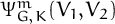 $\Psi ^{m}_{G,K}(V_1,V_2)$
the space of
$\Psi ^{m}_{G,K}(V_1,V_2)$
the space of $G$
-equivariant, properly supported, classical pseudodifferential operators
$G$
-equivariant, properly supported, classical pseudodifferential operators
 $$\begin{align*}A \colon [ C_c^\infty (G)\otimes V_1]^K \longrightarrow [ C_c^\infty (G)\otimes V_2]^K \end{align*}$$
of order $m$
.
$m$
.
Let us consider the case $m{=}0$
. As we have seen, the principal symbol of an operator in
$m{=}0$
. As we have seen, the principal symbol of an operator in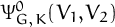 $\Psi ^0_{G,K}(V_1,V_2)$
can be viewed as a smooth section over
$\Psi ^0_{G,K}(V_1,V_2)$
can be viewed as a smooth section over $\partial T^{*} M$
, where
$\partial T^{*} M$
, where $M=K \backslash G$
, of the
$M=K \backslash G$
, of the $G$
-equivariant vector bundle whose fiber over each point of
$G$
-equivariant vector bundle whose fiber over each point of $\partial T^{*}_e M$
is the space
$\partial T^{*}_e M$
is the space $\operatorname { {Hom}} (V_1,V_2)$
. Of course it must be a
$\operatorname { {Hom}} (V_1,V_2)$
. Of course it must be a $G$
-equivariant section, and therefore the restriction to the basepoint
$G$
-equivariant section, and therefore the restriction to the basepoint $e\in K \backslash G$
determines the symbol. This restriction is a smooth,
$e\in K \backslash G$
determines the symbol. This restriction is a smooth, $K$
-equivariant function
$K$
-equivariant function
 $$\begin{align*}a_0 \colon \partial (\mathfrak{g}/\mathfrak{k})^{*} \longrightarrow \operatorname{{Hom}} (V_1,V_2) \end{align*}$$
(we are using the standard identification of $T_eM$
with
$T_eM$
with $\mathfrak {g} / \mathfrak {k}$
). Conversely, it is shown in [Reference Stetkaer44] how to construct an operator in
$\mathfrak {g} / \mathfrak {k}$
). Conversely, it is shown in [Reference Stetkaer44] how to construct an operator in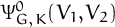 $\Psi ^0_{G,K}(V_1,V_2)$
with any given principal symbol function
$\Psi ^0_{G,K}(V_1,V_2)$
with any given principal symbol function $a_0$
, as above, by a simple averaging procedure (and we shall see the same averaging procedure below).
$a_0$
, as above, by a simple averaging procedure (and we shall see the same averaging procedure below).
Definition 3.4.2. We shall denote by
 $$\begin{align*}\Sigma^0_{G,K} (V_1,V_2)= C^\infty \bigl ( \partial (\mathfrak{g}/\mathfrak{k})^{*} , \operatorname{{Hom}}(V_1,V_2)\bigr )^K \end{align*}$$
the space of principal symbols of operators in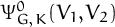 $\Psi ^0_{G,K}(V_1,V_2)$
.
$\Psi ^0_{G,K}(V_1,V_2)$
.
The discussion above provides a short exact sequence of vector spaces
 $$ \begin{align} 0 \longrightarrow \Psi^{-1}_{G,K}(V_1,V_2) \longrightarrow \Psi^0_{G,K}(V_1,V_2) \longrightarrow \Sigma^0_{G,K} (V_1,V_2) \longrightarrow 0 \end{align} $$
involving the space of properly supported, order $0$
, classical pseudodifferential operators acting between the spaces of smooth sectionsFootnote
3
of
$0$
, classical pseudodifferential operators acting between the spaces of smooth sectionsFootnote
3
of $G$
-equivariant complex vector bundles on the symmetric space
$G$
-equivariant complex vector bundles on the symmetric space $K \backslash G$
.
$K \backslash G$
.
Proposition 3.4.4. Every properly supported, $G$
-equivariant, order zero classical pseudodifferential operator
$G$
-equivariant, order zero classical pseudodifferential operator
 $$\begin{align*}A \colon [C_c^\infty ( G)\otimes V_1]^K \longrightarrow [C_c^\infty ( G)\otimes V_2]^K \end{align*}$$
extends to a bounded operator between $L^2$
-spaces.
$L^2$
-spaces.
Proof. Let $\varphi $
be a smooth and compactly supported function on
$\varphi $
be a smooth and compactly supported function on $K \backslash G$
such that
$K \backslash G$
such that
 $$\begin{align*}\int_G \varphi (xg) \, dg = 1 \quad \forall x\in K\backslash G, \end{align*}$$
and let
 $$\begin{align*}A_e {=} A\varphi \colon [C_c^\infty ( G)\otimes V_1]^K \longrightarrow [C_c^\infty ( G)\otimes V_2]^K. \end{align*}$$
This is a compactly supported, order zero classical pseudodifferential operator on $M{=}K\backslash G$
, and therefore it is bounded in the
$M{=}K\backslash G$
, and therefore it is bounded in the $L^2$
-operator norm. If we set
$L^2$
-operator norm. If we set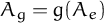 $A_g = g(A_e)$
, then
$A_g = g(A_e)$
, then
 $$\begin{align*}(A f)(x) = \int_G (A_g f)(x) \, dg \quad \forall x \in K \backslash G,\quad \forall f\in [C_c^\infty ( G)\otimes V_1]^K. \end{align*}$$
The operators $A_g$
are unitarily equivalent to one another, and therefore they have the same
$A_g$
are unitarily equivalent to one another, and therefore they have the same $L^2$
-operator norm:
$L^2$
-operator norm:
 $$\begin{align*}\| A_g \| = \| A_e\| \quad \forall g\in G. \end{align*}$$
Let $C\subseteq K \backslash G$
be a compact subset such that the support of
$C\subseteq K \backslash G$
be a compact subset such that the support of $A_e$
is included in
$A_e$
is included in $C{\times } C$
, and let
$C{\times } C$
, and let
 $$\begin{align*}S = \{ \, g\in G : Kg \in C\, \}. \end{align*}$$
This is a compact subset of $G$
, and if
$G$
, and if $f\in [C_c^\infty ( G)\otimes V_1]^K $
,
$f\in [C_c^\infty ( G)\otimes V_1]^K $
, $g\in G$
and
$g\in G$
and $x\in K \backslash G$
, then
$x\in K \backslash G$
, then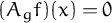 $(A_gf)(x) = 0$
unless
$(A_gf)(x) = 0$
unless $x\in Cg$
. In other words,
$x\in Cg$
. In other words,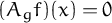 $(A_gf)(x) = 0$
unless
$(A_gf)(x) = 0$
unless $g\in x^{-1}S$
. So by the Cauchy-Schwarz inequality,
$g\in x^{-1}S$
. So by the Cauchy-Schwarz inequality,
 $$\begin{align*}\begin{aligned} \| A f\|_{L^2}^2 & = \int _M \Bigl \| \int_G (A_gf)(x)\, dg \Bigr\|_{V_2}^2 \, dx \\ & \le \int _M \left ( \int_{x^{-1} S} 1 \, dg\right ) \left ( \int_{x^{-1}S} \bigl \|(A_gf)(x)\bigr \|_{V_2} ^2 \, dg\right ) \, dx \\ & = \operatorname{vol}(S)\cdot \int _M \left (\int_{x^{-1}S} \bigl \|(A_gf)(x)\bigr \|_{V_2} ^2 \, dg \right ) \, dx. \end{aligned} \end{align*}$$
But now, using Fubini’s theorem, we can write
 $$\begin{align*}&\int _M \left (\int_{x^{-1}S} \bigl \|(A_gf)(x)\bigr \|_{V_2} ^2 \, dg \right ) \, dx \\&\quad = \int _G \left (\int_{Cg} \bigl \|(A_gf)(x)\bigr \|_{V_2} ^2 \, dx \right ) \, dg. \end{align*}$$
The inner integral on the right may be estimated by
 $$\begin{align*}\int_{Cg} \bigl \|(A_gf)(x)\bigr \|_{V_2} ^2 \, dx \le \| A_e\|^2\cdot \int_{Cg} \bigl \|f(x)\bigr \|_{V_1} ^2 \, dx , \end{align*}$$
and so, by Fubini once again,
 $$\begin{align*}\begin{aligned} \| A f\|_{L^2}^2 & \le \operatorname{vol}(S)\cdot \| A_e\|^2 \cdot \int _G \Bigl (\int_{Cg} \|f(x) \|_{V_1} ^2 \, dx \Bigr ) \, dg \\ & = \operatorname{vol}(S)\cdot \| A_e\|^2 \cdot \int _M \Bigl (\int_{x^{-1}S} \|f(x) \|_{V_1} ^2 \, dg \Bigr ) \, dx \\ & = \operatorname{vol}(S)^2\cdot \| A_e\|^2 \cdot \int _M \|f(x) \|_{V_1} ^2 \, dx \\ & = \operatorname{vol}(S)^2 \cdot \| A_e\|^2 \cdot \| f\|_{L^2}^2, \end{aligned} \end{align*}$$
which proves that $A$
is
$A$
is $L^2$
-bounded, as required.
$L^2$
-bounded, as required.
We noted in Theorem 2.4.3 that compactly supported, negative order operators are compact operators. The analogue of this result in the current context is as follows:
Proposition 3.4.5. The ${L}^2$
-operator norm-closure of the properly supported, equivariant smoothing operators
${L}^2$
-operator norm-closure of the properly supported, equivariant smoothing operators
 $$\begin{align*}T \colon [C_c^\infty ( G)\otimes V_1]^K \longrightarrow [C_c^\infty ( G)\otimes V_2]^K \end{align*}$$
includes all the properly supported, equivariant classical pseudodifferential operators of order $-1$
or less.
$-1$
or less.
Proof. If $A$
is any pseudodifferential operator on
$A$
is any pseudodifferential operator on $\mathbb {R}^n$
of order less than
$\mathbb {R}^n$
of order less than $-n$
, then it follows from the integral formula (2.1.2) that the Schwartz kernel of
$-n$
, then it follows from the integral formula (2.1.2) that the Schwartz kernel of $A$
is a continuous function. It follows that if
$A$
is a continuous function. It follows that if $A$
is a properly supported and
$A$
is a properly supported and $G$
-equivariant pseudodifferential operator, as in the statement of the proposition, and if the order of
$G$
-equivariant pseudodifferential operator, as in the statement of the proposition, and if the order of $A$
is less than
$A$
is less than $-\dim (K\backslash G)$
, then the Schwartz kernel of
$-\dim (K\backslash G)$
, then the Schwartz kernel of $A$
is an equivariant, continuous and properly supported section of the bundle
$A$
is an equivariant, continuous and properly supported section of the bundle $\operatorname { {Hom}}( V_1,V_2)$
over
$\operatorname { {Hom}}( V_1,V_2)$
over $K\backslash G \times K\backslash G$
. So it corresponds to an element of
$K\backslash G \times K\backslash G$
. So it corresponds to an element of
 $$\begin{align*}[ C_c (G) \otimes \operatorname{{Hom}} (V_1,V_2)]^{K\times K} \end{align*}$$
under the isomorphism (3.3.3), and $A$
is therefore in the operator-norm closure of the
$A$
is therefore in the operator-norm closure of the $G$
-equivariant, properly supported smoothing operators.
$G$
-equivariant, properly supported smoothing operators.
Suppose now $A$
has order
$A$
has order $-1$
or less. For
$-1$
or less. For $V= V_1\oplus V_2$
we can think of
$V= V_1\oplus V_2$
we can think of $A$
as an operator
$A$
as an operator
 $$\begin{align*}A \colon [C_c^\infty ( G)\otimes V]^K \longrightarrow [C_c^\infty ( G)\otimes V]^K \end{align*}$$
that is zero on sections with values in $V_2$
and has range in the sections valued in
$V_2$
and has range in the sections valued in $V_2$
. The above shows that some power of
$V_2$
. The above shows that some power of $A^{*}A$
is in the operator-norm closure of the
$A^{*}A$
is in the operator-norm closure of the $G$
-equivariant, properly supported smoothing operators. But
$G$
-equivariant, properly supported smoothing operators. But $A$
belongs to a
$A$
belongs to a ${C}^{*}$
-algebra of operators on
${C}^{*}$
-algebra of operators on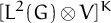 $[L^2( G)\otimes V]^K $
that includes the norm closure of the
$[L^2( G)\otimes V]^K $
that includes the norm closure of the $G$
-equivariant, properly supported smoothing operators as an ideal. The above shows that the self-adjoint element
$G$
-equivariant, properly supported smoothing operators as an ideal. The above shows that the self-adjoint element $A^{*}A$
is nilpotent in the quotient
$A^{*}A$
is nilpotent in the quotient ${C}^{*}$
-algebra, and is therefore zero in the quotient
${C}^{*}$
-algebra, and is therefore zero in the quotient ${C}^{*}$
-algebra.
${C}^{*}$
-algebra.
3.5 Pseudodifferential extension in the equivariant context
Definition 3.5.1. Let $G$
be a Lie group, let
$G$
be a Lie group, let $K$
be a compact subgroup of
$K$
be a compact subgroup of $G$
, and let
$G$
, and let $V_1$
and
$V_1$
and $V_2$
be finite-dimensional unitary representations of
$V_2$
be finite-dimensional unitary representations of $K$
.
$K$
.
-
(i) Denote by
$\mathsf {C}^{*}_{G,K}(V_1,V_2)$
the
$L^2$
-operator norm-closure of the vector space
$\Psi ^{-1}_{G,K}(V_1,V_2)$
, or equivalently the
$L^2$
-operator norm-closure of the space of properly supported,
$G$
-equivariant smoothing operators
$$\begin{align*}[L^2 (G)\otimes V_1]^K\longrightarrow [L^2 (G)\otimes V_2]^K. \end{align*}$$
-
(ii) Denote by
$\mathsf {P}^{*}_{G,K}(V_1,V_2)$
the
$L^2$
-operator norm-closure of the space
$\Psi ^{0}_{G,K}(V_1,V_2)$
. -
(iii) Denote by
the closure in the supremum norm of the symbol space
$$\begin{align*}\mathsf{S}^{*}_{G,K} (V_1,V_2) = C\bigl (\partial (\mathfrak{g}/\mathfrak{k})^{*}, \operatorname{{Hom}} (V_1,V_2)\bigr )^K \end{align*}$$
$\Sigma ^0_{G,K} (V_1,V_2)$
.
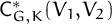

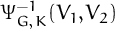


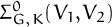
Lemma 3.5.2. Let $V_1$
and
$V_1$
and $V_2$
be finite-dimensional unitary representations of
$V_2$
be finite-dimensional unitary representations of $K$
and let
$K$
and let
 $$\begin{align*}A \colon [C_c^\infty ( G)\otimes V_1]^K \longrightarrow [C_c^\infty ( G)\otimes V_2]^K \end{align*}$$
be a properly supported, $G$
-equivariant, order zero, classical pseudodifferential operator. If
$G$
-equivariant, order zero, classical pseudodifferential operator. If $a_0$
is the principal symbol of
$a_0$
is the principal symbol of $A$
, then
$A$
, then
 $$\begin{align*}\| A \|_{L^2\to L^2} \ge \sup_{\xi \ne 0} \bigl \| a_0 (e,\xi)\bigr \|. \end{align*}$$
As a result, the principal symbol map extends to a bounded linear map
 $$\begin{align*}\mathsf{P}^{*}_{G,K}( V_1,V_2) \longrightarrow \mathsf{S}^{*}_{G,K}( V_1,V_2). \end{align*}$$
Proof. Let $\varphi $
be a smooth and compactly supported function on
$\varphi $
be a smooth and compactly supported function on $K \backslash G$
such that
$K \backslash G$
such that $1 \ge \varphi \ge 0$
and
$1 \ge \varphi \ge 0$
and $\varphi (e) =1$
. Then
$\varphi (e) =1$
. Then $\varphi A \varphi $
is a compactly supported classical pseudodifferential operator. Moreover
$\varphi A \varphi $
is a compactly supported classical pseudodifferential operator. Moreover $ \| A\|\ge \| \varphi A \varphi \| $
and the principal symbols of
$ \| A\|\ge \| \varphi A \varphi \| $
and the principal symbols of $A$
and
$A$
and $\varphi A \varphi $
agree at
$\varphi A \varphi $
agree at $e\in K\backslash G$
. It follows from Theorem 2.4.4 that
$e\in K\backslash G$
. It follows from Theorem 2.4.4 that
 $$\begin{align*}\| A\| \ge \| \varphi A \varphi \| \ge \sup_{\xi \ne 0} \bigl \| a_0 (e,\xi)\bigr \| , \end{align*}$$
as required.
Proposition 3.5.3. Let $V_1$
and
$V_1$
and $V_2$
be finite-dimensional unitary representations of
$V_2$
be finite-dimensional unitary representations of $K$
. By taking
$K$
. By taking $L^2$
-operator norm closures, we obtain from the exact sequence
$L^2$
-operator norm closures, we obtain from the exact sequence
 $$\begin{align*}0 \longrightarrow \Psi^{-1}_{G,K}(V_1,V_2) \longrightarrow \Psi^0_{G,K}(V_1,V_2) \longrightarrow \Sigma^0_{G,K} (V_1,V_2) \longrightarrow 0 \end{align*}$$
an exact sequence
 $$\begin{align*}0 \longrightarrow \mathsf{C}^{*}_{G,K}(V_1,V_2) \longrightarrow \mathsf{P}^{*}_{G,K}(V_1,V_2) \longrightarrow \mathsf{S}^{*}_{G,K} (V_1,V_2) \longrightarrow 0. \end{align*}$$
To prove the proposition we shall use the following two lemmas. The first may be proved using the method of the proof of Proposition 3.4.4; the second is straightforward. Both proofs will be omitted.
Lemma 3.5.4. Let $\varphi $
be a continuous, compactly supported function on
$\varphi $
be a continuous, compactly supported function on $K \backslash G$
. If
$K \backslash G$
. If $V_1$
and
$V_1$
and $V_2$
are any finite-dimensional unitary representations of
$V_2$
are any finite-dimensional unitary representations of $K$
, and if
$K$
, and if
 $$\begin{align*}T \colon [L^2 ( G)\otimes V_1]^K \longrightarrow [L^2 ( G)\otimes V_2]^K \end{align*}$$
is any bounded operator, then the averaging formula
 $$\begin{align*}\mathsf{Av}(\varphi T \varphi )s = \int _G g( \varphi T \varphi)s \, dg \end{align*}$$
defines a bounded operator
 $$\begin{align*}\mathsf{Av}(\varphi T \varphi )\colon [L^2 ( G )\otimes V_1]^K \longrightarrow [L^2 ( G )\otimes V_2]^K. \end{align*}$$
Moreover the linear map $T \mapsto \mathsf {Av}(\varphi T \varphi )$
(with
$T \mapsto \mathsf {Av}(\varphi T \varphi )$
(with $\varphi $
fixed) is operator norm-continuous.
$\varphi $
fixed) is operator norm-continuous.
Lemma 3.5.5. If $V_1$
and
$V_1$
and $V_2$
are any finite-dimensional unitary representations of
$V_2$
are any finite-dimensional unitary representations of $K$
, and if
$K$
, and if
 $$\begin{align*}A \colon [C_c^\infty (G)\otimes V_1]^K \longrightarrow [C_c^\infty (G)\otimes V_2]^K \end{align*}$$
is any equivariant, properly supported, order zero classical pseudodifferential operator, then $ \mathsf {Av}(\varphi T \varphi )$
is also an equivariant, properly supported, order zero classical pseudodifferential operator. Moreover if
$ \mathsf {Av}(\varphi T \varphi )$
is also an equivariant, properly supported, order zero classical pseudodifferential operator. Moreover if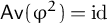 $\mathsf {Av}( \varphi ^2)=\operatorname {id}$
, then
$\mathsf {Av}( \varphi ^2)=\operatorname {id}$
, then $ \mathsf {Av}(\varphi T \varphi )$
has the same principal symbol as
$ \mathsf {Av}(\varphi T \varphi )$
has the same principal symbol as $A$
.
$A$
.
Proof of Proposition 3.5.3
If we set $V = V_1\oplus V_2$
, then we can regard the space
$V = V_1\oplus V_2$
, then we can regard the space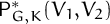 $\mathsf {P}^{*}_{G,K}(V_1,V_2)$
as a subspace of
$\mathsf {P}^{*}_{G,K}(V_1,V_2)$
as a subspace of $\mathsf {P}^{*}(V,V)$
, as in the proof of Proposition 3.4.5. We can do the same for the
$\mathsf {P}^{*}(V,V)$
, as in the proof of Proposition 3.4.5. We can do the same for the $\mathsf {C}^{*}$
- and
$\mathsf {C}^{*}$
- and $\mathsf {S}^{*}$
-spaces, with the result that it suffices to prove exactness of the sequence
$\mathsf {S}^{*}$
-spaces, with the result that it suffices to prove exactness of the sequence
 $$\begin{align*}0 \longrightarrow \mathsf{C}^{*}_{G,K}(V,V) \longrightarrow \mathsf{P}^{*}_{G,K}(V,V) \longrightarrow \mathsf{S}_{G,K}^{*} (V,V) \longrightarrow 0 , \end{align*}$$
which is a sequence of ${C}^{*}$
-algebras and
${C}^{*}$
-algebras and $*$
-homomorphisms.
$*$
-homomorphisms.
The morphism from $\mathsf {C}^{*}_{G,K}(V,V)$
to
$\mathsf {C}^{*}_{G,K}(V,V)$
to $\mathsf {P}^{*}_{G,K}(V,V)$
is simply an inclusion, so it is certainly injective, and the morphism from
$\mathsf {P}^{*}_{G,K}(V,V)$
is simply an inclusion, so it is certainly injective, and the morphism from $\mathsf {P}^{*}_{G,K}(V,V)$
to
$\mathsf {P}^{*}_{G,K}(V,V)$
to $\mathsf {S}_{G,K}^{*}(V,V)$
is certainly surjective, since it has dense range, and the images of
$\mathsf {S}_{G,K}^{*}(V,V)$
is certainly surjective, since it has dense range, and the images of ${C}^{*}$
-algebra morphisms are always closed. The continuity of the symbol mapping implies that the composition
${C}^{*}$
-algebra morphisms are always closed. The continuity of the symbol mapping implies that the composition
 $$\begin{align*}\mathsf{C}^{*}_{G,K}(V,V) \longrightarrow \mathsf{P}^{*}_{G,K}(V,V) \longrightarrow \mathsf{S}_{G,K}^{*} (V,V) \end{align*}$$
is zero. So it only remains to show that this part of the sequence is exact.
Suppose then that $T\in \mathsf {P}^{*}_{G,K}(V,V)$
and that the principal symbol of
$T\in \mathsf {P}^{*}_{G,K}(V,V)$
and that the principal symbol of $T$
is zero. Write
$T$
is zero. Write $T$
as an
$T$
as an $L^2$
-operator norm limit of pseudodifferential operators
$L^2$
-operator norm limit of pseudodifferential operators $A_n\in \Psi ^0_{G,K}(V,V)$
. Then choose a smooth compactly supported function
$A_n\in \Psi ^0_{G,K}(V,V)$
. Then choose a smooth compactly supported function $\varphi $
on
$\varphi $
on $K \backslash G$
such that
$K \backslash G$
such that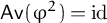 $\mathsf {Av}(\varphi ^2) = \operatorname {id}$
, and consider the operators
$\mathsf {Av}(\varphi ^2) = \operatorname {id}$
, and consider the operators
 $$\begin{align*}\mathsf{Av}(\varphi A_n \varphi) \colon [L^2 (G)\otimes V]^K \longrightarrow [L^2 (G)\otimes V]^K. \end{align*}$$
It follows from Lemma 3.5.5 that the operators $\mathsf {Av}(\varphi A_n \varphi )$
are elements of
$\mathsf {Av}(\varphi A_n \varphi )$
are elements of $\Psi ^0_{G,K}(V,V)$
, and furthermore that
$\Psi ^0_{G,K}(V,V)$
, and furthermore that
 $$\begin{align*}\mathsf{Av}(\varphi A_n\varphi) - A_n \in \Psi^{-1}_{G,K}(V,V), \end{align*}$$
since the principal symbol of the difference is zero. It therefore follows from Proposition 3.4.5 that
 $$ \begin{align} \mathsf{Av}(\varphi A_n\varphi) - A_n \in \mathsf{C}^{*}_{G,K}(V,V) \end{align} $$
for all $n$
. We therefore find that
$n$
. We therefore find that
 $$ \begin{align} \mathsf{Av}(\varphi T\varphi) - T \in \mathsf{C}^{*}_{G,K}(V,V) , \end{align} $$
since by Lemma 3.5.4 the operator in (3.5.7) is the norm limit of the operators in (3.5.6). So to complete the proof it suffices to show that
 $$ \begin{align} \mathsf{Av}(\varphi T \varphi)\in \mathsf{C}^{*}_{G,K}(V,V). \end{align} $$
For this we may invoke known facts about compactly supported pseudodifferential operators, as follows.
The compactly supported operator $\varphi T\varphi $
lies in the operator norm-closure of the algebra of compactly supported, order zero classical pseudodifferential operators, and has vanishing principal symbol. It is therefore a norm-limit of compactly supported smoothing operators
$\varphi T\varphi $
lies in the operator norm-closure of the algebra of compactly supported, order zero classical pseudodifferential operators, and has vanishing principal symbol. It is therefore a norm-limit of compactly supported smoothing operators $B_n$
, by Theorem 2.4.3. Choosing a smooth, compactly supported function
$B_n$
, by Theorem 2.4.3. Choosing a smooth, compactly supported function $\psi $
with
$\psi $
with $\psi \varphi = \varphi $
, we now have
$\psi \varphi = \varphi $
, we now have
 $$\begin{align*}\lim_{n\to \infty}\bigl \| \mathsf{Av}( \varphi T \varphi) - \mathsf{Av}( \psi B_n \psi) \bigr \| = \lim_{n\to \infty} \bigl \| \mathsf{Av}( \psi \varphi T \varphi\psi ) - \mathsf{Av}( \psi B_n \psi) \bigr \| = 0, \end{align*}$$
where the second equality is a consequence of Lemma 3.5.4. This proves (3.5.8) and therefore the proposition.
4 C*-Categories
Recall that a Banach category is a categoryFootnote
4
for which each morphism space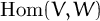 $\operatorname { {Hom}}(V,W)$
is equipped with the structure of a Banach space in such a way that the composition law is bilinear, with
$\operatorname { {Hom}}(V,W)$
is equipped with the structure of a Banach space in such a way that the composition law is bilinear, with $\|S T\|\le \| S\|\| T\|$
, and recall that a
$\|S T\|\le \| S\|\| T\|$
, and recall that a ${C}^{*}$
-category is a Banach category that is equipped with an isometric and conjugate-linear involution operation on morphism spaces,
${C}^{*}$
-category is a Banach category that is equipped with an isometric and conjugate-linear involution operation on morphism spaces,
 $$\begin{align*}\ast: \operatorname{{Hom}}(V,W) \longrightarrow \operatorname{{Hom}}(W,V), \end{align*}$$
such that
 $$\begin{align*}(S T)^{*} = T^{*} S^{*}\quad \text{and} \quad (T^{*})^{*} = T, \end{align*}$$
for all composable morphisms $S$
and
$S$
and $T$
, and in addition
$T$
, and in addition
 $$\begin{align*}T^{*}T\ge 0 \quad \text{and} \quad \| T^{*}T \| = \| T\|^2 , \end{align*}$$
for all $T$
. The meaning of the inequality above is that the spectrum of the element
$T$
. The meaning of the inequality above is that the spectrum of the element $T^{*}T$
in the Banach algebra
$T^{*}T$
in the Banach algebra $\operatorname { {Hom}} (V,V)$
is a subset of
$\operatorname { {Hom}} (V,V)$
is a subset of $[0,\infty )$
.
$[0,\infty )$
.
The reader who is unfamiliar with ${C}^{*}$
-categories may wish to consult [Reference Mitchener36], which offers an elementary introduction to the topic.
${C}^{*}$
-categories may wish to consult [Reference Mitchener36], which offers an elementary introduction to the topic.
The same reader may also wish to keep in mind the following construction. If $A$
is a
$A$
is a ${C}^{*}$
-algebra, and if
${C}^{*}$
-algebra, and if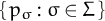 $\{\, p_\sigma : \sigma \in \Sigma \,\}$
is a family of pairwise orthogonal projections in the multiplier algebra of
$\{\, p_\sigma : \sigma \in \Sigma \,\}$
is a family of pairwise orthogonal projections in the multiplier algebra of $A$
such that
$A$
such that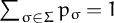 $\sum _{\sigma \in \Sigma } p_\sigma = 1$
, with convergence in the strict topology [Reference Pedersen38 (3.12)2.17], then there is an associated
$\sum _{\sigma \in \Sigma } p_\sigma = 1$
, with convergence in the strict topology [Reference Pedersen38 (3.12)2.17], then there is an associated ${C}^{*}$
-category
${C}^{*}$
-category $\mathsf {C}_A$
with
$\mathsf {C}_A$
with
-
(i) objects
$\sigma \in \Sigma $
, and -
(ii) morphism spaces
$\mathsf {C}_A(\sigma _1,\sigma _2) =p_{\sigma _2}Ap_{\sigma _1}$
.


This process can be reversed, to assemble a ${C}^{*}$
-algebra from a
${C}^{*}$
-algebra from a ${C}^{*}$
-category, or at least from one that is small enough; see [Reference Joachim23, Sec. 3] for details. Most of the
${C}^{*}$
-category, or at least from one that is small enough; see [Reference Joachim23, Sec. 3] for details. Most of the ${C}^{*}$
-categorical concepts to be discussed below are adapted from
${C}^{*}$
-categorical concepts to be discussed below are adapted from ${C}^{*}$
-algebra concepts using this construction, and are best understood that way. In particular, the
${C}^{*}$
-algebra concepts using this construction, and are best understood that way. In particular, the $K$
-theory groups of
$K$
-theory groups of $A$
and
$A$
and $\mathsf {C}_A$
, to be discussed in Section 4.2, are canonically isomorphic [Reference Joachim23, Cor. 3.5].
$\mathsf {C}_A$
, to be discussed in Section 4.2, are canonically isomorphic [Reference Joachim23, Cor. 3.5].
4.1 C*-categories from pseudodifferential operators
Here are the ${C}^{*}$
-categories that we wish to study.
${C}^{*}$
-categories that we wish to study.
Definition 4.1.1. Let $G$
be a Lie group, and let
$G$
be a Lie group, and let $K$
be a compact subgroup of
$K$
be a compact subgroup of $G$
. We define
$G$
. We define ${C}^{*}$
-categories
${C}^{*}$
-categories $\mathsf {P}^{*}_{G,K}$
,
$\mathsf {P}^{*}_{G,K}$
, $\mathsf {C}^{*}_{G,K}$
and
$\mathsf {C}^{*}_{G,K}$
and $\mathsf {S}^{*}_{G,K}$
as follows.
$\mathsf {S}^{*}_{G,K}$
as follows.
-
(i) For each of
$\mathsf {P}^{*}_{G,K}$
,
$\mathsf {C}^{*}_{G,K}$
and
$\mathsf {S}^{*}_{G,K}$
, the objects are the finite-dimensional unitary representations of
$K$
. -
(ii) For
$\mathsf {P}^{*}_{G,K}$
, the space of morphisms from
$V_1$
to
$V_2$
is
$\mathsf {P}^{*}_{G,K}(V_1,V_2)$
; for
$\mathsf {C}^{*}_{G,K}$
it is
$\mathsf {C}^{*}_{G,K}(V_1,V_2)$
; and for
$\mathsf {S}^{*}_{G,K}$
it is
$\mathsf {S}^{*}_{G,K}(V_1,V_2)$
.


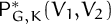

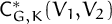

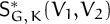
For each ${C}^{*}$
-category, composition and adjoint are the evident operations on operators or symbols.
${C}^{*}$
-category, composition and adjoint are the evident operations on operators or symbols.
The ${C}^{*}$
-category
${C}^{*}$
-category $\mathsf {C}^{*}_{G,K}$
is not only a subcategory of
$\mathsf {C}^{*}_{G,K}$
is not only a subcategory of $\mathsf {P}^{*}_{G,K}$
but also an ideal, in the sense that the composition of any composable pair of morphisms in
$\mathsf {P}^{*}_{G,K}$
but also an ideal, in the sense that the composition of any composable pair of morphisms in $\mathsf {P}^{*}_{G,K}$
that includes at least one morphism from
$\mathsf {P}^{*}_{G,K}$
that includes at least one morphism from $\mathsf {C}^{*}_{G,K}$
is a morphism in
$\mathsf {C}^{*}_{G,K}$
is a morphism in $\mathsf {C}^{*}_{G,K}$
; see [Reference Mitchener36, Def. 4.2]. In fact according to Proposition 3.5.3, the category
$\mathsf {C}^{*}_{G,K}$
; see [Reference Mitchener36, Def. 4.2]. In fact according to Proposition 3.5.3, the category $\mathsf {C}^{*}_{G,K}$
is the kernel of the principal symbol functor from
$\mathsf {C}^{*}_{G,K}$
is the kernel of the principal symbol functor from $\mathsf {P}^{*}_{G,K}$
to
$\mathsf {P}^{*}_{G,K}$
to $\mathsf {S}^{*}_{G,K}$
(by kernel we mean the subcategory of
$\mathsf {S}^{*}_{G,K}$
(by kernel we mean the subcategory of $\mathsf {P}^{*}_{G,K}$
comprised of all objects of
$\mathsf {P}^{*}_{G,K}$
comprised of all objects of $\mathsf {P}^{*}_{G,K}$
and all morphisms that are mapped to
$\mathsf {P}^{*}_{G,K}$
and all morphisms that are mapped to $0$
by the symbol functor). Moreover
$0$
by the symbol functor). Moreover $\mathsf {S}^{*}_{G,K}$
is the quotient
$\mathsf {S}^{*}_{G,K}$
is the quotient ${C}^{*}$
-category
${C}^{*}$
-category $\mathsf {P}^{*}_{G,K} / \mathsf {C}^{*}_{G,K}$
in the sense of [Reference Mitchener36, Def. 4.4]. We shall express this by saying that there is an extension of
$\mathsf {P}^{*}_{G,K} / \mathsf {C}^{*}_{G,K}$
in the sense of [Reference Mitchener36, Def. 4.4]. We shall express this by saying that there is an extension of ${C}^{*}$
-categories
${C}^{*}$
-categories
 $$\begin{align*}0 \longrightarrow \mathsf{C}^{*}_{G,K} \longrightarrow \mathsf{P}^{*}_{G,K} \longrightarrow \mathsf{S}^{*}_{G,K} \longrightarrow 0. \end{align*}$$
4.2
$K$
-Theory for the C*-category generated by smoothing operators

We turn now to $K$
-theory. The
$K$
-theory. The ${C}^{*}$
-categories that we defined in the previous section are all additive, and for an additive
${C}^{*}$
-categories that we defined in the previous section are all additive, and for an additive ${C}^{*}$
-category
${C}^{*}$
-category $\mathsf A$
with unit morphisms, probably the simplest way to define the
$\mathsf A$
with unit morphisms, probably the simplest way to define the $K_0$
-group is as the Grothendieck group of equivalence classes of idempotent morphisms in
$K_0$
-group is as the Grothendieck group of equivalence classes of idempotent morphisms in $\mathsf A$
.Footnote
5
If
$\mathsf A$
.Footnote
5
If $\mathsf A$
does not have unit morphisms, one may embed
$\mathsf A$
does not have unit morphisms, one may embed $\mathsf A$
as an ideal in a larger
$\mathsf A$
as an ideal in a larger ${C}^{*}$
-category
${C}^{*}$
-category $\mathsf B$
with unit morphisms, and then define
$\mathsf B$
with unit morphisms, and then define $K_0(\mathsf {A})$
as the relative
$K_0(\mathsf {A})$
as the relative $K_0$
group for the function
$K_0$
group for the function $\mathsf {B}\to \mathsf {B}/\mathsf {A}$
; compare [Reference Karoubi24, Sec. II.2]. Then one may define
$\mathsf {B}\to \mathsf {B}/\mathsf {A}$
; compare [Reference Karoubi24, Sec. II.2]. Then one may define $K_1$
using a suspension construction, in which a morphism in the suspended category is a path of morphisms in the original category that begins and ends at the zero morphism. See [Reference Karoubi24, Sec. II.3].
$K_1$
using a suspension construction, in which a morphism in the suspended category is a path of morphisms in the original category that begins and ends at the zero morphism. See [Reference Karoubi24, Sec. II.3].
All this is exactly analogous to how one may define $K$
-theory for
$K$
-theory for ${C}^{*}$
-algebras. For other approaches, which are analogous to various other approaches to
${C}^{*}$
-algebras. For other approaches, which are analogous to various other approaches to ${C}^{*}$
-algebra
${C}^{*}$
-algebra $K$
-theory, see [Reference Mitchener35, Reference Joachim23].
$K$
-theory, see [Reference Mitchener35, Reference Joachim23].
In this section, we shall prove that the $K$
-theory groups of the
$K$
-theory groups of the ${C}^{*}$
-category
${C}^{*}$
-category $\mathsf {C}^{*}_{G,K}$
coincide with those of
$\mathsf {C}^{*}_{G,K}$
coincide with those of ${C}^{*}_r(G)$
.
${C}^{*}_r(G)$
.
Definition 4.2.1. If $S \subseteq \widehat {K}$
is a finite subset, and if
$S \subseteq \widehat {K}$
is a finite subset, and if $H$
is any Hilbert space that is equipped with a unitary representation of
$H$
is any Hilbert space that is equipped with a unitary representation of $K$
, then we shall denote by
$K$
, then we shall denote by $P_S\colon H\to H$
the operator of convolution over
$P_S\colon H\to H$
the operator of convolution over $K$
with the function
$K$
with the function
 $$\begin{align*}k\longmapsto \sum_{\pi \in S} \frac{\dim(\pi)}{\mu(K)} \chi_{\pi}(k^{-1}), \end{align*}$$
where $\chi _\pi $
is the character of
$\chi _\pi $
is the character of $\pi $
, so that
$\pi $
, so that $P_S$
is the orthogonal projection onto the direct sum of the
$P_S$
is the orthogonal projection onto the direct sum of the $\pi $
-isotypical components of
$\pi $
-isotypical components of $H$
, for
$H$
, for $\pi \in S$
. In addition, we shall denote by
$\pi \in S$
. In addition, we shall denote by
 $$\begin{align*}{C}^{*}_r(G;S)\subseteq \mathfrak{B}(L^2 (G)) \end{align*}$$
the compression $P_S{C}^{*}_r(G)P_S$
, where we let
$P_S{C}^{*}_r(G)P_S$
, where we let $K$
act on
$K$
act on $L^2(G)$
by restriction of the left-regular representation of
$L^2(G)$
by restriction of the left-regular representation of $G$
. This is a
$G$
. This is a ${C}^{*}$
-subalgebra of
${C}^{*}$
-subalgebra of ${C}^{*}_r(G)$
.
${C}^{*}_r(G)$
.
Lemma 4.2.2. The inclusions of all ${C}^{*}_r (G;S)$
into
${C}^{*}_r (G;S)$
into ${C}^{*}_r (G)$
induce an isomorphism
${C}^{*}_r (G)$
induce an isomorphism
 $$\begin{align*}\varinjlim_{S} K_{*}({C}^{*}_r(G;S)) \stackrel \cong \longrightarrow K_{*}({C}^{*}_r(G)) \end{align*}$$
in $K$
-theory.
$K$
-theory.
Proof. The union of ${C}^{*}$
-subalgebras
${C}^{*}$
-subalgebras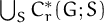 $\bigcup _{S} {C}^{*}_{r}(G;S)$
is a dense subalgebra of
$\bigcup _{S} {C}^{*}_{r}(G;S)$
is a dense subalgebra of ${C}^{*}_r(G)$
, so the conclusion follows from continuity of
${C}^{*}_r(G)$
, so the conclusion follows from continuity of $K$
-theory, as in for example [Reference Rørdam, Larsen and Lautsen41, Thm. 6.3.2] or [Reference Karoubi24, Ex. II.6.15].
$K$
-theory, as in for example [Reference Rørdam, Larsen and Lautsen41, Thm. 6.3.2] or [Reference Karoubi24, Ex. II.6.15].
A similar result holds for the ${C}^{*}$
-category
${C}^{*}$
-category $\mathsf {C}^{*}_{G,K}$
.
$\mathsf {C}^{*}_{G,K}$
.
Definition 4.2.3. If $S \subseteq \widehat {K}$
is any finite subset, then denote by
$S \subseteq \widehat {K}$
is any finite subset, then denote by $\mathsf {C}^{*}_{G,K}(S)$
the full additive
$\mathsf {C}^{*}_{G,K}(S)$
the full additive ${C}^{*}$
-subcategory of
${C}^{*}$
-subcategory of $\mathsf {C}^{*}_{G,K}$
on those objects
$\mathsf {C}^{*}_{G,K}$
on those objects $V$
whose
$V$
whose $K$
-isotypical decompositions only include representations from
$K$
-isotypical decompositions only include representations from $S$
.
$S$
.
Lemma 4.2.4. The inclusions of the subcategories $\mathsf {C}^{*}_{G,K}(S)$
into
$\mathsf {C}^{*}_{G,K}(S)$
into $\mathsf {C}^{*}_{G,K}$
induce an isomorphism
$\mathsf {C}^{*}_{G,K}$
induce an isomorphism
 $$\begin{align*}\varinjlim K_{*}(\mathsf{C}^{*}_{G,K}(S)) \stackrel \cong \longrightarrow K_{*}(\mathsf{C}^{*}_{G,K}) \end{align*}$$
in $K$
-theory.
$K$
-theory.
Proof. This is clear because $\mathsf {C}^{*}_{G,K}$
is the union of all the subcategories
$\mathsf {C}^{*}_{G,K}$
is the union of all the subcategories $\mathsf {C}^{*}_{G,K}(S)$
.
$\mathsf {C}^{*}_{G,K}(S)$
.
Now, the projection $P_S$
in Definition 4.2.1 is (the operator of convolution with) a smooth function on
$P_S$
in Definition 4.2.1 is (the operator of convolution with) a smooth function on $K$
, and a central projection in
$K$
, and a central projection in ${C}^{*}_r(K)$
, and the inclusion morphisms induce vector space isomorphisms
${C}^{*}_r(K)$
, and the inclusion morphisms induce vector space isomorphisms
 $$ \begin{align} P_S {C}^{*}_r (K) \stackrel\cong\longleftarrow P_S C^\infty (K) \stackrel \cong \longrightarrow P_SL^2(K). \end{align} $$
Let us write
 $$\begin{align*}V_S = P_S L^2(K); \end{align*}$$
this is a finite-dimensional unitary representation of $K$
. The inner product on
$K$
. The inner product on $V_S$
is transported, via the isomorphisms in (4.2.5), to the inner product
$V_S$
is transported, via the isomorphisms in (4.2.5), to the inner product
 $$\begin{align*}\langle f,h\rangle = (f^{*}h)(e) \end{align*}$$
on $P_S {C}^{*}_r (K)$
, and the correspondence
$P_S {C}^{*}_r (K)$
, and the correspondence
 $$\begin{align*}{C}^{*}_r(K)P_S \ni f \longmapsto \bigl [ h\mapsto \langle f^{*}, h\rangle \bigr] \in V_S^{*} \end{align*}$$
identifies ${C}^{*}_r(K)P_S$
with the dual of
${C}^{*}_r(K)P_S$
with the dual of $V_S$
, as unitary representations of
$V_S$
, as unitary representations of $K$
. From this we obtain a
$K$
. From this we obtain a $K$
-bi-equivariant isomorphism
$K$
-bi-equivariant isomorphism
 $$\begin{align*}P_S{C}^{*}_r (K)\otimes {C}^{*}_r(K)P_S \stackrel \cong \longrightarrow V_S \otimes V_S^{*} \stackrel \cong \longrightarrow \operatorname{{End}} (V_S). \end{align*}$$
From this we obtain, by rearranging the tensor factors, a linear isomorphism
 $$ \begin{align} \left[P_S {C}^{*}_r(K) \otimes {C}^{*}_r(G) \otimes {C}^{*}_r(K)P_S\right]^{K \times K} \stackrel \cong\longrightarrow \left[ {C}^{*}_r(G) \otimes {End}(V_S) \right]^{K \times K}, \end{align} $$
where, on the left-hand side, the first factor of $K$
acts on the left of
$K$
acts on the left of $P_S {C}^{*}_r (K)$
and on the left of
$P_S {C}^{*}_r (K)$
and on the left of ${C}^{*}_r(G)$
, while the second factor of
${C}^{*}_r(G)$
, while the second factor of $K$
acts on the right of
$K$
acts on the right of ${C}^{*}_r(G)$
and on the right of
${C}^{*}_r(G)$
and on the right of ${C}^{*}_r (K)P_S$
.
${C}^{*}_r (K)P_S$
.
The left-hand side in (4.2.6) has a natural $*$
-algebra structure, for which the product is
$*$
-algebra structure, for which the product is
 $$\begin{align*}(f_1 \otimes f_2 \otimes f_3) \cdot (h_1 \otimes h_2 \otimes h_3) = f_1 \otimes (f_2 f_3 h_1 h_2) \otimes h_3 \end{align*}$$
and the $*$
-operation is
$*$
-operation is
 $$\begin{align*} (f_1 \otimes f_2 \otimes f_3)^{*} = (f_3^{*} \otimes f_2^{*} \otimes f_1^{*}). \end{align*}$$
Lemma 4.2.7. The formula
 $$\begin{align*}(f_1 \otimes f_2 \otimes f_3) \mapsto f_1 f_2 f_3 \end{align*}$$
defines an isomorphism of $*$
-algebras
$*$
-algebras
 $$\begin{align*} \left[P_S {C}^{*}_r(K) \otimes {C}^{*}_r(G) \otimes {C}^{*}_r(K)P_S\right]^{K \times K} \stackrel \cong \longrightarrow P_S{C}^{*}_r(G)P_S. \end{align*}$$
We obtain from (4.2.6) and Lemma 4.2.7 an isomorphism of $*$
-algebras
$*$
-algebras
 $$ \begin{align} {C}^{*}_r(G;S) \stackrel \cong \longrightarrow \left[ {C}^{*}_r(G) \otimes {End}(V_S) \right]^{K \times K} , \end{align} $$
which is necessarily also an isomorphism of ${C}^{*}$
-algebras. Now, we noted in (3.3.8) that the right-hand side of (4.2.8) is the endomorphism
${C}^{*}$
-algebras. Now, we noted in (3.3.8) that the right-hand side of (4.2.8) is the endomorphism ${C}^{*}$
-algebra
${C}^{*}$
-algebra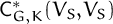 $\mathsf {C}^{*}_{G,K}(V_S,V_S)$
in the
$\mathsf {C}^{*}_{G,K}(V_S,V_S)$
in the ${C}^{*}$
-category
${C}^{*}$
-category $\mathsf {C}^{*}_{G,K}$
. So since each
$\mathsf {C}^{*}_{G,K}$
. So since each ${C}^{*}$
-algebra is a
${C}^{*}$
-algebra is a ${C}^{*}$
-category on one object, the isomorphism (4.2.8) can be viewed as a functor between
${C}^{*}$
-category on one object, the isomorphism (4.2.8) can be viewed as a functor between ${C}^{*}$
-categories, and it therefore induces a morphism of
${C}^{*}$
-categories, and it therefore induces a morphism of $K$
-theory groups
$K$
-theory groups
 $$ \begin{align} K_*({C}^{*}_r(G;S)) \longrightarrow K_*(\mathsf{C}^{*}_{G,K}(S)). \end{align} $$
This is indeed an isomorphism, because $V_S$
is a finite projective generator for the category
$V_S$
is a finite projective generator for the category $\mathsf {C}^{*}_{G,K}(S)$
.
$\mathsf {C}^{*}_{G,K}(S)$
.
Theorem 4.2.10. Let $G$
be a Lie group and let
$G$
be a Lie group and let $K$
be a compact subgroup of
$K$
be a compact subgroup of $G$
. There is a unique isomorphism of
$G$
. There is a unique isomorphism of $K$
-theory groups
$K$
-theory groups
 $$\begin{align*}K_*(C_r^{*}(G)) \stackrel \cong \longrightarrow K_*(\mathsf{C}^{*}_{G,K}) \end{align*}$$
such that, for every $S$
, the diagram
$S$
, the diagram

is commutative (the vertical arrows are induced from inclusions).
Proof. The morphisms (4.2.9) are compatible with inclusions $S_1\subseteq S_2$
of finite subsets of
$S_1\subseteq S_2$
of finite subsets of $\widehat K$
. So the existence and uniqueness parts of the theorem both follow from Lemmas 4.2.2 and 4.2.4.
$\widehat K$
. So the existence and uniqueness parts of the theorem both follow from Lemmas 4.2.2 and 4.2.4.
Remark 4.2.11. The arguments above also prove that the ${C}^{*}$
-category
${C}^{*}$
-category $\mathsf {C}^{*}_{G,K}$
is equivalent to the additive completion ([Reference Mitchener35], Def. 2.12) of
$\mathsf {C}^{*}_{G,K}$
is equivalent to the additive completion ([Reference Mitchener35], Def. 2.12) of $\mathsf {C}_A$
described at the beginning of Section 4 that is constructed from the
$\mathsf {C}_A$
described at the beginning of Section 4 that is constructed from the ${C}^{*}$
-algebra
${C}^{*}$
-algebra $A{=}{C}^{*}_r(G)$
, and from the family of projection operators
$A{=}{C}^{*}_r(G)$
, and from the family of projection operators $P_\pi $
associated to the irreducible representations of
$P_\pi $
associated to the irreducible representations of $K$
in Definition 4.2.1.
$K$
in Definition 4.2.1.
5 The Connes-Kasparov isomorphism
We shall now specialize further, and work with an almost-connected Lie group $G$
and maximal compact subgroup
$G$
and maximal compact subgroup $K$
.Footnote
6
$K$
.Footnote
6
5.1 The deformation to the normal cone and its C*-algebra
The motion group associated to $G$
and
$G$
and $K$
is the semidirect product group
$K$
is the semidirect product group
 $$\begin{align*}G_0 = K \ltimes ( \mathfrak{g}/\mathfrak{k} ) \end{align*}$$
constructed from the adjoint action of $K$
on the quotient vector space
$K$
on the quotient vector space $\mathfrak {g}/\mathfrak {k}$
. The motion group fits into a smooth, one-parameter family of groups
$\mathfrak {g}/\mathfrak {k}$
. The motion group fits into a smooth, one-parameter family of groups $\{ G_t \} _{t\in \mathbb {R}}$
with
$\{ G_t \} _{t\in \mathbb {R}}$
with
 $$\begin{align*}G_t = \begin{cases} G & t\ne 0 \\ K \ltimes ( \mathfrak{g}/\mathfrak{k} ) & t=0. \end{cases} \end{align*}$$
That is, there is a smooth manifold $\pmb {G} $
and a submersion
$\pmb {G} $
and a submersion $\pmb {G}\to \mathbb {R}$
whose fibers are these groups, for which the fiberwise-defined group operations of multiplication, inverse, and inclusion of the group identity element,
$\pmb {G}\to \mathbb {R}$
whose fibers are these groups, for which the fiberwise-defined group operations of multiplication, inverse, and inclusion of the group identity element,
 $$\begin{align*}\pmb{G} \times _{\mathbb{R}} \pmb{G} \longrightarrow \pmb{G} , \quad \pmb{G} \longrightarrow \pmb{G} \quad \text{and}\quad \mathbb{\mathbb{R}} \longrightarrow \pmb{G} \end{align*}$$
are smooth maps. This is an instance of the deformation to the normal cone construction; see [Reference Debord and Skandalis13, Sec. 2.4] for a concise introduction to the topic.
The smooth manifold structure on $\pmb {G}$
may be characterized as follows. First, the complement of
$\pmb {G}$
may be characterized as follows. First, the complement of $G_0$
is an open subset, and carries the standard smooth structure of
$G_0$
is an open subset, and carries the standard smooth structure of $G\times \mathbb {R}^{\times }$
. Second, if
$G\times \mathbb {R}^{\times }$
. Second, if $V$
is any finite-dimensional real vector space, and if
$V$
is any finite-dimensional real vector space, and if $E\colon V \to G$
is any smooth map such that
$E\colon V \to G$
is any smooth map such that
-
(i)
$E(0) = e$
, and -
(ii) the map
is a diffeomorphism onto an open subset of G,
$$\begin{align*}\begin{aligned} K\times V \longrightarrow G \\ (k,X) \longmapsto k \cdot E(X) \end{aligned} \end{align*}$$


then the map
 $$\begin{align*}K \times V \times \mathbb{R} \longrightarrow \pmb{G} \end{align*}$$
defined by
 $$\begin{align*}(k,v,t) \longmapsto \begin{cases} k \cdot E(tv) \in G_t & t \ne 0 \\ (k,dE(v))\in G_0 & t=0 \end{cases} \end{align*}$$
is a diffeomorphism onto an open subset of $\pmb {G}$
. Here
$\pmb {G}$
. Here $dE \colon V \to \mathfrak {g} / \mathfrak {k}$
is the composition of the derivative of the smooth map
$dE \colon V \to \mathfrak {g} / \mathfrak {k}$
is the composition of the derivative of the smooth map $E$
at
$E$
at $0\in V$
with the projection map from
$0\in V$
with the projection map from $\mathfrak {g} $
to the quotient vector space
$\mathfrak {g} $
to the quotient vector space $\mathfrak {g}/\mathfrak {k}$
.
$\mathfrak {g}/\mathfrak {k}$
.
Associated to $\pmb {G} $
is a continuous field of
$\pmb {G} $
is a continuous field of ${C}^{*}$
-algebras
${C}^{*}$
-algebras $\{ {C}^{*}_r (G_t)\} _{t\in \mathbb {R}}$
(see [Reference Dixmier14, Ch. 10] for background information on continuous fields). It is constructed by choosing a smoothly varying family of Haar measures on the fiber groups
$\{ {C}^{*}_r (G_t)\} _{t\in \mathbb {R}}$
(see [Reference Dixmier14, Ch. 10] for background information on continuous fields). It is constructed by choosing a smoothly varying family of Haar measures on the fiber groups $G_t$
, and then decreeing that the continuous sections of the continuous field be generated by the smooth, compactly supported functions on
$G_t$
, and then decreeing that the continuous sections of the continuous field be generated by the smooth, compactly supported functions on $\pmb {G} $
: from each such function
$\pmb {G} $
: from each such function $f$
one obtains by restriction a family of functions
$f$
one obtains by restriction a family of functions $f_t$
on the groups
$f_t$
on the groups $G_t$
, and it is proved in [Reference Higson17, Lemma 6.13] that the norms
$G_t$
, and it is proved in [Reference Higson17, Lemma 6.13] that the norms $\| f_t\|_{{C}^{*}_r (G_t)}$
vary continuously with
$\| f_t\|_{{C}^{*}_r (G_t)}$
vary continuously with $t$
.
$t$
.
Definition 5.1.1. We shall denote by ${C}^{*}_r (\pmb {G} )$
the
${C}^{*}_r (\pmb {G} )$
the ${C}^{*}$
-algebra of continuous sections of
${C}^{*}$
-algebra of continuous sections of $\{ {C}^{*}_r (G_t)\} $
over the closed interval
$\{ {C}^{*}_r (G_t)\} $
over the closed interval $[0,1] \subseteq \mathbb {R}$
.
$[0,1] \subseteq \mathbb {R}$
.
The following difficult and important result will be essential to everything that follows:
Theorem 5.1.2 (Connes-Kasparov isomorphism)
Let $G$
be an almost-connected Lie group with maximal compact subgroup
$G$
be an almost-connected Lie group with maximal compact subgroup $K$
. The
$K$
. The ${C}^{*}$
-algebra morphisms
${C}^{*}$
-algebra morphisms ${C}^{*}_r(\pmb {G} ) \to {C}^{*}_r (G_t)$
given by evaluation of continuous sections at any
${C}^{*}_r(\pmb {G} ) \to {C}^{*}_r (G_t)$
given by evaluation of continuous sections at any $t\in [0,1]$
are isomorphisms in
$t\in [0,1]$
are isomorphisms in $K$
-theory.
$K$
-theory.
The case $t{=}0$
is elementary, but for all other
$t{=}0$
is elementary, but for all other $t{\in } [0,1]$
the theorem is by no means trivial. In fact Connes has pointed out in [Reference Connes11, Prop. 9, p.141] that the assertion in the theorem is equivalent to the Connes-Kasparov isomorphism.
$t{\in } [0,1]$
the theorem is by no means trivial. In fact Connes has pointed out in [Reference Connes11, Prop. 9, p.141] that the assertion in the theorem is equivalent to the Connes-Kasparov isomorphism.
5.2
$K$
-theory for the C*-category of pseudodifferential operators

In this section we shall reformulate Theorem 5.1.2, or equivalently the Connes-Kasparov isomorphism, as an assertion about the $K$
-theory of the
$K$
-theory of the ${C}^{*}$
-category of pseudodifferential operators that we have constructed in this paper.
${C}^{*}$
-category of pseudodifferential operators that we have constructed in this paper.
Definition 5.2.1. Let $K$
be a compact Lie group. We shall denote by
$K$
be a compact Lie group. We shall denote by $\mathsf {Rep}^{*}_K$
the
$\mathsf {Rep}^{*}_K$
the ${C}^{*}$
-category whose objects are the finite-dimensional unitary representations of
${C}^{*}$
-category whose objects are the finite-dimensional unitary representations of $K$
and whose morphisms are the
$K$
and whose morphisms are the $K$
-equivariant linear maps between representations.
$K$
-equivariant linear maps between representations.
Definition 5.2.2. Let $G$
be an almost-connected Lie group and let
$G$
be an almost-connected Lie group and let $K$
be a maximal compact subgroup of
$K$
be a maximal compact subgroup of $G$
. We shall denote by
$G$
. We shall denote by

the functor of ${C}^{*}$
-categories that is the identity on objects, and maps a morphism of representations
${C}^{*}$
-categories that is the identity on objects, and maps a morphism of representations $T\colon V_1\to V_2$
to the induced morphism
$T\colon V_1\to V_2$
to the induced morphism
 $$\begin{align*}T \colon [L^2( G)\otimes V_1]^K \longrightarrow [L^2( G)\otimes V_2]^K \end{align*}$$
(which is a particularly simple example of an equivariant, properly supported, classical order $0$
pseudodifferential operator).
$0$
pseudodifferential operator).
The name  is a reference to Connes and Kasparov, for we shall prove that Theorem 5.1.2 implies, and indeed is equivalent to, the following assertion:
Theorem 5.2.3. Let $G$
be an almost-connected group with maximal compact subgroup
$G$
be an almost-connected group with maximal compact subgroup $K$
. The functor
$K$
. The functor  induces an isomorphism in $K$
-theory.
$K$
-theory.
The main idea of the proof is to reduce to the case in which $G$
is replaced by its motion group
$G$
is replaced by its motion group $G_0$
. To make this reduction we shall avail ourselves of the smooth family of groups
$G_0$
. To make this reduction we shall avail ourselves of the smooth family of groups $\pmb {G}=\{ G_t\}$
and the associated continuous field of
$\pmb {G}=\{ G_t\}$
and the associated continuous field of ${C}^{*}$
-algebras
${C}^{*}$
-algebras $\{ {C}^{*}_r (G_t)\}$
. We shall begin preparations for the proof by considering not order zero pseudodifferential operators, but smoothing operators.
$\{ {C}^{*}_r (G_t)\}$
. We shall begin preparations for the proof by considering not order zero pseudodifferential operators, but smoothing operators.
Definition 5.2.4. Let $G$
be an almost-connected Lie group with maximal compact subgroup
$G$
be an almost-connected Lie group with maximal compact subgroup $K$
. We shall denote by
$K$
. We shall denote by $\mathsf {C}^{*}_{\pmb {G},\pmb {K}}$
the
$\mathsf {C}^{*}_{\pmb {G},\pmb {K}}$
the ${C}^{*}$
-category whose objects are the finite-dimensional unitary representations of
${C}^{*}$
-category whose objects are the finite-dimensional unitary representations of $K$
, and whose morphism spaces
$K$
, and whose morphism spaces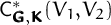 $\mathsf {C}^{*}_{\pmb {G},\pmb {K}}(V_1,V_2)$
are norm closures of the spaces of properly supported smooth families of equivariant smoothing operators
$\mathsf {C}^{*}_{\pmb {G},\pmb {K}}(V_1,V_2)$
are norm closures of the spaces of properly supported smooth families of equivariant smoothing operators
 $$\begin{align*}T_t \colon L^2 (K \backslash G_t, V_1) \longrightarrow L^2(K \backslash G_t, V_1)\qquad (t\in [0,1]) \end{align*}$$
(see below) in the norm $\| T\| = \sup \{\, \|T_t\|: t\in [0,1]\,\}$
.
$\| T\| = \sup \{\, \|T_t\|: t\in [0,1]\,\}$
.
In order to be more specific about the term properly supported smooth family, we use the description of individual properly supported and equivariant smoothing operators as elements of the spaces
 $$ \begin{align} \bigl [C_c^\infty (G_t)\otimes \operatorname{{Hom}} (V_1,V_2) \bigr ]^{K\times K} \end{align} $$
in Section 3.3. Our requirement on properly supported, smooth families $\{ T_t\}$
of equivariant smoothing operators is that there should be a single element in the space
$\{ T_t\}$
of equivariant smoothing operators is that there should be a single element in the space
 $$\begin{align*}\bigl [ C_c^\infty (\pmb{G}) \otimes \operatorname{{Hom}} (V_1,V_2)\bigr ]^{K\times K} \end{align*}$$
that restricts at each $t\in [0,1]$
to the element in (5.2.5) corresponding to
$t\in [0,1]$
to the element in (5.2.5) corresponding to $T_t$
.
$T_t$
.
With this definition, it is evident that there is an isomorphism of ${C}^{*}$
-categories that is the identity on objects, and on morphism spaces takes the form of isomorphisms
${C}^{*}$
-categories that is the identity on objects, and on morphism spaces takes the form of isomorphisms
 $$\begin{align*}\mathsf{C}^{*}_{\pmb{G},\pmb{K}}(V_1,V_2) \stackrel \cong \longrightarrow \bigl [ {C}^{*}_r (\pmb{G}) \otimes \operatorname{{Hom}} (V_1,V_2)\bigr ]^{K\times K}. \end{align*}$$
Theorem 5.2.6. The Connes-Kasparov isomorphism in Theorem 5.1.2 is equivalent to the assertion that for all $t\in [0,1]$
the functor of evaluation at
$t\in [0,1]$
the functor of evaluation at $t$
,
$t$
,
 $$\begin{align*}\mathsf{C}^{*}_{\pmb{G},\pmb{K}} \longrightarrow \mathsf{C}^{*}_{G_t, K}, \end{align*}$$
induces an isomorphism in $K$
-theory.
$K$
-theory.
Proof. We may repeat the arguments of Section 4.2 using the smooth family $\pmb {G}$
over
$\pmb {G}$
over $[0,1]$
in place of the single group
$[0,1]$
in place of the single group $G$
. So for a finite subset
$G$
. So for a finite subset $S\subseteq \widehat K$
we may define the
$S\subseteq \widehat K$
we may define the ${C}^{*}$
-algebra
${C}^{*}$
-algebra ${C}^{*}_r(\pmb {G};S)$
, the
${C}^{*}_r(\pmb {G};S)$
, the ${C}^{*}$
-category
${C}^{*}$
-category $\mathsf {C}^{*}_{\pmb {G},\pmb {K}}(S)$
, and the
$\mathsf {C}^{*}_{\pmb {G},\pmb {K}}(S)$
, and the $K$
-theory isomorphism
$K$
-theory isomorphism
 $$ \begin{align*} K_*({C}^{*}_r(\pmb{G};S)) \stackrel\cong \longrightarrow K_*(\mathsf{C}^{*}_{\pmb{G},\pmb{K}}(S)). \end{align*} $$
analogous to (4.2.9). These determine an isomorphism
 $$ \begin{align} K_*({C}^{*}_r(\pmb{G})) \stackrel\cong \longrightarrow K_*(\mathsf{C}^{*}_{\pmb{G},\pmb{K}}) \end{align} $$
analogous to the isomorphism in Theorem 4.2.10. Now, (5.2.7) is compatible with evaluation at $t\in [0,1]$
, in the sense that the diagram
$t\in [0,1]$
, in the sense that the diagram

commutes. The theorem follows from this.
The proof of Theorem 5.2.3 will require a similar treatment of the order zero pseudodifferential operators: we shall need to organize families of order zero operators on the family of homogeneous spaces $K \backslash G_t$
into a
$K \backslash G_t$
into a ${C}^{*}$
-category,
${C}^{*}$
-category, $\mathsf {P}^{*}_{\pmb {G},\pmb {K}}$
. This is a bit more complicated, and to begin we shall simply assert the existence of a suitable category, and explain how it may be used to prove Theorem 5.2.3. We shall actually construct
$\mathsf {P}^{*}_{\pmb {G},\pmb {K}}$
. This is a bit more complicated, and to begin we shall simply assert the existence of a suitable category, and explain how it may be used to prove Theorem 5.2.3. We shall actually construct $\mathsf {P}^{*}_{\pmb {G},\pmb {K}}$
in Section 5.3.
$\mathsf {P}^{*}_{\pmb {G},\pmb {K}}$
in Section 5.3.
As usual, the objects of $\mathsf {P}^{*}_{\pmb {G},\pmb {K}}$
will be the finite-dimensional unitary representations of
$\mathsf {P}^{*}_{\pmb {G},\pmb {K}}$
will be the finite-dimensional unitary representations of $K$
. The morphisms will be suitable continuous families of equivariant, properly supported, order zero classical pseudodifferential operators
$K$
. The morphisms will be suitable continuous families of equivariant, properly supported, order zero classical pseudodifferential operators
 $$ \begin{align} A_t \colon [ L^2 (G_t)\otimes V_1]^K \longrightarrow [ L^2 (G_t)\otimes V_2]^K\qquad (t\in [0,1]), \end{align} $$
or norm-completions of such families. Here are the properties of the category $\mathsf {P}^{*}_{\pmb {G},\pmb {K}}$
that we shall require for the argument:
$\mathsf {P}^{*}_{\pmb {G},\pmb {K}}$
that we shall require for the argument:
-
(i) The category
$\mathsf {P}^{*}_{\pmb {G},\pmb {K}}$
includes the category
$\mathsf {C}^{*}_{\pmb {G},\pmb {K}}$
as an ideal. -
(ii) The individual operators in a morphism
$\{ A_t : t\in [0,1]\}$
in each family all have the same principal symbol (observe that for all
$t$
, the tangent space of
$K \backslash G_t$
identifies naturally with
$\mathfrak {g} / \mathfrak {k}$
, so that the principal symbol is, for all
$t$
, a continuous function on
$\partial ( \mathfrak {g} / \mathfrak {k})^{*}$
). -
(iii) The principal symbol functor (that associates to a family of operators the common principal symbol) fits into an extension of
${C}^{*}$
-categories
$$\begin{align*}0 \longrightarrow \mathsf{C}^{*}_{\pmb{G},\pmb{K}} \longrightarrow \mathsf{P}^{*}_{\pmb{G},\pmb{K}}\longrightarrow \mathsf{S}^{*}_{G,K} \longrightarrow 0 \end{align*}$$
-
(iv) If
$T\colon V_1 \to V_2$
is a morphism of finite-dimensional unitary representations of
$K$
, then the family of induced morphisms is a morphism in
$$\begin{align*}T_t \colon [ L^2 (G_t)\otimes V_1]^K \longrightarrow [ L^2 (G_t)\otimes V_2]^K \qquad (t \in [0,1]) \end{align*}$$
$\mathsf {P}^{*}_{\pmb {G},\pmb {K}}$
.








Theorem 5.2.9. There exists a category $\mathsf {P}^{*}_{\pmb {G},\pmb {K}}$
with the properties (i)-(iv) above.
$\mathsf {P}^{*}_{\pmb {G},\pmb {K}}$
with the properties (i)-(iv) above.
Taking this for granted, for now, we shall proceed to study the $K$
-theory of the category
$K$
-theory of the category $\mathsf {P}^{*}_{\pmb {G},\pmb {K}}$
.
$\mathsf {P}^{*}_{\pmb {G},\pmb {K}}$
.
Theorem 5.2.10. The Connes-Kasparov isomorphism in Theorem 5.1.2 is equivalent to the assertion that for all $t\in [0,1]$
the functor of evaluation at
$t\in [0,1]$
the functor of evaluation at $t$
,
$t$
,
 $$\begin{align*}\mathsf{P}^{*}_{\pmb{G},\pmb{K}} \longrightarrow \mathsf{P}^{*}_{G_t, K}, \end{align*}$$
induces an isomorphism in $K$
-theory.
$K$
-theory.
Proof. This follows from Theorem 5.2.6 and the five lemma, applied to the diagram of $K$
-theory six-term exact sequences associated to the diagram
$K$
-theory six-term exact sequences associated to the diagram

where the vertical maps are given by evaluation at $t\in [0,1]$
.
$t\in [0,1]$
.
Let us now examine the category $\mathsf {P}^{*}_{G_0,K}$
.
$\mathsf {P}^{*}_{G_0,K}$
.
Theorem 5.2.11. Let $G_0$
be the motion group associated to an almost-connected Lie group
$G_0$
be the motion group associated to an almost-connected Lie group $G$
with maximal compact subgroup
$G$
with maximal compact subgroup $K$
. The functor
$K$
. The functor  induces an isomorphism in $K$
-theory.
$K$
-theory.
Proof. In the case of the motion group, the homogeneous space $K\backslash G_0$
identifies with the vector space
$K\backslash G_0$
identifies with the vector space $\mathfrak {g} / \mathfrak {k}$
, and the
$\mathfrak {g} / \mathfrak {k}$
, and the $G_0$
-equivariant operators
$G_0$
-equivariant operators
 $$\begin{align*}T \colon [C_c^\infty ( G_0 )\otimes V_1]^K \longrightarrow [C_c^\infty ( G_0 )\otimes V_2]^K \end{align*}$$
are precisely the operators
 $$\begin{align*}T \colon C_c^\infty (\mathfrak{g}/\mathfrak{k})\otimes V_1 \longrightarrow C_c^\infty (\mathfrak{g}/\mathfrak{k}) \otimes V_2 \end{align*}$$
that are both $K$
-equivariant and translation-invariant.
$K$
-equivariant and translation-invariant.
Being translation-invariant, the operators $T$
above may be analyzed using the Fourier transform. We find that the properly supported,
$T$
above may be analyzed using the Fourier transform. We find that the properly supported, $G_0$
-equivariant, order
$G_0$
-equivariant, order $0$
classical pseudodifferential operators
$0$
classical pseudodifferential operators $T$
as above are precisely the operators of convolution by
$T$
as above are precisely the operators of convolution by $\operatorname { {Hom}} (V_1,V_2)$
-valued, compactly supported distributions on
$\operatorname { {Hom}} (V_1,V_2)$
-valued, compactly supported distributions on $\mathfrak {g}/\mathfrak {k}$
whose Fourier transforms are
$\mathfrak {g}/\mathfrak {k}$
whose Fourier transforms are $K$
-equivariant, order zero classical symbol functions on
$K$
-equivariant, order zero classical symbol functions on $(\mathfrak {g}/\mathfrak {k})^{*}$
with values in
$(\mathfrak {g}/\mathfrak {k})^{*}$
with values in $\operatorname { {Hom}} (V_1,V_2)$
.
$\operatorname { {Hom}} (V_1,V_2)$
.
Now, every order zero, classical symbol function extends by continuity to the compactification of $(\mathfrak {g}/\mathfrak {k})^{*}$
in Definition 2.3.2, and these extended functions separate the points of the compactification. This yields an isomorphism of
$(\mathfrak {g}/\mathfrak {k})^{*}$
in Definition 2.3.2, and these extended functions separate the points of the compactification. This yields an isomorphism of ${C}^{*}$
-categories from
${C}^{*}$
-categories from $\mathsf {P}^{*}_{G_0,K}$
to the
$\mathsf {P}^{*}_{G_0,K}$
to the ${C}^{*}$
-category whose objects are the finite-dimensional unitary representations of
${C}^{*}$
-category whose objects are the finite-dimensional unitary representations of $K$
, and whose morphisms are elements of the spaces
$K$
, and whose morphisms are elements of the spaces
 $$\begin{align*}C \bigl (\overline {(\mathfrak{g} / \mathfrak{k})^{*}} , \operatorname{{Hom}} (V_1,V_2)\bigr )^K. \end{align*}$$
The functor  corresponds to the inclusion
 $$\begin{align*}\operatorname{{Hom}} (V_1,V_2)^K \longrightarrow C \bigl (\overline {(\mathfrak{g} / \mathfrak{k})^{*}} , \operatorname{{Hom}} (V_1,V_2)\bigr )^K \end{align*}$$
as constant functions. It has a left-inverse
 $$\begin{align*}C \bigl (\overline {(\mathfrak{g} / \mathfrak{k})^{*}} , \operatorname{{Hom}} (V_1,V_2)\bigr )^K\longrightarrow \operatorname{{Hom}} (V_1,V_2)^K \end{align*}$$
given by evaluation of functions at $0$
. The composition of the two functors in the opposite order is the functor
$0$
. The composition of the two functors in the opposite order is the functor
 $$\begin{align*}F\colon C \bigl (\overline {(\mathfrak{g} / \mathfrak{k})^{*}} , \operatorname{{Hom}} (V_1,V_2)\bigr )^K \longrightarrow C \bigl (\overline {(\mathfrak{g} / \mathfrak{k})^{*}} , \operatorname{{Hom}} (V_1,V_2)\bigr )^K \end{align*}$$
that replaces each function by the constant function with the same value at $0$
. Because the compactification
$0$
. Because the compactification $\overline {(\mathfrak {g} / \mathfrak {k})^{*}}$
is
$\overline {(\mathfrak {g} / \mathfrak {k})^{*}}$
is $K$
-equivariantly contractible, the composition is homotopic through a family of functors
$K$
-equivariantly contractible, the composition is homotopic through a family of functors $F_t$
to the identity functor (the continuity condition on the family is that for every morphism
$F_t$
to the identity functor (the continuity condition on the family is that for every morphism $a$
,
$a$
, $F_t(a)$
is a norm-continuous function of
$F_t(a)$
is a norm-continuous function of $t$
). It therefore follows from the homotopy-invariance of
$t$
). It therefore follows from the homotopy-invariance of $K$
-theory that
$K$
-theory that $F$
induces the identity map on
$F$
induces the identity map on $K$
-theory. Thus
$K$
-theory. Thus  induces an isomorphism on $K$
-theory, as required.
$K$
-theory, as required.
With this, we can complete the proof of Theorem 5.2.3. By the assumptions (i) and (iii) above, the functor
 $$ \begin{align} \mathsf{P}^{*}_{\pmb{G},\pmb{K}} \longrightarrow \mathsf{P}^{*}_{G_0,K} \end{align} $$
of evaluation at $t{=}0$
is surjective on Hom-spaces. Its kernel—the ideal in
$t{=}0$
is surjective on Hom-spaces. Its kernel—the ideal in $\mathsf {P}^{*}_{\pmb {G},\pmb {K}}$
comprised of all morphisms that map to a zero morphism—consists of those operator families that define morphisms in
$\mathsf {P}^{*}_{\pmb {G},\pmb {K}}$
comprised of all morphisms that map to a zero morphism—consists of those operator families that define morphisms in $\mathsf {P}^{*}_{\pmb {G},\pmb {K}}$
and that vanish at
$\mathsf {P}^{*}_{\pmb {G},\pmb {K}}$
and that vanish at $t{=}0$
. In particular, the principal symbols of such families vanish, and so by (iii) the families are morphisms in
$t{=}0$
. In particular, the principal symbols of such families vanish, and so by (iii) the families are morphisms in $\mathsf {C}^{*}_{\pmb {G},\pmb {K}}$
. Therefore the kernel is precisely the ideal in
$\mathsf {C}^{*}_{\pmb {G},\pmb {K}}$
. Therefore the kernel is precisely the ideal in $\mathsf {C}^{*}_{\pmb {G},\pmb {K}}$
whose morphisms are the families that vanish at
$\mathsf {C}^{*}_{\pmb {G},\pmb {K}}$
whose morphisms are the families that vanish at $t{=}0$
. This ideal is contractible in the sense of [Reference Mitchener35, Sec. 3] and so has vanishing
$t{=}0$
. This ideal is contractible in the sense of [Reference Mitchener35, Sec. 3] and so has vanishing $K$
-theory [Reference Mitchener35, Prop. 3.23]. Therefore, by the
$K$
-theory [Reference Mitchener35, Prop. 3.23]. Therefore, by the $K$
-theory long-exact sequence associated to an extension of
$K$
-theory long-exact sequence associated to an extension of ${C}^{*}$
-categories [Reference Mitchener35, Cor. 3.20], the functor (5.2.12) induces an isomorphism in
${C}^{*}$
-categories [Reference Mitchener35, Cor. 3.20], the functor (5.2.12) induces an isomorphism in $K$
-theory.
$K$
-theory.
Next, we may define a functor

exactly as we defined the original version in Definition 5.2.2, but using families, and using property (iv) of the category $\mathsf {P}^{*} _{\pmb {G},\pmb {K}}$
listed above. The composition
$\mathsf {P}^{*} _{\pmb {G},\pmb {K}}$
listed above. The composition

is precisely the morphism that was proved in Theorem 5.2.11 to be an isomorphism at the $K$
-theory level. So the functor (5.2.13) induces an isomorphism on
$K$
-theory level. So the functor (5.2.13) induces an isomorphism on $K$
-theory, too.
$K$
-theory, too.
So far we have not used the Connes-Kasparov isomorphism in Theorem 5.1.2. But if we now use it in the equivalent form presented in Theorem 5.2.10, then we may conclude that both morphisms in the composition

are isomorphisms for all $t \in [0,1]$
. But when
$t \in [0,1]$
. But when $t \neq 0$
, the composition (5.2.15) is precisely the morphism in the statement of Theorem 5.2.3, and so the proof of Theorem 5.2.3 is complete.
$t \neq 0$
, the composition (5.2.15) is precisely the morphism in the statement of Theorem 5.2.3, and so the proof of Theorem 5.2.3 is complete.
In the reverse direction, if we assume Theorem 5.2.3, which is to say if we assume that the composition in (5.2.15) is an isomorphism when $t \neq 0$
, then since we already proved, without recourse to the Connes-Kasparov isomorphism, that (5.2.13) induces an isomorphism on
$t \neq 0$
, then since we already proved, without recourse to the Connes-Kasparov isomorphism, that (5.2.13) induces an isomorphism on $K$
-theory, it follows that evaluation at
$K$
-theory, it follows that evaluation at $t$
induces an isomorphism
$t$
induces an isomorphism
 $$\begin{align*}K_*(\mathsf{P}^{*}_{\pmb{G},\pmb{K}} ) \stackrel \cong \longrightarrow K_* (\mathsf{P}^{*}_{G_t,K} ) \end{align*}$$
for all $t\in [0,1]$
(the case
$t\in [0,1]$
(the case $t = 0$
is covered by Theorem 5.2.11), and according to Theorem 5.2.10 this implies the Connes-Kasparov isomorphism.
$t = 0$
is covered by Theorem 5.2.11), and according to Theorem 5.2.10 this implies the Connes-Kasparov isomorphism.
5.3 Construction of a C*-category from families of pseudodifferential operators
In this section we shall construct the category $\mathsf {P}_{\pmb {G},\pmb {K}}$
that is used in the proof of Theorem 5.2.3.
$\mathsf {P}_{\pmb {G},\pmb {K}}$
that is used in the proof of Theorem 5.2.3.
The main issue is to decide when a family of operators (5.2.8) acting on the fibers of the smooth family of homogeneous spaces $\pmb K \backslash \pmb G$
should be deemed to be continuous. There are a number of equivalent ways of expressing the continuity condition, and we shall choose the one that seems to us to be the quickest (what seems to us to be the most conceptual approach will be outlined in the next section). The approach that we shall follow is based on the fact, first documented in [Reference Atiyah and Singer4], that if one conjugates a compactly supported, order zero pseudodifferential operator by a smooth family of diffeomorphisms, then one obtains an
$\pmb K \backslash \pmb G$
should be deemed to be continuous. There are a number of equivalent ways of expressing the continuity condition, and we shall choose the one that seems to us to be the quickest (what seems to us to be the most conceptual approach will be outlined in the next section). The approach that we shall follow is based on the fact, first documented in [Reference Atiyah and Singer4], that if one conjugates a compactly supported, order zero pseudodifferential operator by a smooth family of diffeomorphisms, then one obtains an $L^2$
-operator norm-continuous family of bounded Hilbert space operators:
$L^2$
-operator norm-continuous family of bounded Hilbert space operators:
Theorem 5.3.1 (See for instance [Reference Atiyah and Singer4, Prop. 1.3])
Let $E_1$
and
$E_1$
and $E_2$
be smooth vector bundles over smooth manifolds
$E_2$
be smooth vector bundles over smooth manifolds $M_1$
and
$M_1$
and $M_2$
, respectively. Let
$M_2$
, respectively. Let $V$
be an open subset of some Euclidean space and let
$V$
be an open subset of some Euclidean space and let
 $$\begin{align*}\Psi_v \colon E_1 \stackrel \cong \longrightarrow E_2\qquad (v\in V) \end{align*}$$
be a smooth family of vector bundle isomorphisms that covers a smooth family of diffeomorphisms from $M_1$
to
$M_1$
to $M_2$
. If
$M_2$
. If $A$
is a compactly supported, classical pseudodifferential operator of order zero on
$A$
is a compactly supported, classical pseudodifferential operator of order zero on $M_2$
, acting on the sections of
$M_2$
, acting on the sections of $E_2$
, then the operators
$E_2$
, then the operators
 $$\begin{align*}\Psi_v ^{*} A \Psi_v^{*,-1} \colon L^2 (M_1; E_1) \longrightarrow L^2 (M_1; E_1) \qquad (v \in V) \end{align*}$$
vary norm-continuously with $V$
.
$V$
.
Definition 5.3.2. Let $\pi \colon \pmb M \to W$
be a submersion of smooth manifolds with fibers
$\pi \colon \pmb M \to W$
be a submersion of smooth manifolds with fibers $M_w$
(
$M_w$
( $w\in W)$
and let
$w\in W)$
and let $\pmb E $
be a smooth vector bundle over
$\pmb E $
be a smooth vector bundle over $\pmb M$
, restricting to bundles
$\pmb M$
, restricting to bundles $E_w$
over the fibers
$E_w$
over the fibers $M_w$
. We shall say that a family of classical, pseudodifferential operators
$M_w$
. We shall say that a family of classical, pseudodifferential operators
 $$\begin{align*}A_w \colon C_c^\infty (M_w;E_w) \longrightarrow C^\infty (M_w; E_w)\qquad (w\in W) \end{align*}$$
of order zero is continuous if
-
(a) for every pair of open sets
$\pmb U\subseteq \pmb M$
and
$V\subseteq W$
, -
(b) for every smooth, compactly supported function
$\varphi $
on
$\pmb {U}$
, -
(c) for every commuting diagram
in which
$L $
is a smooth manifold,
$\Phi $
is a diffeomorphism and
$\pi _V$
is the projection onto the factor
$V$
, and
-
(d) for every vector bundle isomorphism
that covers
$$\begin{align*}\Psi \colon L{\times} V {\times} \mathbb{C}^k \stackrel \cong \longrightarrow \pmb E \vert _{\pmb U} \end{align*}$$
$\Phi $
,


the family of compactly supported, order zero, classical pseudodifferential operators
 $$\begin{align*}\Psi^{*}_v \varphi_v A_v \varphi_v \Psi_v^{*,-1} \colon C_c^\infty (L;\mathbb{C}^k ) \longrightarrow C_c^\infty (L;\mathbb{C}^k )\qquad (v\in V) \end{align*}$$
extends to a norm-continuous family of operators between $L^2$
-spaces. Here
$L^2$
-spaces. Here
 $$\begin{align*}\Psi_v^{*}\colon C_c^\infty ( M_v\cap \pmb U; E) \stackrel \cong \longrightarrow C_c^\infty (L; \mathbb{C}^n) \end{align*}$$
is the isomorphism of linear spaces induced from $\Psi $
, and
$\Psi $
, and $\varphi _v$
is the restriction of
$\varphi _v$
is the restriction of $\varphi $
to
$\varphi $
to $M_v\cap \pmb U$
.
$M_v\cap \pmb U$
.
It follows from Theorem 5.3.1 that the continuity condition in the definition above can be checked using a single covering family of local trivializations in the sense of (a)-(d) above, and that continuous families may be constructed using such covering families and partitions of unity.
We are now almost ready to define the category $\mathsf {P}^{*}_{\pmb {G},\pmb {K}}$
.
$\mathsf {P}^{*}_{\pmb {G},\pmb {K}}$
.
Definition 5.3.3. We shall say that a family of equivariant operators
 $$\begin{align*}A _t \colon [C_c^\infty ( G_t )\otimes V_1]^K \longrightarrow [C_c^\infty ( G_t )\otimes V_2]^K \qquad (t \in \mathbb{R}) \end{align*}$$
is a properly supported family if all of the individual supports of the operators $A_t$
, in
$A_t$
, in $K \backslash G_t \times K\backslash G_t$
, are included in a closed subset of
$K \backslash G_t \times K\backslash G_t$
, are included in a closed subset of $\pmb {K}\backslash \pmb {G} \times _{\mathbb {R}}\pmb {K}\backslash \pmb {G}$
for which the two coordinate projections to
$\pmb {K}\backslash \pmb {G} \times _{\mathbb {R}}\pmb {K}\backslash \pmb {G}$
for which the two coordinate projections to $\pmb {K}\backslash \pmb {G}$
are proper maps.
$\pmb {K}\backslash \pmb {G}$
are proper maps.
Definition 5.3.4. We shall denote by $\mathsf {P}^{*}_{\pmb {G},\pmb {K}}$
the
$\mathsf {P}^{*}_{\pmb {G},\pmb {K}}$
the ${C}^{*}$
-category whose objects are the finite-dimensional unitary representations of
${C}^{*}$
-category whose objects are the finite-dimensional unitary representations of $K$
, and whose morphism spaces are the norm-closures of the collections of all restrictions to
$K$
, and whose morphism spaces are the norm-closures of the collections of all restrictions to $[0,1]$
of properly supported families
$[0,1]$
of properly supported families
 $$\begin{align*}A_t \colon [C_c^\infty ( G_t )\otimes V_1]^K \longrightarrow [C_c^\infty ( G_t )\otimes V_2]^K \qquad (t \in \mathbb{R}) \end{align*}$$
of equivariant, order zero, classical pseudodifferential operators that share the same principal symbol; that are smooth in the sense their compositions on the left or on the right with any smooth family of equivariant smoothing operators are again smooth families of smoothing operators; and that are norm-continuous in the sense of Definition 5.3.2. The norm here is
 $$\begin{align*}\| \{ A_t\} \| = \sup \, \{ \|A_t \|_{L^2\to L^2} : t \in [0,1]\,\}. \end{align*}$$
Remark 5.3.5. It follows from Proposition 3.4.4 and the continuity condition that the norm above is finite.
The category $\mathsf {C}^{*}_{\pmb {G},\pmb {K}}$
is included in
$\mathsf {C}^{*}_{\pmb {G},\pmb {K}}$
is included in $\mathsf {P}^{*}_{\pmb {G},\pmb {K}}$
as a subcategory because if
$\mathsf {P}^{*}_{\pmb {G},\pmb {K}}$
as a subcategory because if $\{ A_t\}$
is a smooth family of properly supported, equivariant smoothing operators on the fibers
$\{ A_t\}$
is a smooth family of properly supported, equivariant smoothing operators on the fibers $G_t$
of
$G_t$
of $\pmb G$
, with integral kernels
$\pmb G$
, with integral kernels $k_t(g_t,h_t)$
that vary smoothly with
$k_t(g_t,h_t)$
that vary smoothly with $t$
,
$t$
, $g_t$
and
$g_t$
and $h_t$
, then any of the local trivializations constructed using the data (a)-(d) of Definition 5.3.2 is a smooth family of compactly supported smoothing operators, and so certainly varies norm-continuously with
$h_t$
, then any of the local trivializations constructed using the data (a)-(d) of Definition 5.3.2 is a smooth family of compactly supported smoothing operators, and so certainly varies norm-continuously with $t$
. Moreover it is included as an ideal by our smoothness assumption in Definition 5.3.4, and so
$t$
. Moreover it is included as an ideal by our smoothness assumption in Definition 5.3.4, and so $\mathsf {C}^{*}_{\pmb {G},\pmb {K}}$
has property (i) in Section 5.2.
$\mathsf {C}^{*}_{\pmb {G},\pmb {K}}$
has property (i) in Section 5.2.
Property (ii) is built into Definition 5.3.4. Surjectivity of the principal symbol functor (on morphism spaces), may be proved using the averaging construction in [Reference Stetkaer44] and in Section 3.4. The fact that $\mathsf {C}^{*}_{\pmb {G},\pmb {K}}$
is the kernel of the principal symbol functor is proved similarly, by a variation of the argument in Section 3.5. Finally, property (iv) is clear.
$\mathsf {C}^{*}_{\pmb {G},\pmb {K}}$
is the kernel of the principal symbol functor is proved similarly, by a variation of the argument in Section 3.5. Finally, property (iv) is clear.
5.4 Comments on the van Erp-Yuncken theory and the Mackey bijection
Erik van Erp and Robert Yuncken have presented in [Reference van Erp and Yuncken45] a new account of the theory of classical pseudodifferential operators that is particularly well adapted to the general perspectives of this paper. We have not used their approach here because some aspects of their theory, related to $L^2$
-operator norm estimates, are not yet well-documented in the literature. But their work is so relevant to our purposes that we want to at least mention it here.
$L^2$
-operator norm estimates, are not yet well-documented in the literature. But their work is so relevant to our purposes that we want to at least mention it here.
Central to the van Erp-Yuncken approach is the zoom action
 $$\begin{align*}\alpha_\lambda \colon \pmb{G} \longrightarrow \pmb{G}\qquad (\lambda> 0) \end{align*}$$
of the group $\mathbb {R}^+=\{ \lambda \in \mathbb {R} : \lambda> 0\}$
of positive real numbers on the deformation space
$\mathbb {R}^+=\{ \lambda \in \mathbb {R} : \lambda> 0\}$
of positive real numbers on the deformation space $\pmb {G}$
by diffeomorphisms. This is defined by the formula
$\pmb {G}$
by diffeomorphisms. This is defined by the formula
 $$\begin{align*}\begin{cases} G_t\ni g \stackrel {\alpha _\lambda} \longmapsto g\in G_{\lambda t} & t {\ne } 0 \\ G_0\ni (k,X) \stackrel {\alpha _\lambda} \longmapsto (k,\lambda ^{-1} X)\in G_{ 0} & t{=}0. \end{cases} \end{align*}$$
Van Erp and Yuncken do not consider the equivariant context that we have studied in this paper, but if they were to have done so, then they would have defined equivariant order zero pseudodifferential operators as those operators on the $t{=}1$
fiber of the family of homogeneous spaces
$t{=}1$
fiber of the family of homogeneous spaces $\pmb {K}\backslash \pmb {G}$
that extend to smooth families of operators that remain fixed, modulo smooth families of smoothing operators, under the zoom action. With this, the category
$\pmb {K}\backslash \pmb {G}$
that extend to smooth families of operators that remain fixed, modulo smooth families of smoothing operators, under the zoom action. With this, the category $\mathsf {P}^{*}_{\pmb {G},\pmb {K}}$
that we defined above would have been built into their theory from the start—as the category whose morphism sets are generated by families that are invariant under the zoom action, modulo smooth families of smoothing operators.
$\mathsf {P}^{*}_{\pmb {G},\pmb {K}}$
that we defined above would have been built into their theory from the start—as the category whose morphism sets are generated by families that are invariant under the zoom action, modulo smooth families of smoothing operators.
Another topic that we must at least mention is the Mackey bijection for real reductive groups [Reference Higson17, Reference Afgoustidis1, Reference Afgoustidis2]. This involves the same deformation space $\pmb {G}$
that appears here, and it is also intimately connected to the Connes-Kasparov isomorphism. Not only that, but the Mackey bijection is also closely related to the concept of tempiric representation that will figure prominently in the coming sections. So it is natural to wonder if there might be a direct connection between pseudodifferential operators and the Mackey bijection. Unfortunately, for the time being at least, we can shed no light on this question.
$\pmb {G}$
that appears here, and it is also intimately connected to the Connes-Kasparov isomorphism. Not only that, but the Mackey bijection is also closely related to the concept of tempiric representation that will figure prominently in the coming sections. So it is natural to wonder if there might be a direct connection between pseudodifferential operators and the Mackey bijection. Unfortunately, for the time being at least, we can shed no light on this question.
6 A Fourier Transform for Pseudodifferential Operators
The purpose of this section is to analyze the ${C}^{*}$
-category
${C}^{*}$
-category $\mathsf {P}^{*}_{G,K}$
from the perspective of tempered representation theory. We shall construct a Fourier transform functor from
$\mathsf {P}^{*}_{G,K}$
from the perspective of tempered representation theory. We shall construct a Fourier transform functor from $\mathsf {P}^{*}_{G,K}$
to a new
$\mathsf {P}^{*}_{G,K}$
to a new ${C}^{*}$
-category, defined purely in terms of tempered representation theory, and we shall prove that it is an equivalence of categories for real reductive groups
${C}^{*}$
-category, defined purely in terms of tempered representation theory, and we shall prove that it is an equivalence of categories for real reductive groups $G$
of real rank one (the story for higher-real rank groups is more complicated).
$G$
of real rank one (the story for higher-real rank groups is more complicated).
From now on, and for the rest of the paper, we shall denote by $G$
a real reductive group. For definiteness we shall follow the definition of real reductive group given by Vogan in his monograph [Reference Vogan46]. As usual, we denote by
$G$
a real reductive group. For definiteness we shall follow the definition of real reductive group given by Vogan in his monograph [Reference Vogan46]. As usual, we denote by $K$
a maximal compact subgroup of
$K$
a maximal compact subgroup of $G$
. We shall say that a unitary representation
$G$
. We shall say that a unitary representation $\pi $
of
$\pi $
of $G$
is tempered if the formula
$G$
is tempered if the formula
 $$\begin{align*}\pi (f)v = \int _G f(g)\pi(g)v\, dg \qquad (f\in C_c^\infty (G),\,\, v\in H_\pi) \end{align*}$$
determines a ${C}^{*}$
-algebra representation of the reduced group
${C}^{*}$
-algebra representation of the reduced group ${C}^{*}$
-algebra
${C}^{*}$
-algebra ${C}^{*}_r (G)$
as bounded operators on
${C}^{*}_r (G)$
as bounded operators on $H_\pi $
, or equivalently if and only if
$H_\pi $
, or equivalently if and only if $\pi $
is weakly contained in the regular representation of
$\pi $
is weakly contained in the regular representation of $G$
. It is shown in [Reference Cowling, Haagerup and Howe12] that a unitary representation
$G$
. It is shown in [Reference Cowling, Haagerup and Howe12] that a unitary representation $\pi $
is tempered in this sense if and only if its
$\pi $
is tempered in this sense if and only if its $K$
-finite matrix coefficient functions are tempered in the sense of Harish-Chandra.
$K$
-finite matrix coefficient functions are tempered in the sense of Harish-Chandra.
6.1 Multiplicity spaces
Harish-Chandra showed in [Reference Harish-Chandra15, Thm. 6] that if a unitary representation $\pi $
is irreducible, then it is admissible in the sense that it includes each irreducible representation of
$\pi $
is irreducible, then it is admissible in the sense that it includes each irreducible representation of $K$
with at most finite multiplicity. Let
$K$
with at most finite multiplicity. Let $\pi $
be an admissible unitary representation of a real reductive group
$\pi $
be an admissible unitary representation of a real reductive group $G$
on a Hilbert space
$G$
on a Hilbert space $H_\pi $
, and denote by
$H_\pi $
, and denote by $H^\infty _\pi $
the space of smooth vectors in
$H^\infty _\pi $
the space of smooth vectors in $H_\pi $
(see for instance [Reference Knapp29, Ch. III]). If
$H_\pi $
(see for instance [Reference Knapp29, Ch. III]). If $\Lambda $
is a compactly supported distribution on
$\Lambda $
is a compactly supported distribution on $G$
, then there is unique linear operator
$G$
, then there is unique linear operator
 $$\begin{align*}\pi(\Lambda) \colon H^\infty _\pi \longrightarrow H^\infty _\pi \end{align*}$$
such that
 $$\begin{align*}\langle w_1 ,\pi(\Lambda) w_2\rangle = \int_G \Lambda (g) \langle w_1, \pi(g) w_2\rangle\, dg \qquad \forall w_1\in H_\pi ,\,\, \forall w_2 \in H^\infty _\pi. \end{align*}$$
Let $\mathcal {E}'(G)$
denote the space of compactly supported distributions on
$\mathcal {E}'(G)$
denote the space of compactly supported distributions on $G$
. From the above, if
$G$
. From the above, if $A \in [ \mathcal {E}'(G) \otimes \operatorname { {Hom}}(V_1,V_2)]^{K\times K}$
, say
$A \in [ \mathcal {E}'(G) \otimes \operatorname { {Hom}}(V_1,V_2)]^{K\times K}$
, say $A = \sum _k \Lambda _k \otimes T_k$
, then we obtain an operator
$A = \sum _k \Lambda _k \otimes T_k$
, then we obtain an operator
 $$ \begin{align} \pi(A) \colon [ H^\infty _\pi\otimes V_1]^K \longrightarrow [ H^\infty _\pi \otimes V_2] ^K \end{align} $$
by means of the formula
 $$\begin{align*}\pi(A) \colon w\otimes v \longmapsto \sum_k \pi(\Lambda_k)w\otimes T_k v. \end{align*}$$
The operator (6.1.1) may also be characterized by the formula
 $$ \begin{align} \pi(A) (\pi(f) F) & = \pi(Af)F \\ & \forall f \in [C_c^\infty(G)\otimes \operatorname{{End}} (V_1)]^{K\times K},\,\, \forall F \in [C_c^\infty (G) \otimes V_1]^K .\nonumber \end{align} $$
This uses the action in (3.3.5), plus the evident convolution action
 $$ \begin{align*} [ \mathcal{E}'(G) \otimes \operatorname{{Hom}}(V_1,V_2)]^{K\times K} & \times [C_c^\infty(G)\otimes \operatorname{{End}} (V_1)]^{K\times K}\\ & \longrightarrow [C_c^\infty(G)\otimes \operatorname{{Hom}} (V_1,V_2)]^{K\times K}. \end{align*} $$
Definition 6.1.3. We shall refer to the spaces $[H^\infty _\pi \otimes V]^K$
as the multiplicity spaces of
$[H^\infty _\pi \otimes V]^K$
as the multiplicity spaces of $\pi $
(because when the
$\pi $
(because when the $K$
-representation
$K$
-representation $V$
is irreducible, the dimension of the multiplicity space is the multiplicity with which
$V$
is irreducible, the dimension of the multiplicity space is the multiplicity with which $V^{*}$
occurs in
$V^{*}$
occurs in $H_\pi $
). Note that the multiplicity spaces of an admissible representation are finite-dimensional.
$H_\pi $
). Note that the multiplicity spaces of an admissible representation are finite-dimensional.
Of course, all of the above applies when $A$
is a properly supported,
$A$
is a properly supported, $G$
-equivariant, order zero classical pseudodifferential operator,
$G$
-equivariant, order zero classical pseudodifferential operator,
 $$ \begin{align} A \colon [C_c^\infty (G) \otimes V_1]^K \longrightarrow [C_c^\infty (G) \otimes V_2]^K. \end{align} $$
But we shall also need to extend the construction in (6.1.1) to $L^2$
-operator-norm limits order zero pseudodifferential operators. To prepare for this, let us make the following observation:
$L^2$
-operator-norm limits order zero pseudodifferential operators. To prepare for this, let us make the following observation:
Lemma 6.1.5. If $\pi $
is an admissible representation, then the inclusion
$\pi $
is an admissible representation, then the inclusion $H^\infty _\pi \hookrightarrow H_\pi $
induces an isomorphism of finite-dimensional vector spaces
$H^\infty _\pi \hookrightarrow H_\pi $
induces an isomorphism of finite-dimensional vector spaces
 $$\begin{align*}\bigl [ H_\pi^\infty \otimes V\bigr ] ^K\stackrel{\cong}\longrightarrow \bigl [ H_\pi \otimes V\bigr ] ^K. \end{align*}$$
Proof. The two multiplicity spaces appearing in the statement of the lemma depend only on the underlying subspaces of $K$
-finite vectors in
$K$
-finite vectors in $H_\pi ^\infty $
and
$H_\pi ^\infty $
and $H_\pi $
, and these spaces coincide with one another (see for instance [Reference Knapp29, Prop. VIII.8.5]).
$H_\pi $
, and these spaces coincide with one another (see for instance [Reference Knapp29, Prop. VIII.8.5]).
In the following lemma we shall use the (completed) balanced tensor product from Hilbert ${C}^{*}$
-module theory. This was introduced by Kasparov [Reference Kasparov25, Sec. 2.8], but see [Reference Lance34] for an exposition of the topic.
${C}^{*}$
-module theory. This was introduced by Kasparov [Reference Kasparov25, Sec. 2.8], but see [Reference Lance34] for an exposition of the topic.
Lemma 6.1.6. Let $\pi $
be an admissible tempered unitary representation of
$\pi $
be an admissible tempered unitary representation of $G$
and let
$G$
and let $V$
be a finite-dimensional unitary representation of
$V$
be a finite-dimensional unitary representation of $K$
. There is a unique isomorphism of Hilbert spaces
$K$
. There is a unique isomorphism of Hilbert spaces
 $$\begin{align*}\bigl [ C_r^{*}(G) \otimes V\bigr ] ^K \otimes_{{C}^{*}_r(G)} H_\pi \stackrel \cong \longrightarrow \bigl [ H_\pi \otimes V\bigr ] ^K \end{align*}$$
such that
 $$\begin{align*}\left ( \sum _j f_j \otimes v_j \right ) \otimes \xi \longmapsto \sum _j \pi(f_j)\xi \otimes v_j. \end{align*}$$
Proof. The map in the statement of the lemma is well-defined on the algebraic tensor product. The image of the algebraic tensor product is dense in $ [ H_\pi \otimes V] ^K$
(and since
$ [ H_\pi \otimes V] ^K$
(and since $ [ H_\pi \otimes V] ^K$
is finite-dimensional, the image is in fact the full target space). In addition, it follows from the formula for the inner product on Kasparov’s balanced tensor product (see [Reference Lance34, (4.4)]) that the map is well-defined on the balanced tensor product Hilbert space and isometric.
$ [ H_\pi \otimes V] ^K$
is finite-dimensional, the image is in fact the full target space). In addition, it follows from the formula for the inner product on Kasparov’s balanced tensor product (see [Reference Lance34, (4.4)]) that the map is well-defined on the balanced tensor product Hilbert space and isometric.
The following definition extends the construction of $\pi (A)$
in (6.1.1).
$\pi (A)$
in (6.1.1).
Definition 6.1.7. Let $\pi $
be an admissible tempered unitary representation of
$\pi $
be an admissible tempered unitary representation of $G$
, viewed as a representation of the
$G$
, viewed as a representation of the ${C}^{*}$
-algebra
${C}^{*}$
-algebra ${C}^{*}_r (G)$
, and let
${C}^{*}_r (G)$
, and let
 $$\begin{align*}T \colon [C_c^\infty (G)\otimes V_1]^K \longrightarrow [C_c^\infty (G)\otimes V_2]^K \end{align*}$$
be a $G$
-equivariant, properly supported, adjointable and
$G$
-equivariant, properly supported, adjointable and $L^2$
-bounded operator. We shall denote by
$L^2$
-bounded operator. We shall denote by
 $$\begin{align*}\pi(T) \colon \bigl [ H_\pi \otimes V_1\bigr ] ^K \longrightarrow \bigl [ H_\pi \otimes V_2\bigr ] ^K \end{align*}$$
the tensor product operator
 $$\begin{align*}\pi(T)= T\otimes \mathrm{id}_{H_\pi} \colon [C_r^{*} (G)\otimes V_1]^K\otimes _{{C}^{*}_r(G)} H_\pi \longrightarrow [C_r^{*} (G)\otimes V_2]^K \otimes _{{C}^{*}_r(G)} H_\pi , \end{align*}$$
which we view an operator between multiplicity spaces using the isomorphisms in Lemma 6.1.6.
The construction just described can be dressed up in ${C}^{*}$
-category clothes, as follows.
${C}^{*}$
-category clothes, as follows.
Definition 6.1.8. We shall denote by $\mathsf {Fin}^{*}$
the
$\mathsf {Fin}^{*}$
the ${C}^{*}$
-category of finite-dimensional Hilbert spaces.
${C}^{*}$
-category of finite-dimensional Hilbert spaces.
If $\pi $
is any admissible tempered unitary representation of
$\pi $
is any admissible tempered unitary representation of $G$
, then the multiplicity space construction determines a
$G$
, then the multiplicity space construction determines a ${C}^{*}$
-functor
${C}^{*}$
-functor

by means of the formula

We shall use this ${C}^{*}$
-categorical perspective on the multiplicity space construction in Section 7. But for now, roughly speaking, we may viewing the family of all multiplicity functors as a Fourier transform for the category
${C}^{*}$
-categorical perspective on the multiplicity space construction in Section 7. But for now, roughly speaking, we may viewing the family of all multiplicity functors as a Fourier transform for the category $\mathsf {P}^{*}_{G,K}$
. We shall refine this idea in the remainder of Section 6.
$\mathsf {P}^{*}_{G,K}$
. We shall refine this idea in the remainder of Section 6.
6.2 Multiplicity spaces for principal series representations
When $\pi $
is a principal series representation, the constructions in the previous section may be made more explicit by using an explicit model for the representation
$\pi $
is a principal series representation, the constructions in the previous section may be made more explicit by using an explicit model for the representation $\pi $
. The purpose of this section is to explain this for the unitary minimal principal series (essentially the same picture emerges for all the unitary principal series representations, but in this paper we are mostly concerned with groups that are of real rank one, for which there are no higher principal series representations beyond the minimal principal series).
$\pi $
. The purpose of this section is to explain this for the unitary minimal principal series (essentially the same picture emerges for all the unitary principal series representations, but in this paper we are mostly concerned with groups that are of real rank one, for which there are no higher principal series representations beyond the minimal principal series).
Let $G$
be a real reductive group and let
$G$
be a real reductive group and let $G=KAN$
be an Iwasawa decomposition; in addition let
$G=KAN$
be an Iwasawa decomposition; in addition let $M$
be the centralizer of
$M$
be the centralizer of $A$
in
$A$
in $K$
, so that
$K$
, so that $P=MAN$
is a minimal parabolic subgroup of
$P=MAN$
is a minimal parabolic subgroup of $G$
. See [Reference Knapp30, Chs. VI,VII] or [Reference Vogan46]. Denote by
$G$
. See [Reference Knapp30, Chs. VI,VII] or [Reference Vogan46]. Denote by $\rho \in \mathfrak {a}^{*}$
the half-sum of the positive restricted roots associated to
$\rho \in \mathfrak {a}^{*}$
the half-sum of the positive restricted roots associated to $N$
, as in [Reference Knapp30] or [Reference Vogan46]. If
$N$
, as in [Reference Knapp30] or [Reference Vogan46]. If $\sigma $
is an irreducible unitary representation of the compact group
$\sigma $
is an irreducible unitary representation of the compact group $M$
on a finite-dimensional Hilbert space
$M$
on a finite-dimensional Hilbert space $L_\sigma $
, and if
$L_\sigma $
, and if $\nu \in \mathfrak {a}^{*}$
, then the completion of the space
$\nu \in \mathfrak {a}^{*}$
, then the completion of the space
 $$ \begin{align} H^\infty _{\sigma,i\nu} & = \bigl \{ \, f\colon G \stackrel{C^\infty}\to L_\sigma \, : \, f(gman) = e^{-(\rho + i \nu) (\log (a)) } \sigma(m)^{-1} f(g) \nonumber \\& \forall g\in G, m\in M , a\in A, n\in N \,\} \end{align} $$
in the norm
 $$ \begin{align} \| f\| ^2 = \int_K \| f(k) \|\, dk \end{align} $$
is the Hilbert space $H_{\sigma , i\nu }$
of the unitary minimal principal series representation
$H_{\sigma , i\nu }$
of the unitary minimal principal series representation
 $$\begin{align*}\pi_{\sigma, i \nu} = \operatorname{Ind}_P^G \, \sigma {\otimes}\! \exp( i \nu) \end{align*}$$
(the action of $G$
is by left translation). As the notation suggests,
$G$
is by left translation). As the notation suggests, $H^\infty _{\sigma , i \nu }$
is in fact the space of smooth vectors for the representation in the Hilbert space
$H^\infty _{\sigma , i \nu }$
is in fact the space of smooth vectors for the representation in the Hilbert space $H_{\sigma , i \nu }$
.
$H_{\sigma , i \nu }$
.
Now let $V$
be any finite-dimensional unitary representation of
$V$
be any finite-dimensional unitary representation of $K$
and consider the linear map
$K$
and consider the linear map
 $$ \begin{align} H_{\sigma,\nu} ^\infty\otimes V \ni f\otimes v \longmapsto \bigl [ g\mapsto v \otimes f(g)\bigr ] \in C^\infty (G)\otimes V\otimes L_\sigma. \end{align} $$
It is a morphism of $C^\infty _c(G)$
-modules for the left convolution action of
$C^\infty _c(G)$
-modules for the left convolution action of $G$
on
$G$
on $C^\infty (G)$
. Keeping in mind that the multiplicity space may be computed using the smooth vectors
$C^\infty (G)$
. Keeping in mind that the multiplicity space may be computed using the smooth vectors $H^\infty _{\sigma , i \nu }\subseteq H_{\sigma , i \nu }$
, we find that (6.2.3) restricts to an isomorphism
$H^\infty _{\sigma , i \nu }\subseteq H_{\sigma , i \nu }$
, we find that (6.2.3) restricts to an isomorphism
 $$ \begin{align} \begin{aligned} & [ H _{\sigma,i\nu}\otimes V]^K \stackrel\cong\longrightarrow \bigl \{ \, f\colon G \stackrel{C^\infty}\to V\otimes L_\sigma \, : \,f(kgman) = e^{-(\rho + i \nu) (\log (a) }\cdot \\& \quad (k\otimes \sigma(m)^{-1}) f(g)\quad \forall g\in G, m\in M , a\in A, n\in N \,\bigl \}. \end{aligned} \end{align} $$
We shall express this more succinctly as an isomorphism
 $$ \begin{align} [ H _{\sigma,i\nu}\otimes V]^K \stackrel{\cong}\longrightarrow [C^\infty( G)\otimes V\otimes L_\sigma ]^{K\times P} , \end{align} $$
where the $P$
-action is given by the prescription in (6.2.4):
$P$
-action is given by the prescription in (6.2.4):
 $$\begin{align*}(p\cdot f)(g)= e^{(\rho + i \nu) (\log (a)) }\cdot (\mathrm{id}_V\otimes \sigma(m) ) f(gp)\quad \forall p=man. \end{align*}$$
Now let us return to our pseudodifferential operator $A$
in (6.1.4). Because
$A$
in (6.1.4). Because $A$
is properly supported, it extends to an operator
$A$
is properly supported, it extends to an operator
 $$\begin{align*}A \colon [C^\infty (G) \otimes V_1]^K \longrightarrow [C^\infty (G)\otimes V_2]^K, \end{align*}$$
which we may tensor with the identity operator on $L_\sigma $
to obtain
$L_\sigma $
to obtain
 $$\begin{align*}A{\otimes}\operatorname{id}_{L_\sigma} \colon [C^\infty (G) \otimes V_1\otimes L_\sigma ]^K\longrightarrow [C^\infty (G) \otimes V_2\otimes L_\sigma ]^K \end{align*}$$
(we give $L_\sigma $
the trivial action of
$L_\sigma $
the trivial action of $K$
).
$K$
).
Lemma 6.2.6. The diagram

is commutative.

6.3 Limit formula for order zero pseudodifferential operators
Let us continue with the same notation as the previous section. Since $G=KP$
, there are isomorphisms
$G=KP$
, there are isomorphisms

in which the second arrow is evaluation at $e\in G$
. Using them, if
$e\in G$
. Using them, if $A$
is a pseudodifferential operator as in (6.1.4), then we may regard
$A$
is a pseudodifferential operator as in (6.1.4), then we may regard $\pi _{\sigma , i \nu }(A)$
as an operator
$\pi _{\sigma , i \nu }(A)$
as an operator
 $$\begin{align*}\pi_{\sigma, i \nu}(A) \colon [V_1\otimes L_\sigma ]^M \longrightarrow [V_2\otimes L_\sigma ]^M, \end{align*}$$
and we may think of the family of operators $\pi _{\sigma , i \nu }(A)$
, as
$\pi _{\sigma , i \nu }(A)$
, as $\nu $
varies, as a function
$\nu $
varies, as a function
 $$ \begin{align} \pi_\sigma (A) \colon \mathfrak{a} \longrightarrow \operatorname{{Hom}} \bigl ( [V_1\otimes L_\sigma ]^M,[V_2\otimes L_\sigma ]^M \bigr ). \end{align} $$
We wish to determine the behavior of this function at infinity in $\mathfrak {a}$
.
$\mathfrak {a}$
.
We shall use the following identification, coming from the Iwasawa decomposition ${G=KAN}$
:
${G=KAN}$
:
 $$ \begin{align} \mathfrak{a}\oplus \mathfrak{n} \stackrel \cong \longrightarrow \mathfrak{g} / \mathfrak{k}. \end{align} $$
This has the following geometric consequence: if we denote by $e\in K\backslash G$
the basepoint of the symmetric space associated to
$e\in K\backslash G$
the basepoint of the symmetric space associated to $G$
, then the tangent space of the symmetric space at
$G$
, then the tangent space of the symmetric space at $e$
identifies naturally with
$e$
identifies naturally with $\mathfrak {g} / \mathfrak {k}$
, and hence, by (6.3.3), with
$\mathfrak {g} / \mathfrak {k}$
, and hence, by (6.3.3), with $\mathfrak {a}\oplus \mathfrak {n}$
. By duality we obtain an isomorphism
$\mathfrak {a}\oplus \mathfrak {n}$
. By duality we obtain an isomorphism
 $$ \begin{align} (\mathfrak{g} / \mathfrak{k})^{*} \stackrel{\cong}\longrightarrow \mathfrak{a}^{*} \oplus \mathfrak{n}^{*} , \end{align} $$
which we shall use to identify each element $\nu \in \mathfrak {a}^{*}$
with a cotangent vector at
$\nu \in \mathfrak {a}^{*}$
with a cotangent vector at $e\in K\backslash G$
.
$e\in K\backslash G$
.
Returning to the operator $A$
in (6.1.4), its principal symbol, restricted to the cotangent fiber over the basepoint
$A$
in (6.1.4), its principal symbol, restricted to the cotangent fiber over the basepoint $e$
is a
$e$
is a $K$
-equivariant,
$K$
-equivariant, $0$
-homogeneous smooth function
$0$
-homogeneous smooth function

If we further restrict to $\mathfrak {a}^{*}$
, as above, then we obtain a
$\mathfrak {a}^{*}$
, as above, then we obtain a $0$
-homogeneous smooth function
$0$
-homogeneous smooth function

since $\mathfrak {a}\subseteq \mathfrak {g}/\mathfrak {k}$
is centralized by
$\mathfrak {a}\subseteq \mathfrak {g}/\mathfrak {k}$
is centralized by $M$
. Tensoring with the identity operator on
$M$
. Tensoring with the identity operator on $L_\sigma $
, we obtain from this a map
$L_\sigma $
, we obtain from this a map

(which in general characterizes part but not all of the principal symbol).
We shall now apply the compactification operation introduced in Definition 2.3.2 to the real vector space $\mathfrak {a}^{*}$
to obtain from the above a continuous function
$\mathfrak {a}^{*}$
to obtain from the above a continuous function

where $\partial \mathfrak {a}^{*}$
denotes the boundary of
$\partial \mathfrak {a}^{*}$
denotes the boundary of $\mathfrak {a}^{*}$
in
$\mathfrak {a}^{*}$
in $\overline {\mathfrak {a}^{*}}$
.
$\overline {\mathfrak {a}^{*}}$
.
Theorem 6.3.7. Let $G= KAN$
be an Iwasawa decomposition of the real reductive group
$G= KAN$
be an Iwasawa decomposition of the real reductive group $G$
, let
$G$
, let $P=MAN$
be the corresponding minimal parabolic subgroup, and let
$P=MAN$
be the corresponding minimal parabolic subgroup, and let $\sigma $
be an irreducible unitary representation of the compact group
$\sigma $
be an irreducible unitary representation of the compact group $M$
on a finite-dimensional space
$M$
on a finite-dimensional space $L_\sigma $
. Let
$L_\sigma $
. Let $V_1$
and
$V_1$
and $V_2$
be finite-dimensional unitary representations of
$V_2$
be finite-dimensional unitary representations of $K$
, and let
$K$
, and let $A$
be a properly supported,
$A$
be a properly supported, $G$
-equivariant, order zero classical pseudodifferential operator, as in (6.1.4). The function in (6.3.2) extends to a continuous function
$G$
-equivariant, order zero classical pseudodifferential operator, as in (6.1.4). The function in (6.3.2) extends to a continuous function
 $$\begin{align*}\pi_\sigma (A) \colon \overline{\mathfrak{a}^{*}}\longrightarrow \operatorname{{Hom}} ([V_1\otimes L_\sigma ]^M,[V_2\otimes L_\sigma ]^M) \end{align*}$$
whose restriction to the boundary $\partial \mathfrak {a}^{*} $
is the principal symbol function (6.3.6).
$\partial \mathfrak {a}^{*} $
is the principal symbol function (6.3.6).
Proof. We shall use Lemma 6.2.6. The functions in the version of the multiplicity space given there, namely the space
 $$\begin{align*}C^\infty (G, (V_1\otimes L_\sigma) )^{K\times P} \cong [C^\infty (G)\otimes V_1\otimes L_\sigma ]^{K\times P}, \end{align*}$$
have the form
 $$\begin{align*}f_{\nu,u}\colon {kan}\longmapsto e^{-(i\nu+\rho) (\log (a))} (k\otimes \mathrm{id}) u , \end{align*}$$
where $u=f(e) \in [V_1\otimes L_\sigma ]^M $
. The single value
$u=f(e) \in [V_1\otimes L_\sigma ]^M $
. The single value
 $$\begin{align*}(Af_{\nu,u})(e) \in [C^\infty (G) \otimes V_2\otimes L_\sigma ]^{K\times P} \end{align*}$$
determines $Af_{\nu ,u}$
, and it is a continuous function of
$Af_{\nu ,u}$
, and it is a continuous function of $\nu $
, for u fixed, by virtue of the continuity of pseudodifferential operators. So the function in (6.3.2) is continuous.
$\nu $
, for u fixed, by virtue of the continuity of pseudodifferential operators. So the function in (6.3.2) is continuous.
Since $A$
is properly supported, there is a smooth, compactly supported function
$A$
is properly supported, there is a smooth, compactly supported function $\varphi $
on
$\varphi $
on $K \backslash G$
such that
$K \backslash G$
such that $\varphi (e)=1$
and
$\varphi (e)=1$
and
 $$\begin{align*}(Af_{\nu,u})(e) = (Af_{\nu,e}\varphi) (e)\qquad \forall \nu\in \mathfrak{a}^{*},\,\, \forall u\in [V_1\otimes L_\sigma ]^M. \end{align*}$$
If we write
 $$\begin{align*}(\varphi f_{\nu,u})(kan) = e^{-i\nu (\log (a))} \cdot s(kan) , \end{align*}$$
where
 $$\begin{align*}s(kan) = e^{-\rho (\log(a))} \varphi (an) \cdot (k\otimes \mathrm{id}) u , \end{align*}$$
then we may write
 $$\begin{align*}(Af_{\nu,u})(e) = e^{i \nu (\log(a))} (Ae^{-i \nu (\log(a))} s)(e). \end{align*}$$
With this, the theorem becomes an immediate consequence of the formula (2.3.1) for the symbol of a classical pseudodifferential operator (applied to operators of order $0$
).
$0$
).
6.4 Fourier transform isomorphism for the reduced group C*-algebra
In this section we shall give an extremely rapid review of the description of the reduced ${C}^{*}$
-algebra of a real reductive group
${C}^{*}$
-algebra of a real reductive group $G$
, up to
$G$
, up to $*$
-isomorphism, that may be obtained from results in tempered representation theory due to Harish-Chandra and others; for full details, see [Reference Clare, Crisp and Higson8].
$*$
-isomorphism, that may be obtained from results in tempered representation theory due to Harish-Chandra and others; for full details, see [Reference Clare, Crisp and Higson8].
For further brevity, we shall confine our attention to real reductive groups $G$
of real rank one, since our focus for the rest of the paper will be on these groups. The real rank one condition means that the real vector space
$G$
of real rank one, since our focus for the rest of the paper will be on these groups. The real rank one condition means that the real vector space $\mathfrak {a}$
in the Iwasawa decomposition has dimension one, or equivalently that every one-dimensional subspace of the vector space
$\mathfrak {a}$
in the Iwasawa decomposition has dimension one, or equivalently that every one-dimensional subspace of the vector space $\mathfrak {s}$
in the Cartan decomposition
$\mathfrak {s}$
in the Cartan decomposition $\mathfrak {g} = \mathfrak {k} \oplus \mathfrak {s}$
is maximal abelian.
$\mathfrak {g} = \mathfrak {k} \oplus \mathfrak {s}$
is maximal abelian.
Recall that $M$
is the centralizer of
$M$
is the centralizer of $\mathfrak {a}$
in
$\mathfrak {a}$
in $K$
. For a fixed
$K$
. For a fixed $\sigma \in \widehat M$
, and under restriction of functions from
$\sigma \in \widehat M$
, and under restriction of functions from $G$
to
$G$
to $K$
, the representation Hilbert spaces
$K$
, the representation Hilbert spaces $H_{\sigma , i \nu }$
in the unitary minimal principal series, defined in (6.2.1) and (6.2.2), all become isomorphic to the single Hilbert space
$H_{\sigma , i \nu }$
in the unitary minimal principal series, defined in (6.2.1) and (6.2.2), all become isomorphic to the single Hilbert space
 $$\begin{align*}H_\sigma = \bigl \{ \, f \colon K \stackrel{L^2}\to L_\sigma \,:\, f(km)= \sigma(m)^{-1} f(k)\,\,\, \forall k\in K, \forall m\in M \, \bigr \}. \end{align*}$$
The family of principal series representations $\pi _{\sigma , i\nu }$
combine to give a single
$\pi _{\sigma , i\nu }$
combine to give a single ${C}^{*}$
-algebra morphism
${C}^{*}$
-algebra morphism
 $$\begin{align*}\pi_\sigma \colon {C}^{*}_r (G)\longrightarrow C_0(\mathfrak{a}^{*}, \mathfrak{K} (H_\sigma) ), \end{align*}$$
for which composition with evaluation at $\nu \in \mathfrak {a}^{*}$
gives
$\nu \in \mathfrak {a}^{*}$
gives $\pi _{\sigma , i \nu }$
(that is, the tempered unitary representation
$\pi _{\sigma , i \nu }$
(that is, the tempered unitary representation $\pi _{\sigma , i\nu }$
viewed as a representation of
$\pi _{\sigma , i\nu }$
viewed as a representation of ${C}^{*}_r(G)$
). The range of
${C}^{*}_r(G)$
). The range of $\pi _\sigma $
is the
$\pi _\sigma $
is the ${C}^{*}$
-subalgebra of invariant elements for a finite group
${C}^{*}$
-subalgebra of invariant elements for a finite group $W_\sigma $
of automorphisms of
$W_\sigma $
of automorphisms of $\mathfrak {a}^{*}$
, acting as intertwining operators on the bundle over
$\mathfrak {a}^{*}$
, acting as intertwining operators on the bundle over $\mathfrak {a}^{*}$
with fibers
$\mathfrak {a}^{*}$
with fibers $H_{\sigma ,i\nu }$
. Assembling all the
$H_{\sigma ,i\nu }$
. Assembling all the $\pi _\sigma $
, together with the discrete series for
$\pi _\sigma $
, together with the discrete series for $G$
(if they exist for
$G$
(if they exist for $G$
), one obtains a
$G$
), one obtains a ${C}^{*}$
-algebra isomorphism
${C}^{*}$
-algebra isomorphism
 $$ \begin{align} {C}^{*}_r(G) \stackrel \cong \longrightarrow \bigoplus _{[P,\sigma]} C_0\bigl (\mathfrak{a}^{*}_P, \mathfrak{K}(H_\sigma )\bigr ) ^{W_\sigma}. \end{align} $$
The index set is the set of equivalence classes of pairs $(P,\sigma )$
consisting of
$(P,\sigma )$
consisting of
-
(i) a standard cuspidal parabolic subgroup
$P$
, which for real rank-one groups is either the minimal parabolic subgroup or
$G$
itself, and -
(ii) representations
$\sigma $
which, again for real rank-one groups, are either irreducible representations of
$M$
, when
$P$
is the minimal parabolic subgroup, or discrete series representations of
$G$
, when
$P{=}G$
.


There are no nontrivial equivalences when $P{=}G$
, but when
$P{=}G$
, but when $P$
is the minimal parabolic,
$P$
is the minimal parabolic, $[P,\sigma _1] = [P,\sigma _2]$
if and only if
$[P,\sigma _1] = [P,\sigma _2]$
if and only if $\sigma _1$
and
$\sigma _1$
and $\sigma _2$
lie in the same orbit under the action on
$\sigma _2$
lie in the same orbit under the action on $\widehat M$
of the restricted Weyl group
$\widehat M$
of the restricted Weyl group $W(\mathfrak {g}, \mathfrak {a})$
. The spaces
$W(\mathfrak {g}, \mathfrak {a})$
. The spaces $\mathfrak {a}_P$
in (6.4.1) are as follows:
$\mathfrak {a}_P$
in (6.4.1) are as follows: $\mathfrak {a}_P {=}\mathfrak {a}$
from the Iwasawa decomposition, when
$\mathfrak {a}_P {=}\mathfrak {a}$
from the Iwasawa decomposition, when $P$
is the minimal parabolic subgroup, and
$P$
is the minimal parabolic subgroup, and $\mathfrak {a}_P{=}\{ 0\}$
, when
$\mathfrak {a}_P{=}\{ 0\}$
, when $P{=}G$
. When
$P{=}G$
. When $P$
is the minimal parabolic, the intertwining group
$P$
is the minimal parabolic, the intertwining group $W_\sigma $
is the subgroup of
$W_\sigma $
is the subgroup of $W(\mathfrak {g}, \mathfrak {a})$
that fixes the equivalence class of
$W(\mathfrak {g}, \mathfrak {a})$
that fixes the equivalence class of $\sigma $
. When
$\sigma $
. When $P{=}G$
, the intertwining group
$P{=}G$
, the intertwining group $W_\sigma $
is trivial. Once again, see [Reference Clare, Crisp and Higson8] for a full account (which applies to all real reductive groups).
$W_\sigma $
is trivial. Once again, see [Reference Clare, Crisp and Higson8] for a full account (which applies to all real reductive groups).
Theorem 6.4.2. If $V$
is a finite-dimensional unitary representation of
$V$
is a finite-dimensional unitary representation of $K$
, then
$K$
, then ${[V\otimes H_\sigma ]^K=0}$
, for all but finitely many of the Hilbert spaces
${[V\otimes H_\sigma ]^K=0}$
, for all but finitely many of the Hilbert spaces $H_\sigma $
in the direct sum decomposition (6.4.1).
$H_\sigma $
in the direct sum decomposition (6.4.1).
Proof. The following proof is for the real rank one case of concern to us here. Harish-Chandra proved in [Reference Harish-Chandra16] that each irreducible representation of $K $
occurs in at most finitely many of the discrete series representations of
$K $
occurs in at most finitely many of the discrete series representations of $G$
. As for the principal series, by Frobenius reciprocity, an irreducible representation
$G$
. As for the principal series, by Frobenius reciprocity, an irreducible representation $\theta $
of
$\theta $
of $K$
occurs in
$K$
occurs in $H_\sigma $
if and only if
$H_\sigma $
if and only if $\sigma $
is a constituent of
$\sigma $
is a constituent of $\theta \vert _{M}$
. So
$\theta \vert _{M}$
. So $\theta $
occurs in at most finitely many
$\theta $
occurs in at most finitely many $H_\sigma $
, as required.
$H_\sigma $
, as required.
It follows that if $V_1$
and
$V_1$
and $V_2$
are finite-dimensional unitary representations of
$V_2$
are finite-dimensional unitary representations of $K$
, then the isomorphism in (6.4.1) induces an isomorphism
$K$
, then the isomorphism in (6.4.1) induces an isomorphism
 $$ \begin{align} &[ C_r^{*}(G) \otimes \operatorname{Hom}(V_1,V_2) ]^{K \times K}\stackrel \cong \longrightarrow \end{align} $$
 $$ \begin{align} & \quad\bigoplus _{[P,\sigma]} C_0\Bigl (\mathfrak{a}^{*}_P, \mathfrak{K}\bigl ([V_1\otimes H_\sigma]^K,[V_2\otimes H_\sigma]^K\bigr )\Bigr ) ^{W_\sigma}, \end{align} $$
in which the direct sum on the right-hand side is finite.
6.5 Definition of the Fourier transform for order zero operators
If we define a ${C}^{*}$
-category with the usual objects—the finite-dimensional unitary representations of
${C}^{*}$
-category with the usual objects—the finite-dimensional unitary representations of $K$
—and with morphism spaces given by the right-hand side of (6.4.3), then in view of (3.3.8), the isomorphism (6.4.3) can be viewed as a Fourier transform isomorphism from
$K$
—and with morphism spaces given by the right-hand side of (6.4.3), then in view of (3.3.8), the isomorphism (6.4.3) can be viewed as a Fourier transform isomorphism from $\mathsf {C}_{G,K}^{*}$
to this
$\mathsf {C}_{G,K}^{*}$
to this ${C}^{*}$
-category. Our goal in this section is to obtain a similar isomorphism for
${C}^{*}$
-category. Our goal in this section is to obtain a similar isomorphism for $\mathsf {P}^{*}_{G,K}$
, at least when
$\mathsf {P}^{*}_{G,K}$
, at least when $G$
has real rank one.
$G$
has real rank one.
The following theorem, which defines our Fourier transform functor for the category $\mathsf {P}^{*}_{G,K}$
, is an immediate consequence of the limit formula in Theorem 6.3.7.
$\mathsf {P}^{*}_{G,K}$
, is an immediate consequence of the limit formula in Theorem 6.3.7.
Theorem 6.5.1. There is a unique extension of the Fourier transform functor
 $$\begin{align*}\mathsf{C}^{*}_{G,K}(V_1,V_2) \stackrel \cong \longrightarrow \bigoplus _{[P,\sigma]} C_0\bigl (\mathfrak{a}^{*}_P, \mathfrak{K}([V_1\otimes H_\sigma]^K,[V_2\otimes H_\sigma]^K)\bigr ) ^{W_\sigma} \end{align*}$$
in (6.4.3) to a faithful functor
 $$\begin{align*}\mathsf{P}^{*}_{G,K} (V_1, V_2) \longrightarrow \bigoplus_{[P,\sigma]} C \bigl (\overline{\mathfrak{a}^{*}_P}, \mathfrak{K} ([V_1\otimes H_\sigma]^K,[V_2\otimes H_\sigma]^K )\bigr )^{W_\sigma} \end{align*}$$
(as above, we regard the right-hand sides in the displays as morphism spaces in ${C}^{*}$
-categories with objects the finite-dimensional unitary representations of
${C}^{*}$
-categories with objects the finite-dimensional unitary representations of $K$
).
$K$
).
To emphasize the obvious, the domain of the extended Fourier transform functor in the theorem is constructed using only pseudodifferential operator theory on $K \backslash G$
, while the range is constructed using only the tempered representation theory of
$K \backslash G$
, while the range is constructed using only the tempered representation theory of $G$
.
$G$
.
Theorem 6.5.2. If $G$
has real rank one, then the morphisms in Theorem 6.5.1 are isomorphisms.
$G$
has real rank one, then the morphisms in Theorem 6.5.1 are isomorphisms.
Proof. Let us write
 $$\begin{align*}\mathfrak{K} _{\sigma, V_1,V_2} =\mathfrak{K} ([H_\sigma \otimes V_1]^K,[H_\sigma \otimes V_2]^K), \end{align*}$$
and then write
 $$\begin{align*}A_{P,\sigma} = C (\overline{\mathfrak{a}^{*}_P}, \mathfrak{K} _{\sigma, V_1,V_2} ) )^{W_\sigma} \quad \text{and} \quad J_{P,\sigma} = C_0 ({\mathfrak{a}^{*}_P}, \mathfrak{K} _{\sigma, V_1,V_2} )^{W_\sigma}. \end{align*}$$
We need to show that the middle vertical map in the diagram

is an isomorphism. According to the isomorphism in (6.4.3), the left-hand vertical map is an isomorphism, and according to Theorem 6.5.1 the middle vertical map, and hence also the right vertical map, are injective. We shall prove that the right vertical map is an isomorphism by showing that the dimensions of its range and target spaces are finite and equal; this will also prove that the middle vertical map is an isomorphism.
We shall not consider the elementary and degenerate case where $G$
is the Cartesian product of a (one-dimensional) vector group and a compact group. In the other cases where
$G$
is the Cartesian product of a (one-dimensional) vector group and a compact group. In the other cases where $G$
has real rank one, the action of
$G$
has real rank one, the action of $K$
on
$K$
on $\partial (\mathfrak {g}/\mathfrak {k})^{*}$
is transitive. This is because
$\partial (\mathfrak {g}/\mathfrak {k})^{*}$
is transitive. This is because
-
(i) any two maximal abelian subspaces of the space
$\mathfrak {s}$
in the Cartan decomposition
$\mathfrak {g} = \mathfrak {k}\oplus \mathfrak {s}$
are conjugate under
$K$
(see for instance [Reference Knapp30, Thm. 6.51]), and, as already noted, under the real rank one hypothesis, any one-dimensional subspace is maximal abelian, and -
(ii) in the nondegenerate case, where
$\mathfrak {a}$
is not central in
$\mathfrak {g}$
, there is at least one restricted root, and hence there is an element
$w$
in the normalizer of
$\mathfrak {a}$
in
$K$
that acts as multiplication by
$-1$
on
$\mathfrak {a}$
(see for instance [Reference Knapp30, Thm. 6.57]). So both of the unit vectors in
$\mathfrak {a}$
lie in the same
$K$
-orbit in
$\mathfrak {g}$
, and therefore, thanks to (i), all unit vectors in
$\mathfrak {g}$
lie in the same
$K$
-orbit.


Note that outside of the elementary and degenerate case, $W(\mathfrak {g},\mathfrak {a})=\mathbb {Z}_2$
, generated by the element
$W(\mathfrak {g},\mathfrak {a})=\mathbb {Z}_2$
, generated by the element $w$
in (ii).
$w$
in (ii).
The isotropy group for the action of $K$
on
$K$
on $\partial (\mathfrak {g}/\mathfrak {k})^{*}$
is
$\partial (\mathfrak {g}/\mathfrak {k})^{*}$
is $M$
, so that
$M$
, so that
 $$\begin{align*}\mathsf{S}^{*}_{G,K}(V_1, V_2) = C(\partial (\mathfrak{g}/\mathfrak{k})^{*}, \operatorname{{Hom}} (V_1,V_2))^K \cong \operatorname{{Hom}} (V_1,V_2)^M. \end{align*}$$
On the other hand
 $$ \begin{align*} \bigoplus _{[P,\sigma]} A_{P,\sigma}/J_{P,\sigma} \cong \bigoplus _{[P,\sigma]} C (\partial{\mathfrak{a}^{*}_P}, \mathfrak{K} _{\sigma, V_1,V_2} )^{W_\sigma} \cong \bigoplus _{\sigma \in \widehat M} \mathfrak{K} _{\sigma, V_1,V_2}. \end{align*} $$
The second isomorphism may be explained as follows.
-
(i) When
$P{=}G$
, the space
$\partial {\mathfrak {a}^{*}_P}$
is the empty set, and the direct summand indexed by any
$[P,\sigma ]$
is zero. -
(ii) When
$P$
is the minimal parabolic in
$G$
, and when
$W_\sigma $
is the two-element group
$W(\mathfrak {g},\mathfrak {a})$
, that group acts freely and transitively on
$\partial {\mathfrak {a}^{*}_P}$
, but it fixes the equivalence class of
$\sigma $
. The direct summand indexed by
$[P,\sigma ]$
is
$ \mathfrak {K} _{\sigma , V_1,V_2}$
. -
(iii) When
$P$
is the minimal parabolic in
$G$
, and when
$W_\sigma $
is trivial,
$\partial {\mathfrak {a}^{*}_P}$
is again a two-point space, and the summand indexed by
$[P,\sigma ]$
is the sum of two copies of
$\mathfrak {K} _{\sigma , V_1,V_2}$
. But if
$w$
is the generator
$w\in W(\mathfrak {g},\mathfrak {a})$
, then
$[P,\sigma ]= [P,w(\sigma )]$
and
$ \mathfrak {K} _{\sigma , V_1,V_2}\cong \mathfrak {K} _{w(\sigma ), V_1,V_2}$
.


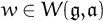


It follows from the isomorphism and (6.3.1) that
 $$ \begin{align*} \sum_{[P,\sigma]} \dim_{\mathbb{C}} \bigl ( A_{P, \sigma}/J_{P,\sigma} \bigr ) = \sum_{\sigma \in \widehat M} \dim \bigl ( [ L_{\sigma} \otimes V_1 ]^M \bigr )\cdot \dim \bigl ( [ L_{\sigma} \otimes V_2 ]^M \bigr ). \end{align*} $$
But by taking the $M$
-isotypical decompositions of
$M$
-isotypical decompositions of $V_1$
and
$V_1$
and $V_2$
, we find that
$V_2$
, we find that
 $$\begin{align*}\dim \bigl ( \operatorname{{Hom}}(V_1,V_2)^M \bigr ) =\sum_{\sigma \in \widehat M} \dim \bigl ( [ L_{\sigma} \otimes V_1 ]^M \bigr )\cdot \dim \bigl ( [ L_{\sigma} \otimes V_2 ]^M \bigr ). \end{align*}$$
This proves the theorem.
7 Tempiric Representations and Vogan’s Theorem
In this final section we shall connect the $K$
-theory and Fourier theory of the
$K$
-theory and Fourier theory of the ${C}^{*}$
-category
${C}^{*}$
-category $\mathsf {P}^{*}_{G,K}$
to David Vogan’s theorem on the minimal
$\mathsf {P}^{*}_{G,K}$
to David Vogan’s theorem on the minimal $K$
-types of tempiric representations.
$K$
-types of tempiric representations.
7.1 Tempiric representations from the C*-category point of view
Definition 7.1.1. An irreducible unitary representation of a real reductive group is tempiric if it is tempered, irreducible, and has real infinitesimal character.
See [Reference Vogan47, Sec. 2] for a discussion from first principles of the concept of real infinitesimal character. For our present purposes, we define the tempiric representations of $G$
to be precisely those that occur as summands in representations with continuous parameter
$G$
to be precisely those that occur as summands in representations with continuous parameter $0\in \mathfrak {a}^{*}_P$
in the description (6.4.1) of
$0\in \mathfrak {a}^{*}_P$
in the description (6.4.1) of ${C}^{*}_r(G)$
; see [Reference Vogan47, Cor. 3.5].
${C}^{*}_r(G)$
; see [Reference Vogan47, Cor. 3.5].
Definition 7.1.2. Let $G$
be a real reductive group. We shall denote by
$G$
be a real reductive group. We shall denote by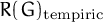 $R(G)_{\mathrm{tempiric}}$
the free abelian group on the set of unitary equivalence classes of tempiric representations of
$R(G)_{\mathrm{tempiric}}$
the free abelian group on the set of unitary equivalence classes of tempiric representations of $G$
.
$G$
.
Definition 7.1.3. Define the ${C}^{*}$
-category
${C}^{*}$
-category $\mathsf {Rep}^{*}_{G,K, \mathrm{tempiric} }$
as follows:
$\mathsf {Rep}^{*}_{G,K, \mathrm{tempiric} }$
as follows:
-
(i) The objects are the finite-dimensional unitary representations of
$K$
. -
(ii) The morphisms are families of morphisms between multiplicity spaces,
$$\begin{align*}T_\pi \colon [H_\pi \otimes V_1 ]^K \longrightarrow [H_\pi \otimes V_2 ]^K \qquad ([\pi]\in \widehat G _{\mathrm{tempiric}}), \end{align*}$$
indexed by representatives of the unitary equivalence classes of tempiric representations.


Let $\pi $
be a tempiric representation. We define a functor
$\pi $
be a tempiric representation. We define a functor

by mapping each object $V$
of
$V$
of $\mathsf {Rep}^{*}_{G,K, \mathrm{tempiric} }$
, that is, each finite-dimensional unitary representation of
$\mathsf {Rep}^{*}_{G,K, \mathrm{tempiric} }$
, that is, each finite-dimensional unitary representation of $K$
, to the finite-dimensional Hilbert space
$K$
, to the finite-dimensional Hilbert space $[H_\pi \otimes V]^K$
, and each morphism, as in part (ii) of Definition 7.1.3, to its
$[H_\pi \otimes V]^K$
, and each morphism, as in part (ii) of Definition 7.1.3, to its $\pi $
-component. Then, passing to
$\pi $
-component. Then, passing to $K_0$
-groups, we obtain a morphism
$K_0$
-groups, we obtain a morphism

since $K_0(\mathsf {Fin}^{*}) = \mathbb {Z}$
.
$K_0(\mathsf {Fin}^{*}) = \mathbb {Z}$
.
Lemma 7.1.4. The $K$
-theory morphisms
$K$
-theory morphisms  , indexed by a set of representatives of the unitary equivalence classes of tempiric representations of G, induce an isomorphism of abelian groups

In addition, $K_1 ( \mathsf {Rep}^{*}_{G,K, \mathrm{tempiric} } ) = 0$
.
$K_1 ( \mathsf {Rep}^{*}_{G,K, \mathrm{tempiric} } ) = 0$
.
Proof. It follows from Theorem 6.4.2 (because each representation $\pi _{\sigma ,0}$
on
$\pi _{\sigma ,0}$
on $H_\sigma $
decomposes into at most finitely many tempiric summands) that if
$H_\sigma $
decomposes into at most finitely many tempiric summands) that if $V$
is any finite-dimensional unitary representation of
$V$
is any finite-dimensional unitary representation of $K$
, then
$K$
, then $[H_\pi \otimes V ]^K=0$
for all but finitely many tempiric
$[H_\pi \otimes V ]^K=0$
for all but finitely many tempiric $\pi $
(up to unitary equivalence, of course). It follows that if
$\pi $
(up to unitary equivalence, of course). It follows that if $c\in K_0 ( \mathsf {Rep}^{*}_{G,K, \mathrm{tempiric} } ) $
, then
$c\in K_0 ( \mathsf {Rep}^{*}_{G,K, \mathrm{tempiric} } ) $
, then  for all but finitely many $\pi $
. So the map in the statement of the theorem is well-defined.
$\pi $
. So the map in the statement of the theorem is well-defined.
Fix for a moment a single tempiric representation $\pi $
, and consider the additive
$\pi $
, and consider the additive ${C}^{*}$
-category whose objects are finite-dimensional unitary representations of
${C}^{*}$
-category whose objects are finite-dimensional unitary representations of $K$
and whose morphisms are linear maps
$K$
and whose morphisms are linear maps $[H_\pi \otimes V_1 ]^K \longrightarrow [H_\pi \otimes V_2 ]^K$
. The natural functor (defined like
$[H_\pi \otimes V_1 ]^K \longrightarrow [H_\pi \otimes V_2 ]^K$
. The natural functor (defined like  above) from this category to $\mathsf {Fin}^{*}$
is an isomorphism on
$\mathsf {Fin}^{*}$
is an isomorphism on $K$
-theory. Now the category
$K$
-theory. Now the category $\mathsf {Rep}^{*}_{G,K, \mathrm{tempiric} }$
is the direct sum of these categories in the sense of [Reference Mitchener36, Def. 3.8], over all
$\mathsf {Rep}^{*}_{G,K, \mathrm{tempiric} }$
is the direct sum of these categories in the sense of [Reference Mitchener36, Def. 3.8], over all $\pi $
, and
$\pi $
, and $K$
-theory commutes with direct sums.
$K$
-theory commutes with direct sums.
Definition 7.1.5. We shall denote by

the unique functor such that for every tempiric $\pi $
, there is a commuting diagram
$\pi $
, there is a commuting diagram

Lemma 7.1.6. If $G$
is any real reductive group, then the functor
$G$
is any real reductive group, then the functor

is surjective on $\operatorname { {Hom}}$
-spaces (it is the identity on objects).
$\operatorname { {Hom}}$
-spaces (it is the identity on objects).
Proof. In fact the restriction of the functor to the ideal $\mathsf {C}^{*}_{G,K}$
, namely the functor
$\mathsf {C}^{*}_{G,K}$
, namely the functor

is already surjective. This is a consequence of the general isomorphism theorem for ${C}^{*}_r(G)$
that is proved in [Reference Clare, Crisp and Higson8], and outlined in Section 6.4 for groups of real rank one (which are the only groups for which we shall use this lemma below). In the notation used in the isomorphism
${C}^{*}_r(G)$
that is proved in [Reference Clare, Crisp and Higson8], and outlined in Section 6.4 for groups of real rank one (which are the only groups for which we shall use this lemma below). In the notation used in the isomorphism
 $$ \begin{align*} [ C_r^{*}(G) \otimes \operatorname{Hom}(V_1,V_2) ]^{K \times K}\stackrel \cong \longrightarrow \quad \bigoplus _{[P,\sigma]} C_0\Bigl (\mathfrak{a}^{*}_P, \mathfrak{K}\bigl ([V_1\otimes H_\sigma]^K,[V_2\otimes H_\sigma]^K\bigr )\Bigr ) ^{W_\sigma} \end{align*} $$
from (6.4.3), the functor  above corresponds to evaluation in each summand on the right-hand side at the point $0\in \mathfrak {a}^{*}_P$
. But this evaluation functor is evidently surjective.
$0\in \mathfrak {a}^{*}_P$
. But this evaluation functor is evidently surjective.
We have, then, an extension of ${C}^{*}$
-categories
${C}^{*}$
-categories
 $$\begin{align*}0\longrightarrow \mathsf{Kernel}^{*}_{G,K} \longrightarrow \mathsf{P}^{*}_{G,K} \longrightarrow \mathsf{Rep}^{*}_{G,K,\mathrm{tempiric} } \longrightarrow 0. \end{align*}$$
The main result of this section is as follows:
Theorem 7.1.7. If $G$
is a real reductive group of real rank one, then the kernel of the functor
$G$
is a real reductive group of real rank one, then the kernel of the functor

is a contractible ideal in $\mathsf {P}^{*}_{G,K}$
.
$\mathsf {P}^{*}_{G,K}$
.
Once again, see [Reference Mitchener35, Sec. 3] for the notion of contractibility, which implies vanishing of $K$
-theory. We are using the term kernel in the sense described in Section 4.1.
$K$
-theory. We are using the term kernel in the sense described in Section 4.1.
Proof. We shall use Theorem 6.5.1. The kernel is a direct sum, indexed by the set of all associate classes $[P,\sigma ]$
, of
$[P,\sigma ]$
, of ${C}^{*}$
-categories with morphism spaces
${C}^{*}$
-categories with morphism spaces
 $$\begin{align*}C_0 \bigl (\overline{\mathfrak{a}^{*}_P}\setminus \{ 0\}, \mathfrak{K} ([V_1\otimes H_\sigma]^K,[V_2\otimes H_\sigma]^K )\bigr )^{W_\sigma} \end{align*}$$
(in every case the objects are the finite-dimensional unitary representations of $K$
), and it suffices to show that each is contractible. There are three cases to consider:
$K$
), and it suffices to show that each is contractible. There are three cases to consider:
Case 1: $\mathfrak {a}^{*}_P=0$
. This is the discrete series case, and the
$\mathfrak {a}^{*}_P=0$
. This is the discrete series case, and the ${C}^{*}$
-category direct summand associated above to
${C}^{*}$
-category direct summand associated above to $[P,\sigma ]$
has only zero morphisms.
$[P,\sigma ]$
has only zero morphisms.
Case 2: $\dim \mathfrak {a}^{*}_P=1$
and
$\dim \mathfrak {a}^{*}_P=1$
and $W_\sigma $
is trivial. Fix a homeomorphism
$W_\sigma $
is trivial. Fix a homeomorphism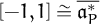 $[-1,1]\cong \overline {\mathfrak {a}_P^{*}}$
mapping
$[-1,1]\cong \overline {\mathfrak {a}_P^{*}}$
mapping $0$
to
$0$
to $0$
. The functors
$0$
. The functors
 $$ \begin{align*} & F_t \colon C_0 \bigl ([-1,1]{\setminus} \{ 0\}, \mathfrak{K} ([V_1\otimes H_\sigma]^K,[V_2\otimes H_\sigma]^K )\bigr ) \\ & \quad \longrightarrow C_0 \bigl ([-1,1]{\setminus} \{ 0\}, \mathfrak{K} ([V_1\otimes H_\sigma]^K,[V_2\otimes H_\sigma]^K )\bigr ) \qquad (t\in [0,1]) \end{align*} $$
defined by $F_t(f) (\nu ) = f(t \nu )$
(the functors are the identity on objects) constitute a homotopy from the identity functor at
$F_t(f) (\nu ) = f(t \nu )$
(the functors are the identity on objects) constitute a homotopy from the identity functor at $t{=}1$
to the zero functor at
$t{=}1$
to the zero functor at $t{=}0$
.
$t{=}0$
.
Case 3: $\dim \mathfrak {a}^{*}_P=1$
and
$\dim \mathfrak {a}^{*}_P=1$
and $W_\sigma $
is nontrivial. In this case, if
$W_\sigma $
is nontrivial. In this case, if $\mathfrak {a}^{*}_{P,+}\subseteq \mathfrak {a}^{*}_{P}$
is a half-line fundamental domain for the action of
$\mathfrak {a}^{*}_{P,+}\subseteq \mathfrak {a}^{*}_{P}$
is a half-line fundamental domain for the action of $W_\sigma {\cong } \mathbb {Z}_2$
, then our
$W_\sigma {\cong } \mathbb {Z}_2$
, then our ${C}^{*}$
-category is isomorphic to the
${C}^{*}$
-category is isomorphic to the ${C}^{*}$
-category with morphism spaces
${C}^{*}$
-category with morphism spaces
 $$\begin{align*}C_0 \bigl (\overline{\mathfrak{a}^{*}_{P,+}}\setminus \{ 0\}, \mathfrak{K} ([V_1\otimes H_\sigma]^K,[V_2\otimes H_\sigma]^K )\bigr ) \end{align*}$$
(where the overbar indicates the one-point compactification of the half-line $\mathfrak {a}^{*}_{P,+}$
) and the same formula as in the previous case defines a homotopy from the identity functor to the zero functor.
$\mathfrak {a}^{*}_{P,+}$
) and the same formula as in the previous case defines a homotopy from the identity functor to the zero functor.
Corollary 7.1.8. If $G$
is a real reductive group of real rank one, then the functor
$G$
is a real reductive group of real rank one, then the functor

induces an isomorphism in $K$
-theory:
$K$
-theory:
 $$\begin{align*} K_*\bigl (\mathsf{P}^{*}_{G,K}\bigr ) \stackrel\cong \longrightarrow K_* \bigl ( \mathsf{Rep}^{*}_{G,K,\mathrm{tempiric} } \bigr ). \end{align*}$$
Putting together the corollary and Lemma 7.1.4 we obtain in degree zero an isomorphism

for real reductive groups with real rank one. We should emphasize that we have obtained this from the Fourier isomorphism for the ${C}^{*}$
-category
${C}^{*}$
-category $\mathsf {P}_{G,K}$
in Theorem 6.5.2, rather than from the Connes-Kasparov isomorphism that we considered earlier in the paper. But by combining (7.1.9) with the Connes-Kasparov isomorphism we obtain a third isomorphism that is expressible in simple, representation-theoretic terms (we are using the standard identification of
$\mathsf {P}_{G,K}$
in Theorem 6.5.2, rather than from the Connes-Kasparov isomorphism that we considered earlier in the paper. But by combining (7.1.9) with the Connes-Kasparov isomorphism we obtain a third isomorphism that is expressible in simple, representation-theoretic terms (we are using the standard identification of $K_0(\mathsf {Rep}^{*}_K) $
with
$K_0(\mathsf {Rep}^{*}_K) $
with $R(K)$
):
$R(K)$
):
Lemma 7.1.10. Let $G$
be a real reductive group of real rank one. The composite isomorphism
$G$
be a real reductive group of real rank one. The composite isomorphism

maps the $K$
-theory class of an irreducible unitary representation
$K$
-theory class of an irreducible unitary representation $\tau \in \widehat K$
to the element
$\tau \in \widehat K$
to the element
 $$\begin{align*}\sum_\pi \operatorname{mult} (\tau^{*} ,\pi)\cdot [\pi] \in R(G)_{\mathrm{tempiric} }. \end{align*}$$
Here $\operatorname {mult}(\tau ^{*}, \pi )\in \mathbb {Z}$
is the multiplicity with which
$\operatorname {mult}(\tau ^{*}, \pi )\in \mathbb {Z}$
is the multiplicity with which $\tau ^{*}$
occurs in (the restriction to
$\tau ^{*}$
occurs in (the restriction to $K$
of)
$K$
of) $\pi $
.
$\pi $
.
Proof. The formula in the lemma is a consequence of the formula

involving the composition of the functors  and
and  . When $V$
is irreducible, the dimension of
$V$
is irreducible, the dimension of $[H_\pi \otimes V]^K $
is the multiplicity with which
$[H_\pi \otimes V]^K $
is the multiplicity with which $V^{*}$
occurs in
$V^{*}$
occurs in $H_\pi $
.
$H_\pi $
.
Remark 7.1.11. The isomorphism in the lemma above is taken much further in [Reference Bradd, Higson and Yuncken6], again using the Connes-Kasparov isomorphism. That paper follows a different argument that does not involve pseudodifferential operators, but the present work was part of the motivation for it.
7.2 Vogan’s theorem
The results in the previous section may be compared with the following celebrated theorem of David Vogan (see Section 1 for references). The theorem uses the notion of minimal $K$
-type of a representation, for which we refer the reader to [Reference Vogan46] (the precise definition is not important here).
$K$
-type of a representation, for which we refer the reader to [Reference Vogan46] (the precise definition is not important here).
Theorem 7.2.1 (Vogan)
Every tempiric representation of $G$
has a unique minimal
$G$
has a unique minimal $K$
-type, and every
$K$
-type, and every $K$
-type occurs as a minimal
$K$
-type occurs as a minimal $K$
-type in a unique tempiric representation of
$K$
-type in a unique tempiric representation of $G$
, up to unitary equivalence; moreover it occurs there with multiplicity one.
$G$
, up to unitary equivalence; moreover it occurs there with multiplicity one.
Vogan’s theorem readily implies that the composition in Lemma 7.1.10 is an isomorphism, since if we write the composition in matrix form, using Vogan’s theorem to index both rows and columns by elements of $\widehat K$
, then the matrix is lower triangular with diagonal entries
$\widehat K$
, then the matrix is lower triangular with diagonal entries $1$
, and is hence invertible.
$1$
, and is hence invertible.
Remark 7.2.2. Naturally, it would be very interesting to understand better the distance between Lemma 7.1.10 and Theorem 7.2.1, and whether other techniques from $K$
-theory could bridge between them. For instance, in [Reference Lafforgue32], Lafforgue used Kasparov’s dual-Dirac method in operator
$K$
-theory could bridge between them. For instance, in [Reference Lafforgue32], Lafforgue used Kasparov’s dual-Dirac method in operator $K$
-theory [Reference Kasparov28] to recover Harish-Chandra’s classification of the discrete series from the Connes-Kasparov method, and it is natural to wonder whether a similar technique could be used here.
$K$
-theory [Reference Kasparov28] to recover Harish-Chandra’s classification of the discrete series from the Connes-Kasparov method, and it is natural to wonder whether a similar technique could be used here.
Remark 7.2.3. It appears to be an interesting problem to formulate some version of our Fourier isomorphism theorem for $\mathsf {P}^{*}_{G,K}$
beyond real rank one. Our isomorphism theorem (or rather the verbatim extension of it beyond real rank one) fails for the product
$\mathsf {P}^{*}_{G,K}$
beyond real rank one. Our isomorphism theorem (or rather the verbatim extension of it beyond real rank one) fails for the product $SL(2,\mathbb {R}){\times } SL(2,\mathbb {R})$
, basically because tensor products of pseudodifferential operators are not necessarily pseudodifferential, even when one of the factors is a smoothing operator. This can likely be remedied by using variants of pseudodifferential operators that are adapted to products, as in [Reference Rodino40]. But it is a challenge to go further.
$SL(2,\mathbb {R}){\times } SL(2,\mathbb {R})$
, basically because tensor products of pseudodifferential operators are not necessarily pseudodifferential, even when one of the factors is a smoothing operator. This can likely be remedied by using variants of pseudodifferential operators that are adapted to products, as in [Reference Rodino40]. But it is a challenge to go further.
Acknowledgements
Work on this project was supported by the NSF grant DMS-1952669, and was carried out, in part, within the online Research Community on Representation Theory and Noncommutative Geometry (RTNCG), sponsored by the American Institute of Mathematics. The project was prompted by a question asked in RTNCG by David Vogan during lectures given by the second author; see [Reference Higson18]. We are very grateful to Vogan for his interest. We are also very grateful to the referee, who provided us with a great many illuminating comments and suggestions.


 Open access

