


Introduction
Lack of symptom awareness is a common characteristic in people suffering from schizophrenia (Amador et al. Reference Amador, Strauss, Yale and Gorman1993; David et al. Reference David, Bedford, Wiffen and Gilleen2012). Research on symptom awareness has traditionally focused on psychotic symptoms, with only more recent research exploring cognition (Aleman et al. Reference Aleman, Agrawal, Morgan and David2006). Several reports have highlighted a mismatch between subjective assessments and outcomes from neuropsychological tests (Harvey et al. Reference Harvey, Serper, White, Parella, McGurk, Moriarty, Bowie, Vadhan, Friedman and David2001; Stip et al. Reference Stip, Caron, Renaud, Pampoulova and Lecomte2003; Medalia & Lim, Reference Medalia and Lim2004; Moritz et al. Reference Moritz, Ferahli and Naber2004; Keefe et al. Reference Keefe, Poe, Walker, Kang and Harvey2006; Sanjuan et al. Reference Sanjuan, Aguilar, Olivares, Ros, Montejo, Mayoral, Gonzales-Torres and Bousono2006). However, some studies have noted that a degree of awareness can be observed in some patients (e.g. Stip et al. Reference Stip, Caron, Renaud, Pampoulova and Lecomte2003; Medalia et al. Reference Medalia, Thysen and Freilich2008). In the attempt to elucidate the discrepancies between subjective and performance-based assessments of cognitive problems, some contributions have suggested that general IQ may limit insight in schizophrenia (David et al. Reference David, Buchanan, Reed and Almeida1992, Reference David, van Os, Jones, Harvey, Foerster and Fahy1995; Rossell et al. Reference Rossell, Coakes, Shapleske, Woodruff and David2003). Other studies suggest that cognitive shifting may be more strongly associated with cognitive symptom insight (Cuesta et al. Reference Cuesta, Peralta, Caro and de Leon1995; Aleman et al. Reference Aleman, Agrawal, Morgan and David2006). The relevance of psychopathology to cognitive symptom awareness has also been explored, but the findings are largely inconsistent (Ritsner & Blumenkrantz, Reference Ritsner and Blumenkrantz2007; De Hert et al. Reference De Hert, Simon, Vidovic, Franic, Wampers, Peuskens and van Winkel2009). Despite the controversies about which particular domain is associated with cognitive symptoms awareness, there seems to be a consensus in the literature on the relevance of cognitive deficits awareness in people with schizophrenia.
Factors that contribute to poor awareness of cognitive problems are: gender (Cuffel et al. Reference Cuffel, Alford, Fischer and Owen1996; Mintz et al. Reference Mintz, Dobson and Romney2003), age of onset (Lysaker & Bell, Reference Lysaker and Bell1995) and lower education levels (Macpherson et al. Reference Macpherson, Jerrom and Hughes1996; Ritsner & Blumenkrantz, Reference Ritsner and Blumenkrantz2007), but the evidence is not conclusive (e.g. David et al. Reference David, van Os, Jones, Harvey, Foerster and Fahy1995; Goldberg et al. Reference Goldberg, Green-Paden, Lehman and Gold2001). Unlike the other factors mentioned, cognition and low mood have been hypothesized to have a direct relationship with insight. Cognitive problems may, more intuitively, limit awareness simply by influencing the ability to retain and elaborate information (Cooke et al. Reference Cooke, Peters, Greenwood, Fisher, Kumari and Kuipers2007). Alternatively, some authors suggest that depression and poor self-esteem are associated with better insight because poor insight may function as a defence mechanism for depression (McGlashan & Carpenter, Reference McGlashan and Carpenter1976). Studies conducted in individuals experiencing a manic episode also suggest that elated mood is associated with poor insight in the context of recovery (Michalakeas et al. Reference Michalakeas, Skoutas, Charalambous, Peristeris, Marinos, Keramari and Theologou1994).
More recently, some researchers have begun to focus on the relationship between metacognition and symptoms insight (Lysaker et al. Reference Lysaker, Dimaggio, Buck, Callaway, Salvatore, Carcione, Nicolò and Stanghellini2011a ,Reference Lysaker, Erickson, Ringer, Buck, Semerari, Carcione and Dimaggio b ). The term metacognition is used to describe a person's reflection about their cognitive processes. Important aspects of metacognition are: monitoring (cognitive functioning evaluation), control (directing and evaluating cognitive and behavioural performance) and knowledge (understanding task difficulty and resources required). Awareness of cognitive problems can be thought of as a form of metacognitive knowledge that can effectively guide the deployment of cognitive resources to a specific task and can provide the necessary knowledge for individuals to access the relevant resources to perform at maximal efficiency (Flavell, Reference Flavell1979). Metacognition is traditionally measured with self-assessed measures. In the area of cognitive symptoms several assessment tools have been put forward, with some measures having a specific focus on metacognitive regulation (Beck et al. Reference Beck, Baruch, Balter, Steer and Warman2004; Koren et al. Reference Koren, Seidman, Poyurovsky, Goldsmith, Viksman, Zichel and Klein2004) and others on metacognitive knowledge (Stip et al. Reference Stip, Caron, Renaud, Pampoulova and Lecomte2003; Medalia & Thysen, Reference Medalia and Thysen2008). In this study we have focused on metacognitive knowledge because of its relevance to treatment choices.
Despite the different focus, an assessment of cognitive problems from the point of view of the patient cannot disregard the relevance of factors such as symptoms, illness-related factors, and also self-related factors, as important elements that can influence reporting. Several studies have highlighted the importance of self-related factors and schemas in reflecting on cognitive symptoms (Cuffel et al. Reference Cuffel, Alford, Fischer and Owen1996; Ritsner & Blumenkrantz, Reference Ritsner and Blumenkrantz2007). In particular, a study by Lysaker et al. (2011a) and a review by David et al. (Reference David, Bedford, Wiffen and Gilleen2012) advanced the possibility of a link between self-esteem and metacognition, with self-esteem being a possible biasing factor for the reporting of symptoms.
The investigation of factors likely to influence the reporting of cognitive problems is clinically relevant. In the context of behavioural interventions targeting cognitive difficulties, such as cognitive remediation, the subjective report of cognitive difficulties is crucial for goal shaping and therapy engagement (Huddy et al. Reference Huddy, Reeder, Kontis, Wykes and Stahl2012). Engagement in treatment is likely to be more positive if cognitive training is directed towards domains perceived as problematic. However, the mismatch between objective and subjective cognitive problems may lead to treatment that feels irrelevant to the client because it does not match the areas of difficulty perceived as problematic. Additionally, metacognition has been suggested as an important mediator linking cognitive improvement following cognitive remediation with functional outcomes (Wykes & Spaulding, Reference Wykes and Spaulding2011; Wykes et al. Reference Wykes, Reeder, Huddy, Taylor, Wood, Ghirasim, Kontis and Landau2012); with this relationship being found not only in people with schizophrenia but also in individuals with traumatic brain injury (Cicerone et al. Reference Cicerone, Langenbahn, Braden, Malec, Kalmar, Fraas, Felicetti, Laatsch, Harley, Bergquist, Azulay, Cantor and Ashman2011).
Previous research has highlighted several factors that may influence symptom awareness. Positive and negative symptoms, level of function in everyday life and also self-esteem have been identified as potentially significant biasing factors for symptoms reporting (Lysaker et al. 2011b; Palmier-Claus et al. Reference Palmier-Claus, Dunn, Morrison and Lewis2011; Cella et al. Reference Cella, Dymond, Cooper and Turnbull2012; David et al. Reference David, Bedford, Wiffen and Gilleen2012). These factors have mostly been investigated in relation to psychotic features, in particular hallucination and delusion, with cognitive difficulties being largely neglected.
Given the previous literature, we hypothesized that self-esteem, psychotic symptoms and social functioning may play a relevant role in influencing awareness. Being poorly aware of symptoms and social functioning problems may lead individuals with schizophrenia to hold incongruent levels of self-esteem (e.g. where self-esteem is high in the presence of debilitating symptoms and poor social functioning). It is plausible to hypothesize that poor awareness of cognitive problems may be similarly dissociated with self-esteem, as the concept of self-esteem is inherently related to metacognition as it requires individuals to reflect upon their self-worth. No previous study has attempted to explore the role of self-esteem as a predictor of cognitive awareness. It is therefore possible that controlling for self-esteem may remove part of the self-reflective bias that could prevent patients' judgement from being closer to performance-based assessment and uncover associations in domains where the awareness bias is less pronounced.
The current study set out to examine how self-esteem, symptoms and level of function may influence awareness of cognitive problems. In line with previous reports, we expected that there would be a non-significant correlation between cognitive performance and cognitive problem awareness (e.g. Stip et al. Reference Stip, Caron, Renaud, Pampoulova and Lecomte2003; Medalia & Lim, Reference Medalia and Lim2004; Medalia & Thysen, Reference Medalia and Thysen2008). However, when controlling for symptoms, self-esteem and social functioning we expected that a relationship would emerge between subjective and objectively reported cognitive problems.
Method
Participants
Participants (n = 100) were recruited as part of a cognitive remediation study. Inclusion criteria were: age between 18 and 65 years, a DSM-IV diagnosis of schizophrenia or other psychotic disorder and cognitive impairment of 1 standard deviation (s.d.) below the population average in at least four out of eight cognitive domains. Potential participants were excluded if they had a history of learning disability/developmental disorder, a history of organic brain disorder or head trauma or a diagnosis of substance dependence, or if they required the use of an interpreter. Recruitment took place in clinical teams within the South London and Maudsley National Health Service (NHS) Foundation Trust and Sussex Partnership NHS Foundation Trust in the UK.
Assessment
Subjective Scale to Investigate Cognition in Schizophrenia (SSTICS; Stip et al. Reference Stip, Caron, Renaud, Pampoulova and Lecomte2003)
The SSTICS was used as a measure of awareness of cognitive problems. The questionnaire contains 21 items focusing on: memory, attention, executive functions and praxia. Each item, referring to how often a problem occurs, is rated on a five-point Likert scale ranging from ‘never’ to ‘very often’. A higher score suggests greater awareness of cognitive problems. The scale has good internal consistency (α = 0.86) and test–retest reliability (r = 0.8; Stip et al. Reference Stip, Caron, Renaud, Pampoulova and Lecomte2003). For this study we used the SSTICS problem (SSTICS-P) score. The SSTICS-P score ranges from 0 to 21 and is calculated as the number of items endorsed at the ‘very often’ or ‘often’ level on the SSTICS. This score better captures the number of problems that patients are likely to mention in a consultation session and is therefore more clinically relevant.
Positive and Negative Syndrome Scale (PANSS; Kay et al. Reference Kay, Fiszbein and Opler1987)
The scores derived from this measure and used in the analysis were the positive and negative symptom subscales. A higher score on either scale indicates greater symptom severity. All the PANSS raters were trained by an experienced researcher; interview reliability was appropriate and assessed with independent ratings conducted on selected recorded interviews.
Rosenberg Self-Esteem Scale (RSES; Rosenberg, Reference Rosenberg1965)
The RSES was used to provide a measure of participants' self-esteem. A higher total score is indicative of higher self-esteem.
Social Behaviour Schedule (SBS; Wykes & Sturt, Reference Wykes and Sturt1986)
The SBS was used as a measure of participants' social functioning and was completed by a member of each participant's care team on their observations of the participant's functioning over the past month. A higher total score suggests greater difficulty across social functioning domains.
Objective measures of cognition
Each participant completed a neuropsychological assessment including: the Rey Complex Figure (Meyers & Meyers, Reference Meyers and Meyers1995), the Wisconsin Card Sorting Task (WCST; Heaton et al. Reference Heaton, Chelune, Talley, Kay and Curtiss1993), the Hayling Sentence Completion Test (Burgess & Shallice, Reference Burgess and Shallice1997) and the Digit Span, Digit Symbol Coding, Vocabulary and Block Design from the Wechsler Adult Intelligence Scale – Fourth Edition (WAIS-IV; Wechsler, Reference Wechsler2008). Pre-morbid IQ was estimated with the Wechsler Test of Adult Reading (WTAR; Holdnack, Reference Holdnack2001).
Analysis
Data integrity
The Shapiro–Wilk test was used to assess variables' distribution normality and, where normality assumptions were violated, natural logarithmic transformation was performed prior to inclusion in parametric statistics (Sokal & Rohlf, Reference Sokal and Rohlf2012).
Relationship between subjective and objective assessments
Pearson correlation coefficients were calculated between the SSTICS-P score and the objective measures of cognition to assess the association. A linear, forced entry, regression model was used to specify the contribution of symptoms (i.e. positive and negative), social functioning and self-esteem to SSTICS-P scores. As participants were selected on the basis of their cognitive difficulties, high scores on the SSTICS-P indicate a better metacognitive awareness of problems and low scores indicate poorer metacognitive awareness. To define the relationships to metacognitive awareness more clearly, we defined two groups differing in their metacognitive awareness levels on the STICS-P score distribution: the SSTICS-HP (High Problem) included participants from the top quartile and the SSTICS-LP (Low Problem) included participants from the bottom quartile. The SSTICS-HP and STIPS-LP groups were contrasted using an ANCOVA with neuropsychological test performance entered as the dependent variable and factors significantly predicting the SSTICS-P score in the regression entered as covariates. For this analysis cognitive test performance was reported in standardized z scores based on this sample.
Results
Demographics
Of the 100 patients recruited for the study, 84 had a DSM-IV diagnosis of schizophrenia and 16 schizo-affective disorder. Table 1 presents demographic characteristics of the participants including pre-morbid IQ.
Sociodemographic and clinical characteristics of the study population (n = 100)
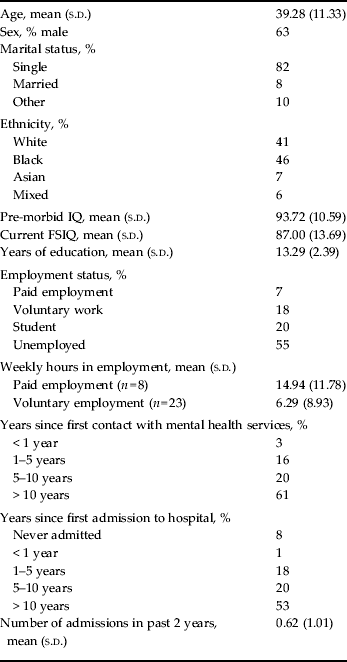
FSIQ; Full-scale intelligence quotient; s.d., standard deviation.
Data integrity
The SSTICS-P mean was 6.7 (s.d. = 5.4) with a variation range of 18 (minimum 0, maximum 18). Skewness was 0.37 and kurtosis was –1.2. The SSTICS-P internal consistency using Cronbach's α was 0.91.
Metacognitive awareness and neuropsychological assessment
As expected, there were no significant correlations between the neuropsychological test scores and the SSTICS-P score (all p > 0.1) (see Fig. S1).
Predictors of metacognitive awareness
With PANSS positive and negative subscales, SBS and RSES entered, the model explained 22% of the SSTICS-P variance (F 1,96 = 5.68, p < 0.0001). The RSES score was the best predictor for the final model (β = –0.33, p < 0.0001). PANSS negative and total SBS scores made smaller contributions, with significance levels just below and approaching conventional significance threshold respectively (PANSS negative: β = –0.28, p < 0.046; SBS: β = 0.16, p = 0.056). PANSS positive did not contribute significantly (β = 0.03, p = 0.46).
Comparing poor versus good awareness
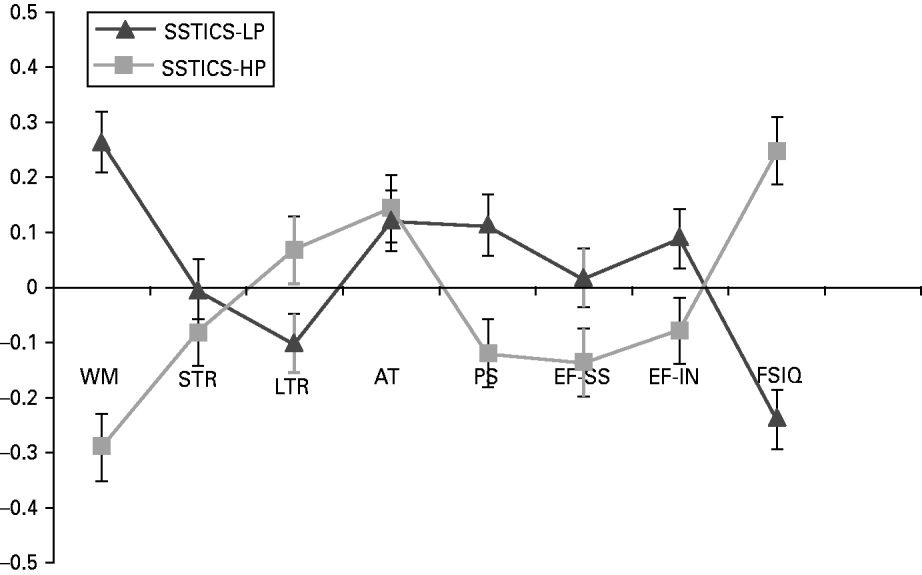
The top quartile (SSTICS-HP) consisted of 24 participants and the bottom quartile (SSTICS-LP) consisted of 26 participants. As expected, the groups differed significantly on the number of problems identified, with mean problems for SSTICS-HP = 13.81 (s.d. = 2) and for SSTICS-LP = 0.31 (s.d. = 0.4) (t 48 = –32.8, p < 0.0001). A multivariate ANCOVA was used to examine differences in mean population z scores between the two groups across the neuropsychological domains: working memory (WM); short-term memory recall (STR); long-term memory recall (LTR); attention (AT); processing speed (PS); executive function – set-shifting (EF-SS); executive function – inhibition (EF-IN); and full-scale IQ (FSIQ). The analysis controlled for self-esteem, PANSS negative score and also SBS total as this variable approached significance level.
The two group profiles are shown in Fig. 1. The SSTICS-HP group had poorer working memory performance than the SSTICS-LP group (F 4,46 = 4.51, p = 0.007, η 2 = 0.23). IQ was higher in those reporting more problems (F 4,46 = 2.9, p = 0.025, η 2 = 0.26). Post-hoc ANOVA confirmed higher levels of self-esteem in the SSTICS-LP group (F 1,53 = 4.06, p < 0.0001).
Neuropsychological profile (z scores with standard errors) of the Subjective Scale to Investigate Cognition in Schizophrenia Low Problem (SSTICS-LP) and SSTICS High Problem (SSTICS-HP) groups. WM, Working memory; STR, short-term recall; LTR, long-term recall; AT, attention; PS, procession speed; EF-SS, executive function, set-shifting; EF-IN, executive function, inhibition; FSIQ, full-scale IQ.
To further clarify the role of IQ in metacognitive awareness, an ANOVA was carried out to explore the role of IQ change, calculated by subtracting current IQ from pre-morbid IQ. The results show that IQ change did not differ between the SSTICS-HP and SSTICS-LP groups.
Discussion
The aim of this study was to explore predictors of poor cognitive problem awareness in schizophrenia. Based on the literature we hypothesized that three factors would be important predictors: self-esteem, social functioning and symptom dimensions.
As hypothesized, the results replicated the mismatch between objective and subjective assessment of cognitive problems. Variance analysis showed that approximately a quarter of the variance in the subjective awareness of cognitive problems can be explained by self-esteem, negative symptoms and social functioning. The strongest predictor was self-esteem, with lower self-esteem values being predictive of better awareness. This result suggests that high self-esteem might only be preserved in the context of denial of cognitive difficulties, a notion that has been proposed in the context of insight and psychotic symptoms (David et al. Reference David, Bedford, Wiffen and Gilleen2012). This interpretation poses a challenge to interventions aiming to improve metacognitive awareness of problems because change in metacognitive levels may affect self-esteem negatively (Salvatore et al. Reference Salvatore, Lysaker, Gumley, Popolo, Mari and Dimaggio2012). This is, however, an empirically testable hypothesis that, as far as we know, has not been investigated. Wykes & Reeder (Reference Wykes and Reeder2005) and, more recently, Wykes & Spaulding (2011) proposed that more strategic approaches to cognitive remediation (rather than just practising tasks) may lead to improvements in metacognition that allow the transfer of cognitive gains to functional outcomes. The evidence so far is that self-esteem does not suffer following cognitive remediation and in some cases improves (Wykes et al. Reference Wykes, Reeder, Corner, Williams and Everitt1999) following strategic cognitive remediation. However, more specific relationships with measures of metacognition have not been explored. An alternative explanation could be that, after many years, patients become used to their cognitive problems, which, unlike psychotic symptoms, tend to fluctuate less. This may lead to a gradual repositioning of individuals' self-esteem levels to upper levels. Individuals who identified themselves as having more cognitive problems had worse working memory performance and better IQ. One explanation might be that awareness of cognitive problems differs from domain to domain and working memory problems may be easier and more obvious to recognize and report. Working memory problems are also marked in the pre-morbid stage of psychosis and feature heavily in family members, suggesting a genetic predisposition (Seidman et al. Reference Seidman, Meyer, Giuliano, Breiter, Goldstein, Kremen, Thermenos, Toomey, Stone, Tsuang and Faraone2012). Longer experience with memory deficits, and also having experienced difficulties in a period prior to psychotic symptoms onset, may result in better awareness of this problem. This lends support to the hypothesis that awareness for cognitive symptoms in psychosis may be more accurate than that for psychotic symptoms because of their pre-psychotic nature and longer presence.
Alternatively, or additionally, the higher IQ scores in those reporting more working memory problems in the higher awareness group may indicate that a certain level of cognitive preservation influences reporting of cognitive symptoms. It seems unlikely that better general cognition would simply correlate with better awareness and many studies have confirmed that other crucial factors such as psychopathology, mood and demographic factors significantly influence this relationship (e.g. Macpherson et al. Reference Macpherson, Jerrom and Hughes1996; Rossell et al. Reference Rossell, Coakes, Shapleske, Woodruff and David2003; David et al. Reference David, Bedford, Wiffen and Gilleen2012).
The relationship between self-esteem and metacognitive awareness is of importance for clinical practice and research. Although previous research has shown a positive association between cognitive improvements and self-esteem (e.g. Wykes et al. Reference Wykes, Reeder, Corner, Williams and Everitt1999) in the context of cognitive remediation, a more recent study has shown that this relationship depends largely on clients' awareness of cognitive state changes (Rose et al. Reference Rose, Wykes, Farrier, Dolan, Sporle and Bogner2008). Further evidence, produced in the context of improving general symptom awareness, suggests that higher levels of metacognitive awareness are associated with increased levels of hopelessness and poorer self-esteem (Lysaker et al. Reference Lysaker, Buck, Salvatore, Popolo and Dimaggio2009). Despite the possible negative impact on self-esteem, improvements in metacognitive awareness can have a positive effect on therapeutic engagement. Therapy targeting areas perceived as not problematic by patients are unlikely to be perceived as important and worthy of effort. An improved understanding of cognitive problems, in the context of cognitive remediation, can facilitate the perceived relevance of cognitive tasks and their repetition. Hence, the negative effects on self-esteem should be considered as part of a comprehensive framework in which increased awareness may contribute to improving therapy engagement and perceived meaningfulness of the intervention and in turn reduce drop-outs. However, this is speculation and more research is needed to provide evidence in favour or against this. A recent study by Drake et al. (unpublished observations) suggests that cognitive remediation, purported to improve metacognitive awareness, made subsequent cognitive behavioural therapy (CBT) more efficient in terms of the number of sessions required for the same outcome (i.e. reduction in psychotic symptom).
The exploration of causation in terms of the associations between factors identified here requires alternative designs such as longitudinal or path analysis designs, and treatment studies would be clearly helpful in this context as change in factors following treatment would allow causal hypothesis testing. Direct subjective measures of metacognition are also needed. One method proposed by Koren et al. (Reference Koren, Seidman, Poyurovsky, Goldsmith, Viksman, Zichel and Klein2004) allows the measurement of decisions based (it is assumed) on a clear awareness of performance on the WCST. Although this experimental method has provided interesting data, anecdotal evidence reported by these authors suggests that the decisions made and the participants' subjective awareness might differ.
More generally, future research should investigate the importance of self-esteem as applied to cognitive rehabilitation treatments so that therapy programmes can limit self-esteem reduction in the context of awareness improvement. Evidence suggests that treatment effects are also influenced, to a significant extent, by therapists and it is likely that the extent of change in self-esteem resulting from improved metacognition may be associated with a therapist's experience (Medalia & Richardson, Reference Medalia and Richardson2005; Huddy et al. Reference Huddy, Reeder, Kontis, Wykes and Stahl2012).
Supplementary material
For supplementary material accompanying this paper visit http://dx.doi.org/10.1017/S0033291713001189.
Acknowledgements
M.C., C.R. and T.W. acknowledge financial support from the Department of Health through the National Institute for Health Research (NIHR) Specialist Biomedical Research Centre for Mental Health award to the South London and Maudsley NHS Foundation Trust (SLaM) and the Institute of Psychiatry at King's College London.
Declaration of Interest
None.


 Open access

