


INTRODUCTION
Scrub typhus, caused by Orientia tsutsugamushi, is a potentially fatal infectious disease [Reference Razak1]. It is prevalent in the western Pacific, southern Asia, and northeastern Australia. The causative agent is transmitted to humans during the bite of chiggers (larval trombiculid mites) [Reference Okada2, Reference Kuo3]. New foci of disease transmission have been reported in southern India [Reference Razak1] and northern China [Reference Chen4–Reference Wu7]. Cases of scrub typhus acquired in Asia during ‘eco-tourism’ have been increasingly reported in Europe, America [Reference Silpapojakul8, Reference Watt and Parola9] and Australia [Reference Currie, O'Connor and Dwyer10]. As tourism increases, other remote foci of vectors and organisms may also be identified. Early diagnosis and treatment are important for the prevention of serious complications associated with the disease [Reference Razak1].
The life-cycle of trombiculid mites includes seven stages [egg, deutovum, larva (chigger), protonymph, deutonymph, tritonymph, adult], of which only chiggers are parasitic [Reference Kawamura, Tanaka and Takamura11] and requires host body or tissue fluid [Reference Lerdthusnee12]. Nymphs and adults are free living in the soil, feeding mainly on the eggs and larvae of arthropods [Reference Kawamura, Tanaka and Takamura11]. Forest clearings, riverbanks, and grassy regions provide optimal conditions for mites [Reference Kelly13, Reference Kim and Jang14]. Transmission of scrub typhus depends on the seasonal activities of both chiggers and humans. Chigger activity is determined by temperature and humidity, both of which are relatively stable and high in the tropics [Reference Watt and Strickman15]. However, this is not the case in temperate zones. For example, transmission in northern Japan is markedly seasonal, but occurs year-round in the south of the country [Reference Okada2, Reference Matsui16, Reference Ogawa17]. Transmission has also been found to be seasonal in Korea [Reference Bang, Lee and Lee18] and northern China, where transmission primarily occurs in autumn [Reference Bang, Lee and Lee18–Reference Zhang, Wang and Zhao20]. These data indicate that the incidence of scrub typhus in different regions may be influenced by each region's peculiar climatic conditions [Reference Bang, Lee and Lee18].
Reports published in The Lancet in November 1993 first began to link the increases in the number of cases of vector-borne diseases to heavy rainfall and increases in temperature [Reference Nicholls21–Reference Rogers and Packer23]. Since then, research has connected climate change with increased outbreaks of viral illnesses such as West Nile virus and dengue fever, as well as bacterial illnesses such as cholera, salmonellosis [24], and dysentery [Reference Zhang25]. The increases in temperature and rainfall predicted to occur with global warming are also causing concern for increases in vector-borne diseases, particularly the endemic arboviruses [Reference Russell26]. The relationships between scrub typhus and meteorological factors have been documented to a limited extent in studies from Korea [Reference Kim and Jang27], Taiwan [Reference Olson and Scheer28–Reference Tsai and Yeh31] and Japan [Reference Okada2, Reference Kasuya32]. In order to better determine the strength of the associations between climate variations and scrub typhus, we investigated the relationship between climate variables and notified cases of scrub typhus in Laiwu, China, which has temperate climatic conditions.
MATERIALS AND METHODS
Study area
Shandong Province experienced the earliest emergence of scrub typhus and has become a serious focus for the disease in northern China. Scrub typhus is hyper-endemic in the Laiwu District of Shandong Province. The incidence in Laiwu is higher than that of any other districts, and about ten times greater than the average incidence in Shandong Province overall. Laiwu, located between 117° 19′–117° 58′ E and 36° 02′–36° 33′ N, lies in central Shandong Province. It borders the provincial capital of Jinan to the north and Mount Tai to the southwest. As of 1 November 2010, Laiwu had a total area of 2246 km2 and a population of 1·2985 million [33]. It has three primary regions: tourist resorts in the north, ginger and garlic processing, storing, and transporting areas in the centre, and steel processing and logistics areas in the south. Laiwu has a warm, temperate semi-humid monsoon climate. The gross domestic product per capita was 48 518 CNY (US$7719) in 2012.
Data collection
Disease surveillance data
Scrub typhus is diagnosed when a patient satisfies at least three of the following criteria: (1) a history of field exposure in the previous 1–3 weeks; (2) sudden-onset high fever, accompanied by characteristic eschar or ulcer; (3) enlarged lymph nodes, skin rash, splenomegaly, or hepatomegaly; (4) an agglutination titre >1:160 in the Weil–Felix test using the OX-K strain of Proteus mirabilis; and (5) a ⩾fourfold increase in titre against O. tsutsugamushi by indirect immunofluorescence antibody assay (IFA) [Reference Yao and Peng34]. In addition, a therapeutic response to specific antibiotics with rapid defervescence is also strongly suggestive of scrub typhus.
Scrub typhus has been a notifiable disease in Shandong since 2006. We obtained the computerized dataset on the notified scrub typhus cases in Laiwu for the period January 2006 to December 2012 from the Notifiable Infectious Diseases System of the Shandong Center for Disease Control and Prevention. The notification system records detailed information of each case including the onset date, diagnosis date and notification date. The onset date of scrub typhus, which was more useful for epidemiological study than the dates of diagnosis or notification, was used in this study. Basic population data for Laiwu from 2006 to 2012 were obtained from Shandong Statistical Yearbooks.
Meteorological data
Meteorological factors used were monthly average temperature (°C), relative humidity (%), precipitation (mm), sunshine (h), and evaporation (mm). Given that the effects of climate variation are delayed, the meteorological data were extracted for the years starting from 2005, 1 year prior to the disease becoming notifiable. The data were provided by the Shandong Bureau of Meteorology.
Data analysis
After a descriptive summarization for each variable, Spearman's correlation analyses were performed to determine association between climatic variables and the number of cases over the study period. To examine delayed effects of meteorological factors on scrub typhus cases, delays of 0–6 months were included.
Time-series adjusted negative binomial regression analysis was performed to quantify the relationship between weather variables and cases of scrub typhus, allowing for consideration of autocorrelation, delayed effects, seasonality and long-term trend. Autocorrelation analyses of notified cases were conducted by calculating the autocorrelation function (ACF) and partial autocorrelation function (PACF), two useful qualitative tools, to assess the presence of autocorrelation for each period of delay. Autocorrelation is the linear dependence of a variable with itself at two points in time, and autocorrelation between any two observations depends only on the time lag (h) between them. Correlation between two variables can result from a mutual linear dependence on other variables (confounding). Partial autocorrelation is the autocorrelation between yt and yt – h after removing any linear dependence on y1, y2, …, yt – h+1. Moreover, as a more quantitative method, the Box–Ljung statistic was calculated to test for autocorrelation at multiple delays jointly [Reference Ljung and Box35].
Taking into account the strong correlations that exist between climate variables, multicollinearity diagnostics were applied to exclude some meteorological factors before building the model. Multicollinearity can be identified by tolerance and the variance inflation factor (VIF). Tolerance = 1 – R j 2, VIF = 1/tolerance, where R j 2 is the coefficient of determination of a regression of explanator j on all the other explanators. A tolerance of <0·20 or <0·10 and/or a VIF of 5 or 10 and above indicates a multicollinearity problem [Reference Robert and O'Brien36].
Transmission of scrub typhus has been shown to be seasonal in northern Japan [Reference Okada2, Reference Matsui16, Reference Ogawa17], Korea [Reference Bang, Lee and Lee18], and northern China [Reference Li, Li and Liu19, Reference Zhang, Wang and Zhao20]. Scrub typhus in Laiwu, China also has a characteristic seasonal distribution (Fig. 1). Therefore, seasonality should be considered in the statistical analysis of relationships between weather variables and the disease. In this study, potential seasonal variation was controlled by adjusting a categorical seasonal variable in the model. Seasons in Laiwu were defined according to local weather [Reference Bu, Wang and Wang37]: 1=summer and autumn (June–October), and 2 = winter and spring (November–May). Long-term trend has often been considered when investigating the relationship between diseases and meteorological variables, and air pollution [Reference Segala38–Reference Lin40]. The ‘year’ variable included in the time-series adjusted negative binomial model was treated as an agent for long-term trend of scrub typhus. The diagnosis of the time-series adjusted negative binomial model was performed by goodness-of-fit and testing of forecasting ability. Data from 2006 to 2011 were used to build up the model and data from January to December 2012 were used to test the forecasting ability of the model. McFadden's R 2 was adopted to reflect the predictive power of the model. McFadden's R 2 was chosen because both negative binomial distribution and logistic regression are estimated by maximizing the likelihood function. McFadden's R 2 is a better choice than the Cox–Snell R 2 to measure the predictive power of logistic regression, as recommended by Allison [Reference Allison41]. McFadden's R 2 is defined as R 2 McF = 1 – ln(L M) /ln(L 0), where ln(.) is the natural logarithm, L 0 is the value of the likelihood function for a model with no predictors, and L M is the likelihood for the model being estimated. All the analyses were performed using SPSS v. 16.0 (SPSS Inc., USA).
Scrub typhus cases in Laiwu, China from 2006 to 2012.

RESULTS
Descriptive analysis
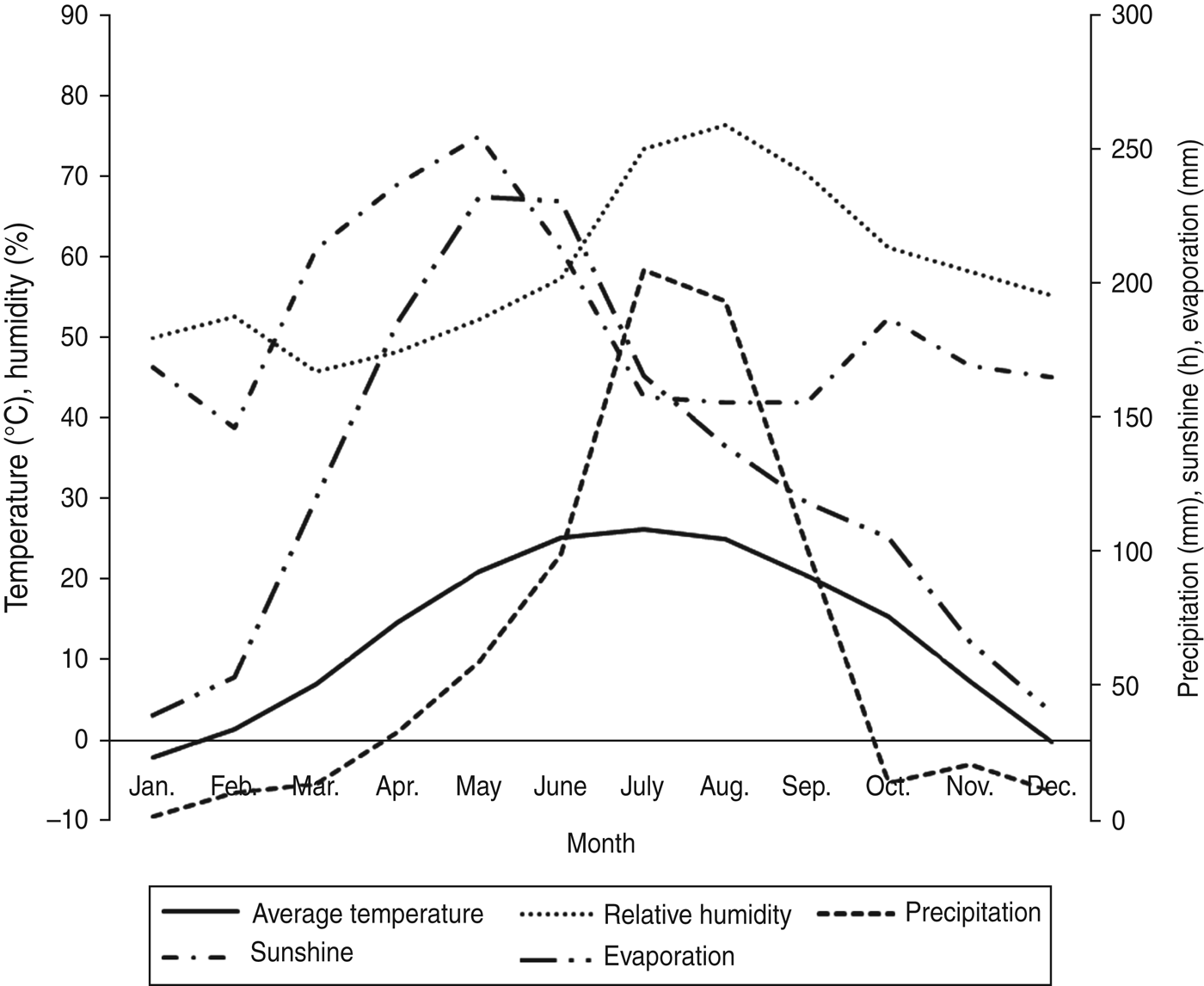
The average annual incidence of scrub typhus was 3·40/100 000 in Laiwu from 2006 to 2012, with a marked monthly variation in the number of cases (Fig. 1). The prevailing disease occurred in autumn and peaked in October. In some years, there was a minor fluctuation from June to July, e.g. in 2007 and 2008 (Fig. 1). During the period 2005–2012, the monthly average temperature, relative humidity, precipitation, sunshine, and evaporation were 13·49°C, 58·26%, 63·84 mm, 185·23 h, and 124·91 mm, respectively. Table 1 shows the mean, standard deviation and quartiles for climatic factors by calendar month from 2005 to 2012 in Laiwu, China. Monthly variations in mean values of climatic factors are also illustrated in Figure 2.
Monthly means of climatic factors in Laiwu, China during 2005–2012.
Climatic variables by calendar month from 2005 to 2012 in Laiwu, China

s.d., Standard deviation.
Autocorrelations analysis of monthly cases of scrub typhus
Autocorrelation analyses of scrub typhus cases from 2006 to 2012 for each month with delays of 1–11 months showed that the signature of the Box–Ljung statistic of the autocorrelation coefficients were between 0·611 and 0·762. In addition, ACF and PACF also indicated that the number of notified cases in each month was not related to the number of cases in any previous months (Fig. 3 a, b). Thus, the delayed effects of cases were not considered when building the time-series adjusted negative binomial model.
(a) The autocorrelation function and (b) partial autocorrelation function of the number of cases in Laiwu, China.  , Coefficient. The horizontal lines indicate the upper and lower confidence limits.

Correlation between climate variables and cases of scrub typhus
Most of Spearman's correlation coefficients for the relationships between monthly cases of scrub typhus and meteorological factors from the current to previous 6 months were significantly different from zero (Table 2). Based on this, the delayed effect of each climate variable on scrub typhus was identified by the maximum coefficient (indicated in bold in Table 2). The delay phase for average temperature was 3 months, for relative humidity 2 months, for evaporation 4 months, for precipitation 3 months, and for sunshine was 2 months (negative) and 5 months (positive).
Correlations between cases of scrub typhus and meteorological factors in Laiwu, China

Each value is Spearman's correlation coefficient for the relationship between the number of cases and the monthly value of meteorological factors in the previous 0–6 months.
** P < 0·01, * P < 0·05 (two-tailed).
Time-series adjusted negative binomial regression analysis
Multicollinearity diagnostics were performed for meteorological variables with delayed effects on scrub typhus. No multicollinearity existed after removing sunshine delayed effects of 2 months and 5 months. Monthly average temperature delayed effects of 3 months (TL3M), relative humidity delayed effects of 2 months (HL2M), precipitation delayed effects of 3 months (PL3M), evaporation delayed effects of 4 months, season and the particular year were treated as explanatory variables, while the number of cases from 2006 to 2011 was treated as the dependent variable and the logarithm of population (unit 105) was treated as the offset variable to fit the time-series adjusted negative binomial model. Year and evaporation delayed effects of 4 months were not significantly associated, and were excluded from the model. The equation of the time-series adjusted negative binomial regression was
 $$\eqalign{\hskip-2pt \ln [{\rm E}({\rm Y})] = &- \hskip-1.5pt 13 {\cdot} 432 + 0 {\cdot} 143{\rm TL}3{\rm M} + 0 {\cdot} 119{\rm HL}2{\rm M} \cr & + 0 {\cdot} 007{\rm PL}3{\rm M} +\hskip-2pt \left( {\hskip-2pt\matrix{ {1 {\cdot} 248\hskip-2pt} & {({\rm if}\,{\rm season} = 1)} \cr 0 & {({\rm if}\,{\rm season} = 2)} \cr}} \right).} $$
The notified and model fit cases from 2006 to 2011, and the actual and predicted cases from January to December 2012, are illustrated in Figure 4. The log-likelihood function of the estimated time-series adjusted negative binomial model was −72·452, and the log-likelihood of the negative binomial model with intercept only was −168·779. Therefore, McFadden's R 2 of the time-series adjusted negative binomial model was 57·08%.
Notified cases, model fit cases from 2006 to 2011, and predictive cases of scrub typhus in 2012 according to the time-series adjusted negative binomial model.

As shown in Table 3, TL3M, HL2M and PL3M were positively associated with the number of scrub typhus cases. The model suggested that each 1°C increase in monthly average temperature in the previous 3 months led to a 15·4% [90% confidence interval (CI) 1·3–31·4] increase in the monthly number of cases, that each 1% increase in monthly relative humidity in the previous 2 months led to a 12·6% (90% CI 6·1–19·5) increase in the monthly number of cases, and that each 1 mm increase in monthly precipitation in the previous 3 months led to a 0·7% (90% CI 0·3–1·1) increase in the monthly number of cases.
Parameters estimated by the time-series adjusted negative binomial model for scrub typhus in Laiwu, China

CI, Confidence interval; s.e., standard error.
* Reference; lag 1/lag 2/lag 3: records occurred in the previous 1/2/3 months; season = 1, summer and autumn (June–October); season = 2, winter and spring (November–May).
DISCUSSION
Scrub typhus is hyper-endemic in the Laiwu region of China. Modern agriculture has developed rapidly in Laiwu, and it is known as the Native Land of Ginger in China. Moreover, Laiwu has been listed as a China Excellent Tourism City and a National Garden City. People contract scrub typhus by being bitten by chiggers infected with O. tsutsugamushi and such bites occur accidentally during agriculture or recreational field activities [Reference Jeong42]. With the growth of tourism and agriculture in Laiwu, the frequency of outdoor activities has increased, and the risk of humans coming into contact with chiggers has also increased, especially in autumn.
The results of this study showed that weather variations may play a significant role in the transmission of scrub typhus in temperate regions. Correlation analysis showed that average temperature, relative humidity, precipitation and evaporation were significantly positively associated with the monthly number of cases of scrub typhus (Table 2). In addition, sunshine hours in the previous 1–3 months were negatively correlated with monthly cases of scrub typhus, while sunshine hours in the previous 4–6 months were positively correlated with the disease. Tsai & Yeh [Reference Tsai and Yeh31] observed in Taiwan that surface temperature correlated positively with scrub typhus incidence in five local climate regions (central western and southwestern Taiwan, as well as the Pescadore, Kinmen, and Matou Islands). Precipitation correlated positively with scrub typhus incidence in three local climate regions (central western and southwestern Taiwan, and the Kinmen Islands). Relative humidity correlated positively with scrub typhus incidence in two regions (southwestern Taiwan and the Kinmen Islands), whereas the correlation with scrub typhus incidence was negative in northwestern Taiwan. Sunshine hours correlated positively with scrub typhus incidence in three regions (central Western Taiwan, and the Kinmen, and Matou Islands) [Reference Tsai and Yeh31]. Therefore, the correlations between scrub typhus and climatic variables differ in different countries and areas.
After controlling for seasonal variation, delayed effects and long-term trend, the time-series adjusted negative binomial model revealed that the key determinants of scrub typhus transmission included average temperature (at a delay of 3 months), relative humidity (at a delay of 2 months) and precipitation (at a delay of 3 months) (Table 3). The positive relationships between scrub typhus and temperature and humidity were similar to those found in a study in Korea, which reported that the incidence of scrub typhus in a hyper-endemic region during the outbreak period was positively correlated with temperature and humidity during the summer [Reference Kim and Jang27]. However, there were no significant correlations between the monthly numbers of scrub typhus cases and meteorological factors for scrub typhus in Korea as a whole [Reference Kim and Jang27]. This might be because the seasonal distribution of scrub typhus varies in different geographical areas, so it may be too simplistic to study the disease at a national level. In our study we selected Laiwu District, a temperate region with the highest incidence of scrub typhus throughout northern China: by selecting this particular region, we may have overcome the problem described above.
Scrub typhus is a vector-borne disease, transmitted to humans by the bite of chiggers (larval trombiculid mites) [Reference Okada2, Reference Kuo3]. In Shandong Province, Leptotrombidium scutellare mainly appear from September to November, and this is the predominant species in the epidemic season of scrub typhus [Reference Liu43]. In addition, the peak incidence of scrub typhus coincides with the seasonal peak of L. scutellare, a chigger that naturally harbours O. sutsugamushi and can infest mice and humans [Reference Liu43]. L. scutellare larvae are frequently found in shaded and humid locations, but not on dry soil surfaces [Reference Kimito44]. Frances and colleagues observed the seasonal occurrence of L. deliense attached to sentinel rodents in an orchard near Bangkok, Thailand. They found that the occurrence of L. deliense was influenced by rainfall, with more chiggers attached to rodents in the wetter months [Reference Frances45]. In Malaysia, field observation revealed that L. akamushi and L. deliense were sensitive to changes in temperature and humidity [Reference Gentry, Yueh and Wah46], and in the Pescadores Islands, L. deliense population numbers were positively correlated with temperature [Reference Van47]. Therefore, climatic conditions during September–November might be appropriate to L. scutellare survival in Laiwu, China.
Because the incubation period of scrub typhus is about 6–21 days [Reference Lai48] (mean 10–12 days) after the initial chigger bite, climatic variables might not affect scrub typhus occurrence immediately. Delayed effects of meteorological variables on the number of scrub typhus cases were observed in our study and in another investigation conducted in Gifu prefecture, Japan. The Japanese study reported that the temperature in early summer had a significant effect upon the prevalence of the disease in early winter [Reference Kasuya32]. Moreover, we used data for disease onset rather than date of notification or diagnosis in this analysis, since the onset data would be expected to provide a more accurate estimation of the relationship between climate variables and the disease. In addition, although the date of infection could only be estimated, e.g. by estimating 1·5 weeks ahead of symptom occurrence, the exact onset date was more accurate than the estimated infection date when studying the effects of climatic factors on scrub typhus. After controlling for autocorrelation of cases, delayed effects of climate factors, seasonality and long-term trend, the time-series adjusted negative binomial model indicated that each 1°C increase in monthly average temperature in the previous 3 months, each 1% increase in monthly relative humidity in the previous 2 months and each 1 mm increase in monthly precipitation in the previous 3 months were associated with 15·4%, 12·6% and 0·7% increases in the monthly number of cases, respectively. With the onset of global warming and frequent extreme weather events, our results are valuable for predicting and preventing scrub typhus.
Some limitations of this study should be acknowledged. First, underreporting is inevitable in any infectious disease surveillance system. The notified cases are likely to be those who had severe symptoms and were admitted to hospitals [Reference Zhang25]. This phenomenon may introduce systematic bias. However, since underreporting is likely to have been consistent over the study period, we believe the effects of bias to be relatively minor. Second, the occurrence of scrub typhus is complex. It is not only influenced by climate, but also by other factors such as environmental and socioeconomic factors [Reference Kuo3]. Further studies including more local factors are needed to better understand the various effects of climate variables on vector-borne diseases.
In conclusion, the occurrence of scrub typhus is positively correlated with temperature in the previous 3 months, humidity in the previous 2 months and precipitation in the previous 3 months in Laiwu, China. Climate change, particularly global warming, coupled with the positive correlation between temperature and scrub typhus may increase the prevalence of scrub typhus in temperate regions. The control of scrub typhus is an ongoing challenge, and public health authorities need to make concerted efforts to monitor and control this disease. The findings of this research may assist local public health authorities to utilize the model developed in this study to predict scrub typhus outbreaks and to mobilize limited health resources to effectively control and prevent the disease during epidemic periods.
ACKNOWLEDGEMENTS
This work was supported by the National Basic Research Program of China (No. 2012CB955502); China Postdoctoral Science Foundation (No. 20090461209); Independent Innovation Foundation of Shandong University (No. 2012TS087); and Youth Innovation Foundation of the School of Public Health, Shandong University (No. 201101). We thank the Shandong Bureau of Meteorology for providing the meteorological data and we are grateful to Shandong Center for Disease Control and Prevention for providing the disease data.
DECLARATION OF INTEREST
None.



