

Introduction
Paul Burns Ebert, of Prince William County, Virginia, is among the longest-serving chief local prosecutors in the United States. He was first elected a Commonwealth’s Attorney in 1967 and retired in 2019.Footnote 1 In Ebert’s last three elections, he faced a challenger only once.Footnote 2 While Ebert’s tenure as a chief local prosecutor is remarkable, it is not unique. Ray Whitley served as District Attorney for Tennessee’s 18th Judicial District from 1980 to 2025.Footnote 3 In Whitley’s last three August elections (2006, 2014, and 2022), which are partisan and competitive in nature, he ran unopposed.Footnote 4
Many long-serving prosecutors are honorable public servants, but sometimes prosecutors continue to run for reelection unopposed even when there are well-documented problems with their job performance. For example, Montgomery County, Mississippi District Attorney Doug Evans came under intense public scrutiny when the podcast In the Dark focused on one of his cases. The podcast chronicles Evans’s six prosecutions of the same man, Curtis Flowers, for the same crime.Footnote 5 The hosts documented extensive racial bias in Evans’s jury selections, and the US Supreme Court threw out the conviction for this reason in 2019.Footnote 6 The state’s attorney general then intervened to prevent Evans from prosecuting Flowers again. Despite the national attention this case received and the interventions by other legal institutions, Evans ran unopposed later in 2019 and was reelected.Footnote 7 He retired voluntarily in 2023 after more than 30 years in office.Footnote 8
In all, 45 US states elect their chief local prosecutors, but these elections are usually not competitive (Hessick and Morse Reference Hessick and Morse2020; Wright Reference Wright2008). The media environment surrounding these elections is especially sparse, varying dramatically from district to district. Even the coverage that is available usually does not contain information about prosecutorial policies or candidate platforms (Hessick Reference Hessick2023). A 2020 University of North Carolina School of Law report found that in the most recent prosecutor elections, fewer than 30% involved more than one candidate (The Prosecutors and Politics Project 2020), which further diminishes the prospect for accountability that typically occurs in competitive elections.
Of course, the widespread lack of challengers is not because these elections are unimportant. Local prosecutors across the United States wield broad discretion in criminal cases. They determine which individuals are charged with crimes and which receive plea bargains or, ultimately, go to trial. This gives them significant influence over how lenient or punitive the criminal legal system is within their jurisdictions (Pfaff Reference Pfaff2017). From start to finish, prosecutors are perhaps the most influential actors in the criminal legal system (Bazelon Reference Bazelon2020; Demleitner Reference Demleitner2020). Their sweeping powers over criminal defendants led US Supreme Court Associate Justice Robert Jackson – who was himself a longtime federal attorney and a prosecutor in the Nuremberg Trials – to famously say in a 1940 address: “The prosecutor has more control over life, liberty, and reputation than any other person in America.”Footnote 9
In theory, competitive elections allow the public to choose the prosecutor who wields this power, while also providing accountability for how those prosecutors ultimately use their legal authority. However, as with other local elected officials, these accountability mechanisms are weak. Local politics is typically plagued by low information, low turnout, and general disengagement (see, e.g., Hajnal and Trounstine Reference Hajnal and Trounstine2005; Hajnal and Lewis Reference Hajnal and Lewis2003). In the context of prosecutors, this is further complicated by the fact that the public often has conflicting opinions about prosecutors, favoring a broad scope of prosecutorial responsibilities while at the same time limiting punitiveness (Yogev Reference Yogev2026). Because so few prosecutor elections are competitive, the public does not have an outlet for reconciling those conflicting opinions. Often, prosecutors do not reflect the ideological makeup of their constituents (Sances Reference Sances2021). Elections may also change prosecutorial behavior (Bandyopadhyay and McCannon Reference Bandyopadhyay and McCannon2014) or incentivize punitiveness and legal mistakes that weaken the criminal justice system (Gordon and Huber Reference Gordon and Huber2002; McCannon Reference McCannon2013).
Our study examines (1) how much the public knows about their chief local prosecutors, (2) where individuals get their information about prosecutors, and (3) how individual knowledge affects their support for the office and the court system more generally. We find that most members of the public know very little about their chief local prosecutors – either in terms of what they do, who they are, or how and when they are selected. We further find that those who know less about their prosecutors have more negative views of the office. Yet, this seems to have no practical effect on accountability, as prosecutors are elected again and again.
To examine the dynamics of the public’s low knowledge about local prosecutors, we gathered novel data using five distinct survey deployments. Across these surveys – which span state-specific and nationally representative samples – respondents frequently (1) provided the incorrect answers to knowledge questions or (2) indicated that they do not know the information we asked them about. Our study shines a light on public knowledge of and information about prosecutors, because accurate information is a necessary precondition for political accountability. Our data – viewed in concert with existing scholarly evidence on prosecutorial elections and in the context of our motivating examples above – suggest that prosecutorial elections are not effective in providing accountability in most cases. How are Americans supposed to hold these representatives accountable for the millions of cases prosecutors close each year (Gunderson Reference Gunderson2022) if they do not know their duties, responsibilities, or track records? While we do not proclaim to identify the precise sources of this ignorance, we argue that chronicling these patterns is essential for understanding the degree to which prosecutors represent the public’s interests.
Prosecutors as elected officials
The United States is unique in the world in its method for selecting chief local prosecutors; no other country elects them (Ellis Reference Ellis2011; Hessick and Morse Reference Hessick and Morse2020). In most of the developed world, prosecutors are expected to be nonpartisan and nonpolitical (Tonry Reference Tonry2012). Even the United States did not start out by electing these officials. At the time of the founding, most prosecutors were appointed, either by governors, legislatures, or judges (Ellis Reference Ellis2011). This tradition of appointing prosecutors continues in the federal government. Federal prosecutors – known as US Attorneys – are nominated by the president and confirmed by the Senate.Footnote 10 In theory, appointing US Attorneys helps to keep them independent and impartial, much like appointing federal judges encourages judicial independence and impartiality. However, US Attorneys lack the life tenure of federal judges and instead serve at the pleasure of the president, making them subject to influence from the Oval Office and the US Department of Justice (Boyd et al. Reference Boyd, Nelson, Ostrander and Boldt2021; Gordon and Huber Reference Gordon and Huber2009; Kinane and Mattioli Reference Kinane and Mattioli2022).
The institutional change to use of elections to select chief local prosecutors prioritized local control and accountability over independence. It grew out of a broader movement in the early 1800s to make the US more democratic. States adopted new constitutions that expanded the franchise and subjected more government offices to elections (Ellis Reference Ellis2011). Starting with the Mississippi constitution of 1832, these state-level institutional developments came to include elections for chief local prosecutors.Footnote 11 Much of the impetus for this change was part of a more general dissatisfaction with patronage politics and the influence of political parties over appointments (Ellis Reference Ellis2011). However, there were also more specific concerns about the contemporaneous increase of prosecutorial power and authority. Initially, public prosecutors did not have the wide-ranging discretion they have today with respect to charging decisions and plea bargains. Rather, the power to charge an individual was given to citizens, aldermen, and grand juries. Prosecutors merely carried out the work initiated by others. As municipal police departments professionalized and consolidated, public prosecutors also claimed new authority, including influence over charging decisions (Steinberg Reference Steinberg1984). Because appointed prosecutors were not always from the counties where they worked, the public began to seek local control over this increasingly important office (Ellis Reference Ellis2011).
By time the Civil War began in 1861, three-quarters of the states elected their chief local prosecutors, and others would fall into line with this trend as Southern states rewrote their constitutions during Reconstruction (Ellis Reference Ellis2011). Today, all but four states and the District of Columbia elect their prosecutors.Footnote 12 Moreover, chief local prosecutors’ discretion has continued to grow. They are now the unquestioned gatekeepers of the criminal legal system. Even in those states that require a grand jury indictment to bring felony charges, prosecutors select which defendants and charges to present for grand jury approval (Gilboy Reference Gilboy1984).
Gatekeeping is not the only area of prosecutorial discretion that has grown over time. Prior to the Civil War, the majority of criminal cases went to trial. Plea bargaining – the practice by which a prosecutor agrees to drop some charges in exchange for a guilty plea on other charges, usually leading to a more lenient sentence – became commonplace in the late 1800s and today accounts for the vast majority of criminal convictions (Feeley Reference Feeley1982). Prosecutors alone decide whether to offer a plea deal (Stuntz Reference Stuntz2004), and except in rare cases, these discretionary decisions are not reviewable (Krumholz Reference Krumholz2019; Sklansky Reference Sklansky2018). Prosecutors’ charging and plea-dealing powers go hand in hand; prosecutors can use their charging power to give them extra leverage at the bargaining stage (Lynch Reference Lynch2016). When cases do go to trial, it is chief local prosecutors and their staff who represent the state.
These roles give chief local prosecutors a unique position that is both executive and judicial in character (Hessick and Morse Reference Hessick and Morse2020). They perform executive law enforcement functions, but their discretion also allows them to play a substantial role in the adjudication of criminal matters – selecting cases that should be pursued and the sentences sought in those cases, while also controlling which cases are dropped or diverted to treatment programs (Wright and Levine Reference Wright and Levine2021). Through these decisions, chief local prosecutors shape carceral policy. Their decisions can increase racial bias in charging (Clark Reference Clark2025) and case outcomes (Gunderson Reference Gunderson2022), as well as limit the footprint of the criminal legal system (Agan et al. Reference Agan, Doleac and Harvey2023, Reference Agan, Doleac, Harvey, Kyriazis and Schechter2025). They also have the ability to adopt policies that decrease incarceration even when state laws are punitive (Mitchell and Petersen Reference Mitchell and Petersen2025). Because of this, prosecutors are often cited as the essential linchpin to effective criminal legal reform (Pfaff Reference Pfaff2017).
Prosecutors and electoral accountability
As elected officials, chief local prosecutors often experience tension between institutional and electoral objectives. On the one hand, prosecutors have an ethical duty to uphold the law, seek justice, and protect the innocent from wrongful convictions (Howell Reference Howell2014). On the other hand, they likely share the desire of most elected officials to retain their office by staying in their constituents’ good graces (Ferejohn Reference Ferejohn1986). These objectives are not always consistent. For example, prosecutors who wish to campaign on their conviction rates can selectively choose to only prosecute the most winnable cases, undermining criminal deterrence and public safety (Rasmusen et al. Reference Rasmusen, Raghav and Ramseyer2009). Not only do such actions undermine institutional goals, but they also complicate the task of holding prosecutors accountable by obscuring the information needed to make decisions.
Political accountability is conceptually a reciprocal relationship. Voters elect public officials who they believe will promote their interests or preferences in office, and the prospect of retrospective voting incentivizes officials to work to fulfill those expectations (Ferejohn Reference Ferejohn1986). If the officials fall short, voters can remove them from office and replace them with other candidates. To make this dynamic work, voters need at least two things: (1) a choice between qualified candidates (Hall Reference Hall and Streb2007), and (2) information about the officials’ performance in office (Cann and Wilhelm Reference Cann and Wilhelm2011). In the case of chief local prosecutors, both of these prerequisites for accountability are often missing.Footnote 13
Lack of electoral competition
Most district and county attorneys stand for reelection with few or no challengers, particularly in more rural counties (The Prosecutors and Politics Project 2020). Scholars attribute the lack of competitive elections to a supply problem (Hessick and Morse Reference Hessick and Morse2020). Unlike most elected offices, to be a chief local prosecutor, a candidate must be a licensed attorney. Most chief local prosecutors serve only one county, and many small counties have very few licensed attorneys. Work by Hessick and Morse (Reference Hessick and Morse2020) illustrates this. Out of the 563 districts they examined, 443 had fewer than 100,000 residents. In those small districts, the median number of licensed attorneys was 16. Further, these county legal systems also need judges and public defenders, putting additional demands on the already shallow pool of eligible candidates. As a result, bigger counties are more likely to have contested prosecutorial elections (Hessick et al. Reference Hessick, Treul and Love2023).
A second problem for the candidate pool is that the attorneys most likely to be interested in running for chief local prosecutor may already work in that office. For these potential candidates, the incumbent they would have to challenge is their boss – a risky situation for continued employment if they lose. A study of 54 contested elections for chief local prosecutor supports this. It found that 50% of the challengers had previous prosecutorial experience and 20% were currently working in the incumbent’s office at the time of the election (Wright Reference Wright2010). Other work finds that open seats – those in which an incumbent is not running – are more likely to be contested elections, suggesting prosecutorial incumbents are able to “scare off” challengers (Hessick et al. Reference Hessick2023). In sum, electoral accountability may be severely limited by the lack of eligible and interested alternative candidates, particularly in smaller counties.
Information gap
A second prerequisite for political accountability is voter knowledge or awareness, both of the political office and of the officeholder’s behavior and performance (Cann and Wilhelm Reference Cann and Wilhelm2011). As Delli-Carpini and Keeter wrote in their foundational book examining Americans’ knowledge of politics, for individuals’ votes “to serve as a reasonable first approximation of the public will, as a useful mechanism for selecting public leaders, and as a credible check on the behavior of those leaders, voters need to have at least some minimal information regarding all three” (1996, 50). Only when armed with knowledge about the “rules” and “players” of politics is the public equipped to determine which officeholders are responsible for which policy instruments and outcomes, correctly attribute outcomes to specific officeholders, and utilize available mechanisms to reward or sanction those officeholders for their performance (Berry and Howell Reference Berry and Howell2007; de Benedictis-Kessner Reference de Benedictis-Kessner2018; Delli-Carpini and Keeter Reference Delli-Carpini and Keeter1996; Lupia Reference Lupia2016). Further, when the electorate is better informed about their government, electorally-minded officeholders are pressured to be more responsive to and better represent the policy preferences of their voters (Jaeger et al. Reference Jaeger, Lyons and Wolak2017). Conversely, without reliable sources of information on incumbents’ offices and performance, voters lean heavily on heuristics, such as party alignment, in making their voting decisions (Carson et al. Reference Carson, Cann, Yates and Wright2024), providing little incentive for officials to follow anything other than the voters’ party preference.
Despite the importance of information to democratic accountability, many voters lack basic knowledge about national, state, and local politics and those who hold office at those levels. Given this, it is likely they also know little about their chief local prosecutors and institutional context in which they operate. Using the 2024 American National Election Study (ANES) as a reference point, 60.37% of respondents (unweighted) correctly identified the pre-election majority party in the House of Representatives and 57.45% correctly identified the majority party in the Senate. At the same time, only about 42% of respondents answered both knowledge questions correctly (American National Election Studies 2025). Similarly, while 70% of Americans could correctly name the three branches of government in a 2025 survey conducted by the Annenberg Public Policy Center, only 58% could name more than one of the five freedoms protected by the First Amendment.Footnote 14
Research examining knowledge of state and local politics is just as, if not more, lackluster than at the national level. Delli-Carpini and Keeter (Reference Delli-Carpini and Keeter1996) found that fewer than one-third of survey respondents could name other local officials such as their state senator (28%), county clerk (28%), or school superintendent (32%). More recently, a nationally representative 2018 survey (Bachner and Ginsberg Reference Bachner and Ginsberg2020) not only found that these patterns have persisted concerning respondents’ lack of knowledge of who their elected officials are— for instance only 19% and 28% of respondents could name their state senator and representative, respectively— but even more, that most respondents know little about the structure of their state and local institutions. For example, only 38% of respondents knew that their state had its own constitution, and only 17% knew that their state has special purpose districts. It is likely that this lack of knowledge about state and local politics extends to voters’ knowledge about chief local prosecutors.
Individuals’ lack of competence or sophistication in knowing what is going on in politics and government presents challenges to achieving electoral accountability. Take, for example, state trial court judges, who often work in concert with prosecutors. Most local judges – like prosecutors – are elected.Footnote 15 But individual knowledge about local courts and judges is minimal. For example, only about 30% of CCES 2012 respondents were able to name a local judge. Trial court judicial elections are typically categorized as low information environments (Boston and Silveira Reference Boston and Silveira2024; Gunderson et al. Reference Gunderson, Kim, Lane, Bauer, Davis and Searles2025; Lim et al. Reference Lim, Snyder and Strömberg2015; McKenzie et al. Reference McKenzie, Rugeley, Bailey and McKee2017). As such, research suggests that voters tend to get information about incumbents through a figurative “fire alarm,” whereby members of the media or interest groups draw voters’ attention to perceived policy missteps. As it pertains to trial court judges, fire alarms often relate to criminal sentencing. Judges who appear too punitive (Nelson and Samarth Reference Nelson and Samarth2022) or lenient as elections approach (Huber and Gordon Reference Huber and Gordon2004) are likely to draw the ire of a watchful sentinel ready to sound the alarm.
Similar dynamics play out in other areas of local politics. School boards present another institutional context in which politics is attached to particularized policy outcomes – in this case, educational outcomes. Berry and Howell (Reference Berry and Howell2007) argue that the media plays a key role in closing the information gap for voters. When local reporters share information about school performance, voters reward and punish based on those educational outcomes. But once that reporting goes away, the ability of voters to engage in retrospective voting diminishes. Voters similarly rely on media reporting to fill gaps in their knowledge of other local political officials, including their chief local prosecutors. Comparing prosecutorial elections to House races, political knowledge is highest and citizen engagement is highest when congressional elections are highly competitive, which predicts certain aspects of news coverage (Hayes and Lawless Reference Hayes and Lawless2015). The major challenge for prosecutors, however, is that most of their duties – in comparison to many other offices, including members of Congress – are performed behind closed doors (Wright and Miller Reference Wright and Miller2010). The public rarely sees anything but the most newsworthy charging decisions and plea deals, leaving most of their discretionary choices in the shadows. Reporting on prosecutorial elections disproportionately features homicide or other violent crimes rather than information on candidate platforms or other useful pieces of information for voters (Hessick Reference Hessick2023). This has significant downsides. Wright and Miller argue that highly visible cases are informative to the public with regard to prosecutors, but such revelations also potentially impair the proper functioning of a local prosecutor’s office:
Highly visible cases – such as notorious murder cases or public corruption investigations – often dominate public views about the overall work of prosecutors. [footnote omitted] These cases that receive intense media scrutiny do not raise questions about the technical expertise of the prosecutor. Instead, they raise questions about the opposite side of the balance: Public input into prosecutor choices. […] In short, the more the public learns about prosecutor decisions in highly visible cases, the more urgent becomes the search for methods of holding the prosecutor accountable
(Wright and Miller Reference Wright and Miller2010, pg. 1595).In other words, the public’s generally low information about prosecutors might lead to dissatisfaction. But the mechanisms in place for public learning about prosecutors can cause public desire for more accountability to bring legal outcomes into alignment with community preferences, undermining prosecutorial independence.
Empirical evaluation of accountability mechanisms
We now turn to an empirical evaluation of whether the prerequisites for electoral accountability are met with respect to chief local prosecutors. We begin by using data collected by other scholars to evaluate the availability of electoral choice in these elections. We then use original survey data to evaluate whether the public has the information necessary to make informed decisions.
Voter choice of chief local prosecutors
To highlight the landscape of voter choice in prosecutorial elections, we marshal data from two sources. We first use data from the American Local Government Elections Database (ALED; de Benedictis-Kessner et al. Reference de Benedictis-Kessner, Lee, Velez and Warshaw2023), which contains information on local elections in cities and counties with more than 50,000 people. Second, we use data from the University of North Carolina Prosecutors and Politics Project, which has data on all prosecutor elections, not just those in larger cities, from 2012 to 2019 (Hessick and Morse Reference Hessick and Morse2020; Hessick and Su Reference Hessick and Su2023).Footnote 16 We use these two datasets to provide some descriptive information on the characteristics of the prosecutor candidates, as well as their electoral fortunes.
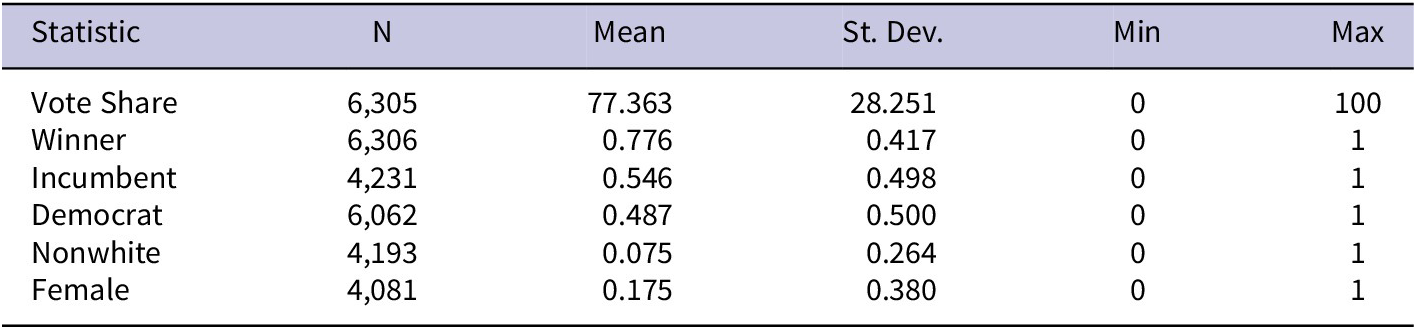
Table 1 shows the characteristics of the chief local prosecutor candidates who ran between 1989 and 2021 in cities and counties with more than 50,000 people (de Benedictis-Kessner et al. Reference de Benedictis-Kessner, Lee, Velez and Warshaw2023). Over half of those running were incumbents, and more than three-quarters won their elections, suggesting that most elections did not have more than one candidate. The average vote share is over 77%. The data is roughly balanced on partisanship, with about 49% of prosecutor candidates being Democrats. Consistent with other research on prosecutor race and gender (Gunderson Reference Gunderson2022), the vast majority of prosecutor candidates are white men – only 7.5% are nonwhite and 17.5% are female.
Prosecutors in American Local Elections Database, 1989–2021

All cities and counties with more than 50,000 population (see de Benedictis-Kessner et al. Reference de Benedictis-Kessner, Lee, Velez and Warshaw2023).
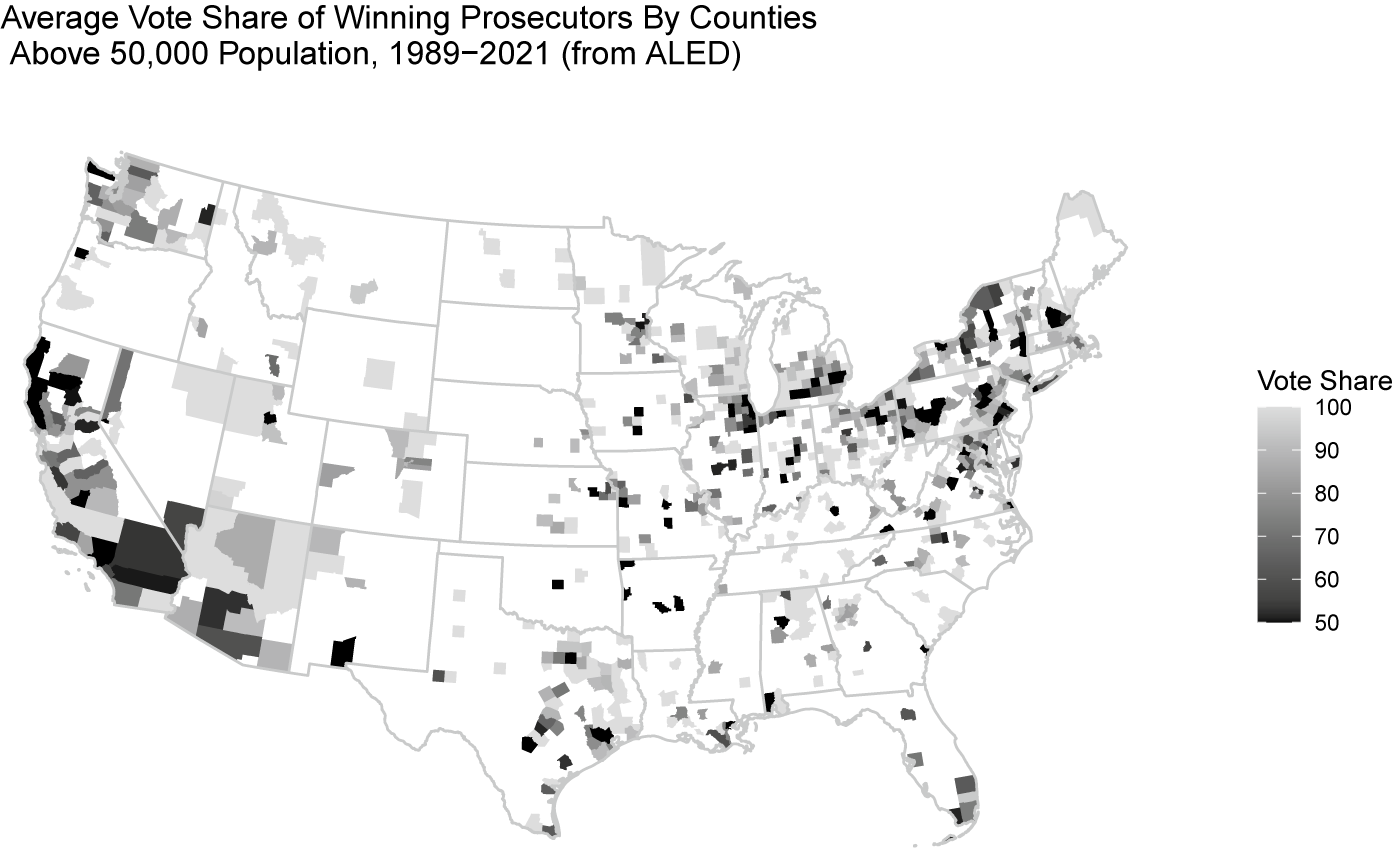
Figure 1 shows the average vote share of only the winning prosecutors in counties with populations of more than 50,000 from 1989 to 2021.Footnote 17 Counties that are shaded lighter elected a prosecutor with a higher vote percentage. Most of the larger cities and counties in the data elected their prosecutors with more than 70% of the vote – a result that seems consistent across the states.
Map of the average vote share of winning prosecutors in the ALED data from de Benedictis-Kessner et al. (Reference de Benedictis-Kessner, Lee, Velez and Warshaw2023). Counties included are those with more than 50,000 population.

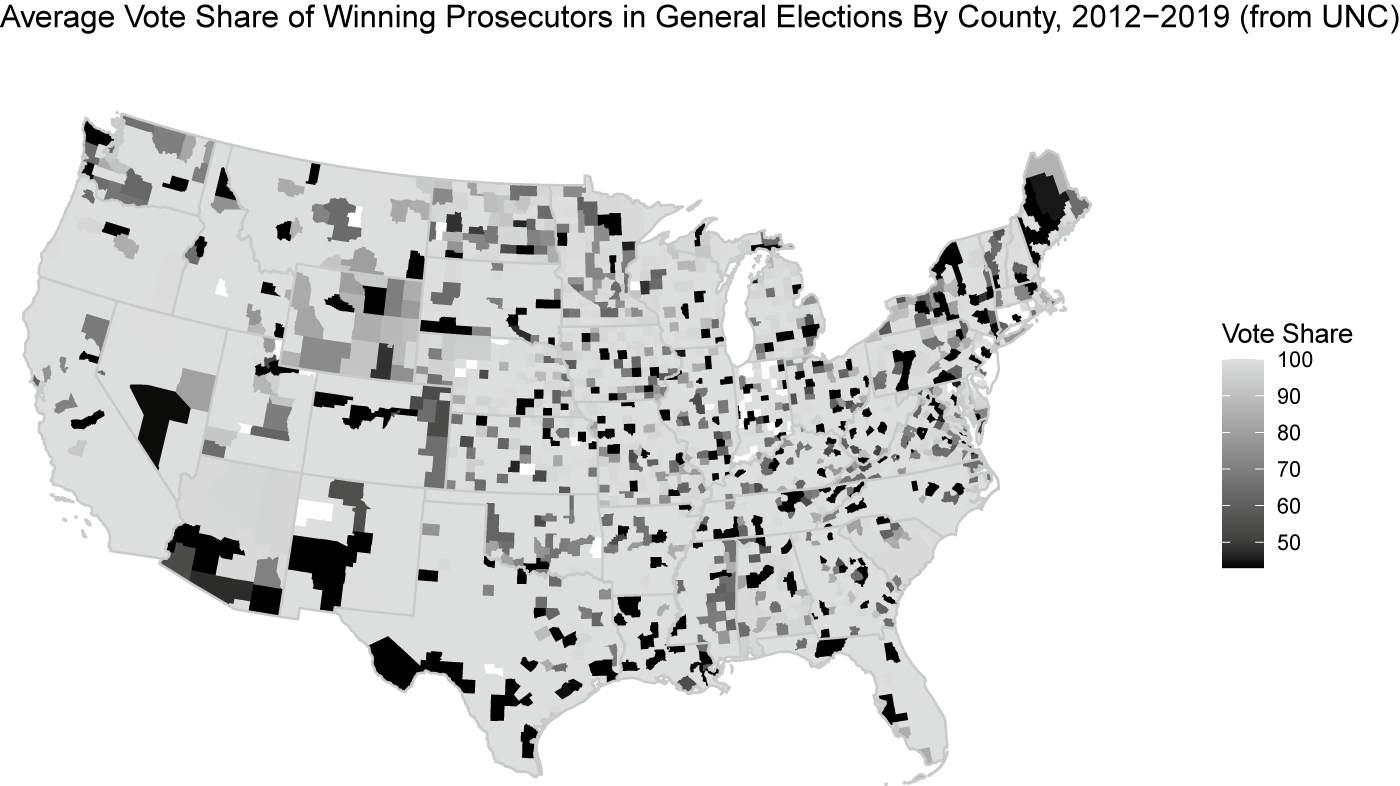
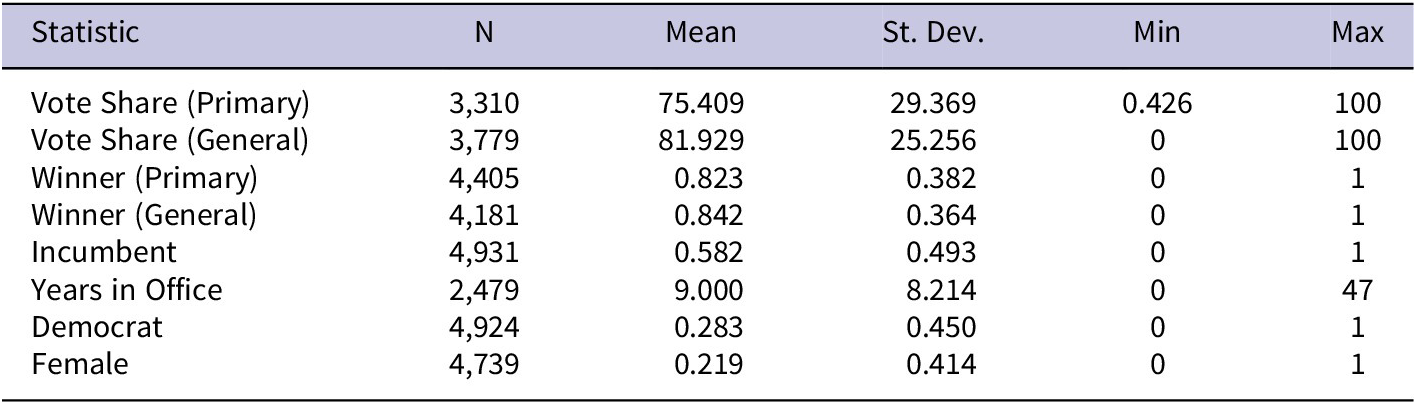
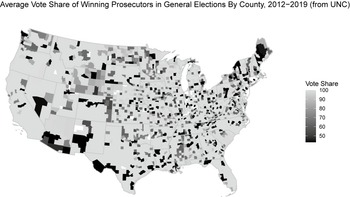
Next, we look at similar data from Hessick and Morse (Reference Hessick and Morse2020), which contains information on all prosecutor elections from 2012 to 2019. Importantly, while Figure 1 shows patterns in electability in larger counties, Hessick and Morse (Reference Hessick and Morse2020) have information on all counties regardless of their population, allowing us to see patterns in both urban and rural locales. Table 2 shows that, similar to the electoral fortunes of those prosecutors in larger counties, prosecutors in the full range of counties won with high vote shares – 75% to 82% in primary and general elections, respectively. Over half of the elections included incumbents, who had an average of nine previous years in office. We also mapped the winning prosecutors in Figure 2. Counties with lighter shades of gray elected prosecutors at higher vote percentages. Similar to Figure 1, more than half the country elected prosecutors with supermajority percentages. We note, however, that because less competitive, rural counties tend to cover larger land areas than smaller, more dense urban counties, the rate of unanimous elections may appear larger than it is in reality. Nevertheless, it remains the case that the majority of counties in the US, regardless of urbanity or population, elect their prosecutors with remarkably high vote shares.
Prosecutors in Politics and Prosecutors Project Database, 2012–2019
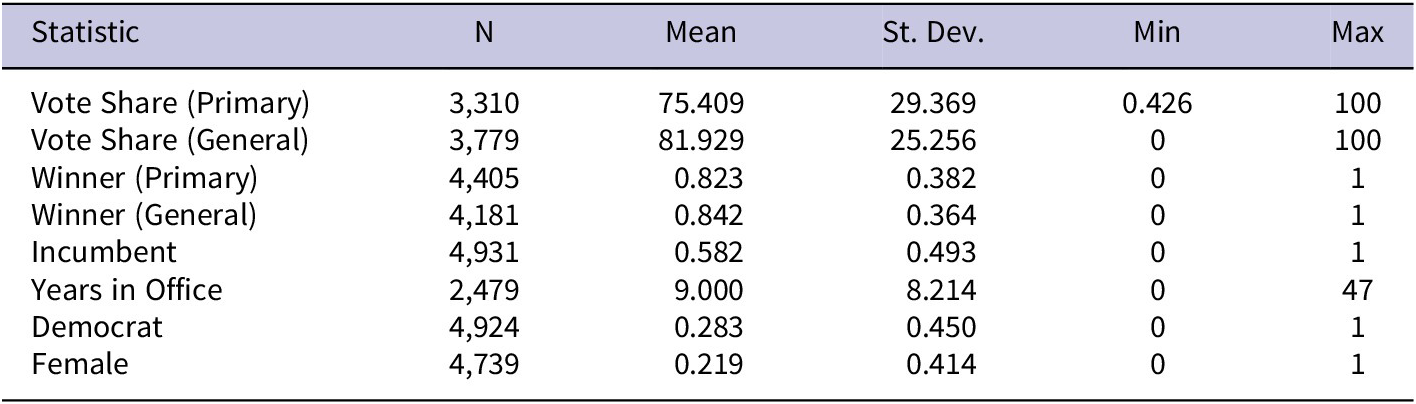
All prosecutorial elections, 2012–2019 (see Hessick and Morse Reference Hessick and Morse2020).
Map of the average vote share of winning prosecutors in general elections in the UNC data from Hessick and Morse (Reference Hessick and Morse2020). Candidates who ran unopposed and did not appear on the ballot were coded as receiving 100% of the vote. White counties are missing data.
Despite these similarities, there are some interesting differences between the two samples. While roughly half of the candidates for prosecutors in cities and counties with more than 50,000 residents were Democrats (de Benedictis-Kessner et al. Reference de Benedictis-Kessner, Lee, Velez and Warshaw2023), under a third are Democrats in all jurisdictions from 2012 to 2019 (Hessick and Morse Reference Hessick and Morse2020). There are two likely explanations for this. First, larger jurisdictions are more likely to have contested elections (Hessick et al. Reference Hessick2023; The Prosecutors and Politics Project 2020) and thus draw candidates from both major parties. Second, more prosecutors in the second sample did not have registered party affiliations because some of the races were nonpartisan. We also see that more prosecutor candidates were women in the second sample of all prosecutorial elections. This could be a result of better gender representation of prosecutors in smaller jurisdictions, or it could reflect change over time. The Hessick and Morse (Reference Hessick and Morse2020) data cover a shorter, more recent time frame, and data from the National Association for Law Placement show that the percentage of prosecutor jobs taken by women more than doubled between 1991 and 2021.Footnote 18 Despite these demographic differences, both datasets show that the vote shares of winning prosecutors are massive and at least half of prosecutor candidates are incumbents. Together, these data illustrate that voters have very little choice in prosecutorial elections and that chief local prosecutors who choose to stand for reelection are very likely to retain their seats.
Voter information about chief local prosecutors
To investigate the contours of public knowledge of chief local prosecutors, we included questions in three different surveys, over five total waves. Specifically, we employed national and state-level surveys in the following ways: first, we fielded three questions in the 2024 and 2025 Verasight American Political Science Association (APSA) surveys; second, we included four pre-election questions and three post-election questions in the 2024 Cooperative Election Survey (CES); third and finally, we fielded four questions in a YouGov survey to an Ohio-specific sample of likely voters. Both the Verasight and CES surveys are nationally representative samples, while the YouGov sample of Ohioans was designed to survey likely voters in that state ahead of the 2024 elections.Footnote 19 We detail the full question wording and answer options in Appendix Section A but broadly speaking, we asked questions to gauge the public’s knowledge about prosecutors in three areas: (1) knowledge of what prosecutors do generally; (2) knowledge about their own chief local prosecutor specifically; and (3) approval of their prosecutor.
Results: Knowledge about the role of prosecutors
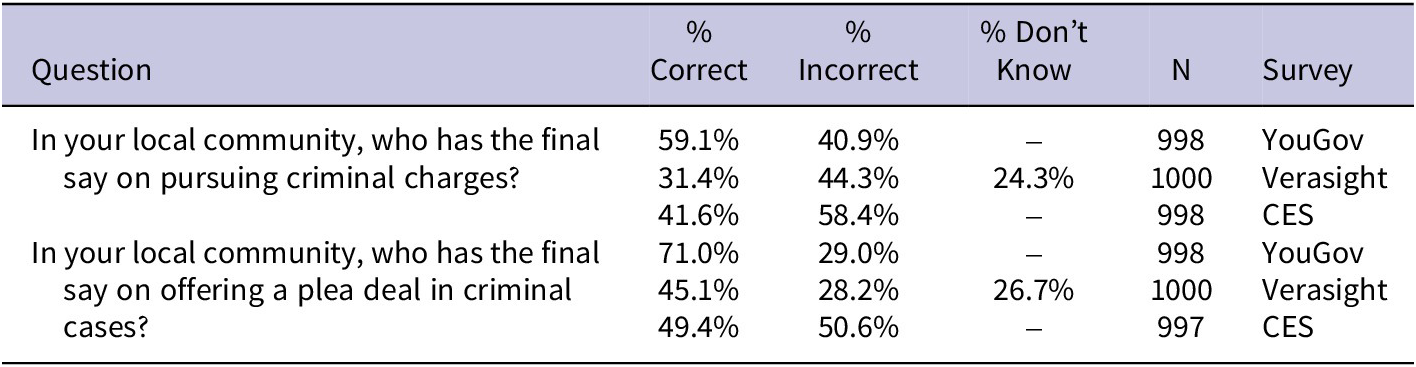
To hold an elected official accountable for their performance, voters need to know what that official does. To assess whether the public understands the role of chief local prosecutors, we asked questions on all three surveys about the two most critical areas of prosecutorial discretion: criminal charges and plea deals. The structure of the questions varied slightly across the surveys, but our inquiries asked respondents who has the final say over these important functions in their local communities.Footnote 20 Survey participants were then given a list of options, including: (a) the police, (b) the victim of the crime, (c) the prosecutor, (d) the grand jury, and (e) the judge. For the Verasight survey, we included two additional options: (f) someone else, and (g) I don’t know. Table 3 displays the results by survey.
Role Knowledge Questions
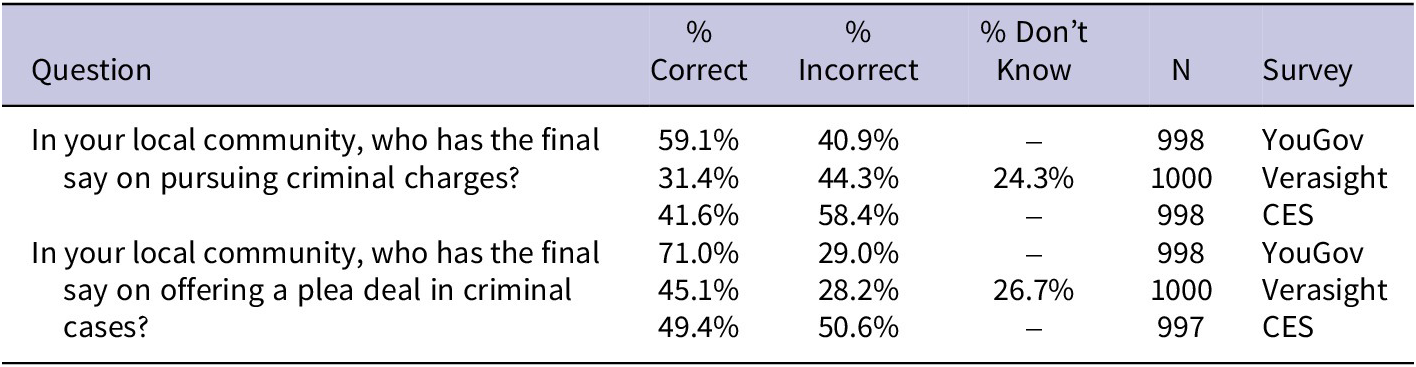
All percentages are calculated using the survey weights offered by the survey provider.
We see some variation in knowledge of the prosecutor’s role across the surveys. Overall, the Ohio likely voters performed best on these questions, the CES respondents performed second best, and the Verasight respondents consistently performed the worst. Despite this variation, we can draw a couple of conclusions. First, people are more likely to correctly identify prosecutors as the entity responsible for plea deals than they are as the entity responsible for charging. Second, wrong answers are common, even when the respondents had the option of selecting that they do not know. Across all surveys, only about 44% of respondents correctly identified prosecutors as having the final say in charging, and only about 55% correctly identified them as having the final say in plea deals. Put another way, the majority of our nearly 3,000 respondents do not fully understand the critical role that chief local prosecutors play in the criminal legal system.
It is important to note, however, that prosecutors act as part of a larger criminal system. In the federal system and in many states, prosecutors must seek a grand jury indictment to charge. This could lead some respondents to choose the grand jury over the prosecutor when it comes to charging decisions. Indeed, felony indictments in the state of Ohio are constitutionally required to emanate from a grand jury; the prosecutor cannot file an information for felonies under state law.Footnote 21 Some Ohio respondents may have been aware of this element of state law; their most common wrong answer was the grand jury, with about 16.1% of respondents choosing this answer.Footnote 22 The same is not true for the CES and Verasight surveys, however. In both of these, the most common wrong answer was the judge (19.6% and 24.2%, respectively). While judges may hold hearings to ensure there is sufficient probable cause to support charges, they have no role in bringing them.
With respect to plea deals, prosecutors are more clearly the ones to offer them. However, judges do retain the power to review these deals and can approve or reject them prior to sentencing (e.g., Boston and Silveira Reference Boston and Silveira2024). It is possible, then, that some knowledgeable respondents might say the judge has final say. Judges were the second most common incorrect guess to the plea question across all three surveys (23.7% in YouGov, 36.9% in CES, 19.3% in Verasight). However, it is not possible to know how many respondents chose that answer due to knowledge of the judge’s role in approving plea deals versus how many selected this response option because judges are familiar and powerful players in the criminal legal system, as seems to have occurred with the charging question.
Results: Voter knowledge of their own prosecutors
Even if voters generally know what a prosecutor does, they may not know a lot about their own local prosecutor. As with other local elected offices, there is variation across states in whether the office is elected or appointed, what the office is called, the timing of elections, and the availability of information about what is happening in the office. To assess what the public knows about their specific chief local prosecutors, we asked the following questions:
-
1. What is the chief local prosecutor in your area called? (Pre-election CES)
-
2. Is your chief local prosecutor elected or appointed? (Pre-election CES)
-
3. Was the office of your chief local prosecutor on the ballot this election? (Post-election CES)
-
4. What is the name of your local county prosecuting attorney? (YouGov)
-
5. With what party is your county prosecutor affiliated? (YouGov)
-
6. Compared to other state and local government officials, how much information do you have about your chief local prosecutor? (Verasight, CES Post-Election)
-
7. Where do you get information about your chief local prosecutor? (Post-election CES)
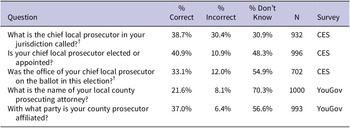
Table 4 shows the rates of correct, incorrect, and “I don’t know” responses to the first five of these questions. For all but the question about what the prosecutor is called, the modal answer is “I don’t know.” Respondents were most likely to know whether their prosecutor was elected or appointed. The party affiliation of the prosecutor and what the office is called have the next highest rates of correct answers, but both are below 40% of respondents. Notably, in the immediate aftermath of the November 2024 election, only 33% of CES respondents could correctly recall whether their chief local prosecutor had been on the ballot. This suggests that voters are not highly invested in these elections. This intuition is further confirmed by the fact that only a little over a fifth of Ohio respondents could correctly recall the name of their representative in this important office.Footnote 23 Instead, the overwhelming majority of respondents said they did not know.
Knowledge of Respondents’ Specific Prosecutors
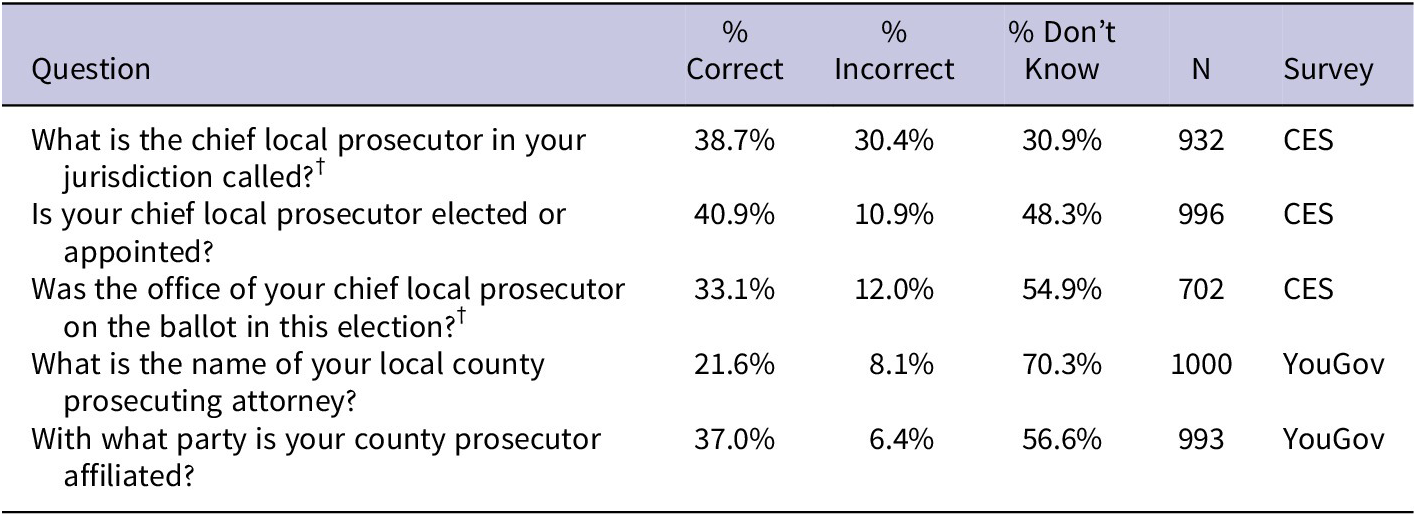
All percentages are calculated using the survey weights offered by the survey provider. Questions denoted with daggers (†) omit respondents for whom we were unable to definitively identify who their chief local prosecutor is and therefore could not discern whether their response was correct (e.g., the response lacked a zip code and facts about chief local prosecutors vary across counties in the state).
Taken together with the findings in Table 3, these results suggest that, overall, the public’s knowledge of chief local prosecutors is low. People are slightly more likely to know what prosecutors are responsible for than they are to know how that role is filled or who holds the office. As a further step, we used the demographic data gathered in each survey to examine whether some members of the public are more knowledgeable about the office than others. Across all of the surveys and questions, older respondents were more likely to answer role and office questions correctly, though the difference is small. More educated respondents were also more likely to be correct, though less consistently so than older respondents. In line with previous research (McKenzie and Rebe Reference McKenzie and Rebe2012; McKenzie et al. Reference McKenzie, Rugeley, Bailey and McKee2017), we also find some support for rural voters having greater knowledge about what their prosecutors do. On the other hand, across almost all of the knowledge questions, women respondents were less likely to be correct. Overall, though, demographic variables explain very little of the variation in knowledge about the office.Footnote 24
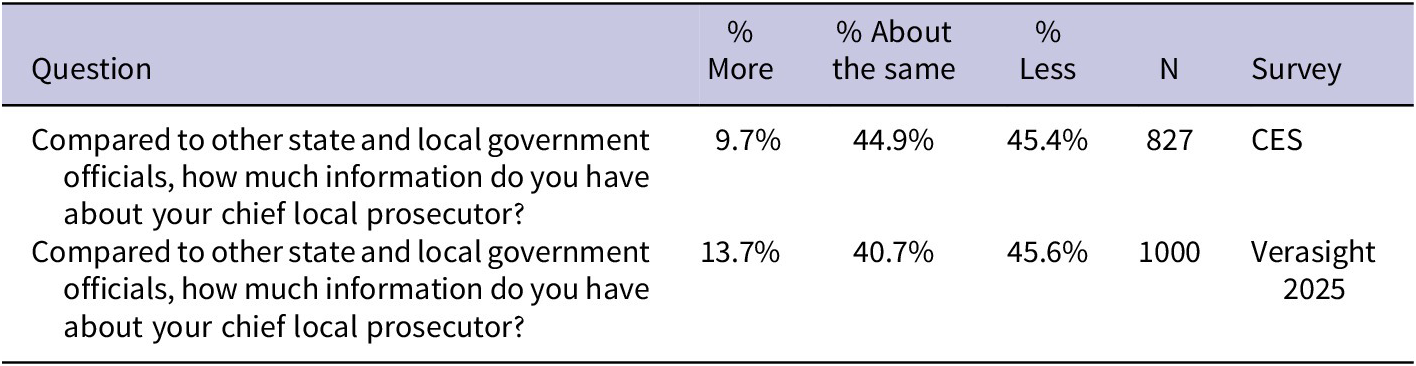
The knowledge gaps we have identified undermine the potential for electoral accountability, but are they worse for prosecutors than they are for other offices? To find out, we asked survey participants how much information they have about their chief local prosecutors compared to other state and local government officials. These subjective assessments of political competence or sophistication were asked across two surveys, which we present in Table 5, allowing us to draw important comparisons to actual information about other elected offices.
Comparative Knowledge
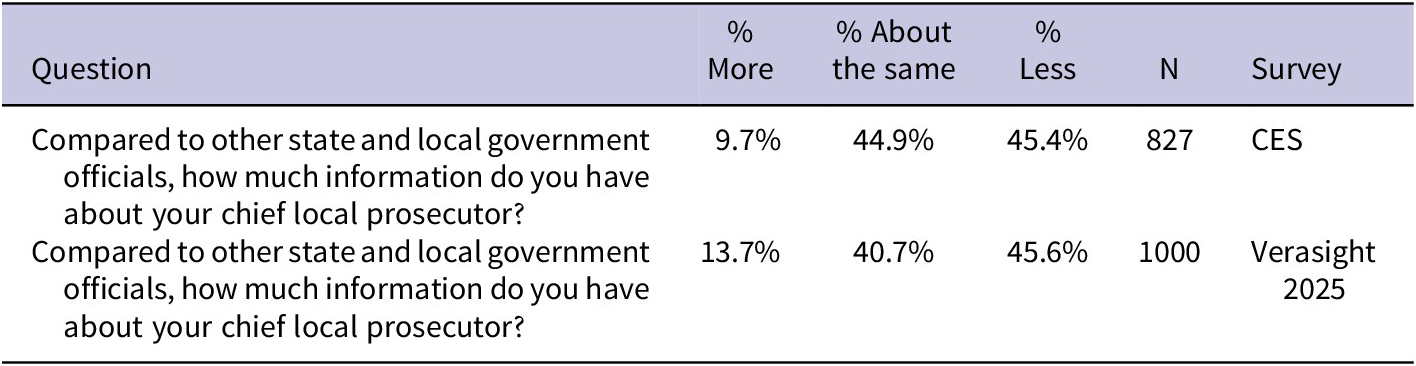
All percentages are calculated using the survey weights offered by the survey provider.
Few respondents say that they have more information about their prosecutors than they do about other officials. The modal answer from both the CES and Verasight samples is that they have comparatively less information. When we assess respondents’ beliefs about their subjective knowledge across columns in Table 5, we see that about 55% of CES respondents and 54% of Verasight 2025 respondents believe they have about the same or more information about their chief local prosecutors compared to other state and local government officials. That is, a majority of respondents in two surveys believe they are at least as well-informed about their prosecutors as they are relative to other elected offices. That result does not comport with our results in Table 4, where correctly answered prosecutor knowledge questions ranged between 21.6% and 40.9%. Examining the full data from the 2024 Cooperative Election Study (Kuriwaki Reference Kuriwaki2025; Schaffner et al. Reference Schaffner, Shih, Ansolabehere and Pope2025), of the 59,637 respondents who answered the survey question about the party identification of their current member of the House of Representatives, 65.7% answered correctly. Similarly, of the 59,827 respondents who answered the survey question about their current governor’s party identification, 82.6% answered correctly.Footnote 25 While our Ohio YouGov sample differs from the CES sample in important ways, it is nevertheless valuable to compare the respondents’ knowledge of their prosecutors’ partisanship; only 37% of Ohio respondents correctly identified the party of their county prosecutor (see Table 4).
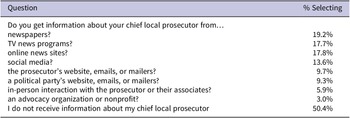
We next examine the sources from which they get their information. Table 6 displays the proportion of CES respondents who said they received information about their chief local prosecutor from each of a variety of sources. Note that respondents were able to select all that applied, so the total adds up to more than 100%.
Information Sources
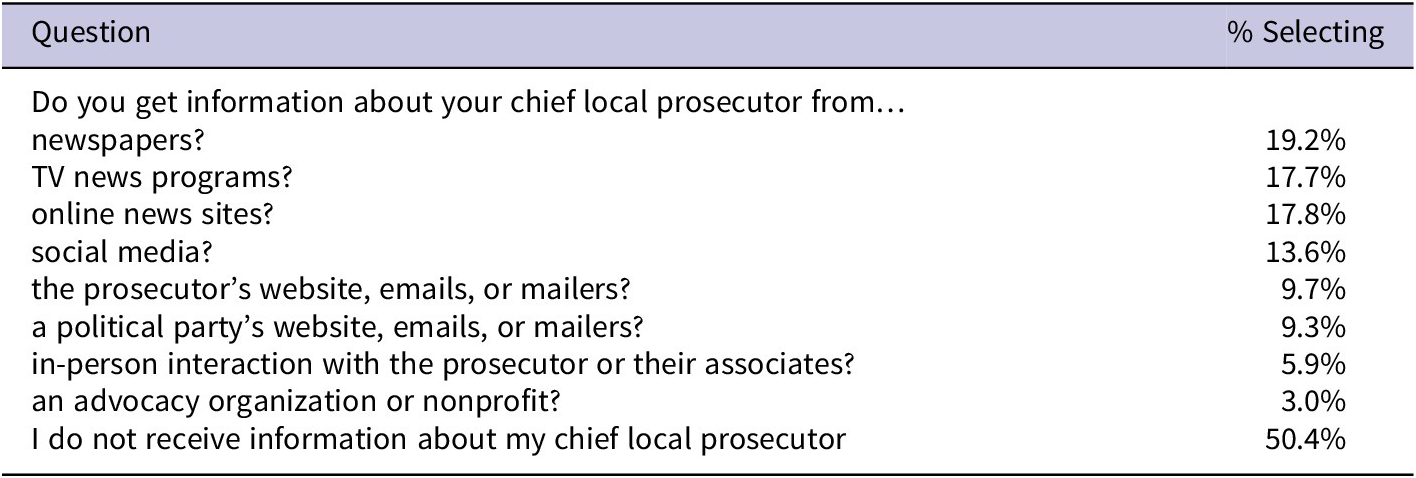
Responses come from CES, N = 829. All percentages are calculated using the survey weights offered by the survey provider.
The most notable finding from Table 6 is that more than half of respondents say they do not receive information about their chief local prosecutors. This is consistent with the low levels of knowledge found in the preceding analyses, and it presents a serious problem for accountability. The results further indicate that the vast majority of information the public does receive about this office comes from the news media – newspapers lead the way, followed by online news sites and TV news programs. This is consistent with the “fire alarm” model of voter information – the media is likely reporting only the most significant case developments, not the day-to-day work of the office (Hessick Reference Hessick2023). Almost 10% of respondents get at least some information directly from the prosecutor, via websites, emails, or mailers, and nearly 6% get information from interactions with the prosecutor or their associates. Advocacy organizations and nonprofits play a very small role in people’s knowledge of these offices, with only 3% of respondents citing them as an information source.
Results: Voter approval of their own prosecutors
So far, we have established that people in the US know very little about what their prosecutors do, who they are, or how they are selected. How does this impact public opinion of these offices? And how are those dynamics conditioned by individual partisanship and knowledge? We next investigate how knowledge (or lack thereof) influences support for prosecutors. To measure voter approval, our YouGov survey of Ohio likely voters asked: do you approve or disapprove of the way your county prosecutor is handling their job? Respondents were asked to respond on a five-point Likert scale, from strongly disapprove to strongly approve. On average, the vast majority of respondents either strongly or somewhat approve of their prosecutor (75% approve versus 25% disapprove).
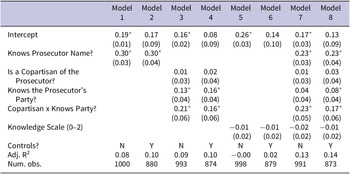
We examine the relationship between knowledge and approval using a series of linear regression models. Our outcome variable of interest is a binary indicator of prosecutor approval, which is coded as 1 if the respondent said they strongly or somewhat approved of their chief local prosecutor, and 0 otherwise.Footnote 26 We examine the effects of five independent variables. First is whether the respondent knows their prosecutor’s name; we presume that people who know the name of their prosecutor likely know something about how well that prosecutor is doing their job. Second is whether the respondent is a copartisan of the prosecutor, given that people prefer elected officials that share their same party. Third is whether the respondent knows the prosecutor’s party affiliation. If a respondent knows their local prosecutor’s party, they can then identify whether or not that prosecutor shares their partisan identity. Fourth is an interaction between copartisanship and whether the respondent knows the prosecutor’s party affiliation. This interaction allows us to understand how partisan dynamics work in this context; how respondents view in-group prosecutors. Fifth and finally is a scale of the respondent’s response to the two questions about prosecutors’ responsibilities. It equals 2 if the respondent correctly answered both the question about who has final say in charging decisions and the one about who has final say in offering plea deals, 1 if they were only correct on one or the other, and 0 if they were wrong on both. Given the documented knowledge gaps we illustrated earlier in the paper, we argue that this is an important variable to include in any study of prosecutorial approval.
We also include the models with and without a set of individual characteristics that might influence prosecutorial approval. Odd-numbered models in Table 7 include only one or more of our knowledge variables, while their adjacent even-numbered analogues include a set of demographic control variables that may relate to political knowledge and approval of public officials (ideology, gender, race, age, education). Full tabular results for models with control variables are provided Table SI.6.
Effect of Knowledge on Prosecutor Approval
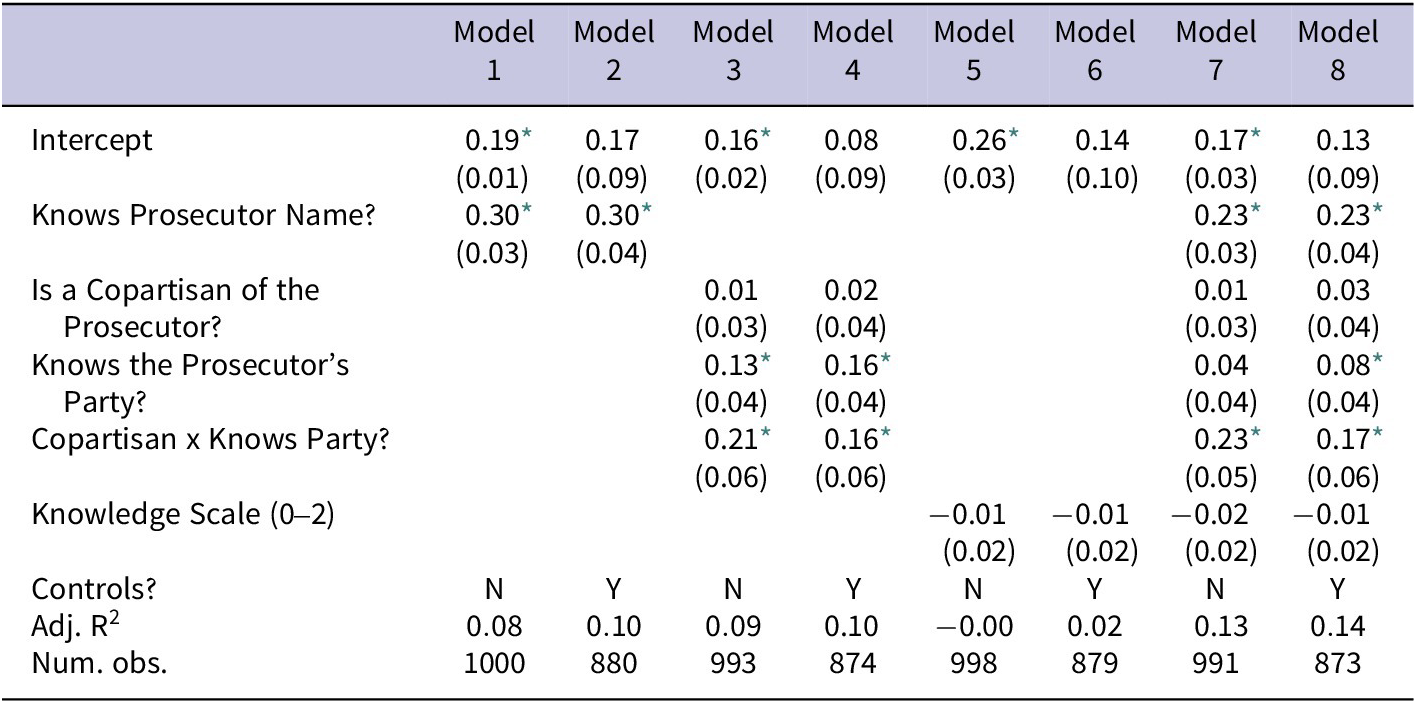
* p < 0.05. OLS regression results. The five-point approval scale was dichotomized such that “strongly” or “somewhat” approving is coded as 1, and other responses are coded as 0. Tabular results of full models (including control variables) provided Table SI.6.
In Table 7, we find that people who can correctly name their chief local prosecutor are more likely to approve of their performance in office. On the other hand, knowing that prosecutors are the ones with the final say on charging decisions and plea deals does not influence approval. Copartisanship alone does not increase approval, but the interaction with knowing the party affiliation of the prosecutor does. In other words, respondents who know their prosecutor shares their party affiliation are more likely to support them. Conversely, it seems that people who know less about their prosecutors are less likely to support them. However, less knowledgeable voters might not have the ability to hold their prosecutors accountable. This lack of knowledge could be compounded by lack of electoral choice, leading to a situation where electoral accountability for prosecutors is more of an ideal than a reality.
Discussion and conclusion
Scholarly examinations of individuals’ knowledge, approval, and vote choice for their chief local prosecutors meet reality in counties and districts across the country. The attorneys who are elected to serve their communities are often faced with tough decisions with significant impact for individuals and their communities. We gave several examples in our introduction of elected prosecutors who served their counties or districts for decades, while only rarely if ever facing electoral competition. Sometimes those who commit egregious wrongdoing – as was the case with Mississippi District Attorney Doug Evans – find the ire of the media. And even then, Evans – and others like him – was reelected.
A less extreme example of prosecutor behavior comes with chief local prosecutor W.W. “Bill” Thompson, a Democrat, who first won office in Latah County, Idaho, in 1992.Footnote 27 During his first term in office, Thompson faced a challenging case involving a University of Idaho graduate student who murdered a classmate and the classmate’s wife. While family members of the victims called for the death penalty, the defendant was charged with and pleaded guilty to second-degree murder.Footnote 28 Thompson remains in office today, and like many other incumbent prosecutors, Thompson’s modern reelections were largely unopposed, including those in 2016, 2020, and 2024.Footnote 29 Thompson had planned to retire in 2024 after serving eight terms as prosecutor, but the quadruple homicide committed by Bryan Kohberger in November 2022 changed Thompson’s plans. “I couldn’t walk away from it. I guess I could have, but I couldn’t live with myself if I’d done that,” Thompson told reporters.Footnote 30 His office originally sought the death penalty for Kohberger, but Thompson ultimately offered a plea deal resulting in consecutive life sentences. As was the case in the 1996 murders, some of the victims’ family members disapproved of the plea deal.Footnote 31 But Thompson defended his use of prosecutorial discretion to offer the deal, saying it was “the absolute best result that could have happened” primarily because it avoids Kohberger’s “endless appeals.”Footnote 32 Did voters approve of his decisions in this high-profile case? Were they even aware that he was responsible for the outcome?
Arguably, voters should have known that Thompson was likely to make a plea deal. After all, he had done so in the University double murder case he faced in his first term. His continued reelection after that deal could indicate that the public was satisfied with his approach. On the other hand, it could be an indication that the public either (1) lacked electoral choice; and/or (2) lacked information about his office, for example, whether he was elected or appointed or whether he was the one responsible for offering plea deals. These problems are connected. Competitive elections, after all, are one of the primary mechanisms by which the public can gain information necessary to overcome some of the challenges of adverse selection and reduce potential moral hazard once an official holds elected office. In this article, we examined whether American voters have these key prerequisites for electoral accountability. We find that overwhelmingly they do not.
The accountability paradox for chief local prosecutors stems from three overlapping problems between elites and constituents. First, the public knows little about these political actors. Second, the low information environment surrounding prosecutors impacts whether and to what degree the public can evaluate them. Third, prosecutors frequently achieve reelection, due to a lack of competition. Heuristics used by voters in low-information elections, such as partisanship and news coverage, likely do not adequately inform voters about prosecutors’ performance or the alignment between elite behavior and voters’ preferences.
This does not mean that chief local prosecutors are entirely immune to electoral pressures. Candidates in US elections tend to “run scared,” focusing on raising money and pleasing voters even when there is a low likelihood that they will be removed from office (King Reference King1997). While much of the literature on campaigning focuses on legislators, prosecutors may also have incentives to respond to their constituents’ policy preferences in order to be reelected (Gordon and Huber Reference Gordon and Huber2002), even though challengers are infrequent. Unlike judicial elections, where there is a range of policy issues on which candidates could be evaluated, not all of which are salient to voters (Cann and Wilhelm Reference Cann and Wilhelm2011), prosecutor elections are largely focused on a single issue. Criminal legal policy is highly salient to voters and they have clear policy preferences (Cann and Wilhelm Reference Cann and Wilhelm2011; Sung Reference Sung2023). Research suggests that prosecutors are aware of this and adapt their positions in response to voters’ attitudes. While this suggests an indirect form of accountability, it does not refute the lack of direct electoral accountability we have explored here.
Establishing what the public knows about prosecutors is a foundational precursor to drawing further inferences about their electoral connection. While political science scholarship on prosecutors is relatively limited – especially given the growth in municipal and local election studies over the last decade or so – many existing prosecutor analyses gauge support for prosecutorial behavior and decision making. Previous findings suggest that voters reward legal actors who achieve convictions (Gordon and Huber Reference Gordon and Huber2002). Recent work suggests that voters may differently evaluate prosecutors for how they sentence low-level versus violent crime (Nelson and Samarth Reference Nelson and Samarth2022). While valuable, these studies assume broad public understanding of prosecutors. In contrast, our project demonstrates how little the public knows about their elected legal representatives, which presents serious problems for accountability and transparency.
Given the local and national conversations about criminal legal reform and punitiveness in recent years, the continued low knowledge about these key actors in pursuing those reforms raises serious concerns. Chiefly, while the media, elites, and well-informed publics debate over reform-minded and tough-on-crime policies, the rest of the public remains disengaged. True accountability requires greater voter education and access to transparent information on how prosecutors do their jobs.
Supplementary material
The supplementary material for this article can be found at http://doi.org/10.1017/jlc.2026.10017.
Acknowledgments
We thank our undergraduate research assistants, Richard D'Angelo of the University of Tennessee, and Caleb Danielak of Bowling Green State University. Replication data and code will be available on the Journal of Law and Courts Dataverse.


 Open access

