


INTRODUCTION
Symptomatic rubella is usually a mild disease with maculopapular rash of short duration, but infection during early pregnancy can lead to congenital rubella syndrome (CRS) with severe consequences for the fetus [Reference Chantler, Wolinsky, Tingle, Fields, Knipe and Howley1]. There is no specific treatment and vaccination is the only effective tool to prevent the disease and CRS. Because there are many rash diseases with similar clinical symptoms as rubella [Reference Best, O'Shea, Lennette, Lennette and Lennette2], laboratory confirmation is essential and is normally performed by detection of rubella virus (RV)-specific immunoglobulin M (IgM) in the serum sample. Besides serology, reverse transcriptase–polymerase chain reaction (RT–PCR) is increasingly used for laboratory investigation of suspected cases and also allows obtaining genotype information of the circulating strains as requested by the World Health Organization (WHO) [3, 4].
In Bosnia and Herzegovina (B&H), immunization against rubella started in 1977, initially targeting only girls at the age of 14 years. Since 1980, a mandatory childhood immunization programme has been introduced requiring a combined vaccine against measles, mumps and rubella (MMR). Since then, this programme has undergone several changes.
During the war from 1992 to 1995, immunization was not fully implemented across the entire territory of B&H.
Rubella is a notifiable disease in the Federation of Bosnia and Herzegovina (FB&H), which is one of two governing entities of B&H. Cases are normally reported by doctors from different healthcare facilities. Before rubella vaccination was introduced, many cases were observed each year with increased incidence every 2–3 years. After an outbreak in 1997–1998 with more than 1100 cases, the disease incidence in the following inter-epidemic years was low and ranged from 0·82 (in 2008) to 3·27 (in 2000) cases/100 000 inhabitants [5]. Between mid-December 2009 and the end of May 2010, a rubella outbreak involving 1900 cases was recorded in FB&H. This report describes the outbreak by time, place, person and RV strains involved. We investigated the causes of the outbreak and propose measures to avoid similar epidemics in the future.
METHODS
For reporting, the WHO definitions for clinical, laboratory-confirmed and epidemiologically linked cases were applied [4]. Epidemiological data including monthly case numbers, geographical distribution of cases as well as information about age, sex and vaccination status were collected by the Institute of Public Health of FB&H and the Cantonal Bureaus for Public Health, as well as Hygienic-Epidemiological Services of Primary Health Care Centres of all municipalities that were affected by the epidemic. Normally only reported cases were contacted and interviewed, but some cases were contacted through active case-finding. Information on age, sex and vaccination status was generally recorded during face-to-face interviews with the patients. The vaccination register was used to calculate the overall vaccination coverage rate in FB&H.
A total of 389 serum samples from suspected rubella cases were tested by the WHO National Reference Laboratory for Measles and Rubella at the Clinical Centre University of Sarajevo for rubella-specific IgM and IgG antibodies using the Enzygnost® immunoassays (Siemens AG, Germany). Samples from 39 patients with uncharacteristic clinical signs referred by clinicians were also tested for measles virus-specific IgM antibodies (Enzygnost immunoassay, Siemens AG). The number of samples (389/1900, 20·47%) referred to the laboratory for confirmation was low because each canton has its own legislation and decides independently whether to rely on clinical presentation as in the past or whether to spend the time and money on sample collection and shipment.
Outbreak confirmation and genotyping based on phylogenetic analysis were performed at the WHO EURO Regional Reference Laboratory (RRL) for measles and rubella in Luxembourg. The 32 throat swabs collected from 26 IgM-positive and five IgM equivocal patients and from one case without serology were tested by RT–PCR as described previously [Reference Hübschen6] and were used to attempt virus isolation [7]. Phylogenetic analysis using MEGA software [Reference Kumar, Tamura and Nei8] was based on the RV E1 gene [9, 10]. The sequences obtained during this study are available under accession numbers FR717210-FR717222.
RESULTS
Outbreak description by time, place and person
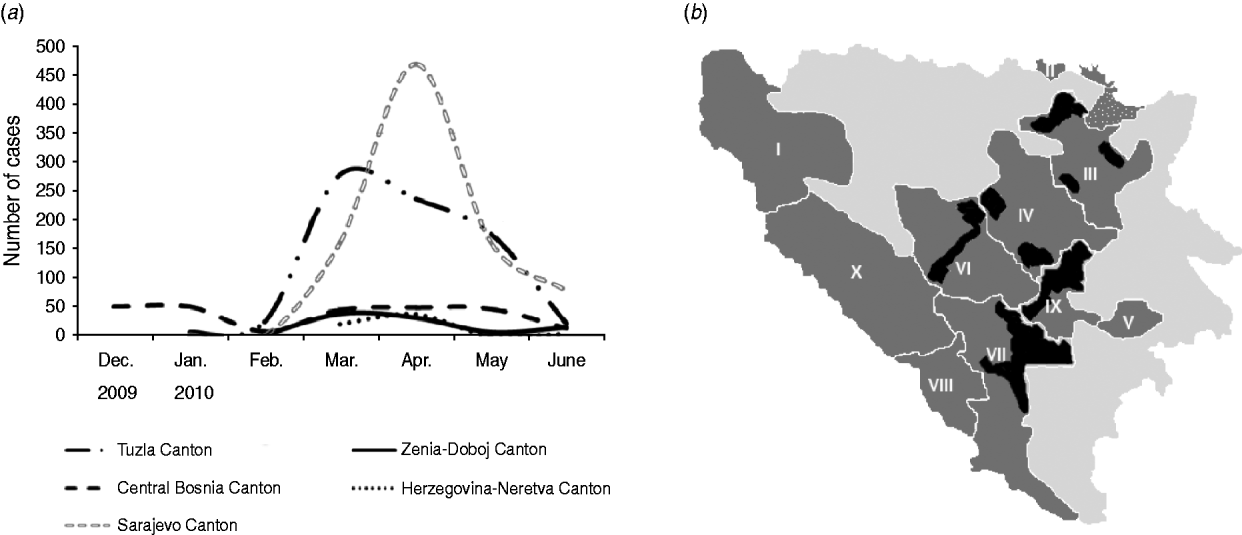
At the end of 2009, an increased number of patients with rash were notified in the municipalities of Travnik and Novi Travnik in the Central Bosnia Canton (Fig. 1 a). On 16 December rubella was laboratory-confirmed in a 15-year-old male high-school student in Travnik. The disease spread among schoolchildren, who originated from different municipalities of the Central Bosnia Canton as well as from outside this canton (Zenica-Doboj Canton and Republic of Srpska municipalities where a rubella epidemic had been recorded previously [Reference Novo11]). Besides the Central Bosnia Canton another four cantons of FB&H were affected: Tuzla, Sarajevo, Zenica-Doboj and Herzegovina-Neretva (Fig. 1 a, b) and a total of 1900 cases were registered (Table 1). According to the WHO definition [4], 52·26% (993/1900) of the cases were classified as being epidemiologically linked, 38·37% (729/1900) as clinical cases and 9·37% (178/1900) as laboratory-confirmed cases.
(a) Number of cases in relation to time for the five cantons affected by the outbreak. (b) Map of the Federation of Bosnia and Herzegovina showing the geographical distribution of rubella cases notified between 16 December 2009 and 31 May 2010 (black-coloured areas). I, Una-Sana Canton; II, Posavina Canton; III, Tuzla Canton; IV, Zenica-Doboj Canton; V, Bosnian Podrinje Canton; VI, Central Bosnia Canton; VII, Herzegovina-Neretva Canton; VIII, West Herzegovina Canton; IX, Sarajevo Canton; X, West Bosnia Canton. The Republic of Srpska entity is coloured light grey and Brčko District in grey with white dots (top right).
Number of inhabitantsFootnote *, vaccination policy during the war (1992–1995), number of male and female rubella cases, and total case numbers in each of the cantons of the Federation of Bosnia and Herzegovina (FB&H)
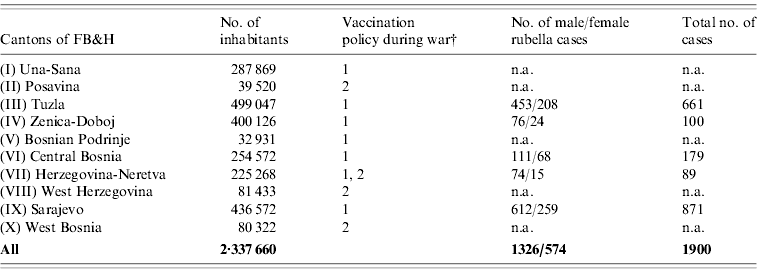
n.a., Not available.
* Based on data provide by the Federal Office for Statistics in FB&H (www.fzs.ba/Dem/ProcPrist/procjena_ukupnog_broja_prisutnog_B.htm).
† 1, No rubella vaccination; 2, primary immunization with MMR, since 1994 also second dose with MMR.
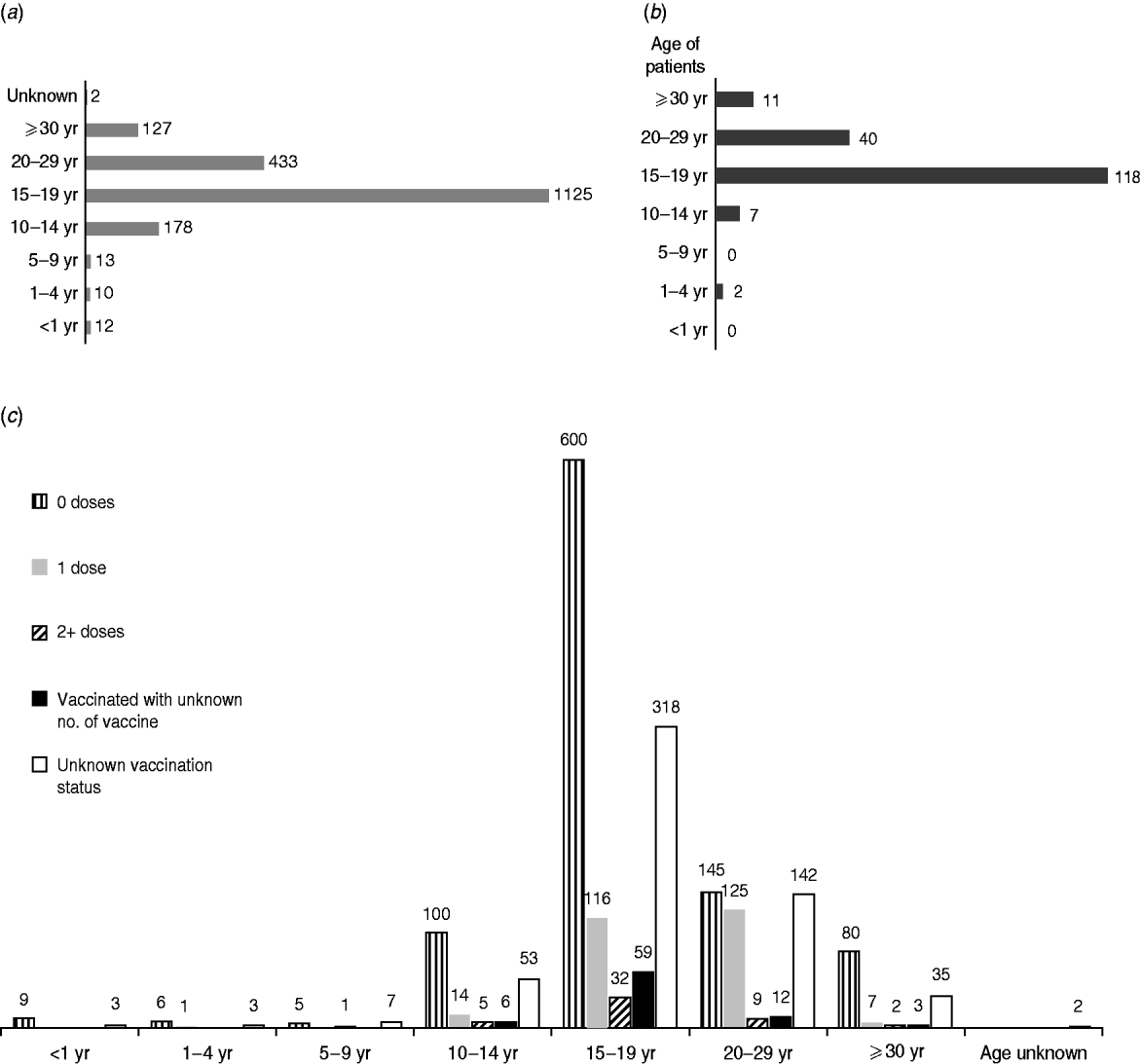
Most patients were in the 15–19 years age group (1125/1900, 59·21%), followed by the 20–29 years group (433/1900, 22·79%) (Fig. 2 a). Fewer than 2% (35/1900, 1·84%) were aged <10 years (Fig. 2 a). The mean age was 18·6±5·5 years and ranged from <1 year to 38 years. The age distribution of patients is well reflected in the subgroup of laboratory-confirmed cases (Fig. 2 b). Many more males than females were affected (69·79% vs. 30·21%), corresponding to a male/female ratio of about 2·31 (Table 1). Nearly half of the patients had never received rubella vaccination (945/1900, 49·73%) and the vaccination status of about 30% was unknown (563/1900, 29·63%) (Fig. 2 c). About 2·6% of the patients (49/1900, 2·58%) had received at least two doses of rubella vaccine (Fig. 2 c).
Age status of (a) all and (b) laboratory-confirmed patients involved in the rubella outbreak from 16 December 2009 to 31 May 2010 in the Federation of Bosnia and Herzegovina. (c) Vaccination status of all rubella cases in relation to age group.
During the outbreak, seven women (age range 19–35 years, mean age 23·7±5·9 years) were infected during pregnancy. Two women from Tuzla Canton (gestational weeks 9 and 12) were hospitalized and terminated the pregnancy. Two women from Sarajevo and Tuzla Canton (gestational weeks 12 and 18) decided not to terminate the pregnancy. One woman (infected in gestational week 22) from Central Bosnia Canton delivered an apparently healthy infant by Caesarean section. For the other two women the gestational age at infection or the pregnancy outcome are unknown.
Laboratory results
Fewer than half (178/389, 45·76%) of the suspected rubella cases investigated during the time of the outbreak were IgM positive and more than 20% (86/389, 22·11%) were negative for rubella-specific IgG antibodies. All patients who presented with a disease course atypical for rubella tested negative for both rubella- and measles-specific IgM antibodies.
Of the 32 throat swabs from patients from Central Bosnia and Sarajevo cantons, 12 were positive in the initial diagnostic PCR and for 13 samples virus isolates and E1 gene sequences were obtained. These 13 swabs were collected from eight IgM-positive and four IgM equivocal patients and from the one person without serological information. Eleven and two sequences were obtained from isolates from the Sarajevo and the Central Bosnia cantons, respectively.
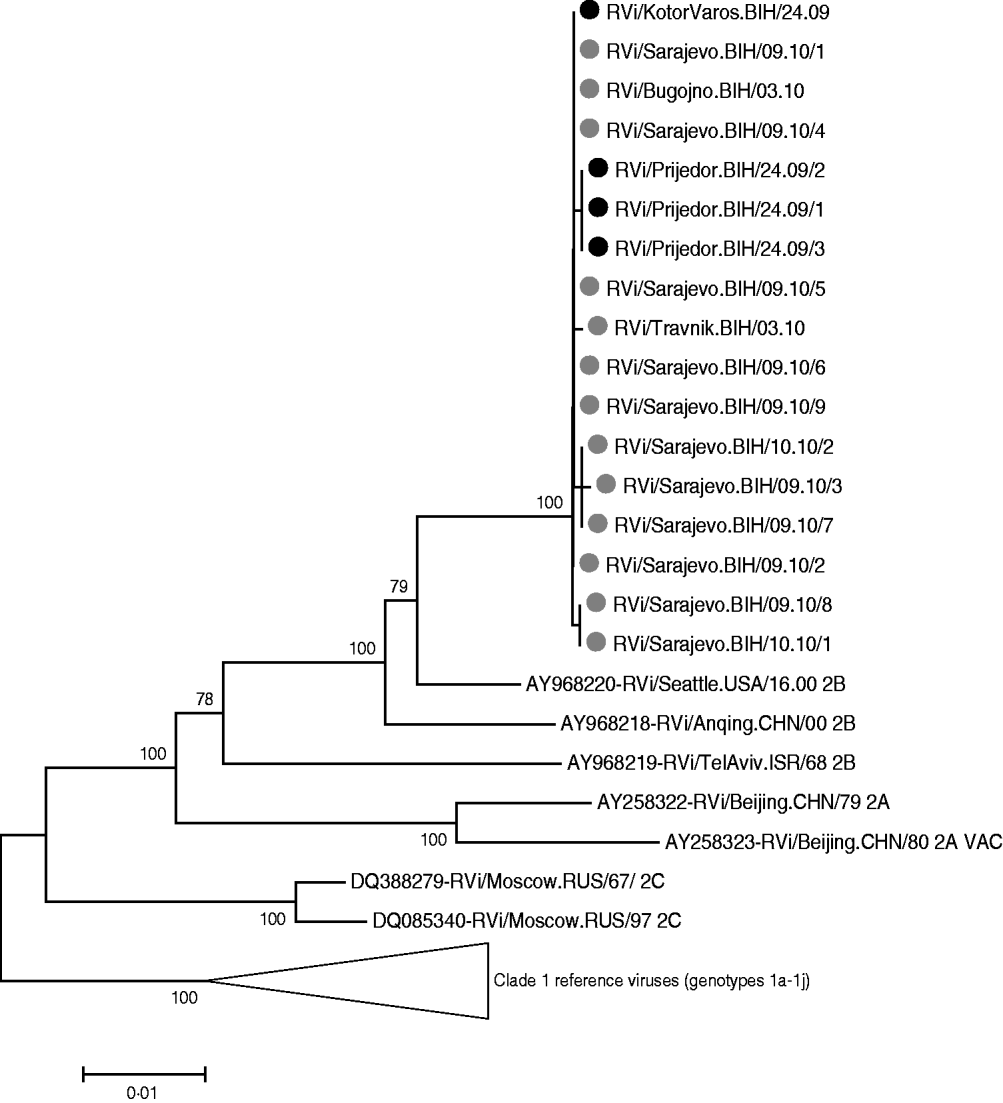
Phylogenetic analysis including the recommended set of reference viruses [9, 10] attributed the sequences to genotype 2B (Fig. 3). Five variants of genotype 2B sequences differing by up to three nucleotides in the E1 gene region were found. The major variant (n=7) was identical to RVi/KotorVaros.BIH/24.09 (Fig. 3), which was reported previously from the Republic of Srpska entity of B&H [Reference Novo11]. None of the variants from the present outbreak corresponded to the variant detected in Prijedor in the Republic of Srpska [Reference Novo11] (Fig. 3).
Phylogenetic tree based on the rubella virus E1 gene and the Neighbor-Joining and Kimura-2 parameter algorithms. Only bootstrap values above 70 are shown. Sequences from the outbreak in the Republic of Srpska are indicated by black dots (•), sequences from the outbreak in the Federation of Bosnia and Herzegovina are indicated by grey dots (
 ).
).
DISCUSSION
During the recent rubella outbreak, two interesting observations were made: (1) the geographical distribution of registered cases matched the areas in which people received only monovalent measles vaccine between 1992 and 1995 during the war; (2) the most affected age group was 15–19 years, which is the population that was just about to enter the rubella vaccination programme during the war. Thus, the current rubella outbreak is clearly the result of failure to vaccinate during wartime. This is supported by the fact that about half of the patients had never received a single dose of rubella vaccine and about 30% had unknown vaccination status. It is also possible that during the war the quality of vaccines suffered as a result of degrading infrastructure as about 20% of the patients reported to have received rubella vaccine, which normally has a 95% seroconversion rate [Reference Hübschen, Muller, Bope, Kellerman and Rakel12]. Recent data from a TORCH screening of 459 women showed that 14·8% had no specific immunity against rubella (M. Hukic et al., unpublished data), and are still at risk of infection. MMR vaccine coverage between 1998 and 2009 ranged from 80·70% (1999) to 96·20% (2007) for primary immunization and from 53·00% (2006) to 91·90% (2008) for the second dose (Fig. 4). Between 1999 and 2008 it was mainly children aged 0–12 months (230/382, 60·21%) and 2–5 years (88/382, 23·04%) that were affected by rubella [5], indicating that the younger age groups harbour enough susceptible individuals to sustain rubella transmission. A thorough seroprevalence study is warranted to assess the number of susceptibles in the different age groups. The fact that seven pregnant women were affected by the rubella outbreak clearly highlights the need to provide additional vaccination opportunities at least for women of childbearing age in order to prevent infection during pregnancy and CRS.
MMR vaccine coverage in the Federation of Bosnia and Herzegovina during 1998–2009.

In the present outbreak, males were much more affected than females. While the reason for this is not clear, similar observations were recently reported from Italy and Poland [Reference D'Agaro13, Reference Rogalska14]. Most of the patients (n=1125, 59·2%) registered during the outbreak were aged between 15 and 19 years, which was also the most-affected age group in a recent outbreak in Austria [Reference Kasper15], and those were the patients that should have received the vaccine during the war. Many young men born between 1991 and 1995 possibly received only monovalent vaccine against measles, as donations from UNICEF, and did not receive vaccine against rubella. It seems that the male population was much more affected by the degrading vaccination programme during the war period.
In our study, we found that only 45·76% of the suspected rubella patients tested positive for rubella-specific IgM, which is a surprisingly low percentage for an outbreak. Some samples may have been obtained in a very early phase of the disease before IgM antibodies became detectable. In addition, clinicians reported that several patients affected by the suspected rubella outbreak presented with atypical clinical symptoms including atypical rash. Therefore, 39 patients were also tested for measles IgM, but all were negative. We can not exclude that in particular some of the vaccinated patients may have had another rash/fever disease.
Sequencing and phylogenetic analysis identified 2B as the circulating rubella genotype. The same genotype was identified in the Republic of Srpska entity of B&H during the epidemic from March to July 2009 [Reference Novo11]. The major variant detected in the current outbreak was identical in the E1 gene sequence to an isolate obtained from Kotor Varoš in June 2009. Therefore it is possible that the 2B RV genotype was imported from the Republic of Srpska, especially as students originating from there attended the same school in Travnik as the first laboratory-confirmed case. While only two sequence variants differing by one nucleotide were detected in the outbreak in the Republic of Srpska [Reference Novo11], five variants differing by up to three nucleotides in the E1 gene region were identified in the outbreak in FB&H. This may be due to the higher number of sequences obtained (13 vs. 4), but may also indicate that the virus indeed circulated for a prolonged time period (about 1 year) in the region and during this time accumulated mutations.
In conclusion, FB&H faced a large outbreak of rubella due to failure to vaccinate during the war period between 1992 and 1995. As a considerable proportion of young adults, including women of childbearing age, remain susceptible to rubella, FB&H should offer additional vaccination opportunities to prevent infection during pregnancy and CRS.
ACKNOWLEDGEMENTS
The present study was financially supported by the Luxembourg Ministry of Foreign Affairs, the Laboratoire National de Santé and the Centre de Recherche Public-Santé, Luxembourg.
DECLARATION OF INTEREST
None.



