


The critically imperiled pine rocklands in south Florida are threatened by urban development, fire suppression, and invasive species. Neyraudia reynaudiana (burmareed) is an aggressive invader in these communities and requires frequent management. Currently, managers utilize a “cut–return–treat” (CRT) approach, in which crews cut stems to ground level and return several weeks later to treat regrowing foliage with glyphosate. This method requires multiple site visits and relies on a nonselective herbicide (glyphosate). In this study, we compared a one-visit “cut-stem” (CS) approach (in which stems are removed and the cut surfaces are immediately treated with herbicide) to the CRT method. We evaluated the efficacy of glyphosate as well as more selective herbicides (the graminicides sethoxydim and fluazifop-P-butyl, as well as triclopyr), and evaluated the ability to use basal oil as a carrier for the two graminicides.
In a pot study, CS treatments performed as well as CRT treatments on N. reynaudiana. By reducing the number of required site visits per N. reynaudiana stand, the CS method may allow managers to spend more time searching for new recruits. CS treatments were also effective at reducing growth of N. reynaudiana in the field for the duration of the experiment (1 yr), but mortality was low, and further research is required to optimize application rates. The graminicides provided control comparable to glyphosate in both the CS and CRT treatments, with fluazifop-P-butyl providing slightly better control than sethoxydim in CS treatments in the field. Triclopyr also reduced growth of N. reynaudiana in both the field and pot studies. The use of these selective herbicides may help limit collateral damage to native species using either management method. Basal oil was an effective carrier of sethoxydim and fluazifop-P-butyl, although its use did not enhance efficacy compared with using water.
Introduction
Pine rocklands are species-rich habitats unique to southern Florida (Jones and Koptur Reference Jones and Koptur2017; Possley et al. Reference Possley, Maschinski, Maguire and Guerra2014). These communities are characterized by an open canopy of Florida slash pine (Pinus elliottii Engelm. var. densa Little & Dorman) and a diverse understory of palms, shrubs, and herbaceous species (Jones and Koptur Reference Jones and Koptur2017; Williams et al. Reference Williams, Wang, Borchetta and Gaines2007). The combined pressures of human development and fire suppression have altered and reduced these rare ecosystems from ∼75,000 ha pre–European settlement to <10,000 ha today (Possley et al. Reference Possley, Maschinski, Maguire and Guerra2014; Williams et al. Reference Williams, Wang, Borchetta and Gaines2007). The majority of pine rockland habitat (∼8,000 ha) is confined to the Everglades National Park; remaining habitat is highly fragmented within urban areas, where it is threatened by fire suppression and the encroachment of invasive plant species (Jones and Koptur Reference Jones and Koptur2017; Possley et al. Reference Possley, Maschinski, Maguire and Guerra2014). A recent survey of pine rockland vegetation within Miami-Dade County determined that 19% of taxa were nonnative, and roughly half of these were considered invasive by the Florida Exotic Pest Plant Council (FLEPPC 2009; Possley et al. Reference Possley, Maschinski, Maguire and Guerra2014). These invasive species exclude native plant communities and may alter fire regimes (Platt and Gottschalk Reference Platt and Gottschalk2001; Wolcott et al. Reference Wolcott, O’Brien and Mordecai2007).
Burmareed [Neyraudia reynaudiana (Kunth) Keng ex Hitchc.] is native to subtropical regions of Southeast Asia; it is a tall woody graminoid (to 5 m) that can be easily mistaken for other large grasses (i.e., Phragmites spp.). The species was introduced to Coconut Grove, FL, in 1916 for ornamental evaluation by the U.S. Department of Agriculture (Gordon Reference Gordon1998; Gordon and Thomas Reference Gordon, Thomas, Simberloff, Schmitz and Brown1997; Langeland et al. Reference Langeland, Cherry, McCormick and Craddock Burks2008). It is known to be a prolific seeder and subsequently escaped cultivation. By 1993 it was documented in nearly 75% of pine rocklands within Miami-Dade County (Langeland et al. Reference Langeland, Cherry, McCormick and Craddock Burks2008; Maguire Reference Maguire1993). Neyraudia reynaudiana suppresses native plant growth due to its height, phalanx growth form, and ability to grow into monotypic stands (Langeland et al. Reference Langeland, Cherry, McCormick and Craddock Burks2008; Platt and Gottschalk Reference Platt and Gottschalk2001). It produces high levels of fine litter fuels that accelerate fire cycles, having a catastrophic effect on native species such as young Florida slash pine (P. elliottii var. densa) in pine rockland communities (Platt and Gottschalk Reference Platt and Gottschalk2001).
Large N. reynaudiana can be difficult to manage within pine rocklands when trying to prevent collateral damage to rare and endemic species. Managers currently integrate mechanical removal with herbicide applications to control this grass: crews cut the stems to ground level and return several weeks later when plants have regrown to approximately 50 cm in height to spot treat the foliage with glyphosate (a “cut–return–treat,” or CRT, approach) (Possley et al. Reference Possley, Duncan, Klein and Maguire2018). While effective, this method is labor-intensive due to multiple site visits; furthermore, there is a risk that management crews may miss plants on their return visit. There is also a risk of overspray with foliar treatments, which can potentially result in off-target effects on desirable species. A “cut-stem” (CS) method, in which stems are hand-cut and the cut surfaces are immediately treated with herbicide, has been used with success on another invasive cane grass species (common reed [Phragmites australis (Cav.) Trin. ex Steud.]) (Breen et al. Reference Breen, Bailey and Violi2014; Lombard et al. Reference Lombard, Tomassi and Ebersole2012). Breen et al. (Reference Breen, Bailey and Violi2014) found that the CS treatments were equally effective in controlling P. australis as typical foliar treatments. If also effective on N. reynaudiana, this method has the potential to reduce the number of necessary site visits per plant, allowing managers to spend more time searching for new recruits, while also minimizing off-target damage. In addition, although CS treatments typically use higher concentrations of herbicide than foliar treatments, they require a much lower volume of product and can potentially reduce chemical inputs into the ecosystem as well. Therefore, there is a need to evaluate the relative efficacy of CS treatments and current management strategies on N. reynaudiana stands in pine rocklands.
In addition, there is a need to evaluate selective products. Glyphosate is often used for management of N. reynaudiana in pine rocklands (Possley et al. Reference Possley, Duncan, Klein and Maguire2018), but due to its broad-spectrum nature, its use can result in off-target effects on other species. Using graminicides such as sethoxydim and fluazifop-P-butyl may greatly reduce collateral damage to native understory species in the vicinity. There is a need to evaluate the efficacy of these herbicides on N. reynaudiana. Foliar absorption of both sethoxydim and fluazifop-P-butyl is enhanced by the addition of oil-based adjuvants, but to our knowledge these products have not yet been evaluated with a basal oil carrier (Chandrasena and Sagar Reference Chandrasena and Sagar1986; Nalewaja and Skrzypczak Reference Nalewaja and Skrzypczak1986). Therefore, there is also an opportunity to evaluate oil-based carriers that may enhance efficacy of CS treatments using these herbicides.
Here, we compared the efficacy of the CS treatments to the current conventional CRT technique on N. reynaudiana grown in pots. We further evaluated CS treatments on well-established N. reynaudiana stands in the pine rocklands. We compared glyphosate with more selective herbicides (the graminicides sethoxydim and fluazifop-P-butyl, as well as triclopyr), and evaluated the ability to use basal oil as a carrier for the two graminicides.
Materials and Methods
Pot Study
A pot study was conducted at the nursery of Fairchild Tropical Botanic Garden in Coral Gables, FL, located at the Montgomery Botanical Center (25.6602°N, 80.28296°W). One hundred root crowns of N. reynaudiana were collected from Zoo Miami (Miami, FL) for use in the experiment. Canes were cut to a standard size (10 cm) and planted in 11.4-L pots filled with commercial potting soil (Sun Gro® Fafard® 3B Mix/Metro-Mix 830, Sun Gro Horticulture, 770 Silver Street, Agawam, MA 01001) and slow-release fertilizer (Osmocote® Classic 14-14-14, 4.84 g L−1, Scotts Company, 14111 Scottslawn Road, Marysville, OH 43041). Pots were watered daily. After 6 mo of growth, 84 pots were selected as experimental units and blocked (n = 7) based on total shoot length before herbicide application. Blocks were evenly, randomly divided for CS and CRT treatments.
Herbicide treatments for CS and CRT applications are displayed in Table 1. Stems of all plants were cut to 10 cm above the soil level using pruning shears on June 27, 2017. There were seven replicates per treatment. For CS treatments, the cut surfaces of stems were treated immediately with herbicide. Three carriers were evaluated with herbicide treatments; sethoxydim and fluazifop-P-butyl treatments were blended with either water or basal oil (Bark Oil Blue, Loveland Products, 3005 Rocky Mountain Avenue, Loveland, CO 80538), glyphosate treatments were diluted in water, and triclopyr ester was blended with a different basal oil (Impel Red, Helena Chemical, 225 Schilling Boulevard, Collierville, TN 38017). Approximately 1 ml of treatment solution was dribbled using minimal pressure onto each cut stem using a 1.5-L handheld pressurized sprayer with an adjustable cone nozzle. Although some herbicide ran down the sides of stems, full coverage of each cut surface was achieved.
Herbicide treatments from the pot and field studies.
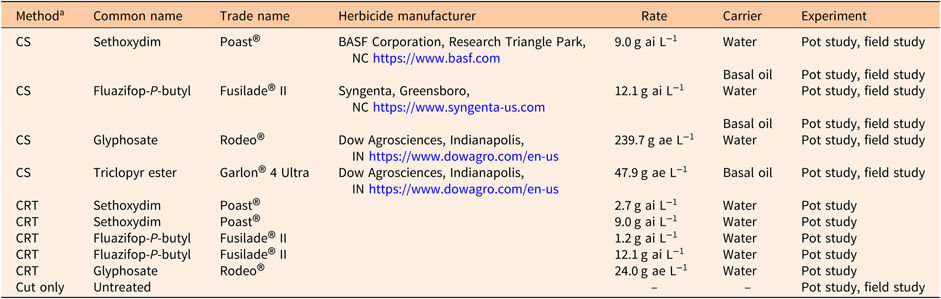
a CRT, cut–return–treat; CS, cut-stem.
For CRT treatments, plants were allowed to regrow for 1 mo to an average height of 17 cm before treatment on July 27, 2017. Total shoot length was recorded before treatment. Foliar applications were made using a pressurized backpack sprayer at an average rate of 863 L ha−1. All treatments included a methylated seed oil (MSO) adjuvant (MSO Concentrate with Leci-Tech, 1% v/v, Loveland Products). For the control treatment, stems were cut to pot level but were not treated with herbicide. The length of time required for treatment was recorded for each plant and used to calculate the volume of herbicide that was applied. The volume of applied herbicide was plotted against the total shoot length at the time of treatment for both CS and CRT treatments. The amount of herbicide applied per stem for CS treatments was not recorded for the pot study, but estimations were made using values from the field study where we applied an average of 0.76 ml per stem. Shoot length (cm), shoot number, and mortality (%) were recorded on October 23, 2017 (16 wk after cutting [WAC]). To determine aboveground biomass (g), shoots were harvested and dried at 65 C in a forced-air drying oven until a constant weight was reached.
Field Study
A field study was initiated at Zoo Miami in Miami, FL (25.611484°N, 80.398010°W), to further evaluate the CS treatments. There were two experimental runs, each with thirty-five 1-m2 plots: the first experimental run was established and treated on November 11, 2017, and the second was established and treated on December 8, 2017. Plots were blocked by total number of live canes. Canes were cut to 10 cm in height using pruning shears. Herbicide treatments (with five replicates each) were applied using the same CS methods as in the pot study and with the same combinations of herbicides and carriers (Table 1). The number and total length (cm) of all live shoots were recorded at 6 and 12 mo after treatment (MAT). Mortality (%) of plants and oven-dried aboveground biomass of live shoots were also recorded at 12 MAT.
Statistical Analysis
All pot and field experiments were conducted as randomized complete block designs. Mortality data were analyzed using binomial logistic regression via the glm function in R software (R Core Team 2018) using RStudio (RStudio Team 2016). Data for the volume of herbicide applied using CS and CRT methods were analyzed using linear regression. For all other measured parameters, relative growth reduction (RGR) was calculated using the values for the untreated controls:
 $${\rm{RGR}} = 100 \times {{{\rm{untreated\, plants}} - {\rm{treated\, plants}}} \over {{\rm{untreated\, plants}}}}$$
Percent reduction data were then analyzed using one-way ANOVA. Fisher’s LSD was conducted using the agricolae package (de Mendiburu Reference de Mendiburu2017) to determine mean separation at P < 0.05. Residuals were tested for assumptions of normality and homogeneity of variance, and logarithmic transformations were performed as necessary. For the field study, there was no run effect (P < 0.05), so data were pooled between experimental runs.
Results and Discussion
Pot Study
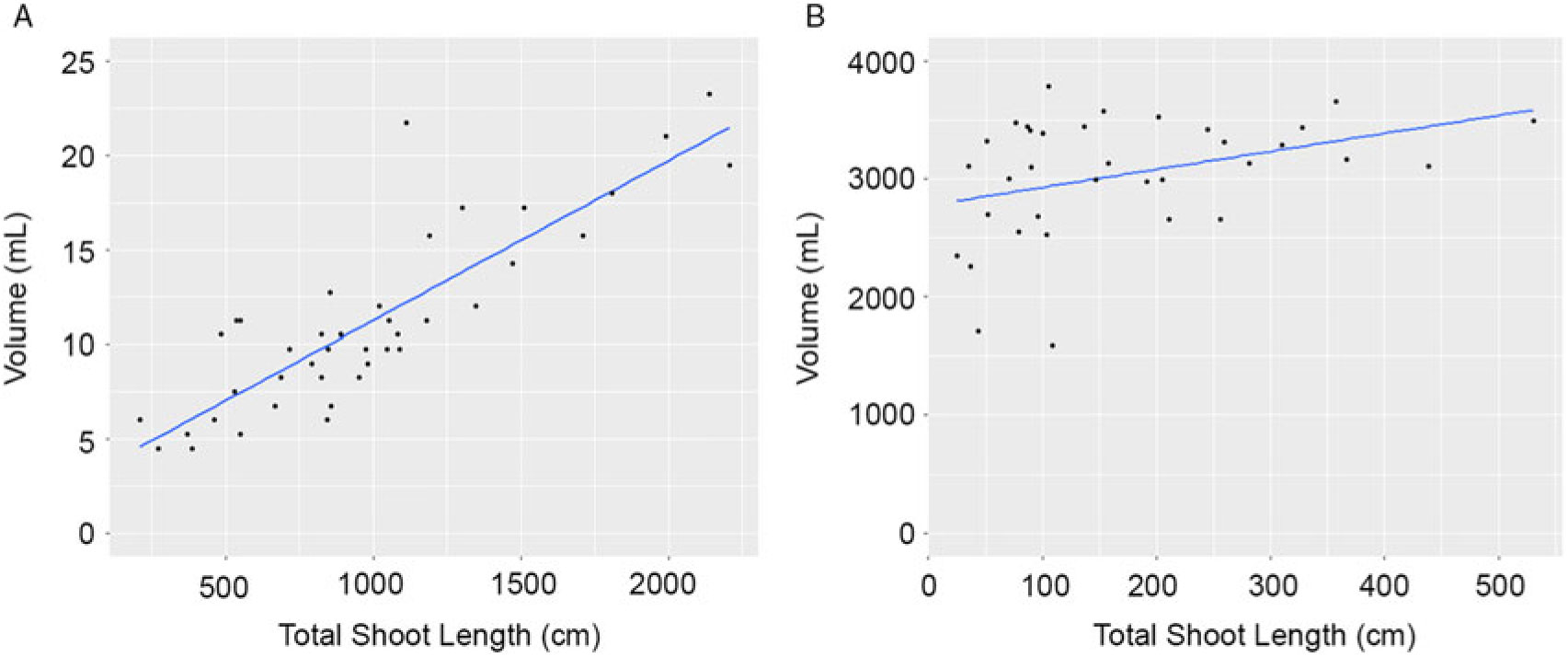
In the pot study, the volume of applied herbicide solution applied increased with total shoot length (Figure 1). This relationship was significant for both CRT (P = 0.03) and CS (P = 0.01) treatments. The volume applied per total shoot length was much higher for CRT compared with CS treatments (1,590 ml – 3,792 ml vs. 4.5 ml – 23 ml, respectively). This suggests that CS treatments have the potential to greatly reduce the volume of herbicide used in N. reynaudiana management. Further, nearly all CS treatments resulted in 100% mortality at 16 WAC (Table 2). Untreated controls had an average of 13.4 shoots, were 121 cm in height, and had an aboveground biomass of 98.3 g per pot; only sethoxydim in water did not result in 100% mortality or relative growth reductions compared with the untreated controls. However, the level of control provided by this treatment was still high (i.e., ≥85% mortality and reductions in growth), and was similar to other CS treatments. For sethoxydim and fluazifop, there were no differences between treatments using water or basal oil as carriers.
The volume of herbicide solution (ml) applied per Neyraudia reynaudiana plant plotted against total shoot length (cm) for (A) cut-stem (CS) treatments (y = 0.008x + 2.8; R2 = 0.73) and (B) cut–return–treat (CRT) treatments (y = 1.5x + 2,776.9; R2 = 0.14).
Relative growth reduction (RGR) (±SE) of shoot number, height, and aboveground biomass, as well as mortality of Neyraudia reynaudiana at 16 wk after cutting in the pot study. a
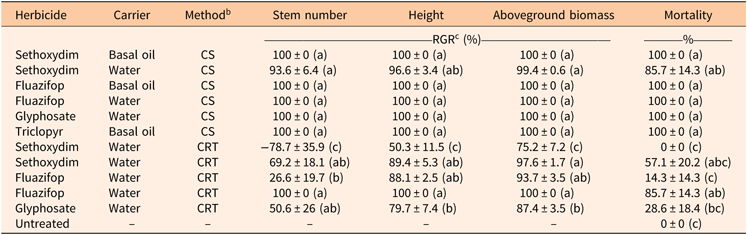
a Letters within a column indicate significance (P ≤ 0.05); values followed by different letters are significantly different.
b Plants were treated using either a cut-stem (CS) or cut–return–treat (CRT) method.
c
RGR was calculated using Equation 1: ${\rm{RGR}} = 100 \times {{{\rm{untreated\,plants}} - {\rm{treated\,plants}}} \over {{\rm{untreated\,plants}}}}$
.
${\rm{RGR}} = 100 \times {{{\rm{untreated\,plants}} - {\rm{treated\,plants}}} \over {{\rm{untreated\,plants}}}}$
.
Of the CRT treatments, only the highest application rate of fluazifop-P-butyl (12.1 g ai L−1) provided 100% reduction in growth characteristics and mortality ratings greater than 85% (Table 2). The lowest application rate of fluazifop-P-butyl (1.2 g ai L−1) resulted in low mortality and percent reductions in shoot number (14% ± 14% and 27% ± 20%, respectively), but relatively high reductions in height and aboveground biomass (≥90%). The CRT glyphosate treatment resulted in a reduction in shoot number similar to those of the CS treatments but lower percent reductions in height and aboveground biomass, as well as a mortality rating that was not different from those of the untreated controls. The highest CRT rate of sethoxydim (9.0 g ai L−1) resulted in values similar to those of the CS treatments across measured characteristics, although the lowest application rate (2.7 g ai L−1) provided less control and 0% mortality.
Results from the pot study suggest that CS treatments perform as well as CRT treatments at controlling N. reynaudiana, while also greatly reducing the required volume of chemical input. When compared with several CRT treatments, such as the lower application rates of sethoxydim and fluazifop-P-butyl, CS treatments resulted in better control in terms of mortality and reduction in growth. These results are consistent with previous research by Breen et al. (Reference Breen, Bailey and Violi2014), who found that CS treatments using imazapyr were equally effective compared with traditional foliar spraying in controlling P. australis. We did not evaluate imazapyr in this study due to concerns surrounding potential off-target damage; however, future research should also evaluate efficacy of imazapyr in CS treatments on N. reynaudiana.
Importantly, CRT treatments with fluazifop-P-butyl and sethoxydim provided control comparable to that of glyphosate, the current standard for N. reynaudiana management. Both fluazifop-P-butyl and sethoxydim are grass-specific herbicides; their ability to effectively control N. reynaudiana provides managers with more selective options than glyphosate, if they choose to use CRT treatments. The use of these products may reduce off-target effects on broadleaf understory species in the pine rocklands, including federally listed threatened and endangered species such as Blodgett’s silverbush [Argythamnia blodgettii (Torr.) Chapm.] and wedge sandmat [Chamaesyce deltoidea (Engelm. ex Chapm.) Small ssp. deltoidea] (Possley et al. Reference Possley, Duncan, Klein and Maguire2018; USFWS 1985, 2016).
Field Study
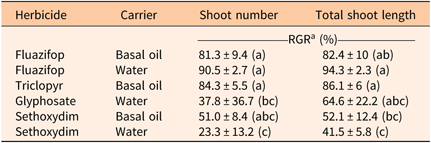
Given the success of CS treatments in the pot study, we evaluated these treatments in the field to test efficacy on naturalized N. reynaudiana. At 6 MAT, fluazifop-P-butyl (in basal oil or water) resulted in the greatest reductions (≥80%) in shoot number and total shoot length compared with the untreated controls (which had an average of 40 shoots and total shoot length of 263.5 cm) (Table 3). However, sethoxydim in basal oil resulted in a reduction in shoot number (51% ± 8.42%) similar those of these treatments, and glyphosate resulted in a similar reduction in the total shoot length (65% ± 22%). Sethoxydim in water resulted in the lowest reductions in shoot number and total shoot length (23% ± 13% and 41% ± 6%, respectively); these reductions were less than those caused by fluazifop-P-butyl and triclopyr, but not different from those caused by sethoxydim in basal oil or glyphosate.
Relative growth reduction (RGR) (±SE) of shoot number and total shoot length of Neyraudia reynaudiana at 6 mo after treatment using the cut-stem (CS) method in the field experiment.
a
RGR was calculated using Equation 1:
${\rm{RGR}} = 100 \times {{{\rm{untreated\,plants}} - {\rm{treated\,plants}}} \over {{\rm{untreated\,plants}}}}$
. Letters within a column indicate significance (P ≤ 0.05); values followed by different letters are significantly different.
At 12 MAT, all herbicide treatments resulted in high reductions (≥75%) in aboveground biomass compared with the untreated controls (which had an average aboveground biomass of 421.6 g m−2, 36.7 shoots, and total shoot length of 592.74 cm) (Table 4). Fluazifop-P-butyl (in water or oil), triclopyr, glyphosate, and sethoxydim in water resulted in similar reductions in aboveground biomass. Sethoxydim in basal oil produced lower reductions in aboveground biomass than fluazifop-P-butyl in water, but results were similar to those of all other treatments. Glyphosate and sethoxydim (in water or oil) resulted in an increase in shoot number compared with untreated controls (Table 4); this is a common symptom of sublethal herbicide applications. While fluazifop-P-butyl and triclopyr did decrease shoot number compared with untreated controls, percent reduction was relatively low (≤60%) across all treatments. Sethoxydim (in water or oil) resulted in the lowest reduction of total shoot length. Mortality was low across all treatments, and there were no differences between herbicides (Table 4).
Relative growth reduction (RGR) (±SE) of aboveground biomass, shoot number, and total shoot length of Neyraudia reynaudiana at 12 mo after treatment using the cut-stem (CS) method in the field experiment. a

a Letters within a column indicate significance (P ≤ 0.05); values followed by different letters are significantly different.
b
RGR was calculated using Equation 1:
${\rm{RGR}} = 100 \times {{{\rm{untreated\,plants}} - {\rm{treated\,plants}}} \over {{\rm{untreated\,plants}}}}$
.
Overall, few differences were found between herbicides or carriers in the field. Although the basal oil carriers did not significantly enhance graminicide activity in CS treatments, results indicate compatibility with sethoxydim and fluazifop-P-butyl. Further, evidence suggests that fluazifop-P-butyl may provide greater suppression of N. reynaudiana than sethoxydim, particularly when water is used as a carrier. Fluazifop-P-butyl also provided similar or better control than the standard glyphosate across all measured parameters; use of this product provides managers with a more selective tool for treating N. reynaudiana in pine rocklands.
CS treatments were more effective on N. reynaudiana in the pot study than in the field experiment, particularly when using sethoxydim. This may be due to the growing conditions in each experiment; plants grown under controlled conditions can exhibit increased sensitivity to herbicides due to environmental factors or reduced rhizome biomass caused by limited photosynthetic rates or pot confinement (Riemens et al. Reference Riemens, Dueck and Kempenaar2008; Spencer et al. Reference Spencer, Ksander, Tan, Liow and Whitehand2011). However, differences may also result from a seasonal effect, as plants were treated during the summer in the pot study and during the fall in the field. Research on other cane grasses, such as P. australis and giant reed (Arundo donax L.), has demonstrated that application timing can greatly affect management success (Mozdzer et al. Reference Mozdzer, Hutto, Clarke and Field2008; Spencer et al. Reference Spencer, Ksander, Tan, Liow and Whitehand2011). More research is needed to determine the optimum treatment time for N. reynaudiana using the CS method and to investigate higher application rates in the field.
Interestingly, triclopyr was highly effective on N. reynaudiana in both pot and field studies. Triclopyr is primarily used for broadleaf and woody species; its efficacy on monocots is generally low. However, it has been shown to have moderate phytotoxicity on barley (Hordeum vulgare L.), creeping bentgrass (Agrostis stolonifera L.), and kikuyugrass (Pennisetum clandestinum Hochst. ex Chiov.), and to suppress seedling development of certain grass species (Cudney et al. Reference Cudney, Downer, Gibeault, Henry and Reints1993; Dernoeden et al. Reference Dernoeden, Kaminski and Fu2008; Huffman and Jacoby Reference Huffman and Jacoby1984; Lewer and Owen Reference Lewer and Owen1990; Shaner Reference Shaner2014). Application rate is known to have an effect on selectivity of certain herbicides; e.g., glyphosate is a broad-spectrum herbicide, but at low use rates can exhibit selectivity toward more sensitive species (Kyser et al. Reference Kyser, Creech, Zhang and DiTomaso2012). The rate used in this study (47.9 g ae L−1) was high; further research should be considered to determine the limits of N. reynaudiana tolerance to triclopyr.
These results suggest that the CS application method may be an effective approach for controlling N. reynaudiana. The ability to use CS treatments instead of foliar CRT applications may reduce the effort needed to manage N. reynaudiana by minimizing the need for return visits and may lessen collateral injury to surrounding native species. Further, the CS method is a more measured technique than CRT, presenting an opportunity to reduce the volume of chemical inputs into pine rockland communities. This work also suggests that more selective herbicides, such as sethoxydim and fluazifop-P-butyl, may be effective alternatives to glyphosate. However, given low mortality rates in the field, further research is needed to evaluate optimal application rates and address the effects of application timing for CS treatments. In addition, future research should evaluate the relative off-target effects of CS and CRT applications on native species in the field.
Acknowledgments
Support for this project was provided in the form of labor and supplies from Miami-Dade County and Fairchild Botanic Garden. No conflicts of interest have been declared. We thank Jessica Little, Milo Vergara-Kniveton, Jake Aller, Emily Canner, Peter Vrotsos, Sharyn Ladner, Carol Farber, Amanda Freeland, and Jimmy Lange for their assistance with the pot study. We also thank Rasheed Bradley, Jose Prieto, Vince Miller, Yeitsi Gamboa, Sonya Thompson, and Joe Maguire for technical assistance with the field study. We further thank Frank Ridgley, Steven Whitfield, and Daniel Valle for their assistance with this research.



