

Introduction
We cried and laughed on reading this book and seeing this film. It should be read and seen by all children and their parents. By reading this book and seeing this film children will not question the war again. No one will question who fought and no one will ever give khota/scorn to birangonas. Along with children, their parents would read, their mothers would read and they would get to know about the war. All our stories are here in this book and I want this book to be in every school in Bangladesh so that all children know about us (discussion with rural birangonas and their children, 2020).
In May 2020, in a WhatsApp conversation across the United Kingdom (UK), rural Bangladesh and the capital city Dhaka, we are having a collective discussion about a graphic novelFootnote 1 and animation film that I co-authored and which the birangona (war heroine) chachis (the term I use, meaning ‘aunts’, to refer to the women, following the norms of fictive kinship of South Asia) have just read and watched. Birangona: Towards Ethical Testimonies of Sexual Violence during Conflict (Reference Mookherjee and KeyaMookherjee and Keya, 2019, 2020) draws on my book The Spectral Wound: Sexual Violence, Public Memories and the Bangladesh War of 1971 (Reference MookherjeeMookherjee, 2015). Sundori, Moyna’s youngest daughter whom I have known for the last two decades, is also joining us in the call from Dhaka and has been pivotal in getting the graphic novels delivered and ensuring the chachis have seen the film before it is finalised. They have all gathered in Moyna’s house and are sitting in the shade of a mango tree in the midst of the scorching May sunshine. Sundori is in her small apartment in Dhaka, which she shares with her husband who works in the garment factory, and her two children are also hovering around her as we catch up with their grandmother and her birangona friends in rural Bangladesh.
I am in the UK in the middle of lockdown, as are Sundori and her family in Dhaka. Hearing the birangonas’ response to the graphic novel and film, my heart leapt with joy, and I am particularly struck by the strength of their validation that everyone should know about the subject matter and their conviction that it should be taught in schools. This is a long way from the processes of public secrecy (Reference MookherjeeMookherjee, 2006) from two decades ago, through which they revealed to me fragments of their experiences of the war of 1971.
In December 1971, East Pakistan became the independent nation of Bangladesh after a nine-month war with West Pakistan and its local Bengali collaborators. Rape was common during this conflict. Faced with a huge population of rape survivors, the new Bangladeshi government in December 1971 – six days after the war ended – publicly designated any woman raped in the war as a birangona (meaning a brave or courageous woman); the Bangladeshi state uses the term to mean ‘war heroine’ (Reference MookherjeeMookherjee, 2015, Reference Mookherjee and Keya2019). Even today, the Bangladeshi government’s bold, public effort to refer to the women raped during 1971 as birangonas is internationally unprecedented, yet it remains unknown to many besides Bangladeshis.
The issue of rape during the war was widely reported in the press from December 1971 until mid-1973. Thereafter, it was relegated to oblivion in government and journalistic consciousness until it re-emerged in the 1990s. Since then, a large number of Bangladeshi feminist and human rights organisations have also been documenting the testimonies of birangonas, to bring to justice those Bengali men who collaborated with the Pakistani army in perpetrating the rapes and deaths in 1971. Hence, over the last nearly fifty years in Bangladesh, there has existed a public memory of wartime rape through various literary, visual (films, plays, photographs) and testimonial forms, ensuring that the raped woman endures as an iconic figure. My previous research (including the aforementioned graphic novel and animation film) ethnographically engaged with the public memories of sexual violence of the Bangladesh war of 1971 among survivors, their family members, human rights activists and state officials, and triangulated these findings with extensive archival, literary and visual representations.
The omnipresence of rape in various conflicts has made it imperative to ‘recover’ and document voices of survivors, these ‘untold stories’ of a ‘real past’, by means of oral history and testimonies, facilitated by feminists and human rights activists in their efforts to seek justice for these crimes. However, these experiences of wartime sexual violence are often explained through the limited lenses of silence, voice, shame, honour, gender, patriarchy, stigma, trauma and ostracisation, which help to create the figure of the horrific raped woman. In using this term ‘horrific raped woman’, I refer to the ways in which birangonas are assumed to have a horrific life trajectory, reflected in physical ‘evidence’ of muteness, dishevelled hair and social evidence of the notion that all women are ostracised by their communities and families.
The testimonial processes through which narratives of sexual violence are recorded call into question the role of external actors – those collecting testimonies – as peacebuilders in these contexts. These narratives, which suggest vulnerability, may in fact undermine the very resilience that characterises many of the women who were raped. A more generative resilience, which is the focus of this chapter, would honour a different narration of sexual violence – one that emphasises women’s abilities to continue to live with and pass on the experiences of sexual violence in ways that are uniquely relational. It is this contextualised and social-ecological understanding of resilience (Reference UngarUngar, 2011) that needs to inform adaptive peacebuilding, in order to foster a nuanced understanding of the effects and transmissions of the experiences of rape as a weapon of war.
Ideas of ‘resilience’ linked to the ‘voicing’ of the violent encounter of sexual violence are called into question through the dominant horrific figuration of the raped woman. In contrast, this chapter explores the idea of generative resilience, drawing from my ethnography and as represented in the visual motifs of the aforementioned graphic novel and animated film. Generative resilience allows us to highlight the violence that is embedded in different patterns of sociality, ‘the everyday sociality’ (Reference MookherjeeMookherjee, 2015: 108), through which birangonas have navigated their life trajectories. It also critiques the lenses, simultaneously both overly wide and limited, of concepts of silence, voice, shame, honour, gender, patriarchy, stigma, trauma and ostracisation through which sexual violence in conflict is commonly understood. The chapter additionally interrogates the ways in which graphic novels can be like ‘adaptive peacebuilders’, in the sense of ‘strengthening the resilience of social institutions, and investing in social cohesion and capacities that assist societies to self-sustain their peace processes’ (Reference de Coningde Coning, 2018: 317). This will allow us to reflect on the theorisations of long-term ‘transitional justice’ and reconciliation within historical and contemporary contexts. In the process, the chapter draws on my own work to interrogate the idea of ‘resilience’. It begins with a brief overview of the country’s transitional justice process.
Grihojuddho (The War at Home) and the War Crimes Tribunal in Bangladesh
In Bangladesh, a process of accountability was initiated in March 2009, nearly forty years after the war of 1971. Given the lack of acknowledgement of the killings and rapes committed by the Pakistani army, the Bangladeshi government announced that a national war crimes tribunal would be set up to try local collaborators and Pakistani military personnel. The tribunal was set up in 2009 by the current Awami League (AL) government (deemed to be left-liberal, secular) but was first constituted under the International Crimes Tribunals Act of 1973, formulated in Bangladesh and amended in 2009. The current Awami League government is headed by Sheikh Hasina, whose father – Sheikh Mujib – was the first prime minister of Bangladesh and was assassinated in 1975. In 2009, the government executed those who killed Sheikh Mujib. Only after successfully trying her father’s killers did Sheikh Hasina take steps to set up the tribunal from March 2010, a year after the initial announcement.
During the fifteen years of military rule (1975–1990) in Bangladesh, those who collaborated with the Pakistani army enjoyed political impunity and continued to hold positions of power. After nearly forty years of Bangladeshi independence, this national tribunal charged seventeen individuals. Of these, fourteen individuals were arrested and detained in prison, two were charged in absentia for their role during the Bangladesh war and six were ultimately executed. Many of these individuals were linked to the Jamaat-e-Islami party and the opposition Bangladesh National Party, and all were deemed to have collaborated with the Pakistani army in 1971 (Reference ShaonShaon, 2018). The Pakistani National Assembly inflamed the situation when, on 17 December 2003, it passed a resolution heralding one of the collaborators as a ‘friend of Pakistan’, condemning his execution and warning Bangladesh against ‘resurrecting 1971’. This, in turn, has led to fresh demands for Pakistani army personnel to stand trial for crimes perpetrated in 1971.
Transitional justice is fundamentally about ‘dealing with’ the past, with the aim of enabling societies to move on. Bangladesh’s attempted juridical redress through the tribunal and its death penalties, however, is not only an attempt to seek accountability. It is also an attempt to keep the wounds of 1971 open, in the context of nearly fifty years of unacknowledged genocidal crimes by the Pakistani authorities and long-term impunity of collaborators and the Pakistani military. Paradoxically, thus, Bangladesh is undertaking processes of transitional justice in order to keep the past alive. The tribunal itself has faced extensive international criticism for its lack of transparency, flouting of the rule of law and its use of the death penalty.
Reconciliation is often assumed to be a natural framework and trajectory for a post-conflict society (United Nations [UN], 2004). Following South Africa’s Truth and Reconciliation Commission (TRC) (1996–1998), reconciliation has been a recurrent theme in debates about violent pasts, seeking ‘closure’ and ‘moving forward’. The idea of reconciliation has an inherent linearity of transitioning from authoritarian to liberal democratic structures as a solution, and moving forward at the cost of closing problematic debates about the past for those most affected (see Reference TurnerTurner, 2016, for a critical discussion of the concept). Reconciliation is thus meant to enable ‘renewal of applicable relations of persons who have been at variance’ (Reference GallimoreGallimore, 2008: 251) – and thereby return a measure of social resilience during a period of recovery and growth. The dialogical process of giving and hearing testimonies is also deemed to contribute to reconciliation, as in the case of the International Criminal Tribunal for Rwanda (ICTR) (Reference EltringhamEltringham, 2009, Reference Eltringham2019; Reference GallimoreGallimore, 2008).
Reconciliation is not an aim of the Bangladesh tribunal, and indeed the example of Bangladesh fundamentally problematises any assumed or posited relationship between ‘justice’ and reconciliation. First, the issues relating to the genocide in 1971 remain unresolved. They have not been addressed either by Pakistan or at the international level. Second, the country itself remains ‘at war’ within its borders. Highlighting this, the war crimes tribunal enjoys enormous support among Bangladeshis (many of whom also supported the execution of well-known collaborators of the war) and it has strengthened the government, while it has also opened ‘a can of worms’ based on unresolved issues from the past and Grihojuddho.
During my fieldwork, Bangladeshis would often ask ‘Peace for whom?’ ‘Reconciliation for whom?’ Ultimately, what the Bangladesh case illustrates is that peace and reconciliation can only be addressed after the process of justice has run its course. In the absence of these normative, post-conflict processes of reconciliation and peace – the limited frameworks of ‘transitional justice’ which Bangladesh has not adhered to – this chapter directs attention to the birangonas and to what they can bring to our understandings of transitional justice. For some of the birangonas themselves, the process of keeping the wounds of the past open has been important, and it is in this context that they transmit what this chapter calls generative resilience. In short, it is the horrific figure of the birangona, alongside the presence of the collaborator, that keeps alive the need to seek justice.
The Horrific Birangona
Doing my research in the late 1990s on the public memories of wartime rape during the Bangladesh war of 1971 (Reference MookherjeeMookherjee, 2015), I came across various personal accounts of war among a large number of people in cities, suburban towns and villages. These accounts would feature ‘knowing’ a woman who had been raped in 1971, ‘who lived next door’, ‘in the same road’, ‘in the neighbouring locality/village’. The woman in question would always be remembered through the bhoyonkor drishsho (horrific scene) marked by her ‘dishevelled hair’, ‘her loud laughter’ or her ‘quietness’, ‘muteness’; she was ‘the one who stares into space’ with ‘deadened-eyes’. These descriptions would often end with the phrase she ki bhoyonkor drishsho (what a horrific scene it was). Apart from encountering the raped women after the war, there would be various narrations about their whereabouts during the war and how long they were staying ‘away’ at an ‘uncle’s’ place afterwards, the latter signifying the possibility that they had become pregnant as a result of being raped during the war. Suspicion and speculation about the possibility of young and attractive women being raped in 1971 are rife in the rumours of the post-war whereabouts of these women.
These oft-cited post-war rumours and the formation of an idea of the birangona resonates powerfully with the famous oi chuler chobi (that hair photograph) of a war heroine, depicted by unkempt hair and a pair of bangle-clad fists covering a woman’s face (discussed at length in Reference MookherjeeMookherjee, 2015). Giving an interview about this photograph, the photographer Naibuddin Ahmed narrated that the image was smuggled out of Bangladesh and was first published in the Washington Post (Reference MasudMasud, 1998), which drew international attention to the events of the Bangladesh war. In April to May 2008, this photograph was chosen to be the last image to mark the end of a photographic exhibition in London, entitled ‘Bangladesh 1971’. This photograph of the war heroine is the visual trace of the raped woman of 1971. The caption of the photograph was: ‘One of the estimated 400,000 birangona, meaning “brave women”, who were raped during the war’.Footnote 2 The novelist Tahmima Anam (author of Golden Age from 2007), writing in The Guardian on 10 April 2008, described this photograph as ‘one of many haunting images that make up Bangladesh 1971’ (Reference AnamAnam, 2008).
The widespread use of rape and other forms of conflict-related sexual violence has made it imperative to ‘recover’ and document the voices of survivors as part of the pursuit of justice for these crimes. However, this redemptive and emancipatory aesthetics often ascribes a permanently raped and bhoyonkor (horrific) status to a war heroine, and hence fails to highlight how she has lived with the horror of wartime rape in independent Bangladesh. How does this universal desire for justice and the will to explain violence work to reproduce the very violence that feminists and human rights activists seek to condemn (Reference HanssenHanssen, 2000)? At what cost are these stories being re-narrated, and what is the nature of this justice? Reference SarkarSarkar (2006: 140), for example, notes that ‘[p]opular memory, has come to be increasingly important as an alternative, oppositional archive that allows access to “untold stories” of a “real past” that can presumably be tapped into by simply posing the right questions’. Reference DasDas (2006: 57), moreover, reflects:
It is often considered the task of historiography to break the silence that announces the zones of taboo. There is even something heroic in the image of empowering women to speak and to give voice to the voiceless. I have myself found this a very complicated task, for when we use such imagery as breaking the silence we may end up using our capacity to “unearth” hidden facts as a weapon.
Images of the birangona are also complemented in contemporary Bangladesh by various testimonies of wartime rape by the women survivors themselves. Mosammad Rohima Nesa, Kajoli Khatoon, Moyna Karim and Rashida Khatoon,Footnote 3 like many other women, were raped by West Pakistani soldiers in their homes during the Bangladeshi liberation war of 1971. When attempting to narrate their experiences of 1971 in the 1990s, they would say to me ‘Ha, amader mela itihash, chorom itihash ache’ (Yes, we have a lot of history, a severe history). They would refer to the ‘poison’ of the 1971 ‘history’ that they carry, the ‘spillages’ and ‘excesses’ of their experiences from the 1970s to the 1990s.
These four poor, landless women have lived since 1971 with their husbands and children in villages (Enayetpur [anonymised] and its neighbour) in a western district in Bangladesh where I spent eight months of my year-long multi-sited fieldwork. During this fieldwork, whenever I would return to Dhaka from Enayetpur, people – activists from non-governmental organisations (NGOs), human rights lawyers, intellectuals, writers, journalists, academics, feminists who knew about my research – would invariably ask the following questions about the war heroines: Are they married? Do they have a family, children, kutumb? Did their husbands know of the incident of rape? My answer to these questions would amaze them: the poor, rural and illiterate women continue to be married to their landless husbands with whom they were married even before 1971, in spite of the rape. These frequently occurring, repetitive questions point to a sedimented imaginary of the war heroine among the activist community. Just as the image in the hair photograph gives an idea of the birangona as ‘abnormal’, various literary and visual representations have contributed to the perception that the war heroine’s kin networks have abandoned her and her family has not accepted her as a result of the rape.
The phrase of the Enayetpur women with whom I worked – ‘a lot of history, a severe history’ – further resonates with Shiromoni Bhaskar’s representation and articulation of her own experience of the Bangladesh war of 1971. In 1998, Shiromoni, a famous Bangladeshi artist, acknowledged publicly that she had been raped during the war by Pakistani officials and Bengali collaborators. As a raped woman from a middle-class background, her testimonies and photographs have been central to various national commemoration programmes marking 1971. As a middle-class birangona, Shiromoni dismantled the prevalent stereotype that all birangonas are ashamed and invisible as a result of their rape.
This public memory contradicts the prevalent assumption that there is silence regarding wartime rape. It is incorrectly assumed by many that, since Bangladesh is a ‘Muslim’ country, the traditions and practices of Islam – and its assumed association with ideologies of gender, patriarchy, honour and shame – ensure the preservation of silence about wartime rape (see, e.g., Reference BrownmillerBrownmiller, 1975, Reference Brownmiller and Stiglmayer1994). My ethnography highlights the various socio-economic dynamics within which the ideologies of gender, honour and shame are practised among the birangonas. It shows that the public memory of wartime rape manifests in Bangladesh in three ways: first, the state category that designates the raped women as birangonas; second, an extensive archive of visual and literary representations dating back to 1971; and, third, human rights testimonies of poor and middle-class birangonas since the 1990s.
To date, around 100 war heroines have publicly acknowledged their history of rape during 1971, including the earlier-mentioned four women from western Bangladesh whose testimonies and photographs have been part of a number of national commemorative programmes. These testimonies started being collected by the Bangladeshi left-liberal activist community in the 1990s as evidence of injustices and what many would consider as genocidal actsFootnote 4 committed through the rapes and killings of 1971.
Within human rights narratives, there is a predetermined focus on documenting and presenting the birangonas’ account as only a horrific one. Inadequate attention is given to the ways in which the war heroines themselves want to articulate their experiences, not only of 1971 but also of the trajectory of their subsequent post-conflict lives. Focusing on the post-conflict lives of these women not only gives us an in-depth account of the impact of wartime rape but also highlights the complex ways in which women and their families have dealt with the violence of rape over time. By giving due emphasis to the concerns of birangonas, one can also attempt to ethically document and care for the informants whose violent narratives and experiences are possible evidence of the occurrence of genocide in 1971.
If we open up questions about the complex realities of experiences of wartime rape among the women and their families, we could locate their accounts within a wider local politics and the political economy of their post-war appropriation in the public sphere of Bangladesh. These testimonial cultures (Reference Ahmed and StaceyAhmed and Stacey, 2001) of state and civil society, as multi-systemic factors and processes, have exacerbated the process for war heroines of living with their experience of sexual violence through the reiteration of a horrific image. As a result, representational politics and choices become central to identifying how resilience needs to be understood for the birangonas. This is where we turn to generative resilience to identify the ‘socialities of violence’ (thereby avoiding the empty global signifier of ‘trauma’) for the birangonas.
Generative Resilience and Graphic Ethnography
In instances of violent events particularly related to sexual violence, it is often assumed that memories of atrocities are shrouded in silence. Memory-making thereby becomes the resistive process through which these untold stories can be brought to the surface and a suppressed, even subaltern account can be made part of history. These processes are synonymous with resilience, understood as strategies to overcome adversity and cope in the best possible ways given the cultural and contextual constraints facing the birangonas. Memory-making as resistance can occur through interviews and oral history projects. The accounts arising from these methods are then made part of objects, which are seen to represent these memories. For example, intergenerational family memories, Holocaust and World War II memories can be transmitted orally through stories and interviews. They can also be located in language, bodily practices and rituals. These accounts can additionally be represented through various material and external memories, including as objects of memory like the poppy. Photographs, films and literature – as well as structures and organisations such as memorials, museums and archives – can come to represent and/or exhibit different aspects of these memories. The processes of preserving memories, whether through remembering, silences, forgettings, contestations, reconciliation or redress, also highlight the objective of this memory-making. Finally, processes of memory-making seek to establish the relationship between meaning and identity as expressed, claimed and contested through representation of the past in voice and text.
What is the role of visuality in this memory-making process? Does a visually rich object, like a graphic ethnography, enable stronger memorialisations, particularly when the memories of violent pasts are in question? I explore the graphic novel in representing the memory of sexual violence perpetrated during the Bangladesh war of 1971 as a form of transmission and circulation of vicarious memory across generations when memory is not experienced personally by Labonno, the girl in the graphic novel. This leads to what I refer to as generative resilience.
The graphic novel and film that I co-authored emerged from the development of guidelines drawn from the ethnography of The Spectral Wound, which shows how adaptive peacebuilding can be a flawed process without adequate consideration being given to the ethical dilemmas that accompany such peacebuilding efforts. In the text, Labonno/Labony needs to do a school project on family memories of 1971, the Bangladesh War. When coming to ask her grandmother, she wakes the latter from one of her frequent nightmares. What follows is her grandmother’s (Nanu/Rehana) narration of the history of birangona. Her mother, Hena, also tells her of the Oral History Project through which they tried to collect testimonies. This leads them to talk about the various points that need to be covered in the development of ethical guidelines to record testimonies of sexual violence during conflict. Hidden in these discussions of the guidelines, Labonno discovers an intricate secret family history. This family history is that of the grandmother Rehana (affectionately referred to as Nanu by Labony), who is also a birangona. She narrates her story (see Figure 6.1).
I was visiting my uncle’s house in a village in Pabna during the war and got captured by the Pakistani army. I was in a camp for three months and got raped by the army. We became free after a group of Liberation Fighters stormed the camp and set us free near the end of the war. I have erased the memories of those three months as I don’t feel well when I remember them. A liberation fighter wanted to marry me after the war but I did not want to marry.
A year later I met your grandfather and we got married. He was away in Kolkata during the war and cried on hearing my story. He would say: “Rehana, would my love make you forget those horrible days?” But your grandfather’s family used to scorn me and so we left it. Hence we did not get a share of your great grandfather’s property. Remember Hena said all forms of stigma have an economic reason. After your grandfather’s sudden death after the war I was heartbroken. But my government job gave me a lot of strength and I could bring up Hena alone.
The government rehabilitation centre that Rehana talks about reminds us of the extensive programme set up by the Bangladeshi government to address the concerns of the birangonas in the newly formed nation. Abortions were performed and adoptive families in western countries were found for children born of rape. The rehabilitation centre also tried to marry off the women and gave them jobs – the two aspects that I will discuss here in my understanding of generative resilience. In 1972, the head of the state, Sheikh Mujib, announced: ‘The raped women are my mother, sister and daughter and many of you will have to marry. I shall arrange for such a marriage’ (Banglar Bani, 1972a).
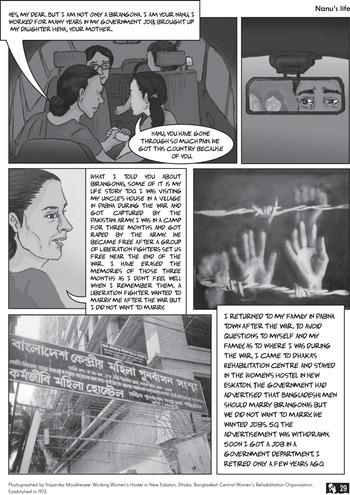
Figure 6.1 Generative resilience – Nanu/Rehana’s story
Following this announcement, newspapers carried images of these marriages, which were deemed to be an ‘inspirational example and noble character’, to exhibit ‘unprecedented patriotism and magnanimity’ on the part of youths (as the future of the young nation) and to ‘enable society to move towards progress’ (Banglar Bani, 1972a). While 9,000 applications were received for these marriages, newspapers also reported that men were seeking 18,000 taka (equivalent to 180 British Sterling) as dowry to marry the birangonas. However, the Rehabilitation Board clarified that ‘any individual who is seeking to marry birangonas in the hope of receiving dowries in the form of red Japanese cars, houses, publication of unpublished poems, permits or license is the last person to whom the war-heroines should be married. The opportunities for the war-heroines are not a dowry of money, houses, cars, jobs. Instead, they constitute of education and specific training opportunities’ (Banglar Bani, 1972b; Reference BrownmillerBrownmiller, 1975: 83; Purbodesh, 1972).
With birangonas also exhibiting disinterest in marriage (Doinik Bangla, 1972), the Rehabilitation Board wrote in newspapers to ask prospective grooms to stop making enquiries. In negating the demands for dowry, the rehabilitation centre was reminding prospective grooms that they were getting educated and vocationally trained wives. However, the refusal of birangonas to marry following the dictates of the state point to the failure of the marrying-off processes, through which the state was hoping to dictate rules of conjugality and choice of partner based on patriotism. Outside the purview of the state, there were also various practices of practical kinship among communities. As previously noted, most of the women I worked with were still with their husbands after being raped. This precisely exhibits the prevalence of practical kinships and contingencies within families, which absorbed raped women. It was, therefore, often the family system’s resilience which created the sustaining relations and social security required for acceptance, even in the absence of community recognition for the plight of the birangonas.
Rehabilitation in all its many forms not only created a framework of legitimacy for the state but also ensured that the birangonas could make claims on the newly formed government. Birangonas who were reluctant to get married instead demanded jobs from the state as part of their rehabilitation. Hosneara’s unwillingness to take help from her family, instead demanding a job and help from the state (Reference Akhtar, Begum, Hossein, Kamal and GuhathakurtaAkhtar et al., 2001), shows that birangonas were not passive recipients of state policy or satisfied with being sheltered by their families. Rather, they were actively involved in the idea of state responsibility and were thereby defining the framework for citizenship and what social resilience would look like. This compelled the government ‘to reserve 10% vacancies for affected women in all government, semi-government, autonomous and semi-autonomous organization’ (People, 1972), a strategy that seems to have improved these women’s ability to cope despite their adversity.
The Rehabilitation Board (see Figure 6.2) thus became an important launching pad to provide ‘self-sufficiency and independence’ to women who constituted one-fourth of the population (Observer, 1972). Literate women gained training in ‘useful professions’ like secretarial work, nursing, family planning, midwifery, teaching, stenography, accounts and office management. In 1972, some of these women became the lady village workers who promoted family planning techniques. This also laid the foundation for the ‘NGO-isation’ of women’s health (Reference MookherjeeMookherjee, 2007) in Bangladesh, which continues to this day. Illiterate women were given vocational training in handicrafts, like tailoring, embroidery, weaving, pottery, clay modelling, jute and leather crafts, printing, embroidery, rice husking, spice-making, making various food products, cooking lunch for offices and poultry raising. Shops called Komolkoli and Unmesh (awakening) were set up through which these handicrafts and items could be sold. The various photographs of women engaged in different vocational trainings were testimony to the Rehabilitation Board’s aim of emancipating women. As a result, newspapers were full of photographs of rehabilitated women, and these were juxtaposed to the aforementioned horrific Naibuddin Ahmed image of the raped woman with hair over her face. The horrific wound had been dealt with; it had been rehabilitated into legitimate mothers, productive, classed workers for the new nation.

Figure 6.2 Generative resilience – rehabilitation and the women’s movement in Bangladesh
Large numbers of women were absorbed into various government departments and continued to work in them until they retired. In the early days of my research, one of the feminist organisations that was conducting an oral history project suggested that I should meet some officials working in specific government departments. Arriving for my scheduled appointment, I was informed that the Director was double-booked and that I should talk to her deputy, Shireen Ahmed (also depicted in the graphic novel/film; Reference Mookherjee and KeyaMookherjee, 2019: 10). On being asked whether there are any government documents related to the rehabilitation programme, Shireen sharply admonished me and said: ‘What will you do with these documents? These are such painful events – you think you can find them in documents, that too in government documents,’ suggesting that government documents would misrepresent the experiences of war heroines. I did not know what to say as I did not know who this woman was. She continued and talked about the oral history project conducted by the feminist organisation: ‘They came and talked to me and every day after talking to them I would go home and just sit with the Koran Sharif and pray for hours. That is all I can do. My current husband keeps on asking me why I am doing my prayers for so long’.
Shireen continued to narrate that during the war, she was pregnant. She was newly married that year. She added that her husband was good looking and they really loved each other. One day the army came to her home when her husband, a liberation fighter, had come home to visit her. Before he opened the door of the house, he asked her to flee as she was pregnant. She stayed behind a wall and saw the army beat him up, bayonet him. They also found her hiding. At this point, she fidgets with the paperweight on her table of files and papers. She continues:
After the war I got this job and later I married my cousin and you know what the pain is? I cannot mention my first husband to my second husband as he considers that as a betrayal. But he knows I love my first husband more and he cannot stand it. He knows I remember him when I am praying and that is why he asks me why I am spending so much time with Koran Sharif. Now that I have told you all these things I want to pray again.
Shireen’s spontaneous outburst had left me completely dumbstruck. She then went to her filing cabinet and got out a document which she photocopied for me. She said that there are many women like her who have sought refuge and spent their lives in these government jobs. Shireen’s story parallels Nanu’s story in the graphic novel. The newly formed Bangladeshi government attempted to re-member birangonas into families, marriages and the labour market through the rehabilitation project. The professionalisation of family planning and social work engendered through the rehabilitation programme allowed many middle-class women to restructure their lives outside the paradigms of marriage but within the cultural norms of femininity. The entire process of the rehabilitation programme is thereby rooted in what Spivak referred to (Reference MookherjeeMookherjee, 2012: 212) as ‘reproductive heteronormativity – the para-reasonable assumption that producing children by male-female coupling gives meaning to any life’, and its re-centring in post wartime Bangladesh. Truly, reproductive heteronormativity is ‘a tacit globaliser’ (Reference MookherjeeMookherjee, 2012: 212) within which war and rape belong.
The varied programmes of rehabilitation aimed at providing women with jobs bring out the class dimension linked with access to literacy, as well as a certain urban/rural divide. Where each woman is also indicates her broad social position outside the rehabilitation programme. The rehabilitation programme thereby intrinsically hinged on reproductive heteronormativity and governmentality, which reallocated women in their class locations. The juxtaposition of the call for rehabilitation with the images of the rehabilitated women and the Naibuddin Ahmed photograph of the raped woman with her face covered with hair highlights the therapeutic, reformist, parental and modernist basis of the rehabilitation project. The raped woman as the wound can only be brought back into the new nation through the rehabilitation programme and the ‘clean’ images of those rehabilitated. The reformist and modernist agenda of the rehabilitation programme in fact pathologises birangonas and aims to expunge them of their ills. A more resilience-promoting strategy narrates their stories to prevent future atrocities and support calls for justice.
Nanu’s story, captured through the graphic novel to Labony, is what I have referred to as generative resilience. It is also intersectional, as when she says: ‘But I am not only a birangona. I am your nanu, I worked for many years in my government job, brought up my daughter Hena, your mother.’ The role of the government in providing jobs and a pathway to self-sufficiency for the birangonas is well exhibited through Nanu’s narrative. It also shows how the exercise of stigma towards Nanu has an intrinsic socio-economic basis. Hence, the socialities of violence that she has lived with are based on how she is excluded from property rights by her in-laws, who stigmatise her for her experience of sexual violence. The systemic aspects of resilience are intertwined with these economic factors, which get articulated through the rhetoric of stigma and shame.
We also find that the generative resilience imparted to Labony by Nanu draws on the energy and strength derived from social movements, international tribunals and protagonist figures who have experienced sexual violence during wars. Hence, Nanu narrates:
Yes, in 1992 when the three women from Kushtia were testifying, I was scared and thrilled and wanted to say aloud that I am a birangona, but kept quiet. I was nearly fainting there. The women’s movement in Bangladesh has waged a huge campaign to bring these debates to the forefront.
Yes and when Ferdousy Priyobhashini told her story of 1971, I felt so proud and strong but I acknowledged it quietly inside me. Soon many more of us were openly saying I am a birangona.
In 2000, Ferdousy Apa also spoke at the Tokyo Tribunal and she met a ninety-year-old Korean comfort woman and they held hands and said: ‘You, me, we are the same, our pain is the same.’ The birangonas who testified in 1992 suffered a lot as the testimonial process was another violation for them. In August 2018, they launched an ethical guideline meant for all those who are working with birangonas.
The graphic ethnography allows us to capture the emotions and to visibilise this generative resilience through the moment when Labony realises in the car that her grandmother is a birangona. The image of the tears of all the individuals in the car and the clasped hands allow the ethnography to be communicated without any text. In the last page of the graphic novel, when the family visits the Meherpur war memorial, this generative resilience comes together through the role of memorials, family acknowledgement of this history and pedagogy when Nanu says:
Labony, your generation has to bring out the stories of losses of men, women, birangonas and war babies which is not known. You have to make space for them to either speak (if they wish to) or keep quiet. Survivors need that space of safety, trust and empathy. Your generation has to implement these guidelines and ethically record testimonies of sexual violence when needed. Labony responds and says, I will tell everyone in school – my friends and teachers – about these guidelines. I am so proud to have you as my Nanu, Ammu and Abbu.
Hence, rather than thinking of gender and patriarchy as systemic, we need to reconceptualise resilience as generative. It not only allows us to show how memories are transmitted intergenerationally. It also highlights how, within the realms of patriarchy and nationalism, other demands can be made on it so that resilence – and its systemic mechanisms – is reconfigured in the process.
Conclusion
‘Bangladesh is not a conflict’. This is what I was told in 2014 (Reference MookherjeeMookherjee, 2014) by the Special Representative of the UN Secretary-General at the Global Summit to End Sexual Violence in Conflict, at a time when the Bangladesh War Crimes Tribunal was underway. She said that the history of wartime rape during the Bangladesh war of 1971 could not be included in the summit, which took as its starting point the Bosnian war of 1992–1995. In effect, it was a summit without history, excluding all examples of sexual violence in conflict prior to 1992. It also excluded all instances of sexual violence perpetrated by soldiers from the United States and the UK.
While the summit wanted to end sexual violence in conflict, it did not attempt to end conflict as the first starting point, given the close connections that governments have with the arms and extractive industries. As evident in Kamari Clarke’s book Affective Justice (2019), the anti-impunity debate and the rhetoric around sexual violence in conflict are the new tools of global control and soft power today, aimed specifically at the African sub-continent. The structural adjustments proposed for various African countries by the World Bank and International Monetary Fund (Reference ClarkeClarke, 2019: 104) also included the ratification of the Rome Statute. This shows how law, while being a tool of social change, is also a renewed tool of historical subjection and structural injustice.
This volume places a strong emphasis on the concept of adaptive peacebuilding, as articulated by Reference de Coningde Coning (2018; see also Chapter 11). This chapter has shown that any process of peacebuilding, including adaptive peacebuilding, can be inherently flawed if ethical practices are not adhered to when recording testimonies of sexual violence. In particular, the reiteration of the horrific figure of the birangona has disallowed insights into the socialities of violence through which survivors of wartime sexual violence, their families and communities have continued to live with their encounters of wartime rape folded into their everyday. Moyna and the other birangonas with whom I started this chapter have continued to be reminded of their wartime experience by their embodied memory and objects within their environment. Moyna’s experience in the graphic novel (Reference Mookherjee and KeyaMookherjee and Keya, 2019) illustrates this experience:
Moyna Karim (anonymised) (a landless, rural woman):
During the war, she was raped by the Pakistani army in the courtyard of her own home. She was cutting fish when she was captured. Holding on to the wooden pole of her house, she thought I will give my life but not my honour. After the war, her husband took on the responsibility of cutting fish, and after her son got married this job was passed on to her daughter-in-law. Moyna hasn’t cut fish since the war. Holding on to the wooden pole of her house, she says that the pole is the witness to her event. Whenever she sees this pole, she clearly sees the events of that day. In 1992, Moyna gave witness against the war criminals at the People’s Court. Today, she is appealing to the government to give jobs to her sons and daughters.
The call of the birangonas to include the graphic novel in schools is the ultimate resonance of generative resilience as they want it to be studied and known – not only by children but also by their parents and teachers. This is even more significant given the frail health and ages of the birangonas. It is this assertion and validation that gets passed on, not only within their families but also in their communities and beyond. The concept of generative resilience emerging from my ethnography highlights that adaptive peacebuilding, while attempting to strengthen the resilience of social institutions, needs to disinvest from the idea of social cohesion. Instead, generative resilience shows us how survivors of wartime sexual violence negotiate their violent experiences through everyday socialities of violence. It is these infractions and their transmission through generative resilience that adaptive peacebuilding needs to focus on, because it is not possible to self-sustain one’s peace processes when past injustices remain unresolved.
The remit of this edited volume asks us, as contributing authors, to ‘think about resilience as a systemic process that brings about stability and sustainability, as well as individual well-being, and to examine how different systems interact with each other’. While this is laudable on one level, we need to hope that the need for resilience does not come to us. We hope not to have to face traumatic experiences, catastrophic events and be vulnerable to threat, injury and loss. I share Reference Evans and ReedEvans and Reed’s (2014: 4) concern in asking whether resilience is ‘a neo-liberal deceit that works by disempowering endangered populations of autonomous agency’, and whether its consequences ‘represent a profound assault on the human subject whose meaning and sole purpose is reduced to survivability’. Is resilience not calling for the optimising of the capacities of the individual and environment, such that we would only then have generative resilience to fall back on? The complexity-informed approach, reflected in de Coning’s adaptive peacebuilding, and its call for resilient capacities for self-organisation might not even leave us and the environment the resources with which to enable such self-mobilisation. The time has come to rethink our current over-reliance on resilience.


 Open access