


Approximately 5% of the British population is predominantly or exclusively gay or lesbian (Reference Johnson, Mercer and ErensJohnson et al, 2001). There has been much speculation but little evidence about the psychological well-being of the gay male, lesbian and bisexual population of Britain. Studies from North America, often based on community samples, suggest that gay men and lesbians are more vulnerable to anxiety, depression, deliberate self-harm and substance misuse than heterosexuals (Reference Hershberger and D'AugelliHershberger & D'Augelli, 1995; Reference Fergusson, Horwood and BeautraisFergusson et al, 1999; Reference Lock and SteinerLock & Steiner, 1999; Reference Cochran, Sullivan and MaysCochran et al, 2003). However, to date most studies have used convenience sampling, which will identify relatively small numbers of lesbians and gay men and risks skewing the sample because of response bias. Very few studies have addressed the psychological health of bisexual individuals. We have previously reported a national controlled cross-sectional survey of sexuality and psychological well-being in a UK-based population using a ‘snowball’ sampling technique (Reference King, McKeown and WarnerKing et al, 2003), which found that gay men and lesbians living in England and Wales were at moderately increased risk of mental disorder and deliberate self-harm compared with heterosexual men and women. We therefore set out to identify rates and possible predictors of mental disorder and deliberate self-harm in individuals who class themselves as exclusively gay or lesbian compared with those who regard themselves as bisexual, and to explore the utility of the gay/lesbian v. bisexual paradigm.
METHOD
Between September 2000 and July 2002 we undertook a cross-sectional survey of 2430 gay, lesbian, bisexual, transgendered and heterosexual people over the age of 16 years in England and Wales using ‘snowball’ sampling (Reference GilbertGilbert, 1993). The method of approaching first-wave participants was informed by a pilot study of snowballing technique among older gay men and lesbians (Reference Warner, Wright and BlanchardWarner et al, 2003). First-wave participants were recruited from a variety of sources by means of advertisements in the national, local and gay press, placing posters in public libraries, advertising on gay and lesbian websites and leaving postcards in gay venues. All participants were asked to help identify further recruits (second and subsequent snowball waves). The snowball method is described in detail elsewhere (Reference King, McKeown and WarnerKing et al, 2003). The inclusion factors for this study were being aged 16 years or over and living in England or Wales. Participants remained anonymous. Written informed consent was obtained prior to participation. This study had the approval of the local research ethics committee.
Each participant was asked to complete a computer-based questionnaire investigating a variety of health and social outcomes. The main outcome was assessment of mental health status using the revised Clinical Interview Schedule (CIS–R) with a case threshold of 11/12 (Reference Lewis, Pelosi and GloverLewis et al, 1988). The CIS–R assesses the presence and severity of somatic complaints associated with low mood or anxiety, fatigue, problems with memory and/or concentration, sleep disturbance, irritability, worry about physical health, depressed mood, depressive thoughts, non-healthrelated worry, generalised anxiety, phobic anxiety, panic attacks, compulsive behaviours and obsessional thoughts in the week prior to interview. Higher scores indicate greater morbidity. Respondents also completed the 12-item General Health Questionnaire (GHQ–12; Reference Goldberg and WilliamsGoldberg & Williams, 1988), a brief screening instrument with a maximum score of 12 and threshold of 3/4 for significant psychological distress, and the 12-item Short Form measure of quality of life (SF–12; Reference Ware, Kosinski and KellerWare et al, 1996), in which higher scores indicate poorer quality of life. We also asked about previous actual and considered deliberate self-harm, specifically ‘Have you ever thought seriously about harming or killing yourself?’ and ‘Have you ever actually harmed yourself (e.g. taking pills, cutting your wrists)?’ In addition we sought demographic details and lifestyle factors, including:
-
(a) home and social life: length of residence and details of cohabitees;
-
(b) use of illicit drugs and alcohol, including completion of the Alcohol Use Disorders Identification Test (AUDIT; Reference Barbor, de la Fuente and SaundersBarbor et al, 1989) (a score of over 8 indicates hazardous drinking);
-
(c) discrimination factors: experience of bullying, insults and attacks;
-
(d) health-related factors: HIV testing, contact with general practitioner and mental health professionals.
Participants were asked to complete a series of questions about their sexual orientation, practices, fantasy, emotional and social preference. For the purpose of analysis, we used participants' categorical definition of their sexuality (gay, lesbian or bisexual).
Statistics and analysis
Data were analysed using the Statistical Package for the Social Sciences version 10.0. With the exception of logistic regression, data on men and women were analysed separately. Univariate analyses were conducted using the chi-squared test for categorical data and unpaired t-tests for normally distributed, continuous data. Associations between binary dependent variables and possible predictors were investigated using logistic regression. Multivariable logistic regression with backward elimination (using the likelihood ratio χ2) was used to identify variables that were significantly independently associated with outcomes of interest. Variables with more than 10% missing data were not included, to preserve power. Variables used (dichotomised to yes/no unless otherwise stated) were gender (male, female); sexuality (gay/lesbian or bisexual); age (dichotomised above and below 40 years); employment status (employed, unemployed, retired, student); ethnicity (White, Black, Asian); marital status (never married, married at some point); number of children; living circumstances (alone or sharing); mother's awareness of sexuality; father's awareness of sexuality; conflict between sexuality and religion (none, some, considerable); nature of current relationship (none, living together, living apart); experience of recent personal attack; experience of recent damage to property; experience of being insulted in the past 5 years; experience of being insulted at school; experience of being bullied at school; use of drugs; HIV tested; and discussion with general practitioner of emotional problems. Initial models were fitted including all variables listed above. Non-significant variables were removed and the model refitted to estimate odds ratios with 95% confidence intervals.
RESULTS
Demographic findings
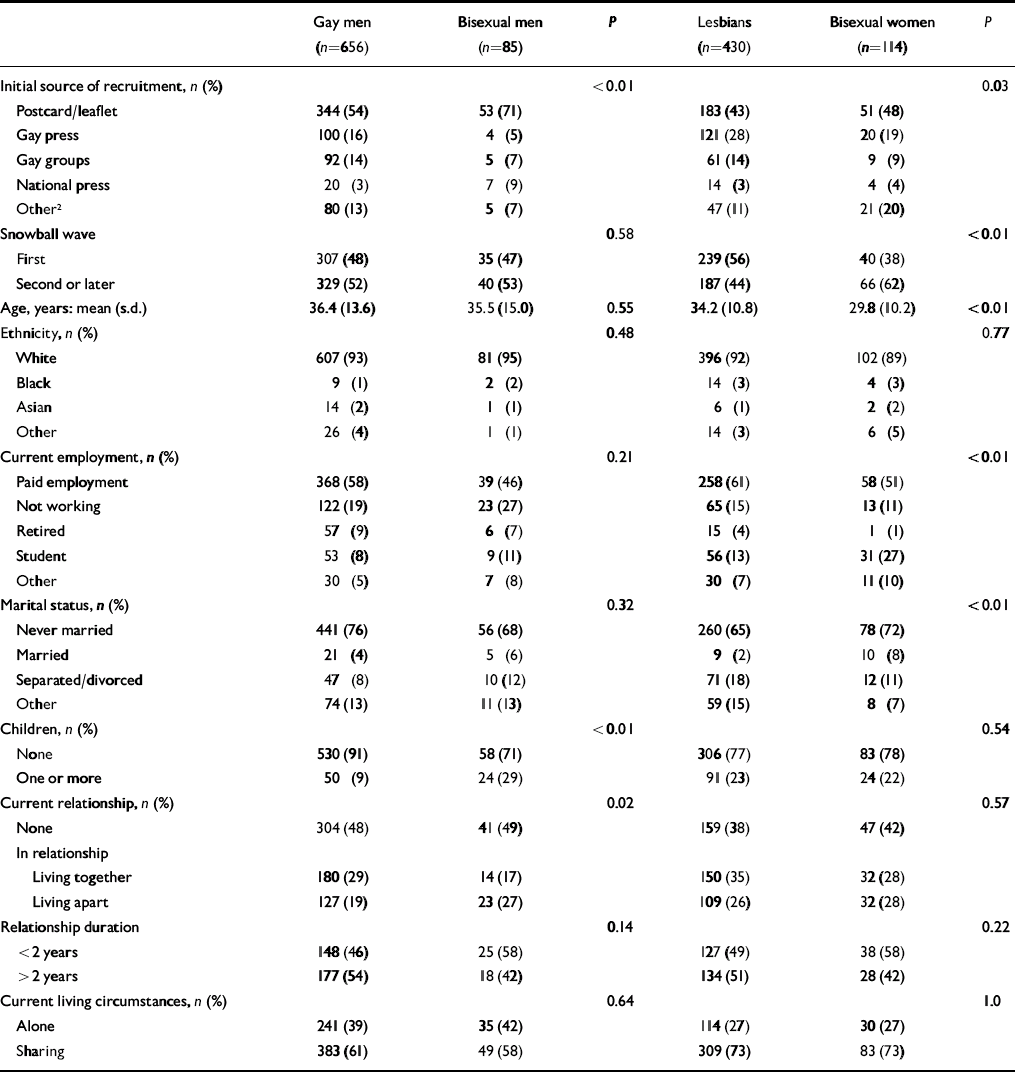
In total 741 men (656 gay, 85 bisexual) and 544 women (430 lesbian and 114 bisexual) took part in this survey. The results of the heterosexual sample (n=1093) have been reported by King et al (Reference King, McKeown and Warner2003). The results of 13 transgendered respondents are not reported because of the small sample size. Because there is no information about the size or characteristics of the denominator population from which the sample is drawn in surveys using snowball sampling, response rates cannot be reported. Demographic and recruitment details are provided in Table 1.
Recruitment and demographic details of study sample1
| Gay men (n=656) | Bisexual men (n=85) | P | Lesbians (n=430) | Bisexual women (n=114) | P | |
|---|---|---|---|---|---|---|
| Initial source of recruitment, n (%) | <0.01 | 0.03 | ||||
| Postcard/leaflet | 344 (54) | 53 (71) | 183 (43) | 51 (48) | ||
| Gay press | 100 (16) | 4 (5) | 121 (28) | 20 (19) | ||
| Gay groups | 92 (14) | 5 (7) | 61 (14) | 9 (9) | ||
| National press | 20 (3) | 7 (9) | 14 (3) | 4 (4) | ||
| Other2 | 80 (13) | 5 (7) | 47 (11) | 21 (20) | ||
| Snowball wave | 0.58 | <0.01 | ||||
| First | 307 (48) | 35 (47) | 239 (56) | 40 (38) | ||
| Second or later | 329 (52) | 40 (53) | 187 (44) | 66 (62) | ||
| Age, years: mean (s.d.) | 36.4 (13.6) | 35.5 (15.0) | 0.55 | 34.2 (10.8) | 29.8 (10.2) | <0.01 |
| Ethnicity, n (%) | 0.48 | 0.77 | ||||
| White | 607 (93) | 81 (95) | 396 (92) | 102 (89) | ||
| Black | 9 (1) | 2 (2) | 14 (3) | 4 (3) | ||
| Asian | 14 (2) | 1 (1) | 6 (1) | 2 (2) | ||
| Other | 26 (4) | 1 (1) | 14 (3) | 6 (5) | ||
| Current employment, n (%) | 0.21 | <0.01 | ||||
| Paid employment | 368 (58) | 39 (46) | 258 (61) | 58 (51) | ||
| Not working | 122 (19) | 23 (27) | 65 (15) | 13 (11) | ||
| Retired | 57 (9) | 6 (7) | 15 (4) | 1 (1) | ||
| Student | 53 (8) | 9 (11) | 56 (13) | 31 (27) | ||
| Other | 30 (5) | 7 (8) | 30 (7) | 11 (10) | ||
| Marital status, n (%) | 0.32 | <0.01 | ||||
| Never married | 441 (76) | 56 (68) | 260 (65) | 78 (72) | ||
| Married | 21 (4) | 5 (6) | 9 (2) | 10 (8) | ||
| Separated/divorced | 47 (8) | 10 (12) | 71 (18) | 12 (11) | ||
| Other | 74 (13) | 11 (13) | 59 (15) | 8 (7) | ||
| Children, n (%) | <0.01 | 0.54 | ||||
| None | 530 (91) | 58 (71) | 306 (77) | 83 (78) | ||
| One or more | 50 (9) | 24 (29) | 91 (23) | 24 (22) | ||
| Current relationship, n (%) | 0.02 | 0.57 | ||||
| None | 304 (48) | 41 (49) | 159 (38) | 47 (42) | ||
| In relationship | ||||||
| Living together | 180 (29) | 14 (17) | 150 (35) | 32 (28) | ||
| Living apart | 127 (19) | 23 (27) | 109 (26) | 32 (28) | ||
| Relationship duration | 0.14 | 0.22 | ||||
| <2 years | 148 (46) | 25 (58) | 127 (49) | 38 (58) | ||
| > 2 years | 177 (54) | 18 (42) | 134 (51) | 28 (42) | ||
| Current living circumstances, n (%) | 0.64 | 1.0 | ||||
| Alone | 241 (39) | 35 (42) | 114 (27) | 30 (27) | ||
| Sharing | 383 (61) | 49 (58) | 309 (73) | 83 (73) |
There was no significant difference between first-wave participants and subsequent ‘snowballed’ recruits in ethnicity, employment status, social class, marital status, number of children or caseness on GHQ–12 and CIS–R. First-wave male recruits were more likely to be older than snowballed participants (difference in mean ages 3.3 years, 95% CI 1.3–5.3). Compared with respondents over 40 years old, younger men were more likely to be open about their sexuality with their mothers (OR=2.3, 95% CI 1.6–3.2) and fathers (OR=2.1, 95% CI 1.5–2.9). Younger and older men were equally likely to be open with siblings and work colleagues. No age difference in these factors was apparent among female respondents.
Validity of definition of sexuality
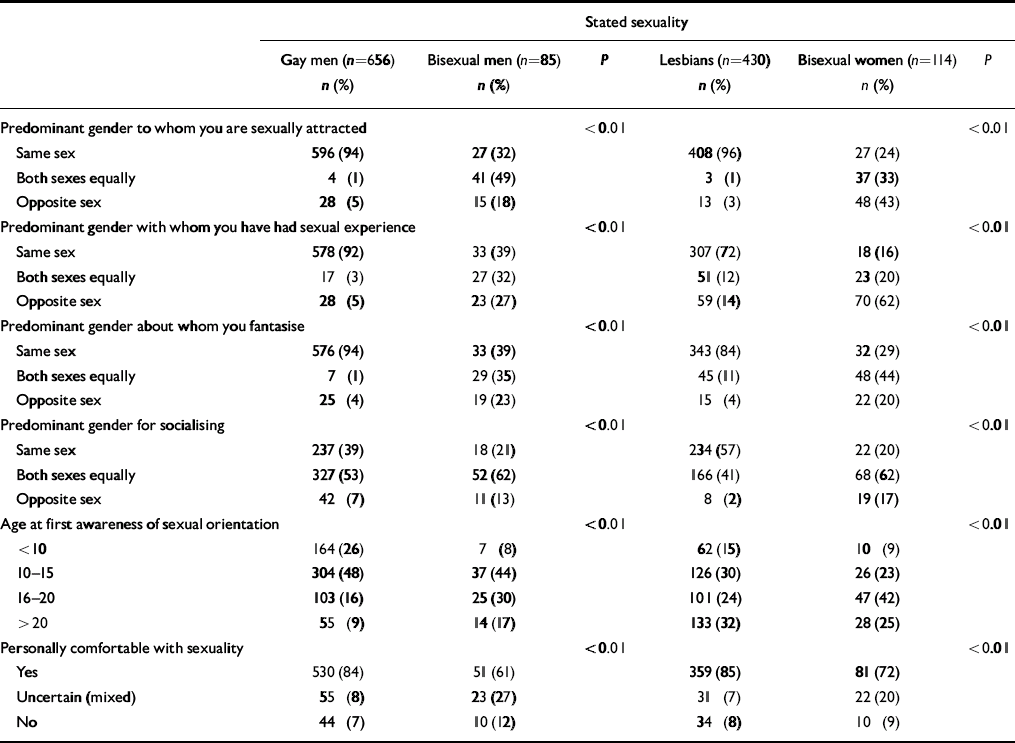
We attempted to validate categorical selfdefinition of sexuality as gay male/female or bisexual male/female by seeking information on other indicators of sexual orientation (Table 2). Compared with bisexual men and women, gay men and lesbians had significantly higher levels of same-sex attraction, fantasy and sexual experience and were more comfortable with their sexuality. Gay men in particular were more likely to have recognised their sexuality earlier in their lives than bisexual men: 26% of gay men reported being aware of their sexual orientation by the age of 10 years, compared with 8% of bisexual men (P<0.001).
Comparison of stated sexuality with other measures of sexual orientation1
| Stated sexuality | ||||||
|---|---|---|---|---|---|---|
| Gay men (n=656) n (%) | Bisexual men (n=85) n (%) | P | Lesbians (n=430) n (%) | Bisexual women (n=114) n (%) | P | |
| Predominant gender to whom you are sexually attracted | <0.01 | <0.01 | ||||
| Same sex | 596 (94) | 27 (32) | 408 (96) | 27 (24) | ||
| Both sexes equally | 4 (1) | 41 (49) | 3 (1) | 37 (33) | ||
| Opposite sex | 28 (5) | 15 (18) | 13 (3) | 48 (43) | ||
| Predominant gender with whom you have had sexual experience | <0.01 | <0.01 | ||||
| Same sex | 578 (92) | 33 (39) | 307 (72) | 18 (16) | ||
| Both sexes equally | 17 (3) | 27 (32) | 51 (12) | 23 (20) | ||
| Opposite sex | 28 (5) | 23 (27) | 59 (14) | 70 (62) | ||
| Predominant gender about whom you fantasise | <0.01 | <0.01 | ||||
| Same sex | 576 (94) | 33 (39) | 343 (84) | 32 (29) | ||
| Both sexes equally | 7 (1) | 29 (35) | 45 (11) | 48 (44) | ||
| Opposite sex | 25 (4) | 19 (23) | 15 (4) | 22 (20) | ||
| Predominant gender for socialising | <0.01 | <0.01 | ||||
| Same sex | 237 (39) | 18 (21) | 234 (57) | 22 (20) | ||
| Both sexes equally | 327 (53) | 52 (62) | 166 (41) | 68 (62) | ||
| Opposite sex | 42 (7) | 11 (13) | 8 (2) | 19 (17) | ||
| Age at first awareness of sexual orientation | <0.01 | <0.01 | ||||
| <10 | 164 (26) | 7 (8) | 62 (15) | 10 (9) | ||
| 10–15 | 304 (48) | 37 (44) | 126 (30) | 26 (23) | ||
| 16–20 | 103 (16) | 25 (30) | 101 (24) | 47 (42) | ||
| > 20 | 55 (9) | 14 (17) | 133 (32) | 28 (25) | ||
| Personally comfortable with sexuality | <0.01 | <0.01 | ||||
| Yes | 530 (84) | 51 (61) | 359 (85) | 81 (72) | ||
| Uncertain (mixed) | 55 (8) | 23 (27) | 31 (7) | 22 (20) | ||
| No | 44 (7) | 10 (12) | 34 (8) | 10 (9) | ||
Experience of discrimination
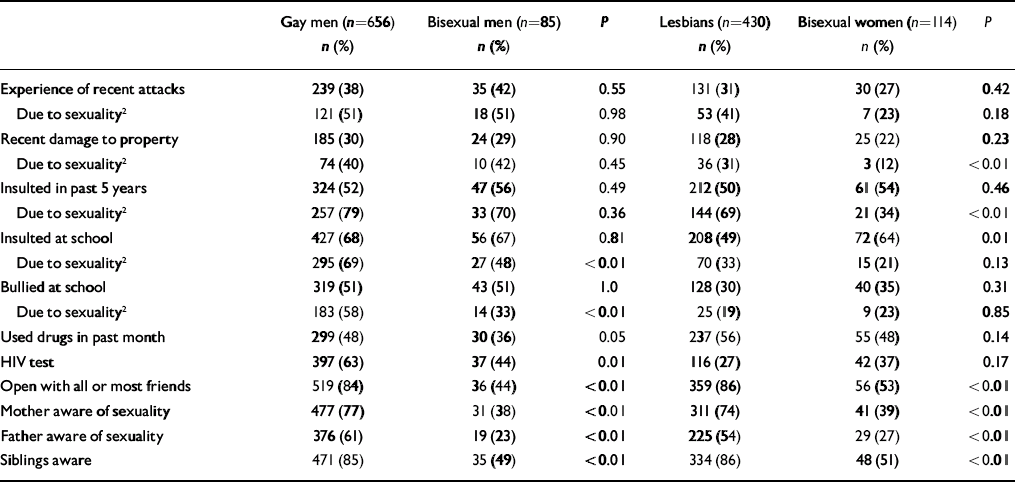
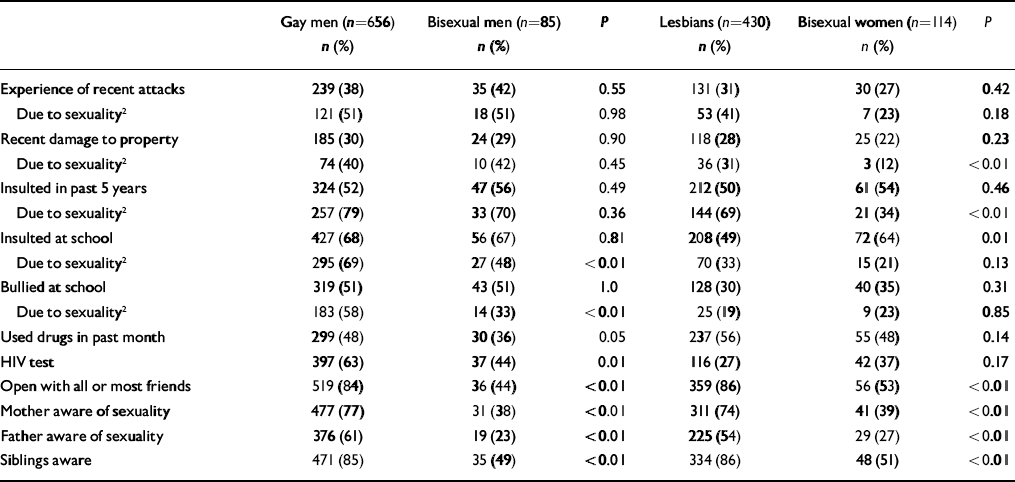
Of the 1249 respondents to questions on experience of acts of hostility or discrimination, 1039 (83%) reported having experienced at least one of the following: damage to property, personal attacks or verbal insults in the past 5 years or insults or bullying at school (Table 3). Six hundred and ninety (66%) respondents who had experienced discrimination attributed this to their sexuality. Men and women who were bisexual had experienced similar levels of verbal insults, property damage and bullying to those reported by gay and lesbian respondents, but the latter group were more likely than the bisexual respondents to attribute these attacks or insults to their sexuality (χ2=22.5, d.f.=2, P<0.0001). Respondents under 40 years old were more likely to be subject to physical attacks (OR=1.9, 95% CI 1.5–2.5) and verbal insults (OR=1.6, 95% CI 1.2–2.0) than older respondents. Compared with women, men were more likely to have been attacked recently (OR=1.4, 95% 1.2–1.8) and to have experienced bullying at school (OR=2.3, 95% CI 1.8–2.9).
Lifestyle and discrimination variables1
| Gay men (n=656) n (%) | Bisexual men (n=85) n (%) | P | Lesbians (n=430) n (%) | Bisexual women (n=114) n (%) | P | |
|---|---|---|---|---|---|---|
| Experience of recent attacks | 239 (38) | 35 (42) | 0.55 | 131 (31) | 30 (27) | 0.42 |
| Due to sexuality2 | 121 (51) | 18 (51) | 0.98 | 53 (41) | 7 (23) | 0.18 |
| Recent damage to property | 185 (30) | 24 (29) | 0.90 | 118 (28) | 25 (22) | 0.23 |
| Due to sexuality2 | 74 (40) | 10 (42) | 0.45 | 36 (31) | 3 (12) | <0.01 |
| Insulted in past 5 years | 324 (52) | 47 (56) | 0.49 | 212 (50) | 61 (54) | 0.46 |
| Due to sexuality2 | 257 (79) | 33 (70) | 0.36 | 144 (69) | 21 (34) | <0.01 |
| Insulted at school | 427 (68) | 56 (67) | 0.81 | 208 (49) | 72 (64) | 0.01 |
| Due to sexuality2 | 295 (69) | 27 (48) | <0.01 | 70 (33) | 15 (21) | 0.13 |
| Bullied at school | 319 (51) | 43 (51) | 1.0 | 128 (30) | 40 (35) | 0.31 |
| Due to sexuality2 | 183 (58) | 14 (33) | <0.01 | 25 (19) | 9 (23) | 0.85 |
| Used drugs in past month | 299 (48) | 30 (36) | 0.05 | 237 (56) | 55 (48) | 0.14 |
| HIV test | 397 (63) | 37 (44) | 0.01 | 116 (27) | 42 (37) | 0.17 |
| Open with all or most friends | 519 (84) | 36 (44) | <0.01 | 359 (86) | 56 (53) | <0.01 |
| Mother aware of sexuality | 477 (77) | 31 (38) | <0.01 | 311 (74) | 41 (39) | <0.01 |
| Father aware of sexuality | 376 (61) | 19 (23) | <0.01 | 225 (54) | 29 (27) | <0.01 |
| Siblings aware | 471 (85) | 35 (49) | <0.01 | 334 (86) | 48 (51) | <0.01 |
Use of alcohol and drugs
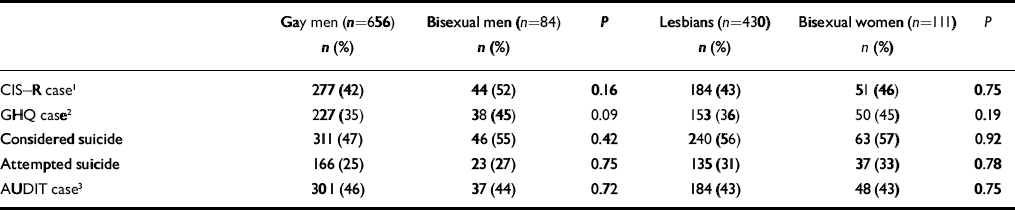
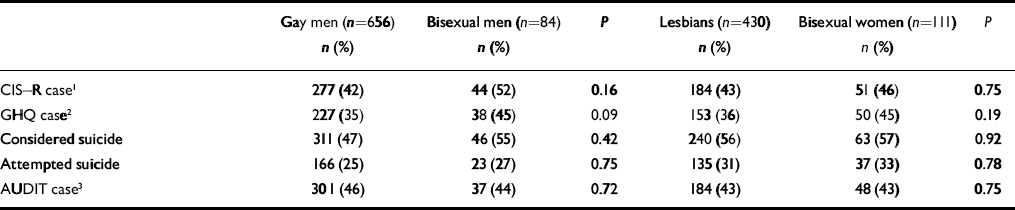
Lifetime use of drugs, smoking and hazardous drinking (AUDIT score 8 or over) were similar for men and women, and for bisexual men and women compared with gay men and lesbians (Table 4). Men under 40 years old were at greater risk of exceeding the AUDIT threshold score compared with older men (OR=1.3, 95% CI 1.1–1.6), as were younger women compared with older women (OR=2.1, 95% CI 1.5–2.9). Gay men were more likely than bisexual men to have used drugs in the month prior to the survey (see Table 3).
Comparison of rates of mental disorder, considered and attempted suicide, and hazardous drinking
| Gay men (n=656) n (%) | Bisexual men (n=84) n (%) | P | Lesbians (n=430) n (%) | Bisexual women (n=111) n (%) | P | |
|---|---|---|---|---|---|---|
| CIS–R case1 | 277 (42) | 44 (52) | 0.16 | 184 (43) | 51 (46) | 0.75 |
| GHQ case2 | 227 (35) | 38 (45) | 0.09 | 153 (36) | 50 (45) | 0.19 |
| Considered suicide | 311 (47) | 46 (55) | 0.42 | 240 (56) | 63 (57) | 0.92 |
| Attempted suicide | 166 (25) | 23 (27) | 0.75 | 135 (31) | 37 (33) | 0.78 |
| AUDIT case3 | 301 (46) | 37 (44) | 0.72 | 184 (43) | 48 (43) | 0.75 |
Psychological health and quality of life
Bisexual men scored significantly higher than gay men on the CIS–R (mean scores 14.9 and 12.2, respectively; difference -2.7, 95% CI -5.3 to -0.2, P=0.04), whereas there was no significant difference in mean CIS–R scores between lesbians and bisexual women (mean scores 12.7 and 12.6, respectively). There was no statistically significant difference in mean GHQ–12 scores: gay men and bisexual men scored 3.2 and 4.0 respectively; lesbians and bisexual women 3.5 and 3.6. There was no difference in SF–12 scores between gay men and bisexual men (mean difference -0.1, 95% CI -2.2 to 2.0) or between lesbians and bisexual women (-1.0, 95% CI -3.2 to 1.2). Further data on mental health outcomes are provided in Table 4. When CIS–R scores were dichotomised with the usual threshold of 11/12, there was no significant difference between gay and bisexual men or between lesbian and bisexual women. Variables independently associated with scoring over the 11/12 threshold on the CIS–R were unemployment (OR=2.5, 95% CI 1.8–3.5); being under 40 years old (OR=1.4, 95% CI 1.1–2.0); reporting conflict between religious beliefs and sexuality (OR=2.2, 95% CI 1.5–3.3); being attacked in the past 5 years (OR=1.5, 95% CI 1.1–1.9); being insulted in the past 5 years (OR=1.7, 95% CI 1.3–2.2) and having been insulted at school (OR=1.4, 95% CI 1.1–1.8). No factor emerged as being significantly associated with case-defining GHQ–12 scores.
A relatively large proportion of respondents had considered or attempted suicide (Table 4). Variables independently associated with having considered suicide were age under 40 years (OR=1.4, 95% CI 1.1–2.0); being unemployed (OR=1.8, 95% CI 1.2–2.5) or a student (OR=1.7, 95% CI 1.1–2.5); or being attacked in the past 5 years (OR=1.7, 95% CI 1.3–2.3). Black respondents were less likely to have considered suicide (Black 8/31, White 630/ 1180; χ2=9.5, d.f.=2, P=0.009). Variables associated with attempted suicide were being female (OR=1.7, 95% CI 1.2–2.5), having been attacked in the past 5 years (OR=1.4, 95% CI 1.1–1.9) and having been insulted at school (OR=1.4, 95% CI 1.1–2.0).
DISCUSSION
Principal findings
This is the first large, UK-based comprehensive survey of psychological well-being among gay men, lesbians and bisexual men and women. We found high rates of planned and actual deliberate self-harm and high levels of psychiatric morbidity as defined by CIS–R score among gay men (42%), lesbians (43%) and bisexual men and women (49%) compared with previous community surveys of (predominantly) heterosexual people. Meltzer et al (Reference Meltzer, Gill and Petticrew1995) and Singleton et al (Reference Singleton, Bumpstead and O'Brien2000) reported prevalence rates of mental disorder (defined by CIS–R score) of approximately 12% in men and 20% in women. The disparity between previous studies and our sample suggests higher psychiatric morbidity in the gay, lesbian and bisexual population. Alternatively, the higher rates of mental disorder in this survey might be due to differences in recruitment methods or biases inherent in snowball sampling (see below). Our findings suggest that gay men and lesbians are equally likely to experience psychiatric morbidity, in contrast to previous studies which found that women were more at risk. It is possible that the usual gender differences are lost in our sample because other factors, such as discrimination, are more potent causes of mental distress in this group.
Our finding that, compared with older participants, people under 40 years old appear to be at higher risk of mental disorder, harmful drinking and considering self-harm contrasts with greater openness about sexuality in this group. This might be a consequence of greater exposure to acts of discrimination; alternatively, being open about sexuality might lead to more assaults and insults and hence worse mental health. Another explanation is that younger people are more likely to disclose these issues.
Limitations
The relatively small number of bisexual respondents may suggest bias against recruiting this group to the study, although participants were invited to participate in a ‘sexuality and well-being study’ which was unlikely to specifically disenfranchise bisexual people. Another possible explanation is that true bisexuality is relatively rare. Some people may routinely identify themselves as bisexual because this is more socially acceptable, but are more honest about their true sexuality when participating in anonymous confidential surveys. The relatively small size of the bisexual sample reduces power, although sufficient numbers were recruited to detect clinically significant differences on many analyses.
It is difficult to gauge representativeness of snowball-derived samples as there is no information on the English population of gay, lesbian and bisexual people from which they are recruited. Snowball sampling can result in biasing recruitment towards respondents who are willing to participate in research. However, there are difficulties inherent in random sampling of the general population for the purposes of our research (low prevalence of gay, lesbian and bisexual people, high cost, and still no guarantee of unbiased samples, as some people might not feel able to be open about their sexuality, depending on the method of data collection). For example, Cochran et al (Reference Cochran, Sullivan and Mays2003) in a telephone and questionnaire survey of 3032 community-dwelling adults in the USA, identified 41 gay or lesbian and 32 bisexual respondents and 115 people who refused to answer the question about their sexuality. Therefore we believe snowballing probably remains the best method of identifying large numbers of gay and lesbian participants for research. A further potential limitation, inherent in most questionnaire surveys of this type, is the absence of validation of the responses. For example, there is no way to validate responses to questions about attempted suicide in the absence of an association with measures such as the CIS–R, although we feel it is unlikely large numbers of individuals would exaggerate this issue.
Defining sexuality
Categorical self-definition of sexuality appears to equate well with other estimates of sexuality such as gender of fantasy object, attraction and sexual experience. Men and women who defined themselves as bisexual were less likely than exclusively gay and lesbian respondents to report a same-sex focus for fantasy, attraction and experience, suggesting bisexuality does merit a separate status. This suggests that people who identified themselves as bisexual in this study are not simply gay or lesbian and reluctant to identify themselves as such. Although gay men and lesbians were more likely to socialise with same-sex individuals, a large proportion of all groups socialised with both men and women. Another finding of interest is that gay men in particular seem to be aware of their sexuality from a young age, with 74% of the sample stating they were aware they were gay before the age of 15 years. This strongly suggests that homosexuality is innate rather than a ‘lifestyle choice’.
Bisexuality
Although this study surveyed large numbers of gay men and lesbians, far smaller numbers of bisexual men and women were identified, possibly because the distribution of sexuality is bimodal and bisexuality is uncommon. A second possibility is that we recruited fewer bisexual respondents because the study was less relevant to them. This is unlikely, as the study was promoted as concerning sexuality and well-being, and we were able to recruit a large population of heterosexual respondents (Reference King, McKeown and WarnerKing et al, 2003). Finally, people might have been less willing to identify themselves as bisexual to researchers; this third possibility is suggested by our data showing that bisexual respondents were less open about their sexuality with family and friends and felt less comfortable about their sexuality. For example, the parents, siblings and friends of exclusively gay or lesbian individuals were far more likely to be aware of the respondents' sexuality than those of bisexual respondents. Some previous studies have combined gay, lesbian and bisexual categories for the purpose of analysis or do not report results for bisexual groups at all (Reference Johnson, Mercer and ErensJohnson et al, 2001; Reference Cochran, Sullivan and MaysCochran et al, 2003). The characteristics of our bisexual respondents suggest that they form a unique group in terms of reticence about their sexuality. The possibility of poorer social integration may be a factor in the increased rates of psychological distress among bisexual men. Lack of openness about sexuality may present particular difficulties in terms of clinical care, for example in being honest with health professionals. Our findings also suggest that bisexual people should be treated as a separate group for the purposes of health-related research.
Discrimination
We found high levels of perceived discrimination in the form of physical attacks, verbal abuse, property damage and bullying at school in our sample, and found a strong relationship between these variables and scoring above the threshold on the CIS–R and suicidal ideation. Although it is not possible to infer causality, because reverse causality, unidentified confounders and reporting bias may operate here, many respondents linked attacks with their sexuality. Caseness on the CIS–R and GHQ–12 was not independently associated with thoughts and acts of deliberate self-harm in this sample, but was associated with unemployment and with a history of harassment and bullying. This suggests that schools, the police and health professionals should take harassment due to sexuality seriously. Some commentators have suggested that younger gay men and lesbians are less likely to be censured about their sexuality, and may be less vulnerable to psychological distress as a result. Our survey supports the suggestion that younger gay and bisexual men are more open about their sexuality with family, friends and colleagues than their older counterparts. However, this openness does not appear to be associated with better outcomes, as younger gay, lesbian and bisexual respondents were more at risk of exposure to acts of discrimination or hostility, and gay men and bisexual men and women under 40 years old were at higher risk of mental disorder, harmful drinking and deliberate self-harm than older men. Our findings support the need for strategies that raise awareness of the vulnerability of gay, lesbian and bisexual individuals to psychological distress and self-harm.
Clinical Implications and Limitations
CLINICAL IMPLICATIONS
-
▪ Individuals defining themselves as bisexual appear to be a distinct group meriting further research.
-
▪ Most respondents reported experience of discrimination, with a high proportion attributing it to their sexuality. These factors appear to be linked with higher rates of mental disorder.
-
▪ Considered and attempted suicide is common in gay, lesbian and bisexual people.
LIMITATIONS
-
▪ Snowball sampling may miss people who are not open about their sexuality.
-
▪ The small number of bisexual respondents increases the risk of type II error in analysing results of this group.
-
▪ We recruited too few individuals from ethnic minorities to assess the impact of ‘double discrimination’.
Acknowledgements
We wish to thank the men and women who participated in this study. The study was funded by the Community Fund and managed in collaboration with Mind, the mental health charity.





eLetters
No eLetters have been published for this article.