


Introduction
Infection and colonization with antibiotic-resistant organisms (AROs), such as methicillin-resistant Staphylococcus aureus (MRSA) and carbapenemase-producing organisms (CPO) among others, is associated with adverse patient outcomes including prolonged hospital lengths of stay and increased mortality. Reference Siegel, Rhinehart, Jackson and Chiarello1,Reference Mainous, Rooks and Carek2 Contact precautions (CPs) are one method used to prevent transmission of AROs, and typically involve using gowns and gloves, and the isolation of patients in private rooms. Reference Siegel, Rhinehart, Jackson and Chiarello3 However, the evidence supporting CPs is limited even in the acute, non-palliative care setting, Reference Khader, Thomas and Huskins4–Reference Karunakaran, Pless and Ayres15 and their use has been associated with known harms for patients including social isolation, delays in care, and reduced interaction with healthcare providers. Reference Enninger, Schmidt, Hasan, Wager and Zernikow16–Reference Roth, Hornung-Winter and Radicke19 These issues are particularly relevant in palliative care, where comfort and dignity are central, yet remain understudied in this unique patient population and care environment.
We recently published a systematic scoping review examining the use of CPs to prevent ARO transmission and infection in palliative care. Reference He, Bunn and Rance20 We found that although the literature generally recommends a case-by-case approach to ARO management including the use of CPs, most included studies originated from GermanyReference Bükki, Klein and But21–Reference Schmidt, Hasan and Mauritz31and limited the generalizability of the findings.
The objective of this retrospective descriptive retrospective chart review is to characterize the incidence of CPs in a palliative care unit (PCU) within a North American context. Secondary objectives include comparing characteristics between patients placed on CPs and those who are not.
Study setting
The Vancouver General Hospital PCU is a nine-bed, closed inpatient unit for adult patients at an academic tertiary hospital with quaternary capabilities in Vancouver, British Columbia, Canada. Admission inclusion criteria include a life-limiting diagnosis and either acute symptom management or complex psychosocial needs that cannot be managed in other settings or by another hospital service—for example, the need for continuous subcutaneous or intravenous medication infusions for refractory symptoms. Exclusion criteria for admission include active medical decompensation, inpatient intravenous chemotherapy, total parenteral nutrition, and therapeutic heparin infusions. With regards to code status permitting critical care interventions (eg, CPR, intubation, and mechanical ventilation, see Table 1 for details), this was originally an exclusion criterion which was later updated in June 2024 to allow for all code statuses, provided other inclusion criteria are met.
Code status classification at Vancouver General Hospital
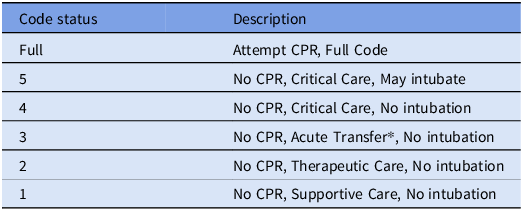
* “Acute transfer” meaning transfer from community to hospital, not including transfer to critical care.
The PCU is staffed by a multidisciplinary team that includes an admitting palliative care physician, a social worker, an occupational therapist, a patient care coordinator nurse, and three bedside nurses per 12-hour shift, providing a nurse-to-patient ratio of 1:3. The unit has seven patient rooms, five of which are private, and two of which are semi-private each accommodating two patients. As a closed unit, all patients are admitted under and managed primarily by the palliative care service as the most responsible physician team.
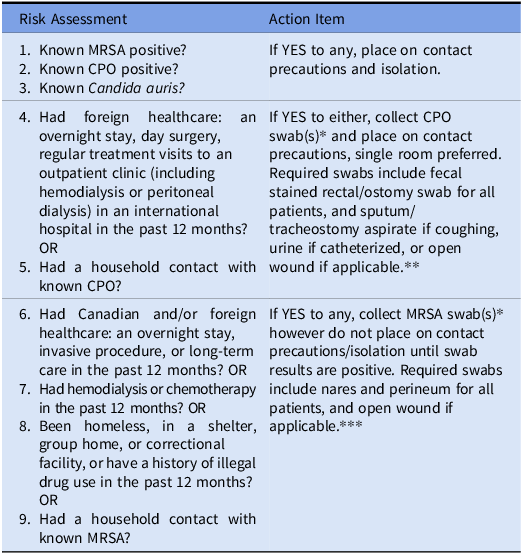
All patients undergo an infection prevention and control (IPAC) risk screening on admission to the PCU, which is typically done by the bedside nurse or the admitting/unit clerk. This consists of the eight screening questions shown in Table 2, which determine the need for screening swabs for CPO and MRSA. These swabs are required within 24 hours of admission. 33 The risk screening results are documented in the chart, and determines whether the patient needs to be placed on CPs, the specifics of which are described in Table 3. CP orders are then entered into the electronic medical record by the nurse or clerk as a ‘patient isolation’ order. In addition to the patient isolation order, ‘MRSA disease alerts’ were sometimes applied at the patient level rather than to the specific encounter, although this was done inconsistently. Of note, there are no requirements for screening or precautions for patients with vancomycin-resistant enterococci (VRE) or extended-spectrum β-lactamase producing Enterobacterales (ESBL-E).
Vancouver Coastal Health Infection Prevention and Control Admission Screening Tool (ver. Feb 2024). 33
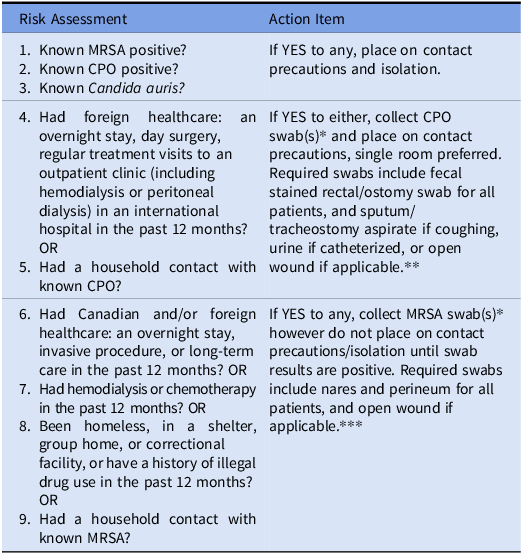
* All patients with any risk factors require a screening swab collected as soon as possible within 24 hours of admission.
** Patients at risk of CPO remain on contact precautions until results are reviewed by infection control and prevention staff, who will discontinue the contact precautions once appropriate
*** Patients placed on contact precautions for MRSA should remain on precautions for the duration of the admission or visit.
MRSA, methicillin-resistant Staphylococcus aureus; CPO, Carbapenemase-producing organisms.
Vancouver Coastal Health Contact and Contact Plus Precautions (ver. June 2016)
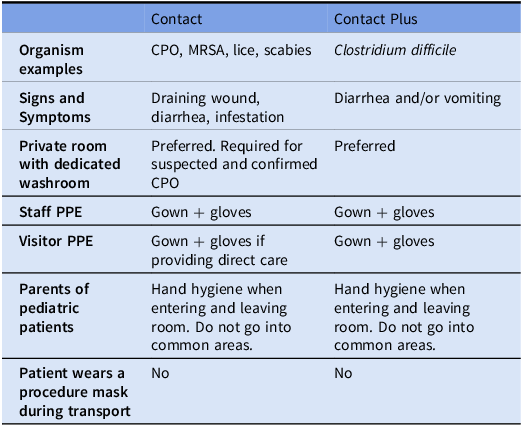
Point of Care Risk Assessment recommended for all staff to consider risks of anticipated contact with mucous membranes or non-intact skin, and exposure to body fluids, secretions/excretions, soiled items or surfaces, and/or blood. Face and eye protection is recommended if there is a risk of splash or spray. Hand hygiene with hand foam/gel or soap and water is recommended for all staff and visitors. If a private room is unavailable, MRSA patients may be cohorted together while patients with CPO or C auris should NOT be cohorted.
MRSA, methicillin-resistant Staphylococcus aureus; CPO, Carbapenemase-producing organisms; PPE, personal protective equipment.
Exceptions to risk screening include intra-hospital transfers with documented negative screening results, or patients who are unresponsive or actively dying as determined by clinical assessment. All admissions are also automatically reviewed by an IPAC team member within 24–48 hours, regardless of risk screening results, which may include reviewing historical paper-based charts for any ARO documentation and subsequently adding CP orders. This additional process is not documented in the electronic medical chart. The IPAC service at Vancouver General Hospital consists of an infection control officer physician, coordinator, charge nurse, and eight staff, with an on-call medical microbiologist available after hours for any questions about ARO screening or patient isolation orders. Additionally, there is an on-call IPAC physician during business hours who review all deisolation requests daily.
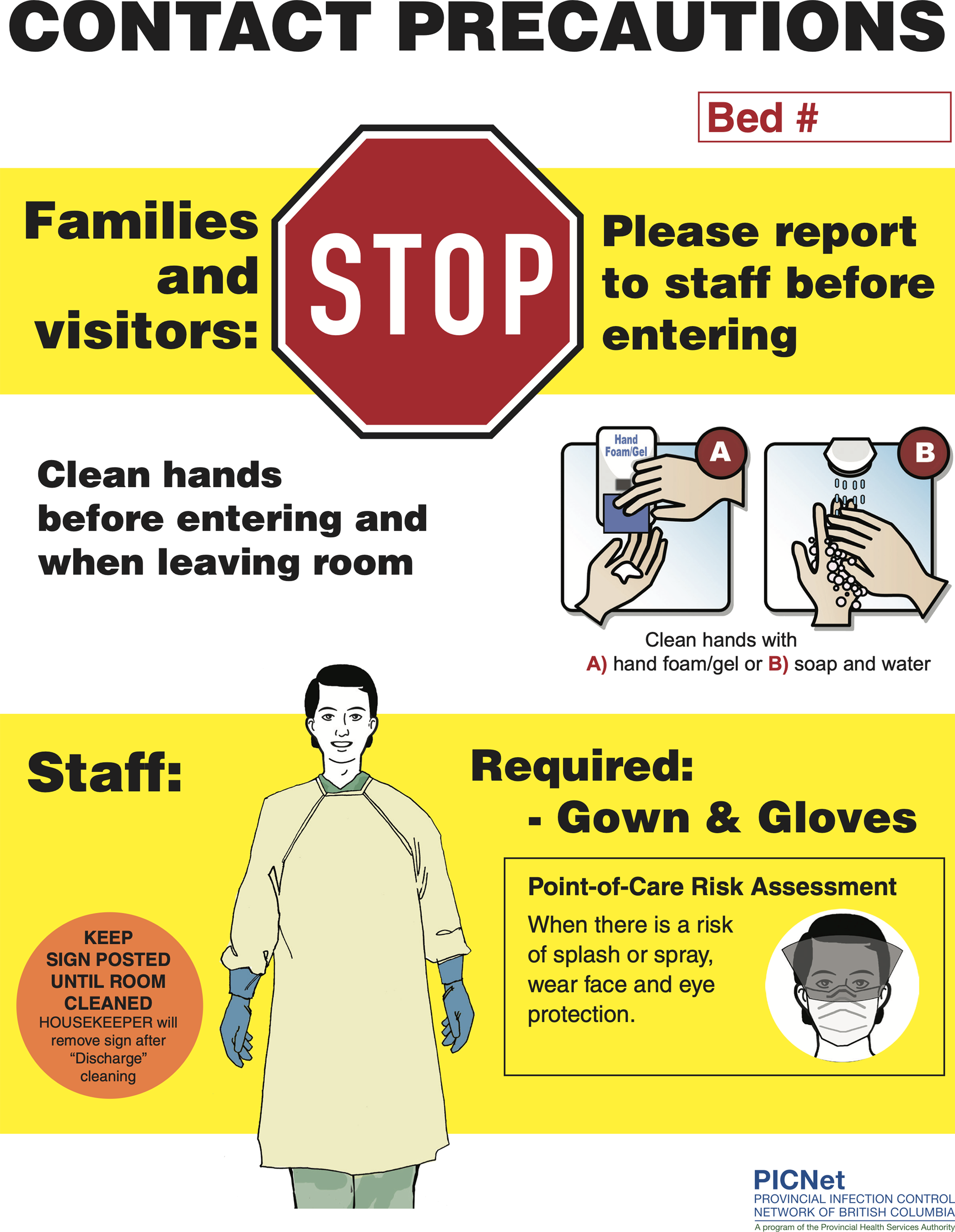
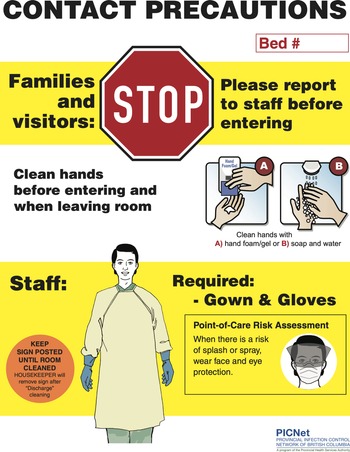
Additional diagnostic testing for AROs beyond initial screening is at clinician discretion, such as in the presence of new infectious symptoms. Hospital staff are also required to perform a point-of-care risk assessment before each patient interaction to determine necessary precautions based on anticipated contact with mucous membranes, non-intact skin, or exposure to body fluids, secretions/excretions, soiled items or surfaces, and/or blood. 34 For example, face and eye protection is recommended in addition to CPs if there is a risk of splash or spray. Hand hygiene with alcohol-based hand foam/gel or soap and water is recommended for all staff and visitors. Once a patient is placed on CPs, signage (Figure 1) is posted at the patient’s room reminding visitors to perform hand hygiene, and staff to wear gowns and gloves in addition to performing a point of care risk assessment. The signage also alerts housekeeping to perform discharge cleaning.
Contact precautions sign for use in acute care settings (ver. Feb 2025).
Methods
This is a retrospective chart review of adult patients (>18 yr of age) admitted to the PCU at Vancouver General Hospital with a “contact” patient isolation order placed at any time during PCU admission, since the introduction of the hospital-wide electronic medical record (Cerner PowerChart) from September 24, 2022, to October 29, 2024. Patient records were collected with the help of the hospital research advisor (CM).
Patient orders, clinical notes, medication administration records, infection disease risk screening documentation, microbiology results, and patient transportation documentation for each encounter were examined to determine the incidence of CP use. Data extraction was performed solely by the primary author (HH), a palliative care physician, and data were managed using a structured Microsoft Excel spreadsheet (Appendices A and B, Supplemental Materials). Collected variables included demographic information (age and sex, life-limiting illness, reason for admission to PCU, admission source, hospital and PCU lengths of stay) and CP details (patient code status at time of CP, CP duration, infectious disease risk screening, indication for initiation and discontinuation of CPs, private vs semi-private room, whether antibiotics were used, and whether the patient died while on CPs). Basic statistical analyses were performed to compare PCU encounters with and without contact precautions, using Welch’s two-tailed t-tests for continuous variables and χ2 tests for categorical variables, conducted in Microsoft Excel.
This study was approved by the Clinical Research and Ethics Board at the University of British Columbia (H24-03772) in addition to the Vancouver Coastal Health Research Institute (V24-03772).
Results
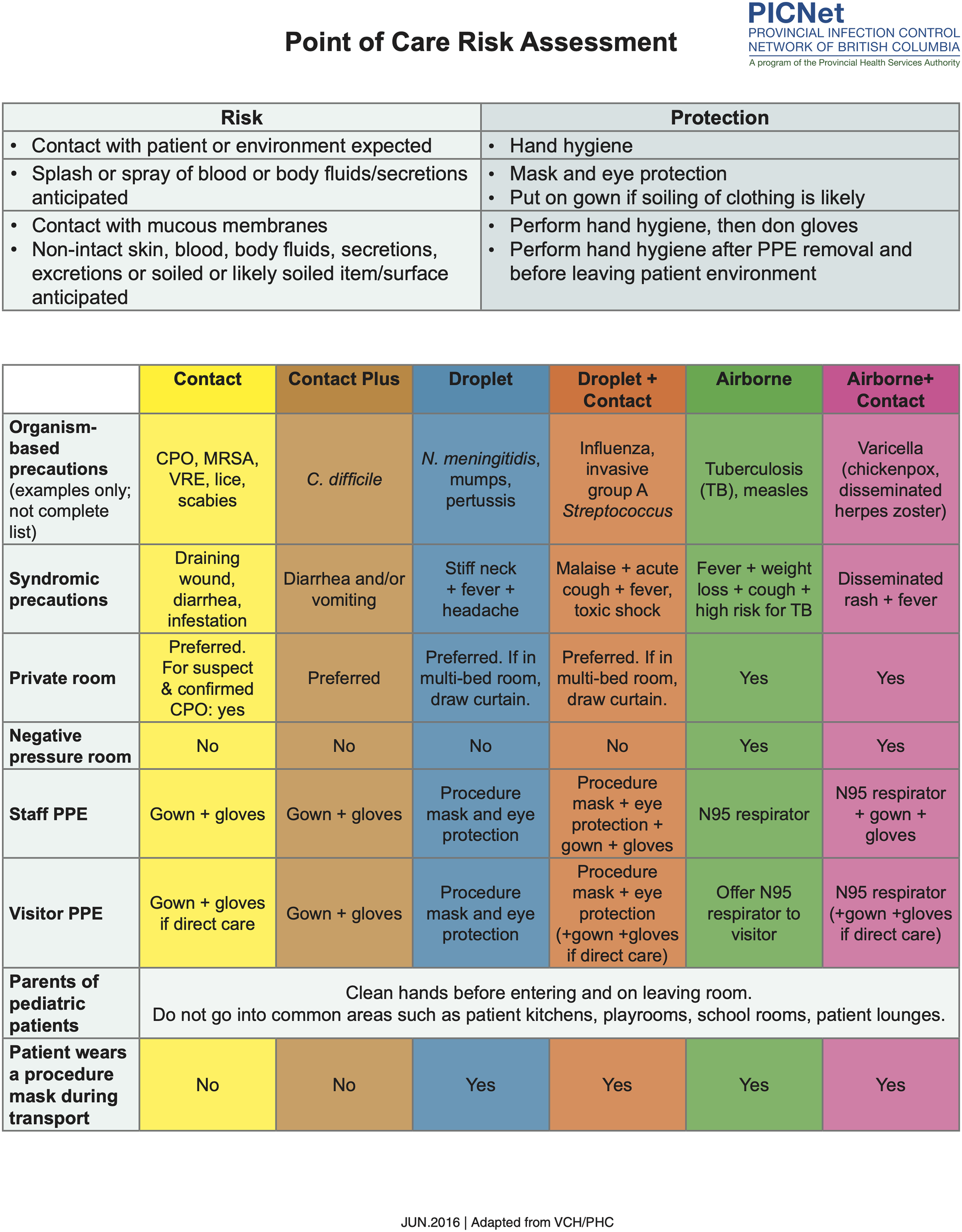
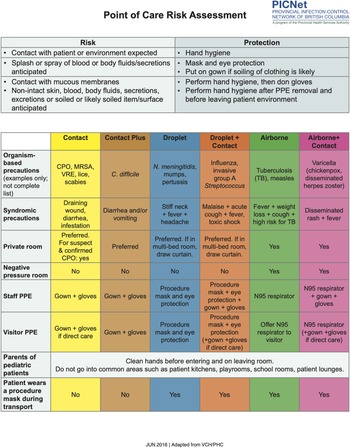
In total, there were 517 patients who were admitted to the PCU accounting for 549 total encounters (some patients were admitted multiple times within the study period). Of these, 75 encounters involved any type of patient isolation order. Isolation types included mostly Droplet and Contact (41/75, 54.7%) and Contact Plus (30/75, 40.0%), with multiple isolation orders possible within a single encounter. Isolation type definitions are outlined in Figure 2, and distribution by isolation type are shown in Table 4. Ultimately, 13 encounters (17.3%) had a Contact isolation order and were included for chart review. Each of these 13 encounters represented a unique patient, with no repeat admissions in this subset. Of note, there were 4 patients with a patient-specific MRSA disease alert who were not placed on CPs and were not included.
Point of care risk assessment and overview of patient isolation orders (ver. June 2016).
Isolation orders by type

* 4 encounters with the MRSA disease alert were not identified by the patient isolation flag NB. Multiple isolation types are possible for each encounter. See Figure 2 for isolation details and examples.
Incidence of CPs
CPs were used in 13 of 549 patient encounters, representing 2.37% of admissions, and involved 13/517 unique patients (2.51%). The total length of stay across all PCU encounters was 6,447 patient-days. Based on 13 instances of CP initiation, the incidence was 2.02 per 1,000 PCU patient-days.
Characteristics of patients placed on CP
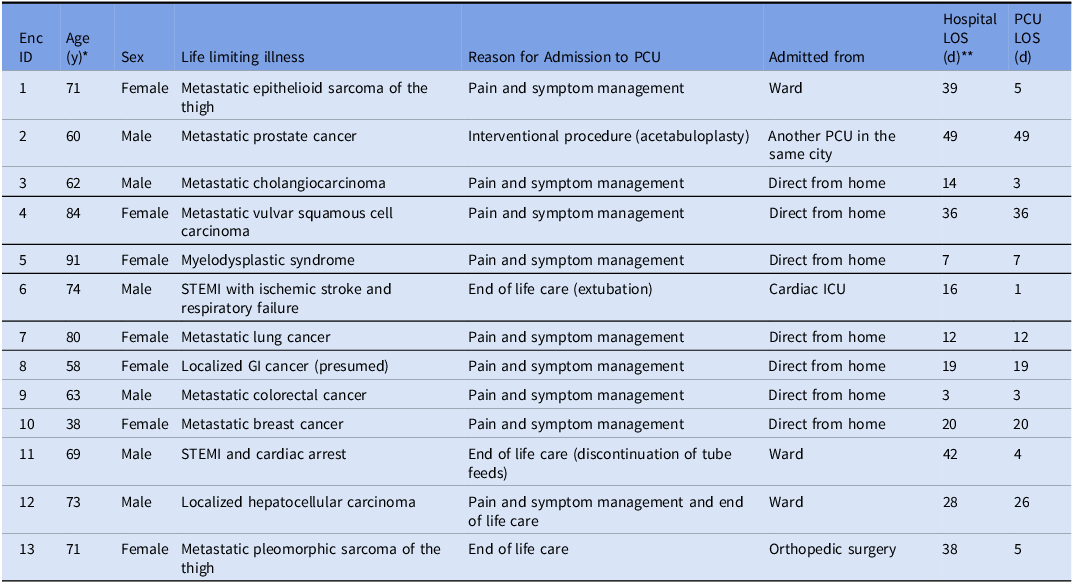
Table 5 summarizes the demographics of the 13 included patients. Ages (at the time of CP order) ranged from 38 to 91 years (mean 68.8 ± 13.3), with a slight female preponderance (7/13, 53.8%). Most patients had malignant diagnoses, primarily solid organ cancers (prostate, GI, GU, lung, breast, liver), with others including hematologic malignancies (MDS, lymphoma) and sarcomas (epithelioid and pleomorphic). Two patients had nonmalignant cardiovascular disease.
Patient demographics
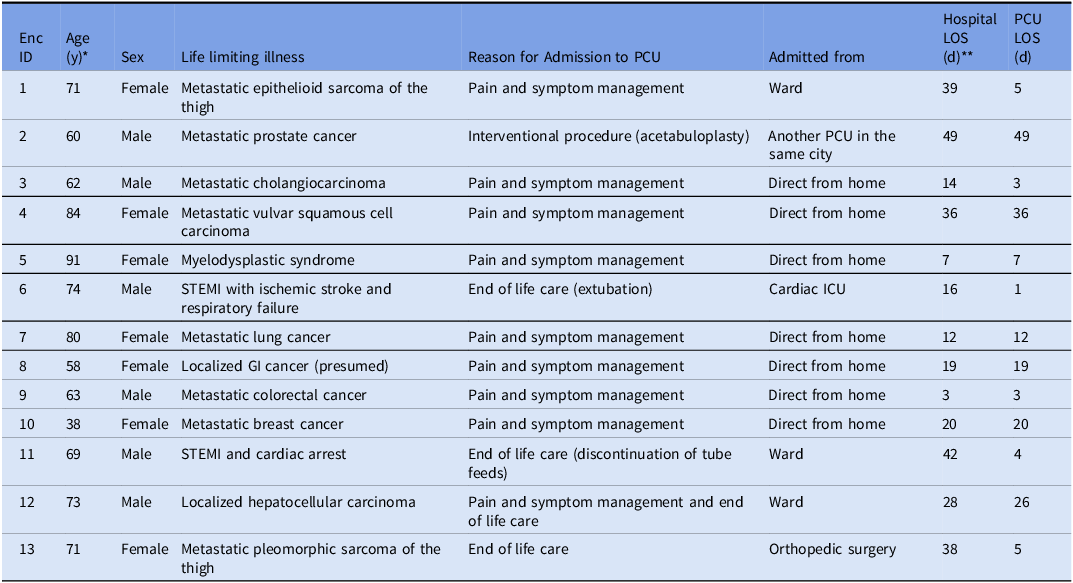
Abbreviations: LOS, length of stay; PCU, palliative care unit; STEMI, ST-elevation myocardial infarction; ICU, intensive care unit.
* Age at the time of admission
** Hospital LOS includes the PCU LOS and is based on midnight bed census
Over half of the patients (7/13) were admitted to the PCU directly from home, with the remainder transferred from another hospital unit (medicine ward, cardiac ICU, orthopedic surgery) or, in one case, from another PCU in the same city. The primary reasons for admission were pain and symptom management (9/13) and end-of-life care (4/13). One patient—the transfer from another PCU—was admitted for an interventional procedure not available at the referring site.
Hospital length of stay ranged from 3 to 49 days (mean 24.8 ± 14.7), of which PCU lengths of stays accounted for 1 to 49 days (mean 14.6 ± 14.8).
Clinical details related to CPs
Table 6 provides more contextual information for each included encounter. At the time of isolation, 7 of 13 patients had a code status of no resuscitation, no critical care, and no intubation (level 3). Two were full code, while there was one patient each with level 5, 4, 2, and 1 code statuses (definitions are provided in Table 1).
Clinical details related to contact precautions
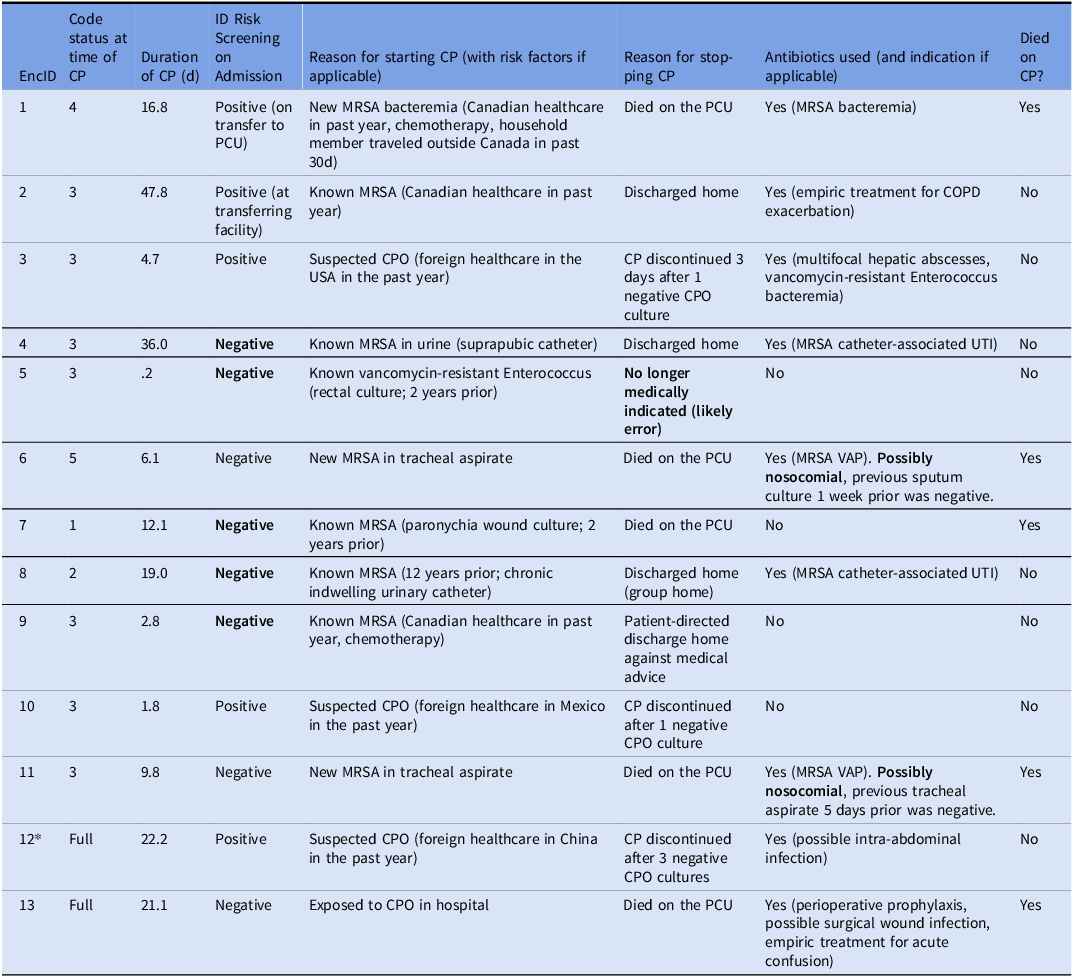
Abbreviations: LOS, length of stay; PCU, palliative care unit; CP, contact precautions; MRSA, methicillin-resistant Staphylococcus aureus; VRE, vancomycin-resistant Enterococci; CPO, Carbapenemase-producing organisms; CPR, cardiopulmonary resuscitation; RF, risk factor; UTI, urinary tract infection; VAP, ventilator-associated pneumonia; COPD, chronic obstructive pulmonary disease; ESBL-E, extended-spectrum β-lactamase producing Enterobacterales.
* Placed in shared semi-private PCU Room.
The mean duration of CPs was 15.4 ± 14.1 (range 0.2–47.8) days, and the median duration was 12.1 days (IQR 4.7 – 21.1).
Infectious disease risk screening was completed for all patients. Three patients screened positive due to suspected CPO related to foreign healthcare within the past year (USA, Mexico, and China, respectively). Among the 8 patients who initially screened negative, 5 were later found by IPAC to have a history of known MRSA or vancomycin-resistant Enterococcus, 2 developed new MRSA in tracheal aspirates, and 1 had a hospital exposure to CPO. No AROs were diagnosed by screening swabs.
Indications for CP included known MRSA (5/13), suspected CPO (4/13), new MRSA (3/13), and known vancomycin-resistant Enterococcus (1/13). All but one patient were placed in private rooms; the exception was a patient on CP for suspected CPO who was placed in a semi-private room.
Reasons for discontinuing CP included death on the PCU (5/13), discharge to home or hospice (4/13), or negative CPO cultures (3/13; between 1 and 3 swabs required). In one case, CPs was discontinued after it was no longer medically indicated, a few hours after the order was placed.
Antibiotics were used in 9 of 13 patient encounters for bacteremia, COPD exacerbation, hepatic abscesses, catheter-associated UTI, ventilator-associated pneumonia, and suspected intra-abdominal or surgical site infection. Six patients had culture-confirmed ARO (MRSA or vancomycin-resistant Enterococcus).
Comparison between CP and non-CP groups
No statistically significant differences were observed between the two groups in terms of age, sex, hospital length of stay, or PCU length of stay. Table 7 compares the attributes of PCU encounters with and without contact precautions. The mean age was 68.8 ± 13.3 years in the CP group and 70.4 ± 13.4 years in the non-CP group. There was a female preponderance in both groups. In the CP group, the hospital and PCU lengths of stay were 24.8 ± 14.7 days and 14.6 ± 14.8 days, respectively, compared to 23.8 ± 31.3 days and 11.7 ± 11.7 days in the non-CP group.
Characteristics of PCU encounters with and without contact precautions
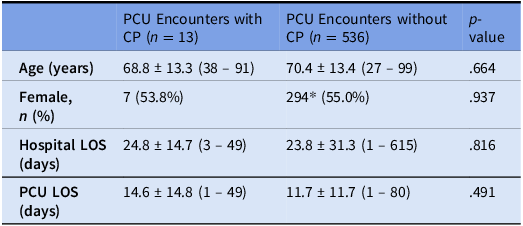
Abbreviations: PCU, palliative care unit; CP, contact precautions; LOS, length of stay.
* One encounter had a gender variable of “not provided.”
Note: Continuous variables presented as mean ± standard deviation (range). Sex comparison used Chi-square test; other comparisons used Welch’s two-tailed t-test.
Discussion
To the authors’ knowledge, this is the first retrospective chart review to examine the use of CPs in the palliative care setting.
Incidence of CPs and AROs
CPs were used in 13 of 549 patient encounters (2.37%), with an incidence of 2.02 per 1,000 PCU patient-days. This was lower than expected, given that reported rates of MRSA colonization alone in hospice and PCU settings in the literature range from 3% to 11.6%. Reference Enninger, Schmidt, Hasan, Wager and Zernikow16,Reference Gleeson, Larkin, Walsh and O’Sullivan35–Reference Prentice, Dunlop, Armes, Cunningham, Lucas and Todd37
The reason for this may be that not all patients with MRSA were identified by risk screening or by IPAC team review. PCU LOS was also right-skewed, with a median of 8 days (IQR 3–16; range 1–80 d; total of 6 447 patient-days), which may partly explain the lower incidence.
Three patients were found to have new MRSA colonization (of which two were likely nosocomial MRSA ventilator-associated pneumonia with negative cultures 5 and 7 d prior), yielding an incidence rate of 4.7 per 10,000 PCU patient-days. This is similar to local estimates: in British Columbia, the provincial rate of new MRSA colonization during the 2018–19 fiscal year was 4 per 10 000 inpatient days in all acute care settings. 38
ARO risk screening
An infectious disease risk screen was done for most patients on initial admission to hospital, however the accuracy of this assessment was low, as 5 out 8 patients who initially screened negative were later confirmed on IPAC review to have a history of ARO, which ranged from 2 to 12 years before admission. This data was not always accessible on the electronic medical record and may have included historical paper records or phone communication with another hospital. Three encounters screened positive; all screening swab cultures were ultimately negative.
Indications for CP for AROs
Most patients were placed on CPs for either history of MRSA (identified by nursing or IPAC) or suspected CPO. As our hospital does not routinely screen or isolate for vancomycin-resistant Enterococcus, the single case of CP for vancomycin-resistant Enterococcus was most likely due to a documentation or ordering error, as confirmed on review with the head of medical microbiology and IPAC physician (MC).
Indications for initiating CPs in the palliative care setting remain unclear in the literature. Several recent, large, cluster-randomized trials have shown little to no benefit of CPs in preventing transmission of MRSA, vancomycin-resistant Enterococcus, or ESBL-producing organisms in ICU and ward settings. Reference Khader, Thomas and Huskins4–Reference Huskins, Murray, Walker, Jernigan and Goldmann7 A 2024 systematic review concluded that evidence supporting routine use of CPs to reduce ARO infections is mixed and of low certainty. Reference McCarthy, Motala and Shekelle8
At our hospital, routine admission risk screening protocol is performed for MRSA, CPO, and Candida auris (Table 1), but not for vancomycin-resistant Enterococcus or ESBL-E. These protocols align with Vancouver Coastal Health’s recommendations, which endorse CPs for MRSA, CPO, and Candida auris, while recommending routine practices (no CPs) for vancomycin-resistant Enterococcus and ESBL-E (Appendix C, Supplemental Materials).
These guidelines are based on a combination of academic evidence, expert opinion, and local epidemiology, and evolve in response to changing evidence, emerging organisms, and local resistance patterns. The recommended duration of CP is for the entire hospital stay for MRSA, or as directed by IPAC for CPO and Candida auris.
Discontinuation of CP for AROs
In this study, there were three patients who had their CPs discontinued for reasons other than discharge, death, or documentation error, and all three were placed on CPs for suspected CPO due to receiving foreign healthcare in the past year. There was significant practice variation between medical microbiologists regarding the number of negative cultures needed and frequency of testing prior to deisolation, as neither local institutional protocols nor the admission risk screening policy included specific guidance for discontinuation of CPs.
Evidence on CP discontinuation is limited. Expert guidelines from the Society for Healthcare Epidemiology of America (SHEA) recommend using negative screening cultures (range of 1–3, spaced at least a week apart) to guide discontinuation decisions for MRSA, vancomycin-resistant Enterococcus, ESBL-E, and CPO. Reference Banach, Bearman and Barnden39 The optimal timing for this varies: for example, discontinuation may be considered 6 months after the last positive culture for CPO and ESBL-E. CP extension is typically reserved for patients at high risk for persistent colonization, such as those with chronic wounds, immunosuppression, broad spectrum systemic antimicrobial therapy, or residence in long-term care facilities. Indefinite CP may be considered only in cases of extensive drug resistance (eg, CPOs or ESBL-E susceptible to two or fewer antibiotic classes). Although molecular testing such as PCR shows promise, it is not currently recommended for guiding CP duration.
SHEA also suggests that, outside of outbreak settings, hospitals may consider discontinuing CP on discharge from the index admission for MRSA and vancomycin-resistant Enterococcus, while monitoring institutional infection rates. Reference Banach, Bearman and Barnden39 This is supported by studies showing no increase in infection rates following CP discontinuation for these organisms. Reference Martin, Bryant and Grogan40,Reference Kleyman, Cupril-Nilson and Robinson41
The decision to continue or discontinue CPs in palliative care should be weighed carefully.
Goals of care
The duration of CPs (mean 15.4 ± 14.1 d) accounted for a substantial portion of the total hospital admission, for almost two thirds of total hospital length of stay (mean 24.8 ± 14.7 d). Most patients placed on CPs had code statuses that involved the desire to treat reversible causes of disease, such as ARO infections which CPs are meant to prevent, and were very appropriately placed on CPs. However, there was one patient who was placed on CPs who had a code status of Level 1 or “Supportive Care,” which typically focuses primarily on patient comfort rather than life prolongation. Of course, code status is but one aspect of overall goals of care, which are very patient- and family-specific. Of note, this patient, along with four others, ultimately died on the PCU while on CPs.
Although this was not directly measured in our study, existing literature informs us that CPs are associated with negative patient outcomes, including feelings of isolation, delays in receiving care, and reduced engagement with healthcare providers, Reference Enninger, Schmidt, Hasan, Wager and Zernikow16–Reference Roth, Hornung-Winter and Radicke19 which is in discordance with comfort-focused care. This may also decrease quality of life for patients on CPs who wish to travel outside of their rooms within the PCU or hospital, wish to receive medically assisted dying, or wish to have increased visits from loved ones. Antibiotics were also used in most encounters (9/13), although they may not ameliorate symptoms in some cases, and may prolong suffering in others. Reference Karlin, Pham and Furukawa42
Systems impact
CPs incur additional resource use by increasing nursing workload, personal protective equipment, and enhanced environmental cleaning protocols, along with decreased bedflow capacity due to the requirement to place patients on CPs in private rooms. This can be exacerbated in situations where there are staffing shortages and/or hospital surge scenarios, and may affect patient care such as timeliness of breakthrough medication administration for pain and symptom management and/or delays in admission to the PCU from the emergency department.
Conclusions
In palliative care, where the priority is comfort, dignity, and human connection, the use of contact precautions must be carefully justified, time-limited, and guided by evidence to avoid unintended harm to an already vulnerable population. Given the evolving challenges of antimicrobial resistance and stewardship, it is essential to continually refine protocols to balance infection control with patient-centered care. Future research should focus on the impact of contact precautions on patient quality of life, dignity, and goal-concordant care, while also considering staff compliance, satisfaction, and the role of individual preferences and values.
Limitations
This study has several limitations. While the two-year time frame provided a meaningful sample of PCU admissions, the analysis was limited to a single center and retrospective data. A convenience sample was used due to limited access to pre-electronic medical record paper charts, introducing potential sampling bias. Additionally, the relatively low number of CP cases limited the feasibility of robust statistical analysis or subgroup comparisons.
All chart reviews were conducted by a single researcher, introducing the possibility of observer bias. Additionally, misclassification may have occurred due to coding errors, particularly during the transition from paper to electronic records. For example, CPs may have been improperly ordered or discontinued, leading to under- or overestimation of both incidence and duration. Adherence to CP protocols by healthcare staff was also not assessed.
A formal case-control design was not feasible due to the limited sample size, risk of misclassification, and absence of prospective matching. Instead, subgroup analyses were conducted post hoc, which limits causal inference and introduces the potential for selection bias.
Supplementary material
The supplementary material is available online at https://doi.org/10.1017/ash.2025.10182
Acknowledgements
The authors gratefully acknowledge Christopher Mah for his support with data collection, and Julienne Serrano for her valuable contributions as a Patient Care Coordinator and for sharing her nursing expertise. We also thank Dr. Marthe Charles and the Infection Prevention and Control team at Vancouver Coastal Health for their guidance and support throughout this project. HH additionally wishes to thank Dr. Sabrina Yeung and Dr. Philippa Hawley for their insight and encouragement during the early development of the project, as well as their support during the editing and review stages.
Financial support
This study was conducted as part of the Enhanced Skills in Palliative Care Residency Program at the University of British Columbia. Internal funding of $100 CAD was provided to cover nominal expenses.
Competing interests
All authors report no conflicts of interest relevant to this article.





 Open access

