

INTRODUCTION
Contemporary health disparities research seldom examines the social contexts in which disparate neighborhood environments develop, and instead provides de-historicized analysis about current health problems (Chowkwanyun Reference Chowkwanyun2011; Ford and Airhihenbuwa, Reference Ford and Airhihenbuwa2010; White Reference White2011). To address these shortcomings, some public health researchers suggest applying Critical Race Theory (CRT), a race-equity methodology that emphasizes inclusion of historicized and contextualized analysis, and prioritizes questions of race and racism (Ford and Airhihenbuwa, Reference Ford and Airhihenbuwa2010; Graham et al., Reference Graham, Brown-Jeffy, Aronson and Stephens2011).
Studies of environmental racism typically focus on exposure to harmful features of the environment such as toxic waste facilities and their disproportionate presence in low-income and minority communities (Boone et al., Reference Boone, Buckley, Morgan Grove and Sister2009). An alternative approach is to consider the availability and distribution of environmental resources. In the same way that the presence of dis-amenities is harmful to health, a lack of health-promoting amenities can also harm health (Boone et al., Reference Boone, Buckley, Morgan Grove and Sister2009; Park and Pellow, Reference Park and Pellow2011). For example, although public parks are recognized as important health-promoting resources in urban environments, there are considerable disparities in the availability of parks, recreational facilities, and open space for residents of many metropolitan areas (Abercrombie et al., Reference Abercrombie, Sallis, Conway, Frank, Saelens and Chapman2008; Boone et al., Reference Boone, Buckley, Morgan Grove and Sister2009; Duncan et al., 2012; Harnik et al., Reference Harnik, Donahue and Weiswerda2012; Moore et al., Reference Moore, Diez Roux, Evenson, McGinn and Brines2008; RWJF 2013). Low-income and minority communities in Los Angeles have less access to both parks (Sister et al., Reference Sister, Wolch and Wilson2010; Wolch et al., Reference Wolch, Wilson and Fehrenbach2005) and recreation classes (Dahmann et al., Reference Dahmann, Wolch, Joassart-Marcelli, Reynolds and Jerrett2010) than White neighborhoods. Consistent with the general finding that structural deprivation in non-White neighborhoods can contribute to poor health (Gee and Payne-Sturges, Reference Gee and Payne-Sturges2004; Williams and Collins, Reference Williams and Collins2001), there is evidence that living in a Latino-concentrated neighborhood is associated with increased obesity risk (Corral et al., 2013; Do et al., Reference Do, Dubowitz, Bird, Lurie, Escarce and Finch2007; Park et al., Reference Park, Neckerman, Quinn, Weiss and Rundle2008; Wen and Maloney, Reference Wen and Maloney2011). One explanation for these findings is that Latino concentrated neighborhoods lack the recreational resources that support active lifestyles, such as public parks (Day Reference Day2006; Sallis and Glanz, Reference Sallis and Glanz2009).
The present-day location of recreational resources should be understood in the proper social and historical context of twentieth-century urban development (Boone et al., Reference Boone, Buckley, Morgan Grove and Sister2009; Byrne and Wolch, Reference Byrne and Wolch2009; Joassart-Marcelli Reference Joassart-Marcelli2010; Pulido Reference Pulido2000). Racially restrictive covenants and zoning laws were used to maintain segregated recreational spaces such as parks, swimming pools, and beaches (Culver Reference Culver, Deverell and Hise2010; García and Flores, Reference García, Flores and Bullard2005). Further, economic changes that came as a result of White flight, suburbanization, and inner city job loss during the mid-twentieth century brought with it a reduction in local government resources, including funds for park provision, programming, and maintenance (Joassart-Marcelli et al., Reference Joassart-Marcelli, Musso and Wolch2005). Low-income communities of color were disproportionately harmed by these changes to the urban landscape (Culver Reference Culver, Deverell and Hise2010; García and Flores, Reference García, Flores and Bullard2005). The purpose of this study is to understand current disparities in the location of parks and recreation resources for Latinos in Los Angeles within a broader historicized context, using a CRT framework.
Critical Race Theory
Critical Race Theory is a movement rooted in legal scholarship that is based on the idea that racism is an ordinary and entrenched feature of American life (Delgado and Stefancic, Reference Delgado and Stefancic2012; Ford and Airhihenbuwa, Reference Ford and Airhihenbuwa2010). Furthermore, racism is structural and not limited to individual, overt acts (Bonilla-Silva Reference Bonilla-Silva1997). Racism permeates our interpersonal interactions, institutional policies, and societal ideologies (Delgado and Stefancic, Reference Delgado and Stefancic2000). Research and data must be understood in their appropriate social contexts in order to examine the sociopolitical and historical dimensions of inequality (Graham et al., Reference Graham, Brown-Jeffy, Aronson and Stephens2011). CRT scholars interrogate the central role that race and racism play in creating and maintaining a racialized hierarchy, in which Whites occupy a privileged social location and people of color are marginalized (Crenshaw Reference Crenshaw1995). CRT offers scholars concerned with health equity a critical framework from which to challenge common interpretations of racial disparities in health (Ford and Airhihenbuwa, Reference Ford and Airhihenbuwa2010; Graham et al., Reference Graham, Brown-Jeffy, Aronson and Stephens2011). In this paper we focus on White privilege, a concept central to CRT, to investigate the relationship between race, Latino neighborhoods, and public parks in Los Angeles.
Laura Pulido (Reference Pulido2000) describes White privilege as “the hegemonic structures, practices, and ideologies that reproduce Whites’ privileged status” (p.15). An important feature of White privilege is that the social advantages and material benefits of being White come at the expense of people of color (Pulido Reference Pulido2000). White environmental privilege is exemplified in the history of urban development (Park and Pellow, Reference Park and Pellow2011; Taylor Reference Taylor2009) as White interests were routinely prioritized over those of non-Whites in the design and planning of parks (Hise and Deverell, Reference Hise and Deverell2000). The history of parks and recreation in Los Angeles is directly linked to the region’s reputation as a place of leisure, sunshine, and healthy living (Culver Reference Culver, Deverell and Hise2010; Hise and Deverell, Reference Hise and Deverell2000). As early as the late 1800s, local boosters and land developers promoted Los Angeles as a new type of city, in contrast to crowded and polluted East coast cities (Deverell and Hise, Reference Deverell and Hise2005; Hise and Deverell, Reference Hise and Deverell2000) and the backbreaking labor of farming the Midwest (Fogelson Reference Fogelson1967). Early city planners placed a low priority on the acquisition of open land because they thought Los Angeles did not require an elaborate municipal parks system (Culver Reference Culver, Deverell and Hise2010; Deverell and Hise, Reference Deverell and Hise2005; Hise and Deverell, Reference Hise and Deverell2000). Single-family, bungalow-style homes included their own private yards and gardens, negating the need for public parks (Hise and Deverell, Reference Hise and Deverell2000). Furthermore, the prominence of the automobile in Southern California culture allowed families to easily travel to the mountains or beaches for outdoor recreation (Culver Reference Culver, Deverell and Hise2010). However, this imagined lifestyle of leisure and recreation was not intended for non-Whites. This form of environmental privilege is predicated on the belief that Whites were the “rightful inhabitants” of particular spaces and non-White residents were either excluded from this vision or lacked the means to enjoy it (Culver Reference Culver, Deverell and Hise2010; Park and Pellow, Reference Park and Pellow2011).
Whiteness itself has been conceptualized as a form of material wealth (Harris Reference Harris1993) and therefore, as George Lipsitz (Reference Lipsitz2006) argues, Whites have a “possessive investment” in preserving their Whiteness. Whites have gone to great lengths to maintain possession of White spaces and retain their social advantage. Racially restrictive housing covenants, zoning laws, and discriminatory lending practices led to the creation of segregated Latino neighborhoods in Los Angeles. The settlement and displacement of Latinos represent a process called barrioization, whereby Latinos are kept spatially separate from Whites and effectively excluded from larger political, social, and economic aspects of society (Molina Reference Molina2006; Telles and Ortiz, Reference Telles and Ortiz2008). The rapid development of Mexican American neighborhoods in Los Angeles can be traced back to industrialization at the turn of the twentieth century when Mexican workers came to fill labor shortages (Acuña Reference Acuña1988). Barrio communities were located East of downtown near the Los Angeles River, as other sections of the city were off limits due to racial segregation (Acuña Reference Acuña1988; Sanchez Reference Sanchez1995). When Latino migration increased in the 1970s and 1980s due to civil war and political turmoil in Central America, new immigrants settled primarily in industrial and unincorporated areas south of Los Angeles, where they found jobs, affordable housing, and kinship connections (Moore and Vigil, Reference Moore, Vigil, Kivisto and Rundblad2000; Waldinger and Bozorgmehr, Reference Waldinger and Bozorgmehr1996). Today, Los Angeles remains one of the most segregated regions for Latinos in the United States (Tienda and Fuentes, Reference Tienda and Fuentes2014).
During the mid-twentieth century, economic shifts and rapid population growth led to dramatic changes in the racial geography of the city prompting an exodus among Whites to new suburban communities (Klein Reference Klein1997; Scott Reference Scott1998). White flight not only enabled Whites to maintain racially segregated communities, but their exit from the city negatively impacted the local economy, exacerbating the social conditions faced by communities of color (Pulido Reference Pulido2000). Furthermore, Latino (and other non-White) residents of Los Angeles experienced residential displacement (Klein Reference Klein1997) as a result of development priorities that favored transportation projects over that of the recreational needs of communities of color (Avila Reference Avila2014; Sanchez Reference Sanchez1995). For example, several large-scale urban development projects led to the destruction of parkland used primarily by communities of color (Avila Reference Avila2014; Deverell and Hise, Reference Deverell and Hise2005). The construction of two major freeways, the Golden State Freeway (I-5) and the Pasadena Freeway (I-110) impacted different sections of Elysian Park, located near downtown Los Angeles (Avila Reference Avila2014; Culver Reference Culver, Deverell and Hise2010). The portions of the park that were lost were near Chinatown and Latino residential neighborhoods, making it easier for city planners to sacrifice the parkland (Culver Reference Culver, Deverell and Hise2010). The new freeways cut through non-White neighborhoods in order to enable suburban Whites to live separate from non-Whites but retain access to the rest of the region (Avila Reference Avila2014). Both suburbanization and transportation infrastructure are examples of White privilege that not only “contributed to contemporary patterns of environmental racism” (Pulido Reference Pulido2000, p. 12) in Los Angeles, but also demonstrate how the benefits that accrue to Whites further disadvantage non-Whites (Park and Pellow, Reference Park and Pellow2011; Pulido Reference Pulido2000).
Another characteristic of White privilege is that it often goes unrecognized (Lipsitz Reference Lipsitz2006; Pulido Reference Pulido2000). Fiscal discrimination is a race-neutral strategy used to maintain separate leisure spaces for Whites and non-Whites, and to ensure Whites receive greater access to parkland than non-Whites (Culver Reference Culver, Deverell and Hise2010; Joassart-Marcelli Reference Joassart-Marcelli2010; Joassart-Marcelli et al., Reference Joassart-Marcelli, Musso and Wolch2005; Wolch et al., Reference Wolch, Wilson and Fehrenbach2005). In 1978, California voters passed Proposition 13, which reduced property taxes for homeowners and businesses (Pincetl Reference Pincetl2003). Despite its popularity among homeowners, Proposition 13 had a devastating effect on parks and other features of civic life. State, county, and city governments drastically cut spending, including the parks budget, which hit poor communities and communities of color especially hard (Culver Reference Culver, Deverell and Hise2010; Pincetl Reference Pincetl2003). However, parks in more affluent areas raised fees and solicited donations from neighborhood residents in order to maintain the programs and facilities (García and White, Reference García and White2006). In effect, Proposition 13 widened the “recreation gap” between non-White and White neighborhoods (Wolch et al., Reference Wolch, Wilson and Fehrenbach2005). In 1996, voters approved Proposition K, which made state funds available for more park space (Wolch et al., Reference Wolch, Wilson and Fehrenbach2005). The competitive grant application process favored well-resourced and typically White communities, who were open space proponents, uninterested in developing urban parks in Eastside, largely Latino immigrant neighborhoods (Joassart-Marcelli Reference Joassart-Marcelli2010; Wolch et al., Reference Wolch, Wilson and Fehrenbach2005). Jennifer Wolch and colleagues (2005) found that Latino, Black, and Asian American predominant neighborhoods were less successful in acquiring Proposition K funds compared to White neighborhoods, and concluded that “public policy is structured to intensify, rather than rectify, historic environmental justice problems associated with access to parks and open space” (p. 32). Race-neutral policies (Bonilla-Silva Reference Bonilla-Silva2006; Culver Reference Culver, Deverell and Hise2010; Delgado and Stefancic, Reference Delgado and Stefancic2012) such as Proposition 13 and Proposition K contribute to the reproduction of White privilege and exacerbate racial inequality in access to parks.
The examples above demonstrate how White privilege reproduces racial inequality in the context of urban environmental spaces (Pulido Reference Pulido2000). Using Los Angeles parks history as a backdrop, we build on existing research about disparities in parks and recreation resources with a focus on Latino immigrant communities. The current study uses recent data from Los Angeles County to examine the relationship between Latino neighborhoods and different types of park features.
DATA
Data come from two sources, the Los Angeles County Location Management System (LMS) and the American Community Survey (ACS). Both datasets use 2010 Census tract boundaries and all analyses take place at the tract level. The parks and recreation variables come from the LMS, a publicly available database of location information for Los Angeles County (Los Angeles County GIS Data Portal 2013). The dataset includes information on over 66,000 points of interest such as churches, parks, hospitals, and police stations (Greniger Reference Greniger2010). A small subset of relevant LMS parks and recreation data were used for this study. Specifically, the data include information about the type and location of public park features in Los Angeles County, including swimming pools, trails, and beaches. The parks and recreation variables were created using ESRI ArcGIS version 10.0. Tract level sociodemographic data come from the ACS Summary File Estimates.
Variables
The dependent variable is total park features, a count variable representing the sum of parks and recreation features in a given Census tract. There are ten types of parks and recreation features: beaches or marinas, campgrounds, golf courses, natural areas or wildlife sanctuaries, parks or gardens, picnic areas, pools, recreation centers, recreation programs, and trails. These park features are included because they are commonly used for physical activity, play, and recreation (RWJF 2013). Individual park features are included in the descriptive analyses and the count of total park features measure is used in the regression analysis.
Latino immigrant neighborhood is the main independent variable. A factor score was created to represent Latino immigrant neighborhood features—percent Latino, Footnote 1 percent non-citizen, percent Spanish speaking, and percent foreign born. The factor score was used for several reasons. First, percent Latino alone does not capture other important social features of the Latino immigrant neighborhood context that may relate to park availability (Byrne Reference Byrne2012). For example, residents who speak English and were born in the United States may be more politically active and better able to advocate for park resources than Spanish-speaking, foreign-born residents (Byrne Reference Byrne2012). Second, collinearity checks indicated that the Latino immigrant characteristic variables were highly correlated. The factor score accounts for the relevant immigrant constructs and produces stable estimates in the regression models. The individual variables that comprise the factor score (i.e., percent Latino, non-citizen, Spanish speaking, foreign born) were used in the descriptive analysis and the Latino immigrant neighborhood factor score was used in the regression analysis. The other neighborhood racial composition variables are measured as the percent Black and percent Asian in the tract.
Percent living in poverty Footnote 2 is included as a control. Poor neighborhoods have fewer resources to build and maintain parks using private funds. Additionally, poor households would be more reliant on free or low-cost parks and recreation programs than households not living in poverty (Dahmann et al., Reference Dahmann, Wolch, Joassart-Marcelli, Reynolds and Jerrett2010; Sister et al., Reference Sister, Wolch and Wilson2010).
The number of park features in a tract may simply reflect a greater need for more features, rather than have anything to do with race or ethnicity. For example, neighborhoods with more people may require more features to accommodate residents’ recreational needs (Moore et al., Reference Moore, Diez Roux, Evenson, McGinn and Brines2008; Sister et al., Reference Sister, Wolch and Wilson2010; Wolch et al., Reference Wolch, Wilson and Fehrenbach2005). Accordingly, we controlled for total population, the number of people per Census tract and population density, the number of people per square mile.
Tracts with limited land area may not have the physical space to accommodate various park features (Sister et al., Reference Sister, Wolch and Wilson2010). The total land area available in a tract, measured as total square miles, may determine whether or not park features are present. Residential land use can also influence park availability because there is less open space in urban areas with high residential density (Duncan et al., 2012; Sister et al., Reference Sister, Wolch and Wilson2010). Apartment buildings and attached housing (e.g., duplex) do not have recreational areas, whereas many detached homes have yards which provide space for play and exercise (Dahmann et al., Reference Dahmann, Wolch, Joassart-Marcelli, Reynolds and Jerrett2010). Hence, we also controlled for the percent of attached housing (including apartments) in a tract.
ANALYSES
First, we provided descriptive information on sociodemographic characteristics and park features for Census tracts in Los Angeles. Next, we included bivariate associations to show how those park features are distributed by neighborhood percent Latino. We used multivariable regression analysis to test the association between Latino immigrant neighborhoods and park feature availability. Model 1 tested the association between the racial/ethnic neighborhood composition variables (Latino immigrant neighborhood factor score, percent Black, and percent Asian) and total park features. Model 2 included only neighborhood disadvantage (percent poverty). Model 3 combined the neighborhood composition and neighborhood disadvantage measures. Model 4 added measures of park need (total population and population density) and Model 5 incorporated land variables (land area and attached housing).
The lack of parks in some tracts may arise as a function of spatial size. Accordingly we needed an estimator that can directly model the zeros as a function of land size. Further, preliminary analyses showed high over-dispersion and model selection tests (e.g., the likelihood-ratio test of alpha and the Vuong test) confirmed a Poisson model was insufficient for modeling our count data (Atkins and Gallop, Reference Atkins and Gallop2007). We employed the zero-inflated negative binomial model (ZINB) to account for the distribution of our outcome variable.
RESULTS
Los Angeles County Tract Sociodemographic Information
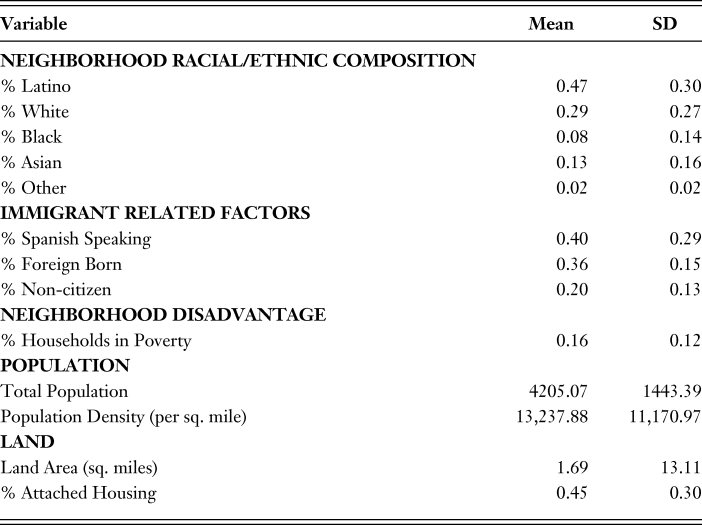
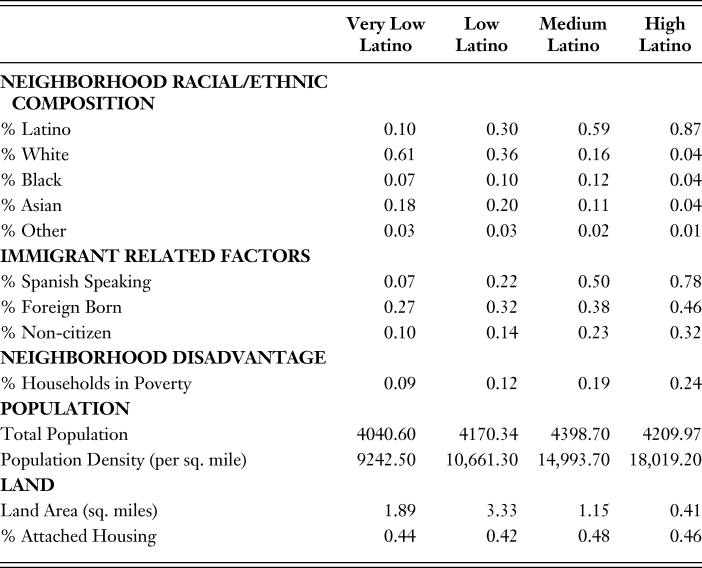
Table 1 shows the sociodemographic information for all Census tracts in the sample (n = 2315). Latinos (47%) comprise the largest racial/ethnic group in Los Angeles County, followed by Whites (29%), Asians (13%), Blacks (8%), and other (2%). Forty percent of Los Angeles County residents speak Spanish at home, over a third are foreign born, and 20% are not U.S. citizens. Sixteen percent of households live below the Federal Poverty Line. The mean total population is 4205 residents per tract, and Los Angeles County is densely populated with over 13,000 people per square mile on average. The mean tract size is 1.69 square miles, and the mean percent of attached housing in Los Angeles is 45%. Table 2 reports sociodemographic statistics by Latino quartile and shows that neighborhoods with a high percentage of Latino residents also have the highest poverty rate and are twice as dense as neighborhoods in the very low Latino quartile.
Sociodemographic Statistics for Sample of Los Angeles County Census Tracts (n = 2315)
Source: American Community Survey, 2006–2010.
Tract Sociodemographic Statistics by Latino Quartile (n = 2315)
Source: American Community Survey, 2006–2010.
Park Features in Los Angeles County
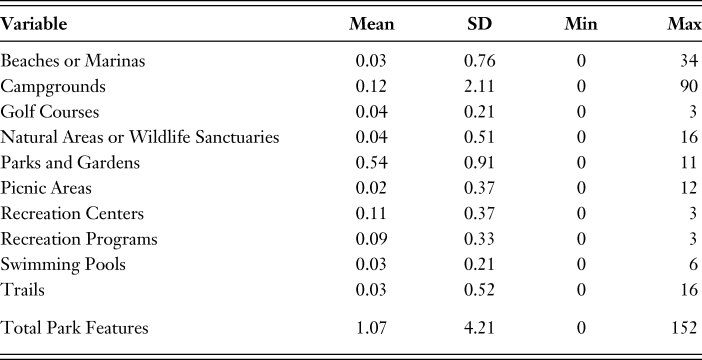
Table 3 shows the distribution for detailed park features for all tracts in the sample. The mean number of total park features per tract is 1.07 and the large range (0-152) indicates that there were many tracts containing zero park features and one tract with 152 park features. Recall that there are a variety of park features, so this is not interpreted as 152 stand-alone parks. Parks and gardens represent the most common category of park features with a mean of 0.54 per tract. The next most common park features in Los Angeles County were campgrounds (0.12), recreation centers (0.11), and recreation programs (0.09). Finally, the remaining park feature categories are natural areas (0.04), golf courses (0.04), pools (0.03), beaches (0.03), trails (0.03), and picnic areas (0.02).
Detailed Park Features for Sample of Los Angeles County Census Tracts (n = 2315)
Source: American Community Survey, 2006–2010.
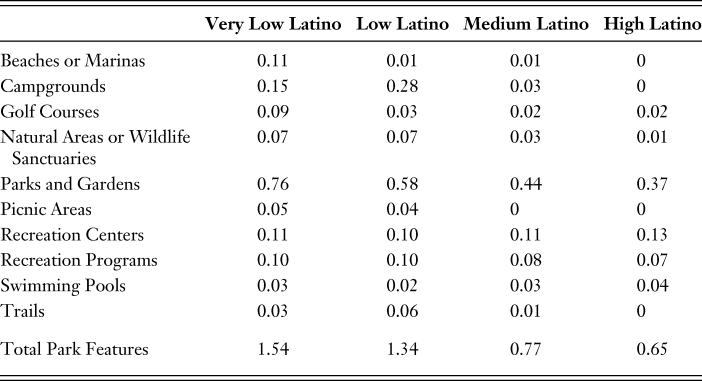
Table 4 presents the distribution of park features by Latino quartile. There is a clear pattern of park availability across Census tracts—as the proportion of Latino residents in the neighborhood increases, the mean number of total park features decreases. This finding provides preliminary support for the hypothesis that Latino neighborhoods will have fewer park features than non-Latino neighborhoods. The high percent Latino tracts have a mean of 0.65 total park features per tract, whereas the tracts with the lowest percent Latino have 1.54 park features per tract. High percent Latino neighborhoods have no campgrounds, trails, beaches, or picnic areas. Recreation centers and recreation programs appear to be evenly distributed across Latino quartiles.
Mean Number of Park Features per Tract by Latino Quartile (n = 2315)
Source: Location Management System, 2010.
Availability of Park Features in Latino Immigrant Neighborhoods
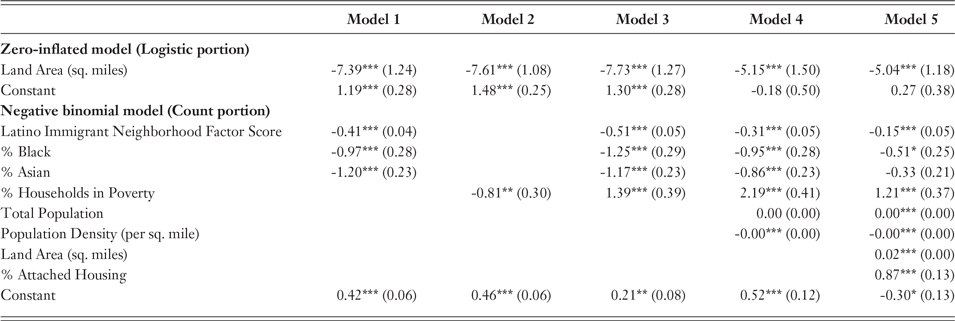
The ZINB regression results from both the logistic and the negative binomial portions of the model are presented in Table 5. The logistic or zero portion of the model, presented in the top panel (Table 5), shows a significant negative relationship between total land area and zero counts. Hence, smaller sized tracts are more likely to have no parks, which support our assertion that limited land area might explain the excess zeros in the data.
Results of Zero-Inflated Negative Binomial Regression (ZINB) Analysis for Total Park Features
Standard errors in parentheses
* p < 0.05, **p < 0.01, ***p < 0.001
The results from the negative binomial portion of the model, presented in the bottom panel (Table 5), support our hypothesis that Latino immigrant neighborhoods will have limited availability of total park features. Model 1 shows that Latino immigrant neighborhood factor score, percent Black, and percent Asian have significant negative relationships with the total number of park features in the neighborhood. Model 2 tested the bivariate association between percent poverty and total park features, in order to isolate the effect of neighborhood disadvantage on park availability. Results show that greater poverty was associated with fewer park features. However, when poverty and the neighborhood composition variables from Model 1 were included in the same model (Model 3), the association between poverty and parks became positive.
Model 4 introduces total population and population density, which both had very small effects. Although total population was not significant in this model, population density accounts for some of the relationship between Latino immigrant neighborhoods and number of park features because the Latino immigrant neighborhood factor score decreases, but remains statistically significant.
Model 5 introduces the variables that proxy for park need. Contrary to our expectations, the percent of attached housing was associated with more park features in the tract. The negative association between the neighborhood racial composition variables and park features remains, but percent Asian becomes non-significant. Interestingly, total population is now significant. Also, the coefficient for percent living in poverty decreased between Models 4 and 5, indicating that some of the effect of poverty was captured by the inclusion of the land variables in the model. Although the Latino immigrant neighborhood factor score coefficient decreased from -0.41 (Model 1) to -0.15 (Model 5), it remains statistically significant.
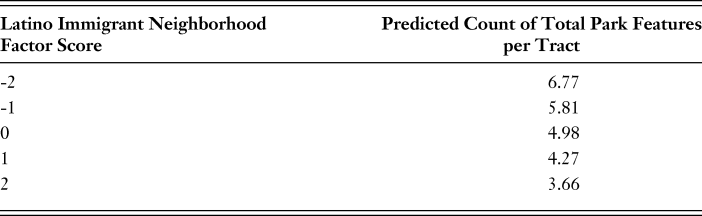
Table 6 shows that as Latino immigrant neighborhood factor score increases, the corresponding count of total park features drops. Specifically, neighborhoods with few Latino immigrant neighborhood features (i.e., low percent Latino, low non-citizen, low Spanish speaking, and low foreign born) had 6.77 park features per tract whereas neighborhoods with a high Latino immigrant neighborhood factor score (i.e., had high percentages of all these variables) had only 3.66 park features per tract.
Predicted Counts of Total Park Features for Each Level of Latino Immigrant Neighborhood Factor Score
Note: Increasing factor score means more Latino immigrant neighborhood features (i.e., high percent Latino, non-citizen, Spanish speaking, and foreign born residents). Predicted counts are based on Model 5 (Table 5) parameter estimates.
CONCLUSION
Prior work has shown that the availability of health-promoting parks and recreation resources vary by neighborhood racial/ethnic composition (Abercrombie et al., Reference Abercrombie, Sallis, Conway, Frank, Saelens and Chapman2008; Dahmann et al., Reference Dahmann, Wolch, Joassart-Marcelli, Reynolds and Jerrett2010; Duncan et al., 2012; Sister et al., Reference Sister, Wolch and Wilson2010; Wolch et al., Reference Wolch, Wilson and Fehrenbach2005). An important but often overlooked aspect of these disparities in the built environment is the historical context in which they evolved and their connection to White privilege (Chowkwanyun Reference Chowkwanyun2011; Pulido Reference Pulido2000). The goal of this article was to apply a CRT lens to enhance the study of race and the environment. Our strategy was twofold: first, provide appropriate social and historical background for our examination of racialized park disparities; and second, test the relationship between Latino immigrant neighborhoods and the availability of park features using recent data from Los Angeles.
A unique contribution of this study is our use of a CRT framework to highlight how race and racism shape urban development. Our historical overview of Latino neighborhoods and park planning in Los Angeles illustrates how the proximity of White neighborhoods to resources such as parks and beaches did not occur by chance. Viewed through the lens of White privilege, city planners, politicians, and White residents intentionally excluded people of color from parks, playgrounds, and neighborhoods through various means (e.g., de facto segregation, zoning laws, and fiscal discrimination) in order to preserve their power and wealth. This complex and important history is rarely discussed when examining the relationship between the built environment and racial disparities in health (Chowkwanyun Reference Chowkwanyun2011). We have focused on White privilege in our examination of race and the environment, but other features of a racialized society studied by CRT scholars, such as intersectionality and interest convergence, are also important avenues of scholarly inquiry. In addition, CRT methods such as revisionist interpretations of history and counter-storytelling can provide fresh perspectives and additional insights about the actors and social forces at play in creating environmental inequity (Taylor Reference Taylor2009).
Results from the bivariate analysis of detailed park features show patterns that are consistent with the racialized history of Los Angeles urban park development (Byrne and Wolch, Reference Byrne and Wolch2009; Culver Reference Culver, Deverell and Hise2010). Neighborhoods with a very low percentage of Latino residents had over twice as many total park features compared to highly concentrated Latino neighborhoods. Among the most heavily concentrated Latino neighborhoods, there were no beaches or marinas, campgrounds, trails, or picnic areas. However, recreation centers and recreation programs, neither of which requires open space or vast parkland (Dahmann et al., Reference Dahmann, Wolch, Joassart-Marcelli, Reynolds and Jerrett2010), were more evenly distributed across neighborhoods. These patterns are consistent with the racial geography of Los Angeles—Latino concentrated neighborhoods are located in the Eastern and Southern parts of Los Angeles (Moore and Vigil, Reference Moore, Vigil, Kivisto and Rundblad2000), far from the beaches and marinas on the predominantly White, West side of town (Culver Reference Culver, Deverell and Hise2010). These findings, while not surprising given the legacy of residential segregation, remind us that the history and impact of discriminatory planning practices should be taken into consideration when trying to account for current racial/ethnic differences in park usage, determining allocation of resources, and especially when planning future park development projects to ensure a more equitable urban park landscape.
Our findings from the regression analysis extend previous work that shows communities of color in Los Angeles have limited access to park resources (Dahmann et al., Reference Dahmann, Wolch, Joassart-Marcelli, Reynolds and Jerrett2010; Sister et al., Reference Sister, Wolch and Wilson2010; Wolch et al., Reference Wolch, Wilson and Fehrenbach2005). We focus on Latino immigrant neighborhoods specifically because historical processes of barrioization suggest that Latino immigrant neighborhoods are disenfranchised with respect to environmental and recreational resources (Boone et al., Reference Boone, Buckley, Morgan Grove and Sister2009; Johnson-Gaither Reference Johnson-Gaither2011). We find that neighborhoods with more Latino immigrant characteristics were associated with fewer total park features. Our findings suggest that Latino immigrant communities in Los Angeles are “park poor” and may be missing out on opportunities for recreation and physical activity that support healthy lifestyles (Moore et al., Reference Moore, Diez Roux, Evenson, McGinn and Brines2008). As our data show, many tracts are densely populated without adequate land area to build new parks. Therefore, an equitable park development plan should include maintenance and improvement of existing parks and programs, creative use of alternative resources (e.g., school yards), and reliable and affordable transportation to access environmental resources in other parts of the city (García and Flores, Reference García, Flores and Bullard2005; Sister et al., Reference Sister, Wolch and Wilson2010).
Our study has some limitations. Our interpretation of the data assumes more park features is better, but our total park features measure does not account for the quality of the park features. Questions related to the age, size, and condition of park features would be interesting avenues for future inquiry on disparities in park resources. An additional limitation of the current analysis is reliance on Census tracts to represent neighborhoods. In this study neighborhoods are treated as distinct entities, but Census tracts are arbitrary boundaries that residents regularly cross (Reardon Reference Reardon, Michael Oakes and Kaufman2006). Future work should consider the use of buffer zones (i.e., within a certain square mile radius) which might temper our findings of a negative association between Latino immigrant neighborhood characteristics and number of park features. Finally, due to the cross-sectional nature of this study, we cannot establish a causal relationship between neighborhood racial/ethnic composition and park features. Nevertheless, our inclusion of rich historical background reminds us that parks, like neighborhoods, were developed as racialized projects and can be thought of as spatial expressions of racial discrimination (Boone et al., Reference Boone, Buckley, Morgan Grove and Sister2009; Byrne and Wolch, Reference Byrne and Wolch2009).
Using a CRT framework, the current study examined White privilege within a historicized analysis in order advance our understanding about race and the environment and their consequences for health. In general, public health scholarship can benefit from the study of historical racism in order to better understand the root causes of present day racialized health inequities.



