


Introduction
An estimated 800,000 to 1.3 million puppies are purchased annually in the UK (Maher & Wyatt Reference Maher and Wyatt2021). Getting a new puppy is typically viewed as a happy time for owners as they look forward to welcoming a new dog into their family, often with high expectations of the benefits they will bring to human members of their households (Costa et al. Reference Costa, Nielsen, Christley and Hazel2023; Belshaw et al. Reference Belshaw, Brand, O’Neill and Packer2025a). However, evidence suggests many prospective owners are poorly equipped for successfully navigating the puppy-buying process. While the available time and energy as well as individual circumstances of prospective owners will likely affect their ability to thoroughly research where to optimally source their dog from (Holland Reference Holland2019), previous studies have found that one-tenth to one-fifth of owners did no research prior to the purchase of their puppy (Packer et al. Reference Packer, Murphy and Farnworth2017; Kuhl et al. Reference Kuhl, Dean, Quarmby and Lea2022; People’s Dispensary for Sick Animals [PDSA] 2024b). Entering the puppy-buying process as a well-informed consumer is of vital importance to animal welfare, due to increasing risks of purchasing puppies from puppy breeders and/or dealers whose prime concern is profit, who supply puppies who are born and raised in low welfare environments (e.g. ‘puppy farms’, illegal importations; Wauthier et al. Reference Wauthier and Williams2018; Packer et al. Reference Packer, Brand, Belshaw, Pegram, Stevens and O’Neill2021). Recent evidence suggests that only 14.6–19.5% of puppies in the UK come from breeders with a licence, with around 75–80% acquired from other unknown sources, including unlicensed breeders, puppy farms and illegal imports (Naturewatch 2025).
Following the implementation of The Animal Welfare (Licensing of Activities Involving Animals) (England) Regulations 2019 (named Lucy’s Law) in April 2020 (UK Government 2019), the Animal Welfare (Licensing of Activities Involving Animals) (Scotland) Regulations 2021 in September 2021 (UK Government 2021a) and The Animal Welfare (Licensing of Activities Involving Animals) (Wales) Regulations 2021 in September 2021 (UK Government 2021b), it has been illegal to sell a puppy via a third-party, e.g. from a pet shop, or to sell a puppy without the buyer seeing the puppy at the place they were bred and interacting with their mother. The enactment of this legislation was largely driven by an aim to combat welfare issues relating to large-scale dog production by ‘puppy-farms’ both in the UK and abroad which are widely perceived as operating with little evidence of concern for the welfare of the breeding stock or resulting puppies (McMillan Reference McMillan2017). Furthermore, it is illegal in the UK (England, Wales, Scotland and Northern Ireland) to sell any puppy aged under eight weeks (56 days) (UK Government 2013, 2018, 2021a,b). Despite these clear legislative rules that were put in place to protect both puppies and their new owners, many puppy buyers continue to engage in non-recommended purchasing behaviours and risk inadvertently supporting illegal sources. For example, there is evidence that prior to the COVID-19 pandemic, many owners purchased puppies in the UK that were too young for legal sale (e.g. one-quarter of puppies purchased in 2016–2019 were aged under 8 weeks at sale; Kinsman et al. Reference Kinsman, Casey, Knowles, Tasker, Lord, Da Costa, Woodward and Murray2020), or purchased puppies without their mother present (e.g. 14% in 2019 [Packer et al. Reference Packer, Brand, Belshaw, Pegram, Stevens and O’Neill2021]; 8.1% in 2016–2019 [Kinsman et al. Reference Kinsman, Casey, Knowles, Tasker, Lord, Da Costa, Woodward and Murray2020]), or away from their breeder’s property (15% in 2019; Packer et al. Reference Packer, Brand, Belshaw, Pegram, Stevens and O’Neill2021). Buyers engaging in sales of this nature risk being so-called ‘Petfished’, a term coined by the UK Department for the Environment, Food & Rural Affairs (DEFRA) to describe situations where “unscrupulous sellers pretend that the puppy they’re selling comes from a happy home, but in reality, the animal may have been bred or kept in poor conditions” (DEFRA 2021). These low-welfare breeding establishments may be located within or outside of the UK. It is increasingly recognised that the UK demand for puppies is often met by overseas ‘suppliers’ breeding puppies in poor conditions in Central and Eastern Europe which then undergo illegal importation over long routes into the UK (Belshaw & Packer Reference Belshaw and Packer2025; Belshaw et al. Reference Belshaw, Youens, Lord and Packer2025b). This process can add further severe welfare impacts to any intrinsic breeding issues (Maher & Wyatt Reference Maher and Wyatt2021).
There are growing concerns regarding the long-term health and welfare of puppies originating from illegal and/or low-welfare sources. Some evidence already exists regarding negative behavioural outcomes of puppies acquired from such sources, with puppies purchased via pet shops (Jagoe Reference Jagoe1994; McMillan et al. Reference McMillan, Serpell, Duffy, Masaoud and Dohoo2013; Casey et al. Reference Casey, Loftus, Bolster, Richards and Blackwell2014; Pirrone et al. Reference Pirrone, Pierantoni, Pastorino and Albertini2016), via puppy farms (Wauthier et al. Reference Wauthier and Williams2018), acquired under 8 weeks of age, or purchased without the mother and father present (Pierantoni et al. Reference Pierantoni, Albertini and Pirrone2011; Westgarth et al. Reference Westgarth, Reevell and Barclay2012) reported to later exhibit increased levels of problem behaviours as adults. In contrast, the longer-term physical health consequences of acquiring a dog from low-welfare and/or illegal sources, and from owners not following recommended purchasing behaviours have been little studied. To the authors’ knowledge, only one 30 year old study exists that investigated selling characteristics on short-term physical health outcomes. That 1993 study reported that puppies separated from their mother at six weeks of age displayed greater weight loss, disease susceptibility and mortality by six months of age than puppies separated from their mother at 12 weeks old (Slabbert & Rasa Reference Slabbert and Rasa1993). Multiple factors may contribute to any increased risk of physical or behavioural health issues later in life for puppies purchased from low-welfare sources. These factors include that these puppies may be prone to genetic problems (e.g. due to poor breeding choices and lack of health screening; Wauthier et al. Reference Wauthier and Williams2018), receive inadequate veterinary care (e.g. due to deficits in preventative healthcare for both puppies and their mothers; PDSA 2024a), have nutritional deficiencies (e.g. due to poor diet in early developmental stages; Royal Society for the Prevention of Cruelty to Animals [RSPCA] Australia 2024), and are at higher risk of disease transmission (e.g. due to overcrowded and unsanitary living conditions; Dendoncker et al. Reference Dendoncker, Moons, Sarrazin, Diederich, Thiry, de Keuster and Dewulf2018). However, robust evidence to support these concerns is lacking, as breeders producing puppies and dealers trading in puppies reared under these conditions are less likely to allow/engage in formal research of their puppies, and thus proxy measures (e.g. illegal sales indicators, such as puppies being sold without their mothers, under age, and/or away from their place of birth) are likely the most accessible identifiers of such provenance.
The COVID-19 pandemic precipitated a global surge of puppy acquisitions, commonly referred to as ‘Pandemic Puppies’ (Packer et al. Reference Packer, Brand, Belshaw, Pegram, Stevens and O’Neill2021, Reference Packer, Brand, Belshaw, Pegram, Dale, Stevens and O’Neill2023; Siettou Reference Siettou2021; Brand et al. Reference Brand, O’Neill, Belshaw, Pegram, Stevens and Packer2022, Reference Brand, O’Neill, Belshaw, Dale, Merritt, Clover, Tay and Packer2024; Burnett et al. Reference Burnett, Brand, O’Neill, Pegram, Belshaw, Stevens and Packer2022). Motivated by longer-term welfare concerns for these puppies, the Royal Veterinary College (RVC) launched the ‘Pandemic Puppies Research Programme’ (The Royal Veterinary College 2024) as a longitudinal cohort study in 2020. This cohort study used repeated online questionnaires to explore pre-purchase and purchase decisions of owners and the health and behaviour of both puppies bought before the pandemic (23 March–31 December 2019) and those ‘Pandemic Puppies’ bought during the early phase (23 March–31 December 2020) and mid-phases (23 March–31 December 2021) of the pandemic (Packer et al. Reference Packer, Brand, Belshaw, Pegram, Stevens and O’Neill2021, Reference Packer, Brand, Belshaw, Pegram, Dale, Stevens and O’Neill2023). Amongst the 2020-acquired Pandemic Puppy cohort, there was an overall increase in owner purchasing behaviours which obscured the transparency of how and from where their puppies were bred and raised, increasing the risk of acquisition from poor-welfare sources (Packer et al. Reference Packer, Brand, Belshaw, Pegram, Stevens and O’Neill2021, Reference Packer, Brand, Belshaw, Pegram, Dale, Stevens and O’Neill2023; Brand et al. Reference Brand, O’Neill, Belshaw, Pegram, Stevens and Packer2022). For example, owners who purchased a puppy during the 2020 phase of the pandemic were less likely to view their puppy in-person prior to purchase, less likely to see the mother at purchase and more likely to collect their puppy away from their place of birth compared with owners who purchased puppies pre-pandemic in 2019 (Packer et al. Reference Packer, Brand, Belshaw, Pegram, Stevens and O’Neill2021, Reference Packer, Brand, Belshaw, Pegram, Dale, Stevens and O’Neill2023; Brand et al. Reference Brand, O’Neill, Belshaw, Pegram, Stevens and Packer2022). Some of these negative changes persisted and became normalised into 2021 puppy-purchasing practices. For example, the shifts during 2020 towards owners viewing their puppy pre-purchase over video calls or via video recordings/photos rather than in-person, and for collecting their puppy from outside of the seller’s property rather than inside had persisted into 2021 and not returned to pre-pandemic levels (Packer et al. Reference Packer, Brand, Belshaw, Pegram, Dale, Stevens and O’Neill2023). Year-on-year significant rises in the proportion of puppies sold with an international pet passport were also documented between 2019 and 2021, with an increasing number of these puppies being under the minimum legal age for import into the UK at sale (Packer et al. Reference Packer, Brand, Belshaw, Pegram, Dale, Stevens and O’Neill2023). The Pandemic Puppy Research Programme therefore capitalised upon this ‘natural experiment’ to identify associations between indicators of poor acquisition methods that were inflated during this period and a range of health and welfare outcomes in later life for these dogs.
In addition to owner purchasing behaviours and measures of the health of puppies as they aged, owner perceptions relevant to canine health were also explored in this research programme. Owner expectations of veterinary costs are often not in line with reality, with over half (52%) of UK dog owners finding costs of veterinary practice visits greater than expected (Anderson et al. Reference Anderson, Holland, Casey, Cooper and Christley2024). Financial expectations are crucial to animal welfare, influencing whether, when, and what care is sought, and may serve as a measure of preparedness for dog ownership (Anderson et al. Reference Anderson, Holland, Casey, Cooper and Christley2024; Hickey et al. Reference Hickey, Smith and Shields2024).
Based on data collected within the Pandemic Puppy Research Programme, the current study aimed to examine the impact of puppy-purchasing behaviours on later health outcomes of dogs at 21 months of age in a cohort of UK Pandemic Puppies. Specifically, the study aimed to report the frequency of and identify risk factors for:
-
1. Owner-reported health disorders: The number of owner-reported health disorder groups per dog at 21 months old;
-
2. Veterinary care: Owner expectations vs realities of veterinary financial costs at 21 months compared to during early puppyhood (while ≤ 7 months of age in 2020).
In addition to risk factors linked to how and from where a puppy was acquired, a wide range of contextual risk factors for health were also explored and/or statistically accounted for, including owner/household demographics, dog demographics, and early-life (puppy) health and veterinary care.
Materials and methods
Ethics approval statement and ethical considerations
This study was granted ethical approval from the Social Science Research Ethical Review Board at the Royal Veterinary College (RVC; URN: SR2020-0259). All participants included in the analysis provided informed consent prior to entering the cohort and at each questionnaire time-point. Dogs included in the survey were owned dogs belonging to owners who voluntarily signed up to the Pandemic Puppies project to answer questions concerning their dog’s health and behaviour. Owners were directed to contact their veterinary practice or an animal behaviourist if they had any concerns about their dog’s health or behaviour, respectively, with resources provided to find veterinary surgeons and accredited animal behaviourists if required. Additionally, owners were provided with resources for mental health support from the NHS (National Health Service) and Samaritans due to potential challenges owners may have experienced during the COVID-19 pandemic.
Survey design and content
A longitudinal online survey design was used to explore the impact of owner purchasing motivations and behaviours and puppies’ early-life experiences on later health outcomes at 21 months of age. As previously described (Brand et al. Reference Brand, O’Neill, Belshaw, Dale, Merritt, Clover, Tay and Packer2024), the Pandemic Puppies Research Programme included an online questionnaire that was disseminated to owners of dogs enrolled in the Pandemic Puppies cohort when their dog reached 21 months of age. This questionnaire included several question sets exploring dog health outcomes, such as mortality, the number and type of owner-reported disorders, preventative healthcare, vaccination status, diet, accessed veterinary care and owner perceptions of the expectations vs realities of veterinary costs. Full information on the questions included in the current analysis are described below, with specific wording of questions relevant to dog health outcomes included in the current study available in File S1 (Supplementary material). The questionnaire also covered other topics that were not considered within the current analysis.
In addition, data regarding owner and dog demographics, and purchase motivations and behaviours were available for the current analysis from the original 2020 questionnaire that had been disseminated soon after the puppies were acquired (Packer et al. Reference Packer, Brand, Belshaw, Pegram, Stevens and O’Neill2021; Brand et al. Reference Brand, O’Neill, Belshaw, Pegram, Stevens and Packer2022). Updated dog neuter and insurance status were re-collected during the 21-month questionnaire. If participants had purchased more than one puppy during 23 March and 31 December 2020 they were asked to answer the questionnaire for the youngest puppy and, if the owner had bought littermates, they were asked to answer the questionnaire for the puppy whose name came first alphabetically.
Participant recruitment
Owners completing the first 2020 Pandemic Puppies questionnaire (Packer et al. Reference Packer, Brand, Belshaw, Pegram, Stevens and O’Neill2021; Brand et al. Reference Brand, O’Neill, Belshaw, Pegram, Stevens and Packer2022) who had provided a valid email address and indicated willingness to be contacted regarding further research were sent a unique link to the 21-month questionnaire two weeks prior to their dog turning 21 months of age (639 days). Up to 28 days was allowed for completion. As previously reported (Brand et al. Reference Brand, O’Neill, Belshaw, Dale, Merritt, Clover, Tay and Packer2024), the 21-month questionnaire was hosted using a version of the Vanderbilt University’s Research Electronic Data Capture platform (REDCap) provided by the RVC, a part of the REDCap Consortium (Harris et al. Reference Harris, Taylor, Thielke, Payne, Gonzalez and Conde2009, Reference Harris, Taylor, Minor, Elliott, Fernandez, O’Neal, McLeod, Delacqua, Delacqua, Kirby, Duda and Consortium2019).
Data cleaning and variable categorisation
Raw data were exported from REDCap into Microsoft Excel® for cleaning prior to data analysis. Dogs were categorised by breed/crossbreed into three groups: purebred; designer crossbred; or crossbred (Brand et al. Reference Brand, O’Neill, Belshaw, Pegram, Stevens and Packer2022; Burnett et al. Reference Burnett, Brand, O’Neill, Pegram, Belshaw, Stevens and Packer2022). Dogs in the purebred group were further categorised according to the Royal Kennel Club (UK) breed grouping where applicable (The Royal Kennel Club 2024). Dog breed was included in analyses as the top 12 most common individual breeds/designer crossbreeds in 21-month survey responses plus ‘other purebred/designer crossbreeds’. Dog breed/crossbreed information was also used to assign a typical adult bodyweight (kg) per dog as previously described (Brand et al. Reference Brand, O’Neill, Belshaw, Pegram, Stevens and Packer2022) that was categorised as ≤ 10 kg, 10 to < 20 kg, 20 to < 30 kg, 30 to < 40 kg, and ≥ 40 kg.
Owner-reported canine health disorder groups
Owners answered three questions relating to their dog’s health between the first survey when dogs were aged ≤ 7 months and the 21-month survey:
-
A. A free-text question regarding new health problem(s) their dogs had been to a veterinary clinic(s) for, and related treatments, herein referred to as ‘veterinary treated disorders’;
-
B. A free-text question regarding any ongoing health problem(s) that still required appointments/treatment/monitoring, herein referred to as ‘ongoing disorders’; and
-
C. A multiple-choice-based question asking whether their dog had shown any of a list of 22 disorders, regardless of whether veterinary care had been sought, with a free-text option allowing the owner to record additional disorders, herein referred to as ‘all disorders’ (File S1; Supplementary material).
Disorder data from each of the three questions were manually mapped to a list of VetCompass disorder groups for further analysis (O’Neill et al. Reference O’Neill, James, Brodbelt, Church and Pegram2021). Briefly, disorder groups mapped the original precise diagnosis terms to a general level of diagnostic precision (e.g. inflammatory bowel disease would map to a gastrointestinal disorder group; vomiting, diarrhoea and eating non-food items would map to enteropathy).
The data from the ‘all disorders’ question set above that captured information on all disorders regardless of whether or not owners had sought veterinary advice or not was curated to identify the number of disorder groups dogs had experienced since the time of the 2020 questionnaire. Owners were presented with 22 common health disorders in dogs (e.g. Diarrhoea and/or runny faeces, Runny and/or red eye[s]) plus a free-text box, and asked to tick one of the following answer options ‘No’, ‘Yes, but my dog did not need veterinary advice/to attend a veterinary appointment’, ‘Yes, and my dog did need veterinary advice/to attend a veterinary appointment’, or ‘I’m not sure/I can’t remember’. Both ‘yes’ responses were collapsed to one category for analyses, regardless of whether veterinary advice or care was sought.
Free-text responses were manually cleaned and allocated to the most appropriate disorder group term based on standard VetCompass terms (O’Neill et al. Reference O’Neill, James, Brodbelt, Church and Pegram2021). The 22 precise disorders provided in the questions were re-categorised according to disorder groups, and the re-categorised free-text options were combined with these answer options. Grouped level disorders were reported rather than precise level disorders due to these data being owner-reported. Although limited published data indicate owner reports can be reliably validated by veterinary records (Roine et al. Reference Roine, Uusitalo and Hielm-Björkman2016; Schmid et al. Reference Schmid, Sexton, Yoerger, Kauffman, McClelland, Consortium, Creevy and Ruple2026), this has not been tested for all disorder, and so caution was exercised to not rely on the accuracy of the reports at a precise level. Duplicates were not summed; only a yes/no for each disorder group was recorded.
For both ‘veterinary treated’ and ‘ongoing disorders’, responses of ‘No’ for the relevant question (‘In your own words, please describe any health problem[s] and related treatments your dog has been to a veterinary clinic[s] for since the last survey [in November/December 2020]’ or ‘Does your dog have any ongoing health problem[s] that still require appointments/treatment/monitoring?’) and ‘No’ in answer to ‘Has your dog attended a veterinary clinic(s) or had a home visit from a veterinary professional for any health problem(s) since the last survey (in November/December 2020)’, were classed as zero disorders. ‘I’m not sure’/‘I can’t remember’ responses to veterinary treated or ongoing disorders, as appropriate, were classed as missing data. ‘Yes’ responses with free-text on veterinary-treated or ongoing disorders, as appropriate, were included in veterinary-treated and ongoing disorder count data. ‘Yes’ responses with free-text which did not include further details on the disorder(s) were classed as ‘Disorder(s) unrecorded’ and these data were not included in disorder prevalence estimates due to missing information and uncertainty on the number and nature of disorders.
For each dog, the number of disorder groups was summed to create a continuous variable (‘veterinary treated’, ‘ongoing’ and ‘all’). The confidence interval estimates for the numbers of disorder groups overall were derived from standard errors based on approximation to a normal distribution for health disorders with ten or more events (Kirkwood & Sterne Reference Kirkwood and Sterne2003) or Wilson approximation for disorders with fewer than ten events (Agresti & Coull Reference Agresti and Coull1998). The re-categorisation from precise to group level terms of the answer options allowed disorder groups reported since the time of the 2020 questionnaire to be analysed as follows: Total number of disorder groups combined from ‘veterinary treated’, ‘ongoing’ and ‘all’ variables.
Number of veterinary clinic visits or home visits from a veterinary professional
Owners were asked whether their dog had attended a veterinary clinic(s) or had a home visit from a veterinary professional for any health problem(s) since the previous questionnaire (in puppyhood aged ≤ 7 months in November/December 2020). The answer options were ‘No’, ‘I can’t remember’ and ‘Yes (please give an approximate total number of visits for health problems since the last questionnaire below as a whole number)’. The ‘No’ responses were treated as zero visits. The number of visits inputted by owners who answered ‘Yes’ were used as a continuous variable to investigate potential associations with the number of owner-reported visits to a veterinary clinic or home visits from a veterinary professional. ‘I can’t remember’ and ambiguous responses were classed as missing data.
Total owner-reported veterinary financial costs
Owners were asked to report in a free-text box the approximate total cost (in £) of veterinary care for their dog’s health problem(s) since the previous questionnaire (in November/December 2020). The question specified ‘health problems’, to exclude preventative care, and specified answers were required to also include any money spent on health problems that formed part of an insurance claim, if relevant, and any monies spent on prescription diets rather than routine or preventative care, such as vaccinations, neutering, microchipping, nail clipping, worming, or routine check-ups, for example, which was specified in the question.
Owner expectations of veterinary costs
Owners were asked to compare their expectations when they first acquired their dog with the reality of the amount they had spent at veterinary clinic(s) on their dog’s health since the previous questionnaire (in November/December 2020) and report this as ‘Less than I expected’, ‘As I expected’, ‘More than I expected’ or ‘I’m not sure/I can’t remember’ (File S1; Supplementary material). For the purposes of analysis: ‘Less than I expected’ and ‘As I expected’ were combined as ‘As or less than I expected’, with ‘More than I expected’ the outcome of interest from an animal welfare perspective, as has been previously explored (Anderson et al. Reference Anderson, Holland, Casey, Cooper and Christley2024). Missing data and ‘I’m not sure/I can’t remember’ responses were treated as missing data. This new binary outcome variable (‘As or less than I expected’ vs ‘More than I expected’) was used to investigate associations of dog, owner and acquisition-based factors on whether owners had spent more than they expected at veterinary clinics on their dog’s health since the first questionnaire in puppyhood (in November/December 2020).
Quantitative analysis
Statistical analysis was carried out using IBM SPSS® Statistics v29 (SPSS Inc, Chicago, IL, USA). Demographic data from the 21-month survey (back-coded from the first questionnaire in puppyhood (in November/December 2020) as appropriate) were described. Descriptive statistics (frequency and percentage) were calculated for all categorical variables. The distribution and normality of continuous data were determined by visually inspecting histograms and descriptive statistics calculated (frequency and percentage).
Separate risk-factor analysis modelling was carried out to evaluate each of two outcome variables:
-
1. Total number of owner-reported disorder groups per dog (continuous variable); and
-
2. Owner expectations of veterinary costs (binary categorical variable).
The full list of risk factors (n = 39) assessed during univariable analyses for each of the outcomes above is available in File S2 (Supplementary material). These included owner/household demographics, dog demographics, dog early life healthcare, purchase motivations and behaviours, and indicators of potential illegal puppy sale (as previously described; Brand et al. Reference Brand, O’Neill, Belshaw, Dale, Merritt, Clover, Tay and Packer2024). Binary logistic regression modelling was used to evaluate the veterinary cost expectation outcome variable and generalised linear mixed modelling was used to evaluate number of owner-reported disorder groups (all disorders), with the same approach to model-building used across both models. Risk-factor analysis modelling was also conducted for number of veterinary clinics or home visits from a veterinary professional (continuous variable), and total owner-reported veterinary costs (continuous variable) and the results of these models can be found in File S3 (Supplementary material).
Multicollinearity was assessed by examining collinearity diagnostics and standard errors of models for inflated values. Risk factors liberally associated with the outcome variable (P ≤ 0.2) in univariable analysis were taken forward to multivariable modelling. Model building used a process of manual backwards stepwise elimination. Following an ‘information theory’ approach (Burnham & Anderson Reference Burnham and Anderson2002), some variables (owner gender, owner age, first-time ownership, dog neuter status, dog sex, insurance status, dog breed [12 most common breeds in 21-month survey responses]) which were considered a priori factors of interest were included in the final model regardless of statistical significance. Model building used the likelihood ratio test to compare between models, with P < 0.05 taken as significance. Model fit for each final multivariable model was further assessed by Hosmer-Lemeshow test, adjusted r-square values and Akaike Information Criterion, for each model as appropriate. Statistical significance for the final models was set at the 5% level.
Confounding variables were assessed by re-adding variables which were previously dropped and checking for substantial changes (> 20%) to the odds ratio (OR) of variables in the existing final model or any other independent variable following its addition.
Results
Valid responses were received from n = 1,007 of the 1,742 (57.81%) Pandemic Puppies 2020 participants that were invited to respond. Of these 1,007, n = 9 (0.89%) reported their dog had died under the age of 21 months, of which five were euthanased (55.6%), and four died unassisted (44.4%) (two died following road traffic accidents (50.0%) and two died from other causes (50.0%)). A further n = 13 owners had rehomed their dog under the age of 21 months. The final analysis for the current study therefore included n = 985/1,007 (97.8%) dogs and their owners, that are described from here.
Dog demographics and acquisition factors
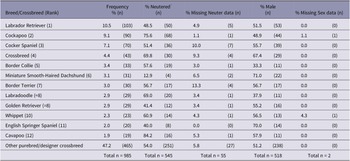
Among the 985 dogs in the current analysis, there was a similar proportion of male and female dogs (male: 52.7%; n = 518/983). Over two-thirds (68.8%) of dogs were purebred (n = 678/985), whilst 26.8% were designer crossbreds (n = 264/985) and 4.4% were crossbreeds (n = 264/985). The 12 most frequent dog breeds/crossbreeds owned by 21-month questionnaire respondents are described in Table 1.
Most frequent individual dog breeds/crossbreeds in the UK Pandemic Puppies 21-month cohort (n = 985) with % neutered and % male within each breed. Totals for neuter status and sex lower than overall n due to missing data

† Neutered by 21 months of age.
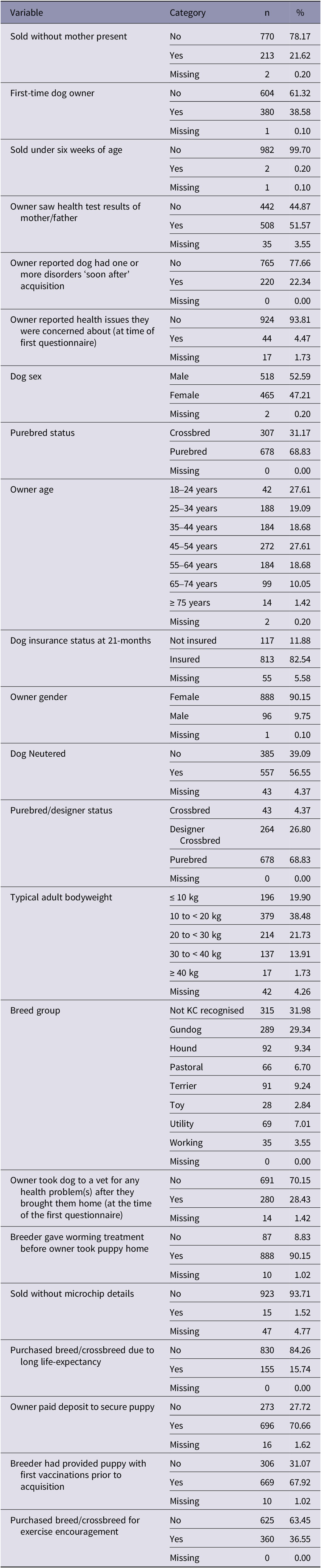
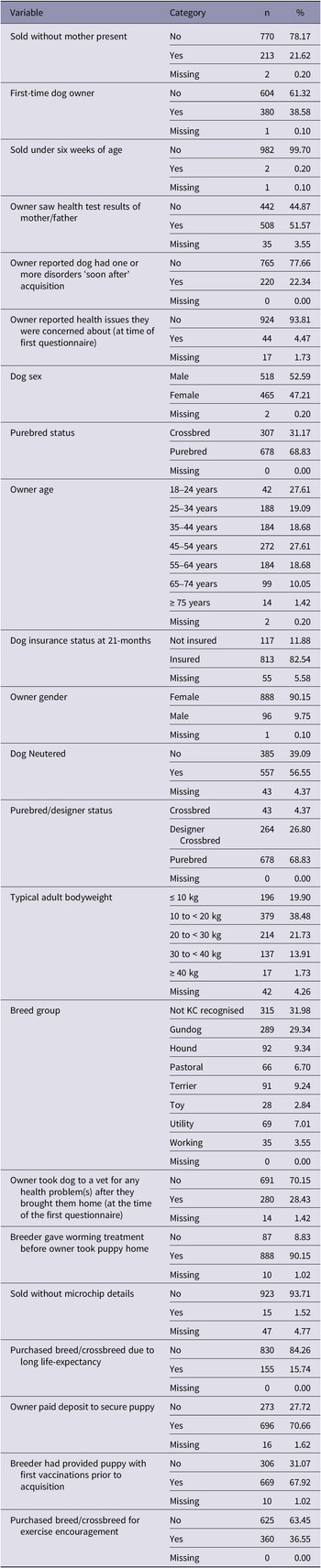
Further variables relevant to dog acquisition and demographics that were explored in the statistical modelling are described in Table 2.
Description of demographic and acquisition-related factors in the UK Pandemic Puppies 21-month cohort (n = 985)
Breeding and neutering plans
Neuter information was available for 95.63% of dogs (942/985), with 59.13% of dogs neutered (n = 557/942). Sex-neuter status was available for 940/985 dogs (95.43%). There were 187/385 (48.57%) entire males and 198/385 (51.43%) entire females.
Of the 385 entire dogs at 21 months, n = 294 (76.36%) owners reported that they did not plan to breed from their dog, with 85/385 (22.08%) reporting that they had not bred from their dog yet, but planned to in the future, while n = 2/385 (0.52%) had already bred from their dog.
Of the 385 owners of the entire dogs, 64.16% (n = 247/385) were undecided on whether to neuter their dog, while the remaining n = 138/385 (35.84%) intended to in the future. Of the owners who provided further information regarding the age at which their dog was neutered, 8.81% were neutered under 6 months (n = 48/545), 91.01% (n = 496/545), neutered over 6 months without breeding from them first whilst one owner neutered their dog aged over 6 months after breeding from them first.
Microchipping and insurance
Overall, 922/985 owners (93.60%) provided information on whether their dog had been microchipped and the details kept current on a microchip database. Only 1/922 (0.11%) owner reported their dog had not been microchipped by 21 months of age. Of the 921 owners whose dogs were microchipped, 896 (97.29%) reported a microchip database held details of their current name and/or address, whilst 22 (2.39%) had failed to update the microchip to include changes of name/address, and the remaining 3 (0.33%) were unsure whether the microchip details were current. Of the 930 dogs with insurance status reported, 813 (87.42%) were insured for the cost of veterinary advice/treatment at 21 months.
Vaccination and preventative parasite control in 21 month old dogs
Of the 929/985 (94.31%) owners who provided information, 869/929 (93.54%) reported their dog had received their initial vaccinations as a puppy and that they planned for them to have an annual booster or had already had an annual booster. Fifty-two dogs (5.60%) had received their initial vaccinations as puppies, but their owners did not plan to continue with an annual booster in the future. The remaining 8/929 owners (0.86%) reported that their dogs had not had their initial vaccinations as a puppy: four (0.43%) owners had actively chosen not to vaccinate their dogs and did not plan to in the future, two (0.22%) owners had not had their dogs vaccinated but planned to in the future and two (0.22%) owners had not had their dogs vaccinated and were unsure whether to vaccinate their dogs in the future. Of the 58/929 (6.24%) owners who did not plan to, or were unsure if they wanted to vaccinate their dog in the future, 20.68% (n = 12/58) had used blood testing/titre testing to assess whether their dog needed to be vaccinated, 41.38% (n = 24/58) planned to use titre testing in the future but had not done so at the time of the questionnaire, 12.07% (n = 7/58) were unsure or had not heard of titre testing, and 25.86% (n = 15/58) were not using or planning to use titre testing in the future.
Of 930/985 (94.42%) owners who provided information on whether their dog received regular flea and/or worming treatment, 881/930 (94.73%) reported that their dog received regular flea and/or worming treatment, with 695/881 (78.89%) of these acquiring these treatments through a veterinary clinic or online via a prescription, while 19.18% (n = 169/881) acquired these treatments at a shop or online without prescription. A minority of owners used natural or homeopathic remedies (3.63%, n = 32/881), while 49/930 (5.27%) had chosen not to use any products regularly to prevent fleas and/or worms.
Disorder count
Disorders for which veterinary care was sought (Veterinary treated disorders)
Of the 985 dogs in the analysis, n = 538 (54.6%) owners reported health problems that their dog had received veterinary care for during the period between the 2020 questionnaire and turning 21 months of age. Twenty-four owners (2.4%) left the question blank or had indicated that they could not remember whether their dog had attended a veterinary clinic for a health problem since the time of the last survey and were treated as missing accordingly, while eighteen owners (1.8%) indicated their dog had attended a veterinary clinic for health problems but did not provide further details and so were classified as ‘disorder(s) unrecorded’. The remaining n = 405 (41.1%) had not taken their dog to a veterinary clinic for a health problem since the time of the last survey, answered ‘none’ or gave details of only routine, prophylactic veterinary visits encompassing vaccinations and neuter surgery.
Excluding missing data and ‘disorder(s) unrecorded’, the median disorder count per dog of these n = 943 dogs was 1 disorder (interquartile range [IQR] 0–2, range 0–8) encompassing 43 grouped disorder categories. The most prevalent disorder group categories were enteropathy (n = 170, prevalence 18.0%, 95% confidence interval [CI]: 15.57–20.48), traumatic injuries (n = 97, prevalence 10.3%, 95% CI: 8.35–12.23), ophthalmological disorders (n = 78, prevalence 8.3%, 95% CI: 6.51–10.03), ear disorders (n = 68, prevalence 7.2%, 95% CI: 5.56–8.86), musculoskeletal disorders (n = 64, prevalence 6.8%, 95% CI: 5.18–8.39), and skin disorders (n = 64, prevalence 6.8%, 95% CI: 5.18 8.39) (full details in File S4; Supplementary material).
Chronic health disorders requiring ongoing veterinary care (Ongoing disorders)
From the n = 985 dogs, n = 947 owners (96.14%) provided subsequent information regarding ongoing health problems requiring monitoring/treatment. Of these owners, n = 855 (90.29%) indicated in closed-ended questions that their dog had no ongoing health problems requiring monitoring/treatment. A total of n = 92 owners left additional free-text regarding ongoing health problems requiring monitoring/treatment. Of these, n = 11 left responses detailing costs, hydrotherapy, or check-ups, but did not give an indication of the specific health problem being managed and were categorised as ‘disorder(s) unrecorded’. The remaining n = 81 responses indicated their dog did have ongoing health problems requiring monitoring/treatment encompassing 25 grouped level disorder terms. Excluding missing data and ‘disorder(s) unrecorded’, the median disorder count was 0 ongoing disorders per dog (IQR 0–0, range 0–3) (n = 936). The most prevalent disorder group categories for ongoing health problems requiring monitoring/treatment were skin disorders (n = 28, prevalence 2.99%, 95% CI: 1.90–4.08), musculoskeletal disorders (n = 13, prevalence 1.39%, 95% CI: 0.64–2.14), behaviour disorders (n = 8, prevalence 0.85%, 95% CI: 0.43–1.68), ear disorders (n = 7, prevalence 0.75%, 95% CI: 0.36–1.54%) and enteropathy (n = 4, prevalence 0.43%, 95% CI: 0.17–1.09) (full details in File S4; Supplementary material).
Common health disorders regardless of whether or not veterinary advice was sought (all disorders)
From the n = 985 dogs, n = 931 owners (94.52%) answered a separate multiple-choice question that also offered a free-text answer option reporting what disorder(s) their dog had experienced since the previous questionnaire in November/December 2020, regardless of whether they had sought veterinary advice or not. The most prevalent disorder group categories for all health disorders, regardless of whether veterinary advice was sought, were enteropathy (n = 702, prevalence 75.4%, 95% CI: 72.54–78.06), skin disorder (n = 249, prevalence 26.8%, 95% CI: 24.00–29.68), ophthalmological disorders (n = 234, prevalence 25.1%, 95% CI: 22.45–28.02), upper respiratory tract disorders (n = 172, prevalence 18.5%, 95% CI: 16.11–21.10) and ear disorders (n = 164, prevalence 17.6%, 95% CI: 15.30–20.19). Overall, 91.14% (n = 851/931) of owners reported their dog had experienced at least one health problem from this list/free-text answers; the median disorder count per dog was 2 (IQR 1–3, range 0–9) (full details in File S4; Supplementary material).
Factors associated with ‘all disorders’ reported between the first questionnaire in puppyhood and reaching 21 months of age
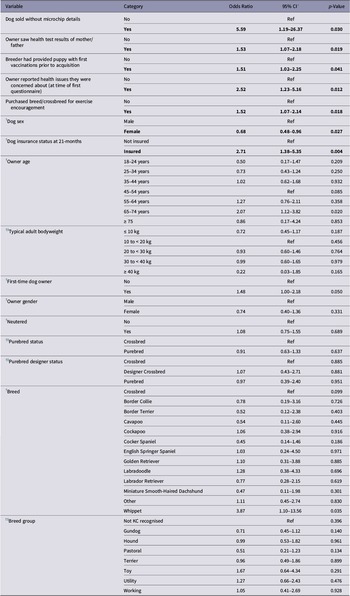
Seventeen of the 39 variables assessed using univariable generalised linear mixed modelling were liberally associated (P < 0.2) with the number of disorder groups reported in each dog (see File S5; Supplementary material). The final multivariable model included nine significant variables (Table 3). Five variables were retained in the final model to improve fit, but were not significantly associated with the outcome following manual addition of variables included based on information theory. The marginal pseudo R-squared of the final model was 0.135 meaning the model explained 13.5% of variability in the number of disorder groups (Table 3). Dogs that were sold under six weeks of age, sold without their mother present, owned by a first-time dog owner, where their owner saw health test results of their mother/father, whose owner reported their dog had one or more disorders ‘soon after’ acquisition or reported health issues they were concerned about at time of first ‘puppyhood’ questionnaire, were male or purebred were associated with a higher number of health disorders at 21 months.
Final multivariable generalised linear mixed model evaluating risk factors association with the number of ‘all disorders’ reported in 21-month old dogs between the first questionnaire in puppyhood (aged ≤ 7 months, in November/December 2020) and dogs aged 21-months (January to August 2022) amongst a cohort of UK Pandemic Puppies acquired < 16 weeks (n = 841 due to missing data across different categories).

† Included as per information theory as a variable of a priori interest, regardless of significance.
‡ Dog demographic variables individually used to replace breed (most common 12 breeds at 21-months) in the original model.
° Retained in model for improved model fit.
* 95% confidence interval for the coefficient. Significant results (P < 0.05) shown in bold.
Veterinary visits
Information on whether dogs were registered at a veterinary clinic at 21 months of age was available for 968/985 dogs (98.27%). The majority of dogs 967/968 (99.89%) were registered at a veterinary clinic at 21 months of age, with n = 17 owners not answering this question. The single owner who had not registered for veterinary care stated they only intended to register if their dog became ill. Overall, 564/985 owners (57.26%) reported that their dog had visited a veterinary clinic or had received a home visit from a veterinary professional at least once since their puppyhood questionnaire aged ≤ 7 months, and of these, the median number of visits was 1 (IQR: 2, range: 0–20). Risk factor modelling results are available in File S3 (Supplementary material). Briefly, dogs belonging to experienced dog owners, and whose owners reported they had not taken their dog to the vet for any health problems since they brought them home showed a significant association with a higher number of veterinary visits.
Veterinary costs and access to veterinary care
The median cost of veterinary care since their questionnaire in puppyhood aged ≤ 7 months for the 985 dogs in the analysis was reported by owners to be £250 (IQR: £550, range: £0–£15,000). For descriptives on ease of veterinary access (e.g. ease owners could get an appointment with their first-choice veterinary clinic or vet, whether owners could accompany their dogs into veterinary consultations) see File S6 (Supplementary material). Risk factor modelling results are available in File S3 (Supplementary material). Briefly, dogs being insured and a typical adult bodyweight of 30 to < 40 kg were significantly associated with higher veterinary costs while owners being aged 75 years old or older was significantly associated with lower veterinary costs.
Risk factor analysis for owner expectations of veterinary costs at 21 months
Information on the amount owners had spent at veterinary clinic(s) compared to their expectations of veterinary costs when they first acquired their dog were available for 936/985 (95.03%) owners. Six hundred and seven owners (607/936; 64.85%) reported that the amount they spent was as they had expected at acquisition, 220/936 (23.5%) of owners reported that they had spent more than they expected and 98/936 (10.47%) reported that they had spent less than they had expected, while 11/936 owners were not sure or could not remember (1.18%).
Univariable logistic regression identified 18/57 variables were liberally associated (P < 0.2) with owners reporting that they had spent more than expected at veterinary clinics on their dog’s health since the 2020 puppyhood questionnaire aged ≤ 7 months. The final multivariable model included seven significant variables (Table 4) and the information theory variables previously described. The Hosmer-Lemeshow test indicated acceptable model fit (P = 0.668). Dogs that were sold without a microchip, whose owners saw the health test results of their puppy’s mother/father, whose breeder provided their puppy with their first vaccinations prior to acquisition, whose owner reported health issues they were concerned about at time of first questionnaire, who purchased breed/crossbreed for exercise encouragement, owners of female dogs and owners of dogs who were insured were more likely to have spent more than expected at veterinary clinics on their dog’s health since the 2020 puppyhood questionnaire aged ≤ 7 months.
Final multivariable binary logistic regression model for owners reporting that they had spent more than they expected at veterinary clinics on their dog’s health since the first questionnaire in puppyhood (in November/December 2020 aged ≤ 7 months) amongst a cohort of UK Pandemic Puppies acquired < 16 weeks (n = 846)

† Included as per information theory as a variable of a priori interest, regardless of significance.
‡ Dog demographic variables individually used to replace breed (most common 12 breeds at 21-months) in the original model.
°Retained in model for improved model fit.
* 95% confidence interval. Significant results are emboldened.
Discussion
This study investigated the longer-term health outcomes of puppies as they reached 21 months of age, identifying risk factors related to their acquisition and early-life experiences. The context of this cohort (puppies acquired during the COVID-19 pandemic) permitted examination of purchase-related risk factors, such as owners not observing their puppy with their mother and illegal (under)age at acquisition, for example, which were naturally inflated during this period, that would otherwise be more challenging to capture in such high numbers.
Our results indicate that the way in which puppies are acquired does have serious longer-term effects on their health, with age at sale and whether a puppy’s mother was present at sale as two key risk factors associated with a higher number of health disorders. Addressing and improving owner behaviour for these two acquisition practices could help to protect the health of future puppies purchased in the UK. Dogs purchased under 6 weeks of age were more likely to have had a higher number of owner-reported health disorder categories by the 21-month time-point than puppies purchased over 6 weeks of age. Puppies advertised for sale under the legal age (8 weeks; UK Government 2013, 2018, 2021a,b) should be seen as a ‘red flag’ to potential purchasers (DEFRA 2020), indicating a higher likelihood of other illegal breeding and sales practices, potentially indicating puppies originate from low-welfare sources. Our findings extend previous research which reported that puppies sold under 8 weeks of age (in the case of that particular study, 6 weeks of age vs 12 weeks of age) were more likely to have short-term negative health consequences including greater weight loss, disease susceptibility, and mortality by six months of age (Slabbert & Rasa Reference Slabbert and Rasa1993). Furthermore, our results indicate that puppies sold without their new owner seeing the puppy’s mother were more likely to experience a higher number of health disorders by 21 months of age compared to puppies whose owners had seen their dog’s mother prior to purchasing their puppy. This is a novel finding, with research to date on puppies being sold without their mother being present at sale having largely been limited to focusing on behavioural outcomes, with negative effects of being sold without a puppy’s mother present on future behaviour (Pierantoni et al. Reference Pierantoni, Albertini and Pirrone2011; Westgarth et al. Reference Westgarth, Reevell and Barclay2012). These current findings are of high importance and build on previous work by our research team that identified that puppies purchased in 2020 were less likely to be seen with their mother (–10% decline; 75.1% in 2020 vs 85.7% in 2019), and more likely to be purchased at a younger age (7–8 weeks; 67.3%) than puppies purchased in 2019 (in 2019; 52.5%) (Packer et al. Reference Packer, Brand, Belshaw, Pegram, Stevens and O’Neill2021). Although the proportion of owners who saw their puppy’s mother had returned back to pre-pandemic levels in 2021, > 15% of puppy purchasers still did not engage in this important purchasing behaviour, i.e. were happy to proceed with a sale despite not seeing their puppy’s mother (Packer et al. Reference Packer, Brand, Belshaw, Pegram, Dale, Stevens and O’Neill2023). This is despite owners reporting that a breeder allowing them to see their puppy’s mother was the most desirable breeder characteristic both pre-pandemic (2019), peak-pandemic (2020) and later-pandemic (2021), a desire that remained stable across 2019 to 2020, but concerningly saw a decline in 2021 (Packer et al. Reference Packer, Brand, Belshaw, Pegram, Dale, Stevens and O’Neill2023). This intention-behaviour gap (i.e. the disparity between what people intend to do and what they actually do; Faries Reference Faries2016) requires targeted human behaviour change interventions to reinforce the importance of not compromising on this purchasing behaviour when making final purchasing decisions. The large proportion of owners who are still buying puppies underage or without seeing their puppy with their mother may suggest that some prospective puppy owners are unaware of the relevant legislation regarding puppy sales, are unable to identify illegal sales indicators (e.g. due to lack of critical analysis of the information presented in puppy adverts, or vital questions to ask puppy sellers), or are aware of the (il)legality of the situation surrounding their puppy’s sale but their desire to purchase a puppy, or that specific puppy overrides their ethical, legal and welfare concerns surrounding the sale (e.g. a wish to ‘save’ their puppy from their sale environment, or an extremely strong desire to acquire a puppy at that specific time). Indeed, previous research has documented that owners commonly acquire dogs in a rapid, unplanned way without hesitation or conducting pre-purchase research, often motivated by the desire to help a vulnerable animal, rapid attachments being built (‘falling in love with the dog’) once encountering an animal in need of a home, and the attractive appearance of dogs in adverts or in person (Holland et al. Reference Holland, Mead, Casey, Upjohn and Christley2021). The population of dogs in the current study were purchased during 2020 where there was a well-documented unprecedented demand for puppies (e.g. 420 potential buyers per puppy advertised in May 2020; Pets4Homes 2020; Siettou Reference Siettou2021) that may have pressurised owners into a scarcity mindset (‘fear of missing out’; Zhang et al. Reference Zhang, Jiang, Turner and Pahlevan-Sharif2022), precipitating purchasing puppies from unscrupulous sources in a market where demand greatly exceeded supply. It is clear that further interventions are urgently required in addition to existing efforts (e.g. Defra’s ‘Petfishing’ campaign; DEFRA 2021) to alert the public to illegal sale indicators, stressing the likely negative behavioural and health consequences of purchasing from these sources upon their future dog, which could impact their dog’s welfare, but also their own psychological well-being due to caregiver burden, particularly if disorders are chronic (Spitznagel et al. Reference Spitznagel, Jacobson, Cox and Carlson2017, Reference Spitznagel, Jacobson, Cox and Carlson2018, Reference Spitznagel, Cox, Jacobson, Albers and Carlson2019, Reference Spitznagel, Hillier, Gober and Carlson2021, Reference Spitznagel, Patrick, Hillier, Gober and Carlson2022; Pergande et al. Reference Pergande, Belshaw, Volk and Packer2020; Kuntz et al. Reference Kuntz, Ballantyne, Cousins and Spitznagel2023; Silva et al. Reference Silva, Coura and Costa-Val2024; Zoanetti et al. Reference Zoanetti, Nielsen and Hazel2024). Our results provide the evidence to strengthen such campaigns by providing evidence on the negative health outcomes associated with illegal sale indicators, which was previously scarce.
Further to acquisition-based risk factors, we also found that first-time owners were more likely to report a higher number of health disorder groups. A previous study by this research team identified that purchasers of puppies during the pandemic were more likely to be first-time owners than pre-pandemic 2019 puppy purchasers (Packer et al. Reference Packer, Brand, Belshaw, Pegram, Stevens and O’Neill2021), with two-in-five Pandemic Puppy owners reporting they had no previous experience of owning a dog. First-time dog owners are reported to differ from experienced dog owners in a variety of ways, with these differences largely negative for canine welfare. Lack of experience of dog ownership has been associated with an increased risk of canine behavioural problems in a variety of international studies (Jagoe & Serpell Reference Jagoe and Serpell1996; Kobelt et al. Reference Kobelt, Hemsworth, Barnett and Coleman2003; Bennett & Rohlf Reference Bennett and Rohlf2007). First-time owners are also reported to have a reduced bond with their dogs and are more likely to relinquish them (Kidd et al. Reference Kidd, Kidd and George1992; Scarlett et al. Reference Scarlett, Salman, New and Kass1999; Meyer & Forkman Reference Meyer and Forkman2014). In the current study population, we have previously reported that first-time dog owners were more likely to report that training their dog at 21 months old was harder than they had expected (Brand et al. Reference Brand, O’Neill, Belshaw, Dale, Merritt, Clover, Tay and Packer2024). It is possible that first-time owners are more likely to seek professional advice when health problems arise or that illness events are more stressful to them and therefore more memorable (and more likely to be reported in questionnaire responses) for first-time owners than experienced owners. The implications of first-time owners reporting higher numbers of health disorder categories could potentially lead to them being unable to cope with caring for their dog leading to relinquishment, especially with the current additional pressures of the cost-of-living crisis placed on many dog owners (Dogs Trust 2022). The association between first-time owners and the high levels of reported health disorder categories in their dogs could be investigated longitudinally to help us support these owners in the future, with specific resources developed to support this vulnerable ownership group.
Several demographic characteristics of dogs and their owners were associated with the number of health disorders reported, which were similar to associations identified in existing published disorder data for UK dogs. For example, male dogs were likely to have a higher number of disorders than female dogs at 21 months of age. This supports previous UK studies where males were reported at higher risk of many common disorders, including otitis externa, osteoarthritis, and seizures (O’Neill et al. Reference O’Neill, James, Brodbelt, Church and Pegram2021), and to have a higher median annual disorder count than females (O’Neill et al. Reference O’Neill, James, Brodbelt, Church and Pegram2021), although the reasons for these patterns are not clear and require further investigation.
Our results indicated that the majority (91.14%) of dogs at 21 months had experienced one or more health problems (regardless of whether owners sought veterinary advice or not) in the time since the previous questionnaire when the dogs were aged ≤ 7 months. The most common owner-reported disorder groups since the time of the previous questionnaire were enteropathy, skin disorders, eye disorders, upper respiratory tract disorders, and ear disorders. These findings are similar to those reported in this population of puppies while they were under 14 months old (Brand et al. Reference Brand, O’Neill, Belshaw, Pegram, Stevens and Packer2022), as well as previously reported elsewhere. For example, a study on dogs aged one to three years of age presenting to veterinary clinics in the Republic of Korea reported that the most common disorders in this population were diarrhoea, vomiting, otitis externa, trauma, wounds and ear pruritus (Kim et al. Reference Kim, Choe, Yoo, Oh, Jung, Cho, Kim and Do2018). Furthermore, a recent study into the prevalence of disorders of dogs aged under six years of age in a primary veterinary care population in the UK, reported that the most common disorders in these young dogs included infections, allergies, trauma and vomiting/diarrhoea (O’Neill et al. Reference O’Neill, James, Brodbelt, Church and Pegram2021). The similarity of the most commonly reported disorders/grouped disorders in this population with those reported previously in dogs overall suggests Pandemic Puppies are subject to the common disorders of the prevailing population structure of dogs at any one time, with little impact from the pandemic on the types of conditions experienced by dogs bought during this time-period over the first 21 months of their lives. However, given many canine inherited disorders do not manifest until later in life, future health profiles may diverge and owners of this cohort of dogs should be encouraged to be vigilant regarding their dog’s health as they age.
The high percentage of owners reporting health disorders in their dogs at 21 months of age (whether or not owners had sought veterinary advice) indicates the need for prospective owners to have realistic expectations of their future dog ownership and the likelihood of their dog experiencing health issues even at a young age, which may require veterinary intervention and thus the financial resources to access this. A mismatch between owner expectations and the reality of dog ownership, such as expectations of health (Salman et al. Reference Salman, Hutchison, Ruch-Gallie, Kogan, New, Kass and Scarlett2000) has been previously reported as a common reason for relinquishment (New Jr et al. Reference New, Salman, King, Scarlett, Kass and and Hutchison2000). High costs of veterinary treatment have long been a common concern of pet owners (Coe et al. Reference Coe, Adams and Bonnett2007), and the unexpected cost of veterinary care, whether prophylactic or treatment-based, may lead to some owners feeling that they are unable to continue to keep their dogs (Miller et al. Reference Miller, Staats, Partlo and Rada1996). In our study, around one in four owners (23.5%) reported spending more than they had expected on veterinary care for their dog. This figure was lower than reported in other UK research, with Dogs Trust recently finding that 52% of owners felt that the cost of veterinary visits were more than they expected in a large cohort of n = 354,046 dogs (Anderson et al. Reference Anderson, Holland, Casey, Cooper and Christley2024). In a result that may initially appear paradoxical, our study found that owners who had followed a range of positive and recommended practices for puppy acquisition or ownership (e.g. insuring their dog, asking breeders for health tests of their puppy’s parents and sourcing from breeders who had provided their puppy’s first vaccination) were more likely to report spending more than they expected at veterinary clinics. These owners may potentially have been inexperienced and wished to do the ‘right thing’ to maintain their dog’s health, and as well as these positive acquisition/ownership behaviours also followed veterinary advice for positive healthcare behaviours for their dog (e.g. engaging in regular vet checks, preventative healthcare etc) which turned out to be more expensive than they expected, potentially due to the increase in cost-of-living (Beckett Reference Beckett2024; Race Reference Race2024). Furthermore, the corporatisation of veterinary care has led to increased veterinary costs in the time since they acquired their dogs as puppies, which owners would not have anticipated (Neate Reference Neate2024). However, it could alternatively represent that owners following some recommended purchasing/ownership practices may have provided them with a false sense of security that their dog was then somehow ‘protected’ against health issues, e.g. due to buying from a seller they perceived to follow best practice, or that their dog’s parents were free from some inherited disorders they were tested for (O’Neill et al. Reference O’Neill, Pegram, Crocker, Brodbelt, Church and Packer2020). The widespread misnaming of disorder screening schemes, such as hip, elbow and respiratory function grading as being ‘canine health schemes’, may sell owners on the impression that a dog that passes these tests is therefore a healthy dog and will be guaranteed to produce healthy offspring. However, the reality is that this simply means the dog has passed some tests for one or a few specific disorders that may or may not even be the major health issues for that breed or type of dog (BVA 2024; The Kennel Club 2024), and with the exception of some disorders caused by single gene mutations, screening for most health problems in breeding dogs does not guarantee that puppies of these screened parents will not be affected by them. Many disorder testing schemes do exist for pedigree dog breeds and undoubtedly can play a part in reducing the incidence of these specific disorders (Farrell et al. Reference Farrell, Schoenebeck, Wiener, Clements and Summers2015); however, most of the common and serious disorders in dogs have either complex polygenic inheritance, have very low inheritance, or are strongly linked to extreme conformation, and so the currently available formal disorder testing schemes do little to reduce risk for these. Furthermore, disorder testing is likely to only be carried out in a subpopulation that is expected to have a high prevalence of the disorder in question. In contrast to these putatively positive acquisition or ownership behaviours, owners who purchased puppies without a microchip, a non-recommended purchasing practice, and reflecting an illegal sale (since 2016 in England, Wales and Scotland), were more likely to report higher than expected veterinary expenses. Although it may appear paradoxical that both suboptimal and recommended acquisition practices were associated with higher-than-expected veterinary expenditure, these findings likely reflect distinct pathways leading to a similar mismatch between owner expectations and the financial realities of dog ownership. Whereas owners following recommended acquisition and ownership practices may have been well intentioned but overly optimistic about future veterinary care costs, owners purchasing puppies without a microchip acquired their dogs through non-compliant routes and consequently may have encountered unexpected veterinary expenditure due to remedial care requirements and increased underlying health risk associated with this provenance (e.g. due to poor breeding, suboptimal early care).
Ensuring that prospective and current dog owners are prepared for, and have realistic expectations of, potential health issues and associated veterinary costs for their dog is important to avoid undertreatment, relinquishment of dogs due to being unable to meet their care needs, and feelings of guilt in owners who cannot provide expensive but necessary care for their pets (Brockman et al. Reference Brockman, Taylor and Brockman2008). This is particularly pertinent at present, with veterinary care costs increasing (Lovett Reference Lovett2024; Webb Reference Webb2024) in tandem with the ongoing cost-of-living crisis in the UK (Beckett Reference Beckett2024; Race Reference Race2024). Counselling prospective owners on how to ensure affordability of veterinary costs, including the impact of their choice of dog breed on likely veterinary care costs, is increasingly important in the current financial and veterinary care climate. Encouraging acquisition of breeds with high innate health (ability to live and function without health issues related to extreme conformation; Brachycephalic Working Group 2022), acquired from breeders adhering to legal standards for breeding and selling of puppies, is likely to go some way towards reducing risks of future health problems and associated financial burden for owners.
The finding that dogs belonging to experienced owners, and whose owners reported that they had not taken their dog to a vet for any health problems since acquisition, were significantly associated with a higher number of veterinary visits may initially appear counterintuitive. However, this result likely reflects differences in care-seeking behaviour by experienced dog owners rather than increased morbidity, and engagement with routine and preventive veterinary care rather than problem-driven consultations. Evidence suggests that regular engagement with veterinary teams is associated with more welfare-appropriate decision-making by owners (Merle & Küper Reference Merle and Küper2021; Farrow et al. Reference Farrow, O’Neill and Packer2026). As a result, dogs may accumulate a higher number of veterinary visits despite the absence of owner-reported illness or injury and indeed may be a protective factor rather than a marker of poor health.
Study limitations
This study has a number of limitations that were mitigated where possible. The number of owner-reported disorder categories in the study may have been confounded by the atypical nature of the study population. Indeed, the owners answering this questionnaire had already completed a questionnaire with the current research team while their dogs were puppies (< 7 months), and thus may represent a more committed, vigilant owner population, particularly attentive to their dogs’ health. Conversely, this count may underrepresent the extent of ill health experienced in this cohort, as it does not account for the number of precise disorders experienced within a disorder category (e.g. more than one type of skin disorder), nor disorder frequency, severity or duration. As reported previously by the research team, this study population has a disproportionately low number of brachycephalic dogs represented (O’Neill et al. Reference O’Neill, McMillan, Church and Brodbelt2023; Brand et al. Reference Brand, O’Neill, Belshaw, Dale, Merritt, Clover, Tay and Packer2024) compared to the general UK canine population, as also observed in other longitudinal cohort studies of dogs (Murray et al. Reference Murray, Kinsman, Lord, Da Costa, Woodward, Owczarczak-Garstecka, Tasker, Knowles and Casey2021). This may mean that the overall disease burden in this population was lower, in addition to lower than expected levels of disorders commonly seen in brachycephalic breeds, such as ophthalmic, skin and respiratory disorders (O’Neill et al. Reference O’Neill, Baral, Church, Brodbelt and Packer2018, Reference O’Neill, Pegram, Crocker, Brodbelt, Church and Packer2020).
Disorders/disorder groups are referred to as ‘owner-reported’ disorders in this paper as the authors could not be certain whether disorders were diagnosed by a veterinary professional or were observed and categorised by the owners themselves. This was particularly true where owners identified that their dog had a disorder that did not require a veterinary appointment, meaning no veterinary diagnosis may have occurred; however, this approach allowed for large-scale data collection without the additional challenges of verifying owner reports by requesting that veterinary records were provided, which could have reduced retention levels which were otherwise high, and higher than other studies requesting these data (Murray et al. Reference Murray, Kinsman, Lord, Da Costa, Woodward, Owczarczak-Garstecka, Tasker, Knowles and Casey2021). Similarly, for cost estimates, the values were also referred to as owner-reported as the owners were asked to estimate the cost of veterinary care so the values may not have necessarily represented the true cost of veterinary care since the 2020 questionnaire; however, large-scale databases of veterinary care, such as VetCompass do not collect financial information, and thus suitable alternatives were not available at the time of the study. Reported values for disorders and costs are therefore potentially inaccurate depending on owner recall, albeit this was over a relatively short time-period.
Animal welfare implications and conclusion
Our results suggest that longer-term canine health outcomes are linked to how and from where a puppy is acquired and that greater purchasing prudence is needed by prospective owners to avoid supporting poor-welfare sources and avoid future health problems in their dog. The disease burden of young adult dogs was negatively influenced by acquisition-based factors, with puppies sold under six weeks of age, or sold without the owners seeing their puppies’ mother – both now illegal in England, Scotland and Wales – associated with a higher number of owner-reported disorder groups at 21 months old. Greater enforcement of this legislation, greater awareness of this legislation by prospective buyers, and human behaviour change interventions to improve the intention-behaviour gap observed here (where owners were previously motivated to follow these practices but did not) are needed to protect canine welfare. Finally, one in four owners felt veterinary care costs for their dog were higher than expected even at this relatively young age of 21 months. More effective education is needed to manage owner expectations prior to acquisition, to reduce expectation-mismatch related relinquishments and undertreatment, particularly in light of rising veterinary costs and the cost-of-living crisis.
Supplementary material
The supplementary material for this article can be found at http://doi.org/10.1017/awf.2026.10077.
Acknowledgements
We would like to thank the following organisations for their support and assistance in disseminating the 2020 questionnaire: the British Veterinary Association (BVA), Battersea Dogs and Cats Home, Royal Society for the Prevention of Cruelty to Animals (RSPCA), The People’s Dispensary for Sick Animals (PDSA), The Blue Cross, Agria Pet Insurance, Marc Abraham and the All-Parliamentary Dog Advisory Welfare Group (APDAWG), Pets at Home, Vets4Pets, Viovet, the Animal Behaviour and Training Council (ABTC), the International Partnership for Dogs (IPFD), the Brachycephalic Working Group (BWG), Cariad Hound, Pets4Homes, The Doodle Trust, and many other organisations and individuals. We are also grateful to the Kennel Club Breed Health Coordinators and Kennel Club Breed Health Coordinators Mentors Group for sharing the 2020 questionnaire. This project was funded by Battersea Cats and Dogs Home (RP, DON, ZB, grant number BAT21M/Research/002), with VetCompass support from The Kennel Club Charitable Trust (DON, CP).


 Open access

