


The case for the promotion of positive mental health or mental well-being has been made convincingly on both health Reference Huppert1 and economic grounds Reference Jenkins, Meltzer, Jones, Brugha, Bebbington and Farrell2 and, as a consequence, mental well-being now assumes an important place in mental health and public health policy. 3–5 Key features of mental well-being are that it creates resilience to both mental and physical illness, increases longevity in general populations, Reference Chida and Steptoe6 increases educational achievement and enhances performance in the workplace. Reference Huppert1 The World Health Organization (WHO) describes mental well-being as a state in which the individual realises his or her own abilities, copes with the normal stresses of life, works productively and makes a contribution to his or her community. 7 Mental well-being is widely recognised as extending beyond the absence of mental illness and comprising both affective components (emotions/feelings) and psychological functioning. Reference Huppert1 Arguments have been advanced that mental well-being and mental illness may represent two different but correlated continua. In this case mental well-being can be positive or negative and low mental well-being is not synonymous with mental illness. For clarity we have referred in this paper to low and high mental well-being and to mental illness and positive mental health, which we regard as synonymous with high mental well-being. Effective public health practice demands a sound understanding of the determinants not only of illness but also of positive states of health. Whereas mental illness is distributed according to familiar social gradients Reference McManus, Brugha, Meltzer, Bebbington and Jenkins8,Reference Fryers, Melzer, Jenkins and Brugha9 with a high prevalence among deprived groups and those living in poverty, less is known about the social determinants of positive mental health. There is some indication that the distribution is different from that for mental illness. Reference Huppert1 The Health Survey for England (HSE) Reference Mindell, Biddulph, Hirani, Stamatakis, Craig and Nunn10 collected data on mental well-being in 2010 and 2011, making it possible to assess socioeconomic gradients of high and low mental well-being in a large representative sample of the English population and to test the hypothesis that these gradients are different from those observed for mental illness.
Method
Study population
The HSE is an annual survey of a nationally representative population that samples adults and children in households at private residential addresses. Reference Mindell, Biddulph, Hirani, Stamatakis, Craig and Nunn10 In both 2010 and 2011, 66% of households agreed to participate providing samples of 14 112 (8420 age 16+ years) and 10 617 (8610 age16+ years), respectively. Detailed information was collected on mental and physical health in relation to demographic and socioeconomic characteristics of adults and children. Regarding, ethical approval as the study design was of secondary data analysis using data collected in the HSE; permission to use the data was granted by the UK Data Service.
Mental well-being
The Warwick-Edinburgh Mental Well-being Scale (WEMWBS) Reference Tennant, Hiller, Fishwick, Platt, Joseph and Weich11 was administered in English only to respondents over 16 years of age, a total of 17 030 people across both years. The WEMWBS is a well validated, popular measure currently used to monitor mental well-being in the English public health outcomes framework 12 and the Scottish Government’s Mental Health Indicators data-set. 13 It has been validated in a number of different cultural and linguistic settings including English-speaking minority ethnic groups in the UK. Reference Taggart, Friede, Weich, Clarke, Johnson and Stewart-Brown14,Reference Forero, Adroher, Stewart-Brown, Castellví, Codony and Vilagut15 Valid responses were available for 13 983 (82.1%) of adult (16+ years) respondents for the combined 2010 and 2011 data-sets. (See online Table DS1 for comparison of respondents and non-respondents). These were used to define three population groups: more than one standard deviation from the mean in either direction (top 15th centile: WEMWBS score 60–70; and bottom 15th centile: WEMWBS score 14–42) and the remainder (16–84th percentile: WEMWBS score 43–59). Valid responses were those in which all items in the scale had been completed. In the first series of models, odds ratios (ORs) were generated for the low well-being group compared with the middle-range group and in the second series for the high well-being group compared with the middle-range group.
Sociodemographic correlates
Sociodemographic variables known to be relevant to inequalities in mental illness and available in the HSE data-sets were included. These were: age (16–34, 35–54, 55+); gender; ethnicity (White, Indian and Pakistani (including mixed race), African-Caribbean and African (including mix race), Chinese and other Asian, and other); religion (none, Christian, Muslim, other); economic status (employed, unemployed seeking work, retired, economically inactive); marital status (single, married/civil partnership/cohabitee, divorced/separated/widowed); educational attainment (NVQ4/NVQ5/degree or equivalent, secondary education to, NVQ3/GCE A-level equivalent, NVQ2/GCE O-level equivalent, NVQ1/CSE other grade equivalent, no qualification) and equivalised household income in quintiles. 16 In order to maximise sample size and avoid bias, missing values were included for all covariates.
Statistical analysis
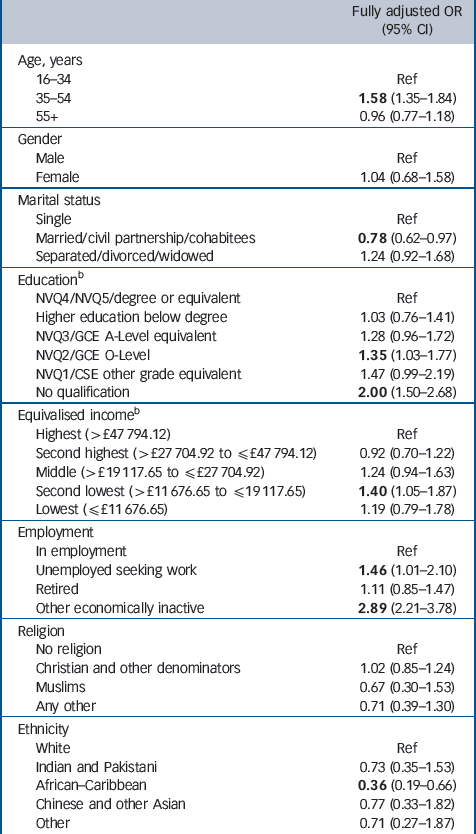
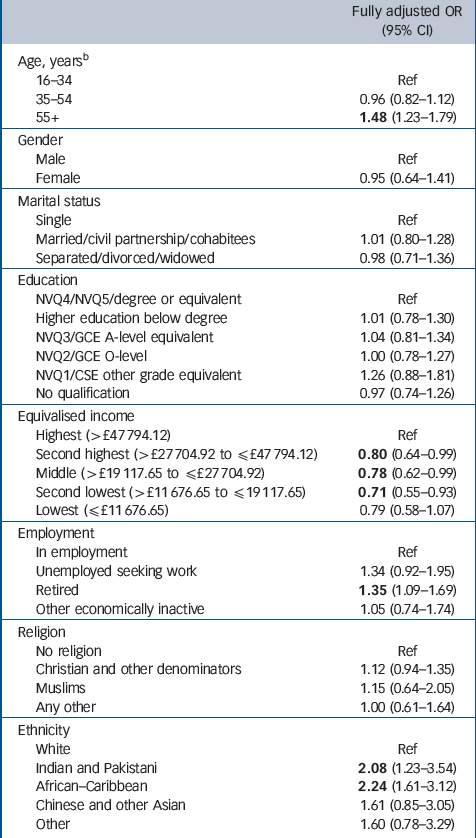
We used χ2-tests to determine the statistical significance of any difference in the distributions of the selected sociodemographic variables across categories of WEMWBS scores (low, middle, high) (online Table DS2). Data were analysed in logistic regression models in order to identify differences in the pattern of association of sociodemographic variables with high and low mental well-being. Unadjusted (Model 1), partially adjusted (age and gender) (Model 2) and fully adjusted (all variables) (Model 3) models were generated to calculate odds ratios of low mental well-being compared with middle-range (see Table 1 for the fully adjusted model and online Table DS3 for details of all three models), and high mental well-being compared with middle-range (see Table 2 for the fully adjusted model and online Table DS4 for details of all three models), using SPSS 21 for Windows for different levels of socioeconomic variables. The significance of linear trends and gender differences in the associations of low and high mental well-being were assessed for each of the correlates, the latter using tests for interaction (see online Tables DS5 and DS6, respectively).
Fully adjusted (Model 3) odds ratios for low mental well-being referenced to middle-range mental well-beingFootnote a
| Fully adjusted OR (95% CI) |
|
|---|---|
| Age, years | |
| 16–34 | Ref |
| 35–54 | 1.58 (1.35–1.84) |
| 55+ | 0.96 (0.77–1.18) |
| Gender | |
| Male | Ref |
| Female | 1.04 (0.68–1.58) |
| Marital status | |
| Single | Ref |
| Married/civil partnership/cohabitees | 0.78 (0.62–0.97) |
| Separated/divorced/widowed | 1.24 (0.92–1.68) |
| EducationFootnote b | |
| NVQ4/NVQ5/degree or equivalent | Ref |
| Higher education below degree | 1.03 (0.76–1.41) |
| NVQ3/GCE A-Level equivalent | 1.28 (0.96–1.72) |
| NVQ2/GCE O-Level | 1.35 (1.03–1.77) |
| NVQ1/CSE other grade equivalent | 1.47 (0.99–2.19) |
| No qualification | 2.00 (1.50–2.68) |
| Equivalised incomeFootnote b | |
| Highest (>£47 794.12) | Ref |
| Second highest (>£27 704.92 to ≤£47 794.12) | 0.92 (0.70–1.22) |
| Middle (>£19 117.65 to ≤£27 704.92) | 1.24 (0.94–1.63) |
| Second lowest (>£11 676.65 to ≤19 117.65) | 1.40 (1.05–1.87) |
| Lowest (≤£11 676.65) | 1.19 (0.79–1.78) |
| Employment | |
| In employment | Ref |
| Unemployed seeking work | 1.46 (1.01–2.10) |
| Retired | 1.11 (0.85–1.47) |
| Other economically inactive | 2.89 (2.21–3.78) |
| Religion | |
| No religion | Ref |
| Christian and other denominators | 1.02 (0.85–1.24) |
| Muslims | 0.67 (0.30–1.53) |
| Any other | 0.71 (0.39–1.30) |
| Ethnicity | |
| White | Ref |
| Indian and Pakistani | 0.73 (0.35–1.53) |
| African–Caribbean | 0.36 (0.19–0.66) |
| Chinese and other Asian | 0.77 (0.33–1.82) |
| Other | 0.71 (0.27–1.87) |
a. The univariate (Model 1) and partially adjusted (age and gender) (Model 2) odds ratios can be found in online Table DS3. Low mental well-being defined as a Warwick–Edinburgh Mental Well-being Scale (WEMWBS) score of 14–42 and middle-range mental well-being as a WEMWBS score of 43–59. The fully adjusted model included: age, gender, marital status, education, equivalised income, employment, religion and ethnic origin.
b. P-value for linear trend: 0.001.
Fully adjusted (Model 3) odds ratios for high mental well-being referenced to middle-range mental well-beingFootnote a
| Fully adjusted OR (95% CI) |
|
|---|---|
| Age, yearsFootnote b | |
| 16–34 | Ref |
| 35–54 | 0.96 (0.82–1.12) |
| 55+ | 1.48 (1.23–1.79) |
| Gender | |
| Male | Ref |
| Female | 0.95 (0.64–1.41) |
| Marital status | |
| Single | Ref |
| Married/civil partnership/cohabitees | 1.01 (0.80–1.28) |
| Separated/divorced/widowed | 0.98 (0.71–1.36) |
| Education | |
| NVQ4/NVQ5/degree or equivalent | Ref |
| Higher education below degree | 1.01 (0.78–1.30) |
| NVQ3/GCE A-level equivalent | 1.04 (0.81–1.34) |
| NVQ2/GCE O-level | 1.00 (0.78–1.27) |
| NVQ1/CSE other grade equivalent | 1.26 (0.88–1.81) |
| No qualification | 0.97 (0.74–1.26) |
| Equivalised income | |
| Highest (>£47 794.12) | Ref |
| Second highest (>£27 704.92 to ≤£47 794.12) | 0.80 (0.64–0.99) |
| Middle (>£19 117.65 to ≤£27 704.92) | 0.78 (0.62–0.99) |
| Second lowest (>£11 676.65 to ≤19 117.65) | 0.71 (0.55–0.93) |
| Lowest (≤£11 676.65) | 0.79 (0.58–1.07) |
| Employment | |
| In employment | Ref |
| Unemployed seeking work | 1.34 (0.92–1.95) |
| Retired | 1.35 (1.09–1.69) |
| Other economically inactive | 1.05 (0.74–1.74) |
| Religion | |
| No religion | Ref |
| Christian and other denominators | 1.12 (0.94–1.35) |
| Muslims | 1.15 (0.64–2.05) |
| Any other | 1.00 (0.61–1.64) |
| Ethnicity | |
| White | Ref |
| Indian and Pakistani | 2.08 (1.23–3.54) |
| African–Caribbean | 2.24 (1.61–3.12) |
| Chinese and other Asian | 1.61 (0.85–3.05) |
| Other | 1.60 (0.78–3.29) |
a. The univariate (Model 1) and partially adjusted (age and gender) (Model 2) odds ratios can be found in online Table DS4. High mental well-being is defined as a Warwick–Edinburgh Mental Well-being Scale (WEMWBS) score of 60–90 and middle-range mental well-being as a WEMWBS score of 43–59. The fully adjusted model included: age, gender, marital status, education, equivalised income, employment, religion and ethnic origin.
b. P-value for linear trend <0.001.
Results
Significant differences were found for all characteristics of study participants with and without complete data except for gender (online Table DS1). Respondents were more likely to be young, married/cohabiting, employed, White, with higher levels of education, higher incomes and either no religion or Christian. In descriptive analyses, significant associations were evident by age, marital status, education, household income, religion, employment and ethnicity across the three categories of mental well-being (online Table DS2).
In the fully adjusted models for low mental well-being compared with middle-range (Table 1), middle age (35–54 years) was associated with an increased odds ratio (OR = 1.58, 95% CI 1.35–1.84), whereas marriage/cohabitee status was associated with a reduced odds (OR = 0.78, 95% CI 0.62–0.97). Education showed the expected dose-response relationships (P-value for linear trend <0.001) with significantly increased odds of low mental well-being among those with GCE O levels (OR = 1.35, 95% CI 1.03–.77) and those with no qualifications (OR = 2.00, 95% CI 1.50–2.68) compared with those with a degree. Low mental well-being was linearly associated with equivalised income (P<0.001) with increased odds for those in the second lowest income bracket (OR = 1.40, 95% CI 1.05–1.87) compared with the highest. Unemployment, both in those seeking work (OR = 1.46, 95% CI 1.01–2.10) and those inactive for other reasons (OR = 2.89, 95% CI 2.21–3.78), increased the odds of low mental well-being. The African and African-Caribbean group was protected from low mental well-being (OR = 0.36, 95% CI 0.19–0.66). There were no associations with religion or gender.
In the fully adjusted models for high mental well-being compared with middle-range (Table 2) both older age (55+ years) (OR = 1.48, 95% CI 1.23–1.79) and being retired (OR = 1.35, 95% CI 1.09–1.69) were independently associated with an increased odds. Odds of high mental well-being did not differ among other categories of employed and unemployed. Education was not associated with high mental well-being. With reference to the highest income quintile, all other quintiles of equivalised income showed similarly reduced odds of high mental well-being (OR = 0.80, 95% CI 0.64–0.99 to OR = 0.71, 95% CI 0.55–0.93); there was no significant trend across categories of income; the lowest group had an odds ratio in the same range as the other groups (OR = 0.79, 95% CI 0.58–1.07). Both Indian and Pakistani (OR = 2.08, 95% CI 1.23–3.54), and African and African-Caribbean groups (OR = 2.24, 95% 1.61–3.12) showed an increased odds of high mental well-being. High mental well-being did not differ by marital status or gender.
Gender-stratified analysis were consistent between men and women for low mental well-being with the exception of education, which was more strongly associated with low mental well-being among women than men, and unemployment, which was not associated with low mental well-being in women (online Table DS5). For high mental well-being, results were consistent between men and women with the exception of retired men and ‘other economically inactive’ women who had increased odds. Increased odds of high mental well-being among African/African-Caribbean, Indian and Pakistani populations were attributable to increased odds among men (online Table DS6).
Discussion
Main findings
These analyses have enabled the comparison of the social and economic correlates of low and high mental well-being in a large, representative sample of the adult English population and show that they do not mirror one another. The results show that the correlates of high mental well-being are different from those of low mental well-being but that the latter closely mirror the correlates of mental illness. Assumptions about socioeconomic determinants made in planning public mental health programmes focusing on the prevention of mental illness may therefore not be applicable to programmes aiming to increase mental well-being.
Measuring mental well-being
The WEMWBS is used in clinical populations Reference Crawford, Robotham, Thana, Patterson, Weaver and Barber17 but is not clinically validated as a measure of mental illness. We have referred to low mental well-being throughout because of this and also in recognition of the debate regarding the relationship between mental well-being and mental illness. Studies based on diagnostic categories of mental illness have shown only moderate correlation (around 0.5) between mental illness and measures of mental well-being Reference Weich, Brugha, King, McManus, Bebbington and Jenkins18 consistent with the philosophical position of the ‘dual continuum model’. Reference Huppert and Whittington19 Studies based on continuous, clinically validated measures of mental illness however, show a much stronger correlation. For example there is a high inverse correlation between WEMWBS scores and scores on the Center for Epidemiologic Studies Depression Scale (CES-D), a clinically valid measure of depression, widely used in population-based studies. Reference Radloff20 The latter study examined cut points on the WEMWBS that corresponded to cut points on the CES-D. A WEMWBS score of 42, which defined the cut point for the low mental well-being group in this study, is below (clinically worse) than a CES-D score of 16 and just above (clinically better) than that consistent with a CES-D score of 26, Reference Bianca21 both cut points which have been used to define clinical populations of varying levels of severity. The bottom 15% of the WEMWBS distribution – the low mental well-being population in the current study – thus comprised people who were very likely to have scored in the clinical range on self-report measures of common mental disorders and is consistent with estimates of clinically relevant levels of mental illness in the UK population. Reference McManus, Brugha, Meltzer, Bebbington and Jenkins8,Reference Singleton, Bumpstead, O'Brien, Lee and Meltzer22 The odds of low mental well-being associated with the socioeconomic factors described in this study also correspond closely to those measured in studies using clinically valid measures of mental illness, Reference Fryers, Melzer, Jenkins and Brugha9 further supporting the view that we have compared the odds for a population very likely to have mental illness with the odds for a population with high mental well-being or positive mental health.
Significance of our findings and comparison with previous studies
Our findings suggest that socioeconomic factors relate to mental well-being in a way that is not consistent with the way they relate to mental illness. The differences are most striking with regard to education and employment where, although we found the correlation with low mental well-being that we expected from studies of mental illness, there was no discernible correlation with high mental well-being, at least for those who were pre-retirement in the employment analyses. If education and employment are key drivers of mental health in general, we would expect to see them correlating as a mirror image with both ends of the mental health spectrum. In a recent analysis of the correlates of well-being, undertaken by the Office of National Statistics and based on their four proxy measures of mental well-being, Reference Oguz, Merad and Snape23 people with the highest levels of educational attainment were found to have higher ratings of anxiety than people with lower educational attainment. People in higher managerial and professional occupations also showed higher scores for anxiety than those in lower supervisory and technical occupations. Another recent analysis Reference McManus, Chanfreau and Lloyd24 of cross-sectional studies looking at predictors of mental well-being as measured by the WEMWBS and the short version (SWEMWBS Reference Stewart-Brown, Tennant, Tennant, Platt, Parkinson and Weich25 ) found both employment and education to be significant correlates, but the association with education was non-linear. The latter study was based on linear regression analyses and the findings will therefore have been weighted by the relationship between low mental well-being and education and employment.
Our findings relating to income and high mental well-being are also strikingly different from the linear trend expected from analyses relating to mental illness. The highest quintile income group had better odds of high mental well-being than the other four income groups, but there was nothing to distinguish the latter four groups from one another. It is important to note that the starting point for the highest quintile income bracket was £47 794, which does not denote great wealth. Other investigators Reference Dolan, Peasgood and White26 using linear regression analyses have in general found an association between income and happiness and life satisfaction, both used as proxy measure of mental well-being in economic analyses, that was more evident in the least wealthy groups. In the recent Office of National Statistics analysis based on their four proxy measures Reference Oguz, Merad and Snape23 increased earnings were associated with higher levels of life satisfaction, but not with a sense that life was worthwhile, or with happiness. Another analysis of predictors of well-being found that being unsatisfied with personal income was predictive of low mental well-being but less so than being unsatisfied with leisure time. Reference McManus, Chanfreau and Lloyd24 Mental well-being is more than life satisfaction or happiness. It may be that the latter affective and more transitory components of well-being are influenced by income, whereas the more stable developmental components of mental well-being relating to functioning are not.
Perhaps the most surprising finding, given the well-recognised association between ethnicity and detention under the Mental Health Act Reference Singh, Burnsa, Tyrera, Islama, Parsons and Crawford27 and the more general association between mental illness and ethnicity, Reference Oguz, Merad and Snape23 is the substantially increased odds of high mental well-being among minority ethnic groups, particularly African and African-Caribbean, Indian and Pakistani, and the reduced odds of low mental well-being among African and African-Caribbean groups. The findings relating to African and African-Caribbean populations and mental well-being were also evident in another recent analysis where it was shown, as it was in this study, to be primarily because of high levels in Black men. Reference McManus, Chanfreau and Lloyd24 These findings are not incompatible with the existing literature. It is possible that minority ethnic populations experience both more severe mental illness of the sort that warrants detention under the Mental Health Act and at the same time more positive mental health than White populations. The WEMWBS has been validated in English-speaking Chinese and Pakistani groups Reference Taggart, Friede, Weich, Clarke, Johnson and Stewart-Brown14 and shown to be reliable and acceptable, but has not yet been specifically validated in African/African-Caribbean populations. This study included only English-speaking populations and findings among those who do not speak English could have been different. The possibility of reporting biases in this self-report measure of mental well-being also needs to be addressed. However, if our findings relating to minority ethnic groups prove robust they are of great interest. Strong arguments are often made on the grounds of social deprivation that health-promoting interventions should specifically target ethnic minorities. When it comes to improving mental well-being, we may end up needing to learn from these population groups, spreading their knowledge and attitudes to the majority population.
Cross-sectional surveys from which these results derive can point towards possible causal inference but cannot demonstrate it. Our study population was also biased in that respondents differed from the eligible population in that they were more likely to be middle-aged, White, well-educated and relatively wealthy. We would therefore anticipate slightly lower levels of mental illness in the study population and thus arguably lower levels of, and a weaker correlation with, low mental well-being. The fact that correlations with low mental well-being were strong suggests that these biases have not greatly influenced our findings.
Although explanations for our findings must remain speculative, they are compatible with a model in which low mental well-being relates closely to mental illness and both are linearly associated with socioeconomic position through a bidirectional causal relationship – that is poor social and economic circumstances increase the risk of mental illness by increasing personal stressors, but at the same time mental illness increases the risk of poor social circumstances by interfering with social relationships, educational attainment and productivity as it is known to do. Reference Huppert1 Positive mental health might not be associated so closely with socioeconomic circumstances if causality operated in only one direction, that is positive mental health improves socioeconomic circumstances by supporting educational attainment, productivity and social relationships, but reverse causality does not apply – better social and economic circumstances do not improve positive mental health.
In conclusion, the correlates of positive mental health may be significantly different from the correlates of mental illness. Programmes addressing the social determinants of health are valuable from the point of view of preventing illness, but programmes to improve mental well-being may need to adopt new paradigms that do not rely on prevailing beliefs relating to social inequalities.
Acknowledgements
The Health Survey for England was commissioned by the Department of Health and was carried out by the Joint Health Survey Unit of National Centre for Social Research and Department of Epidemiology and Public Health at University College London. The authors would like to thank all the participants in the Health survey for England 2010 and 2011.




eLetters
No eLetters have been published for this article.