Introduction
Major depression is projected to become the largest contributor to the disease burden in high-income nations by 2030 (Mathers and Loncar, Reference Mathers and Loncar2006). Presently, as many Canadians suffer from major depression as from other leading chronic conditions, including diabetes and heart disease (Canadian Community Health Survey, 2002). Depression has increased 60% in Canada since 1995, becoming the fastest-rising diagnosis made by physicians (Mothersill, Reference Mothersill2004). Worldwide, depression is the most costly of all diseases to treat (World Health Organization, 2008).
Depression is strongly associated with pain (Strigo et al., Reference Strigo, Simmons, Matthews, Craig and Paulus2008; Lee and Tsang, Reference Lee and Tsang2009; Narasimhan and Campbell, Reference Narasimhan and Campbell2010). Patients who reported physical symptoms were 2.5–10 times more likely to be diagnosed with a depressive disorder than other patients (Means-Christensen et al., Reference Means-Christensen, Roy-Byrne, Sherbourne, Craske and Stein2008). The utilization rates of health care were higher among primary care patients who reported depression and pain (Katon et al., Reference Katon, Lin, Russo and Unutzer2003; Arnow et al., Reference Arnow, Blasey, Lee, Fireman, Hunkeler and Dea2009; Narasimhan and Campbell, Reference Narasimhan and Campbell2010) than among non-depressed patients with comparable levels of physical illness (Rowan et al., Reference Rowan, Davidson, Campbell, Dobrez and MacLean2002; Katon, Reference Katon2003).
The World Health Organization (1946) defined health as ‘a state of optimal physical, mental, and social well-being, and not merely the absence of disease and infirmity’. Health goes beyond the absence of pathology and must be understood in terms of health enhancement, the development of strengths, and the maximization of one’s potential (Duckworth et al., Reference Duckworth, Steen and Seligman2005; Becker et al., Reference Becker, Dolbier, Durham, Glascoff and Adams2008; Reference Becker, Moore, Whetstone, Glascoff, Chaney, Felts and Anderson2009). Positive behaviors offer the best protection against mental pathology (Duckworth et al., Reference Duckworth, Steen and Seligman2005). States of happiness, manifested by positive emotions and experiences, contribute significantly to robust health. Happier individuals had greater social supports and were more encouraged to engage in health screenings, physical activity, and self-care (Ostir et al., Reference Ostir, Markides, Black and Goodwin1998; Pressman and Cohen, Reference Pressman and Cohen2005; Giltay et al., Reference Giltay, Geleijnse, Zitman, Buijsse and Kromhout2007).
Physical health has been shown to be closely related to mental health (Ryff et al., Reference Ryff, Love, Urry, Muller, Rosenkranz, Friedman, Davidson and Singer2006; Ryff and Singer, Reference Ryff and Singer2008). Positive emotions were found to mitigate the physiological and cognitive effects of negative emotions, decrease reactivity to stress, and improve immune system response (Frederickson et al., Reference Fredrickson, Mancuso, Branigan and Tugade2000; Segerstrom and Miller, Reference Segerstrom and Miller2004; Fredrickson and Branigan, Reference Fredrickson and Branigan2005; Fredrickson, Reference Fredrickson2006; Bower et al., Reference Bower, Moskowitz and Epel2009). Happiness appears to have boosted immunity, reduced stress, and inhibited wear and tear on the body (Howell et al., Reference Howell, Kern and Lyubomirsky2007), as well as enabling individuals to make better health decisions and to engage in health-promoting behaviors (Lyubomirsky et al., Reference Lyubomirsky, King and Diener2005; Fredrickson, Reference Fredrickson2006; Veenhoven, Reference Veenhoven2008).
Traditional interventions that focus on minimizing symptoms of depression can leave individuals in a languishing state in which they no longer experience depression (Karwoski et al., Reference Karwoski, Garratt and Ilardi2006; Layous et al., Reference Layous, Chancellor, Lyubomirsky, Wang and Doraiswamy2011). In contrast, positive psychological interventions (PPIs), empirically derived activities that promote the building of positive states (Pawelski, Reference Pawelski2009), have been found to promote physical health (Seligman, Reference Seligman2008; Fowler, Reference Fowler2009; Aspinwall and Tedeschi, Reference Aspinwall and Tedeschi2010). Building positive states can have benefits beyond the absence of negative states, an important point given that a lack of mental health may result in the same harmful consequences as the presence of mental illness (Duckworth et al., Reference Duckworth, Steen and Seligman2005; Keyes, Reference Keyes2005). For example, individuals who declined from a state of flourishing to moderate mental health were four times as likely to have a mental illness as those who remained in a state of flourishing, whereas declining from moderate to languishing mental health increased the odds ratio of mental illness 10 years later by 86% (Keyes, Reference Keyes2010; Keyes et al., Reference Keyes, Dhingra and Simoes2010).
In clinical samples, the use of PPIs improved positive mood for over six months (Duckworth et al., Reference Duckworth, Steen and Seligman2005; Lyubomirsky et al., Reference Lyubomirsky, Dickerhoof, Boehm and Sheldon2011; Mongrain and Anselmo-Matthews, Reference Mongrain and Anselmo-Matthews2012). Interventions included counting blessings, planning gratitude visits, and envisioning a person’s best self. When depressed individuals engaged in noticing three good things and using strengths in a new way, depression remained low for up to six months, whereas writing a gratitude letter led to an improvement in happiness up to one month later (Seligman et al., Reference Seligman, Steen, Park and Peterson2005). After six weeks, a treatment group had lower depression scores and greater life satisfaction compared with a control group and kept its gains one year later (Seligman et al., Reference Seligman, Rashid and Parks2006). The changes in depression scores were also higher for the treatment group than for a medicated control group, and remission rates were higher.
Nonetheless, successes are modest. For instance, Sin and Lyubomirsky (Reference Sin and Lyubomirsky2009) reviewed 51 interventions in a meta-analysis and showed that these indeed improved well-being (r=0.29) and helped to reduce depressive symptoms (r=0.31) albeit with small effect sizes. A more recent meta-analysis of positive interventions conducted by Bolier et al. (Reference Bolier, Haverman, Westerhof, Riper, Smit and Bohlmeijer2013) had stricter inclusion guidelines (n=39 studies with over 6139 participants) and showed the effect sizes to be smaller but nonetheless significant and sustainable over time. Specifically, subjective well-being (r=0.34), psychological well-being (r=0.20), and depression (r=0.23) were positively affected by PPIs with the gains maintained at three and six months.
PPIs can be delivered in psycho-educational groups with quick gains (Layous et al., Reference Layous, Chancellor, Lyubomirsky, Wang and Doraiswamy2011), and are cost effective, easy to deliver, and lack side effects. Because the focus is on well-being, PPIs are also less stigmatizing (Layous et al., Reference Layous, Chancellor, Lyubomirsky, Wang and Doraiswamy2011). Nonetheless, criticisms abound. Interventions have been cited as individualistic and based on Western definitions of happiness (Lu and Gilmour, Reference Lu and Gilmour2006; Christopher and Hickinbottom, Reference Christopher and Hickinbottom2008; Delle Fave et al., Reference Delle Fave, Brdar, Freire, Vella-Brodrick and Wissing2011; Uchida and Ogihara, Reference Uchida and Ogihara2012). Further, the field has only recently acknowledged that happiness can be pursued through relationships and may be less important than religion, family, or culture (Pedrotti, Reference Pedrotti2007; Richardson and Guignon, Reference Richardson and Guignon2008). Proscribing Western PPIs in more collective societies may have negative implications. For instance, pursuing individual happiness may be harmful to relationships (Ahuvia, Reference Ahuvia2002; Uchida et al., Reference Uchida, Norasakkunkit and Kitayama2004), especially when happiness is understood as an inter-subjective state defined by reciprocal support. Culture, goals, and personality must be considered (Schueller, Reference Schueller2011; Sergeant and Mongrain, Reference Sergeant and Mongrain2011; Schueller and Parks, Reference Schueller and Parks2012; Lyubomirsky and Layous, 2013). Thus, a uniform approach is ill advised and practitioners should be mindful not to implement PPIs indiscriminately or to proclaim benefits beyond what the data suggests (Kashdan and Steger, Reference Kashdan and Steger2011).
The use of PPIs is still in its infancy and even more so in the field of primary health care. The incorporation of PPIs into this domain would improve individual skills and lead to greater states of physical and mental health in the overall population (Insel and Scolnick, Reference Insel and Scolnik2006; Seligman, Reference Seligman2008; Keyes, Reference Keyes2010; Kobau et al., Reference Kobau, Seligman, Peterson, Diener, Zack, Chapman and Thompson2011). Indeed, recent studies have shown that the experience of happiness significantly enhances the chances of recovery from a mental disorder such as depression (Bergsma et al., Reference Bergsma, Ten Have, Veenhoven and De Graaf2011). Thus, empirical studies to verify the efficacy of these interventions in primary health care settings are therefore needed.
Method
The purpose of this pilot study was to evaluate changes in quality of life and perceptions of happiness among primary health care adults after participating in Happiness 101, a six-week PPI program designed to treat depression and increase well-being. The primary author (Lambert, 2009/Reference Lambert2012) developed the program and oversaw its implementation within the Red Deer Primary Care Network, a primary health care organization in Red Deer, Alberta, Canada. The rationale for this study was predicated on the need to deliver effective and low-cost services that translated into tangible immediate and sustainable mental and physical results.
Participants were primary health care patients over the age of 18 years. Referrals came from primary health care physicians, mental health counselors, or patients themselves. The program was voluntary and offered at no cost. The Ethics Review Board of Red Deer College granted approval to conduct the study and all participants gave informed consent. The study was conducted between November 2010 and March 2012 where three six-week programs within each calendar quarter were offered. The study involved a quasi-experimental quantitative evaluation and a qualitative assessment involving focus groups. The first author was the lead facilitator. Up to 25 participants were allowed into each intake.
The Health-Related Quality of Life Assessment Tool (SF12v2®; Ware et al., Reference Ware, Kosinski, Turner-Bowker and Gandek2002), a self-administered, 12-item health measurement scale, was used. The SF12v2® measures health-related quality of life and has been extensively evaluated in patient populations, including those with mental health conditions. The questionnaire includes dimensions for both physical and mental health. Domains for physical health include (a) physical functioning, (b) effect of physical health on routine activities (referred to as role physical), (c) bodily pain, and (d) overall physical health. Mental health domains include (a) vitality, (b) social functioning, (c) effect of mental health on daily activities (referred to as role emotional), and (d) overall mental health. There is also a summary component for both domains.
Norm based, each dimension of the SF12v2® has a mean of 50 and a standard deviation (SD) of 10 in the general US population. Each 1-point difference equals 1/10 of a SD, or an effect size of 0.10. Scores below 50 reflect a health status below the population average (Ware et al., Reference Ware, Kosinski, Turner-Bowker and Gandek2002), with higher scores representing better health. The instrument has been proved reliable and valid with estimates of internal consistency reliability for physical health of 0.91 and for mental health of 0.87. The SF12v2® has been useful in comparing the relative burden of diseases and in differentiating the health benefits produced by a range of treatments (Cheak-Zamora et al., Reference Cheak-Zamora, Wyrwich and McBride2009).
Study participants scored in the mild to moderate depression range and a score of <42 for the mental health component of the instrument was considered a screening cutoff for depression (Ware et al., Reference Ware, Kosinski, Turner-Bowker and Gandek2002). Most participants reported feelings of depression, but some sought the intervention as a way of preventing relapse and living more fully and were not considered depressed. Participants were screened for suicidal ideation, other mental health issues, and possible substance abuse. If present, mental health counselors worked individually with patients until the risk was minimized, after which the patient was free to enter the program. Some continued to access services for unrelated issues (ie, parenting, workplace conflicts, smoking). A number of more severely depressed patients were on antidepressant medication, but data were not collected to this effect. Participants self-reported energy levels, accomplishment of tasks, perceptions of pain and its interference in daily tasks, limitations in social activities, feelings of being downhearted or depressed, and overall health. These outcomes were measured at baseline, at the end of the six-week program, and at three- and six-month follow-up.
During 2-h weekly sessions, participants listened to presentations from the empirical literature about the science of well-being. Topics included adaptation (Lyubomirsky, Reference Lyubomirsky2011), orientations to happiness pathways (Peterson et al., Reference Peterson, Park and Seligman2005), flow (Csikszentmihalyi, Reference Csikszentmihalyi1990), the broaden and build model (Fredrickson, Reference Fredrickson2006), and the architecture of sustainable happiness (Lyubomirsky et al., Reference Lyubomirsky, King and Diener2005). The sessions also focused on the importance of physical activity. To place the sessions in context, a segment on the development of positive psychology was included so that patients could understand the type of treatment they were receiving. Group discussions, along with written or verbal in-class activities and prescribed homework, facilitated the delivery of information. Thirteen PPIs were introduced, all of which were based on available literature. Examples include engaging in three good deeds and writing a gratitude letter (Duckworth et al., Reference Duckworth, Steen and Seligman2005; Seligman et al., Reference Seligman, Steen, Park and Peterson2005), using mindfulness (Brown et al., Reference Brown, Ryan and Creswell2007), and savoring (Bryant and Veroff, Reference Bryant and Veroff2006). Table 1 shows the full set of weekly interventions. The program concluded with a social event to which all past and present participants were invited.
Weekly interventions

Quantitative assessments were based on the results of the SF12v2® administered at baseline, end of program, three- and six-month follow-up. Analyses of variances (ANOVAs) were used to compare baseline scores between individuals who left the study before the end of the program, those who completed the program but did not participate in follow-up assessments, and those who completed follow-up assessments. Changes for each subscale of the instrument were also evaluated. The distribution of the scores for individuals who completed the full follow-up assessments was sufficiently normal for the performance of parametric statistical analyses. Therefore, repeated-measures ANOVAs with an α significance level of 0.05 were used to evaluate the changes over time. Pairwise analyses for multiple comparisons were conducted. Bonferroni corrections were not performed because of the nature of the analysis and the number of subscales used (Stanovich, Reference Stanovich1988). After baseline scores were compared, the statistical analysis included only the 35 participants who completed all four assessments.
For the qualitative evaluation, two focus groups from the first six intakes were conducted to discover how participants experienced Happiness 101 and how they compared the intervention with other therapies. An independent facilitator was enlisted for this purpose in November 2010 and again in February 2011. Both focus groups took place before the final social event at the conclusion of the six-week program. All comments were audiorecorded and transcribed verbatim.
Results
Between November 2010 and March 2012, 665 referrals were received into the program, including 133 males (20%). The mean age was 45 years. Of referred patients, 318 (48%) were registered into a session. The program completion rate was 71%. Of the six classes offered for each program, participants attended an average of 3.6 classes. One hundred and twenty-four participants completed baseline questionnaires. We then conducted assessments at six weeks (n=75), three months (n=36), and six months (n=35). Table 2 shows the gender and age distributions for each stage of the program.
Gender and age distributions of participants at each stage of program

Quantitative measures
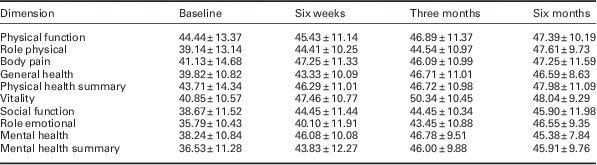
At baseline, all mean scores for mental and physical health were below the US norm of 50. The lowest scores were for role emotional (ie, the effect of mental health on daily activities), overall mental health, and social function. The highest scores were for physical functioning. Table 3 shows the mean scores for mental and physical health at each assessment interval. Table 4 shows the intercorrelations for all outcome measures at six-month follow-up.
Physical and mental health, mean scores at assessment intervals
n=35. Figures are given as M±SD.
Intercorrelations for outcome variables at six-month follow-up

n=35.
* P<0.05.
** P<0.01.
*** P<0.001.
Three groups were considered in baseline comparisons: participants who withdrew before the end of the study, participants who completed the study but either declined or were unavailable to participate in the three-month follow-up assessment, and participants who completed all follow-up assessments. There were no significant differences in any baseline measures between these three groups, although the large rate of attrition, further identified in the limitations section, may be suggestive of some differences. When participants who completed the six-week study were compared with all other participants, regardless of whether they completed the follow-up assessments, there were no significant differences in any baseline scores.
The percentage of at-risk patients declined from 67% at baseline to 26% at six-month follow-up using 42 as the cutoff score for identifying patients at risk for depression. This decline was clinically as well as statistically significant. Declines were greater among males than among females. Among the general US population, 20% are considered at risk for depression. Figure 1 shows the change in the percentage of participants at risk from baseline to follow-up.
Comparison of percentage of participants at risk for depression from baseline to follow-up
The power of the study was β=0.94, assuming a medium effect size. The results of repeated-measures ANOVAs showed significant differences in scores of role physical, general health, vitality, role emotional, mental health, and mental health summary over the three time intervals. Table 5 shows the test statistics for dimensions with significant changes over time.
Multivariate analysis of health dimensions with significant changes over time

n=35.
For health dimensions with significant overall changes, pairwise analyses were performed to determine the significance of the changes over each time interval. Table 6 demonstrates the results of the pairwise analyses. Of note, with the exception of a significant change in role emotional between six weeks and six-month follow-up, all significant changes occurred only with respect to baseline scores. Significant improvements occurred for all six dimensions between baseline and six-month follow-up, and for five of the six dimensions (with the exception of role physical) between baseline and three-month follow-up. Significant improvements occurred for vitality, mental health, and mental health summary between baseline and six weeks. Although the overall change for social function was not significant, P=0.10, pairwise analyses showed a significant increase in social function between baseline and three-month follow-up, P=0.04, and between baseline and six-month follow-up, P=0.01. There was a significant inverse correlation between the physical health summary score and the mental health summary score at baseline, n=124, r(122)=−0.19, P=0.03. However, these two scores were not significantly correlated at the other three time points.
Significance of changes over time, pairwise analyses

n=35. Significant differences are in boldface, α=0.05.
Focus groups
Focus groups were conducted with 24 participants from the first six Happiness 101 intakes. The first question presented to focus group participants was, ‘What was your experience of Happiness 101? What was it like?’ Overall, patients reported the Happiness 101 program to be a very positive experience, in sharp contrast to previous types of therapies they had received in the past for depression. Comments were as follows:
∙ Looking at the ‘positive side’ in teaching us how to move forward rather than ‘focusing on the past’ has been revolutionary – a wow moment…This is what we need do within society as a whole. (Participant #3, female, age 49)
∙ The program was an enlightening ‘mind frame’ change from previous groups that delved into past experiences. This was forward thinking. (Participant #7, female, age 49)
∙ It was a joy to come each week. I looked forward to homework and had a desire to get better. I needed new tools to get better. I needed to reach out and learn new ways to help myself. I had been down too long. (Participant #8, female, age 51)
∙ I didn’t know that a course like this existed. The course went way beyond my expectations. (Participant #12, male, age 31)
∙ I got very depressed when I became ill and I was referred to a psychiatrist. My treatment was entirely focused on my depression, and this course was focused entirely on my happiness. I always left my psychiatrist feeling worse than when I went (Participant #17, female, age 46)
As participants learned and used the 13 PPIs, they were asked what they retained from the program and which (if any) techniques they continued to use by asking, ‘What are you doing differently as a result of participating in this program? How have you learned to sustain these changes?’ Answers included the following:
∙ Mindfulness – This was pivotal. I try to do this several times a day. Applying mindfulness is a new technique. Being able to switch to focus on what’s happening around me has been different. (Participant #3, female, age 49)
∙ Journaling… I now write about more action-oriented items, plan ahead, and reflect on the positive. I often think and write about the three good things that have happened to me today. (Participant #7, female, age 49)
∙ I stopped over-thinking. I learned to make a decision and stick to it. I always went over and over my decisions and ended up with stomach pains. I catch myself and purposefully think about something else that doesn’t stress me out. (Participant #4, male, age 20)
∙ Setting goals…I had never set goals. I attained things by chance in the past. If I needed a job, I got one, and things worked out. This had been a stressful year, with situations not working out, and setting small goals that are attainable will work for me. This was a big learning. (Participant #12, male, age 31)
∙ I was a ‘wallower’. I have learned to be proactive and am now doing things. I am more active… getting up and doing small projects. This is working for me. (Participant #19, male, age 53)
∙ I did my homework every week...that’s how committed I was. Practicing what I learned was important. (Participant #20, female, age 44)
∙ I am healthier because of my positivity. I haven’t caught a cold lately, and I usually do. (Participant #8, female, age 51)
∙ I smile more and have been told this. (Participant #17, female, age 46)
Of particular interest were the experiences of some participants who were taking antidepressant medication before or during the program. Some participants felt they still required pharmaceutical intervention, as the group did not meet all of their needs, whereas others reported feeling that medication was complementary to their treatment. A third view was that medication or hospitalization was not sufficient and that learning the skills to be happy was essential. Overall, participant statements suggested that a balanced and careful response to the use of medication should involve the patient’s wishes as well as the acquisition of skills to generate well-being. Comments included the following:
∙ I am on medication and have been to counselling. My medication has been increased and may be at the right level now. I was having problems with memory. Mindfulness intervention has helped me to be more focused. I am more relaxed. I can gather my thoughts better. I think the medication and Happiness Group strategies are working complementarily. (Participant #20, female, age 44)
∙ I have just started medication this past weekend. The Happiness Group was not enough. (Participant #4, male, age 20)
∙ I am still on my medication and will be for some time, but this really helped bring perspective to my unhappiness. (Participant #7, female, age 49)
∙ My psychiatrist wanted me to take pills for my depression…I was never offered a choice and I absolutely wanted another alternative to medication. I went back to my family physician and was then referred to this course. (Participant #17, female, age 46)
∙ I need my medication because I was suicidal. [But] my doctor emphasized that I needed to look beyond medication in helping myself get better. This course gave me a different perspective other than the information I was receiving in the hospital where I was admitted with depression. I left the hospital on my own… I received so much more from this course. (Participant #19, male, age 53)
Many patients had been in previous forms of counseling before attending Happiness 101. How Happiness 101 differed from other types of counseling and in what ways was sought. Almost all participants agreed that the positive psychological approach was dramatically different and that the group offered unexpected, yet highly welcomed, benefits.
∙ I got tired of always answering question in other therapy: Why do you think this happened to you? (Participant #20, female, age 44)
∙ I was excited to go home from class and try lessons, and I looked forward to coming back. Some classes I have attended have depleted your energy and made you feel more depressed. The class was energizing. (Participant #3, female, age 49)
∙ When I was first referred to this class, I didn’t want to go to another group therapy class. I had a bad experience previously where I just listened to other people’s problems. This view only lent itself to my feeling more depressed. It was different to have people share things that made them happy and not sad. (Participant #7, female, age 49)
∙ There was too much focus in other groups as to what is making you sad…this was about becoming happy. (Participant #12, male, age 31)
∙ I was convinced that I needed to fix the things from the past that bothered me…I was forced to relive past experiences, rather than moving on. Why do I have to deal with old issues? I found out this is not the case anymore. (Participant #10, female, age 60)
∙ In past group experiences, I just cried the whole time. (Participant #8, female, age 51)
∙ This was my first group experience, but in individual therapy I cried the whole time. Louise emphasized that we didn’t need to cry. I am learning to be happy about my husband and children and not to think of them as sources of unhappiness. (Participant #13, female, age 42)
∙ I don’t like a group situation, but I started to enjoy coming to these groups because I was learning so much. (Participant #19, male, age 53)
∙ This perspective doesn’t bring you down. It lifts you up. You want to return to class. You feel good when you leave class. It’s informative and problem solving rather than problem finding. (Participant #22, female, age 29)
Many participants believed that the program taught skills that would be useful for other populations, such as schools, couples, and workplaces. People clearly recognized the applicability of happiness skills, and the openness to recommending the program to others suggested that there was little stigma to attending the group. Furthermore, the benefits of being happier were evident across participant responses (eg, got a job, spent more time with children, felt better physically). The universal appeal of happiness and a focus on the positive and the future appeared to be important. When participants were asked participants if they would recommend the program and a positive psychological approach to others, and why, responses included the following:
∙ Absolutely. This should be a mandatory Grade 12 class to learn skills for lifetime happiness and coping. These skills need to be learned early in life. (Participant #3, female, age 49).
∙ The elderly need this as well. It’s a phenomenon how people turn negative when they get older, and this would be very good to change their perspective on life. Take it to care facilities for old folks. People don’t need to be negative when they get old. (Participant #24, male, age 55)
∙ It’s hard to put on a happiness face when you are feeling down. It gets harder and harder to be someone that you aren’t. I just started to stay home and not go out. It’s too hard to be happy, and you don’t want people seeing you sad. Now I have started to go out. I started to feel so much better, and I went out and got a job. I needed to get out, as the walls were talking back to me in the house. This group was the ‘positive change’ I needed. Amen! (Participant #20, female, age 44)
∙ The mind frame has become important to me, and I have made an effort to get off the couch to play with the kids. Making this effort gets easier all the time. I am having fun. (Participant #19, male, age 53)
∙ I now have a desire to get up in morning, shower, and get dressed even if I’m not going anywhere. This is a new habit for me. I need to appreciate each day. (Participant #4, male, age 20).
∙ I liked the fact that the class wasn’t targeted entirely to clinical depression – if you are just down, you could benefit from this class. Just come to learn and apply a different perspective. This is a course that applies to everyone! (Participant #8, female, age 51)
Discussion and conclusions
The results of the happiness intervention showed that for the subset of patients who remained in the program for six weeks and participated in follow-up assessments, the repeated use of PPIs was associated with decreased depression and perceptions of pain and increased social functioning, subjective vitality, and overall mental health over time. The most notable improvements on indicators of the SF12v2® occurred over the course of the initial study. All significant improvements were sustained during the follow-up period. The effects of mental health on daily activities continued to improve after the end of the study session, perhaps reflecting positive feedback loops as individuals interacted with their environments from a foundation of improved affect.
The findings were consistent with results from previous studies (eg, Duckworth et al., Reference Duckworth, Steen and Seligman2005; Seligman et al., Reference Seligman, Steen, Park and Peterson2005; Reference Seligman, Rashid and Parks2006; Sin and Lyubomirsky, Reference Sin and Lyubomirsky2009; Lyubomirsky et al., Reference Lyubomirsky, Dickerhoof, Boehm and Sheldon2011; Mongrain and Anselmo-Matthews, Reference Mongrain and Anselmo-Matthews2012). Verbal responses also reflected physical, mental, and social improvements such as obtaining employment, resisting a cold, enjoying work more, spending more time with children and spouses, being grateful for every day, and expecting and planning for a bright future.
Several limitations may have affected the findings of this study. The attrition rate from baseline to follow-up was high. One hundred and twenty-four patients participated in the study initially and 75 remained at the end of the program. Further attrition resulted in 36 participants responding to follow-up assessment at three months, and 35 at the final assessment mark. Individuals whose well-being did not improve from the intervention may have left the program. Conversely, individuals who remained in the program may have been highly motivated, receptive, or committed to the style of intervention. Other participants may not have perceived the need to continue with the follow-up measures, while others were unavailable (ie, moved away, change in contact information, etc.). Thus, conclusions can be drawn only on the subset of self-selected individuals who remained in the program, and the results of this study cannot be generalized to other primary health care patients. Instead, the results have shown that a PPI may be considered as a potentially beneficial intervention in alleviating depression among a selected subset of primary health care patients who, for undetermined reasons, may be well suited to the effects of a PPI.
There was no control group to assess whether positive changes in affect were attributable to the intervention. The gains discovered in the study may have been attributable to the passage of time. All participants expected to feel happier and less depressed through their participation in the program. The expectation of feeling happier may have functioned as a placebo and contributed to initial gains. Gains may also have been attributable to nonspecific factors such as the support of group leaders, participation in the groups themselves, or the benefits from the social event held before the final follow-up evaluations. The presentation of empirical literature may have had a persuasive effect on the participants as the mere expectation that PPIs will work has been shown to increase their efficacy (Boehm and Lyubomirsky, 2009; Sin and Lyubomirsky, Reference Sin and Lyubomirsky2009; Sheldon et al., 2010; Lyubomirsky et al., Reference Lyubomirsky, Dickerhoof, Boehm and Sheldon2011). Some patients were receiving pharmaceutical treatment during the program and these benefits were not accounted for. The Hawthorne effect, according to which individuals improve their behavior when they know they are being studied, may also explain some of the findings.
The self-selection of some participants may also have contributed to an initial placebo effect, as has been noted for many PPIs (Lyubomirsky et al., Reference Lyubomirsky, Dickerhoof, Boehm and Sheldon2011). However, most positive indicators were maintained or improved at follow-up indicating that a placebo effect was not an adequate explanation for all improvements. Finally, as participants are often eager to share their positive improvements, the self-reports may have been positively biased. We minimized this risk by enlisting an independent interviewer for the focus groups. Of note, self-reports are generally assumed to be valid for positive as well as for negative experiences (Peterson, Reference Peterson2006; Baumeister et al., Reference Baumeister, Vohs and Funder2007; Park and Peterson, Reference Park and Peterson2009).
The current study was a pilot study. The data does not permit definitive conclusions to be drawn regarding the benefits of PPIs in a primary health care setting, because of both the absence of a control group and the high rate of attrition. Follow-up studies are recommended with a control group to assess whether improvements in well-being can be attributed to the intervention, or other moderating factors such as anti-depressant medication, the passage of time, or participant expectations. In future research, data should be analyzed to determine reasons that patients withdraw from a PPI or choose not to participate in follow-up assessments.
PPIs have not been used widely in primary health care and this intervention represents an initial foray into the field. By targeting primary health care patients, this low-cost, non-stigmatizing and brief pilot intervention was oriented equally to the treatment of mental distress and to the prevention and promotion of positive mental health. The reduction of physical symptoms of pain through PPIs may further help to reduce the health care costs and dependency associated with depression and its treatment, as well as the costs associated with poorer functioning and time lost from productive work. Using PPIs in a primary health care setting may lead to new applications and future research designed to improve health and functioning in both the physical and mental domains. A focus on the positive may be the most powerful medicine in increasing levels of well-being and in providing participants with the skills to help them manage themselves.
Acknowledgments
Thank you to the Red Deer Primary Care Network.
Financial Support
This research received no specific grant from any funding agency, commercial, or not-for-profit sectors.
Conflicts of Interest
None.