





Introduction
Nonprofit organizations (NPOs) planning fundraising campaigns have different fundraising techniques at their disposal, one of which is face-to-face (F2F) fundraising. F2F fundraising is built around F2F interaction between paid or volunteer recruiters and potential donors, and there are several types of F2F fundraising. The technique can have a private (e.g., door-to-door fundraising) or a public character (e.g., street fundraising), be used at events (e.g., event fundraising), and target specific individuals (e.g., major donor fundraising). Notwithstanding the variety in types of F2F fundraising, in this review, we refer to its most common and distinct forms, namely door-to-door and street fundraising. The use of F2F fundraising to solicit committed donors in public via direct debits started in the 1990s (Showcase of Fundraising Innovation and Inspiration [SOFII], 2009). Over time, F2F fundraising has found its way into NPOs’ fundraising strategies. An estimated 28% of NPOs in the United States revealed they were using this technique in their donor engagement strategies in 2023 (NonProfit Pro, 2024), and 43% of NPOs in Europe stated they were using this technique in 2022 (European Fundraising Association & Salesforce, 2023). NPOs started exploring F2F fundraising to address ongoing struggles with available techniques. In Belgium, for example, NPOs started using street fundraising because of difficulties with strict data protection regulations (Jay, Reference Jay2001), and Greenpeace explored street fundraising because it was struggling to find recurrent donors in Austria (SOFII, 2009). F2F fundraising possibly provides solutions since targeting new and often younger donors and focusing on recurring donations, both vital in the competitive nonprofit sector, are reported as its main advantages (Jay, Reference Jay2001; Sargeant & Hudson, 2008). Overall, fundraising literature indicates F2F fundraising can be a promising and cost-effective way to raise donations (e.g., Beldad et al., 2023; Yörük, 2012b).
Despite its potential, F2F fundraising is not free of disadvantages. Media, for instance, often negatively report on this technique. Newspaper headlines such as “The London Question: Why are there charity muggers everywhere I turn?” (Jessop, Reference Jessop2025), with chuggers being a contraction of “charity” and “muggers,” illustrate rather negative attitudes. Aside from media, donors have expressed aversion to this technique due to perceived pressure, distrust, and obtrusion (Waldner et al., 2020). Furthermore, recent research on donors’ ethical judgment of fundraising activities indicates people frequently mention F2F fundraising as being ethically troublesome (Faseur et al., Reference Faseur, De Bock and Timmermans2025).
Knowledge on outcomes of this technique and factors affecting outcomes has accumulated over time but remains fragmented and spread over different domains besides (business) economics, such as psychology (e.g., Guéguen, 2016) and communication science (e.g., Bell et al., 1996). Moreover, while several authors have reviewed the literature for factors affecting giving behavior (e.g., Bhati & Hansen, Reference Bhati and Hansen2020; Saeri et al., Reference Saeri, Slattery, Lee, Houlden, Farr, Gelber, Stone, Huuskes, Timmons, Windle, Spajic, Freeman, Moss, Behar, Schubert, Grundy and Zorker2023), none have explicitly analyzed these factors in relation to specific types of fundraising. Saeri et al. (Reference Saeri, Slattery, Lee, Houlden, Farr, Gelber, Stone, Huuskes, Timmons, Windle, Spajic, Freeman, Moss, Behar, Schubert, Grundy and Zorker2023), for example, show effect sizes for different interventions in fundraising but do not state what these effects would be in F2F fundraising. To improve our understanding of F2F fundraising, not in the least because of implications for NPOs using this technique, this article aims to provide a first step by synthesizing existing academic knowledge on F2F fundraising and highlighting future research needs.
Since systematic reviews are specifically valuable to inform policy and practice (Petticrew & Roberts, Reference Petticrew and Roberts2008), we systematically review 50 years of literature on NPOs’ use of F2F fundraising, focusing on door-to-door and street fundraising. We provide a quantitative synthesis revealing patterns based on the studied F2F fundraising type, publication year, journal, research method, and data’s geographical origin. We also provide a qualitative synthesis revealing which funding- and non-funding-related outcomes of F2F fundraising are impacted by factors related to the different actors (NPO, recruiter, donor) as well as the context in which this occurs (campaign design, conversation design, setting). Through reviewing 67 articles published in international peer-reviewed academic journals, we aim to present the state of the art of F2F fundraising. Our first theoretical contribution lies in the extensive overview of existing research on F2F fundraising spread over different disciplines, informing scholars and providing them with inspiration for future research. An additional theoretical contribution is the new approach and accompanying F2F fundraising framework guiding scholars in assessing existing and future research. The practical contribution consists of evidence-based guiding questions supporting NPOs to design F2F fundraising campaigns.
Literature analysis methodology
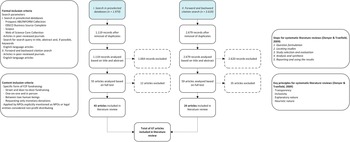
This study employs a systematic literature review to synthesize existing knowledge on F2F fundraising. We follow the steps recommended for systematic literature reviews by Denyer and Tranfield (Reference Denyer and Tranfield2009), which other literature reviews in nonprofit research (e.g., Wymer & Gross, Reference Wymer and Gross2023) have also applied. We adopt a replicable, scientific, and transparent process minimizing selection bias (Tranfield et al., Reference Tranfield, Denyer and Smart2003). The outline of our systematic review, including the steps followed and principles, is presented in Figure 1.
Outline of systematic review, including the steps followed and principles.

Fig. 1. Long description
The flowchart is organized into three main sections.
On the far left, two boxes list criteria. The top box, Formal inclusion criteria, includes search parameters for databases like Proquest A B I forward slash I N F O R M Collection, E B S C O Business Source Complete, Scopus, and Web of Science Core Collection. The bottom box, Content inclusion criteria, specifies F 2 F fundraising and N P O s.
In the center, two parallel vertical flowcharts track the search process.
Column 1, Search in preselected databases n equals 1,970, proceeds as follows. 1,119 records after removal of duplicates. 1,119 records analyzed based on title and abstract, with 1,064 records excluded. 55 articles analyzed based on full text, with 12 articles excluded. 43 articles included in literature review.
Column 2, Forward and backward citation search n equals 3,619, proceeds as follows. 2,679 records after removal of duplicates. 2,679 records analyzed based on title and abstract, with 2,620 records excluded. 59 articles analyzed based on full text, with 35 articles excluded. 24 articles included in literature review.
Both columns converge at the bottom to a final box stating Total of 67 articles included in literature review.
On the far right, two boxes outline methodology. The top box lists five steps for systematic literature reviews by Denyer and Tranfield 2009. 1. Question formulation. 2. Locating studies. 3. Study selection and evaluation. 4. Analysis and synthesis. 5. Reporting and using the results. The bottom box lists key principles. Transparency, Inclusivity, Explanatory nature, and Heuristic nature.
We conducted our search from July 3, 2023 till July 24, 2023. To ensure credibility and quality, we restricted our search to articles in peer-reviewed journals (Kelly et al., Reference Kelly, Sadeghieh and Adeli2014). From the available databases, we selected ProQuest’s ABI/INFORM Collection, EBSCO’s Business Source Complete, Scopus, and Web of Science’s Core Collection, attempting to cover as many journals as possible. The first two databases are leading databases focusing on business, while the latter are among the biggest multidisciplinary academic databases. We selected these databases because of reputation, domain-wise complementarity, elaborate search functions, and other literature reviews in nonprofit research using similar databases (e.g., Chapman et al., Reference Chapman, Hornsey, Gillespie and Lockey2023; Tian & Konrath, Reference Tian and Konrath2021). Collectively, these four databases cover the domains and journals relevant to the topic of F2F fundraising. We excluded Google Scholar as a database to not distort our search results since it is possible to get different search results with the same search query (e.g., Gusenbauer & Haddaway, Reference Gusenbauer and Haddaway2020).
We identified the keywords “face-to-face,” “door-to-door,” “street,” “road,” “fundraising,” and “charity” to create our search queries. Table 1 (see Supplementary Appendix A) provides an overview of search queries used. To avoid many irrelevant results, we excluded too broad terms such as “nonprofit” and “third sector.” Also, “canvassing” and “busking” were not used in our search queries since the primary definitions of these words do not align with our content inclusion criteria. For example, canvassing is primarily used to describe the act of garnering political support by going door to door, while busking is primarily used to describe the act or practice of entertaining on the street or in a public place. While it is possible that some articles use these words to refer to F2F fundraising as delimited by our criteria, we believe these articles would still show up in our results because of certain words in our search query (e.g., door-to-door, street, and road) or would be found through our forward and backward citation search. We explicitly searched within titles, abstracts, and, when possible, keywords. Publication date was not limited by start date and thus covers everything up to July 24, 2023. Lastly, we only considered articles written in English. These search settings, together with the formal inclusion criteria, yielded 1.119 unique records. We continued to evaluate these records for the content inclusion criteria.
The content inclusion criteria determined which articles were to be included in our review. We applied the following criteria: article focused on door-to-door fundraising and/or street fundraising; campaign performed by designated recruiters and for legal entities explicitly mentioned as NPOs or considered non-profit distributing; recruitment performed in accessible space without monetary barriers (e.g., ticket purchase) or non-monetary barriers (e.g., reserved to members); recruitment performed in person and aimed at one donor (e.g., no online recruitment or appeal to crowd); both recruiter and donor were humans (e.g., no recruitment via robots); and intention of recruitment was obtainment of monetary donations (e.g., no blood donations). While eligible, if titles and abstracts adhered to one criterion, articles were only included if their full text adhered to all criteria.
Application of these criteria to titles and abstracts resulted in the rejection of 1.064 articles out of 1.119 articles, while application to the full texts of 55 remaining articles resulted in the inclusion of 43 articles. We then performed a forward and backward citation search, which yielded 2.679 unique records. We evaluated these records for the formal inclusion criteria while we simultaneously evaluated titles and abstracts for the content inclusion criteria. Articles clearly adhering to the content inclusion criteria based on descriptions in citing articles were automatically considered eligible for further scrutiny. This process resulted in 59 articles out of 2.679 records being considered eligible for further scrutiny. We then applied the content inclusion criteria to the full texts of 59 eligible articles, which resulted in 24 articles being included. Among the articles excluded were two articles, one by Van Groesbeck (Reference Van Groesbeck1980) and one by Tapp (Reference Tapp1995), because we could not find digital or physical copies. Thus, our literature review sample includes 67 articles. These reviewed articles are mentioned throughout the different parts of this review paper, and their references can be found in Table 2 (see Supplementary Appendix B).
Quantitative synthesis of literature on F2F fundraising
We first analyzed articles descriptively to provide an overview of the field (Tranfield et al., Reference Tranfield, Denyer and Smart2003). This analysis is based on F2F fundraising type, publication year, journal, research method, and data’s geographical origin. Table 3 (see Supplementary Appendix C) provides an overview of all articles including characteristics.
F2F fundraising type
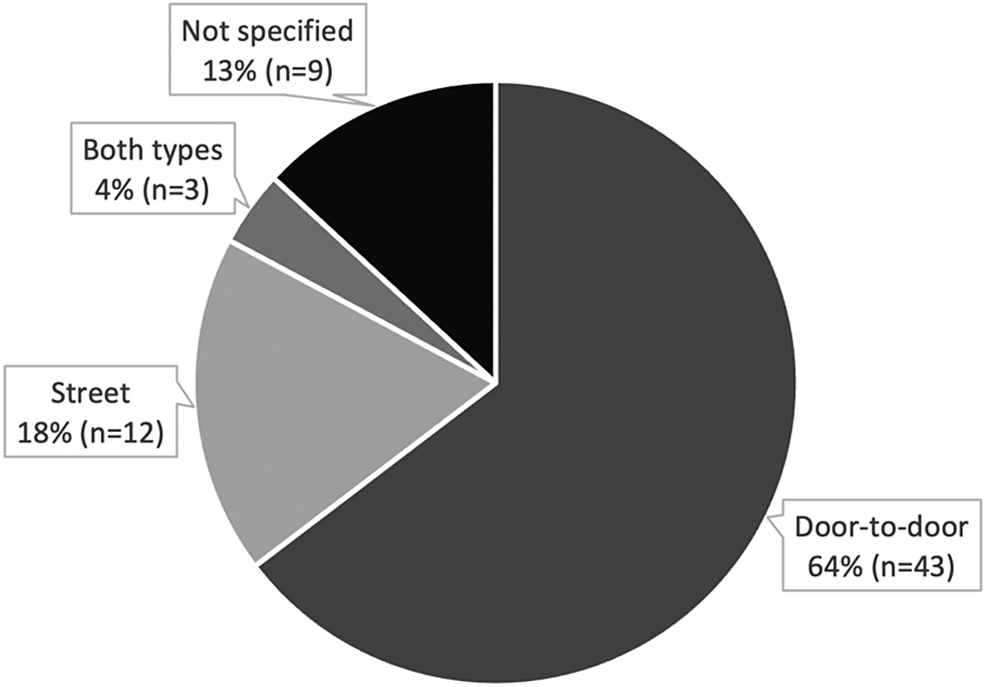
We find an asymmetric focus regarding F2F fundraising type addressed (see Figure 2). A total of 43 articles focus on door-to-door fundraising (i.e., 64% of articles), 12 articles address street fundraising (i.e., 18% of articles), and three articles focus on both types. There are also nine articles not specifying type, approaching F2F fundraising as one specific fundraising type (e.g., Oh & Ki, 2019) or focusing on general aspects of the recruitment procedure (e.g., Bennett, 2013a). We include these nine articles in our review since these articles focus on concepts present in door-to-door and street fundraising and do not explicitly violate our content inclusion criteria.
Distribution of door-to-door and street fundraising.

Publication year
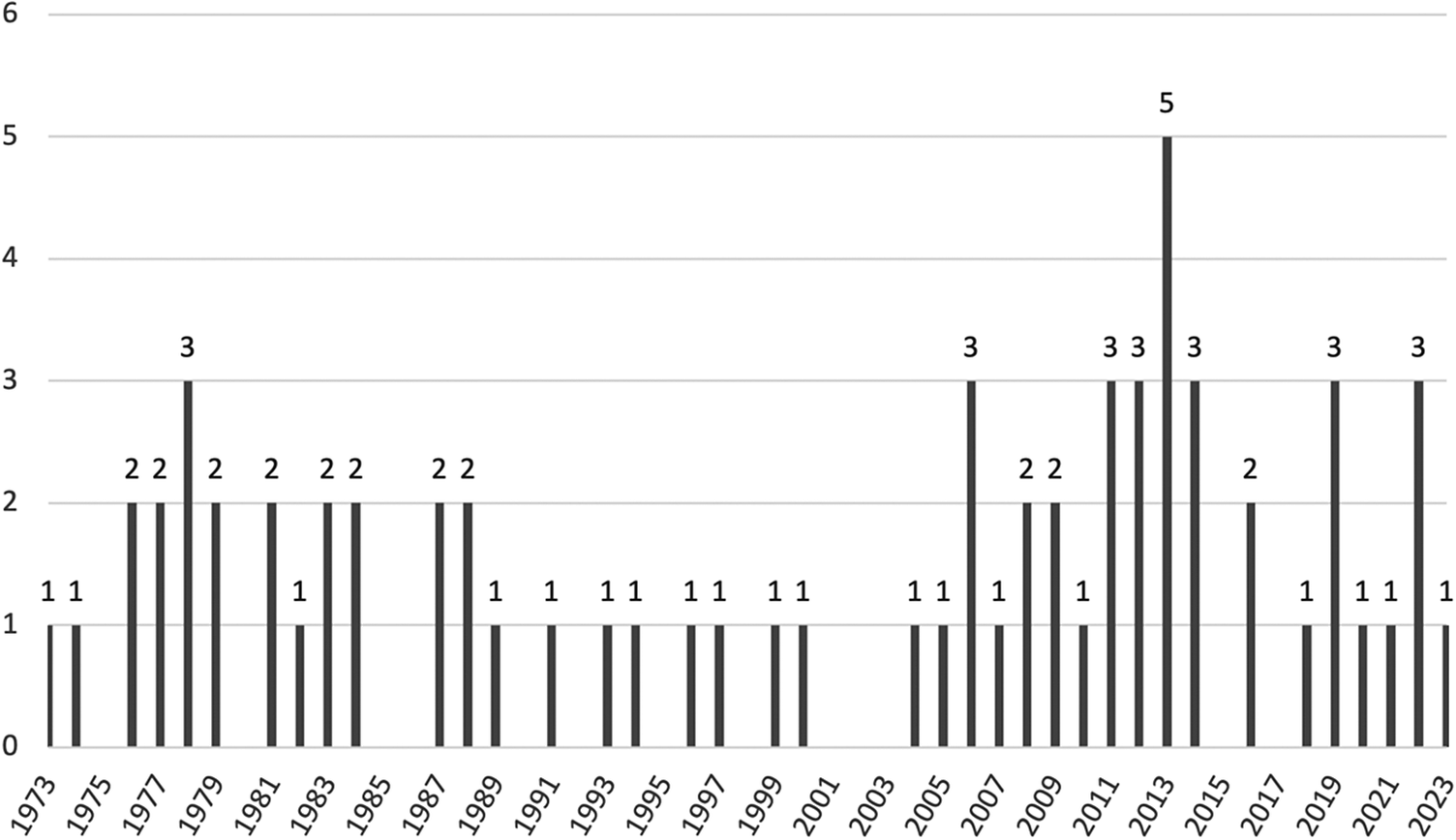
F2F fundraising started to be researched in the early 1970s, as seen in Figure 3, with the first article being by Kraut (1973). From then onwards and almost biennially, F2F fundraising is the subject of at least one article published in a peer-reviewed journal, and more than half of publications are published in the last 25 years. These figures show F2F fundraising is a topic that has always had and still has a defined but stable presence in the academic literature.
Selected publications on F2F fundraising per year.

Fig. 3. Long description
The vertical Y axis represents the number of publications ranging from 0 to 6 with horizontal grid lines at each integer. The horizontal X axis lists years from 1973 to 2023 in two year increments.
Data points are as follows.
1973 and 1974 have 1 publication each.
1976 and 1977 have 2 each.
1978 has 3.
1979 has 2.
1981 has 2.
1982 has 1.
1983 and 1984 have 2 each.
1987 and 1988 have 2 each.
1989 has 1.
1991 has 1.
1993 and 1994 have 1 each.
1996 and 1997 have 1 each.
1999 and 2000 have 1 each.
There is a gap with no publications from 2001 to 2003.
2004 and 2005 have 1 each.
2006 has 3.
2007 has 1.
2008 and 2009 have 2 each.
2010 has 1.
2011 and 2012 have 3 each.
2013 reaches the maximum peak of 5.
2014 has 3.
2016 has 2.
2018 has 1.
2019 has 3.
2020, 2021, and 2023 have 1 each.
Publication outlet
F2F fundraising is a multilayered subject and can be engaged by different disciplines. Almost 54% of articles (i.e., 36 articles) are published in (business) economics-related journals, 34% of articles (i.e., 23 articles) in psychology-related journals, 6% of articles (i.e., four articles) in interdisciplinary journals, 4% of articles (i.e., three articles) in communication-related journals, and 1% (i.e., one article) in a biology-related journal. Over time and across these disciplines, an increasing proportion of articles on F2F fundraising is published in philanthropy- and nonprofit-related journals. Around 27% of all articles (i.e., 18 articles) are published in six philanthropy- and nonprofit-related journals, with five of these journals situated within (business) economics and one journal (i.e., Voluntas) being interdisciplinary. Moreover, different journals related to these disciplines published these articles, as shown in Table 4 (see Supplementary Appendix D), with 36 peer-reviewed journals publishing articles on F2F fundraising. Two journals with the highest number of articles are Journal of Applied Social Psychology, with eight articles or 12% of articles in this review, and Journal of Philanthropy and Marketing, with also 12%. Other journals with at least 6% or more of articles are Journal of Economic Behavior & Organization (6%) and Voluntas (6%).
Method
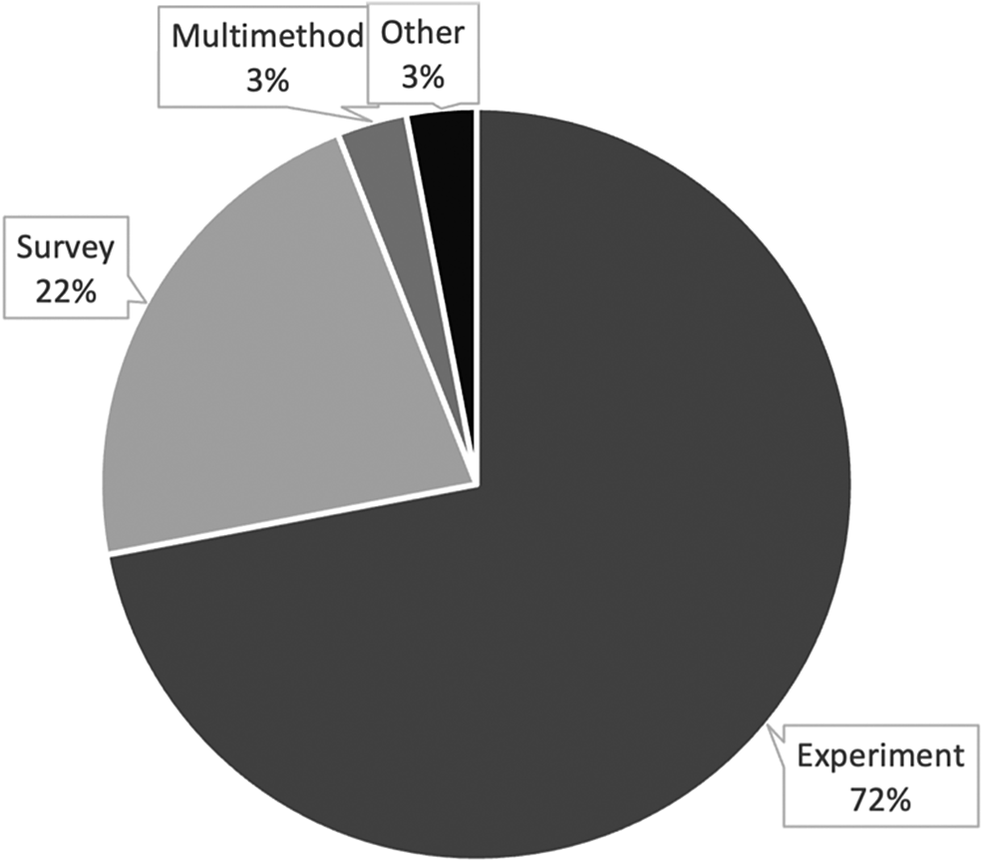
Regarding method(s) (see Figure 4), 48 articles use experiments, 15 articles use surveys, and two articles use multiple methods, combining experiments or surveys with, for example, experts’ forecasts. The remaining two articles apply secondary data analysis. The ample use of experiments in our review sample reveals a higher preference for this research method.
Distribution of research methods used.

Data origin
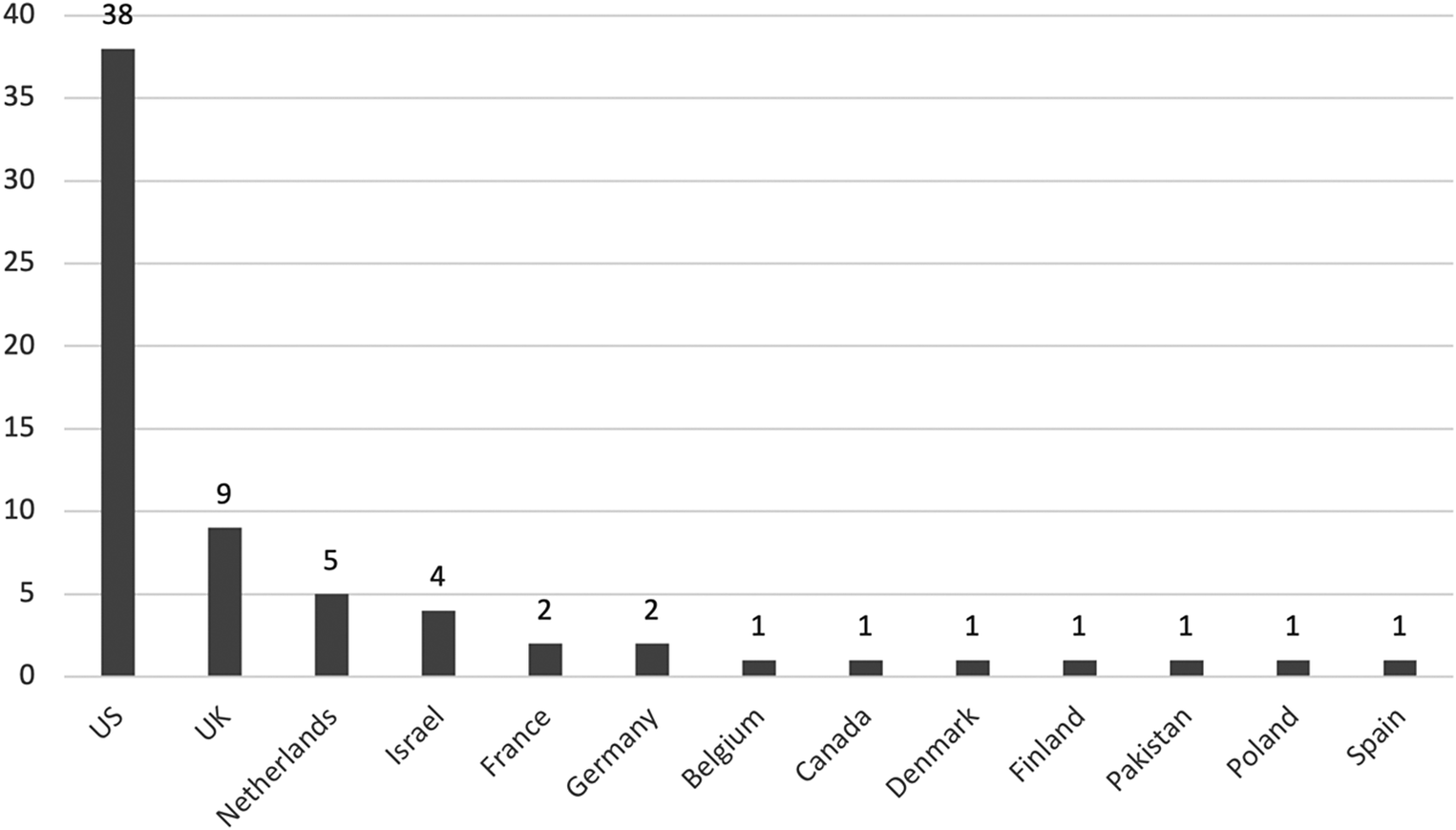
Articles use data originating from mostly two continents and various countries (see Figure 5). There are 39 articles that use data originating from North America, with 38 articles using data from the United States and one article using data from Canada, and 23 articles that use data originating from Europe, with 9 articles using UK data, five articles using data from the Netherlands, and the other articles using data from other European countries. The remaining five articles use data originating from two countries in Asia, with four articles using data from Israel and one article using data from Pakistan.
Geographical origins of data.

Qualitative synthesis of literature on F2F fundraising
A preliminary analysis reveals several recurring themes which we integrate into a visual representation of a F2F fundraising framework (see Figure 6). A total of 10 articles analyze F2F fundraising outcomes, while 26 articles consider actor-related factors affecting outcomes, and 48 articles consider context-related factors affecting outcomes. Table 3 (see Supplementary Appendix C) also shows (sub)theme(s) primarily focused on by articles, while Table 5 (see Supplementary Appendix E) provides an overview of the frequency with which each (sub)theme is primarily analyzed. An important observation is that several subthemes (e.g., NPO reputation, donors’ perceptions, and photograph use) are addressed by only one article each. To this extent, we divide our synthesis into three sections. We first examine findings related to only the outcomes of F2F fundraising by and of themselves, followed by findings on actor-related factors affecting these outcomes, and conclude with findings on context-related factors affecting these outcomes.
F2F fundraising framework: overview of outcomes of F2F fundraising and actor- and context-related factors (potentially) influencing outcomes.

Fig. 6. Long description
The flowchart is organized into five vertical columns.
1. Actors (Far Left): Three circular nodes representing N P O, Recruiter, and Donor. Arrows point right to the next column.
2. Actor-related factors: Three dashed boxes corresponding to the actors.
- Top box (N P O): Discursive strategy, Cause, Donor value, Communication, and Compensation.
- Middle box (Recruiter): Demographic characteristics and Physical appearance.
- Bottom box (Donor): Demographic characteristics, Perceptions, Dispositions, and Preferences. Arrows point right to the central column.
3. Outcomes (Center): Divided into two main categories.
- Funding-related: New donors, Committed donors, and Donation amount.
- Non-funding-related: Donor perception and N P O reputation.
4. Context-related factors (Right of center): Three dashed boxes with arrows pointing left to the Outcomes.
- Top box: Use of photographs, Request method, Payment method, Opt-out option, and Donor incentives.
- Middle box: Compliance techniques, Message, Language, and Body language.
- Bottom box: Region, Traffic density, and Pandemic.
5. Context (Far Right): Three hexagonal nodes with arrows pointing left to the context-related factors.
- Top: Campaign design.
- Middle: Conversation design.
- Bottom: Setting.
Outcomes
Several authors approach F2F fundraising from an outcome angle only, focusing mostly on the produced funding- and non-funding-related outcomes.
Funding-related outcomes
Analyzed funding-related outcomes are new donors, committed donors, and donation sizes. Sargeant and Kähler (1999) note in their survey study that door-to-door recruiters target all residences, enabling NPOs to approach individuals without giving fatigue. Giving fatigue, also called donor fatigue, refers to a state in which donors have depleted their resources or become indifferent to charitable appeals, resulting in reduced public response (Brown & Minty, Reference Brown and Minty2008). Other survey studies find F2F fundraising increases donation amounts more effectively than other methods such as direct mail (Long, 1976; Oh & Ki, 2019; Yörük, 2012b). As stated earlier, one of F2F fundraising’s advantages is its focus on recurring donations, which strongly impacts long-term outcomes concerning generated income. Income generated through recurring donations depends on donors continuing support (i.e., donor retention) and average donation amount. Hence, surveyed fundraising professionals state that committed forms of giving and the duration of relationships between NPOs and donors after F2F solicitations are central to funding-related outcomes, with higher returns over the duration of these relationships (Sargeant & Kähler, 1999). As a result, income fluctuates in time, depending, for example, on attrition rates as found in another survey study (Sargeant & Hudson, 2008). A survey study by Fleming and Tappin (2009) shows that NPOs can thus increase income through lowering attrition rates and increasing donation amounts.
Non-funding-related outcomes
Researched non-funding-related outcomes are NPOs’ reputation and donors’ perceptions dependent on F2F interaction. Waldner et al. (2020) find in their experiment that NPOs applying F2F fundraising have less positive reputations and are less likely supported through donations and volunteering compared to organizations applying direct mail recruitments. Donors provide three explanations for these less positive reputations. Firstly, donors mention perceived emotional and time-related pressure. Emotional pressure was experienced through recruiters who attempted to raise donors’ guilt or used moral accusations. Time-related pressure was experienced through lack of time to inform themselves about NPOs and to decide on their donations. Secondly, donors mention recruiters’ unprofessional, untrustworthy, and intrusive appearance. Lastly, donors mention NPOs’ and recruiters’ questionable intentions since many donors are not sure whether recruiters are committed to the cause or only trained to collect donations. In contrast, Sargeant and Jay (2004) find in their survey study that donors are satisfied with F2F fundraising, and active donors did not feel pressured while lapsed donors more likely felt pressured to donate at the time of solicitation. A more inconclusive finding from analyzing NPOs’ registered complaints is that street fundraising receives one of the lowest numbers of complaints while door-to-door fundraising receives one of the highest numbers of complaints compared to other methods (Sargeant et al., 2012).
Actor-related factors
Several authors research actor-related factors affecting outcomes. These authors mainly focus on factors related to NPOs, recruiters, and donors.
NPOs
Different NPO-related factors can affect outcomes. These factors are NPOs’ communication strategy, discursive strategy (i.e., strategy regarding linguistic practices and tactics used), cause, donor value (i.e., extent to which donors’ value expectations are met by an NPO), and recruiter compensation policy of NPOs. The importance of recruiting committed donors for generated income is reflected in some NPOs’ continued communication. According to a survey study by Sargeant et al. (2006), NPOs send an average of four mailings yearly to one-time donors recruited via F2F fundraising or other fundraising methods (e.g., direct mail, magazines, TV), with these donors having average response rates as low as 7% to 8%. This communication of NPOs does not always contain direct appeals for donations but can also be informational, such as newsletters (Sargeant et al., 2006).
NPOs’ discursive strategy is key in setting conditions for F2F fundraising campaigns. Through interviewing experts and examining recruiters, Humalisto and Moilanen (2019) identify which conditions F2F fundraising professionals deem influential to cultivating donors and how these conditions shape discursive strategy. They state this strategy should entail a preparation phase, a training phase, and a performing phase. In the preparation phase, NPOs choose familiar topics and make their cause appealing. In the training phase, NPOs create emotion-raising narratives and adaptation strategies to meet negative public expectations. In the performing phase lastly, NPOs enforce a sense of (spatial) proximity between donors and represented challenges, particularize actions according to donors’ preferences, and (over)emphasize donors’ agentic capacities. Fleming and Tappin (2009) also highlight this appealing cause. They show NPOs’ cause influences attrition rates in F2F fundraising, with overseas development having the highest rates and environmental causes having the lowest. Sargeant and Kähler (1999) find a similar effect of NPOs’ cause on the number of donations, where NPOs raising funds for the physically disabled receive fewer donations in door-to-door fundraising than NPOs supporting other causes. Furthermore, Sargeant and Hudson (2008) find attrition rates in F2F fundraising decrease when donor value increases.
Regarding recruiter compensation policy, NPOs rely on volunteer and/or paid recruiters in F2F fundraising. Gneezy and Rustichini (2000) investigate these two fundraiser types through experiments and show recruiters receiving monetary compensations perform worse than volunteers. Paid recruiters’ performance, however, depends on compensation size, with lower compensation rates resulting in lower performance. In different experiments, Gneezy and List (2006) analyze the effects of compensation increase (i.e., extra salary) on recruiters’ performance and discover recruiters temporarily increase efforts (i.e., raise more money), but efforts drop to the pre-raise level promptly.
Recruiters
Various fundraiser-related factors can affect outcomes. We categorize these factors into demographic characteristics and appearances. Price (2008) finds, through analyzing secondary experiment data from Landry et al. (2006), that blonde Caucasian female recruiters have higher average donation rates and amounts than brunette Caucasian or minority female recruiters in F2F fundraising. Donors’ race, however, moderates the latter effect, with blondes having better returns with Caucasian donors and brunettes having better returns with non-Caucasian donors. Landry et al. (2006) find in their original experiment that an increase in White female recruiters’ attractiveness results in an increase in total amount received, largely driven by higher participation rates among male donors. In another experiment, Batres et al. (2019) find no effect of attractiveness on donations in F2F fundraising. Recruiters’ physical appearance can also lead to people falling back on stereotypes. In one experiment, donors donate more to middle-aged and well-dressed female recruiters (i.e., high strength) than to college-aged and casually dressed female recruiters (i.e., low strength) or solo female recruiters (Jackson & Latane, 1981). List and Price (2009) show through an experiment that stereotypes also influence cooperation, with donors being more cooperative with Caucasian solicitors than with minority solicitors, perceiving them as more helpful or trustworthy based on their physical appearance.
Donors
Donors are F2F fundraising’s primary target group, and donor-related factors are therefore key in understanding campaigns’ success or failure. These factors are demographic characteristics, perceptions (i.e., perceptions as independent of F2F interaction), dispositions (i.e., inherent qualities of mind and character), and preferences (i.e., preferences regarding interactions with NPOs).
According to Yörük (2012a), survey data show that demographic characteristics, together with marital status and religious activity, are key in determining donations in F2F fundraising. Regarding race and gender, this author finds Black, Hispanic, and male participants are less likely to be recruited than White and female participants and, in a different study, finds Black and Hispanic, together with female participants, are more likely to respond to requests (Yörük, 2012b). Another experimental study finds that White people donate higher amounts than Black people (Benson & Catt, 1978). Regarding donors’ income, Schlegelmilch et al. (1997) and Yörük (2012b) find through survey studies that higher income increases donation probabilities. Income is also related to attrition, where changes in finances are often a reason for lapse (Sargeant & Hudson, 2008; Sargeant & Jay, 2004). These studies also analyze the effect of education on donations. Schlegelmilch et al. (1997) find donors without grade retention (i.e., who did not repeat a grade in school) are more likely to donate in door-to-door fundraising than donors with grade retention (i.e., who repeated a grade in school). Yörük (2012b), who looks at education level rather than grade retention, finds that more educated people (i.e., who attended or graduated from college) are less responsive to requests. An experiment by DellaVigna et al. (2013) then shows social preferences differ depending on donors’ gender, with females giving more in specific situations and being more sensitive to social cues.
According to different studies, perceptions, dispositions, and preferences also affect outcomes in F2F fundraising. Schlegelmilch et al. (1997) show perceptions of NPOs’ efficiency, which is based on the overhead cost ratio, increase average donation amounts. Altruism, as a disposition, also influences donations, with more altruistic people donating higher amounts in one experiment (DellaVigna et al., 2012). Young and Durwin (2013) find in their experimental study that donors’ meta-ethical views have a similar influence, with donors primed to consider moral realism having higher donation rates. Donors’ exchange orientation (i.e., expected equity of exchange) also impacts donations, with high exchange orientation making donating less likely and vice versa in an experiment (Schindler et al., 2014). A survey study by Bennett (2013b) finds common characteristics among F2F recruited low-value donors (i.e., donating small amounts) most likely to donate an amount equal to or greater than the cost of their recruitment within 4 years or uplift their standing order (i.e., donation amount periodically withdrawn from donor’s account). Common characteristics are: strong sense of obligation (i.e., feeling action is necessary), low personal inertia (i.e., low tendency to resist change), relationship proneness (i.e., tendency to engage in relationships), involvement with NPO’s cause, satisfaction with NPO, openness to incentives (i.e., responsive to stimuli), and proneness to feeling “warm glow” when donating (i.e., tendency to experience a positive mental state). A different survey study shows that there are also people who overcommit (i.e., pledge support beyond financial capabilities) because of susceptibility to influence and tendency to overspend (Bennett, 2013a). External (e.g., peer pressure) and intrinsic motivations positively relate to donation amounts in F2F fundraising, while people’s recommendation intention (i.e., intention to recommend NPO to own network) negatively relates to donation amounts (Oh & Ki, 2019).
Regarding donors’ preferences, DellaVigna et al. (2012) show about half of donors prefer not to be approached because they prefer to donate less or not at all. Donors also indicate they prefer quarterly communications regarding NPOs’ work and use of funds (Sargeant & Jay, 2004), and they stop donating because they prefer to support different NPOs (Sargeant & Hudson, 2008). In another study, DellaVigna et al. (2013) show social preferences differ depending on donors’ gender in F2F fundraising, with women giving more under pressure and to public goods. These perceptions (e.g., perception of NPO efficiency), dispositions (e.g., altruism), and preferences (e.g., communication preferences) shape donors’ satisfaction with provided services, and satisfaction decreases attrition (Sargeant and Hudson, 2008). Sargeant and Jay (2004) also analyze satisfaction and show donors are satisfied with timing, frequency, quality, and content of communication, but enjoyment of communication is relatively low. In this same study, perception of choice (i.e., choice regarding communications received), belonging (i.e., sense of belonging to NPO), and commitment (i.e., intention to continue supporting NPO) receive low to average ratings from donors.
Context-related factors
Several authors research context-related factors affecting outcomes, focusing mainly on campaign design, conversation design, and setting of F2F fundraising.
Campaign design
Different authors research factors related to campaign design such as photograph use, request method (i.e., direct or indirect requests), payment method, opt-out option (i.e., option to not participate in solicitation), and incentive use (e.g., gift giving).
Concerning the use of photographs in campaigns, an experiment by Thornton et al. (1991) shows photographs of “needy people” do not influence generated income in F2F fundraising. Regarding the request method, Lindskold et al. (1977) show in their experiment that direct requests in street fundraising (i.e., targeting individual people) result in higher donation rates than indirect requests (i.e., targeting groups). Concerning the payment method, Soetevent (2011) shows in an experiment that donation rates are higher while average amounts are lower in cash-only recruitment compared to card-only ones. Payment method can also refer to payment timing, for example pledged future donations. According to an experiment by Fosgaard and Soetevent (2022), most people do not follow up on pledged donations unless they pledge specific amounts in F2F fundraising. These authors also show donation amounts are closer to pledged amounts if pledges are more formal (i.e., signature on paper). Another pledge is one made by organizations to match donors’ contributions. Although intending to convince donors, this so-called matching contribution offer reduces donation rates compared to standard requests (i.e., requests without interventions) in a F2F fundraising experiment (Fraser & Hite, 1989).
Occasionally, NPOs allow donors to opt out before solicitation in F2F fundraising. To analyze whether the opt-out option influences donations, DellaVigna et al. (2012) perform a door-to-door fundraising experiment in which they inform people of a possible recruitment. Results show that notifying people of an upcoming recruitment without an opt-out option and with an opt-out option decreases the probability of them answering the door with, respectively, 10% and 25% compared to standard requests. Jasper and Samek (2014), replicating a previous experiment, find similar results regarding the opt-out option.
According to an experiment by Chuan and Samek (2014), asking donors to sign holiday cards for beneficiaries decreases donation rates in F2F fundraising among donors who give $5 or less. Bell et al. (1996) show in their experiment that giving gifts to donors before asking donations (i.e., pre-giving) increases donation rates, whereas Naeem and Zaman (2016) find pre-giving decreases donation rates in their experiment. Donors can also be rewarded with gifts after donating, which increases donation rates compared to standard requests in experiments if gifts are not too high in value (Briers et al., 2007). Gifts provided through games of chance, however, are not always better at inducing donations. In experimental studies, Onderstal et al. (2013) show standard requests have higher donation rates than all-pay auctions, and Landry et al. (2010) find standard requests have lower donation rates than lotteries. Donors recruited via lotteries, however, are more loyal to NPOs than donors convinced through recruiters’ physical attractiveness (Landry et al., 2010).
Conversation design
Regarding conversation design, different factors in F2F fundraising are analyzed such as persuasion techniques, message, and (body) language. One persuasion technique is anchoring, where recruiters request specific donation amounts, which increases average donation amounts compared to standard requests in an experiment (Fraser et al., 1988). However, Fleming and Tappin (2009) show anchoring is not without risk since attrition rates depend on ask size. Another technique is foot in the door (FITD) consisting of an initial small request followed by the intended more significant request (Freedman & Fraser, Reference Freedman and Fraser1966). Several authors analyze FITD in F2F fundraising experiments and find increased compliance with donation requests compared to standard requests (Bell et al., 1994; Pliner et al., 1974; Reingen, 1978a; Schwarzwald et al., 1979, 1983), but it does not influence donation amounts (Bell et al., 1994; Hornik, 1988; Pliner et al., 1974; Reingen, 1978a, 1978b; Schwarzwald et al., 1983). Furthermore, FITD is sensitive to different factors improving or hindering its effect. Schwarzwald et al. (1983), for instance, find requesting specified amounts in subsequent requests increases the donation amount. Compliance is also affected if pre-giving precedes initial requests in F2F fundraising, resulting in decreased donation rates (Bell et al., 1994). Hornik (1988) finds compliance with subsequent requests decreases when donors’ cognitive sets (i.e., inclination to think or understand in certain manners) imply fulfillment of obligation compared to the need for continuous involvement. A last study then compares FITD’s effectiveness with standard requests, door in the face (DITF) technique (i.e., an initial large request followed by the intended smaller request), legitimizing paltry (i.e., small) contributions (LPC) (infra), and combinations of previous techniques. In this study, Reingen (1978a) shows that combining FITD with LPC produces the highest total donation amount.
DITF requires a noticeable gap between the initial request and the subsequent request to be effective, while too large initial requests decrease compliance (Schwarzwald et al., 1979). The authors also find too large initial requests result in smaller donation amounts (e.g., 60 ₪ (ILS) in their study). LPC, as an alternative technique, legitimizes small donations by stating any donation amount will help. Several authors analyze LPC in F2F fundraising experiments and find improved compliance compared to standard requests, resulting in increased donation rates with higher donation amounts than legitimized (Brockner et al, 1984; Cialdini & Schroeder, 1976; Fraser et al., 1988; Reeves et al., 1987; Reeves & Saucer, 1993; Reingen, 1978b; Weyant, 1984). Other experimental studies, however, show LPC does not affect donations (Mark & Shotland, 1983; Weyant & Smith, 1987). One author analyzes reversed LPC in which generous contributions are legitimized instead, but this technique decreases donation rates and does not increase donation amounts compared to standard requests (Weyant & Smith, 1987). LPC also interacts with other techniques such as matching contribution offer, dialogue use, and DITF. According to Fraser and Hite (1989), matching contribution offer only increases compliance when used with LPC compared to matching contribution offer alone or standard requests. Dialogue use improves compliance even more when used with LPC in one experiment (Dolinksi et al., 2005). LPC with DITF results in higher total donation amounts than both techniques separately (Reingen, 1978b).
According to DellaVigna et al. (2012), situational pressures such as social pressure influence donations in door-to-door fundraising. Reeves et al. (1987) share this finding and state that compliance may partly be produced by situational pressure due to image maintenance since compliance decreases when donors can mail in donations compared to when donors must donate on the spot. In another study on LPC, Reeves and Saucer (1993) find similar results, where donors do not follow up on their commitment to mail-in donations. Social proof, where people imitate behavior, can also influence donors’ behavior (Cialdini, Reference Cialdini2009). A survey study by Wiepking and Heijnen (2011) finds that social information on donations, operationalized as average amount donors believe others donate, influences average donation size in door-to-door fundraising. Several experiments also find that showing donors a list of other donors and their donations increases donation rates and size in experiments (Reingen, 1982), and presenting donors with a collection box containing coins increases donation rates (Jacob et al., 2018). Catt and Benson (1977) find in their experiment average donation amount is highest when donors are told most of their neighbors donated a specific high amount. An alternative technique is labeling, which requires certain terminology increasing compliance. Labeling people as charitable in an experiment, for example, results in higher donation amounts compared to no labeling, while labeling them as uncharitable results in lower donation amounts (Kraut, 1973). Mark and Shotland (1983) partially replicate this study and find asking for generous family contributions increases average amounts. There is also labeling material, and Bell et al. (1996) find labeling documents through the phrase “this is important/life-saving information” increases compliance with relatively high-cost material, while counterproductive with relatively low-cost material.
Regarding message, Benson and Catt (1978) find donation amounts in F2F fundraising increase when the source of beneficiaries’ circumstance (i.e., causal locus of need) is ascribed to external factors instead of internal factors and/or when telling people donating is a way to feel good. In one experiment, donation amounts increase when telling donors they could share beneficiaries’ fate, and people donate higher amounts when told the NPO could help them too one day thanks to their donation compared to when told the NPO could not help them either without their donation (Beldad et al., 2023). Stating in experiments that solicitors are volunteers does not affect donations, but stating solicitors are paid increases donation rates (Rau et al., 2022). Concerning language then, experiments show adding “You will probably refuse, but…” increases donation rates (Guéguen, 2016), and more donors comply when hearing the polite imperative “Please contribute to our fund” (Cantor, 1979). Recruiters can also use body language. Smiling, for instance, increases the likelihood of an interaction being accepted compared to not smiling in experiments (Pinazo & Arahuete, 2021). Regarding gaze direction then, Bull and Gibson-Robinson (1981) find recruiters receive higher donation amounts when making direct eye contact with donors compared to recruiters looking at the collection box in their experiment.
Setting
Finally, setting-related factors can also affect F2F fundraising outcomes. These factors can be related to local settings (e.g., traffic density) or global settings (e.g., pandemics). Regarding local settings, attrition rates can depend on regions, with London and UK’s South-East having lower attrition rates than Scotland (Fleming & Tappin, 2009). In another study, direct requests result in higher average donation amounts under low traffic density (i.e., fewer people on the street) than under high traffic density (i.e., more people on the street) (Lindskold et al., 1977). Concerning global settings, a survey study by van Teunenbroek and Hasanefendic (2022) shows the COVID-19 pandemic drastically decreased the percentage of newly recruited door-to-door donors in the Netherlands.
Practical implications
Our review reveals several insights of importance to fundraising professionals. A general insight is there is no one-size-fits-all to F2F fundraising. As seen in our qualitative analysis, F2F fundraising outcomes can differ based on actor-related or context-related factors. As such, NPOs must tailor their approach and keep revising this approach based on the obtained results and changing factors. Considering this insight, we developed guiding questions, as shown in Table 6 (see Supplementary Appendix F), based on the results and recommendations provided in this review’s articles. Fundraising professionals can use these questions to identify various points of interest, which can be, for example, analyzed in experiments and applied in different scenarios. These questions can help fundraising professionals to understand, design, fine-tune, and improve F2F fundraising campaigns regarding both funding-related outcomes (e.g., committed donors) and non-funding-related outcomes (e.g., donors’ ethical perceptions). We must underline these results and recommendations are often based on single articles and are context-specific (e.g., only tested in door-to-door fundraising or street fundraising), and, as such, these guiding questions must be interpreted with the necessary nuance. These questions should not be followed as strict guidelines.
Limitations and research agenda
This systematic review’s aim is to synthesize existing academic knowledge on F2F fundraising, and our review of 67 empirical articles published over 50 years is unique since it is, as far as we know, the first attempt to do so. The limitations of our review result from the use of specific databases, selected keywords, English-language articles, and published peer-reviewed studies. Consequently, articles available only in other databases or using terminology different from our keywords are included only through forward and backward citation searches. Moreover, relevant insights from non-English-language or unpublished articles are not considered. Another limitation inherent to literature reviews is the reliance on existing studies, without evaluating their methodological or substantive quality. Nevertheless, our review identifies several gaps in the current research and proposes directions for future studies.
A first gap in existing F2F fundraising research relates to its focus on F2F fundraising types, subthemes, and data origin. A total of 43 articles solely focus on door-to-door fundraising and 12 articles on street fundraising, each focusing on specific relationships between specific factors and specific outcomes. This asymmetric focus on F2F fundraising types, combined with some articles addressing subthemes not covered by others (e.g., NPOs’ reputation, donors’ perceptions, region), has created several understudied areas in the literature. Without additional studies or necessary replication studies, any generalization of findings and possible differences between door-to-door and street fundraising is premature (e.g., Urminsky & Dietvorst, Reference Urminsky and Dietvorst2024). Moreover, focusing on a few countries makes it hard to extend findings to different countries, for instance, because examined countries are rich, democratic, and/or highly educated (Henrich et al., Reference Henrich, Heine and Norenzayan2010). These possible differences make it prudent for researchers to correct this imbalance, and future research should focus on both types and different countries equally. In addition, future research should incorporate other types of F2F fundraising, analyze potential new outcomes as well as actor- and context-related factors, and extend our F2F fundraising framework to make it applicable to these other types.
Regarding outcomes, articles do not (sufficiently) analyze certain non-funding-related outcomes and do not consider the temporal factor. Actors’ perceptions are one of these outcomes not analyzed sufficiently. Recruiters’ and beneficiaries’ perceptions, for example, are not analyzed in any article, even though both actors are central to fundraising (e.g., Chapman et al., Reference Chapman, Louis, Masser and Thomas2022). Beneficiaries’ perceptions of aid utility, in particular, can be affected by F2F fundraising campaigns (e.g., aid utility theory; Kassirer & Kouchaki Reference Kassirer and Kouchaki2023). Moreover, donors’ perceptions are only mentioned briefly in relation to NPOs’ reputation and donors’ satisfaction (e.g., Sargeant & Jay, 2004; Waldner et al., 2020), while these perceptions are key to understanding potential ethical issues (e.g., chugging). Faseur et al. (Reference Faseur, De Bock and Timmermans2025), for example, thoroughly analyze donors’ perceptions in relation to potential ethical issues in different fundraising methods. Research on these outcomes is crucial since non-funding-related outcomes are often inadvertent and can affect funding-related outcomes (e.g., effect of donor value on attrition rates). Regarding the temporal factor then, articles mostly focus on short-term outcomes such as new donors and disregard long-term outcomes such as committed donors. Interventions’ long-term effectiveness, however, can only be revealed through researching long-term outcomes. Consequently, future research should analyze (more thoroughly) non-funding-related outcomes and focus more on long-term outcomes.
Concerning actors and their factors, articles do not research several main actors and configurations of actor-related factors that can affect outcomes. Articles, for example, mainly analyze NPOs, recruiters, and donors and disregard fundraising agencies (i.e., agencies employing recruiters and marketing their fundraising services to NPOs) and beneficiaries. Previous research, however, states the importance of these fundraising agencies for NPOs’ fundraising activities (Paskalev & Yildirim, Reference Paskalev and Yildirim2017) and, for example, how beneficiaries’ acknowledgments (i.e., thank-you letters) can affect donors’ willingness to give again (Wenting et al., Reference Wenting, Yuanping and Tao2021). Moreover, articles focus on a few configurations of actor-related factors such as donors’ demographic characteristics. Separating donors’ race, for example, into Caucasian and non-Caucasian does not capture the diversity encountered in race and is only relevant in some countries (e.g., WEIRD countries). Future research should therefore examine fundraising agencies’ and beneficiaries’ influence on outcomes and use more diverse configurations regarding actor-related factors.
Regarding context and its factors, articles mostly analyze campaign design, conversation design, and a few cases of context-related factors. A total of 45 articles analyze campaign and/or conversation design, while only three articles analyze the setting of F2F fundraising. There are, however, different possible settings such as economic downturns, which are shown to affect outcomes. Economic crises, for example, are shown to influence fundraising outcomes depending on sector and/or NPO (e.g., Anheier, Reference Anheier2009; Godfrey & Williamson, Reference Godfrey and Williamson2020). In addition to the previously proposed research direction of focusing on both types of F2F fundraising, research should also compare different types of F2F fundraising (i.e., studying the setting of F2F fundraising). Regarding context-related factors, articles again only focus on a few configurations such as several request methods, incentives, persuasion techniques, and message constructions. This unbalanced focus results in some configurations (e.g., LPC technique) being researched extensively, while others remain understudied (e.g., fundraiser’s smile). It is therefore important future research pursues more setting-related cases and analyzes more diverse configurations of context-related factors.
A last gap in existing F2F fundraising research and broader nonprofit research is the lack of clear conceptual definitions and the omission of existing theoretical foundations in philanthropy or related fields. Definitions would improve our understanding of F2F fundraising and enable more rigorous research questions, hypotheses, and measurement tools. This gap is apparent in our review’s search phase, where it was not always clear what should be considered donating. For example, articles examining F2F fundraising to sell products for nonprofit purposes are, based on our criteria, not included but may arguably be examples of donating. Moreover, articles integrate various theoretical foundations from fields like marketing and psychology but do not broadly apply theories and frameworks embedded in philanthropy or related fields. The eight mechanisms that drive charitable giving by Bekkers and Wiepking (Reference Bekkers and Wiepking2011), for example, are not broadly applied by these articles. Future research should therefore focus more on creating clear conceptual definitions and integrate and test relevant theories and frameworks from philanthropy or related fields. A step in this direction is a recent article by Flavell (Reference Flavell2025) that analyzes F2F fundraising through the lens of dialectical materialist theory.
Our literature review contributes to a deeper understanding of F2F fundraising, particularly regarding the involved actors, contextual factors, and resulting outcomes. Moreover, our findings enable practitioners to make more informed decisions when designing F2F fundraising campaigns and offer academics several promising directions for future research. Future studies should aim to expand the available data pool, as much of the existing evidence relies on a single, often underpowered, study. In addition, current literature rarely examines interactions between factors (e.g., donors’ characteristics and compliance techniques). Such combinations may amplify or weaken effects, and additional data are needed to explore these possibilities.
Supplementary material
The supplementary material for this article can be found at http://doi.org/10.1017/S0957876526000227.
Funding statement
Funding details: This study was supported by Interne Fondsen KU Leuven / Internal Funds KU Leuven (project C24M/22/004).
Competing interests
The authors declare none.


 Open access

