

Introduction
Four years have elapsed since the introduction of the 2030 Agenda and the 17 Sustainable Development Goals (SDGs) on the world stage. In July 2019, several thousand delegates—government officials, civil society organizations, and academics—attended the 2019 High-level Political Forum on Sustainable Development (HLPF)Footnote 1 at United Nations (UN) headquarters in New York with the overall aim of discussing “Empowering people and ensuring inclusiveness and equality.” An overall conclusion at the 2019 HLPF, as in previous years, was that the pace of action on achieving the SDGs is slow, and that a sense of urgency was needed if the SDGs were to be achieved by the 2030 deadline.Footnote 2 Indeed, the consensus in most high-level discussions is that achieving the SDGs will be impossible without greater engagement of the private sector. And while businesses in many countries appear to have embraced specific SDGs, there are growing concerns that integrating development and environmental goals may not be as mutually supportive in practice as is often claimed.
The role of the private sector in promoting developmental and environmental goals received a major boost following major UN-led conferences on sustainable development in 1992 (Rio de Janeiro), 2002 (Johannesburg), and 2012 (Rio + 20). In addition, the UN Global Compact (UNGC) was established in 1999 with a mandate to “create a sustainable and inclusive global economy that delivers lasting benefits to people, communities, and markets.”Footnote 3 There has also been growing attention on the contribution of businesses towards achieving sustainable development since the global financial crisis of 2007–8.Footnote 4 And major multinational companies like Unilever have developed business models that closely incorporate profitmaking with ideas of sustainability.
Scholars have highlighted the tacit social contract between the firm and society, which, in turn, bestows on the firm specific rights in exchange for certain social responsibilities.Footnote 5 These broad sets of societal obligations of businesses have been largely anchored under the umbrella of corporate social responsibility (CSR), defined as process “whereby companies integrate social and environmental concerns in their business operations and in their interaction with their stakeholders on a voluntary basis.”Footnote 6 This idea is also reflected in Carroll's (Reference Carroll1979) model of CSR, according to which firms have economic, legal, ethical, and discretionary (or philanthropic) responsibilities to society. And such responsibilities occur at the “primary” level (shareholders and employees), the “intermediate” level (production of high-quality consumer goods and environmental protection), and at the “superior” level (contribution to charity and general public welfare).
Although the CSR agenda has been largely Western driven,Footnote 7 the growing power and influence of emerging economies has resulted in increased scholarly interest in studying the domestic political commitment to CSR within these countries. China is a particularly interesting case as the CSR agenda has steadily gained influence in the country since the 1990s, and there is currently a considerable amount of attention on the potential contribution of the country's ambitious Belt and Road Initiative (BRI) in achieving the SDGs. Using a case study method, we examine the extent to which traditional CSR practices at national and local levels in China can be connected to the more recent global framework of the 2030 agenda and the accompanying SDGs. What explains the growing interest in CSR within China? And are we witnessing the emergence of a new form of social responsibility among Chinese businesses in the post-2015 era that prioritizes sustainable development?
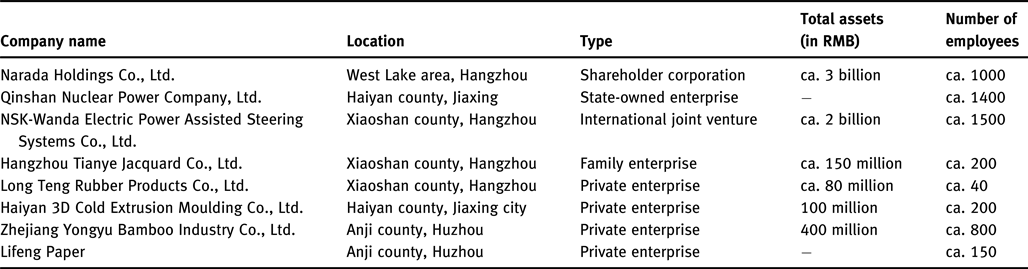
The empirical basis of the study is a heterogeneous group of eight companies in China's Zhejiang province, one of the most economically developed regions of China, where there is considerable focus on CSR and innovative management practices on sustainable development. These were selected based on two main criteria. First, we identified businesses that differed in size and form of ownership, which allowed us to test the influence (and function) of several variables including financial capability, business strategy, and market positioning. Our second criterion was the nature of strategies adopted by these businesses and the extent of resources devoted to CSR-related activities related to sustainable development. The CSR practices of Chinese businesses differ related to ownership patterns, size, and manufacturing sectors, and hence, our study analyzes the dynamics of businesses and their CSR strategies from a microlevel perspective. With a starting point in the stakeholder approach to studying CSR, we spent four months during 2014 (before the adoption of the 2030 agenda and the SDGs in 2015) conducting field research and interacting with owners, managers, and employees associated with eight selected businesses, which included large state-owned enterprises, large shareholder enterprises, medium-sized enterprises, joint ventures with foreign companies, and smaller private (family-owned) enterprises (see table 1). We conducted semi-structured interviews and informal discussions with company representatives, who were chosen based on existing networks and contacts and ease of access. Due to the sensitive nature of our research, the interviews have been anonymized, and we have chosen not to use direct quotes in the text.
Case study sample, Zhejiang province
In order to better understand how CSR strategies in China are being potentially reshaped and realigned with the SDGs in the post-2015 era, we also examined the 2016–7 CSR reports of two of the largest state-owned enterprises (State Grid Corporation of China and China Petrochemical) and two of the largest private companies (Huawei and Shandong Weiqiao Pioneering Group). Although these four cases do not constitute a representative sample and do not offer evidence of actual behavior and impact on sustainable development, they nonetheless allow us to probe the more recent commitments shown by large corporations in China to align their core businesses with the SDGs.
We supplement these sources with numerous formal and informal interactions we had during the period 2015–7, with a broad range of actors in Beijing, Shanghai, Hangzhou, and Hong Kong in relation to corporate activities that are, on paper at least, aimed at promoting sustainable development. These included officials, business owners and managers, academics, journalists, and thinktanks. In addition, we also apply insights from previous research we have conducted on the role of Chinese businesses in aid and investment policies in Zambia and Malawi.Footnote 8
We begin by providing a brief overview of the national and local discourse on CSR and sustainable development in China followed by a discussion on the more recent shift to align local CSR strategies more closely with the 2030 agenda. Thereafter, we examine why businesses adopt CSR by applying a stakeholder lens in examining the strategies and motivations of selected companies in Zhejiang province. In order to understand the more recent shift towards the SDGs in China, we then briefly review the CSR reports of four of China's largest public and private companies.
CSR and interest in sustainable development in China
Since their inception in the 1950s, state-owned enterprises (SoEs) in China have demonstrated a moral obligation to promote labor rights and secure the welfare of their employees.Footnote 9 Thus, several companies provided old-age pensions, health care, housing, and improved career opportunities well before official reforms of the urban economy were implemented in the mid-1980s.Footnote 10 As China began to integrate more closely with the world economy in the 1990s, there was a rapid growth of CSR reports published by Chinese companies under the framework of the Global Reporting Initiative.Footnote 11
There were both international and domestic drivers to this growing interest in CSR. Not only did the global demand for Chinese products increase manifold in the 1990s, but China's entry into the World Trade Organization in 2001 (and the resulting conflicts and frictions between Chinese enterprises and their foreign partners and competitors) were important catalysts to the increased focus on CSR within China.Footnote 12 Gradually, such awareness began to spread among political leaders, and in 2006, the revised Company Law, in article 5, stated that “When engaging in business activities, a company shall abide by laws and administrative regulations, observe social morality and business ethics, act in good faith, accept supervision by the government and the public, and bear social responsibilities.”Footnote 13 Subsequently, many central and provincial government agencies introduced new legal provisions and administrative regulations on CSR between 2006 and 2010 and published several semi-official documents that significantly broadened and promoted the idea of the social responsibilities of businesses.
At an operational level, the Shenzhen stock exchange published the “Social Responsibility Guidance of Listed Company” in 2007 and the Shanghai stock exchange highlighted the “Environment Information Disclosing Guidance of Listed Company” in 2008. Both documents urged businesses to reflect over their commitments and responsibilities to the state, society, and nature and encouraged them to adhere to the principles of commercial morality, information discloser, and environmental protection measures.Footnote 14 A set of international standards—Social Accountability International's SA8000 and the International Organization for Standardization's ISO26000—have also influenced policymaking in China.Footnote 15 For example, the Social Responsibility System of China's Textile Enterprises (CSC9000T) was the very first of its kind in China that introduced a new management system, strengthened labor rights, and promoted sustainable development. And the State Environmental Protection Administration (SEPA) established a center in Beijing aimed at popularizing the environmental protection responsibilities of Chinese firms.
Due to the above reasons, the Chinese government has for many years shown a growing interest in more directly linking its domestic CSR agenda to ongoing international agendas that promote sustainable development.Footnote 16 For example, the Circular Economy Promotion Law, 2008, mandates enterprises to “reduce the consumption of resources, reduce the production and discharge of wastes and improve the reutilization and recycling level of wastes” (article 9).Footnote 17 Similarly, a 2010 document by the State Council states that in the process of achieving societal affluence and realizing sustainable development, the government will prioritize the creation of “more job opportunities and meet the increasing demands from the people for both material and culture as well as boosting the growth of resource-saving and environmentally friendly society.” Towards this end, the government pledged improved finance and taxation policies “to guide and encourage social input.”Footnote 18 Additional legislation has addressed energy conservation and emission reductions and the strengthening of certification standards, with the aim of promoting consumer safety and preventing environmental damage.Footnote 19
The CSR discourse since 2011 has been shaped by several programmatic documentsFootnote 20 that provide guidelines on sustainable development and the promotion of “harmonious development” of central enterprises vis-à-vis local society and the environment. There has also been a major spike in academic interest on these issues as borne out in the increased number of publications in recent years that focus on CSR and sustainable development.Footnote 21 Some have pointed to the fact that many Western firms have, over the years, cited inadequate compliance with CSR standards when cancelling orders and returning Chinese products.Footnote 22 This in turn exerted pressure on Chinese firms to pay greater attention to further developing and consolidating their obligations on environmental protection, occupational health and safety issues, and worker's rights in the manufacturing process. Additional legislation has addressed energy conservation and emission reductions and the strengthening of certification standards, with the aim of promoting consumer safety and preventing environmental damage.Footnote 23
With the active promotion of the CSR discourse within the country by the government, many companies began to apply the concept within their own operations. The operationalization of CSR practices within China can be best understood as a continuous negotiation between business practices and the local socio-economic context,Footnote 24 since a company's CSR performance is often influenced by the value its leadership assigns to charity, the working conditions of employees, and attitudes to pollution control and environmental protection. Thus, the push for greater involvement of the private sector in sustainable development rests on the actions by businesses to promote public goods at both national and international levels. This does not mean that all corporate actions are geared towards achieving sustainable development because profit-making, strengthening company reputation, and promoting close ties with political leaders are also important explanations. In the ensuing sections, we examine the behavior, motivations, and pressures that shape CSR practices through eight firms, which offer a set of explanations for the growing interest in CSR among Chinese firms.
Case study
Of the eight selected companies in Zhejiang province (see table 1), our sample included the following four large businesses.
Narada is a group of enterprises engaged in real estate, infrastructure, chemicals, cable TV network, and financial services. In 2014, it was listed as one of the top-100 enterprises in the field of information services by the Ministry of Industry and Information Technology of China, in addition to being listed as a “focal company” by the municipal government of Hangzhou city in Zhejiang province.
Qinshan Nuclear is a state-owned enterprise, which was constructed in the mid-1980s and was the first nuclear power station constructed and operated in mainland China. The company was ranked in 2004 as one of the ten best enterprises in fostering a people-friendly corporate culture, and also won a special award for the best practice of corporate culture in China in 2005.
NSK-Wanda is a Sino-Japanese joint venture enterprise in the Xiaoshan district of Hangzhou. Seiko of Japan and Wanda, based in Zhejiang, own 90 percent and 10 percent of the company shares, respectively. The company, which has adopted a Japanese management model with a focus on employee loyalty, produces electric power steering systems, mainly for export to Germany.
3D Cold Extrusion is based in Haiyan county of Jiaxing city and produces car parts. Similar to NSK-Wanda, this enterprise also adopts a Japanese management model with a focus on employee well-being, in addition to involving Japanese experts in ensuring quality control in the production process.
In addition to the four large companies, we also included two medium-sized private enterprises—Lifeng Paper and Zhejiang Yongyu Bamboo—located in Anji County of Huzhou. Both are former village factories that have been converted to private enterprises with shareholders. Our sample further included two smaller family-owned businesses—Tianye Jacquard that produces clothing fabric and Long Teng Rubber—both located in the Xiaoshan district of Hangzhou. We studied these cases with a focus on human resource management, company culture, and CSR strategies that promote both business and social interests. Such CSR strategies may also be viewed in accordance with eight “action guidelines” (which correspond to specific SDGs) that the government has recommended for Chinese multinational companies.Footnote 25 These principles include:
• compliance with local laws and regulations and respect for “relevant international codes of conduct” (SDG 16);
• “respect for differences” between Chinese and other cultures, traditions, religions, politics, etc. (SDGs 16 and 17);
• investments based on “fairness and integrity” and opposition to corrupt practices (SDGs 16 and 17);
• transactions based on “openness and transparency,” including disclosure of socio-economic and environmental impacts of activity (SDGs 16 and 17);
• a duty to promote “inclusive development” aimed at responding to pressing social concerns (SDG 10; SDG 17);
• “respect for human rights” of all groups involved, including contributions to rights-based economic development (SDGs 1–10);
• awareness of negative impacts of business activities on the environment and climate and “balance ecological and economic benefits” (SDGs 11–15);
• cost-effectiveness and “feasibility” of measures addressing social and environmental impacts and abandonment of projects when costs exceed medium and long-term returns (SDG 8).
Characteristic features of CSR strategies
Marketing goals are often crucial in CSR practices and understandings of sustainable development. The two large companies in our study—Narada and NSK-Wanda—published regular CSR reports and possessed a relatively strong understanding of the core ideas behind the CSR and sustainable development concepts. Moreover, the management of both companies was keen to develop and further consolidate its CSR strategy due to its perceived need to cultivate a good international reputation. Accordingly, marketing goals had a significant impact on CSR practices and understandings of sustainable development in the companies that were actively involved in international collaboration. These companies did not only adopt the SA8000 standard, but Narada additionally ran a large and comprehensive social welfare foundation set up in 2007, which provided scholarships for university students, offered donations during natural disasters, and supported a variety of rural development projects.
In contrast to these examples, the state-owned enterprise—Qinshan Nuclear, which is the largest among our cases—did not experience a need to increase its market demand as the electricity it generated was sent directly to East China Grid network. While the company engaged actively in CSR activities aimed at the general public, it was also concerned with safety and avoidance of accidents within the company. However, the pressure to primarily undertake CSR-related actions was relatively weak among the small companies in our study. Typically, the goods produced by these companies were narrowly targeted at a small audience, and accordingly, there was less incentive to cultivate a good company image among the general public in order to attract a larger number of potential customers. Thus, for owners and managers of these companies, their social responsibility primarily entailed paying their taxes conscientiously and creating employment opportunities.
There is a growing body of literature on how corporate practices aimed at strengthening global public goods and social welfare of employees can be highly motivating for job seekers, as well as in promoting a sense of company loyalty among employees.Footnote 26 We find that ownership patterns largely influence labor resource management strategies. The private companies in our study aimed at creating a corporate culture with a “family” atmosphere. For example, Narada provided free lunches and food subsidies for employees. State-owned enterprises like Qinshan Nuclear typically displayed a stronger collective morale by offering time off for vacations that was almost absent in the private sector. Both private as well as state-owned companies claimed to promote a human development-based management strategy that variously included free dinners, prizes, and awards to recognize dedicated and exceptionally efficient employees, and free train and airplane tickets for migrant workers during annual festivals. For example, the three private firms—3D Cold Extrusion, Tianye Jacquard and Long Teng Rubber—prioritized free meals and accommodation for their employees, with the goal of building interdependence and closer relations between employers and employees. The Japanese management model adopted by NSK-Wanda and 3D Cold Extrusion promoted a so-called “people-oriented corporate culture,” including clearly established workplace regulations, rewarding “model workers,” fieldtrips and teamwork building activities, and transparency on management decisions.
All eight companies claimed compliance with existing regulations and production standards that restrict pollution. Despite not displaying much interest in typical CSR activities, Yongyu Bamboo and Lifeng Paper had both invested considerably on environmental protection, in comparison to other enterprises of a similar size. Yongyu Bamboo successfully passed the ISO 14001 environmental management system certification and the international forest management organization's Forest Stewardship Council (FSC) certification in 2004, followed by the ISO9001 quality management system certification in 2008. And Lifeng Paper had invested heavily in regulating wastewater discharge through a sewage treatment plant. This explicit interest in addressing environmental concerns by these two firms can largely be explained by their manufacturing processes, which have clear environmental impacts. These companies viewed environmental concerns in general, and pollution reducing measures in particular, as a part of their social responsibility, as well as a marketing tool. Such actions also help achieved compliance with local and national legal requirements, ensuring the continuation of business operations and avoidance of costly fines and other penalties.
The other firms in our study did not appear to be overly concerned with their environmental obligations. Active involvement in environmental protection appeared to be generally motivated by the desire of companies to build and maintain a good working relationship with local authorities. Similarly, engaging in philanthropy was also largely voluntary. As Creyer and Ross (Reference Creyer and Ross1997) argue, a firm's perception of the role of charity is often formed by the personal experience of owners and employees. Public demands for business involvement in charitable activities in China are mainly made through official channels. In our sample, we find that only Narada has established a major social welfare foundation. In the case of Tianye Jacquard, the head of the family had previously served as the head of his village. And as a result, he regularly used company funds to help members of the local community facing economic hardship. We generally conclude that philanthropy is a viable alternative only for large enterprises that are best equipped to plan a comprehensive set of CSR activities that are in turn implemented in a structured manner. In contrast, middle-size and small firms have little incentive to engage in promoting developmental and environmental goals aimed at the general public.
Factors influencing CSR adoption and practice
A popular way of viewing CSR has been through the lens of a stakeholder, i.e., how individual and group values can influence or are affected by organizational goals and achievements.Footnote 27 Accordingly, it is in the company's strategic interest to respect the interests of all its stakeholders. As Brammer and Pavelin (Reference Brammer and Pavelin2004) argue, CSR can enhance the good and mutually beneficial relationship between corporations and their stakeholders by facilitating the “identification” process through which the stakeholders can feel the fusion of corporate values with their personal values. Consequently, firms and stakeholders attach considerable importance to supply chain dynamics by focusing on the roles of managers, employees, clients, and, more generally, the community, in addition to the state and international partners. Many studies also highlight the positive relationship between firm growth and consolidation of CSR practices.Footnote 28
The stakeholder approach, with its emphasis on CSR as a business strategy for market performance, has been widely applied by researchers in China. And numerous studies show that from 2008 onwards, corporate social reporting has been gaining popularity among Chinese firms both in relation to corporate communication with stakeholders and as a process through which the firm itself consolidates and further strengthens its CSR activities. Consequently, companies and their stakeholders are attaching more importance to supply chain dynamics and the roles of managers, employees, clients, and local communities, in addition to national and international partners. And while independent NGOs have traditionally driven the CSR agenda in the West, such entities seldom exercise much influence in China.Footnote 29
In our study, we find that a crucial factor influencing any form of involvement in sustainable development or CSR activities, in general, is the perceived need by companies to create and maintain social capital and a “harmonious relationship” with the local population. Large companies generally have higher social visibility and are more likely to address pressing social concerns backed by substantial financial commitments. Such organizations also usually possess a stronger internal capacity to understand and promote ideas of social responsibility.Footnote 30 Further, the relationship between firms and local officials is crucial. It is widely accepted that corporate culture in China is “relationship-based,” rather than “rule-based.” Given the considerable power wielded by public officials in many East-Asian countries (on virtually every aspect of social, economic, and political life), most companies are keen to secure political and administrative backing for their decisions from government agencies.Footnote 31 Thus, for middle-size and small private companies, action on environmental protection or poverty reduction are mainly determined by the need to accumulate social and political capital.
While the utilitarian considerations of these companies may not be very noble, it is nonetheless understandable given that the Chinese corporate climate continues to highlight the importance of cultivating networks and relationships with influential powerholders. Any business entity that is serious about its social responsibilities is obligated to comply with existing laws and regulations including on matters related to social insurance, working conditions, taxation, and environmental protection. Legal compliance, as an incentive for understanding the growing popularity of CSR in China, relates to respecting and abiding by state laws and regulations. However, we cannot assume that all businesses will automatically follow such rules in the absence of any foreseeable incentive that rewards concrete actions or clear and substantial penalties associated with non-compliance.
Indeed, we find that undertaking specific activities may, on occasion, be influenced by the desire to avoid punishment or the fear of consequences resulting from legal violations (e.g., on pollution). Some argue that with a generally low level of civic accountability, laws are weakly enforced in China.Footnote 32 Although the Chinese government has reinforced penalties related to pollution in recent years, the procedures are not always strictly followed. An illustrative example is social insurance law, which requires that all contracted workers must sign legal contracts and that the company must offer social security benefits to all employees. While some private companies in our study did not strictly abide by this law, Qinshan Nuclear (the SoE) pursued an active strategy, which in addition to generous social security benefits, focused on improving worker safety, training for career advancement, and encouraging staff to take vacations.
In terms of compliance with environmental regulation, many factories in China install specific types of equipment to comply with the legal requirements on pollution, although some firms may choose to avoid operating such equipment in the evenings when the threat of inspection is largely absent. Although the companies in our study largely pursued environmental protection measures, some managers we interviewed felt that these did not really constitute CSR but rather are a result of the “legal responsibility” of their firms. However, many small businesses neither have the resources nor the expertise to implement environmental strategies and they are further disadvantaged by limited access to information concerning environmental management.
Returning to the labor market issue, all the firms in our study regarded the wellbeing of their workers as the absolutist core component of the CSR idea. As discussed in previous sections, many of the firms provide free lunches and offer vocational training and workshops that are accessible to all categories of employees. However, SoEs in China—operating in key fields such as energy, transportation, telecommunication, and banking—usually have more comprehensive CSR programs than private companies. Such entities also have larger public relations departments and generally pay more attention to labor issues. The workers in private businesses (often family-based) typically represent weaker social groups including migrants, local farmers, and urban unemployed individuals. Most business managers in these companies therefore believe that their “obligations to society” at large are fulfilled when they produce high-quality products, create additional employment opportunities for the local community, and pay their taxes to the government. We, thus, find that the size and ownership patterns of firms significantly determine strategies, such as those related to helping weaker sections of society.
Moving from CSR to the SDGs: four additional cases
Since the adoption of the 2030 agenda by world leaders at the UN General Assembly in September 2015, there have been renewed attempts by the Chinese government to link corporate activities within and outside of China more closely with the SDGs. Despite pursuing “selective multilateralism,” many observers have noted how China has embraced the UN as illustrated in its active participation in the consultative process and its considerable influence on the final drafting of the 2030 agenda. China has also consistently argued that the SDGs must be “open and inclusive” and “transformative and innovative.”Footnote 33 Moreover, it has insisted on respect of national sovereignty and argued that all countries must enjoy equal rights to participation in international rule-making.
China's support for the SDGs must also be viewed in relation to the United States backtracking on previously negotiated global agreements. This has resulted in China emerging as one of the strongest champions of globalization. Apart from signaling its interest in assuming a more assertive role in world affairs, it has extended strong support to the Paris agreement on climate change. And China has promised to maintain (and even increase) its foreign aid policies (particularly in Africa and Latin America). Indeed, in the past two decades, Chinese firms have been actively involved in their government's aid and investment policies in many parts of the world that address aspects of development no longer prioritized by the West—roads, bridges, buildings. Chinese firms have also often faced a backlash in many African countries for unsafe work environments and low salaries given to local employees. This has resulted in a gradual rise in small-scale CSR-related activities, such as week-long health camps, sponsored visits to China for selected individuals, and donations for religious and cultural events.Footnote 34
When asked about their contributions in international settings, most Chinese businesses tend to highlight their ability to generate new jobs in challenging economic settings, which in turn address numerous developmental SDGs on poverty, hunger, health, education, infrastructure, and modern energy. The growing number of Chinese companies that are establishing international operations—within fields such as infrastructure construction, technology transfer, cotton production, shoe manufacturing, etc.—are encouraged by the Chinese government to improve local livelihoods and “generate positive social impacts and promote social progress, thus shaping an image as responsible global corporate citizens.”Footnote 35 As in the companies in our case study sample, many Chinese firms operating in agricultural and construction sectors in Africa claim that they strive to contribute to overall societal well-being by creating new jobs, providing at least a minimum wage to their employees and paying their fair share of taxes to host country governments. They argue that the revenue generated from their business activities help governments invest in social protection programs, and thereby helped in poverty alleviation. However, most Chinese firms also point out that their operating costs are often high, and that they cannot always afford comprehensive CSR-related activities. When they do show interest in CSR, it is often on an ad-hoc basis, such as inviting a Chinese hospital to conduct a week-long camp for cataract patients or inviting a dance troupe to perform at events celebrating the Lunar New Year in African capitals. On occasion, local staff (e.g., hotel receptionists) or government officials may be sponsored for a trip to China for further training.
Another reason for embracing the SDGs is the country's ambitious BRI with active participation of state-owned and private businesses. Launched in 2013, the BRI is estimated to cost over $5 trillion USD and aims at global investments in transportation, infrastructure, telecommunications, logistics, energy, and oil and gas. However, the actual mechanisms at work in the BRI—choice of countries, projects, and the tender process—are not always clear. Several official policy documents and reports have claimed that the BRI and the SDGs have “interlinked principles” and a “shared vision” in addition to offering a “shared platform” for global development. An illustrative example is the 2017 Report on the Sustainable Development of Chinese Enterprises Overseas, published jointly by the Ministry of Commerce, the State Council and UNDP China.Footnote 36 The report claims that “While achieving the 2030 Agenda and its Goals, the countries along the Belt and Road will create actual demands and market potential that are appropriate for the international expansion of Chinese enterprises, and will facilitate the formation of long-term bonds of interest between Chinese enterprises and these countries.”Footnote 37
Keeping these functional demands in mind, China proposed coining the phrase “Common but differentiated responsibilities” in the final text of the 2030 agenda, arguing that while all countries should embrace the same SDGs, their relative burdens must reflect their material circumstances and individual development priorities. For example, the Ministry of Ecology and Environment explicitly highlighted the importance of achieving the environmental targets of the SDGs. Emphasizing the centrality of “green growth,” it stated that “cooperation on eco-environmental protection under the framework of the Belt and Road Initiative will inject an effective impetus to accomplishment of environmental targets in the Agenda in countries along the routes.”Footnote 38
In order to better understand how Chinese firms are now paying greater attention to issues of sustainability and incorporating the 2030 agenda in their activities, we examined the CSR reports of two of China's biggest state-owned enterprises (State Grid Corporation of China and China Petrochemical) and two major private sector companies (Huawei and Shandong Weiqiao Pioneering Group). These cases exemplify more recent attempts by businesses in many parts of the world to align their strategies and operations with the UNGC's “Ten Principles” on human rights, labor, environment, anti-corruption, and governance.Footnote 39 Our analysis also examines how the SDGs are being increasingly incorporated into company strategy documents following more explicit political interest on sustainable development in China. All four of the businesses examined have business interests closely tied to the Belt and Road Initiative.
The State Grid's 2017 report focuses on traditional CSR strategies, such as efforts to improve infrastructure in rural China, as well as general improvements in the working conditions and welfare of employees.Footnote 40 In addition, the company highlighted several charitable activities aimed at promoting economic and social development that it was supporting throughout the country. The SDGs received specific attention on page 113 of the 115-page report, where the company identified concrete actions related to each of the 17 SDGs classified under phrases such as “employee development” and “corporate citizen.” Most actions under “employee development” covered typical CSR-related activities related to overall welfare and safety of staff within the organization. The activities described under the banner of “corporate citizen” were targeted at the Chinese public in rural areas aimed at improving public services, such as the provision of safe drinking water, supporting educational initiatives, and protecting the environment. Given the company's focus on energy generation, most of these activities had a clear focus on clean energy and are hence directly related to SDG 7 (affordable and clean energy).
The 2016 CSR report for China Petrochemical (SINOPEC)Footnote 41 was very different from that of China Grid in that the entire document was structured around the SDGs. Indeed, the company stated that it had prepared the document in accordance with the Global Opportunity Report and the guiding principles of the UNGC, and that in addition it had aligned its core business with the 17 SDGs.Footnote 42 There was a conscious attempt to discuss global and national challenges and opportunities in the report. For example, under the category of “Deepening reform improving quality and efficiency to upgrade development,” the company identified specific actions that corresponded to SDGs 7, 8 (decent work and economic growth), and 16 (peace, justice, and strong institutions). Similarly, there was an attempt to link discussions on innovations in the global energy sector to SDG 9 (industry, innovation and infrastructure), while the company's goal of pursuing “green development” within and outside of China and transforming itself into a so-called “green enterprise” is linked to its commitment to promote SDGs 6 (clean water and sanitation), 7, 11 (sustainable cities and communities), 12 (responsible consumption and production), 13 (climate action), 14 (life below water), and 15 (life on land).
In terms of SDG 17 (global partnerships) in the value chain, SINOPEC claimed that in accordance with the 2030 agenda it would advance “openness and win-win cooperation” to “eradicate poverty and to create opportunities of decent life and equality for all human beings.”Footnote 43 However, such commitments were couched in very general statements that referred vaguely to several of the developmental SDGs that deal with poverty eradication (SDG 1), zero hunger (SDG 2), good health (SDG 3), quality education (SDG 4), and gender equality (SDG 5). The main message was that the company aimed to promote a model of development abroad that had previously worked well for China: “China, by pursuing its people-oriented development and taking development-oriented poverty alleviation measures, has lifted 700 million rural poor out of poverty. The country prioritizes the right to life and the right to development, and has set a goal to realize the rural poverty elimination and construct a prosperous society by 2020 so as to support people's well-being.”Footnote 44 Thus, although the report explicitly referred to the SDGs, it was thin on details and unclear on how the numerous commitments would be operationalized in practice.
The two private sector company reports we reviewed varied considerably in relation to the extent in which they explicitly focused on the 2030 agenda and the SDGs. Huawei is the largest private sector company in China, and given its considerable national and global presence, it was not a surprise to find the company's 2016 report explicitly discussing how it could use ICT “as a key enabler in driving large-scale, rapid attainment of SDGs while pushing forward the 2030 Agenda for Sustainable Development.”Footnote 45 The document thereafter identified concrete strategies the company was implementing in China and abroad in developing infrastructure that minimizes energy consumption and negative environmental impacts (SDG 12 and 13) and strategies that would promote sustainability through innovation, including energy conservation and emissions reduction initiatives in addition to the development of smart cities and green ecosystems (SDGs 7, 9, 12, and 13). Complementing these broad strategies related to the environmental SDGs, the company also highlighted several typical CSR measures aimed at “caring for employees,”Footnote 46 such as equal access to learning and promotion, ensuring workplace safety, and creating a “healthy work environment for employees in hardship areas,” such as parts of Tanzania where it is working on malaria prevention.
Shandong Weiqiao's 2017 reportFootnote 47 highlighted the company's efforts to promote “Corporate Environmental Responsibility” through measures primarily implemented within the company. These include safer production techniques, better salaries, and benefits to employees, including affordable healthcare, physical training and leisure activities, and recognizing and rewarding outstanding workers. In addition, and given its focus on textile production, the company outlined its interest in using more environmentally friendly methods in the production process, such as improving efficiency of water usage. The report, moreover, emphasized the company's attempt to promote integrity within management and fight corruption, particularly in the procurement process. While many of these correspond to specific SDGs, there was no explicit mention of the SDGs in the report.
The strategies of the four companies discussed above appear to be aligned to several key policy documents in China that have highlighted the importance of pursuing economic growth while protecting the environment and promoting social welfare. For example, in terms of sustainable development within its borders, China's Voluntary National Review 2016 (VNR), presented at the UN in 2017, noted that the country would prioritize lifting more than fifty-five million rural residents out of poverty in the next five years, promote “coordinated development between urban and rural areas and among the three dimensions of sustainable development,” improve social protection programs, protect the environment, build “protective barriers for eco-security,” encourage “efficient utilization of resources and sustainable energy,” and improve “national governance and ensuring economic and social development in line with the rule of law.”Footnote 48
However, despite considerable political support and academic interest for sustainable development within the country, the new push for an SDG focus appears, in many cases, to wrap existing CSR activities under a new banner. Indeed, most pre-2015 CSR activities in China can now be profiled as SDG-enhancing, even though an explicit focus on sustainable development may not necessarily always be the case in practice. The CSR reports of the four major companies certainly indicate that they may be undertaking the same type of activities as before, but packaging these in more international-friendly SDG language. Our findings support other studies in concluding that operationalizing the numerous regulations on sustainable development continues to be a major challenge, and there is a major gap between legal provisions and their implementation in China.Footnote 49 Moreover, as Lin, Banik, and Yi (Reference Lin, Banik and Yi2016) argue, many businesses continue to believe that CSR activities are expensive and increases production costs while lowering their competitiveness. Others claim that only large businesses (e.g., state-owned enterprises and large private companies) have the resources to undertake meaningful activities on sustainable development. While there are several broadly formulated regulations that are supposed to (in principle) guide firm behavior, some are of the view that local governments must more actively monitor company performance on sustainable development.Footnote 50 There is, however, growing evidence, as observed in news reports and social media discussions, that the general public in China is increasingly positive to firms that integrate sustainable development in their corporate strategy and practice.
Concluding remarks
There has been a growing consensus over several decades on the close linkages between business, ethics, and economic development and how businesses do not only have responsibilities to their shareholders, but also to wider society. Numerous concepts have emerged over the years that capture this trend, including corporate citizenship, ethical corporation, good corporate governance, corporate philanthropy, and corporate social responsiveness.Footnote 51 These tend to highlight the company's moral and behavioral codes and attempts to operationalize the various social responsibilities of businesses. This has largely corresponded with the international demand, as well as domestic pressure in many countries, for greater emphasis on discretionary social protection strategies and private–public partnerships,Footnote 52 which in turn provided a further boost to the growing momentum of the CSR agenda.
Sustainable development as a unifying global concept was given a further boost following the adoption of the 2030 agenda and the SDGs in 2015. The process leading up to the 17 SDGs has also been widely acclaimed for being highly participatory, involving individuals, groups, and governments. Even businesses were actively consulted in the process, with several prominent CEOs participating in numerous forums, such as the UN High Level Panel and the UN Open Working Group. Since then, the push for greater involvement of the private sector in sustainable development has primarily rested on two main sets of arguments.
The first set of arguments identifies current and future business opportunities closely related to new innovations, previously untapped markets, job creation, and the lowering legal, reputational, and business risk profiles of companies that align with the SDGs.Footnote 53
The second set of arguments highlights a moral duty for businesses to engage in public dialogue aimed at lobbying for policy change that will benefit the poorest and most vulnerable sections of society. In their quest to be more responsible global actors, and irrespective of size and area of operations, businesses must therefore comply with existing legislation in order to demonstrate greater respect for the protection of human rights and actively combat corruption.Footnote 54
Both arguments make a compelling case for more active involvement of private sector actors in global development. However, despite frequent statements from business leaders on how important the SDGs are for shaping current and future business strategies, the rhetoric does not usually match the reality. For example, a recent survey by The World Business Council for Sustainable Development found that although 79 percent of member company reports referred to the SDGs, only 6 percent of specific strategies linked to these goals.Footnote 55
Despite considerable attention on the topic, many have been highly critical of the focus on charity and corporate self-regulation and have questioned the actual impact of CSR policies on sustainable development on the ground. In large parts of the world, businesses are trumpeting their CSR strategies and their interest in helping countries and societies achieve sustainable development. The ensuing discourse portrays their engagement as win-win, i.e., crucial for both profits and societal wellbeing. What has received less attention is the actual operationalization of those grandiose intentions. Using a stakeholder perspective, our study focused on better understanding how and why Chinese businesses adopt CSR strategies and the motivation behind such attempts to engage more proactively in sustainable development. We have argued that the growing interest in CSR, and more recently in the SDGs, shown by Chinese companies reflects a combination of their desire to establish and further improve their image vis-à-vis the general public, satisfy central government directives, gain a competitive edge with regard to rivals, and generally improve corporate culture within the organization.
A part of the problem in most countries is the lack of “ownership” of the CSR agenda.Footnote 56 Despite claims of a highly participatory process, only Western firms were consulted in the SDG formulation phase,Footnote 57 and our study shows that not all firms around the world, including in China, believe they can easily identify with global frameworks like the SDGs, which many consider more appropriate for high-level global discussions than applicable to local practice. Our examination of the CSR reports of some of the largest businesses in China shows that some companies view their strategies and operations in relation to many, if not all, of the SDGs. Others are more interested in promoting one or two SDGs based on existing business interests and area of expertise or sector of operation. Common for both categories is that there is not much consideration of how best to address the interdependence between the 17 SDGs. In this respect, Chinese businesses do not appear to differ much from their counterparts in other parts of the world. Indeed, many civil society organizations and scholars regularly highlight concerns over the tendency of businesses to cherry-pick goals that suit them, without taking into consideration potential tradeoffs, including how fulfilling one goal may occur at the cost of another. These issues require further research.
Some have also pointed out that the SDGs may offer governments and businesses “a type of window dressing,” which allows companies to “green wash” their activities without undertaking meaningful change.Footnote 58 This is also an issue that requires further and in-depth research and analysis. Moreover, there is a growing tendency to self-report compliance with the 2030 agenda in annual reports, which typically avoid mentioning the negative impacts of business activity or how engagement with one goal can lead to trade-offs on others. We find some evidence supporting such claims in our case study. The reluctance to discuss challenges can create the impression that companies are simply interested in better branding rather than taking responsibility for their actions. Another important factor is the distinction between the domestic and international impact of firms. The CSR policies of many of the firms in our case study are oriented towards local issues, including a focus on employee welfare and environmental concerns, which in turn enable them to establish mutually-beneficial relationships with local authorities. Such firms do not necessarily feel the need to explicitly articulate global goals. The activities and impact of larger state-owned and private firms, such as SINOPEC and Huawei, are more international in nature and hence the strategies of these businesses are more likely to endorse and embrace the SDGs.
A key question that has dogged the 2030 agenda is how to encourage businesses to explore ways of using the overarching framework of the SDGs “to shape, steer, communicate and report their strategies, goals and activities.”Footnote 59 Our general conclusion is that many Chinese companies are showing interest in aligning their strategies with the SDGs, but most continue to pursue traditional CSR strategies that are ad-hoc and voluntary in character. Our findings are thus in tune with Zhang et al (Reference Zhang, Morse and Ma2019) who argue that there is considerable interest in China for closely integrating legislation with CSR to achieve sustainable development. In China, business strategies that promote the SDGs cultivate goodwill from policymakers and citizens alike, but companies are seldom criticized when they do not explicitly align themselves with the global SDG framework. Policies that can integrate sustainability considerations across the value chain are crucial if businesses are to truly embrace sustainable development. And such policies can in turn help companies to enter previously untapped markets, improve operational efficiency, reduce employee turnover, stimulate product innovation, and strengthen the brand.


 Open access

