

Introduction
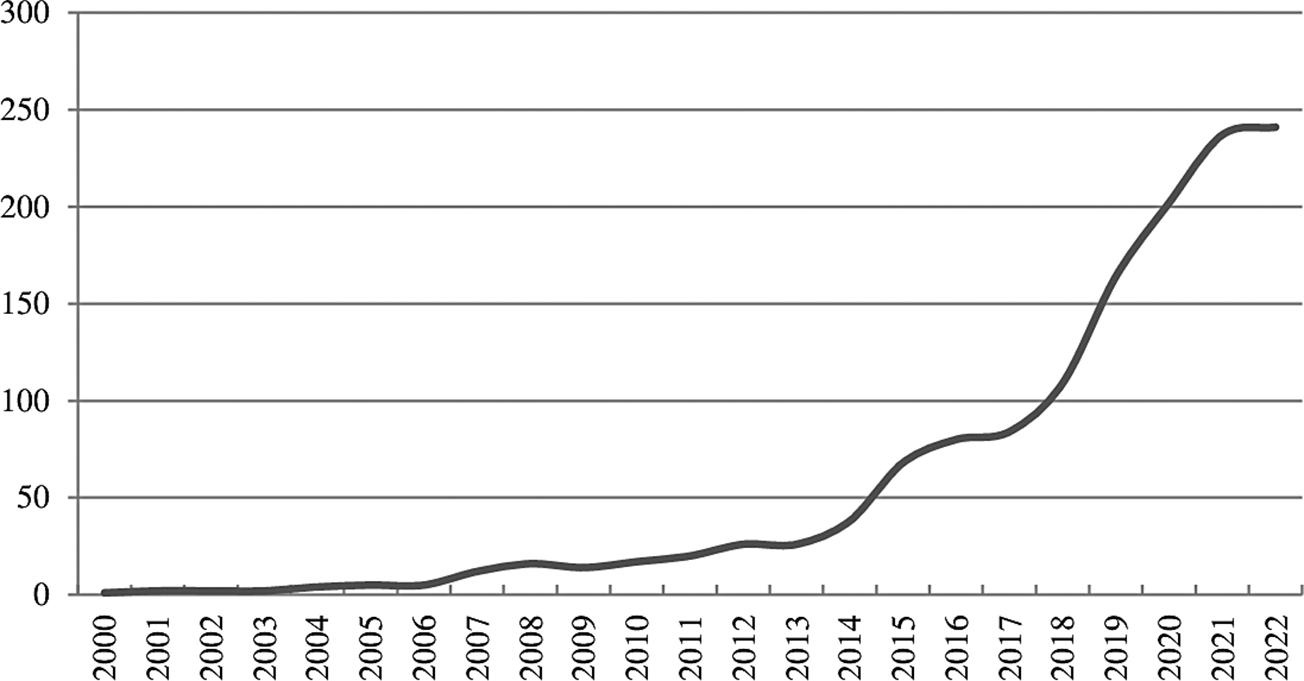
The first decades of the twenty-first century are witnessing an unprecedented transformation regarding gender diversity of corporate boards of directors. Many countries are actively addressing the entrenched sociocultural norms, systemic barriers, and discriminatory practices that resulted in the persistent female underrepresentation in leadership positions. The implementation of governance standards and equality policies promoting female representation has led to notable results. Thus, women on corporate boards of the largest listed companies in the European Union (EU)-27 increased from 4.4 percent in 1990 to 32.2 percent in 2022,Footnote 1 while in the United States, women held 9.6 percent of S&P 500 board seats in 1995, a figure that increased to 32.0 percent in 2022.Footnote 2 Although full numerical gender balance has not yet been achieved, this trend constitutes an unprecedented departure from the historically male-dominated composition of corporate elites in industrialized nations, a fact that sparked simultaneous academic interest (Figure 1).
Academic articles published in the economics and management fields on the topic, “women on boards of directors.”
Source: Web of Science.

In Spain, one of the first countries to implement mandatory gender quotas, articles on the topic of women on boards of directors in the fields of economy and management presented different approaches and conclusions.Footnote 3 Business case studies, positing that having more women on boards would improve business performance due to differential feminine attributes, were numerous and yielded mixed results.Footnote 4 Some found a positive relation between women presence and economic outcomes and even on top managers’ compensation,Footnote 5 while others found no significant link, or even negative effects, on small and medium-sized enterprises.Footnote 6 Other research explored cultural biases in boardrooms,Footnote 7 discriminatory appointment factors,Footnote 8 media influence on the reputation of companies hiring women,Footnote 9 or the impact of female presence on sustainability and corporate social responsibility indices.Footnote 10 Nonetheless, most of these studies narrowly focused on recent times and tended to concentrate on particular years, neglecting the dynamics of historical context.
In recent years, a handful of articles have established a coherent line of research analyzing the long-term arrival of women in senior management positions, attending to national particularities. Specifically, six national case studies revealed similarities and differences regarding the factors influencing their inclusion.Footnote 11 The present article aligns with this literature to meet two main objectives. First, it aims to fill a gap in Spanish and European historiography by analyzing the inclusion of women on the boards of the largest companies over the course of a century in Spain. Second, it achieves the objective of introducing, for the first time, a comparative approach to studying women’s long-term rise to the corporate elite across existing European studies.
To achieve these objectives, the study chooses a period and cohort of companies similar to those of previous works. Additionally, it introduces relevant and previously unexplored elements to this line of research, opening new avenues for future international studies. Specifically, it examines the influence of elite business schools as a platform for women’s access to top boards and traces their presence in centralized industrial firms under a national holding company. Recognizing that barriers, pathways, and circumstances shaping access to elite positions varied across the century, the analyses are situated within their respective historical settings.
The article is structured as follows. After this introduction, the second section reviews the literature, synthesizing key factors that shape women’s trajectories to corporate leadership and their reflections in the European cases of the Netherlands, Switzerland, and Italy. The third section details the methodology and sources necessary to build the different empirical bodies of the article. The subsequent findings are divided into four periods that reflect the country’s recent history and stages of women’s participation: exclusion, exception, inclusion, and promotion. This framework outlines the evolving landscape of female involvement in the corporate sphere over a century. The final section presents conclusions and brief reflections.
Women’s Longitudinal Pathways to Corporate Elites
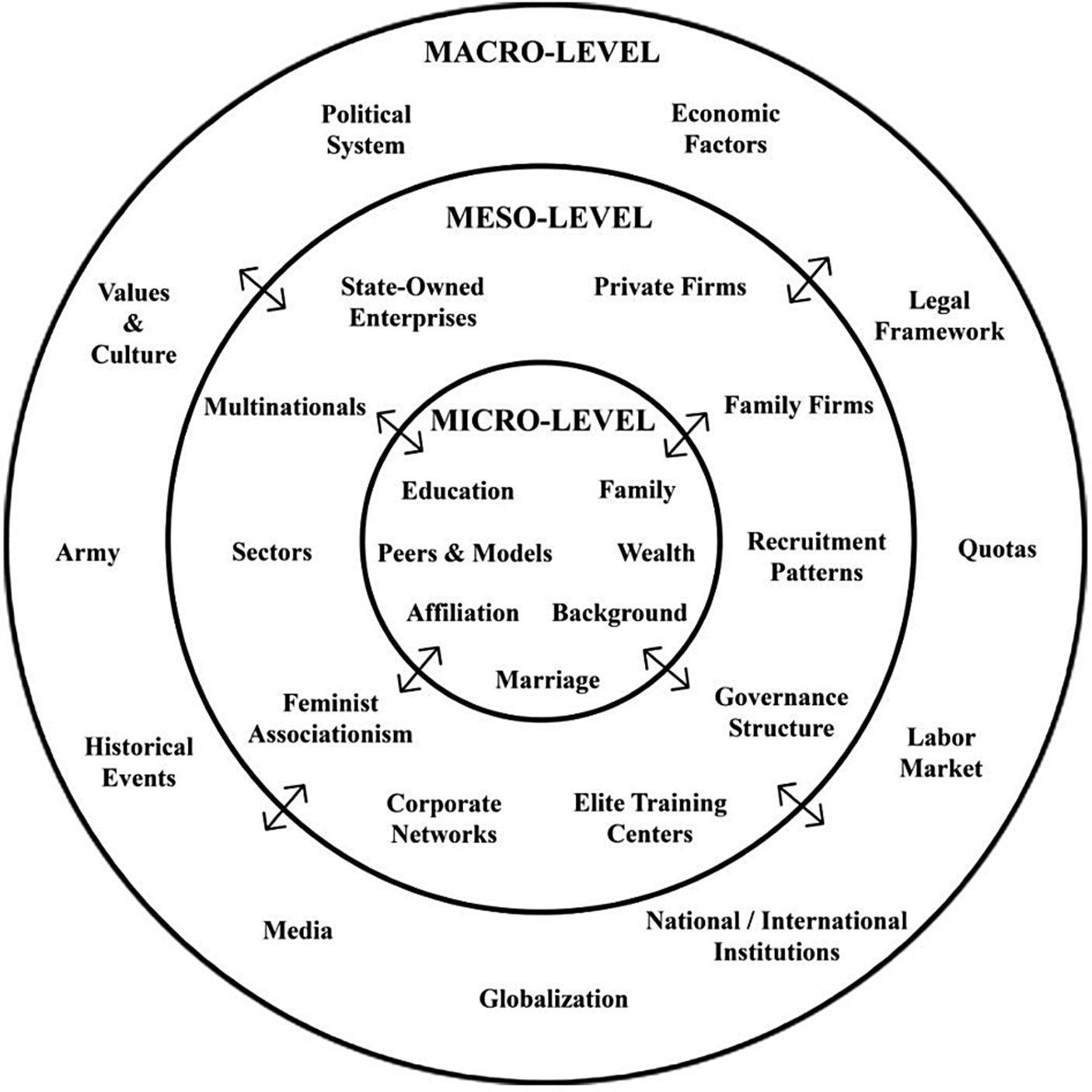
Historically, women faced greater barriers than men to entering corporate elites, resulting in their persistent underrepresentation.Footnote 12 We conducted a literature review on key factors influencing their advancement, while testing their applicability in three European case studies—the Netherlands, Switzerland, and Italy—taken as a comparative reference.Footnote 13 These factors were synthesized into a three-level conceptual framework, which served as the intuitive basis of the research (Figure 2). The model consists of interconnected levels: micro, examining the distinctive attributes of target population, women as social entities; meso, examining interactions among individuals, organizational characteristics, and companies’ dynamics; and macro, encompassing global consistencies above these domains. Factors are not isolated compartments but rather interact and evolve over time.
Model for women’s advancement into corporate elite.
Source: Author’s own work.

Literature highlights macrolevel factors as the primary determinants of board composition.Footnote 14 Among them, cultural factors, frequently embodied in legal frameworks, historically delineated the rules on women’s status. Some studies go back to the industrial era division of labor to explain the origins of gender inequality, where women were primarily relegated to domestic roles and men assumed the role of primary providers.Footnote 15 European legal systems reflected this worldview, prohibiting married women from running businesses or owning property, thus reinforcing male dominance and women’s subordinate status. The structural inequalities exerted coercive pressures that explained the lack of women in business leadership, especially when board composition responded to the family capitalism of the early twentieth century.Footnote 16
Women’s emancipation from such situations was often further hindered by religious institutions, as observed in Italy. In this regard, recent research suggests that countries with stronger female cultural influences, lower religious adherence, and less emphasis on traditional family roles tend to have more women in management positions.Footnote 17 On the contrary, countries with less gender diversity on boards tend to tolerate greater power inequalities and defend traditional male roles.Footnote 18 Additionally, countries with more women on boards tend to show greater female participation in the labor market and higher education as well as legislation supporting work-life balance.Footnote 19
Other forces, such as capitalism, globalization, and war, also affect the composition of corporate boards. Wars frequently preceded significant shifts in women’s societal roles.Footnote 20 In Italy, women gained access to government professions—excluding high positions and the army—following their contributions during World War I; subsequently, after their efforts during World War II, they secured the right to vote. Women’s suffrage is recognized as a fundamental milestone in the advancement of women toward the corporate elite in some countries.Footnote 21 For its part, the form of capitalism determines the functionalities covered by corporate directories and, therefore, conditions recruitment strategies to achieve objectives.Footnote 22 This is clear in the transition from the family capitalism of the early twentieth century, driven by hereditary influences, to the managerial capitalism of the midcentury, with separate ownership and control that led to the rise of professional managers. Such evolution continued into investor capitalism, where board strategies increasingly prioritize shareholder financial interests.Footnote 23 Finally, globalization and the internationalization of companies emerged at the end of the century as determinants that shaped cross-border recruitment in all the analyzed countries.
Meritocracy was often used to justify male dominance, but factors such as stock exchanges, lobbying, and the media can put pressure for greater diversity on boards.Footnote 24 Feminist movements drove significant changes in Switzerland during the 1960s, in Italy during the 1970s, and in the Netherlands, where crucially influenced debates on merit-based hiring and gender quotas. Despite controversy over the implementation of state regulation to improve representation, quota legislation has been institutionalized and widely implemented, showing the most significant effect in improving numerical representation.Footnote 25 In this context, national and supranational institutions become especially relevant, as the European Commission was through gender policies in Western Europe.
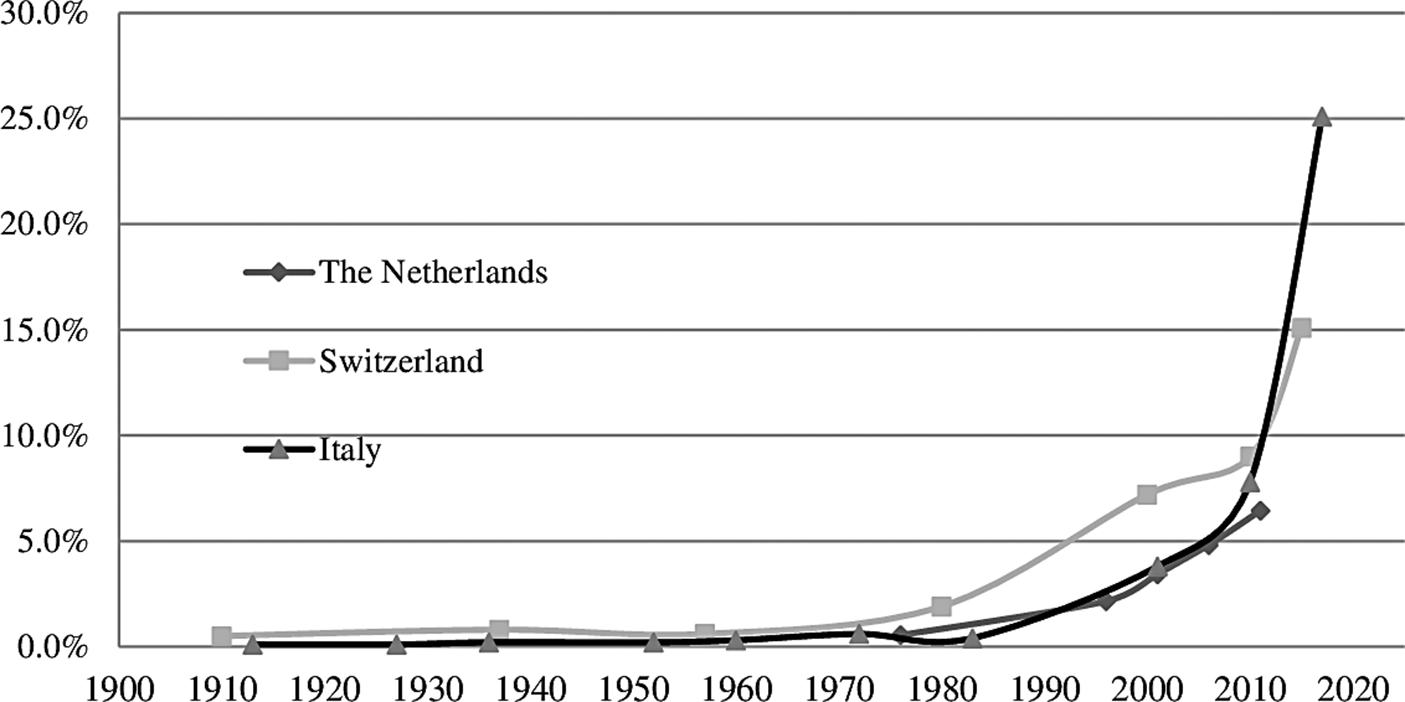
From a mesolevel perspective, key factors include those companies and sectors most open to female hiring, the motivations and pressures that influence these decisions, and the role of corporate networks. The Dutch, Swiss, and Italian corporate elites showed two primary patterns in their early stages: a near-total absence of women at the turn of the twentieth century and initial entries predominantly through their own family firms (Figure 3). Literature showed a notable association between the presence of women on corporate boards and family ownership, suggesting that their recruitment often originates from familial affiliations.Footnote 26 For its part, research from resource dependency theory suggests that female directors are more common in larger companies and industries with greater female employment.Footnote 27 Women are also more common on large boards, in established companies, or in those with foreign investments. On the other hand, some research on organizational factors shows that having a woman in top management can reduce the chances of another woman joining;Footnote 28 although hiring is more likely if one has recently left her position.Footnote 29 Sectoral variations depend on the country and time period. Thus, some studies found that there are more women hired in the retail sector but fewer in STEM and financeFootnote 30; others show that there are more women not only in retail but also in public services, media, and banking, which mainly serve end consumersFootnote 31; some studies show women were present in every sector of the economy.Footnote 32
Long-term female presence in corporate elites: the Netherlands, Switzerland, and Italy.
Source: the Netherlands: Heemskerk and Fennema, “Women on Board,” 271; Switzerland: Ginalski, “Who runs,” 14; Italy: Rinaldi and Tagliazucchi, “Women directors,” 7.

Beyond family firms, state-owned enterprises (SOEs) often led the way in promoting women to their boards, as demonstrated by the Dutch example in the 1970s. Such a path was taken first, especially by female politicians. However, this differed in countries like Switzerland, where women’s inclusion on corporate boards was driven by diversity strategies of select multinational firms rather than state initiatives. Along this line, Italian companies acquired by foreign multinationals after the Great Recession also appointed more women to their boards. The role of cooperatives was crucial in promoting their entry.
Longitudinal studies highlight the importance of examining social networks as determinants of women’s access to top.Footnote 33 Historically, first-time female directors have been less likely than men to receive additional appointments. Male-dominated corporate networks often sought homogeneity in board membership, typically preferring upper-class men and imposing greater barriers to other candidates.Footnote 34 Cooptation-based recruitment reinforced these homophile connections, hindering opportunities for people from less privileged backgrounds.Footnote 35 It was not until the late twentieth century that the gradual weakening of European old boys’ networks enabled more women to gain access.Footnote 36 However, upon entry, social network analysis (SNA) revealed notable gender disparities, with women frequently remaining on the periphery.Footnote 37 In the absence of specialized elite training centers, such as the French Grandes Écoles and other business schools, the military often emerged as a source of national leadership. This was seen in Switzerland, where half of the corporate elite was linked to the army for much of the twentieth century.Footnote 38 Women, excluded from mandatory military service, were marginalized from these social circles, perpetuating gender disparity and reinforcing the cohesion of male corporate networks.
In the early twentieth century, microlevel analysis confirmed privileged access to the corporate elite for individuals from aristocratic or upper-class families, with women completely excluded.Footnote 39 Such homogeneity preserved family wealth within the capitalist class, where marriage serving as another key factor. Frequently, women played a crucial role in forging marital alliances among industrial families, which expanded enterprise networks and facilitated primarily male social mobility.Footnote 40 Family ties played the pivotal role in first appointments by midcentury, particularly via owned firms under the structures typical of family or hereditary capitalism.Footnote 41 Following family profiles, the next wave of female entry was through politics, as in the Dutch and Swiss cases, regardless of whether the companies were state owned or not.
Some studies argued that the new cohorts of female directors in the early 2000s possessed similar human capital to their male peers, with equivalent levels of education, reputation and experience, although they tended to be somewhat younger.Footnote 42 Higher female education levels, redefined household roles, and shifting work hour preferences contributed to women’s advancement to boards.Footnote 43 However, despite educational advances, female directors faced a glass ceiling within the corporate elite, specifically regarding access to influential executive positions.Footnote 44 Finally, globalization and internationalization since the late twentieth century facilitated the entry of foreign women on top boards, particularly in multinationals, sometimes challenging local women’s advancement.Footnote 45
Factors reviewed at the three levels influenced the arrival of women to top boardrooms in the three reference countries. As Figure 3 illustrates, from a purely numerical view, the long-term trajectories of female advancement to the top in all three nations had analogous paths. Arrival stages were also quite common, and by the early twenty-first century female representation was still less than 10 percent in all of them, before regulatory pressures became widespread.Footnote 46
Women’s Pathways to the Spanish Corporate Elite: Sources and Methodology
To investigate women’s arrival to the Spanish corporate elite throughout last century, we collected data on the board of directors of the 200 largest Spanish companies. This covered both financial and nonfinancial entities for the years 1917, 1930, 1948, 1960, 1970, 1980, 1990, 2000, 2010, and 2017.Footnote 47 Following the criteria of Carreras and Tafunell, rankings of the companies were based on net assets for the years prior to 1980, from which we selected the largest companies and the composition of their boards of directors, as listed in the Financial Yearbooks of Bilbao. Due to the discontinuation of this historical publication, the rankings for subsequent years were compiled based on company turnovers, as listed in Dun & Bradstreet directories and the Dicodi and Asexor directories, supplemented by companies’ annual reports. All officially registered board members were collected, i.e., presidents, vice presidents, Consejeros Delegados, and directors. In the absence of a specific role titled chief executive officer (CEO) on the boards, those executives with the highest decision-making power within the boards were designated CEOs, namely president and Consejero/a Delegado/a. The selected timeframe and sample size adhere to the standard stratified sampling method, as outlined in the aforementioned international literature.
To delve deeper into the relationship between women SOEs spanning the years 1941 to 1995, we compiled the boards of directors of the historical firms affiliated with the state holding company, Instituto Nacional de Industria (National Institute of Industry [INI]). Specifically, the compiled data pertains to the years 1950, 1960, 1970, 1980, and 1990. This data set was collected with the assistance of the historical records preserved within the Documentation Center of the Sociedad Estatal de Participaciones Industriales (SEPI) and sourced from the historical archives of INI’s general register.
The historical constituents of the Spain’s principal stock exchange, IBEX 35, were extracted from the Comisión Nacional del Mercado de Valores (CNMV) directories, spanning, since its inception, the 1990s–2020s period.
International literature highlighted the key role of specialized business schools on management training over the national corporate elites as well as their potential pathway for women’s arrival.Footnote 48 However, none incorporate a specific or empirical examination of this issue into their analyses. Building on such a raised yet unresolved question, we now turn our attention to the principal Spanish business school linked to the training of corporate elites. Specific and instrumentally, our attention focused on the Instituto de Estudios Superiores de la Empresa (IESE), as this pioneering institution in Spain has been empirically linked to the promotion and perpetuation of the country’s managerial elites. To trace the relationship between women and this business school, we used a primary source: the IESE alumni directories. Data was extracted on the specific courses taken by women and their corresponding years of completion during the first forty years since their founding (1958–2000).
We gathered information about the individuals in our sample by their tracking career trajectories through sources, such as biographies, Spanish Senate and Parliament archives, annual company reports, personal websites, and newspapers. All data in the tables and graphs of the text have been exclusively extracted from the aforementioned sources, from which we compiled the gender of the directors, the type of firm, their sectors, and the precise counts and percentages as well as any necessary parameters.
Finally, to analyze the positioning (or lack thereof) of women within Spanish corporate networks, we first identified the women interlockers, that is, those who simultaneously sat on the boards of two or more of the selected companies. The corporate network of individuals is then composed of those who, in addition to being interlockers, share a board with other interlockers. Similarly, companies linked through common directors also form enterprises networks. We utilize the quantitative techniques of SNA methodology, employing Gephi 0.10.1 software for both network visualization and statistical analysis.
Female Presence in the Spanish Corporate Elite
Total Exclusion: First Third of the Twentieth Century (1910s–1930s)
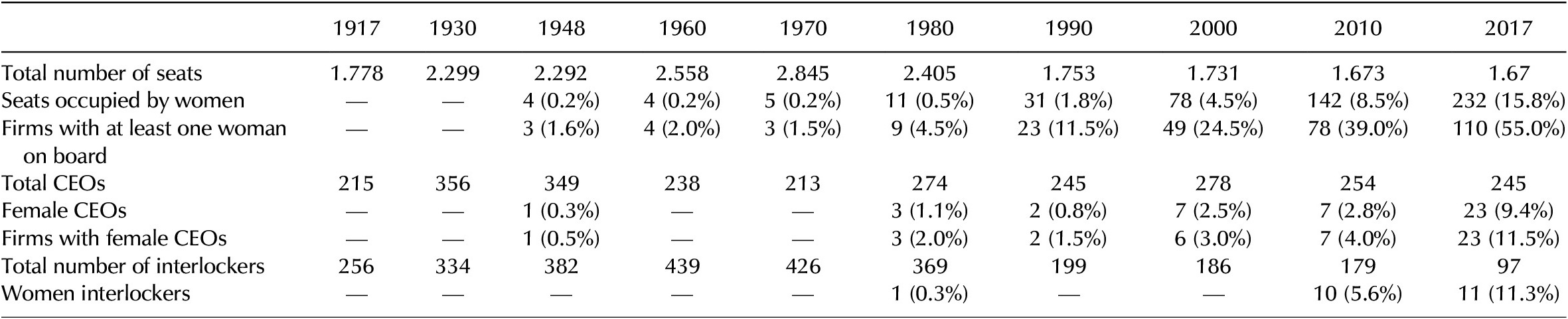
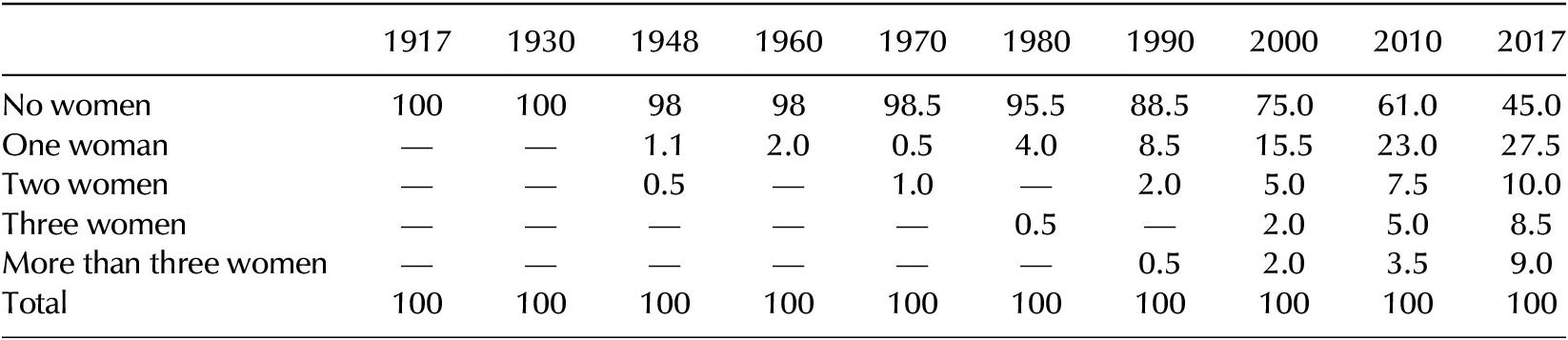
As with the rest of the countries discussed, at the beginning of the twentieth century in Spain, women were totally absent from the boards of the top 200 companies in our sample (Table 1).Footnote 49 Despite the historical recognition of women’s roles as entrepreneurs, owners, and shareholders in Spanish corporations during the nineteenth and early twentieth centuries, their absence in upper corporate echelons was prevalent, emulating observations in other countries.Footnote 50 This situation persisted through at least the first third, with over 4,000 board seats from 1917 and 1930 having no female representation. Four key factors shaping this scenario were identified: educational attainment, women’s labor market status, and overarching cultural norms and legal frameworks.
Female presence in the Spanish corporate elite

Source: Author’s own work, see the sources and methodology section for details.
In the absence of specific individuals to analyze, the microlevel analysis focused on the intrinsic characteristics of the target population. Between 1900 and 1930, the life expectancy of Spanish women increased from 35.7 to 51.6 years, while the mean offspring count per woman fluctuated between 3.05 and 2.52.Footnote 51 Concerning labor market participation rates, the female workforce barely reached 9 percent in 1930, compared to 65.4 percent for men.Footnote 52 These statistics are significant within the backdrop of the patriarchal culture of the time, reinforcing gender stereotypes, with women seen as homemakers and caregivers and men as primary breadwinners, perpetuating the division of labor by sex.
The earliest source for the transmission of this worldview was informal family education,Footnote 53 while formal academic education remained constrained. Women’s literacy rate increased from 32 percent in 1900 (compared to 55 percent for men) to 63 percent in 1930 (compared to 80 percent for men). Coupled with these low levels of schooling and a highly illiterate population, overall participation in higher education, regardless of gender, stood at 2.4 percent in 1930.Footnote 54 In the university context, the 1888 law requiring case-by-case approval for female enrolment in universities was abolished in 1910, justified by the principle that public instruction legislation should not discriminate based on sex, allowing both male and female students alike to enroll.Footnote 55 The subsequent attempts at educational improvement during the Second Republic did not have enough time to consolidate, and access to the university remained limited to an upper-class minority.
At a macrolevel, regarding legislation, literature has shown the ambivalence toward women’s rights within the legal framework of that era—the Civil Code of 1889.Footnote 56 It was based on a long legal tradition regarding parental inheritance, mandating that two-thirds of the distribution among direct relatives be allocated regardless of sex. This implied a more progressive entitlement compared to laws favoring primogeniture, which often excluded daughters. However, while legislation favored ownership and the possibility for women to undertake or invest, their economic and business actions were subject to the consent of their fathers or husbands.Footnote 57 Thus, women often faced exclusion from board positions, even if they owned shares in the company.Footnote 58 In this regard, the role of women in their family businesses has often been described as “invisible,” with little influence in decision-making, while male family members occupied more prominent positions.Footnote 59
Finally, as previously mentioned, achieving electoral parity with men was a milestone that could be decisive. The emergence of feminist consciousness and movement from the nineteenth century prioritized suffrage as a primary demand. Thus, after several failed attempts, the Spanish Second Republic Constitution approved women’s suffrage through efforts from groups like the Female Republican Union and the Foundation for Women, amid prolonged and politically charged deliberations.Footnote 60 However, this accomplishment was short-lived. After the Spanish Civil War (1936–1939) and Franco’s rise, voting rights were widely restricted for all citizens until 1977.
Family Exceptions (1940s–1970s)
Franco’s National Catholicism regime imposed extensive limitations on civil liberties. Top-down norms at a macrolevel affected women across all levels. Strict measures were promptly enacted to strip women of legal autonomy, rendering them reliant on husbands, fathers, or the state—a discourse of female subordination accompanied by pronatalist policies.Footnote 61 The 1938 Law reinforced the discriminatory Civil Code of 1889, continuing women’s legal incapacity as a fundamental principle.Footnote 62
A labor overview at both meso- and macrolevels shows that female participation rose from 8.3 percent in 1940 to 13.4 percent (compared to 57.5 percent for men) at the end of the period.Footnote 63 Hence, despite significant disparities compared to men, women’s participation in paid labor increased during the first two decades of postwar economic autarky. The Political, Professional and Labour Rights Law of 1961 introduced equal employment and pay for women with exceptions for Military Corps and Judicial Administration. Roles deemed arduous, hazardous, or unsanitary were exempt for women and were specified in compliance with international conventions, according to the law.Footnote 64 In the later phase of the regime, legislative changes facilitated the inclusion of women in the judiciary, remove biases in training periods, and introduce provisions for maternity leaves. The literacy rate for women increased to 87 percent (compared to 97 percent for men) in 1960.Footnote 65 Regarding higher education, which encompassed nearly 30 percent of the population in the 1970s, women made up 36.9 percent of university enrollments in the academic year 1975/76.Footnote 66
In such national scenario, the first female presence on top Spanish boards of our samples dates back to the middle of the twentieth century. Both the 1948 and 1960 samples reflected a total of six women, all of whom held positions on five family-owned companies. Its exceptionality allowed us to stop at each one. Carolina Butsems and her daughter, María Fradera Butsems, served as directors at Cementos Fradera S.A., founded by Carolina’s father, Mariano Carlos Butsems, and his son-in-law, José Fradera (Carolina’s husband and María’s father), in the late nineteenth century and known for manufacturing mosaic tiles and cement pipes. Cementos Fradera became a limited company in 1933, with María and her siblings joining the board, emphasizing the company’s strong family-oriented foundation.Footnote 67 In a similar vein, Luz Echevarría held a board seat with her siblings in their family-owned firm, Echevarría S.A. Founded in 1920, this company marked Spain’s entry into specialized steel production. Her father, a prominent political figure and Vizcaya senator, played a pivotal role in advancing industrialization in both the Biscayan and Spanish contexts during that period.
During an era when inherited and symbolic capital held high value in Spain’s political regime, Casilda Ampuero Gandarias played a prominent role. As one of the country’s wealthiest women, she had extensive connections in Vizcaya’s industrial, mining, and financial sectors due to her family background. Her father was involved in the Banco de Bilbao and served as a senator in the 1920s, while her mother belonged to a renowned family of industrial oligarchy of Biscay.Footnote 68 Casilda’s presence on elite boards was linked to Basconia S.A., founded in Bilbao in 1892 by her grandfather, Pedro Pascual de Gandarias y Navea, a key figure in Basque and Spanish industrialization. Personally, she had close ties to the dictator circle and married José Enrique Varela, a prominent military officer and Minister of War, posthumously awarded a marquisate by the regime, which she in turn held.
Within the sampled boards of 1960, Ampuero and Echevarría retained their positions. In addition, two more women were represented: Margarita Pastor de Jessen at Banco Pastor S.A., and María del Pilar Díaz at Industrias del Cuero S.A. Once more, their entry was facilitated by family affiliations: Margarita Pastor belonged to the historic family founders of the banking institution, with roots dating back to the eighteen century, while Díaz shared the board of directors with her father and brother-in-law.
As a preliminary conclusion for the first half of the century, we see that the first women directors conformed to the prevailing industrial business structure of their era, both in terms of geographical alignment with main industrial regions—Basque Country and Catalonia—and sector-specific involvement (sectoral details provided later).Footnote 69 Furthermore, two consistent trends were similar to those observed in the aforementioned international literature. First, all female directors who rose to the corporate elite until the 1960s did so through family connections with the owners and/or founders, either as daughters, wives, or widows; second, they all came from upper-class backgrounds.Footnote 70
A decade later, none of the previous directors remained, and five new ones joined the boards of three companies. Among them, three still entered through family connections. Inocencia Perera and Maria Soldevila, related by marriage to the Gomis family, founders of Fuerzas Hidroeléctricas del Segre, held positions in that firm. Banco Pastor appointed Carmela Arias y Díaz de Rábago, second cousin and wife of the president, Pedro Barrié, from whom she inherited the title of Countess. She became the first woman to preside over a bank in Spain, and also was the first female interlock in the corporate elite network of the subsequent decade.
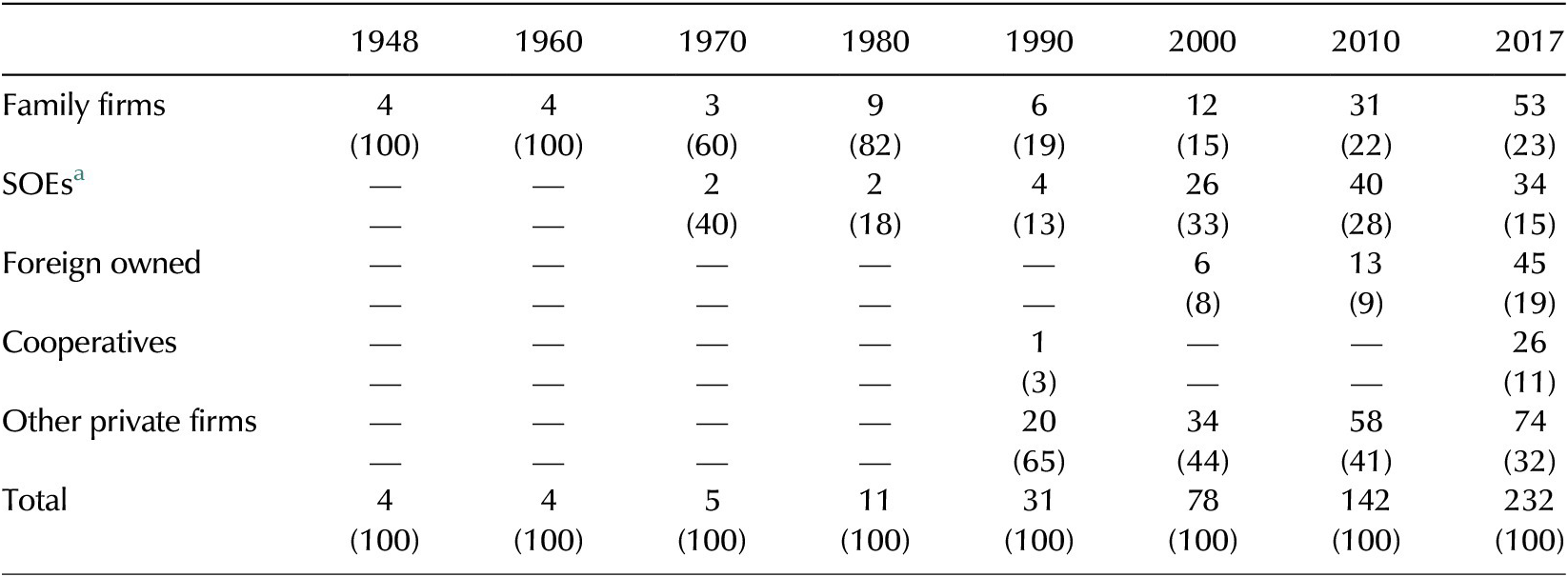
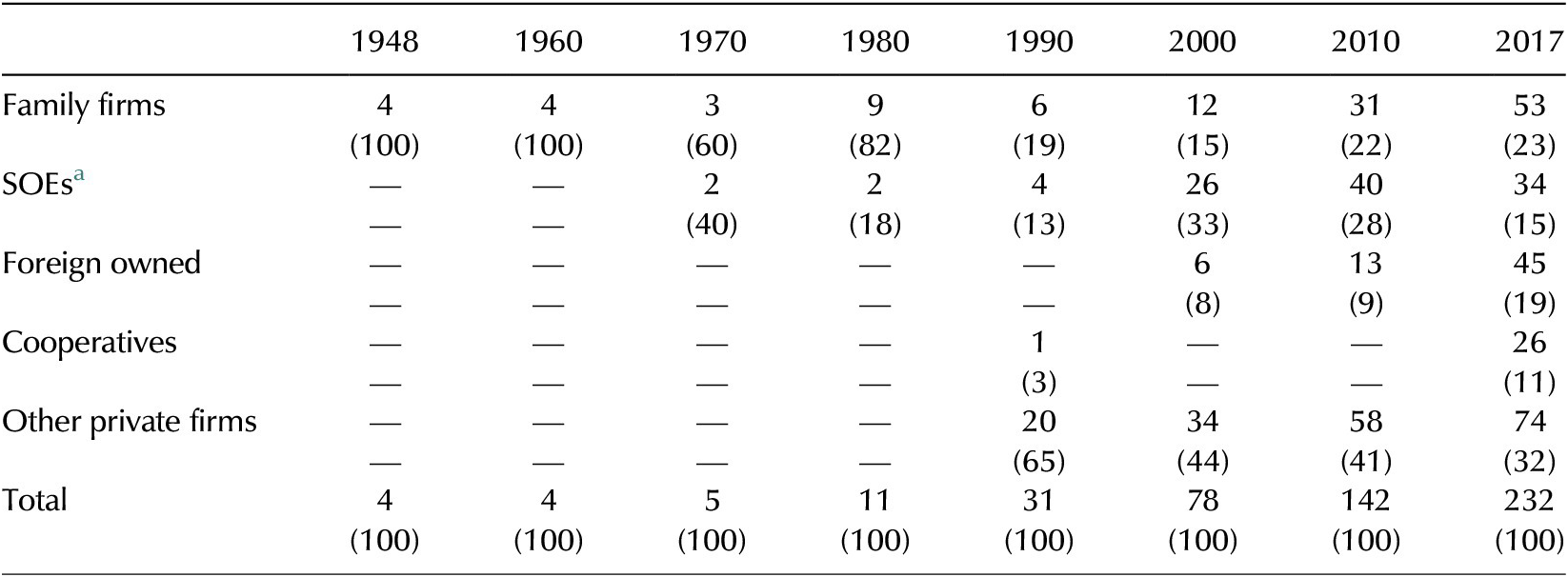
Similar to previous international examples, a state-controlled enterprise, Telefónica, led the way in promoting women to the board in the 1970s (Table 2). This included Maria Ángeles Moreno and Isabel Martín, both administrative officers representing staff. Martín, also a spokesperson for the Female Section, served on the Spanish Commission for the United Nations’ International Women’s Year in 1975.Footnote 71 These international initiatives significantly advanced gender equality in a nation transitioning towards democracy.
Women’s board memberships by firm type (percent)
a INI companies are also included in the SOEs category.
Source: Author’s own work, see the sources and methodology section for details.
Women in the National Institute of Industry
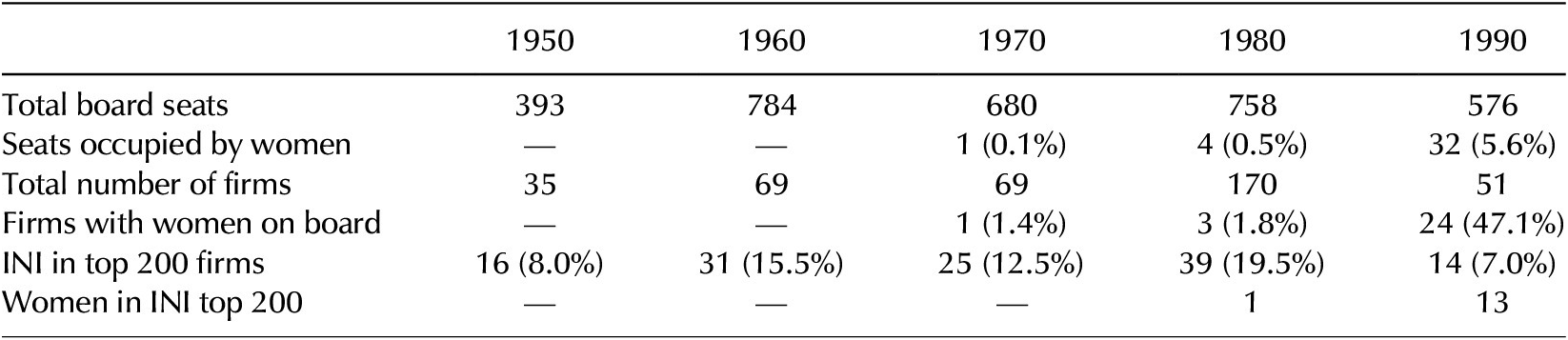
From meso- and macrolevel perspectives, the INI played a significant role in major Spanish companies during this period. Established by the state in 1941, the INI served as a holding tool for autarkic industrialization. In the 1960s, a notable part of the largest companies already belonged to the INI realm, including the top four.Footnote 72 Nevertheless, alongside industrializing goals, INI’s military objectives remained significant in a post-war environment hostile to authoritarian regimes. Consequently, administrators during the first half often had military backgrounds.Footnote 73 As reflected in Table 3, this was an insurmountable barrier for women, primarily attributable to the cultural, legal, and military regulations, which delayed their entry into the INI structure until the 1970s sample. This scenario of arrival via military affiliation partially resembles the previously mentioned Swiss case.
Female directors within the National Institute of Industry (INI) companies

Source: Author’s own work, see the sources and methodology section for details.
During this stage, such arrival was once again nothing but a complete exception. Mónica Plaza, a pioneering member, exemplified this by serving on the board of Empresa Nacional de Artesanía S.A. Her career, tied to the conservative Female Section, saw her opposing the Political Reform Act aimed at dismantling Franco’s structures.Footnote 74 She advocated for homemakers’ legal protections and led initiatives like Professional Training Courses for rural women.Footnote 75
From a mesoperspective, these INI state-owned enterprises differed widely from the publicly owned Western European enterprises, deviating from Chandler’s modern industrial business model.Footnote 76 Thus, access to elite positions remained closely linked to traditional national patterns and, consequently, it became essential to anticipate the integration of managerial principles into large corporations, including the development of a system for recruiting professional managers.Footnote 77
Women in the First Spanish Business Schools
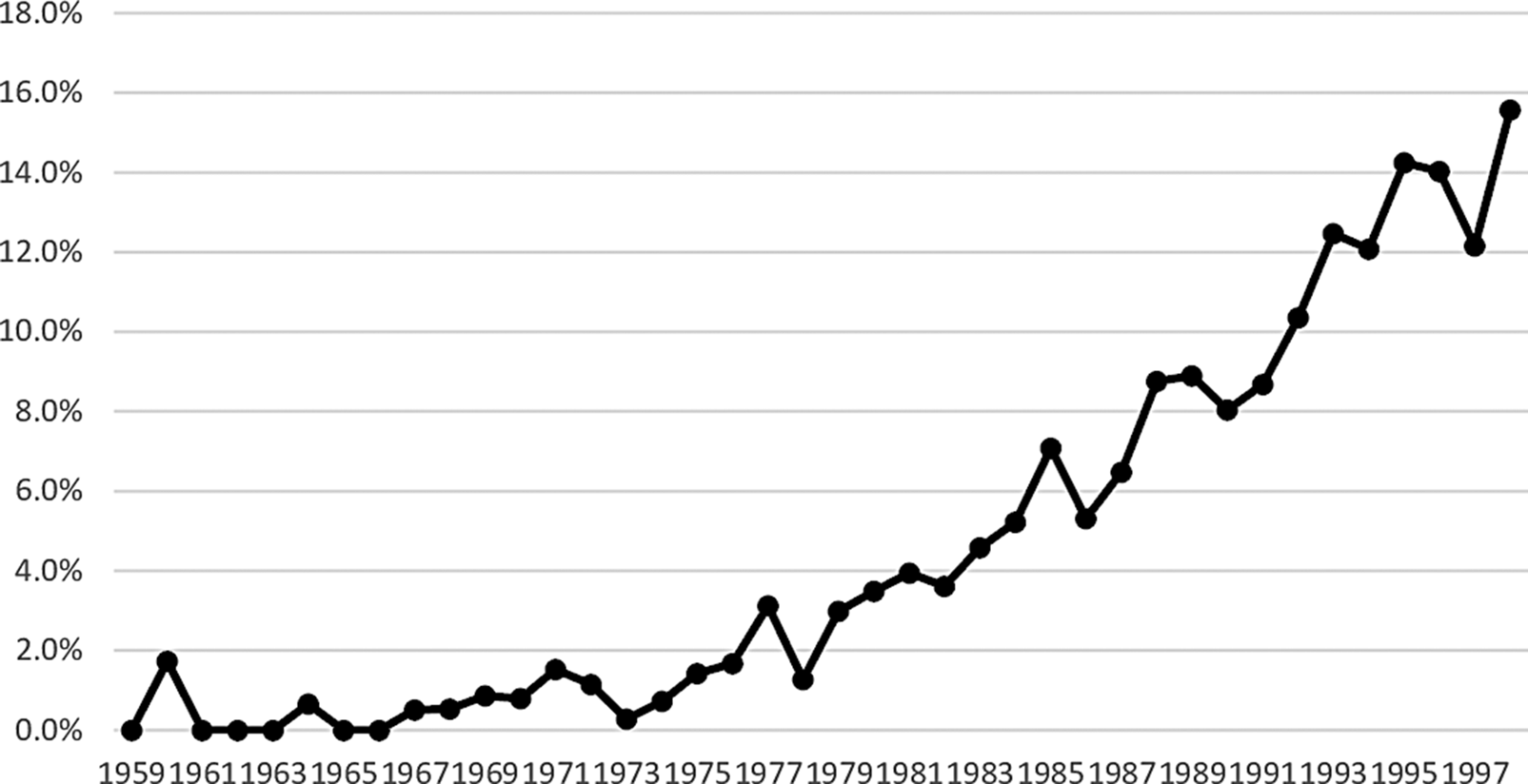
Following the above argument, the final phase of the dictatorship marked a significant shift in economic policy from autarky to the embrace of emerging global capitalist norms. During this period, the first Spanish business schools emerged, drawing inspiration from American management models associated with the phase of managerial capitalism, as defined by Chandler.Footnote 78 Thus, in the late 1950s, four professional management training centers were established with the aim of modernizing national entrepreneurship: the Escuela de Organización Industrial (EOI), the Instituto Católico de Administración y Dirección de Empresas (ICADE), the IESE, and the Escuela Superior de Administración y Dirección de Empresas (ESADE). While EOI and ICADE focused on training public sector managers, especially those affiliated with INI, IESE and ESADE aimed to enhance executive education.Footnote 79 IESE, in particular, spearheaded postgraduate management programs aimed at vertex people, individuals already occupying leadership positions.Footnote 80 Empirical research underscored this business school played a pivotal role in nurturing the national elite contributing significantly to its reproduction. In 1959, IESE inaugurated its academic year with the senior business management program, enrolling an initial cohort of 20 students, all of whom were male. Over the next decade, new management programs diversified its educational portfolio. Regardless, in its first decade, only 6 women were among the total of 1,612 students across all programs (Figure 4). Meanwhile this institution already represented up to 5.3 percent of the Spanish corporate elite.Footnote 81 In the 1970s, although the number of female students gradually increased, there were only 57 women, constituting 1.5 percent of 3,747 students. In contrast, IESE already accounted for 11.2 percent of the managers in our sample.Footnote 82
Women among IESE students during its initial four decades.
Source: Author’s own work, see the sources and methodology section for details.

A significant gender gap is observed in the arrival of women to one of the fundamental centers of professionalization in management. This delayed entry into business schools was not uncommon among the peers analyzed. In the Dutch case, Nyenrode did not admit women until 1976, while Switzerland lacked centers specifically dedicated to training elites.Footnote 83 In addition to their educational credentials, women needed to have a diverse professional network to support the company’s growth.Footnote 84 However, their stark underrepresentation in this pivotal institution marginalized them, denying access to both key pathways to top positions and influential socialization circles.Footnote 85
The general panorama reflected a minimal presence of women in the Spanish business elite during this period. It started with just four women’s seats in the 1948 benchmark and saw a marginal increase to five seats in the 1970 one. The overall percentage of women consistently remained below 0.2 percent, underscoring its exceptional nature, and mirroring a similar trend seen in the corporate elites of Switzerland and Italy.
Starting Change: The Steady and Parsimonious Arrival (1980s–2000s)
By the mid-1970s, during the period of transition to democracy, Spain faced those legal gender biases that persisted after years of subordination during the dictatorship. At the macrolevel, this transformative period revitalized their legal and civic roles, commencing with the resurgence of universal suffrage. The 1975 Civil Code reform introduced changes into economic domain reinforced by the Commercial Code,Footnote 86 while the Labour Relations Law enshrined the principle of gender equality.Footnote 87
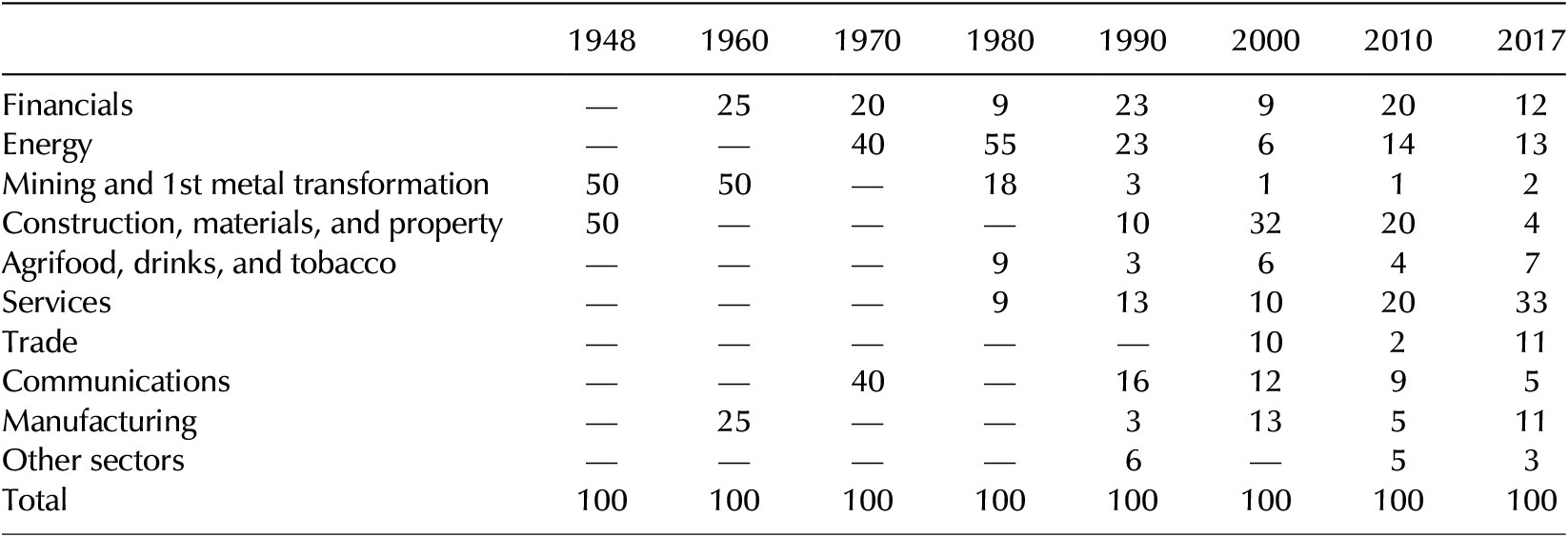
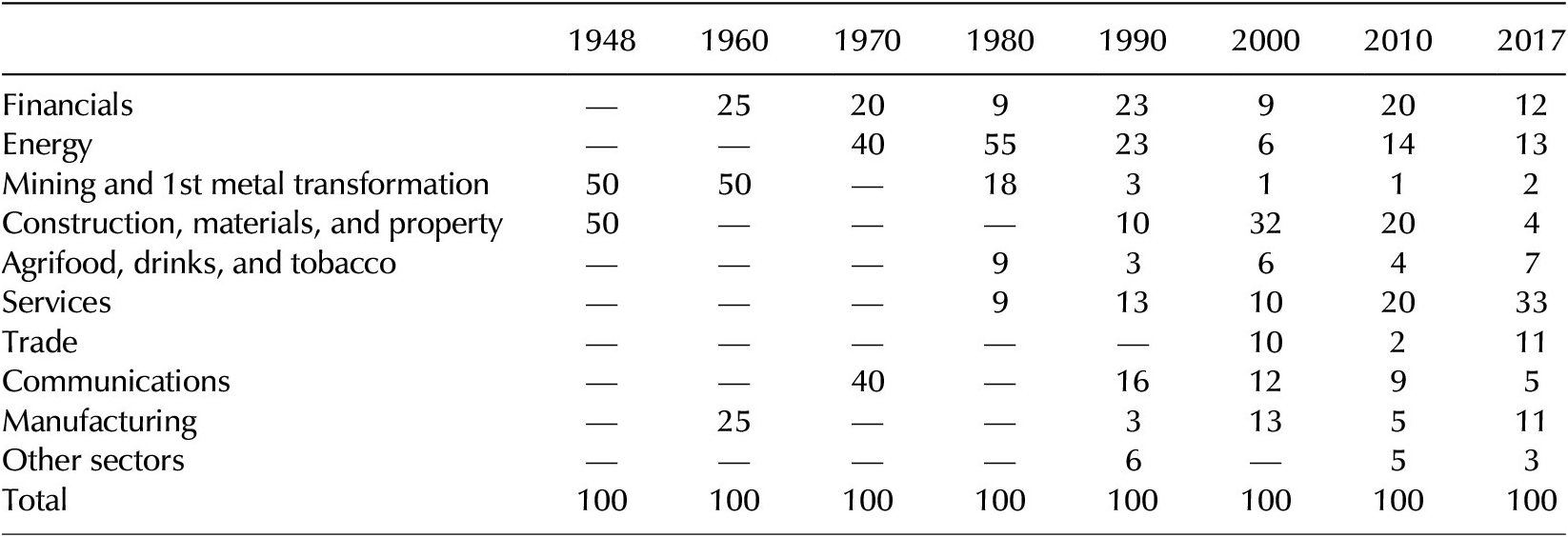
Following these improvements, in the early 1980s, a process of industrial reconversion would begin for Spain’s entry into the European Economic Community in 1986. This milestone would be crucial in the trajectory of female managers, as it would force a repositioning in the business system. Thus, on the one hand, this period witnessed the gradual reduction of heavy industry linked to the INI, and, on the flip side, it compelled renowned family businesses to make significant adjustments to remain competitive in the new international scenario.Footnote 88 Then, during the liberalization and privatization processes of the Spanish business structure between the 1980s and the 1990s, the main industrial companies ceded their dominant market positions. In contrast, the banking and energy sectors emerged as the primary domains where new female directors secured seats (Table 4).
Women’s representation by sector (in percentages)
Source: Author’s own work, see the sources and methodology section for details.
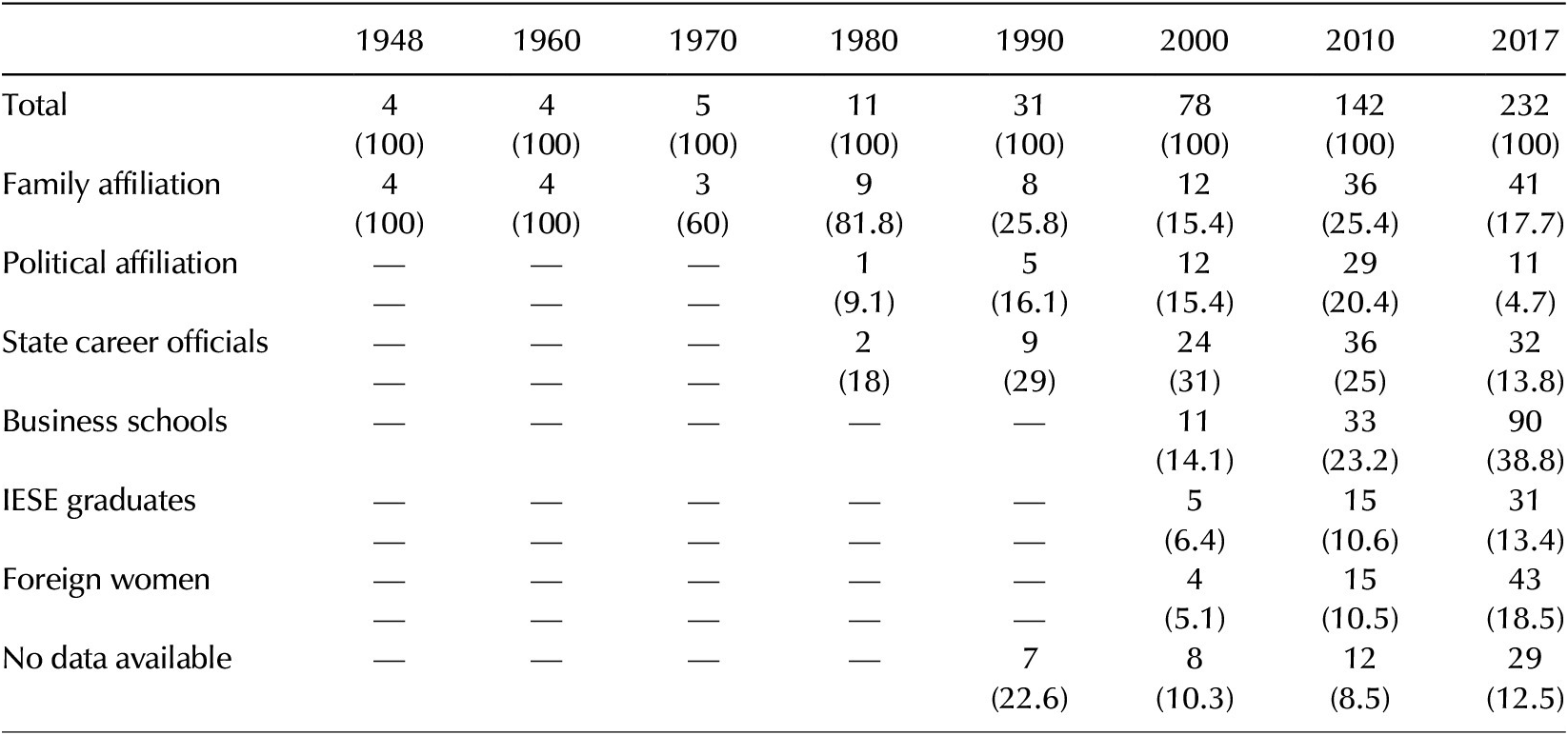
Delving into microlevel analysis, women’s profiles also reflected the transitional nature of the era. While certain patterns from previous decades persisted, wherein women secured positions through family connections, a novel archetype of members emerged. As Table 5 shows, among the eleven women on boards in 1980, nine had familial connections to their respective companies, and the newcomers not only were closely affiliated with the political sphere but also exhibited a notable academic background. Specifically, official career women belonging to the state’s professional staff (mainly lawyers and economists) and constituted up to 30 percent of the total female elite toward the end of this period.
Main profiles in female corporate elite (percent)

Note: Individuals may belong to more than one category simultaneously.
Source: Author’s own work, see the sources and methodology section for details.
Mercedes Sala, Ph.D., an economist, exemplified this new pathway. After a decade in industrial banking, she entered politics as a Barcelona City Council councilor in the Socialist Party list in the first democratic municipal elections in 1979. Her versatile career included banking, university leadership, active political engagement, and contributions to public transportation, notably her pivotal role in the launch of Spain’s first high-speed rail line in 1992.This arrival pathway was also observed within INI-affiliated companies. Two illustrative cases were Paulina Beato and Maria del Carmen Mestre, both occupying positions in energy companies: INSOLAR and GESA, respectively. Beato, Ph.D., an economist from the University of Minnesota, joined INI in 1979 and later became the first female president of Red Eléctrica de España, playing a crucial role in Spain’s National Energy Plan. She also held international positions at the IMF and IDB. Meanwhile, Mestre, an economics graduate, joined INI in 1970 and was actively involved in political and organizational initiatives, including the Federal Women and Socialism Group after affiliating with the PSOE in the 1970s. She held pivotal roles within INI and the Ministry of Industry and Energy, significantly influencing energy policies.
By the 1980s, for the first time, the number of women with university education exceeded that of men, initiating a consistent pattern that would last more than four decades.Footnote 89 This milestone indicated significant social change, although workplace and leadership equality remained challenging. Furthermore, the rising number of female graduates from institutions like IESE and other business schools mirrored the era of growing managerial professionalization. This undoubtedly boosted the progress made during the 1980s, from 11 to 31 seats, a gradual and linear increase that continued in the following decades. Between 1990 and 2000, the number of female seats expanded from 31 to 78 but, despite that the number of companies with at least one woman on their boards more than doubled, up to 75 percent of the top 200 companies still did not have women on their leadership platform.
For its part, in the state holding company INI, which was facing dissolution in 1992, most of the 32 women had specific technical training and worked for the state public administration, with some exceptions, those who were politicians. Furthermore, their professional trajectories remained primarily linked to SEPI, the entity that succeeded INI after its dissolution. In general terms, the progressively diversified composition of the corporate elite, exemplified by women who achieved leadership roles through their professional, political, and academic careers rather than solely through owning-family ties, exemplified the expansion of recruitment pool.
Fostering Change: Women’s Remarkable Inclusion in the Elite (2000s–2017)
While the latter third of the twentieth century broke the previous stagnation patterns, by the year 2000 their representation still did not surpass 5 percent of total positions. Furthermore, although female directors during this period had notably professionalized backgrounds, including up to 14.1 percent with business school degrees, female CEOs made up just 2.5 percent of the entire senior executive cohort. This reflected the persistent glass ceiling in corporate structures, where women, regardless of their qualifications, faced barriers to accessing senior executive positions. On the other hand, women entering boards through familial connections still constituted 15.4 percent of the total, a figure comparable to the representation of women with political profiles. Despite increasingly higher, professionalized, and gender-balanced educational levels, and the existence of formally egalitarian regulations, the advent of the new millennium unveiled a stark truth: achieving full numerical parity remained a distant aspiration following years of sluggish advancement without explicit political interventionism.
Between 2000 and 2017, the historical series saw its most substantial gross growth. Firstly, as globalization and internationalization unfolded, foreign direct investment increased through multinational corporation subsidiaries and acquisitions, leading to a rise in foreign directors’ presence. This macroeconomic variable was identified as crucial in the aforementioned studies for the Netherlands, Switzerland, and Italy. In the Spanish case, this resulted in the arrival of up to 18.5 percent of foreign female directors, primarily within multinational corporation subsidiaries. Indeed, such foreign-owned multinational subsidiaries accounted for 9 percent of the companies with women on their boards in 2010, reaching as high as 19 percent by 2017 (Table 2). Hence, we can also attribute to them an accelerating factor in the arrival of women from the mesolevel in recent decades.
Within this group of international directors, several examples stand out. For instance, Gloria Fluxà (IBEROSTAR) earned recognition for her contributions to sustainable tourism, earning her the designation as Young Global Leader by the World Economic Forum in 2017. Another notable figure was Belén Garijo (BBVA), who made history by becoming the first woman to lead a DAX30 company. A final example was Dame Clara Hedwig Frances, chief executive of the London Stock Exchange, the first woman in this position in history.
In addition to heiresses and foreign women, many female leaders were pioneers in their fields. For example, Concepción Sierra (Cementos Portland) played a key role in the enactment of Law 14/1975, which restored women’s full legal capacity by abolishing gender-based discriminations. Ministers such as Isabel Tocino (Banco Santander) and Cristina Garmendia (Naturgy Group) made important contributions in their respective fields, with Tocino the first Spanish woman to obtain a doctorate in nuclear energy and Garmendia advancing in the Spanish biotechnology sector. Overall, during the second decade of this century, 38.8 percent of women received business school training, with IESE representing 13.4 percent of Spain’s female corporate elite, highlighting its pivotal role as a key platform in professionalizing and accrediting directors (Table 5).
At a mesolevel, again, women sectoral distribution resembled the setting of the Spanish economy of that era (Table 4). During the country’s real estate bubble from 1997 to the 2007 crisis, up to 32 percent of female directors in 2000 and 20 percent in 2010 were associated with companies in the construction or real estate sectors. After that, its presence became increasingly aligned with an economy that leaned toward the services sector, showing clear patterns of intersectoral adaptability.
However, the average number of women on each board did not appear sufficiently significant, according to critical mass theory, which posits that a minimum number of women is crucial for ensuring their perspectives are heard.Footnote 90 While one female director may have limited influence, the impact grows with two women on the board, and a profound transformation is more likely when there are at least three. In the Spanish case, the proportion of companies with three or more women remained below 20 percent during this period (Table 6). Likewise, although the number of companies without women decreased, approximately half of the top 200 companies still had no female representation. In this case, the type of company also emerged as a significant factor at mesolevel. Specifically, cooperatives, consistent with the trend observed in the Italian case since the early twenty-first century, showcased the highest female representation on their boards in the 2017 benchmark. For example, Consum, a supermarket cooperative, had 11 female directors, comprising 61 percent of their board.
Companies’ proportions by number of women on boards (in percentages)

Source: Author’s own work, see the sources and methodology section for details.
At a macrolevel, Spain’s membership in the European Commission (now the EU) played a pivotal role in the latter phase, as it harmonized with supranational community guidelines. Specifically, and over decades, member states and European institutions worked to promote gender equality in boardrooms through different directives and recommendations.Footnote 91 Thus, the European Commission’s 2010 Gender Equality Strategy emphasized on increasing women’s representation on boards; as well as the Commission’s 2012 proposal, asking for greater transparency in both the selection processes and the qualification criteria. Additionally, candidates of the underrepresented gender would be preferred in cases of equal qualifications. All of these initiatives received substantial boost from major feminist associations, such as Women on Board, which offered European companies support in connecting highly competent women with available positions; or the European Women’s Lobby, which, as demonstrated by its Declaration on EU legislation for gender equality in representation on corporate boards, underlined the imperative need to implement legally binding measures in all EU members.Footnote 92 However, there were initially significant disparities in legislative approaches between states, leading to debates about the appropriateness and level of stringency of the laws to be applied. Some states favored a comply or explain model, compelling companies falling short of gender balance targets to provide explanations, whereas others implemented binding gender quotas, following Norway’s pioneering example.Footnote 93 In any case, given the sluggish pace of progress in many countries, new legislative measures were introduced to expedite the achievement of numerical balance. On the other hand, some scholars proposed that nonpunitive regulations motivated to select female directors with more valuable human capital attributes, while contradicting predictions about corporate results that countries with punitive quotas attributed to a greater female representation.Footnote 94
Spain initially adopted the comply or explain model, which applied to companies required to submit full annual accounts. The successive Unified Codes of Good Corporate Governance of Listed Companies, approved by the CNMV, reflected the evolution of the commitment to promoting numerical parity between men and women during this last period. The 2006 Code (renewed in 2013) initially promoted the inclusion of women on boards without specific thresholds.Footnote 95 Two years later, a desirable minimum of 30 percent female representation of the board began to be quantified. Subsequently, in 2020, it was revised to recommend that the number of female directors make up at least 40 percent of the board, with a minimum of 30 percent.Footnote 96 In parallel, Organic Law 3/2007 also sought to achieve gender parity in the following years, explicitly defining it as maintaining a board composition in which no sex exceeds 60 percent or falls below 40 percent.Footnote 97 Furthermore, the law recognized a historical demand—the right to reconcile work, family, and personal life—promoting shared responsibility between women and men.
Women Within the IBEX-35 Companies
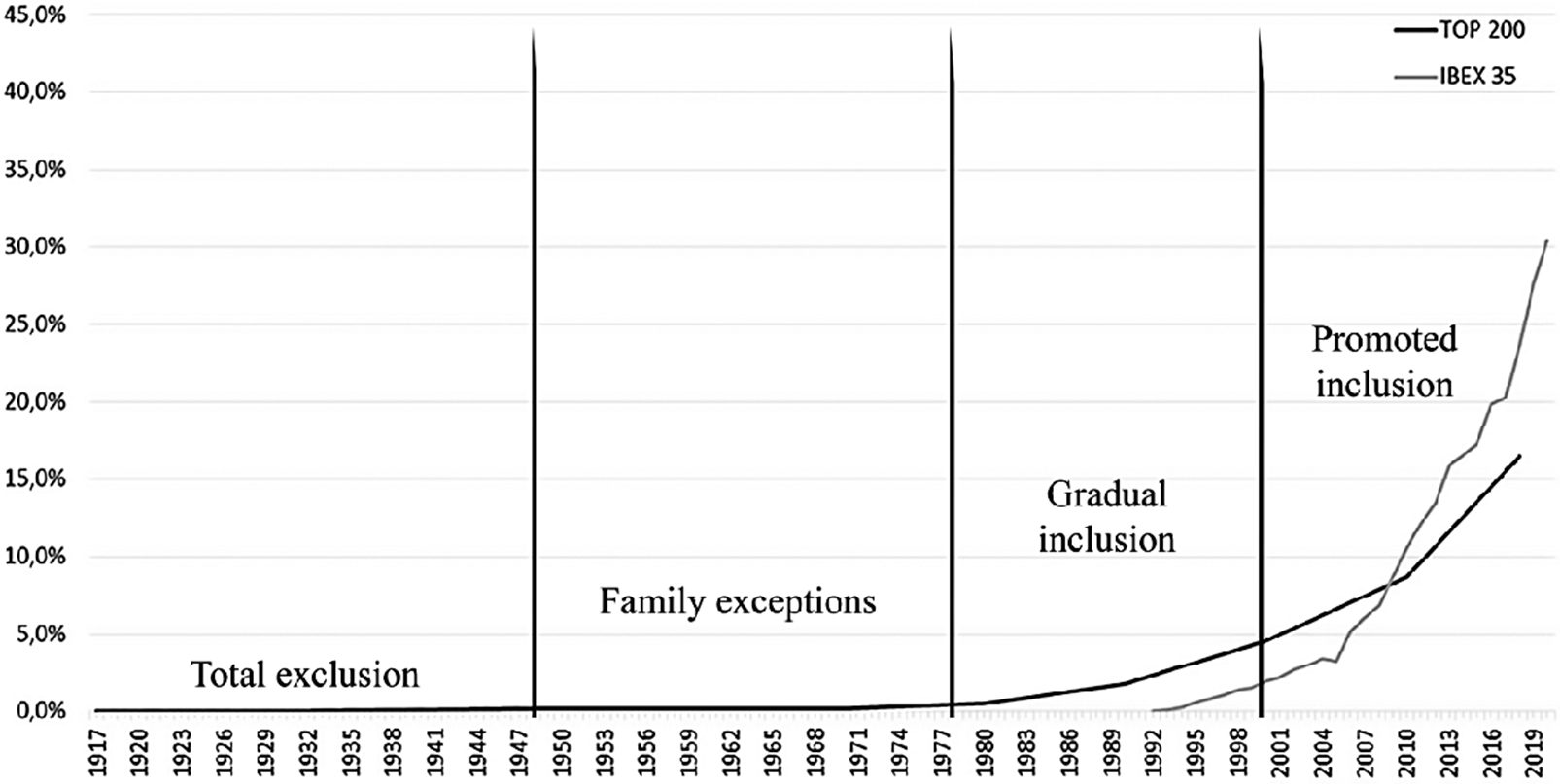
From the early 1990s, the IBEX-35 became the primary national benchmark for the Spanish stock market, crucial for evaluating the largest companies’ status.Footnote 98 Since then, academic research, lawmakers, and the media have consistently scrutinized this subset of corporations to examine various metrics, including the boards diversity. This increased public scrutiny, facilitated by the regulatory authority for securities markets (CNMV), requires IBEX-35 companies to not only adhere to political and legal standards but also project a corporate image that conveys legitimacy and prestige. Gender diversity within this subgroup did not deviate significantly from the low level of feminization among the largest 200 corporations during their first decade. Legislative recommendations often just revolved around prioritizing the hiring of women when filling vacant positions and retirements.Footnote 99 Nevertheless, a significant change in this trend occurred during the years when the CNMV introduced numerical quotas in its codes. Once the obligation to comply with said standard was formally introduced, such external normative pressure from the macrolevel was likely the most significant change factor of this period. It resulted in acceleration in the growth of the percentage of female directors, surpassing that of the top 200 firms, which also accelerated since then (Figure 5).
Historical evolution of women’s arrival to the Spanish corporate elite.
Source: Author’s own work, see the sources and methodology section for details.

As seen in Figure 5, the Spanish historical trajectory faithfully reflects the patterns observed in the cases of the Netherlands, Switzerland, and Italy (seen in Figure 3). From the nearly total exclusion, the various inflection points of arrival in each period can almost be overlaid. This allows us to affirm that, despite their obvious differences and specific national circumstances, the ascent of women to the top of the business sphere, at least numerically, occurred analogously in all cases.
Women in the Spanish Corporate Network
Most studies have emphasized the importance of SNA in understanding the gendered structure of the corporate elite.Footnote 100 While Carmela Arias was a pioneer in the 1980s, concurrently occupying two board positions in her own companies, a significant female presence in the Spanish corporate network only materialized in the twenty-first century. Similar to the global trend, the Spanish corporate network began exhibiting decohesion from the 1970s, with a decreasing number of companies within the core component since then.Footnote 101 The fragmentation of corporate networks, as observed in the reviewed countries, acted as a disruptive force against the traditional old boys’ network, thus creating more opportunities for female recruitment.Footnote 102 The empirical results of this study demonstrate this clear direct relationship between the network’s fragmentation and the arrival of women to it, specifically when they arrived precisely at one of the weakest moments studied in terms of density, in the decade of 2010s.Footnote 103 As Dutch work has previously pointed out, the interpretation of this process can be found in the decreasing influence of the barriers traditionally imposed by very united groups.Footnote 104
The first network with significant female presence appears in the 2010 sample. This network included ten female interlockers, three of whom were situated within isolated components. Two distinct family clusters were evident: Maria Felipa Jové, linked to her father and brother through two separate firms, and Silvia Villar-Mir, who also established an isolated cluster with her family in their own companies, Grupo Villar Mir and Obrascon Huarte. Despite the seven female directors within the core component, SNA centrality measures revealed their limited influence on the overall network. Women interlockers typically had lower average degrees (7.2) and betweenness (6.7) than their male counterparts (9.0 and 144.1, respectively).Footnote 105 These peripheral positions of newly arrived members corroborated the pattern previously observed by literature.Footnote 106
For its part, the 2017 network featured an increase to only eleven female interlockers. In this case, was particularly noteworthy the cluster with four women interconnecting around two cooperatives. However, this isolated subnetwork, consisting of fourteen interlockers connected around two cooperatives, was not relevant to the overall network metrics, because, despite exhibiting high degree measures, their potential to connect with the network of top firms was minimal, in that their betweenness centrality equaled zero. In contrast, the two women who held central positions, Eva Castillo and Helena Revoredo, were on the boards of companies within the main network component, such as Bankia, Telefónica, Endesa, and Prosegur, with the latter also serving as president and exhibiting a betweenness centrality (125) significantly higher than the average of their male counterparts in the same component (57.4). In this sense, regarding the highest decision-making positions, four women shattered the final rung of the corporate glass ceiling by serving as CEOs of their respective companies, although three of them were situated in isolated groups outside the main network.
Conclusion and Reflections
The longitudinal analysis of female presence in Spain’s largest firms delineated four distinct stages in their journey to the corporate elite over a century: discriminatory exclusion, family exceptions, gradual inclusion, and promotion. Our examination at micro-, meso-, and macrolevels revealed the evolution of the factors that determined both their entry barriers and access routes for each period. The findings, contextualized within existing European literature from the Netherlands, Switzerland, and Italy, reflected a similar trajectory of women’s arrival into corporate elites in all countries despite their national and historical differences.
After the first decades of the twentieth century, characterized by systemic exclusion rooted in discriminatory concepts that limited women’s activities mainly to domestic tasks, the following century witnessed an evolution in women’s rights and profiles, adapting to sociocultural, political, economic, and business changes. The dictatorship era, characterized by significant gender disparities, witnessed pioneering women reaching executive positions through their own family firms. The military regime and its focus on the state holding company (INI) for Spanish industrial development at a time when women were excluded from the armed forces, limited their presence in the largest state companies. Likewise, the male homogeneity of the cohesive elite groups prevented their entry.
The transition to democracy, marked by the restoration of women’s suffrage and legislative reforms, brought in a diverse group of women, made up of heiresses, newcomers with broader academic backgrounds, and political representatives. Its greater presence in higher education and early business schools for management training played a crucial role as modern conceptions of managerial capitalism took hold in Spanish companies, forming a recruiting pool of professional managers. This transformation paralleled the broader trend of internationalization, reflected in foreign direct investment flowing into the subsidiaries of multinational corporations and the appointment of foreign female directors in recent decades.
Growing inclusion in the 1990s was accompanied by gender equality initiatives at both national and European levels, such as the introduction of mandatory gender quotas, which accelerated the pace of women’s appointments. Finally, corporate network analyzes confirmed what the literature suggests: network fragmentation weakened the once cohesive male-dominated structure, allowing for greater female representation, although mainly in isolated components.
After examining the empirical studies, three significant issues come to the forefront. First, as emphasized in some work, there is a pressing necessity for a more profound understanding, not solely quantitative but also qualitative, of the impact of female directors on corporate decision-making processes. Changes in composition, along with the gradual reduction in board size over recent decades, open the door to revaluating their current functions as financial capitalism advances and shareholder interests are prioritized. Second, as an extension of previous one, further research is needed to determine where the true power within a large company lies and how ownership distribution influences recruitment decisions. Moreover, the historical axiom of founders holding CEO positions in their own firms raises questions about female owners and founders of private companies. Third, it is imperative to clarify the concept of “elite democratization,” particularly alluding to countries where a significant demographic majority remains excluded from corporate elites, despite the increasing presence of women. In our opinion, this term will inevitably need to expand its scope considering other historically underrepresented groups.
As a final note, it is important to recall that this research concluded during a period when gender equality had not yet been attained on Spanish boards, amid frequent alterations in legal regulations. For instance, in late 2022, a new European gender equality directive was introduced, mandating a minimum representation of 40 percent nonexecutive directors or at least 33 percent women in all board positions by 2026. Consequently, by 2023, most of the IBEX-35 listed companies achieved 40 percent female representation on boards, representing a noteworthy advancement toward gender numerical parity.

 Open access

