


Reviews of the literature on the association between executive function and community or in-patient violence in schizophrenia have produced inconsistent findings. Reference Naudts and Hodgins1 Some, Reference Krakowski, Convit, Jaeger, Lin and Volavka2–Reference Barkataki, Kumari, Das, Morris, O'Connell, Taylor and Sharma6 but not all studies, Reference Roy, Herrera, Parent and Costa7–Reference Silver, Goodman, Knoll, Isakov and Modai10 report links between violence and impairment in executive function. The inconsistent findings may reflect methodological variation between studies including: definitions of violence; sample heterogeneity; acute v. chronic illness; comorbidity with antisocial personality/psychopathy; variation in the neuropsychological test batteries used; and a lack of differentiation between tasks sensitive to dorsolateral and ventrolateral prefrontal cortical (DLPFC and VLPFC respectively) function. The majority of studies focus on community violence with only four studies to date examining in-patient violence. Reference Krakowski, Convit, Jaeger, Lin and Volavka2,Reference Adams, Meloy and Moritz3,Reference Forster, Hillbrand and Silverstein4,Reference Roy, Herrera, Parent and Costa7 In-patient violence is not necessarily predicted by previous community violence Reference Dinakar and Sobel11 and may therefore show a different relationship to executive function in people with schizophrenia. In addition, no previous study in the current literature has adequately examined the interactive role of personality factors such as psychopathy in the relationship between executive function and violence in a large sample of people with schizophrenia. The aim of the present study was to examine the contribution of executive function to in-patient violence in schizophrenia by utilising a large forensic sample of individuals and looking at neuropsychological tasks specific to DLPFC and VLPFC function. The study also examined the role of psychopathy and symptoms in the discrimination of violent v. non-violent status.
Method
Participants
A sample of 82 male in-patients meeting the DSM–IV 12 criteria for schizophrenia (diagnosis made by each participant's responsible medical officer) were recruited (approximate recruitment rate was one in three) from medium- (n=53) and high- (n=29) security forensic hospitals in the North-West of England. The majority (n=64, 78%) of the sample were White. The remainder were of Black African–Caribbean origin. Potential participants were identified by core clinical teams using the following criteria:
-
(a) inclusion: currently clinically stable on medication, able to give informed consent;
-
(b) exclusion: a history of organic brain syndrome, head injury or recent history of electroconvulsive therapy.
Symptom and psychopathy assessment
Symptom severity was assessed using the Positive and Negative Syndrome Scale (PANSS). Reference Kay, Opler and Fiszbein13 The five-factor structure for the PANSS formulated by Lindenmayer et al Reference Lindenmayer and Grochowski14 was computed. The latter model uses 25 of the 30 items on the PANSS to form five factors: positive, negative, cognitive, excitement and depression.
Psychopathy was assessed based on interview and file review using the Psychopathy Checklist – Screening Version (PCL–SV). Reference Hart, Cox and Hare15 Factor 1 of the PCL–SV reflects affective/interpersonal traits and factor 2 reflects the behavioural/social deviance components of psychopathy. Data were analysed using both the two-factor and more recent four-facet (interpersonal, affective, lifestyle and anti-social) models of psychopathy. Reference Hare and Neumann16,Reference Hill, Neumann and Rogers17 As there are no established UK cut-off scores for psychopathy using the PCL–SV, the UK cut-off score for psychopathy on the Psychopathy Checklist Revised Reference Hare18 was translated across to the PCL–SV using percentile points from the development samples. This resulted in cut-offs of ≥17 for psychopathy and ≥11 for non-psychopathy. Interrater reliability checks in ten cases resulted in an intraclass correlation of 0.93 for total score.
Assessment of in-patient violence
An independent researcher masked to scores on the psychometric and neuropsychological measures reviewed computerised official incident records within the hospital. An incident was considered violent if the individual was the clear instigator or co-aggressor, and if the incident involved physical aggression to staff, in-patients or property. The median number of violent incidents across the sample was 0. Based on this we assigned groups into non-violent (non-violent=0 incidents) and violent (violent≥1 incident) groups. This generated 49 individuals that had not been physically violent since admission and 33 individuals that had been involved in at least one physically aggressive incident within the institution since admission. Of the 33 violent participants, 11 had been involved in one incident since admission, 8 had been involved in between two and five incidents, 7 had been involved in between six and ten incidents, and 7 had been involved in ten or more incidents. Rate of violent incidents per year since admission were also calculated for each participant.
Neuropsychological assessments
Premorbid intellectual function was assessed using the National Adult Reading Test (NART). Reference Nelson19 Current IQ was assessed using sub-tests (vocabulary and matrix reasoning) of the Wechsler Abbreviated Scale of Intelligence (WASI). 20
The Cambridge Automated Neuropsychological Test Battery (CANTAB–2) Reference Fray and Robbins21 was used to assess spatial planning ability (Stockings of Cambridge) and cognitive set shifting (intra-/extra-dimensional set shifting). The CANTAB–2 is a culture-free visual computerised assessment battery that overcomes assessment problems resulting from poor reading ability. Participants were also tested on the Stop Task behavioural inhibition task that was developed by Rubia et al Reference Rubia, Russell, Overmeyer, Bullmore, Sharma, Simmons, Williams, Giampietro, Andrew and Taylor22 as an adaptation of the Schacher & Logan Reference Schacher and Logan23 task (a description of each task is detailed in online Table DS1).
Data analysis
All data were analysed using SPSS version 12. As a large proportion of the sample had failed to complete one or more tasks in the battery (n=42), we were unable to use a multivariate analysis of variance to examine all neuropsychological variables across tasks simultaneously. Between-group differences were examined using independent t-tests and chi-squared tests where appropriate. In order to examine the violence data dimensionally and to account for possible differences in length of admission, we used Spearman's correlation coefficient to investigate the relationship between the rate of violent incidents per year since admission and the neuropsychological, symptomatological and neuropsychological variables of interest. Data that were not normally distributed were transformed using square root or log base 10 transformations to reduce skew. The categorical outputs from the intra-/extra-dimensional set shifting task were analysed using the likelihood ratio method with the resulting statistic 2i being distributed as χ2. In order to control for multiple statistical comparisons, Bonferroni corrections were applied to acceptable probability levels for each set of analyses.
A binary logistic regression using the enter method was used to examine the prediction of non-violent v. violent group status. Only the symptomatological, personality and neuropsychological variables that were significantly different in the univariate non-violent v. violent group comparisons were entered as predictors.
Results
Group characteristics
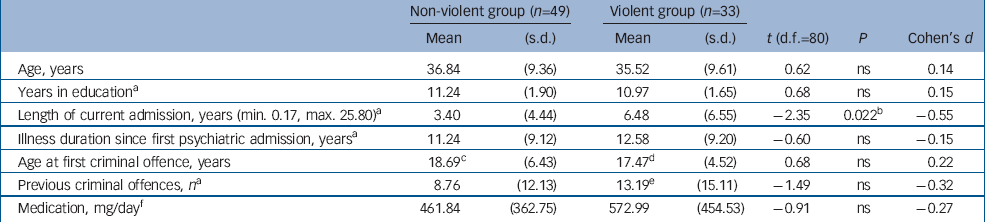
The violent group had a longer mean current admission length than the non-violent group, although this difference failed to reach significance following Bonferroni corrections. There were no significant group differences between the violent and non-violent groups in terms of mean age, years of education, medication dose (converted to chlorpromazine equivalents using the British National Formulary), 24 age of first criminal offence, or number of previous criminal offences. Similarly, these variables did not show significant relationships with the rate of violent incidents per year since admission (Table 1). There were no significant differences in the proportion of each group who had a previous history of violent offending (non-violent 34.0% v. violent 53.1%; χ2=2.85, not significant), or those who had a history of substance misuse (drug or alcohol) (non-violent 31.3% v. violent 42.4%; χ2=0.70, not significant).
General characteristics of the non-violent and violent groups
| Non-violent group (n=49) | Violent group (n=33) | ||||||
|---|---|---|---|---|---|---|---|
| Mean | (s.d.) | Mean | (s.d.) | t (d.f.=80) | P | Cohen's d | |
| Age, years | 36.84 | (9.36) | 35.52 | (9.61) | 0.62 | ns | 0.14 |
| Years in educationa | 11.24 | (1.90) | (10.97) | (1.65) | 0.68 | ns | 0.15 |
| Length of current admission, years (min. 0.17, max. 25.80)a | 3.40 | (4.44) | 6.48 | (6.55) | -2.35 | 0.022b | -0.55 |
| Illness duration since first psychiatric admission, yearsa | 11.24 | (9.12) | 12.58 | (9.20) | -0.60 | ns | -0.15 |
| Age at first criminal offence, years | 18.69c | (6.43) | 17.47d | (4.52) | 0.68 | ns | 0.22 |
| Previous criminal offences, n a | 8.76 | (12.13) | 13.19e | (15.11) | -1.49 | ns | -0.32 |
| Medication, mg/dayf | 461.84 | (362.75) | 572.99 | (454.53) | -0.91 | ns | -0.27 |
Symptoms
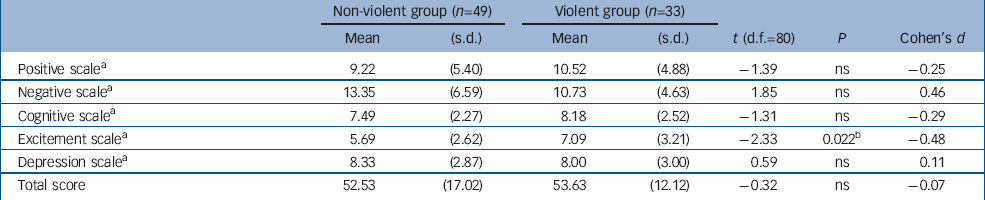
The violent group had a higher PANSS excitement scale score than the non-violent group, although this group difference failed to reach significance following Bonferonni correction. However, there was a significant positive correlation between PANSS excitement scale score and rate of violent incidents per year since admission (r=0.35, P=0.001). There were no significant differences between the violent and non-violent groups on any of the remaining PANSS symptom scales, and scores on these scales showed no dimensional relationship to violence (Table 2).
The mean Positive and Negative Syndrome Scale (PANSS) scores for non-violent and violent groups
| Non-violent group (n=49) | Violent group (n=33) | ||||||
|---|---|---|---|---|---|---|---|
| Mean | (s.d.) | Mean | (s.d.) | t (d.f.=80) | P | Cohen's d | |
| Positive scalea | 9.22 | (5.40) | 10.52 | (4.88) | -1.39 | ns | -0.25 |
| Negative scalea | 13.35 | (6.59) | 10.73 | (4.63) | 1.85 | ns | 0.46 |
| Cognitive scalea | 7.49 | (2.27) | 8.18 | (2.52) | -1.31 | ns | -0.29 |
| Excitement scalea | 5.69 | (2.62) | 7.09 | (3.21) | -2.33 | 0.022b | -0.48 |
| Depression scalea | 8.33 | (2.87) | 8.00 | (3.00) | 0.59 | ns | 0.11 |
| Total score | 52.53 | (17.02) | 53.63 | (12.12) | -0.32 | ns | -0.07 |
Psychopathy
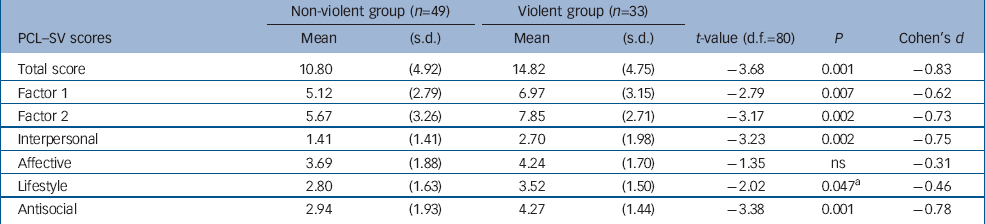
Overall, 7 (14.3%) of the non-violent group and 13 (39.4%) of the violent group met the UK criteria for a diagnosis of psychopathy on the PCL–SV (χ2=12.17, P<0.001). The violent group had significantly higher total psychopathy and traditional sub-factor scores than the non-violent group. In addition, rate of violent incidents per year since admission showed a significant positive correlation with PCL–SV total score (r=0.41, P=0.001), factor 1 (r=0.30, P=0.006), and factor 2 scores (r=0.36, P=0.001). Analysis of the four-facet model revealed that the violent group had significantly higher scores on the interpersonal and antisocial factors. The violent group also showed higher scores on the lifestyle facet, although this difference failed to reach significance following Bonferroni corrections. Similarly, the correlational analysis revealed significant positive correlations between rate of violent incidents per year since admission and scores on the interpersonal (r=0.34, P=0.002) and antisocial facets (r=0.39, P=0.001). The correlation between rate of violence and scores on the lifestyle facet failed to reach significance following correction (r=0.25, P=0.022). There were no significant group differences found for the affective facet, and scores on this facet did not show a significant relationship to rate of violent incidents (Table 3).
The mean psychopathy scores for the non-violent and violent groups
| Non-violent group (n=49) | Violent group (n=33) | ||||||
|---|---|---|---|---|---|---|---|
| PCL-SV scores | Mean | (s.d.) | Mean | (s.d.) | t-value (d.f.=80) | P | Cohen's d |
| Total score | 10.80 | (4.92) | 14.82 | (4.75) | -3.68 | 0.001 | -0.83 |
| Factor 1 | 5.12 | (2.79) | 6.97 | (3.15) | -2.79 | 0.007 | -0.62 |
| Factor 2 | 5.67 | (3.26) | 7.85 | (2.71) | -3.17 | 0.002 | -0.73 |
| Interpersonal | 1.41 | (1.41) | 2.70 | (1.98) | -3.23 | 0.002 | -0.75 |
| Affective | 3.69 | (1.88) | 4.24 | (1.70) | -1.35 | ns | -0.31 |
| Lifestyle | 2.80 | (1.63) | 3.52 | (1.50) | -2.02 | 0.047a | -0.46 |
| Antisocial | 2.94 | (1.93) | 4.27 | (1.44) | -3.38 | 0.001 | -0.78 |
Neuropsychological function
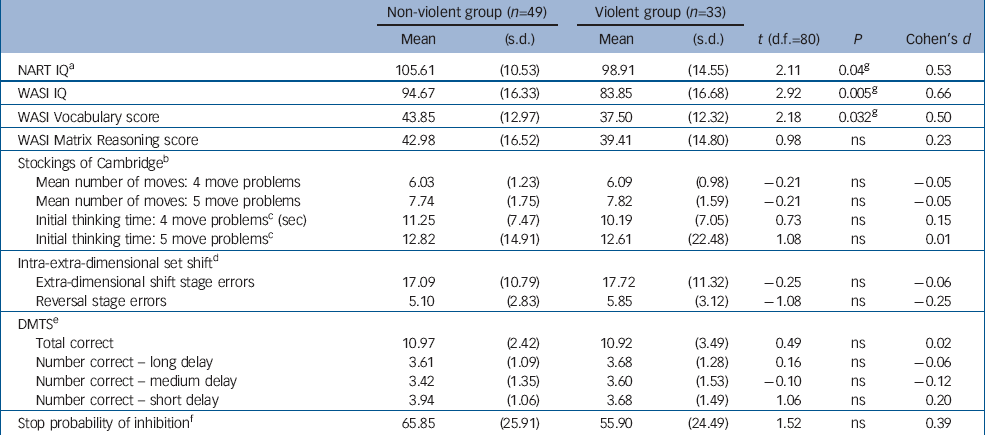
The violent group had a lower mean WASI IQ, although this group difference failed to reach significance following Bonferonni correction. However, there was a significant negative correlation between WASI IQ score and rate of violent incidents per year since admission (r=–0.32, P=0.004). The non-violent group had higher mean scores on the WASI vocabulary sub-test and scores on this scale showed a negative correlation with rate of violent incidents (r=–0.23, P=0.046), but neither result reached significance following Bonferroni correction. Similarly, mean NART IQ score was also higher in the non-violent group, and NART IQ scores showed a negative correlation with rate of violence (r=–0.26, P=0.041), but again these results did not reach significance following Bonferroni correction (Table 4).
The neuropsychological assessment scores for each group comparison
| Non-violent group (n=49) | Violent group (n=33) | ||||||
|---|---|---|---|---|---|---|---|
| Mean | (s.d.) | Mean | (s.d.) | t (d.f.=80) | P | Cohen's d | |
| NART IQa | 105.61 | (10.53) | 98.91 | (14.55) | 2.11 | 0.04g | 0.53 |
| WASI IQ | 94.67 | (16.33) | 83.85 | (16.68) | 2.92 | 0.005g | 0.66 |
| WASI Vocabulary score | 43.85 | (12.97) | 37.50 | (12.32) | 2.18 | 0.032g | 0.50 |
| WASI Matrix Reasoning score | 42.98 | (16.52) | 39.41 | (14.80) | 0.98 | ns | 0.23 |
| Stockings of Cambridgeb | |||||||
| Mean number of moves: 4 move problems | 6.03 | (1.23) | 6.09 | (0.98) | -0.21 | ns | -0.05 |
| Mean number of moves: 5 move problems | 7.74 | (1.75) | 7.82 | (1.59) | -0.21 | ns | -0.05 |
| Initial thinking time: 4 move problemsc (sec) | 11.25 | (7.47) | 10.19 | (7.05) | 0.73 | ns | 0.15 |
| Initial thinking time: 5 move problemsc | 12.82 | (14.91) | 12.61 | (22.48) | 1.08 | ns | 0.01 |
| Intra-extra-dimensional set shiftd | |||||||
| Extra-dimensional shift stage errors | 17.09 | (10.79) | 17.72 | (11.32) | -0.25 | ns | -0.06 |
| Reversal stage errors | 5.10 | (2.83) | 5.85 | (3.12) | -1.08 | ns | -0.25 |
| DMTSe | |||||||
| Total correct | 10.97 | (2.42) | 10.92 | (3.49) | 0.49 | ns | 0.02 |
| Number correct — long delay | 3.61 | (1.09) | 3.68 | (1.28) | 0.16 | ns | -0.06 |
| Number correct — medium delay | 3.42 | (1.35) | 3.60 | (1.53) | -0.10 | ns | -0.12 |
| Number correct — short delay | 3.94 | (1.06) | 3.68 | (1.49) | 1.06 | ns | 0.20 |
| Stop probability of inhibitionf | 65.85 | (25.91) | 55.90 | (24.49) | 1.52 | ns | 0.39 |
There were no significant differences between the violent and non-violent groups on the Stockings of Cambridge, intra-/extra-dimensional set shifting, or Stop tests using either the categorical or dimensional analyses of outputs from these tasks (Table 4 and Fig.1). Similarly, scores on these assessments showed no significant relationship with rate of violent incidents per year since admission.
Predicting violent/non-violent group status
A logistic regression was carried out using the enter method for the prediction of non-violent v. violent group status. Current IQ, PANSS excitement scale score and PCL–SV interpersonal and antisocial facet scores were entered as independent variables into the regression in one block. A total of 82 cases were included in the regression analysis. The Hosmer and Lesmeshow Test indicated reasonable goodness of fit (χ2=8.85, d.f.=8, P=0.36). The Nagelkerke R2 was 0.33. The model was significant (χ2=22.84, d.f.=4, P=0.001), overall correct classification was 74.4%. As can be seen in Table 5, current IQ score and PCL–SV interpersonal facet score contributed significantly to the equation. The PANSS excitement scale score and PCL–SV antisocial facet score did not contribute significantly.
Logistic regression for the prediction of non-violent v. violent group status

| 95% CI for Exp(B) | |||||
|---|---|---|---|---|---|
| Wald | P | Exp(B) | Lower | Upper | |
| PANSS excitement scale score | 0.07 | 0.798 | 1.03 | 0.84 | 1.25 |
| WASI IQ | 4.90 | 0.027 | 0.96 | 0.93 | 0.99 |
| PCL—SV Interpersonal score | 6.01 | 0.014 | 1.49 | 1.08 | 2.04 |
| PCL—SV Antisocial score | 2.60 | 0.107 | 1.32 | 0.94 | 1.85 |
Discussion
This study investigated the role of neuropsychological factors, particularly executive function deficits, in in-patient violence in schizophrenia. In order to control for methodological problems with previous studies in this field we ensured that our groups were large and well-matched on potential confounding variables such as demography, clinical and criminal history profile.
This is one of the few studies comparing violent and non-violent forensic in-patients with schizophrenia on measures of neuropsychological function using a well-validated culture-free computerised test battery that distinguishes putative DLPFC and VLPFC functions. We also compared the groups on measures of symptoms and measures of psychopathy as these variables have also been reported to be associated with violence in schizophrenia (for example, symptoms, Reference Cheung, Schweitzer, Crowley and Tuckwell25,Reference Taylor, Leese, Williams, Butwell, Daly and Larkin26 psychopathy Reference Tengstrom, Grann and Langstrom27–Reference Dolan and Davies29 ).
The proportion of non-violent and violent groups reaching criterion at each stage of the intra-/extra-dimensional set shift task.
Extra-dimensional shift (EDS) stage likelihood ratio=0.17, d.f.=1, not significant; extra-dimensional reversal (EDR) stage likelihood ratio=0.34, not significant. CD, compound discrimination; CR, compound reversal; IDS, intra-dimensional shift; IDR, intra-dimensional reversal.

Neuropsychological function
We found that higher rates of in-patient violence were associated with lower current IQ scores, and that current IQ was a significant predictor of violent v. non-violent status. The evidence for an association between IQ and violence is contradictory with some, Reference Krakowski, Convit, Jaeger, Lin and Volavka2 but not all, Reference Roy, Herrera, Parent and Costa7 studies reporting lower IQ in violent compared with non-violent in-patients with schizophrenia. In the general violence literature, low IQ has been associated with an increased risk for violence, Reference Raine30,Reference Gendreau, Goggin and Little31 and there is evidence to suggest that low IQ combined with psychopathy presents with an additive risk for increased violence. Reference Walsh, Swogger and Kosson32 As IQ shows a strong association with number of years in education, Reference Matarazzo and Herman33 it is possible that educational factors may account for the discrepant findings across studies. In addition, although this comparison was not possible in the present study, the findings of studies focusing on community violence Reference Elliott, Mirsky and Glicksohn34 would suggest that verbal IQ may be more strongly associated with in-patient violence than performance IQ.
To date, there is a lack of well-powered studies examining the relationship between in-patient violence and specific neuropsychological deficits in schizophrenia. None the less, based on Naudts & Hodgin's Reference Naudts and Hodgins1 review on neuropsychological function and community violence in schizophrenia, we had postulated that our violent in-patients would have greater deficits in executive function and behavioural inhibition than those who were not violent. However, we did not find this to be the case. Our findings concur with previous reports that DLPFC function is not specifically associated with violence in individuals with schizophrenia. Reference Forster, Hillbrand and Silverstein4–Reference Barkataki, Kumari, Das, Morris, O'Connell, Taylor and Sharma6,Reference Lafayette, Frankle, Pollock, Dyer and Goff9,Reference Silver, Goodman, Knoll, Isakov and Modai10
Our finding that the violent group did not have a specific impairment in putative VLPFC function on the Stop Task generally fits with previous reports on community violence in schizophrenia. Reference Lapierre, Braun, Hodgins, Toupin, Leveillee and Constantineau8 However, Rasmussen et al Reference Rasmussen, Levander and Sletvold5 noted that forensic patients with schizophrenia showed poorer performance on another type of behavioural inhibition task (Go/NoGo task) than non-forensic patients, suggesting that criminality (rather than violence per se) may be associated with poor behavioural inhibition. As violence can be characterised in the instrumental v. reactive domain, it is possible that future studies may find a more specific association between impairments in behavioural inhibition and reactive rather than instrumental aggression and violence.
In this study we used the Stop Task as a putative measure of ventrolateral prefrontal function, and the intra-/extra-dimensional set shifting and Stockings of Cambridge tasks as putative measures of DLPFC. It is possible that tasks assessing orbitofrontal function rather than ventrolateral prefrontal function, such as smell discrimination/identification tests, Reference Sabri, Radnovich, Li and Kareken35 may be able to differentiate violent from non-violent groups. Given the literature suggesting that people with schizophrenia who engage in community violence show impairments on tasks assessing social cognition (i.e. theory of mind Reference Abu-Akel and Abushualeh36 and face expression recognition Reference Silver, Feldman, Bilker and Gur37 ), future studies should also explore the utility of these tasks in distinguishing those who engage in in-patent violence.
It is important to note that although specific neuropsychological tasks are thought to probe specific brain regions, it is increasingly recognised that they actually activate integrated neural circuits that include both frontal and limbic brain regions. Future studies should use functional magnetic resonance imaging techniques to examine subtle dysfunction in neurocircuitry that may contribute to community and in-patient violence in people with schizophrenia.
It is possible that illness-related reductions in IQ may have masked subtle group differences in executive function. In the present study, due to small group sizes, we were unable to examine the relationship between in-patient violence and executive function in those whose IQ had remained stable with illness onset. Future studies may want to address this issue, although, Elliott et al Reference Elliott, McKenna, Robbins and Sahakian38 have demonstrated that neuropsychological dysfunction is present and detectable in people with schizophrenia regardless of whether or not their IQ remains stable.
Symptoms
Overall, we did not find that the violent patients had higher positive (hallucinations and delusions) symptom scores on the PANSS. However, higher scores on the PANSS excitement scale (which contains items such as hostility and poor impulse control) were associated with higher rates of in-patient violence. Previous studies have reported an association between high PANSS positive scores and high rates of in-patient aggression, Reference Bowie, Moriarty, Harvey, Parrella, White and Davis39,Reference Fresan, Apiquian, de la Fuente-Sandovol, Löyzaga, Garcia-Anaya, Meyenberg and Nicolini40 or higher levels of positive symptoms in violent compared with non-violent individuals. Reference Cheung, Schweitzer, Crowley and Tuckwell25,Reference Arango, Calcedo-Barba, González-Salvador and Calcedo-Ordóñ41 The lack of an observed association between the traditional positive symptoms of schizophrenia and violence in this study probably reflects the clinically stable nature of this sample. In line with our findings, others Reference Arango, Calcedo-Barba, González-Salvador and Calcedo-Ordóñ41,Reference Nolan, Volavka, Czober, Sheitman, Lindenmayer, Citrome, McEvoy and Lieberman42 have reported an association between aggression and PANSS hostility and impulsivity scores. Similar to other studies, we did not observe an association between violence and negative symptoms. Reference Fresan, Apiquian, de la Fuente-Sandovol, Löyzaga, Garcia-Anaya, Meyenberg and Nicolini40–Reference Nolan, Volavka, Czober, Sheitman, Lindenmayer, Citrome, McEvoy and Lieberman42
Psychopathy
In line with previous studies we found an association between violence and psychopathy. Reference Hare43 A novel aspect of this study is our analysis based on the newer four-facet model of psychopathy Reference Hare and Neumann16 which indicated that the violent group had significantly higher scores on the antisocial and interpersonal factors, but not on the affective or lifestyle factors. However, our regression analysis revealed that the interpersonal factor was the most significant discriminator of violent v. non-violent status. Our work partly confirms previous reports of an association between the antisocial components of psychopathy and violence. Reference Skeem44–Reference Skeem, Miller, Mulvey, Tiemann and Monahan46 However, the lack of an association between violence and the affective components of psychopathy contrasts with Vitacco et al Reference Vitacco, Neumann and Jackson47 who found that both the affective and antisocial components of the four-facet model of psychopathy were associated with community violence in civil psychiatric patients. The discrepancy may reflect differences in samples (civil v. forensic) and differences in the context in which violence occurs (e.g. in-patient v. out-patient). However, given that in the present study the PCL–SV interpersonal factor and IQ were both significant discriminators of violent v. non-violent status, the interaction between psychopathy, IQ and violence in both in-patient and community settings in those with schizophrenia is an area worthy of further research.
Implications
The findings from this study suggest that, in clinically and demographically well-matched individuals with schizophrenia in forensic settings, violent and non-violent in-patients are best distinguished on the basis of key personality traits such as psychopathy rather than specific deficits in neuropsychological function. Given the significance of personality factors in distinguishing violent from non-violent individuals with schizophrenia in forensic settings, future studies should take account of the high levels of comorbid antisocial and psychopathic personality disorder pathology, and examine the relative role of personality factors in in-patient violence risk. As the non-psychotic literature suggests that psychopathy may be associated with specific deficits in VLPFC function Reference Blair, Newman, Mitchell, Richell, Leonard, Morton and Blair48 and DSM–IV antisocial personality disorder may be associated with a broader range of DLPFC and VLPFC deficits, Reference Morgan and Lilienfeld49,Reference Dolan50 future studies need to look at the impact of these comorbid personality pathologies on both neuropsychological function and violence in in-patient samples with schizophrenia.
Limitations
The focus on recruitment in secure forensic settings that have high base rates of in-patient violence but have highly controlled environments may influence the findings. Further work is needed in less secure in-patient settings. As environmental factors can influence institutional violence Reference Gadon, Johnstone and Cooke51 a measure of institutional environment should assist in understanding the complex array of factors associated with in-patient violence in people with schizophrenia. Our participants were assessed when clinically stable so the findings cannot be generalised to more acutely ill people. Given that the sample was purely male, it is difficult to comment on the applicability of the present findings to a mixed or solely female population. Future studies should examine the contribution of gender differences. As this is a cohort rather than prospective study, no causal associations between predictors and outcome measures can be established. Future studies examining the relationship between symptoms, neuropsychological function and personality traits should use a prospective study design with an emphasis on cohorts with their first episode of psychosis. For studies specifically looking at incarcerated samples the potential moderator effects of environment must be considered as the latter factors may attenuate or exaggerate the person-specific risks of in-patient violence.
Acknowledgements
This study was supported by grants from the National Alliance for Research on Schizophrenia and Depression (NARSAD), the National Forensic Mental Health R&D Programme and Merseycare NHS Trust. We thank the staff and participants at key institutions.




eLetters
No eLetters have been published for this article.