





Impact statement
Eco-anxiety is an increasingly important mental health concern for young people in Canada, particularly in regions that are experiencing more frequent climate-related events such as wildfires. This study examines eco-anxiety among adolescents in the Northwest Territories following the 2023 wildfires, with specific attention to the experiences of Northern and Indigenous youth.
The findings show that eco-anxiety among adolescents is linked to both wildfire-related disruption and broader social conditions. Youth who reported higher wildfire exposure severity and greater food insecurity also reported higher eco-anxiety. Differences were also observed across social groups. Girls, LGBQ+ youth and those living in rural communities reported higher levels of eco-anxiety, highlighting how climate-related emotional distress intersects with existing social and structural inequities in Canada’s North. Self-esteem was linked to lower eco-anxiety, particularly among youth reporting higher wildfire exposure severity, indicating its importance as a psychosocial resource.
These findings highlight the need to recognize eco-anxiety as a distinct and meaningful form of distress among young people in Canada. Supporting youth eco-anxiety may require approaches that extend beyond individual counselling. In wildfire-affected communities, schools and youth services may benefit from acknowledging eco-anxiety, screening for related stressors such as food insecurity and supporting young people’s confidence, coping skills and sense of connection. Community-led and culturally grounded approaches, including those that strengthen relationships with land and culture, may be especially relevant in Northern and Indigenous contexts.
By centring eco-anxiety within a Canadian northern context, this study contributes evidence to inform youth mental health responses as climate-related hazards continue to affect communities across Canada.
Introduction
Climate change is widely recognized as one of the most pressing global challenges of our time. As weather and climate patterns shift, extreme weather events (EWEs), such as droughts and wildfires, are occurring with increased frequency and intensity, driving rapid environmental change across regions (Walsh et al., Reference Walsh, Ballinger, Euskirchen, Hanna, Mård, Overland, Tangen and Vihma2020; Richardson et al., Reference Richardson, Black, Irving, Matear, Monselesan, Risbey, Squire and Tozer2022; Calvin et al., Reference Calvin, Dasgupta, Krinner, Mukherji, Thorne, Trisos, Romero, Aldunce, Barrett, Blanco, Lee and Romero2023). In Canada, the impacts of EWEs are particularly acute in northern regions such as the Northwest Territories (NWT) in the Arctic and Sub-Arctic, where climate change is unfolding at an accelerated pace (Thompson, Reference Thompson2023; Thoman et al., Reference Thoman, Moon and Druckenmiller2023). In 2023, the NWT experienced their warmest summer and sixth-warmest year on record, during which 300 wildfires burned 4.16 million hectares of land following prolonged high temperatures, minimal rainfall and severe drought (Thompson, Reference Thompson2023; Thoman et al., Reference Thoman, Moon and Druckenmiller2023). These wildfires prompted evacuations, displacing two-thirds of the NWT’s 46,000 residents and disrupting daily life, including loss of homes and businesses, interruption of traditional activities, and threats to food and water security (Thompson Reference Thompson2023; Thoman et al., Reference Thoman, Moon and Druckenmiller2023).
While climate change affects all age groups, its consequences for youth are especially profound, impacting not only physical health but also emotional well-being and socio-economic conditions (Woog and Kågesten, Reference Woog and Kågesten2017; Wu et al., Reference Wu, Snell and Samji2020; Earnshaw et al., Reference Earnshaw, Watson, Eaton, Brousseau, Laurenceau and Fox2022; UNICEF, 2023). Adolescence is a critical developmental period characterized by rapid social, physical and cognitive transformations, which may heighten sensitivity to environmental disruption and intensify emotional responses when youth are repeatedly exposed to climate-related stressors and disasters (Woog and Kågesten, Reference Woog and Kågesten2017; Wu et al., Reference Wu, Snell and Samji2020; Earnshaw et al., Reference Earnshaw, Watson, Eaton, Brousseau, Laurenceau and Fox2022; UNICEF, 2023). Climate-related stressors affect youth both directly, through infrastructure damage and displacement, and indirectly, by reducing community stability, social cohesion and everyday functioning (Hickman et al., Reference Hickman, Marks, Pihkala, Clayton, Lewandowski, Mayall, Wray, Mellor and van Susteren2021; Akpan et al., Reference Akpan, Ja’Afar and Eke2025). Among these emotional responses, eco-anxiety has emerged as a particularly salient experience for young people, reflecting distress linked to environmental change and uncertainty about the future (Coffey et al., Reference Coffey, Bhullar, Durkin, Islam and Usher2021; Kurth and Pihkala, Reference Kurth and Pihkala2022; Léger-Goodes et al., Reference Léger-Goodes, Malboeuf-Hurtubise, Mastine, Généreux and Camden2022). Despite increasing attention to climate change and youth mental health, little is known about how eco-anxiety is experienced by young people following climate-related EWEs such as wildfires, particularly in rural and remote regions such as the NWTs.
Eco-anxiety, also referred to as climate anxiety, describes emotional response related to ecological change and perceived environmental threats (Coffey et al., Reference Coffey, Bhullar, Durkin, Islam and Usher2021; Kurth and Pihkala, Reference Kurth and Pihkala2022; Léger-Goodes et al., Reference Léger-Goodes, Malboeuf-Hurtubise, Mastine, Généreux and Camden2022). It is commonly characterized by feelings of worry, helplessness, fear and concern for the future of the environment and humanity (Coffey et al., Reference Coffey, Bhullar, Durkin, Islam and Usher2021; Kurth and Pihkala, Reference Kurth and Pihkala2022; Léger-Goodes et al., Reference Léger-Goodes, Malboeuf-Hurtubise, Mastine, Généreux and Camden2022). Importantly, eco-anxiety is not considered a clinical diagnosis, but rather reflects meaningful and contextually grounded emotional responses to environmental disruption and uncertainty, particularly among young people whose future prospects are directly implicated (Clayton, Reference Clayton2020; Hickman et al., Reference Hickman, Marks, Pihkala, Clayton, Lewandowski, Mayall, Wray, Mellor and van Susteren2021; Kurth and Pihkala, Reference Kurth and Pihkala2022). Recent research suggests that climate-related emotional distress is widespread among young people in Canada and may vary by gender and other social positions (Galway and Field, Reference Galway and Field2023; Aylward et al., Reference Aylward, Cunsolo, Clayton, Minor, Cooper, Chatwood and Harper2025; Tiwari et al., Reference Tiwari, McKinnon, Jafry, Grewal, Gilliland, Ferguson, Card, Gislason, Cosma and Martin2025).
Eco-anxiety and climate-related emotional distress are not experienced uniformly across populations. Climate change disproportionately affects marginalized youth, exacerbating existing structural inequalities and limiting opportunities for health and well-being, particularly among Indigenous youth (Léger-Goodes et al., Reference Léger-Goodes, Malboeuf-Hurtubise, Mastine, Généreux and Camden2022). In the NWT, these experiences occur within a social context shaped by enduring colonial legacies. Indigenous peoples account for nearly half of the NWT population, and youth are disproportionately affected by child welfare involvement and historical family separation (Government of Canada, 2023a; Pollock et al., Reference Pollock, Ouédraogo, Trocmé, Hovdestad, Miskie, Crompton, Campeau, Tanaka, Zhang, Laprise and Tonmyr2024). The NWT had the highest per capita number of children removed to residential schools in Canada, resulting in widespread intergenerational harms (Government of the Northwest Territories, Department of Education, Culture and Employment, 2013, 2016). These structural conditions may intersect with contemporary climate-related stressors, compounding emotional distress among Indigenous youth (Whyte, Reference Whyte2017; Cunsolo et al., Reference Cunsolo, Harper, Minor, Hayes, Williams and Howard2020).
Canadian research indicates that experiences of eco-anxiety vary across social identification and location. National surveys show that girls and gender-diverse youth report higher levels of climate-related worry and emotional distress than their peers (Galway and Field, Reference Galway and Field2023; Aylward et al., Reference Aylward, Cunsolo, Clayton, Minor, Cooper, Chatwood and Harper2025), and qualitative analyses suggest that girls more frequently describe future-oriented and functional impacts of climate change (Tiwari et al., Reference Tiwari, McKinnon, Jafry, Grewal, Gilliland, Ferguson, Card, Gislason, Cosma and Martin2025). These patterns align with broader evidence that gendered inequities in access to resources and decision-making shape vulnerability to climate-related stressors (Stone et al., Reference Stone, Blinn and Spencer2022; Sidun and Gibbons, Reference Sidun and Gibbons2024). Evidence on climate-related emotional distress among Lesbian, Gay, Bisexual, Transgender and Queer (LGBTQ) youth in Canada remains limited; however, Canadian studies consistently document higher levels of housing instability (Ecker et al., Reference Ecker, Aubry and Sylvestre2019; Fraser et al., Reference Fraser, Pierse, Chisholm and Cook2019), mental health challenges (Green et al., Reference Green, Price and Dorison2022), substance use (Moazen-Zadeh et al., Reference Moazen-Zadeh, Karamouzian, Kia, Salway, Ferlatte and Knight2019; Newcomb et al., Reference Newcomb, Hill, Buehler, Ryan, Whitton and Mustanski2020) and exposure to violence among LGBTQ youth (Newcomb et al., Reference Newcomb, LaSala, Bouris, Mustanski, Prado, Schrager and Huebner2019), reflecting structural vulnerabilities that may intersect with climate-related stressors. Place-based and caregiving contexts may also shape youth experiences of eco-anxiety. Rural location may increase exposure to climate-related disruption, and living arrangements may reflect broader social and structural conditions influencing emotional well-being and access to support and resources (Leonhardt et al., Reference Leonhardt, Granrud, Bonsaksen and Lien2022; Boyd et al., Reference Boyd, Jamieson, Gibson, Duffy, Williamson and Parr2024; Pollock et al., Reference Pollock, Ouédraogo, Trocmé, Hovdestad, Miskie, Crompton, Campeau, Tanaka, Zhang, Laprise and Tonmyr2024).
Beyond social identity and location, climate change may influence youth eco-anxiety through structural conditions that shape everyday security, including access to food. Food insecurity remains substantially higher in Canada’s North than the national average, reflecting persistent challenges related to food access, affordability and availability (Layton, Reference Layton2023), and has been linked to poorer mental health outcomes among adolescents in the NWT (Logie et al., Reference Logie, Lys, Sokolovic, Mackay, Donkers, Kanbari, Pooyak and Loppie2021). Given that eco-anxiety often involves concern about future security, food insecurity may plausibly contribute to heightened climate-related emotional distress among northern youth, yet this relationship remains poorly understood (Myers, Reference Myers2020; Boluda-Verdú et al., Reference Boluda-Verdú, Senent-Valero, Casas-Escolano, Matijasevich and Pastor-Valero2022; Darabi et al., Reference Darabi, Kluge, Penka, Mundt, Schouler-Ocak, Butler, Liu, Heinz and Rapp2023). Climate-related disasters may influence youth mental health through disruptions to social and material conditions. For example, wildfire events can interrupt transportation and food supply chains in northern communities, potentially exacerbating food insecurity. Food insecurity has been linked to psychological distress among adolescents and may represent one pathway through which climate-related disruptions shape eco-anxiety (Myers, Reference Myers2020; Logie et al., Reference Logie, Lys, Sokolovic, Mackay, Donkers, Kanbari, Pooyak and Loppie2021; Boluda-Verdú et al., Reference Boluda-Verdú, Senent-Valero, Casas-Escolano, Matijasevich and Pastor-Valero2022; Government of Northwest Territories, 2023).
Acute climate-related events may further compound these structural challenges. The NWT experienced an unprecedented wildfire season in 2023, involving widespread evacuations, prolonged smoke exposure and disruption to schooling, mobility and community life (Government of Northwest Territories 2023). Research in northern and Indigenous contexts indicates that wildfire events are experienced as disruptive and stressful, particularly when they involve displacement or prolonged interference with daily routines (Dodd et al., Reference Dodd, Scott, Howard, Scott, Rose, Cunsolo and Orbinski2018; Montesanti et al., Reference Montesanti, Fitzpatrick, Azimi, McGee, Fayant and Albert2021). Among youth, greater intensity and duration of disaster exposure have been associated with elevated psychological distress and climate-related worry (Hickman et al., Reference Hickman, Marks, Pihkala, Clayton, Lewandowski, Mayall, Wray, Mellor and van Susteren2021; Thompson et al., Reference Thompson2021). Variation in wildfire exposure severity may therefore be relevant to understanding eco-anxiety among youth in the NWT.
Beyond exposure to structural and environmental stressors, psychosocial resources may shape how youth experience climate-related emotional distress. Self-esteem has been widely studied as a protective factor and moderator in adolescent mental health, particularly in relation to stress and anxiety (Yao et al., Reference Yao, Pang, Xie, Shi and Ouyang2023). However, its role in the context of eco-anxiety remains underexplored. Most existing studies focus on self-esteem’s buffering effects on generalized anxiety or depression (Choi et al., Reference Choi, Shin, Hong, Kim, Kang, Jeong, Park and Lee2019; de la Barrera et al., Reference de la Barrera, Montoya-Castilla, Pérez-Albéniz, Lucas-Molina and Fonseca-Pedrero2022), with few examining whether and how self-esteem moderates psychological responses to climate-related stressors, such as EWEs (Qin et al., Reference Qin, Wu, Bi, Deng and Hu2024). This gap is notable given evidence that has discussed how climate impacts can threaten social identities through reducing self-esteem and self-efficacy (Barnett et al., Reference Barnett, Graham, Quinn, Adger and Butler2021).
Despite growing recognition of climate change’s effects on mental health, the experiences of youth following EWEs remain underexplored, particularly in wildfire-affected contexts in Arctic and Sub-Arctic regions such as the NWT (Maxfield, Reference Maxfield2020). To address this knowledge gap, this study examined associations between wildfire exposure severity, socio-ecological conditions, and eco-anxiety among adolescents in the NWT, including whether structural conditions such as food insecurity are associated with climate-related disruption to youth emotional responses. Structural equation modelling was used to examine pathways linking social positions (gender, sexual orientation and Indigenous identity), living conditions (rural residence and caregiver status), structural conditions (food insecurity and wildfire exposure severity) and eco-anxiety. Self-esteem was examined as a psychosocial resource that may moderate these relationships. We hypothesized that youth from socially marginalized groups (cisgender girls, Indigenous, LGBQ+, living in a rural area and living with other adults vs. a parent) would report higher levels of food insecurity, greater 2023 wildfire exposure severity and higher eco-anxiety. We further hypothesized that social marginalization would be directly associated with eco-anxiety, and that food insecurity and 2023 wildfire exposure severity would account for indirect associations between social marginalization and eco-anxiety. Finally, we hypothesized that higher self-esteem would moderate the association between 2023 wildfire exposure severity and eco-anxiety.
Methods
Study design and context
This study used cross-sectional baseline survey data collected as part of a community-based research initiative led by Fostering Open eXpression among Youth (FOXY), an Indigenous-led sexual health organization operating in the NWT. FOXY delivers school-based sexual health promotion programmes grounded in trauma-informed, strengths-based and arts-based approaches that attend to youths’ emotional well-being, lived experiences and structural conditions shaping health (Lys et al., Reference Lys, Logie, MacNeill, Loppie, Dias, Masching and Gesink2016). Following the unprecedented 2023 wildfire season, FOXY community partners identified climate-related emotional distress, including eco-anxiety, as a salient concern affecting youth well-being. The inclusion of eco-anxiety and related measures was therefore responsive to community observations and consistent with FOXY’s trauma-informed framework, which recognizes environmental disruption and collective stress as relevant contexts for youth health (Lys et al., Reference Lys, Logie, MacNeill, Loppie, Dias, Masching and Gesink2016).
Participants and procedures
During the 2023–2024 school year, FOXY staff recruited youth from secondary schools in 24 communities across the NWT (Aklavik, Behchokǫ̀, Délı̨nę, Fort Good Hope, Fort McPherson, Fort Providence, Fort Resolution, Fort Smith, Gamèti, Hay River, Inuvik, Kátł’odeeche First Nation, Łutselk’e, Kakisa, Norman Wells, Sambaa Kʼe, Tsiigehtchic, Tuktoyaktuk, Tulita, Ulukhaktok, N’Dilo, Wekweètì, Whatì and Yellowknife).
Youth were recruited by purposive sampling through school-based outreach, volunteer engagement and word-of-mouth referrals. To be eligible, participants needed to be between 13 and 18 years old, reside in the NWT, provide informed assent and parental/guardian consent or assent and commit to attending either a FOXY workshop, designed for young women and nonbinary youth or a SMASH (Strength, Masculinities, and Sexual Health) workshop, which serves young men and nonbinary youth. Each participant received a $25 gift as compensation. A total of 290 participants were included in this study.
Data collection
Interviewer-administered, paper-based surveys were completed immediately before participation in a FOXY or SMASH workshop session (Lys et al., Reference Lys, Logie, MacNeill, Loppie, Dias, Masching and Gesink2016, Reference Lys, Logie, Mackay, MacNeill, Loppie, Gittings and Yasseen2023, Reference Lys, Logie and Okumu2018, Reference Lys, Logie, Lad, Sokolovic, Mackay, Hasham and Malama2024). Surveys were administered between September 2023 and May 2024, based on local school schedules and programme delivery. Accordingly, the elapsed time between the August–September 2023 wildfire season and survey completion varied across participants. All analyses examined associations between reported wildfire exposure severity and eco-anxiety; timing of survey completion was not included as a covariate because the wildfire exposure items referred to the same wildfire season for all participants. In this manuscript, “pre-test” refers to the baseline survey completed before any workshop activities. Although surveys were administered both before and after workshops as part of the broader programme evaluation (Lys et al., Reference Lys, Logie, MacNeill, Loppie, Dias, Masching and Gesink2016, Reference Lys, Logie and Okumu2018, Reference Lys, Logie, Mackay, MacNeill, Loppie, Gittings and Yasseen2023, Reference Lys, Logie, Lad, Sokolovic, Mackay, Hasham and Malama2024), only pre-test data were included in this cross-sectional analysis. Trained research assistants facilitated the consent process, responded to participant questions and gathered the completed surveys, which were subsequently entered into a secure database for analysis. Ethics approval was granted by the University of Toronto’s Ethics Review Board, and a research license was approved by the Aurora Research Institute. The full survey instrument is provided as Supplementary File 1.
Survey measures
Eco-anxiety was evaluated using the Hogg Eco-Anxiety Scale (Hogg et al., Reference Hogg, Stanley, O’Brien, Wilson and Watsford2021). We included 10 out of 13 items after pilot-testing the scale with the study population, to measure affective symptoms, rumination and anxiety about personal impact (Cronbach’s α = 0.95, range = 0–30). A shortened version of the scale was used to reduce respondent burden in a school-based survey while retaining items capturing key emotional and cognitive dimensions of eco-anxiety.
2023 wildfire exposure severity was assessed using an adapted version of the Traumatic Exposure Severity Scale (TESS), which has been previously validated and widely used to assess disaster-related exposure severity across diverse populations and disaster contexts (Elal and Slade, Reference Elal and Slade2005) (Cronbach’s α = 0.66, range = 0–7). We tailored this scale for the NWT context by prefacing the questions with: “When you think about the NWT fires in August and September 2023” and including the “Resource loss/being in need” six-item subscale (questions include items such as “Because of the fires did you have to spend the night somewhere other than in your home?” and “Did you need help getting water and food during the fires?”), as well as one item from the “Damage to home and goods subscale” (“Was your home damaged in the fires?”).
Food insecurity was evaluated with a single Likert-scale item asking participants how often they went to sleep hungry due to a lack of food (1 = never to 5 = always). We have used this item in prior studies with this population (Logie et al., Reference Logie, Lys, Okumu and Fujioka2018a, Reference Logie, Lys, Sokolovic, Mackay, Donkers, Kanbari, Pooyak and Loppie2021).
Self-esteem was measured using the 12-item Adolescent Self-Esteem Questionnaire (Hafekost et al., Reference Hafekost, de Haan, Lawrence, Sawyer and Zubricks2017), with acceptable internal consistency and reliability (Cronbach’s α = 0.84). The sum score ranges from 17 to 60, with higher scores indicating higher self-esteem. Sample items include: “How I feel about myself depends on what others think of me” and “I feel that I am a valuable person who is at least equal to other people.”
Social and socio-demographic factors included age, gender (cisgender girl vs. cisgender boy) and sexual orientation (LGBQ+ vs. heterosexual). We also assessed living conditions, including living in an urban setting (Yellowknife) or rural setting (outside of Yellowknife), as well as living with parent(s) versus living with non-parent caregiver(s).
Statistical analysis
We first conducted descriptive analyses of all variables for the entire sample, followed by bivariate correlations stratified by gender to assess preliminary associations. Unadjusted and adjusted linear regression analyses were used to estimate the regression coefficients of 2023 wildfire exposure severity, food insecurity and eco-anxiety. Self-esteem was examined as a moderator of the relationship between 2023 wildfire exposure severity and eco-anxiety. Interaction terms (e.g., 2023 wildfire exposure severity × self-esteem) were included to test moderation effects. Structural equation modelling (SEM) was performed using maximum likelihood estimation to examine both direct and indirect pathways to eco-anxiety, adjusting for socio-demographic factors. Direct effects refer to associations between social and contextual factors and eco-anxiety that are not explained through intermediary variables, whereas indirect effects refer to associations operating through mediating variables. In this study, food insecurity and wildfire exposure severity were specified as mediators because they were hypothesized to explain how social and contextual factors may shape eco-anxiety. Self-esteem was specified as a moderator because it was hypothesized to alter the strength of the association between wildfire exposure severity and eco-anxiety. Model fit was assessed using chi-square, root mean square error of approximation (RMSEA) and Comparative Fit Index (CFI). A non-significance level for chi-square of >0.05, a score of <0.08 for RMSEA with 90% confidence interval between 0.02 and 0.08, and a score greater than 0.90 for CFI indicate acceptable model fit (West et al., Reference West, Taylor, Wu and Hoyle2012; Mueller and Hancock, Reference Mueller, Hancock, Hancock, Stapleton and Mueller2018). Multiple imputations (10 imputations) were used to address missing responses (Sinharay et al., Reference Sinharay, Stern and Russell2001). All models were run in STATA version 17.
Results
Descriptive analysis
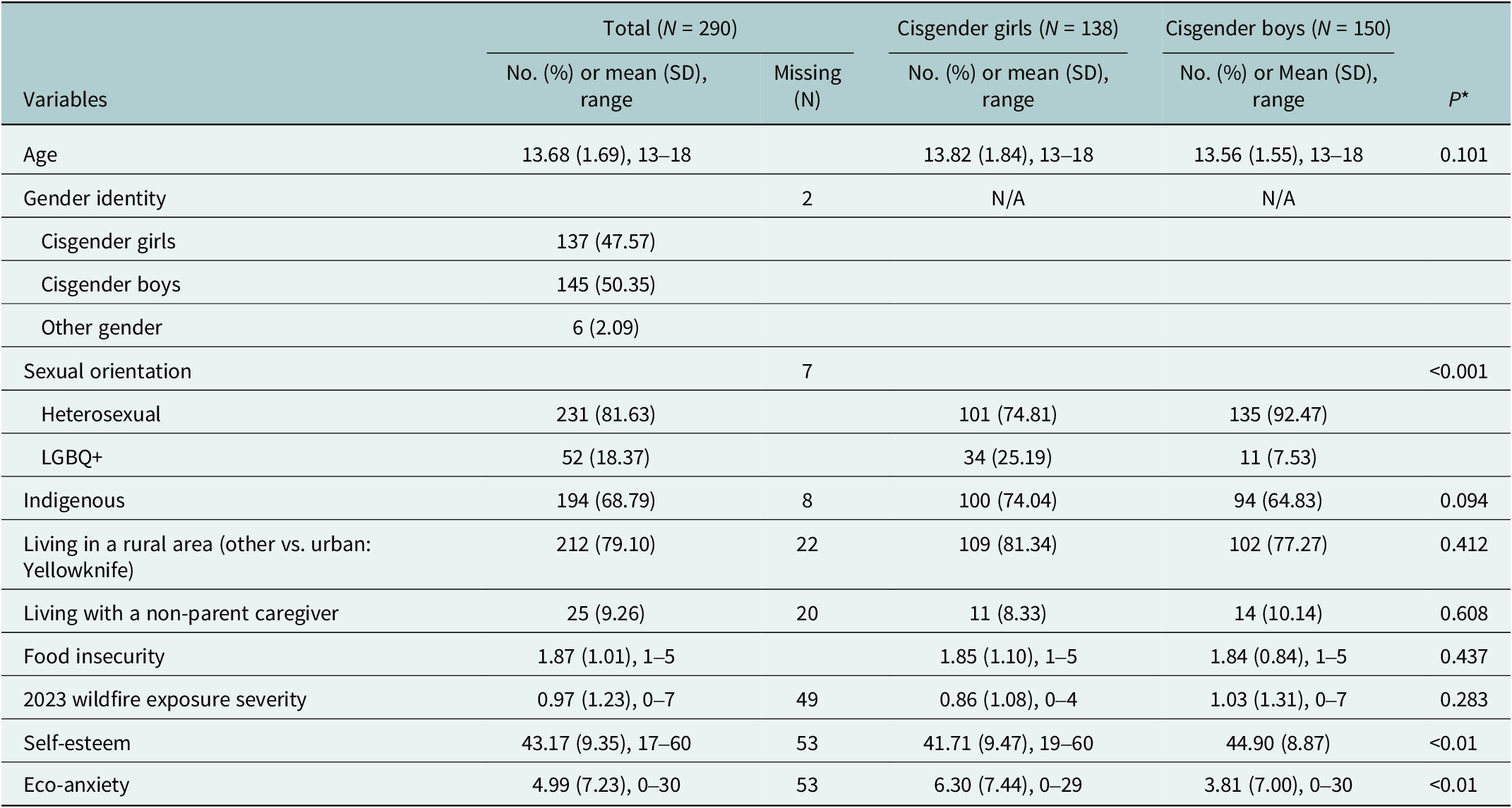
Table 1 summarizes participants characteristics (n = 290). The average age of participants was 13.68 (SD = 1.69). Nearly half identified as cisgender girls (47.57%), and nearly 18.37% identified as sexually diverse. Most participants identified as Indigenous (68.79%),lived in rural areas (79.10%) and resided with at least one parent (90.48%). Cisgender girls were more likely to report lower self-esteem (p < 0.01) and higher levels of eco-anxiety, compared to cisgender boys (p < 0.01).
Demographic characteristics among adolescent participants in FOXY and SMASH in the Northwest Territories, Canada (N = 290)
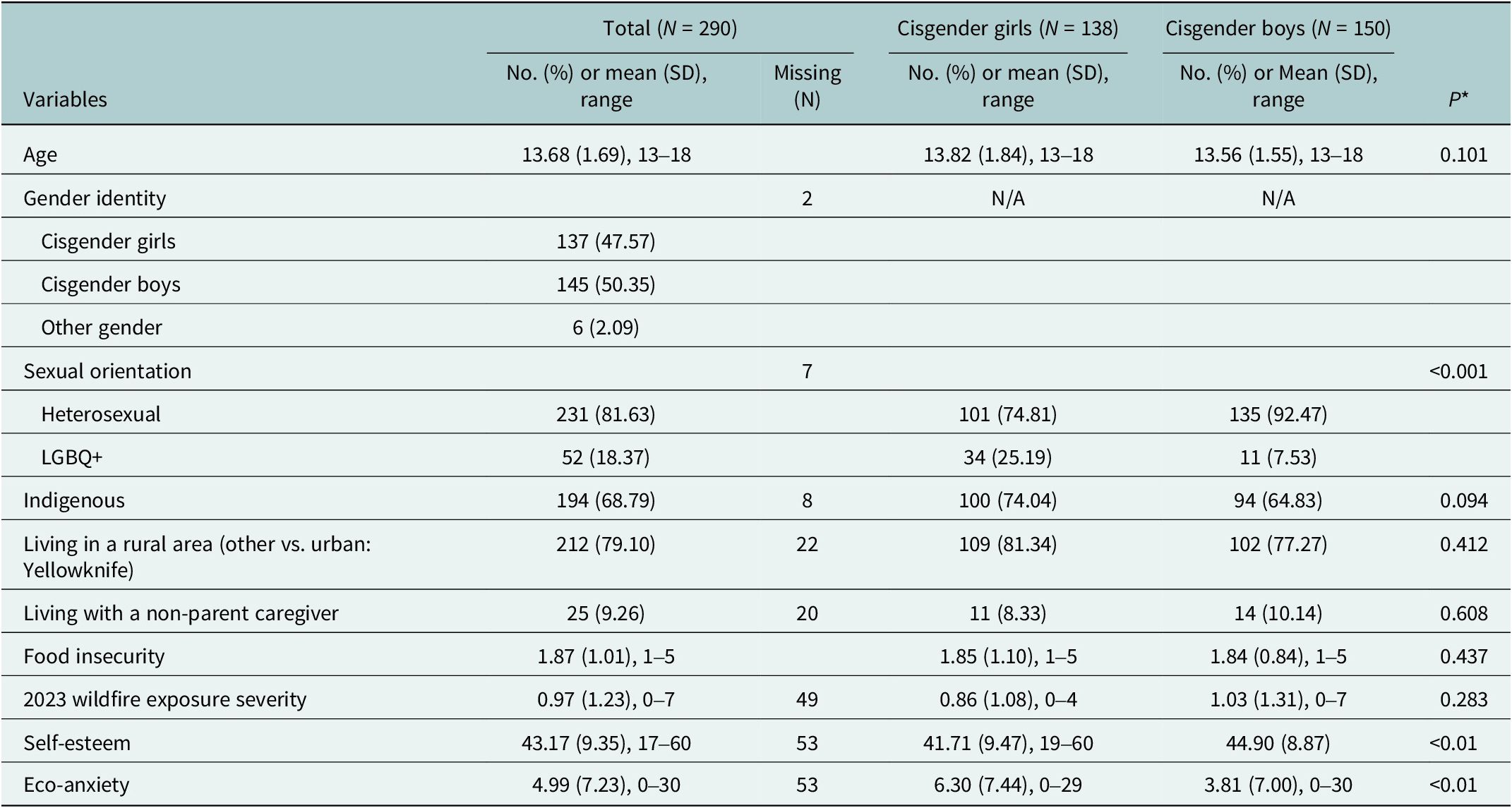
Note: *p-values estimated from t-test for differences in means, and Chi-squared test for differences in proportions by gender.
Multivariate analysis
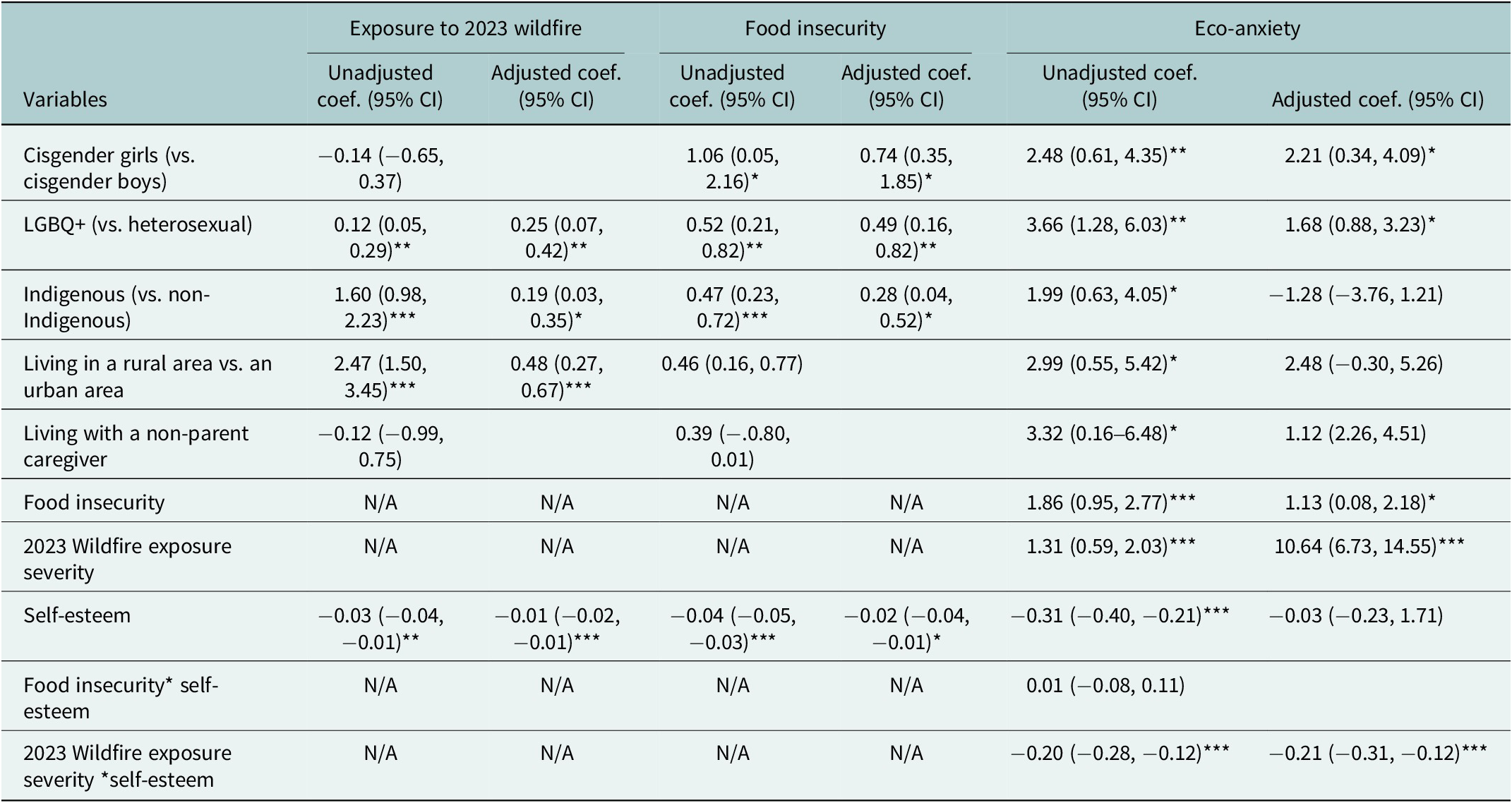
Results from unadjusted and adjusted linear regression models are presented in Table 2. Greater 2023 wildfire exposure severity was associated with youth who identified as LGBQ+ (Acoef: 0.25, 95% CI: 0.07, 0.42, p < 0.01), Indigenous (Acoef: 0.19, 95% CI: 0.03, 0.35, p < 0.05) and those living in a rural area (Acoef.: 0.48, 95% CI: 0.27, 0.67, p < 0.001). Higher wildfire exposure severity was associated with lower self-esteem (Acoef.: −0.01, 95% CI: −0.02, −0.01, p < 0.001).
Multivariate analysis of 2023 wildfire exposure severity, food insecurity and eco-anxiety among adolescent participants in FOXY and SMASH in the Northwest Territories, Canada (N = 290)
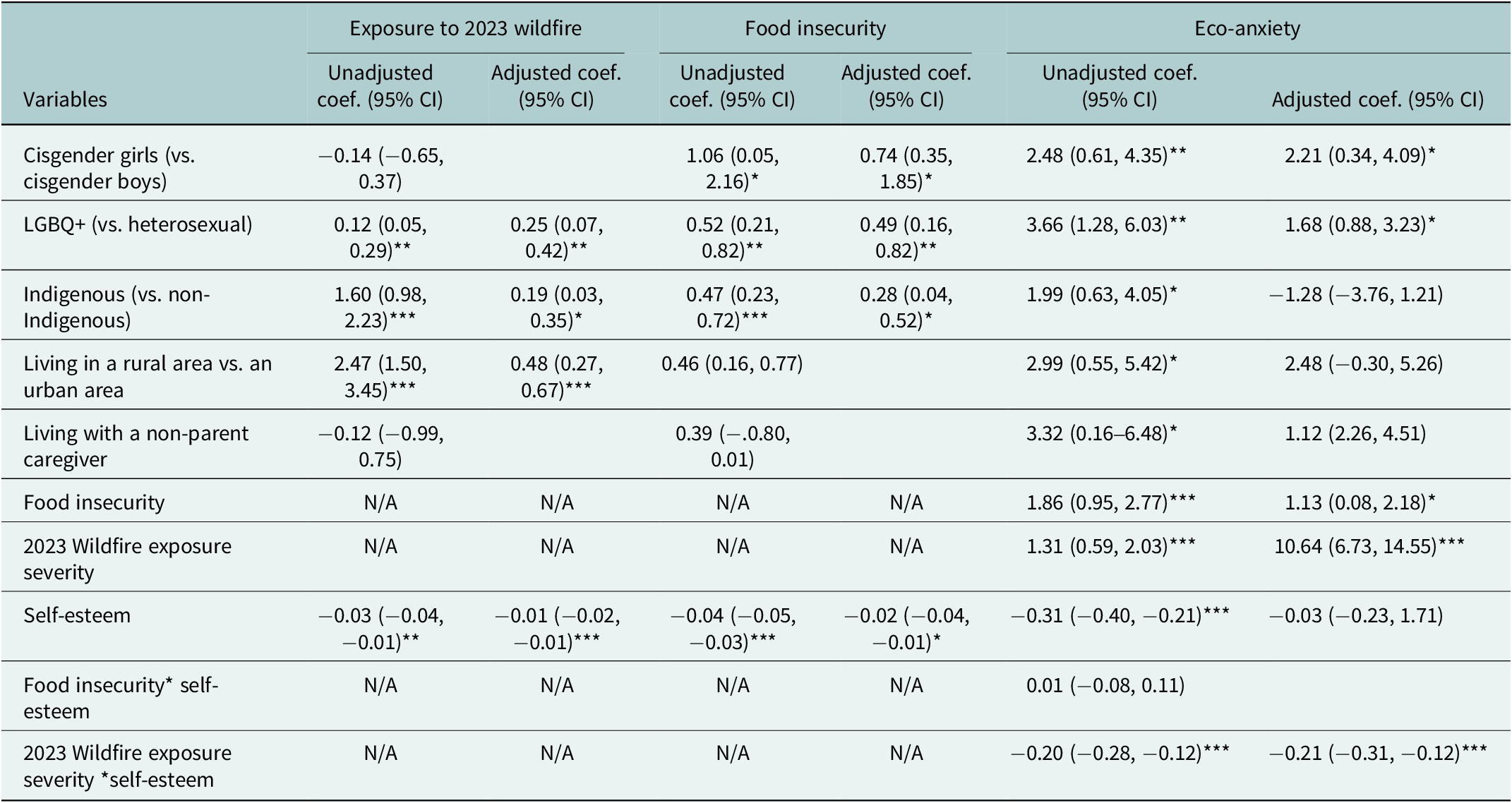
Note: *p < 0.05, **p < 0.01, ***p < 0.001.
Food insecurity was higher among youth who identified as cisgender girls (Acoef: 0.74, 95% CI: 0.35, 1.85, p < 0.05), LGBQ+ (Acoef: 0.49, 95% CI: 0.16, 0.82, p < 0.01) and Indigenous (Acoef: 0.28, 95% CI: 0.04, 0.52, p < 0.05), and was also associated with lower self-esteem (Acoef: −0.02, 95% CI: −0.04, −0.01, p < 0.05).
Eco-anxiety was higher among youth who identified as cisgender girls (Acoef: 2.21, 95% CI: 0.34, 4.09, p < 0.05) and LGBQ+ (Acoef: 1.68, 95% CI: 0.88, 3.23, p < 0.05), and was positively associated with food insecurity (Acoef: 1.13, 95% CI: 0.08, 2.18, p < 0.05) and 2023 wildfire exposure severity (Acoef: 10.64, 95% CI: 6.73, 14.55, p < 0.001).
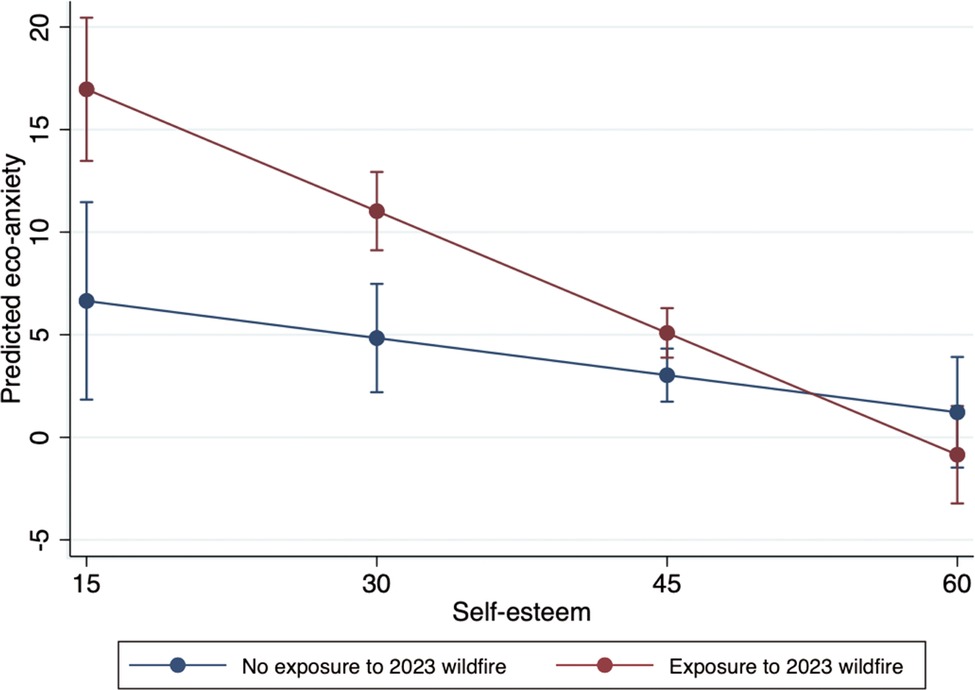
Self-esteem moderated the effect of 2023 wildfire exposure severity on eco-anxiety (Figure 1). A significant interaction between wildfire exposure severity and self-esteem indicated that the association between wildfire exposure and eco-anxiety was weaker among adolescents with higher self-esteem.
Moderation effect of self-esteem on the relationship between 2023 wildfire exposure severity and eco-anxiety among adolescent participants in FOXY and SMASH in the Northwest Territories, Canada (N = 290).

Structural equation modelling
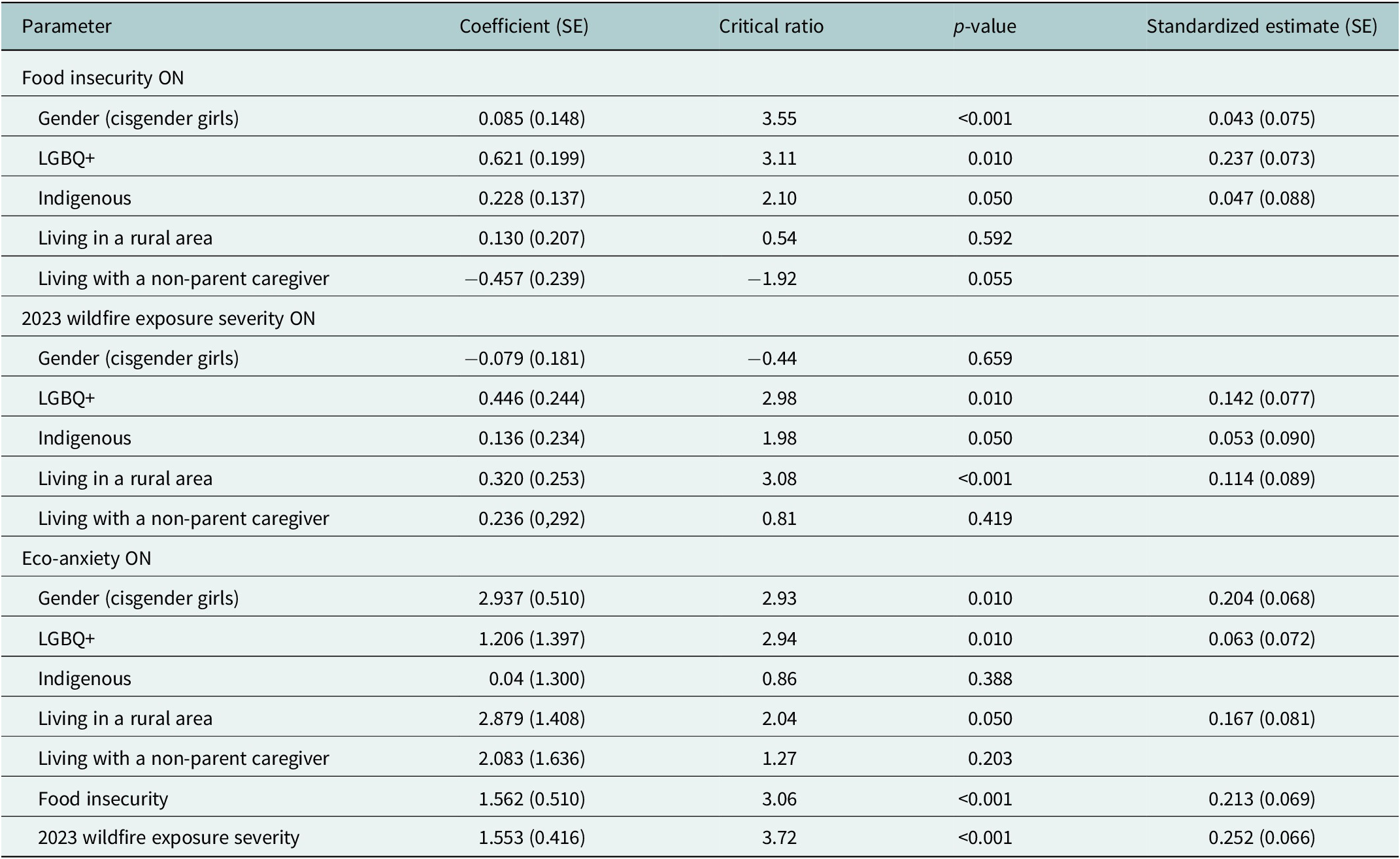
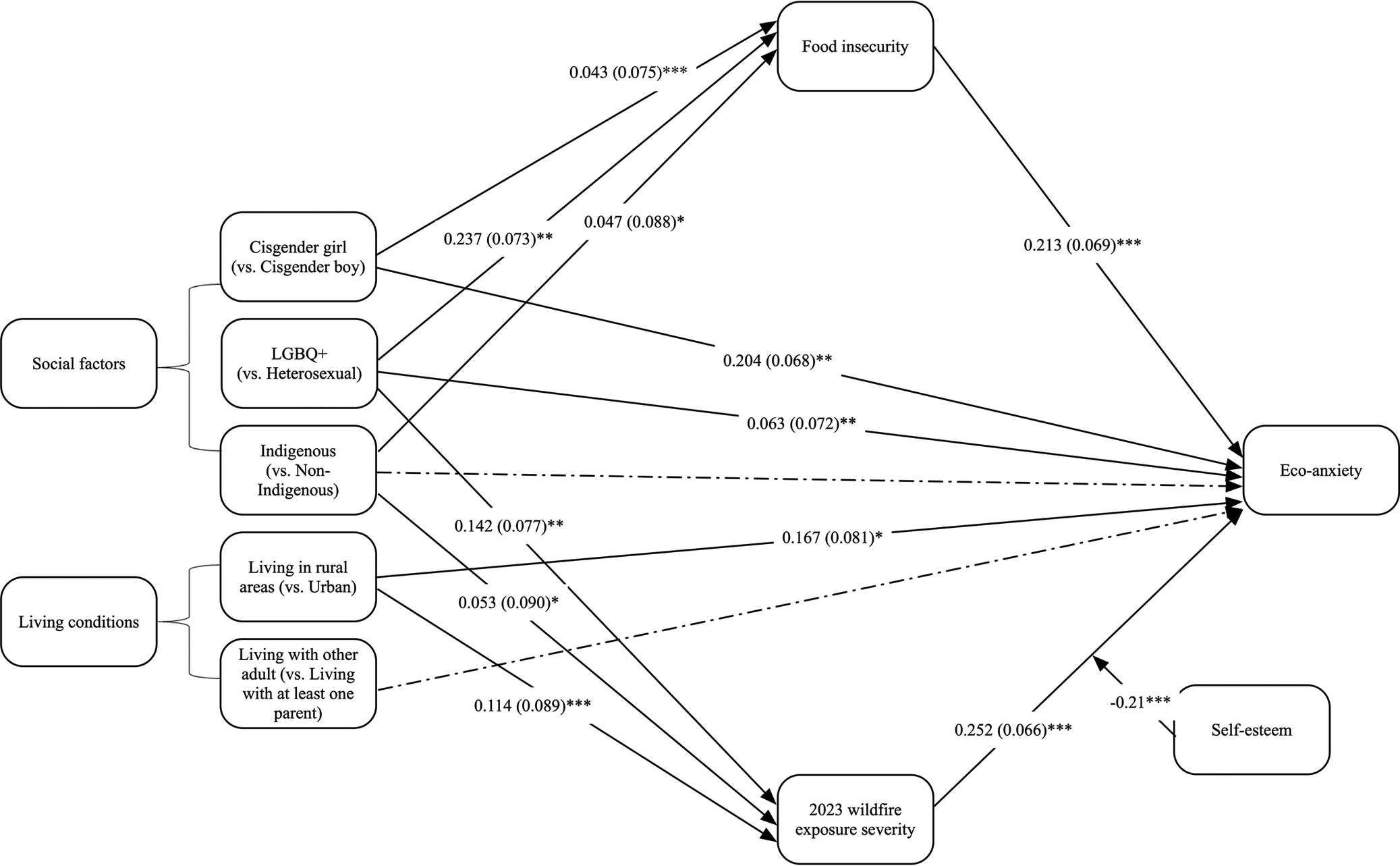
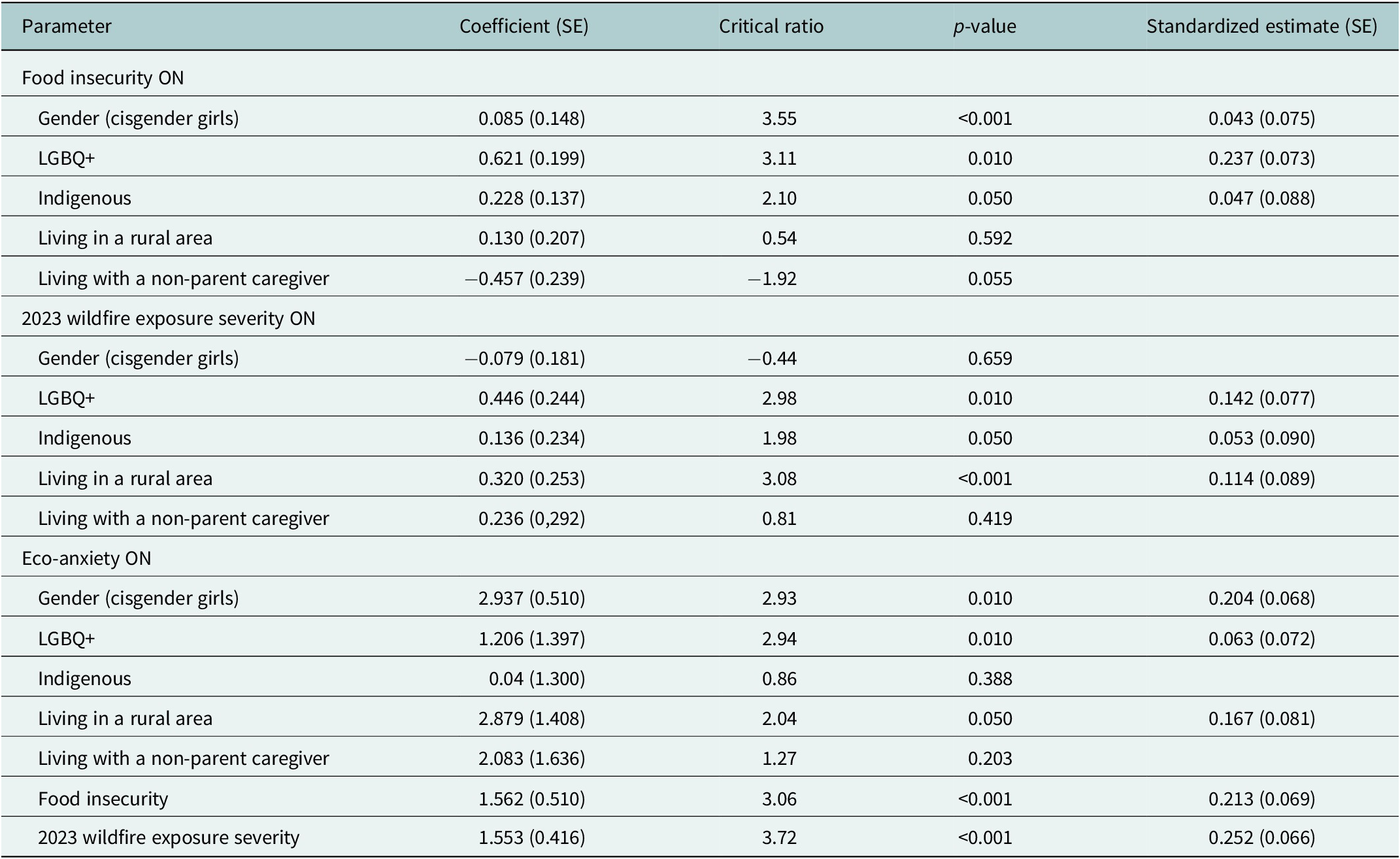
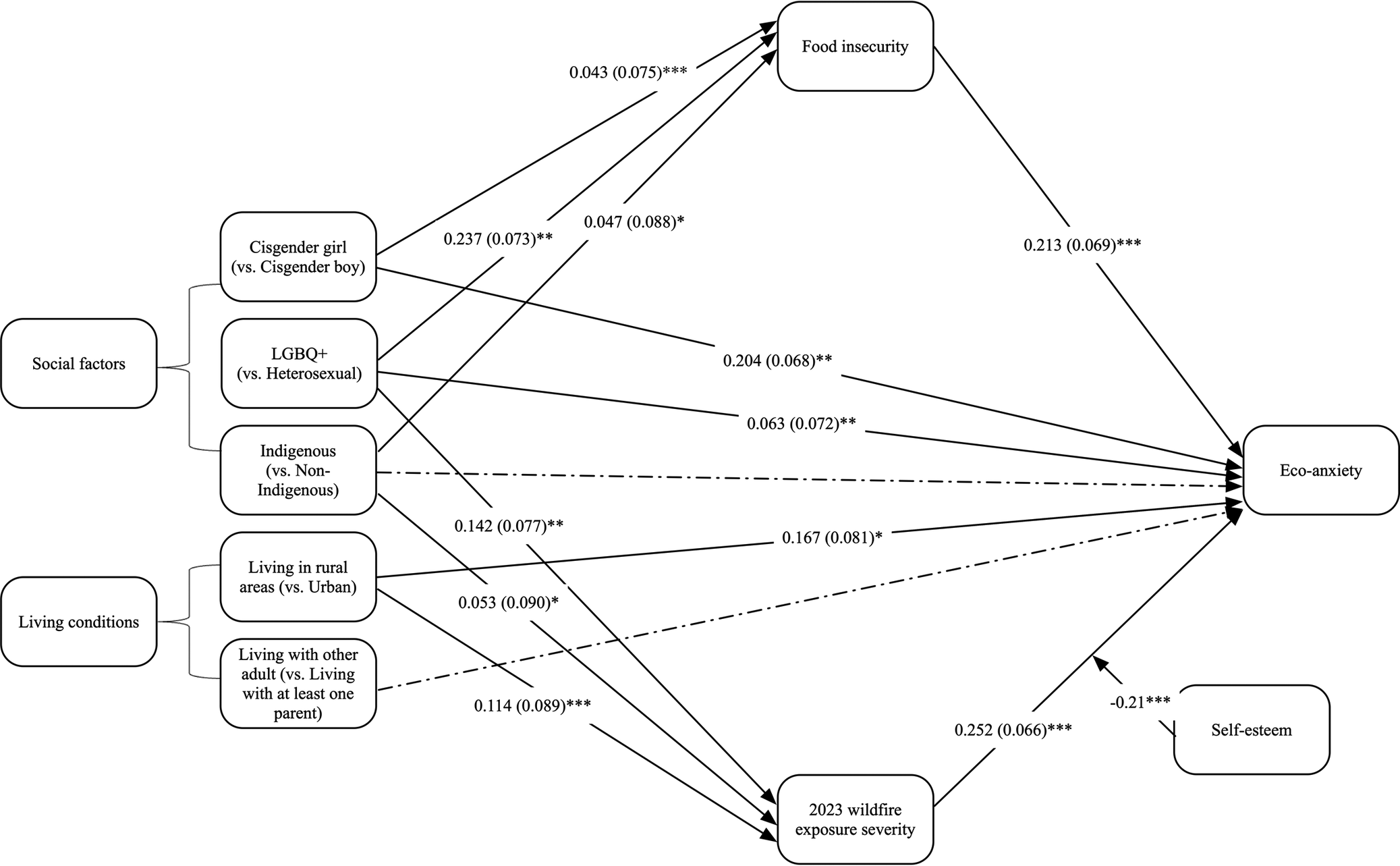
Results from the SEM are presented in Table 3 and Figure 2. Model fit indices for the final SEM model suggested that our model fit the data well (χ 2 = 2.61, p = 0.107; CFI = 0.970; RMSEA = 0.059 (90% CI = 0.001–0.618); SRMR = 0.020).
Path analysis on eco-anxiety among adolescent participants in FOXY and SMASH in the Northwest Territories, Canada (N = 290)
Final path analysis on eco-anxiety among adolescent participants in FOXY and SMASH in the Northwest Territories, Canada (N = 290).
Direct effects on eco-anxiety
Identifying as a cisgender girl (β = 0.263, p < 0.001), identifying as LGBQ+ (β = 0.063, p < 0.01) and living in a rural area (β = 0.167, p < 0.05) were each associated with higher eco-anxiety. Indigenous identity and living with a non-parent caregiver were not directly associated with eco-anxiety after accounting for mediators. Both food insecurity (β = 0.213, p < 0.001) and 2023 wildfire exposure severity (β = 0.252, p < 0.001) were positively associated with eco-anxiety.
Associations with mediators
Food insecurity was higher among LGBQ+ youth (β = 0.237, p < 0.01) and Indigenous youth (β = 0.047, p < 0.05), while gender and rural residence were not significantly associated. Living with a non-parent caregiver was marginally associated with lower food insecurity (p = 0.055). Greater wildfire exposure severity was reported by LGBQ+ youth (β = 0.142, p < 0.01), Indigenous youth (β = 0.053, p < 0.05) and youth living in rural communities (β = 0.114, p < 0.001).
Indirect effects
Indirect effects indicated that food insecurity and wildfire exposure severity accounted for a substantial proportion of the association between social factors and eco-anxiety. For LGBQ+ youth, the total standardized effect on eco-anxiety was β = 0.149, with ~58% explained through indirect pathways via food insecurity (β_indirect = 0.050) and wildfire exposure severity (β_indirect = 0.036), consistent with partial mediation. Indigenous identity was associated with eco-anxiety primarily through indirect pathways (β_indirect = 0.023), with no significant direct effect, consistent with full mediation. For youth living in rural communities, wildfire exposure severity accounted for a modest indirect effect (β_indirect = 0.029), representing ~15% of the total effect (β_total = 0.196), with most of the association remaining direct.
Discussion
This study examined associations between wildfire exposure severity, socio-ecological factors and eco-anxiety among Northern and Indigenous adolescents in the NWT following the 2023 wildfire season. Our findings indicate that eco-anxiety among NWT youth is shaped by intersecting social positions, living conditions and climate-related experiences. Cisgender girls and LGBQ+ youth reported higher levels of eco-anxiety, while food insecurity and wildfire exposure severity emerged as key pathways linking social marginalization to climate-related emotional distress. Additionally, self-esteem moderated the relationship between 2023 wildfire exposure severity and eco-anxiety. These findings offer new insights into multi-level factors shaping eco-anxiety among Northern and Indigenous adolescents in this Arctic and Sub-Arctic region.
Gender differences were evident in both exposure and pathways to eco-anxiety. Identifying as a cisgender girl (vs. cisgender boy) was associated with greater wildfire exposure severity and food insecurity, both of which were directly associated with eco-anxiety. These findings are consistent with the emerging research indicating that girls report higher levels of eco-anxiety and climate-related emotional distress (Coffey et al., Reference Coffey, Bhullar, Durkin, Islam and Usher2021; Clayton et al., Reference Clayton, Pihkala, Wray and Marks2023). Stigma and societal norms around emotional expressiveness and empathy may partly explain why cisgender women and girls tend to show higher levels of eco-anxiety (Parry et al., Reference Parry, McCarthy and Clark2022; Chou et al., Reference Chou, Abelama Neto, Thomas, Martin and Benoit2023). It has been suggested that, in some contexts, boys are taught to suppress their emotions, which may lead them to be more subtle in expressing their concerns about the environment (Kankawale and Niedzwiedz, Reference Kankawale and Niedzwiedz2023). Others suggest that girls and gender-diverse youth may also express stronger concern for community and future generations – values often tied to higher environmental awareness (McCright and Xiao, Reference McCright and Xiao2014; Drake et al., Reference Drake, Speer, Stachewicz, Newsham and Sheets2024). Eco-anxiety may reflect not only vulnerability but also a sense of social and ecological responsibility. These gender-based differences in emotional responses highlight the influence of socio-cultural context (Closson et al., Reference Closson, Sharma, Logie, Aran, Sachal, Bratu, Hu, Takaro, Kennedy, Clayton, Samji, Martin, Gislason, Hogg and Card2025). Future research is needed to explore the experiences of gender diverse groups and to address the specific needs and priorities of adolescent girls in managing eco-anxiety.
Eco-anxiety was also patterned by social marginalization and living conditions. Social categories of Indigenous youth, LGBQ+ youth, those living in rural communities and youth living without a parent were indirectly associated with eco-anxiety through food insecurity and wildfire exposure severity. Previous studies have indicated that LGBQ+ individuals face greater losses of community during environmental crises, are often excluded from shelters and other resources due to heteronormative policies, encounter inaccessible healthcare systems, experience harassment and face higher rates of homelessness, among other challenges (Goldsmith et al., Reference Goldsmith, Raditz and Méndez2022; Goldsmith and Bell, Reference Goldsmith and Bell2022; Whitley and Bowers, Reference Whitley and Bowers2023). Within the NWT, documented experiences of stigma and social exclusion among sexually and gender-diverse youth (Logie and Lys, Reference Logie and Lys2015; Logie et al., Reference Logie, Lys, Schott, Dias, Zouboules and Mackay2018b) suggest that climate-related stressors may compound pre-existing inequities, underscoring the importance of tailored and inclusive supports for LGBQ+ youth in the context of future EWEs.
Living conditions further shaped pathways to eco-anxiety. Youth residing in rural communities reported greater wildfire exposure severity, which was associated with higher eco-anxiety. Rural youth may experience more direct and prolonged exposure to climate-related disruptions, while also facing reduced access to healthcare, mental health services and educational resources compared to urban peers (Sanson et al., Reference Sanson, Van Hoorn and Burke2019; Brophy et al., Reference Brophy, Olson and Paul2023; Chou et al., Reference Chou, Abelama Neto, Thomas, Martin and Benoit2023). In contrast, living with at least one parent appeared to be protective, potentially reflecting better emotional, social and financial support to cope with the impacts of climate change, as parental guidance and family resources can help mitigate the stress and anxiety associated with climate-related disruptions (Sanson et al., Reference Sanson, Van Hoorn and Burke2019; Brophy et al., Reference Brophy, Olson and Paul2023; Chou et al., Reference Chou, Abelama Neto, Thomas, Martin and Benoit2023). In the NWT, the long-lasting impacts of colonization and the residential school system have contributed to significantly higher rates of child removal by the welfare system compared to the national average (Pollock et al., Reference Pollock, Ouédraogo, Trocmé, Hovdestad, Miskie, Crompton, Campeau, Tanaka, Zhang, Laprise and Tonmyr2024). Therefore, there is an urgent need to better understand the extreme weather-related needs and eco-anxiety experiences of youth involved in child welfare systems. Indeed, future climate-related research within child welfare systems could be a priority in the NWT and other settings at the nexus of child welfare disparities and EWEs.
Food insecurity emerged as a key pathway linking social marginalization to eco-anxiety, suggesting that concerns about environmental change are embedded within everyday experiences of uncertainty and material precarity. In northern contexts, where food access is closely tied to environmental conditions, food insecurity may amplify climate-related distress by reinforcing fears about future stability and well-being (Logie et al., Reference Logie, Lys, Sokolovic, Mackay, Donkers, Kanbari, Pooyak and Loppie2021; Boluda-Verdú et al., Reference Boluda-Verdú, Senent-Valero, Casas-Escolano, Matijasevich and Pastor-Valero2022; Government of Canada, 2023a). Addressing food insecurity may therefore support youth mental well-being in ways that extend beyond nutrition, including reducing climate-related worry and emotional strain.
Wildfire exposure severity was independently associated with higher eco-anxiety, underscoring the emotional impacts of lived exposure to EWEs. Rather than reflecting abstract concern, eco-anxiety appears directly linked to experiences of disruption, displacement, and loss during the 2023 wildfire season. Prior research in the NWTs shows that wildfires can have sustained emotional effects on youth by disrupting daily routines, schooling and relationships to place (Dodd et al., Reference Dodd, Scott, Howard, Scott, Rose, Cunsolo and Orbinski2018; Government of Northwest Territories, 2023). These findings highlight the importance of incorporating youth mental and emotional well-being into wildfire preparedness and recovery efforts, including trauma-informed supports that normalize emotional responses to environmental threat (Hickman et al., Reference Hickman, Marks, Pihkala, Clayton, Lewandowski, Mayall, Wray, Mellor and van Susteren2021; Montesanti et al., Reference Montesanti, Fitzpatrick, Azimi, McGee, Fayant and Albert2021).
These pathways should also be understood within the broader structural context shaping climate vulnerability in northern and Indigenous communities. Many communities in the NWT experience longstanding inequities related to colonial policies, infrastructure gaps and high costs of food and essential goods, all of which can contribute to resource insecurity (Layton, Reference Layton2023; Government of Northwest Territories, 2023; Pollock et al., Reference Pollock, Ouédraogo, Trocmé, Hovdestad, Miskie, Crompton, Campeau, Tanaka, Zhang, Laprise and Tonmyr2024; Whyte, Reference Whyte2017). Climate-related disasters, such as wildfires, may exacerbate these conditions by disrupting supply chains, transportation, schooling and access to land-based activities that support well-being and cultural continuity (Dodd et al., Reference Dodd, Scott, Howard, Scott, Rose, Cunsolo and Orbinski2018; Montesanti et al., Reference Montesanti, Fitzpatrick, Azimi, McGee, Fayant and Albert2021; Reyes-García et al., Reference Reyes-García, García-del-Amo, Álvarez-Fernández, Benyei, Calvet-Mir, Junqueira, Labeyrie, LI, Miñarro, Porcher, Porcuna-Ferrer, Schlingmann, Schunko, Soleymani, Tofighi-Niaki, Abazeri, Attoh, Ayanlade, Ávila, Babai, Bulamah, Campos-Silva, Carmona, Caviedes, Chakauya, Chambon, Chen, Chengula, Conde, Cuní-Sanchez, Demichelis, Dudina, Fernández-Llamazares, Galappaththi, Geffner-Fuenmayor, Gerkey, Glauser, Hirsch, Huanca, Ibarra, Izquierdo, Junsberg, Lanker, López-Maldonado, Mariel, Mattalia, Miara, Torrents-Ticó, Salimi, Samakov, Seidler, Sharakhmatova, Shrestha, Sharma, Singh, Ulambayar, Wu and Zakari2024). In this context, the associations observed between food insecurity, wildfire exposure severity and eco-anxiety likely reflect both individual experiences and also broader structural determinants shaping youth well-being. Recognizing these conditions helps to avoid framing eco-anxiety solely as an individual psychological response and instead situates youth distress within intersecting social, environmental and historical contexts.
Importantly, self-esteem represents a potentially modifiable psychosocial resource. In our model, the interaction between wildfire exposure severity and self-esteem remained statistically significant after adjustment, suggesting that higher self-esteem may buffer the association between wildfire exposure and eco-anxiety. Community-based programmes such as FOXY and SMASH incorporate arts-based learning, peer support and land-connected activities that may help strengthen youth confidence, identity and coping skills in the face of climate-related stressors (Lys et al., Reference Lys, Logie, MacNeill, Loppie, Dias, Masching and Gesink2016, Reference Lys, Logie, Mackay, MacNeill, Loppie, Gittings and Yasseen2023, Reference Lys, Logie, Lad, Sokolovic, Mackay, Hasham and Malama2024; Logie et al., Reference Logie, Lys, Schott, Dias, Zouboules and Mackay2018b; Gittings et al., Reference Gittings, Malama, Logie, Lys, Taylor, Mackay, Kanbari, Parker and McNamee2022, Reference Gittings, Malama, Logie, Lys, Taylor, McNamee, Mackay and Admassu2024).
Implications and limitations
There remains limited evidence to fully understand how young people cope with the stress associated with climate change (Godden et al., Reference Godden, Farrant, Yallup Farrant, Heyink, Carot Collins, Burgemeister, Tabeshfar, Barrow, West, Kieft, Rothwell, Leviston, Bailey, Blaise and Cooper2021), and more research is necessary in this area (Doblas-Reyes et al., Reference Doblas-Reyes, Sorensson, Almazroui, Dosio, Gutowski, Haarsma, Hamdi, Hewitson, Kwon, Lamptey, Maraun, Stephenson, Takayabu, Terray, Turner and Zuo2021) − particularly in Arctic and Sub-Arctic regions such as the NWT, where social and structural disparities shape youth well-being (Government of Canada , 2023b). Several factors have been identified to support young people in managing climate change-related distress in other global settings, including having a sense of agency to address the stressors, having their values and emotions validated and being able to alleviate ongoing stressors (Hickman et al., Reference Hickman, Marks, Pihkala, Clayton, Lewandowski, Mayall, Wray, Mellor and van Susteren2021).
Interventions that support emotional resilience and self-esteem may be particularly important for youth experiencing climate-related distress. Pihkala (Reference Pihkala2019) argues that while taking action can help manage anxiety, simply prescribing action might be more about avoiding underlying emotions than addressing them directly. Effective interventions should integrate both action and mental health support, helping individuals process their feelings in a constructive manner (Aylward et al., Reference Aylward, Cunsolo, Vriezen, Bayne, King and Harper2024).
Social and healthcare professionals have a vital role in supporting individuals dealing with eco-anxiety, especially in the aftermath of EWEs. Strategies that facilitate meaning-focused coping, helping youth find personal significance in their experiences and the broader climate change narrative, can foster purpose and motivation (Baudon and Jachens, Reference Baudon and Jachens2021). Creating environments where youth feel safe to express fears related to climate change and environmental disruption, and where emotional responses are validated, may further support emotional resilience (Baudon and Jachens, Reference Baudon and Jachens2021; Hickman et al., Reference Hickman, Marks, Pihkala, Clayton, Lewandowski, Mayall, Wray, Mellor and van Susteren2021).
In northern and Indigenous contexts, these approaches should build on existing cultural strengths. Participatory and community-based strategies that incorporate Indigenous knowledges, land-based learning and culturally grounded teachings have been shown to support empowerment, self-esteem and leadership among youth, and may offer important pathways for addressing eco-anxiety linked to environmental change, food systems disruption and wildfire exposure in the NWTs (Gittings et al., Reference Gittings, Malama, Logie, Lys, Taylor, Mackay, Kanbari, Parker and McNamee2022, Reference Gittings, Malama, Logie, Lys, Taylor, McNamee, Mackay and Admassu2024).
This study has several limitations. The use of non-random sampling limits generalizability, and the cross-sectional design precludes causal inference. Surveys were conducted across the 2023–2024 school year, which may have introduced variability in proximity to the wildfire events. Because surveys were administered across communities at different points during the school year, the interval between wildfire exposure and survey completion varied among participants. This variation may influence recall of wildfire experiences or the intensity of eco-anxiety reported. As with all self-report data, reporting bias is possible. Several measurement considerations should be noted. Food insecurity was assessed using a single-item indicator, which may not capture the full range or severity of food access challenges experienced by youth. The wildfire exposure severity scale also demonstrated modest internal consistency, likely reflecting the diverse ways wildfire events affected communities across the NWT. In addition, eco-anxiety was assessed using a shortened 10-item version of the Hogg Eco-Anxiety Scale to reduce respondent burden in a school-based survey. Future research could incorporate more detailed measures of resource insecurity and disaster exposure and apply longitudinal designs to better understand how eco-anxiety develops over time. Despite these limitations, this study focuses on extreme weather event severity with adolescents in an Arctic and Sub-Arctic region, with implications for working with other rural, remote and Indigenous communities of climate-affected adolescents. This is particularly important as the NWT is highly prone to facing wildfire risks, with climate-driven warming, extended drought and increased fuel loads turning the region into a hotspot for severe and growing fire activity (Gaboriau et al., Reference Gaboriau, Chaste, Girardin, Asselin, Ali, Bergeron and Hély2023).
Conclusion
This study highlights the experiences of eco-anxiety among Northern and Indigenous youth, including LGBQ+ youth, and those in rural environments. Findings reveal that social factors, living conditions and structural conditions can shape risks of eco-anxiety among adolescents in the NWT. Self-esteem moderated the pathway between wildfire exposure severity and eco-anxiety, suggesting the importance of multi-level responses that strengthen youth resilience while addressing structural determinants such as food insecurity. Addressing climate-related mental health among youth in northern regions, therefore, requires approaches that integrate psychosocial supports, community resilience, and structural interventions.
Open peer review
To view the open peer review materials for this article, please visit http://doi.org/10.1017/gmh.2026.10207.
Supplementary material
The supplementary material for this article can be found at http://doi.org/10.1017/gmh.2026.10207.
Data availability statement
Data are available upon reasonable request from C. Logie (carmen.logie@utoronto.ca) and upon obtaining required research ethics board approvals.
Acknowledgements
The authors would like to acknowledge all FOXY/SMASH staff, peer leaders and participants, as well as Elder Jane Dragon (Setsuné) and participating schools across the NWTs for their contributions.
Author contribution
Study design: CHL, YW, KIM and CLL. Data collection: KIM and CLL. Data management: YW, CHL, AH, KIM and CLL. Data analysis: YW and CHL. Manuscript writing: YW, AH, CHL and SSC. Manuscript editing: YW, AH, CHL, KIM, SSC, RM, KGC and CLL. Funding acquisition: CHL, KIM, RM, KGC and CLL.
Financial support
This research was funded by the Canadian Institutes of Health Research (Project Grant: 425987; Catalyst Grant: CPHO Report – Institute of Indigenous Peoples’ Health; Catalyst Grant: CBR in Climate Change Priority Area – Climate Justice). CHL is also supported by funding from the Canada Research Chairs Program.
Competing interests
The authors declare none.
Ethics statement
Ethics approval was received from the University of Toronto (No. 00039428) and Aurora Research Institute (Licence No. 17693). Youth provided informed assent before participation, and parents/caregivers provided informed consent for youth to take part before the study began.
Patient and public involvements
This community-based study was developed and implemented in collaboration with community-based organization (CBO) in the Northwest Territories and local peer navigators in each study site, and addressed CBO priorities to advance youth sexual and reproductive health and well-being.


 Open access

