


The number of refugees displaced internationally is unprecedented in recent history (UNHCR, 2016). Internationally, governments are tasked with supporting refugees to build a new life in countries of resettlement as they overcome the psychological impact of persecution and war. The positive social, economic and cultural contribution of many refugees to their host countries has been widely documented (Refugee Council of Australia, 2010). In light of this, it is important to understand the factors that promote engagement within refugees’ own communities, as well as with the broader community in their host country. Understanding the factors that contribute to positive social outcomes amongst refugees could inform the development of policy and the provision of services to support refugees as they adapt to life in their new countries.
The extent to which refugees engage with their own and other communities in host countries is likely to be influenced by their mental health following resettlement. In this study, we defined community engagement as regular interactions between a refugee individual or family, and other individuals, groups or organizations in their own or the broader community. The association between community engagement and mental health is critically important given the wealth of evidence documenting elevated rates of psychological disorders amongst refugees and asylum-seekers, compared with the broader population in host countries (Fazel et al., Reference Fazel, Wheeler and Danesh2005; Bogic et al., Reference Bogic, Njoku and Priebe2015). A number of cross-sectional studies conducted with refugees have found an association between higher psychological symptoms and lower community engagement, as well as related constructs including social functioning (i.e. communication difficulties, social interest), and social support [i.e. the perception that others take an interest in the individual and make him/her feel cared about (Schuster et al., Reference Schuster, Kessler and Aseltine1990)] (Miller et al., Reference Miller, Weine, Ramic, Brkic, Bjedic, Smajkic, Boskailo and Worthington2002; Carlsson et al., Reference Carlsson, Mortensen and Kastrup2006; Gerritsen et al., Reference Gerritsen, Bramsen, Deville, Van Willigen, Hovens and Van Der Ploeg2006; Radanovic-Grguric et al., Reference Radanovic-Grguric, Barkic, Filakovic, Koic, Laufer, Petek and Mandic2009). Investigations of how psychological symptoms relate to engagement with refugees’ own communities, compared with the broader community, have yielded mixed findings. Studies measuring the association between mental health and engagement with one's own community have generally found that higher psychological symptoms are associated with lower engagement. For example, in Norway, refugees with lower integration within their own community (as indexed by meetings with others from the participants’ country of origin) reported higher post-traumatic stress disorder (PTSD) symptoms (Teodorescu et al., Reference Teodorescu, Heir, Hauff, Wentzel-Larsen and Lien2012). Birman and Tran (Reference Birman and Tran2008) found that perceived social support from one's own community was associated with lower depression symptoms in Vietnamese refugees. A study conducted with resettled Sudanese refugees indicated that high perceived social support from one's own community was associated with lower PTSD, anxiety and somatization symptoms (Schweitzer et al., Reference Schweitzer, Melville, Steel and Lacharez2006). In a sample of unaccompanied minors in Norway, Oppedal and Idsoe (Reference Oppedal and Idsoe2015) found that social support from family members was directly related to lower depression symptoms.
In contrast, studies investigating the relationship between mental health and engagement with the host community have yielded less consistent findings. Some studies have found that high levels of psychological symptoms are associated with poorer engagement with the broader community. For example, one study found that refugee outpatients showing poor integration into the local community (as indexed by poor language skills and limited social contact) had higher PTSD and depression symptoms (Teodorescu et al., Reference Teodorescu, Heir, Hauff, Wentzel-Larsen and Lien2012). Further a study conducted in Norway with unaccompanied minors found that that social support from Norwegian and co-ethnic friends was indirectly associated with lower depression via cultural competence and discrimination (Oppedal and Idsoe, Reference Oppedal and Idsoe2015). In contrast, other studies have failed to find a relationship between refugee mental health and engagement in the broader community. Birman and Tran (Reference Birman and Tran2008) and Schwietzer et al. (2006) found that perceived social support from members of the host community was not associated with mental health symptoms in resettled refugees. Overall, comparative findings regarding the association between refugee mental health and relative engagement with one's own and the host community have been inconclusive.
To date, studies investigating social factors and refugee mental health have been limited by a reliance on cross-sectional designs, which preclude conclusions about temporal relationships between social engagement and mental health. For example, it may be the case that (a) high levels of psychological symptoms lead to withdrawal from social relationships, (b) social isolation contributes to the development and maintenance of psychological distress, or (c) the relationship is bidirectional. Few studies have investigated these relationships prospectively in refugee and immigrant groups. One longitudinal study of Iraqi refugees found that depression (but not PTSD) symptoms upon arrival in the USA was associated with lower social support 12 months later (LeMaster et al., Reference Lemaster, Broadbridge, Lumley, Arnetz, Arfken, Fetters, Jamil, Pole and Arnetz2018); however, this study only investigated the role of social support at 12 months after resettlement. Gellis (Reference Gellis2003) found that the size of the individual's social network within the host community was linked to reduced depression symptoms over a period of 6 months. In contrast, the size of the social network within one's own community was associated with higher depression symptoms in Vietnamese immigrants over the same period. The author attributed this increase in distress to the intense involvement of family members occurring at the expense of the individual cultivating important outside networks. Longitudinal research investigating the association between post-trauma mental health and social support in non-refugees has provided a more nuanced picture. In a study of traumatic injury survivors, Nickerson et al. (Reference Nickerson, Creamer, Forbes, Mcfarlane, O'donnell, Silove, Steel, Felmingham, Hadzi-Pavlovic and Bryant2017) found that PTSD symptoms predicted both decreased positive and increased negative perceived social support over 6 years, but not vice versa. This suggested that individuals with high levels of symptoms experienced subsequent increases in perceived negative social support and decreases in perceived positive social support, but that perceived social support was not a risk or protective factor against the development of PTSD in this sample. In a study conducted with survivors of motor vehicle accidents, greater perceived social support at 4 weeks after the accident predicted reductions in PTSD symptoms over the subsequent 3 months for individuals with high levels of PTSD symptoms (Robinaugh et al., Reference Robinaugh, Marques, Traeger, Marks, Sung, Gayle Beck, Pollack and Simon2011). In another study conducted with motor vehicle accident survivors, increases in perceived negative social support over 5 months after the trauma predicted subsequent PTSD symptoms (Holeva et al., Reference Holeva, Tarrier and Wells2001). However, these studies all focused on perceived social support rather than more objective measures of community engagement; accordingly, findings could be attributed to perceptions of social support that were coloured by concomitant psychological distress. Nevertheless, such results highlight the critical importance of implementing longitudinal designs to understand the temporal relationships between mental health and social engagement and support.
In addition to mental health, there are key psychological factors that may influence refugees’ engagement with their own communities and the community in the host country. Interpersonal trust can be defined as a person's ‘expectations, assumptions or beliefs about the likelihood that another's future actions will be beneficial, favorable or at least not detrimental’ (Robinson, Reference Robinson1996, p. 576). Interpersonal trust has been identified as a salient process that is likely to both be disrupted by the refugee experience (Nickerson et al., Reference Nickerson, Bryant, Rosebrock and Litz2014), and to directly impact on an individual's willingness to engage with others (Gurtman, Reference Gurtman1992). Accordingly, interpersonal trust may potentially influence both mental health and the willingness of refugees to engage with their own and other communities. In support of this, research conducted with non-refugees has indicated that low levels of interpersonal trust are associated with poorer mental health in both cross-sectional and longitudinal studies (Folkman et al., Reference Folkman, Lazarus, Gruen and Delongis1986; Schneider et al., Reference Schneider, Konijn, Righetti and Rusbult2011; Kim et al., Reference Kim, Chung, Perry, Kawachi and Subramanian2012; Carpiano and Fitterer, Reference Carpiano and Fitterer2014; Cox et al., Reference Cox, Resnick and Kilpatrick2014; Ehsan and De Silva, Reference Ehsan and De Silva2015). High levels of interpersonal trust have also been associated with wider social networks (Churchill and Mishra, Reference Churchill and Mishra2017) and stronger social ties (Bouchiullon, Reference Bouchiullon2014). Understanding how interpersonal trust may affect mental health and community engagement would substantially advance knowledge regarding the mechanisms underlying refugee adaptation. To our knowledge, no study to date has specifically examined this relationship using a longitudinal design. It is especially important to study processes such as interpersonal trust as they may be malleable, and thus their elucidation would inform the development of policies and services to promote positive social outcomes.
The current study represents the first longitudinal investigation of trust, psychological symptoms and community engagement in a nationally representative sample of resettled refugees. Participants in this study were interviewed within 3–6 months of obtaining a humanitarian visa after arrival in Australia (wave 1) and 2–3 years later (wave 3). We examined the association between trust, PTSD symptoms, depression/anxiety symptoms and engagement with one's own and other communities after arrival in Australia and 2–3 years later. We hypothesized that: (1) lower trust at wave 1 would predicted reduced engagement with one's own and other communities at wave 3, (2) higher PTSD and depression/anxiety symptoms at wave 1 would predict reduced engagement with one's own and other communities at wave 3, (3) lower trust at wave 1 would predict higher PTSD and depression/anxiety symptoms at wave 3, and (4) higher PTSD and depression/anxiety symptoms at wave 1 would predict lower trust at wave 3.
Methods
Participants
Participants were 1894 refugees who had taken part in the Building a New Life in Australia (BNLA) study after arriving in Australia as part of the humanitarian entrants programme. The BNLA study represents a population-based cohort study investigating the settlement of refugees in Australia, and was undertaken by the Australian Department of Social Services (DSS) and the Australian Institute of Family Studies (Edwards et al., Reference Edwards, Smart, De Maio, Silbert and Jenkinson2018). It comprises five waves of data that were collected annually from the time participants were initially granted a visa after arrival in Australia. This study reports on data collected via face-to-face interviews in wave 1 (between October 2013 and February 2014) and wave 3 (between October 2015 and February 2015). Data at wave 2 were collected via a different methodology (i.e. a reduced set of measures, with responses elicited via telephone interviews), and data collection for waves 4 and 5 was ongoing at the time of publication. In addition to the variables investigated in this study, information on a number of other constructs was collected, including housing and neighbourhood characteristics, English language skills, employment and impressions of life in Australia (see Edwards et al., Reference Edwards, Smart, De Maio, Silbert and Jenkinson2018).
Measures
Interpersonal trust
A seven-item scale developed for this study was used to index interpersonal trust. Participants were asked to indicate the extent to which they trusted a number of groups of people including people in their neighbourhood, the government and health professionals. Participants rated their trust in each of these groups on a four-point scale, ranging from 1 (a lot) to 4 (not at all). Items were reverse-scored and summed to create a total trust score, with higher scores indicating greater trust. Internal consistency for this scale in this study was α = 0.85 at wave 1 and α = 0.83 at wave 3.
PTSD symptoms
PTSD symptoms were assessed using the PTSD-8 scale (Hansen et al., Reference Hansen, Andersen, Armour, Elklit, Palic and Mackrill2010). This eight-item scale indexes core symptoms of PTSD, including intrusive memories, flashbacks, nightmares, startle response, hypervigilance, avoidance of trauma-related thoughts and situations and physiological/emotional reactivity to reminders. For each symptom, participants indicated how much it had bothered them over the past week on a four-point scale, ranging from 1 (not at all) to 4 (most of the time). Items were summed to create a total PTSD symptom score. Internal consistency for this scale in this study was α = 0.92 at wave 1 and α = 0.92 at wave 3.
Depression/anxiety symptoms
Depression and anxiety symptoms were assessed using the Kessler-6 Scale (Kessler et al., Reference Kessler, Green, Gruber, Sampson, Bromet, Cuitan, Furukawa, Gureje, Hinkov, Hu, Lara, Lee, Mneimneh, Myer, Oakley-Browne, Posada-Villa, Sagar, Viana and Zaslavsky2010). This scale comprises six items, indexing two anxiety symptoms (feeling nervous, feeling restless, or fidgety) and four depression symptoms (feeling hopeless, feeling that everything was an effort, feeling so sad nothing could cheer you up and feeling worthless). For each symptom, participants indicated how often they had experienced it over the past 4 weeks. Items were rated on a five-point scale, ranging from 1 (none of the time) to 5 (all of the time). Items were summed to create a total depression/anxiety symptoms score. Internal consistency for this scale was α = 0.89 at wave 1 and α = 0.90 at wave 3.
Engagement in own communities
A seven-item scale was developed for this study to measure engagement with refugees’ own communities. Items were scored on a five-point scale ranging from 1 (daily) to 5 (never). Items were reverse-scored and the mean calculated to create a total engagement in one's own community score with higher scores indicating greater engagement. Internal consistency for engagement in one's own community scale was α = 0.83 at wave 1 and α = 0.85 at wave 3.
Engagement with other communities
A seven-item scale was also developed for this study to measure engagement with other communities. Participants indicated, over the last 12 months, how frequently they and/or their family members had been involved in activities organized by other communities across domains including school, volunteering and cultural. Items were scored on a five-point scale ranging from 1 (daily) to 5 (never). Items were reverse-scored and the mean calculated to create a total engagement with other communities score. Internal consistency for the engagement in other communities scale was α = 0.84 at wave 1 and α = 0.87 at wave 3.
Procedure
Data collection was conducted in 11 cities and regional areas in Australia (Edwards et al., Reference Edwards, Smart, De Maio, Silbert and Jenkinson2018). Site selection was undertaken in a way that optimized sample size, geographic diversity and representation of different types of humanitarian visas. Inclusion criteria for this study were: (1) aged 18 years or older and (2) the participant was the ‘principal’ applicant for a humanitarian visa granted in May to December 2013. Following an initial phase of recruitment, participants provided permission for other family members to be contacted. These individuals represented ‘secondary applicants’ and were invited to participate if they were (1) aged 16 years or older, and (2) residing with the primary applicant.
At waves 1 and 3, data were collected using either computer-assisted self-interview software or via a computer-assisted personal interview during home visits. Interviews lasted approximately 45 min to 1 h, and questionnaires were available in Arabic, Burmese/Myanmar, Chin Haka, Dari, Hazagari, Nepali, Persian, Swahili and Tamil. Participants were usually matched with an interviewer fluent in their native language; although participants could choose to be assisted by an accredited interpreter to complete the survey. All questionnaires were subjected to a rigorous translation and quality assurance process, including multiple stages of independent checking to ensure quality. Ethics approval for this study was obtained from the Australian Institute of Family Studies Human Research Ethics Committee (Ref# 13/03).
Data analysis
We used multilevel path analyses to investigate the relationship between trust, PTSD symptoms, depression/anxiety symptoms and community engagement. Our power analysis indicated that, to achieve 80% power in our initial model with an RMSEA of 0.05, a minimum of 350 participants were required (Preacher and Coffman, Reference Preacher and Coffman2006, May). Thus our study was adequately powered. A full information maximum likelihood estimator that is robust to non-normality (MLR) was implemented to account for missing data. This approach uses other variables in the model to adjust parameter estimates accounting for missing data.
Due to the nature of sampling in this survey, data were clustered in family units, with intraclass correlations being as follows: PTSD symptoms: wave 1 ρ = 0.37, wave 3 ρ = 0.35, depression/anxiety symptoms wave 1 ρ = 0.29, wave 3 ρ = 0.32, trust wave 1 ρ = 0.47, wave 3 ρ = 0.36, engagement with own community wave 1 p = 0.10, wave 3 p = 0.09, and engagement with other communities wave 1 p = 0.07, wave 3 p = 0.01. Accordingly, multilevel path analyses were implemented to investigate the hypotheses in this study. As our primary interest was in understanding the hypothesized relationships at the level of the individual (rather than the family unit), all variables were specified at the level of the individual. Survey weights were also accounted for in the models to facilitate a representative sample.
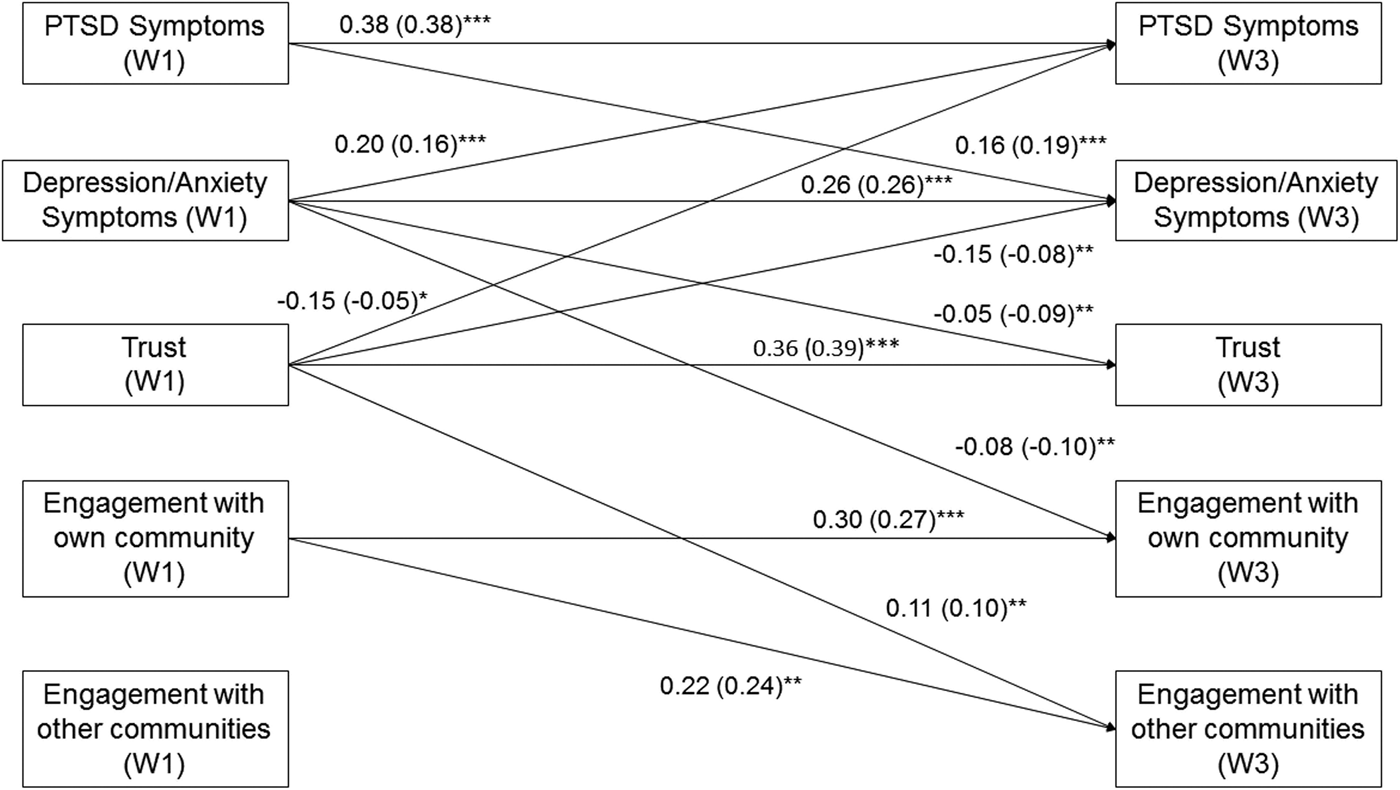
For the multilevel path analysis, the model was specified as follows: (1) trust, PTSD, depression/anxiety symptoms, engagement with one's own community and engagement with other communities at wave 1 and (2) trust, PTSD, depression/anxiety symptoms, engagement with one's own community and engagement with other communities at wave 3. Initially the model was constructed so that all variables influenced all other variables at the subsequent step. Age and gender were entered as covariates influencing variables measured at wave 1. Residual error variances for variables at the same point in the model were allowed to covary. Predictor variables were grand-mean centred prior to being entered into the model. Following initial model fitting, model trimming was employed such that non-significant paths where β < 0.15 were removed from the model. Structural paths in the initial model are presented in Fig. 1 (for parsimony, covariance between residual error variances at the same time-point and age/gender relationships to variables are not presented).
Path analysis of longitudinal association between PTSD symptoms, depression/anxiety symptoms, trust, engagement with own community and engagement with other communities in resettled refugees.
Model fit was evaluated using the following fit statistics (Hu and Bentler, Reference Hu and Bentler1999; Little, Reference Little2013): Tucker–Lewis Index (TLI) ⩾ 0.90, Comparative Fit Index (CFI) ⩾ 0.90, Root Mean Square Error of Approximation (RMSEA) < 0.06, Standardized Root-Mean-Square-Residual (SRMR) < 0.08.
Results
Participant characteristics
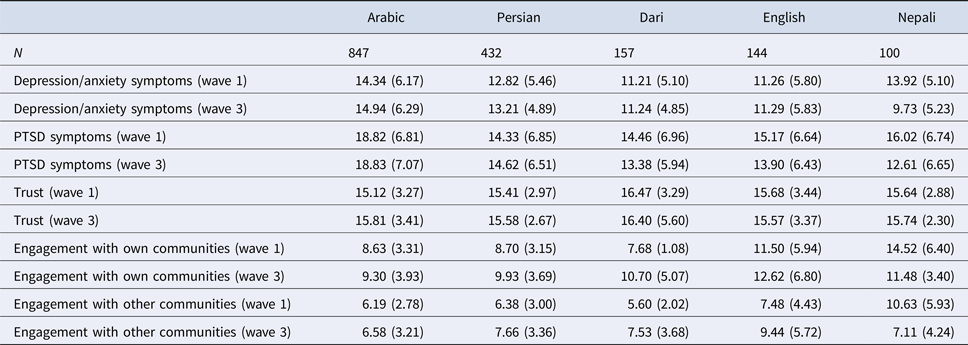
Participants comprised 1894 refugees including 888 (46.9%) females, with a mean age of 36.21 years [standard deviation (s.d.) = 14.20]. Languages in which participants completed the survey included Arabic (n = 847, 44.7%), Persian (n = 432, 22.8%), Dari (n = 157, 8.3%), English (n = 144, 7.6%), Nepali (n = 100, 5.3%), Hazagari (n = 60, 3.2%), Burmese (n = 56, 3.0%) and other (including Chin Haka, Pashto, Tamil and Swahili, n = 78, 4.1%). The majority of participants had arrived in Australia via an offshore settlement pathway (n = 1647, 87.0%), with the remainder applying for refugee status after entering Australia (n = 247, 13.0%). Of these participants, 170 individuals (9.0%) had spent time in immigration detention centres.
Multilevel path analysis
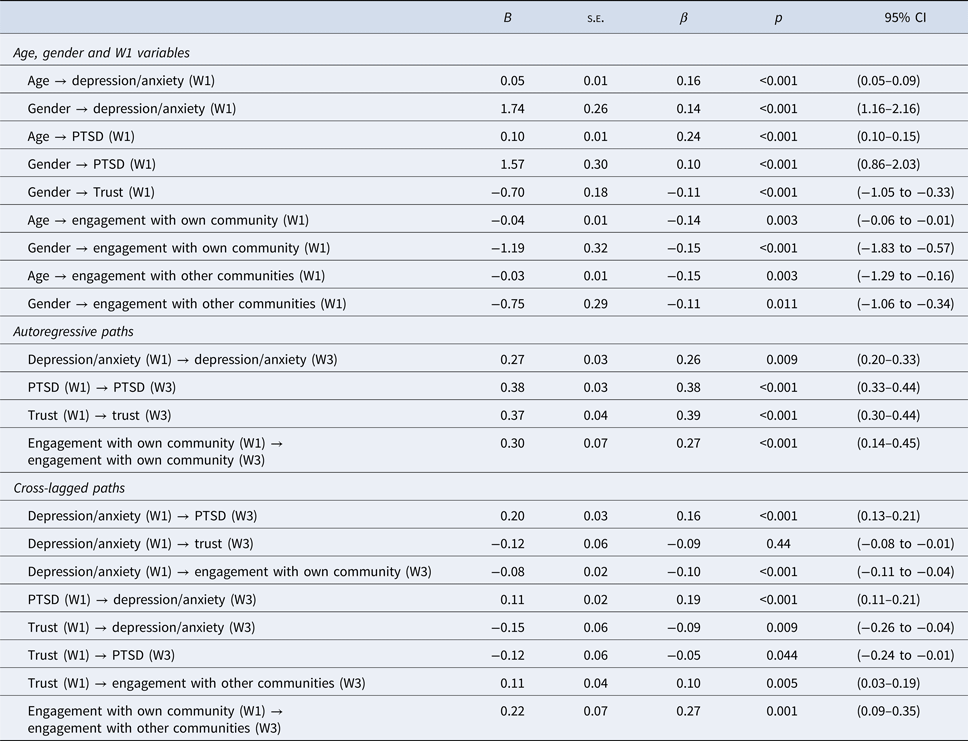
To ensure all potentially relevant paths were investigated, the full hypothesized model presented in Supplementary Figure S1 was initially tested. Means, standard deviations and correlations between study variables are presented in Table 1, with means and standard deviations according to language group being presented in Table 2. This initial model showed mediocre fit: (CFI = 0.96, TLI = 0.86, RMSEA = 0.05, SRMR = 0.05). Removal of paths where β < 0.15 yielded improved model fit: CFI = 0.96, TLI = 0.91, RMSEA = 0.04, SRMR = 0.05. Variance explained in each of the variables at the within level is presented in Table 4. The final model is displayed in Fig. 1. For clarity of presentation, coefficients of covariances and correlations of residuals of variables measured at the same time-point are presented in Supplementary Table S2. All other significant paths between variables are presented in Table 3. Only pathways specified in the hypotheses are discussed in the text of the article.
Means, standard deviations and correlations of PTSD symptoms, depression and anxiety symptoms, trust, engagement with own community and engagement with other communities

s.d., standard deviation; PTSD, post-traumatic stress disorder. ***p < 0.001, **p < 0.01, *p < 0.05.
Means, standard deviations and correlations of PTSD symptoms, depression and anxiety symptoms, trust, engagement with own community and engagement with other communities according to language group
Associations between PTEs Trust, Psychological Symptoms and Community Engagement at Wave 1 and Wave 3
Variance explained in the final model for PTSD symptoms, depression and anxiety symptoms, trust, engagement with own community and engagement with other communities
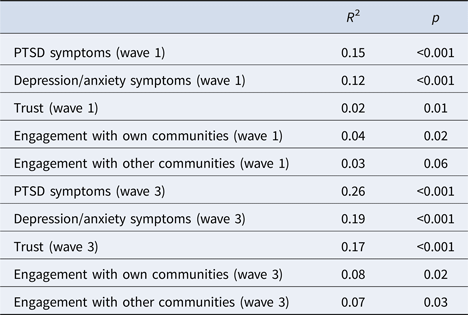
PTSD, post-traumatic stress disorder.
In relation to hypothesis 1, higher levels of trust at wave 1 significantly predicted greater engagement with other communities at wave 3 (beta = 0.10, p = 0.004), but not engagement with one's own community. In relation to hypothesis 2, depression/anxiety symptoms at wave 1 significantly predicted lower engagement with one's own community at wave 3 (beta = −0.10, p = 0.025), but not engagement with other communities. PTSD symptoms at wave 1 did not significantly predict community engagement at wave 3. In relation to hypothesis 3, lower levels of interpersonal trust at wave 1 were associated with greater depression/anxiety symptoms at wave 3 (beta = −0.08, p = 0.003), and greater PTSD symptoms at wave 3 (beta = −0.05, p = 0.045). In relation to hypothesis 4, higher levels of depression/anxiety symptoms at wave 1 were associated with lower levels of interpersonal trust at wave 3 (beta = −0.09, p = 0.007).
Discussion
The current study represented the first longitudinal investigation with a nationally representative sample of the association between trust, psychological symptoms and community engagement in resettled refugees. The primary finding from this study was that there were differential predictors of refugees’ engagement with their own and other communities 3 years after resettlement in Australia. Specifically, we found that refugees with higher depression/anxiety symptoms 3–6 months after obtaining a permanent humanitarian visa in Australia reported lower levels of engagement with their own communities 3 years later. These findings are consistent with previous, cross-sectional studies that found that social support from refugees’ own communities is associated with lower depression symptoms (Birman and Tran, Reference Birman and Tran2008; Oppedal and Idsoe, Reference Oppedal and Idsoe2015), as well as a longitudinal study indicating that depression symptoms upon arrival in the USA were associated with lower social support 12 months later amongst Iraqi refugees (LeMaster et al., Reference Lemaster, Broadbridge, Lumley, Arnetz, Arfken, Fetters, Jamil, Pole and Arnetz2018). These findings were not consistent, however, with cross-sectional studies that found that support from refugees’ own communities was associated with higher depression symptoms (Gellis, Reference Gellis2003) or that integration within refugees’ own communities was unrelated to depression symptoms (Teodorescu et al., Reference Teodorescu, Heir, Hauff, Wentzel-Larsen and Lien2012). Differences between the findings from our study and previous studies may be attributed to study methodology: our study was the first to investigate these relationships longitudinally, controlling for the impact of relevant variables at both time-points, and with a culturally diverse, nationally representative sample.
Our finding that depression/anxiety symptoms were associated with lower engagement with refugees’ own communities may be partly attributed to the social withdrawal demonstrated by depressed individuals. This is consistent with both the diagnostic criteria for major depression, where social withdrawal is centrally featured (American Psychiatric Association, 2013), and previous empirical research that has linked high levels of depression symptoms to impaired social functioning (Hirschfeld et al., Reference Hirschfeld, Montgomery, Keller, Kasper, Schatzberg, Moller, Heasly, Baldwin, Humble, Versiani, Montenegro and Bourgeois2000). These findings indicate that depression symptoms may impair the individual's capacity to engage in activities with their own community several years after resettlement. Research evidence and theory in the field of depression highlight the maintaining role of the inactivity cycle in depression (MacPhillamy and Lewinsohn, Reference Macphillamy and Lewinsohn1974; Jacobson et al., Reference Jacobson, Martell and Dimidjian2001). It is possible that refugees who experience high levels of depression are less likely to engage with potential sources of support in their cultural, ethnic or religious community, and that this social withdrawal then contributes to a greater severity of depression over time. While more waves of data are required to definitively answer this question, these results highlight the potential importance of treating symptoms of depression in refugees soon after resettlement to foster positive social relationships amongst existing refugee communities.
Contrary to our hypotheses, we found that PTSD symptoms at wave 1 were not related to community engagement at wave 3. This is in contrast to previous cross-sectional studies conducted with refugees which found that social support from one's own community was related to lower PTSD symptoms (Schweitzer et al., Reference Schweitzer, Melville, Steel and Lacharez2006) and a reduced likelihood of a PTSD diagnosis (Teodorescu et al., Reference Teodorescu, Heir, Hauff, Wentzel-Larsen and Lien2012). Our findings are consistent, however, with a longitudinal study conducted with Iraqi refugees, which indicated that PTSD symptoms upon arrival in the USA were not associated with social support 12 months later (LeMaster et al., Reference Lemaster, Broadbridge, Lumley, Arnetz, Arfken, Fetters, Jamil, Pole and Arnetz2018). A strength of the design of the current study is that it enabled us to consider PTSD and depression/anxiety symptoms concurrently, and to control for prior community engagement. It may be the case that depression/anxiety symptoms drive engagement with refugees’ own communities (as indicated by the current results), but that overlap between these constructs and PTSD may have conflated these relationships in previous studies where these constructs have been examined in separate models. It is also important to note that the scale used to measure PTSD symptoms in this study indexes probable PTSD and omits items pertaining to withdrawal, detachment and numbing. These symptoms may be important in contributing to engagement, and further research should be conducted implementing a more comprehensive measure of PTSD to elucidate these associations. Nevertheless, our findings provide preliminary evidence that depression has a stronger impact on refugees’ engagement with their own communities than PTSD.
Another key finding from this study was that lower levels of interpersonal trust predicted reduced engagement with other communities 3 years after resettlement in Australia. In contrast, psychological symptoms were not associated with refugees’ level of engagement with other communities. This finding was in contrast to previous studies that have found that PTSD and depression symptoms were related to lower integration of refugees in the host community in Norway (Teodorescu et al., Reference Teodorescu, Heir, Hauff, Wentzel-Larsen and Lien2012), and that depression symptoms were associated with greater social support from the host community in Vietnamese immigrants that had resettled in the USA (Gellis, Reference Gellis2003). To our knowledge, no previous study has quantitatively investigated trust as an independent predictor of engagement with the host community; this may account for the discrepancies between the current study and previous findings. For example, one possibility is that measuring trust separately from PTSD and depression allows for the elucidation of relationships that were previously subsumed under broader constructs pertaining to psychopathology. Our finding, that lower trust predicted lower subsequent engagement is consistent with research conducted with non-refugees indicating an association between generalized trust and positive social outcomes (Bouchiullon, Reference Bouchiullon2014; Intravia et al., Reference Intravia, Stewart, Warren and Wolff2016; Churchill and Mishra, Reference Churchill and Mishra2017). Our results suggest that, while depression/anxiety symptoms are associated with lower engagement with one's own community, it is the psychological process of trust, rather than psychopathology, which is key when considering the likelihood that a refugee will engage with other communities. It is also notable that lower interpersonal trust was associated with greater subsequent depression/anxiety and PTSD symptoms in this study, which is consistent with previous research highlighting the important mechanistic role of trust in the mental health of non-refugees (Folkman et al., Reference Folkman, Lazarus, Gruen and Delongis1986; Schneider et al., Reference Schneider, Konijn, Righetti and Rusbult2011; Kim et al., Reference Kim, Chung, Perry, Kawachi and Subramanian2012; Carpiano and Fitterer, Reference Carpiano and Fitterer2014; Cox et al., Reference Cox, Resnick and Kilpatrick2014; Ehsan and De Silva, Reference Ehsan and De Silva2015). Taken together, these findings point to a potentially important intervention target for services supporting refugees after resettlement in a new country; targeting generalized trust may lead to greater subsequent engagement with other communities, and improved mental health while building a life in the resettlement country.
The current study had a number of limitations. First, the majority of participants who took part in this study held humanitarian visas and thus were permanently resettled in Australia. Accordingly, these findings may not be generalizable to asylum-seekers or individuals with temporary visa statuses residing in host countries. Second, the measures used to investigate PTSD symptoms, depression/anxiety symptoms, trust and community engagement were relatively brief and did not allow for, for example, the investigation of disaggregated PTSD symptom clusters. In addition, community engagement items enquired about both individual and family engagement, without separating these two constructs. Future research could examine these associations using a more comprehensive battery of measures, including other variables of interest such as pre-migration social networks and personality factors. Third, we did not have data on exposure to pre-migration PTEs and post-migration living difficulties that was collected prior to wave 1, and thus were not able to test the potential mediating role of psychological symptoms and interpersonal trust in the association between refugee experiences and community engagement. In addition, wave 1 data were collected several months after participants had arrived in Australia. It might be expected that there are substantial changes in mental health and engagement in these initial months, which were not captured in the current study. It is also important to note that Arabic-speakers made up nearly half the sample, suggesting that the model reported in this paper may have been particularly influenced by the experiences of this sub-group. Finally, while subject to rigorous translation procedures, measures used in this study were not specifically adapted to each cultural group.
Results from this study have potentially important implications for psychological intervention and policy. First, the finding that symptoms of depression are predictive of refugees’ engagement with their own communities several years later highlight the importance of psychological interventions for depression for this group. To date, the majority of randomized controlled trials testing psychological treatments for refugees have focused on interventions designed to reduce PTSD. These results suggest, however, that symptoms of depression may be especially important in contributing to the development and maintenance of social networks, and thus it is critical that gold-standard treatments for depression that are adapted for refugees be developed and tested. Second, the finding that interpersonal trust is important in influencing subsequent engagement with the host community has important policy implications. These findings suggest that services tasked with supporting refugees may benefit from focusing programmes aimed at building connections between resettled refugees and the host community to facilitate trust and provide a platform for social engagement in the long term.
This study represents, to our knowledge, the first investigation of the longitudinal association between trust, psychological symptoms and community engagement in a nationally representative sample of refugees. Findings revealed distinctive pathways to engagement with refugees’ own communities and other communities in the host country. Results underscored the important role of depression and anxiety symptoms in influencing engagement with refugees’ own communities 3 years later. Further, results indicated that reduced interpersonal trust was predictive of poorer engagement with other communities in the host country 3 years after resettlement. These findings highlight the importance of depression/anxiety symptoms and interpersonal trust as intervention and policy targets to promote adaptation and positive social outcomes amongst resettled refugees.
Supplementary material
The supplementary material for this article can be found at https://doi.org/10.1017/S0033291718002246



