

Introduction
Demand analysis has multiple applications in agribusiness analyses, including studies of consumer preferences status and dynamics and evaluations of agricultural and food policies. Applied demand analyses require three main components: a demand model derived from economic theory (e.g., The Almost Ideal Demand System); a dataset to estimate the model parameters, and an econometric estimation procedure. While an extensive literature has developed and compared demand models (e.g., Piggott Reference Piggott2003; Lewbel and Pendakur Reference Lewbel and Pendakur2009) and estimation procedures (e.g., Shonkwiler and Yen Reference Shonkwiler and Yen1999), analyses of the effects of data on demand estimation results are very limited.
One data issue prevalent when using consumers’ expenditures data obtained from household surveys is the problem of hidden consumption, which gives rise to measurement error problems (e.g., Gibson and Kim Reference Gibson and Kim2011). This problem arises if households consume food stocks purchased in the market or food they produce themselves and do not report expenditures on the goods during the survey period (e.g., commonly one or two weeks). The problem of hidden consumption is likely more prevalent in developing countries where more households rely on their production. Why are measurement errors such as those due to hidden consumption relevant for food demand estimation (i.e., estimation of income and price elasticities)? The source of the problem is measurement error. Although classical measurement errors in the dependent variable do not cause any bias, measurement errors correlated with the values of the dependent variable or other explanatory variables can induce biases in demand parameters and elasticity estimates (e.g., Gibson Reference Gibson2002; Gibson et al. Reference Gibson, Beegle, De Weerdt and Friedman2015).
Some “solutions” to the hidden data problem proposed in the literature involve estimating special econometric procedures that attempt to consider hidden consumption but require additional assumptions (e.g., Deaton and Irish Reference Deaton and Irish1984). Another solution to the hidden consumption problem is the collection of actual consumption data in addition to, or as a substitute for, expenditure/acquired consumption data. This study’s main contribution is that it estimates and compares demand estimation results using consumption and expenditure data collected from the same individuals.Footnote 1 The data for this study was derived from the 2010–2015 Nigerian General Household Survey Panel component of the annual General Household Survey (GHS).
The analyses focus only on demand for meat products: poultry, beef, other meats, and unprocessed and processed seafood; thus, another contribution is evaluating meat demand in Nigeria. Meat consumption is increasing globally, and sub-Saharan African countries are set to reap considerable economic and health benefits from meat production and consumption (The Economist 2019). Nigeria is the most populous country in Africa and one of the largest meat consumers on the continent. Beef is the dominant and traditional meat in Nigeria (Solomon and Nazemzadeh Reference Solomon and Nazemzadeh2004). With a population of approximately 190 million, Nigerians consume more than 360,000 tons of beef per year, and this amount is expected to increase to about 1.3 million tons by 2050 (Premium Times Nigeria 2014; Saumell Reference Saumell2014). Comparing meat consumption with other food commodities shows that meat, fish, and other animal products are the fourth food group consumed most commonly in Nigerian households (88.9%) (National Bureau of Statistics and Living Standards Measurement Study 2016).
Few previous studies have investigated household food demand in Nigeria, and even fewer have examined meat consumption and expenditure patterns. For example, Ezedinma, Kormawa, and Chianu (Reference Ezedinma, Kormawa and Chianu2006) studied 960 households’ consumption and expenditures on beef, chicken, mutton, fish, eggs, and milk in three major cities in Nigeria – Abuja, Kaduna, and Kano. Studies such as this are no longer current, were limited to only several states and regions, and used cross-sectional data. In contrast, we evaluate meat demand in Nigeria using a nationally representative panel data sample. Demand analysis results (e.g., price and income elasticities) are helpful for the design and analysis of public policies and business strategies.
Literature review
The literature review is divided into two sections. First, we review the literature that has analyzed differences in estimates obtained using consumption versus expenditure (sometimes called acquisition surveys), while the second section reviews the literature on estimating meat demand in Nigeria.
A body of literature has already evaluated differences in estimates of nutritional status (caloric counts) using consumption versus acquisition surveys (e.g., Smith, Alderman, and Aduayom Reference Smith, Alderman and Aduayom2006; Kaara and Ramasawmy Reference Kaara and Ramasawmy2008; Conforti, Grunberger, and Troubat Reference Conforti, Grünberger and Troubat2017; Fiedler and Mwangi Reference Fiedler and Mwangi2016). These studies focus on population-wide estimates of per capita Dietary Energy Consumption (DEC) and their variability. For example, Conforti, Grunberger, and Troubat (Reference Conforti, Grünberger and Troubat2017) compared DEC estimates from consumption versus acquisition data using 81 surveys from several countries. They found that acquisition surveys provided higher estimates (about 10% larger) of DEC than consumption surveys with larger relative variability (i.e., coefficient of variation).
In addition to population-wide estimates of nutritional status, food and policy analyses also require other information generated from survey data, such as income and price elasticities of demand (Piggot and Marsh Reference Piggott and Marsh2011). Two groups of studies evaluate the effect of measurement error on demand estimation. The first group compares demand estimates obtained using alternative survey designs (Gibson Reference Gibson2002; Gibson et al. Reference Gibson, Beegle, De Weerdt and Friedman2015; Gibson and Kim Reference Gibson and Kim2007). The second group evaluates econometric procedures that account for the measurement error problem due to infrequency of purchases (e.g., Deaton and Irish Reference Deaton and Irish1984; Kay, Keen, and Morris Reference Kay, Keen and Morris1984; Keen Reference Keen1986; Blundell and Meghir Reference Blundell and Meghir1987).
For example, within the first group of studies, Gibson et al. (Reference Gibson, Beegle, De Weerdt and Friedman2015) assess the effect of alternative consumption survey designs on Engel demand estimation. The survey designs differed by the method of data capturing (diary versus recall), respondent type (individual versus household reporting), recall period (7-day, 14-day, and one month), and the number of items in the recall list. The authors find that the survey design affects estimated income effects, but not household size effects. However, studies comparing estimates obtained from consumption and expenditure data from the same household are less common (e.g., Gibson and Kim Reference Gibson and Kim2011).
Gibson and Kim (Reference Gibson and Kim2011) measured hidden consumption from food stocks using an unusual household survey that observed food stock changes during the survey period directly. Based upon the bounded recall methodology used in the 1996 Papua New Guinea Household Survey, the authors identified hidden consumption. During the first interview, enumerators weighed household food stocks of 18 major foods and reweighed the stocks of the same foods again in the second interview. This made it possible to measure starting and ending food stocks and observe their hidden consumption. They compared parameter estimates obtained directly from measuring consumption of pre-existing food stocks (i.e., hidden consumption) with estimates obtained from infrequent purchase models (IPM) – models that attempt to account for this hidden consumption indirectly through statistical analysis.Footnote 2 The authors found that IPMs produced substantially biased income elasticity estimates. In contrast to their approach to testing the IPMs’ performance using acquired consumption relative to a model that uses measured consumption, we compare demand estimation results using the same econometric procedure but two different data sources: consumption and expenditures. Moreover, Gibson and Kim’s (Reference Gibson and Kim2011) study focused only on estimating income elasticity, while we studied both price and expenditure elasticities.
A related literature has evaluated data quality and focused on assessing the quality of Homescan datasets versus Consumer Expenditure Survey datasets (e.g., Boonsaeng and Carpio Reference Boonsaeng and Carpio2019; Sweitzer et al. Reference Sweitzer, Brown, Karns, Muth, Siegel and Zhen2017). In contrast, our study evaluates the demand estimation results using consumption and expenditure data from the same survey.
The literature review identified only a small number of studies that examined Nigerian consumers’ demand for meat products; however, none used nationally representative country samples, and most used small cross-sectional samples (Igwe and Onyekwere Reference Igwe and Onyekwere2007; Alimi Reference Alimi2013; Ogundari Reference Ogundari2012). The most extensive study was conducted using data from urban households in 3 cities in Northern Nigeria (Ezedinma, Kormawa, and Chianu Reference Ezedinma, Kormawa and Chianu2006), in which 960 households’ expenditures on beef, mutton/goat, chicken, fish, eggs, and milk were evaluated. The authors found that urban households’ meat demand increased as their income increased. More affluent households consumed primarily chicken, eggs, and milk, while poorer households consumed more fish and beef. Beef was found to be the meat product mainly consumed by 77% of households, followed by fish (68%), milk (47%), eggs (45%), chicken (22%), and mutton and goat meat (15%). Own-price elasticities indicated that beef, mutton/goat, chicken, fish, eggs, and milk are highly elastic, and all the meat products were found to be complements. Relative to the previous studies that have analyzed meat demand in Nigeria, this study uses a sample of households observed during several periods and drawn from around the country.
Data
The data for this study was derived from the 2010–2015 Nigerian General Household Survey Panel component of the annual GHS. The survey began in 2010/2011 and resulted from a partnership between local and international organizations (National Bureau of Statistics 2016).
Sample and sampling design
The GHS-Panel consists of three waves: Wave 1 (conducted in 2010/2011)Footnote 3 , Wave 2 (in 2012/2013)Footnote 4 , and Wave 3 (in 2014/2015)Footnote 5 . The sample was designed to represent the national and zonal levels. The selection of households in the sample was made in two stages. The first involved the selection of Enumeration Areas (EAs). These EAs were the Primary Sampling Units and were selected based on a probability proportional to the size and the total number of households in each EA. A total of 500 EAs were chosen in this first stage. The second stage involved the random selection of ten households per EA, and 5,000 households were selected in total (National Bureau of Statistics 2016). Only 4,407 of these households completed all of the interviews across the three waves and because of incorrect or missing information, the final sample used in this study was 3,013 households.
Food consumption and expenditures
During each wave, households in the sample were visited twice – a post-planting visit (between September and November) and a post-harvest visit (between February and April). Information on household food consumption and expenditures was obtained in each visit. The household member most familiar with the household’s food purchases and consumption was asked the following questionsFootnote 6 : (1) How much in total did your household consume of this [ITEM] in the past 7 days? (2) How much did the household purchase of this [ITEM] during the past 7 days? (3) How much did your household spend on this [ITEM] during the past 7 days? The analysis was based on these consumption and expenditure data.
We considered only five meat products in this study because there were no conversion factors for the remaining food groups in the data. The meat groups (and subgroups) considered are poultry (chicken and other poultry), beef (beef), other meats (mutton, pork, goat, and others- excluding poultry), unprocessed seafood (fresh-fish, frozen-fish, and other unprocessed seafood), and processed seafood (smoked-fish, dried fish, and canned fish).
Fisher ideal price index
We constructed Fisher-price indices for the demand model using a three-step procedure: (1) the unit values for each meat product are determined; (2) quality-corrected prices are specified; and (3) price indices for the commodity groups are constructed.
Following Boonsaeng and Carpio (Reference Boonsaeng and Carpio2019), the first step involved defining a single unit value $\left(UV_{si}^h\right)$
Footnote
7
for each product
$\left(UV_{si}^h\right)$
Footnote
7
for each product $s$
in meat group
$s$
in meat group $i$
(Table 1) for household
$i$
(Table 1) for household $h$
as:
$h$
as:
 $$UV_{si}^h = {{{m_s}} \over {{q_s}}}$$
in which ${m_s}$
is the household’s expenditure on meat product
${m_s}$
is the household’s expenditure on meat product $s$
in the past 7 days (household’s response to question (3) above), and
$s$
in the past 7 days (household’s response to question (3) above), and ${q_s}$
is the amount of meat product
${q_s}$
is the amount of meat product $s$
purchased (household’s response to question (2) above).
$s$
purchased (household’s response to question (2) above).
Average budget shares, amounts and expenditures, and percentage differences (consumption data–expenditures data)

a St. Dev. denotes standard deviation.
b 1 US$ = 415.42 ₦, March 19, 2022.
c [(average share consumption data – average share expenditures data)/average share expenditures data]*100%.
d [(average quantity consumption data – average quantity expenditures data)/average quantity expenditures data]*100%.
f [average expenditure consumption data – average expenditure expenditures data)/average expenditure expenditures data]*100%.
g p-values reported correspond to paired t-tests of the variables.
In the second step, we specified quality-corrected pricesFootnote 8 to derive an approximation of prices that accounted for quality and measurement error (Alfonzo and Peterson Reference Alfonzo and Peterson2006). The first stage of this quality correction involved an OLS regression of the form:
 $$lnUV_{si}^h = {\alpha _s} + {\beta _s}lnx + \mathop \sum \limits_{l = 1}^L {\theta _{sl}}{z_l} + \mathop \sum \limits_{c = 1}^{C - 1} {\varphi _{sc}}{D_c} + {\varepsilon _{s\;}}$$
in which $UV_{si}^h$
is the unit value of product
$UV_{si}^h$
is the unit value of product $s$
in meat group
$s$
in meat group $i$
for household
$i$
for household $h$
,
$h$
, $x$
is household income,
$x$
is household income, $z$
corresponds to household characteristics,
$z$
corresponds to household characteristics, ${D_c},\;c = 1,\;.\;.\;.,\;C,\;\;$
are dummy variables that indicate the enumeration areas (clusters) to which the household belongs,
${D_c},\;c = 1,\;.\;.\;.,\;C,\;\;$
are dummy variables that indicate the enumeration areas (clusters) to which the household belongs, ${\alpha _s}$
,
${\alpha _s}$
, ${\beta _s}$
,
${\beta _s}$
, ${\theta _{sl}}$
, and
${\theta _{sl}}$
, and ${\varphi _{sc}}\;$
are parameters, and
${\varphi _{sc}}\;$
are parameters, and ${\varepsilon _s}$
is a vector of error terms. Note that these individual regressions only use data from individuals with observed purchases. In the second stage, we define an approximation of the price as:
${\varepsilon _s}$
is a vector of error terms. Note that these individual regressions only use data from individuals with observed purchases. In the second stage, we define an approximation of the price as:
 $$ln{\hat P_{si}} = {\hat \alpha _s} + {\rm{\;}}\mathop \sum \limits_{c = 1}^{C - 1} {\hat \varphi _{sc}}{D_{c\;}}$$
in which ${\hat P_{si}}$
is the approximated price of meat product
${\hat P_{si}}$
is the approximated price of meat product $s\;$
in meat group
$s\;$
in meat group $i$
, and
$i$
, and ${\hat \alpha _s}$
and
${\hat \alpha _s}$
and ${\hat \varphi _s}$
are OLS estimates of
${\hat \varphi _s}$
are OLS estimates of ${\alpha _s}$
and
${\alpha _s}$
and ${\varphi _s}$
, respectively. This price approximation is independent of household-specific choices, reflects region, time, and seasonal variations, and allows us to estimate price-quantity relations accurately. Moreover, this procedure enables the estimation of prices for households, even if they do not report expenditures (Alfonzo and Peterson Reference Alfonzo and Peterson2006; Meghir and Robin Reference Meghir and Robin1992; Zhen et al. Reference Zhen, Wohlgenant, Karns and Kaufman2011).
${\varphi _s}$
, respectively. This price approximation is independent of household-specific choices, reflects region, time, and seasonal variations, and allows us to estimate price-quantity relations accurately. Moreover, this procedure enables the estimation of prices for households, even if they do not report expenditures (Alfonzo and Peterson Reference Alfonzo and Peterson2006; Meghir and Robin Reference Meghir and Robin1992; Zhen et al. Reference Zhen, Wohlgenant, Karns and Kaufman2011).
In the third step, we combined quality-corrected meat product prices, ${\hat P_{si}}$
, into an index that represented the meat group price. The Fisher-price index for household
${\hat P_{si}}$
, into an index that represented the meat group price. The Fisher-price index for household $h$
’s meat group
$h$
’s meat group $i$
is:
$i$
is:
 $$p_i^h = \sqrt {P_{Pi}^hP_{Li}^h\;} $$
in which $P_{Pi}^h = {{\sum {\hat P_{si}^h} q_{si}^h} \over {\sum {{\hat{ \bar P}_{si}}} q_{si}^h}}$
;
$P_{Pi}^h = {{\sum {\hat P_{si}^h} q_{si}^h} \over {\sum {{\hat{ \bar P}_{si}}} q_{si}^h}}$
; $P_{Li}^h = {{\sum \hat P_{si}^h{q_{si}}} \over {\sum {\hat{\bar P}_{si}}{q_{si}}}}$
,
$P_{Li}^h = {{\sum \hat P_{si}^h{q_{si}}} \over {\sum {\hat{\bar P}_{si}}{q_{si}}}}$
, $P_{Pi}^h$
and
$P_{Pi}^h$
and $P_{Li}^h$
are household
$P_{Li}^h$
are household $h$
’s Paasche and Laspeyres indices for meat group
$h$
’s Paasche and Laspeyres indices for meat group $i$
, respectively,
$i$
, respectively, $q_{si}^h$
is the amount of product
$q_{si}^h$
is the amount of product $s$
in meat group
$s$
in meat group $i$
that household
$i$
that household $h$
purchased,
$h$
purchased, ${q_{si}}$
is the average amount of product
${q_{si}}$
is the average amount of product $s$
in meat group
$s$
in meat group $i$
,
$i$
, $\hat p_{si}^h$
is the price of product
$\hat p_{si}^h$
is the price of product $s$
in meat group
$s$
in meat group $i$
for household
$i$
for household $h$
, and
$h$
, and ${\widehat {\bar P}_{si}}$
is the average price of product
${\widehat {\bar P}_{si}}$
is the average price of product $s$
in meat group
$s$
in meat group $i$
. The Fisher-price index obtained using expenditure data was also used for the demand models of consumption data. Thus, we assume that the value per unit (i.e., price) of households’ consumption is the same as the price of goods purchased. In other words, the price of food consumed is the same as its estimated market price.
$i$
. The Fisher-price index obtained using expenditure data was also used for the demand models of consumption data. Thus, we assume that the value per unit (i.e., price) of households’ consumption is the same as the price of goods purchased. In other words, the price of food consumed is the same as its estimated market price.
Model for unbalanced panel demand system
The demand model used in this study is the Exact Affine Stone Index (EASI) demand system (Lewbel and Pendakur Reference Lewbel and Pendakur2009). We use the EASI model’s approximate linear version, which has been shown to provide similar results (Lewbel and Pendakur Reference Lewbel and Pendakur2009). Further, we use a more parsimonious version of the original EASI model that excludes the interaction terms between prices and demographic characteristics and between prices and actual total expenditures. The EASI budget share demand for commodity $i$
for household
$i$
for household $h$
can be modified as:
$h$
can be modified as:
 $$w_i^h = \mathop \sum \nolimits_{r = 0}^4 {b_{ri}}{\left( {ln{x^h}} \right)^r} + \mathop \sum \nolimits_{j = 1} {A_{ji}}lnp_j^h + \mathop \sum \nolimits_{k = 1} {C_{ki}}z_k^h + {\varepsilon _{it}},\; i = 1,2, \ldots, n$$
in which $w_i^h$
is the budget share allocated to the
$w_i^h$
is the budget share allocated to the $ih$
meat group for household
$ih$
meat group for household $h$
(i.e.
$h$
(i.e.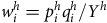 $w_i^h = p_i^hq_i^h/{Y^h}$
),
$w_i^h = p_i^hq_i^h/{Y^h}$
), ${Y^h}$
is the total expenditures in meats for household h,
${Y^h}$
is the total expenditures in meats for household h, $p_j^h$
is the Fisher-price index of meat group
$p_j^h$
is the Fisher-price index of meat group $j$
for household
$j$
for household $h$
, and
$h$
, and $ln{x^h}\;$
is the natural log of household
$ln{x^h}\;$
is the natural log of household $h$
’s actual total expenditures on all meats (
$h$
’s actual total expenditures on all meats ( $ln{x^h} = ln{Y^h} - \mathop \sum \nolimits_{i = 1}^n lnp_i^h{\bar w_i},\;$
in which
$ln{x^h} = ln{Y^h} - \mathop \sum \nolimits_{i = 1}^n lnp_i^h{\bar w_i},\;$
in which ${\bar w_i}$
is all households’ average budget (Lewbel and Pendakur Reference Lewbel and Pendakur2009)). The explanatory variables in this model include K different demographic characteristics
${\bar w_i}$
is all households’ average budget (Lewbel and Pendakur Reference Lewbel and Pendakur2009)). The explanatory variables in this model include K different demographic characteristics $\left( {{z_k}'s} \right)$
. The estimated model used a fourth order polynomial in
$\left( {{z_k}'s} \right)$
. The estimated model used a fourth order polynomial in $\;ln{x^h}$
(see Lewbel and Pendakur Reference Lewbel and Pendakur2009).
$\;ln{x^h}$
(see Lewbel and Pendakur Reference Lewbel and Pendakur2009).
For the demand system that used expenditure data, the $w_i^h$
variable was constructed using the reported expenditures on each meat group (
$w_i^h$
variable was constructed using the reported expenditures on each meat group ( $E_i^h = p_i^hq_i^h$
). For the demand system that used consumption data, the
$E_i^h = p_i^hq_i^h$
). For the demand system that used consumption data, the $w_i^h$
variable was constructed using the
$w_i^h$
variable was constructed using the $q_i^h$
reported and the price predicted in Equation (3). Compensated, uncompensated, and expenditure elasticities were calculated using the parameters in Equation (5) (Lewbel and Pendakur Reference Lewbel and Pendakur2009; Boonsaeng and Carpio Reference Boonsaeng and Carpio2020). The demand system was estimated by imposing homogeneity and symmetry restrictions. The last equation is dropped from the demand system, and its parameters are recovered using the adding-up constraint (Lewbel and Pendakur Reference Lewbel and Pendakur2009). Whereas there are several recommended approaches to account for censoring issues in demand estimation (e.g., Shonkwiler and Yen Reference Shonkwiler and Yen1999; Meyerhoefer, Ranney, and Sahn Reference Meyerhoefer, Ranney and Sahn2005; McCullough et al. Reference McCullough, Zhen, Shin, Lu and Arsenault2022), we used simple linear regression models, as the main objective of this study is to estimate prices and income effects on average demand (Deaton Reference Deaton1997, p. 92).
$q_i^h$
reported and the price predicted in Equation (3). Compensated, uncompensated, and expenditure elasticities were calculated using the parameters in Equation (5) (Lewbel and Pendakur Reference Lewbel and Pendakur2009; Boonsaeng and Carpio Reference Boonsaeng and Carpio2020). The demand system was estimated by imposing homogeneity and symmetry restrictions. The last equation is dropped from the demand system, and its parameters are recovered using the adding-up constraint (Lewbel and Pendakur Reference Lewbel and Pendakur2009). Whereas there are several recommended approaches to account for censoring issues in demand estimation (e.g., Shonkwiler and Yen Reference Shonkwiler and Yen1999; Meyerhoefer, Ranney, and Sahn Reference Meyerhoefer, Ranney and Sahn2005; McCullough et al. Reference McCullough, Zhen, Shin, Lu and Arsenault2022), we used simple linear regression models, as the main objective of this study is to estimate prices and income effects on average demand (Deaton Reference Deaton1997, p. 92).
The Wooldridge-Chamberlain-Mundlak approach (Wooldridge Reference Wooldridge2019) to estimate fixed effects models in unbalanced panel data is used for econometric estimation. The fixed effects estimator is chosen since it is robust to potential endogeneity due to the correlation between explanatory variables and unobserved time-invariant factors (Wooldridge Reference Wooldridge2002). Following this approach, the fixed effects demand system can be computed as the original demand system with the covariates’ time averages added as additional explanatory variables. Hence, the econometric model for the EASI demand system in Equation (5) for meat group $i\;$
for household
$i\;$
for household $h$
and time period
$h$
and time period $t$
is as follows:
$t$
is as follows:
 $$\eqalign{ & w_{it}^h = \sum\nolimits_{r = 0}^4 {{b_{ri}}} {\left( {lnx_t^h} \right)^r} + \sum\nolimits_{j = 1} {{A_{ji}}} lnp_{jt}^h + \sum\nolimits_{k = 1} {{C_{ki}}} z_{kt}^h + \sum\nolimits_{r = 0}^4 {{f_{ri}}} {\left( {\overline {lnx} _t^h} \right)^r} \cr & \quad \quad + \sum\nolimits_{j = 1} {{B_{ji}}} \overline {lnp} _{jt}^h + {\varepsilon _{it}} \cr} $$
 $$\hskip-71pti = 1,2, \ldots, n, t = 1,2, \ldots, {\rm{\;}}T, {\rm and}\; h = 1,2,{\rm{\;}} \ldots, {\rm{\;}}H$$
in which $n$
is the total number of meat groups,
$n$
is the total number of meat groups, $H$
is the total number of households, and
$H$
is the total number of households, and $T$
is the total number of time periods. The
$T$
is the total number of time periods. The $\overline {lnx} _t^h$
and
$\overline {lnx} _t^h$
and $\overline {lnp} _{jt}^h$
are additional explanatory variables, in which
$\overline {lnp} _{jt}^h$
are additional explanatory variables, in which $\overline {lnx} _t^h = T_h^{ - 1}\mathop \sum \nolimits_{t = 1}^{{T_h}} lnx_t^h\;$
and
$\overline {lnx} _t^h = T_h^{ - 1}\mathop \sum \nolimits_{t = 1}^{{T_h}} lnx_t^h\;$
and $\overline {lnp} _{jt}^h = T_h^{ - 1}\mathop \sum \nolimits_{t = 1}^{{T_h}} lnp_{jt}^h$
.
$\overline {lnp} _{jt}^h = T_h^{ - 1}\mathop \sum \nolimits_{t = 1}^{{T_h}} lnp_{jt}^h$
. ${T_h}$
is the number of times that household
${T_h}$
is the number of times that household $h$
is observed in the unbalanced panel data,
$h$
is observed in the unbalanced panel data, $\overline {lnx} _t^h$
is the average of the natural log of actual total expenditures on
$\overline {lnx} _t^h$
is the average of the natural log of actual total expenditures on $n$
goods for household
$n$
goods for household $h$
, and
$h$
, and $\overline {lnp} _{jt}^h$
is the average price of meat group
$\overline {lnp} _{jt}^h$
is the average price of meat group $j$
for household
$j$
for household $h.$
The model does not include average values of the
$h.$
The model does not include average values of the $z_{kt}^h$
, as there is little or no variability over time (see Table 2). Income and all expenditure values (including unit values) were deflated using the Nigerian composite consumer price index reported by the National Bureau of Statistics (Reference McCullough, Zhen, Shin, Lu and Arsenault2022).
$z_{kt}^h$
, as there is little or no variability over time (see Table 2). Income and all expenditure values (including unit values) were deflated using the Nigerian composite consumer price index reported by the National Bureau of Statistics (Reference McCullough, Zhen, Shin, Lu and Arsenault2022).
Household composition variables and demographic characteristics

a This value corresponds to the median household income, as income has a highly skewed distribution. Mean household income was ₦225,648.20 (1 US$ = 415.42 ₦, March 19, 2022).
An additional problem with the demand system estimation of Equation (6) is the potential endogeneity of total expenditures. To account for this problem, we used Blundell and Robin’s (Reference Blundell and Robin2000) control function approach. The procedure involves two steps. The first step requires the estimation of a linear regression model with $lnx_t^h$
as the dependent variable, and as explanatory variables, all the other explanatory variables included in the share models
$lnx_t^h$
as the dependent variable, and as explanatory variables, all the other explanatory variables included in the share models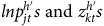 $lnp_{jt}^{h'}s\;{\rm and} \;z_{kt}^{h'}s$
as well as the natural log of household income, its square, cube, and fourth power (these serve as instruments). Similar to the budget share models, model estimation used the Wooldridge-Chamberlain-Mundlak approach, with the average values of explanatory variables across time for each household included as controls. In the second step, the predicted errors of the first-step regression model are used as an explanatory variable in Equation (6) to account for endogeneity Blundell and Robin (2000).
$lnp_{jt}^{h'}s\;{\rm and} \;z_{kt}^{h'}s$
as well as the natural log of household income, its square, cube, and fourth power (these serve as instruments). Similar to the budget share models, model estimation used the Wooldridge-Chamberlain-Mundlak approach, with the average values of explanatory variables across time for each household included as controls. In the second step, the predicted errors of the first-step regression model are used as an explanatory variable in Equation (6) to account for endogeneity Blundell and Robin (2000).
Comparison of elasticities between consumption and expenditure data
In addition to the comparison of the magnitudes of the elasticities obtained using consumption and expenditure data, the null hypothesis of no differences between these elasticities was tested using a two-sample T2 statistic (Gupta et al., Reference Gupta, Chintagunta, Kaul and Wittink1996):
 $${T^2} = {{{N_1}{N_2}} \over {\left( {{N_1} + {N_2}} \right)}}\left( {{{\hat E}_1} - {{\hat E}_2}} \right){\hat W^{ - 1}}{\left( {{{\hat E}_1} - {{\hat E}_2}} \right)^\prime },$$
in which $\hat W$
is the pooled covariance matrix obtained from the two covariance matrices,
$\hat W$
is the pooled covariance matrix obtained from the two covariance matrices, ${N_1}$
and
${N_1}$
and ${N_2}$
are the number of observations, and
${N_2}$
are the number of observations, and ${\hat E_1}$
and
${\hat E_1}$
and ${\hat E_2}$
are the vectors of estimated elasticities of Models 1 and 2, respectively. The test has an F distribution, with degrees of freedom
${\hat E_2}$
are the vectors of estimated elasticities of Models 1 and 2, respectively. The test has an F distribution, with degrees of freedom $p$
and
$p$
and ${N_1} + {N_2} - p - 1$
:
${N_1} + {N_2} - p - 1$
:
 $$F = {{{N_1} + {N_2} - p - 1} \over {\left( {{N_1} + {N_2} - 2} \right)p}}{T^2}$$
in which $p$
is the size of the elasticity vectors
$p$
is the size of the elasticity vectors $\left( {{{\hat E}_1}\;{\rm{and}}\;{{\hat E}_2}} \right)$
.
$\left( {{{\hat E}_1}\;{\rm{and}}\;{{\hat E}_2}} \right)$
.
Results and discussion
Summary statistics
Table 1 presents the budget shares, amounts consumed, and expenditures obtained from consumption and purchase data over a 7-day period. Poultry had the lowest share and accounted for less than 7% of total household meat expenditures, on average. Unprocessed seafood and beef had the largest budget shares and accounted for approximately 30% of total household meat expenditures. In general, the budget shares estimated from consumption data were very similar to those estimated from purchase data. The largest difference in budget shares was poultry, and the difference was 48.78%. The last three columns in Table 1 show the relative average difference (in %) in shares, expenditures, and quantities calculated using consumption and purchased data (see Appendix 1 for censoring levels across datasets).
The meat groups’ ranking in descending order of consumption and purchase amounts was the same: unprocessed seafood, beef, processed seafood, other meats, and poultry. However, consumption amounts were in every case larger than purchase amounts (22.23% greater, on average), thus, providing evidence of the hidden consumption problem. The differences in quantities were all statistically significant (α<0.05). The largest difference was for poultry (53.70%), meat more likely to derive from households’ own production.
Table 1 also shows households’ average weekly meat expenditures. Overall, average expenditures calculated using consumption data were also consistently higher (31.33%, on average) than the corresponding purchase data values, again providing some evidence of hidden consumption. Four of the five differences in expenditure values were also statistically significant (α<0.05). The largest difference in expenditure values also corresponded to poultry. The average weekly household expenditures on poultry estimated using consumption data were ₦188.58, while average expenditures using the purchase data were ₦117.14 (1 US$ = ₦415.42, as of March 19, 2022; Trading Economics 2022). Thus, average expenditures on poultry using consumption data were 60.99% higher than the value obtained from purchase data.
The ranking of meats based on expenditures differs when consumption or purchase data are used (Table 1). When consumption data are used, unprocessed seafood ranked as the meat category with the highest expenses, while it is beef when purchase data are used. Moreover, there is a larger difference in expenditure values between these two meat categories (unprocessed seafood and beef) when purchase data (unprocessed seafood: ₦382.81, beef: ₦501.72) rather than when consumption data are used (unprocessed seafood: ₦532.93, beef: ₦522.41). These differences reflect dissimilarities in the “meat group” composition across data types because the unit values for meat subgroups were the same in both data types.
Table 2 presents the household composition variables and demographic characteristics. The average age of the household head in the data was 50 years and most households (88%) had a male head. Households in the sample had 7 members on average and a median income of ₦22,000 ($US 52.96). Concerning the level of education completed, 41% of household heads had completed primary education, 30% had a secondary education, and 19% had completed a college education. Religious education is commonplace in Nigeria and 8% of household heads in the sample had completed some form of religious education. Households in the sample were distributed across the six geographical regions of the country, but the majority are in the South-South (22.5%) while the North-West had the lowest percentage of households (11.7%).
Demand estimation results
Elasticities-purchases based model
We present two sets of estimation results for the EASI demand system. The first is based on purchase data (Table 3) while the second is based on consumption data (Table 4). Table 3 presents the results of the compensated and uncompensated price elasticities as well as the expenditure elasticities derived from the purchase data. The price elasticities show that the own-price elasticities were negative and statistically significant at the 5% level for all the meat groups. The top section of Table 3 shows that own-price Marshallian elasticities of poultry (−1.078), beef (−1.052), and processed seafood (−1.019) were greater than one in absolute value and therefore price-elastic. This indicates that a 1% increase in their prices results in a more than proportionate decline in their demand, ceteris paribus. Poultry was the most price-elastic among the meat products, with an elasticity of −1.078. Other meats (−0.875) and unprocessed seafood (−0.964) were found to be price inelastic.
Compensated and uncompensated price elasticities from the Exact Affine Stone Index demand panel estimates (based upon purchase data)

Note:
**Denotes significance at 5%, and
*denotes significance at 10%.
Compensated and uncompensated price elasticities from the Exact Affine Stone Index demand panel estimates (based upon consumption data)

Note: **Denotes significance at 5% and *denotes significance at 10%.
The lower section of Table 3 shows the compensated elasticities for the meat groups. Again, the own-price elasticities, shown on the main diagonal of the matrix, were all statistically significant at the 5% level. However, these own-price elasticities were less than one and smaller in magnitude (i.e., in absolute value) relative to own-price uncompensated elasticities. The compensated elasticities reflect changes in the demand for a meat product in response to price changes while they ignore the income effect.
The uncompensated cross-price elasticities in Table 3 were largely insignificant (at 10% or greater) and 10 of the 20 cross-pairs were negative. Moreover, all the uncompensated cross-price elasticities were inelastic, implying that a percent change in one good’s price index will result in a less than proportionate change in the other good’s quantity demanded, while other prices are held constant.
A larger number of compensated cross-price elasticities (13 out of 20) were significant (α = 0.10) and only two were negative (poultry-beef and poultry-other-meat), although both were insignificant. Cross-pairs with negative algebraic signs indicate complementarity (e.g., poultry and beef) while positively signed cross-pairs indicate substitutability (e.g., unprocessed seafood and poultry). The difference in values between uncompensated and compensated cross-price elasticities indicates that cross-price changes’ income effect in the compensated elasticities tends to dominate the (uncompensated) cross-price effects (i.e., compensated elasticity = uncompensated elasticity + share x expenditure elasticity).
The expenditure elasticitiesFootnote 9 for the meat groups were all positive and significant (α = 0.05), indicating that they were normal goods (Table 3). The expenditure elasticities for poultry (2.066), beef (1.108), and processed seafood (1.047) were greater than one and suggest that households consider them luxuries, while other meat (0.681) and unprocessed seafood (0.820) are considered necessities because they had elasticities less than one.
Elasticities–consumption-based model
Table 4 provides the results of the uncompensated, compensated, and expenditure elasticities derived from the consumption data. The own-price uncompensated elasticities in Table 4 were all negative and significant at the 5% level. In addition, poultry, beef, and processed seafood were price-elastic (greater than 1 in absolute value). Other meats and unprocessed seafood were price inelastic. The top section of Table 4 shows that poultry and beef were the most price-elastic, with an elasticity estimate of −1.035 and −1.036, respectively. With respect to compensated own-price elasticity estimates, in terms of absolute value, they were smaller in magnitude than the corresponding own-price uncompensated elasticities.
Like the uncompensated cross-price elasticities obtained using purchase data, all cross-price elasticities using consumption data were inelastic and only one was significant (α = 0.10). The cross-price compensated elasticities were larger than their uncompensated counterparts in terms of absolute value, except for the poultry-beef and other-meats-unprocessed seafood cross-pairs. For these, the compensated cross-price elasticity of −0.113 and 0.002 are less (in absolute value) than their uncompensated cross-price elasticity of −0.200 and −0.092, respectively. Most compensated cross-price elasticities were statistically significant (α = 0.10) and indicated that meats are substitutes. Moreover, compensated cross-price elasticity values suggest that income effects are larger relative to uncompensated cross-price effects.
All meat groups’ expenditure elasticities were positive and significant at the 5 percent level (Table 4). Poultry (1.428), beef (1.070), and processed seafood (1.052) were identified as luxuries because their expenditure elasticities were greater than one, while other meats (0.856) and unprocessed seafood (0.862) were identified as necessities because their elasticities were less than one. Analogous to the results obtained from purchase data (Table 3), changes in expenditures affected the other meat group the least.
Comparison of elasticities: consumption versus purchase-based models
The results of the F-tests using the two-sample T2 statistic led to the null hypothesis of no difference between price elasticities and expenditure elasticities to be rejected (p<0.01) in the three tests conducted: one each for Marshallian, Hicksian, and expenditure elasticities. The direct comparison of own-price and expenditure elasticities obtained from consumption and purchase data is provided in Table 5. Although there is evidence of statistically significant differences, with few exceptions, none of the elasticity values differ from an economic perspective.
Panel demand system-percentage differences in Hicksian own-price, Marshallian own-price, and expenditure elasticities using data on purchases and consumption

Note: **Denotes significance at 5%.
The Hicksian own-price elasticities obtained from both purchase and consumption data were all significant and inelastic. The percentage difference ranged from −4.63% to 5.22%, with an average absolute difference of only 2.95%. Marshallian demand elasticities obtained from purchase and consumption also identified the same meats as inelastic or elastic/unitary elastic. Poultry, beef, and processed seafood were identified as price-elastic or unitary inelastic, and other meats and unprocessed seafood as price inelastic. The percentage difference ranged from −3.99% to 7.66% with an average absolute difference of 3.44%.
With respect to the differences between the expenditure elasticities, their magnitudes were similar except for poultry. The percentage differences ranged from −30.88% to 25.70%, with an absolute mean of 13.12%, while the percentage difference for poultry was 30.88%. Moreover, the same classification as luxury (poultry, beef, and processed foods) or normal goods (other meats and unprocessed seafood) based on expenditure elasticity values was obtained using consumption or expenditure data.
Further, we also compared the statistical significance of the cross-price elasticities obtained using both datasets. Using the purchase data, only one of twenty uncompensated price elasticities was significant (α = 0.10); one uncompensated elasticity was also significant using consumption data, but none was significant in both sets of results. Thirteen compensated cross elasticities were significant (α = 0.10) in the purchase data model and thirteen in the consumption data model, while twelve were significant in both models. All the significant elasticities had similar values and indicated that meat products were substitutes. Only the sign of one non-significant compensated cross-price elasticity (poultry–other meat) differed across consumption and purchased demand results.
The only previous study that has evaluated hidden consumption’s effect on elasticity estimation is Gibson and Kim (Reference Gibson and Kim2011). However, their study is not directly comparable to this study. They evaluated the use of econometric procedures that account for “hidden consumption,” i.e., the infrequency of purchase model (IPM). They found that the IPM model results in smaller income elasticities. In contrast, we use the same econometric procedures but evaluate them using different datasets. We do not find that the use of purchase or consumption data has a major influence on meat expenditure elasticities unless the differences in amounts consumed are substantial (more than 33%). Still, even in that case, we find no evidence that expenditure elasticities based on consumption data are significantly greater than those based on purchase data. In addition, price elasticities were very similar in both datasets. However, it is important to highlight the fact that consumption data is not necessarily “the gold standard” as it is also subject to measurement errors. Thus, elasticity estimates across datasets may be similar not because measurement errors in expenditure data are not severe but because the effects of measurement errors in both datasets are comparable.
How do this study’s elasticity results compare to previous studies? Ezedinma, Kormawa, and Chianu (Reference Ezedinma, Kormawa and Chianu2006) found elastic own-price elasticities for all types of meats. This study found that price elasticities were inelastic for other meat and unprocessed seafood, and those for poultry, beef, and processed seafood were equal. Ezedinma, Koramawa, and Chianu (Reference Ezedinma, Kormawa and Chianu2006) also reported that all meat products were complements, contrasting with a more complex pattern of substitutability/complementarity found in this study. With respect to expenditure elasticities, Ezedinma, Kormawa, and Chianu (Reference Ezedinma, Kormawa and Chianu2006) found that poultry and mutton/goat were elastic, while this study finds that poultry, beef, and processed seafood are expenditure elastic. However, as mentioned before, the differences may be attributable to the studies’ geographic coverage, the time the data were collected, and the methods used (e.g., demand system, group composition, etc.).
Summary and conclusions
This study estimates and compares meat demand estimation results using consumption and expenditure data obtained from a nationally representative sample from Nigeria. The comparison of elasticities estimated across both datasets did not reflect major differences in the results, which suggests that if the only objective of data collection is to estimate elasticity using a standard demand system framework, collection of both types of data may be unnecessary, even when the observation period is only 7 days, as was the case in the Nigerian survey used in this study. However, we need to be very careful about making general conclusions based on a particular study, and more research is needed to evaluate data quality characteristics’ effect on demand estimation results.
The estimation results reveal that expenditures on beef were the highest, while those on poultry were the lowest. Expenditure elasticities were positive for all the meat products, indicating that they were normal goods. The results derived from both the consumption and expenditure datasets indicated that poultry, beef, and processed seafood are luxuries, while other meat and unprocessed seafood are necessities. Among the luxury products, poultry was the most expenditure elastic. Among the meat products considered to be necessities, changes in total meat expenditures affected the other meat group the least. Own-price elasticities from both datasets indicate that poultry, beef, and processed seafood were price-elastic, and poultry had the greatest price elasticity.
Current population growth estimates suggest that Nigeria will become the third most populous country in the world, and its population will increase from approximately 191 million to 411 million by 2050. As the population increases, a strong growth in household demand for meat products is expected, particularly poultry products. Producers, industry stakeholders, and the government have a role to play in accelerating the production of meat products to meet the increased demand. Factors such as transformation from low-yielding to high-yielding breeds of animals, transportation and marketing infrastructures, pest and disease control, storage facilities, and trade strategies are important factors that need to be addressed urgently to ensure that there is a chance for domestic production growth to keep pace with the projected demand increase. Hence, demand estimation results provide important information for analyses of policies and strategies.
The study has several limitations. First, although the comparison between expenditure and consumption reflects some evidence of hidden consumption, consumption data are also subject to measurement errors since it is also self-reported in the surveys. More research is needed to quantify and compare the measurement error levels in both self-reported data types, for example, using modern technologies (e.g., scanner data, pictures of receipts or meals, etc.). Another limitation of this study is the use of a price index and a unit price generated using only household-level expenditure data. Future work should include the use of prices collected separately. Finally, our analyses only evaluate the effects of variables from both datasets on average demand. An extension of the study will consider evaluating the separate effects of explanatory variables (e.g., prices and income) on the probability of purchases and consumption and on the quantities purchased and consumed using censored panel demand system, and using models that account for the large percentage of zeros in some of the share equations (e.g., McCullough et al. Reference McCullough, Zhen, Shin, Lu and Arsenault2022; Meyerhoefer, Ranney, and Sahn Reference Meyerhoefer, Ranney and Sahn2005).Footnote 10, Footnote 11
Data availability statement
General Household Survey, Panel 2010–2011, Wave 1, Nigeria, 2010–2011 https://microdata.worldbank.org/index.php/catalog/1002
General Household Survey, Panel 2012–2013, Wave 2, Nigeria, 2012–2013 https://microdata.worldbank.org/index.php/catalog/1952
General Household Survey, Panel 2015–2016, Wave 3, Nigeria, 2015–2016 https://microdata.worldbank.org/index.php/catalog/2734
Acknowledgements
The findings and conclusions in this publication are those of the authors and should not be construed to represent any official World Bank or Nigerian Government determination or policy.
Author contribution
Olumide Aborisade and Carlos E. Carpio conceptualized the study question, partly sourced the data, and designed the research. Tullaya Boonsaeng partly sourced the data, processed and analyzed the data. Carlos E. Carpio and Olumide Aborisade reviewed the analyses, interpreted the results, and drafted the manuscript. Tullaya Boonsaeng and Carlos E. Carpio provided critical revision of the manuscript. All authors reviewed and approved the final version of the manuscript for publication.
Funding statement
This research received no specific grant from any funding agency, commercial, or not-for-profit sectors.
Competing interests
The authors declare that they have no competing interests. Ethical standards: This study is based on secondary data that is accessible to the public. This study does not reveal the identity of any person, establishment, or sampling unit not identified in the public use data files.
Appendix
Levels of censoring in meat groups’ budget shares


 Open access

