

1. Introduction
Focus on the topic of social justice within the law and its practice is complicated by the difficulties in arriving at a definition of social justice that is widely recognised as legally applicable (Novak, Reference Novak2000). Within the Western legal tradition, the basis of legal rights has since the Enlightenment been routed primarily within the freedom of the individual and equality before the law, though the twentieth century saw a new focus emerge on how far individual rights may be claimed by individuals from within disadvantaged groups. This has precipitated a shift in dialogue away from what might be termed a ‘black-letter’ approach to justice towards a justice that is fair both in procedural terms and increasingly in terms of outcome.
Within discussion of rights, Rawlsian theories of social justice based in fairness have long been dominant (Rawls, Reference Rawls1958), though are fair from ubiquitous. In American legal education, for example, an implicit aim towards reducing social inequalities can be detected, often related to inequalities between social groups on the basis of age, sex, race, etc. (Kennedy, Reference Kennedy2005, p.95). With respect to enhancing legal protections for social justice in developing countries, the World Bank extends such concerns about reducing inequalities to interpersonal life, including, for example, within families or relationships (World Bank, 2022). This reflects a situation of justice not merely in legal procedure but ultimately also in the substantive aspects to the laws of a legal system.
There is therefore a broad consensus that social justice involves moving beyond the concern with individual justice usually associated with Western legal systems and jurisprudence towards justice between groups of people across society and even in personal life. How far-reaching or extensive such aims are – and how far they ought to be constituted in law – is somewhat politically charged. The death of George Floyd in the United States and the subsequent global Black Lives Matter protest movement has shifted public discourse to viewing social justice within a politicised lens, both encouraging progress in some areas and discouraging it in others (Dunivin et al., Reference Dunivin, Yan, Ince and Rojas2021). Likewise, there may be concerns that a focus on substantive rule of law involves an overly subjective assessment of what laws are ‘just’, whilst those concerned with social justice may criticise proceduralists for being overly formalistic to the detriment of just outcomes.
The Hong Kong legal education system takes places across three main stages. Students with typically undertake a Bachelor of Law (LLB) undergraduate degree that cover foundational areas of law, followed by a Postgraduate Certificate in Law (PCLL) that emphasises more practical skills and knowledge required for legal practice. Students with degrees in other areas of study might instead complete a Juris Doctor (JD) degree as an alternative to the LLB. In order to practise as a barrister, a student must then attain a PCLL and then undertake two six-month pupillages, whilst solicitors must undertake a two-year traineeship after their PCLL. Thus, it is likely that a focus on social justice education may be more pronounced in the LLB rather than alternative pathways such as the JD or subsequent, more practically-minded stages of education, with perhaps the exception of more specialised graduate programmes (e.g., in Human Rights Law). Experience of social justice education in Hong Kong is thus not necessarily consistent given the heterogenous pathway towards qualification.
Within Hong Kong, a black-letter understanding of the way the law works reflects the continued reliance upon English law that seeks to protect individuals from harmful acts (Coyle, Reference Coyle2006; Fisher and Greenwood, Reference Fisher and Greenwood2007, p.25). It may be that such a paradigm is at odds with incorporating social justice as an aim for the law. At any rate, incorporating such an ethic requires professionals such as clerks, lawyers, paralegals, solicitors and barristers to be familiar with social justice as a concept as well as how it may be implemented through the law. A legal education focus on black-letter law – or that permits pathways that exclude education on social justice entirely – may be insufficiently equipped to this end. This concern drives this investigation into legal education in Hong Kong.
1.1. Aims and objectives
This study aims to uncover the status of social justice education in Hong Kong legal education at the university level and to understand its sufficiency for supporting the integration of a social justice paradigm into jurisprudence. This is carried out with a view to establishing what reforms may be undertaken to legal education in Hong Kong to better support the provision of social justice under the law in practice. In order to explore these questions, the study sets the objective of discovering and analysing what law students and legal professionals have to say about the state of higher education in Hong Kong with relation to incorporating social justice into the legal system. This is to be carried out through undertaking questionnaires and interviews with these stakeholders, which is then in turn subject both to quantitative and qualitative analysis respectively.
In order to guide the design of this study, several research questions have been created based on the above aims and objectives:
How do law students and legal professionals in Hong Kong conceptualise social justice and its ideal and actual role within jurisprudence?
In the experience of law students and legal professionals, how does legal education at the higher level in Hong Kong address social justice, if at all?
What reforms to legal education in Hong Kong ought to be considered in order to support the promotion of a social justice paradigm within applied jurisprudence?
1.2 Literature review
Law is built on a number of what may be termed ‘black-letter’ principles, and one of the fundamental principles on which legal systems such as that of Hong Kong are built is that all are presumed equal under the law (Mann, Reference Mann2012). Thus, the determination of a person’s legal rights or obligations depends upon what the law says about when and how those obligations are incurred and discharged, and not (usually) upon the personal characteristics of the parties themselves are. Social justice seems, in many ways, to be in tension with this, as it is a theory which emphasises the equality of outcome, rather than the strict legal equality which the law itself seeks to apply (UKRI, 2023). This is sometimes associated with debates as to whether equality of opportunity or equality of outcome ought to take precedence in matters of justice, with social justice associated more with the latter perspective according to contemporary literature. Determining therefore how, and if, the courts should seek to give effect to social justice principles, and how this might take place within an established framework of law, is a frequent subject of study within legal academia.
Across the literature, the role of social justice in the Hong Kong legal system frequently focuses on social justice legislation relating to social work in terms of the legal responsibilities of social work services to ensure social justice and to deliver service informed by that principle (Ngai, Reference Ngai2004, Reference Ngai2023). Much of the literature on justice in Hong Kong focuses on the conflicts between Chinese and Hong Kong systems and what this means for rule of law (Hagiwara, Reference Hagiwara2022). Some overviews of law and justice within Hong Kong observe that social justice does not play a significant role in its legal system, with the protection of individuals serving as the primary concern of the legal system in the state (Gaylord, Gittings, and Traver, Reference Gaylord, Gittings and Traver2009). The role of social justice within Hong Kong’s legal system is thus an understudied area of the literature.
The role of social justice in education in Hong Kong is a clearer subject of study across the literature. Studies at a higher education level typically focus on professional application of social justice education – for example, in social work or teaching (Chong, Davies, and Pao, 2020; Ng, Reference Ng2016) – or in terms of broader citizenship education (Ng and Yuen, Reference Ng, Yuen, Peterson, Hattam, Zembylas and Arthur2016). Social justice with relation to higher education often focuses on issues of accessibility, such as the financing of higher eduation in Hong Kong (Yuen, Lee, Lee, and Chan, Reference Yuen, Lee, Lee, Chan, Wu and Morgan2015). Research into the perspectives of higher-education level students in Hong Kong on social justice have focused on how nationality might impact attitudes (Yuen, Reference Yuen2018). There has been little research into social justice with law education in Hong despite a modest body of literature in its role in Chinese legal education (Phan, Reference Phan2005).
Relevant studies within the area include that of Marsh and Ramsden (Marsh and Ramsden, Reference Marsh and Ramsden2014), who explored a law module designed to foster civic engagement taught at the Chinese University of Hong Kong, discovering that those students who participated in the module were indeed embedded with a sense of social justice. However, this does not speak to the broader perspectives of students and faculties on social justice across legal education in Hong Kong generally. Another paper suggests that only students with prior public interest experience are able to maintain a sense of social responsibility in the long run (McConville, Reference McConville2009), implying that perhaps the effects of such modules are fleeting. This implies the need to study what law students’ perspectives on social justice are more generally, as well as understanding how these perspectives maintain into their professional careers. This presents a clear gap in the research literature that this study seeks to close.
2. Methodology
2.1 Research methods
Arriving at an appropriate set of research methods for research requires taking the practical demands of the research questions into account (Cresswell and Poth, Reference Cresswell and Poth2017). In the case of this study, the focus is on experience of both legal education and working within the legal system, necessitating a reliance upon data recording experiences, attitudes, and opinion with relation to education and jurisprudence in Hong Kong. How best to design research to this end must thus be guided by the demands of the study’s aim of evaluating these views.
Acquiring data regarding the experiences, attitudes, and opinions of various individuals associated with the legal profession appears to require using qualitative methods of data collection. Qualitative data is useful for establishing the experiences of individuals and inferring meaning from that data (DeCarlo, Cummings and Agnelli, Reference DeCarlo, Cummings and Agnelli2020). This is because they generate more detailed phenomenological data that qualitative methods of data capture (Carter and Little, Reference Carter and Little2007). By the same token, however, they are subject to some limitations, particularly with regards to the significant role that the researcher plays in interpretation, as well as issues regarding the generalisability of data gathered from the small datasets associated with qualitative studies (Cypress, Reference Cypress2017). As such, it often benefits qualitative analysis to be cross-referenced with quantitative methods for the purpose of triangulating results (Mertens and Hesse-Biber, Reference Mertens and Hesse-Biber2012).
For this reason, quantitative analysis of data is also used within this study. Quantitative analysis of larger sets of data can be used to observe statistical trends across data and to evaluate their significance according to clear rules for inference (Halperin and Heath, Reference Halperin and Heath2020). Correlations between various measures can also be sought after to the exclusion of variables, indicating what factors are most significant in determining statistical trends. Unlike with qualitative research, quantitative analysis is not subject to the same concerns about researcher bias and is likewise more useful for arriving at generalisable results (Polit and Beck, Reference Polit and Beck2010). Nevertheless, the focus on experiences, attitudes and opinions in this study means that quantitative analysis is still contingent upon qualitative methods, albeit towards producing data that is quantifiable.
2.2 Data collection
This study uses interviews as its basis for qualitative analysis and questionnaires as its basis for quantitative analysis. Interview data is useful because it allows for arriving at detailed information about participant perspectives (Bolderston, Reference Bolderston2012). They allow for a comparatively high level of detail in answers provided due to the naturalistic and conversational nature of interviews as a data collection method (Gill et al., Reference Gill, Stewart, Treasure and Chadwick2008). Furthermore, many participants are also more forthcoming as a consequence of rapport with researcher-interviewers (Marvasti, Reference Marvasti2004). However, a caveat is that social desirability bias can sometimes influence the content of responses that participants give (Bergen and Labonte, Reference Bergen and Labonte2019).
By way of comparison, surveys are ideal mean for generating data suitable for quantitative analysis (Jansen, Reference Jansen2010). They allow for shorter and more focused answers on specific questions to be collected, allowing for the easier reducibility of data (Bielick, Reference Bielick, Wyse, Selwyn, Smith and Suter2016). Additionally, surveys can be used to gather information from larger data sets than interviews given the relatively reduced demands upon the researcher when undertaking data collection (Abkla, Cekic and Koksal, Reference Abkla, Cekic and Koksal2013). Of course, such data may be limited to some degree also. Reducing data down for quantitative analysis can removes nuance from data and is likely unsuitable when explanatory research questions are being asked (Cahill-O’Callaghan and Mulcahy, Reference Cahill-O’Callaghan and Mulcahy2022). Therefore interviews and surveys can compliment each other as part of a mixed-methods approach to research.
Developing either data collection instrument centres around constructing interview and survey questions. Interview questions often benefit from being open-ended due to their allowing the participant more freedom to give an open and honest response (Clark, Foster and Bryman, Reference Clark, Foster and Bryman2019), as well as often prompting more detail in responses than closed questions (Allen, Reference Allen and Allen2017). Interviews also often benefit from taking a semi-structured approach to questioning insofar as this allows some freedom for the researcher to prompt for detail or elaboration whilst sticking to pre-set questions (Magaldi and Berler, Reference Magaldi, Berler, Zeigler-Hill and Shackelford2020).
With respect to survey questions, the end goal of producing data that may be statistically analysed means that using closed questions is preferable due to the removal of researcher input through processes such as coding. In the case of this study, scalar responses are generated in order so that strength of responses may be compared to look for correlations across the questionnaire data. This also removes the need for reducing data down for quantitative analysis given that responses are already given in an effectively quantifiable form (e.g., in scores from 1 to 5).
2.3 Sampling
Arriving at an appropriate sample size for either aspect to the research is essential. The relatively low commitment and researcher labour required for surveys means that large-n survey data may be more easily acquired. To participate in the questionnaire study, all participants had to be at least 18 years old, proficient in English, consent to the use of their data in the study, enrolled in a law programme, and in their second year of study or above. Incomplete questionnaires were also to be excluded from the study.
Advertisements were placed in social media groups for law students studying in Hong Kong and students completed a self-assessment form as to their suitability and then completed a short questionnaire. Through this process, 122 responses were collected, 23 of which excluded as the students did not meet the criteria for admission into the study. Students were also asked about their willingness to participate in interviews for the study and 12 students were selected, split evenly across the sexes. Unfortunately, two students subsequently dropped out, meaning that interviews were carried out with six male and four female law students in Hong Kong.
These student interviews were accompanied by further interviews with individuals involved in law across Hong Kong. Using purposive sampling, potentially participants were approached to participate in the study, with some 22 individuals in addition to the ten students agreeing to participate. In total, interviews were carried out with ten law students, ten solicitors, ten barristers, two judges, and a partner in a law firm. Of the professionals interviewed, eight worked for ‘Magic Circle’ law firms and 12 for local law firms. Participants were interviewed using audiovisual messaging software such as Skype and Teams and interviews were transcribed using digital software that was later manually corrected for errors.
2.4 Data analysis
Two approaches to data analysis were taken in this research. With regards to the qualitative data, a thematic approached to analysis was pursued, exploring the data for the themes prevalent across the interviews (Evans, Reference Evans2018). Thematic analysis has many benefits with relation to analysing interview data, as outlined by Nowell, et al.:
Thematic analysis provides a highly flexible approach that can be modified for the needs of many studies, providing a rich and detailed, yet complex account of data. […] Thematic analysis is a useful method for examining the perspectives of different research participants, highlighting similarities and differences, and generating unanticipated insights. (Nowell, Norris and White, Reference Nowell, Norris and White2017, p.2)
Subjecting the interview data to thematic analysis required coding and an inductive approach to coding was selected for use in this study (Joffe and Yardley, Reference Joffe, Yardley, Marks and Yardley2004). Inductive coding involves the researcher exploring the interview transcripts and attaching codes to chunks of data that represent the themes conveyed in that text (Boyatzis, Reference Boyatzis1998). Through these means, prevalent or emphatic themes raised across the interviews can be identified through data analysis (Gibson and Brown, Reference Gibson and Brown2009).
Thematic analysis is carried out in this study using Leximancer as a means for analysing interview data. Leximancer has been used in previous studies with relation to analysing professional knowledge. The programme uses algorithms to extract semantic and relational data form the text that are then aggregated into themes (Smith and Humphreys, Reference Smith and Humphreys2006). These are represented in concept maps that are ‘heat-mapped’ for their importance as well as other forms of output, such as ranked and co-occurring concepts (McKenna, Myers and Gardner, Reference McKenna, Myers and Gardner2015). This demonstrates in a visual way that terms are associated with concepts and allows for further exploration of these findings. In keeping with the inductive approach, this study took an unsupervised approach to using Leximancer, by which instead of the researcher constructing sets of key terms from their own exploration of the data prior to its submission to Leximancer, the programme’s algorithm was used to generate concepts entirely. This removed much of the potentially opportunity for researcher bias in qualitative data analysis.
With respect to data analysis, a descriptive approach was taken to demonstrate trends across the survey responses. IBM’s Statistical Package for the Social Sciences v29.0 (SPSS) was used to record the data then run statistical analysis of the data (Salcedo and McCormick, Reference Salcedo and McCormick2020). Categorical and scalar variables were entered and compared using various tests. For instance, Pearson’s product-moment correlation coefficient was used to identify linear relationships between two sets of numerical data, whilst the student’s t-test and ANOVA tests were also employed to compare groups (McCormick, Reference McCormick2015). Visual representations of these results may be evinced from the appropriate section of the results section below.
2.5 Ethical considerations
A number of ethical considerations were taken into account when designing this research. For one, it was composed in line with the British Educational Research Association’s Ethical Guidelines for Educational Research (BERA, 2018). This included taking into account factors such as informed consent when undertaking primary qualitative research (Sin, Reference Sin2005), ensuring that written consent to participate was obtained (Oliver, Reference Oliver2010). Participants were informed how their data would be stored and used and that they could withdraw from the study at any time. Furthermore, given the role of the researcher in undertaking and interpreting qualitative data, relevant factors such as the relative identities of researcher and participants were considered, taking a reflexive approach to both interview and thematic analysis (Bourke, Reference Bourke2014).
3. Results
3.1 Thematic analysis of interviews
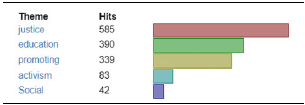
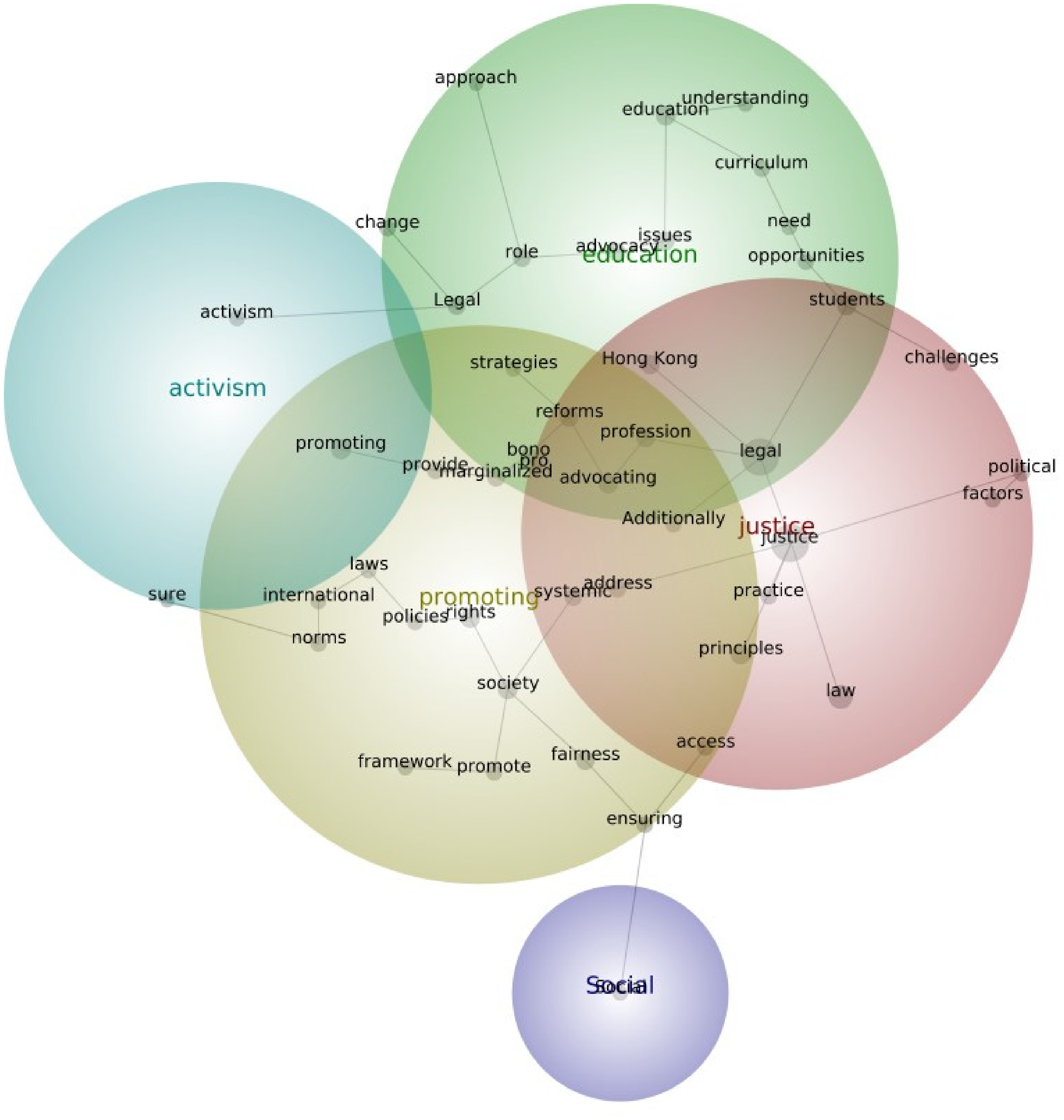
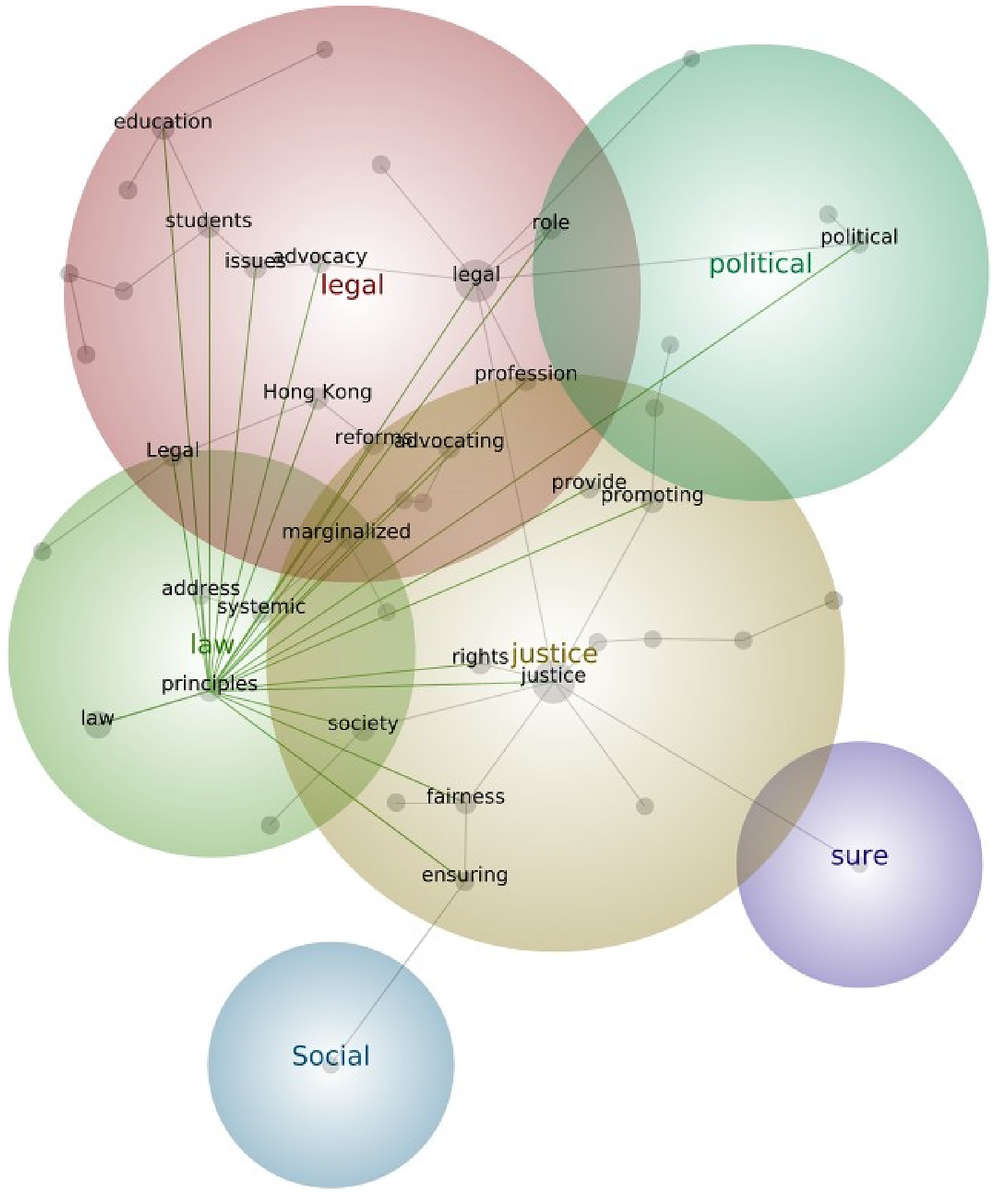
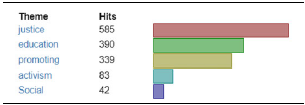
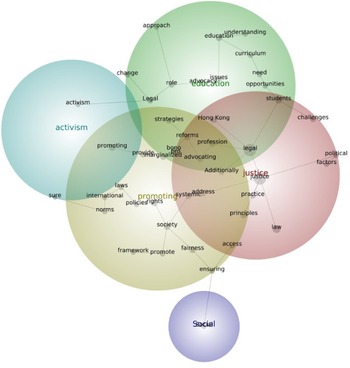
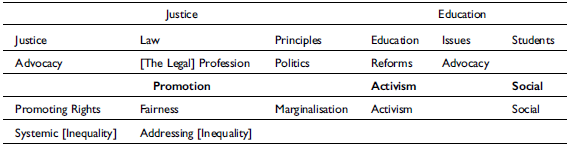
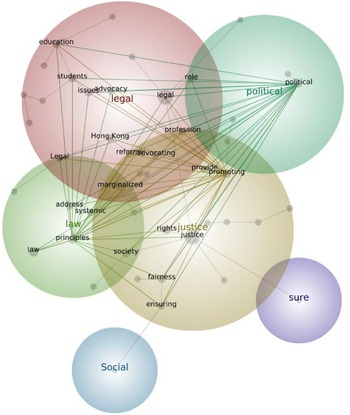
The interviews with 33 participants (10 law students, 10 solicitors, 10 barristers, 2 judges, and 1 law firm partner) were transcribed and uploaded to Leximancer, with thematic analysis of the interviews undertaken unsupervised through the programme. The programme produced five main themes based on the prevalence of those words and associated concepts, as revealed in Table 1. These themes were expanded upon into subthemes that fell within one or more of these thematic categories, as reflected in the Venn diagram produced in Leximancer (Fig. 1).
Table of major themes with frequency of conceptual frequency
Concept map of themes generated from interviews with legal professionals and students.
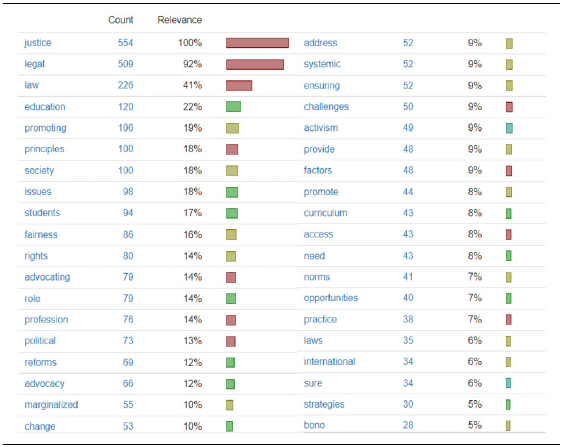
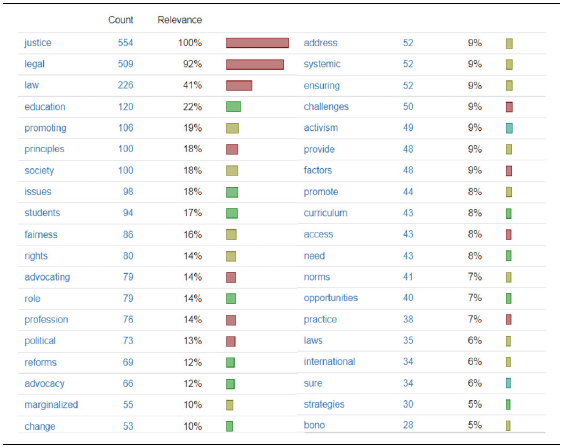
In addition to this, a table of word-like ranked concepts was produced, comprised of a number of concepts prior to their sorting into thematic categories (Table 2). Words related to the topic such as ‘justice’, ‘legal’, ‘law’ and ‘educating’ were frequent, but words also such as ‘promoting’, ‘principles’, ‘issues’, ‘fairness’, ‘advocating’, etc. that give some indication as to the content of responses were also prevalent. Words that indicate the groups respondents spoke about such as ‘students’ and ‘marginalised’ were also mentioned, as were the indications as to the ‘issues’ and ‘challenges’ in words such as ‘systemic’.
Ranked concepts derived from Leximancer analysis of interviews with legal students and professionals
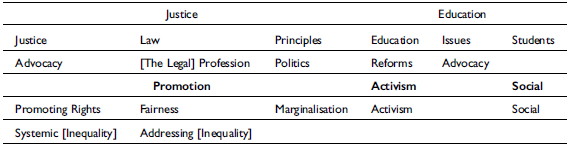
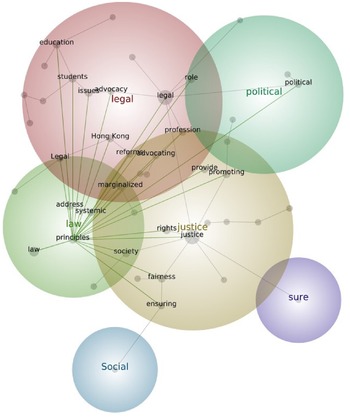
Using a medium detail level for analysis, key concepts could be identified across each theme. These are presented in Table 3 and form the structure to the following discussion of the five individual themes. In addition to this, the ‘concept pathway’ feature of Leximancer was used to inform the connections between these concepts (Fig. 2). This was used to theorise the most likely relationship chains between concepts, indicating something approaching correlations between concepts. Some notable instances of these are discussed below.
Thematic categories and constituent concepts derived from thematic analysis
Pathway of ‘principle’ to related concepts.
3.2 Justice
The participants across various legal professions, including law students, broadly acknowledge the importance of social justice within jurisprudence, highlighting its significant in terms of ensuring fairness, equalities and human rights. Definitions and views on social justice were not monolithic, with some struggling to conceptualise social justice in group terms and instead focusing on achieving societal justice through individual rights, and a minority rejecting social justice in favour either of individual rights or applying the law as it is written. For instance, one barrister remarked ‘my job is to apply the law as it’s written, not to go around trying to save the world’, indicating a ‘black-letter’ approach to the law. Others struggled to identify their professional role as involving activism, or expressing ambivalent attitudes towards: ‘Ah, yes, I’ve heard of legal activism… certainly wouldn’t mind getting involved in some form of legal activism myself’.
The theme of ‘law’ was associated with other concepts such as ‘legal’, ‘ensuring’, ‘challenges’, ‘access’, ‘rights’, and ‘opportunities’, all of which had a <40 per cent likelihood for association. In relating law to justice, ‘rule of law’ was a common connection: ‘Social justice and the rule of law? They’re like two sides of the same coin, aren’t they?’; ‘Social justice and rule of law are like oil and water’. In terms of the challenges identified with law, one barrister argued that ‘legal professionals must remain committed to promoting social justice with the confines of their professional roles’, indicating that promoting social justice might serve as a barrier for some to their professional role.
Exploring the pathways of ‘principles’, the concept was related to other concepts such as ‘fairness’, ‘practice’, and the ‘curriculum’ (Fig. 2). Pathway text analysis if ‘principles’ in relation to ‘fairness’, for example, this was used in some cases to uphold the connections between social justice and rule of law: ‘While some may view social justice as antithetical to the rule of law, I believe that they are mutually reinforcing principles that uphold the value of fairness, equality, and justice’. Interesting, concepts such as ‘equity’ are mentioned less often that concepts such as ‘fairness’, indicating a Rawlsian paradigm for justice as fairness.
The concept of ‘political’ was most strongly related to the word ‘factors’, though also to words such as ‘practice’, ‘strategies’ and ‘approach’. For instance, some discussed how political factors demanded development strategies for the promotion of social justice: ‘Navigating institutional barriers, overcoming resistance from conservative forces, and addressing power imbalances are just a few examples that come to mind’. In the same vein, it was also closely related to ‘advocacy’, such expressing the need to ‘engage in dialogue and advocacy across different cultural and political contexts’. Politics was therefore typically an obstacle to justice and advocacy rather than interpreting social justice or advocacy as ‘political’.
3.3 Education
The main themes associated with education – issues, students, reforms, and advocacy – may be explored in terms of their relationships with each other. For instance, exploring pathways between ‘education’ and ‘issues’ references discussion of ‘limited coverage of issues’ in Hong Kong institutions, whilst examining connections between ‘students’ and ‘issues’ highlights the importance of having students think critically according to one solicitor: ‘Students should be encouraged to think critically and consider different perspectives on these complex issues, rather than being spoon-fed a particular ideology.’
Connections between education and reforms indicate a variety of views on the kinds of reforms required:
We desperately need curriculum reforms that can explicitly incorporate social justice values across all areas of legal education, from foundational courses to electives. (Student 6)
…There is a need to enhance the coverage of social justice issues within the curriculum by integrating them more systematically across different courses. (Solicitor 1)
While I’m in support of innovation and improvement, we must proceed with caution when tinkering with established institutions. Any reforms to legal education ought to be carefully considered and rooted in evidence rather than sentiment. (Barrister 1)
We need reforms alright, but not the kind that further entrench some silly notion of social justice in legal training. (Barrister 7)
Whether education should be reformed, how it should be reformed, and to what end reforms might promote social justice was heavily disputed. When comparing ‘reforms’ with ‘advocacy’, some general policies were mentioned, such as pro bono legal services and public interest litigation, though it was unclear how educational reforms might be targeted towards achieving this. Participants were much clearer about how professional action might support social justice than discussing how educational reform might support or entail such action.
3.4 Promotion
The theme of ‘promotion’ combined the concepts ‘promote’ and ‘promoting’ also and was highly correlated with several terms. Its proximity to terms such as ‘international’ ‘strategies’, ‘provide’, ‘norms’ and ‘framework’ suggest that promotion of strategies aimed at making legal frameworks and norms more just – or to improve provision of various services – might be at the heart of these connections. As above, strategies for its promotion in education were unclear. One participant suggested that all that was necessary was to teach students to care about social justice generally, whilst another suggested universities must ‘foster a culture of respect and tolerance’, and another suggested ‘finding creative ways to challenge the status quo and amplify silenced voices’. However, specific strategies were not forthcoming and many participants when pressed simply admitted that they did not know how it could be promoted.
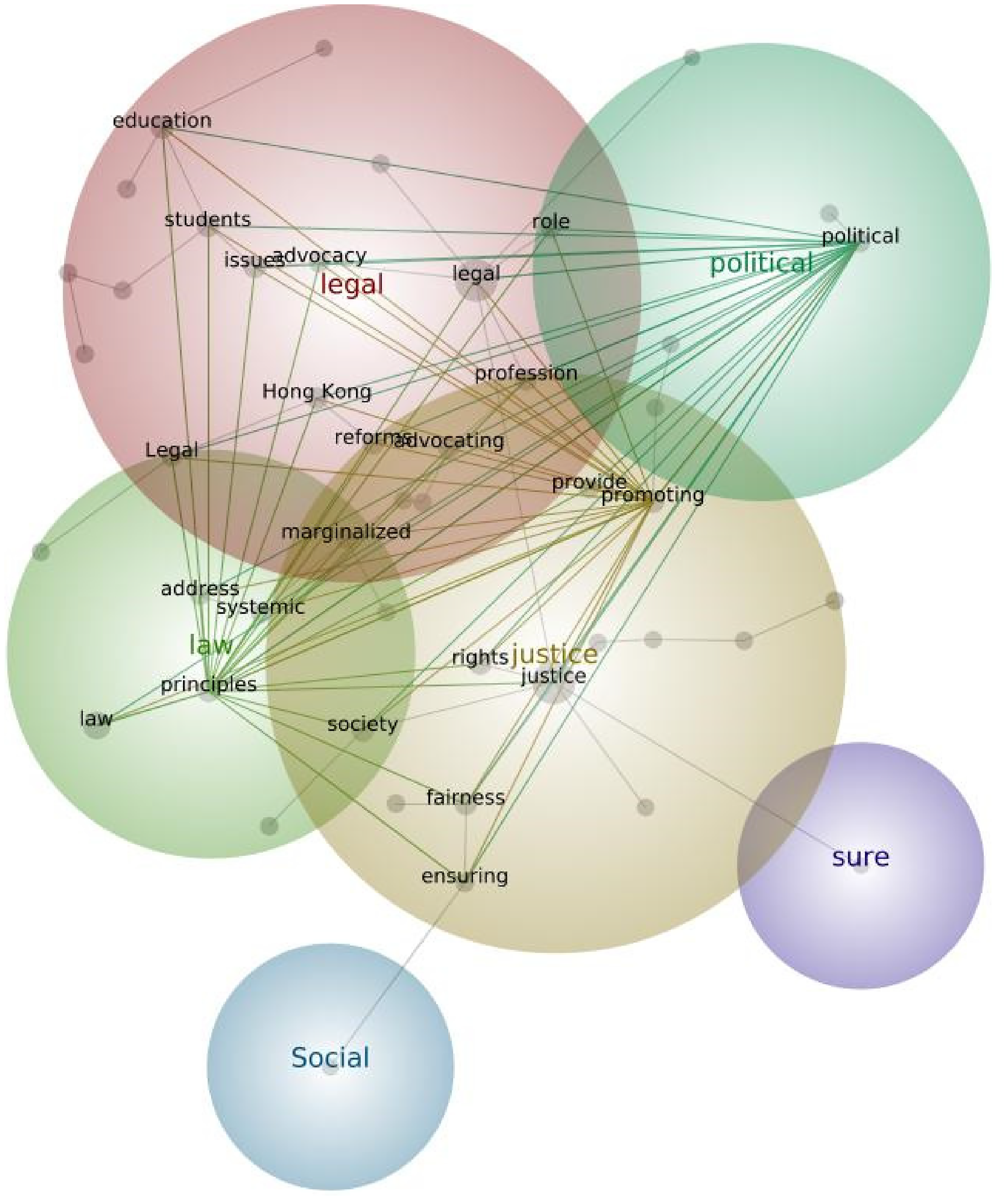
As Fig. 2 demonstrates, the connections between ‘promotion’ and ‘fairness’ refer largely to similar concepts rather than to themes that may be related to specific strategies or even outcomes. Some mentioned ‘legal activism’ as a means for promoting fairness: ‘we have a unique opportunity to leverage our expertise and the significant influence we hold in society to advocate for justice… [we can do] lots of things, like strategic litigation, public advocacy campaigns, community organising efforts…’ However, there was again little direct reference to the education system.
Connections between marginalisation and systemic inequality were much stronger across the data. For instance, with reference to the legal system in Hong Kong, one student said: ‘While there are instances where individuals receive fair treatment and access to justice and the like, there are also cases where systemic barriers prevent marginalised groups from receiving equitable treatment’. However, it is notable that of the ten examples of marginalisation linked to systemic issues, eight instance were raised by students rather than legal professionals. This might indicate that the generation currently within higher education are comparatively more aware of issues related to social justice.
3.5 Activism and social
The two categories of ‘activism’ and ‘social’ were placed alone with no constituent themes belonging solely to these categories. ‘Activism’ was strongly related to ‘policies’, ‘marginalised’ and ‘change’ but had only had four instances of connection to education across all 33 interviews. Few participants were able to give specific examples of their activism, with some arguing that it conflicted with their commitments to uphold the law. There was a minority view expressed that it was not the job of solicitors or barristers to attempt to change the law.
The concept social – often accompanying but coded as conceptually distinct from ‘justice’ – was isolated from relation to other concepts, indicating a lack of discussion as to what the ‘social’ element of social justice meant. This was rarely defined in terms of social groups or identities but rather the terms ‘for all individuals’ were frequently used together. The participants broadly did not engage with which specific groups social justice was intended to benefit or what echelons of society social justice activism might address. This fits with the broader trend of supporting social justice whilst saying very little about what the content of social justice is or what it might look like either in the curriculum or legal practice.
A distinction between conceptualisations of social justice and what this entailed for practice was acknowledged by some participants. For instance, one solicitor argued that social justice means different things to different individuals in the legal profession:
For example, some lawyers would think that the redistribution of resources would be important. So that’s why they become a lawyer versus ‘social justice’ in the sense that they want to do more pro bono free services for the poor to help them fight [for] their rights. (Solicitor 10)
This highlights the reality that social justice is not a monolithic concept nor practice within the context of the Hong Kong legal profession. It emphasises also a distinction between interpreting social justice as entailing activism to amend the substantive aspects to law (e.g., in encouraging legislation that allows for more redistribution of wealth) versus viewing justice in terms of accessing legal representation, assuming that the law is sufficient for entailing justice should an individual have recourse to sufficient resources. Whilst the latter behaviour may also be considered redistributive or ‘activism’ given that it may be used to assist individuals who are marginalised in a financial sense perhaps resultant from systemic inequalities, there is an apparent conceptual and practical distinction between providing free service and activism to amend the substantive content of law (Fig. 3).
Pathways between ‘promoting’ and related concepts.
3.6 Quantitative analysis of questionnaires
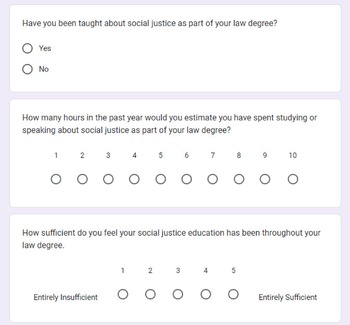
Questionnaires were filled in correctly by some 99 students on law degrees in Hong Kong, all of whom had at least one prior year of study on that degree. Participants were asked to complete a questionnaire during which closed and scalar questions were posed to them (Fig. 4). Their responses to these questions were collected and analysed in SPSS using various quantitative analysis methods to establish statistical correlations and significance across the data.
Example of questions posed on student questionnaire.
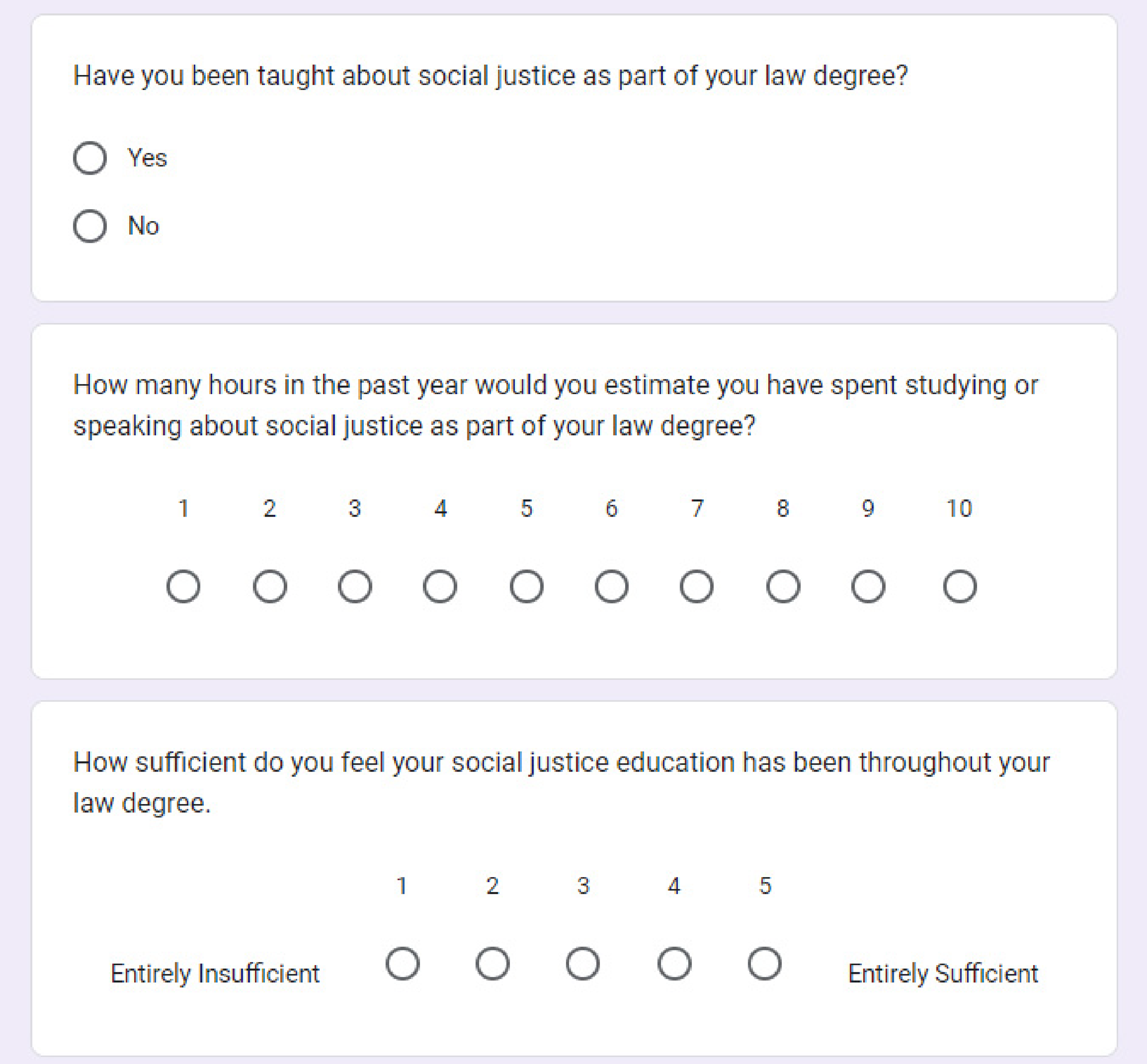
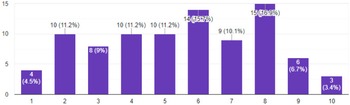
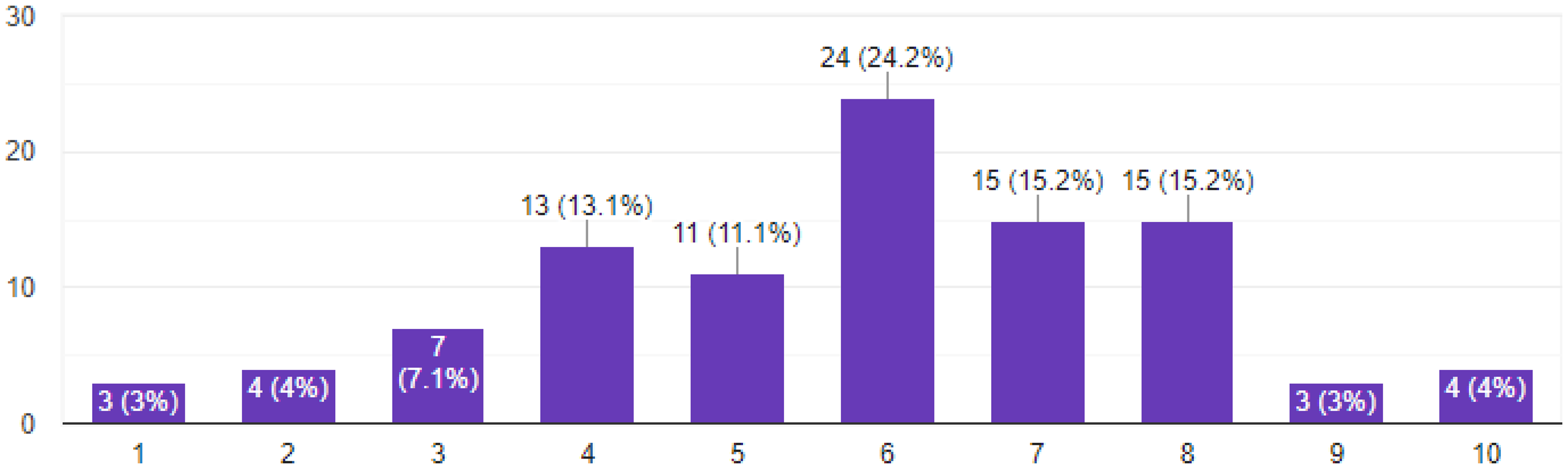
Out of the respondents, 60.6 per cent were male and 39.4 per cent were female, suggesting that men may be overrepresented in the sample as compared with the numbers of male and female students enrolled in law degrees in Hong Kong (Chu, Reference Chu2016). Some 88.8 per cent stated that they had indeed been taught to some extent about social justice as part of their degree, with only 11.2 per cent responding that they had not been taught about social justice at all. When asked how many hours they had spent studying or speaking about social justice as part of their law degree over the past year, responses varied considerably (Fig. 5).
Bar chart of hours spent studying or speaking about social justice in past year (no response excluded).
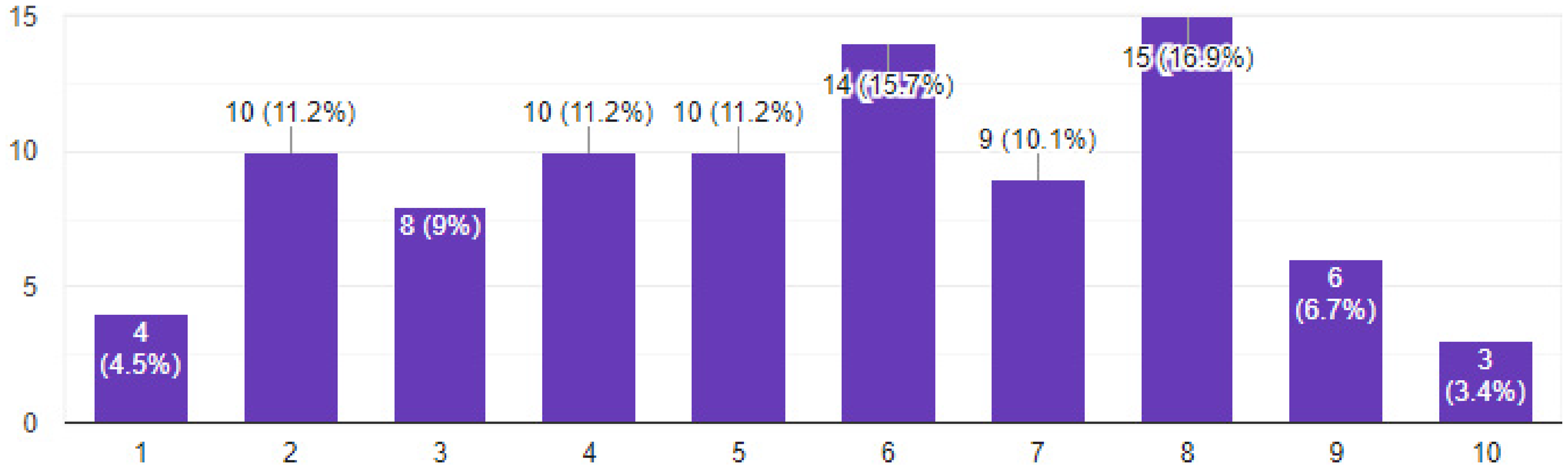
In terms of the sufficiency of their social justice education, 29.3 per cent of participants felt it was insufficient to some degree, whilst 38.4 per cent felt it was sufficient or entirely sufficient. However, some 63.3 per cent of respondents indicated that they would like to see more social justice incorporated into their law education, reflecting perhaps that only 11.1 per cent of students felt that their current exposure to social justice had been ‘entirely sufficient’. When speaking about how important social justice was to the student themselves, a range of responses were recorded, with a majority of respondents clustered across an importance score of 4 to 8 (Fig. 6), with higher scores representing more importance.
Scalar responses to ‘how important is social justice to you’, with scores scaling with perceived importance.
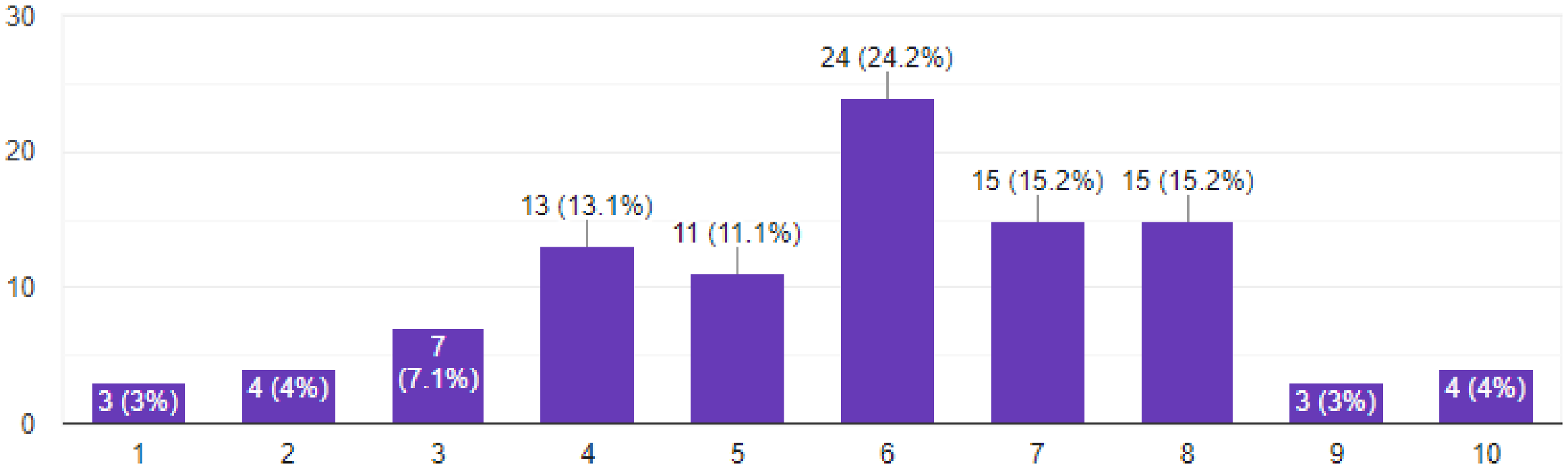
When results are split into different scores for male and female students, different trends become visible. For example, only 55 per cent of men would like more education in social justice compared with 76.9 per cent of women. This despite men and women having similar rankings for the sufficiency of the legal education they had received thus far (3.2 out of 5 for men and 3.0 for women). The difference becomes more stark when comparing how important social justice was to male and female students, with male students scoring its importance at an average 5 out of 10, compared to female students scored it of far higher importance at 7.1. Such differences are reflected in statistical analysis also.
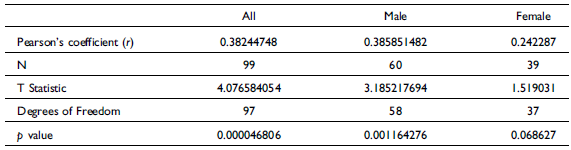
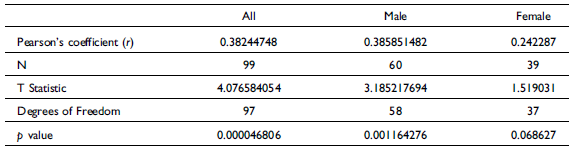
As Table 4 demonstrates, there is a low to moderate level of correlation between the time spent studying social justice as part of a law education degree and the perception of the importance of social justice to the student. For men, this effect is more statistically significant (r = 0.386), whilst for women the correlation is weaker (r = 0.242) despite an overall higher average importance score. In terms of statistical significance, the effect for women alone is just outside the range of statistical significance (p = 0.069), though this may be a result of the relatively smaller sample size for women. Alternatively, it may be that women’s higher scores are generally not attributable or are less attributable to time spent studying social justice in university.
Pearson’s test for correlation between hours taught social justice versus social justice importance
In terms of the perceived sufficiency of their social justice education, hours of social justice education received correlated positively with the perceived sufficiency of that education (r = 0.605, p = 1.6008 × 10⁻¹¹). This indicates that more social justice education may be correlated with the perception of a better social justice education. This implies the potential utility of simply increase the number of hours spent teaching social justice education. Among those who scored their experience of social justice education as mostly or entirely sufficient, the average time spent studying social justice was 6.684 hours, significantly above the overall average of 4.939 hours, and well above those who scored their experience as mostly or entirely insufficient (2.819 hours). As such, there may be an argument for increasing the hours spent dedicated to studying social justice on law education courses.
4. Discussion
The data analysis carried out assists in providing answers to this study’s research questions. The interviews with legal professionals indicated that many had a conceptualisation of social justice that was broadly correct, though they varied considerably in how far they felt social justice applied to the law or to their legal roles in Hong Kong. Many of those interviewed felt that it was not their job to try and change the law or engage in activism through their practice but rather to employ the law fairly. This seems to reflect a ‘black-letter’ perspective on rule-of-law that interprets the role of the lawyer as largely procedural rather than being concerned with the substantive content of legislation.
Whether social justice was perceived to be at odds with the law as it stands was a matter of some debate, though most seemed to feel that upholding the law as written would contribute towards social justice. There is in this view an apparent instrumentalism in the participants’ perspective on social justice. Rather than viewing an ethical mandate to use the law to facilitate social justice, the idea that the law could be judged by the degree to which it facilitated or promoted social justice seemed to be secondary to upholding the process of the law and applying it fairly. This suggests that social justice was not assumed to be at odds with equality before the law, because the assumption was that applying the law fairly would institute social justice.
In terms of the role of social justice in content of the law, the group were thus unclear as to what its ideal role ought to be and were generally vague about how its promotion ought to be achieved. Participants mostly associated social justice with fairness and they associated unfairness with the systemic marginalisation of minorities. Activism was related to protecting marginalised groups and to influencing policies, though no mention of attempting to set legal precedent was given. The application of social justice activism to their practice was largely limited to providing pro bono services to people from marginalised groups or deprived backgrounds. This reflects concerns about accessibility to legal recourse or resources as opposed to concern about the substantive content of the law itself.
Comparing the demographics involved in the interviews, whilst the number of participants do not allow for meaningful statistical analysis, there was an apparent division between those participants who worked for Magic Circle firms and those who worked for local firms. Those working at high-profile international firms appeared to be more inclined to report active support for or engagement in social justice, such as providing pro bono legal services or discussing activism for social causes. Comparatively, those working at local or Chinese law firms – whilst not noticeably hostile to these activities in comparison with the former group – seemed less inclined to report active engagement in such practices. This indicates perhaps cultural distinctions within organisations and institutions themselves given the Western origin of Magic Circle companies, or alternatively, limitations in terms of opportunity for engagement (see below).
With respect to the incorporation of social justice into legal education, the quantitative analysis showed that around three quarters of respondents were satisfied with their social justice education, reporting it as at least ‘okay’, with an average of roughly five hours dedicated to it in the past year, though varying considerably across students. Among legal professions, there was an emphasis on teaching students to think critically and to incorporate social justice into curricular reforms, with a minority arguing against the incorporation of social justice into legal education. Among this number, a reason given was either its politicised nature or its conflicting with the principle of equality before the law. Whilst a majority may support curricular reforms to incorporate more social justice, such a reform is unnecessary given that students already report an average of five hours of social justice education as well as roughly three quarters of students reporting satisfaction with their current experience of social justice education.
Furthermore, those interviewed were vague about how to reform law education to better incorporating teaching about social justice. There was a perceived need to better integrate social justice education though few ideas about how this might be accomplished. The quantitative analysis suggests that simply offering more hours of taught social justice content might improve satisfaction with social justice education as well as being correlated with a higher ranked importance for social justice among students. As three students already report ten hours of social justice education, there may be an upper limit for this number, though it is unclear from the extant data whether there are diminishing returns beyond a certain number of hours in terms of student satisfaction. Likewise, the data cannot be used to imply that more social justice education will entail a sense of social awareness or responsibility maintaining into later practice.
A prospective solution that incorporates both more social justice education and likewise fosters social awareness and responsibility throughout a student’s professional career is incorporating social justice into continuous professional development (CPD). This facilitates the reinforcement of principles of social justice throughout a legal practitioner’s career and might help encourage ethical decision-making social responsibility. Studies on CPD in the legal profession have highlighted a need to shift policies away from a focus on developing familiarity with legal developments or learning from specific events to encouraging more reflection on the informal practices of the legal profession at a collective level (Gold, Thorpe, Woodall and Sadler-Smith, Reference Gold, Thorpe, Woodall and Sadler-Smith2007). How best to facilitate this can likewise be theorised through situating this study’s research contributions within the broader literature on CPD for social justice the legal profession.
Studies on how to use CPD to increase social awareness in the justice system emphasise reflection upon societal ills in legal context as well as encouraging action research designed to model future behaviours for legal professionals (Leering, Reference Leering2017). It is clear that the participants above understood working towards social justice partially in terms of activism but also with respect to providing pro bono legal services to enhance accessibility to legal services. A joint focus in CPD on reflective practice on societal ills as well as action research focused on providing accessible legal services thus should cohere with both the findings of this study and that of past research into CPD for social justice in the legal profession.
What is missing from this, unfortunately, is what sort of content ought to be provided through CPD and how to engage legal firms in this endeavour. Noted in the qualitative analysis above is a distinction between the awareness of social justice between professionals working in Magic-Circle and local Hong Kong firms, with the former having a clearer understanding and recognition of responsibilities to social justice. The profile of Magic-Circle firms likely has contributed to past activism, such as the collective creation of activist organisations (Edwards, Reference Edwards2022), and tens-of-thousands of pro bono hours dedicated to specific cases related to social causes (Anthony, Reference Anthony2021). By way of comparison, local services have a comparatively reduced public profile that facilitates making an impact in terms of activism and likewise may have fewer resources to contribute towards pro bono services. Such limitations in implementing a comprehensive and effective social justice education are considered in more depth below.
5. Conclusion
This study has examined the state of social justice in legal education in Hong Kong through undertaking questionnaires with students and interviews with students and legal professionals, subjected to quantitative and thematic analysis respectively. Interviews with students and professionals demonstrate that the overarching themes of justice, education, promotion, activism, and social may be illustrated by a number of overlapping concepts. Justice is associated with concepts such as the law, principles, advocacy, the legal profession and politic; education is associated with issues, students, reforms and advocacy; promotion is associated with rights, fairness, marginalisation, system inequality and addressing inequalities; whereas activism and social constitute standalone concepts.
The study saw that some participants felt strongly about social justice in Hong Kong but few were certain about how they as legal professionals should go about advocating for or promoting it. Avenues to achieve this were largely limited to providing pro bono services, with some unclear as to the appropriateness of legal activism in order to try and change the law. Across this divide, those working at international Magic Circle firms were more likely to engage in such activities than those at local Chinese firms, suggesting either a cultural distinction, or perhaps gulfs in available resources such as public profile, surplus time and funding.
Participants in the interview study saw time spent participating in social justice study correlate with higher scored importance of social justice, indicating that increasing the hours of social justice content on courses might be a means for increasing social justice practice. Those who reported the highest levels of satisfaction reported roughly six and a half hours of study time dedicated to social justice as part of their course, indicating that many courses – that average about five hours per year – might increase their hours of taught social justice content to encourage a greater prioritisation of social justice in the professional practice of future solicitors, barristers and judges.
However, whilst a majority of those interviewed supported more social justice in legal education, current experience of social justice on law courses was deemed largely to be satisfactory. Furthermore, the data gathered cannot be used to support a connection between time spent studying social justice at university at attitudes or practices related to social justice during professional practice. Thus, it may be more appropriate to focus on inculcating an awareness and responsibility towards social justice through CPD as opposed through reforming or expanding education at the university level. Research from outside this study suggests that critical reflection on social problems and action research consisting of provision of pro bono services may assist in fomenting a culture of promoting and pursuing social justice within a legal profession.
There were some limitations to the above study. The sample of students was not wide enough to study the relationships of individual backgrounds to perspectives on social justice, whilst the lack of inclusion of professionals in the quantitative analysis meant that connections between time spent studying and later professional practice could not be established. For instance, statistical comparisons on the trends across professionals working for Magic Circle and local Chinese firms could have further illustrated how institutional factors might impact social justice practice.
Besides a limited sample, the interviewees offered little by way of what sort of social justice content ought to be taught. Discovering which is the most effective might entail an experimental design that compares different lessons or content with outcomes in terms of educational satisfaction and scored social justice importance. Additionally, there was little guidance as to how to teach social justice or integrate it into the curriculum. Interviews with law teachers might go some way to clarifying how best this might be achieved, or alternatively, interviews with teachers from other professions where social justice is already better incorporated into the curriculum (e.g., social work).
Nevertheless, the research study contributes to the extant body of literature insofar as there has heretofore been very little research into social justice within legal education in Hong Kong. The study provides an overview of the state of social justice in law education and where students and professionals feel broadly that it ought to go, indicating an appetite for more social justice education, as well as prompting questions about how to achieve this that subsequent research may be designed to answer.
Data availability statement
The data for the study are available from the authors upon reasonable request.
Acknowledgments
This paper was presented at the LLHAA 2024 Conference held at the University of Hong Kong Faculty of Law in December 2024. We are deeply grateful for the thought-provoking questions and comments from the session chair, Dr. Benjamin Goh, and the session discussant, Dr. Moritz Koenig, as well as the valuable feedback provided by all the conference participants. Their invaluable insights have been crucial in improving the quality and depth of this paper.
Funding
The authors did not receive support from any organization for the submitted work.
Competing interests
The authors have no competing interests to declare that are relevant to the content of this article.
Appendix A. Interview questions
Can you describe your understanding of social justice within the context of jurisprudence, particularly as it relates to Hong Kong?
How do you perceive the ideal role of social justice within the legal system, and how does it align with the actual practice of law in Hong Kong?
From your perspective as a law student/legal professional in Hong Kong, how do you think social justice is currently addressed within jurisprudence?
Can you share any personal experiences or observations that illustrate the relationship between social justice and jurisprudence in Hong Kong?
In your opinion, does the current legal education at the higher level in Hong Kong adequately address issues of social justice? Why or why not?
How do you think legal education in Hong Kong could better incorporate or emphasize the principles of social justice within the curriculum?
Have you encountered any specific courses or teaching methods during your legal education that you believe effectively addressed social justice issues? If so, can you describe them?
What challenges do you perceive in integrating social justice principles into legal education in Hong Kong, and how might these challenges be overcome?
From your perspective, what reforms or changes to legal education in Hong Kong could better support the promotion of a social justice paradigm within applied jurisprudence?
In your view, what role should legal professionals and institutions play in advocating for and advancing social justice within the legal system in Hong Kong?
Appendix B. Questionnaire
Have you been taught about social justice as part of your law degree?
How many hours in the past year would you estimate you have spent studying or speaking about social justice as part of your law degree?
How sufficient do you feel your social justice education has been throughout your law degree.
Would you like to see more education on how to incorporate social justice into your practice as part of your law education?
How important is social justice to you?
How sufficient is the current representation of social justice in justice system in Hong Kong?

 Open access

