




Introduction
Compassion is “understanding the pain of others and taking action to alleviate it” (Pehlivan and Güner Reference Pehlivan and Güner2020). It is considered a core value in nursing care and an indispensable aspect of patient-centered care (Dewar Reference Dewar2011). Compassion is not limited to being able to empathize with patients in difficult conditions. It also means strengthening patients with holistic nursing care (Dewar and Cook Reference Dewar and Cook2014). Because compassionate care requires meeting patient needs by understanding the physical, mental, and emotional distress experienced by patients (Boyle Reference Boyle2011). In this sense, compassion is crucial to providing high-quality and holistic nursing care (Bramley and Matiti Reference Bramley and Matiti2014).
Mooney (Reference Mooney2009) indicates that the expression of “compassion” as a care value, fully understanding it, and assessing its impact on practice are different concepts. The nurses often deliver compassionate care without being noticed, so it becomes challenging to determine compassion (Sturgeon Reference Sturgeon2010). It is a subjective concept that is difficult to determine whether a person has it (Bray et al. Reference Bray, O’Brien and Kirton2014; Curtis Reference Curtis2013). When developing a standardized measurement tool for compassion, it will be adequate to consider what staff and patients look at and what they expect from themselves and others. The measurement of compassion in nurses should also focus on how nurses provide compassionate care and protect themselves from stress (Durkin et al. Reference Durkin, Gurbutt and Carson2020). In this direction, the values and actions of a nurse are vital concepts in the compassionate character of the nurse (Nijboer and Van der Cingel Reference Nijboer and Van der Cingel2019).
In line with holistic care, global studies include strategies to integrate compassion-oriented nursing practices into the clinic (Papadopoulos et al. Reference Papadopoulos, Shea and Taylor2016). However, research shows that compassion fatigue may occur in young nurses over time (Bakan et al. Reference Bakan, Kiliç and Aslan2020; Polat and Erdem Reference Polat and Erdem2017). The most basic strategy that can be used to cope with compassion fatigue is to integrate the understanding of compassionate care into the education and practice of nursing students. In Turkey, holistic care is included in the nursing education curriculum, but no content specifically focuses on compassionate care (Uğurlu and Aslan Reference Uğurlu and Aslan2017). Compassion is an essential nursing care component that can be incorporated into the nurse–patient interaction through small actions (Curtis Reference Curtis2015). Compassionate care is a model that increases patient satisfaction, accelerates patient recovery, and indicates quality care for hospitals (Uğurlu and Aslan Reference Uğurlu and Aslan2017). Therefore, it is thought that it would be helpful to introduce a comprehensive scale into the literature for the measurability of compassionate care in nursing practices.
Sinclair et al. (Reference Sinclair, Torres and Raffin-Bouchal2016) suggest that nursing students should be introduced to the value and behavior of compassion during their education. In this way, nursing students gain greater patient acceptance and develop an emotional bond, encouraging professional development (Su et al. Reference Su, Paguio and Masika2021). In creating a measurement tool to evaluate nurses’ compassion power, their essential qualities should be determined. Before determining this, evaluating whether nurses are compassionate or not is not a correct approach, but it will also pose a risk in the development of nursing programs.
The study on compassion in nursing worldwide has indicated insufficient psychometric tools (Davison and Williams Reference Davison and Williams2009). Dewar (Reference Dewar2011) states that there are few ways to assess compassion in nursing effectively. Therefore, the significance of evaluating compassion is an immediate requirement for nursing (Sturgeon Reference Sturgeon2010). A tool that can determine compassionate care in nurses will help develop skills that increase awareness and quality of care. In Turkey, studies on the development validity and reliability of assessment tools focusing on compassion have been conducted with university students (Akdeniz and Deniz Reference Akdeniz and Deniz2016; Sarıçam and Erdemir Reference Sarıçam and Erdemir2019), adults (Nas and Sak Reference Nas and Sak2022), and healthcare professionals (Yıldırım and Cavcav Reference Yıldırım and Cavcav2021). Assessment tools used to assess the level of compassion for the lives of others (Coskun et al. Reference Coskun, Kavakli and Babayigit2017), compassion fatigue (Dinç and Ekinci Reference Dinç and Ekinci2019), and compassion competence (Çiftçi and Aras Reference Çiftçi and Aras2022) are available for nurses and nursing students. Although these assessment tools provide significant assessments, they can further be improved at the point of comprehensively assessing compassion behaviors in nursing. When developing a standardized measurement tool for compassion, it is necessary to consider what staff and patients look at and what they expect from themselves and others.
While developing the original form of the scale, the literature on the characteristics that a compassionate nurse should have, how it can be understood, and how it can be measured was examined. A systematic review and qualitative study were first conducted while creating the items for the compassion power indicators (Durkin et al. Reference Durkin, Gurbutt and Carson2018, Reference Durkin, Gurbutt and Carson2019). As a result of these preliminary studies defined 8 essential characteristics as strengths (character, self-care, connection, interpersonal, engagement, competence, communication, empathy), and the compassion power model was created. Given its content and dimensions, Bolton Compassion Strengths Indicators is a scale developed to assess the compassion level of nursing students. In this regard, the scale covers all dimensions of nurse-patient interaction in the nursing education system in our country. It will support the nurse in providing holistic care for the patient’s benefit.
Incorporating the scale into the literature will contribute to the multidimensional integration of compassion-oriented care into nursing students’ learning and practice processes. It will also support the planning and execution of the continuing education process by providing the opportunity to measure the compassion levels of nursing students and nurses in the clinical setting. Not only does this study provide a set of empirically based indicators for compassion, but having the means to measure these core strengths may aid in developing future compassionate nurse practitioners. It can also provide a valid and reliable measurement for nurses to improve themselves and measure their compassion. Accordingly, this research aimed to test whether the Bolton Compassion Strengths Indicators scale is adaptable, valid, and reliable to Turkish culture.
Methods
Design
The research was a methodological study.
Participants
The population consisted of students (N = 979) from a state university’s Nursing Department of the Faculty of Health Sciences. The sample size suggested for the validity and reliability research is 5–10 times the total number of items on the scale (Tavşancıl Reference Tavşancıl2019). Since the total number of items in the Bolton Compassion Strengths Indicators Scale is 48, the study must include 240–480 participants. In the study, a stratified sampling method according to grade level was used, and a total of n = 500 participants were reached, including 108 (12.6%) first graders, 122 (24.4%) second graders, 137 (27.4%) third graders, and 133 (26.6%) fourth graders. Participants’ mean age was 20.46 ± 1.78 (min. = 18.0; max. = 35.0), of whom 86.2% were female (n = 431) and 99.8% were single (n = 499). For testing retest analysis of the scale, 2–4 weeks between 2 measurements is reported to be sufficient (Dönmez Reference Dönmez2014). In the present study, the test–retest analysis, indicating stability over time of the scale, was done at a 2-week interval and applied to a total of n = 30 participants.
Data collection procedure
Participant Descriptor Form and the Turkish form of the Bolton Compassion Strengths Indicators Scale were used to collect the study data. Data collection tools were implemented between 17 December 2021 and 30 May 2022.
Participant Descriptor Form: The form consists of 4 questions that include descriptive features such as age, gender, marital status, and grade level.
Bolton Compassion Strengths Indicators: Durkin et al. (Reference Durkin, Gurbutt and Carson2020) developed a scale to measure nursing students’ compassion strength. The scale consists of 8 indicators: competence, interpersonal skills, communication, engagement, character, self-care, connection, and empathy, with 48 items. The scores of each indicator are calculated by totaling the responses given for each item. The total score of compassion strength is obtained by totaling the scores on each indicator. Participants respond to each item using a 6-point Likert-type ranging from 1 (definitely not like me) to 6 (definitely like me). Item 43 is reversely scored. Scale total score ranges from a minimum of 48 to a maximum of 288. Cronbach’s α internal consistency reliability for the total scale score was 0.85, and each indicator ranged from 0.55 to 0.80. The test–retest reliability coefficient for the scale’s total score was 0.86, and each indicator ranged from 0.54 to 0.87.
Data analysis
In data analysis of the research, SPSS V23 was used. The assumption of multiple normalities was used to analyze compliance with normal distribution. Preliminary considerations for choosing PLS-SEM are the recommended sample size in the selected contexts, distributional assumptions, use of secondary data, statistical power, and the need for goodness-of-fit testing (Hair et al. Reference Hair, Risher and Sarstedt2019). In this regard, Partial Least Squares Structural Equation modeling was used to examine the reliability and validity of the scale through SmartPLS 3 software because the scale did not comply with the normality assumption. SmartPLS is highly advanced and is based on the PLS-SEM, variance-based structural equation modeling method. It is non-parametric, does not require the data to have a normal distribution, works effectively in small samples, can also analyze formative variables, and can work smoothly even in very complex models (Hair et al. Reference Hair, Risher and Sarstedt2019). Tukey’s test of additivity analyzed the additivity of the scale. Hotelling’s T2 test examined the mean difference between items. The Paired samples t-test and Wilcoxon test were applied to compare test–retest scores. The fit was analyzed through the intra-class correlation coefficient (ICC).
Ethic procedure
Permission was obtained from authors of the scale via e-mail to adapt it to the languages and cultures. Approval from the University’s ethics commission (Approval date: 21/10/2021-E-196912; Research Code No: 2021-928) and written permission from the institution were obtained before the study began. Before the data collection tools were implemented, the participants were informed about the study process, and their written informed consent was obtained.
Results
Language and content validity
The back translation method was utilized to establish the linguistic equivalence of the scale. The researchers specialized in psychiatric nursing, and 2 translators proficient in English and Turkish independently translated the scale. The translations from English to Turkish were consolidated. After taking the expert opinions, the created form was back-translated into English by a native translator who resides and is employed in Turkey. The back-translated form was compared with the original form of the scale, and at this stage, the consent of the principal author who developed the scale was obtained. After that, the Turkish version of the scale was finalized to be applied in the validity and reliability study. No items that needed to be adapted considering cultural characteristics were identified in the scale’s original form. The language equivalence of the scale with its original form has been completed.
The Turkish version and the original English form of the scale were sent to 10 experts from the field of Psychiatric Nursing and 1 expert from the field of measurement and evaluation to assess each statement for its comprehensibility, whether it was clear and straightforward enough, and compatible with the original scale item to complete the linguistic equivalence of the scale and to assess its content validity. It is recommended to take the opinions of 3 experts and a maximum of 20 experts to calculate the content validity index (CVI) (Çapık et al. Reference Çapık, Gözüm and Aksayan2018). The CVI was computed using the Davis technique. The experts were asked to assess the scale items by rating a score between 1 and 4 points [“absolutely compatible,” “compatible (minor revisions should be made in the item or statement),” “slightly compatible (revisions should be made in the item or statement)” and “not compatible”] (Karakoç and Dönmez Reference Karakoç and Dönmez2014). Furthermore, when analyzing the items, the experts were asked to assess the subscales and the capability of the questions to measure the measurement adequacy of the subscales. A CVI value of ≥0.80 for this technique indicates that the item is adequate for content validity (Yusoff Reference Yusoff2019). Following the expert opinions for the scale, the CVI value, calculated by dividing the sum of the number of options responded as “absolutely compatible” and “compatible” for each item and for the overall scale by the number of experts, was found to be 1.0. This value was found to be higher than the acceptable criterion value.
Validity
When the multiple normality assumption of the scale was examined, the critical value was obtained as 125.294 in the Multivariate normality test. While it was an excellent outcome for this value to be below 10, studies revealed that it generally posed no problem up to 20 (Gürbüz Reference Gürbüz2019). Since this value was above 20, the normality assumption was not met. Since normality was not met, the partial least squares method was used to examine the construct and internal validity of the scale.
First, factor loads should be ≥0.70, and average variance extracted (AVE) coefficients should be ≥0.50 for convergent validity (Hair et al. Reference Hair, Black and Babin2006). If the factor loads are between 0.40 and 0.70 and the AVE and CR coefficients are above the threshold values, the items are not omitted from the scale. When the factor loads were examined, item 43 in the Connection subscale, item 19 in the Engagement subscale, and item 40 in the Self-Care subscale were directly omitted from the scale since their factor loads were <0.40. Furthermore, since the AVE value of the load for the Self-Care subscale was 0.384 (<0.50), item 27 and item 39 in the Self-Care subscale, with the lowest factor load, were excluded from the scale, respectively. After items 43, 19, 40, 27, and 39 were excluded, all factor loads were obtained as 0.40 and above. Also, since the AVE and CR coefficients were within the threshold values, the items with factor loads in the range of 0.40–0.70 were not erased. Convergent validity of the scale was ensured.
For internal consistency reliability, Cronbach’s alpha and CR coefficients should be ≥0.70. When Cronbach’s alpha and CR coefficients for internal consistency reliability were examined, Cronbach’s alpha was determined for the Self-Care subscale to be 0.613, and the CR value was 0.782. Even if Cronbach’s alpha value is not over 0.70, a value of 0.60 indicates that the subscale is highly reliable, and a CR value of ≥0.70 suggests that it provides internal consistency reliability. Cronbach’s alpha and CR values of all of the other subscales were ≥0.70. The scale achieved internal consistency reliability.
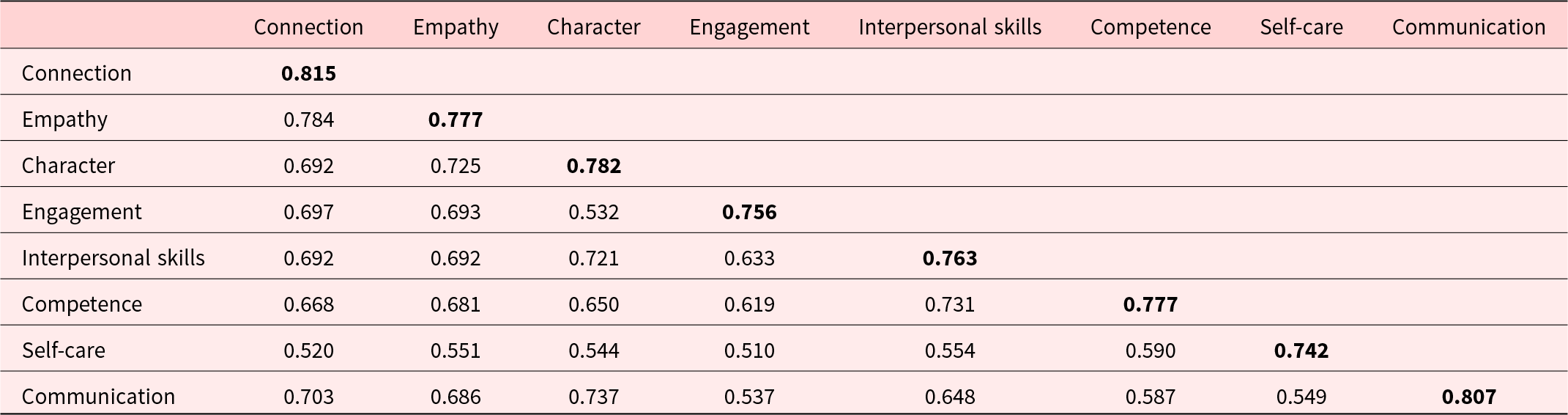
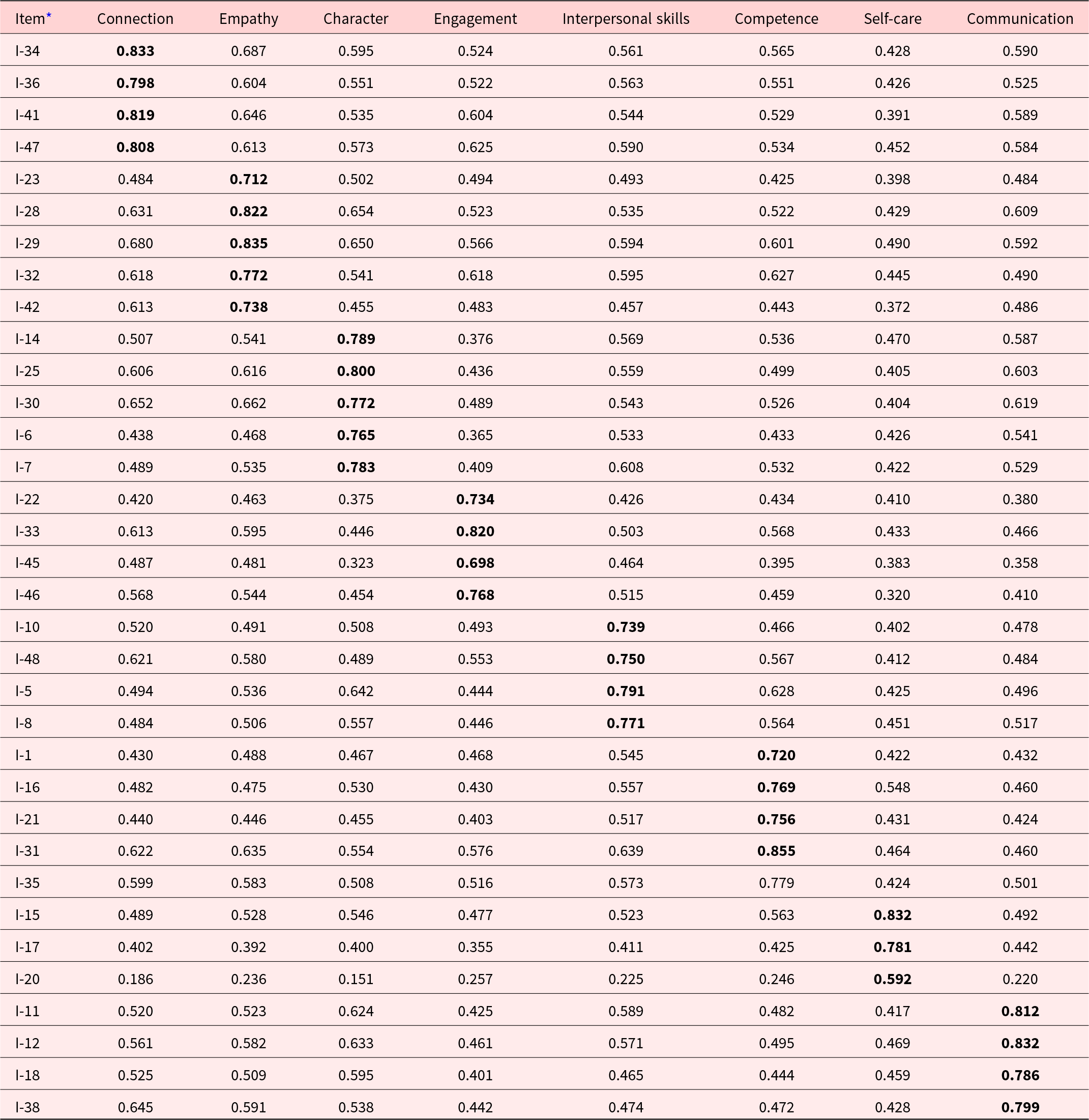
The square root of the AVE coefficients of the factors should be higher than the correlation coefficients between the other factors in the structure in the Fornell-Larcker criterion developed for discriminant validity. As a result of the analysis, construct validity could not be provided since AVE square root coefficients were lower than the correlation coefficients between Connection and Empathy and Engagement, Character and Interpersonal Skills and Communication, and Engagement and Interpersonal Skills. This suggests that some items are cross-loaded. Each item in the subscales should have the highest factor load value in its subscale, and there is no more than 0.1 difference between the factor loads in other subscales. If this difference is less than 0.1, it is referred to as an overlapping or cross-loaded item that should be excluded from the scale (Çokluk et al. Reference Çokluk, Şekercioğlu and Büyüköztürk2014). When the cross-loads of the items were analyzed, a total of 9 items, including items 13, 2, 24, 26, 3, 37, 4, 44, and 9, were excluded from the scale. All results were examined again once these items were removed from the scale.
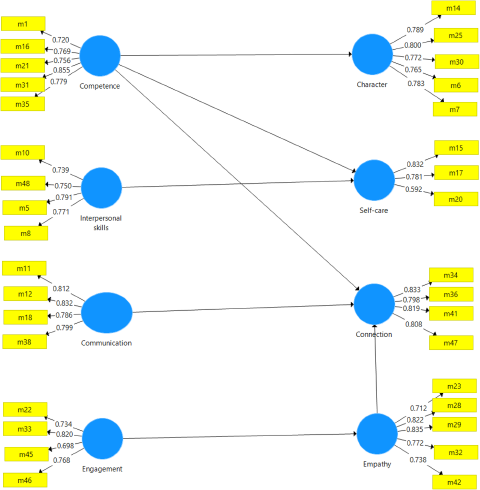
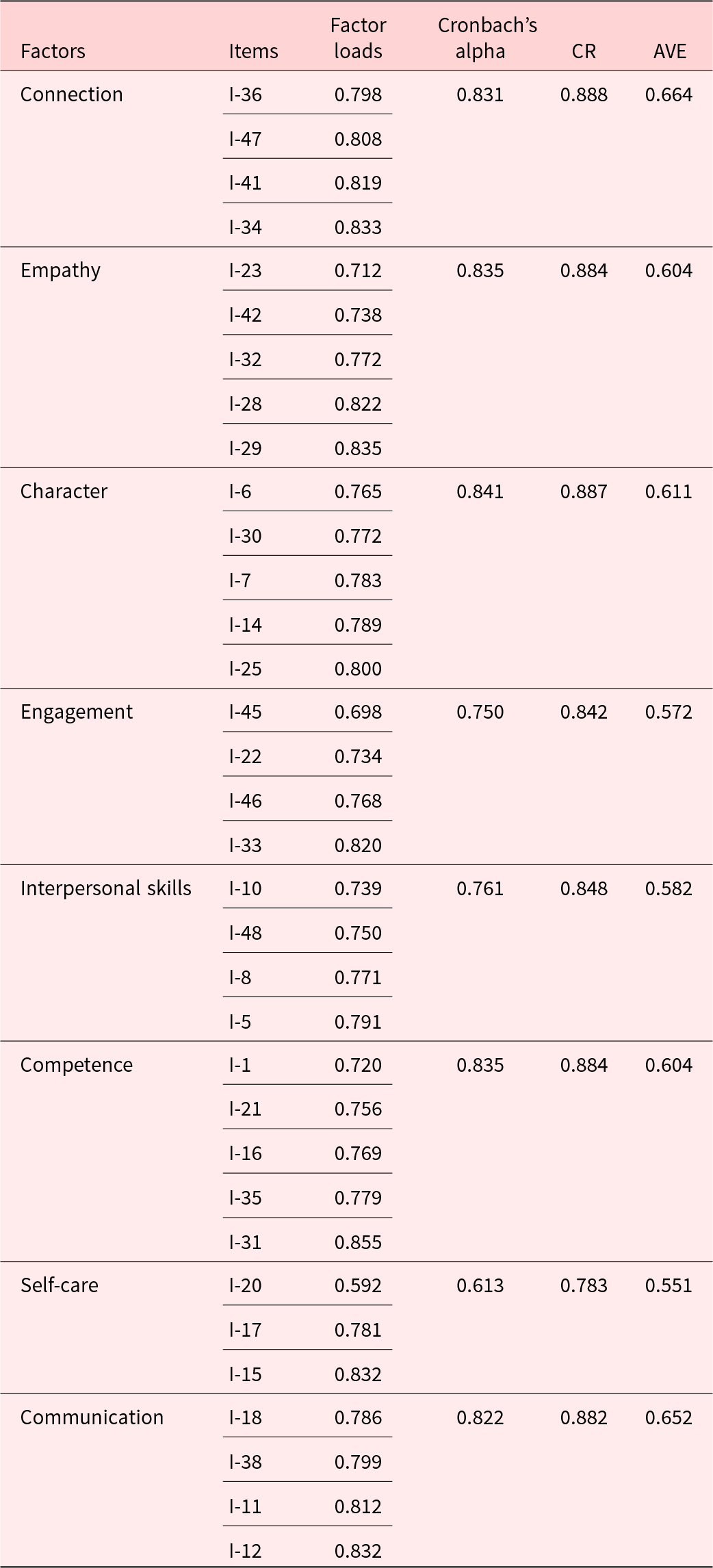
Convergent validity of the scale was provided. Internal consistency reliability of the scale was provided (Fig. 1, Table 1). As a result of the analysis in the Fornell-Larcker criterion developed for the discriminant validity, since the square root of the AVE coefficients of the factors was higher than the correlation coefficients between the other factors in the structure, discriminant validity was provided (Table 2). When the cross-loads of the items were examined, none of the items in the scale were overlapping. In general, the discriminant validity of the scale was provided (Table 3). The goodness of fit indices were determined as SRMR = 0.066 and NFI = 0.755, and the analysis was done on the model, which consisted of 34 items and 8 subscales.
Factor loads of the items of the scale.

Examining the internal consistency and convergent validity of the scale

CR = composite reliability, AVE = average variance extracted.
Discriminant validity of the scale

Fornell-Larcker criterion developed for the discriminant validity.
Examining the cross-loads for the discriminant validity of the scale

* I = Item.
Reliability
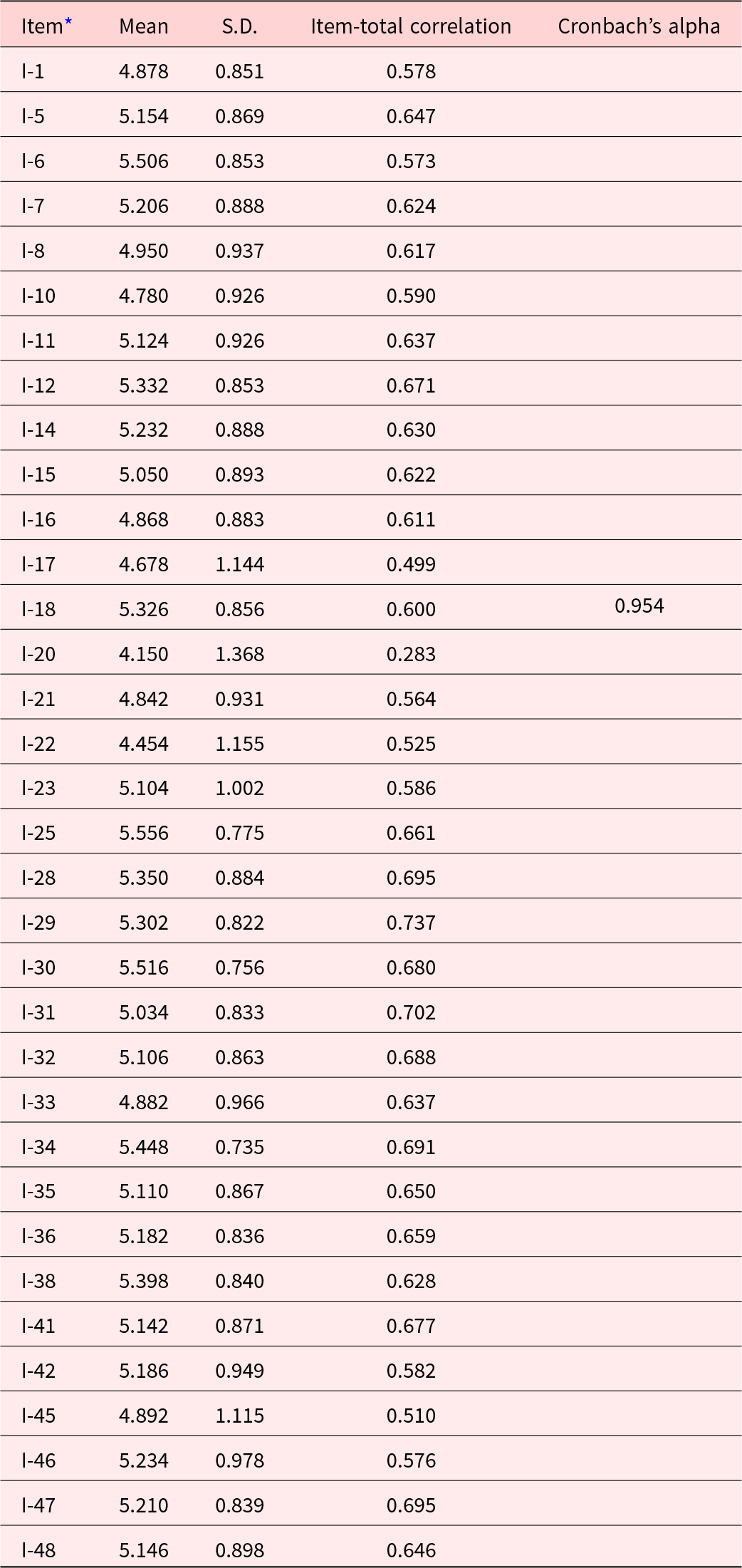
The Turkish version of the scale consisted of 34 items and 8 subscales. The Cronbach’s alpha coefficient of the overall scale was 0.954, and the scale was highly reliable. Also, when the result of Tukey’s test of additivity of the scale was analyzed, it was found that the scale was additive (p = 0.455). The scale can be assessed through the sum of the subscales and the overall total. There was a difference between the means of the items as a result of Hotelling’s T2 test (F = 33.466; p < 0.001) (Table 4).
Reliability results of the overall scale

* I = Item.
Stability over time (test–retest)
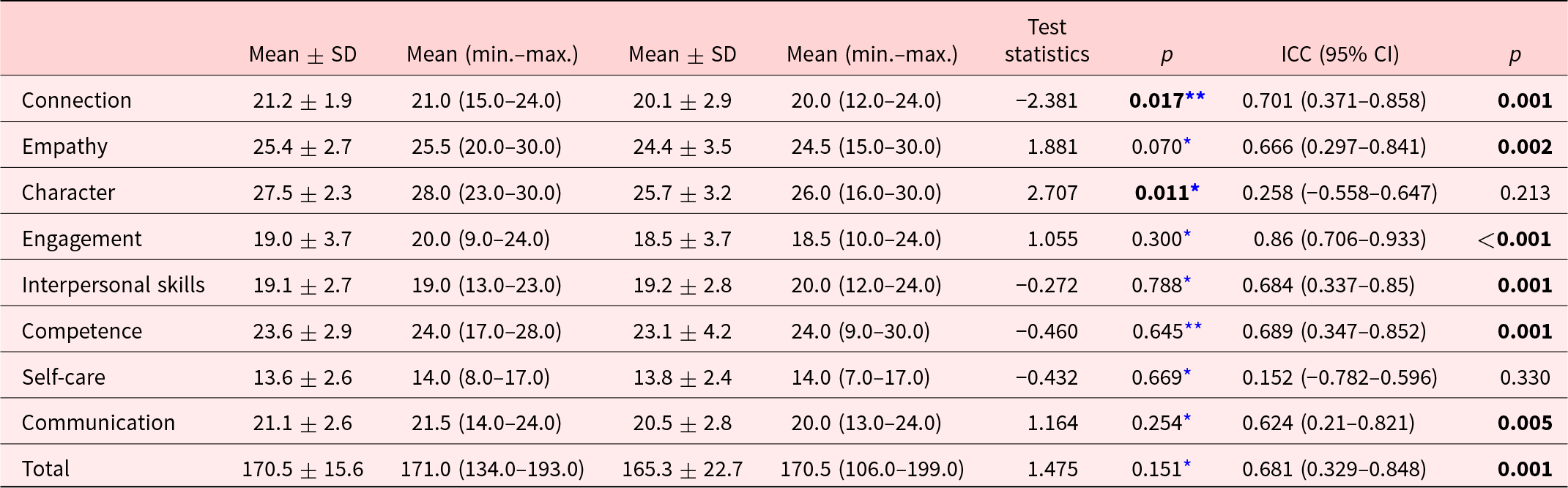
A retest analysis was done to determine the scale’s stability over time. A difference was found between the median scores on the test and the retest for connection (p = 0.017). While the test median was 21.0, the retest median was 20.0. A statistically significant moderate fit was also between the test and retest (ICC = 0.701; p = 0.001). There was no difference between the mean scores on the test and the retest for empathy (p = 0.07). A statistically significant moderate fit was also between the test and retest (ICC = 0.666; p = 0.002). A difference was found between the mean scores of the test and the retest for character (p = 0.017). While the test mean score was 27.5, the retest mean score was 25.7. No statistically significant fit between the test and retest was found (p = 0.213). There was no difference between the mean scores of the test and the retest for connection (p = 0.3). There was also a statistically significant good fit between the test and retest (ICC = 0.86; p < 0.001). There was no difference between the mean scores of the test and the retest for Interpersonal Skills (p = 0.788). A statistically significant moderate fit was also between the test and retest (ICC = 0.684; p = 0.001). No difference was found between the mean scores on the test and the retest for competence (p = 0.645). A statistically significant moderate fit was also between the test and retest (ICC = 0.689; p = 0.001). There was no difference between the mean scores of the test and the retest for Self-Care (p = 0.669). However, no statistically significant fit was obtained between the test and retest (p = 0.330). There was no difference between the mean scores of the test and the retest for communication (p = 0.254). A statistically significant moderate fit was also between the test and the retest (ICC = 0.624; p = 0.005). There was no difference between the total mean scores of the test and the retest (p = 0.151). A statistically significant moderate fit was also between the test and the retest (ICC = 0.681; p = 0.001) (Table 5).
Examination of test–retest results

* Paired 2 sample t-test, ** Wilcoxon test, ICC (95% CI) = intraclass correlation coefficient (95% confidence interval).
Discussion
Compassion is a critical element that ensures quality and patient-centered care (Pehlivan and Güner Reference Pehlivan and Güner2020; Salvador Zaragozá et al. Reference Salvador Zaragozá, Soto-Rubio and Lacomba-Trejo2021). The lack of a multidimensional measurement tool that comprehensively addresses compassion power indicators led to the planning of this study. This study was conducted to adapt the Bolton Compassion Strengths Indicators scale into Turkish and to test its validity and reliability. The most current and comprehensive scale measuring compassion indicators is the “Bolton Compassion Indicators,” designed for nurses and nursing students (Durkin et al. Reference Durkin, Gurbutt and Carson2020). The scale was based on the premise that “when developing a standard measurement tool for compassion, it is important to consider what staff and patients look at and what they expect from themselves and others.” As a result of this research, the Bolton Compassion Strengths Indicators scale was determined to be a valid and reliable assessment tool.
The linguistic equivalence analyses for the Bolton Compassion Strengths Indicators scale indicated that the Turkish version of the scale was understandable and usable in Turkish culture. The validity and reliability of the scale were analyzed within the scope of the 8-factor structure. Bolton Compassion Strengths Indicators Scale includes nursing practices with connection, empathy, character, engagement, interpersonal skills, competence, self-care, and communication. These 8 concepts that refer to the Compassion Strengths Indicators present compassion’s comprehensive and multidimensional nature. This scale, along with psychosocial factors correlated with compassion, includes items that represent the motivation to relieve the suffering/pain of the patient.
Factor loads indicate the extent to which the statements in the scale correlate with the factor; these values are expected to be above 70% (Hair et al. Reference Hair, Black and Babin2006). In the present study, the factor loads of the scale items were between 0.59 and 0.85, and the factor loads of the self-care and connection subscales, which were exemplified in the original version, ranged between 0.32 and 0.91. Accordingly, the Bolton Compassion Strengths Indicators Scale was finalized as 34 items and 8 subscales (connection, empathy, character, engagement, interpersonal skills, competence, self-care, and communication). The original version of the scale consists of 48 items and 8 subscales (Durkin et al. Reference Durkin, Gurbutt and Carson2020). Based on the construct validity analysis done for item factor loads and discriminant validity, convergent validity, internal consistency reliability, and discriminant validity of the scale were provided, and a compatible model was obtained after a total of 14 items were excluded from the scale. In Turkey, the strength of compassion in nurses has been associated with “quality of life, self-understanding, caring behaviors, care burden, patient safety, style of coping with stress, burnout, care quality indicators, professional values, life satisfaction, empathy, patience.” It is defined as a dimension of the quality care indicator. It seems that intervention programs aimed at strengthening self-compassion, awareness, and psychological resilience levels in nurses along with the level of compassion are effective (Karakaş et al. Reference Karakaş, Çelebi and Çingöl2022). Considering these results, the removal of some items in the original version of the scale (e.g., “I don’t see each patient as a whole person” or “I am confident about the future”) can be attributed to differences such as the meaning given to life or the current conditions. However, with its conceptual structure, the Bolton Compassionate Strength Indicators scale includes a wide range of characteristics associated with providing compassionate care to nurses. This structure can be expressed as a powerful aspect of the scale in terms of its applicability in Turkish culture and cross-culturally.
Compassion and compassionate care are the beginning of the nursing process. Many definitions of compassion have been made in compassion research in nursing, but there has yet to be a consensus. This shows that compassion is a contextually and culturally specific value and emotion. Compassion is the determinant of the holistic approach; it answers how ethical behavior should be determined. (Doğu and Demirsoy Reference Doğu and Demirsoy2020). “A connection, which is defined as being accessible to patients, caring about the patient and devoting time to him, and meeting his needs; empathic approach in maintaining the therapeutic relationship and understanding the patient; Honesty, trust, openness, respect and helping qualities that a nurse must have for professional and quality care; commitment to and satisfaction with the profession; interpersonal relationships and intention to help; professional qualification; self-compassion and self-confidence as a nurse; communication as an important key to fulfilling all professional roles and responsibilities” in terms of all these areas, the scale evaluates what nurses and patients look at and what they expect from themselves and others. In line with the analysis, the concurrent validity of the model established in the present study was assessed with AVE. The AVE coefficient is expected to be above 50% for the model to have concurrent validity (Fornell and Larcker Reference Fornell and Larcker1981). In the present study, the AVE coefficient was between 0.551 and 0.652. These results are compatible with the original version of the scale (Durkin et al. Reference Durkin, Gurbutt and Carson2020). SRMR and NFI values are generally used as the goodness of fit values. When the values are examined, the SRMR and NFI data values should be at the desired levels. SRMR value less than 0.10 is considered a good fit (Hu and Bentler Reference Hu and Bentler1998), and an NFI value above 0.9 (Bentler and Bonett Reference Bentler and Bonett1980) usually represents an acceptable fit. The present study showed acceptable compliance with the SRMR value on the whole scale. In determining reliability, the Cronbach alpha coefficient should be above 0.70 (Esin Reference Esin, Erdoğan, Nahcivan and Esin2014; Ping et al. Reference Ping, Cao and Tan2018). In the original version of the scale, the total Cronbach’s alpha coefficient was 0.85 (Durkin et al. Reference Durkin, Gurbutt and Carson2020). The reliability of the total scale is high, as the Cronbach alpha coefficient for the total scale was 0.95. The fact that the Cronbach alpha coefficients were in the range of 0.80 ≤ α < 1.00 indicated that the reliability of the new scale is high (Özdamar Reference Özdamar2002). In an examination of the total quality of the scale with the Tukey test of additivity, which indicates whether we can consider the results of the scale as a single score by adding the scores of the items of the scale, it was determined that the scale could be assessed over the sum of the subscales and the overall total (p = 0.455).
A test–retest analysis is essential for the scale to demonstrate stability over time. A positive correlation coefficient of 0.70 and above for test–retest analysis indicates the reliability of the scale over time (Dönmez Reference Dönmez2014; Esin Reference Esin, Erdoğan, Nahcivan and Esin2014). In the present study, a moderate level of reliability was provided for the total score and subscales of connection, empathy, engagement, interpersonal skills, competence, and communication. No test–retest reliability was provided reliability for subscales of self-care and character. While the original version of the scale had a high level of test–retest reliability for self-care and character subscales, it was found to be acceptable in the empathy and engagement subscales, at the borderline level in the interpersonal skills, communication, and competence subscales, and a low level in the connection subscale (Durkin et al. Reference Durkin, Gurbutt and Carson2020). In addition, as there was no difference between the means of the first and second measurements as a result of the test–retest analysis, it was determined that the scale was not affected by time and was reliable. The Hotelling’s T2 test is used to assess response bias that affects the reliability and validity of a scale (Karagöz Reference Karagöz2020). In the present study, it was determined that the scale was not affected by response bias.
Strengths and limitations
Since the scale is a newly developed scale and adaptation studies to different cultures are limited, the evaluation of the results has been limited. The scale is a current psychometric tool developed in its original form, and there are no validity and reliability studies of this scale for other cultures in the literature. Evaluation of the scale as valid and reliable both in its original form and in its Turkish form makes a significant contribution to the literature in terms of its use in both intercultural studies and descriptive and intervention studies.
It can be considered a limitation that the sample included in the study was taken from a single university, and the gender distribution of students was not homogeneous. Although the proportion of male nurses in vocational training and clinics has begun to increase, its low number has made this situation inevitable. Considering that the female gender was similarly high in the original form of the scale, it seems that this result did not negatively affect the performance of the scale. For the generalizability of the results, studies conducted in different cultures will be supportive.
Conclusion
The Bolton Compassion Strengths Indicators Scale has an acceptable content, construct validity, and reliability with its psychometric properties. The results indicated that the scale can be used to determine the Compassion Strengths Indicators of Turkish nursing students with 34 items and 8 subscales. Given the content and dimensions of the Bolton Compassion Strengths Indicators Scale, it would contribute to the literature in the comprehensive assessment of compassion behaviors in nursing.
Clinical practice
The lack of a standard assessment tool for Compassion Strengths Indicators in nursing causes nurses and patients to interpret behaviors that indicate compassion differently. Bolton’s Compassion Strengths Indicators scale would help nursing students and graduates understand their own Compassion Strengths Indicators. It would help nursing students empower themselves while building their professional identities. Moreover, the scale can assess the participants before and after the compassion training. Also, this scale may help determine the learning requirements of students in the construction of nursing programs. Students and educators can use this scale to define their compassion power and identify the aspects that need improvement. Although the validity and reliability of the scale were conducted on nursing students, it is recommended that the scale be re-validated to measure the compassion level of the graduated nurses and other healthcare professionals.
Funding
Open access funding has been approved by Gazi University based on an agreement between Gazi University and Cambridge University Press. The authors declare that no funds, grants, or other support were received during the preparation of this manuscript.
Competing interests
All authors declare that they have no competing interests.

 Open access

