Background
Chronic pain and obesity are highly prevalent, frequently comorbid conditions (Stone and Broderick, Reference Stone and Broderick2012) whose co-occurrence may have a compounding negative impact on disability, quality of life, responsiveness to treatment, healthcare utilization and cost (Janke et al., Reference Janke, Collins and Kozak2007; Glynn et al., Reference Glynn, Valderas, Healy, Burke, Newell, Gillespie and Murphy2011). Clinical management regularly occurs in the primary care setting, yet evidence suggests this environment might not support optimal care for chronic pain and obesity when they co-occur. Research examining the conditions separately suggests that many primary care practitioners do not feel prepared to manage either pain or obesity (Matthias et al., Reference Matthias, Parpart, Nyland, Huffman, Stubbs, Sargent and Bair2010; Sonntag et al., Reference Sonntag, Brink, Renneberg, Braun and Heintze2012) and patients with either pain or obesity are commonly dissatisfied with the treatment they receive (Upshur et al., Reference Upshur, Bacigalupe and Luckmann2010; Mold and Forbes, Reference Mold and Forbes2011). Taken together, these findings suggest that individuals with comorbid chronic pain and obesity may have heightened risk for less effective and less satisfying clinical encounters. Findings from studies examining multimorbidity (co-occurring, multiple chronic conditions) further underscore that patients with comorbid chronic pain and obesity may be more dissatisfied with their care, may report inadequate patient–provider communication, and may identify a need for care that is individually tailored and patient-centered to support their unique combination of health concerns (Rutten et al., Reference Rutten, Augustson and Wanke2006; Bayliss et al., Reference Bayliss, Edwards, Steiner and Main2008). However, to date the experiences and preferences of those with comorbid chronic pain and obesity has not been examined.
The purpose of this study is to qualitatively examine perceptions of those with both obesity and chronic pain regarding their experience of comorbidity management in primary care settings. Currently no clinical guidelines exist to aid primary care providers in the treatment of comorbid pain and obesity. As providers lack clear standards by which to approach patients who present with this comorbidity, treatment is likely to vary and be based on guidelines for singularly treating weight or chronic pain conditions. Given the high co-prevalence of both obesity and pain in primary care, it is important to understand the patient’s experience of clinical interactions regarding this comorbidity to determine patient preferences and clarify potential sources of dissatisfaction with their provision of care in order for providers to implement optimal intervention approaches.
Methods
Participants
A total of 30 consecutive patients enrolled in the primary care clinics at a large Veteran’s Affairs hospital were recruited by flyers posted in common areas and by direct referral from providers. To achieve a diverse study population, purposeful sampling was employed to include patients in differing stages of treatment status and of various weights (overweight and obese) and pain symptom presentations (e.g., low back pain, osteoarthritis). Individuals were eligible if they reported and electronic medical records (EMR) confirmed (1) body mass index (BMI) ⩾25; (2) weekly pain intensity ⩾4 (0=none, 10=worst) during the prior three months; and (3) current diagnosis of a medical complaint associated with persistent pain. Individuals <18 years of age, inpatients, and those with difficulty communicating in English, active substance abuse or whose pain was exclusively cancer-related were excluded.
Data collection and measures
As discussions of weight may induce feelings of shame, participants had the option of participating either in small groups (⩽4) or individual interviews. Overwhelmingly, participants chose individual interviews. Only four participated in two small groups, each consisting of two individuals. One of two doctoral-level investigators with training in qualitative methods moderated all interviews. Sessions were digitally recorded and transcribed verbatim into text. All participants gave informed consent, and the local Institutional Review Board approved the study.
A semi-structured discussion guide was developed by the principal investigator in collaboration with the team of co-investigators, each of whom has experience in the targeted content areas and qualitative methods. Feedback on interview approach was sought from peers with relevant expertise but who were not directly involved in the research design, data collection or analysis. Interview questions focused on the developmental course of symptoms, experience with treatment and treatment providers, and perceived impact of pain and weight symptoms. Each interview followed a funnel structure progressing from the initial broad, open-ended questions to specific discussion probes that arose in response to participant’s statements for clarification and follow-up.
Demographic information including age, gender, education, occupation, and average pain intensity and interference measured on a 0 (no pain/interference) to 10 (worst pain/interference) numeric rating scale was collected at the beginning of each encounter using a self-administered questionnaire. To assess average pain intensity, participants were asked ‘Please circle the level of your pain when it is at its average intensity.’ To assess pain interference, participants were asked ‘In general, how much does your pain problem interfere with your day to day activities?’ Use of numeric rating scales such as these is common in pain research and have demonstrated validity for assessing pain intensity (Farrar et al., Reference Farrar, Pritchett, Robinson, Prakash and Chappell2010). Height and weight were recorded from information reported in the EMR. All participants were provided a $10 gift card as compensation at the conclusion of participation.
Data analysis
The constant comparative method (Glaser and Strauss, Reference Glaser and Strauss1967) was used to analyze the data. First, written transcripts were verified for content accuracy by the investigative team whereby eight transcripts were randomly selected to be reviewed for transcription accuracy by a member of the investigative team. Initial analysis was carried out by the lead investigator (E.A.J.) and then subsequently by two masters-level research assistants trained in qualitative methodology. Independently, each investigator read and re-read each of the transcripts, and notes were made regarding thematic categories that emerged. Emerging categories and areas of similarities and differences were discussed, with dominant themes being identified, discussed and subsequently refined upon further discussion. Transcripts were coded by hand according to these themes, identifying relevant text for each code. Finally, via re-review of transcripts and in discussion with the investigative team, themes were revised and refined with sub-headings, and categories reported below were distilled from these themes (Miles and Huberman, Reference Miles and Huberman1994). When differences occurred, they were discussed until consensus among the investigative team was reached. Data analysis was ongoing and data collection continued until the investigative team determined that saturation was reached with no new major themes emerging, and recruitment and interviewing were stopped at this time.
Results
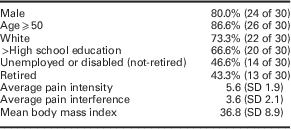
A total of 30 patients participated in study interviews (Table 1) from which several themes emerged. While participants at times discussed various medical conditions, by design interview discussions focused on co-occurring episodes of overweight and chronic pain and associated interactions with primary care providers. Participants discussed frustration with a perceived lack of information tailored to their comorbidity and a desire for a more personalized treatment experience. Second, participants found available medical approaches to their comorbidity unsatisfying, and discussed the need for a more ‘whole person’ approach when treating co-occurring chronic pain and obesity. Third, discussions focused around the need for providers to initiate efforts at education and motivation enhancement. Finally, participants expressed a desire for their practitioners to show concern and understanding regarding the unique difficulties associated with this comorbidity. The following sections describe these themes in greater detail.
Participant characteristics (n=30)
Need for information tailored to comorbidity
Participants expressed frustration that there was limited support, beyond general information, to aid them in understanding and managing their comorbid weight and pain in their everyday lives.
Some participants expressed frustration about the banality of the information that was provided in primary care settings commenting that it did not extend beyond what they already knew but struggled to apply in their daily life. As one participant stated, ‘I mean I already knew everything … I know what I’m supposed to eat. I like spinach, I like turkey, fish, and chicken. I’m not a meat eater. I like vegetables. That’s how you’re supposed to eat … I do eat that way. But then I screw up, okay?’ (Pt #16). Similarly, others found information provided to be repetitive, uninteresting and/or to lack relevance to their everyday lives. One participant described information provided as ‘Pretty generic … What I know of the arthritis and pain associated with the weight, I learned that from my reading’ (Pt #4). Given these frustrations, participants commented on the need for specific information, explanations, ties to personal experience and assistance with translation of skills at home and in ‘real world’ environments. Participants were open to referrals to other practitioners to provide this support and tailored information/education. However, they also wanted their primary care provider to provide appropriate context and education regarding any referrals made. Patients described this as being helpful not only with managing their symptoms, but would also enhance a sense of care continuity. As one participant described:
‘I suppose it’d start out with the GM, the general medicine guy, when they look you over, says, “I think according to my chart, for the men’s chart, based on your height, age and that, you should weigh this amount because it will put less stress on your heart and all these other good things,” something specific. Then you go, “Okay, how do I do it?” Well then they point me into [treatment] or anything else. I’d go along with that … I think that is very important.’
(Pt #28)
Frustration with available treatment approaches and desire for motivation enhancement
Participants expressed frustration due to their perception that treatment approaches offered in primary care were limited predominantly to symptom management via medication, but did not regularly include other treatments they described as more ‘holistic.’ Participants felt that treatment approaches for obesity and pain appeared compartmentalized, and perceived that providers were only willing to address one of the two issues rather than take a more integrated approach to address both simultaneously. For example, one patient who recently underwent knee replacement surgery commented that he wished the medical provider who cared for his knees could have also helped him address his weight ‘I was at 268 [pounds], and I said, “Hey, I’m getting too heavy,” but in all that time the doctor that did my knees never referred to weight … never said, “Get out and lose weight,” or whatever. All he did was to fix your knees up.’ (Pt #21). Participants found this lack of integration concerning, and sometimes perceived that providers were blaming and/or punishing them for having pain and obesity and offering little assistance to aid in management. Despite such experiences, participants recognized the important role of motivation on successful self-management and sought their provider’s help in increasing motivation to maintain a program of pain and weight self-management. One participant described this desire for help, the role of motivation and the frustration with feeling blamed as:
‘It’s just you know, “You’ve got to get your weight down” … you know I was really impressed with Dr. B because she had something to turn me to and it really, it put some energy back to the fact that I could do it. The other doctors I’ve just never had anybody say that, “This is what you should do” or “This is what you should try”. They just say, you know, “You’re really heavy, fat, you know, so you really need to get it off and you know, exercise is a big part of that”. So yeah it is, but … [these conversations feel like] They’re a put down. Yeah, it’s like, “Well you didn’t try hard enough and you’re not trying hard enough”. Just that kind of thing, you know.’
(Pt #18)
Provider initiated concern and communication
Participants noted several provider behaviors that inhibit effective patient–provider interactions and discourage treatment engagement. Participants indicated that providers often lack follow-through to fully support patients in understanding the relationship between pain and weight symptoms and self-management, whether through their own care or through referral to a specialist provider. One participant noted:
Well I was sent to ortho, and they did a scan, um, on my back MRI of my back, and X-rays. And they just say there’s nothing they can do about it except to um, keep moving, and like they said lose weight and go swimming. Well, I’m stuck … Ya know what, the women’s health clinic never mentioned my weight. They never even say to me, well if you lose 10, at least 10 pounds, your blood pressure will go down and whatnot. Nothing was ever said to me. There’s no, there’s no teaching, there’s no words of encouragement, nothing.
(Pt #12)
Others perceived that providers did not inquire about comorbid pain or weight symptoms, and viewed this as a lack of compassion and engagement with their medical care. Indeed, participants specifically commented on their desire for more prompting from their physicians, particularly because they felt uneasy bringing up topics without such queries. Participants also highlighted the importance of being asked about current pain and weight symptoms as a gateway to more detailed, contextualized conversations. Some participants commented that while some providers would ask about pain/weight relevant concerns, they seemed to only do so to provide information for the medical records system rather than as a starting point for conversation and behavior change. Participants felt a more personal approach was necessary to facilitate discussions focused on addressing comorbid weight and pain. One participant described such a personal approach as:
‘Part of it is how they talk to you. [My doctor] he talks to you like someone who actually cares. And if he doesn’t understand your answer you gave him, he’s actually listening to you enough, even if he’s looking at the screen, to say, “Ok, the doctor you saw last time said this, and what I think you said to me is this, and they don’t seem to be telling me the same thing. What am I missing, here” type thing. He acts like he listens.’
(Pt #10)
However, participants were also sensitive to provider’s stated expectations for treatment outcome, and some struggled and experienced subsequent shame when they did not meet the provider’s expectations for self-management of pain and weight.
Discussion
These qualitative data suggest that individuals with comorbid chronic pain and obesity may not perceive their clinical experiences as tailored to the specific needs of this comorbidity. Participants felt that treatment options were frequently offered without help translating the approach to everyday life and without other supportive approaches that might increase their motivation and/or knowledge to change their behavior. Participants felt that providers did not regularly ask about comorbid pain and weight symptoms and therefore perceived that providers were less engaged with their provision of care.
Our findings are consistent with existing research examining the process of and preferences for care among patients with multimorbidity. Patient-centered approaches dominate recommendations for care for those with multimorbidity (Noel et al., Reference Noel, Parchman, Williams, Cornell, Shuko, Zeber, Kazis, Lee and Pugh2007; Bayliss et al., Reference Bayliss, Edwards, Steiner and Main2008). Our respondents’ perspectives enrich these findings by identifying specific components of the care experience that may improve the overall care process for those with comorbid pain and obesity. An important finding from this data is that participants with comorbid chronic pain and obesity want their primary care providers involved in actively coordinating their care provision in a unified, rather than compartmentalized manner. Participants suggested they would feel a greater alignment if their practitioner were to regularly ask about comorbid symptoms and actively follow-up on these symptoms in subsequent visits. Patients also expressed a desire for primary care providers to help them learn self-management skills appropriate for their comorbidity and to aid them with increasing their motivation to engage in these skills. This is consonant with existing findings that patients with multimorbidity are willing to learn the self-management skills necessary to address their multiple conditions (Noel et al., Reference Noel, Parchman, Williams, Cornell, Shuko, Zeber, Kazis, Lee and Pugh2007) and that patients want primary care providers engaged in this process (Noel et al., Reference Noel, Frueh, Larme and Pugh2005).
Our findings are also generally consistent with existing research examining the process of and preferences for care where the research focus has been chronic pain or obesity/overweight alone, although some intriguing differences can be highlighted. Research examining treatment preferences regarding obesity care suggest patients often feel stigmatized and they may subsequently avoid treatment in part due to these feelings (Mold and Forbes, Reference Mold and Forbes2011). The patients in our sample expressed the importance of compassion and respect from providers, and some described experiences that caused shame following interactions with providers who they perceived as blaming them for their pain and weight. However, rather than indicating a desire to avoid treatment, participants desired increased provider engagement, genuine concern and follow-through. Other research that has drawn from primary care clinic populations has found a similar desire among patients with overweight/obesity for increased provider engagement even in the face of stigmatization (Heintze et al., Reference Heintze, Sonntag, Brinck, Huppertz, Niewöhner, Wiesner and Braun2012). While not examined in the present study, it may be that a sample such as ours, drawn from individuals already attending primary care clinics, may be biased against those who are already avoiding treatment (and, thus, not attending primary care clinic appointments) due to prior experiences of stigmatization.
Research examining patients’ experience with chronic pain care has found that patients desire providers to listen empathically and follow-up appropriately (Upshur et al., Reference Upshur, Bacigalupe and Luckmann2010) and provide individually tailored advice (Liddle et al., Reference Liddle, Baxter and Gracey2007). These themes were expressed by patients in our sample as well. One theme that emerges in other examinations with chronic pain samples is a concern about provider trust and believability of pain symptoms, particularly with regard to prescription medication and associated potential for addiction or drug diversion (e.g., Upshur et al., Reference Upshur, Bacigalupe and Luckmann2010). Such concerns were comparatively limited in our sample. This could be for several reasons. Our sample was predominantly older, male, white and drawn from a very specific clinical population (VA Hospital), which could influence their experience in the primary care environment around these issues. Our methods also focused on the comorbidity of pain and obesity, rather than specifically the concern of pain.
The respondents in the current study desired treatment approaches that would aid in motivating them to modify behavior, while also learning particular skills they could utilize in their everyday lives to help manage both pain and weight symptoms when they co-occur. One way to achieve these goals may be to explicitly focus on treatment targets shared between the two conditions that, if addressed, may yield synergistic benefits for both. For example, behaviors known to address both pain and weight symptom management could be promoted (e.g., graded physical activity) (NHLBI, 2000; Scascighini et al., Reference Scascighini, Toma, Dober-Spielmann and Sprott2008) in such a way that patients can translate recommendations more easily into their daily lives and adjust for their own purposes. Such an approach is in line not only with the preferences expressed by these study participants, but also with prior research regarding preferences of patients with multimorbidity (Morris et al., Reference Morris, Sanders, Kennedy and Rogers2011), and what little is known about effectively addressing chronic pain and obesity when they co-occur (Janke and Kozak, Reference Janke and Kozak2012). Patient engagement and motivation – areas of concern expressed by these respondents – may be maximized when providers present a unified and individually tailored rationale that demonstrates how treatment recommendations may benefit both pain and weight symptoms. The limited evidence examining multimorbidity treatment indicates that integrated approaches focusing on specific risk factors or functional limitations may improve outcomes (Smith et al., Reference Smith, Soubhi, Fortin, Hudon and O’Dowd2012; Haibach et al., Reference Haibach, Beehler, Dollar and Finnell2014). Furthermore, treatment for multimorbidity may be more successful when treatment engagement is increased and sustained, for example, through motivational interviewing approaches and tailored, individualized treatment provided by a coordinated, interdisciplinary treatment team (Carroll, Reference Carroll2004; Haibach et al., Reference Haibach, Beehler, Dollar and Finnell2014). Collaborative care and coordination of providers contributes to improved patient outcomes and may be particularly relevant for patients with multimorbidity (Soubhi et al., Reference Soubhi, Bayliss, Fortin, Hudon, van den Akker, Thivierge, Posel and Fleiszer2010).
Encouragingly, research suggests provider’s goals for optimal treatment parallel those expressed by our respondents; providers also desire an integrated-individualized approach and effective patient–provider communication (Luijks et al., Reference Luijks, Loeffen, Lagro-Janssen, Weel, van Lucassen and Schermer2012). However, these and other findings suggest a significant gap remains between the wishes of patients and providers and current practice in primary care. Research suggests that providers do not feel prepared to address the complex, interconnected needs of their patients with multimorbidity, particularly as they relate to the interactions between conditions or the management of multimorbid conditions (Bower et al., Reference Bower, Macdonald, Harkness, Gask, Kendrick, Valderas, Dickens, Blakeman and Sibbald2011). Primary care providers struggle with system factors such as limited time and lengthy treatment agendas, an insufficient evidence base for disease management, a lack of clinical guidelines and perceived deficiencies in communication skills as they attempt to effectively manage patients with multimoribities (Sinnott et al., Reference Sinnott, Mc Hugh, Browne and Bradley2013). Such challenges are in tension with desires expressed by our participants for interactions that would synergistically address comorbid pain and obesity. Thus, these early findings suggest a divide remains between what patients and providers see as optimal care for multimorbidities like chronic pain and obesity, and what is possible within the confines of the current healthcare system.
Qualitative methods capture diversity and complexity, however, cannot be used to make generalizations about populations. Participants in this study represent a range of BMIs and conditions associated with chronic pain. Important differences may exist among different weight and pain presentations that may influence conclusions drawn from these data. This was a small sample of patients from a veteran’s affairs hospital composed predominantly of older, white males, and therefore, may not be representative of the general population. Although, considering that many experience dissatisfaction with the level of care coordination they receive (Bodenheimer, Reference Bodenheimer2008), participants in the current study may not be entirely unique in their dissatisfaction. Furthermore, very little is known about the perspectives of older adults and/or males with regard to weight and weight management as many studies examining weight often skew toward younger and/or female samples. Clearly, the present study lacks the perspective of gender/race/ethnicity beyond those presented by the participants interviewed here, and this is an important limitation. However, given the increasing rates of obesity in older adults (Samper-Ternent and Al Snih, Reference Samper-Ternent and Al Snih2012) and the increased likelihood for chronic pain with increased age (Landmark et al., Reference Landmark, Romundstad, Dale, Borchgrevink, Vatten and Kaasa2013) the focus here on older males may provide a unique and important perspective. Future research should more fully examine the perspectives of those not included here.
Two important findings from this data appear to be that participants with comorbid chronic pain and obesity want their primary care providers involved in their care provision and desire a greater alignment regarding treatment goals. Participants suggested they would feel a greater alignment if their practitioner were to ask about comorbid symptoms and actively follow-up on these symptoms in subsequent visits. Therefore, one possible area of future research could explore whether provider’s inquiring about comorbidities at subsequent visits improves patient satisfaction and patient–provider alignment. What is also apparent is the need to develop evidence-based practices to address and ameliorate the suffering caused by comorbid chronic pain and obesity. Finally, providers should be mindful that any behavior change will require motivation on the part of the patient, and patients desire assistance with maintaining their motivation for such change. Thus, while these findings may not be widely generalizable, they can be understood as an important step in developing our understanding of the specific needs of individuals with chronic pain and obesity and moving toward treatment approaches that more effectively meet these needs.
Sample participant responses

Acknowledgments
The authors thank all the patients who participated in this study for their time and effort. The authors also thank Kimberly Bonk, Gerta Dume, Cody Kearse, and Christine Nguyen for their help in transcribing interviews.
Financial Support
This study was funded in part by a VA Health Services Research & Development Project Grant (TPP 42-004).
Conflicts of Interest
None.
Ethical Standards
The authors assert that all procedures contributing to this work comply with the ethical standards of the relevant national and institutional guidelines on human experimentation including The Belmont Report and with the Helsinki Declaration of 1975, as revised in 2008.