



Introduction
Substance misuse in the Middle East
The use of drugs and alcohol in Middle Eastern countries is forbidden by law and religion, making it culturally unacceptable. Honour is important and dishonour brings shame to the whole family which is the foundation of Arab culture (Dumitrescu, Reference Dumitrescu2005). Such viewpoints have created stigma against those suffering from problematic substance use. This and may inhibit individuals in Arabic countries acknowledging that they have a problem and need treatment.
In the United Arab Emirates (UAE), drug laws are strict. The government is working to tackle substance misuse from supply to prevention and treatment. Support is available to help users address their habits. There is legislation relating to moderating the punishment of users especially first-time offenders who are being referred to treatment and rehabilitation centres rather than prison (Emirates Identity Authority, 2014).
Addiction treatment in the UAE is relatively new and there is limited research from Middle Eastern countries on this topic. The UAE is an affluent country with several treatment centres modelled on Western services. However, none have been formally evaluated through research. The officially recognized addiction treatment centre is the National Rehabilitation Centre (NRC, 2015) in Abu Dhabi, established in 2002 under the direction of the late UAE president. Outpatient services, including medical services, psychiatric services, addiction medications and behavioural treatments are integrated with residential programmes to deliver continued care. The NRC also has an education, research and development role to move substance use disorder treatment forward in the region [National Rehabilitation Centre (NRC), 2015].
In the West, substance misuse is managed at an earlier stage with the aim of preventing addiction and related harms. A common approach for this is the Screening Brief Intervention and Referral to Treatment (SBIRT) model (Babor et al., Reference Babor, McRee, Kassebaum, Grimaldi, Ahmed and Bray2007; Madras et al., Reference Madras, Compton, Avula, Stegbauer, Stein and Clark2009; Young et al., Reference Young, Stevens, Galipeau, Garrity and Singh2014; WHO, 2003b) Research supports primary care as an effective setting for identifying someone at risk of harmful substance use (Parker et al., Reference Parker, Libart, Higgs, Schrader., McCollom, Fanning and Dixon2013).
Research around health service development is relatively new in the UAE. During 2012–2015 a project was undertaken to evaluate the implementation of SBIRT in primary care in Abu Dhabi using a non-randomized-controlled intervention design. Data collection included quantitative and qualitative components (Matheson et al., Reference Matheson, Pflanz-Sinclair, Almarzouqi, Lee, Bond, Batieha, Al Ghaferi and El Kashef2017). It is increasingly considered good research practice to undertake a process review as part of a trial of a new or complex intervention. The UK Medical Research Council stated that process evaluations ‘can be used to assess fidelity and quality of implementation, clarify causal mechanisms, and identify contextual factors associated with variation in outcomes’ (Craig et al., Reference Craig, Dieppe, Macintyre, Michie, Nazareth and Petticrew2008). A qualitative study can provide insight into how an intervention was delivered as well as why an intervention does/does not prove to be effective. Given the challenges of introducing screening for substance misuse in a culture in which it is even more heavily stigmatized than in other parts of the world, and into a region of the world that is relatively new to health services research, it was considered essential to undertake a qualitative study. This manuscript reports qualitative findings from physician interviews as key stakeholders in service delivery. Quantitative findings are presented elsewhere (Matheson et al., Reference Matheson, Pflanz-Sinclair, Almarzouqi, Lee, Bond, Batieha, Al Ghaferi and El Kashef2017).
Methods
Study design
A qualitative study design was used as part of a collaborative project between the NRC in Abu Dhabi (UAE) and the University of Aberdeen (UK) between 2012 and 2014. This mixed method approach gave both breadth and depth to the overall evaluation. The study received ethical approval by the NRC ethical review board which required participant’s written consent.
Interviews with primary care physicians in Abu Dhabi were conducted by a trained interviewer who was a member of the Aberdeen Research Team.
Sample and intervention
Two primary care clinics in Abu Dhabi were identified for the study. Both were selected based on the number of substance misuse-related cases they had consulted within the 24 months before study begin.
All 21 physicians from the two intervention clinics were approached by email from the Health Authority in Abu Dhabi (AHS) to attend a two-day training workshop on substance misuse management by use of the SBIRT model (SBIRT training module, 2002) in combination with the associated research project to evaluate implementation of SBIRT in practice. Of the 21 physicians approached, 17 (80%) were able to attend the training workshop. The workshop was conducted by an international expert in SBIRT. Following training, physicians were asked to approach all UAE nationals aged ⩾18 years who attended the clinic for an unscheduled appointment for recruitment. Once patients had been consented, they were screened for their risk of substance misuse, and a brief intervention was delivered if the patient had a moderate- or high-risk score on the ASSIST (WHO, 2003b). Patients with a high-risk score on the ASSIST were referred to the NRC for further treatment. A full description of the intervention is described elsewhere (Matheson et al., Reference Matheson, Pflanz-Sinclair, Almarzouqi, Lee, Bond, Batieha, Al Ghaferi and El Kashef2017). Once recruitment was finished, the 17 primary care physicians who had participated in training were asked by email from the researcher at the University of Aberdeen if they would be willing to be interviewed to discuss their experiences of implementing SBIRT in primary care.
Data collection and analysis
Individual face-to-face interviews were the preferred method in this setting as cultural privacy restricts open focus-group discussions. On local advice it was considered that suspicion and secrecy related to Arabic culture may prevent interviewees from sharing information with others. In addition, non-verbal communication is particularly important when interviewing individuals whose main language is not English and who were not familiar with interviews for research purposes. In-depth interviews are known to be suitable for international projects (Halligan, Reference Halligan2006) where it is particularly important to clearly understand meanings, experiences, ideas, beliefs, values and other intangible information around the topic of substance misuse management.
The researcher emailed a study information sheet to the clinic in advance, introducing herself, explaining the purpose of the interviews and the data management procedure. Names and contact details of those willing to be interviewed were provided and these were then contacted by another email with an official invite letter. Eleven of the 17 (65%) agreed to be interviewed. A mutually convenient interview time and location was arranged and a consent form was sent. Where this could not be agreed, the interview was arranged over the phone. All interviews were tape recorded and later transcribed verbatim.
A topic guide (see Appendix 1) was developed by the research team to complement the quantitative evaluation by seeking insight into experiences, attitudes and practical delivery of SBIRT. The topic guide was informed by previous literature on cultural issues and substance misuse management. It covered the SBIRT training event with a focus on awareness of SBIRT, training content and delivery, attitudes towards treating substance misuse patients, willingness to use SBIRT in practice and practical delivery of SBIRT in local Arab culture. It was piloted by phone on three physicians from Abu Dhabi. Most interviewees had requested a topic guide beforehand so that they knew in advance which topics were to be discussed. Trust, and a comfortable rapport, had to be established at the beginning of each interview so that the interviewee would feel sufficiently relaxed to volunteer information.
The interviewer reminded participants of issues around confidentiality and anonymity. This included ending the interview at any time they wished to do so. Physicians were invited to speak freely, with additional probes and prompts used as required. Each interview lasted ~30 min and all were conducted in English. In addition to signed consent, verbal consent was reaffirmed before the start of the interview. Interviews were digitally recorded with permission from the physicians. Not everyone felt comfortable with this and two did not want to be recorded; they were asked the same questions and notes were taken by the interviewer.
Interviews were fully transcribed verbatim and edited to remove names to preserve anonymity before coding. An inductive, thematic analytical approach was used in which themes were identified and a range of views under those themes presented. A coding framework was agreed by the researcher and principal investigator, following review of initial transcripts. Interview data were analyzed using NVIVO. Emerging patterns were identified for the initial ordering of themes and sub-themes. Once this had been performed, framework analysis was applied to get a structured process of theme-based analysis. This framework created a structure for data management which helped to organize, summarize and reduce data (Gale et al., Reference Gale, Heath and Cameron2013). Adopting framework analysis also allowed the work to be reviewed individually and collectively to develop, review and refine themes and sub-themes through an iterative process. A range of views under those themes presented.
Results
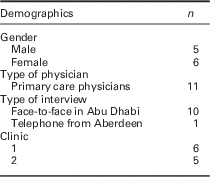
Eleven of the 17 physicians approached agreed to be interviewed. In total, 10 interviews were conducted face-to-face in Abu Dhabi and one by telephone from the research office in Aberdeen, UK. The demographic profiles of physicians are reported in Table 1.
Physician demographics
Themes largely mapped onto the topic guide although new themes also emerged. The three main themes and associated sub-themes are as follows.
Theme one – the SBIRT screening project:
(i) SBIRT training and skills development
(ii) Research compliance
(iii) Patient involvement
(iv) Future implementation in practice
(v) Barriers to implementation
Theme two – cultural issues:
(i) Substance misuse in the UAE
(ii) Patient fear of legal consequences
Theme three – patient response.
These themes are presented below using illustrative quotes.
Theme one: the SBIRT Screening Research Project
SBIRT training and skills development
Interviewees were asked about their experiences and perception of the project. Both the research methods and the actual screening for substance misuse using a questionnaire (the ASSIST) was a new experience for many physicians and welcomed by most. They felt that it was a good opportunity to develop skills in a challenging area. The training had taught physicians new ways of approaching and dealing with patients who appeared to be having problems with substance misuse. However, it was only considered an introduction and most would have liked more training. While the training was enjoyable, and everyone had been eager to start recruitment, actually using the skills in practice was disappointing. It was difficult to deliver and some even perceived it as a burden:
‘…. you find it more exciting when you get the training…. but having it on the floor…there was some problems for our physicians to get it done…. clinic is busy and you have patients waiting…’ (8)
Nonetheless, the general opinion was that SBIRT training raised awareness of addiction as a disease and helped to develop sympathy for substance misusers instead of judging them over bad choices.
‘…before I was not feeling sympathetic with those patients, but now I am…they are real patients, and you have [to] help them….’ (3)
New skills for screening patients for substance misuse were learned, particularly for developing dialogue around this and gaining a patients’ trust and confidence to help communicate about treatment options. The ASSIST questionnaire provided a structure of how to approach the subject:
‘…we are not very familiar with the type of questions… so it helped a lot, to get the knowledge…how to approach them…’ (1)
It was commented that the screening was strange at the beginning but confidence improved over time:
‘… strange in the beginning… but…afterwards it was okay…it did get easier…’ (6)
Research compliance
The study training included the completion of study forms which were collected by the NRC once they were completed. However, physicians were not familiar with these types of questionnaires which resulted in confusion over how they should be completed, despite training having covered this. Questionnaires were often sent back to the clinics as they had not been completed as instructed and physicians were often left wondering what was expected of them. As recruitment continued it became apparent that the time required to explain the study, obtain consent, complete the questionnaires and if needed, deliver an intervention, did not allow to recruit and screen patients to the standard outlined in the protocol:
‘…it got to the stage where we were rushed…we were just getting everyone to fill in the form, because we didn’t have the time, it wasn’t done properly.’ (5)
Every Emirati walk-in patient over 18 years was supposed to be approached to participate during the recruitment period. In practice, there was misunderstanding around this as interviewees were not familiar with the principles of research, in particular with the concept that inclusion criteria applied to a set population (Emiratis aged 18 and over with unscheduled appointment) that was to be universally approached for screening. Some were of the opinion that patients should be selected for the project and found it very difficult to ‘predict’ which ones were most suitable, some felt that they were ‘limited’ to their own patients as they were most comfortable with them. Others commented that as they were not given instructions of whom they should screen they felt they were able to choose:
‘… nobody told me…I don’t have a list…from the start I had the chance to say yeah, I’ll take this one.’ (9)
This information had in fact been provided at training. It was felt that any future research projects should have a random or listed allocator of which patients to screen, otherwise it will end up again that patients will be selected for recruitment.
Patient involvement
In total, six participants felt that the project was also a good experience for patients as many were willing to participate, highlighting that a problem may exist.
‘…the feedback from my patients, they are happy, because we are taking care of them…they appreciate us…’ (2)
Three interviewees experienced a mixed reaction and there were some patients who were reluctant to participate in the study and only did so because the physician had asked them to:
‘…we are in a position of power, so a lot of patients were happy to fill in the questionnaire….I don’t think they felt they had a lot of choice.’ (6)
This suggestion that physicians believed some patients felt they had no choice may reflect a cultural difference where the concept that a physicians’ request can be refused may be uncommon.
A problem noted by many participants was that patients who were known substance users simply disappeared once they had heard about the project. At the beginning of the project, several of them would turn up but once the screening and treatment options at the NRC were explained, they did not return. Furthermore, a number of patients did not understand what the project was about or had ever heard of the substances for which they were screened. This meant that each substance had to be explained in detail for every question which took longer than the allocated 15 min.
Future implementation in practice
Interviewees were asked if they could suggest how SBIRT might work in normal practice. Some mentioned that a nurse could complete the ASSIST with the patient in the waiting area as it is ‘very simple’ and will ‘strengthen the bond’ between patient and nurse. Others felt that the screening questionnaire could only be done by a doctor as there was more trust between doctors and patients:
‘…should be delivered by physicians… nurse is different…patients are more open to doctors…study coordinator would not be a good idea as this would make patients more afraid.’ (4)
The majority of interviewees believed substance misuse screening should be a regular service in primary care. To ensure that this is done by everyone, a code could be added to the patient management system to monitor it as part of daily productivity. Another suggestion was to incorporate screening into the computer system and it pops up for each patient. This would prevent physicians from selecting patients, and patients selecting clinics should they try to avoid being screened. One interviewee suggested that each consultation should have time dedicated to explain the screening and give the patient a chance to speak freely. In his experience, as soon as a patient saw a long questionnaire they would deny every having had any problems, even if it this was obvious. Some felt that the ASSIST questionnaire was too long and should be revised with input from clinicians to fit into Abu Dhabi society and reflect current problems.
Every interviewee was in favour of some form of media campaign to get the information about SBIRT out to the whole country and let people know that this is going on in the primary care clinics so that they could attend a primary care clinic to seek further advice should there be a need. It was suggested that a media campaign could also improve follow-up appointments as often there is even more fear of legal consequences if a patient returns to the clinic for addiction issues.
Barriers to implementation
Several barriers were identified including compensation and incentives, time targets; knowledge about specialist treatment and patient fear of legal consequences. At the time of interview, recruitment was finished and everyone knew how much work had been involved. Some interviewees had very strong feelings about the lack of incentives and compensation given to participating physicians. They believed this had been promised but not delivered at time of interview:
‘…main complaint is that there are no incentives for the work….my colleagues all complained…somebody told me that they would give money to the AHS, but nothing came to us.’ (3)
Thus, physicians lost enthusiasm for the project and fidelity may have been compromised although this was not measured.
Limited time in consultations was seen as the biggest barrier. In particular, when dealing with a topic which is highly sensitive in Islamic society, it requires more time than normal to build trust and confidence before screening starts:
‘…. this is not like, do you have hypertension, do you have a urine infection, no…we need to see them…. make a rapport, make him [the patient] confident…he’s still afraid that you will document this….so it needs time to convince them, don’t worry…. this is for your help, this data never go anywhere, no one can know this…’ (7)
The project detracted from physicians meeting their agreed targets. The extra time required for screening was not recognized and physicians were concerned that they would be penalised. Bonuses are based on annual performance, and there was concern that time spent on the project is deducted from their productivity. Physicians would be asked by their managers why they were behind schedule; if this was because of the SBIRT research project, they were told that they must prioritize their regular work, this perceived lack of recognition of their willingness to learn about on substance misuse management in primary care was another barrier and did not encourage participation.
Theme two: cultural issues
Substance misuse in the UAE
Cultural issues played a crucial role in patient screening:
‘…because our culture, our people, they deny, they deny to answer, if they have taken anything like drugs or alcohol….’ (1)
Initially it was relatively easy to screen patients, but once it became known that their clinic was participating in this project, patients went elsewhere. According to one physician, patients would not share the screening experience with anyone because of a perceived underlying element of shame. These cultural taboos are not only in relation to the substance used but also to seeking treatment. It was commented that Abu Dhabi Society is different than Western society, especially when discussing drugs, there was some frustration of not knowing how to communicate to patients that they can be helped but only if they open up and talk about it to them.
Interviewees reported that the project had highlighted that the problem of substance misuse in Abu Dhabi was greater than originally thought:
‘…. before the project…only two we had…. now we have more…the problem is bigger than I thought….it’s bigger, a lot of screening, you know, you hear things with some patients.’ (9)
And
‘…we are facing a real problem here, especially with young age…25 to 35…using illicit drugs.’ (2)
Patient fear of legal consequences
Due to illegal aspect of substance misuse, not all patients were positive about screening and there was considerable fear of potential legal consequences. Patients were concerned about being tracked through law enforcement agencies and ending up in prison even though they were constantly reassured that this would not happen as substance misuse was a medical problem and not a legal issue:
‘….we tried to tell them…we don’t use the computer….there is nothing going to be recorded and it’s not a police, you know, survey or anything, that later will trace you down, but still….the confidence is the biggest problem…’ (1)
Two interviewees explained that while some patients were very willing to speak about substance misuse as soon as they saw the questionnaire and the physicians writing something down, they became afraid that their personal information was recorded for passing on to the police. This fear of recording personal information turned into a problem at a later point when patients were reminded about their follow-up appointment. As nothing beyond a first name was recorded, physicians were unable to identify or locate these patients. This also overlaps with theme three, patient follow-up.
This overlaps with theme three: patient follow up.
Theme three: patient response
Patients who had a medium or high score for any of the substances screened, except tobacco, should have attended a follow-up appointment at the clinic three months later but none attended. Some interviewees commented that they tried, unsuccessfully to contact patients, others did get hold of the patient but the patient would not turn up for the agreed appointment. Another remarked that as they were told to keep the screening ‘anonymous’, only first names, for example, ‘Ahmed’, would be recorded on the recruitment log, so it was not possible to identify this patient at a later stage. This partly related to physicians not having much experience in research and confusing anonymity with confidentiality. One interviewee recalled a patient pleaded not to be called again:
‘…. please don’t call me again, I am starting a new job, please forget about me, don’t call me again, I don’t want this to affect my new job.’ (4)
Another speculated that more encouragement may be needed. Reminders, for example, sending a text message before the appointment, may be a helpful way to encourage patient compliance.
During the project, a small number of patients were identified that were considered to really need specialist help; the patients were given the paperwork for referral but refused to go:
‘I don’t know…maybe more than three patients, with a letter in their hands, to the [specialist treatment centre], and then when I communicated with the doctor at the [specialist treatment centre], no one had, they refused to go…’ (1)
This problem of non-compliance was recognized as a cultural difference by another interviewee who explained that Emiratis do not have the same sense of time as in Western society:
‘…here the patient, usually they’re not that good with follow up three months, they can do three weeks, one month, but this population, they are not used to like calendar, having appointments…. I’m not sure how much was emphasised in the first appointment.’ (8)
Discussion
The main finding was that physicians demonstrated a positive attitude towards approaching and managing substance misuse through SBIRT. Training was well received and enabled physicians to understand their new potential role. This has been shown in other studies where primary care physicians received a short training course on mental health management, and training resulted in a positive change in attitudes (Al-Khathami et al., Reference Al-Khathami, Rahim, Sheikh, Mangoud, Abumadini and Main2003; Mitchel et al., Reference Mitchel, Broyles, Pringle, Kraemer, Childers and Buranosky2016). A study by Kanu et al. (Reference Kanu, Cain, McLaurin-Jones, Scott, Kwagyan, Fassassi, Greene and Taylor2016) found even short modules of SBIRT training delivered to medical students quickly lead to acquisition of SBIRT skills in practice. Thus residency educators who have limited time or resources may utilize as few as one mode of training to disseminate skills among healthcare providers. This was not the case in Abu Dhabi where considerably more training would have been welcomed by all participating physicians.
Physicians expressed their satisfaction with training; their willingness to adopt SBIRT and a role for primary care management of substance misuse in Abu Dhabi. However, due to local delays, at the time of the interviews the compensation which had been promised at the start of the study had not been paid. This led to expressed dissatisfaction which may have contributed to less positive attitudes towards SBIRT implementation and a decline in recruitment rates that was identified in the quantitative measurement of patient outcomes reported elsewhere (Matheson et al., Reference Matheson, Pflanz-Sinclair, Almarzouqi, Lee, Bond, Batieha, Al Ghaferi and El Kashef2017). These findings relate to the wider literature on paid-for-performance in healthcare implementation. A systematic review of pay-for-performance remuneration for individual healthcare practitioners (Houle et al., Reference Houle, McAlister, Jackevicius, Chuck and Tsuyuki2012) found that remuneration improved preventative activities. Another example of incentive-based performance was explored in a qualitative study by Greene et al. (Reference Greene, Kurtzman, Hibbard and Overton2015) who surveyed primary care physicians’ perception of working under a group-level incentive where physicians that were part of a team receive the same incentive based on the team’s performance versus individual-based incentives.
Findings revealed that physicians found the concept of SBIRT both acceptable and feasible. However, a number of practical issues were raised, for example time restrictions when working in a busy clinic which may have resulted in completing screening forms in a hurry and resulting inaccuracies. Physicians suggested how SBIRT could be applied in the future, for example ensuring information was given in the waiting areas so patients were prepared; getting a nurse to complete the screening form in the waiting area and making screening mandatory. Some of these suggestions from physicians could be tested in further evaluations of different models of implementation. There was a general acceptance that the more widespread screening was implemented the more acceptable it would become to physicians and patients. Physicians believed there was a bigger problem in their patient group than screening indicated. It was suggested that people were reticent about admitting substance misuse for fear of involvement of the police or the effect on employment or family.
Strength and limitations
The strengths of this qualitative process evaluation is that alongside the quantitative findings it gives considerable insight into the outcomes of the study in particular the low level of positive screening and the lack of patient attendance for follow-up. It also exposed unintended findings that patients may have felt obliged to participate in the study. A disadvantage was that it was not possible to interview patients to get their perspective on this. There has been a recognized need to assess potential coercion to participate in research, particularly in primary care research where there is concern about gaining informed, voluntary consent in the context of power relationships (Barton et al., Reference Barton, Tam, Abbott and Liaw2016). In addition to the power relationship, the cultural aspect of Emiratis society where they feel that they cannot refuse such requests, may have impacted on this. Particular attention should be paid to this in future studies in research naive societies. In contrast, in the United States, SBIRT is considered sensitive with 90% of patients willing to report substance use disorder (Miller et al., Reference Miller, Ravenel, Shealy and Thomas2006).
A limitation is that not all of the physicians who participated in SBIRT were interviewed. This was due to difficulties in arranging suitable times for interview but these physicians may have had different views from those represented here. Interviews were conducted in English which was not the first language of most interviewees although widely used in the UAE.
Insight from qualitative findings
Three patients should have been referred to specialist treatment based on their screening score (Matheson et al., Reference Matheson, Pflanz-Sinclair, Almarzouqi, Lee, Bond, Batieha, Al Ghaferi and El Kashef2017). These patients were not followed up beyond referral because their care was then outwith primary care. Referral to specialist treatment was not normal practice for primary care physicians who might usually refer to another institution. As this care pathway was new and physicians had limited knowledge of it, there may have been some difficulty in communicating to patients the importance of attendance. Primary care physicians could further develop their relationship with specialist treatment centres to help facilitate referrals. Other research found patients in specialist treatment centres benefit from close primary care coordination (Shapiro et al., Reference Shapiro, Coffa and McCance-Katz2013).
Unfortunately, none of the patients who screened positive and received a brief interventions returned for follow-up. Studies have investigated reasons for this in Western countries (Filippidou et al., Reference Filippidou, Lingwood and Mirza2014) but for an Arab culture dealing with a highly sensitive topic the recommended form of feedback might not work and a cultural specific method may be needed to improve follow-up attendance.
Implications for future implementation
In Arabic culture the public needs to be reassured that primary care physicians will not share confidential information on substance use with the police. Educational media campaigns were considered a means of getting across the message that drug and alcohol dependence is a medical condition and not a crime. There may be benefit from a more targeted approach to SBIRT which would first require an assessment of the demographic characteristics of ‘at risk’ groups.
Conclusion
This qualitative study provided insight into implementing SBIRT as well as conducting health services research (HSR) in the Middle East. There are cultural barriers to be aware of in each of the patient group, health professionals and Health Authorities, none of whom are familiar with HSR. For this specific intervention there was a willingness from primary care physicians and a perceived need for such a care pathway because substance misuse is evident in their clinical experience. However there is a reluctance among patients to admit to substance use in this culture which needs to be addressed to enable successful implementation.
Acknowledgements
The authors thank the primary care physicians for participating in this project which was novel and challenging for the UAE where research in primary care in rare.
Financial Support
A.B., A.A., A.E.K. and H.A.G. were employed at the NRC who also funded the study. However, these authors did not input into the analysis or interpretation of results.
Conflicts of Interest
There are no conflicts of interest for authors C.M., C.M.B., C.P.-S. and A.J.L.
Ethical Standards
The authors assert that all procedures contributing to this work comply with the ethical standards of the relevant national and institutional guidelines on human experimentation (National Rehabilitation Centre, United Arab Emirates and University of Aberdeen, Division of Applied Health Sciences) and with the Helsinki Declaration of 1975, as revised in 2008.
Appendix: Interview topic guide
Substance misuse screening in primary care is a new, unique and important service in Abu Dhabi healthcare. The aim of these interviews is to explore experiences of primary care physicians in Abu Dhabi who were trained on the SBIRT model and have used these skills to screen patients for risk of substance misuse. Findings from these interviews will help to determine whether substance misuse screening service should be introduced in other primary care clinics in Abu Dhabi.
Each interview will last ~20–30 min.
Experience
First of all, I would like to talk to you about the SBIRT training:
∙ What skills did you learn?
∙ Was training enough to learn how to screen patients and give brief intervention if needed?
∙ How have your skills changed over time?
∙ How often will you screen patients in the future?
∙ If so, will you screen every patient?
∙ Was it difficult to explain the reason for screening to patients?
∙ Were all patients willing to be screened?
∙ How do you think patients experienced this?
Attitudes
Has the use of SBIRT influenced your attitudes towards substance misuse problems?
∙ Have your views towards treating patients who are at risk of developing substance use disorders changed since using the SBIRT?
∙ Have your views towards treating patients who have already developed substance use disorders changed since using the SBIRT?
Practical delivery
∙ Can you see substance misuse screening work in your practice as part of routine?
Who do you think should deliver the service? Should more than one person be involved?
(Could be two or three: one to give out information/one for screening/one delivers brief intervention.)
∙ Would you need extra resources for this to be routinely delivered?
∙ If physicians are not willing to participate themselves, should/could they refer patients elsewhere?
∙ What barriers did you encounter in the process?
∙ What facilitators did you encounter in the process/what factors made it easier for you use SBIRT?
∙ How do you think the service should be monitored/evaluated for continuous improvement?
Other
∙ Do you have any other views or thoughts about how SBIRT can or should be taken forward in the UAE?
∙ Any other comments generally?
Thank you for your time – it is much appreciated.



