

Introduction
The use of various mineral-medicinal waters and clays as therapeutic agents has a longstanding tradition in Portugal and other countries influenced by the Roman culture. The Romans utilized local waters for both recreational and curative purposes. The historical use of mineral-medicinal waters and pelotherapy has been documented extensively. The practice of using minerals mixed with mineral-medicinal waters or seawater for therapeutic or cosmetic purposes dates to ancient Egyptian cultures and was prominent in Europe during the periods of Roman and Greek rule (Reference CarreteroCarretero, 2020a, Reference Carretero2020b; Reference GomesGomes, 2018).
Although the therapeutic effects of water and clay are considered to be part of empirical medicine, with traditions passed down orally through generations, therapeutic effects are reported even if the treatments are based on non-pharmacological modalities. Instances of such practices encompass consumption of specific water to solve digestive problems, inhaling nebulized water for respiratory conditions, applying mud poultices for dermatological or osteomuscular disorders, or immersing in mud baths for a range of therapeutic purposes.
Several studies in the literature have focused on formulating peloids using different mineral waters and geomaterials. Each customized formulation exhibits different responses during the maturation process (Reference Carretero, Pozo, Sánchez, García, Medina and BernabéCarretero et al., 2007; Reference Pozo, Armijo, Maraver, Zuluaga, Ejeda and CorvilloPozo et al., 2019; Reference Veniale, Barberis, Carcangiu, Morandi, Setti, Tamanini and TessierVeniale et al., 2004). The primary objective of these customized peloids was to be suitable for pelotherapy and provide a pleasant sensation when applied to the skin. In addition, certain technological properties, such as good skin adhesion, easy handling, large cation exchange capacity, and low cooling rate, have been emphasized (Reference Pozo, Armijo, Maraver, Zuluaga, Ejeda and CorvilloPozo et al., 2019). The presence of microorganisms in peloids has also been reported in several studies as playing an essential role in therapeutic action (indicated by mineral heat capacity) owing to their ability to modify mineral reactions, and their ability to prevent the toxicity of pathogenic microorganisms (Reference CarreteroCarretero, 2020a). For example, in veterinary medical practice, pelotherapy is gaining popularity for horse muscle and tendon rehabilitation, with empirical methods showing rapid and effective results in reducing the inflammation and edema formation in horses’ limbs (Reference Bastos, Rocha, Cerqueira, Terroso, Sequeira and TilleyBastos et al., 2020).
According to Reference GomesGomes (2018), the main difference between mud (primary peloid) and peloid is the maturation environment. Mud undergoes natural maturation, whereas peloids are matured in a controlled environment. However, both are classified as peloids and can be used for therapeutic purposes in pelotherapy. These primary peloids are sourced directly from nature and possess specific biological characteristics that make them suitable for therapeutic use (Reference Centini, Tredici, Biondi, Buonocore, Facino and AnselmiCentini et al., 2015; Reference Moro, Di Bella, Rascio, La Rocca and AndreoliMoro et al., 2007; Reference Quintela, Almeida, Terroso, Ferreira da Silva, Forjaz and RochaQuintela et al., 2015a, Reference Quintela, Terroso, Costa, Sá, Nunes and Rocha2015b).
In Portugal, only a limited number of clays are very suitable for pelotherapy. Benavila bentonite was chosen here, based on previous studies that identified clays with significant suitability for peloid development (Reference Rebelo, Viseras, López-Galindo, Rocha and Ferreira da SilvaRebelo et al., 2011). Mining studies have also indicated significant reserves of these bentonite deposits (Reference PereiraPereira, 1993).
Bentonites are valued industrially for their characteristics, such as their absorbency, bulkiness, emulsion stabilization, and viscosity control. They are also abundant in nature and cheap. Reference Rebelo, Viseras, López-Galindo, Rocha and Ferreira da SilvaRebelo et al. (2011) conducted a study that characterized the mineralogical, textural, and technical proprieties of Portuguese clays from formations ranging from the upper Jurassic to the Miocene. Some of the selected clays are used as primary peloids on beaches for therapeutic purposes. Benavila bentonite is one of the clay types suitable for pelotherapy.
However, the in situ maturation of peloids using mineral-medicinal water does not adhere to specific health or safety control guidelines. Many ‘thermal centers’ still rely on traditional methods for peloid formulation or solely utilize primary peloids sourced from natural hot springs following the practice of centuries. The importance of monitoring the quality of primary peloids arises from both endogenous environmental factors and anthropogenic actions. There are growing concerns related to the presence of heavy metals, trace elements, and toxicological microorganisms.
The action of microalgae and microorganisms in the maturation habitat is an important aspect that should not be overlooked. The vulnerability of soils and water sources, along with the impact of high concentrations of heavy metals and other trace elements, as well as the presence of toxicological microorganism, are all concerns that need to be addressed (Reference Miko, Koch, Mesić, Šparica-Miko, Šparica, Čepelak, Bačani, Vreča, Dolenec and BergantMiko et al., 2008; Reference Ncube, Mlunguza, Dube, Ramganesh, Ogola, Nindi, Chimuka and MadikizelaNcube et al., 2020). Monitoring the quality of primary peloids is of utmost importance, not only for evaluating the resulting metabolic products that may be associated with therapeutic efficacy (Reference Caflisch, Schmidt-Malan, Mandrekar, Karau, Nicklas, Williams and PatelCaflisch et al., 2018; Reference Cervini-Silva, Camacho, Kaufhold, Ufer and JesúsCervini-Silva et al., 2015; Reference Galzigna, Moretto and LalliGalzigna et al., 1996; Reference Giorgio, Carraturo, Aliberti, De Bonis, Libralato, Morra and GuidaGiorgio et al., 2018; Reference Mourelle, Gómez and LegidoMourelle et al., 2021; Reference Nones, Riella, Trentin and NonesNones, et al., 2015; Reference Ulivi, Lenti, Gentili, Marcolongo, Cancedda and CanceddaUlivi, et al., 2011; Reference Zampieri, Adessi, Caldara, Codato, Furlan, Rampazzo, De Philippis, La Rocca and ValleZampieri, et al., 2020) but also for assessing the microorganism–skin interactions (Reference Antonelli and DonelliAntonelli & Donelli, 2018).
Numerous clinical trials have been conducted to identify the clinical effects and mechanisms of action of peloids in various conditions such as fibromyalgia syndrome (Reference Füsun, Ozgen, Aybek, Rota, Cubukçu and Gökgöz.Füsun et al., 2007; Reference Tenti, Manica, Galeazzi and FioravantiTenti et al., 2013), osteoarthritis (Reference Bellometti, Cecchettin and GalzignaBellometi et al., 1997; Reference Espejo, Cardero, Garrido, Caro and TorresEspejo et al., 2012; Reference Forestier, Forestier and FranconForestier et al., 2016), spondylitis (Reference Cozzi, Podswiadek, Cardinale, Oliviero, Dani, Sfriso and PunziCozzi et al., 2007), and psoriatic arthritis (Reference Cozzi, Raffeiner, Beltrame, Ciprian, Coran, Botsios, Perissinotto, Grisan, Ramonda, Oliviero, Stramare and PunziCozzi et al., 2015), and to improve the quality of life of patients (Reference Antúnez, Puértolas, Burgos, Payán and PilesAntúnez et al., 2013). However, most of these clinical trials do not consider the correlation between the therapeutic efficacy and the physical or chemical changes induced by the active ingredients of the clays, as well as the interaction with the specific type of mineral-medicinal water used in maturation processes.
Reference Casás, Pozo, Gómez, Pozo, Bessières, Plantier and LegidoCasás et al. (2013) noted that mixing a bentonitic clay with waters of different ionic compositions (solutions of seawater with different salinity), leads to muds with distinct properties. Other studies have focused on the maturation of clays under specific conditions, resulting in the development of new peloid formulations with unique therapeutic properties (Reference Carretero, Pozo, Martín-Rubí, Pozo and MaraverCarretero et al., 2010; Reference Fernández-González, Martín-García, Delgado, Párraga, Carretero and DelgadoFernández-González et al., 2017). The raw material used plays a significant role in this process (Reference Mihelčić, Kniewald, Ivanišević, Čepelak, Mihelčić and VdovićMihelčić et al., 2012; Reference Pozo, Carretero, Maraver, Pozo, Gómez, Armijo and RubíPozo et al., 2013; Reference Quintela, Almeida, Terroso, Ferreira da Silva, Forjaz and RochaQuintela et al., 2015, Reference Quintela, Terroso, Costa, Sá, Nunes and Rocha2015a; Reference Summa and TateoSumma & Tateo, 1998; Reference Tateo, Agnini, Carraro, Giannossi, Margiotta, Medici, Finizio and SummaTateo et al., 2010), as well as the toxicity associated with the transdermal delivery of elements (Reference Gerencsér, Szendi, Berényi and VargaGerencsér et al., 2015; Reference Tateo, Ravaglioli, Andreoli, Coiro, Degetto, Giaretta, Orsini, Pubglia and SummaTateo et al., 2009).
The chemical and mineralogical characteristics of the clays (Reference Rebelo, Viseras, López-Galindo, Rocha and Ferreira da SilvaRebelo et al., 2011), the geochemistry of the water used (Reference Khalil, Charef, Khiari, Pérez, Andolsi and HjiriKhalil et al., 2018; Reference Rebelo, Silva and RochaRebelo et al., 2015), biochemical changes in the mud (Reference Centini, Tredici, Biondi, Buonocore, Facino and AnselmiCentini et al., 2015; Reference Galzigna, Moretto and LalliGalzigna et al., 1996; Reference Quintela, Almeida, Terroso, Ferreira da Silva, Forjaz and RochaQuintela et al., 2015, Reference Quintela, Terroso, Costa, Sá, Nunes and Rocha2015a), and the maturation protocol employed (Reference Gámiz, Martín-García, Fernández-González, Delgado and DelgadoGámiz et al., 2009a, Reference Gámiz, Martín-García, Fernández-González, Delgado and Delgado2009b; Reference Sanchez, Parras and CarreteroSanchez et al., 2002) are major factors that differentiate the formulations or characterize the therapeutic potential of peloids.
Because these raw materials are natural, it is necessary to ensure the safety of the peloids (Reference López-Galindo, Viseras and CerezoLópez-Galindo et al., 2007; Reference Rebelo, Viseras, López-Galindo, Rocha and Ferreira da SilvaRebelo et al., 2011). The maturation procedures used in thermal centers are typically empirical and may lack the control found in established quality parameters (Reference Quintela, Terroso, Silva and RochaQuintela et al., 2012). While some standards are available as guidance for quality control of thermal muds (e.g. French Standard AFNOR, NF X50-914) (AFNOR, 2000), these standards may be insufficient to comply with the regulatory framework for cosmetics and pharmaceuticals. Aspects such as dosage and exposure time are mandatory for safety compliance in these industries. The two pathways are: (1) self-administered muds for cosmetic purposes; and (2) medical treatments requiring personalized dosing. Health and wellbeing are the main concerns. A comprehensive approach considers safety, user-friendliness for cosmetics, and efficacy for medical use. A robust regulatory framework is essential for ensuring safe and effective usage in both industries.
In addition, it is important to determine the intended use of the peloids in relation to their technical properties as natural products, such as specific surface area or ion exchange capacity. These properties are associated with their processing, handling, administration, and expected effects (Reference CarreteroCarretero, 2002; Reference Viseras, Aguzzi, Cerezo and Lopez-GalindoViseras et al., 2007). The interaction between the solid and liquid phases during the maturation process determines the reactivity behavior of the clay. When in contact with the skin, peloids must interact with the skin area. The thermal behavior (a function of the mineral heat capacity), mineral composition, solubility, and specific surface area are the main properties that govern these interactions (Reference Carretero, Pozo, Martín-Rubí, Pozo and MaraverCarretero et al., 2010).
In the realm of peloid formulation, a significant challenge lies in the identification of suitable raw materials and the development of an effective maturation protocol. The key to overcoming this challenge lies in optimizing the maturation conditions, which have the potential to bring about remarkable changes in the physicochemical, technological, and biological properties of peloids. These changes play a crucial role in enhancing the therapeutic significance of bentonitic peloids and ensuring their safe utilization in a wide range of human applications. To address this challenge, it is imperative to understand the impact of various maturation conditions on bentonitic peloid properties, establish a solid basis for comparison with commonly employed peloids in thermal centers, and emphasize the necessity for further scientific exploration in this domain. By comprehensively examining these factors, it becomes possible to advance the scientific understanding and practical utilization of peloids for therapeutic and cosmetic purposes.
Materials and Methods
Materials
The bentonite clay used in the present study was obtained from the Hercynian Massif of the Avis-Alentejo region, which is considered to be the most important bentonite deposit in Portugal. The deposit resulted from the alteration of quartz diorites (Reference Rebelo, Viseras, López-Galindo, Rocha and Ferreira da SilvaRebelo et al., 2011) and is located in the central-eastern part of Portugal, near the town of Benavila, in the district of Portalegre. The coordinates of the deposit are 7.8522 W and 39.1275 N, with an altitude of 158 m.a.s.l. Previous studies have characterized the mineralogy, geochemistry, and physical and physicochemical properties of this bentonite, supporting its potential use in pelotherapy and as an active agent in the release kinetics in a drug formulation, a desired feature in drug delivery systems (Reference Dziadkowiec, Mansa, Quintela, Rocha and DetellierDziadkowiec et al., 2017; Reference Rebelo, Viseras, López-Galindo, Rocha and Ferreira da SilvaRebelo et al., 2011). The bentonite was not sterilized prior to the maturation process.
The bentonite samples were wet sieved (< 63 µm mesh size) and dried in a drying oven at 50℃. Two different medicinal mineral waters were used: they were collected from the watershed that supplies the Cró Hotel & Thermal Spa (Sabugal, Guarda district) and the Caldas da Rainha Thermal Hospital (Caldas da Rainha, Leiria district).
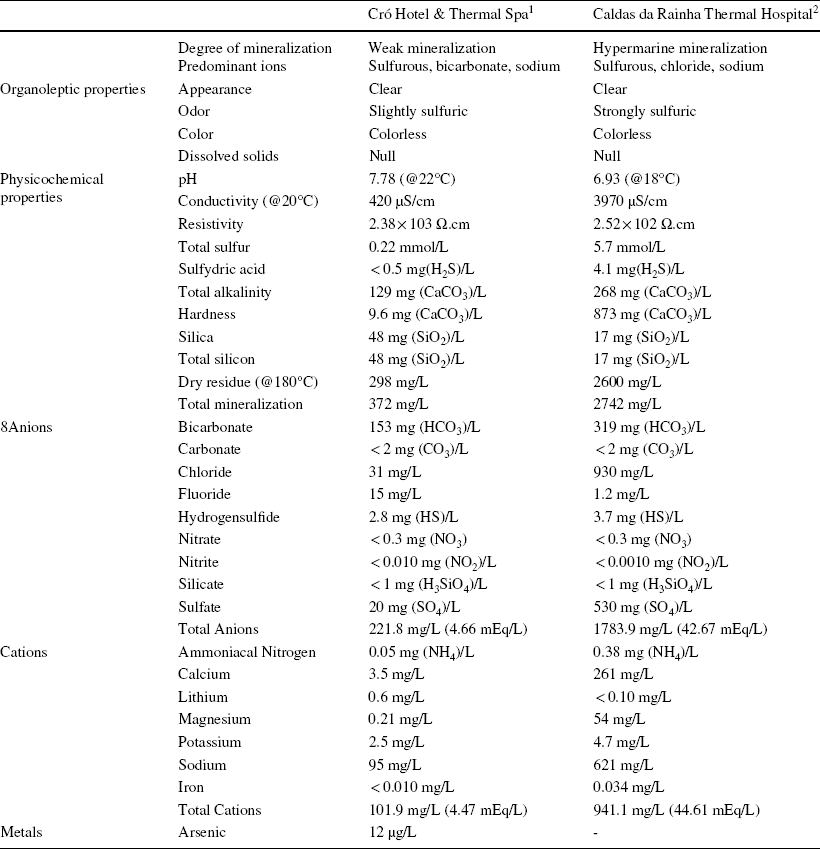
The Caldas da Rainha Thermal Hospital is among the world’s oldest ‘thermal centers’, established by Queen D. Leonor in 1485, and the Cró Thermal Spa’s first historical record dates back to 1726, with possible indications of a Roman presence in the region. The mineral water of Cró is sulfurous, bicarbonate, sodium water while Caldas da Rainha has sulfurous, chlorinated sodium water (Table 1). The therapeutic indications for the mineral-medicinal water of Caldas da Rainha and Cró are rheumatic and respiratory pathologies, and Cró water is also recommended for dermatological conditions. These thermal waters are periodically checked for compliance with European regulations and Portuguese legislation for mineralogical, physicochemical, and microbiological quality parameters.
Chemical composition and properties of medicinal mineral water

1 Analysis Report No 30680–17 (LAIST/ISQ). 2 Analysis Report No 17138–18 (LAIST/ISQ)
Sulfurous mineral waters are commonly used in medical hydrology for the treatment of dermatological, musculoskeletal, and respiratory pathologies, and recent research efforts have contributed to their growing importance worldwide. Sulfurous waters, muds, or peloids matured in sulfurous waters offer therapeutic benefit based on their bactericidal properties, antifungal properties, and anti-inflammatory effects (Reference Carbajo and MaraverCarbajo & Maraver, 2017), as demonstrated by some clinical and experimental studies. The temperature of the water and the peloid in contact with the skin may also play important roles in the therapeutic outcome due to the physiological impact on the skin, promoting vasodilation and perspiration, which makes possible the transdermal passage of the chemical elements present in the mud (Reference Bastos, Rocha, Gomes and Marinho-ReisBastos et al., 2022).
Bentonite Maturation process
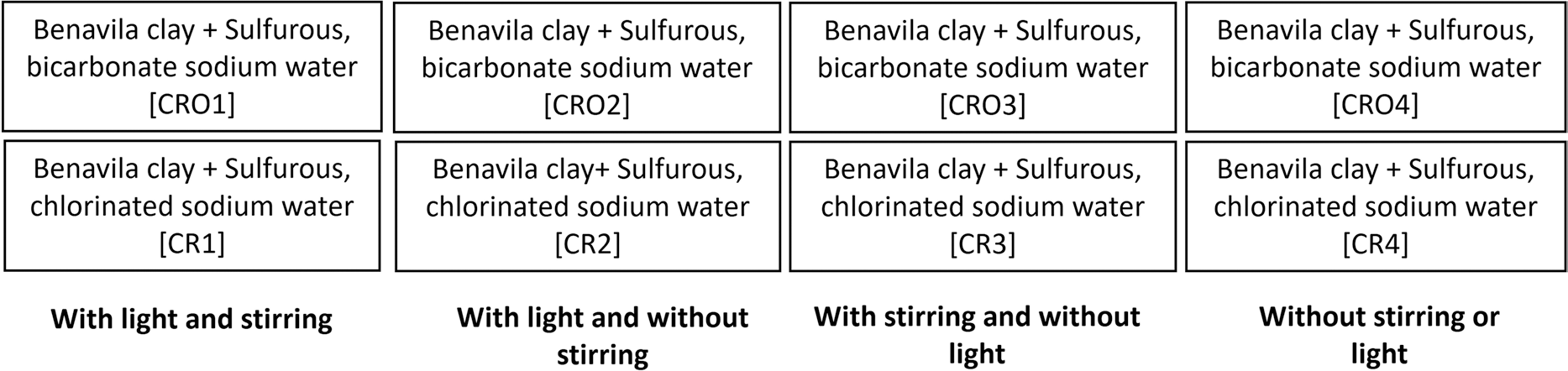
Eight small tanks (400 mm × 270 mm × 80 mm) were prepared using a 1:2 (w/w) clay/water ratio, with a 2 cm water column. All the tanks were labeled according to the maturation conditions for each mineral-medicinal water, and whether or not the conditions included the presence of light and the use of stirring (Fig. 1). The maturation tanks were placed in a laboratory with natural lighting. Tanks undergoing maturation under light were positioned on a countertop, while those that needed protection from light were placed inside a closed cabinet.
Maturation schematics

Tank preparation and mud measurements were conducted at room temperature, 22 ± 3°C. Agitation was conducted every 2 weeks. The stirring action, including ten repetitions in multiple directions, was implemented to ensure a consistent and homogeneous mixture.
Periodically, additional medicinal-mineral water was added to the tanks to maintain the previously established water column level, using a syringe to prevent any surface disturbance.
Characterization of the peloid
The mud and supernatant samples were collected after 30, 60 and 90 days of maturation for mineralogical, chemical, rheological, and biological characterization. Initially, the samples were analyzed to identify the presence of toxic microorganisms and chlorophyll. Then, microscopic methodologies were employed to determine the morphology of microalgae in the samples.
Mineralogical and chemical composition
The possible physical changes in the mineral matrix of the peloid and its mineral composition under different maturation conditions were conducted using an ultra-high resolution analytical scanning electron microscope (SEM), specifically the HR-FESEM Hitachi SU-70 (Tokyo, Japan).
The average clay-mineral compositions were calculated based on analyses by X-ray diffraction (XRD) using a Philips Panalytical X’Pert-Pro MPD diffractometer (Malvern Panalytical, Almelo, Netherlands). The instrument used CuKα (λ = 1.5405 Å) radiation and a goniometer speed of 0.02°2θ s–1. Preferentially oriented samples were prepared by placing a suspension on a glass slide, then air drying it (Reference Quintela, Almeida, Terroso, Ferreira da Silva, Forjaz and RochaQuintela et al., 2015a). Subsequently, the samples were analyzed after glycerol saturation, followed by a final submission to heat treatment at 500°C (Reference Oliveira, Rocha, Rodrigues, Jouanneau, Dias, Weber and GomesOliveira et al., 2002).
The chemical composition with respect to major, minor, and trace elements in the samples was determined by X-ray fluorescence (XRF), using a Panalytical AXIOS PW 4400/40 fluorescence spectrometer (Malvern Panalytical, Almelo, Netherlands). The loss on ignition (LOI) values were determined by heating 1 g of each sample at 1000°C for 1 h in an oven.
The percent weight loss of all samples taken from the maturation tanks was measured after drying without any washing or removal of the maturation water.
Supernatant, pH, electrical conductivity, and Zeta-potential (or ζ-potential)
The concentrations of major and trace elements in the supernatant were measured using an Agilent Technologies 7700 Series Inductively Coupled Plasma-Mass Spectrometry (ICP-MS) instrument (Agilent, Santa Clara, California, USA). Precision was estimated by calculating the relative standard deviation of three replicate samples and was ≤10%. The detection limits (d.l.) were calculated as three times the standard deviations of the blanks.
The pH and electrical conductivity of the samples were measured before and after interactions with minerals, using a pH-conductivity meter, specifically the model EC 500, EXTech ExStik II (FLIR Commercial Systems, Inc., Nashua, New Hampshire, USA). Buffer solutions with pH values of 4, 7, and 10 were used for calibration.
The ζ-potential of the maturation samples was measured using a ZetaSizer Nano ZS instrument with software (nano, µV, APS) version 7.13, manufactured by Malvern Panalytical (Almelo, Netherlands). The measurements were performed in triplicate, and for each replicate, 20 data points were collected. The results are expressed in mV.
Cation exchange Capacity and Exchangeable Cations
The cation exchange capacity (CEC) was estimated using the ammonium acetate method. Exchangeable cations (Na+, K+, Mg2+, and Ca2+) were measured via ICP-MS using the method of Reference Quintela, Almeida, Terroso, Ferreira da Silva, Forjaz and RochaQuintela et al. (2015a).
Specific surface area (SSA)
The specific surface area (SSA) was estimated using the Brunauer-Emmet-Teller (BET) analysis of data acquired using the Gemini II 2370 analyser instrument manufactured by Micromeritics Instruments (Norcross, Georgia, USA) following the method of Reference Rebelo, Rocha and Ferreira da SilvaRebelo et al. (2010). The SSA of the peloids was performed using nine data points with N2 as the adsorbate. The coefficient of determination (R2) for the linear BET for all samples was 0.999.
Cooling Kinetics
The cooling kinetics of the clay pastes were studied by mimicking the temperature changes during pelotherapy. Clay pastes that were matured for 90 days were used in the study. The samples were placed in a closed cylindrical Teflon container, with a volume of 50 mL, and heated until they reached and stabilized at 50°C. The container was then immersed in a 5 L thermostatic bath using a PRECISTERM model 6000138 (Selecta, Barcelona, Spain) at 32°C, which is the average temperature of the human epidermis (OECD, 2004). The temperature of the clay and the bath was measured using a digital thermometer Hanna HI 9043 (Hanna, Italy) until they reached the same temperature. According to Reference Cara, Carcangiu, Padalino, Palomba and TamaniniCara et al. (2000) and Reference Legido, Medina, Mourelle, Carretero and PozoLegido et al. (2007), the sample temperature (T) curves follow the function T = A + Be−Kt , where A is the bath temperature, B is the difference between the starting temperature of the clay and the bath temperature (A), t is the cooling time, and K is the parameter that describe the thermal behavior of clay pastes based on temperature, calculated by the ratio between the instrumental constant of the apparatus and the heat capacity of the paste.
Capacity for absorbing jojoba pil
The oil obtained from seeds of the Jojoba plant (Simmondsia chinensis) finds applications in various pharmaceutical and cosmetic products. Due to its similarity to the natural sebum produced by the human body, it is highly regarded in these industries (Reference Gad, Roberts, Hamzi, Gad, Touiss, Altyar, Kensara and AshourGad et al., 2021; Reference Meier, Stange, Michalsen and UehlekeMeier et al., 2012). Furthermore, this substance is registered under the European Regulation on the Registration, Evaluation, Authorization and Restriction of Chemicals (REACH), ensuring its safe use in consumer cosmetics and personal care products (EC No. 1907/2006). To evaluate the sebum absorption capacity of the peloids, pure jojoba seed oil was utilized. 15 g of dry clay was placed on a glass plate, then jojoba oil was added dropwise to the clay from a known initial volume of oil until the desired consistency was achieved, resulting in a solid roll of clay. The amount of jojoba oil remaining was then weighed to determine the amount absorbed by the clay, allowing for the calculation of the oil absorption capacity.
Atterberg limits of peloids
The Atterberg limits were determined using the Casagrande Shell to obtain the liquid limit, and molding rolls on a glass plate were used to determine the plastic limit. The plasticity index was calculated following the guidelines of the Portuguese Standard, NP 143–1969. For analysis after 30 and 60 days of maturation, dried peloid samples were mixed with demineralized water for 24 h to allow absorption and to form a clay paste. Following this absorption period, the Atterberg limits were determined based on clay-paste samples.
Culturable microorganisms, coliform bacteria, and Escherichia coli
The concentration of culturable microorganisms was determined by immersion bath, using Plate Count Agar (PCA) (Liofilchem, Italy) and complying with the standard water quality – enumeration of culturable micro-organisms – colony count by inoculation in a nutrient agar culture medium (ISO 6222: 1999). The plates were incubated at 37°C for 48 h. Results were expressed as colony forming units per mL (CFU mL–1). Three independent samples were analyzed on each sampling date and for each sample two replicated analyses were performed.
Coliform bacteria (total coliform and fecal coliform) and E. coli were enumerated by the filter membrane method (adapted ISO 9308–1: 2014 and ISO16649-2: 2001) using Chromocult selective culture medium M-FC (Merck, Germany) and Triptone Bile X-glucuronide (Merck, Germany), respectively. The plates were incubated at 37°C for total coliforms and at 44.5°C for fecal coliforms and E. coli for 24 h. The number of colony forming units per mL (CFU mL–1) was determined. Three independent samples were analyzed on each sampling date and for each sample two replicate analyses were performed.
Yeasts and molds
Yeasts and molds were quantified using the spread-plate technique with Rose Bengal Chloride Agar from Lyophilchem, Italy. This method involves spreading a small volume of the sample onto the surface of a solid growth medium, the Rose Bengal chloride Agar (ISO 21527:2008). After incubation at 25 ± 1°C for 5 days, yeasts and molds present in the sample that have grown into visible colonies on the agar were subjected to morphology examination for identity confirmation. The number of colonies was then counted and reported as CFU mL–1. Each sampling involved the analysis of three independent samples, and for each sample, two replicate analyses were performed, resulting in a total of six measurements per sample.
Chlorophyll a, b, and c
Chlorophyll a, b, and c concentrations were determined following the method described previously by Reference Jeffrey and HumpreyJeffrey and Humprey (1975). Water samples (50 mL) were filtered through 0.45 µm Whatman GF/F 47 mm Whatman filters (Giles, UK). To each filter, 10 mL of 90% acetone was added. The mixture was incubated at 4°C for 12-16 h. After incubation, the mixture was centrifuged at 2500 rpm for 10 min at 4°C. The absorbance of the supernatant was measured at 750, 664, 647, and 630 nm against a 90% acetone blank.
Chlorophyll a, b, and c (mg/m3) were estimated using the following equations:


where: A630 = absorbance at 630 nm; A647 = absorbance at 647 nm; A664 = absorbance at 664 nm; A750 = absorbance at 750 nm; V1 = acetone volume at 90% used for extraction;
V2 = filtered sample volume; and I = spectrophotometer cell optical path (cm).
Microalgae
Microscopic analyses for the presence of green algae, cyanobacteria, and diatoms were performed using an optical microscope (Biomed Instruments, Guayaquil, Ecuador). The samples with the greatest chlorophyll contents, CR2 and CRO3, were subjected to analysis.
Results
Mineralogical and chemical composition
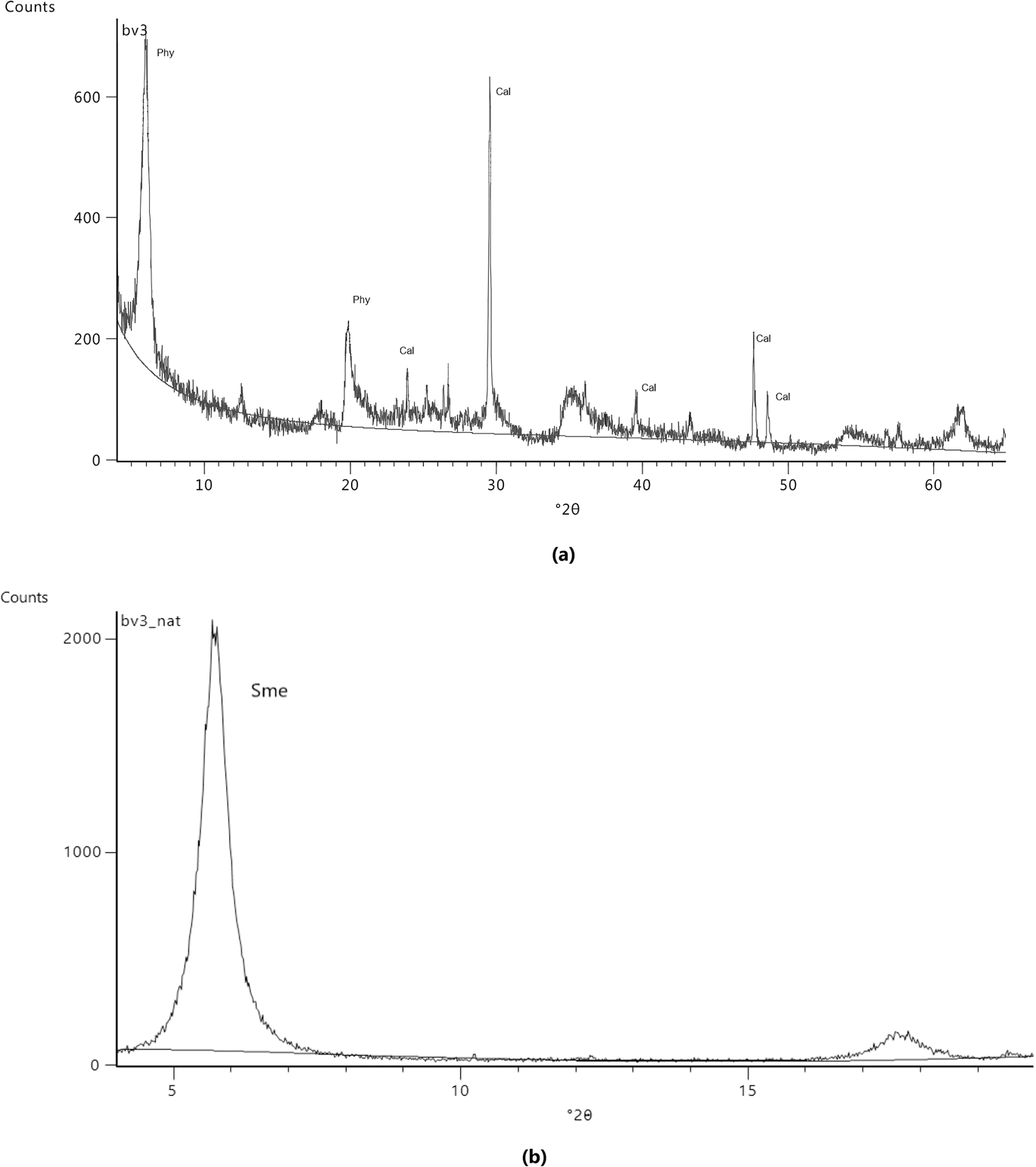
The mineralogical composition of the bulk sample of Benavila bentonite confirmed that phyllosilicates, specifically smectite, are the predominant minerals, followed by calcite. The clay fraction of the sample exhibits an almost monomineralic (smectitic) composition (Fig. 2).
XRD patterns of Benavila bentonite: a bulk sample (Phy: phyllosilicates; Cal: calcite); b clay fraction (Sme: smectite)

The amounts of major elements during the maturation demonstrated a direct relationship between the chemical composition and the medicinal water (Table S1, Supplementary Material). Caldas da Rainha medicinal water exhibited large values of chloride (930 mg/L) and sodium (621 mg/L), and CR peloids demonstrated larger values compared to CRO peloids.
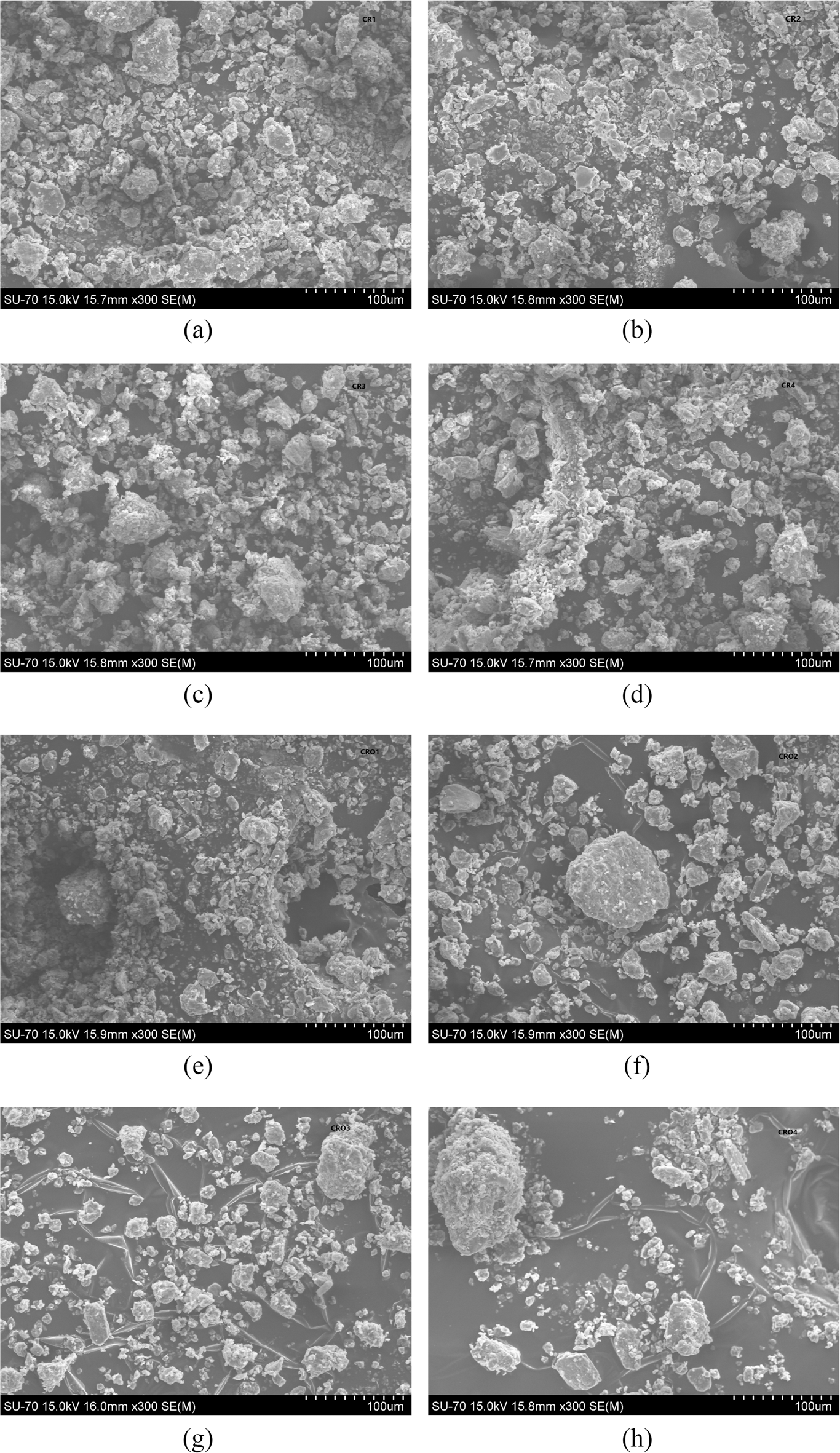
The morphological changes in the peloids after 90 days of maturation are shown in Fig. 3. CRO peloids had larger aggregates and fewer small particles compared to CR peloids, which displayed a more homogeneous appearance with less flocculation.
SEM images of the 90-day matured samples: a CR1, bCR2, c CR3, d CR4, e CRO1, f CRO2, g CRO3, and h CRO4

The smectites present in the sample are of dioctahedral type, with d 060 values ranging from 1.493 to 1.502 Å. SEM/EDS (energy-dispersive X-ray spectroscopy) results indicated the presence of beidellites and low-charge montmorillonites, with calcium (Ca) as the main exchangeable cation. After 90 days of maturation, an enrichment in octahedral Fe and Mn was observed: CRO 1 and 2 samples showed an evolution toward a more montmorillonitic composition, whereas all others (CRO 3 and 4 and all CR samples) exhibited montmorillonite–nontronite compositions. This enrichment in Fe and Mg can result from non-crystalline/amorphous Fe/Mg rich phases (commonly hydroxides), usual on residual clays but not detectable by XRD, destabilized by maturation processes (essentially an ageing process) under alkaline pH values. The variety of exchangeable cations became more diverse (Ca, Na, Mg, K), but Ca remained as the predominant one.
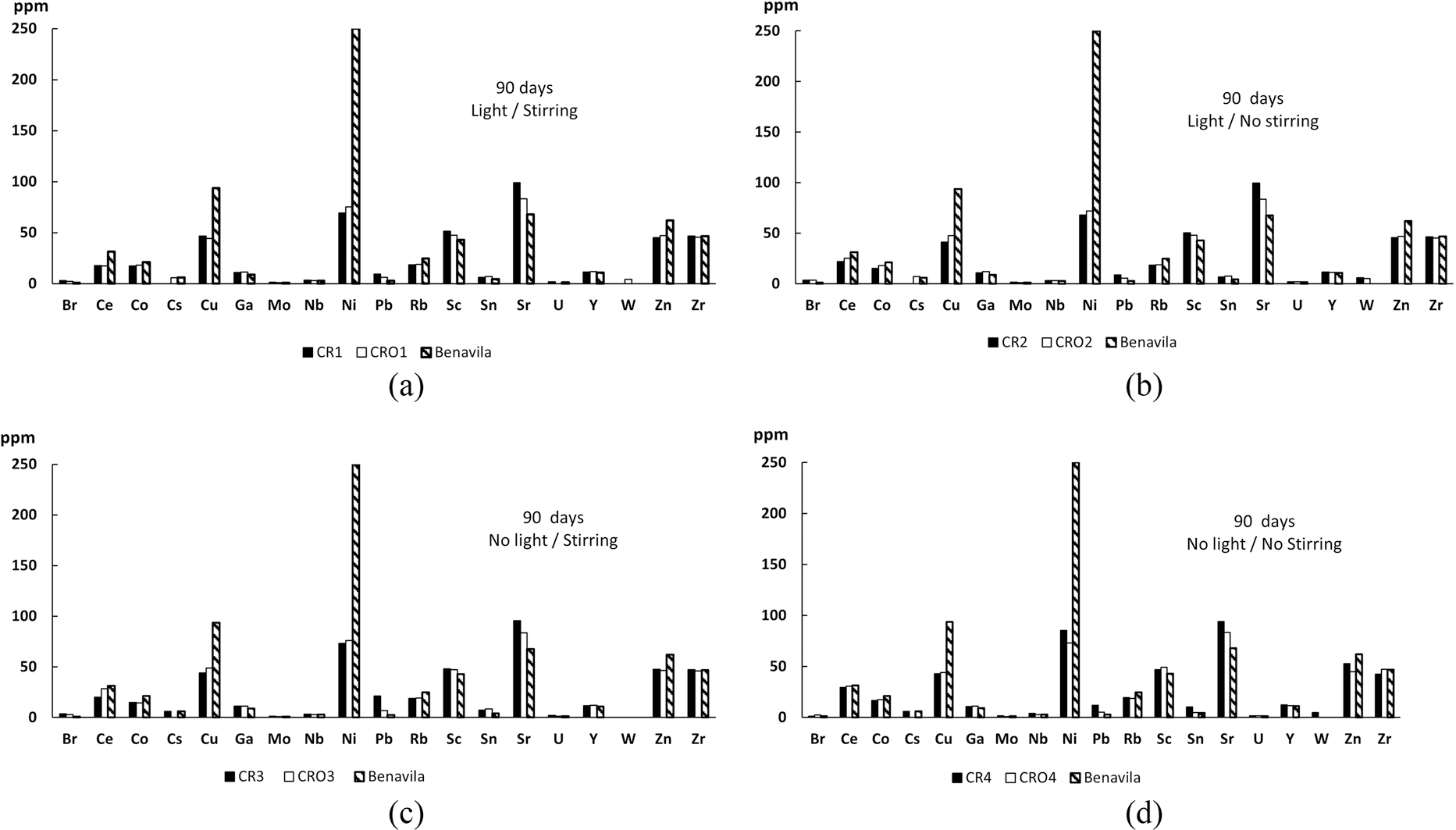
The toxicological effects of hazardous components in peloids that exceed the recommended levels stipulated by international regulations can pose substantial difficulties in terms of management during the raw material selection and maturation process. Heavy metals such arsenic (As), cadmium (Cd), lead (Pb), nickel (Ni), chromium (Cr), and manganese (Mn), among others with endogenous or anthropogenic sources, are a concern in peloid formulations (Reference Bastos and RochaBastos & Rocha, 2022). The trace element composition of Benavila bentonite (BV3) is noteworthy for its significant Ni content at 250 ppm (Table S2). The trace elements arsenic (As), silver (Ag), bismuth (Bi), cadmium (Cd), fluorine (F), germanium (Ge), iodine (I), lanthanum (La), antimony (Sb), tantalum (Ta), thallium (Tl), and thorium (Th) were not detected in the bentonite or in the resulting peloids (Table S3). Comparing BV3 with the resulting peloids, both peloids exhibited an increase in the trace element contents of gallium (Ga), lead (Pb), scandium (Sc), tin (Sn), and strontium (Sr), as shown in Fig. 4. In contrast, there was a reduction in the amount of cerium (Ce), cobalt (Co), copper (Cu), nickel (Ni), and zinc (Zn) in both peloids. While several elements exhibited alterations in their contents, Cu and Zn experienced more pronounced variations during the maturation process, suggesting their potential significance in the transformation of the bentonite into peloids.
Trace element variation in Benavila bentonite after 90-day maturation conditions: a light and stirring, b light and no stirring; c stirring and no light; d no light and no stirring

Supernatant, pH, electrical conductivity, and zeta-potential (ζ-potential)
Supernatant
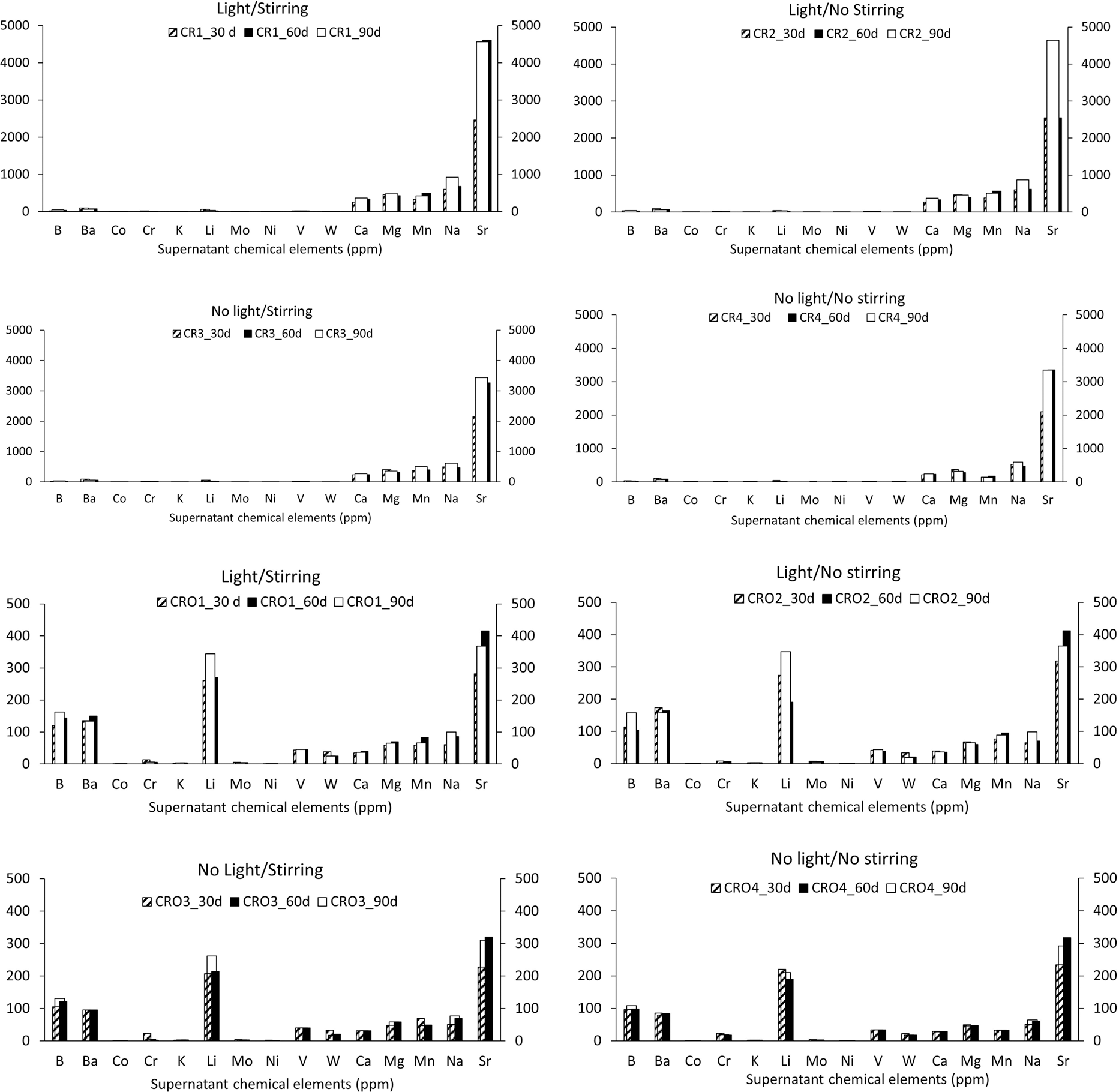
The supernatant, which represents the liquid phase of maturation, retained the characteristic properties of the mineral-medicinal waters used (Table 1). The supernatant from Caldas da Rainha exhibited higher concentrations of Ca, Co, Cr, K, Mg, Mn, Na, Ni, and Sr in comparison to the supernatant from Cró (Table S4). In contrast, the Cró supernatant displayed greater concentrations of As, B, Ba, Cu, Cu, Li, Mo, V, and W (Fig. 5).
Concentrations of the main trace elements in the supernatants from the maturation tanks

pH and electrical conductivity
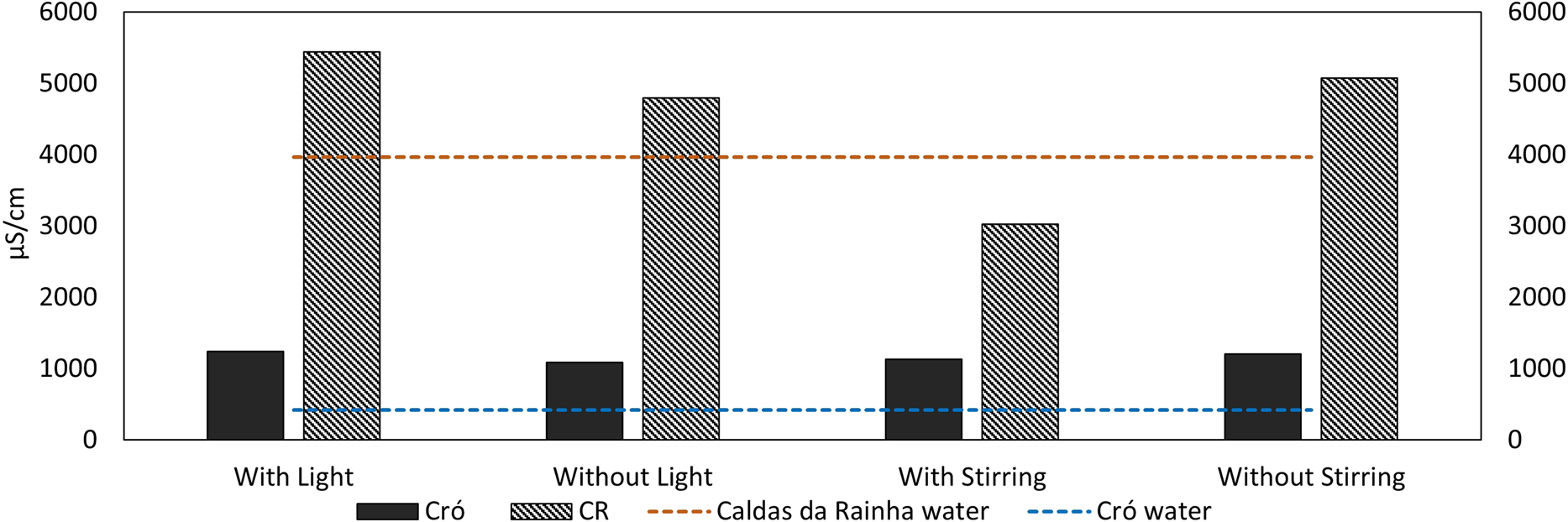
The maturation pH remained constant at 6 throughout the entire maturation period for all tanks, and the maturation temperature was dependent on the room temperature. The peloids consistently exhibited greater conductivity levels throughout the maturation process (Fig. 6), considering the initial conductivity of mineral-medicinal water from Caldas da Rainha and Cró, which were 3970 and 420 µScm–1, respectively. In the presence or absence of light without stirring, both liquid phases demonstrated high conductivity levels: CR: 5444.0 µS cm–1; CRO: 1245.0 µS cm–1, and CR: 4797.0 µS cm–1; CRO: 1091.0 µS cm–1.
Peloid electrical conductivity (µS cm−1) according to the maturation conditions

The stirring effect was significant for the CR liquid phase. The omission of stirring in the two maturation stages resulted in greater conductivity values: CRO 1205.0 µS cm–1 and CR 5078.0 µS cm–1.
The maturation process conducted with light and without stirring showed higher levels of conductivity compared to the process without light and stirring (CRO 1131.0 µ Scm–1; CR 3027.0 µS cm–1). However, the maturation of BV3 with CRO mineral-medicinal water remained stable throughout the maturation period.
Zeta-potential (ζ-potential)
The ζ-potential, a physical property that characterizes the attraction or repulsion of colloidal particles in suspension, plays a critical role in determining the kinetic stability of the colloidal system. It reflects the particle interactions at the solid–liquid interface in the maturation tanks.
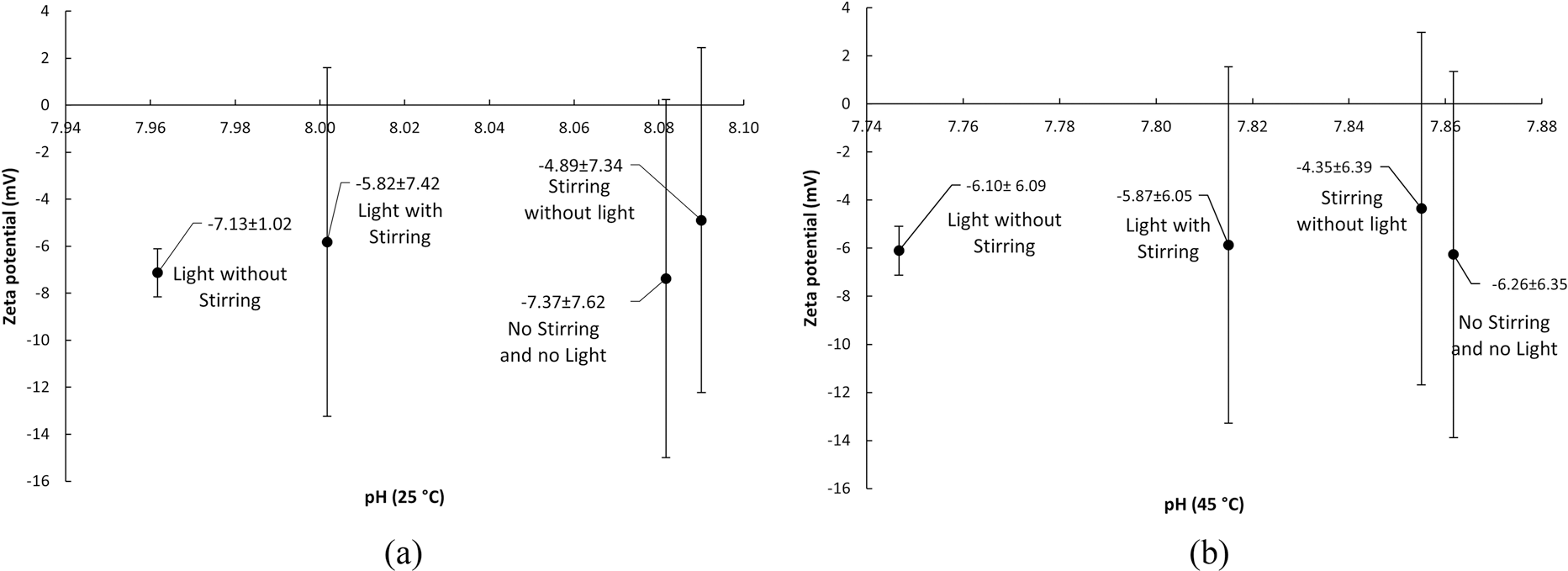
In addition to pH, the ζ-potential is influenced by factors such as ionic strength, additive concentration, and temperature. To evaluate the repulsive forces during maturation, ζ-potential measurements were carried out at both 25 and 45°C.
The ζ-potential measurements provide information about the repulsive forces between particles in a colloidal system. When the ζ-potential is highly negative or highly positive, it indicates that the particles have a tendency to repel each other. Conversely, low ζ-potential values suggest a lack of force to prevent flocculation and aggregation. According to Reference Kadu, Kushare, Thacker and GattaniKadu et al. (2011), particles with a ζ-potential of >30 mV or > 30 mV are considered kinetically stable.
During the 90 day maturation period, repulsive forces were observed, and the samples exhibited similar values of ζ-potential (Table S5). Except for CRO3_30d (at both 25 and 45°C) and CR1_60d (at 25°C), all samples displayed negative ζ-potential values. At 25°C, the values ranged between –13 and –16 mV, while at 45°C, they ranged between –10 and –14 mV (Fig. 7).
ζ-potential according to the maturation conditions for: a 25°C and b 45°C

The repulsive phenomena observed at 30 and 60 days were almost neutral, indicating small ζ-potential values that could lead to particle aggregation or flocculation due to Van der Waals attractive forces. However, samples CR2 and CR4 at 30 days of maturation, which were not stirred, showed contradictory results compared to the trend observed during 60 days of maturation. They exhibited ζ-potential values similar to those observed after 90 days of maturation (as shown in Fig. 7). No correlation was found between the maturation conditions, such as light and stirring, and the observed results.
Cation exchange capacity and exchangeable cations
After 30 days of maturation, significant changes in the behavior of the exchange cations were observed (Table S6). The high concentration of sodium in the supernatant may have facilitated ion exchange of Mg and K. Calcium, being the main exchangeable cation, remained largely unchanged during the 90 days of maturation. The CEC of the maturated samples was >43 meq/100 g (CRO2_60d had the highest value). No significant correlation was found with the influence of light and stirring.
Specific surface area
A large specific surface area (SSA) is a particularly important parameter for peloids, as it plays a role in enhancing the adhesion of the peloid to the skin. The CRO peloid exhibited larger SSA values than the CR peloid (Table S7). However, no correlation was found between the four maturation conditions and SSA values (Fig. S1). The observed fluctuations in SSA every 30 days could be attributed to the influence of the mineral-medicinal water on the bentonite.
Thermal properties and cooling kinetics
Cooling kinetics characterization was conducted for both peloids (Cró and Caldas da Rainha) under the four maturation conditions after 90 days (Fig. S2). The cooling kinetics of samples matured with light for 90 days showed faster cooling kinetics than samples matured without light. In the temperature range commonly used in pelotherapy, the samples had optimal cooling kinetics of >16 min (Table S8). Notably, the peloids without light exhibited longer cooling times.
Jojoba oil absorption capacity
Benavila bentonite (BV3) absorption capacity was 26% of the initial weight of the jojoba oil used in the experiment (Table S9). All samples showed improvement in the jojoba oil absorption capacity of BV3 during the maturation period. Notably, the Cró samples exhibited a greater improvement, which could be beneficial for dermatological treatments.
Atterberg limits of peloids
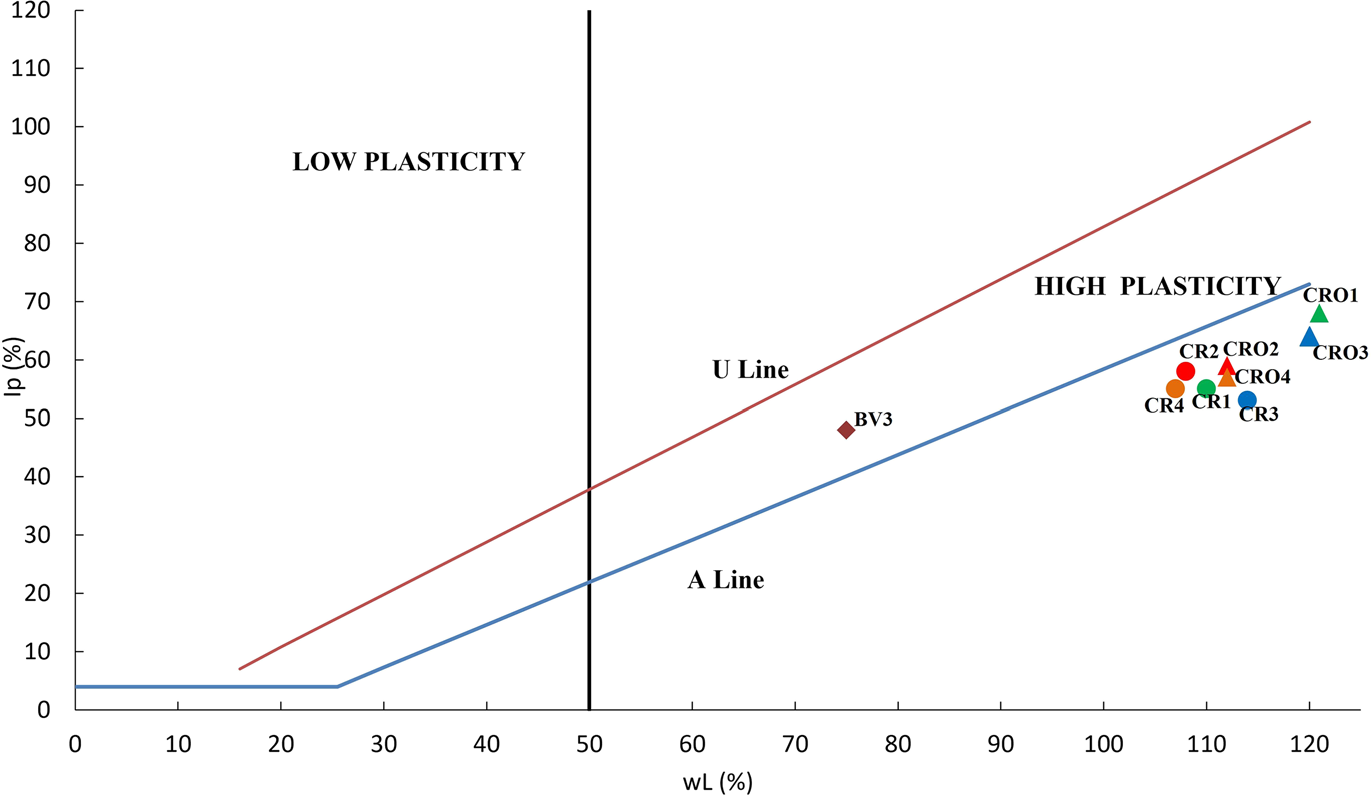
When analyzing the average values of the Liquid Limits and Plastic Index during the 30, 60, and 90 days of maturation, all peloids exhibited enhanced plasticity levels compared to Benavila bentonite (Table S10). Among the peloids, the CRO tanks with stirring (CRO1 and CRO3) demonstrated the most significant improvement in the plasticity index of the bentonite, surpassing the other tanks. Following closely behind were the CRO samples without stirring (CRO2 and CRO4), (Fig. 8). The Caldas da Rainha peloid tanks, on the other hand, exhibited similar plasticity levels.
Projection of the plasticity indices and liquid limits in the Casagrande chart. Ip – Plasticity Index, WL – Liquid Limit, U Line – represents the frontier between low plasticity and high plasticity, A Line – differentiation between the inorganic clays (above the line) and inorganic silts or organic soil (below the line)

Culturable microorganisms
Quantification of culturable microorganisms, total coliforms, fecal coliforms, and E. coli
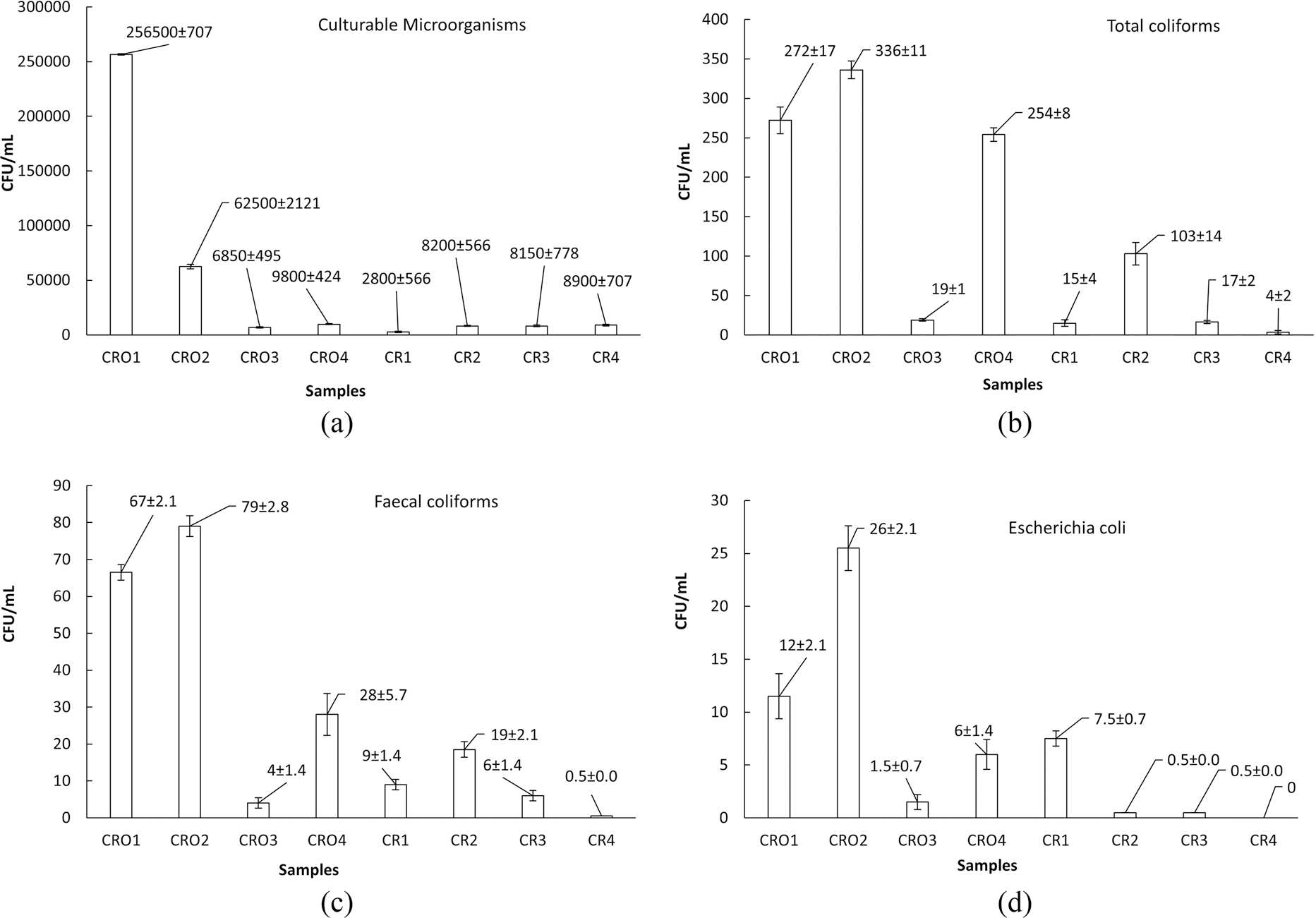
The concentration of culturable microorganisms in the water samples is depicted in Fig. 9. CRO peloids, specifically CRO1 and CRO2, exhibited larger numbers of colony-forming units per mL (CFU mL–1) (Table S11). The stirring in CRO1 may have contributed to the larger mean value, 277,000 CFU mL–1, while CRO2 showed a mean value of 62,500 CFUmL–1. The Caldas da Rainha peloids showed average values ranging from 8150 to 8900 CFU/mL, with the exception of CR1, which was exposed to both light and stirring and had a lower value of 2800 CFU mL–1. Notably, the Cró peloid exhibited greater mean values for total coliforms, fecal coliforms, and E. coli compared to the Caldas da Rainha peloids.
Microbiological activity in water after 90 maturation days: a culturable microorganisms, b total coliforms, c fecal coliforms, and d E. coli

Enumeration of molds and yeasts
Molds were detected only in samples CR3 and CR4, which were not exposed to light. The mold counts in these samples were 2.5 CFU mL–1 and 12.5 CFU mL–1, respectively. No yeast was detected in any of the samples.
Chlorophyll a, b, and c
Chlorophyll a is present in all photosynthetic eukaryotes and cyanobacteria. In contrast, chlorophyll b is considered an accessory pigment and plays a less essential role in photosynthesis with the function to extend the range of light used by photosynthesis.
Chlorophyll b absorbs light and transfers the energy to a molecule of chlorophyll a, which then uses it to carry out photosynthesis. Chlorophyll b is found in green algae and euglenophytes, along with Chlorophyll a. However, in certain algae such as diatoms and brown algae, chlorophyll b is replaced by a third type of pigment called chlorophyll c, which is also considered an accessory pigment.
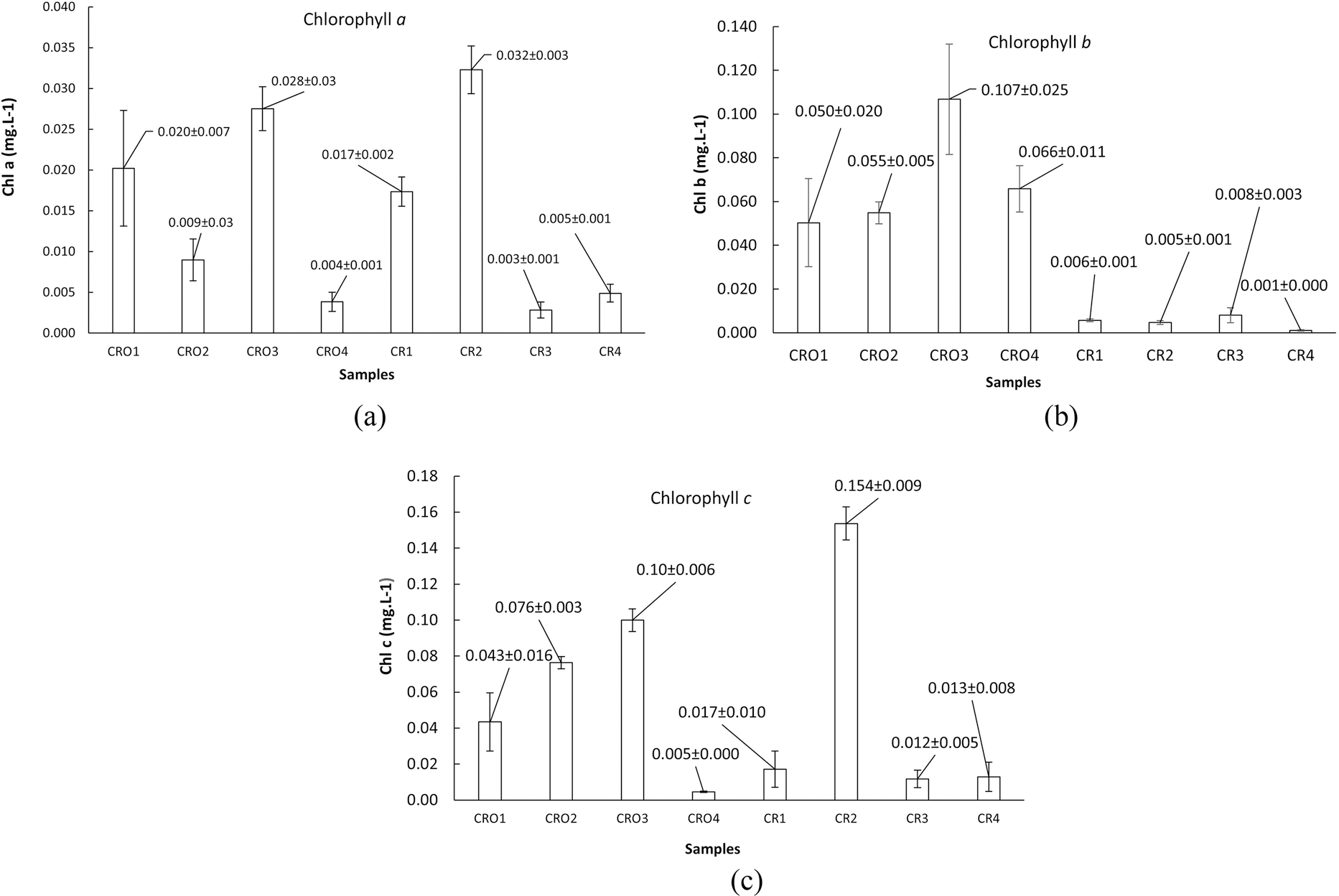
The concentrations of chlorophyll a, b, and c in the water samples are shown in Fig. 10. The smallest mean values of chlorophyll a were found in CR3 (0.003mgL–1), CR4 (0.004 mgL–1), and CRO4 (0.005 mgL–1), while mean values of 0.02 mgL–1 were observed for CRO1 and CR1, and 0.01 and 0.03 mgL–1 for CRO2 and CR2, respectively (Table S12). A low concentration of chlorophyll a results from the absence of light, but tank CRO3 (no light and stirring) showed similar values to samples exposed to light. The stirring may have influenced the attainment of this concentration.
The average concentration of chlorophyll in the CRO1, CRO2, CRO3, CRO4, CR1, CR2, CR3, and CR4 water samples after 90 maturation days: a chlorophyll a, b chlorophyll b, c chlorophyll c

The samples CRO1 (0.05 mgL–1), CRO2 (0.05 mgL–1), CRO3 (0.11 mgL–1), and CRO4 (0.07 mgL–1) exhibited greater mean values of chlorophyll b. In addition, noteworthy average values of chlorophyll c were observed in CRO2 (0.08 mg L–1), CR2 (0.15 mg L–1), and CRO3 (0.10 mg L–1).
Morphologic analysis
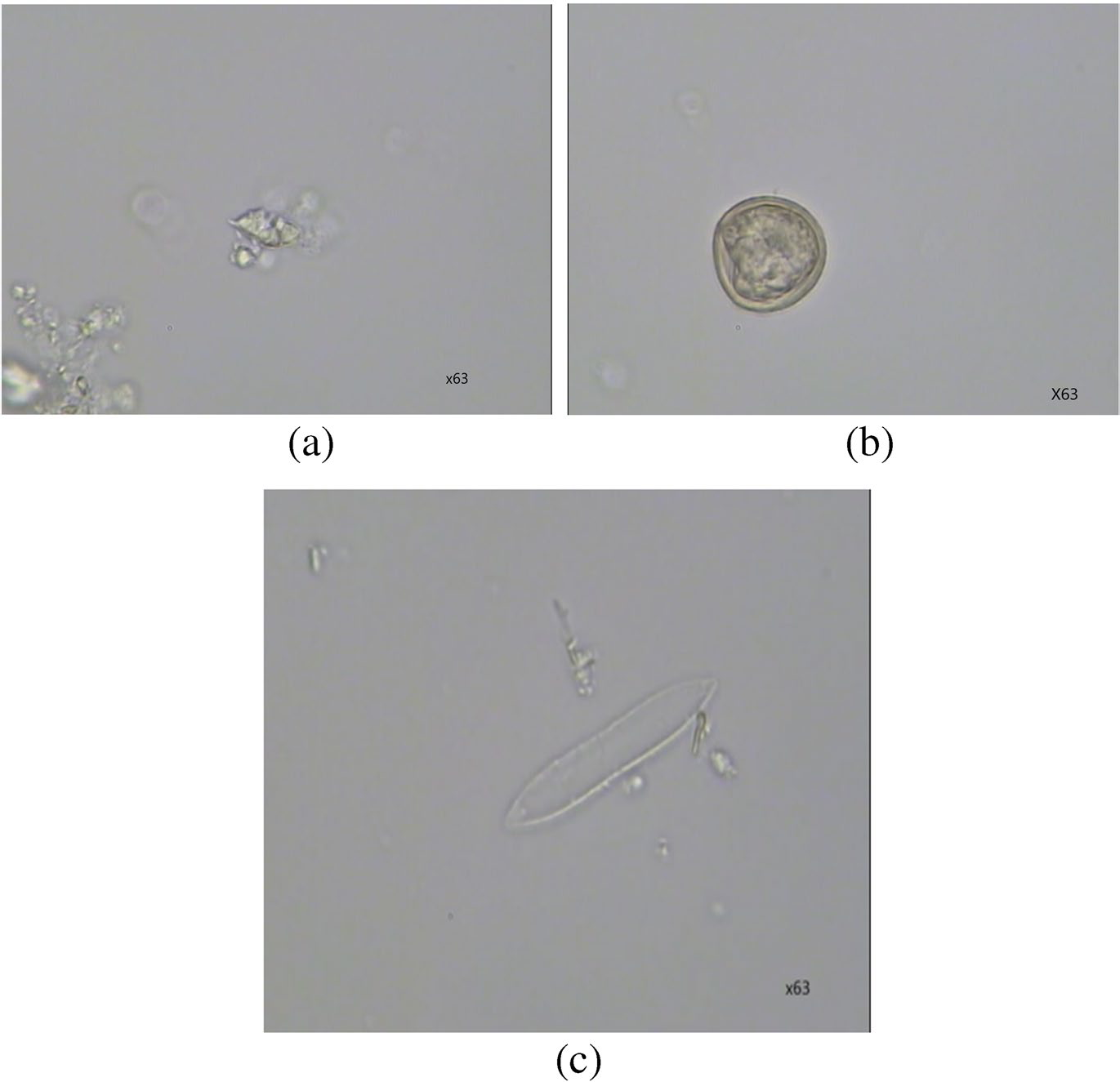
In the sediment samples, discerning organic components was not simple, and only the cleaner samples, CRO3 and CR2, provided enhanced clarity in terms of those components. Green algae were identified in CRO3, but they could not be classified precisely, leaving some possibilities open when compared to microalgae images of Characium sp. and Trebouxia.
Trebouxia is a common unicellular, spherical green alga found in various habitats, which forms a symbiotic relationship with fungi and has been found to thrive in stressful environments with high concentrations of metals. Trebouxia is also known to play the role of a bioremediation microorganism (Reference Bačkor, Pawlik-Skowrońska, Bud’ová and SkowrońskiBačkor et al., 2007; Reference Vingiani, Gasulla, Barón-Sola, Sobrino-Plata, Henández and CasanoVingiani et al., 2021).
Characium sp. is a type of mixotrophic microalga that has been found to have potential in bioremediation, which is the process of using microorganisms to remove pollutants naturally from the environment (Reference Khalid, Yaakob, Abdullah and TakriffKhalid et al., 2016; Reference Pleissner, Lindner and AmbatiPleissner et al., 2020).
In CR2, locating any microalgae was not possible due to their potential bonding to sediment particles. In addition, the presence of larger mineral components made it difficult to visualize any attached bacteria. As a result, no specific contribution from a particular species or group of green algae could be determined in the Caldas da Rainha peloid. Additionally, a dead diatom was observed in CR2 (Fig. 11).
Photomicrographs of CRO3 and CR2 samples: a CRO3, probably representing Trebouxia algae; b CRO3, probably representing Characium sp; and c CR2, probably representing a dead diatom

Discussion
The lack of specific regulation applied to establish the quality of raw materials used in peloid formulation, as well as the declaration of compliance with good manufacturing practices, should be considered in accordance with the requirements stated for cosmetic or pharmaceutical products. The quality of mineral waters for human consumption, in accordance with Council Directive 98/83/EC of 3 November 1998, revised by Directive (EU) 2020/2184 of the European Parliament and of the Council of 16 December 2020, requires thermal centers to analyze frequently the essential and preventative quality parameters to ensure consumer safety. The current demand for ancient natural therapies, such as pelotherapy, may become problematic if no regulatory intervention is applied regarding these borderline products (Reference Bastos, Rocha, Gomes and Marinho-ReisBastos et al., 2022), which could be considered as drugs to be consumed under medical control.
The skin microbiome is a complex environment consisting of various microorganisms that play an important role in maintaining skin health by protecting against pathogenic bacteria and activating cutaneous immunity. Although data are in short supply, some studies suggest that peloids may have a therapeutic effect on the skin microbiome (Reference Antonelli and DonelliAntonelli & Donelli, 2018, and references therein). The maturation process of peloids has been found to be associated with the development of microalgae, which can produce substances with anti-inflammatory properties (Reference Galzigna, Ceschi-Berrini, Moschin and TolomioGalzigna et al., 1998). More advanced studies, such as genome sequencing, have identified compounds with known antioxidant or anti-inflammatory properties and have conducted cytotoxicity screening (Reference Demay, Halary, Knittel-Obrecht, Villa, Duval, Hamlaoui, Roussel, Yéprémian, Reinhardt, Bernard and MarieDemay et al., 2020).
Microscopic analysis was used to detect the possible presence of microflora in the peloids, even though identification relied on comparing images with algae. While further validation is necessary, this approach offers preliminary insights into the potential presence of microalgae during the maturation process. By using biological quality indicators, small-scale changes in the chosen maturation conditions can be interpreted. The maturation process generates active substances that need to be checked for their beneficial or harmful effects on human health, especially when intended for therapeutic purposes. These active substances can have negative effects, as they can be toxic, allergenic, or potentially pathogenic to humans (Reference Antonelli and DonelliAntonelli & Donelli, 2018). The presence of trebouxia algae in the present maturation study is a concern as it is known to have potential health implications, including allergies, dermatitis, rhinitis, and asthma (Reference HofbauerHofbauer et al., 2021). Despite the analysis of microorganisms in water offering the advantage of being expeditious, it cannot replace the necessity for accurate microbiological analysis of the mud (Reference Baldovin, Amoruso, Caldara, Buja, Baldo, Cocchio and BertoncelloBaldovin et al., 2020; Reference Gris, Treu, Zampieri, Caldara, Romualdi, Campanaro and La RoccaGris et al., 2020).
Reference Quintela, Almeida, Terroso, Ferreira da Silva, Forjaz and RochaQuintela et al. (2015a, Reference Quintela, Terroso, Costa, Sá, Nunes and Rocha2015b) identified species capable of growing in a 120-day maturation process with volcanic mud and found that the development of the diatom community was closely related to the chemical characteristics of the raw materials, and the influence of maturation conditions was not evident (Reference Quintela, Almeida, Terroso, Ferreira da Silva, Forjaz and RochaQuintela et al., 2015a, Reference Quintela, Terroso, Costa, Sá, Nunes and Rocha2015b).
Reference Lauritano, Andersen, Hansen, Albrigtsen, Escalera, Esposito, Helland, Hanssen, Romano and LanoraLauritano et al. (2016) tested various species of diatoms, dinoflagellates, and flagellates under various conditions to evaluate their potential antioxidant, anti-inflammatory, anticancer, anti-diabetes, antibacterial, and anti-biofilm activities. The results indicated that the diatoms exhibited anti-inflammatory and anticancer activities by blocking human melanoma cell proliferation and antibiofilm activities against Staphylococcus epidermis bacteria (Reference Lauritano, Andersen, Hansen, Albrigtsen, Escalera, Esposito, Helland, Hanssen, Romano and LanoraLauritano et al., 2016).
The characteristics of Benavila bentonite were modified during the maturation process. As a result, its interaction with various mineral-medicinal waters used led to significant changes. This included enrichment in octahedral Fe and Mg, diversity of exchangeable cations, and an improvement in its capacity to absorb jojoba oil. This suggests that the properties of the resulting peloids are influenced not only by the initial composition of the clay but also by the characteristics of the water used for maturation. The changes in these properties over time indicate the essential role of the maturation process in the development of peloid properties.
The amounts of trace elements As, Cd, Cr, Cu, Mn, Mo, Ni, Pb, Sb, V, and Zn were measured and analyzed according to the safety limits established for cosmetic usage (Reference García-Villén, Sánchez-Espejo, Borrego-Sánchez, Cerezo, Perioli and ViserasGarcía-Villén et al., 2020; Reference Rebelo, Viseras, López-Galindo, Rocha and Ferreira da SilvaRebelo et al., 2011). Benavila bentonite exhibited no detectable amounts of As, Cd, Cr, Mn, Sb, or V. The safety limits of these elements are 3 ppm (As), 3 ppm (Cd), 25 ppm (Cr), 250 ppm (Mn), 5 ppm (Sb), and 25 ppm (V), respectively. The concentration of Pb (2.7 ppm), Cu (93.7 ppm), Mo (1.1 ppm), and Zn (46.7 ppm) were below the limit values of 10 ppm (Pb), 250 ppm (Cu), 25 ppm (Mo), and 1300 ppm (Zn), respectively. However, the concentration of Ni (250 ppm) was of concern as it exceeded the safe limit value of 25 ppm, despite decreasing in the eight maturation tanks. Evaluation of skin sensitization to nickel should be considered as a safety quality requirement.
The plasticity index improved during the maturation process, namely on those maturated with Cró water, highlighting the importance of the physicochemical characteristics of the water. The more developed technical properties of peloids can be found in bentonite muds, which have a high swelling index (>25 mL/2 g), significant plasticity and specific heat capacity (Reference Cara, Carcangiu, Padalino, Palomba and TamaniniCara et al., 2000), as well as strong cation exchange and adsorption characteristics.
Reference Rebelo, Silva and RochaRebelo et al. (2015) emphasized the need for careful attention to the maturation process when using Caldas da Rainha mineral water, which contains chlorine. This recommendation is supported by studies that suggest that a high concentration of chlorine can negatively impact the properties of the peloid formulation (Reference Gámiz, Martín-García, Fernández-González, Delgado and DelgadoGámiz et al., 2009a, Reference Gámiz, Martín-García, Fernández-González, Delgado and Delgado2009b; Reference Veniale, Barberis, Carcangiu, Morandi, Setti, Tamanini and TessierVeniale et al., 2004). In addition, when using bicarbonate waters, consideration of the concentration of dissolved species HCO3, SO4, Mg, Ca, and especially Fe is important, as these can influence the maturation process and the final properties of the peloid (Reference Tateo, Ravaglioli, Andreoli, Coiro, Degetto, Giaretta, Orsini, Pubglia and SummaTateo et al., 2009).
In the present study, the Cró peloid revealed greater technological properties than the Caldas da Rainha peloid in terms of handling, oil-absorption capacity, and cooling rate, suggesting that Cró may be a more favorable option for pelotherapy applications that depend more on these specific technological properties.
The maturation of Benavila in both medicinal sulfur waters improved over time their cooling rates and adhesion properties. The larger surface area facilitates a uniform distribution and efficient physical interaction with the skin, promoting better adherence and heat retention, and maximizing the potential benefits of the peloid.
The ζ-potential of both peloids was highly negative at 25°C. Although the negative charge remained dominant for pH values between 7 and 8 in the samples heated above 25°C, drawing conclusions about the stability and bioavailability of the peloids based solely on the electrophoretic mobility after 90 days is difficult. To improve the ζ-potential and prevent flocculation of the mineral clays during the maturation process, future research should explore the addition of electrolytes to the suspension and evaluate the possible increase in the electrostatic charge of the peloids. The electrolytes used should match the composition of the supernatant in the peloid-medicinal water mixture.
It is noteworthy that while the two peloids show potential for medical applications, their elemental mineral impurities and microbiological signature must comply with European regulations to ensure patient safety. Nonetheless, the recognized medical hydrology treatments in Cró-Thermal Hotel and Spa and Caldas da Rainha Thermal Hospital suggest that these peloids can be used for medical purposes. Worth mentioning is that the lack of regulation in this product category could potentially lead to the use of these peloids for therapeutic or aesthetic purposes in thermal centers worldwide. Therefore, further research and regulation are necessary to ensure their safe and effective use, tailored to various specific applications (self-administered or medically supervised).
Conclusions
Results from the present study demonstrated that the maturation process over 90 days showed that unequivocal rheological, chemical, physicochemical, and biological changes are produced by the interactions of bentonite and mineral-medicinal water. The differences in the maturation processes were an important factor in the formulation of the peloid, as well as the influence of the duration of the maturation time.
The two matured peloids presented suitable properties after 90 days, according to the suitability criteria of Reference Rebelo, Viseras, López-Galindo, Rocha and Ferreira da SilvaRebelo et al. (2011). The properties of the bentonite were improved and gradually assumed an identity resulting from the mixed mineral-medicinal waters, conferring the status of the peloid. The resulting peloids exhibited good water retention, cooling rate, adhesiveness, cation exchange capacity, and handling (Reference CarreteroCarretero, 2020a, Reference Carretero2020b). Results further revealed that the ecosystem generated in the maturation environment is related to the characteristics of the water.
Considering European legal regulations, the presence of potentially toxic chemical elements during the maturation process should be evaluated, considering risk-based use and safe disposal, as most such elements are strictly forbidden for cosmetics purposes. In addition, quality protocols for monitoring microbiological activity of peloids should be adopted.
The therapeutic effectiveness of the peloid, structured by a specific mineral-medicinal water with recognized therapeutic action, should not be established as a causal relationship. The possibility of conferring therapeutic properties onto the resulting peloid may require separate validation studies, including dosing or testing of different formulation types that clearly indicate the acceptability of the peloid and the perceived beneficial effect in clinical settings.
Acknowledgements
We are grateful to Câmara Municipal das Caldas da Rainha (Termas das Caldas da Rainha) and Câmara Municipal de Sabugal (Termas do Cró) for providing mineral-medicinal water samples for this study, of great relevance in the treatment and prevention of musculoskeletal and dermal disorders. We also appreciate the provision of the official reports on the analysis of the thermal waters, issued by LAIST – Laboratory of analysis at IST (Instituto Superior Técnico) in Lisbon.
Author Contributions
Conceptualization, C.M.B.; methodology C.M.B. and F.R.; formal analysis, C.M.B. and F.R.; Investigation, C.M.B. and F.R.; project administration, C.M.B.; writing—original draft preparation, C.M.B; writing—review and editing, C.M.B. and F.R; supervision, F.R.
Funding
Open access funding provided by FCT|FCCN (b-on). This research was funded by FCT—Fundação para a Ciência e a Tecnologia and Exatronic, Lda. grant number SFRH/BDE/11062/2015 and also supported by GeoBioTec Research Centre (UIDB/04035/2020), funded by FCT, FEDER funds through the Operational Program Competitiveness Factors COMPETE.
Data Availability
Not applicable.
Code Availability
Not applicable.
Declarations
Conflicts of Interest
The authors declare no conflict of interest.
Supplementary Information
The online version contains supplementary material available at https://doi.org/10.1007/s42860-023-00260-6.


 Open access

