





Autistic people face considerable health-related challenges throughout their lives, such as high rates of co-occurring psychiatric and somatic conditions. Reference Lai, Kassee, Besney, Bonato, Hull and Mandy1,Reference Ward, Weir, Allison and Baron-Cohen2 A potential complication of these challenges is premature mortality, referring to mortality prior to the average life expectancy of a given population. An influential Swedish study reported that autistic people were approximately twice as likely to die prematurely than non-autistic people, Reference Hirvikoski, Mittendorfer-Rutz, Boman, Larsson, Lichtenstein and Bölte3 which has replicated internationally. Reference Hwang, Srasuebkul, Foley, Arnold and Trollor4–Reference Lunsky, Lai, Balogh, Chung, Durbin and Jachyra7 This premature mortality translates to a reduction in overall lifespan, reported to be approximately 6 years in a UK-based study. Reference O’Nions, Lewer, Petersen, Brown, Buckman and Charlton8 Suicide is a pertinent cause of mortality in autistic people, Reference Santomauro, Hedley, Sahin, Brugha, Naghavi and Vos9 and autistic people are over-represented among individuals who die by suicide. Reference Cassidy, Au-Yeung, Robertson, Cogger-Ward, Richards and Allison10 However, increased premature mortality from natural causes has also been reported, Reference Hirvikoski, Mittendorfer-Rutz, Boman, Larsson, Lichtenstein and Bölte3,Reference Jokiranta-Olkoniemi, Gyllenberg, Sucksdorff, Suominen, Kronström and Chudal5,Reference Tsai, Chang, Cheng, Liang, Bai and Hsu6 highlighting the need to identify risk factors for premature mortality from all causes among autistic people.
Co-occurring psychiatric conditions are a potential risk factor for premature mortality in autistic people. People with psychiatric conditions are generally at a higher risk of premature mortality, not only from suicide but from all causes. Reference Chesney, Goodwin and Fazel11 Given that autistic people are more likely to develop such conditions, Reference Lai, Kassee, Besney, Bonato, Hull and Mandy1 studies assessing the degree to which psychiatric conditions are associated with premature mortality in autistic people are warranted. Most existing studies have focused on mortality from suicide. A 2024 meta-analysis indicated that autistic people with depression are at a particularly elevated risk of mortality from suicide; however, few studies focused on other conditions. Reference Kim, Lee, Shim and Cheon12 Few studies have explored the association between psychiatric conditions and other causes of premature mortality in autistic people, which is an important knowledge gap given that autistic people are at a higher risk of premature mortality from all causes. Such studies report that the association between autism and premature mortality is partly attributable to co-occurring psychiatric conditions yet have focused on small subsets of conditions. Reference Jokiranta-Olkoniemi, Gyllenberg, Sucksdorff, Suominen, Kronström and Chudal5,Reference Schendel, Overgaard, Christensen, Hjort, Jørgensen and Vestergaard13–Reference Huang, Wu, Lee, Chen, Yang and Kuo15 There is thus a need for expansive studies, incorporating a wider range of co-occurring psychiatric conditions and causes of death.
Autism affects all groups in society, with different individuals potentially experiencing different challenges, which is of considerable relevance to mental health and premature mortality. Autistic women, for example, are more likely to be diagnosed with psychiatric conditions, Reference Martini, Kuja-Halkola, Butwicka, Du Rietz, D’Onofrio and Happé16 yet evidence concerning sex differences in premature mortality is mixed. Reference Hirvikoski, Mittendorfer-Rutz, Boman, Larsson, Lichtenstein and Bölte3,Reference Tsai, Chang, Cheng, Liang, Bai and Hsu6,Reference Hirvikoski, Boman, Chen, DOnofrio, Mittendorfer-Rutz and Lichtenstein14,Reference Akobirshoev, Mitra, Dembo and Lauer17 Autistic people with intellectual disability are more likely to die prematurely; however, they are less likely to be diagnosed with psychiatric conditions. Reference Lai, Kassee, Besney, Bonato, Hull and Mandy1,Reference Hirvikoski, Mittendorfer-Rutz, Boman, Larsson, Lichtenstein and Bölte3 A considerable proportion of autistic people are diagnosed with attention-deficit hyperactivity disorder (ADHD) and are reported to be at greater risk of psychiatric conditions Reference Chen, Wei, Chen, Su, Bai and Hsu18 and lower risk of premature mortality. Reference Sun, Kuja-Halkola, Faraone, DOnofrio, Dalsgaard and Chang19 It is thus important to explore associations between psychiatric conditions and premature mortality across different groups of autistic people to aid clinical decision-making and guide precision medicine. We are unaware of any studies exploring the association between psychiatric conditions and premature mortality across these groups.
Our main aim was to investigate the degree to which co-occurring psychiatric conditions are associated with premature mortality in autistic people. Specifically, we investigated whether autistic people with psychiatric conditions were at a higher risk of premature mortality than non-autistic people with and without psychiatric conditions. We hypothesised that autistic people with psychiatric conditions would be at an increased risk of premature mortality compared with all groups. We then aimed to assess whether similar patterns of results would be observed in different sexes and in autistic people with co-occurring other neurodevelopmental conditions (i.e. ADHD and intellectual disability). We expected to observe similar patterns of results across all autistic people.
Method
Study design and population
We conducted a population-based cohort study, based on linking Swedish registers. We included all individuals born in Sweden between 1974 and 2004, with follow-up to 31 December 2020. Follow-up started at age 16 for all participants, thus ensuring that they had entered the period of greatest risk for developing psychiatric conditions. Participants were aged between 16 and 46 at the end of follow-up. Participants were required to be alive and resident in Sweden at age 16. We excluded individuals with missing maternal identification numbers, as such information was required to adjust for the presence of related individuals in our cohort. Informed consent is not required for register-based research in Sweden. The authors assert that all procedures contributing to this work comply with the ethical standards of the relevant national and institutional committees on research involving human participants and with the Helsinki Declaration of 1975, as revised in 2013. All procedures were approved by the Swedish Ethical Review Authority (2020-06540).
Registers
The Swedish Tax Agency assigns personal identification numbers to individuals born in Sweden or intending residence for at least one year, which we used to link different registers. The Medical Birth Register was used to identify the study population. The Total Population Register was used to identify legal sex. The National Patient Register (NPR) records all specialist in-patient care from 1987 and out-patient care from 2001. Reference Ludvigsson, Andersson, Ekbom, Feychting, Kim and Reuterwall20 The Prescribed Drug Register (PDR) records dispensations of prescribed medication since July 2005. Reference Wettermark, Hammar, Fored, Leimanis, Olausson and Bergman21 The Cause of Death Register (CDR) records all deaths since 1952 and underlying causes. Reference Brooke, Talbäck, Hörnblad, Johansson, Ludvigsson and Druid22 The Halmstad University Register on Pupils with Intellectual Disability (HURPID) was used to identify additional people with intellectual disability.
Autism
Autism was defined as at least one recorded diagnosis in the NPR, from the following ICD codes: ICD-9 299A (infantile autism); ICD-10 F84.0 (childhood autism), F84.1 (atypical autism), F84.5 (Asperger syndrome), F84.8 (other pervasive developmental disorder) or F84.9 (unspecified pervasive developmental disorder). Autism is diagnosed in specialist care in Sweden, following assessment by a psychologist and medical doctor (typically a psychiatrist), hence the NPR has good coverage of autism.
Psychiatric conditions
We identified diagnoses of 13 groups of conditions from the NPR: anxiety disorders, depression, obsessive–compulsive disorder (OCD), anorexia nervosa, other eating disorders, bipolar, psychotic disorders, borderline personality disorder (BPD), other personality disorders, self-harm, alcohol misuse disorder (AUD), substance misuse disorder (SUD) and sleep disorders. Sleep disorders were additionally defined based on prescriptions of hypnotics in the PDR. We required diagnosis from age 16 or later, which did not need to be incident diagnoses (see ‘Sensitivity analyses’). We initially conducted analyses for any psychiatric condition, followed by specific conditions. See Supplementary Table S1 for the ICD codes for all psychiatric conditions.
Premature mortality
We used the CDR to identify individuals who had died. We initially focused on all-cause mortality and then mortality from suicide, other external causes and natural causes. See Supplementary Table S1 for the ICD codes used to define these causes.
Covariates
Covariates included most recently recorded legal sex (information on gender was unavailable) and birth year. Intellectual disability diagnoses were extracted from the NPR, which was supplemented with HURPID. ADHD diagnoses were identified from the NPR and based on prescribed ADHD medication recorded in the PDR. ICD and ATC codes are in Supplementary Table S1.
Statistical analyses
In all analyses, autism and psychiatric conditions were treated as time-varying variables, hence follow-up time prior to each diagnosis contributed to ‘unexposed’ follow-up time. For autism, participants were considered ‘exposed’ from the start of follow-up if their diagnosis was assigned prior to age 16. Everyone was followed up from age 16 to death, migration or end of available follow-up, whichever came first. We first calculated the crude mortality rate per 1000 person-years for each of the following groups: (a) no autism or psychiatric diagnosis; (b) both autism and psychiatric diagnosis; and (c) autism with no psychiatric diagnosis. We then used Cox regression to estimate the association between co-occurring conditions and premature mortality in autistic people. Attained age was the underlying timescale. We modelled the interaction between autism and psychiatric diagnoses to compare the risk of premature mortality in autistic people with psychiatric conditions to each of the following groups: (a) no autism or psychiatric diagnosis; (b) autism diagnosis only; and (c) psychiatric diagnosis only. Crude models and models adjusted for sex and birth year were fitted. We then conducted analyses split by (a) sex; (b) intellectual disability; and (c) ADHD. We used a Bonferroni-corrected p-value threshold of 0.0002, based on 224 analyses (14 psychiatric conditions, 4 mortality outcomes and 3 stratified analyses). Statistical analyses were conducted using the survival package of R version 4.5.1 (R Foundation, Vienna, Austria; www.R-project.org). Data management was conducted in SAS version 9.4 (SAS Institute, Cary, NC, USA; https://www.sas.com/sv_se/home.html).
Sensitivity analyses
To account for age of autism diagnosis, we restricted the analyses to autistic people diagnosed prior to age 16. To account for earlier psychiatric diagnoses, we conducted an analysis adjusting for diagnoses prior to age 16. We then conducted two sensitivity analyses to account for secular changes in diagnostic practices related to autism over time. First, we conducted separate analyses for people born from 1974 to 1989 and 1990 to 2004. Second, we conducted separate analyses for people diagnosed with autism before and after 2013, when DSM-5 was published. All sensitivity analyses were conducted for any psychiatric diagnosis rather than specific diagnoses.
Community involvement
This study was part of a grant focusing on causes and outcomes of mental health conditions in autistic young adults. The focus of the grant was influenced by discussions with two focus groups held between the first author and three autistic adults. Premature mortality was highlighted as an important outcome, and the need to focus on causes of premature mortality aside from suicide was also discussed. People with lived experience were involved in conducting the study.
Results
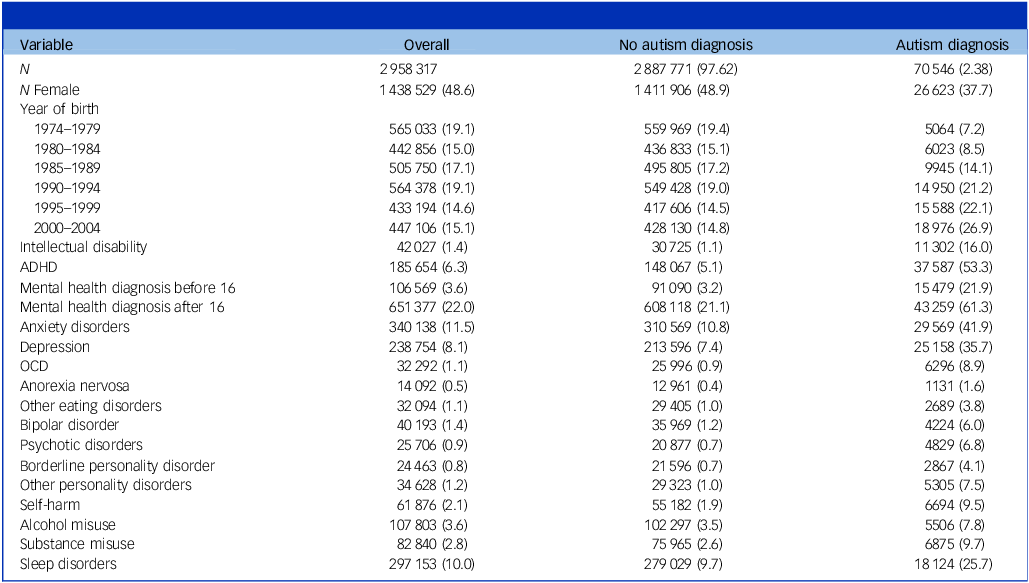
Descriptive statistics are shown in Table 1. The cohort comprised 2 958 317 individuals, of whom 70 546 (2.38%) were diagnosed with autism. A total of 43 259 (61.3%) autistic people received at least 1 psychiatric diagnosis after age 16 compared with 608 118 (21.1%) non-autistic people. Overall, 1000 (1.4%) autistic people died by the end of follow-up, compared with 13 329 (0.5%) non-autistic people. Of the autistic people who died, 804 (80.4%) had at least 1 psychiatric diagnosis, with 693 (69.3%) having 2 or more (Supplementary Table S2).
Descriptive statistics
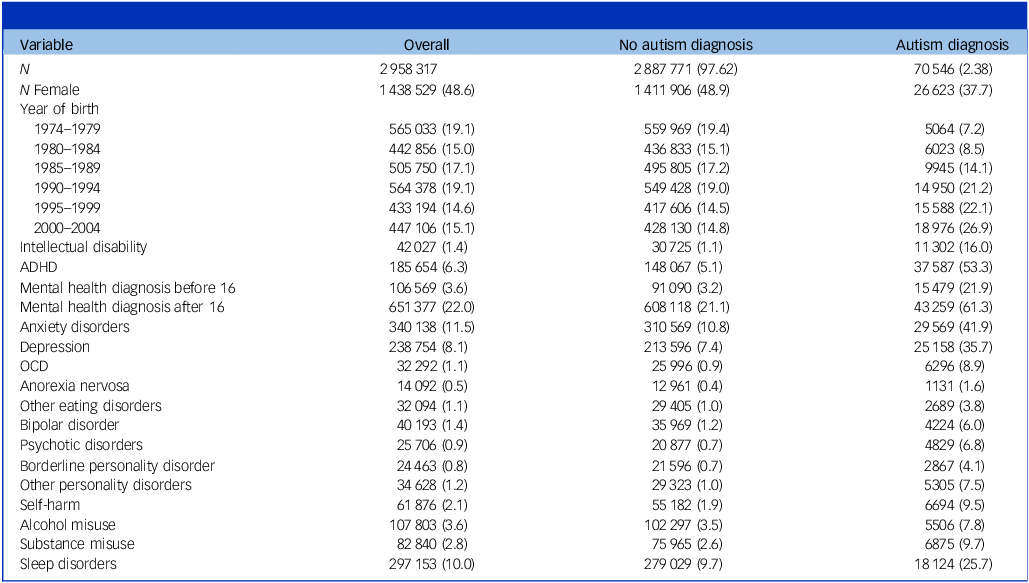
Table 1 Long description
The table presents descriptive statistics for a cohort of 2958317 individuals, with 70546 (2.38%) diagnosed with autism. The table is divided into three main columns: Overall, No autism diagnosis, and Autism diagnosis. It includes data on the number of individuals, gender distribution, year of birth, intellectual disability, ADHD, mental health diagnoses before and after age 16, various mental health disorders, self-harm, alcohol misuse, substance misuse, and sleep disorders. Notable trends include a higher prevalence of psychiatric diagnoses and mortality rates among autistic individuals compared to non-autistic individuals. For instance, 61.3% of autistic people received at least one psychiatric diagnosis after age 16, compared to 21.1% of non-autistic people. Additionally, 1.4% of autistic people died by the end of follow-up, compared to 0.5% of non-autistic people. The table highlights significant disparities in mental health outcomes and mortality between the two groups.
ADHD, attention-deficit hyperactivity disorder; OCD, obsessive–compulsive disorder.
The main results are first presented for the entire cohort, followed by the results for specific subgroups. Due to the volume of results, a summary of the most pertinent results is presented here, with further detail in the supplementary materials. For ease of presentation, the term ‘baseline group’ will be used to refer to individuals with neither an autism nor a psychiatric diagnosis.
Results for the full cohort
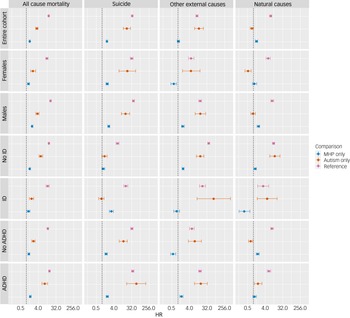
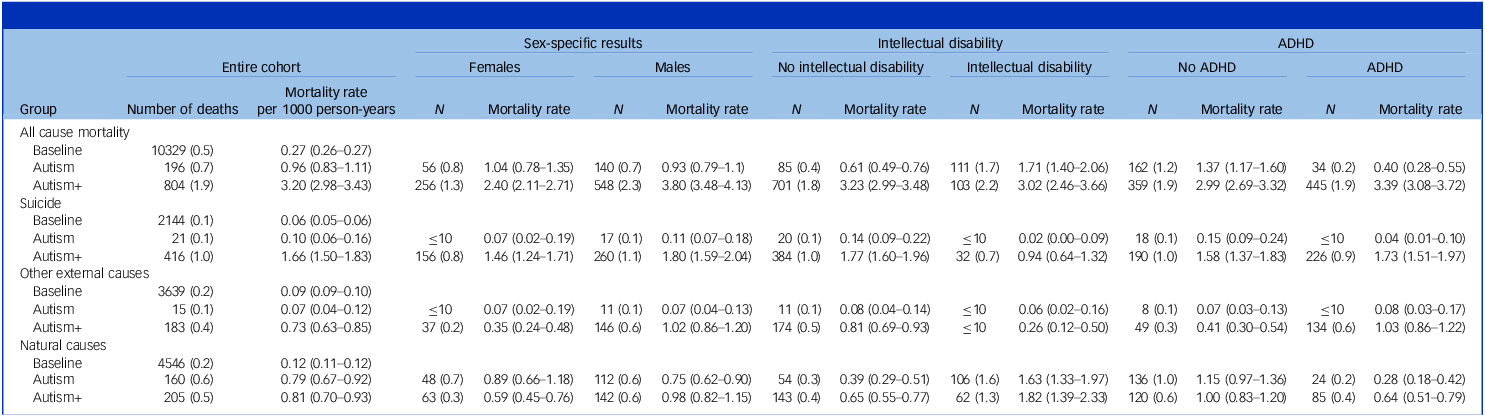
The mortality rate was markedly higher in autistic people with psychiatric conditions (3.2 deaths per 1000 person-years) than in the baseline group (0.27 deaths per 1000 person-years). The mortality rate for autistic people without psychiatric conditions (0.96 deaths per 1000 person-years) was less elevated than in autistic people with psychiatric conditions, but still higher than in the baseline group (Table 2). Results from the Cox regressions confirmed these patterns (Fig. 1 and Supplementary Table S3). Autistic people with psychiatric conditions were at an increased risk of premature mortality compared with the baseline group (hazard ratio 13.85, 95% CI = 12.86–14.91) and autistic people without psychiatric conditions (hazard ratio 3.44, 95% CI = 2.94–4.02). This risk was also in excess of that associated with psychiatric conditions alone (hazard ratio 1.47, 95% CI = 1.37–1.58).
Hazard ratios for different premature mortality outcomes across groups. Hazard ratios are shown on the log scale. The plot shows hazard ratios comparing autistic people with psychiatric conditions to three different groups: (a) those with only psychiatric diagnoses (Psychiatric Diagnosis Only); (b) those with an autism diagnosis but no recorded psychiatric diagnosis (Autism Only); and (c) the baseline group. ID, intellectual disability; MHP, mental health psychosis; ADHD, attention-deficit hyperactivity disorder; HR, hazard ratio.
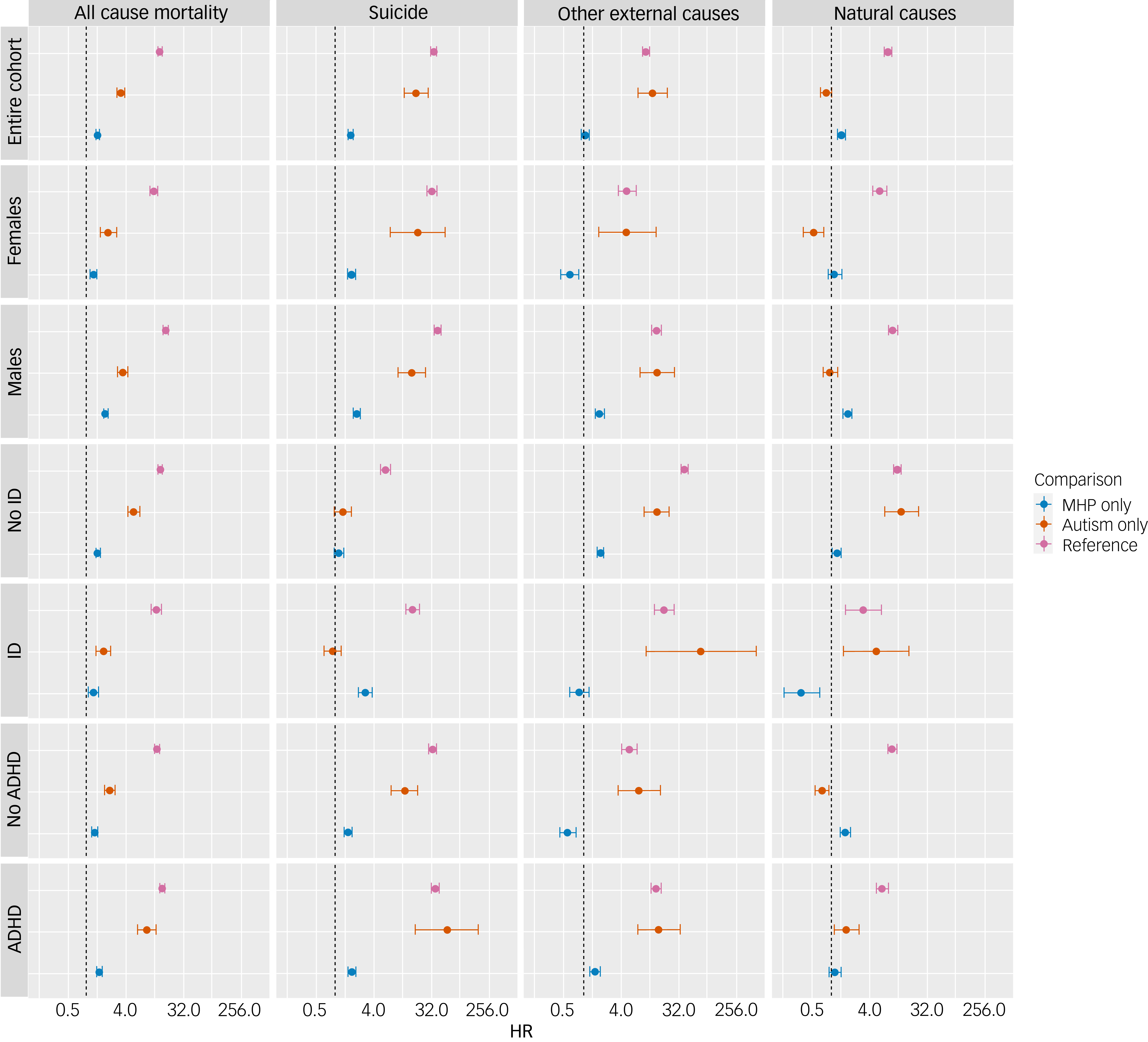
Fig. 1 Long description
The box-and-whisker plot compares hazard ratios for premature mortality outcomes across different groups. The plot is divided into four columns representing different mortality outcomes: All Cause Mortality, Suicide, Other External Causes, and Natural Causes. Each column contains multiple box plots representing different subgroups: Entire Cohort, Females, Males, No ID, ID, No ADHD, and ADHD. The x-axis represents hazard ratios on a log scale, ranging from 0.5 to 256.0. The y-axis lists the subgroups. Each box plot shows the distribution of hazard ratios with the median, lower quartile, upper quartile, and whiskers indicating the range. Outliers are also marked. The plot uses color coding to differentiate between groups: MHP Only, Autism Only, and Reference. The hazard ratios are compared across these groups to show variations in premature mortality outcomes.
Frequencies for mortality and mortality rates
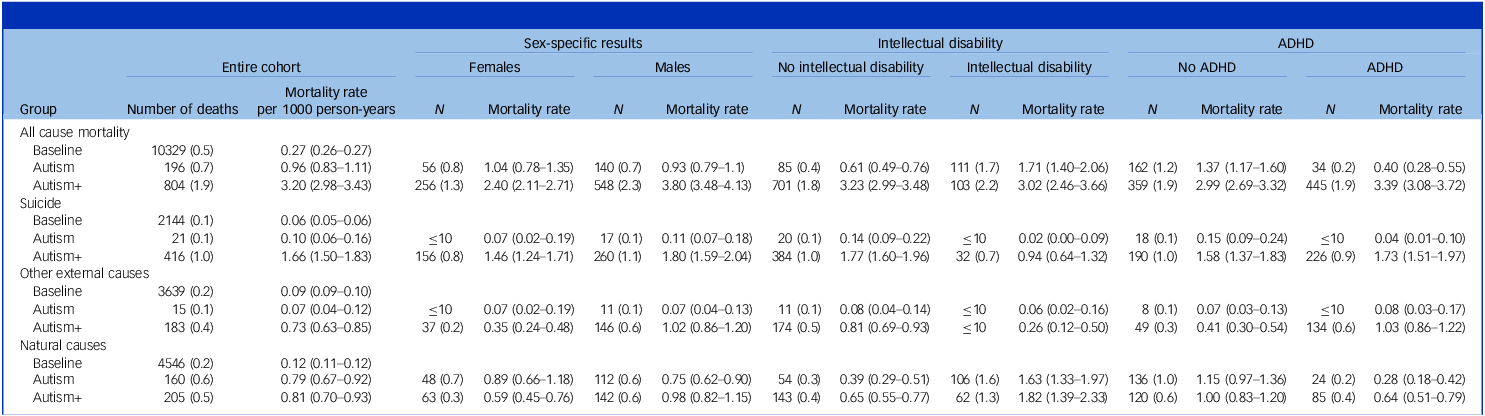
Table 2 Long description
The table presents mortality rates across various groups and conditions, focusing on autism, psychiatric conditions, and attention deficit hyperactivity disorder. It includes data for the entire cohort, sex-specific results, intellectual disability status, and ADHD status. The table has 13 rows and 13 columns, with headers such as Group, Number of deaths, Mortality rate per 1000 person-years, and specific columns for females, males, no intellectual disability, intellectual disability, no ADHD, and ADHD. Notable trends include higher mortality rates in autistic people with psychiatric conditions compared to the baseline group and autistic people without psychiatric conditions. The data highlights the increased risk of premature mortality in these groups.
ADHD, attention-deficit hyperactivity disorder.
Baseline: individuals with no diagnosis of autism or a psychiatric condition; Autism: individuals with an autism diagnosis but no psychiatric diagnosis; Autism+: autistic people with at least one diagnosis of a psychiatric condition.
Please note that frequencies of 10 or fewer are not shown to preserve the anonymity of the cohort members.
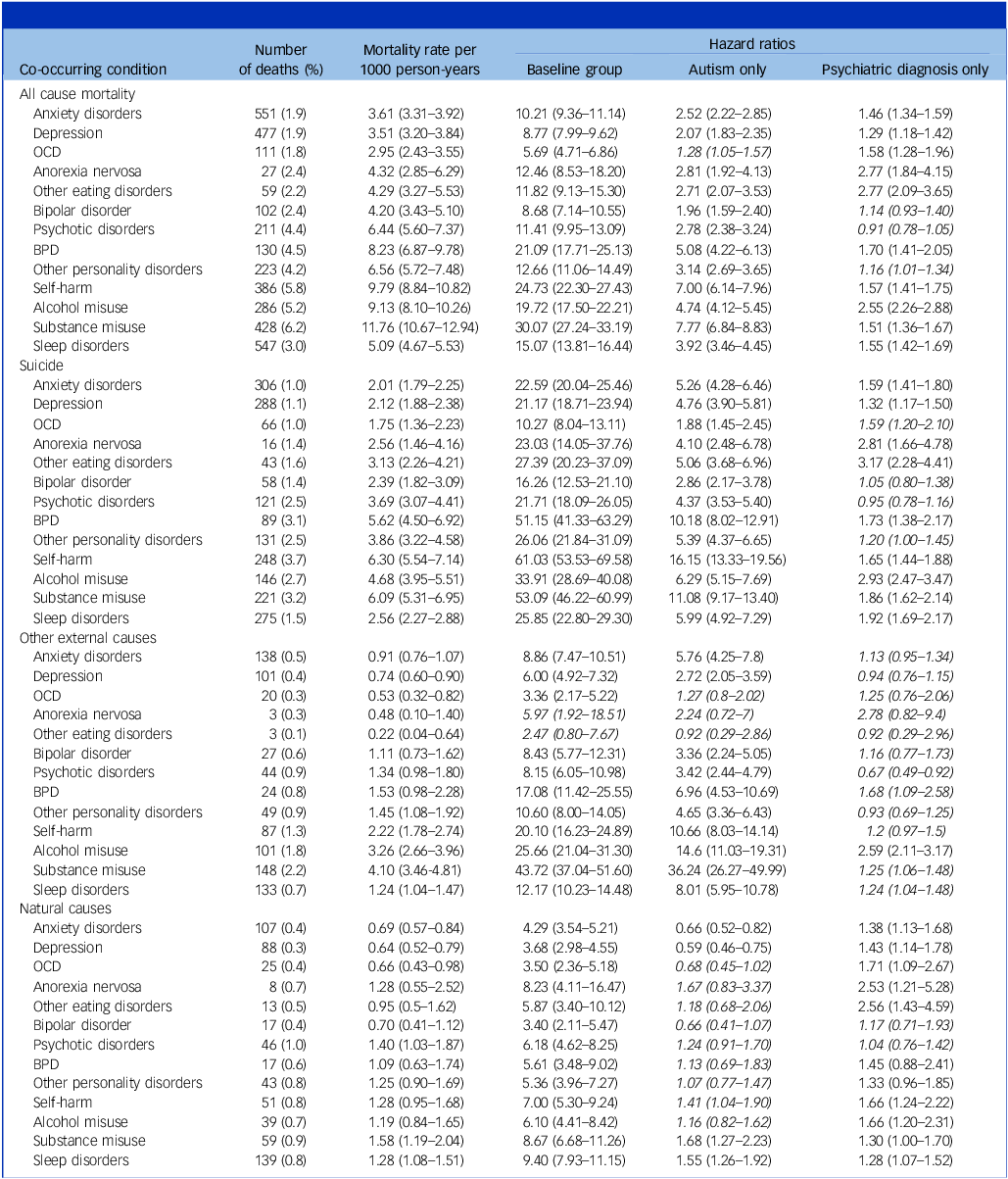
For the 13 specific psychiatric diagnoses, we found varying levels of association with all-cause mortality (Table 3). The conditions with the highest mortality rate were SUD (11.76 deaths per 1000 person-years), self-harm (9.79 deaths per 1000 person-years) and AUD (9.13 deaths per 1000 person-years). Autistic people with these conditions were also at an increased risk of premature mortality compared with autistic people without these diagnoses and non-autistic people with these diagnoses. Autistic people with all other diagnoses were still at an increased risk of premature mortality compared with the baseline group, with hazard ratios varying from 5.69 for OCD to 15.07 for insomnia.
Results for specific psychiatric diagnoses
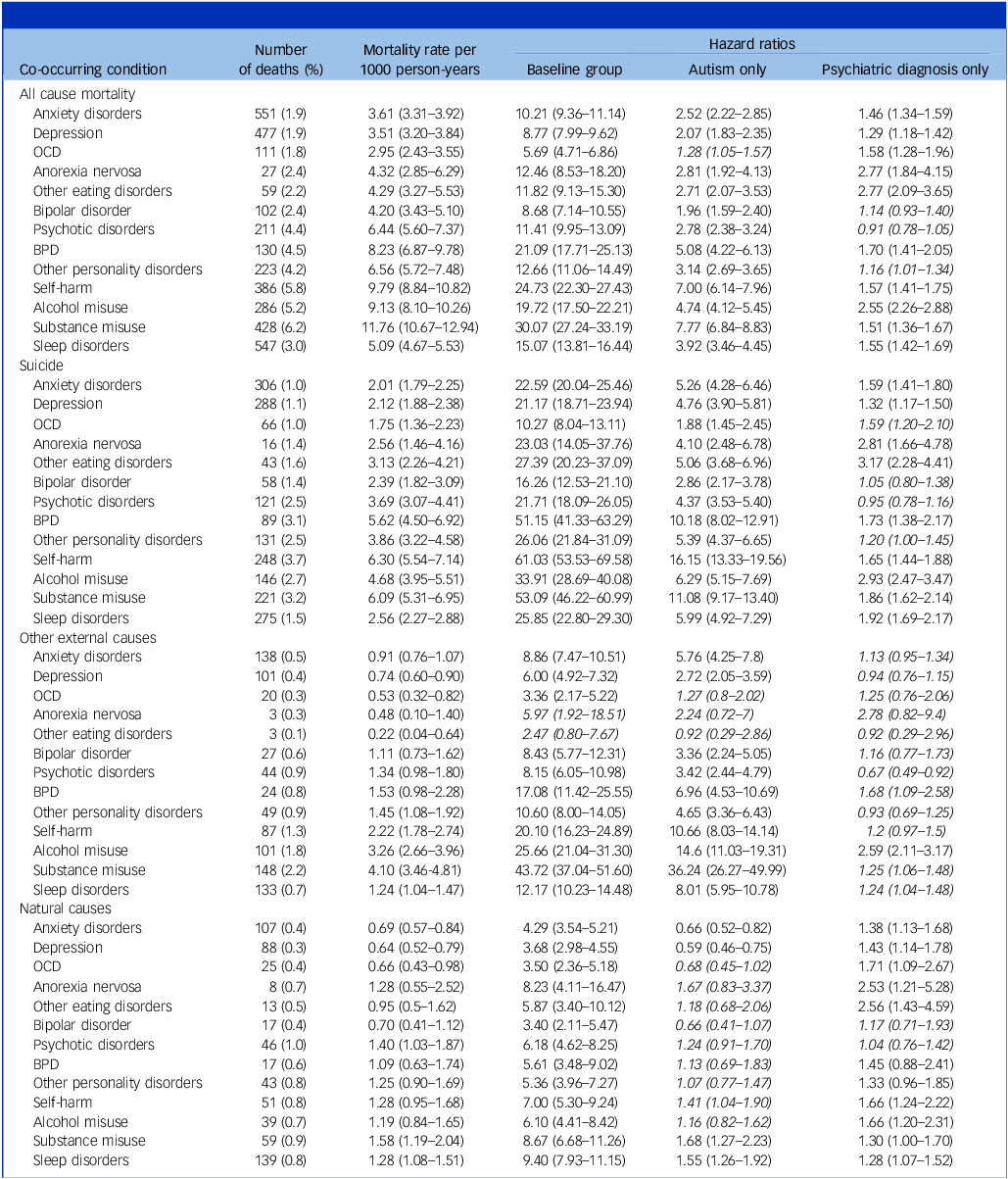
Table 3 Long description
The table presents data on mortality rates and hazard ratios for various psychiatric diagnoses. It includes columns for co-occurring conditions, number of deaths, mortality rate per 1000 person-years, and hazard ratios for different groups. The conditions with the highest mortality rates are substance use disorder, self-harm, and alcohol use disorder. The table also shows that autistic individuals with these conditions have an increased risk of premature mortality compared to non-autistic individuals with the same diagnoses and autistic individuals without these diagnoses. Hazard ratios vary significantly across different diagnoses, ranging from 5.69 for obsessive-compulsive disorder to 15.07 for insomnia.
OCD, obsessive-compulsive disorder; BPD, bipolar disorder. Frequencies of 10 or fewer are not shown in order to protect the anonymity of the cohort members. The number of individuals who had died and the mortality rates shown are for autistic people who had received each given psychiatric diagnosis. All italicised hazard ratios were not statistically significant.
In terms of specific causes of death, there was a clear pattern whereby autistic people with psychiatric conditions were at an especially high risk of death by suicide compared with all comparison groups (Fig. 1 and Supplementary Table S3). This was especially the case for individuals with self-harm (mortality rate 6.3 deaths per 1000 person-years, hazard ratio 61.03), SUD (mortality rate 6.09, hazard ratio 53.09) and BPD (mortality rate 5.62 deaths per 1000 person-years, hazard ratio 51.15). Mortality rates were also generally elevated for other external and natural causes of death among autistic people with psychiatric conditions, albeit to a lesser degree than for suicide.
A final notable result was that autistic people without psychiatric conditions were still at an elevated risk of premature mortality (Supplementary Table S3), which was largely attributable to natural causes. Supplementary Table S4 presents the frequencies for specific natural causes of death.
Subgroup analyses
Sex
In both autistic females and males, mortality rates were higher in those with psychiatric conditions compared with the baseline group and autistic people without psychiatric conditions (Table 2). The risk increase compared with the baseline group was higher for males (hazard ratio 16.97, 95% CI = 15.54–18.52) than females (hazard ratio 10.95, 95% CI = 9.66–12.40). The excess risk compared with individuals with psychiatric conditions alone was also higher in autistic males (hazard ratio 1.97, 95% CI = 1.81–2.15) than in autistic females (hazard ratio 1.27, 95% CI = 1.12–1.44) (Fig. 1 and Supplementary Tables S5–S7). SUD and self-harm were particularly associated with premature mortality in both females and males. In terms of specific causes of death, psychiatric conditions were particularly associated with suicide across sexes.
Intellectual disability
Psychiatric conditions were associated with higher mortality rates and an increased risk of premature mortality in autistic people, regardless of whether they had an intellectual disability (hazard ratio 12.21, 95% CI = 10.05–14.83) or not (hazard ratio 14.12, 95% CI = 13.05–15.27). Suicide was again the cause of death with which psychiatric conditions were particularly strongly associated (Table 2, Fig. 1, Supplementary Tables S8–S10). A notable finding in relation to intellectual disability was that the discrepancy in risk between autistic people with and without psychiatric conditions was less pronounced in those with intellectual disability (hazard ratio 1.81, 95% CI = 1.38–2.37) than in those without intellectual disability (hazard ratio 5.54, 95% CI = 4.33–6.79). This was largely driven by death by natural causes.
ADHD
Mortality rates for autistic people with psychiatric conditions were higher in autistic people with and without ADHD. However, the risk increase was higher in those with ADHD (mortality rate 3.39 deaths per 1000 person-years, hazard ratio 15.07, 95% CI = 13.68–16.60) than in those without ADHD (mortality rate 2.99 deaths per 1000 person-years, hazard ratio 12.56, 95% CI = 11.29–13.98) (Table 2, Fig. 1, Supplementary Tables S11–S13). In both groups, SUD, self-harm and BPD were most strongly associated with premature mortality and suicide was the most common cause of mortality (Supplementary Tables S11–S13). A further notable finding concerned individuals without psychiatric conditions; those with ADHD were at a lower risk of premature mortality (hazard ratio 1.74, 95% CI = 1.24–2.44) than those without ADHD (hazard ratio 12.56, 95% CI = 11.29–13.98).
Sensitivity analyses
Results from the sensitivity analyses are fully shown in Supplementary Tables S15–S23. The pattern of results, whereby autistic people with psychiatric conditions were at a greater risk of premature mortality, was observed regardless of age of autism diagnosis, year of birth, year of diagnosis and adjustment for childhood psychiatric conditions.
Discussion
The purpose of this study was to investigate the degree to which autistic people with co-occurring psychiatric conditions were at a greater risk of premature mortality. We found that these individuals were more likely to have died prior to age 46 than non-autistic people, as well as autistic people without psychiatric conditions. The same results were observed across autistic females and males, and across those with and without additional neurodevelopmental conditions. Thus, our study suggests that timely, effective detection and treatment of psychiatric conditions in autistic people may be a pathway towards closing the life-expectancy discrepancy between autistic and non-autistic people.
Our main results reflect the limited number of existing studies. Such studies report that autistic people with depression are at an elevated risk of mortality from suicide, Reference Kim, Lee, Shim and Cheon12 as well as an attenuated risk of premature mortality in autistic people after adjustment for specific subsets of psychiatric conditions. Reference Schendel, Overgaard, Christensen, Hjort, Jørgensen and Vestergaard13 Our study included a wider array of specific psychiatric diagnoses, enabling us to highlight conditions that are particularly strongly associated with premature mortality. Although autistic people with all 13 conditions were at an increased risk of premature mortality, the risk was especially elevated in those with SUD, self-harm and BPD. It is beyond the scope of our study to highlight pathways from these diagnoses to premature mortality; however, our results can guide future studies. For example, an elevated rate of SUD has been reported in autistic people, Reference Butwicka, Långström, Larsson, Lundström, Serlachius and Almqvist23 yet SUD has been under-researched in relation to autism. This highlights the need for further studies assessing the reasons why such an association exists, for example whether SUD reflects self-medication to reduce subjective distress. Diagnosing BPD in autistic people is contentious, with concerns raised that autistic traits (particularly in women) may be misattributed to BPD, posing a barrier to timely autism diagnosis. Reference McQuaid, Strang and Jack24 Given concerns that the diagnosis of BPD may itself lead to stigma and harm, Reference Cobbaert, Maloney, Harding and James25 it is further important to explore whether this association arises due to symptoms attributed to BPD or from harms arising from the diagnosis and its associated treatments. Thus, investigations of the pathway to developing, diagnosis of and outcomes following specific conditions in autistic people are needed.
We also found similar patterns of results across different groups of autistic people, further extending existing research. The risk increase associated with psychiatric conditions was stronger in autistic males than autistic females. This contrasts with the higher rate of psychiatric diagnoses reported in autistic women relative to autistic men. Reference Martini, Kuja-Halkola, Butwicka, Du Rietz, D’Onofrio and Happé16 This may partly be driven by the higher proportion of autistic men with intellectual disability (17.2%) than autistic women (14.1%), since the risk of premature mortality is generally higher in autistic people with intellectual disability. Differences in suicide methods may also partly explain this result, given that men may use methods more likely to result in death than women. Reference Mergl, Koburger, Heinrichs, Székely, Tóth and Coyne26 Given that autistic men were also at a higher risk of mortality from natural and other external causes, this cannot fully explain the sex differences we observed, however. Follow-up studies are needed to add further detail to our results concerning sex differences.
The results concerning intellectual disability highlighted that the discrepancy in risk of premature mortality between autistic people with and without psychiatric conditions was smaller for those with intellectual disability. This was largely due to mortality from natural causes, tallying with existing studies indicating that autistic people with intellectual disability are at a greater risk of premature mortality from natural causes. Reference Hirvikoski, Mittendorfer-Rutz, Boman, Larsson, Lichtenstein and Bölte3,Reference Hwang, Srasuebkul, Foley, Arnold and Trollor4 It is important to note that autistic people with intellectual disability are likely underdiagnosed with psychiatric conditions, Reference ONions, Brown, Buckman, Charlton, Cooper and El Baou27 meaning that many individuals in the intellectual disability group likely had undiagnosed psychiatric conditions. Future studies need to adopt strategies to adequately measure psychiatric symptoms in individuals with intellectual disability in order to provide a clearer overview of how psychiatric conditions have an impact on the risk of premature mortality in autistic people with intellectual disability.
The results split by ADHD similarly showed an elevated risk of premature mortality in autistic people with psychiatric conditions; however, a notable result was that autistic people with ADHD who had no recorded psychiatric diagnoses were at the lowest risk of premature mortality (albeit still elevated to a modest degree). One possibility is that autistic people with ADHD are more likely to receive ADHD medication, which has been reported to reduce the risk of suicide and accidents. Reference Zhang, Zhu, Sjölander, Nourredine, Li and Garcia-Argibay28 However, it should be noted that autistic people without psychiatric conditions comprised fewer than 10% of autistic people with ADHD. This therefore indicates that psychiatric conditions are likely a large contributor to premature mortality in autistic people with ADHD, highlighting the need to adequately detect and treat psychiatric conditions in these individuals. This is especially important given the high, increasing numbers of autistic people diagnosed with ADHD.
A further notable result was that autistic people without psychiatric diagnoses remained at an increased risk of premature mortality relative to non-autistic people, consistent with existing studies. Reference Jokiranta-Olkoniemi, Gyllenberg, Sucksdorff, Suominen, Kronström and Chudal5,Reference Hirvikoski, Boman, Chen, DOnofrio, Mittendorfer-Rutz and Lichtenstein14,Reference Lai, Saunders, Huang, Artani, Wilton and Zaheer29 This may partly reflect undiagnosed psychiatric conditions in autistic people, given barriers to accessing healthcare reported by autistic people. Reference Doherty, Neilson, O’Sullivan, Carravallah, Johnson and Cullen30 However, the increased risk of premature mortality in autistic people without psychiatric diagnoses was largely attributable to natural causes. Autistic people are at an increased risk of somatic conditions Reference Ward, Weir, Allison and Baron-Cohen2 and poor health has been identified as a potential risk factor for premature mortality in autistic people. Reference Smith DaWalt, Hong, Greenberg and Mailick31 Collectively, these results suggest that psychiatric care alone is not likely to be sufficient for reducing the risk of premature mortality in autistic people. Rather, an integrated approach across somatic and psychiatric specialties is needed.
More broadly, our results indicate a potential need for more intensive follow-up of autistic people in clinical settings. For example, Swedish clinical guidelines were recently updated to recommend a suicide risk assessment following an autism diagnosis. Our results support this decision, especially given the excess risk of premature mortality in autistic people with psychiatric conditions relative to individuals with psychiatric conditions alone. Our results suggest that this could be accompanied by a mental health screening. Given that autistic people often have contact with psychiatric care before being diagnosed with autism, their psychiatric history could be assessed. Reference Martini, Kuja‐Halkola, Butwicka, Du Rietz, Kanina and Brikell32 The elevated rates of premature mortality from natural causes further highlight a need for follow-up outside psychiatric settings. For example, one study reported that approximately 75% of autistic people felt positive about being offered a short, annual health check-up. Reference Mason, Taylor, Ingham, Finch, Wilson and Scarlet33 It should be noted that any initiatives to increase follow-up in autistic people need to be co-designed with autistic people to ensure that such intervention is acceptable to them.
Given that co-occurring psychiatric conditions are associated with premature mortality, identification of risk factors for psychiatric ill health in autistic people is paramount. Identification of relevant risks would facilitate preventative strategies concerning psychiatric conditions in autistic people, which may by extension reduce the risk of premature mortality. While existing studies have focused heavily on genetic explanations, Reference Ghirardi, Brikell, Kuja-Halkola, Freitag, Franke and Asherson34 approaches that do not position psychiatric conditions as an inherent outcome for autistic people are needed. For example, autistic people experience high rates of bullying victimisation, Reference Daghustani, Abo Hamza, Hogg and Moustafa35 interpersonal victimisation Reference Pearson, Rose and Rees36 and unemployment; Reference Lallukka, Mittendorfer-Rutz, Ervasti, Alexanderson and Virtanen37 all of which are risks for psychiatric conditions. Future studies thus need to apply study designs that allow for causal inferences to be drawn in order to identify modifiable risk factors for psychiatric ill health in autistic people. Further exploration of how these exposures differ across autistic people with and without psychiatric conditions will also further assist in understanding the difference in mortality risk across these individuals.
The strengths of our study include the large cohort, with extensive data on autism, co-occurring conditions and mortality. This enabled us to provide considerable detail about premature mortality in autistic people. There are limitations, however. We lacked coverage of primary care, where conditions such as anxiety disorders and depression are more commonly treated in Sweden. Although Sweden has universal healthcare, autistic people nevertheless report barriers to accessing care in Sweden, likely resulting in some exposure misclassification. We did not have information on gender, meaning that a more inclusive approach is needed in future to ensure that the needs of gender-diverse autistic people are accommodated. The cohort was also relatively young (aged 46 at the oldest at the end of follow-up), meaning that studies with longer-term follow-up are needed, given that certain conditions that may contribute to mortality (e.g. cardiovascular diseases) become more common with age.
To conclude, our study shows that co-occurring psychiatric conditions are a clear risk factor for premature mortality in autistic people, based on data from the Swedish population. Meeting the mental health needs of autistic people is thus crucial as a means to close inequities that exist around life expectancy for autistic people. Given the increased risk of premature mortality from multiple causes, our results also highlight a need for integrated care in order to fully meet the health needs of autistic people and help lay the foundations for autistic people to flourish.
Supplementary material
The supplementary material is available online at https://doi.org/10.1192/bjp.2026.10696
Data availability
Due to Swedish legal regulations, we are unable to share the data used in this study. Researchers interested in accessing the data themselves can apply to the Swedish National Board of Health and Welfare and to Statistics Sweden.
Author contributions
M.J.T. acquired funding for the study. H.L. and A.R. were co-applicants on the grant that funded this study. H.L. and P.L. acquired funding for the registry linkage. H.L., P.L., I.B., Z.C., R.K.-H. and B.M.D. obtained the registry data. M.T. is responsible for HURPID. M.J.T., H.L. and R.K.-H. designed the study. All authors gave input on the study design by commenting on an analysis plan. M.I.M. performed the data management. M.J.T. conducted the statistical analyses, with input from R.K.-H. All authors provided comments on the results and provided suggestions for interpretation of the results. M.J.T. drafted the manuscript, with input from H.L. All authors provided critical feedback on the draft of the manuscript.
Funding
This study was financed by MQ: Transforming Mental Health (grant number 20/19) and the Swedish Research Council (2024-06592). M.J.T. was also funded by the Swedish Research Council (2023-02543).
Declaration of interest
H.L. reports receiving grants from TAKEDA and Shire Pharmaceuticals and personal fees from and serving as a speaker for Medice, Shire/Takeda Pharmaceuticals and Evolan Pharma AB, all outside the submitted work. He is Editor-in-Chief of JCPP Advances. A.R. is joint editor of the Journal of Child Psychology and Psychiatry for which she receives an annual honorarium. All other authors have no interests to declare.
Transparency declaration
The first author affirms that the manuscript is an honest, accurate and transparent account of the study being reported and that no important aspects of the study have been omitted. Generative AI was not used in any aspects of the study.
Analytic code availability
Analytic code used to create and manage data-sets, and perform the statistical analyses, are available from the corresponding author, M.J.T., on request.


 Open access


eLetters
No eLetters have been published for this article.