


Introduction
Schizophrenia is a heterogeneous mental disorder with both a neurodevelopmental and neurotoxic component that affects the brain and the body in multiple adverse ways.Reference Pillinger, D’Ambrosio, McCutcheon and Howes 1 The onset of schizophrenia is often in late adolescence or early adulthood,Reference Solmi, Radua and Olivola 2 a period that overlaps with critical stages of biological, personal, interpersonal, educational, and vocational development.
While the outcomes of people diagnosed with schizophrenia are also heterogeneous, multiple risk factors of adverse outcomes have been identified.Reference Carbon and Correll 3 , Reference Solmi, Cortese and Vita 4 These moderators and medicators include non-modifiable factors as well as modifiable factors that can be intervention targets. Nonmodifiable factors include male sex, earlier illness onset (especially during childhood and adolescence), premorbid developmental delay longer illness duration, and greater illness severity.Reference Carbon and Correll 3Modifiable factors, include a longer duration of untreated psychosis that is often substantialReference Salazar de Pablo, Aymerich and Guinart 5 –Reference Howes, Whitehurst and Shatalina 7 (necessitating early detection and intervention services),Reference Salazar de Pablo, Guinart and Armendariz 8 , Reference Correll, Galling and Pawar 9 substance use comorbidity (addressed with psychosocial and/or pharmacological treatments),Reference Hunt, Large, Cleary, Lai and Saunders 10 –Reference Krause, Huhn, Schneider-Thoma, Bighelli, Gutsmiedl and Leucht 13 less early symptomatic improvement after antipsychotic initiation (indicating early informed treatment adjustments),Reference Samara, Leucht and Leeflang 14 , Reference Rubio, Guinart, Kane and Correll 15 as well as more relapses and greater non-adherence that are intricately intertwined (each being reduced by continued antipsychotic treatment, especially with long-acting injectable antipsychotics [LAIs]).Reference Solmi, Croatto and Piva 16 –Reference Ceraso, Lin and Schneider-Thoma 20
Relapses that are closely related to non-adherence are particularly associated with personal, family, and societal cost, including more symptom severity and duration, more suicide attempts, less symptom improvement and more secondary treatment resistance, greater grey matter decrease than ongoing antipsychotic treatment, greater psychosocial and economic burden to patients, families, and society, as well as greater mortality risk.Reference Correll and Lauriello 21 , Reference Correll, Rubio and Kane 22 Since psychotic relapses play such a major role in the prediction of poorer treatment outcomes,Reference Carbon and Correll 3 it is also relevant to take into consideration known risk factors for psychotic relapses when designing treatment plans for and with patients living with schizophrenia. Moreover, since LAIs are a valuable tool for people with schizophrenia in general to visualize and reduce non-adherence as well as the risk of relapse and related adverse biopsychosocial downstream effects, the potential utility of LAIs from the beginning of schizophrenia and in the early illness stages should be explored. This is because people in the early illness stages are likely closest to psychosocial resources and opportunities that they can take advantage of as long as they are sufficiently symptomatically stable.
This article provides a narrative review of the role of early illness phases in schizophrenia, risk factors for psychotic relapses and their adverse downstream effects, and the potential role of LAIs, as well as counterarguments and misconceptions surrounding their use, and finally, data regarding the effectiveness and acceptability of LAIs in first-episode and early-phase schizophrenia. By challenging outdated assumptions that LAIs are only for chronically ill or nonadherent patients, the review makes the case for the earlier and broader use of LAIs as part of a recovery-oriented and patient-centered approach to the management of schizophrenia.
Treatment goals, challenges, and results
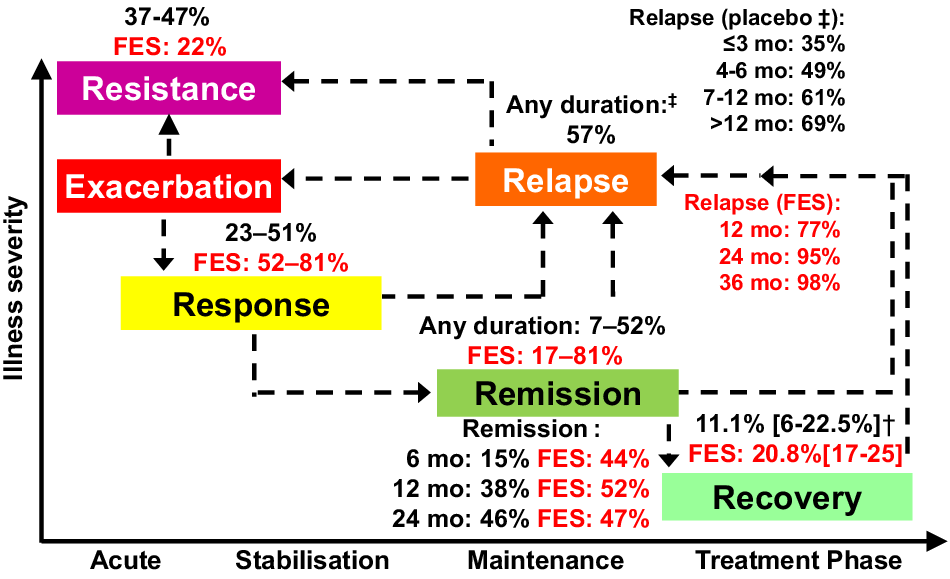
Figure 1 shows results from a prior reviewReference Carbon and Correll 3 that have been updated with more recent results from meta-analyses that have quantified key outcomes in people with schizophrenia, such as antipsychotic treatment response, symptomatic remission, dyadic symptom-functioning recovery, relapse, and treatment resistance, both in first-episode (red font) and in multi-episode (black font) schizophrenia.
Therapeutic targets and outcomes for people with schizophrenia.
†Median (interquartile range); ‡In placebo-controlled antipsychotic discontinuation studies. FES, first-episode schizophrenia; mo, month.

When patients with schizophrenia are exacerbated and acutely ill, treatment response is the first target. Research has indicated study-reported treatment response rates of 40–87% in first-episode schizophrenia and 16–65% in multi-episode schizophrenia.Reference Carbon and Correll 3 Since treatment response is in the eye of the beholder, quantification of that response means or is based on what is relevant. Elegant equipercentile ranking analyses comparing ratings on global psychopathology measures, such as the Positive and Negative Syndrome Scale (PANSS) or the Brief Psychiatric Rating Scale (BPRS), with changes in global illness, measured with the Clinical Global Impressions-Improvement Scale (CGI-I), have shown that a ≥ 20% reduction in PANSS or BPRS total score is equivalent to at least ‘minimally improved’ on the CGI-I, while it takes a ≥ 50% reduction in PANSS or BPRS total score to be equivalent to at least “much improved” on the CGI-I.Reference Leucht, Leucht and Huhn 23While in patients with first-episode schizophrenia, 81% and 52% were at least minimally or much/very much improved, respectively,Reference Zhu, Li and Huhn 24 these frequencies were much lower, 51% and 30%, respectively, in patients with multi-episode schizophrenia.Reference Leucht, Leucht and Huhn 23However, symptom response is a relative term that indicates improvement over a baseline that is variable but not wellness. Here, the concept of symptom remission is relevant. According to a widely used conceptualization, remission in schizophrenia is defined by the presence of specific and clinically relevant positive and negative symptoms of no more than mild severity.Reference Andreasen, Carpenter, Kane, Lasser, Marder and Weinberger 25The concept of remission has since been used either with the original 6-month duration criterion or cross-sectionally, according to study author’s decision. Based on study data, pooled together and using any duration criteria, remission seems more likely to occur in people with first-episode schizophrenia than multi-episode schizophrenia (17–81% vs 7–52%).Reference Carbon and Correll 3However, when looking more closely at the time course of symptom stability, it appears that the advantage of greater remission frequencies with first-episode schizophrenia is apparent mostly at 6 months (44% vs 15%) and 12 months (52% vs 38%), but lost at 24 months (47% vs 46%).Reference Lambert, Karow, Leucht, Schimmelmann and Naber 26 These findings suggest that symptom worsening and relapse threaten sustained remission also in people with first-episode schizophrenia. Importantly, results for the desired outcome of recovery, i.e., the dual state of symptom stability together with functional attainment, encompassing self-care, social interactions, leisure time, and education/work, which needs to be sustained for at least 1 or even 2 years, are even lower, are even more grim. Altogether, in patients with schizophrenia across all illness stages, a median recovery rate of 13.5% has been reported without significant increases over 5 decades.Reference Jääskeläinen, Juola and Hirvonen 27 When comparing patients with first-episode schizophrenia and multi-episode illness, recovery rates are higher in the early illness stage (20.8%Reference Hansen, Speyer and Starzer 28 vs 11.1%Reference Jääskeläinen, Juola and Hirvonen 27) but still very low (Figure 1).
Among the reasons for the limited recovery rates, relapses score high and are among the most preventable causes.Reference Jääskeläinen, Juola and Hirvonen 27In fact, when patients in double-blind randomized discontinuation trials are moved to placebo after antipsychotic stabilization, 34.8% worsen within 3 months, 48.6% within 4–6 months, 60.6% within 7–12 months and 68.4% beyond 12 months, with a pooled risk of relapse of 57.5% independent of duration of follow-up.Reference Ceraso, Lin and Schneider-Thoma 20 In patients with first-episode schizophrenia, pooled weighted relapse rates after stopping antipsychotics were 77% (range: 56–91%) at 12 months, 95% (range 94–96%) at 24 months, and 98% (range (97–98%) at 36 months.Reference Zipursky, Menezes and Streiner 29 Finally, relapse can lead, among other negative consequences, to decreased treatment response and even secondary treatment resistance, at least in a subgroup of vulnerable patients.Reference Correll, Rubio and Kane 22 Recent meta-analytic data indicate that up to 22.2% of patients with schizophrenia are antipsychotic treatment resistant from their first episode, also called primary treatment resistance, but that this rate doubles to 37–47% after multiple relapses in patients with multi-episode schizophrenia.Reference Diniz, Fonseca and Rocha 30
In summary, while people with first-episode schizophrenia are more likely to initially respond to antipsychotic medications than people with multi-episode schizophrenia, these gains are lost over time. Relapses are a particular threat to maintaining symptom stability and to being able to use and translate this stability to goal attainment, including functionality and life engagement.Reference Gorwood, Yildirim and Madera-McDonough 31 –Reference Correll, Ismail, McIntyre, Rafeyan and Thase 33Hence, beyond acute symptom stabilization, maintenance treatment, and relapse prevention are a main building blocks to achieve desired and sustainable outcomes in people living with schizophrenia. Such sustained maintenance treatment and symptom control should start and be achieved as early as possible in the illness course.
Knowledge about risk factors for schizophrenia relapse to inform treatment selection
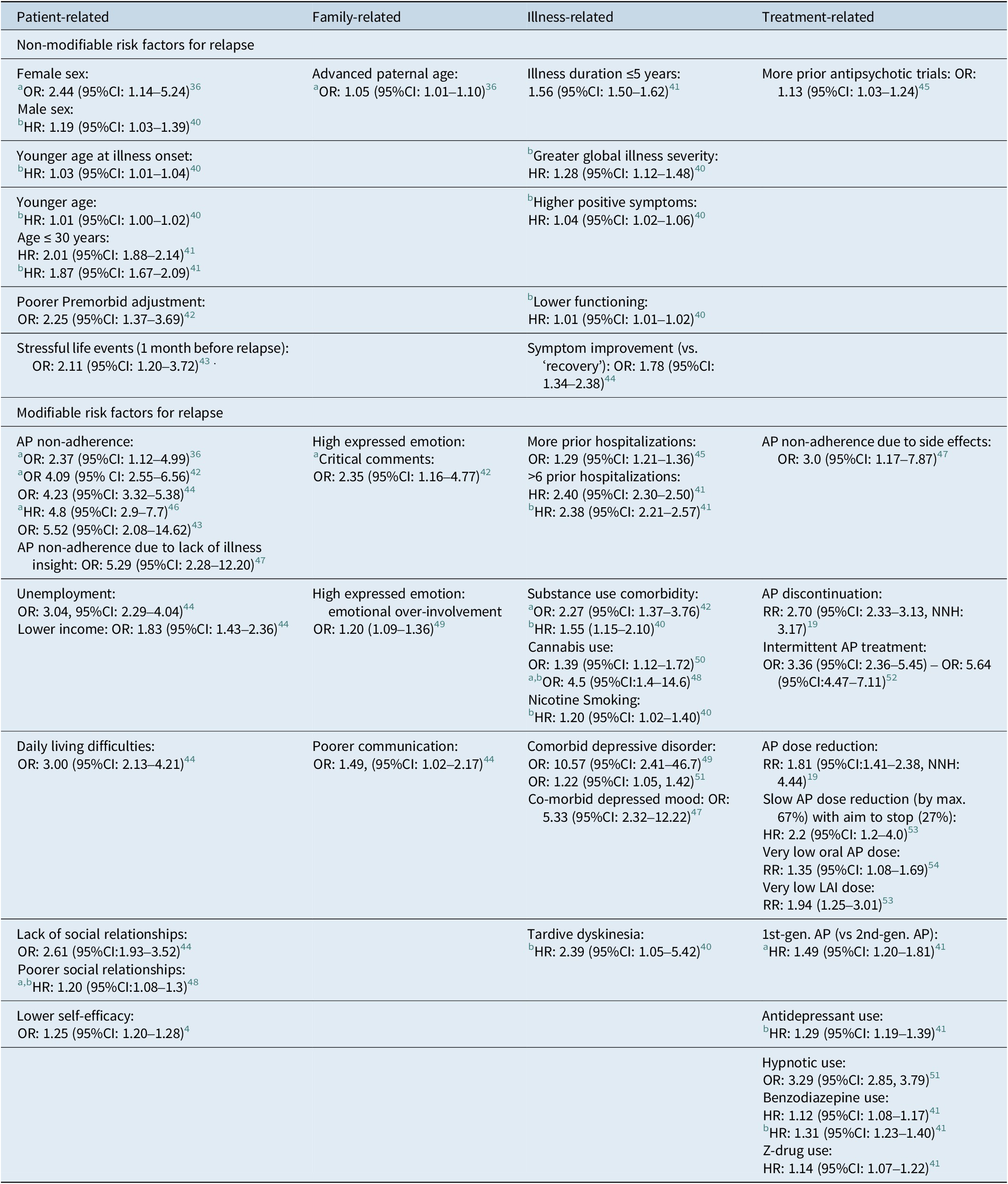
Since continued antipsychotic treatment, especially with LAIs, has been shown to significantly reduce relapses in people with schizophrenia,Reference Kishimoto, Hagi, Kurokawa, Kane and Correll 18 , Reference Correll, Citrome, Haddad, Lauriello, Olfson, Calloway and Kane 34 , Reference Haddad and Correll 35 one approach to selecting patients who may be appropriate for LAI initiation and maintenance treatment is to look for risk factors for relapse in patients with schizophrenia. Table 1 summarizes non-modifiable and modifiable risk factors for relapse, focusing on patient-related, family-related, Illness-related, and treatment-related risk factors. Results are generally derived from patients with multi-episode schizophrenia. Whenever data for risk factors for a psychotic relapse or breakthrough were available specifically for patients with first episode psychosis or schizophrenia, these results are indicted with an asterisk. Data for patients treated with LAIs are indicated by the letter “b”.
Non-modifiable and Modifiable Risk Factors for Relapse in People with Schizophrenia

Abbreviations: AP, antipsychotic; HR, hazard ratio; LAI, long-acting injectable antipsychotic, OR, odds ratio; RR, risk ratio.
a Data in patients with first-episode psychosis.
b Data in patients on LAI treatment.
Non-modifiable risk factors for relapse in schizophrenia
Patient-related factors
Sex-based differences can influence relapse risk. Female patients with first-episode psychosis exhibit a significantly higher risk of relapse than males, with an odds ratio (OR) of 2.44 (95%CI: 1.14–5.24).Reference Hui, Chiu and Li 36 Notably, 3 recent database studies in patients with first-episode schizophrenia each indicated that females were more likely to discontinue antipsychotics.Reference Rubio, Taipale, Tanskanen, Correll, Kane and Tiihonen 37 –Reference Patel, Brinn and Irving 39 Conversely, in individuals maintained on LAIs, male sex was associated with increased relapse risk (hazard ratio [HR]: 1.19, 95%CI: 1.03–1.39),Reference Rubio, Schoretsanitis and John 40 possibly indicating overall greater illness severity and treatment resistance risk, despite ongoing antipsychotic treatment, which may also be related to greater risk of substance use, which is also a risk factor for relapse and breakthrough psychosis (see below).
Among LAI-treated individuals, younger age at illness onset was also associated with higher relapse risk (HR: 1.03, 95%CI: 1.01–1.04),Reference Rubio, Schoretsanitis and John 40 as was younger current age, whether as a continuous risk factor (HR: 1.01, 95%CI: 1.00–1.02) or pertaining to individuals ≤30 old (HR: 1.87, 95%CI: 1.67–2.09), which was also the age group at increased risk on patients treated with oral antipsychotics (HR: 2.01, 95%CI: 1.88–2.14).Reference Rubio, Taipale, Correll, Tanskanen, Kane and Tiihonen 41 Finally, poorer premorbid adjustment level further significantly raised the odds of relapse (OR: 2.25, 95% CI: 1.37–3.69).Reference Alvarez-Jimenez, Priede and Hetrick 42Finally, stressful life events 1 month before relapse was significant related to relapse (OR: 2.11, 95%CI: 1.20–3.72).Reference Hui, Li and Li 43
Family-related factors
Advanced paternal age at conception is a family-related non-modifiable factor. In first-episode psychosis, each additional year of paternal age increased the odds of relapse by 1.05 (95% CI: 1.01–1.10).Reference Hui, Chiu and Li 36
Illness-related factors
Among illness-related factors, illness duration ≤5 years was related to increased relapse risk (HR: 1.56, 95%CI: 1.50–1.62).Reference Rubio, Taipale, Correll, Tanskanen, Kane and Tiihonen 41 Furthermore, among LAI-treated patients,Reference Rubio, Schoretsanitis and John 40 greater global illness severity (HR: 1.28, 95%CI: 1.12–1.48), higher positive symptom severity (HR: 1.04, 95%CI: 1.02–1.06) [12], and lower overall functioning (HR: 1.01, 95%CI: 1.01–1.02) were each associated with relapse risk. Finally, suboptimal improvement, defined as symptom improvement without full recovery, was also a relapse predictor (OR: 1.78, 95%CI: 1.34–2.38).Reference Mi, Chen and Fan 44
Treatment-related factors
Among treatment-related factors, the number of prior antipsychotic trials, a proxy measure for illness chronicity and insufficient response, predicted higher relapse risk (OR: 1.13, 95%CI: 1.03–1.24).Reference San, Bernardo, Gómez and Peña 45
Modifiable risk factors for relapse in schizophrenia
Patient-related factors
Among patient-related risk factors for relapse antipsychotic non-adherence is one of the most powerful modifiable predictors. Its impact is consistently large across multiple studies, with HRs and ORs ranging from 2.37 to 5.52.Reference Hui, Chiu and Li 36 , Reference Alvarez-Jimenez, Priede and Hetrick 42 –Reference Mi, Chen and Fan 44 , Reference Caseiro, Pérez-Iglesias and Mata 46Notably, the risk of relapse was among the highest when non-adherence was related to poor insight (OR: 5.29, 95%CI: 2.28–12.20).Reference Kazadi, Moosa and Jeenah 47
Further risk factors for relapse include social determinants of health, such as unemployment (OR: 3.04, 95%CI: 2.29–4.04),Reference Mi, Chen and Fan 44 lower income (OR: 1.83, 95%CI: 1.43–2.36),Reference Mi, Chen and Fan 44 daily living difficulties (OR: 3.00, 95%CI: 2.13–4.21),Reference Mi, Chen and Fan 44 lack of social relationships (OR: 2.61, 95%CI:1.93–3.52)Reference Mi, Chen and Fan 44as well as in patients with first episode schizophrenia, treated with LAIs, poorer social relationships (HR: 1.20, 95%CI:1.08–1.35).Reference Emsley, Asmal, Rubio, Correll and Kane 48Finally, lower self-efficacy was also related to relapse risk (OR: 1.25, 95%CI: 1.20–1.28).Reference Solmi, Cortese and Vita 4
Family-related factors
Among family-related factors, high expressed emotion, specifically critical comments in people with first-episode schizophrenia (OR: 2.35, 95%CI: 1.16–4.77)Reference Alvarez-Jimenez, Priede and Hetrick 42 but also in general emotional over-involvement (OR: 1.20, 95%CI: 1.09–1.36)Reference da Silva, de Freitas, Shuhama, Del-Ben, Vedana, Martin and Zanetti 49 and poorer communication (OR: 1.49, (95%CI: 1.02–2.17)Reference Mi, Chen and Fan 44were modifiable predictors of relapse.
Illness-related factors
Among illness-related factors, a greater number of hospitalizations overall predicted relapse risk (OR: 1.29, 95%CI: 1.21–1.36),Reference San, Bernardo, Gómez and Peña 45 as did >6 hospitalizations in patients treated with oral antipsychotics (HR: 2.40, 95%CI: 2.30–2.50)Reference Rubio, Taipale, Correll, Tanskanen, Kane and Tiihonen 41and similarly so when treated with LAIs (HR: 2.38, 95%CI: 2.21–2.57).Reference Rubio, Taipale, Correll, Tanskanen, Kane and Tiihonen 41
A consistent and highly replicated and modifiable risk factor for relapse is substance use. Comorbid substance use increased relapse risk in people with first-episode schizophrenia (OR: 2.27, 95%CI: 1.37–3.76)Reference Alvarez-Jimenez, Priede and Hetrick 42 as well as patients with multi-episode schizophrenia treated with LAIs (HR: 1.55, 95%CI: 1.15–2.10).Reference Rubio, Schoretsanitis and John 40 Among substances, cannabis use increased the risk of relapse in general (OR: 1.39, 95%CI: 1.12–1.72),Reference Ameller and Gorwood 50whereas cannabis uses was particularly strongly implicated in relapse in patients with first-episode schizophrenia and treated with LAIs (OR: 4.5, 95%CI: 1.4–14.6).Reference Emsley, Asmal, Rubio, Correll and Kane 48 In studies where substance use was exclusionary, nicotine smoking, possible as a proxy for risk for abuse of other substances, also increased release risk modestly, even in patients receiving LAIs (HR: 1.20, 95%CI: 1.02–1.40).Reference Rubio, Schoretsanitis and John 40
Furthermore, comorbid depressive disorder or depressive symptoms also increase the odds of relapse by between OR: 1.22 (95%CI: 1.05, 1.42)Reference Inada, Saito and Baba 51 to OR: 5.33 (95%CI: 2.32–12.22)Reference Kazadi, Moosa and Jeenah 47and even OR: 10.57 (95%CI: 2.41–46.7).Reference da Silva, de Freitas, Shuhama, Del-Ben, Vedana, Martin and Zanetti 49The wide confidence intervals suggest the likely presence of subgroups and additional factors that may be related to depression and that may increase relapse further, including self-medicating substance use behaviors.
Finally, tardive dyskinesia, a potential marker of a dysregulated postsynaptic dopamine receptor system, was also associated with higher relapse risk even in patients on assured LAI treatment (HR: 2.39, 95%CI: 1.05–5.42).Reference Rubio, Schoretsanitis and John 40
Treatment-related factors
Several modifiable medication-related characteristics, behaviors, and choices influence relapse. As seen among patient-related factors, non-adherence is a crucial risk factor for relapse, and non-adherence can also be related to treatment effects, i.e., when patients decide to stop antipsychotics due to intolerable or unacceptable side effects (OR: 3.0, 95%CI: 1.17–7.87).Reference Kazadi, Moosa and Jeenah 47
Additional medication-related factors include antipsychotic discontinuation (RR: 2.70, 95%CI: 2.33–3.13)Reference Ostuzzi, Vita and Bertolini 19 and intermittent treatment with the risk of relapse ranging from OR: 3.36 (95%CI: 2.36–5.45) to OR: 5.64 (95%CI:4.47–7.11), depending on duration of follow-up.Reference De Hert, Sermon, Geerts, Vansteelandt, Peuskens and Detraux 52 But even antipsychotic dose carries an increased relapse risk (RR: 1.81, 95%CI: 1.41–2.38).Reference Ostuzzi, Vita and Bertolini 19 This increased relapse risk also extends to slow antipsychotic dose reduction to avoid potential rebound phenomena (achieved by a maximum of 67%) with aim to stop antipsychotics (achieved in only 27%), translating into an HR for relapse of 2.2 (95%CI: 1.2–4.0).Reference Moncrieff, Crellin and Stansfeld 53 Additionally, very low oral antipsychotic doses (RR: 1.35, 95%CI: 1.08–1.69)Reference Højlund, Kemp, Haddad, Neill and Correll 54or LAI doses (RR: 1.94, 95%CI: 1.25–3.01)Reference Moncrieff, Crellin and Stansfeld 53also conferred higher relapse risk.
Among medications, first-generation antipsychotic use increased relapse risk compared to second-generation antipsychotics in people with first-episode schizophrenia (HR: 1.49, 95%CI: 1.20–1.81)Reference Rubio, Taipale, Correll, Tanskanen, Kane and Tiihonen 41who are more sensitive to postsynaptic dopamine blockade.
Additional risks have been associated with adjunct psychotropic medications, possibly being markers of greater illness severity or complexity, more comorbid conditions, or difficulties with medication adherence due to too many medications. Relapse risk was increased in the presence of cotreatment with antidepressants in people on LAIs (HR: 1.29, 95%CI: 1.19–1.39),Reference Rubio, Taipale, Correll, Tanskanen, Kane and Tiihonen 41benzodiazepines in people on oral antipsychotics (HR: 1.12, 95%CI: 1.08–1.17)Reference Rubio, Taipale, Correll, Tanskanen, Kane and Tiihonen 41 and those on LAIs (RR: 1.31, 95%CI: 1.23–1.40),Reference Rubio, Taipale, Correll, Tanskanen, Kane and Tiihonen 41 as well as with Z-drugs (HR: 1.14, 95%CI: 1.07–1.22)Reference Rubio, Taipale, Correll, Tanskanen, Kane and Tiihonen 41 and especially hypnotics in general (OR: 3.29, 95%CI: 2.85–3.79).Reference Rubio, Taipale, Correll, Tanskanen, Kane and Tiihonen 41
Why LAIs make sense early in the course of illness
The notion that LAIs are only appropriate after repeated nonadherence or chronic illness is outdated and unsupported by evidence. LAIs provide multiple pharmacokinetic and clinical advantagesReference Kishimoto, Hagi, Kurokawa, Kane and Correll 18 , Reference Correll, Kim and Sliwa 55 , Reference Correll, Citrome, Haddad, Lauriello, Olfson, Calloway and Kane 34 , Reference Haddad and Correll 35 that are especially beneficial during the vulnerable early phase of schizophrenia. LAIs bypass first-pass metabolism, minimize plasma level fluctuations with lower antipsychotic peak levels that are relevant for adverse effects in more side effect-vulnerable patients with first-episode and early-phase schizophrenia,Reference Rubio, Taipale, Tanskanen, Correll, Kane and Tiihonen 37 –Reference Patel, Brinn and Irving 39 reduce the likelihood of undetected nonadherence, which is particularly high in early phase illness, and ensure steady therapeutic exposure. These benefits translate into clinical outcomes that are both significant and relevant: lower relapse rates, fewer hospitalizations, and better functional recovery.Reference Arango, Fagiolini and Gorwood 56
Contrary to concerns, most patients are open to using LAIs when they understand the rationale and advantages. Studies suggest that many patients with early-phase schizophrenia prefer the simplicity and reduced burden of LAIs once they are offered as a proactive, recovery-oriented option rather than a punitive one. In fact, a 2022 Delphi consensus report involving European experts emphasized that LAIs should be considered not only in cases of proven nonadherence but also proactively based on individual risk profiles and shared decision-making.Reference Correll, Fusar-Poli and Leucht 57 The report identified multiple clinical scenarios where early use of LAIs is appropriate: poor or uncertain adherence, insufficient insight, substance use comorbidity, family history of treatment discontinuation, and psychosocial instability. Importantly, the panel concluded that offering LAIs at the beginning of treatment can normalize their use, destigmatize them, and improve therapeutic alliances.Reference Correll, Fusar-Poli and Leucht 57
However, despite advantages of LAIs and expert panels and guidelines advocating their use in people with schizophrenia,Reference Arango, Fagiolini and Gorwood 56 –Reference McCutcheon, Pillinger and Varvari 61 LAIs have remained underutilized, both in patients with multi-episode but especially in first-episode schizophrenia. For example, in an observational study using the IBM MarketScan Commercial and Medicare Supplemental databases from January 1, 2012 to December 31, 2019 including 41 391 patients with newly diagnosed schizophrenia, only 1836 (4%) received at least one LAI.Reference Kane, Mychaskiw, Lim, Suett, Tian and Rubio 62Moreover, only 202 (<1%) patients remained on the LAI for ≥90 days, coined “successful” LAI implementation. Notably, before LAI initiation, 58% of these patients had received ≥2 OAPs.Reference Kane, Mychaskiw, Lim, Suett, Tian and Rubio 62 Similarly, in a Canadian retrospective, longitudinal cohort study using pharmacy prescription data between August 2005 and June 2017, among 16 300 patients with schizophrenia-spectrum disorder, 1062 (6.5%) patients used an LAI during the 12-month study period.Reference Agid, Remington, Fung, Nightingale, Duclos and Anger 63 Of those patients, 789 used an LAI within 2 years of diagnosis (74.3% of LAI users; 4.8% of all patients). Furthermore, 65.0% of patients had been prescribed ≥2 OAPs prior to LAI use. In a UK study of 2309 patients with first-episode schizophrenia-spectrum disorder treated in South London, only 7 patients (0.3%) initiated an LAI as the first-line treatment. This number increased to 11.3% (n = 795) among 7013 treatment episodes within the first 2–5 years of treatment.Reference Patel, Brinn and Irving 39 These numbers can be compared to LAI use in 15% of predominantly multi-episode patients across 7 European countries based on 2011 IMS Institute for Health Care Informatics data, ranging from 7% in Switzerland to 22% in the UK.Reference Arango, Baeza and Bernardo 64
The expanding role of long-acting injectable antipsychotics in schizophrenia
The global landscape of schizophrenia treatment is undergoing a slow but meaningful transformation, driven in part by the growing development and integration of LAIs into the treatment paradigm. While the uptake of LAIs remains uneven and still falls short of their full clinical potential, LAIs are increasingly recognized not merely as tools to reduce nonadherence, but as proactive agents of stabilization, relapse prevention, and long-term functional recovery. Across diverse health systems, there is growing awareness of LAI benefits in preventing hospitalization, improving quality of life, and even extending life expectancy, which is significantly reduced in schizophrenia, by ensuring consistent therapeutic coverage.Reference Correll, Bookhart, Benson, Liu, Zhao and Tang 65 –Reference Solmi, Tiihonen, Lähteenvuo, Tanskanen, Correll and Taipale 70
This shift reflects an evolution in both evidence and mindset toward more proactive rather than reactive care and toward early interventions aiming to provide relevant benefits at critical illness episodes.Reference Correll, Galling and Pawar 9 The clinical utility and versatility of LAIs has recently expanded through increasing pharmacokinetic precision that have enabled the development of longer-acting LAIs, with more 2-monthly, 3-monthly and, even 6-monthly LAI formulations to choose from.Reference Højlund and Correll 71 –Reference Mathews, Gopal and Nuamah 76 Furthermore, subcutaneous LAIs have emerged that provide different needle size and length and injection site optionsReference Højlund and Correll 71 , Reference Kane, Harary, Eshet, Tohami, Weiser, Leucht, Merenlender-Wagner, Sharon, Davis, Suett, Franzenburg and Correll 74 and may avoid adverse effects associated with deep intramuscular injections, such as the post-injection delirium somnolence syndrome that can occur in approximately every 1200 injections with intramuscular injectable olanzapine pamoate.Reference Kane, Harary, Eshet, Tohami, Weiser, Leucht, Merenlender-Wagner, Sharon, Davis, Suett, Franzenburg and Correll 74 Moreover, LAI formulations have become available without the need for oral supplementation, loading doses or booster injections.Reference Højlund and Correll 71 , Reference Kane, Harary, Eshet, Tohami, Weiser, Leucht, Merenlender-Wagner, Sharon, Davis, Suett, Franzenburg and Correll 74 , Reference Schoretsanitis and Correll 77 Clinical trials and real-world data now also support earlier and broader use of LAIs, marking a departure from their historical positioning as a last resort for nonadherent or severely ill patients.Reference Subotnik, Casaus and Ventura 78 –Reference Correll, Benson and Emond 82 In tandem, these agents are being integrated into shared decision-making frameworks and supported by digital adherence tools, empowering clinicians and patients alike to view LAIs as cornerstones of sustained recovery, not just crisis management.Reference Correll, Rubio and Citrome 83
Despite this progress, however, substantial barriers remain. Unequal access, lingering stigma, gaps in clinician training—especially around motivational interviewing and psychoeducation—continue to limit LAI adoption. Yet, where LAIs are most rapidly embraced, such as in early intervention services and assertive community treatment, their transformative potential is being realized.Reference Catalan, García and Sanchez-Alonso 84 Still, a key hurdle to broader implementation is persistent misinformation. Outdated assumptions and entrenched myths continue to shape clinician and patient attitudes, hindering the full integration of LAIs into routine care.
Pros and cons of long-acting injectable antipsychotics (LAIs)
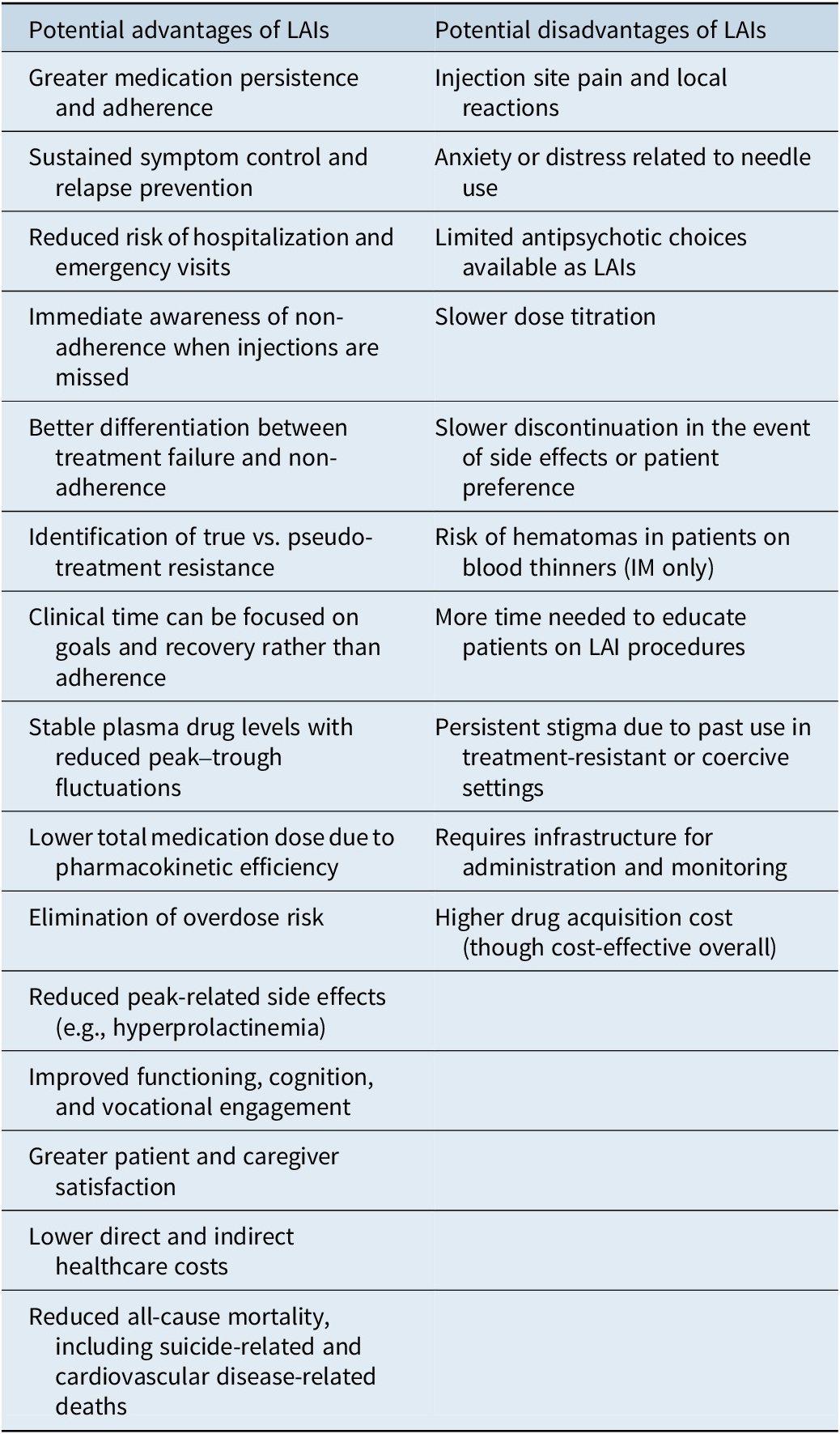
Although compared to oral antipsychotics, LAIs offer a number of clinical, functional, and economic advantages, their adoption remains uneven. A clear understanding of both the benefits and drawbacks of LAIs is essential for informed shared decision-making between clinicians, patients, and caregivers. Knowledgeable clinicians who can effectively and compassionately present information are particularly important when treating patients in the early illness phases of schizophrenia. At these illness stages, patients and caregivers often still grapple with the shock of the illness, accepting the diagnosis and required treatment. Also, patients (and caregivers) may be distrustful, and only partially informed about the illness and treatment options. Table 2 summarizes main potential advantages and disadvantages of LAIs require consideration when offering LAIs as part of a comprehensive treatment plant.Reference Kishimoto, Hagi, Kurokawa, Kane and Correll 18 , Reference Correll, Citrome, Haddad, Lauriello, Olfson, Calloway and Kane 34 , Reference Haddad and Correll 35 , Reference Correll, Bookhart, Benson, Liu, Zhao and Tang 65 , Reference Correll, Bitter, Hoti, Mehtälä, Wooller, Pungor and Tiihonen 67 –Reference Solmi, Tiihonen, Lähteenvuo, Tanskanen, Correll and Taipale 70 , Reference Kane, McEvoy, Correll and Llorca 85 –Reference Schoretsanitis, Kane, Correll and Rubio 87
Potential Advantages and Disadvantages of Long-Acting Injectable Antipsychotics (LAIs)

Advantages of LAIs
One of the most significant benefits of LAIs lies in their ability to ensure sustained medication adherence. Because LAIs are administered by healthcare providers at regular intervals (e.g., biweekly, monthly, bimonthly, quarterly, even 6-monthly), they effectively eliminate the variability and uncertainty of daily oral medication intake. This approach allows for greater treatment persistence, more reliable symptom control, and more robust prevention of relapses and hospitalizations. LAIs also facilitate earlier identification of non-adherence—when a patient misses an injection appointment, this can be recognized immediately, unlike missed oral doses, which often go unnoticed, and appropriate action can be taken to understand the patient’s reasons for discontinuation and to take the best next steps.
From a diagnostic standpoint, LAIs help differentiate between true treatment failure and non-response due to poor adherence, substance use, or psychosocial stressors. LAIs help clarify whether a patient has true pharmacologic treatment resistance or “pseudo-resistance” caused by inconsistent oral dosing. This distinction is crucial for optimizing treatment decisions and avoiding unnecessary medication changes.
Pharmacokinetically, LAIs maintain more stable plasma levels, avoiding the more pronounced peaks and troughs associated with daily oral antipsychotics. This stability may lead to improved tolerability, fewer breakthrough symptoms, and reduced side effects linked to peak concentrations, such as hyperprolactinemia. Additionally, the total drug exposure may be lower, as LAIs often require lower cumulative doses while maintaining therapeutic levels. By way of comparison, 400 mg aripiprazole-LAI is equivalent to about 20 mg oral aripiprazole, so that 20 mg x 30 days would yield 600 mg aripiprazole-LAI but only 400 mg aripiprazole-LAI are required to not fall below the minimum required blood level, sparing higher doses with greater resultant peak levels.Reference Correll, Kim and Sliwa 55 , Reference Højlund and Correll 71Similarly, 156 paliperidone-LAI once-monthly mg is equivalent to 9 mg oral paliperidone, so that 9 mg × 30 days would yield 270 mg paliperidone-LAI once-monthly but only 156 mg paliperidone-LAI once-monthly are required to result in equivalent maintenance through blood levels and effectiveness.Reference Correll, Kim and Sliwa 55 , Reference Højlund and Correll 71Furthermore, LAIs also eliminate the risk of intentional or accidental overdose.
Functionally, patients receiving LAIs tend to show improved daily functioning, better cognitive performance, and increased vocational participation. Caregivers often report reduced stress due to the predictability and visibility of adherence. Economic models suggest that although LAIs may incur higher upfront medication costs, they lead to downstream savings through reduced hospitalization, emergency care, and mortality—particularly by reducing suicide risk and deaths from cardiovascular or other natural causes.Reference Correll, Bitter, Hoti, Mehtälä, Wooller, Pungor and Tiihonen 67 , Reference Correll, Solmi and Croatto 68
Potential disadvantages of LAIs
Despite these compelling advantages, LAIs are not without limitations. Some patients experience injection site pain or anxiety related to needles, which can deter use. The limited number of antipsychotic compounds available in long-acting formulations restricts therapeutic flexibility, especially for patients with complex comorbidities or intolerance to specific antipsychotics.
Dose adjustments with LAIs are inherently slower due to their extended pharmacokinetics. This also complicates treatment discontinuation, particularly in cases of emergent side effects or patient preference. In individuals taking anticoagulants, intramuscular injections may lead to hematomas, although this risk does not apply to newer subcutaneous LAIs.
Implementing LAI treatment also requires additional time and infrastructure. Clinicians need to explain the administration process in detail, address patient concerns, and coordinate regular appointments. Stigma remains another barrier: the historical association of LAIs with coercive or last-resort treatment still affects patient and provider attitudes. Finally, while LAIs tend to reduce overall healthcare costs, the medication itself may be more expensive than oral formulations, presenting access challenges in some settings.
Dispelling myths about long-acting injectable antipsychotics: elevating evidence over assumptions
Despite robust evidence, several misconceptions continue to impede the widespread adoption and also the early use of LAIs in patients with schizophrenia. Dispelling the most common misconceptions is critical for increasing the appropriate and timely use of LAIs. Many of these myths stem from outdated frameworks or anecdotal impressions that equate LAI use with coercion, chronicity, or therapeutic inflexibility. These misconceptions can lead to suboptimal treatment choices. A closer look at the facts can help dispel these myths and underscores the evolving role of LAIs in modern psychiatric care.
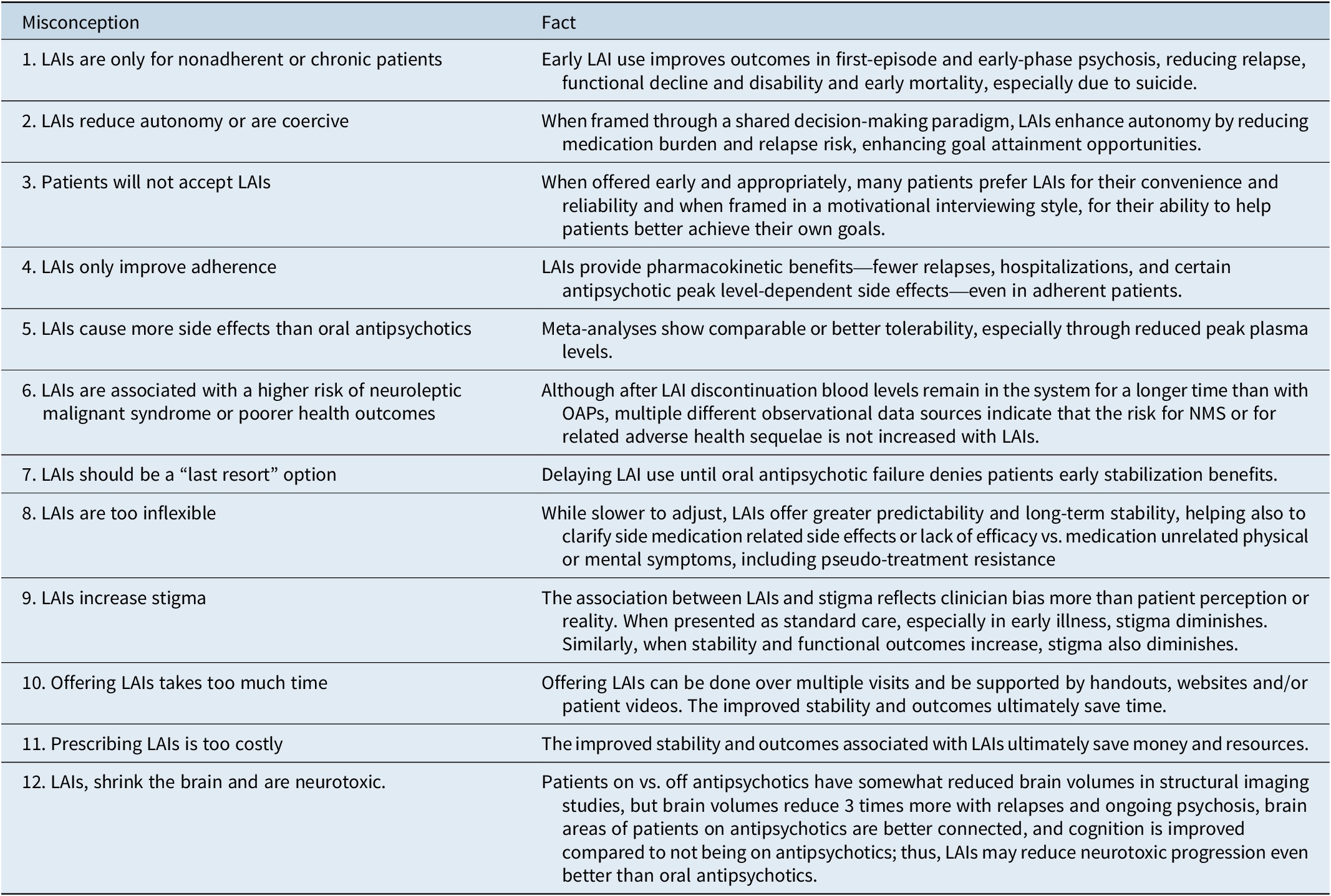
Table 3 summarizes 10 of the most pervasive myths about LAIs, as well as factual information that can be shared when patients or caregivers voice such misconceptions.Reference Kane, McEvoy, Correll and Llorca 85 Additionally, one may even raise and address those objections proactively, as patients and caregivers may not feel comfortable bringing them up themselves, or as they may be confronted with misinformation after the clinical visit via conversations or the internet.
12 Misconceptions and Facts about Long-Acting Injectable Antipsychotics

Abbreviations: LAI, Long-acting injectable antipsychotic; NMS, neuroleptic malignant syndrome; OAP, oral antipsychotic.
A common myth is that LAIs are reserved solely for patients who are nonadherent or chronically ill. However, robust data now demonstrate that early use of LAIs, particularly in first-episode and early-phase psychosis, yields superior outcomes.Reference Subotnik, Casaus and Ventura 78 –Reference Correll, Benson and Emond 82 These benefits include reduced relapse rates, delayed illness progression, and improved functional recovery. Rather than being a last resort, LAIs should be considered early in the course of illness to maximize long-term benefits.
Another frequent concern is that LAIs reduce patient autonomy or feel coercive. In contrast, when introduced within a shared decision-making framework, LAIs can enhance autonomy. By minimizing the daily burden of pill-taking and protecting against destabilizing relapses, patients often experience greater freedom to pursue life goals, employment, and meaningful relationships without the fear of relapse and the adverse life consequences related to clinical deterioration.Reference Blackwood, Sanga and Nuamah 88
It is also often assumed that patients will resist and not accept LAIs. Yet studies and clinical experience consistently show that when LAIs are presented early, without bias, and with a clear explanation of their benefits, many patients find them preferable due to their convenience, discretion, and reliability. Rather than rejecting LAIs, a significant proportion of patients value the reduced treatment burden and enhanced sense of security they provide.Reference Blackwood, Sanga and Nuamah 88 –Reference Yeo, Park and Jang 90
Some clinicians believe that LAIs benefit only those who are poorly adherent, but this overlooks their pharmacokinetic advantages.Reference Correll, Kim and Sliwa 55 Even in patients who reliably take oral medications, LAIs reduce fluctuations in drug levels, lower the risk of breakthrough symptoms, and diminish the likelihood of hospitalization. These benefits are independent of adherence and stem from more stable and sustained plasma concentrations.
Concerns about increased side effects are also misplaced. Meta-analyses and head-to-head comparisons show that LAIs are generally as well tolerated as oral formulations—and in some cases better tolerated—due to the minimization of high plasma peaks that can trigger adverse effects like akathisia or hyperprolactinemia.Reference Misawa, Kishimoto, Hagi, Kane and Correll 86
Relatedly, there have been concerns that LAIs are associated with a higher risk of neuroleptic malignant syndrome (NMS) or poorer related health outcomes. If it were true, this argument against safe LAI use would be particularly relevant for longer-injection interval LAIs, as in addition to symptomatic management of the severe muscle stiffness and hydration to minimize the risk of massive myoglobin breakdown and resultant acute renal failure, cessation of the offending agent is generally recommended. However, although after LAI discontinuation blood levels remain in the system for a much longer time than with OAPs, a Finish nationwide observational data,Reference Guinart, Taipale and Rubio 91 a comprehensive analysis of case reports,Reference Guinart, Misawa and Rubio 92 , Reference Guinart, Misawa and Rubio 93 and a Japanese spontaneous adverse event reporting database studyReference Misawa, Okumura, Takeuchi, Fujii and Takeuchi 94 indicate that the risk for NMS or for related adverse health sequelae is fortunately not increased with LAIs.
A particularly harmful myth is that LAIs should only be used after oral antipsychotic treatment fails. This belief delays timely stabilization and increases the risk of relapse, hospitalization, and functional decline. Early introduction of LAIs is associated with fewer relapses and better long-term outcomes, challenging the idea that LAIs should be a fallback strategy.Reference Subotnik, Casaus and Ventura 78 –Reference Correll, Benson and Emond 82 , Reference Catalan, García and Sanchez-Alonso 84
While it is true that LAIs have slower dose adjustment profiles, this is not inherently a drawback. Rather, the pharmacologic predictability and consistency of LAIs can help clarify whether clinical deterioration stems from insufficient dosing, underlying illness progression, or emerging side effects, insights that can be obscured by erratic oral dosing patterns.Reference Correll, Citrome, Haddad, Lauriello, Olfson, Calloway and Kane 34 , Reference Kane and Correll 95
Another barrier is the stigma associated with LAIs, often linked to the misperception that injectable treatment implies a severe or “difficult” diagnosis. However, stigma is not inherent to LAIs, it is shaped by how clinicians frame the discussion. When LAIs are normalized and offered as a modern, evidence-based treatment option, patients are more likely to accept them and appreciate their benefits.Reference Velligan, Salinas, Belcher, Franzenburg, Suett, Thompson and Hansen 89 , Reference Yeo, Park and Jang 90 , Reference Weiden, Roma, Velligan, Alphs, DiChiara and Davidson 96 , Reference Kane, Schooler, Marcy, Achtyes, Correll and Robinson 97
There is also a belief that LAIs are too time-consuming or costly to implement. While initiating LAIs may require upfront effort, including education, scheduling, and infrastructure, the long-term return is substantial. LAIs prevent costly crises, reduce emergency visits and rehospitalizations, and enable more productive clinical encounters focused on recovery and rehabilitation rather than damage control.Reference Hui, Chiu and Li 36 , Reference Zhou, Millier and Aballea 98 –Reference Lin, Thompson-Leduc and Ghelerter 100 Moreover, more widespread community pharmacy delivery of the LAI injections may reduce structural barriers to LAI use in the future.Reference Black, Hughes, Ma, Hudzik, Shepherd, Ferreri and Ozawa 101
Finally, some critics raise neurotoxicity concerns, claiming that long-term antipsychotic use, especially in LAI form, shrinks the brain. This worry may deter especially patients with early-phase illness and their caregivers from considering LAI treatment options. However, research has clarified that relapse, not antipsychotic medication, is the major driver of brain volume loss in schizophrenia that is functionally relevant.Reference Andreasen, Liu, Ziebell, Vora and Ho 102 –Reference Fountoulakis and Stahl 105 LAIs, by preventing relapses more effectively than oral agents, may offer a protective effect against neuroprogression and support the preservation of cognitive function.
In sum, outdated myths about LAIs hinder their appropriate use and do a disservice to patients. As the evidence base continues to grow, it is incumbent upon clinicians to shift from assumption to science, and to engage in transparent, nonjudgmental discussions with patients about the full range of treatment options available.
Relevance of first-episode and early-phase schizophrenia
The first-episode and early phase of schizophrenia represents a defining moment in a person’s illness trajectory. In the initial phase of illness, patients are particularly vulnerable due to limited insight, denial of illness, or struggles to accept the illness, insufficient or slow symptom improvement in some and adverse effects of the antipsychotics in other cases, cognitive deficits, and often severe psychosocial disruption. Many patients lack awareness of the need for treatment and are therefore at high risk of medication nonadherence.Reference Tiihonen, Haukka, Taylor, Haddad, Patel and Korhonen 80 , Reference Kane, Kishimoto and Correll 106 The consequences of early treatment discontinuation are highly predictable, even though schizophrenia can have a varied course: symptom exacerbation, neurobiological decline, increased hospitalizations, suicide risk, and worsening psychosocial outcomes,Reference Correll, Rubio and Kane 22 , Reference Fountoulakis, Moeller and Kasper 107 results that are especially devastating when patients are trying to get back on their feet after a first psychotic episode.
On the other side, the early illness phase also offers the greatest chance to improve long-term prognosis. Studies show that comprehensive early intervention programs that include pharmacological treatment, psychoeducation, family support, and vocational rehabilitation are associated with better symptom control, greater adherence, and improved quality of life.Reference Correll, Galling and Pawar 9 Within this framework, ensuring pharmacologic continuity is essential, and LAIs can play a transformative role for patients in their first episode and early illness phases of schizophrenia.Reference Salgueiro and Segarra 108 , Reference Vita, Tavella and Ostuzzi 109In fact, a 3-year, longitudinal, prospective, naturalistic study of 416 patients with FEPs admitted to early intervention services in Canada showed that LAIs were able to “rescue” patients with poor baseline prognostic factors when they were started on LAIs instead of OAPs as early maintenance treatment.Reference Abdel-Baki, Medrano and Maranda 110 In those patients most vulnerable for interruptions of active psychosocial reintegration efforts, psychotic relapse rates over time were similar to those patients with FEP and good baseline prognostic factors who only received OAPs. In contrast, patients who initially received OAPs and only eventually switched to LAIs were more likely to relapse and to be rehospitalized, even if they manifested better baseline prognostic factors than those started initially on LAIs.
LAIs versus oral antipsychotics in first-episode and early-phase schizophrenia
The currently most comprehensive meta-analysis of LAIs in early-phase schizophrenia pooled data from 11 randomized controlled trials comparing LAIs head-to-head against oral antipsychotics in 2374 adults with first episode or early-phase schizophrenia.Reference Vita, Tavella and Ostuzzi 109 Patients were on average 25.2 years old, 68% were males, and the median illness duration was 10.6 months. Relapse or hospitalization and all-cause discontinuation (“acceptability”) at study-endpoint were the co-primary outcomes. Prespecified subgroup analyses aimed to identify factors moderating differences in efficacy or acceptability between LAIs and oral antipsychotics.
Across the 11 trials with a median duration of 78 weeks (range: 13–104 weeks), LAIs were not significantly different from oral antipsychotics for the prevention of relapse or hospitalization (RR: 0.79, 95%CI: 0.58–1.06, p = 0.13) and all-cause discontinuation (RR: 0.92, 95%CI: 0.80–1.05, p = 0.20). However, results were each in the direction of favoring LAIs and the results as well as trial, patient, and treatment characteristics were each highly heterogeneous.
In addition to the heterogeneity of the results, one needs to also consider that it is much more difficult to show LAI superiority versus oral antipsychotic treatment. The difficulty regarding differentiation from oral antipsychotics regarding the effectiveness outcome can be due to (i) greater adherence in randomized controlled settings across treatment groups, (ii) randomization bias of less severely ill patients than are eligible for LAI use in usual care settings, those with greater illness insight and better cognitive capacity, (iii) surveillance bias in patients knowing that their adherence will be checked, and (iv) optimized procedures compared to usual care (e.g. reminders and incentives for visit adherence, handing out medications at the visit, etc.), which each elevate adherence and outcomes preferentially in the oral antipsychotic comparator arm.Reference Kane, Kishimoto and Correll 111 Additionally, in randomized trials comparing LAIs with oral antipsychotics, often the oral antipsychotic can be selected based on prior experiences and patient preferences, whereas usually the single tested LAI is set and cannot be chosen. Since antipsychotics differ the most in their adverse event profile, this procedure also selectively favors oral antipsychotics regarding the acceptability outcome.Reference Kane, Kishimoto and Correll 111
Subgroup moderators of long-acting injectable antipsychotic superiority in first-episode or early-phase schizophrenia
In the meta-analysis by Vita et al.Reference Vita, Tavella and Ostuzzi 109 the significant heterogeneity of the results prompted the per-protocol conduct of prespecified subgroup analyses that were designed to assess significant factors that may moderate (baseline factors) or mediate (intra-treatment factors) the outcome differences between LAIs and oral antipsychotics in patients with first-episode or early-phase schizophrenia.
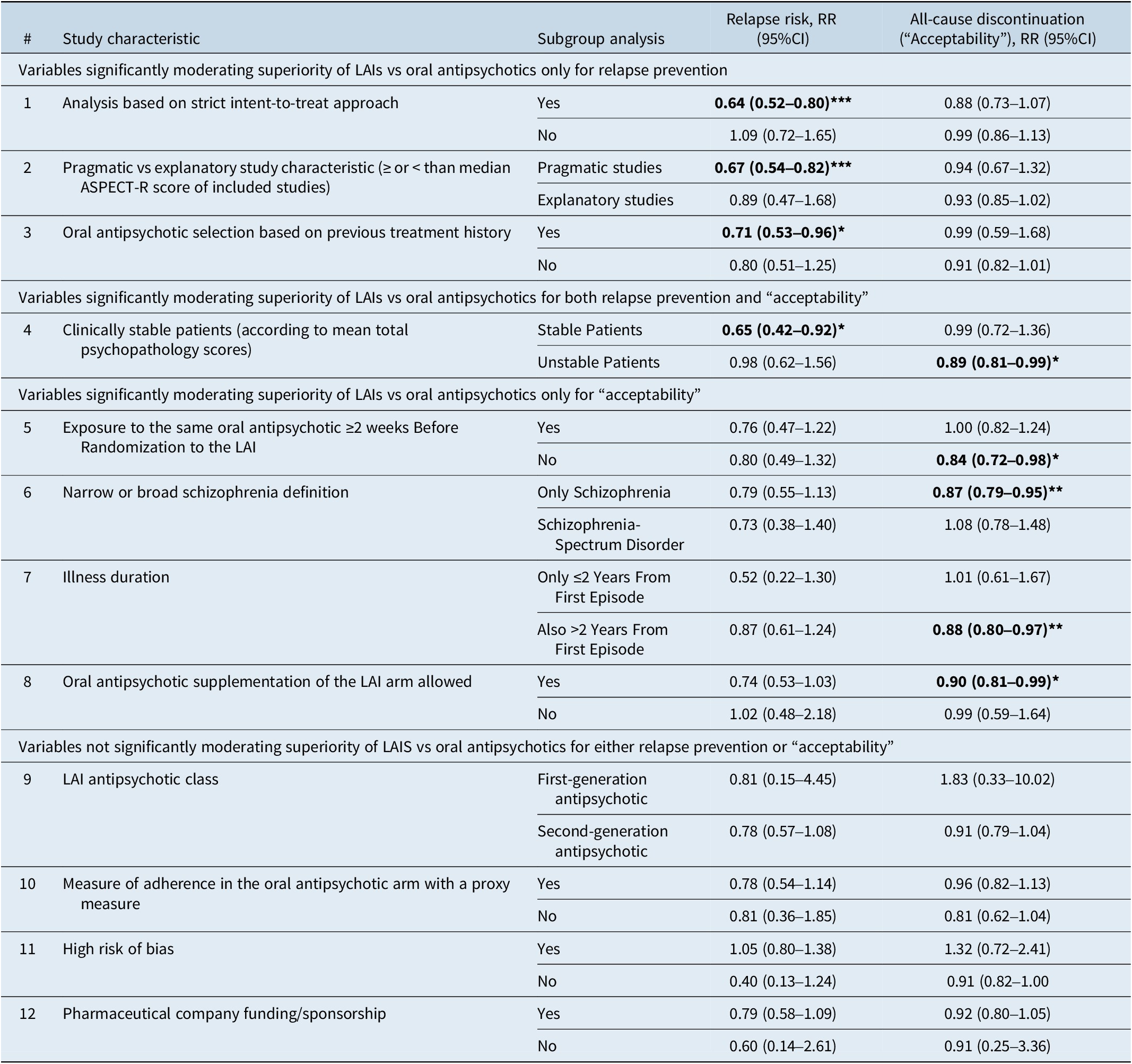
These subgroup analyses, summarized in Table 4, reveal that the benefits of LAIs are not uniformly distributed across all study contexts and patient populations. Several characteristics significantly moderate the comparative effectiveness of LAIs, either for relapse prevention, treatment acceptability, or both. Below, these findings are summarized by grouping moderators into 4 categories, based on which outcome(s) showed significant improvement with LAIs, and ordered by descending effect strength.
Subgroup Analyses Comparing Long-Acting Antipsychotics with Oral Antipsychotics in Patients with First-Episode or Early-Phase Schizophrenia Based on Design, Patient Population, Treatment Approach and Data Analysis Features of the Randomized Trials

Note. Based on Vita et al.Reference Vita, Tavella and Ostuzzi 109
Abbreviations: ASPECT-R, A Study Pragmatic-Explanatory Characterization Tool-Rating; CI, Confidence Interval; ITT, Intention-to-treat; LAI, Long-acting Injectable antipsychotics; RR, Risk Ratio.
* p-value <0.05. ** p-value <0.01. *** p-value <0.001.
Bold values are statistically significant at p<0.05.
Variables significantly moderating superiority of LAIs only for reducing relapse risk
Three trial or treatment features significantly moderated the superiority of LAIs over OAPs exclusively in terms of reducing the risk of relapse, without a concurrent significant effect on all-cause treatment discontinuation.Reference Vita, Tavella and Ostuzzi 109
The first characteristic was whether the study employed a strict intention-to-treat analysis. In such trials, LAIs significantly reduced relapse risk compared to OAPs, with a risk ratio (RR) of 0.64 (95% CI: 0.52–0.80), while there was no significant difference in treatment acceptability (RR: 0.88; 95% CI: 0.73–1.07). This result suggests that rigorous analytical frameworks are more likely to capture the true clinical benefit of LAIs.
The second characteristic was the degree of pragmatism in trial design, as indexed by the ASPECT-R tool. In studies with a more pragmatic orientation, better reflecting real-world settings. Here, LAIs showed significantly better relapse prevention (RR: 0.67; 95% CI: 0.54–0.82), but no difference in acceptability (RR: 0.94; 95% CI: 0.67–1.32). This finding implies that LAIs may be particularly effective in everyday clinical contexts.
The third significant moderator in this category was whether the oral comparator was selected based on a patient’s prior treatment history. When oral antipsychotics were chosen with reference to prior exposure or response, LAIs still demonstrated a significant advantage in relapse prevention (RR: 0.71; 95% CI: 0.53–0.96), but not in all-cause discontinuation (RR: 0.99; 95% CI: 0.59–1.68), underscoring the value of LAIs, even when the oral antipsychotic choices could be tailoring.
Variables significantly moderating superiority of LAIs for both relapse risk and acceptability
In one subgroup comparison, LAIs were found to be significantly superior to OAPs in reducing both relapse risk and all-cause discontinuation, highlighting a dual benefit.Reference Vita, Tavella and Ostuzzi 109
The key characteristic in this category was clinical stability, based on mean total psychopathology scores. Among patients classified as clinically stable, LAIs significantly reduced the risk of relapse (RR: 0.65; 95% CI: 0.42–0.92) versus oral antipsychotics, while no significant difference was found in acceptability (RR = 0.99; 95% CI: 0.72–1.36). In contrast, among clinically unstable patients, LAIs showed no significant reduction in relapse (RR: 0.98; 95% CI: 0.62–1.56) but did demonstrate improved acceptability (RR: 0.89; 95% CI: 0.81–0.99). Taken together, this suggests that LAIs may offer more comprehensive advantages in clinically stable individuals, arguing for a more robust oral antipsychotic treatment stabilization phase before transitioning to an LAI in people with first-episode and early-phase schizophrenia. Nevertheless, even in more unstable patients, treatment continuation is higher with LAIs than on oral antipsychotics.
Variables significantly moderating superiority of LAIs only for acceptability
Four features were associated with a statistically significant advantage for LAIs in reducing all-cause discontinuation rates, without corresponding significance for relapse prevention.Reference Vita, Tavella and Ostuzzi 109
The first characteristic was prior exposure to the same oral antipsychotic for at least 2 weeks before randomization. In studies where this exposure was not present, LAIs significantly improved acceptability (RR: 0.84; 95% CI: 0.72–0.98), although relapse reduction did not reach significance (RR: 0.80; 95% CI: 0.49–1.32). Again, LAIs seem to be able to keep patients longer in treatment who are not that stable yet or who have less experience with the current antipsychotic.
The second characteristic was diagnostic groups. Trials that included only patients with a strict diagnosis of schizophrenia, excluding broader spectrum disorders, demonstrated a significant reduction in discontinuation with LAIs (RR: 0.87; 95% CI: 0.79–0.95) but no corresponding benefit in relapse risk (RR: 0.79; 95% CI: 0.55–1.13).
The third significant moderator was illness duration. In studies that also included patients with a duration of illness exceeding 2 years from first episode, LAIs showed improved acceptability (RR: 0.88; 95% CI: 0.80–0.97), while relapse risk was not significantly different (RR: 0.87; 95% CI: 0.61–1.24). This finding suggests a continuing benefit of LAIs beyond the very early phase of illness, particularly in helping patients stay on treatment.
The fourth characteristic was whether oral antipsychotic supplementation was allowed in the LAI treatment arm. In trials permitting such supplementation, LAIs showed significantly lower all-cause discontinuation (RR: 0.90; 95% CI: 0.81–0.99), while their effect on relapse remained non-significant (RR: 0.74; 95% CI: 0.53–1.03). This result points to the utility of flexible LAI protocols in enhancing acceptability and persistence.
Variables not significantly moderating superiority of LAIs for either outcome
Finally, 4 study or treatment characteristics did not significantly moderate the comparative effectiveness of LAIs for either relapse prevention or treatment acceptability.Reference Vita, Tavella and Ostuzzi 109 These included whether (i) the LAI was a first-generation or second-generation antipsychotic, (ii) a proxy adherence measure was used in the oral treatment arms; (iii) studies had high or low risk of bias, and (iv) the trials were industry-sponsored or not.
Taken together, these subgroup findings demonstrate that the superiority of LAIs over oral antipsychotics in early-phase schizophrenia is not universal but is meaningfully moderated by trial design, patient characteristics, and implementation features. However, it is also possible that given the still modest number of trials and participants, subgroup analyses may have been underpowered. Since the vast majority of the 24 subgroup estimates per co-primary outcome had RRs <1 (relapse: 21/24 = 87.5 subgroup outcomes; acceptability: 19/24 = 79.2% subgroup outcomes), indicating at least numerical trends favoring LAIs estimates, future studies should be conducted to further explore overall and subgroup benefits of LAIs vs oral antipsychotics in the early stages of schizophrenia. Nevertheless, based on the available findings, relapse prevention benefits are more clearly seen in rigorous and pragmatic study designs, while improved treatment continuation emerges in broader clinical contexts, encompassing also more unstable or clinically complex cases. Recognizing these moderators can guide both clinical decision-making and the design of future trials to target or identify populations most likely to benefit from LAI formulations.
Conclusions
The evidence summarized above indicates that LAIs can advance meaningful outcomes through improved antipsychotic adherence and relapse prevention, deliver pharmacokinetic advantages less achievable with oral formulations, improve patient autonomy, increase functioning, and reduce the risk of premature mortality even more than oral antipsychotics (except for clozapine in patients with treatment-refractory illnessReference Correll, Solmi and Croatto 68). Additionally, LAIs have shown superiority over oral antipsychotics in patients with first-episode or early-phase illness, at least in meaningful subgroups of studies and patients that point toward evidence in settings, individuals, and treatment paradigms that more closely match clinical care.Reference Vita, Tavella and Ostuzzi 109
Based on this evidence, recommendations for clinical practice and policy indicate that a reevaluation of how and when LAIs are introduced in the treatment of schizophrenia is needed. Clinicians, policymakers, and healthcare systems must overcome hesitancy in adopting LAIs early. This task requires concerted educational efforts, guideline updates, and structural reforms to facilitate LAI administration across care settings. Importantly, framing LAIs not as a last resort, but as a viable first-line or early-phase option, is likely to meaningfully transform the long-term course of schizophrenia.
Clinicians should consider offering LAIs early in the illness course, especially when adherence is uncertain or risk factors for relapse are present. However, adherence is almost always uncertain and risk factors for relapse are abundant and often interrelated. Therefore, almost all patients with schizophrenia, from the first episode onwards, can and should be informed about the treatment option of LAIs, educating them proactively about the potential pros and cons of LAI treatment options. This approach aligns with emerging consensus and expert guidelines, which support earlier use of LAIs in appropriate patients.Reference Arango, Fagiolini and Gorwood 56 –Reference McCutcheon, Pillinger and Varvari 61
Training programs for all providers of care to patients with schizophrenia, including, psychiatrists, psychiatric nurse practitioners, physician assistants, and primary care providers should include updated guidance on the indications, administration, and communication strategies around LAIs. Health systems should reduce administrative and logistical barriers that limit access to LAIs, including prior authorizations and inadequate reimbursement. Community pharmacists should be increasingly utilized to deliver LAI injections close too patients’ homes and in non-stigmatizing settings. Additionally, public education campaigns can also play a role in normalizing LAI use by dispelling myths and rectifying misconceptions, and promoting early intervention for people with schizophrenia and other psychotic disorders more broadly.
As the field continues to refine early intervention strategies, integrating LAIs alongside psychosocial supports offers a meaningful and proactive pathway to optimizing recovery opportunities for patients with schizophrenia, especially early in their illness. It is time to align clinical practice with the accumulated evidence and challenge outdated assumptions, reframing LAIs as proactive, evidence-based and recovery-oriented tools that are a cornerstone of schizophrenia care from the very first episode, which can help facilitate patients’ improved goal attainment.
Author contribution
Conceptualization: C.U.C.; Writing - original draft: C.U.C.; Writing - review & editing: C.U.C.
Disclosures
CU Correll has been a consultant and/or advisor to or has received honoraria from: AbbVie, Alkermes, Allergan, Angelini, Aristo, Autobahn, Boehringer-Ingelheim, Bristol-Meyers Squibb, Cardio Diagnostics, Cerevel, CNX Therapeutics, Compass Pathways, Darnitsa, Delpor, Denovo, Draig, Eli Lilly, Eumentis Therapeutics, Gedeon Richter, GH, Hikma, Holmusk, IntraCellular Therapies, Jamjoom Pharma, Janssen/J&J, Karuna, LB Pharma, Lundbeck, MedInCell, MedLink, Merck, Mindpax, Mitsubishi Tanabe Pharma, Maplight, Mylan, Neumora Therapeutics, Neuraxpharm, Neurocrine, Neurelis, NeuShen, Newron, Noven, Novo Nordisk, Orion Pharma, Otsuka, PPD Biotech, Recordati, Relmada, Response Pharmaeutical, Reviva, Rovi, Saladax, Sanofi, Seqirus, Servier, Sumitomo Pharma America, Sunovion, Sun Pharma, Supernus, Tabuk, Takeda, Teva, Terran, Tolmar, Vertex, Viatris, and Xenon Pharmaceuticals. He provided expert testimony for Janssen, Lundbeck, Neurocrine, and Otsuka. He served on a Data Safety Monitoring Board for Compass Pathways, IntraCellular Therapies, Relmada, Reviva, and Rovi. He has received grant support from Boehringer-Ingelheim, Janssen and Takeda. He received royalties from UpToDate and is also a stock option holder of Cardio Diagnostics, Kuleon Biosciences, LB Pharma, MedLink Global, Mindpax, Quantic, and Terran.
CNS SPECTRUMS
CME Review Article
Long-Acting Injectable (LAIs) Antipsychotics for Patients with First-Episode and Early-Phase Schizophrenia: Still Not Considered Often Enough
This CME activity is provided by HMP Education and Neuroscience Education Institute (NEI).
CME/CE Information
Target Audience: This activity has been developed for the healthcare team or individual prescriber specializing in mental health. All other healthcare team members interested in psychopharmacology are welcome for advanced study.
Learning Objectives: After completing this educational activity, you should be better able to:
-
• Delineate the opportunities and challenges of patients with first-episode and early-phase schizophrenia
-
• Identify the specific use case of LAIs in patients with first-episode and early-phase schizophrenia
-
• Appreciate the randomized controlled and observational data of LAIs in patients with first-episode and early-phase schizophrenia, as well as data supporting newer indications for bipolar I disorder
 Activity Overview: This activity is best supported via a computer or device with current versions of the following browsers: Mozilla Firefox, Google Chrome, or Safari. A PDF reader is required for print publications. A post-test score of 70% or higher is required to receive CME/CE credit.
Estimated Time to Complete: 1 hour.
Continuing Education credit will be available for three (3) years from the publication date of the associated article. Please visit https://nei.global/cnsspectrums2025 for additional information and to access the CE activity.
*NEI maintains a record of participation for six (6) years.
Instructions for Optional Posttest and CME Credit
-
1. Read the article
-
2. Successfully complete the posttest at https://nei.global/CNS/LAI-02
-
3. Print your certificate
Questions? Email customerservice@neiglobal.com.
Credit Designations: The following are being offered for this activity:
-
• Physician: ACCME AMA PRA Category 1 Credits™
-
○ HMP Education designates this enduring material for a maximum of 1.00 AMA PRA Category 1 Credit™. Physicians should claim only the credit commensurate with the extent of their participation in the activity.
-
-
• Nurse: ANCC contact hours.
-
○ This continuing nursing education activity awards 1.00 contact hour. Provider approved by the California Board of Registered Nursing, Provider #18006 for 1.00 contact hour.
-
-
• Nurse Practitioner: ACCME AMA PRA Category 1 Credit™
-
○ American Academy of Nurse Practitioners National Certification Program accepts AMA PRA Category 1 Credits™ from organizations accredited by the ACCME.
-
○ The content in this activity pertaining to pharmacology is worth 1.00 continuing education hour of pharmacotherapeutics.
-
-
• Pharmacy: ACPE application-based contact hours.
-
○ This internet enduring, knowledge-based activity has been approved for a maximum of 1.00 contact hour (.10 CEU).
-
○ The official record of credit will be in the CPE Monitor system. Following ACPE Policy, NEI and HMP Education must transmit your claim to CPE Monitor within 60 days from the date you complete this CPE activity and are unable to report your claimed credit after this 60-day period. Ensure your profile includes your DOB and NABP ID.
-
-
• Physician Associate/Assistant: AAPA Category 1 CME credits.
-
○
 HMP Education has been authorized by the American Academy of PAs (AAPA) to award AAPA Category 1 CME credits for activities planned in accordance with the AAPA CME Criteria. This internet enduring activity is designated for 1.00 AAPA Category 1 credit. Approval is valid until February 11, 2028. PAs should only claim credit commensurate with the extent of their participation.
-
-
• Psychology: APA CE credits.
-
○
Continuing Education (CE) credits for psychologists are provided through the co-sponsorship of the American Psychological Association (APA) Office of Continuing Education in Psychology (CEP). The APA CEP Office maintains responsibility for the content of the programs. This activity awards 1.00 CE Credit.
-
-
• Social Work: ASWB-ACE CE credits.
-
○ As a Jointly Accredited Organization, HMP Education is approved to offer social work continuing education by the Association of Social Work Boards (ASWB) Approved Continuing Education (ACE) program. Organizations, not individual courses, are approved under this program. Regulatory boards are the final authority on courses accepted for continuing education credit. Social workers completing this internet enduring course receive 1.00 general continuing education credit.
-
-
• Non-Physician Member of the Healthcare Team: Certificate of Participation.
-
○ HMP Education awards hours of participation (consistent with the designated number of AMA PRA Category 1 Credit™) to a participant who successfully completes this educational activity.
-
 HMP Education has been authorized by the American Academy of PAs (AAPA) to award AAPA Category 1 CME credits for activities planned in accordance with the AAPA CME Criteria. This internet enduring activity is designated for 1.00 AAPA Category 1 credit. Approval is valid until February 11, 2028. PAs should only claim credit commensurate with the extent of their participation.
 Continuing Education (CE) credits for psychologists are provided through the co-sponsorship of the American Psychological Association (APA) Office of Continuing Education in Psychology (CEP). The APA CEP Office maintains responsibility for the content of the programs. This activity awards 1.00 CE Credit.
Peer Review: The content was peer-reviewed by an MD — to ensure the scientific accuracy and medical relevance of information presented and its independence from commercial bias. NEI and HMP Education take responsibility for the content, quality, and scientific integrity of this CME/CE activity.
Disclosures: All individuals in a position to influence or control content are required to disclose any relevant financial relationships. Any relevant financial relationships were mitigated prior to the activity being planned, developed, or presented.
Faculty Author / Presenter
Christopher U. Correll, MD
Professor of Psychiatry and Molecular Medicine, Zucker School of Medicine at Hofstra/Northwell, NY
Professor of Child and Adolescent Psychiatry at Charité University Medicine, Berlin, Germany
Consultant/Advisor: AbbVie, Alkermes, Allergan, Angelini, Aristo, Autobahn, Boehringer-Ingelheim, Bristol-Meyers Squibb, Cardio Diagnostics, Cerevel, CNX Therapeutics, Compass Pathways, Darnitsa, Delpor, Denovo, Draig, Eli Lilly, Eumentis Therapeutics, Gedeon Richter, Hikma, Holmusk, IntraCellular Therapies, Jamjoom Pharma, Janssen/J&J, Karuna, LB Pharma, Lundbeck, MedInCell, MedLink, Merck, Mindpax, Mitsubishi Tanabe Pharma, Maplight, Mylan, Neumora Therapeutics, Neuraxpharm, Neurocrine, Neurelis, Newron, Noven, Novo Nordisk, Otsuka, PPD Biotech, Recordati, Relmada, Response Pharmaceuticals, Reviva, Rovi, Saladax, Sanofi, Seqirus, Servier, Sumitomo Pharma America, Sunovion, Sun Pharma, Supernus, Tabuk, Takeda, Teva, Terran, Tolmar, Vertex, Viatris, Xenon Pharmaceuticals
Speakers Bureau: Janssen, Lundbeck, Otsuka
Board Member: Compass Pathways, IntraCellular Therapies, Relmada, Reviva, Rovi
Grant/Research: Boehringer-Ingelheim, Janssen, Takeda
Stock Options: Cardio Diagnostics, Kuleon Biosciences, LB Pharma, Medlink, Mindpax, Quantic, Terran
The remaining Planning Committee members, Content Editors, Peer Reviewer, and NEI planners/staff have no financial relationships to disclose. NEI and HMP Education planners and staff include Meghan Grady, Caroline O’Brien, MS, Ali Holladay, Moriah Carswell, Andrea Zimmerman, EdD, CHCP, and Brielle Calleo
Disclosure of Off-Label Use: This educational activity may include discussion of unlabeled and/or investigational uses of agents that are not currently labeled for such use by the FDA. Please consult the product prescribing information for full disclosure of labeled uses.
Cultural Linguistic Competency and Implicit Bias: A variety of resources addressing cultural and linguistic competencies and strategies for understanding and reducing implicit bias can be found in this handout—download me.
Accessibility Statement
For questions regarding this educational activity, or to cancel your account, please email customerservice@neiglobal.com.
Support: This activity is supported by an unrestricted educational grant from Alkermes, Inc., Teva Pharmaceuticals, Johnson & Johnson Innovative Medicine and Otsuka America Pharmaceutical, Inc.

 Open access

