


The term ‘metabolic syndrome’ refers to a number of risk factors associated with the development of coronary heart disease, one of the biggest causes of morbidity and mortality in the Western world (Reference Lakka, Laaksonen and LakkaLakka et al, 2002). There are various definitions of metabolic syndrome but all have in common central obesity, impaired glucose tolerance, hypertriglyceridaemia, hypercholesterolaemia and hypertension. Patients with metabolic syndrome can expect to have a two-fold to three-fold increase in mortality due to coronary heart disease (Reference Lakka, Laaksonen and LakkaLakka et al, 2002). Various studies have identified increased mortality as a result of coronary heart disease in schizophrenia, and explanations for this have included cigarette smoking, poor diet and lack of exercise (Reference BrownBrown, 1997). Since the mid-1990s an accumulating evidence base has identified treatment with antipsychotic medication as an additional risk factor (Reference NewcomerNewcomer, 2005).
Clozapine is a dibenzodiazepine-class antipsychotic, which has a receptor affinity profile unique among the antipsychotic medications currently available and has a singular place in the treatment of treatment-resistant schizophrenia. It is the only antipsychotic of proven efficacy in treatment-resistant schizophrenia (Reference Kane, Honifeld and SingerKane et al, 1988) and evidence also exists to support the reduction in risk of suicide in patients taking clozapine. Clozapine therefore maintains a potentially unique position in the treatment of schizophrenia.
There is evidence linking clozapine to the development of dyslipidaemia, weight gain and obesity, glucose intolerance and diabetes, and hypertension (Reference NewcomerNewcomer, 2005). Accumulating evidence suggests that clozapine has a marked effect on various metabolic parameters when compared with other antipsychotics (American Diabetes Association et al, 2004; British Medical Association & Royal Pharmaceutical Society of Great Britain, 2006; Reference Lamberti, Olson and CrillyLamberti et al, 2006). One study attempted to calculate the prevalence of metabolic syndrome in a population prescribed clozapine and identified the syndrome in 50 out of 93 patients (54%) (Reference Lamberti, Olson and CrillyLamberti et al, 2006). No estimate has been performed in a community setting in the UK and none has studied long-term in-patient populations.
Method
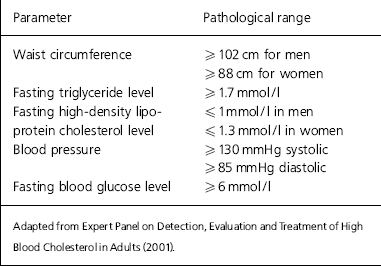
For the purposes of calculating the prevalence of metabolic syndrome in this audit, the National Cholesterol Education Program Adult Treatment Panel III guidelines (Expert Panel on Detection, Evaluation and Treatment of High Blood Cholesterol in Adults, 2001) were used (Table 1). The presence of three out of the five measurements in Table 1 is necessary to identify the syndrome.
Adult Treatment Panel III guidelines for the detection of metabolic syndrome
| Parameter | Pathological range |
|---|---|
| Waist circumference | ⩾102 cm for men |
| ⩾88 cm for women | |
| Fasting triglyceride level | ⩾1.7 mmol/l |
| Fasting high-density lipoprotein cholesterol level | ⩽1 mmol/l in men |
| ⩽1.3 mmol/l in women | |
| Blood pressure | ⩾130 mmHg systolic |
| ⩾85 mmHg diastolic | |
| Fasting blood glucose level | ⩾6 mmol/l |
The sample comprised all patients in receipt of clozapine under the care of the Ammanford and Carmarthen community mental health teams (CMHTs) and the continuing care in-patient unit in Carmarthen, and were identified from the central pharmacy records. The Ammanford and Carmarthen teams are multidisciplinary and cover a total population of approximately 80 000. The continuing care in-patient unit has predominantly long-stay patients, subsequent to the closure of an asylum (St David's Hospital, Carmarthen). The catchment areas are a mix of former industrial and rural areas of Carmarthenshire in south-west Wales and have pockets of socio-economic deprivation. The CMHTs have been running clozapine clinics for a number of years; these clinics are managed by dedicated community psychiatric nurses and pharmacists.
The audit was performed to compare the prevalence of metabolic syndrome in our populations with that identified in a previous study (Reference Lamberti, Olson and CrillyLamberti et al, 2006). All patients were routinely offered the physical investigations detailed in Table 1, and these investigations were undertaken by a member of the study team using standardised procedures. Such assessments were undertaken in the clozapine clinics at the CMHT bases for the community patients, and in the continuing care unit for the in-patients. The duration of clozapine treatment and current dose for each patient were ascertained by checking the register of the pharmacy department.
Results
A total of 52 patients were prescribed clozapine, all of whom were under the care of the clozapine clinics or were long-stay in-patients. The populations were analysed independently. In the community groups (mean dose of clozapine 385 mg) there were 32 male patients (age range 26-62 years, mean 44 years; duration of treatment 8-204 months, mean 90 months) and 11 female patients (age range 23-69 years, mean 47 years; duration of treatment 16-192 months, mean 100 months). In the in-patient population (mean dose of clozapine 456 mg) there were 5 male patients (age range 49-73 years, mean 59 years; duration of treatment 3-72 months, mean 22 months) and 4 female patients (age range 62-64 years, mean 64 years; duration of treatment 4-72 months, mean 32 months). All patients had a recorded diagnosis of treatment-resistant schizophrenia. The physical investigations were performed over a 3-month period from December 2006 to February 2007.
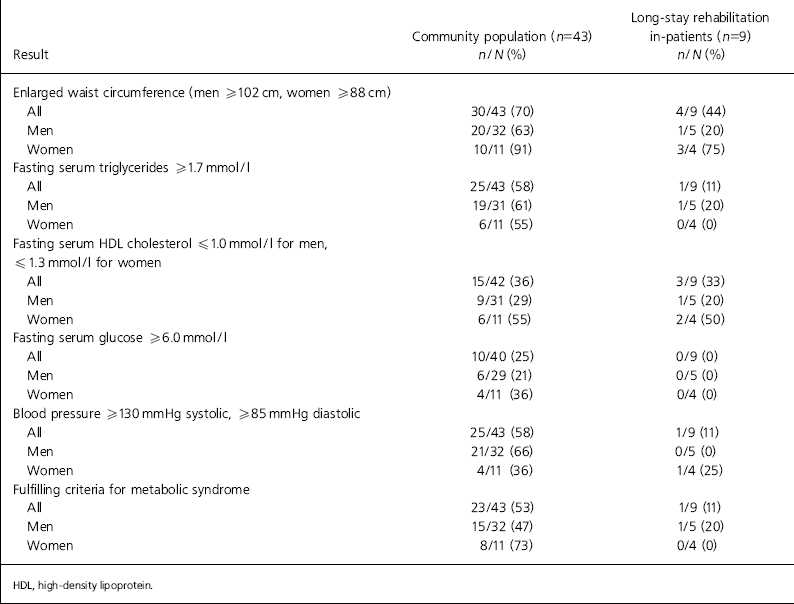
Complete results of the investigations listed in Table 1 were obtained for 49 patients (Table 2, Fig. 1). The results were incomplete for 3 patients in the community group. Twenty-three (53%) of the 43 community patients (15 men, 8 women; mean clozapine dose 450 mg) met the criteria for metabolic syndrome, and there appeared to be an excess among women compared with men. Both of these findings concurred with those of Lamberti et al (Reference Lamberti, Olson and Crilly2006). For those among the community group identified as meeting the criteria for metabolic syndrome, the mean duration of treatment was 74 months (60 months for men and 101 months for women); for those in this group who did not fulfil the criteria for metabolic syndrome it was 114 months (122 months for men and 68 months for women). In the in-patient population, 1 (11%) of the 9 patients (1 man; dose of clozapine 450 mg) met the criteria for metabolic syndrome. Mean duration of stay among the in-patient population was 126 months (men 188 months, women 47 months), although many of these individuals had spent long periods as in-patients prior to their admission to the continuing-care ward. Total duration of clozapine treatment among the community group was 3980 months (mean 92.6 months) and among the in-patient group it was 438 months (mean 48.6 months).
Results
| Result | Community population (n=43) n/N (%) | Long-stay rehabilitation in-patients (n=9) n/N (%) |
|---|---|---|
| Enlarged waist circumference (men ⩾102 cm, women ⩾88 cm) | ||
| All | 30/43 (70) | 4/9 (44) |
| Men | 20/32 (63) | 1/5 (20) |
| Women | 10/11 (91) | 3/4 (75) |
| Fasting serum triglycerides ⩾1.7 mmol/l | ||
| All | 25/43 (58) | 1/9 (11) |
| Men | 19/31 (61) | 1/5 (20) |
| Women | 6/11 (55) | 0/4 (0) |
| Fasting serum HDL cholesterol ⩽1.0 mmol/l for men, ⩽1.3 mmol/l for women | ||
| All | 15/42 (36) | 3/9 (33) |
| Men | 9/31 (29) | 1/5 (20) |
| Women | 6/11 (55) | 2/4 (50) |
| Fasting serum glucose ⩾6.0 mmol/l | ||
| All | 10/40 (25) | 0/9 (0) |
| Men | 6/29 (21) | 0/5 (0) |
| Women | 4/11 (36) | 0/4 (0) |
| Blood pressure ⩾130 mmHg systolic, ⩾85 mmHg diastolic | ||
| All | 25/43 (58) | 1/9 (11) |
| Men | 21/32 (66) | 0/5 (0) |
| Women | 4/11 (36) | 1/4 (25) |
| Fulfilling criteria for metabolic syndrome | ||
| All | 23/43 (53) | 1/9 (11) |
| Men | 15/32 (47) | 1/5 (20) |
| Women | 8/11 (73) | 0/4 (0) |
Prevalence of metabolic syndrome among the patient groups. CMHT, community health team; rehab, rehabilitation.

Discussion
This medical audit identified a high prevalence of metabolic syndrome in the community sample, which was consistent with a previous study that specifically examined the prevalence of metabolic syndrome in people taking clozapine in a community population (Reference Lamberti, Olson and CrillyLamberti et al, 2006).
Carmarthenshire is one of the ten least healthy places to live in the UK, eight of which are in South Wales, an area of the UK with high rates of coronary heart disease and obesity (CACI/TNS, 2006). The high prevalence of metabolic syndrome detected in the community group has serious implications for long-term physical health, in a group whose access to medical care is, in general, known to be significantly poorer than that of the general population (Disability Rights Commission, 2006). There is evidence that lifestyle changes can effect greatest change in metabolic syndrome, by altering both diet and exercise levels. For instance, among patients taking clozapine, a low glycaemic index diet has been shown to reduce the blood glucose level (Reference Smith and WhiteSmith & White, 2004).
Our findings point to a possible difference in the physical health of long-stay psychiatric in-patients and patients in the community prescribed clozapine. The prevalence observed in the long-stay in-patient group was far lower than in the community groups in this study. The reasons are unclear, although the sample size (especially the in-patient group) was admittedly small. The small size of the in-patient sample population may be a result of the move away from long-term in-patient care to community care, a change itself perhaps enabled by clozapine (Reference Kane, Honifeld and SingerKane et al, 1988), such that it was not possible to compare an in-patient group of similar size with the community groups. There was a greater total exposure time to clozapine in the community population compared with the in-patient group, which could be a reflection of sustained successful community integration. The balance between the risks of exposure to clozapine and the benefits of community social inclusion is an area as yet unexplored.
This audit cannot distentangle the many confounding variables that need to be identified and controlled for, and it is beyond both the intention and the scope of this study to identify precisely what the differences are between the two types of patient population. Yet we believe these results identify an area deserving of further detailed research. The differential rates may be accounted for by confounding variables such as length of time treated, dose of clozapine when tested, and covariance of the factors measured for physical health. However, consideration should also be given to differences in the nature of the care provided to in-patients, who receive regular (and possibly relatively nutritious) meals, structured daily activities including regular exercise, and possibly improved access to medical care. The in-patient group could therefore be considered a captive audience to measures designed to address their physical health.
This audit has highlighted the fact that people treated with clozapine can have serious physical problems, perhaps particularly those living in the community. In view of the growing evidence base linking clozapine to the development of metabolic syndrome, monitoring is imperative. Strengthening the physical healthcare provided in community settings and general health promotion at primary and secondary levels could be an important influence. With respect to patients living in the community, the Quality Outcomes Framework, which is part of the General Medical Services contract, places a responsibility for physical monitoring in primary care. Care coordinators, gateway workers and link workers are ideally placed to interface between primary and secondary care, and thus are crucial in ensuring the physical health needs of community patients are fully met. The potential benefits to patients, in terms of improvements both in quality of life and longevity, are, we believe, quantifiable.
Declaration of interest
D.W.M. has received honoraria from both Eli Lilly and Sanofi-Aventis.
Acknowledgements
We thank Professor Pamela Taylor, Professor of Forensic Psychiatry at Cardiff University, for all her help and assistance. We also thank Claire Jones and Gwyn Jones, community psychiatric nurses, and the Pharmacy Department, Hafan Derwen, Parc Dewi Sant, Carmarthen, for their assistance in collecting the data.


 Open access


eLetters
No eLetters have been published for this article.