




Roughly half of the world's population lives within 100 km of a coastline (Erlandson Reference Erlandson2012:138). The most rapid urban growth exists on the coast, particularly in the developing world (Mosley Reference Mosley2014:520). One hundred million people live in coastal settings that are less than 1 m above sea level. Sea levels rose approximately 17 cm during the 20th century (Erlandson Reference Erlandson2012:138). This rate is more than double that from 20 years ago. Sea-level rise is a side effect of the greenhouse effect—a natural occurrence in which the Earth's atmospheric gasses trap heat from the sun (Rowland Reference Rowland1992:29). However, when people began modifying their environment and burning fossil fuels, the amount of gas increased. This enhanced the greenhouse effect, making the Earth warm, glaciers melt, and sea levels rise. Predictions indicate that sea levels could rise an additional 20 to 140 cm by 2050. This rise in sea levels, coupled with coastal erosion and other natural geomorphologic processes, bodes ill for coastal settlements. Based on these statistics, uncertainties concerning sea-level rise in recent years make the study of archaeological sites in coastal areas an important avenue of research.
Jon Erlandson (Reference Εrlandson2008:167) notes that coastal inhabitants were forced to adapt to a variety of environmental changes, including sea-level rise throughout prehistory. In fact, sea-level rise may have been one of the crucial events that drove the development of agriculture and human civilizations (Binford Reference Binford, Binford and Binford1968; Erlandson Reference Εrlandson2008:167). Uncertainties concerning the impact of sea-level rise on current coastal areas highlight the importance of studying archaeological sites on coasts. Not only do coastal archaeological sites provide information about the people who inhabited that area, but they can be used to better understand sea-level trends and human–environment interactions over time. The archaeological sites in Punta Ycacos Lagoon in southern Belize provide an opportunity to study such trends.
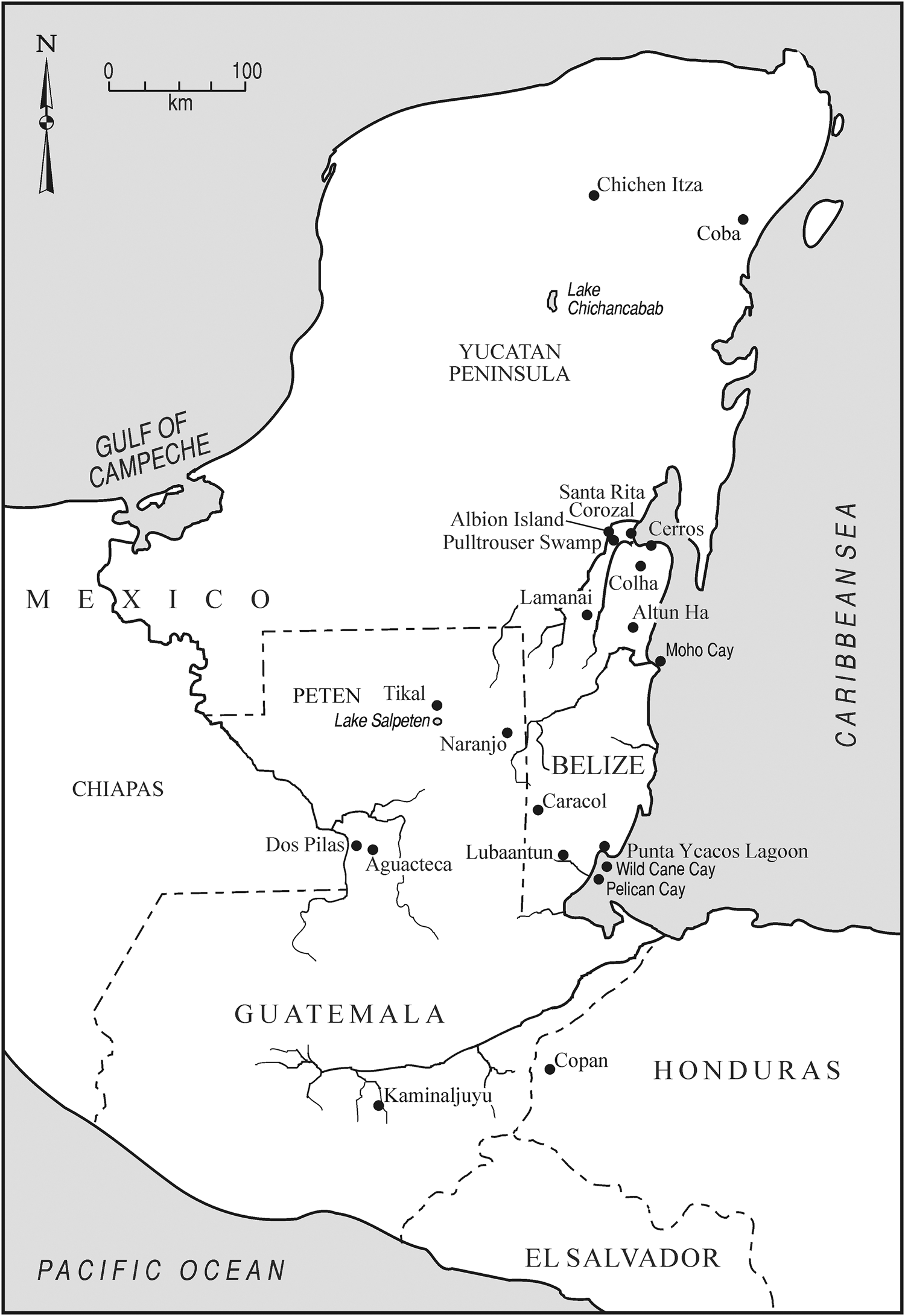
The submerged site of Ta'ab Nuk Na is one of 110 known sites that make up the Paynes Creek Salt Works in Punta Ycacos Lagoon (Figure 1). The salt works were used by the ancient Maya during the Classic period (a.d. 300–900) (McKillop Reference McKillop2002, Reference McKillop2005a, Reference McKillop2019; McKillop and Aoyama Reference McKillop and Aoyama2018; McKillop et al. Reference McKillop, Harlow, Sievert, Smith and Wiemann2019; McKillop and Sills Reference McKillop and Cory Sills2021, Reference McKillop and Cory Sills2022; Sills and McKillop Reference Sills, McKillop and Christian Wells2016, Reference Sills and Cory2018). After abandonment, sea levels rose, flooding the sites and preserving the wooden architecture and artifacts in red mangrove (Rhizophora mangle) peat below the sea floor (McKillop Reference McKillop2005a, Reference McKillop, Harlow, Sievert, Smith and Wiemann2019; McKillop et al. Reference McKillop, Sills and Harrison2010b). Red mangrove peat is a proxy for sea-level rise: as red mangroves grow taller to keep their leaves above water under conditions of rising seas, sediment and other detritus are trapped in the prop roots, creating peat (Krauss et al. Reference Krauss, McKee, Lovelock, Cahoon, Saintilan, Reef and Chen2014; McKee et al. Reference McKee, Cahoon and Feller2007).
Map of the Maya area showing the location of Punta Ycacos Lagoon where the study site, Ta'ab Nuk Na, is located. Map by Mary Lee Eggart, Louisiana State University.
In this article, we discuss the results of laboratory work from 2020 through 2021 on marine sediment from the 2019 excavations at Ta'ab Nuk Na. Loss-on ignition, microscopic sorting, and radiocarbon dating were used to investigate the relationship between the ancient Maya occupation at the site and their environment. The research was guided by several questions: What can the marine sediment at Ta'ab Nuk Na reveal about the complex interplay between cultural and environmental factors in culture change at the site? Severe droughts at the end of the Classic period at inland sites have been correlated with site abandonment (Curtis et al. Reference Curtis, Hodell and Brenner1996; Douglas, Brenner et al. Reference Douglas, Brenner and Curtis2016; Douglas, Demarest et al. Reference Douglas, Demarest, Brenner and Canuto2016; Hodell et al. Reference Hodell, Curtis and Brenner1995; Luzzadder-Beach et al. Reference Luzzadder-Beach, Beach and Dunning2012), so was there a climatic change at Ta'ab Nuk Na at that time? What is the time frame for sea-level rise at the site? Did the sea-level rise affect the ancient Maya settlement at the site?
Background
Paleoenvironmental reconstructions in the inland Maya area
Sediment cores have been useful in reconstructing past environments in the Maya area, at both inland and coastal areas. For inland areas, lakes, aguadas, bajos, and cenotes have been investigated (Douglas, Brenner et al. Reference Douglas, Brenner and Curtis2016). Hodell, Curtis and Brenner (Reference Hodell, Curtis and Brenner1995) published a paleoclimate record from Lake Chichancanab on the Yucatan Peninsula that showed an intense, protracted drought occurred in the ninth century a.d. coinciding with the Classic Maya collapse. The cores showed that this devastating drought was one in a series of drought episodes on the Yucatan Peninsula during the last 2,600 years. The dry events occur about every 208 years and coincide with episodes of greater solar intensity that have been shown previously to have a periodicity of 206 years. This finding suggests that the roughly bicentennial droughts that occur in the Maya Lowlands are controlled partly by changes in solar intensity. These findings were later confirmed by Peter Douglas and his colleagues (Douglas, Demarest et al. Reference Douglas, Demarest, Brenner and Canuto2016), who studied sediments from Lake Chichancab along with hydrogen isotope ratios in plant wax lipids, and by Curtis and colleagues (Reference Curtis, Hodell and Brenner1996) through an analysis of littoral lake sediment from Punta Laguna, which produced a carbonate δ18O record with a higher temporal resolution than the sediment core from Lake Chichancab.
Sheryl Luzzadder-Beach and collaborators (Reference Luzzadder-Beach, Beach and Dunning2012) provide evidence for drought during the Terminal Classic period at wetland areas within Blue Creek in northern Belize. The team analyzed wetland field formation, with a focus on the canals and the time frame of abandonment at the site. The results indicated that the abandonment of the wetlands at Blue Creek and a decline in population at the site coincided with the dates of suspected droughts in the region. Although the ancient Maya were able to adapt to changing wetland conditions from the Late Preclassic until the Late Classic, environmental changes during the Terminal Classic proved too severe for continued occupation at the site.
Richard Sullivan and colleagues (Reference Sullivan, van Hengstum, Donnelly, Tamalavage, Winkler, Little, Mejía-Ortíz, Reinhardt, Meacham, Schumacher and Korty2022) used two sediment cores from the Muyil cenote in the Yucatan Peninsula to construct a 2,200-year-long hurricane record, dated to the Late Preclassic, Classic, and Postclassic periods. Photographs, X-radiographs, loss-on ignition, and radiocarbon dating were used to analyze the sediment cores. The results of the study indicate a higher-than-normal frequency of hurricanes during the Terminal Classic period, indicated by elevated hydrodynamic flow and wave action. The time frame corresponds to the decline of several lowland Maya sites, including Chichen Itza and Coba. Evidently, hurricanes may have been an important part of the environmental factors that affected the ancient Maya during the Terminal Classic.
Paleoenvironmental Reconstructions on the Coast of the Maya Area Mangrove cores in coastal areas can provide information on sedimentation rates, vegetation variation, sea-level rise, and marine and coastal landscapes (Jaijel et al. Reference Jaijel, Glover, Rissolo, Beddows, Smith, Ben-Avraham and Goodman-Tchernov2018; McKee et al. Reference McKee, Cahoon and Feller2007; McKillop et al. Reference McKillop, Sills and Harrison2010a, Reference McKillop, Sills and Harrison2010b; Monacci et al. Reference Monacci, Meier-Grünhagen, Finney, Behling and Wooler2009; Torrescano and Islebe Reference Torrescano and Islebe2006). Ten inundated sites in the Port Honduras area of southern Belize were studied to investigate the relationship between sea-level rise and settlement, and the factors affecting the relationship (McKillop Reference McKillop2002). Three models of human–environment interaction (site abandonment and marine transgression, site abandonment and mangrove accumulation, and continued settlement with anthropogenic soil buildup) revealed that both cultural and environmental factors played a part in the abandonment of the sites. To test these models, McKillop (Reference McKillop2002) used dated archaeological deposits located below modern sea level, the position and abundance of mangrove peat accumulation, and plant remains found within archaeological deposits.
McKillop (Reference McKillop2002) found that all three models were applicable, but in different areas within Port Honduras. The relationship between sea-level rise and settlement at the salt works sites within Punta Ycacos Lagoon fit the first model: site abandonment and marine transgression. The sites were abandoned due to cultural reasons and were subsequently flooded by environmental factors. Site abandonment and mangrove accumulation—the second model—fit Pelican Cay, a small island near the larger trading port of Wild Cane Cay. Environmental factors (sea-level rise) buried the Classic-period site in mangrove peat. Wild Cane Cay is characterized by the third model: continued settlement with anthropogenic soil accumulation. In this instance, cultural factors such as raising coral foundation mounds and midden deposits allowed the site to remain active and above the rising sea levels (McKillop Reference McKillop2002, Reference McKillop2005a).
Toscano and Macintyre (Reference Toscano and Macintyre2003) used Rhizophora mangle (red mangrove) peat and Acropora palmata (Elkhorn coral) to construct a western Atlantic Holocene sea-level curve. They used 145 dates from samples collected in Belize, the Florida Keys, and elsewhere in the Caribbean. The depths of the coral and the peat allowed the researchers to revise an earlier sea-level curve (Lighty et al. Reference Lighty, Macintyre and Stuckenrath1982). The segment of the curve corresponding to 2,000–400 years ago indicates a rate of sea-level rise half that of the past 100 years. Archaeologists can relate calibrated radiocarbon dates to this corrected western Atlantic Holocene sea-level curve.
A study by Karen McKee and colleagues (Reference McKee, Cahoon and Feller2007) examines the rates of elevation change and the accumulation of mangrove root matter from Twin Cays and Cat Cay in Belize to understand mangrove peat formation. Some of the mangrove peat in this study dates to more than 7,000 years ago. McKee and colleagues compared the modern elevation changes to past peat development, using geological rates of peat accumulation calculated by radiocarbon dating of peat cores from Belize, Panama, and Honduras. These elevation changes were compared to the corrected sea-level curve for the western Atlantic area. Results indicate that, in response to sea-level rise, mangroves may move vertically and laterally and act as an integral natural defense for coastal ecosystems against sea-level rise.
Monacci and colleagues (Reference Monacci, Meier-Grünhagen, Finney, Behling and Wooler2009) studied an 8 m mangrove peat core at Spanish Lookout Cay, Belize, investigating mangrove ecosystem changes during the Holocene. The peat from Spanish Lookout Cay is younger than that at Twin Cays and Cat Cay, starting at approximately 8000 cal. years BP. The mangrove peat at Spanish Lookout Cay decreased at approximately a.d. 4000.
In another study, researchers investigated a 2.5 m long sediment core from El Palmar, Mexico, using a Dachnovsky corer (Torrescano and Islebe Reference Torrescano and Islebe2006). Fossil pollen grains extracted from the core showed a distinct change from tropical forest dominated by Moraceae and Fabacaeae to a mangrove system consisting of Conocarpus erecta and Rhizophora mangle around 4600 YBP. The researchers attribute the change in vegetation to changes in sea level, which rose approximately 2–3 m between 6000 and 4000 cal BP.
A study of the settlement and sea-level rise at Marco Gonzales, Ambergris Cay, Belize, used sediment cores and probes to reconstruct the landscape and past sea levels (Graham and Pendergast Reference Graham and Pendergast1989; Mazzullo and Reid Reference Mazzullo and Reid1988; Mazzullo et al. Reference Mazzullo, Reid and Gregg1987). Starting at 3500 BP, sea levels rose from a depth of 1 m below present, to 30 cm below present at 2000 BP, to 15 cm below present at 750 BP. The depth at 2000 BP correlates to the first occupation at the site. Mangrove accretion at the site is a recent occurrence, meaning that the landscape was an open marine environment from 3500 BP to 750 BP.
Jaijel and colleagues (Reference Jaijel, Glover, Rissolo, Beddows, Smith, Ben-Avraham and Goodman-Tchernov2018) used sediment core analyses from six sediment cores to reconstruct the environmental changes during the past 3,000 years at the ancient Maya site of Vista Alegre on the north coast of the Yucatan, Mexico. The research suggested that the ancient coastal landscape was more suitable for maritime activity in the past. Due to the study's multiproxy approach, certain anthropogenic markers—such as the abandonment of the site—could be discerned from the sediment. This event was seen through a decrease in shell content and overall foraminifera numbers in the sediment cores followed by an increase in organic content due to sea-level rise. This scenario is similar to the second model in McKillop's Reference McKillop2002 study, where sites were abandoned and subsequently affected by mangrove accumulation. The decrease in shell content and overall foraminifera numbers in the sediment cores likely correlate to the abandonment of the site. The increase in organic content would be attributed to the mangrove accumulation after the site was abandoned.
In 2015, Collins and colleagues used sediment cores to investigate the relationship between sea-level rise and the flooding of the Yax Chen cave system on the coast of the Yucatan Peninsula. The study included three sediment cores, 180 depth measurements of sediment, and radiocarbon dating to determine if sea-level rise caused the cenotes to flood and therefore allow mangroves to grow in the area. Sediment trap data were used to determine modern sedimentation rates for Yax Chen. The results of the study indicated that sea-level rise did cause the cenotes to flood, causing widespread sedimentation and providing the necessary growing conditions for mangroves.
Evidence of sea-level rise in Paynes Creek
Much of the coastal Maya settlement and sea-level-rise literature comes from the southern coast of Belize, in places such as Wild Cane Cay and Punta Ycacos Lagoon (McKillop Reference McKillop2002, Reference McKillop2005b; McKillop et al. Reference McKillop, Sills and Harrison2010a, Reference McKillop, Sills and Harrison2010b). McKillop (Reference McKillop2002) found evidence for sea-level rise at the site of Wild Cane Cay, Belize. She and her team conducted a study of the area using 186 stratigraphic shovel test pits below the sea floor to a maximum depth of 1 m and in the mangroves around the island site, stopping 50–70 m from shore when there were no artifacts (McKillop Reference McKillop2002:150–154, Figures 5.2–5.6). Artifacts were present in the test pits to a maximum depth of 100 cm. The stratified deposits in the water clearly indicated that the ancient Maya site was on dry land, meaning that sea levels had risen to cover a substantial portion of the site since the ancient Maya occupation.
In 2008, McKillop cut a 1.5 m long column of sediment from a vertical face dug into the sea floor between Sites 14 and 15 (K'ak’ Naab’ and Sak Nuk Naj, respectively) in Punta Ycacos Lagoon (McKillop et al. Reference McKillop, Sills and Harrison2010a, Reference McKillop, Sills and Harrison2010b). The sediment was sampled in 10 cm intervals. The column was taken from between the sites to investigate sea-level rise and settlement, including how organic the marine sediment in the area is without anthropogenic interferences. Research on the column sample included loss-on ignition, microscopic sorting and identification of organic material, and accelerated mass spectrometer (AMS) radiocarbon dating. The average organic matter in the column sample was 65 percent, which is consistent with red mangrove peat. In a study by McKee and colleagues (Reference McKee, Cahoon and Feller2007), cores collected from cays in Belize, the Bay Islands in Honduras, and Panama had organic content that was 60 percent or more (McKee et al. Reference McKee, Cahoon and Feller2007). This high percentage of organic matter is consistent with mangrove peat.
The microscopic sorting and identification of the K'ak’ Naab’ sediment column included selecting sediment from each of the 10 cm levels of the sediment column and sorting them according to species, root size, and other features. Results show that the column sample is composed primarily of fine Rhizophora mangle (red mangrove) roots. The top, bottom, and several intermediate layers of the column sample were radiocarbon dated. The fine red mangrove roots found during the microscopic sorting were selected for AMS radiocarbon dating. The column sample shows a 4,000-year record of sea-level rise in the Paynes Creek Salt Works. These analyses shed light on a possible reason for the abandonment of the Paynes Creek Salt Works.
Excavations at Ta'ab Nuk Na
Ta'ab Nuk Na contains wooden posts that form 10 wooden structures, as well as two lines of palmetto palm posts (Acoelorrhaphe wrightii)—one on the eastern periphery of the site and one on the western periphery (Figure 2). As with other sites in Punta Ycacos Lagoon, such as Ek Way Nal, few artifacts were found beyond the lines of palmetto palm posts (McKillop and Sills Reference McKillop and Cory Sills2021, Reference McKillop and Cory Sills2022). During the 2019 field season, excavations were carried out in Building B and along the western wall of palmetto palm posts to evaluate building use (McKillop and Sills Reference McKillop and Cory Sills2022). The diversity of artifacts and lack of salt-making artifacts associated with Building B indicated that it was a residence (McKillop and Sills Reference McKillop and Cory Sills2022: Figures 4, 6, 7). The excavation along the western palmetto palm post line was done to examine a preserved wooden beam, designated “Nunavut,” that was found within the bifurcated section of the palmetto palm post line.
Site map of Ta'ab Nuk Na with sample locations marked. Image courtesy of McKillop, modified by Foster.
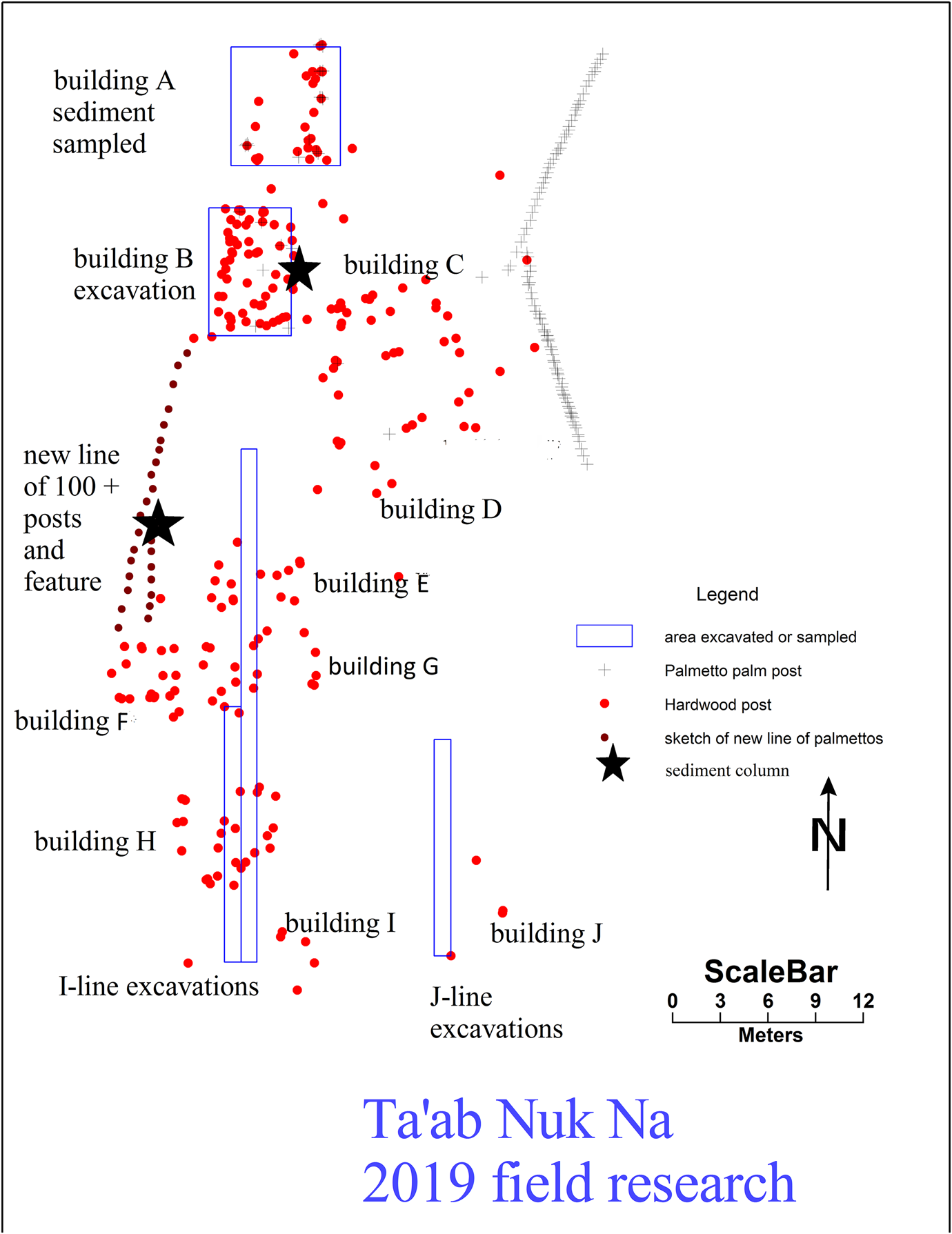
During the excavations in Building B, a wooden post (Post 145) was excavated for radiocarbon dating, species identification, and sampling sediment beside the post to investigate sea-level rise in relation to the building construction. A 30 cm long sediment column was cut from beside the post to link the environmental data (column) to the cultural data (post). During the excavation of the Nunavut beam, a 22 cm long sediment column was cut from beside the beam. The marine sediment column samples were exported to the Archaeology Lab at LSU. They were kept in refrigerated storage until they were used. From the summer of 2020 until the spring of 2021, the marine sediment samples were analyzed using loss-on ignition, microscopic sorting, and radiometric dating. Loss-on ignition was used to determine the percentage of organic matter. Microscopic sorting was done to identify the species of organic matter within the samples. AMS dating was done on selected fine red mangrove root samples and on samples from wooden posts to provide absolute dates for environmental (roots) and cultural (posts) activities.
Methods
Loss-on ignition
The loss-on ignition protocol of the project—the method used by the project mangrove ecologist, Dr. Karen McKee—was followed (McKee and Travis Reference McKee and Travis2006). A rounded teaspoon (defined as 1.25 of a regular teaspoon) was taken from each sediment sample; placed into individual, labeled tinfoil trays; and dried in an oven at 60 ̊C for 24 hours. After 24 hours, the samples were removed and ground using a mortar and pestle until the samples could pass through a No. 25 geologic sieve. The ground samples were then placed in numbered ceramic crucibles (15 mL), which had been previously weighed and sterilized. The crucibles and samples were weighed before being placed in a muffle furnace at 105 ̊C for four hours.
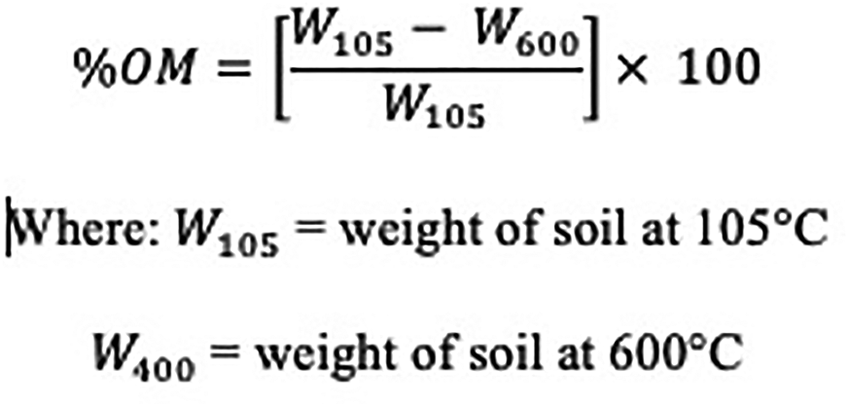
The samples were removed and weighed again before being placed in a desiccator overnight to preserve the dried samples. The next morning, the samples were weighed before being placed in the muffle furnace and burned for eight hours at 600 ̊C. After this last burning, the samples were weighed a final time and placed in the desiccator overnight. In the morning, a Munsell color chart was used to determine the final color of the sediment samples. The loss-on ignition numbers were put into a Microsoft Excel spreadsheet with a formula (Figure 3) to calculate the organic percentage.
Formula for calculating percent organic matter (OM%).
Sediment sorting
A separate rounded teaspoon of sediment was taken from each sample and was placed in a No. 25 geologic sieve. The samples were rinsed and transferred from the sieve to a petri dish filled with water. Seven 12 mL glass vials were filled with water and labeled with the sample information and one of the following: Fine Roots, Coarse Roots, Wood, Charcoal, Quartz, Leaves, Pottery. Vials for “Botanical” or “Rock” were added as necessary. A Bausch & Lomb Stereo Zoom® 4 Zoom Range 0.7x–3.0x microscope was used to view the sediment samples in the petri dish. Needle-nosed dissection tweezers were used to pick up individual materials from the dish and place them in their respective vial. After the fine roots were sorted, the roots and their glass vials were dried in a drying oven at 50 ̊C for approximately eight hours. The roots were then placed back in the vials to be kept for future AMS dating. The rest of the materials were removed from their vials and weighed wet on the electronic scale. Most of the materials were then placed back in their vials with water to preserve them. Quartz samples were taken out of their vials and placed in plastic bags without water, given that quartz does not need water for preservation. The weights were then recorded in a spreadsheet.
AMS dating
Wood samples from the Nunavut beam and Post 145 were selected and sent to Beta Analytic for AMS dating. The sample from Post 145 was taken from an inconspicuous place so that the spot will not be noticeable when the post is conserved. Additionally, fine red mangrove root samples were prepared for AMS dating by the National Ocean Sciences Accelerator Mass Spectrometry Facility (NOSAMS). The fine red mangrove roots were those sorted under the microscope and placed in distilled water. They were taken out of the vials, weighed, dried, and placed back in their vials for submission to the lab.
Results
Loss-on ignition
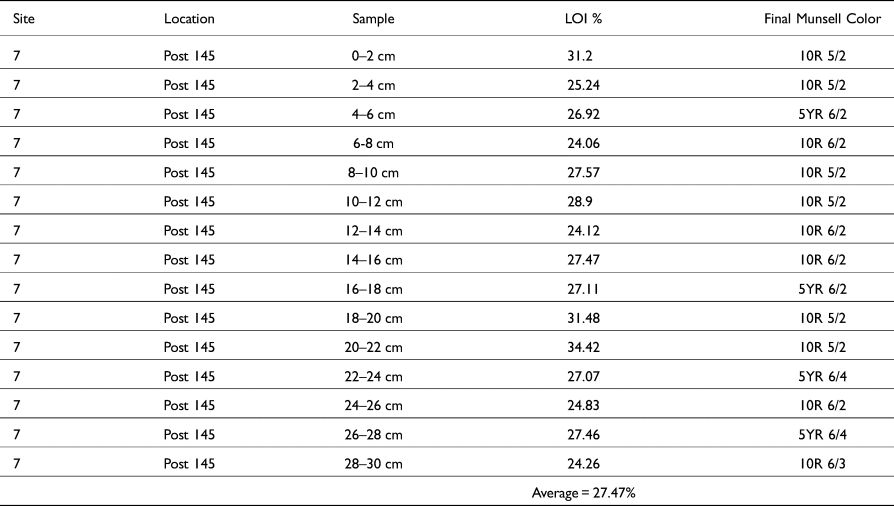
The percentage of organic matter in the Ta'ab Nuk Na sediment cores varies. The Post 145 sediment column has a range of 24 percent to 34 percent (Table 1). The Nunavut sediment column has a range of 34 percent to 48 percent (Table 2).
Percent organic matter and Munsell color for Post 145 sediment column.
Percent organic matter and Munsell color for Nunavut sediment column.
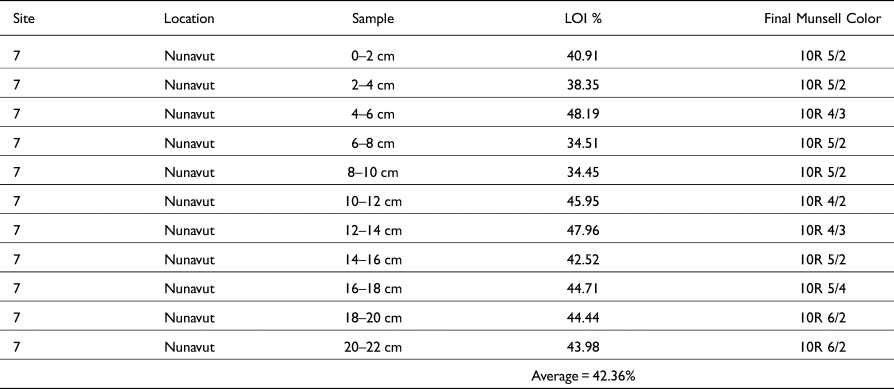
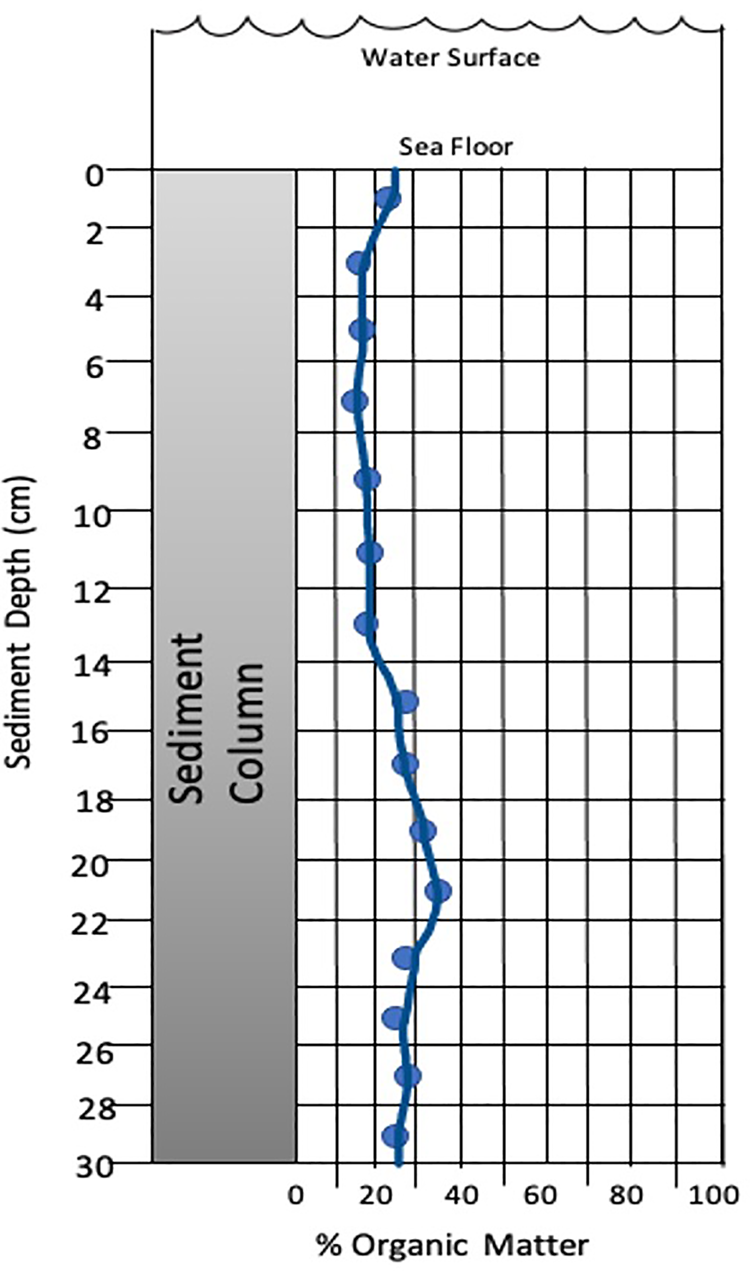
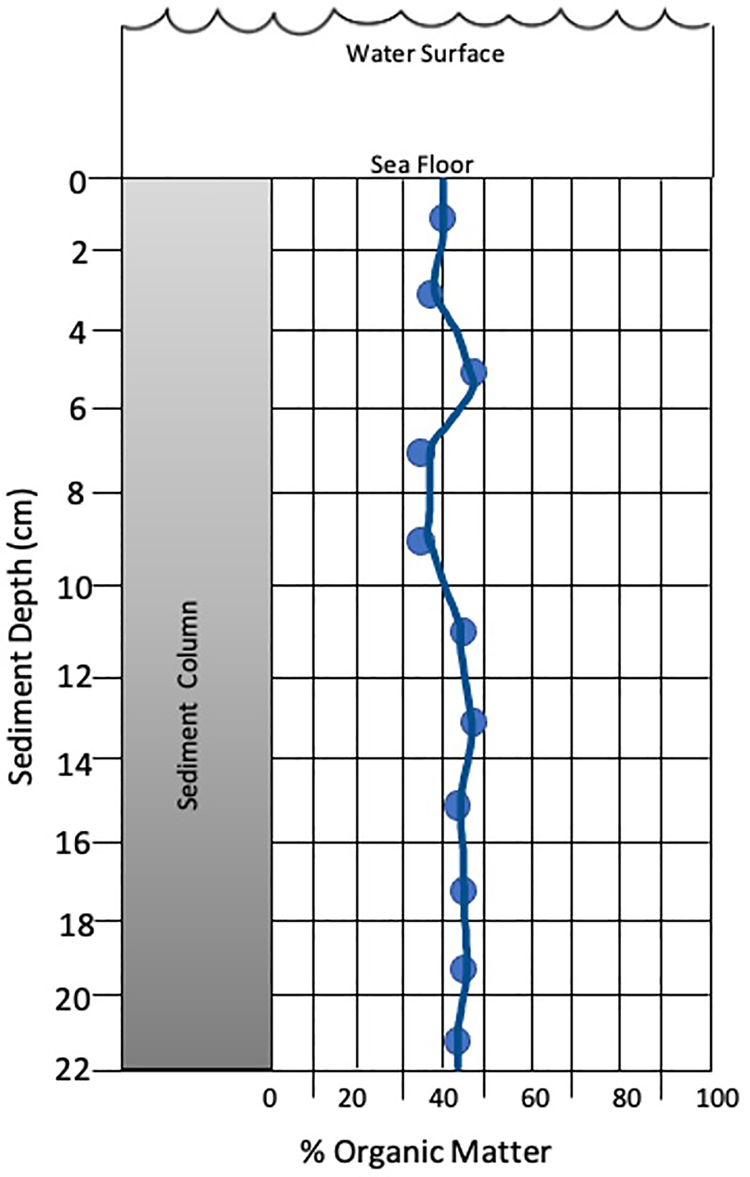
The areas with the highest organic matter (above 30 percent) in the Post 145 column are at 0–2 cm and 18–22 cm depth (Figure 4). The rest of the column is relatively uniform, with a low to medium organic percentage. The Nunavut column has one area of low organic matter, level 6–10 cm (Figure 5). This value is still higher than the highest value for the Post 145 column. The rest of the Nunavut column sample has a high organic content.
Visual depiction of Post 145 sediment column Loss-On Ignition results. Image created by Foster.
Visual depiction of Nunavut sediment column Loss-On Ignition results. Image created by Foster.
Microscopic sorting
The results from the Post 145 sediment column microscopic analysis are shown in Table 3. The results from the Nunavut sediment column microscopic analysis are shown in Table 4. Every sediment sample contained fine red mangrove roots, coarse red mangrove roots, and charcoal. All but two of the samples contained quartz. All but three of the samples contained wood. None of the Nunavut column samples produced any pottery or rock. Despite a concerted effort by Dr. Barun Sen Gupta to find microfossils in the K'ak Naab’ sediment, none were found. The absence of microfossils (foraminifera, ostracods) in the K'ak Naab and the Ta'ab Nuk Na sediment is attributed to the acidity of the mangrove peat, which even dissolved calcium carbonate temper in pottery.
Weights of microscopic sediment sorting from Post 145 sediment column.

Weights of microscopic sediment sorting from Nunavut sediment column.
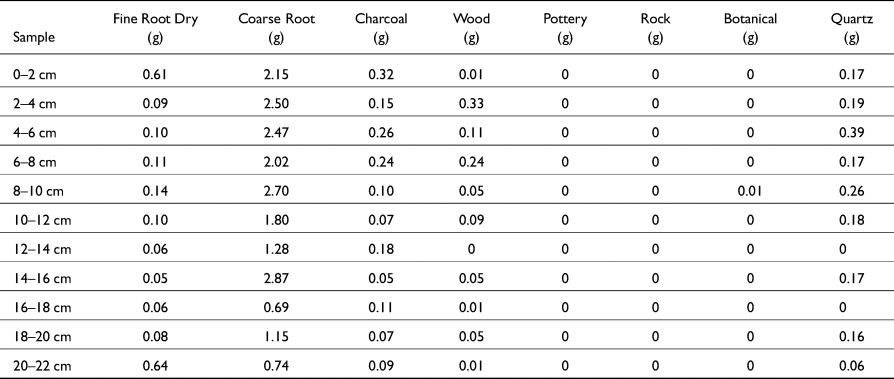
The fine red mangrove roots and coarse red mangrove roots show that mangroves were growing in the area during the time represented by the column sample and provide environmental data. The wood found in the samples is attributed to the presence of the mangroves growing in the area or to the ancient Maya use of wood for construction or as fuel for fires. The wood could therefore either be environmental or cultural. The presence of charcoal indicates that the ancient Maya were present in the area during that time and were burning wood. The quartz found in the samples is indicative of the sand-tempered pottery that the ancient Maya used. The charcoal and quartz provide cultural data. The rock in the samples has not been identified but could indicate that the ancient Maya were utilizing rock for some purpose, given that rock was found in the center of the site but not the site's periphery.
AMS and 14C dating
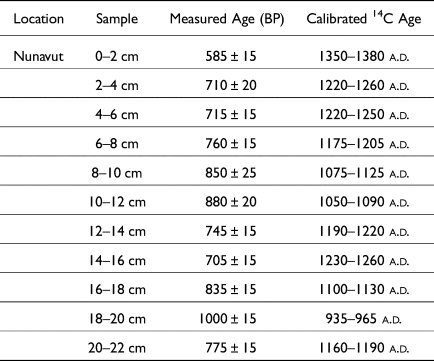
The wood sample from the Nunavut beam dates to cal 630–690 a.d. (Table 5). The wood sample from Post 145 dates to cal 650–710 a.d. These dates represent the cultural activities in the areas surrounding Post 145 and the Nunavut beam. The results of the AMS dating from NOSAMS are provided in Tables 5 and 6. The right column shows the calibrated date range. The uncalibrated dates are listed in the “Measured Age (BP)” column. The range provided is the 2-sigma range.
AMS dates from NOSAMS for Post 145 sediment column to one standard deviation.
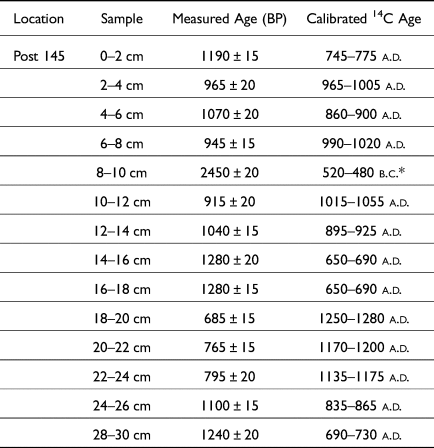
*This outlying date is attributed to possibly disturbed archaeological contexts and will not be included in the discussion.
AMS dates from NOSAMS for Nunavut sediment column to one standard deviation.
Discussion
The loss-on ignition results from the Ta'ab Nuk Na sediment columns show variability between the two areas. The average for the Post 145 column is 27 percent organic matter, whereas the Nunavut column has an average of 42 percent organic matter. This difference indicates that the area surrounding the Nunavut column is more organic than the area surrounding the Post 145 column. During excavations in Building B in 2019, ceramics were found to the maximum excavated depth of 30 cm, which is the entire length of the Post 145 sediment column. When ceramics break down, the quartz within the temper of the ceramics is left behind as inorganic material. The lower organic content of the Post 145 column could be the result of the increase of inorganic material from eroding ceramic pottery. There were no ceramics found near the Nunavut sediment column that would decrease the organic content of the sediment. The Nunavut column is associated only with organic cultural remains in the form of wooden infrastructure.
When compared to the K'ak’ Naab’ sediment column, the percentage of organic matter for the Ta'ab Nuk Na samples indicates higher instances of cultural activity. The K'ak’ Naab’ sediment column was taken from between two sites, ensuring that minimal cultural activity would have affected the analyses of the column. The K'ak’ Naab’ column had an organic matter range of 42–78 percent (McKillop et al. Reference McKillop, Sills and Harrison2010a: Figure 2, Reference McKillop, Sills and Harrison2010b) and an average of 65 percent, similar to the average of 65 percent for other peat deposits from offshore cays in Belize (McKee et al. Reference McKee, Cahoon and Feller2007). The Nunavut column, with a range of 34–48 percent, was extracted from within an ancient Maya site. However, the column was located on the periphery of the site, lacking pottery. The Post 145 column, with a range of 24–34 percent, was extracted from within a building. The column was associated with sand-tempered pottery and other artifacts that would have left inorganic material behind, such as quartz, as was found at Chan b'i (Sills et al. Reference Sills, McKillop and Christian Wells2016). This process would be seen in the percent organic matter value, because the presence of higher quantities of quartz would make the sample less organic overall. Among the Post 145, Nunavut, and K'ak’ Naab’ columns, all three scenarios of human–environment interaction can be seen: high anthropogenic activity (Post 145 column), medium anthropogenic activity (Nunavut column), and low/no anthropogenic activity (K'ak’ Naab’ column).
The microscopic sorting of the Post 145 and Nunavut samples also mirror some of these findings. No pottery was found within the Nunavut column, further indicating less anthropogenic activity. The amount of quartz was less within the Nunavut column, with a range of 0.0–0.39 g, than the Post 145 column, with a range of 0.08–1.52 g. The amount of wood and charcoal are similar within both columns. The Post 145 column has a range of 0.00–0.36 g for wood and 0.01–0.36 g for charcoal, whereas the Nunavut column has a range of 0.00–0.33 g for wood and 0.05–0.32 g for charcoal. Given that both columns are located next to wooden posts, the similar wood weight values are easily explained.
Regarding the similar charcoal weights, the expectation is that the area surrounding the Nunavut column should have minimal charcoal remains given that the area was not associated with any structures and therefore any wood-burning fires for salt making. However, charcoal is extremely lightweight. Therefore, a possible explanation is that charcoal from other areas of the site was transported by wind, water, or anthropogenic actions (i.e., foot traffic or transport of ash and debris in antiquity) to the periphery of the site. Conversely, the area near the Post 145 column shows greater amounts of charcoal, indicating that the structure was used for salt making or habitation, given that fires would be common with either function. However, in both cases, the ancient Maya would have likely kept the structure floor clean of debris by sweeping, thereby decreasing the amount of charcoal inside a structure.
Macroscopic analysis of the sediment reveals that the Nunavut column is composed primarily of Rhizophora mangle (red mangrove) roots, with a range in dry root weights of 0.05–0.14 g. Similarly, the Post 145 column has a dry red mangrove root range of 0.04–0.09 g, indicating that the Post 145 column was composed of Rhizophora mangle roots as well. The presence of the fine red mangrove roots within the Post 145 and Nunavut columns indicates that sea-level rise was occurring during the entire sequence represented by the sediment columns.
The Nunavut column shows higher quantities of R. mangle roots than the Post 145 column. This disparity could be attributed to a lower overall ground level at the western periphery of Ta'ab Nuk Na than the area where the Post 145 column was located (Building B), allowing sea-level rise to happen sooner at the western periphery of the site. This lower ground level might have been a natural occurrence, either from subsidence or erosion, or from a lack of natural deposition from plant detritus. The difference in ground level could also be attributed to anthropogenic actions: the area where Building B is located could have been built up by the ancient Maya to decrease the chances that the building would flood, making that area artificially higher than the western periphery. Additionally, starting at the 10–12 cm depth in the Nunavut column, there is an increase in the amount of R. mangle roots. This uptick could indicate an increase in the rate of sea-level rise during the time the mangrove peat in this level was deposited.
The AMS dates provide information on the human–environment interactions at Ta'ab Nuk Na. The AMS dating of the Nunavut beam (630–690 cal a.d.) and Post 145 (650–710 cal a.d.) reveals anthropogenic activity at Ta'ab Nuk Na during the Late Classic period. The AMS dating of the R. mangle roots from the two sediment columns (650–1280 cal a.d. for the Post 145 column and 935–1380 cal a.d. for the Nunavut column) reveals that sea-level rise began in the Late Classic period and continued through to the mid-Postclassic period at Ta'ab Nuk Na. The slim overlap of these two datasets indicates that the ancient Maya occupation at the site may have briefly overlapped with the onset of sea-level rise during the Late Classic. This overlap fits with McKillop's (Reference McKillop2002) study, which revealed that the Paynes Creek Salt Works were likely abandoned due to the lack of demand for salt at nearby inland sites that were abandoned at the end of the Classic period. The coastal salt works were subsequently inundated by marine transgression.
The corrected western Atlantic sea-level rise curve by Toscano and Macintyre (Reference Toscano and Macintyre2003) indicates a rate of sea-level rise of approximately 0.09 cm yr-1 between 2,000 and 400 years ago. The K'ak’ Naab’ sediment column shows a rate of sea-level rise of 0.087 cm (0.03 in) per annum during the Classic period, and a rate of 0.01 cm (0.004 in) per annum during the Early Postclassic (McKillop et al. Reference McKillop, Sills and Harrison2010a). The Post 145 sediment column has a rate of sea-level rise of 0.003 cm (0.001 in) per annum. The Nunavut column shows a rate of sea-level rise of 0.01 cm (0.004) per annum.
The data presented in this article contrast with the data provided by Jaijel and colleagues (Reference Jaijel, Glover, Rissolo, Beddows, Smith, Ben-Avraham and Goodman-Tchernov2018) for Vista Alegre, where the shell and foraminifera content (representing the anthropogenic presence at the site) decreased prior to the increase in organic content, which represents sea-level rise. At Ta'ab Nuk Na, the anthropogenic presence (represented as the pottery and charcoal) continues for all of the Post 145 column and, in the case of charcoal, for all of the Nunavut column. This continuation overlaps with the instances of sea-level rise in both columns at Ta'ab Nuk Na. However, the data in this article are similar to the findings at Marco Gonzales, where site occupation overlaps with sea-level rise (Graham and Pendergast Reference Graham and Pendergast1989; Mazzullo and Reid Reference Mazzullo and Reid1988; Mazzullo et al. Reference Mazzullo, Reid and Gregg1987). At Marco Gonzales, sea levels were 30 cm below present at the time of site occupation, and they rose to 15 cm below present 1,250 years later.
On a broader scale, the results presented in this article relate with data from inland paleoenvironmental reconstructions that suggest droughts and other environmental changes at the end of the Classic period that may have negatively impacted Maya settlements. For instance, Luzzadder-Beach et alia (Reference Luzzadder-Beach, Beach and Dunning2012) suggested that the wetland field agriculture and population of Blue Creek might have declined in response to a severe drought, even though the inhabitants were able to successfully combat earlier environmental changes.
The research presented in this article not only provides evidence on the relationship between sea-level rise and settlement from an archaeological perspective in the Maya area but also helps to bridge the gap between mangrove ecology and archaeology—something few other research projects have accomplished. The research detailed earlier in this article by Toscano and Macintyre (Reference Toscano and Macintyre2003), McKee et alia (Reference McKee, Cahoon and Feller2007), Monacci et alia (Reference Monacci, Meier-Grünhagen, Finney, Behling and Wooler2009), Collins et alia (Reference Collins, Reinhardt, Werner, Le Maillot, Devos and Rissolo2015), and Torrescano and Islebe (Reference Torrescano and Islebe2006) focuses on mangrove ecology, but these authors do not tie their research to human settlement. The research from Vista Alegre (Jaijel et al. Reference Jaijel, Glover, Rissolo, Beddows, Smith, Ben-Avraham and Goodman-Tchernov2018) does include some discussion of mangroves but does not necessarily tie the mangroves to the discussion of human settlement. Only the research from Marco Gonzales (Graham and Pendergast Reference Graham and Pendergast1989; Mazzullo and Reid Reference Mazzullo and Reid1988; Mazzullo et al. Reference Mazzullo, Reid and Gregg1987) links the onset of mangrove accumulation and sea-level rise with the decline of the Maya occupation at the site. However, the research from Marco Gonzales only provides information from one site within the Maya region.
The research conducted in the Port Honduras and Punta Ycacos Lagoon provide evidence of the impacts of sea-level rise on the ancient Maya settlement along a larger coastal area and from multiple sites within that region (McKillop Reference McKillop2002, Reference McKillop2005a; McKillop et al. Reference McKillop, Sills and Harrison2010a, Reference McKillop, Sills and Harrison2010b). Mangroves occupy an area of over 137,000 km2 globally and are present on the coastline of over 123 countries (Krauss et al. Reference Krauss, McKee, Lovelock, Cahoon, Saintilan, Reef and Chen2014). Although this statistic was likely much different in antiquity, the relationship between humans and mangroves along the world's coastlines cannot be ignored. Therefore, interdisciplinary studies such as the 2010 study of the K'ak’ Naab’ sediment core and the current research on the two sediment columns from Ta'ab Nuk Na that combine mangrove ecology with archaeology are useful for reconstructing past environments while tying them to previous human occupation along the coasts.
Conclusions
Analysis of marine sediment samples from two marine sediment columns at the site of Ta'ab Nuk Na, Belize, reveals interactions between the ancient Maya and the environment. Through loss-on ignition, microscopic sorting and identification of organic and inorganic materials, and radiometric dating, the sediment in the column samples was identified as Rhizophora mangle (red mangrove) peat. Rhizophora mangle peat is a proxy for sea-level rise, because red mangroves grow vertically to keep their leaves above water. The peat within the column samples shows a variable organic content, indicating that different areas of the site were used in different ways. Building B, where the Post 145 sediment column was located, reveals a lower organic content within the sediment and more evidence of anthropogenic activities in the form of inorganic materials present in the samples, indicating the area was heavily used by the ancient Maya. Conversely, the western periphery of the site, where the Nunavut column was located, shows a higher organic content and less evidence of anthropogenic activities.
The results from the AMS dating and the microscopic sorting of the two column samples indicate that although the rate of sea-level rise was uniform across the site, the different elevations at the site caused the rate of sea-level rise to appear as if it were varying from location to location. The data suggest that sea-level rise began toward the end of the ancient Maya occupation of Ta'ab Nuk Na. Due to elevation differences between the western periphery of the site (Nunavut) and the central area of the site (Post 145), sea-level rise is noticeable first at the western periphery of the site. Then, the rate of sea-level rise seemingly increased at the western periphery of the site, allowing sea-level rise to be seen in higher areas of the site, such as Building B.
Although there is a possibility that the onset of sea-level rise and therefore site inundation could have been a contributing factor in the ancient Maya's decision to abandon the site at the end of the Late Classic, a more likely possibility is that the abandonment of Ta'ab Nuk Na was caused by cultural reasons related to the lack of inland consumers of coastal salt at the end of the Classic period. Continued sea-level rise prevented the ancient Maya from returning to the site after it was flooded.
The frequency of sea-level rise mentioned at the beginning of this article is not likely to subside in the future. Therefore, coastal areas around the world—particularly those that are low lying or susceptible to flooding, such as Louisiana, parts of Asia, and many islands—would benefit from studies of ancient peoples’ interactions with sea-level rise (Erlandson Reference Εrlandson2008; Mosley Reference Mosley2014). Researchers investigating coastal sites inundated by sea-level rise document how past peoples were able to live with and even combat the effects of sea-level rise (McKillop Reference McKillop2002). Current policymakers and others interested in how modern populations will react to sea-level rise should look at the lessons of the past to inform their decisions. However, many of the coastal sites that archaeologists wish to study are either in danger of becoming submerged, eroded, or destroyed, or already have been. Although Ta'ab Nuk Na and other sites in Punta Ycacos Lagoon are submerged, the wooden buildings have been preserved in mangrove peat, making them ideal for evaluating the effects of sea-level rise on settlements: The wooden posts of the buildings were radiocarbon dated to develop a chronology of settlement (McKillop and Sills Reference McKillop and Cory Sills2021, Reference McKillop and Cory Sills2022), whereas the mangrove peat matrix of the sites provides a record of sea-level changes associated with the settlements. Although the current study of Ta'ab Nuk Na indicates that the site was abandoned for cultural reasons, nearby low-lying sites such as Wild Cane Cay and Pelican Cay were negatively impacted by sea-level rise. Pelican Cay was flooded and abandoned, whereas the larger population at the 40,468.6 m2 (10 ac) village on Wild Cane Cay was able to counter the deleterious impacts of rising seas by building coral rock foundations for buildings during the Postclassic as well as by benefiting from the passive soil development from refuse build-up on the island (McKillop Reference McKillop2002). With low-lying areas worldwide subject to inundation from global climate change and sea-level rise, the resilience of modern populations will be challenged.
Acknowledgments
The research was carried out under excavation and temporary export permits from the Belize Institute of Archaeology and funded by a National Science Foundation grant (#1826653). Additional funds were provided by a Louisiana State University, Department of Geography and Anthropology Graduate Research Materials Award.


 Open access

