

Introduction
Changes in markets are becoming increasingly rapid and disruptive, and the pressure for companies to embrace transformation, which is driven by technological advances and rising uncertainty, is growing. In this context, transformation is a constant condition for organisations aiming to sustain long-term competitive advantages (Girod, Birkinshaw & Prange, Reference Girod, Birkinshaw and Prange2023; Lüscher & Lewis, Reference Lüscher and Lewis2008; Weber & Tarba, Reference Weber and Tarba2014).
The term ‘organisational transformation’ refers to the process by which companies adapt, reshaping their structures and operations in response to fast-changing market conditions (Hanelt, Bohnsack, Marz & Antunes Marante, Reference Hanelt, Bohnsack, Marz and Antunes Marante2021; Quattrone & Hopper, Reference Quattrone and Hopper2001). Change occurs due to external shifts that generate pressure to reframe the rules, structures, and internal meanings of organisations (Lüscher & Lewis, Reference Lüscher and Lewis2008). This primarily involves responding to the emergence of megatrends that have the capacity to accelerate internal transformation processes (Uhrenholt, Kristensen, Rincón, Jensen & Waehrens, Reference Uhrenholt, Kristensen, Rincón, Jensen and Waehrens2022).
One of these megatrends is climate change. As part of it, businesses worldwide must take concrete steps to reduce the impacts of their activities on the environment (Cui, Wang & Zhou, Reference Cui, Wang and Zhou2023), aiming for carbon neutrality. These megatrends deeply affect production processes, relationships with customers and suppliers, and the interactions with the communities and territories where business activities take place.
Similarly, the digital transition, which is driven by advancements in technologies such as those of Industry 4.0, is reshaping market paradigms, organisational structures, and social interactions (Choi, Kumar, Yue & Chan, Reference Choi, Kumar, Yue and Chan2022). Disruptive technological innovations can alter existing market structures (Christensen, Reference Christensen1997) and create profound changes in the ways firms operate.
In addition to the transformations sparked by sparked by climate change and the digital transition (Sancak, Reference Sancak2023), there are forces arising from the uncertainties generated by interconnected external shocks, such as geopolitical instability and the Covid-19 pandemic, which have redefined logistic and mobility systems (Chemli, Toanoglou & Valeri, Reference Chemli, Toanoglou and Valeri2022). These factors have also created the need to achieve a new organisational balance between people’s flexible-work needs and priorities related to maintaining business continuity (Caputo & Ayoko, Reference Caputo and Ayoko2021). Alongside these external drivers, organisational transformation is also shaped by internal forces, particularly the evolution of organisational culture and internal structures (Supriharyanti & Sukoco, Reference Supriharyanti and Sukoco2023), which can foster readiness and predispose a firm to reframe its strategic orientation.
External and internal drivers do not act in isolation; rather, they intersect in ways that generate pressures and contradictions that organisations must actively engage with. These contrasting circumstances often expose organisations to tensions that are difficult to reconcile, which sets the stage for the emergence of paradoxical tensions (Lewis, Andriopoulos & Smith, Reference Lewis, Andriopoulos and Smith2014; Rehman, Giordino, Zhang & Alam, Reference Rehman, Giordino, Zhang and Alam2023). The term ‘paradox’ is used here to express a persistent contradiction among interdependent elements (Dieste, Sauer & Orzes, Reference Dieste, Sauer and Orzes2022) or among forces acting simultaneously on the organisation and reinforcing each other (Berti & Simpson, Reference Berti and Simpson2021). Paradoxes arise from the constant ‘movement around opposing forces’ (Smith & Lewis, Reference Smith and Lewis2011). Hence, in a firm’s transformation process, paradoxes can emerge at the organisational level from the tension between the need to adapt to external shocks and the requirement to preserve internal coherence. These paradoxes require the business to overcome traditional formulas based on control and the centralisation of decision-making systems, as well as to formulate new solutions focused on dynamic views of decision-making processes, in order to manage dichotomous situations and achieve a new balance among opposing forces (Strauss, Tessier & Väisänen, Reference Strauss, Tessier and Väisänen2025). This shift in perspective requires organisational capabilities that facilitate engagement with paradoxes, rather than resolving them. Among these capabilities, strategic agility plays a central role. Since the ability to navigate turbulent scenarios has become critical to face today’s external pressures (de Diego & Almodóvar, Reference de Diego and Almodóvar2022), rather than seeking rigid solutions to paradoxes, companies are increasingly embracing adaptability as a strategic imperative. This shift has placed agility at the centre of modern business strategies, not only as a means of coping with change but also as a driver of continuous innovation and value creation (Weber & Tarba, Reference Weber and Tarba2014).
Strategic agility has become a primary focus for organisations globally (Balzano & Bortoluzzi, Reference Balzano and Bortoluzzi2024; de Diego & Almodóvar, Reference de Diego and Almodóvar2022) because it is seen as a condition enabling them to quickly adjust their strategies in response to technological disruptions, market volatility and evolving consumer demands.
Scholars have examined the forces of organisational change in paradoxical environments and strategic agility separately. However, gaps remain in the understanding of the process of organisational transformation towards strategic agility, as the intersection between the two remains unexplored (Gunasekaran et al, Reference Gunasekaran, Yusuf, Adeleye, Papadopoulos, Kovvuri and Geyi2019; Nguyen et al, Reference Nguyen, Le, Nguyen, Nguyen, Lien and Nguyen2024), despite its increasing relevance for organisations. In particular, there is limited knowledge of how organisations develop agile responses to the tensions generated by the combined effect of internal and external change drivers.
While many scholars have addressed paradoxical tensions in organisational change, less attention has been paid to how organisations actively engage with such tensions when transformation is driven by complex and intertwined forces. For example, the interaction between digitalisation and sustainability has often been overlooked, despite their growing role as converging drivers of change. In this study, an integrated perspective is adopted to explore how their combined pressure shapes organisational responses and challenges traditional approaches to strategic adaptation.
Furthermore, despite recent advances, our understanding of how strategic agility emerges in contexts characterised by paradoxical tensions remains fragmented. Therefore, the aim of this study is to close this gap by investigating the path to strategic agility in organisations facing divergent forces. The study’s research question is the following: How do organisations achieve strategic agility in the context of paradoxical tensions?
An in-depth case study approach was adopted to investigate a large company in the toll motorway construction and mobility services sector that underwent a significant organisational transformation. The study’s findings show that strategic agility is the outcome of a multidimensional transformation that occurs both inside and outside an organisation, which results from the interplay of diverse yet interconnected forces and where strategic agility becomes a flexible organisational model capable of governing imbalances. The findings also show the components of strategic agility in paradoxical tensions, which are based on permeation between the inside and outside of the organisation. For managers, the results suggest that fostering strategic agility requires aligning internal structures with a common vision and shared values, without losing the centrality of people, data, and the osmosis with the external business environment.
Literature review
Driving organisational change
Organisational change has intensified in both breadth and frequency due to globalisation, technological disruptions, and evolving workplace dynamics. Change may unfold reactively, when it is driven by external stimuli and real-time events (Su, Mao & Jarvenpaa, Reference Su, Mao and Jarvenpaa2023), or proactively, when it is initiated internally through deliberate, strategic decisions (Katou, Budhwar & Patel, Reference Katou, Budhwar and Patel2021). These factors collectively shape the current business environment, making organisational change a key dimension of contemporary business operations (Supriharyanti & Sukoco, Reference Supriharyanti and Sukoco2023). Although organisational change has been extensively analysed, the literature remains fragmented due to the variety of theoretical perspectives used to examine its complexity (Jacobs, Van Witteloostuijn & Christe-Zeyse, Reference Jacobs, Van Witteloostuijn and Christe-Zeyse2013). Scholars from different disciplines have offered diverse and sometimes conflicting interpretations of its causes and dynamics (Armenakis & Bedeian, Reference Armenakis and Bedeian1999; Macedo, Ferreira, Dabić & Ferreira, Reference Macedo, Ferreira, Dabić and Ferreira2024).
In organisational change theory, there are two main approaches: processual models and descriptive models (see Errida & Lotfi, Reference Errida and Lotfi2021). The former concern the sequence of actions organisations take to implement change (e.g., Re, Sanguineti & Previtali, Reference Re, Sanguineti and Previtali2024), while the latter regard the key factors that determine the success or failure of change initiatives (e.g., Phillips & Klein, Reference Phillips and Klein2023). While both approaches provide valuable insights into the mechanisms of change, they primarily emphasise how transformation unfolds rather than the underlying forces that make it necessary.
Compared to process- and outcome-oriented approaches, several models of organisational change (e.g., Knoster, Reference Knoster, Villa and Thousand2000; Kotter, Reference Kotter1996) highlight the importance of recognising the drivers of change. Some scholars, including Romero (Reference Romero2025) and Montreuil (Reference Montreuil2024), have acknowledged internal misalignments and external pressure as drivers of change; however, they have focused primarily on the conditions that support change once it is already underway, rather than on the deeper forces that trigger it.
As highlighted by Jacobs et al (Reference Jacobs, Van Witteloostuijn and Christe-Zeyse2013), organisations must clearly understand both the ever-changing external environment they need to adapt to and their internal weaknesses, which should be transformed into opportunities and future strengths via organisational change. This interplay of external shocks and internal frictions forms the basis for understanding organisational change as a response to environmental threats and opportunities. Therefore, in this study, we shift the focus upstream, aiming to identify factors of internal and external change and examine how they create challenges for organisations.
External drivers
The external drivers of organisational change are multifaceted and interconnected, and they are shaped by technological advancements and regulatory changes. These factors are not isolated; they interact to create a complex environment that compels organisations to adapt in order to remain competitive and sustainable.
The rapid pace of technological advancement serves as a powerful catalyst for organisational change. New technologies, such as artificial intelligence (AI), blockchain and the internet of things (IoT), are reshaping industries and redefining value chains, pushing organisations to rethink their structures, processes, and strategic goals (Hanelt et al, Reference Hanelt, Bohnsack, Marz and Antunes Marante2021). While technological developments offer significant opportunities for organisations to maintain competitiveness, they also force them to navigate profound organisational transformations that can alter every aspect of their operations. These ongoing shifts, which are driven by disruptive technologies, force companies to reassess their traditional business models. Hence, the ability to integrate new technologies becomes a matter of survival (Santana & Díaz-Fernández, Reference Santana and Díaz-Fernández2023; Trunk, Birkel & Hartmann, Reference Trunk, Birkel and Hartmann2020). In many ways, the question is no longer whether organisations should adopt new technologies, but how they can integrate these in ways that improve efficiency and align with their broader strategic objectives.
Furthermore, the regulatory and legal environment plays an increasingly influential role in driving organisational change. In recent years, the rise of sustainability mandates, diversity and inclusion regulations, and ethical governance standards has placed pressure on organisations to transform their operational processes as well as their core values and corporate culture (Doh, Lawton & Rajwani, Reference Doh, Lawton and Rajwani2012; Ioannou & Serafeim, Reference Ioannou and Serafeim2015). These shifts compel organisations to reassess their approaches to compliance, risk, and corporate social responsibility. While these changes are often seen as the products of external pressures, they also present opportunities for organisations to lead in areas such as sustainability and inclusivity and demonstrate their ability to innovate in response to societal expectations (Ioannou & Serafeim, Reference Ioannou and Serafeim2023). Stricter demands to commit to the environment, employee welfare, and corporate transparency are pushing organisations to rethink their business practices, forcing them to find a balance between compliance and operational efficiency (Khan et al, Reference Khan, Jia, Lei, Niu, Khan and Tong2023).
Moreover, the external drivers of organisational change do not act in isolation; they are deeply interconnected, with shifts in one area – whether technological or regulatory – often triggering changes in other areas. For organisations, the challenges are recognising and managing these interconnected forces by adopting strategies that allow them to adapt quickly and effectively to a constantly evolving business environment.
Internal drivers
External factors, such as market disruptions and regulatory changes, often act as catalysts for change (Chakrabarti, Reference Chakrabarti2015), while internal drivers function more as enablers, facilitating the implementation of transformation and ensuring its long-term success (Bojesson & Fundin, Reference Bojesson and Fundin2021). However, internal drivers are not merely reactive; rather, they provide the foundation for organisations to proactively adapt and thrive amid change, helping them to navigate the complexities of transformation. These drivers can be classified into leadership, organisational structure, culture and people, each of which significantly influences an organisation’s ability to initiate and maintain change.
Leadership is one of the most critical internal drivers, especially in the form of transformational leadership, which plays a decisive role in fostering innovation and organisational renewal. Leaders who embrace this style not only inspire their teams to challenge established paradigms but also create an environment that is conducive to structural and operational changes (Ly, Reference Ly2024). As a result, they foster engagement and communicate a clear and compelling vision for the future (García-Morales, Jiménez-Barrionuevo & Gutiérrez-Gutiérrez, Reference García-Morales, Jiménez-Barrionuevo and Gutiérrez-Gutiérrez2012).
Closely linked to leadership is organisational structure, which dictates how resources are allocated and decisions are made in a firm. Rigid structures can often lead to inertia, slowing down an organisation’s ability to adapt to new challenges (Omidvar, Safavi & Glaser, Reference Omidvar, Safavi and Glaser2023). However, the findings of recent studies suggest that organisations can foster both stability and innovation by balancing the exploitation of existing resources with the exploration of new opportunities (Katou et al, Reference Katou, Budhwar and Patel2021). This ability to pivot by making incremental improvements while simultaneously reconfiguring structures to meet future demands enables firms to become more agile and responsive.
Culture also plays an essential role in driving organisational change, as it shapes the values, norms, and behaviours that guide employee actions. A culture that encourages innovation, continuous learning and openness to change is more likely to succeed in navigating transformations. Participatory cultures, where employees are actively involved in decision-making processes, tend to foster higher levels of engagement and support for change (pardo-del-val, Martínez-Fuentes & Roig-Dobón, Reference pardo-del-val, Martínez-Fuentes and Roig-Dobón2012). Thanks to shared values and collaboration, these cultures help build consensus on the need for change, thus increasing both the acceptance and effectiveness of transformation initiatives (Anand, Centobelli & Cerchione, Reference Anand, Centobelli and Cerchione2020).
Finally, people – employees – are at the heart of any organisational change process. Employee engagement, talent management and skills development are key components of a people-centred approach to organisational transformation. Scholars have found that organisations that invest in their workforce’s growth and ensure alignment between individual and organisational goals are more successful at driving change (Bakker & Demerouti, Reference Bakker and Demerouti2017; Saks & Gruman, Reference Saks and Gruman2024). Engaged employees, whose values align with the organisation’s mission, are more likely to actively support and contribute to change initiatives. Moreover, effective talent management strategies that prioritise skills development ensure that the workforce is equipped to meet the challenges posed by a rapidly changing environment (Gilstrap & Hart, Reference Gilstrap and Hart2020).
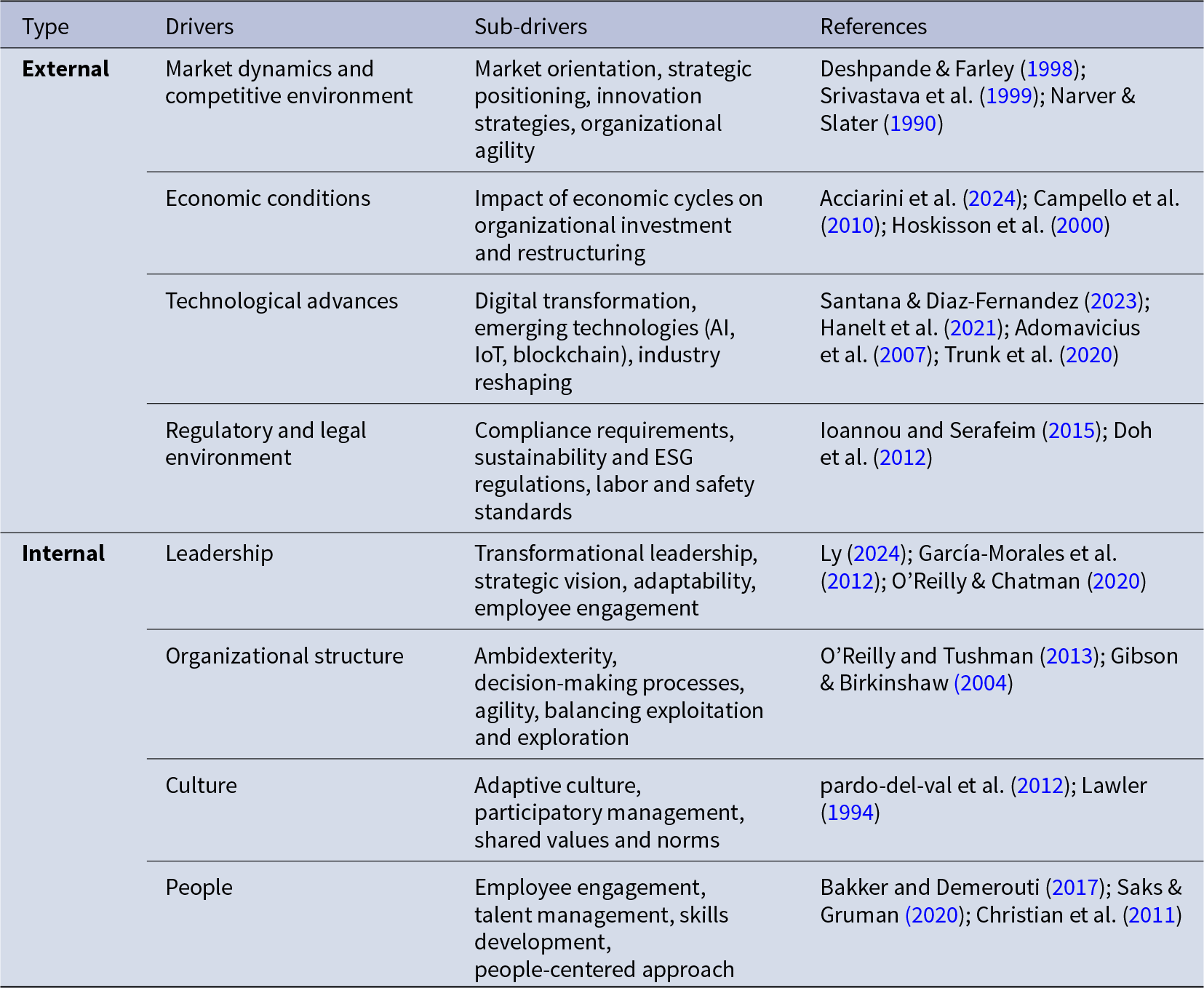
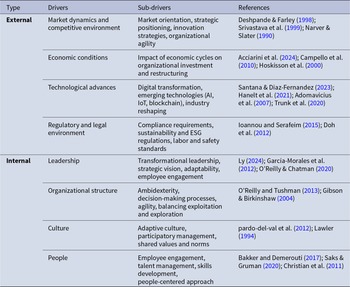
Table 1 outlines the main external and internal drivers of organisational change, as well as their respective sub-factors and dimensions, along with relevant references identified in the literature, which are not necessarily mentioned in our article. Drivers rarely act in isolation; their simultaneous and often conflicting pressures create inherent contradictions that organisations must actively navigate, leading to what paradox theory scholars define as persistent, interdependent tensions.
Internal and external drivers of change
Organisational change and paradoxical tensions
Organisations are complex systems (Riaz, Morgan & Kimberley, Reference Riaz, Morgan and Kimberley2024) that must deal with competing and interdependent forces in the constant pursuit of a delicate equilibrium. Pettigrew, Whittington and Thomas (Reference Pettigrew, Whittington and Thomas2001) concept of ‘continuous change’ describes this state as an ongoing and cumulative process of transformation, where organisations operate by continuously reconfiguring their processes and strategic imperatives. Balance is maintained by the intricate interplay between the drive for change and the potential resistance to it, which reflects the inherent complexity of decision-making (Smith & Lewis, Reference Smith and Lewis2011). This condition is often captured with the term ‘paradoxical tensions’, which refers to contradictory yet interrelated elements that coexist and challenge linear responses (Ivory & Brooks, Reference Ivory and Brooks2018; Lewis, Reference Lewis2000). These tensions emerge at the intersection of competing strategic imperatives, such as the need to foster economic growth while upholding rigorous environmental stewardship. Their paradoxical nature lies in the fact that these demands are not mutually exclusive but must be addressed simultaneously to enhance resilience and adaptability.
As organisations face uncertainty both in their external and internal environments, they operate in a state of constant inability to predict the likelihood of future events (Adobor, Darbi & Damoah, Reference Adobor, Darbi and Damoah2021). In this context, effective leadership is not only about responding to disruptions but also about managing the tensions that arise from the interplay between external pressures and internal capabilities (Al-Nuaimi, Singh, Ren, Budhwar & Vorobyev, Reference Al-Nuaimi, Singh, Ren, Budhwar and Vorobyev2022). For example, market dynamics and competitive pressures may push firms to aggressively expand and rapidly innovate (Jafari-Sadeghi, Garcia-Perez, Candelo & Couturier, Reference Jafari-Sadeghi, Garcia-Perez, Candelo and Couturier2021), yet their ability to scale efficiently is often constrained by internal factors, such as organisational structures and resource availability (Eisenhardt & Martin, Reference Eisenhardt and Martin2000). Similarly, economic downturns may require cost-cutting measures to preserve short-term profitability, but long-term success depends on sustaining a strong corporate culture and a leadership vision that prioritises investment in talent and innovation (Graham, Grennan, Harvey & Rajgopal, Reference Graham, Grennan, Harvey and Rajgopal2022; Wang, Li, Li & Wang, Reference Wang, Li, Li and Wang2021).
Furthermore, the digital transition intensifies the dynamics of imbalances, becoming a source of paradoxical tension and enhancing the impacts of internal and external change forces. The adoption of transformative technologies (e.g., AI and blockchain) creates both opportunities and uncertainty by reshaping infrastructures and strategic choices (Hanseth & Lyytinen, Reference Hanseth and Lyytinen2010; Wimelius, Mathiassen, Holmström & Keil, Reference Wimelius, Mathiassen, Holmström and Keil2021).
Moreover, technology-driven change introduces new paradoxes. External pressures from platforms and standards (Kretschmer, Leiponen, Schilling & Vasudeva, Reference Kretschmer, Leiponen, Schilling and Vasudeva2022; Uren & Edwards, Reference Uren and Edwards2023) often clash with internal agendas, cultures, and adoption timelines (Al-Emran & Griffy-Brown, Reference Al-Emran and Griffy-Brown2023). Failing to reconcile contradictions can lead to inertia and missed opportunities (Kelly & Amburgey, Reference Kelly and Amburgey1991). Hence, paradoxical tensions emerge from the continuous interaction between the internal and external forces that shape organisational transformation. Internal dynamics interact with external pressures, creating tensions that organisations must cope with. Understanding how these forces interrelate and generate paradoxes is crucial in analysing the complexity of transformation processes. These unresolved tensions demand more than structural solutions and dynamic capabilities that can engage with contradictions.
Although scholars have extensively investigated paradoxical tensions in organisational change, there is still limited knowledge regarding how companies actively manage and resolve these tensions, which arise from interconnected change drivers rather than separate forces. In this study, this gap is addressed by analysing how the combined impact of internal and external drivers of change creates opposing pressures, a phenomenon which calls for a more holistic approach.
Realising organisational change through strategic agility amid paradoxical tensions
Agile paradigms are necessary to anticipate shifts, reconfigure resources, and adapt strategic directions in real time (Weber & Tarba, Reference Weber and Tarba2014). The need for an agile approach stems from the rising influence of unpredictable external forces, such as technological disruptions, regulatory shifts and evolving consumer expectations – identified here as drivers of organisational change – which continuously challenge firms, undermining their ability to navigate complexity and transform paradoxical tensions into opportunities for growth. This makes strategic agility particularly relevant in contexts where different contradictory pressures must be addressed simultaneously.
In response to this evolving landscape, organisations must go beyond mere adaptability; they need strategic agility – the capacity to continuously realign strategic priorities to confront emerging challenges and opportunities. As a tool for managing organisational change, strategic agility provides a pragmatic and unified approach to handling conflicting market demands that create paradoxical tensions (Lewis et al, Reference Lewis, Andriopoulos and Smith2014). Strategic agility enables organisations to respond rapidly and coherently to complexity, and it has been empirically associated with enhanced organisational performance, particularly in volatile environments (Nguyen et al, Reference Nguyen, Le, Nguyen, Nguyen, Lien and Nguyen2024).
Researchers have defined strategic agility as a multidimensional construct. According to the most widely accepted perspective, strategic agility comprises three dimensions: strategic sensitivity, collective commitment, and resource fluidity (Doz & Kosonen, Reference Doz and Kosonen2008).
Strategic sensitivity refers to the capacity to perceive and comprehend market dynamics (Beer & Eisenstat, Reference Beer and Eisenstat2004). It requires a market-oriented approach aimed at creating superior customer value (Al-Zu’bi, Reference Al-Zu’bi2022), which involves seeking information, intelligence, and innovations to enhance market knowledge (Baker, Mukherjee & Perin, Reference Baker, Mukherjee and Perin2022).
From this perspective, strategic agility is deeply intertwined with both an organisation’s ability to navigate change and its capacity to implement informed strategic operations. Agile organisations excel in three key areas: informed sensemaking through broad market engagement; agile decision-making, which is grounded in both market insight and internal alignment; and rapid resource redeployment for timely strategic execution (Brueller, Carmeli & Drori, Reference Brueller, Carmeli and Drori2014). In this context, relationships and collaborations with external entities (e.g., universities, research institutions and start-ups) can further enhance business performance.
Collective commitment, the second dimension of strategic agility, entails the active and pervasive involvement of all the members of an organisation in achieving shared objectives. It fosters a decentralised and participatory decision-making process, which reinforces commitment towards shared objectives over individual ones. Effective decision-making hinges on teamwork, unified leadership and dedication to common aims (Doz & Kosonen, Reference Doz and Kosonen2008). Listening to ‘a polyphony of voices’ (Morton, Reference Morton2023) in strategic discussions is a key practice for monitoring signals of change in the external environment.
Finally, resource fluidity refers to the ability to mobilise and allocate resources flexibly, allowing timely reallocation to emerging priorities. Organisational mechanisms and policies must foster the agility required to seize opportunities arising from market changes (Doz & Kosonen, Reference Doz and Kosonen2008). By implementing the three dimensions identified by Doz and Kosonen (Reference Doz and Kosonen2008), organisations can effectively cultivate strategic agility (Doz, Reference Doz2020).
As the result of a continual balancing act between opposing forces (Lewis et al, Reference Lewis, Andriopoulos and Smith2014), strategic agility could be particularly relevant for organisations dealing with business environments dominated by paradoxes (Ivory & Brooks, Reference Ivory and Brooks2018). The key to achieving strategic agility lies in fostering a paradoxical thinking approach, in which tensions are not only identified but also explored alongside their contradictory elements (Clauss et al, Reference Clauss, Kraus, Kallinger, Bican, Brem and Kailer2021). By examining the connections between these elements, organisations can gain fresh insights into existing challenges and emerging opportunities.
While the dimensions of agility and its role in managing change have been examined, researchers have not fully investigated how organisations simultaneously balance conflicting internal and external drivers. There is also no comprehensive framework regarding the internal and external drivers of organisational change, the paradoxical tensions these drivers generate, and strategic agility as a result of such tensions. This framework could help organisations understand how they can manage transformations by balancing opposing forces while still growing.
Methodology
Given the objectives of this study, the in-depth case study approach (Siggelkow, Reference Siggelkow2007) was used to advance existing theory by observing transformation as it originates in an organisation and its many components. This approach represents a qualitative form of inquiry that explores an existing phenomenon in its real-life context and it is suitable for revealing certain characteristics to generate theory (Yin, Reference Yin2009). Focusing on a single organisation provided us with rich data, which enabled a deep understanding of the context where the transformation occurred (Eisenhardt, Reference Eisenhardt1989; Yin, Reference Yin2009). This approach has been used in previous studies of agility (Annosi & Lanzolla, Reference Annosi and Lanzolla2023; Heracleous et al., Reference Heracleous, Wawarta, Papachroni and Paroutis2023). Also, case analysis has proven effective in observing the internal transformation processes of organisations that have undergone radical changes (Plotnikova et al., Reference Plotnikova, Pandza and Whittington2024).
Case selection
To obtain reliable and generalisable results, purposeful sampling was used to choose an extreme case (Seawright & Gerring, Reference Seawright and Gerring2008), which allowed us to study in depth the path towards agility. The case is that of Autostrade per l’Italia (ASPI), a large company that builds and manages toll motorways and provides related mobility services. This case was considered peculiar because ASPI underwent a profound organisational transformation, which was communicated to its shareholders, after an extraordinary crisis – the collapse, in 2018, of the Morandi Bridge in Genoa, which was managed by the company. This transformation included the appointment of a new CEO, the replacement of all management lines and the reconfiguration of the firm’s organisational structure. ASPI also altered its governance and that of its subsidiaries. Moreover, the company belongs to the mobility sector, which is a target of sustainability transition initiatives in Europe and was affected by the travel restrictions caused by the Covid-19 pandemic. Another feature of the selected case is the firm’s level of digital maturity, which stood at 75% in 2023. From 2020 to 2023, the company tested over 300 digital projects and fully integrated digital technologies (e.g., digital twin models for its infrastructures, sensors, IoT technologies and AI) into its operational activities. ASPI’s high level of digital maturity is exceptional in the infrastructure sector, where digitalisation is low, and this is another element that makes the case extreme in the context of reference. The characteristics of ASPI’s transformation make it an extreme case and one that is particularly suited to studying the mechanisms of the path to strategic agility in organisations facing divergent forces. The extreme events in question acted together and were both firm specific (the collapse of the Morandi Bridge and the change in governance and the generational renewal) and external. In fact, the mobility sector was one of the most impacted industries during the Covid-19 pandemic due to travel restrictions. The sector is also particularly involved in digitalisation processes, with the development of intelligent mobility systems and the mobility as a service paradigm. Furthermore, it is fully involved in green transitions, particularly in the EU, where some of the measures of the European Green Deal and the Fit for 55 legislation, which aims to reduce greenhouse gas emissions by at least 55% by 2030, specifically target the mobility industry.
Case context
Founded in 1956, ASPI is an Italian company listed on the Italian stock exchange that employs over 9,000 individuals. It manages 3,000 km of toll motorways – about 50% of Italy’s road network and 4% of the motorways in the EU. In 2018, the Morandi Bridge in Genoa, a large infrastructure built in 1967 and under the management of the company, collapsed, killing 43 people and displacing over 600 local residents (Mattioli, Reference Mattioli2019). As a consequence, ASPI faced an organisational and reputational crisis that attracted media scrutiny and even led to demands to revoke its concession. In 2019, the CEO and all frontline managers were replaced. In 2021, a new governance structure was put in place, with three new investors (CDP Equity, Blackstone Infrastructure Partners and Macquarie Asset Management). In addition, the company’s eight subsidiaries, which specialise in distinct core activities, were fully integrated into ASPI’s corporate structure. The same year, a transformation plan was presented to shareholders, covering seven areas (values, safety, operational excellence, digitalisation, customer centricity, sustainable mobility, and valuing people). The plan included the objectives of modernising the company’s infrastructure and hiring 2,900 individuals. In 2024, ASPI achieved operating revenues of over €4.3billion and a net profit of €1,065 million.
Data gathering
Data were gathered from multiple sources, including online articles from the press and corporate web pages, as well as the company’s internal documents, which were triangulated to gain early insights into the transformation (Denzin, Reference Denzin2017). The latter were made available on the condition that anonymity would be guaranteed and that sensitive information would not be disclosed.
Interview process
The analysis of the documents made it possible to elaborate sensitising concepts (Charmaz & Thornberg, Reference Charmaz and Thornberg2021) with respect to the transformation, which guided the elaboration of the guiding questions for the subsequent interviews and the choice of managers. In-depth interviews were conducted with the top management of the company and its subsidiaries. The chosen managers were directly involved in the transformation process; therefore, they could provide important information about ASPI’s path based on their experiences (Marshall, Reference Marshall1996). This was done under the condition of anonymity and after guarantees were given that sensitive information would not be divulged.
The interviews took place between November 13 and December 12, 2023, at the Company’s headquarters. Two experienced researchers guided the interviews using a protocol based on unstructured questions. Before starting the interviews, the researchers explained the objectives of the study, interview process, transcription of the interviews with the Amberscript software and data analysis with the MAXQDA software. The interviews only went ahead after participants gave written permission for recording and transcribing. Each interview began with a general question about the company’s transformation journey. The interviewees were asked about their roles and years of experience at the company. They were also invited to reflect on the factors of transformation and their own roles in the transformation by recalling the challenges and resistance they had encountered, how they had overcome them, and the fears and uncertainties they had experienced. The participants were also asked to describe what they felt were the main drivers of change and discontinuity created by the transformation. Results were complemented with a focus group in presence that involved three HR managers to reach thematic saturation. The interviews and the focus group were aimed at reconstructing the managers’ experiences of the transformation through the activation of reflexivity (Mortari, Reference Mortari2015). This was done to recall the past, especially the causes of the change and its challenges, and reconstruct the path to organisational change.
During the interviews, the researchers tried to control potential bias that could arise as the interviews were conducted on the company’s premises. For this reason, a quiet room away from the participant’s workspace was chosen, and other managers were not allowed to enter during the interview, thus ensuring that the participant felt in a protected environment. Furthermore, the conversations took place in the native language of the participants to ensure that the experiences could be properly explained and to facilitate the exchanges between the interviewee and the interviewer (Cortazzi, Pilcher & Jin, Reference Cortazzi, Pilcher and Jin2011).
In compliance with ethical standards, the data were anonymised, and codes were used to protect privacy during the analysis and the presentation of the quotes. The researchers ensured that no participant could be identified (Howe & Moses, Reference Howe and Moses1999). Before the interviews, all the participants were reminded of the anonymisation procedures and the possibility of withdrawing from the study at any time.
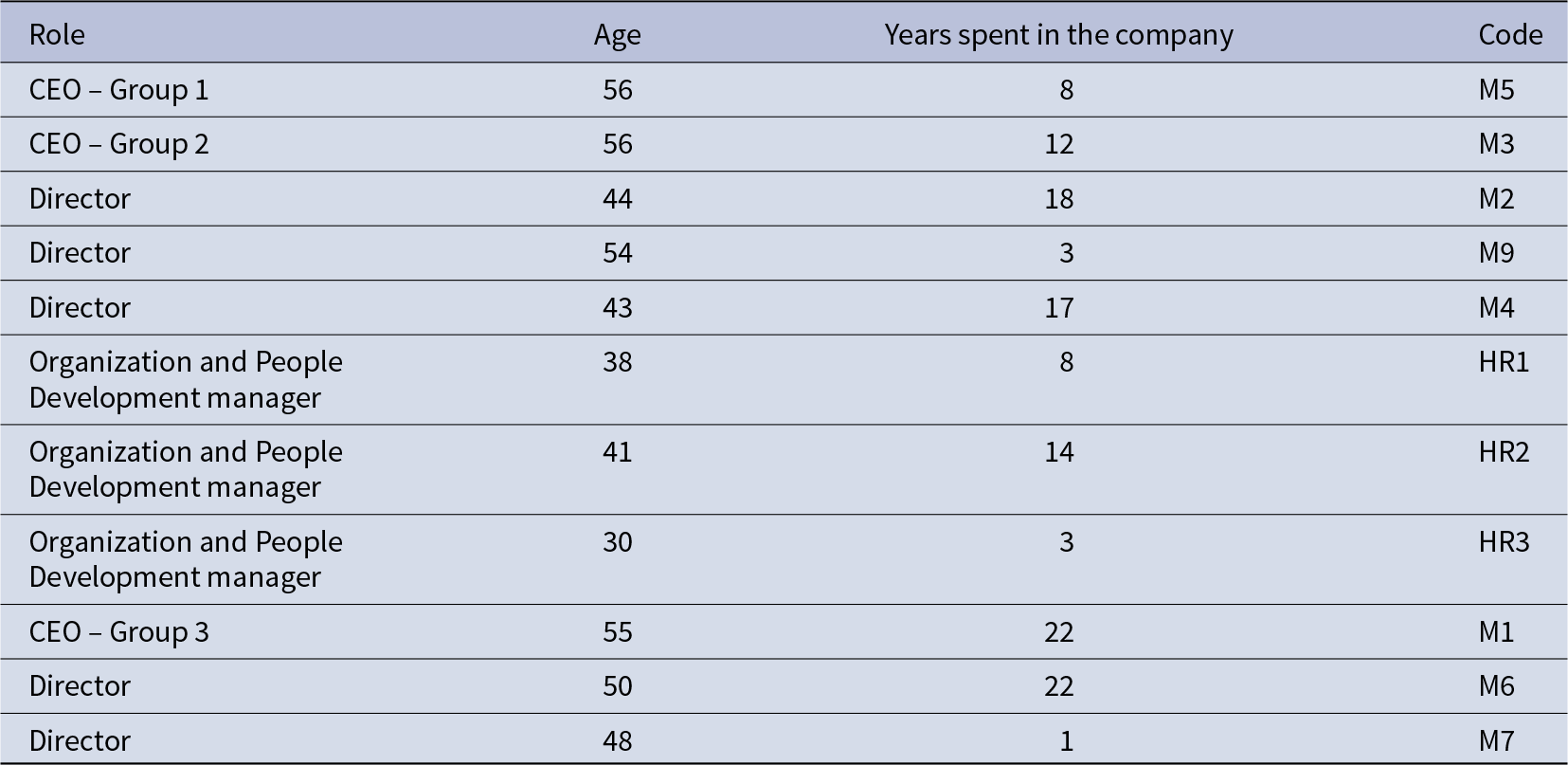
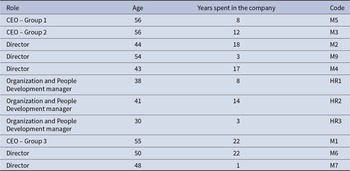
Eleven interviews were carried out. This number is consistent with the depth-to-case approach and the homogeneity of the target population (Boddy, Reference Boddy2016). Table 2 presents the characteristics of the respondents.
Characteristics of the respondents
Data analysis
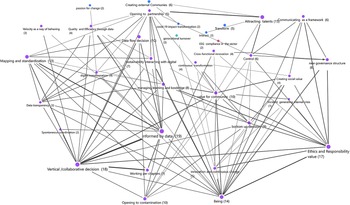
Given the exploratory nature of this study, the analysis was performed through a process of theory generation based on constructivist grounded theory (Charmaz, Reference Charmaz2006). The interview transcripts underwent systematic coding with MAXQDA to enhance the reliability of the coding structure (Vila-Henninger et al, Reference Vila-Henninger, Dupuy, Van Ingelgom, Caprioli, Teuber, Pennetreau and Le Gall2024). The code map in Fig. 1 visualises the relationships between codes based on their co-occurrence in the data structure. In the map, which was made with MAXQDA, each circle represents a code, the dimension of the circle refers to the number of occurrences while the colours identify clusters.
Code map.

Based on constructivist grounded theory, three coding cycles were carried out. In the initial, in vivo coding phase, the respondents’ thinking during the interviews was reconstructed. In the subsequent focused-coding phase, the most frequent and significant codes were found and grouped into relevant categories. Then, in the theoretical-coding phase, the categories and codes were analysed in detail to reveal emergent patterns and explanatory themes concerning the topic (Thornberg & Charmaz, Reference Thornberg and Charmaz2014). In line with the constructivist approach to theory building, the process of code generation was coupled with the continuous taking of memos to draw out the experiences of the interviewees and insert them into the theoretical results (Charmaz, Reference Charmaz2006). To enhance the trustworthiness of the analysis, the coding was done by two researchers working independently; when they finished, they met to reach an agreement on the final codes and make changes where necessary. Based on the constructivist approach, the findings are presented following the experiences of the participants.
Results
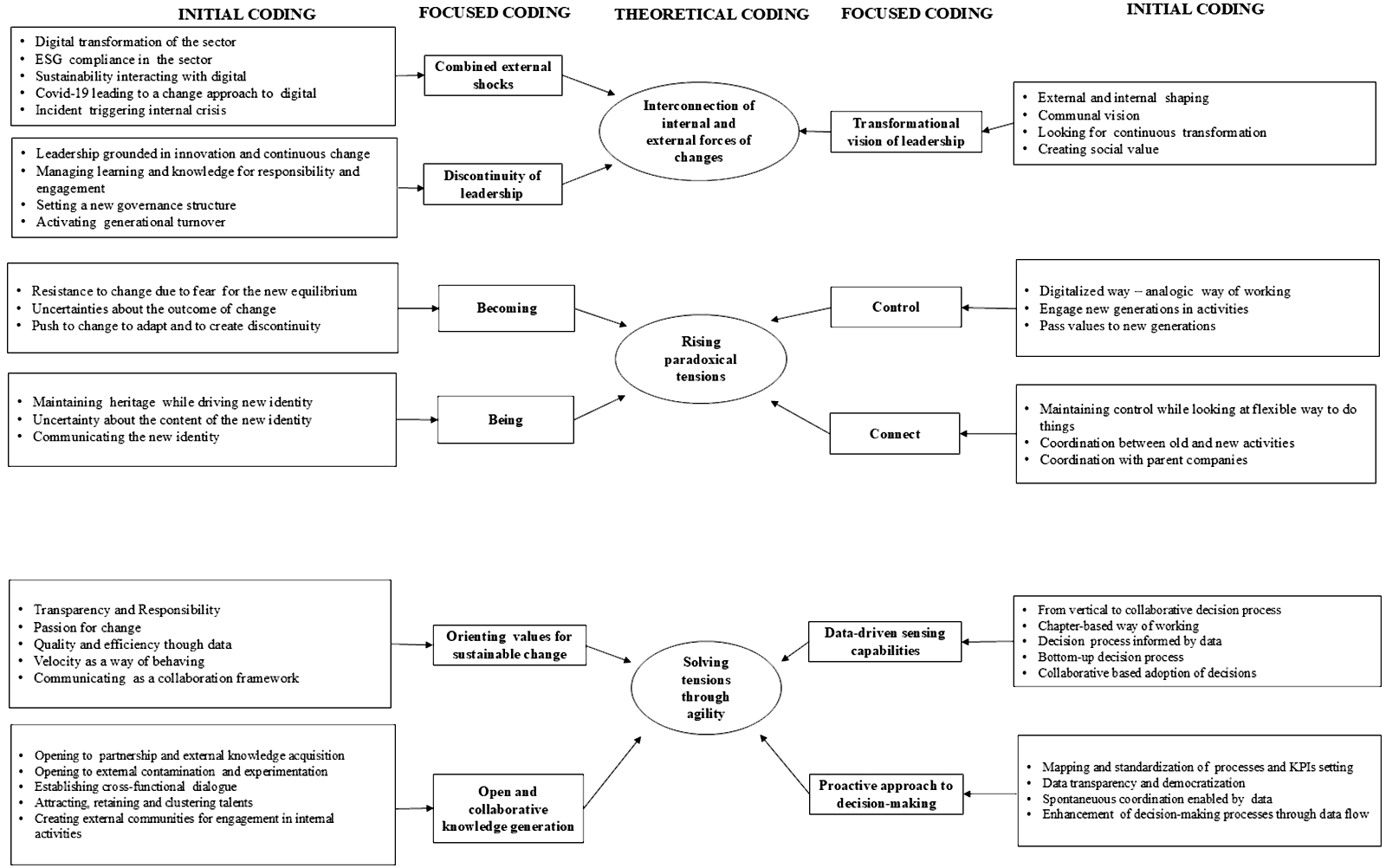
The data analysis, whose coding structure is shown in Fig. 2, revealed the interconnection between external and internal forces that caused organisational change as well as imbalances. These imbalances were addressed through the establishment of a new equilibrium based on practices that connected the internal and external environments and enabled strategic agility.
Code structure.
The interplay between internal and external change triggers
Internal dynamics and external pressures combined to create an environment of continuous change; this formed the basis from which tensions emerged and led the organisation towards the achievement of a new equilibrium through agility.
The external pressures were related to the macrotrends of digitalisation and sustainability. Digitalisation was a crucial factor of transformation, as it changed market dynamics and created new demands, such as autonomous driving vehicles and biofuels to reduce CO2 emissions. It also affected operational efficiency, created mechanisms of delegation and made speed, efficiency, and sustainability core values. In addition, it affected the company’s internal organisation by increasing staff through the inclusion of young professionals, which enhances generational differences. Moreover, the Covid-19 pandemic was recalled as an external force that accelerated the adoption of digital technologies in the organisation and the mobility sector more broadly. This occurred because the pandemic activated resilience capabilities by enforcing resistance to external shocks based on new internal communication structures. As one interviewee remarked,
Many changes were forced by Covid. The sector was put on hold by the restrictions on mobility, which pushed us to use digital tools and alternative ways of communication. Physical separation made it necessary to build an organisational system that enabled transparent communication even at a distance, and it triggered change towards flatter and more flexible structures. (HR1)
The external forces above were reinforced by specific events that acted as triggers of change. For example, the Morandi Bridge tragedy led to a crisis that sparked the creation of new organisational structures. As one manager pointed out,
The Morandi Bridge tragedy was the starting point. It was a disruption that initiated a long series of changes [reaching] up to today. Some solutions gradually made the transformation more evident with the need to revise for the company to survive. (M4)
This event represented an additional point of interconnection between the internal and external forces affecting ASPI, as it created what the managers referred to as an ‘organisational ground zero’; this entailed the appointment of new leadership and the restructuring of governance. The new leadership acted as the initiator of transformation, adopting a ‘transformational vision of the future’ and emphasising speed, transparency, and adaptation as guiding principles aligned with the external forces.
Rising paradoxical tensions
When internal and external factors combine, opposing forces can be generated that lead to a stall. The managers linked this situation to the emergent nature of change. The data analysis shows that in this case, the tensions stemmed from four paradoxes.
The first one was the paradox of ‘becoming’. This pertains to the transformational activity of a firm and its impact on the micro-dimension – the behaviours of individual employees – and it originates from the imbalance between the move towards a new organisational structure and the internal resistance caused by the employees’ fear of change. According to one of the ASPI managers, transformation towards a new vision generates fear for the unknown new equilibrium; at the same time, though, it activates resources, thus modelling a path towards change that creates discontinuity with the past. This new shaping is an emergent and non-deliberate phenomenon, which creates the challenge of maintaining change and transforming the extraordinary into the ordinary,
Many of these paths were not rationally pursued. They were followed out of passion, fear and uncertainty. It was not an ordinary transformation. (M5)
The second paradox regarded the ‘being’ of the company. This was linked to ASPI’s identity dimension. By accepting speed and continuous change as values, ASPI generated a conflict with its projection towards the future. This process involved new skills and professional profiles, which extended the boundaries of innovation, but it also brought to the fore the need to preserve the organisation’s identity as the basis of its know-how and distinctive competencies. These competencies included the engineering heritage that characterised the organisation’s history and from which innovation could originate. This led to what one interviewee called ‘identity destabilisation’. In this context, communication became crucial to convey the meaning of the change occurring,
We need to make the communication of change and of our new identity more visible. We will address this and carry it forward also through a communication campaign that will support the correct perception of the position we want to have. (M4)
The third paradox was that of ‘control’. This pertained to the balance that was created between flexibility of decision-making (to manage the digital and green transformations) and flat structures for continuous communication, such as those activated by ASPI through dialogue for values, tools for the permanent coordination of functions at all levels, and practices to adhere to the strict procedures demanded in the sector. The control paradox also involved the management of relations between different companies, each of which has ownership of a certain process, resulting in high coordination costs. However, this aspect was also linked to the peculiarity of the sector, which is based on physical assets such as infrastructures, where every action must be coordinated due to its nature.
The fourth paradox was the ‘connect’ paradox. This regarded the imbalances that arose from the encounter between physical and digital resources, as well as between different generations, and it involved people. Challenges occurred when remote and in the presence ways of working came into conflict due to the difference between isolated and communal work. As one manager noted,
Digital tools were introduced because of the pandemic, but today, we are struggling to return to face to face relationships, and we risk losing the company’s sense of community. When we go back to the office, we also go back to in-person meetings, which are more effective in many cases. So, the step back is the normalisation involved in returning to in-person meetings. Paradoxically, we need to take a step back to return to community life. (HR3)
Solving tensions through agility
According to the analysis of the data, strategic flexibility is a tool for managing the tensions that act simultaneously inside and outside an organisation. This lays the groundwork for the new balance that integrates the organisation’s inside with its outside. The constituent elements that represent the foundations of strategic agility in situations of paradoxical tension can be categorised as follows: (i) data-driven sensing capabilities, (ii) open and collaborative knowledge generation, (iii) dynamic decision-making, and (iv) orienting values for sustainable change.
Data-driven sensing capabilities
When there is strategic agility, data are used for transparent, real-time market monitoring and forecasting, as well as performance tracking. Data allow the real-time monitoring of processes within the organisation. On the outside, this can be achieved through the use of digital twin systems. As a result, a ‘data lake’ can be built. However, with strategic agility, data are no longer the prerogative of a single function or area; they are collectively owned and verified through internal, formal integration for the purpose of mutual decision-making (within ASPI, this was called ‘dialogue about corporate values and the committee structure’). Hence, data become a shared resource within the organisation. Furthermore, the words of the ASPI managers show that when data are made public, they are transformed into a commitment, which lessens managers’ burden of control by activating spontaneous and widespread checking within the company.
The great benefit of data availability is that operatives no longer have to be strictly controlled by managers. They see the progress and adapt to an almost spontaneous coordination process. I see the data, and I have to conform. This allows managers to think more about planning and innovation. (M5)
Open and collaborative knowledge generation
Openness is a generative element of strategic agility that acts both internally and externally. This structure makes it possible to create a continuously moving system based on osmosis with the outside world and collaborative knowledge creation. In the case of ASPI, the results show that at the internal level, knowledge generation stems from a continuous internal learning process, which boosts individual growth through the clustering of talent. This is achieved by means of an active approach that relies on mentoring, coaching, and what they called ‘shadow board’, which added personalisation and engagement to leadership-development interventions. Internally, skills are recognised as the lever to empower leadership, foster talent, and generate individuals’ ability to assume higher responsibilities. In the process of knowledge generation, links are created to strengthen information sharing thanks to cross-functional dialogue systems for discussion, liaison, information exchange, and problem-solving among top managers and between business and project lines. This increased the engagement of employees and enhances their relationships with the company. These relationships can take the form of institutionalised dialogue forums, such as so-called dialogues about company values. At ASPI, the inside is also connected to the outside through the creation of voluntary networks (the so called ‘Communities’) inside the company where employees can share their passions and work together cross-functionally to achieve impactful objectives in the community. These networks also show a commitment to the local area, adding significance to people’s actions and their alignment with the corporate vision, and as such increasing their engagement and creating links with the outer context to consolidate the group’s identity,
Based on the principle that if a person feels good inside, they feel good outside as well, we try to create integrated communities, which include local communities. (M9)
From the outside perspective, ASPI’s transformation toward strategic agility meant moving the frontier of knowledge outwards. This has been realised through the creation of connected structures for the continuous experimentation of new technologies – for example, by means of networks of alliances and collaborations with different players operating inside and outside the firm, including universities, suppliers, start-ups, and other enterprises. These collaborations are instrumental in ensuring research excellence through the creation of an active dialogue that can overcome the self-referentiality of innovation.
In addition, contact with the outside world is also achieved through the company’s branches, which act as arms that capture innovation. These branches create structures dedicated to the unceasing conception and field testing of innovations to verify their business applicability. Such an organizational structure allowed the firm to adopt widespread models of constant innovation that go beyond their core activities,
‘Integration’ is a keyword that guided many of our initiatives. In organisational terms, we have made great strides, with an expanded audience and better-quality exchanges. Resource training and engagement have seen significant progress, with partnerships that did not exist before. We are no longer a self-referential company but a group that actively engages with the outside world. (M2)
Dynamic decision-making
In ASPI’s journey towards strategic agility, the firm’s decision-making processes have been transformed, going from a top-down to a bottom-up logic. In this way, a more structured path of decision sharing – based on information, data and analysis – has been generated to help management make more responsible, informed and transparent decisions. In the company’s decision-making system, the principle of empowerment grounded in knowledge and skills now applies, which encourages employees at all levels to feel part of the decisions taken and be responsible for those yet to be taken, thanks to a sense of closeness to the managers. Alongside this sharing, a performance management structure has been created for the verification of the decisions taken. What this evidence shows is that the structuring of the decision-making process is data driven. This becomes the basis for processes of constant verification of the results of decisions made through data exchanges. In the organisational model based on agility, accountability is perceived as a value. This increased employees’ sense of involvement in expressing their opinions, as well as the mutual trust that strengthens their commitment to the organisation,
The flattening of structures has created the conditions to question oneself and be involved, even by suggesting one’s opinion, which was more difficult to do before. Broader and more in-depth training has contributed to creating a sense of security among those who may have felt less prepared to participate in the past. (M5)
This finding shows that in ASPI, the structuring of the decision-making process is data driven. This enables the company to constantly verify the results of the choices made through data exchanges, and it allows it to retain control over said choices while also promoting responsibility and freedom of decision,
Another process is the one in which workers are responsible for their decisions, and this empowers people. When this happens, the productive capacity, especially the generation of new ideas, is multiplied by one hundred. (M3)
These processes accelerated decision-making and fosters a transparent and smoother circulation of knowledge, which enriches the organisation and facilitates the innovation flow; in turn, this enhances flexible decision-making.
Orienting values for sustainable change
Orienting values are the enablers of strategic agility. They are involved in the setting of guiding principles and the culture of values. Regarding values, the interviewees mentioned the importance of viewing change as a value in itself. This was linked to quality, efficiency, individual responsibility, and ethical action. These factors create internal environmental conditions that increase an organisation’s capacity for dynamic adaptation. The results show that at ASPI, the transformation of values was accompanied by the reframing of the guiding principles of the organisation, which allowed for the creation of a new corporate culture based on continuous change. These guiding principles were in ASPI the following: velocity, transparent communication and digitalization of assets. These principles constitute the architecture that supports the new business culture based on dynamic exchange,
The company acts as a community, starting from the individuals who are its people. Employees participate as if the company were their own. They feel pride in acting in such a way and serving a community. (M5)
Discussion
This study investigated how organisations achieve strategic agility in the context of paradoxical tensions. Its results show that paradoxical tensions represent the end point of a process triggered by change drivers, which act simultaneously inside and outside the organisation, causing conflicting demands. Organisations constantly face divergent internal and external forces that drive change (Fredberg & Pregmark, Reference Fredberg and Pregmark2022). This generates paradoxical tensions that challenge their ability to maintain stability while undergoing transformation. Therefore, in an environment characterised by rapidly and constantly evolving complexity, strategic agility is essential for managing conflicting forces (Barlette & Baillette, Reference Barlette and Baillette2022).
Our findings show that organisational change towards agility arises not from isolated factors, but from the interplay of external and internal forces that jointly create the conditions for change to become a constant and lead to conflicting objectives.
As organisations attempt to adapt to these pressures, tensions crystallise into specific paradoxes that act simultaneously. The paradox of becoming regards how efforts to drive transformation inevitably clash with individual fears and resistance, turning change into an extraordinary and often emergent dynamic. The paradox of being reflects the struggle to innovate and adapt without undermining the foundations of organisational heritage and distinctiveness. The paradox of control pertains to the challenge of balancing decentralised decision-making and procedural flexibility with strict coordination requirements (especially in a regulated sector such as the one under analysis). Finally, the paradox of connect regards the tensions between digital and physical modes of working, as well as between the need for efficiency and the preservation of community ties.
In regards to our research question about how organisations achieve strategic agility in the context of paradoxical tensions, results show that agility is the outcome of a structured, multidimensional process that enables organisations to engage with these tensions without attempting to resolve them outright.
Amid paradoxical tensions, agility manifests as a multidimensional construct built around four key dimensions, which concern action on data management structures, proactive decision-making and openness to collaboration, open innovation models, and values oriented towards sustainable change. On ASPI’s path to agility, data structures played a critical role because they enabled increased sensitivity towards the outside environment and deep insights into market dynamics and external challenges; they also facilitated engagement with stakeholders (Ivory & Brooks, Reference Ivory and Brooks2018) and created the conditions for automatic adaptation to change. At the same time, the emphasis on the role of people and their active involvement in decision-making reinforced the organisation’s capacity to balance internal strengths with external pressures (Albrecht, Furlong & Leiter, Reference Albrecht, Furlong and Leiter2023; Hodges, Reference Hodges2018). This emphasis also strengthened ASPI’s ability to renew the process governing knowledge acquisition through talent attraction and active interaction with the innovation ecosystem.
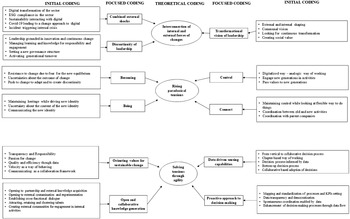
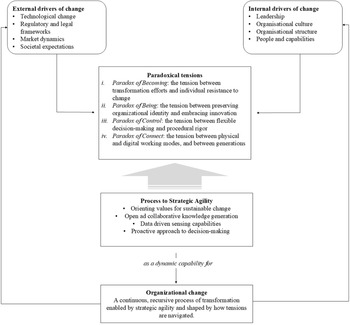
Based on our results, we created a model that synthesises the connections between the elements that are part of the analysed themes. In the framework (Fig. 3), the transformation towards agility in paradoxical tensions is explained by linking the external and internal drivers of change with the four paradoxes and the building blocks of strategic agility that are activated in response to such tensions, as well as the implications for organisational transformation.
Proposed dynamic model of organizational transformation through strategic agility.

According to our findings, strategic agility is a key dynamic capability that allows organisations to engage with, rather than resolve, contradictions. In doing so, it shapes how they respond to tensions, enabling continuous adaptation and resilience in complex environments. Each type of tension, along with the corresponding agility-driven adaptation, redefines the way organisations perceive and act upon drivers of change, thus reinforcing the dynamic and evolving nature of organisational life.
The model clearly shows the interconnectedness of internal and external forces in organisational transformations, capture the mechanisms that govern the creation of multidimensional paradoxes and the role of strategic agility as a dynamic capability to navigate such tensions. This capability is built around four core blocks, that are: (i) data-driven sensing capabilities, (ii) open and collaborative knowledge generation, (iii) proactive approach to decision-making, and (iv) orienting values for sustainable change.
Strategic agility in the context of paradoxical tensions enables firms to balance responsiveness and stability, thus fostering resilience, innovation and the capacity to seize emerging opportunities (Nguyen et al, Reference Nguyen, Le, Nguyen, Nguyen, Lien and Nguyen2024), and the four blocks function as a practical tool to build strategic agility amid paradoxes, offering further insights into both theory and practice regarding how organisations can sustain competitiveness amid volatility.
Conclusions and implications
In an environment dominated by interrelated external and internal forces generating paradoxical tensions, organisational transformation is not a linear process of overcoming contradictions; it is a continuous effort to deal with them through iterative cycles of detection, engagement with tensions and transformation in ways that sustain performance in complex scenarios. Organisations are called upon to move towards dynamic equilibria based on strategic agility, which can be reached by targeting individual decision-making processes, open knowledge and data management, and the framing of values and principles that support continuous change. Rather than trying to resolve tensions, companies must develop capabilities that enable them to navigate and exploit these contradictions in constructive ways. In this regard, this study offers a guide regarding how to overcome tensions.
This study has management and policy implications. It enables managers to understand how to deal with the complexity of the external environment and overcome the tensions that such complexity can bring to organisations. Based on our interpretive framework, managers should undertake internal journeys that involve decisions on fundamental dimensions to create links – inside and outside the organisation – regarding the management of information, innovation, and the structure of decision-making processes.
Furthermore, agile decision-making processes should go hand in hand with the empowerment of employees through the construction of organisational structures that recognise ownership, sharing, and the exchange of information. Doing so would facilitate communication and create hybrid places of dialogue and transparent, inter-functional exchange of data based on a linear logic within the organisation. It is also necessary for managers to adopt strategies that can amplify the meaning of the market approach, which should be understood as a frontier that should be constantly shifted based on an attitude inspired by continuous change and an open approach to innovation. In this context, managers should act as triggers of change and guide the organisational community in the transformational journey towards agility.
The study also has implications for policymakers. In settings dominated by multiple external shocks, institutions should play a proactive role in accompanying organisations’ transformation processes towards new, dynamic equilibria. This means prioritising the adoption of policies and regulatory instruments that facilitate the implementation of digital technologies and support the nurturing of talent, innovation capabilities, and accountable data management. It is also up to policymakers to create the conditions for the establishment of platforms that circulate knowledge between firms and research and innovation actors, thus laying the groundwork for the integration of organisations into innovation ecosystems.
Limitations and further research avenues
This study has some limitations. It is based on a single case of a large organisation in the EU mobility sector. This means that the relevance of the model proposed here might be limited to large organisations; in small and medium-sized enterprises, the creation of strategic agility might follow other paths. For this reason, further studies should be conducted in organisations of different sizes, located in other geographical areas and belonging to different industries. Comparative analyses should also be carried out.
Acknowledgments
We wish to thank all the Autostrade per l’Italia managers who took part in the interviews, giving us their time and sharing their experiences and knowledge with us. Their contributions were invaluable in shaping the contents of this study.
Funding statement
This research received no funds from public, private, or nonprofit organizations.
Conflict of interest
None declared.

 Open access

