


EIP: a change in psychosis care
There is substantial worldwide evidence of the social effect of psychosis. Having a psychotic disorder is associated with a myriad of social determinants, such as poverty, unemployment, income inequality, immigration, incarceration and homelessness, among others.Reference Morgan, McKenzie and Fearon1 Recent evidence suggests that some of these factors might have a causal role in the onset of psychosis, resulting in a vicious circle between social disadvantage and mental illness.Reference Radua, Ramella-Cravaro, Ioannidis, Reichenberg, Phiphopthatsanee and Amir2, Reference Lund, De Silva, Plagerson, Cooper, Chisholm and Das3 Furthermore, some studies have shown a clear gap in treatment access for people with psychosis, in both high- and low- and middle-income countries.Reference Demyttenaere, Bruffaerts, Posada-Villa, Gasquet, Kovess and Lepine4
This situation seemed to change in the early 1990s with a service transformation intended to improve the care of people with psychosis by explicitly intervening in the early stages of the illness.Reference McGorry and Edwards5 The early intervention in psychosis (EIP) movement gained academic and political support and is now probably one of the most disseminated models of care among high-income countries, with several less-resourced regions also starting similar programmes.Reference Correll, Galling, Pawar, Krivko, Bonetto and Ruggeri6–Reference Rangaswamy, Mangala, Mohan, Josep and John9
Nevertheless, such implementation has been far from uncontroversial, with much discussion regarding the evidence base for this approach. Proponents and detractors have generated a considerable amount of research and comments on the topic, challenging the supposed consensus reached at the beginning of the century.Reference Bertolote and McGorry10
EIP: the economic case
One aspect that has been subject of attention from the beginning of EIP service implementation is the economic implications of the approach. For instance, despite initial positive results of economic evaluations,Reference Mihalopoulos, McGorry and Carter11 in 2012 a systematic review concluded that ‘the published literature does not support the contention that EIP reduces costs or achieves cost-effectiveness’.Reference Amos12
Nevertheless, the conclusions of this review should be taken with caution, given that the author based some of his arguments on differences in the case-loads between EIP services and ‘generic’ mental health teams, as well as on the financial costs attributable to hospitalisation. However, cost-effectiveness studies use unit costs in the analysis and its focus is on the opportunity cost more than the financial cost. Thus, a new technology might be more expensive and still be cost-effective.Reference Drummond, Sculpher, Claxton, Stoddart and Torrance13
Furthermore, given the uncertainty associated with any decision, the question about cost-effectiveness is not a black-or-white alternative, but a probabilistic one.Reference Drummond, Sculpher, Claxton, Stoddart and Torrance13. Therefore, a thorough economic evaluation should include methods to handle decision uncertainty, such as sensitivity analyses or simulation methods (e.g. bootstrapping and cost-effectiveness acceptability curves; CEACs).Reference Drummond, Sculpher, Claxton, Stoddart and Torrance13, Reference Fenwick and Byford14 Finally, judgement about the cost-effectiveness of any health technology relies heavily on the characteristics of the health system, and so conclusions should always be contextualised.
Since the last review, new economic evaluations have been published from different countries, and so we aim to systematically review the international evidence on cost-effectiveness of EIP services.
Method
A systematic review of the literature, following the Preferred Reporting Items for Systematic reviews and Meta-Analyses (PRISMA) guidelines,Reference Moher, Liberati, Tetzlaff, Altman and The15 was conducted to identify economic evaluations of EIP services. A protocol was developed before searching electronic databases and was registered on PROSPERO (identifier CRD42017080796).
Eligibility criteria
Inclusion and exclusion criteria are outlined in Table 1. Briefly, the review included all the studies that analyse EIP against an alternative approach and that report costs and outcomes, regardless of the particular type of economic evaluation (trial-based or modelling). No limits were applied to language and publication date.
Eligibility criteria
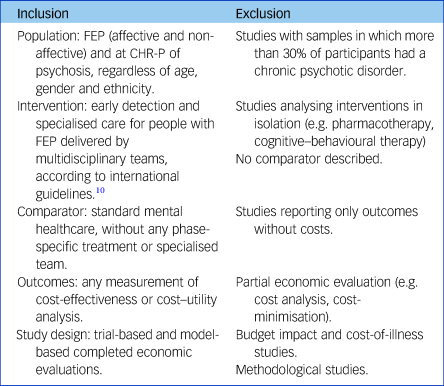
FEP, first-episode psychosis; CHR-P, Clinical High Risk for Psychosis.
Electronic searches
An electronic search was done in the following databases: the Cochrane library, Medline, PsycInfo, EMBASE, EconLit and National Health Service Economic Evaluation Database (NHS EED) of University of York. The search strategy included terms such as ‘psychosis’ or ‘ultra-high risk’ and ‘cost-analysis’ or ‘economic evaluation’.
A complete search strategy list is provided in the Supplementary material available at https://doi.org/10.1192/bjp.2018.298. Furthermore, the search also included cross-referencing and conferences proceedings from the International Early Psychosis Association. Finally, authors were contacted for incomplete data or doubts regarding the publication.
Study selection
Two authors (D.A. and N.V.) independently screened titles and abstracts from unduplicated references according to eligibility criteria. When a decision was not possible from reading the abstract, the full text was reviewed and again contrasted with inclusion and exclusion criteria. Disagreements were resolved by discussion with a third author (P.M.).
Data collection and risk of bias assessment
Data were collected using an extraction form developed to retrieve relevant information. This included general information of the study and key methodological characteristics (study design, setting, type of economic evaluation, perspective, analytical approach, time horizon, discounting, source of data for costs and effects, outcome measures, cost data, year of costing and results with uncertainty analysis).
The methodological quality of the economic evaluations conducted alongside clinical trials was assessed by the Consensus Health Economic Criteria (CHEC) listReference Higgins and Green16 and the Cochrane Risk of Bias tool.Reference Evers, Goossens, de Vet, van Tulder and Ament17 In the case of model-based studies, the questionnaire designed by the International Society for Pharmacoeconomics and Outcomes Research, Academy of Managed Care Pharmacy and National Pharmaceutical Council (ISPOR-AMPC-NPC) Good Practice Task Force was chosen to evaluate methodological quality of included models.Reference Jaime Caro, Eddy, Kan, Kaltz, Patel and Eldessouki18
Synthesis of results
Studies were not pooled for two reasons: (a) evident heterogeneity in the characteristics in terms of different countries, populations and methodologies to measure costs and outcomes; and (b) because a pooled estimate is difficult to interpret given the importance of local context in health technology assessment.Reference Anderson19 Therefore, a narrative synthesis of key results for first-episode psychosis (FEP) and Clinical High Risk for Psychosis (CHR-P)Reference Fusar-Poli20 populations is presented.
Results
Study selection
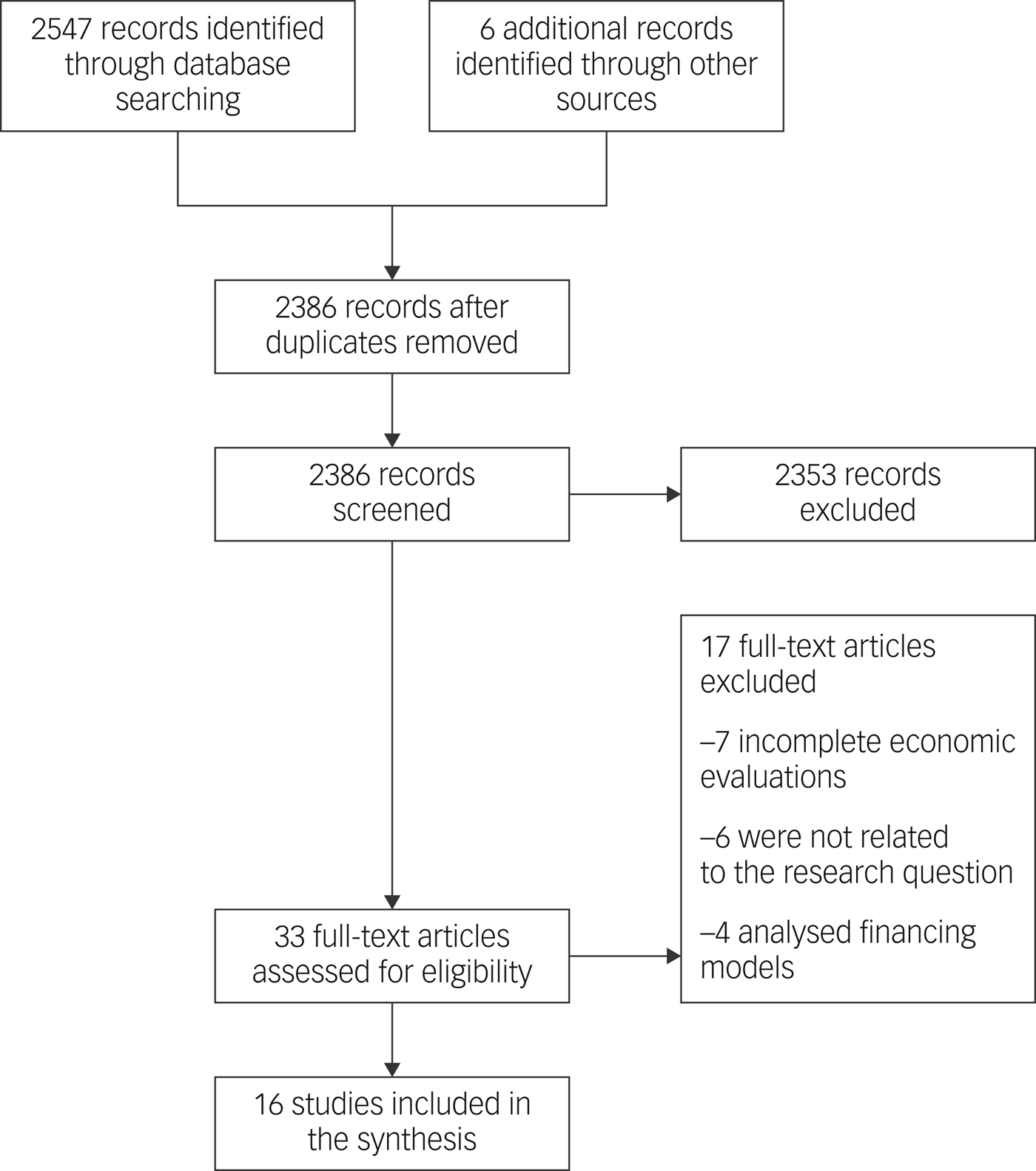
A total of 6860 unduplicated studies were retrieved from the database search, hand-searched and cross-referenced. After reading titles and abstracts, 33 full texts were analysed and inclusion and exclusion criteria applied. From these, seven were excluded because they were incomplete economic evaluations (cost analysis and cost-minimisation analysis), six were discarded because they were not addressing the research question and four were discarded because the focus was on financing models of EIP services. The remaining 16 studies were included in the qualitative analysis of the review. A flow diagram of this process, according to PRISMA guidelines is presented in Fig. 1.
Preferred Reporting Items for Systematic reviews and Meta-Analyses flowchart.
Study characteristics
The main characteristics of the included studies are listed in Table 2. Most of the studies (n = 14) were trial-based economic evaluations, assessing the cost-effectiveness of EIP services compared with standard care. A minority of studies (n = 4) also included a cost–utility analysis, reporting quality-adjusted life-years (QALYs) as a measure of outcome. Six of the economic evaluations were based on randomised controlled trials (RCT), whereas the rest used non-RCT designs, such as pre–post designs and matched case–control designs.
Main characteristics of included studies

RCT, randomised controlled trial; N/A, non-applicable.
a. Studies that adopted societal perspective also included healthcare system perspective.
All the studies adopted a healthcare system perspective in the analysis, but almost half (44%) also included a broader perspective, mainly by adding productivity losses. A few studies included costs falling for social careReference Tsiachristas, Thomas, Leal and Lennox21–Reference Perez, Jin, Russo, Stochl, Painter and Shelley23 and the criminal system.Reference McCrone, Craig, Power and Garety24
Results of individual studies
Early intervention for FEP
A total of 12 studies from 11 trials (n = 6597) reported an economic evaluation of EIP services, comparing them with standard careReference Hastrup, Kronborg, Bertelsen, Jeppesen, Jorgensen and Petersen22, Reference McCrone, Craig, Power and Garety24–Reference Cocchi, Mapelli, Meneghelli and Preti27 or with a historical control group.Reference Mihalopoulos, McGorry and Carter11, Reference Cullberg, Mattsson, Levander, Holmqvist, Tomsmark and Elingfors28–Reference Behan, Cullinan, Kennelly, Turner, Owens and Lau31 Furthermore, one model-based study was identified.Reference Park, McCrone and Knapp32 Although a previous modelling study has been published,Reference McCrone, Knapp and Dhanasiri33 this was excluded because it adopted a cost-minimisation approach.
In general, EIP services were very similar between studies, consisting of specialised multidisciplinary teams in a catchment area, and offering low doses of medication and psychosocial interventions. Psychosocial interventions included cognitive–behavioural therapy for psychosis, family therapy and vocational rehabilitation. Furthermore, some programmesReference Mihalopoulos, McGorry and Carter11, Reference Tsiachristas, Thomas, Leal and Lennox21, Reference Hastrup, Kronborg, Bertelsen, Jeppesen, Jorgensen and Petersen22, Reference McCrone, Craig, Power and Garety24 were explicit in their adherence to assertive community treatment principles to safeguard continuity of care.
Participants were aged between 14 and 65 years and all the studies except oneReference Zhang, Zhai, Wei, Qi, Guo and Zhao25 included affective psychotic disorders in their samples. The outcomes were highly heterogeneous among the studies, including measures of symptoms, social functioning, suicide attempts, substance misuse, employment, housing status and quality of life.
Information regarding service utilisation was available in 7 out of 16 studies. Authors measured this variable using different methodologies and at different follow-up points. However, a certain pattern of resource use was observable, in which EIP services were mostly associated with a reduction in in-patient utilisation (e.g. days in hospital), but with increased contacts with psychiatrists, psychologists and nurses.
Cost estimates from all but two studies were lower in the EIP group. However, only half of the studies reported a measure of precision, which limits the analysis of cost uncertainty. The presentation of cost results was dissimilar between the studies, showing total costs of the programme, cost per patient, monthly costs and costs at various follow-up periods.
Table 3 shows a summary of the cost-effectiveness results and methods to deal with uncertainty of estimates. Most of the studies (n = 8) included an incremental analysis of costs and outcomes, and 9 out of 12 used methods to handle the uncertainty of estimates. Cocchi et al Reference Cocchi, Mapelli, Meneghelli and Preti27 and Zhang et al Reference Zhang, Zhai, Wei, Qi, Guo and Zhao25 presented an incremental cost-effectiveness ratio (ICER) as a measure of cost-effectiveness. In the former, the EIP service achieved a net saving of €1204 per unit reduction on the Health of the Nation Outcome Scale.Reference Cocchi, Mapelli, Meneghelli and Preti27 In the latter, the intervention resulted in an ICER of US$1819.4 per QALY gained.Reference Zhang, Zhai, Wei, Qi, Guo and Zhao25
Main cost-effectiveness results
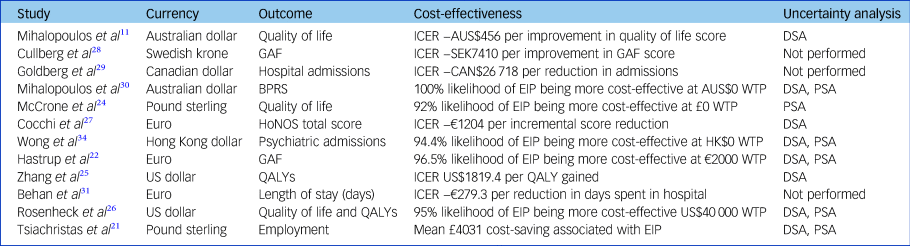
ICER, incremental cost-effectiveness ratio (negative results imply cost-savings); DSA, deterministic sensitivity analysis; GAF, global assessment of functioning; BPRS, Brief Psychiatric Rating Scale; EIP, early intervention in psychosis; WTP, willingness to pay; PSA, probabilistic sensitivity analysis; HoNOS, Health of the Nation Outcome Scale; QALYs, quality-adjusted life-years.
Mihalopoulos et al Reference Mihalopoulos, McGorry and Carter11 considered the Early Psychosis Prevention & Intervention Centre (EPPIC) to be ‘dominant’ (i.e. cost-saving and outcome-improving) over the ‘pre-EPPIC’ group, and so an incremental analysis was not necessary. Nevertheless, in the long-term follow-up, a bootstrapping analysis with 1000 iterations was performed, resulting in almost 100% of the iterations from the EPPIC group remaining the less costly alternative.
McCrone et al Reference McCrone, Craig, Power and Garety24 used the net-benefit approach to derive CEACs at different values of willingness-to-pay (WTP) for a unit improvement in outcome. In this study, EIP services had a 76% probability of being the most cost-effective alternative if the society is willing to pay £0 per vocational recovery. This likelihood was 92% when the outcome considered was a unit improvement in a quality-of-life score, at the same zero WTP.Reference McCrone, Craig, Power and Garety24
Finally, Wong et al,Reference Wong, Chan, Lam, Hui, Hung and Tay34 Hastrup et al Reference Hastrup, Kronborg, Bertelsen, Jeppesen, Jorgensen and Petersen22 and Rosenheck et al Reference Rosenheck, Leslie, Sint, Lin, Robinson and Schooler26 presented ICERs, cost-effectiveness planes and CEACs to describe cost-effectiveness. The authors were consistent in showing results favourable to EIP. It is also noteworthy that in the case of the Recovery After an Initial Schizophrenia Episode study, the net-benefit analysis showed a 94% likelihood of EIP being the most cost-effective option at US$40 000 per standard-unit increment in the quality-of-life scale.Reference Rosenheck, Leslie, Sint, Lin, Robinson and Schooler26 When the analysis was performed considering QALY, the probability of being cost-effective remained high (90%), but at a WTP of US$210 000 per QALY, which is higher the cost-effectiveness threshold of many countries.Reference Rosenheck, Leslie, Sint, Lin, Robinson and Schooler26
In all of the studies that used one-way sensitivity analyses, the results were robust to changes made by the authors. However, parameters selected were heterogeneous and rather arbitrary. For instance, Mihalopoulos et al Reference Mihalopoulos, McGorry and Carter11 changed the cost of the programme by 50%, whereas Zhang et al Reference Zhang, Zhai, Wei, Qi, Guo and Zhao25 changed the clinical effects and costs by ±20% and Wong et al Reference Wong, Chan, Lam, Hui, Hung and Tay34 used a 15% difference in costs. Rosenheck et al Reference Rosenheck, Leslie, Sint, Lin, Robinson and Schooler26 conducted a subgroup analysis based on the duration of untreated psychosis (DUP). This revealed an ICER of US$7245 per QALY among low-DUP participants and US$289 149 per QALY among high-DUP participants.Reference Rosenheck, Leslie, Sint, Lin, Robinson and Schooler26 Finally, Tsiachristas et al performed scenario analyses where EIP services remained as cost-saving alternatives, changing from a conservative scenario of £36.6 million annually to an optimistic scenario of £68 million per year.Reference Tsiachristas, Thomas, Leal and Lennox21
Early intervention for the CHR-P population
Two publications from a single trial were included in the review.Reference Ising, Smit, Veling, Rietdijk, Dragt and Klaassen35, Reference Ising, Lokkerbol, Rietdijk, Dragt, Klaassen and Kraan36 Although a previous economic evaluation based on an RCT had been published, this was excluded because it adopted a cost-minimisation analysis.Reference Phillips, Cotton, Mihalopoulos, Shih, Yung and Carter37
The included trial was a cluster RCT of 196 people with CHR-P, comparing the addition of cognitive–behavioural therapy to routine care against routine care alone in four treatment centres in the Netherlands. The primary and secondary outcomes were transition to psychosis and health-related quality of life, respectively. As a result, a cost-effectiveness and a cost–utility analysis were performed. The results at 1.5-year follow-up showed that the intervention led to a statistically significant difference in transition to psychosis (risk difference, 0.133; P = 0.004) and a non-significant difference of 0.03 QALYs.
The incremental analysis demonstrated that the intervention was also cost-saving (by US$844). Uncertainty analyses revealed that there was a 63.7% likelihood of lower costs and lower transition to psychosis as a result of the intervention. Similar analyses revealed a 52.3% likelihood of lower costs and more QALYs.Reference Ising, Smit, Veling, Rietdijk, Dragt and Klaassen35
The 4-year follow-up,Reference Ising, Lokkerbol, Rietdijk, Dragt, Klaassen and Kraan36 using data from 113 patients (43.3% of attrition), continued to show reduced transition to psychosis (risk difference, 0.122; P < 0.001) and more QALYs (difference, 0.164; P = 0.28) in the intervention group. The economic evaluation thus continued favouring the intervention over the long term, with results being robust to different sensitivity analyses.
A decision-analytic model that analysed the cost-effectiveness of different interventions to detect and refer people with CHR-P from primary healthcare to EIP services was also included in the review. The results showed that the high-intensity intervention was associated with better outcomes (CHR-P cases, correctly identified and referred) and lower costs. The CEAC demonstrated that the high-intensity intervention had a 68% likelihood of being the most cost-effective option at a WTP of £10 000 per correctly identified case of CHR-P. This likelihood increases to 77% when the WTP rises to £20 000.Reference Perez, Jin, Russo, Stochl, Painter and Shelley23
Risk of bias within and across the studies
The risk of bias of the included clinical trials, according to the Cochrane risk of bias tool,Reference Evers, Goossens, de Vet, van Tulder and Ament17 was rather mixed. Most of the unmet criteria were those related with selection bias and blinding, primary because of the study design of some trials. Although none of the studies blinded the participants, this was understandable, given the nature of the interventions. However, investigator and analyst masking was unclear by more than half of the studies. Regarding the methodological quality of the economic evaluations, the results of the CHEC checklist show that nearly 60% of the studies met most of the quality criteria (≥16 out of 19), although 21% of the studies did not meet half of the quality criteria. One of the main limitations was the perspective selected, where only 43.7% of the studies included data outside the healthcare system. Likewise, incremental analyses and discounting were applied by about half of the studies.
The two model-based studies included in this systematic review were conducted in the UK and were built in a formal and transparent way, using published data and expert opinion. Uncertainty was addressed and the assumptions made seem plausible, considering the natural history of the disease, as well as the evidence about EIP services. In the case of Perez et al Reference Perez, Jin, Russo, Stochl, Painter and Shelley23, however, the assumption about the costs of treatment-as-usual should be revised, given that is unlikely to be zero. Likewise, the structural assumptions required for decision-tree models can be a limitation because they do not easily allow long-term effects to be addressed, particularly with psychotic conditions with a high likelihood of relapse. Despite these caveats, the modelling studies included represent good-quality and valuable information to help assess the cost-effectiveness of EIP programmes.
For a more comprehensive picture, a detailed list of the risk of bias tool and the CHEC checklist is provided in Supplementary material D1 and D2, respectively.
Discussion
The present systematic review has shown that EIP might be a cost-effective technology to implement into mental health systems, compared with standard of care. Investing in EIP could, as the best-case scenario, save money, and is at least a more cost-effective alternative than treatment as usual.
These results are consistent among different health systems and they have been replicated alongside clinical trials, as well as in model-based economic evaluations. Regardless of this consistency in the evidence, some caveats should be acknowledged. First, the certainty of such evidence is moderate because the risk of bias in some studies is high, and more rigorous trials have failed to demonstrate clinical or functional differences with standard care, diminishing the size of clinical and economic advantages.
Second, the methodological quality of economic evaluations was mixed, with some studies incorporating most of the rigorous methods recommended, and others showing just direct results that were impossible to track from the reported methodology. Whether this is a methodological or reporting problem is difficult to say. Authors were contacted to complete data, but it was not possible to get access to all of the information.
Third, most of the economic evaluations in this review have not included the whole picture of the economic effect of psychosis. For instance, none of the studies measured out-of-the-pocket expenses or carer costs, which have been recognised as a significant problem in cost-of-illness studies.Reference Chong, Teoh, Wu, Kotirum, Chiou and Chaiyakunapruk38 Likewise, only 5 out of 16 of the analysed studies included costs from a wide perspective, considering the effect of psychosis on the social care or the justice system.
Fourth, although all the studies used ‘standard of care’ or ‘treatment as usual’ as their control arm, the definition and details of such type of services were not always clearly stated, which makes comparisons between health systems problematic. In fact, the heterogeneity of studies impeded a meta-analysis of results.
Finally, it is important to acknowledge that many of the studies were conducted by advocates of EIP services. This does not necessarily mean that the results of the studies were influenced by vested interests, but it might add potential bias. It is known that the benefits of interventions might be overstated by proponents or developers, especially in the early phases of research.Reference Ioannidis39
Notwithstanding these limitations, the results presented here are not concordant with those exposed by Amos in a previous systematic review.Reference Amos12 Although a critical analysis to this research is justified, given the methodological flaws already highlighted, the results show a consistent direction toward the economic benefits of EIP services.
Implications for mental health policy
From the perspective of the health systems, the results of this systematic review suggest that EIP has been an adequate policy. This is an important conclusion, considering the budget constraints and critics to EIP services since its implementation.Reference Pelosi and Birchwood40 It is still necessary, however, to elucidate which aspects of the EIP approach are more relevant. In other words, what are the ‘active ingredients’ (reducing DUP, multidisciplinary teams, an assertive community treatment approach or other) that explain better outcomes, to focus the policy and make it even more efficient and sustainable.
Nevertheless, these implications might change when low- and middle-income countries are considered. Most of the studies in this review have been conducted in high-income countries, and the applicability of this research to low- and middle-income countries should be taken with caution. This aspect is crucial, considering the academic and political success that EIP have gained in influential countries such as the UK, Scandinavia, Australia and USA. Indeed, probably based on such experiences, several EIP initiatives have been implemented in less-resourced settings.Reference Brietzke, Araripe Neto, Dias, Mansur and Bressan8, Reference Rangaswamy, Mangala, Mohan, Josep and John9 This opens a debate about whether health initiatives, although effective and even cost-effective, should be implemented in settings where more basic services are lacking. There is no straightforward answer for this, but a different approach may be needed,Reference Farooq41 one in which the reality of mental health systems converges with good-quality evidence and people's needs.
Implications for research
Despite the considerable amount of research published on EIP, there is still room to improve the methodological rigour, to replicate findings in independent samples and monitor real-world implementation. Also, it is necessary to include measurements that people value more, such as social recovery, quality of life and carers’ needs, and indicators relevant to health systems and policy makers, such as budget impact analyses and equity measurements. This systematic review has shown that these topics are starting to be incorporating in the EIP research agenda, but certainly there is a need of more and better-quality research.
Strengths and limitations
This review has several strengths. First, a comprehensive and reproducible search was performed. No restrictions were applied and the electronic search was complemented with hand-searching, cross-referencing and searching in conference publications of relevant societies. Furthermore, the use of PRISMA guidelines adds transparency, rigour and completeness to the research. Also, all the studies were subject to a quality assessment with consolidated tools. This reduces, although does not eliminate, the subjectivity in the critical appraisal of individual studies.
However, this systematic review has several limitations. For instance, despite the comprehensiveness of the searching, unpublished or local economic evaluations could be missed. Furthermore, given the high heterogeneity of the studies, a meta-analysis was not possible. Finally, as was discussed, this systematic review only included studies conducted in high-income countries, which reduces its generalisability to settings with fewer resources.
In conclusion, the evidence supports that investment in EIP services might be a cost-effective alternative for those countries where they have been implemented. The quality of the overall evidence is moderate, although consistent across different settings. However, the effect of EIP services on health disparities as well as the transferability of these results to low- and middle-income countries remains unknown. Thus, more research is needed to elucidate how and which aspects of EIP services could be adopted by mental health systems, to improve system efficiency and sustainability, and equally importantly, to increase the quality of life of people with psychotic disorders.
Supplementary material
Supplementary material is available online at https://doi.org/10.1192/bjp.2018.298.





eLetters
No eLetters have been published for this article.