




Introduction
Over the past few decades, a plethora of studies have been conducted on the acquisition of written Chinese (for a review, see McBride, Reference McBride2016). This surge in research interest can be attributed to the unique characteristics of the Chinese writing system compared to the more extensively studied alphabetic writing systems in terms of visual configuration and the encoding of sounds and meanings. The unique attributes of the Chinese writing system, combined with a cross-linguistic perspective, facilitate a thorough investigation into the parallels and distinctions in reading processes among diverse writing systems, ultimately contributing to our understanding of reading development and literacy acquisition in a broader context.
Earlier research on reading in Chinese has predominantly focused on the processing and acquisition of characters that vary in visual complexity or radical presence (e.g., Feldman & Siok, Reference Feldman and Siok1999; Perfetti & Tan, Reference Perfetti and Tan1998; Shu & Anderson, Reference Shu and Anderson1997; Zhou et al., Reference Zhou, Marslen-Wilson, Taft and Shu1999). More recent studies have shifted their attention toward understanding how individual differences in visual skills (e.g., Lin et al., Reference Lin, Sun and McBride2019; Luo et al., Reference Luo, Chen, Deacon, Zhang and Yin2013; Yang et al., Reference Yang, Guo, Richman, Schmidt, Gerken and Ding2013) and radical awareness (e.g., Lai et al., Reference Lai, Qi, Lü and Lyu2020; C. Liu et al., Reference Liu, Chung and Tang2022; Yang et al., Reference Yang, Peng and Meng2019) contribute to reading achievement. Few studies, however, have examined how individual differences contribute to the acquisition of characters varying in visual complexity and radical presence (for exceptions, see Author, 2014; Guan et al., Reference Guan, Fraundorf and Perfetti2020).
Drawing upon the Dual Coding Theory (Sadoski & Paivio, Reference Sadoski and Paivio2013), the present study extends the scope of previous research in three directions. First, the study examines the combined effects of two fundamental character properties, visual complexity and radical presence, on character acquisition. Second, it focuses on the acquisition of character meaning. While reading is generally defined as the mapping between the written language and the spoken language, Chinese is a language rich in homophones, and therefore, the association between the orthographic and the semantic aspects of the language is equally, if not more, significant than the association between the written and the phonological forms of the language (e.g., Liu et al., Reference Liu, Mcbride-Chang, Wong, Shu and Wong2013). By centering our investigation on character meaning, the study adds to the body of research on character reading and provides a more comprehensive understanding of the character acquisition process. Finally, by simultaneously examining character properties and individual differences, the study seeks to contribute to a robust research foundation for Chinese literacy development.
Below we will first present a brief introduction to the Chinese writing system with an emphasis on how it differs from alphabetic languages, which have been more widely studied. Next, the Dual Coding Theory in the context of Chinese character processing is presented, followed by a synthesis of the role of character properties and individual differences in Chinese character acquisition.
The Chinese writing system
The Chinese written language is characterized by its morphosyllabic system, where each lexical morpheme is represented by a unique symbol known as a character, which corresponds to a syllable (Shu & Anderson, Reference Shu and Anderson1997; Whitney, Reference Whitney1998). Unlike alphabetic-phonemic languages, where the relationship between the orthographic unit and its meaning is arbitrary, semantic information is embedded within many characters (Williams & Bever, Reference Williams and Bever2010).
More than 80% of Chinese characters are composed of two components: a semantic radical and a phonetic component. The semantic radical provides a clue to the meaning of a character, while the phonetic component offers a hint about its pronunciation (Chen et al., Reference Chen, Allport and Marshall1996; Hoosain, Reference Hoosain1991). Radicals in characters generally follow certain positional regularities, with most radicals located on the left or top positions. Many Chinese compound characters share the same radicals, and those with the same semantic radicals often belong to the same semantic category and have related meanings (Tong et al., Reference Tong, McBride-Chang, Shu and Wong2009). It has been estimated that over 70% of the characters Chinese children learn in elementary school are radical-transparent, which means that the radical provides a reliable clue to the meaning (Shu et al., Reference Shu, Meng, Lai, McBride-Chang and Chen2003).
In addition to the encoding of semantic information, Chinese presents a contrast with alphabetic languages in terms of the relationship between semantic information and phonetic units, as well as the mapping of phonetic units onto graphemes. Chinese characters are monosyllabic, with each character corresponding to one syllable. Chinese is also a tonal language, where changes in pitch can alter the meaning of a character. For example, the character “鸡” (jī, chicken) in a flat tone can change to “急” (jí, worried) in a rising tone, “挤” (jǐ, crowd) in an inflected tone, or “寄” (jì, send) in a falling tone. While English has tens of thousands of potential syllables, Chinese utilizes only about 400 syllables (Shu & Anderson, Reference Shu and Anderson1997). Furthermore, the same syllable with the same tone can be represented by different characters with different meanings. This results in a large number of homophones in Chinese, where words share the same sound but differ in meaning. In contrast, English has a limited number of homophones, such as “to,” “too,” and “two,” or “for” and “four.” In Mandarin Chinese, each syllable has an average of five homophones, making vocabulary acquisition more complex and challenging than in English (McBride-Chang & Zhong, Reference McBride-Chang, Zhong, McBride-Chang and Chen2003). Given the prevalence of homophones in Chinese, the visual representations of characters, including the radicals, play a critical role in literacy development by providing primary clues to disambiguate the meanings of homophonic characters.
Dual Coding Theory
The Dual Coding Theory provides insights into the cognitive processes involved in learning. According to the theory (Cuevas & Dawson, Reference Cuevas and Dawson2018; Sadoski & Paivio, Reference Sadoski and Paivio2013), mental representations are processed through two distinct codes: the verbal code and the nonverbal code. The verbal code is specialized for representing and processing language, which may include the visual, auditory, and haptic representation of the language, while the nonverbal code refers to the knowledge of the world in the form of mental images that are derived from experience.
In the context of reading, the theory proposes three dimensions of processing: representational processing, associative processing, and referential processing (Sadoski & Paivio, Reference Sadoski and Paivio2013). Dual Coding Theory provides valuable insights into Chinese character acquisition (Kuo et al., Reference Kuo, Li, Sadoski and Kim2014). The representational processing dimension involves the initial activation of mental representations during the reading process. It includes recognizing written words or word parts as familiar, although this activation alone may not result in meaningful comprehension. Acquiring a Chinese character entails visually recognizing and distinguishing its written stroke forms, including radicals and the positional regularities of radicals within two-dimensional spatial arrays. Within the associative processing dimension, the initial activation spreads and activates related associations within a specific code. This level of processing is associated with meaningful comprehension. For instance, when encountering the word “mother,” verbal associations related to the concept of motherhood, such as “baby” and “cooking,” are activated. If a reader recognizes the radical with its position and understands its meaning, characters sharing the same female radicals, such as “aunt,” “sister,” and “grandmother,” can also be activated. The referential processing dimension encompasses the spreading of activation between the verbal and nonverbal codes, leading to meaningful comprehension. For example, the word “mother” may activate mental images (i.e., the nonverbal code) of motherhood as well as females represented by a character with the female radical. These activated mental images can further spread their activation to other words in the verbal system, creating a network of semantic associations between the verbal and nonverbal domains.
Overall, Dual Coding Theory has significant implications for character acquisition in Chinese and highlights the importance of both verbal and nonverbal codes across different processing levels. In addition to the properties of written words and the mental images they activate, Dual Coding Theory argues that individual differences in verbal and nonverbal skills can influence representational, associative, and referential processing (Kuo et al., Reference Kuo, Li, Sadoski and Kim2014, Reference Kuo, Kim, Yang, Li, Liu, Wang, Hyun Park and Li2015; Sadoski & Paivio, Reference Sadoski and Paivio2013). These individual variations in abilities within the verbal and nonverbal domains can impact how Chinese characters are processed and acquired.
Character properties and character acquisition
Radicals
Research investigating Chinese character reading has shown that radicals within the characters are processed by readers, explicitly or implicitly (e.g., Feldman & Siok, Reference Feldman and Siok1999; Shu & Anderson, Reference Shu and Anderson1997). These findings align with the fundamental role of radicals in shaping the structure of Chinese characters and support the predictions made by Dual Coding Theory (Kuo et al., Reference Kuo, Li, Sadoski and Kim2014, Reference Kuo, Kim, Yang, Li, Liu, Wang, Hyun Park and Li2015). According to Dual-Coding Theory, Chinese characters containing radicals are more likely to elicit both verbal and nonverbal activation compared to characters without radicals. This indicates that the presence of radicals may facilitate the processing and acquisition of characters (Kuo et al., Reference Kuo, Li, Sadoski and Kim2014; Sadoski & Paivio, Reference Sadoski and Paivio2013).
The processing of radical information encompasses two main dimensions: semantics and positional regularity. The positionality of a stroke pattern determines whether it serves as a semantic radical and contributes to the meaning of the character. For example, the following characters all contain the stroke pattern for mouth (口): 如、扣、知、加、和. However, they do not contribute to the meaning of those characters as they are positioned to the right and do not serve as a semantic radical. Studies conducted with Chinese-speaking adults (Kuo et al., Reference Kuo, Kim, Yang, Li, Liu, Wang, Hyun Park and Li2015; Lai et al., Reference Lai, Qi, Lü and Lyu2020; Su & Kim, Reference Su and Kim2014; Tong & Yip, Reference Tong and Yip2015) and young children (Kuo et al., Reference Kuo, Li, Sadoski and Kim2014; Li et al., Reference Li, Zhang, Ehri, Chen, Ruan and Dong2016; Tong et al., Reference Tong, Tong and McBride2017) have provided evidence that the meanings of radicals are activated during the recognition of Chinese characters. This activation of semantic information is particularly evident when processing low-frequency characters compared to high-frequency characters (Tong et al., Reference Tong, Tong and McBride2017; Ying et al., Reference Ying, Yin and McBride2015). Additionally, older children exhibit a more robust activation of radical meanings than younger children (Li et al., Reference Li, Shu, McBride-Chang, Liu and Peng2012; Tong et al., Reference Tong, Tong and McBride2017). It has been observed that children as young as 6 years old possess rudimentary knowledge of the semantic category of radicals, but it may take until third grade for them to fully comprehend the functions of radicals (Luo et al., Reference Luo, Chen, Deacon, Zhang and Yin2013; Shu & Anderson, Reference Shu and Anderson1997).
Visual complexity
Visual complexity is also a significant characteristic of Chinese characters that has undergone extensive investigation (Su & Samuels, Reference Su and Samuels2010). This area of research originated from studies on the word-length effect in alphabetic writing systems. The word-length effect refers to the phenomenon where the response time increases with word length, which suggests greater involvement of cognitive processes (Just & Carpenter, Reference Just, Carpenter, Just and Carpenter1987; Su & Samuels, Reference Su and Samuels2010). Such effect has been documented in studies utilizing word-categorization tasks (Samuels et al., Reference Samuels, LaBerge and Bremer1978; Su, Reference Su1997) and perceptual identification tasks (Aghababian & Nazir, Reference Aghababian and Nazir2000), and has been observed to be more pronounced when processing low-frequency words compared to high-frequency words (Ferrand, Reference Ferrand2000; Juphard et al., Reference Juphard, Carbonnel and Valdois2004), and among younger readers than older readers across different alphabetic languages (Aghababian & Nazir, Reference Aghababian and Nazir2000; Bijeljac-Babic et al., Reference Bijeljac-Babic, Millogo, Farioli and Grainger2004).
A similar word-length effect is also present in the processing of Chinese characters. In one of the few cross-sectional studies that included young children, Su and Samuels (Reference Su and Samuels2010) examined the impact of stroke count and stroke pattern count on character complexity among second-graders, fourth-graders, and college students. No character-complexity effect aligned with stroke pattern count was found. However, a character-complexity effect related to stroke count was observed among the second graders but not among the fourth graders or college students. These findings suggest that stroke counts within a character may serve as a more reliable indicator of character complexity than stroke pattern count. Furthermore, similar to the word-length effect observed in readers of alphabetic languages, this character-complexity effect was found to be more pronounced among younger readers than older readers. Extending previous research, which used a lexical recognition task primarily, Kuo et al. (Reference Kuo, Li, Sadoski and Kim2014, Reference Kuo, Kim, Yang, Li, Liu, Wang, Hyun Park and Li2015) examined the visual complexity effect, as indexed with stroke counts, with a study-then-test paradigm. The effect was significant on the acquisition of characters among young native-Chinese-speaking children in first through third grades (Kuo et al., Reference Kuo, Li, Sadoski and Kim2014) and also adult second-language learners of Chinese (Kuo et al., Reference Kuo, Kim, Yang, Li, Liu, Wang, Hyun Park and Li2015). Characters with fewer strokes were acquired more easily than those with more strokes.
Individual differences and character acquisition
Radical awareness
Radical awareness encompasses multiple dimensions, including awareness of the meaning, the form, and the positional regularities of the semantic radicals (Shu & Anderson, Reference Shu and Anderson1997). The understanding of radical meanings in Chinese characters has been found to be significantly related to literacy development (Ho et al., Reference Ho, Ng and Ng2003; Li et al., Reference Li, Shu, McBride-Chang, Liu and Peng2012; Shu & Anderson, Reference Shu and Anderson1997; Tong et al., Reference Tong, Tong and McBride2017). More proficient readers demonstrate a greater ability to decompose new characters into radical units and effectively utilize radicals to infer the meaning of unfamiliar characters. In contrast, poor readers exhibit less proficiency in these processes. The contribution of radical awareness to literacy development in Chinese has been further validated in intervention research (Nagy et al., Reference Nagy, Kuo-Kealoha, Wu, Li, Anderson, Chen, Li, Gaffney and Packard2002; Wu et al., Reference Wu, Anderson, Li, Wu, Li and Zhang2009).
Another significant property of radicals is their positional regularities within Chinese characters. While many stroke patterns representing a radical can appear in multiple locations within a character, only those that adhere to the positional regularity of the radical contribute to the character’s meaning. For instance, the stroke pattern 口 (meaning “mouth”) can be found in the left, right, top, or bottom positions of a character, as seen in characters like 吃 (eat), 和 (and), 呆 (dumb), and 杏 (almond). However, only when the 口 radical occurs to the left of a character does it function as a radical and contribute to the character’s semantics.
Understanding how stroke patterns are positioned to contribute to the meaning of a character, often referred to as orthographic awareness or visual-orthographic skills, is also crucial in the acquisition of Chinese characters. Research has shown that children gradually acquire the ability to recognize and apply the positional regularities of radicals over time. The development of orthographic awareness occurs as early as the first grade (Kuo et al., Reference Kuo, Li, Sadoski and Kim2014; Li et al., Reference Li, Shu, McBride-Chang, Liu and Peng2012) but typically becomes fully mastered in the third grade or beyond (Liu et al., Reference Liu, Chung, McBride-Chang and Tong2010).
Based on Dual Coding Theory, a greater ability to decompose new characters into radical units enhances representational processing. More adept utilization of radicals to deduce the meanings of unfamiliar characters may improve associative processing. When combined, these advantages may facilitate referential processing (Kuo et al., Reference Kuo, Li, Sadoski and Kim2014).
Visual skills
The Chinese writing system, in contrast to the extensively studied English writing system, differs in terms of visual complexity. In English, words exhibit variations in the linear arrangement of a set of symbols (letters), and differences in word length can serve as a prominent visual cue. On the other hand, Chinese characters are typically enclosed within a square frame that occupies a consistent amount of space. These characters differentiate themselves through a two-dimensional configuration of a considerably larger set of symbols (strokes and stroke patterns). Given the visual variability and complexity of Chinese characters, numerous studies have been conducted to examine the relationship between different aspects of visual skills and Chinese character acquisition (McBride et al., Reference McBride, Pan and Mohseni2022; Yang et al., Reference Yang, Guo, Richman, Schmidt, Gerken and Ding2013). The results have been mixed. The presence (Kuo et al., Reference Kuo, Li, Sadoski and Kim2014; McBride-Chang et al., Reference McBride-Chang, Chow, Zhong, Burgess and Hayward2005; Meng et al., Reference Meng, Cheng-Lai, Zeng, Stein and Zhou2011; Yang & Wang, Reference Yang and Wang2018) or absence (Li et al., Reference Li, Shu, McBride-Chang, Liu and Peng2012; Luo et al., Reference Luo, Chen, Deacon, Zhang and Yin2013; X. Yang et al., Reference Yang, Peng and Meng2019) of a significant relationship between visual skills and character acquisition seems to be contingent upon the aspects of visual skills being examined. In general, visual perception, speed of visual processing, visual-spatial reasoning, visual-verbal association, and visual memory tend to have low-to-moderate relationships with character acquisition among children in early elementary grades.
According to Dual Coding Theory, visual skills play a particularly crucial role in character acquisition as they may directly impact the ability to recognize recurrent patterns within a character, a key process in representational processing, which involves initial activation of mental representations, such as recognizing a word or part of a word as familiar. The extent of representational processing may contribute significantly to subsequent associative and referential processing.
The present study
Drawing upon the Dual Coding Theory (Sadoski & Paivio, Reference Sadoski and Paivio2013) and previous research on the roles of character properties and individual differences in Chinese character acquisition, the present study expands on existing research in two major directions. First, the majority of the research on Chinese character acquisition has concentrated on either character properties or individual differences. One exception is Guan et al. (Reference Guan, Fraundorf and Perfetti2020), which examined the character property effects of orthographic consistency and transparency as well as the individual learner difference effects of orthographic awareness and phonological awareness on character recognition in a lexical decision task. The other exception is Kuo et al. (Reference Kuo, Li, Sadoski and Kim2014), which investigated the character property effects of visual complexity and radical presence, along with the individual difference effects of visual skills and orthographic awareness, on character acquisition with a study-then-test paradigm. Both studies were conducted with children who read the simplified script, which has about 22.5% fewer strokes than the traditional script (Li et al. Reference Li, Shu, McBride-Chang, Liu and Peng2012). Research has shown that the development of visual skills, which are important for character acquisition, may diverge among children learning different Chinese scripts. For example, McBride-Chang et al. (Reference McBride-Chang, Chow, Zhong, Burgess and Hayward2005) revealed that visual skills of children who learn simplified script were significantly higher than those learning traditional script. One of the objectives of the present study is thus to investigate the potential replication of the findings from Kuo et al. (Reference Kuo, Li, Sadoski and Kim2014) among children in Taiwan, where the traditional script is utilized, with the study-then-test design, an emerging paradigm employed in character acquisition research.
Second, the present study will examine the acquisition of character meaning. Most of the existing research on Chinese character acquisition has focused on character reading. While reading typically involves the mapping between written language and spoken language, in the case of Chinese, which possesses numerous homophones, the association between orthographic and semantic aspects of the language assumes equal, if not greater, significance compared to the association between written and phonological forms of the language (Liu et al., Reference Liu, Mcbride-Chang, Wong, Shu and Wong2013). To the best of our knowledge, Kuo et al. (Reference Kuo, Li, Sadoski and Kim2014, Reference Kuo, Kim, Yang, Li, Liu, Wang, Hyun Park and Li2015) stand as the sole research endeavor that has specifically delved into the acquisition of character meaning. Their investigation primarily centers around the extent to which verbal codes activate associated nonverbal codes. However, vocabulary acquisition encompasses more than just recognizing the intended meaning of a verbal code (e.g., a character or a word); it also involves correctly identifying the verbal code that represents that meaning (e.g., Jared et al., Reference Jared, Pei Yun Poh and Paivio2013; Tong et al., Reference Tong, Tong and McBride2017). The present study will also examine the degree to which nonverbal codes activate verbal codes. By encompassing both types of cognitive processing, this study complements the existing body of research on character reading and contributes to a more comprehensive understanding of the factors that influence the acquisition of Chinese characters.
Drawing upon the Dual Coding Theory, the present study aims to address the following research questions:
-
1. How do visual complexity and radical presence of Chinese characters affect acquisition in both types of cognitive processing: activation of verbal codes with nonverbal codes (activation of word form) and activation of nonverbal codes with verbal codes (activation of meaning)?
-
2. How do individual differences in visual skills and radical awareness contribute to the acquisition of Chinese characters varying in visual complexity and radical presence in both types of cognitive processing?
Method
Participants
The study included a total of 248 participants, comprising native Chinese-speaking children in grades 1 (median age = 7; 3), 2 (median age = 8; 3), and 3 (median age = 9; 3). Among them, 117 participants were girls, and 131 were boys. The participants were recruited from two public elementary schools in Taiwan, where traditional Chinese characters are used. In Taiwan, it is estimated that children have learned approximately 700 characters by first grade, 1,200 characters by second grade, and 2,100 characters by third grade (Wang et al., Reference Wang, Hung, Chang and Chen2008). Demographic information obtained from the survey shows that all participants came from working-class families, and none of the participants reported documented learning disabilities.
Measures
Character acquisition
Following psycholinguistic research on acquisition (e.g., Kuo et al., Reference Kuo, Li, Sadoski and Kim2014; Morgan-Short, Reference Morgan-Short2020), the study employed a study-then-test paradigm. During the study phase, children were introduced to a set of pseudo-characters, and in the subsequent test phase, they were assessed on their learning from the study phase. To simulate the process of acquiring new characters, pseudo-characters were employed. Previous research has also indicated that the effects of radical presence and visual complexity, two essential character properties investigated in this study, are particularly noticeable in processing characters with low frequencies but not those with high frequencies (Miao & Sang, Reference Miao and Sang1991; Seidenberg, Reference Seidenberg, Marras and Demopolous1985; Shu & Anderson, Reference Shu and Anderson1997; Shu & Zhang, Reference Shu and Zhang1987). Similarly, studies on visual complexity have shown that reading speed can be influenced by visual complexity, but only for characters with low frequencies (Ferrand, Reference Ferrand2000; Jared & Seidenberg, Reference Jared and Seidenberg1990; Juphard et al., Reference Juphard, Carbonnel and Valdois2004; Weekes, Reference Weekes1997). By utilizing pseudo-characters in this study, it was guaranteed that the participants were unfamiliar with any of the stimuli, thus simulating the process of acquiring new characters.
Materials
The stimulus varied in two character properties, radical presence, and visual complexity. Radical presence refers to whether each pseudo-character had a radical, which is the functional subcomponent of Chinese characters providing semantic information. Visual complexity was determined by the total number of strokes in a character, following previous research (e.g., Kuo et al., Reference Kuo, Li, Sadoski and Kim2014; Su & Samuels, Reference Su and Samuels2010). The combination of these two character properties resulted in four conditions: (1) fewer strokes with radical (FS-R), (2) more strokes with radical (MS-R), (3) fewer strokes without radical (FS-NR), and (4) more strokes without radical (MS-NR).
48 pseudo-characters were created with 12 semantic radicals and 12 simple characters/stroke patterns. To replicate Kuo et al. (Reference Kuo, Li, Sadoski and Kim2014) and to maximize cross-study comparison, all the semantic radicals and simple characters/ stroke patterns were largely the same as the ones used in Kuo et al. (Reference Kuo, Li, Sadoski and Kim2014) with only very minor modifications to accommodate the difference between the simplified and the traditional scripts.
Before conducting the study, the researchers confirmed with the teachers that all the selected semantic radicals, as well as the simple characters and stroke patterns, are high-frequency graphemes in Chinese, which all participants had been acquainted with based on their prior learning. The average number of strokes of the characters was 6.7 (SD = 1.1, Min. = 5, Max. = 8) in the few-stroke condition and 11.7 (SD = 1.3, Min. = 9, Max. = 15) in the more-stroke condition. Despite the minor modification of the stimuli due to differences between the two scripts, the profiles of the more and few-stroke conditions in the present study are similar to those in Kuo et al. (Reference Kuo, Li, Sadoski and Kim2014). Characters in the fewer-strokes condition exhibited a stroke reduction of around 40% compared to those in the more-stroke condition. This disparity surpasses the 22.5% difference observed between simplified and traditional Chinese characters, which has been recognized as significant enough in terms of visual complexity to lead to developmental distinctions in visual skills (e.g., Li et al., Reference Li, Shu, McBride-Chang, Liu and Peng2012).
In terms of radical presence, pseudo-characters in the With-Radical condition were created by combining a radical with one or more simple characters where the radical is placed in its legal position and contributes to the assigned meaning of the character. For example,  consisted of the semantic radical 虫, which means bug, and the simple character 九. This pseudo-character is in the With-Radical condition because the semantic radical 虫 appears on the left side of the character, which is the radical’s legal position. The character was assigned the meaning “a kind of worm”, which is consistent with the semantic function of 虫. Each pseudo-character in the with-radical condition was paired with a pseudo-character in the without-radical condition, where the same radical does not appear in a position that contributes to the meaning of the character. For example,
  was also composed of the semantic radical 虫 and the simple character 九, but the semantic radical 虫 was placed on the right side of the character instead. The pseudo-character was assigned the meaning “mountain peak,” which was unrelated to the semantic category bug that the radical 虫 typically represents. Figure 1 shows examples of the pseudo-characters in the four conditions.
Means and standard deviations of readability measures for the descriptions of each character

Notes: FS: fewer strokes; MS: more strokes; NR: no radical; R: with radical.
To minimize potential biases, the study employed counterbalancing techniques for the semantic radicals and simple Chinese characters used to construct the pseudo-characters. Each semantic radical was included once in each of the four conditions: Fewer-Stroke-with Radical (FS-R), Fewer-Strok- No Radical (FS-NR), More-Stroke-with Radical (MS-R), and More Stroke-No Radical (MS-NR). This ensured an equal distribution of semantic radicals across the conditions. In terms of stroke patterns, the characters in the two More-Stroke conditions (MS-R and MS-NR) consisted of a higher number of simple characters compared to the characters in the two Fewer-Stroke conditions (FS-R and FS-NR). However, it was carefully controlled so that each simple character occurred with the same frequencies across the two More-Stroke conditions (MS-R and MS-NR), and across the two Fewer-Stroke conditions (FS-R and FS-NR). This balancing ensured that any observed effects could be attributed to the specific differences in radical presence and stroke complexity, rather than variations in the frequencies of simple characters.
The meanings of the pseudo-characters were assigned following two principles. First, meanings of the pseudo-characters in the No-Radical conditions (i.e., MS-NR and FS-NR) were randomly assigned with the restriction that they are not connected with the meaning of any of the stroke patterns or simple characters. Second, meanings of the pseudo-characters in the With Radical condition (i.e., MS-R and FS-R) were assigned based on the associated semantic radicals. For instance, the character,  means a special way of singing, because it contains the radical 口, which means mouth and appears in Chinese characters that are semantically associated with mouth, such as eating (吃), humming (哼) and singing (唱). Teachers of participating students were consulted prior to the study to ensure that the meanings of all the pseudo-characters used in the present study were familiar to the participants. Because the present study aimed to focus on the acquisition of form and meaning, the pronunciation of the pseudo-characters was randomly assigned with the principle that none is related to any of the subcomponents of the character, thereby minimizing any potential confounding phonological factors.
Following Kuo et al. (Reference Kuo, Li, Sadoski and Kim2014), to make the character acquisition task more engaging for elementary school students and to activate referential processing, each character was introduced with a picture presented visually and a brief definition presented orally. To ensure the comparability of the study phase for students from different grades and classes, the brief definitions for each pseudo-character were all pre-recorded by a female native speaker of Mandarin Chinese in Taiwan.
The pictures and the definitions were screened by two elementary school teachers to ensure that they were age-appropriate and familiar to the participants. Because different pictures and definitions were used for each character, it is essential to ensure that the pictures and the definitions are comparable across conditions regarding engagement level and comprehensibility. The present study used the same set of pictures as Kuo et al. (Reference Kuo, Li, Sadoski and Kim2014), where the comparability of the degree of engagement of the pictures across the conditions was established in a pilot study with students of the same age as the participating students.
The present study also used the same set of definitions used in Kuo et al. (Reference Kuo, Li, Sadoski and Kim2014), where comparability of the definitions across the conditions was established, with minor modifications due to word choice differences between China and Taiwan. The comprehensibility of the definitions across the four conditions was further established in the present study with the Chinese Readability Index Explorer (CRIE), which was designed to analyze textual features and complexity in Chinese. The CRIE included approximately 11,600,000 Chinese words and 61,000 grammar trees in both simplified and traditional Chinese and included corpora of 2,750 texts in traditional Chinese from textbooks (grades 1–9) in Taiwan (Sung et al., Reference Sung, Chang, Lin, Hsieh and Chang2016). The readability of the definitions was evaluated with the following statistics: the number of characters, the number of words, the number of high-frequency words (top 3,000 most common words estimated by Institute of Information Science Academia Sinica, 1993), the number of sentences, the average number of words per sentence, and a number of notional words (i.e., words with substantive meanings, such as objects, events, actions, and attributes). Table 1 presents the descriptive statistics from the readability analysis. Results from factorial ANOVA revealed that the effect of character condition was not statistically significant in any of the readability measures (p > .10 for all measures), which suggests that the definitions of the pseudo characters were comparable in comprehensibility across the conditions.
Procedures
To ensure the participants’ attention and memory spans were accommodated, the 48 pseudo-characters were introduced in four separate sessions. In each session, a total of 12 characters were taught, with three pseudo-characters randomly selected from each of the four experimental conditions. As mentioned earlier, each session was divided into two phases: a study phase and a test phase. During the study phase, the participants were introduced to the meaning of a set of 12 pseudo-characters. Each character was presented on a slide, accompanied by a picture representing its meaning and a brief pre-recorded narration explaining the character’s meaning. The average duration of each study session was approximately 11 minutes.
The test phase contained two subtests: a semantic recall test and a character recall test. The order of the two subtests was counterbalanced within each grade level: Half of the participants in the same grade level were administered the semantic recall test first, and the other half were administered the character recall test first. In the semantic recall test, each question contained a pseudo-character and four pictures from the same test session. Participants were asked to select a picture that represents the meaning of the pseudo-character. In the character recall test, each question contained a picture and four pseudo-characters from the same test session. Participants were asked to select the character that represents the meaning of the picture. Cronbach’s alpha coefficients for semantic recall and character recall were 0.89 and 0.88, which are considered high (George & Mallery, Reference George and Mallery2003).
It should be noted that the test phase in the present study extended the scope of Kuo et al. (Reference Kuo, Li, Sadoski and Kim2014), which included only the semantic but not the character recall. In other words, in Kuo et al. (Reference Kuo, Li, Sadoski and Kim2014), only the activation of nonverbal codes with verbal codes was studied, whereas, in the present study, activation of verbal codes with nonverbal codes was also examined.
Radical awareness
Radical awareness encompasses multiple dimensions, including awareness of the form, positional regularities, and semantic categories of radicals. Based on a pre-study consultation with the participants’ teachers, it was determined that our participants should have acquired the semantic categories of high-frequency radicals. Therefore, the present study specifically focused on assessing awareness of radical form and positional regularities.
The assessment used in the present study was the same as Kuo et al. (Reference Kuo, Li, Sadoski and Kim2014), which was adapted from the Chinese Orthography Choice task developed by Wang et al. (Reference Wang, Perfetti and Liu2005). Each item consisted of two pseudo-characters, with one adhering to the radical form legality or positional regularities, while the other violated them. The assessment contains 20 items. Participants were tasked with selecting the pseudo-character that was more likely to be a genuine Chinese character. The Cronbach’s alpha coefficient was .92, which is considered high, (George & Mallery, Reference George and Mallery2003).
Visual analogical skill
Researchers have speculated that visual skills play a crucial role in Chinese character processing, given the high visual complexity of Chinese characters. However, only a limited number of visual skills have been identified as being relevant in this context (Kuo et al., Reference Kuo, Li, Sadoski and Kim2014; Mcbride-Chang et al., Reference McBride-Chang, Chow, Zhong, Burgess and Hayward2005; Meng et al., Reference Meng, Cheng-Lai, Zeng, Stein and Zhou2011; Yang & Wang, Reference Yang and Wang2018). The present study focused on visual analogical skills because the task for the measure parallels the process of differentiating and recognizing recurrent stroke patterns in early Chinese literacy development (Kuo et al., Reference Kuo, Li, Sadoski and Kim2014; Pak et al., Reference Pak, Cheng-Lai, Ivy, Shu, Li and Anderson2005). Participants were evaluated with Kuo et al. (Reference Kuo, Li, Sadoski and Kim2014) visual analogical skill measure, which was adopted from the spatial reasoning section of the Wide Range Achievement Test, Expanded Edition, level 1 (Wide Range, Inc, 2001). Each item consisted of five groups of letters, numbers, shapes, or a mix of the three, arranged in a two-dimensional layout. Participants were tasked with identifying which one of the five groups followed a combination rule that differed from the other four. The internal consistency of the task was assessed using Cronbach’s alpha coefficient, yielding a value of .75. This indicates a satisfactory level of internal consistency for the measure (George & Mallery, Reference George and Mallery2003).
Vocabulary
Vocabulary was included as a control variable in prior research on Chinese character acquisition and visual skills (e.g., McBride-Chang et al., Reference McBride-Chang, Chow, Zhong, Burgess and Hayward2005). The absence of vocabulary inclusion was noted as a limitation by Kuo et al. (Reference Kuo, Li, Sadoski and Kim2014). Consequently, the present study incorporated a written vocabulary assessment. This addition enabled us to explore the influence of visual skills and semantic awareness beyond the learners’ existing written vocabulary. The vocabulary measure developed by Wang et al. (Reference Wang, Hung, Chang and Chen2008) comprised 40 characters selected from a database of commonly used characters for elementary school students in Taiwan, which contained 5,021 characters (Ministry of Education, Taiwan, 2000). These characters were categorized into 17 levels based on frequency by Wang et al. (Reference Wang, Hung, Chang and Chen2008). Target characters are selected from each level to ensure a representative assessment of vocabulary proficiency, capturing varying frequencies and difficulty levels. During the assessment, participants were instructed to provide the correct phonetic symbols for a given character and to create a word or phrase using the target character. The Cronbach’s alpha coefficient is 0.87, which is generally considered high (George & Mallery, Reference George and Mallery2003).
Results
Table 2 presents the descriptive statistics across measures, including Vocabulary, Radical Awareness, Visual Analogical Skill, Semantic Recall, and Character Recall. The skewness and kurtosis indices were utilized to assess the normality of the data. Following Kline’s (Reference Kline2011) guidelines, data deviation from normality was deemed acceptable with skewness values falling between –3 and +3, and kurtosis values falling between –10 and +10. Consequently, the scores for each measure were found to be normally distributed and were utilized in subsequent analyses.
The descriptives on measure property

Because the order of the two character acquisition tasks was counterbalanced across participants within each grade, two ANCOVAs were conducted to examine the effect of Test Order on Semantic Recall and Character Recall. Test Order was the between-group variable, and Grade and Vocabulary were covariates. Results revealed that after controlling Grade and Vocabulary, the main effect of Test Order was not significant on Semantic Recall, F(1, 244) = .232, p = .631, or Character Recall, F(1, 244) = 1.24, p = .267. In other words, participants who completed the Semantical Recall task first and then the Character Recall task scored similarly to those who completed the Character Recall task first and then the Semantic Recall task. Therefore, in the subsequent analyses, scores of the same task from different test orders were treated as the same variable and the order effect was not further examined.
Effect of character properties
The first research question is concerned with the effect of the two character properties, visual complexity, and radical presence, on character acquisition. Two 2 × 2 × 3 (Visual Complexity [More-Stroke and Fewer-Stroke] × Radical Presence [With-Radical and Without-Radical] × Grade [grades 1, 2, and 3]) mixed-design ANOVAs were conducted with the semantic recall and the character recall data respectively. Visual complexity and Radical Presence were the within-participant variables; Grade was the between-participant variable. Table 3 presents the means and standard deviations of proportions correct for the character acquisition measures by participants.
Summary of descriptive statistics for the character acquisition task (%)

Activation of meaning: semantic recall
The effect of Grade was statistically significant, F (2, 245) = 7.45, p < .001, η 2 = .057, on semantic recall. Results from the post hoc analysis indicated that both the third graders (p < .01) and the second graders (p < .05) significantly outperformed the first graders (p < .01); the difference between the third and the second graders was not significant (p = .172). No significant two-way or three-way interactions with Grade were found, indicating the influence of radical presence and visual complexity, whether independent or combined, on character acquisition remained consistent across all three grade levels.
The main effect of Visual Complexity was significant, F (1, 245) = 29.75, p <. 001, η 2 = .108. Participants performed significantly better on characters with fewer strokes than on characters with more strokes. The main effect of Radical Presence was also statistically significant, F (1, 245) = 329.99, p <. 001, η 2 = .574; characters with radicals were acquired significantly more easily than characters without radicals. The interaction between Radical Presence and Visual Complexity was significant, F (1, 245) = 24.90, p <. 001, η 2 = .092. As shown in Figure 2, while participants scored higher on characters with radicals than characters without radicals, the difference was statistically more pronounced in the More-Stroke condition than in the Fewer-Stroke condition. Paired sample t-tests were performed to further explore the joint effect of Visual Complexity and Radical Presence on Semantic Recall (see Table 4). Because four paired t-tests were conducted, Bonferroni correction was performed and the significant level (p) was adjusted to .0125. Results revealed that the effect of Radical Presence was significant in the More-Stroke condition, p < .001 as well as in the Fewer-Stroke condition, p < .001. In contrast, the effect of Visual Complexity was only significant in the Without-Radical condition, p < .001, but not in the With-Radical condition, p = .074.
Sample pseudo-characters used in the four experimental conditions of the character acquisition task.

Interaction between radical presence and visual complexity in the character acquisition task.

Paired-sample tests of means between conditions for the semantic recall task

Notes: FS: fewer strokes; MS: more strokes; NR: no radical; R: with radical.
Activation of word form: character recall
The effect of Grade on Character Recall parallels that on the Semantic Recall. The effect of Grade was statistically significant, F (2, 245) = 10.69, p <. 001, η 2 = .08. Post-hoc analysis revealed that both the second (p <.05) and third graders (p < .01) outperformed the first graders; the difference between the second and the third graders was not significant, p = .058. None of the interactions between Grade and any of the within-participant variables was significant.
The main effects of Visual Complexity, F (1, 245) = 14.87, p <. 001, η 2 = .057, and Radical Presence, F (1, 245) = 377.78, p <. 001, η 2 = .607, were both statistically significant. Participants scored significantly higher in the Fewer-Stroke condition than in the More-Stroke condition, and in the With-Radical condition than in the Without-Radical condition. However, unlike the results from the Semantic Recall task, the interaction between Visual Complexity and Radical Presence is not significant in Character Recall, F (1, 245) = 0.2, p = .89.
Effect of individual differences
The second research question examines the effect of individual differences on the acquisition of characters varying in Visual Complexity and Radical Presence. Table 5 presents correlation matrix among all outcome variables. A series of hierarchical regression analyses were performed. The dependent variables were the scores on the two character recognition tasks by the four conditions (i.e., Fewer Stroke-With Radical, Fewer Stroke-Without Radical, More Stroke-With Radical, and More Stroke-Without Radical), which yielded a total of eight dependent variables. The independent variables included Grade, Vocabulary, Radical Awareness, Visual Analogical Skill, and the interactions of Grade x Radical Awareness and Grade x Visual Analogical Skill. The entry order of the independent variables was determined by considering existing research on literacy acquisition (e.g., Guan et al., Reference Guan, Fraundorf and Perfetti2020; Kuo et al., Reference Kuo, Li, Sadoski and Kim2014; Luo et al., Reference Luo, Chen, Deacon, Zhang and Yin2013). Grade was entered in the first block of the model and Vocabulary was entered in the second block. In order to examine the unique contribution of Radical Awareness and Visual Analogical Skill, these two variables were entered in the third and fourth blocks with different orders. Furthermore, as mentioned in the literature review, the impact of radical presence and visual complexity on character processing, as well as the influence of individual differences in radical awareness and visual skills, may differ across different stages of development (Kuo et al., Reference Kuo, Li, Sadoski and Kim2014; Luo et al., Reference Luo, Chen, Deacon, Zhang and Yin2013). In light of this, interaction terms for grade × radical awareness and grade × visual skill were included in the final block of analysis. Grade was represented by two dummy variables, with the first grade serving as the reference group.
Correlations among outcome variables

Note: RA: Radical Awareness; VA: Visual Analogy; CA: Character Acquisition; CR: Character Recall; SR: Semantic Recall; MS: More-stroke Character; FS: Few-stroke Character; WR: With-radical Character; NR: Non-radical Character; * p<0.05; ** p<0.01; *** p<0.001.
Semantic recall
Results from the four regression models on Semantic Recall are presented in Table 6. The four models share some similarities. First, the effect of Grade was significant across the four conditions and accounted for 4–6% of the variances in Semantic Recall. Second, Vocabulary made a significant contribution beyond Grade across the four conditions and explained an additional 5–9% of the variance. Third, when Radical Awareness was entered before Visual Analogical Skill, both variables made significant contributions to Semantic Recall. The significant contributions of Radical Awareness were slightly greater in the two With-Radical conditions (6% and 8%) than in the two Without-Radical conditions (2% and 4%). The significant contributions of Visual Analogical Skills were comparable across conditions and ranged between 8% and 12%.
Hierarchical regression analyses predicting character acquisition on the semantic recall task

Note: * p < .05; ** p < .01; *** p < .001.
The four regression models are contrasted in the unique contribution of Radical Awareness when it was entered after Visual Analogical Skill: The unique contribution of Radical Awareness made beyond Grade, Vocabulary, and Visual Analogical Skill was only significant in the two With-Radical conditions, but not in the two Without-Radical conditions.
The interaction terms (i.e., Grade × Radical Awareness and Grade × Visual Analogical Skill) were statistically significant in the condition of More Stroke-With Radical (Grade × Radical Awareness, p < .01). Table 7 presents the regression models for the More-Stroke Without-Radical conditions across different grades. Among second graders, Radical Awareness contributed significantly to semantic recall. Specifically, Radical Awareness accounted for 21% of the variance when entered before Visual Analogical Skill, and explained 12% of variance when entered after Visual Analogical Skill. However, for the third graders, the effect of Radical Awareness was only significant when entered before Visual Analogical Skill but not after. In contrast, the contribution of Visual Analogical Skill emerged in second grade and was significant regardless of being entered before or after Radical Awareness. Contribution of Visual Analogical Skill increased further in third grade.
Hierarchical regression analyses predicting semantic recall with more strokes and with radicals using radical awareness and visual analogical skill

Note: * p < .05; ** p < .01; *** p < .001.
Character recall
Table 8 presents the results of four regression models on Character Recall. The four models share some similarities. First, the effect of Grade was significant across the four conditions and accounted for 5–8% of the variances in Character Recall. Second, Vocabulary made a significant contribution beyond Grade across the four conditions and explained an additional 7–9% of the variance. Third, similar to results on Semantic Recall, both Radical Awareness and Visual Analogical skill made significant contributions to Character Recall when Radical Awareness was entered before Visual Analogical skill. Radical Awareness made the most contribution in the Fewer-Stroke With-Radical condition and explained an additional 7% of the variance; in the other three conditions, the additional variances explained by Radical Awareness ranged between 3% and 4%. Compared with the contributions of Radical Awareness, the effect of Visual Analogical Skill was greater and explained an additional 7–11% of the variance.
Hierarchical regression analyses predicting character acquisition on the character recall task

Note: * p < .05; ** p < .01; *** p < .001.
Hierarchical regression analyses predicting character acquisition with fewer strokes and with radicals using radical awareness and visual analogical skill

Note: * p < .05; ** p < .01; *** p < .001.
The disparity in the contribution of Radical Awareness when it was entered after Visual Analogical Skill found in Semantic Recall was also identified in Character Recall. The unique contribution of Radical Awareness made beyond Grade, Vocabulary, and Visual Analogical Skill was only significant in the Fewer-Stroke With-Radical conditions, but not in the other three conditions.
The interaction terms (i.e., Grade × Radical Awareness and Grade × Visual Analogical Skill) were found to be significant in the Fewer Stroke-Without Radical Condition (Grade × Visual, p < .01), but not in the other three conditions (see Table 9). Radical Awareness made a significant contribution to character recall among the first and the second graders but not the third graders, regardless of the entry order. Its effect appeared to decrease with grade: For the first graders, Radical Awareness explained an additional 8% of the variance beyond Vocabulary and Visual Analogical Skill; and for second graders, 6%. A similar pattern was observed when it was entered before Visual Analogical Skill, 14% for the first graders, and 11% for the second graders. In contrast, the effect of Visual Analogical Skill was significant across all three grades and increased with Grade. The additional variance in Visual Analogical Skill explained beyond Vocabulary and Radical Awareness was 5% for the first and second graders, and 7% for the third graders. A similar pattern was observed when it was entered before Radical Awareness.
Discussion
Drawing upon the Dual Coding Theory (Sadoski & Paivio, Reference Sadoski and Paivio2013) and previous research on the roles of character properties and individual differences in Chinese character acquisition, the present study aims to obtain a more comprehensive understanding of character acquisition by (a) examining whether findings with the study-then-learn paradigm can be replicated among young Chinese readers of the traditional script; and (b) investigating both two types of referential processing: activation of verbal codes with nonverbal codes and activation of nonverbal codes with verbal codes.
Acquisition of characters varying in visual complexity and radical presence
The present study reveals that both visual complexity and radical presence have a significant influence on the acquisition of Chinese characters among early Chinese readers. In terms of visual complexity, the present study shows that characters with greater visual complexity are generally more challenging to acquire. This finding concurs with findings from research on the visual complexity effect that used a reaction-time paradigm (e.g., Just & Carpenter, Reference Just, Carpenter, Just and Carpenter1987; Su & Samuels, Reference Su and Samuels2010; Tan & Peng, Reference Tan and Peng1990) and a study-then-learn paradigm (Kuo et al., Reference Kuo, Li, Sadoski and Kim2014, Reference Kuo, Kim, Yang, Li, Liu, Wang, Hyun Park and Li2015). It further shows that as with young readers of the simplified script (Kuo et al., Reference Kuo, Li, Sadoski and Kim2014), the visual complexity effect remains constant in early elementary grades among readers of the traditional script and in both types of cognitive processing: activation of meaning and activation of word form. However, this developmental finding contradicts earlier research indicating that the visual complexity effect diminishes with age (Su & Samuels, Reference Su and Samuels2010). The discrepancy in findings may be attributed to differences in task design and methodology. According to Su and Samuels (Reference Su and Samuels2010), the performance on the lexical recognition task could depend on familiarity with real words. In Kuo et al. (Reference Kuo, Li, Sadoski and Kim2014, Reference Kuo, Kim, Yang, Li, Liu, Wang, Hyun Park and Li2015), however, with an intent to simulate the process of acquiring new characters, only pseudowords were utilized, which participants were entirely unfamiliar with.
The enhanced learnability of characters with fewer strokes, as demonstrated in this study, can be explained by an encoding mechanism that operates incrementally, as proposed by Kuo et al. (Reference Kuo, Li, Sadoski and Kim2014, Reference Kuo, Kim, Yang, Li, Liu, Wang, Hyun Park and Li2015). This suggests that young Chinese children employ an analytical approach, rather than a holistic one, when processing unfamiliar characters, encoding them stroke by stroke. Based on this understanding, the superior acquisition of less visually complex characters can be attributed to the reduced cognitive load they impose. In contrast, characters with greater visual complexity place a higher demand on working memory, thereby limiting the resources available for linking the character to its meaning and retaining those associations.
In terms of radical presence, the present study shows that radical presence facilitates character acquisition, which suggests that radical information is utilized by young children in learning a new character. The finding is consistent with previous research that employed different paradigms, including lexical decision (e.g., Liu et al., Reference Liu, Chung, McBride-Chang and Tong2010) and study-then-learn tasks (e.g., Kuo et al., Reference Kuo, Li, Sadoski and Kim2014). Further, it demonstrates that such an effect is also observed among young readers of the traditional script and during both types of referential processing.
One significant discovery from this study pertains to the distinction between semantic recall and character recall concerning the combined influence of visual complexity and radical presence. The impact of visual complexity interacting with radical presence is noteworthy in semantic recall but lacks significance in character recall. In semantic recall, which involves the activation of nonverbal codes through verbal codes, the influence of visual complexity was found to be significant only in the Without-Radical condition, while not significant in the With-Radical condition. This implies that characters with fewer strokes are more easily learned compared to those with more strokes, but this effect holds true only when the characters do not include any radicals. One plausible explanation for this observation is that when a character contains a radical, children are inclined to group stroke configurations into larger components while processing the character. In contrast, the effect of radical presence is more pronounced in the More-Stroke condition compared to the Fewer-Stroke condition, although it remains significant in both conditions.
The findings of this study align closely with those of Kuo et al. (Reference Kuo, Li, Sadoski and Kim2014) and the predictions of Dual Coding Theory by Sadoski and Paivio in 2013. This theory posits that verbal and nonverbal mental representations are distinct and vary in size across sensory modalities. The combined effects observed in this study support the idea that mental representations of visual language units vary in size. Specifically, familiar characters are recognized as wholes, while unfamiliar characters are constructed by synthesizing their component units, down to individual features such as strokes. Our findings indicate that children generally learned the stroke patterns of semantic radicals as unified wholes, while stroke patterns without semantic radicals were learned at the individual stroke level. Furthermore, the learning of radicals involved both their spatial positioning and unified stroke patterns, suggesting a blend of verbal and nonverbal processing. The Dual Coding Theory provides an explanation for the meaningful learning of characters from both a verbal and nonverbal perspective. In this study, meaningful learning was achieved by associating novel characters with verbal definitions and matching nonverbal pictures.
A notable difference between Kuo et al. (Reference Kuo, Li, Sadoski and Kim2014) and the present study is the effect of radical presence. While the effect of radical presence was significant and consistent across characters varying in visual complexity for young readers of simplified Chinese (Kuo et al., Reference Kuo, Li, Sadoski and Kim2014), the present revealed that such an effect was more pronounced in characters with greater visual complexity among the young readers of the traditional script. A possible explanation is that with more exposure to characters with greater visual complexity, readers of the traditional script may have developed the skill to strategically utilize the radical information more when processing characters with greater visual complexity to reduce the cognitive processing load, thus contributing to more prominent radical presence effect on acquiring characters with greater visual complexity.
The absence of an interaction effect in character recall, that is, the activation of the verbal codes with the nonverbal codes, suggests that the two types of cognitive processing may operate somewhat differently. It is beyond the scope of the present study to quantify and analyze the sizes of nonverbal units represented in the images used in the experiment. However, findings from both the participants in Kuo et al. (Reference Kuo, Li, Sadoski and Kim2014) and the present study showed that young children found pictures used across the four conditions equally appealing. In the absence of reliable cues such as radicals in the initial phase of the cognitive processing of the activation of verbal codes with nonverbal codes, it is likely that the interaction between radical presence and visual complexity would not be significant. While further research is needed to pinpoint exactly how the two types of cognitive processing differ in this process, the findings open up a new direction of research on the differences between character recall and semantic recall in character acquisition.
Contribution of individual differences to character acquisition
Activation of meaning: semantic recall
The present study is one of the few studies that have systematically examined the contribution of individual differences in visual skills and radical awareness to the acquisition of characters varying in visual complexity and radical presence. As with Kuo et al. (Reference Kuo, Li, Sadoski and Kim2014), while the results from the semantical recall task, which focuses on the activation of nonverbal codes by verbal codes, are strikingly similar to those in Kuo et al. (Reference Kuo, Li, Sadoski and Kim2014), the two studies also differ in some noticeable and important aspects, which may be explained by the differences in the scripts participants from the two studies learned: The participants in Kuo et al. (Reference Kuo, Li, Sadoski and Kim2014) learned simplified Chinese, while the participants in the present study learned the traditional script, which contains more strokes and is visually more complex.
In both studies, grade is a significant predictor of character acquisition. In addition, visual skill remains a significant predictor for acquiring characters varying in visual complexity and radical presence, regardless of being entered before or after radical awareness in the hierarchical regression models. Findings from the present study echo the observation that character acquisition in early elementary grades is associated with visual skills that focus on perception, visual-spatial reasoning, and visual-verbal association (Kuo et al., Reference Kuo, Li, Sadoski and Kim2014; McBride-Chang et al., Reference McBride-Chang, Chow, Zhong, Burgess and Hayward2005; Meng et al., Reference Meng, Cheng-Lai, Zeng, Stein and Zhou2011; Yang & Wang, Reference Yang and Wang2018). The findings also align with the predictions of Dual Coding Theory that visual processing skills may contribute to referential processing. This process involves the initial activation of mental representations, such as recognizing a character or part of a character as familiar (Sadoski & Paivio, Reference Sadoski and Paivio2013). Although this initial activation may not lead to immediate meaningful comprehension, it can enhance subsequent associative and referential processing.
Contrastively, the contribution of radical awareness to character acquisition varies with the properties of the characters. Radical awareness plays a less critical role in acquiring characters without radicals. In Kuo et al. (Reference Kuo, Li, Sadoski and Kim2014), radical awareness was not a significant predictor of the acquisition of characters without radicals in both the high and low visual complexity conditions, regardless of being entered before or after visual skills in the hierarchical regression models. In the present study, radical awareness was a significant predictor in the two without-radical conditions when it was entered before but not after visual skills. It might be counterintuitive at first glance that radical awareness could be a significant predictor of learning characters without radicals. However, it should be noted that the radical awareness used in the present study assessed radical positional regularities. Furthermore, the pseudo-characters in the without-radical conditions also contained the same stroke patterns that served as radicals and contributed to the meaning of the characters in the with-radical conditions, but the same stroke patterns in the without-radical conditions were positioned illegally as radicals and did not contribute to the meanings of the characters. Thus, understanding how the presence of a stroke pattern at a position that does not contribute to the meaning of that character may potentially increase the participants’ performance on the character acquisition task.
Noted differences are observed between Kuo et al. (Reference Kuo, Li, Sadoski and Kim2014) and the present study in the acquisition of characters with radicals. With regard to the acquisition of characters with low visual complexity, in both studies, radical awareness makes a unique contribution to character acquisition beyond visual skills. However, in Kuo et al. (Reference Kuo, Li, Sadoski and Kim2014), the interaction with grade was also significant, and radical awareness was only a significant predictor of character acquisition for the first graders, but not the second and third graders, whereas, in the present study, the interaction with grade is not significant, and the contribution of radical awareness is significant across all three grade levels.
With regard to the acquisition of characters with more strokes and greater visual complexity, radical awareness was a significant predictor of character acquisition only when it was entered before but not after visual skills in Kuo et al. (Reference Kuo, Li, Sadoski and Kim2014), whereas in the present study, it remains a significant predictor regardless of being entered before or after visual skills. Taken together, these findings suggest that radical awareness plays a more critical role in character acquisition for young readers of the traditional script than those of the simplified script. One plausible explanation is that because the traditional script contains more strokes, the young readers may have developed the ability to rely more on radical information to reduce the visual complexity of a new character in the acquisition process than young readers of the simplified script, which is not as visually complex. The finding expands existing research on the acquisition of different Chinese scripts (e.g., McBride-Chang et al., Reference McBride-Chang, Chow, Zhong, Burgess and Hayward2005; Peng et al., Reference Peng, Minett and Wang2010; Yang & Wang, Reference Yang and Wang2018), which has focused on visual skills, to the role played by radical awareness. The finding is also supported by the Dual Coding Theory, which suggests that radical awareness may contribute significantly to associative processing, where characters sharing the same radicals may be activated, and subsequently, referential processing. The importance of radical awareness may be particularly noticeable among readers of the traditional script, which generally includes more characters with radicals, thus allowing for a greater activation of relevant characters. For instance, consider the character for “love” in the traditional script, 愛, which includes the heart radical 心, unlike its simplified counterpart 爱 where the heart radical is absent. Similarly, the character for “cloud,” 雲, contains the rain radical 雨 in the traditional script but lacks it in the simplified version, 云.
Activation of word form: character recall
The present study extends the scope of Kuo et al. (Reference Kuo, Li, Sadoski and Kim2014) and previous research on character acquisition by also examining the activation of verbal codes by nonverbal codes (Cuevas & Dawson, Reference Cuevas and Dawson2018; Sadoski & Paivio, Reference Sadoski and Paivio2013). Results from the character recall tasks revealed that these two directions of referential processing share some similarities but also differ in several respects. As in the activation of nonverbal codes by verbal code, in the two more-strokes conditions, visual skills remain a significant predictor and make a unique contribution to character acquisition beyond radical awareness in the referential processing of the activation of the verbal codes by the nonverbal codes. In addition, radical awareness did not make a significant contribution to character acquisition in the without-radical condition. However, radical awareness also failed to make a significant and unique contribution to character contribution in the with-radical condition, which contrasts with the findings from the semantic recall task. In other words, radical information is not utilized as much when recalling a visually complex character with its meaning as when recalling the meaning of a visually complex character.
Whereas the contribution of radical awareness and visual skills remained the same across grade levels in the activation of nonverbal codes by verbal codes, except for the more-stroke, with-radical condition, which was not the case for the activation of verbal codes by nonverbal codes. In the fewer-stroke with-radical conditions, analysis of the significant interactions between grades and individual differences variables revealed that radical awareness plays a more significant role for first graders, and its significance decreases with age, whereas the importance of visual analogical skills increases with age. A decrease in the contribution of the positional regularity aspect of radical awareness to character acquisition with age was also observed in Tong et al. (Reference Tong, Tong and McBride2017), which employed a picture-novel character mapping task that also focuses on the activation of a verbal code by a nonverbal code as in the character recall task in the present study. The finding on the increasing importance of visual skills in character acquisition contradicts existing research (Ho & Bryant, Reference Ho and Bryant1997; Li et al., Reference Li, Shu, McBride-Chang, Liu and Peng2012; Luo et al., Reference Luo, Chen, Deacon, Zhang and Yin2013; for reviews, see (McBride et al., Reference McBride, Pan and Mohseni2022; Yang et al., Reference Yang, Guo, Richman, Schmidt, Gerken and Ding2013), which shows that the contribution of visual skills to character acquisition is stronger among younger children than older children in character acquisition. The disparity between the findings could be attributed to several factors. First, most of the existing character acquisition research uses a character reading task, which focuses on the activation of the phonological form of a character with its visual form; however, in the present study, the character recall task requires activation of the visual form of a character with its meaning. Second, while visual skills in geometric-figure processing are widely used in current research, the present study focuses on visual analogical skill, the capacity to group visual stimuli within a two-dimensional space into larger elements and discern their patterns, which may be more predictive of character acquisition in early elementary grades because the ability to distinguish and identify recurrent geometric patterns and their connections to other written symbols resembles the process involved in identifying, recognizing and encoding recurrent stroke patterns in Chinese literacy development (Pak et al., Reference Pak, Cheng-Lai, Ivy, Shu, Li and Anderson2005).
Limitations, future research & conclusion
This study possesses several limitations that necessitate further investigation. First, it is reasonable to speculate that working memory could be associated with performance on tasks designed with a study-then-test paradigm. However, due to logistical constraints, working memory was not included as a control variable in the present study. Previous studies that used a study-then-test paradigm with children of similar age groups have found only a weak correlation between working memory and performance on the acquisition task. Furthermore, including working memory as a covariate did not result in any significant changes to the pattern of acquisition performance (e.g., Kuo & Anderson, Reference Kuo and Anderson2012). Additionally, research examining the relationship between visual skills and character reading in young Chinese children did not find a significant mediating role for working memory (e.g., Luo et al., Reference Luo, Chen, Deacon, Zhang and Yin2013). While the absence of working memory control may not significantly alter the observed patterns, it is recommended that future replications of the study incorporate measures of working memory to more comprehensively capture the potential influence of relevant cognitive factors in the acquisition process.
Second, our emphasis on the factors influencing the acquisition of meaning for new characters intends to highlight our interest in the interplay between visual complexity, radical presence, and the semantic aspects of character acquisition, which has been consistently overlooked in previous research. It is worth noting that the semantic aspects of character acquisition may be as important as the phonetic aspects, which are assessed in the character reading tasks used in most character acquisition research. Given the prevalence of homophones in the Chinese language, successfully decoding a character does not always ensure comprehension of its meaning (Anderson & Li, Reference Anderson, Li, McKeough, Phillips, Timmons and Lupart2005). However, we fully acknowledge that the process of character acquisition is multifaceted and encompasses not only the semantic and orthographic aspects (e.g., Wang & Geva, Reference Wang and Geva2003) but also the phonetic aspect (e.g., Ho & Bryant, Reference Ho and Bryant1997; Hu & Catts, Reference Hu and Catts1998; Luo et al., Reference Luo, Chen, Deacon, Zhang and Yin2013; McBride-Chang & Ho, Reference McBride-Chang and Ho2000). In addition, visual complexity is indicated by the number of strokes in the present study. While it has been documented as a reliability indicator (e.g., Su & Samuels, Reference Su and Samuels2010), the multidimensional measure of graphic complexity proposed by Chang et al. (Reference Chang, Chen and Perfetti2018), which includes the numbers of simple visual features, connected points, and discontinuities in the configural form, would more fully capture visual complexity. Future research could expand upon the present study by incorporating tasks that encompass all three aspects of character acquisition in a single study with more comprehensive measure of visual complexity. This comprehensive approach would enable the exploration of how characters with varying semantic, orthographic, and phonetic features present distinct challenges or opportunities for acquisition.
To conclude, drawing upon the Dual Coding Theory (Sadoski & Paivio, Reference Sadoski and Paivio2013) and previous research on the roles of character properties and individual differences in Chinese character acquisition, the present study has complemented and expanded on existing research methodologically and theoretically. First, it replicates major findings from Kuo et al., (Reference Kuo, Li, Sadoski and Kim2014), which was conducted in China and used a novel character meaning acquisition task to examine the interplay among visual complexity, radical presence, and the acquisition of the semantic aspect of characters, an under-researched but important aspect of Chinese character acquisition, with a group of school-aged children in Taiwan, who learned the traditional script. A few noted differences between the two studies highlight how reading different scripts contributed to developmental processing differences. For example, with more exposure to characters with greater visual complexity, readers of the traditional script may have developed the skill to strategically utilize the radical information more when processing characters with greater visual complexity to reduce the cognitive processing load. Radical awareness also makes a consistent and unique contribution beyond visual skills in character acquisition across early elementary grades for young readers of the traditional script, but its contribution diminishes with grades among young readers of the simplified script. Successful replication of Kuo et al. (Reference Kuo, Li, Sadoski and Kim2014) suggests that the novel character meaning acquisition task, which simulates the process of acquiring the meaning of a new character, offers a reliable tool to explore the multifaceted process of character acquisition.
Second, extending the scope of Kuo et al. (Reference Kuo, Li, Sadoski and Kim2014), which concentrated on the activation of nonverbal codes with verbal codes, the present study also examined a different type of cognitive processing, the activation of the verbal codes with the nonverbal codes. An important finding is that individual differences contributing to character acquisition do not mirror the two directions of referential processing and may vary with grades and the properties of the characters. While the findings may be considered preliminary and need to be further replicated, the present study calls for a new dimension of research that examines the asymmetry in the two directions of referential processing.
Acknowledgment
This research was generously supported by a Research Grant from the Chiang Ching-Kuo Foundation for International Scholarly Exchange, awarded to the first author, Li-Jen Kuo. The authors are deeply grateful to the participating schools, including the administrators, teachers, and children, for their collaboration and support. We also wish to thank the research assistants from Yu-Min Ku’s research group for their valuable assistance in data collection and entry. Our sincere appreciation goes to the editor and reviewers for their insightful comments and suggestions, as well as to the members of the Cross-Linguistic Literacy and Cognition Research Group for their thoughtful feedback on earlier versions of this manuscript.
Any errors or oversights remain the responsibility of the authors alone.
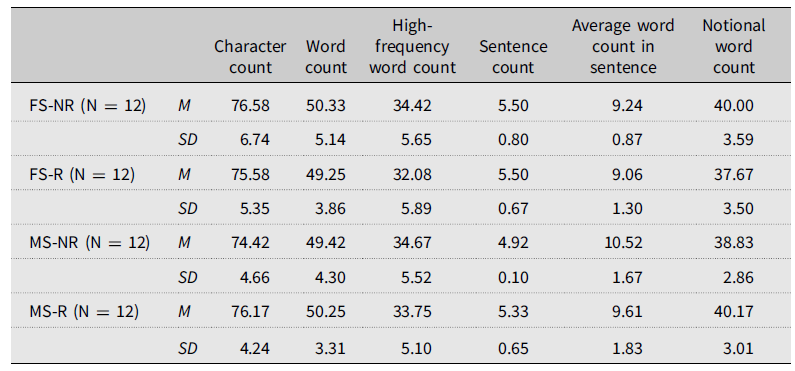
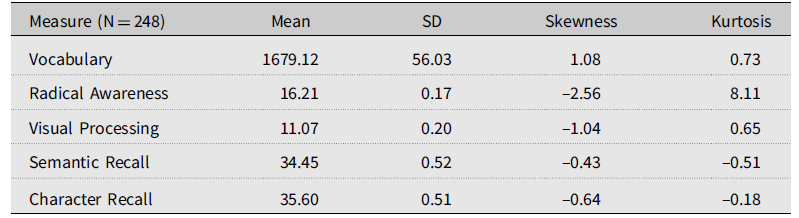
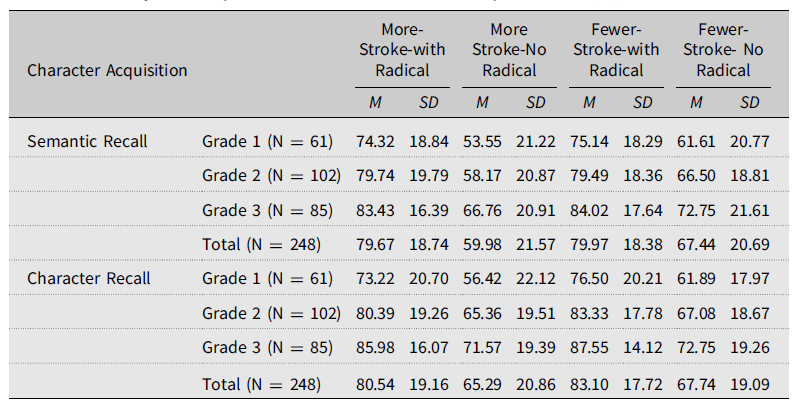
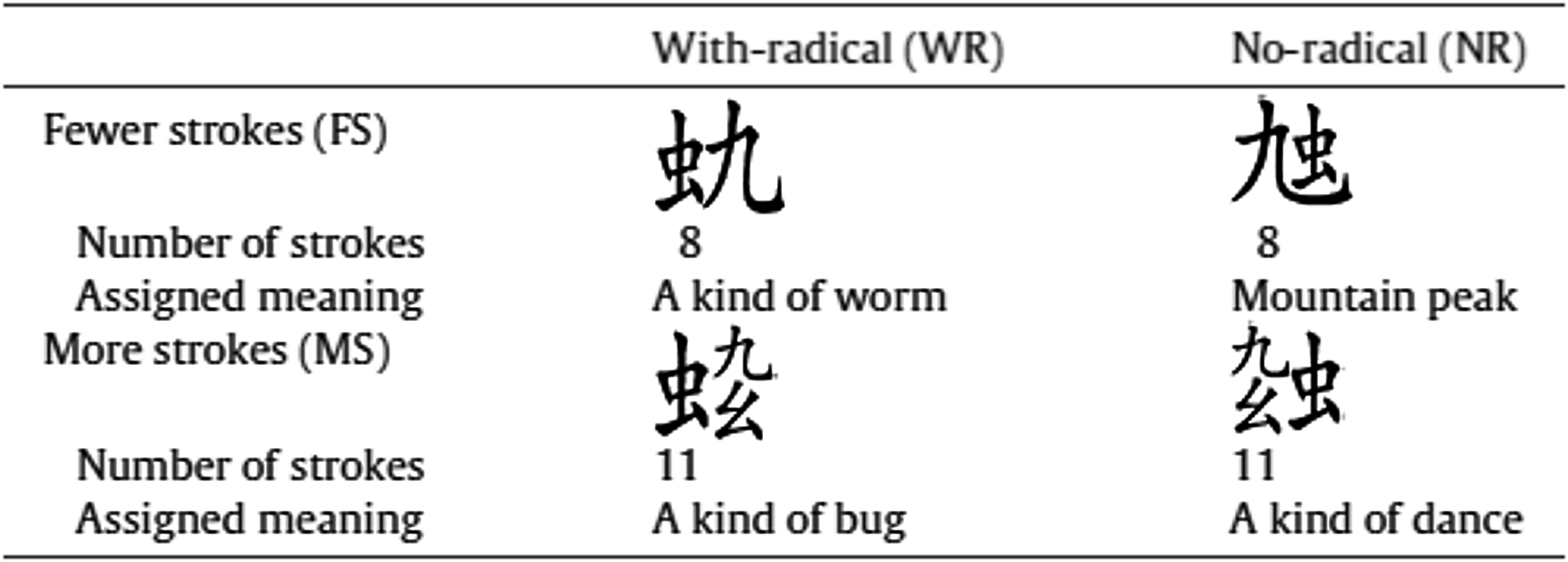
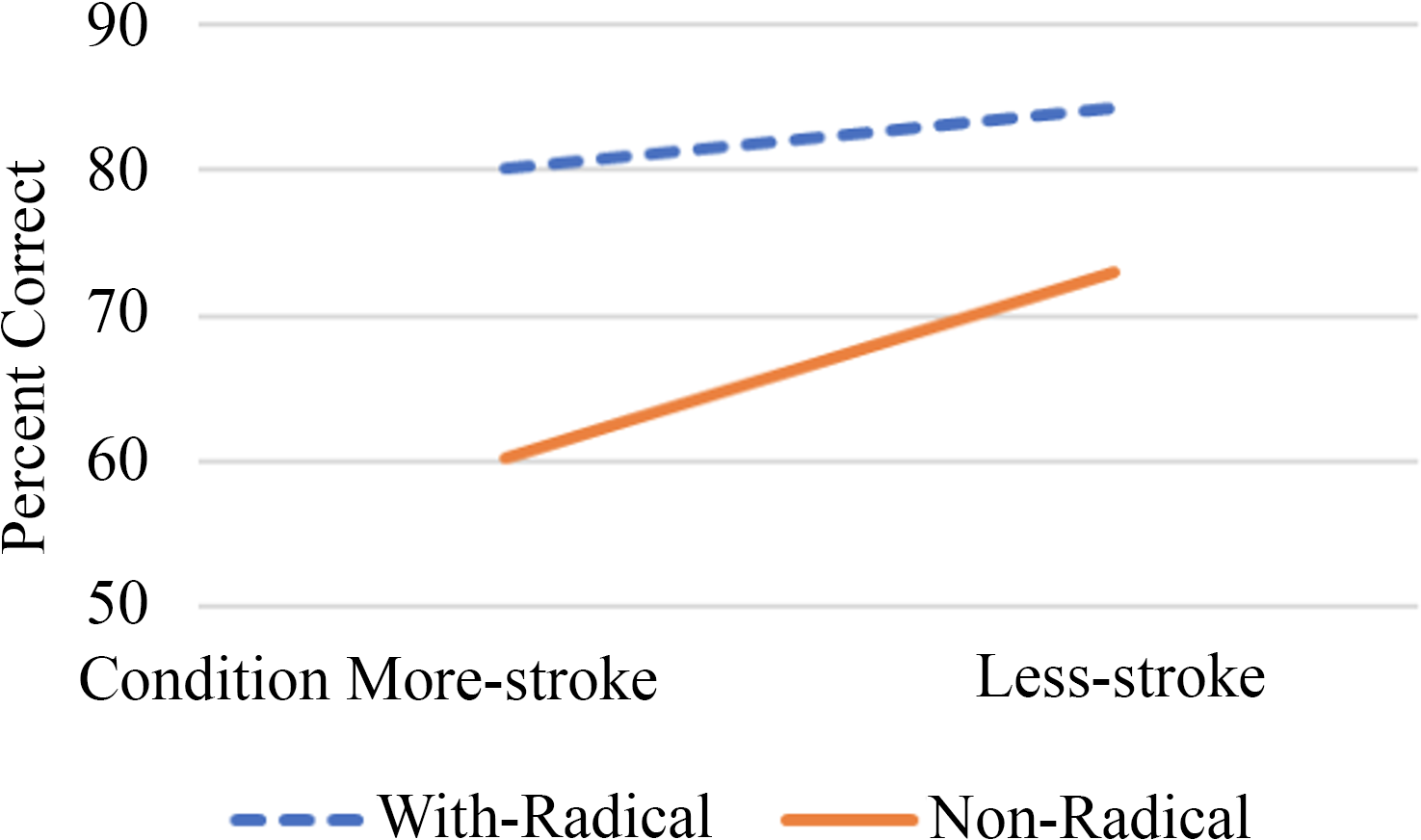
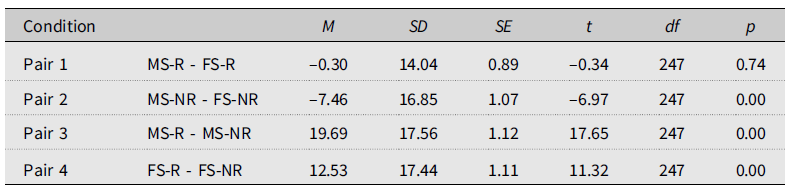
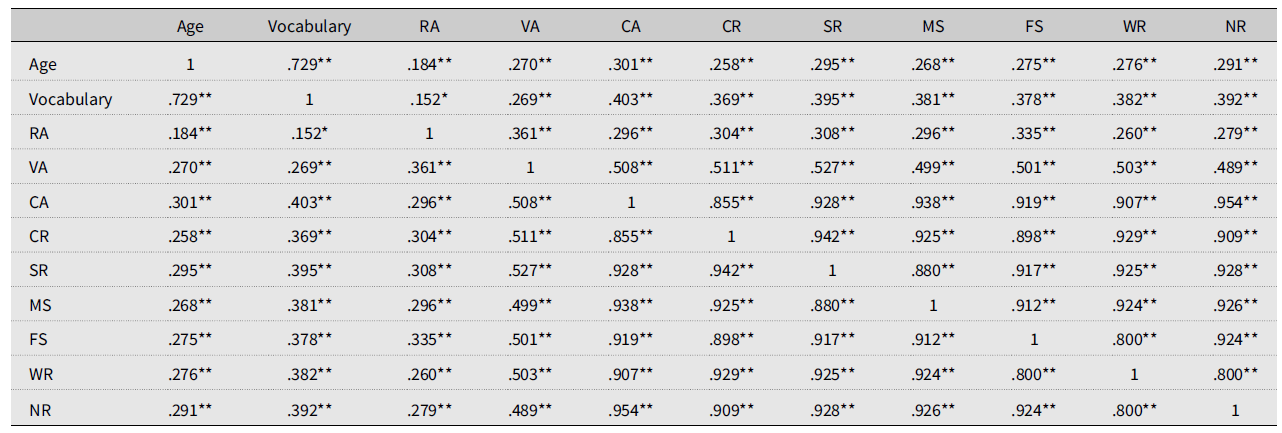
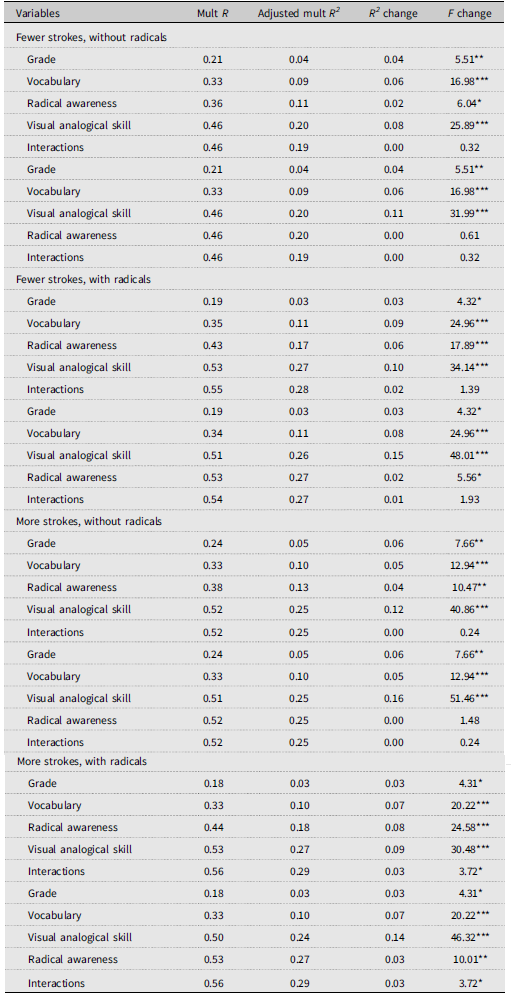
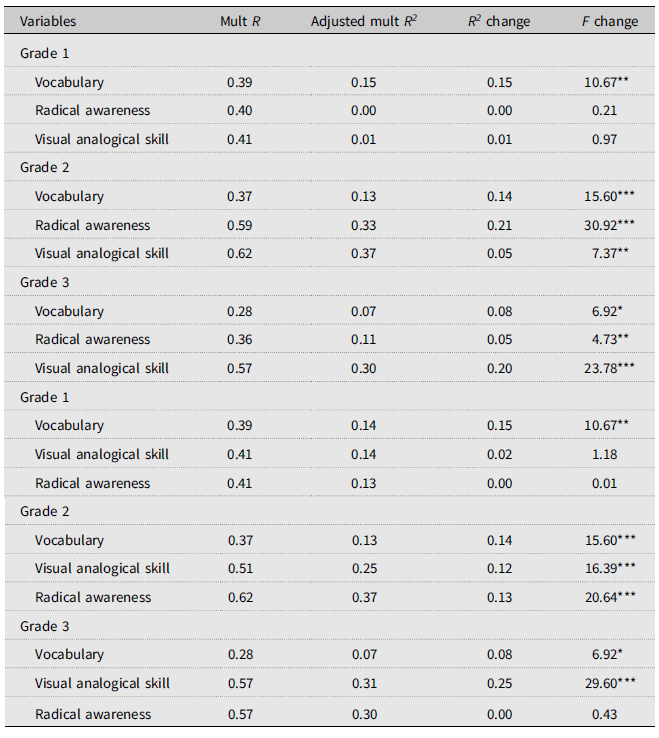
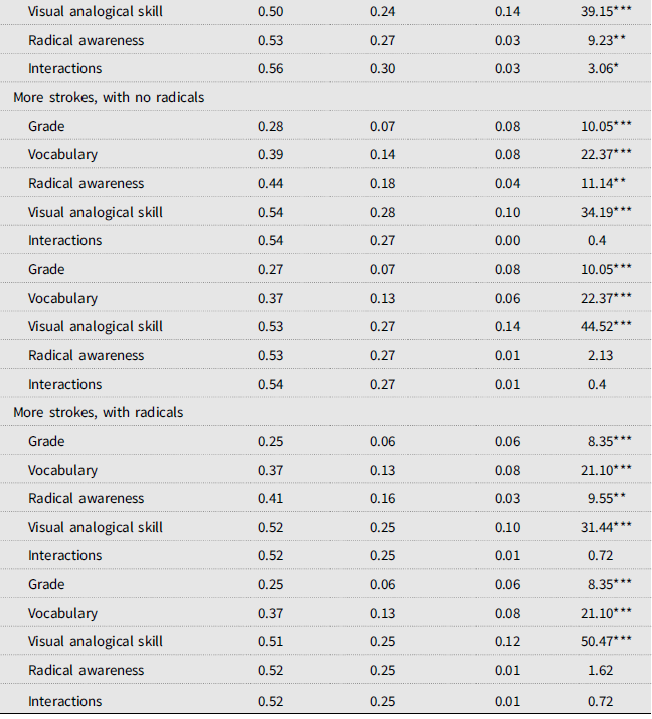
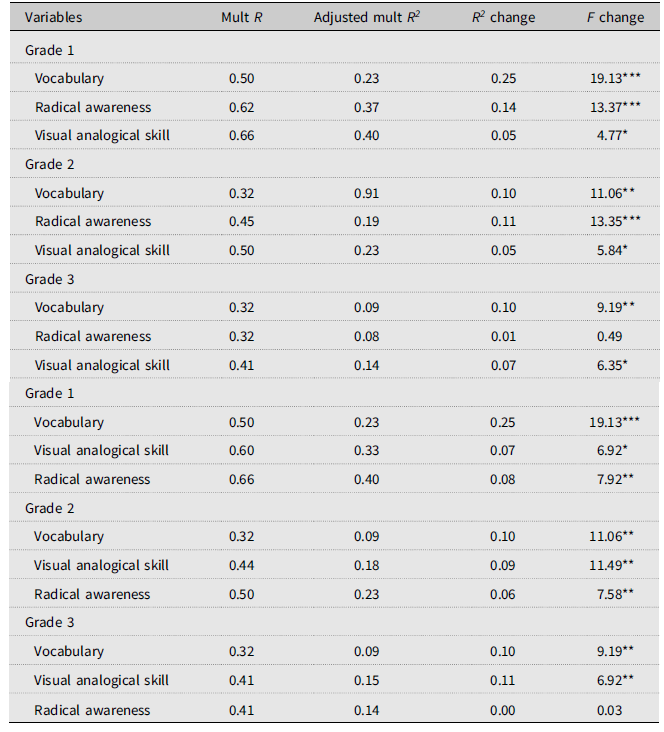

 Open access

