


The experience of sexual abuse is widely recognised to be associated with a range of behavioural and mental health problems within the general population. These symptoms include anxiety, depression and post-traumatic stress disorder (e.g. Reference Kilpatrick, Saunders and VeronenKilpatrick et al, 1987; Reference MacMillan, Fleming and StreinerMacMillan et al, 2001; Reference Nelson, Heath and MaddenNelson et al, 2002), and behavioural difficulties related to withdrawn, aggressive and sexualised behaviour (Reference Kendall-Tackett, Williams and FinkelhorKendall-Tackett et al, 1993; Reference FriedrichFriedrich, 1998). However, whether people with learning disabilities experience a similar range of reactions has not previously been systematically studied. Several reports suggest that people with learning disabilities may exhibit patterns of psychopathological symptoms following sexual abuse similar to those found in the general population (e.g. Reference SinasonSinason, 1988; Reference RyanRyan, 1994; Reference Mansell, Sobsey and MoskalMansell et al, 1998). However, because of methodological limitations (most notably the lack of controlled studies) the findings are inconclusive (for a review, see Reference Sequeira and HollinsSequeira & Hollins, 2003).
This study investigates the hypothesis that adults with learning disabilities who have experienced sexual abuse will exhibit higher levels of behavioural and mental psychiatric difficulties than a matched comparison group who are not known to have experienced sexual abuse. The relationship between the nature of the abuse and subsequent symptoms is also examined.
METHOD
Sample identification
Individuals potentially suitable as cases or controls were initially identified through a screening questionnaire completed by managers of 29 charitable and private-sector organisations for people with learning disabilities, in England, Scotland and Wales. Participants were living in supported accommodation or community residential homes. They were not necessarily involved with clinical services or previously identified as having a history of mental illness. Individuals with a diagnosis of psychotic disorder, dementia or other deteriorating organic condition were excluded.
Assignment to study groups
The sexual abuse sample comprised individuals for whom the occurrence of sexual abuse was proved, highly probable or probable, as defined by Brown & Turk (Reference Brown and Turk1992). Hereafter, proved, highly probable and probable abuse are referred to simply as abuse. Cases where the standard of evidence indicated possible sexual abuse or abuse of unknown status were excluded. The matched comparison group comprised individuals for whom there was no evidence or suspicion that sexual abuse had ever occurred.
Matching criteria
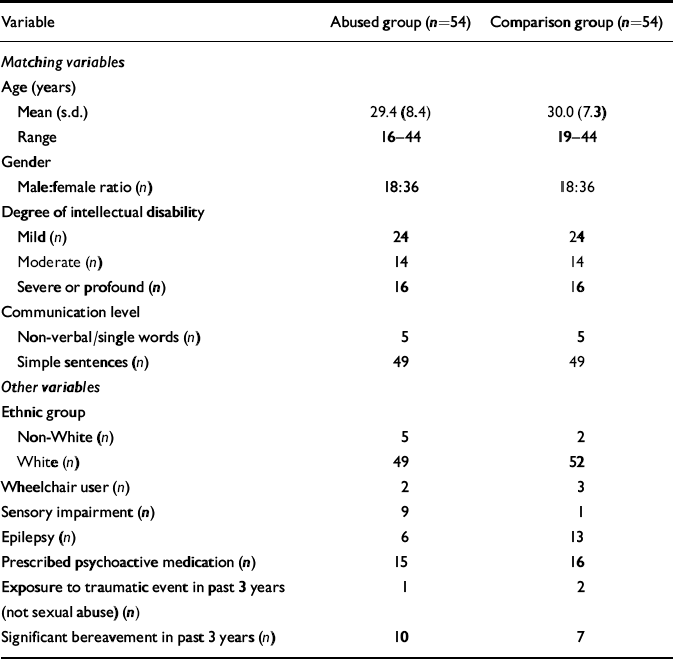
Participants were assigned to the sexual abuse sample on the evidence of the occurrence of abuse and were provisionally matched with non-abused comparison participants for gender, degree of learning disability, age (within a 5-year age band) and communication ability. The validity of data used for matching was confirmed when participants were interviewed. The degree of learning disability was established using the Wechsler Abbreviated Scale of Intelligence (WASI; Reference WechslerWechsler, 1999) or the Wechsler Adult Intelligence Scale – Revised (WAIS–R; Reference WechslerWechsler, 1981), and communication ability was confirmed by talking with the individual and support staff. Details of the matched and unmatched characteristics of the groups are shown in Table 1.
Characteristics of the study groups
| Variable | Abused group (n=54) | Comparison group (n=54) |
|---|---|---|
| Matching variables | ||
| Age (years) | ||
| Mean (s.d.) | 29.4 (8.4) | 30.0 (7.3) |
| Range | 16-44 | 19-44 |
| Gender | ||
| Male:female ratio (n) | 18:36 | 18:36 |
| Degree of intellectual disability | ||
| Mild (n) | 24 | 24 |
| Moderate (n) | 14 | 14 |
| Severe or profound (n) | 16 | 16 |
| Communication level | ||
| Non-verbal/single words (n) | 5 | 5 |
| Simple sentences (n) | 49 | 49 |
| Other variables | ||
| Ethnic group | ||
| Non-White (n) | 5 | 2 |
| White (n) | 49 | 52 |
| Wheelchair user (n) | 2 | 3 |
| Sensory impairment (n) | 9 | 1 |
| Epilepsy (n) | 6 | 13 |
| Prescribed psychoactive medication (n) | 15 | 16 |
| Exposure to traumatic event in past 3 years | 1 | 2 |
| (not sexual abuse) (n) | ||
| Significant bereavement in past 3 years (n) | 10 | 7 |
Measures
Respondent and informant measures (see below) were completed during interviews with keyworkers and clients (where the degree of learning disability permitted). The ratings of abuse were made independently of ratings of psychopathological symptoms and challenging behaviour. However, the mental health assessor was not masked to the group membership.
Behaviour
The Aberrant Behavior Checklist – Community (ABC–C; Reference Aman, Burrow and WolfordAman et al, 1995) is an informant-based measure of challenging behaviour. It consists of five sub-scales: I, irritability, agitation, crying; II, lethargy, social withdrawal; III, stereotypical behaviour; IV, hyperactivity, non-compliance; and V, inappropriate speech. Reliability and validity data are well established (e.g. Reference Aman, Richmond and StewartAman et al, 1987).
As the ABC–C does not include items related to sexual behaviour, the sexual behaviour domain from the Adaptive Behavior Scale – Residential and Community (ABS–RC; Reference Nihira, Leland and LambertNihira et al, 1993) was used in addition.
Mental health problems
ICD–10 diagnosis. The Psychiatric Assessment Schedule for Adults with Developmental Disabilities (PAS–ADD; Reference Moss, Ibbotson and ProsserMoss et al, 1997) is a semi-structured present-state interview designed to establish whether individuals with learning disabilities fulfil criteria for a specified ICD–10 diagnosis (World Health Organization, 1992). It consists of both respondent and informant interviews which can be processed separately or together. In our study, when participants could give a valid interview (28 in the ‘abuse’ group and 36 in the comparison group), the two interviews were processed together to provide more complete diagnostic information. If the participant had severe learning disabilities, poor linguistic ability or gave inconsistent or insufficient information in response to PAS–ADD questions, the informant interview was used alone. Although the abuse and comparison groups were matched on language ability, fewer of those in the abuse group gave full responses in the PAS–ADD interview. The implication of this is that psychiatric disorder may be underdiagnosed, particularly in those who have been abused. Some ICD–10 disorders, for example anxiety disorders (F40–41), require evidence of autonomic features that might not be noticeable to informants and therefore would not have been identified in participants from informant interviews alone.
Symptom type scores. The PAS–ADD also provides symptom type scores (i.e. symptom constellations); neurotic, depressive and total symptom type scores were analysed to give a measure of severity of depressive and anxiety symptoms and general psychiatric disturbance.
Post-traumatic symptoms
Clinical symptoms of post-traumatic stress disorder (PTSD) were assessed using the PTSD Check List for Children/Parent Report (PCL–C/PR; Reference Ford, Racusin and DavissFord et al, 1999). A key informant rates the extent to which, during the past month, an individual has presented with each of the 17 DSM–IV clinical PTSD symptoms (DSM–IV diagnosis of PTSD requires at least one re-experiencing symptom out of five, at least three avoidance and psychic numbing symptoms out of seven, and at least two hyperarousal symptoms out of five: American Psychiatric Association, 1994). A score of 3 on any item indicates the presence of a clinical-level symptom. Total scores on the instrument can also be calculated.
Statistical analysis
Non-parametric statistics (Wilcoxon signed ranks test for comparisons between matched groups; Mann–Whitney U test for comparisons between independent subgroups; χ2 for proportions and Spearman's ρ for correlations) were used for all analyses as the data were not normally distributed. The computer package SYSTAT 9 was used to calculate statistics.
Significance levels and multiple testing
The significance level was set at 0.05. In the comparisons between the abused and comparison samples, Bonferroni's correction was applied when multiple tests were used. However, the Bonferroni correction was not applied when examining the variations related to abuse within the abused group, as these were principally explorative analyses.
RESULTS
Characteristics of alleged sexual abuse
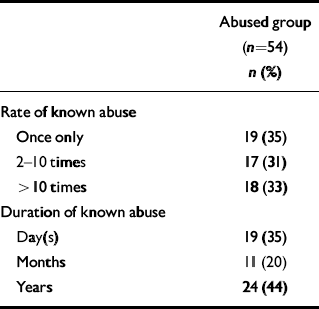
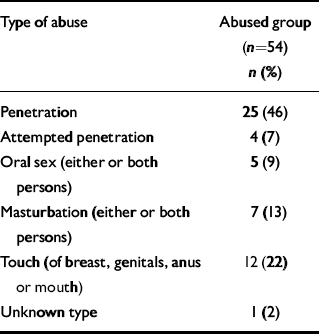
The median age at which abuse was first known to have taken place was 15 years (range 4–39). The median number of years since the most recent known incidents of abuse was 3 years (range 0–29). The majority of people in the abused sample were reported to have experienced abuse on more than one occasion and over months or years rather than days (Table 2). The most frequent type of abuse reported was sexual penetration (Table 3). Six of the sample were known to have experienced physical violence or threat of violence during the sexual abuse, and four were known to have sustained physical injury during the abuse.
Rate and duration of known abuse
| Abused group (n=54) n (%) | |
|---|---|
| Rate of known abuse | |
| Once only | 19 (35) |
| 2-10 times | 17 (31) |
| > 10 times | 18 (33) |
| Duration of known abuse | |
| Day(s) | 19 (35) |
| Months | 11 (20) |
| Years | 24 (44) |
Type of abuse
| Type of abuse | Abused group (n=54) n (%) |
|---|---|
| Penetration | 25 (46) |
| Attempted penetration | 4 (7) |
| Oral sex (either or both persons) | 5 (9) |
| Masturbation (either or both persons) | 7 (13) |
| Touch (of breast, genitals, anus or mouth) | 12 (22) |
| Unknown type | 1 (2) |
Characteristics of the alleged perpetrator
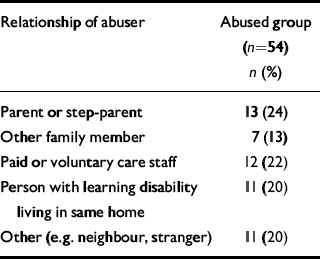
Of the 54 cases of known abuse, 48 individuals (89%) were reported to have been abused by males, 3 (5.5%) by females and 3 (5.5%) by both males and females (χ2=75.0; P<0.001). Thirty-four (63%) individuals were known to have experienced extrafamilial abuse and 20 (37%) had experienced intrafamilial abuse. None was known to have experienced both intrafamilial and extrafamilial abuse (Table 4).
Relationship of abuser
| Relationship of abuser | Abused group (n=54) n (%) |
|---|---|
| Parent or step-parent | 13 (24) |
| Other family member | 7 (13) |
| Paid or voluntary care staff | 12 (22) |
| Person with learning disability living in same home | 11 (20) |
| Other (e.g. neighbour, stranger) | 11 (20) |
Post-abuse events
Following the abuse, 33 (61%) individuals received no formal psychological therapy; 21 individuals (39%) did receive therapy from a qualified professional (psychologist, qualified psychotherapist/counsellor). In eight cases the abuse led to a successful court conviction.
Characteristics of disturbance following abuse
Challenging behaviour
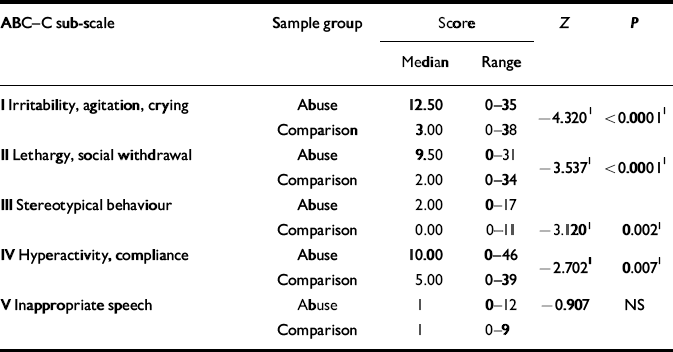
Table 5 presents the median scores of the abused and comparison groups on the ABC–C. Score on sub-scales I–IV (irritability, lethargy, stereotypical behaviour and hyperactivity) were significantly higher in the abused group. There was no group difference on sub-scale IV (inappropriate speech). In addition, a significantly higher proportion of the abused group were reported to have engaged in self-injurious behaviour during the previous 4 weeks, as measured by items 50 (deliberately hurts self) and 52 (does physical violence to self) on the ABC–C: abused group n=24, comparison group n=11; χ2=8.167, P=0.004.
Comparison of the abused and matched control sample groups on Aberrant Behavior Checklist – Community (ABC–C) scores (n=54 in both groups)
| ABC—C sub-scale | Sample group | Score | Z | P | |
|---|---|---|---|---|---|
| Median | Range | ||||
| I Irritability, agitation, crying | Abuse | 12.50 | 0-35 | -4.3201 | <0.00011 |
| Comparison | 3.00 | 0-38 | |||
| II Lethargy, social withdrawal | Abuse | 9.50 | 0-31 | -3.5371 | <0.00011 |
| Comparison | 2.00 | 0-34 | |||
| III Stereotypical behaviour | Abuse | 2.00 | 0-17 | ||
| Comparison | 0.00 | 0-11 | -3.1201 | 0.0021 | |
| IV Hyperactivity, compliance | Abuse | 10.00 | 0-46 | -2.7021 | 0.0071 |
| Comparison | 5.00 | 0-39 | |||
| V Inappropriate speech | Abuse | 1 | 0-12 | -0.907 | NS |
| Comparison | 1 | 0-9 | |||
Sexualised behaviour
The median scores for the ABS–RC sexual behaviour domain were significantly higher in the abused group (2.50) than in the comparison group (1.0; Z=–3.217, P=0.001). A small minority (n=3) in both groups were reported to have been overaggressive sexually in the past 4 weeks (from item 25 on the ABS–RC) and although more of those in the abused sample were reported to engage in inappropriate masturbation (14 compared with 5 controls, χ2=5.173), the difference was non-significant after the Bonferroni correction was applied (P=0.023, adjusted probability level 0.0166).
Mental health problems
When all categories of diagnosis assessed by the PAS–ADD were combined, the proportion meeting diagnostic criteria for any psychiatric diagnosis was significantly higher in the abused group (6 depression, 5 hypersomnia, 1 panic disorder) compared with the control group (2 depression, 0 hypersomnia, 1 specific phobia). This finding remained significant (P=<0.0125) after the Bonferroni adjustment had been applied. However, there was no significant difference for any single diagnosis.
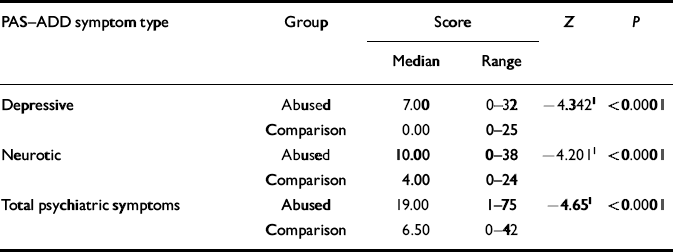
Median scores for depression, neurotic and total symptom type scores on the PAS–ADD interview were found to be significantly higher in the abused group compared with the matched controls (Table 6).
Comparison of the abused and matched control sample groups on the symptom type scores of the Psychiatric Assessment Schedule for Adults with Developmental Disabilities (PASS–ADD) (n=54 in each group)
| PAS-ADD symptom type | Group | Score | Z | P | |
|---|---|---|---|---|---|
| Median | Range | ||||
| Depressive | Abused | 7.00 | 0-32 | -4.3421 | <0.0001 |
| Comparison | 0.00 | 0-25 | |||
| Neurotic | Abused | 10.00 | 0-38 | -4.2011 | <0.0001 |
| Comparison | 4.00 | 0-24 | |||
| Total psychiatric symptoms | Abused | 19.00 | 1-75 | -4.651 | <0.0001 |
| Comparison | 6.50 | 0-42 | |||
Post-traumatic symptoms
On the informant form of the PCL–C/PR, 19 of the 54 abused individuals demonstrated symptoms consistent with a DSM–IV diagnosis of PTSD. Only two people in the comparison group met these criteria for PTSD. Participants in the abused group also rated significantly higher on clinical symptoms of PTSD (PCL–C/PR total score: abused group median 36.0, range 18–99; comparison group median 20, range 17–46; Z=–5172, P<0.0001).
Variables related to abuse
Time elapsed since abuse
No significant correlation was found between the time elapsed since the last known abuse and the score on any of the measures used.
Severity and rate of abuse
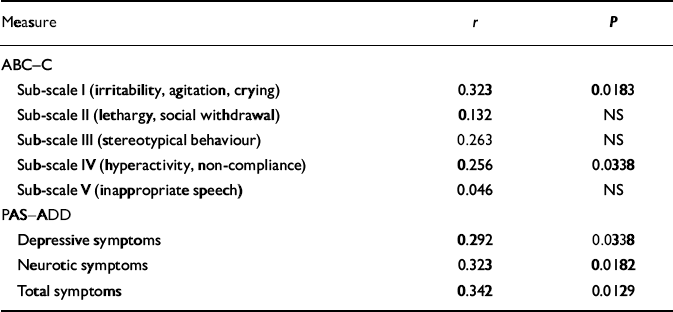
Significant positive correlations were found between the severity of the abusive acts experienced (1 touch only, 2 masturbation, 3 oral sex, 4 penetration) and the severity of symptoms on the ABC sub-scales of irritability and hyperactivity, and the PAS–ADD scores for depression symptoms and neurotic symptoms and the total symptom score (Table 7). No significant relationship was found with PTSD symptoms.
Correlation between severity of symptoms and the severity of abusive acts experienced
| Measure | r | P |
|---|---|---|
| ABC-C | ||
| Sub-scale I (irritability, agitation, crying) | 0.323 | 0.0183 |
| Sub-scale II (lethargy, social withdrawal) | 0.132 | NS |
| Sub-scale III (stereotypical behaviour) | 0.263 | NS |
| Sub-scale IV (hyperactivity, non-compliance) | 0.256 | 0.0338 |
| Sub-scale V (inappropriate speech) | 0.046 | NS |
| PAS-ADD | ||
| Depressive symptoms | 0.292 | 0.0338 |
| Neurotic symptoms | 0.323 | 0.0182 |
| Total symptoms | 0.342 | 0.0129 |
Rate of abuse was significantly related to the PAS–ADD total score for mental health symptoms: this was significantly higher for those abused more than once (median 22) compared with those abused only once (median 15; P=0.042). The PAS–ADD depression score was also significantly higher for those abused on two or more occasions (median 10) compared with those abused only once (median 4; P=0.024). No significant relationship was found between rate of abuse and PTSD symptoms.
DISCUSSION
Behavioural problems
Individuals with learning disabilities who had experienced abuse were reported to present with more severe behaviour problems than a non-abused, matched comparison group. On the ABC–C the largest differences were found for aggressive and agitated behaviours, including aggression to others, self-injury, temper outbursts and sudden changes of mood. The abused group also showed significantly more symptoms of social withdrawal (i.e. seeking isolation from others, being pre-occupied, resisting any form of physical contact, and being listless, sluggish or inactive). Significant group differences were also found for behaviour problems included in the hyperactivity sub-scale (e.g. excessive activity, disturbing others, acting impulsively, disobedience and distractibility). Self-injurious behaviours, however, were higher in the abused group, suggesting that these too may be associated with sexual abuse in individuals with learning disabilities. In many ways the behavioural problems found in this sample are similar to those reported for abused adults and children without learning disabilities: hostility towards others (Reference Greenwald, Leitenberg and CadoGreenwald et al, 1990), sexual behaviour problems (Reference Sappington, Pharr and TunstallSappington et al, 1997), self-harm (Reference Romans, Martin and AndersonRomans et al, 1995) and poor interaction with others (Reference Calam, Horne and GlasgowCalam et al, 1998).
Although total ratings of inappropriate sexual behaviour on the ABS–RC were significantly higher in the abused group, there was no group difference in specific behaviours such as sexually aggressive behaviour or inappropriate masturbation.
Stereotypical behaviour
The main difference in symptoms found in the abused group compared with non-intellectually disabled samples was the presence of stereotypical behaviour (repetitive rocking and odd or bizarre behaviours). These symptoms have not typically been reported as sequelae of abuse in other studies. However, increases in stereotyped behaviours have been reported in studies of individuals with learning disabilities who have been bereaved (Reference Hollins and EsterhuyzenHollins & Esterhuyzen, 1997; Reference Bonell-Pascual, Huline-Dickens and HollinsBonell-Pascual et al, 1999), and therefore the increase may not be specific to those who have been abused. Cognitive, emotional and developmental factors associated with learning disabilities may affect the presentation of psychopathological disorder in people with learning disabilities and may mediate responses to both sexual trauma and bereavement.
Mental health problems
The proportion of individuals meeting diagnostic criteria for the psychiatric diagnoses assessed in this study by the PAS–ADD (depression, anxiety disorders and hypersomnia) was significantly higher in the abused group. This indicates support for the hypothesis that the overall incidence of ICD–10 psychiatric disorder is higher in people who have been abused. In addition, the proportion of individuals presenting with the constellation of symptoms consistent with DSM–IV diagnostic criteria for PTSD was significantly higher in the abused group. No group difference in the proportions of individuals fulfilling ICD–10 criteria for depression (F32), anxiety disorders (F40–41) or hypersomnia (F51.1) was found when each diagnosis was considered independently. However, significant differences were found between the two groups for severity of depression and anxiety symptoms (PAS–ADD symptom type scores). This finding indicates that although abused individuals may not fulfil ICD–10 criteria for specific diagnoses, they are nevertheless presenting with higher levels of depressive and neurotic symptoms compared with a non-abused comparison group.
In many ways the symptom profiles reported for abused adults without learning disabilities are similar to those found among the learning-disabled sample studied here, evidenced by the findings of a higher incidence of psychiatric disorder (Reference Silverman, Reinherz and GiaconiaSilverman et al, 1996), PTSD (Reference Kilpatrick, Saunders and VeronenKilpatrick et al, 1987), depressive symptoms (Reference Diaz, Simantov and RickertDiaz et al, 2002) and anxiety (Reference Nelson, Heath and MaddenNelson et al, 2002).
Variables related to abuse
Time elapsed since abuse
Studies of child abuse in the general population have reported inconsistent results regarding the relationship between time since abuse and level of psychological disturbance. Many studies (e.g. Reference Mannarino and CohenMannarino & Cohen, 1986) have reported a decrease in PTSD symptoms over time. However, Calam et al (Reference Calam, Horne and Glasgow1998) found a substantial increase over time in levels of anxiety, depression, lack of interaction with peers and sexualised behaviour in sexually abused children. Our study of people with learning disabilities found no significant correlation between the time elapsed since last known abuse and score on any of the measures used. One possible explanation for the variation of results reported may be a disparity in the availability of psychotherapy and psychological service provision for different populations. The validity of talking treatments for people with learning disabilities is only now gaining recognition (e.g. Reference Hollins and SinasonHollins & Sinason, 2000; Reference SinasonSinason, 2002), and it is important to note that the majority of the people in the abused sample in our study had not received any psychological or psychotherapeutic intervention following sexual abuse.
Severity of abuse
More severe forms of abuse (e.g. involving penetration) were associated with greater severity of disturbance. This finding is also reported in studies of child abuse in the general population (e.g. Reference Rodriguez, Ryan and RowanRodriguez et al, 1996). In addition, the finding from our study that repeated occurrence of abuse is associated with increased severity of disturbance has also been reported in studies in the general population (e.g. Reference Rodriguez, Ryan and RowanRodriguez et al, 1996).
Scientific method and reliability
Although the retrospective case–control design of the study is appropriate to address the hypothesis considered, it does not detect causal or temporal relationships between abuse and psychological disturbance. Although the study found that individuals who had been abused presented with more disturbance than those who had not, it may be that abuse is simply a marker for a more turbulent background, or that disturbed behaviour might increase the likelihood of sexual abuse occurring: for example, some behaviours may place individuals in highrisk situations, and other characteristics may make them more vulnerable to potential abusers. Longitudinal studies are needed to detect any causal relationship.
It is important to be aware of potential bias when evaluating the findings of any study. In this study the following possible sources of bias are identified. First, the samples were selected from residential services. It may therefore be questioned whether the findings generalise to people with learning disabilities who live independently, with their family of origin or in secure psychiatric settings. Second, people with psychological symptoms may be more inclined to attribute their symptoms to abusive experiences or may be more likely to report abusive experiences. These points have not been addressed in this paper and perhaps warrant further study in the general population and intellectually disabled groups. Third, neither informants nor respondents were masked to the general purpose of the study (although they were not aware of the specific hypotheses being tested). It could therefore be argued that participants exaggerated the reporting of disturbance in the abuse group to ‘please’ the assessor. Although the extent of this bias cannot be established, there is some indication that it is only limited, from the failure to find a significant difference between the abused and comparison groups on the variable ‘inappropriate speech’ (from the ABC–C). Had participants been tending to exaggerate the level of psychological disturbance they could be expected to report an increase in difficulties in all the areas examined, rather than just those identified as related to sexual abuse. It should be acknowledged that this source of potential bias is also a difficulty in much of the literature looking at the effects of sexual abuse in other populations.
Clinical Implications and Limitations
CLINICAL IMPLICATIONS
-
▪ People with learning disabilities who have experienced sexual abuse have more psychological disturbance than similar individuals who have not experienced abuse. The nature of this disturbance is similar to that described by abused individuals in the general population.
-
▪ Clinicians should enquire about experiences of sexual abuse or any other traumatic experience when patients with learning disabilities present with symptoms of behavioural disturbance or psychiatric disorder.
-
▪ Specific attention should be paid to increases in self-injury, inappropriate sexual behaviour or resisting physical contact, because of a possible association with sexual abuse.
LIMITATIONS
-
▪ The problems reported might have predated the abuse.
-
▪ Abuse might have occurred in the control group. The extent of underreporting of abuse in people with learning disabilities is difficult to ascertain.
-
▪ Participants were predominantly White, and living in residential units.
Acknowledgements
Much appreciation is owed to St Andrew's Hospital, Northampton, UK, for their generous support and funding. Particular thanks are offered to the. clients and staff of the residential services who participated in the study. Thanks are also due to Dr Steve Moss for his assistance with the Psychiatric. Assessment Schedule for Adults with Developmental Disabilities.




eLetters
No eLetters have been published for this article.