




There needs to be an intimate examination of taken-for-granted assumptions about the world
(Seawright, Reference Seawright2014).
Welcome
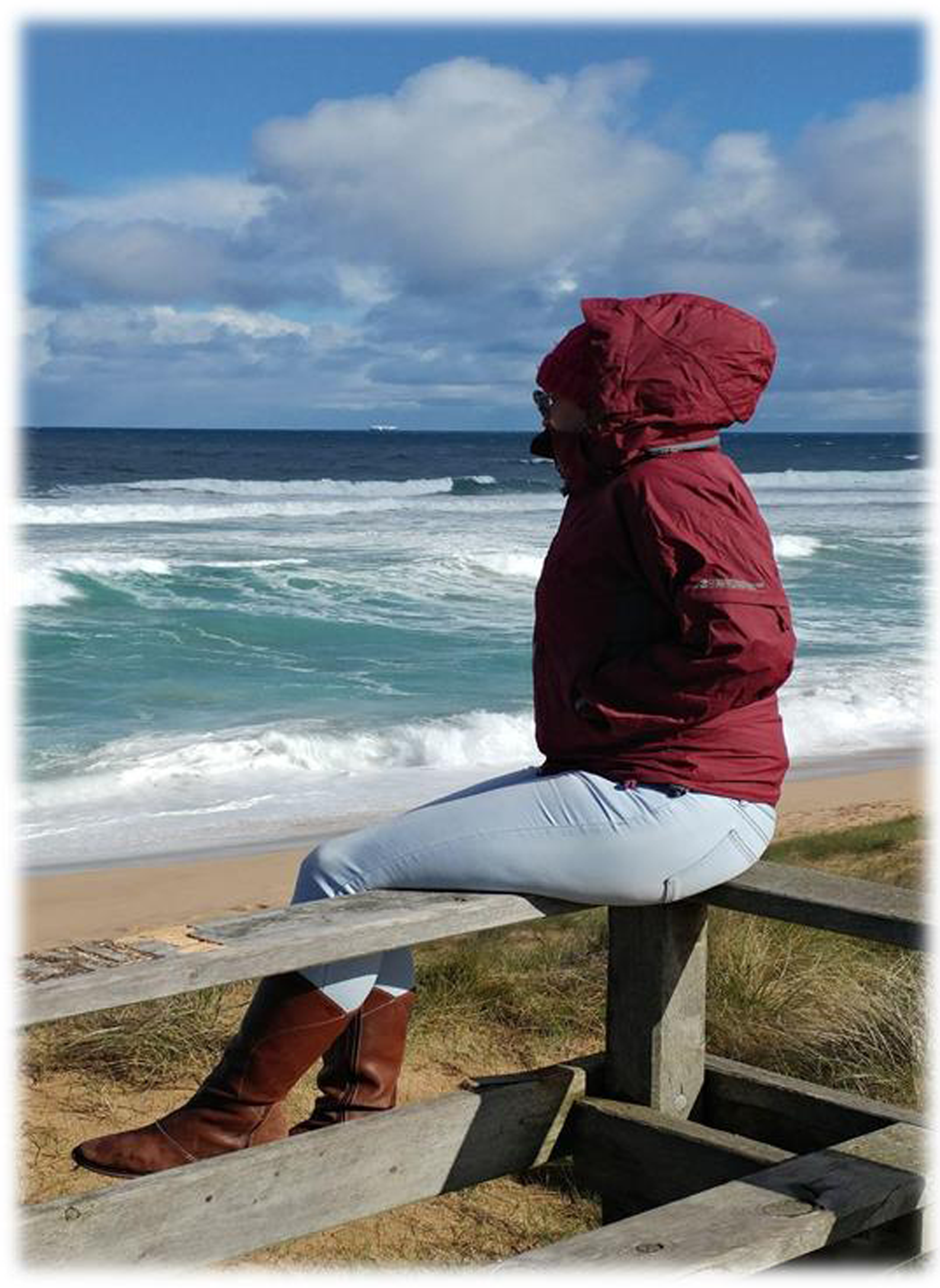
I am Kathryn Denise Riley. I am the daughter of Denise Roma Kennedy. I am the granddaughter of Ivy Roma Jones and Nola Kathleen Riley. Footnote 1 My ancestors travelled to Naarm (Melbourne), Australia from Scotland and Wales three generations ago, making their home along the coastal Country of Boonwurrung. Seeking refuge in the windswept beaches of this wild, edge Place, I would often look out across endless waves responding to wind and water currents, sandbars, troughs, and rock obstacles (Figure 1). I marveled as the water crashed and thrashed forward, and then, without warning, suddenly change direction. As the waves forged forward, they taught me about the transitional nature of things; they showed me that change was not only okay, but inevitable. These were the first moments that I sensed my body’s porous boundaries as I seamlessly merged with the ocean. I was of the world. I loved this Country like it was a part of me. But the colonial gaze was also a part of me. Peering out across blue horizons, I always wondered about places lying across the ocean; places where my own blood line began. To look outwards meant I could escape a turn inwards, avoiding any type of reckoning for what it means to be a Settler living on stolen lands. It was, after all, easier to look out than in, perhaps afraid of harsh and desolate interiors akin to the red centre of Australia. Then in 2015 I moved to the Canadian prairies and things were about to get a whole lot stranger…
Boonwurrung Country.
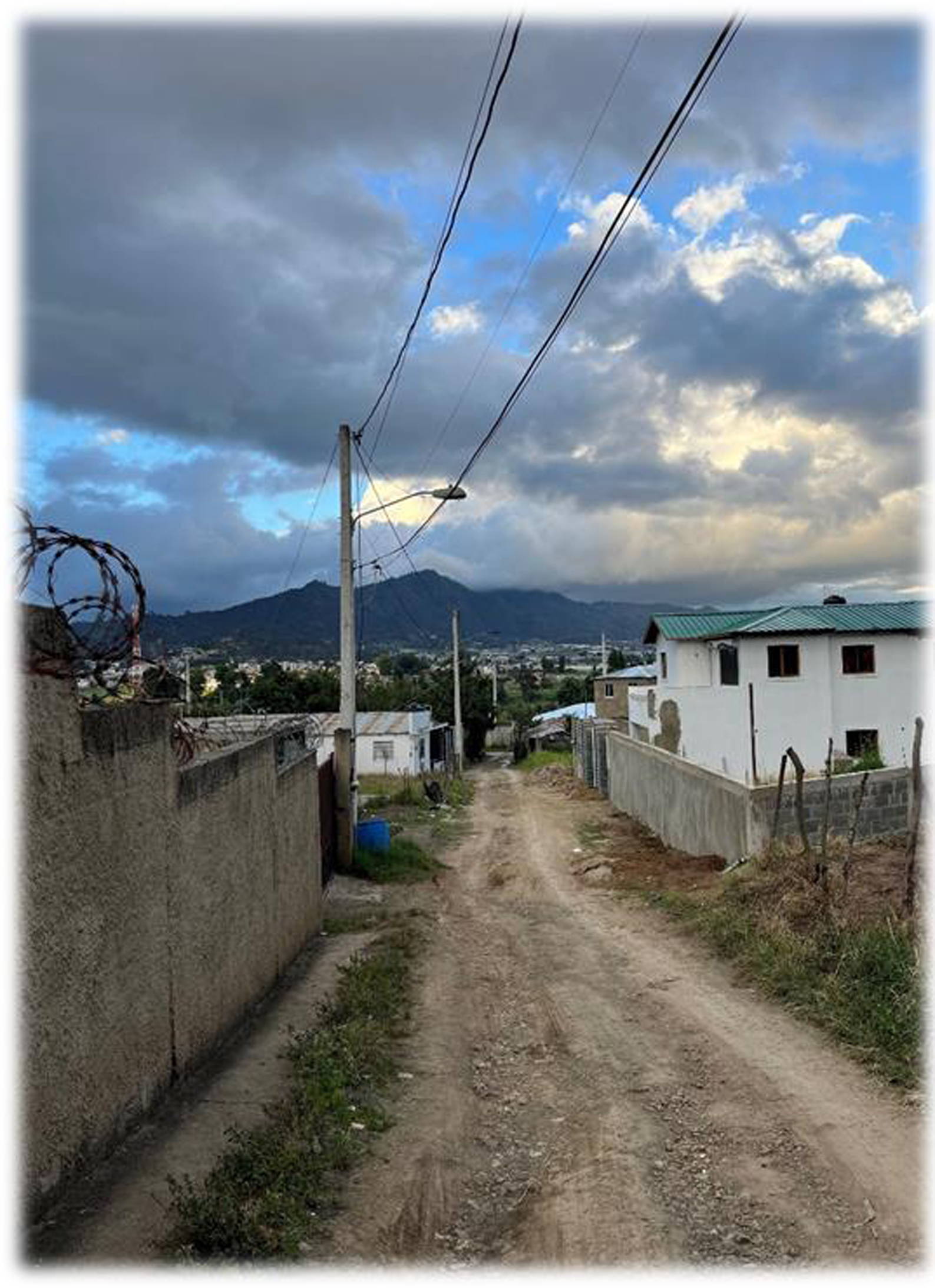
Lucy d’ishinikaashon. En Michif daañ li miljeu niya. Ma paraañtii kayaash St Andrews, St Johns, Norway House, Oxford House, York Factory, pi Ireland pi Orkney Islands oschiwak. I am a Métis woman, Two-Spirit, Indigiqueer, mother, wife, daughter, sister, learner, community member, Chairperson, and many other things. In Métis community, we often identify ourselves by our family names, which has the secondary effect of reinforcing a focus on men, instead of acknowledging the matriarchs (like my mother, Laura Helen Cowie, grandmother, Geraldine Helen Watkins, and aunties, including Muriel Banhagy and Barbara Johnstone) who have shaped my intellectual and spiritual growth and the work that I take on. My family’s roots in what is currently called the province of Manitoba run deep, having taken scrip in the surrounding areas in the late 1800s and early 1900s, and moving to what is now the city of Winnipeg. I am a citizen of the Manitoba Métis Federation, the governing body for Métis that are connected to this place that is the Red River. I have always been an urban Métis person, with generations of my family before me living in the city too. When I was young, I wanted to escape this place and the prairie monotony, searching for connection in other places that I did not have here; not because my family had no connection to this land, but because the phrase “getting out on the land” always rang in my ears. This land was not the land, it was just some land; some concrete piled on other concrete with a marsh underneath to make sure pothole season came often. I thought that this city-living meant that we, as urban Indigenous people, were inherently disconnected and no longer of this land. I swallowed the story that told me when we took scrip we relinquished our title and right to this land. I believed I had no ties to this land, so I left this land, and travelled – I went east to Animikie (or, in English, Thunder Bay) and lived in the shadow of the Sleeping Giant, and then south to Kiskeya (or, in English, Dominican Republic, Figure 2) and lived in the ocean spray. I grew to love each home as I spent time there, but I felt lonely for the prairies with the wide-open skies.
Constanza, La Vega, Dominican Republic.
Un/redoing physical literacy in the land-based relational space
Traditionally, physical education has focused on movement competency to develop sufficient skills for successful performance in different physical activities (Gallahue & Ozmun, Reference Gallahue and Ozmun2006; Hardman, Reference Hardman2011; Lynch & Soukup, Reference Lynch and Soukup2016). Recently, however, the focus of many physical educators has started to shift to a broader notion of physical literacy (Carl et al. Reference Carl, Abu-Omar, Bernard, Lohmann, White, Peters and Barnett2024; Durden-Myers, Whitehead & Pot Reference Durden-Myers, Whitehead and Pot2018; Riley & Proctor, Reference Riley and Proctor2022; Whitehead, Reference Whitehead2010, Reference Whitehead2019). Initial conceptions of physical literacy by Margaret Whitehead in the early 1990s were set in response to the widespread unease related to the inactivity of the general population and a growing dissatisfaction with school-based physical education programs (Whitehead, Reference Whitehead2010, Reference Whitehead2019). For Whitehead, physical literacy involved philosophical underpinnings of monism, existentialism and phenomenology to embrace a more integrated approach to movement and physical activity. Such approach was in response to normative and objective/absolute standards and developmental milestones and expectations and binary logics perpetuating mind and body, human and nature and reason and emotion dualisms. As such, physical literacy opposes the idea of the body-as-object, or as a mechanistic tool that performs movement competency through particular types and kinds of skills and behaviours. As physical literacy enacts an embodied integration with the world through sensemaking and perceptions as set within the lived experience (Durden-Myers et al., Reference Durden-Myers, Meloche and Dhillon2020), it considers the fundamental centrality of embodiment in the human existence across multiple and diverse movement contexts well beyond sport and school physical education and across the lifespan (Cairney et al., Reference Cairney, Dudley, Matthew Kwan Bulten and Kriellaars2019; Dudley et al., Reference Dudley, Cairney, Wainwright, Kriellaars and Mitchell2017; Durden-Myers et al., Reference Durden-Myers, Whitehead and Pot2018; Robinson et al., Reference Robinson, Randall and Barrett2018). In more recent times, physical literacy has been championed by Whitehead and the International Physical Literacy Association (IPLA) as the “motivation, confidence, physical competence, knowledge and understanding to value and take responsibility for engagement in physical activities for life” (Physical Literacy, 2022, para. 3). Although physical literacy may present differently within a variety of contexts, overall, a physical literacy-enriched experience should support movement opportunities that develop one’s competence, confidence, motivation and active participation.
While this shift is a welcome corrective to more traditional approaches to physical education, mainstream conceptions of physical literacy, however, remain unduly narrow as rooted in settler colonial logicsFootnote 2 that locate dominant categories of the human in hierarchical positions of power. For example, Stevens et al. (Reference Stevens, Ovens, Hapeta and Petrie2021) speak to the dangers of physical literacy colonising current curriculum in Aotearoa New Zealand, in which national values, cultural identity and broad educative aspirations are not adequately accounted for. While the manner in which physical literacy is practiced can certainly engender power differentials, we (Kat and Lucy) also take issue with philosophical conceptions of physical literacy through the lens of phenomenology. While phenological underpinnings of physical literacy make important leaps to destabilise Western binary logics and an over-emphasis on developmental outcomes, conceptualising physical literacy in this way still prioritises human perception within human experiences through a focus on how the human is positioned in the world, rather than understanding the human as of the world through entangled/differentiated relationships with all worldly matter and social discourses (Alaimo, Reference Alaimo2016; Barad & Gandorfer, Reference Barad and Gandorfer2021; Barad, Reference Barad2007). Crucially, as settler-colonialism has deployed Western models of education that undermine the intellectual development of Indigenous children and youth through cultural assimilation, it is not enough to deploy Western models of physical literacy onto Indigenous children and youth, while failing to account for Indigenous voices (Nesdoly et al., Reference Nesdoly, Gleddie and McHugh2021; Wildcat, McDonald, Irlbacher-Fox & Coulthard Reference Wildcat, McDonald, Irlbacher-Fox and Coulthard2014). Moreover, a ubiquitous feature of the settler colonial imaginaries is the notion of land as terra nullias, in which land is generalised, universalised and seen as a blank slate for cultural inscriptions (Liboiron, Reference Liboiron2021; Nxumalo & Cedillo, Reference Nxumalo and Cedillo2017). Arising from Baconian hubris in the sixteenth century, the Enlightened man [sic] believed humans should have dominion over nature, to which an unspoiled nature was out there to be discovered and agriculturally or aesthetically improved through Western civilising and colonising processes (Wildcat, Reference Wildcat2005). It was in this time that binary classifications were given their modern expression in the philosophical works of René Descartes signalling the beginning of Cartesian representational knowing in Western metaphysics (Jickling, Reference Jickling, McKenzie, Hart, Bai and Jickling2009) and the violent separation of Indigenous peoples from the land as an important source of knowledge and strength (Wildcat et al., Reference Wildcat, McDonald, Irlbacher-Fox and Coulthard2014).
Thus, to only account for physical literacy through a Western lens brings physical literacy into important conversations abounding social injustices through the continued marginalisation and subjugation of bodies outside the white, masculine mainstream throughout history (Nesdoly et al,, Reference Nesdoly, Gleddie and McHugh2021; Pedwell & Whitehead, Reference Pedwell and Whitehead2012); and abounding ecological injustices through dominant discourses, or master stories, that continue to separate humans from the Earth. In response, we write this article from Western and Métis positionalities living, researching, and teaching on Treaty 1/Red River Territory in Winnipeg, Canada, to decolonise physical literacy through acts of resistance to the ongoing impacts of colonial educational structures and curricular and pedagogical enactments. Such structures and enactments continue to bring Indigenous ontologies of Land and culture under erasure, while perpetuating the separation of humans from the Earth, and thus, undergird human and ecological dis-ease and ill-health (Mitten, Reference Mitten, Malone, Truong and Gray2017). Such effort understands that the fields of physical education and environmental education are not siloed from each other; and that broader educational agendas and ethics must work to confront the conditions of these socially and ecologically precarious, unjust and unwell times that now includes the burgeoning wicked problem of climate change (Carl et al., Reference Carl, Abu-Omar, Bernard, Lohmann, White, Peters and Barnett2024; Riley & Proctor, Reference Riley and Proctor2022).
Questioning what actually affirms health and well-being of Indigenous peoples through the enduring colonial gaze (Rodriguez-Lonebear, Reference Rodriguez-Lonebear2024), such (re)visioning of physical literacy is a project in accountability mapmaking enacted through an anticolonial praxis that seeks to disrupt the status-quo of curriculum design and pedagogical enactments. As a political move that seeks to challenge and disrupt dualistic thinking, our efforts in this article are to generate response-abilityFootnote 3 to all kin relations in the face of social and ecological disrepair. Grappling with the deleterious effects of colonialism that have, and continue to, significantly and adversely affect Indigenous self-determination and sovereignty for wholistic health and well-being, we seek to employ the protective effects of culture and evidence that Indigenous cultural connectedness can function as a determinant of physical activity, wholistic health, and wellbeing (Anderson et al., Reference Anderson, Bovard, Wang, Beebe and Murad2016; Ironside et al., Reference Ironside, Ferguson, Katapally and Foulds2020; Paul et al., Reference Paul, Jones and Jakobi2015). Thus, our article seeks to support physical educators in change-making processes that bring the pervasive milieus of colonialism front and centre (Greenwood et al., Reference Greenwood, de Leeuw, Lindsay and Reading2015; Halseth & Greenwood, Reference Halseth and Greenwood2019; Katzmarzyk, Reference Katzmarzyk2008; Turin et al., Reference Turin, Saad, Jun, Tonelli, Ma, Barnabe, Manns and Hemmelgarn2016); all the while resisting and rejecting damage-centred research (Tuck, Reference Tuck2009). These accounts will be useful for educators interested to a) address social inequities within colonial education systems through a deconstruction of universalising models and modes of physical literacy as set in dominant Western constructs; b) promote cultural renewal through an understanding of culturally relevant and meaningful physical literacy to foster physical activity, wholistic health and well-being of Indigenous, or specifically, Red River Métis teachers and learners and c) enact a (re)visioning of human/Earth relationships as cultivated through movement-with land in addressing the relationship between social and ecological in/justice.
To address these objectives in effective and ethical ways means to commit to obligations and response-abilities to enact good relations. By good relations, we are referring to grounded, lived, embodied and embedded practices of knowing, being, thinking, doing and feeling that cultivates, maintains and sustains affirmative relationships with all Other(s)Footnote 4 (TallBear, Reference TallBear2014) and to account for our relations when they are not good (Liboiron, Reference Liboiron2021). We are not intending to provide a critical analysis, reversing oppressions and suggesting better ways of teaching and learning for the development of physical literacy; nor do we aim to break down and resolve dominant discourses or master stories of and in physical literacy. Rather, we seek to hold diverse, contrasting and often conflicting stories together through a different logic that attunes and attends to what stories are gathered, used and shared for future (re)storying and future (re)worldings of physical literacy (Riley & Proctor, Reference Riley and Proctor2023). As an ongoing inquiry into possibilities for physical literacy, our article also does not intend to uncover unknown truths; nor does it seek to interpret experiences; we are not interested in linear, conclusive, or static definitions representing knowledge as fixed and stable because we are not looking for definitive solutions to problems. While we are grateful for the many shifts in thinking about physical literacy, for instance, the drive to include spirituality (e.g., Stevens, Reference Stevens2017) and the environment (e.g., Carl et al., Reference Carl, Abu-Omar, Bernard, Lohmann, White, Peters and Barnett2024) in definitions of physical literacy, the premise of our article moves away from conceptual definitions that incite the idea that something is, to understand what particular concepts, like physical literacy, do. Thus, we depart from conventional analysis processes taken up in qualitative research that typically assumes autonomous human subjects as starting points for knowledge; moving away from an instrumental focus on an individual’s ideas, actions, or feelings within an isolated and inert structuring of the human experience (i.e., interpreting how physical literacy is experienced) to focus on humans and their associated forms of sensing and knowing that come into existence with/through worldly intraactions.Footnote 5 In this way, we expand on conceptual legacies of physical literacy that includes philosophical underpinnings of monism, existentialism and phenomenology through an entangled/differentiated posthumanist/ Métis-specific lens that radically decenters the human. Interested in the patterns of difference that emerge between humans and worldly ecologies (Haraway, Reference Haraway1988; Hughes & Lury, Reference Hughes and Lury2013, Malone, Reference Malone2016), we emphasise that in relationship, we learn that we are all in this world together, but we are not one and the same (Braidotti, Reference Braidotti2017); distinctions and differences matter (Barad, Reference Barad2007).
Feeling, gathering, messing, muddling, musing and thinking-with stories, we begin from a place of response-ability to social and environmental in/justices. To this end, our article is firmly rooted in response to the Canadian Truth and Reconciliation Commission’s (TRC) (2015) Calls to Action. Namely, the importance for federal, provincial, territorial, and Indigenous governments to recognise the value of Aboriginal healing practice in collaboration with Aboriginal healers and Elders (#22) and promote physical activity as a fundamental element of health and well-being (#89). These Calls to Action are set within the category of Legacy (encompassing CTAs 1-42), designed to acknowledge the attempted genocide against Indigenous peoples in Canada, how it took place, and the ongoing impacts, and within the category of Reconciliation (encompassing CTAs 43-94), designed to target the implementation of policies that will dismantle racist systems that continue to subjugate Indigenous peoples (TRC, 2015).
I am on Indigenous Land, but am I? Yes, I am.
Grappling with present-moment hauntings of the past, what follows is a meeting at the intersections of grounded, lived, embodied Indigenous dispossession and dislocation and settler forms of breaking in. Kat’s experience of assuming access to Land and Place is juxtaposed with Lucy’s experience as a Métis person whose homelands have been altered by pervasive and ongoing colonial structures. Thus, we open up dialogue to query what it means to engage with physical literacy on Land/Place that does not resemble a territory of belonging for either person.
Kat
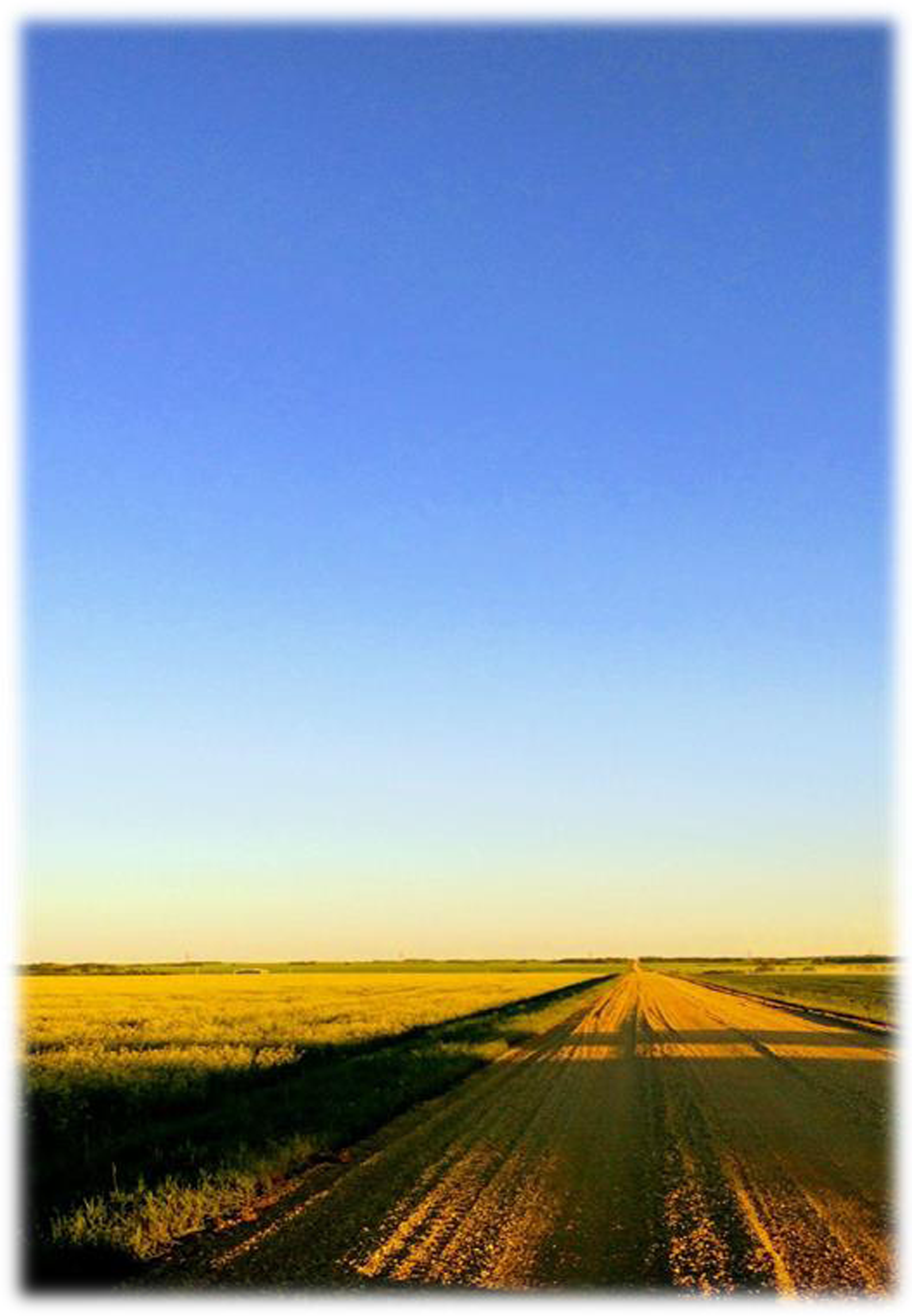
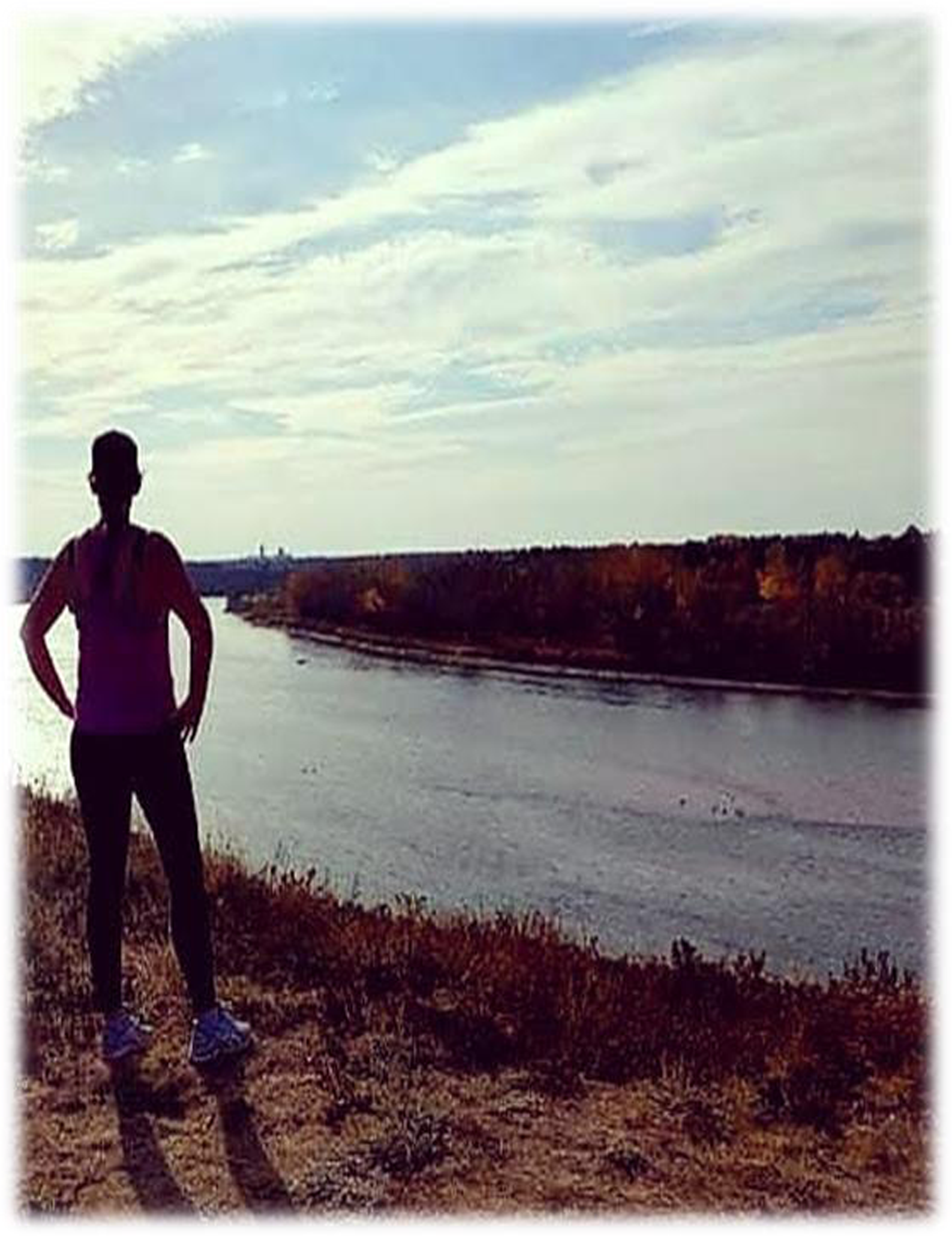
As the waters of Boonwurrung Country gave way to patchworks of greens, browns, yellows of grasslands often blanketed in frozen white, I experienced a landlocked anxiousness and arcane disorientation stemming from the breadth of Land that seemed to be subsumed by endless horizons and yawning skies. Without a shoreline to function as a border of my identity, it seemed like I might slip away into nothingness at any moment. In the in-between space of occupant and tenant, I was forced to grapple with the idea that a sense of home was not pre-given. Thus, I searched for a grounded connection to Place through movement; through running along tree-clad paths along the South Saskatchewan River that would eventually give way to open prairie landscapes (Figure 3). I yearned for Land to hold me; to reach up and remind me that the way my body moved along this running-scape was safe. To “be” physically literate meant that I was secure in movement; that I was further developing my competence, confidence, motivation, and active participation in these alien territories. To find home. Because quite honestly, any power and privilege as a White, Western, Settler contradicts any forms of safety in these terrifying times of social and ecological disarray that now includes the global chaos of climate change events. I looked for a safe passage to new territories, tracing the contours of un/familiarity through the Deleuzoguattarian concept of the refrain (Deleuze & Guattari, Reference Deleuze and Guattari1987[2013]), which allows “subjectivities to be understood in alien territories” (Evans, Reference Evans2024, p. 31). As unstable stabilisers that offer respite and restoration within threats of existence, the refrain is an ontological instrument that functions as a site of recognition to create knowable and familiar centres within the maelstrom of chaos. It was in the refrain that I claimed my territory through the ‘natural’ order of knowing and normalising processes of what it meant to be physically literate on Indigenous lands.
The prairie running-scape.
Lucy
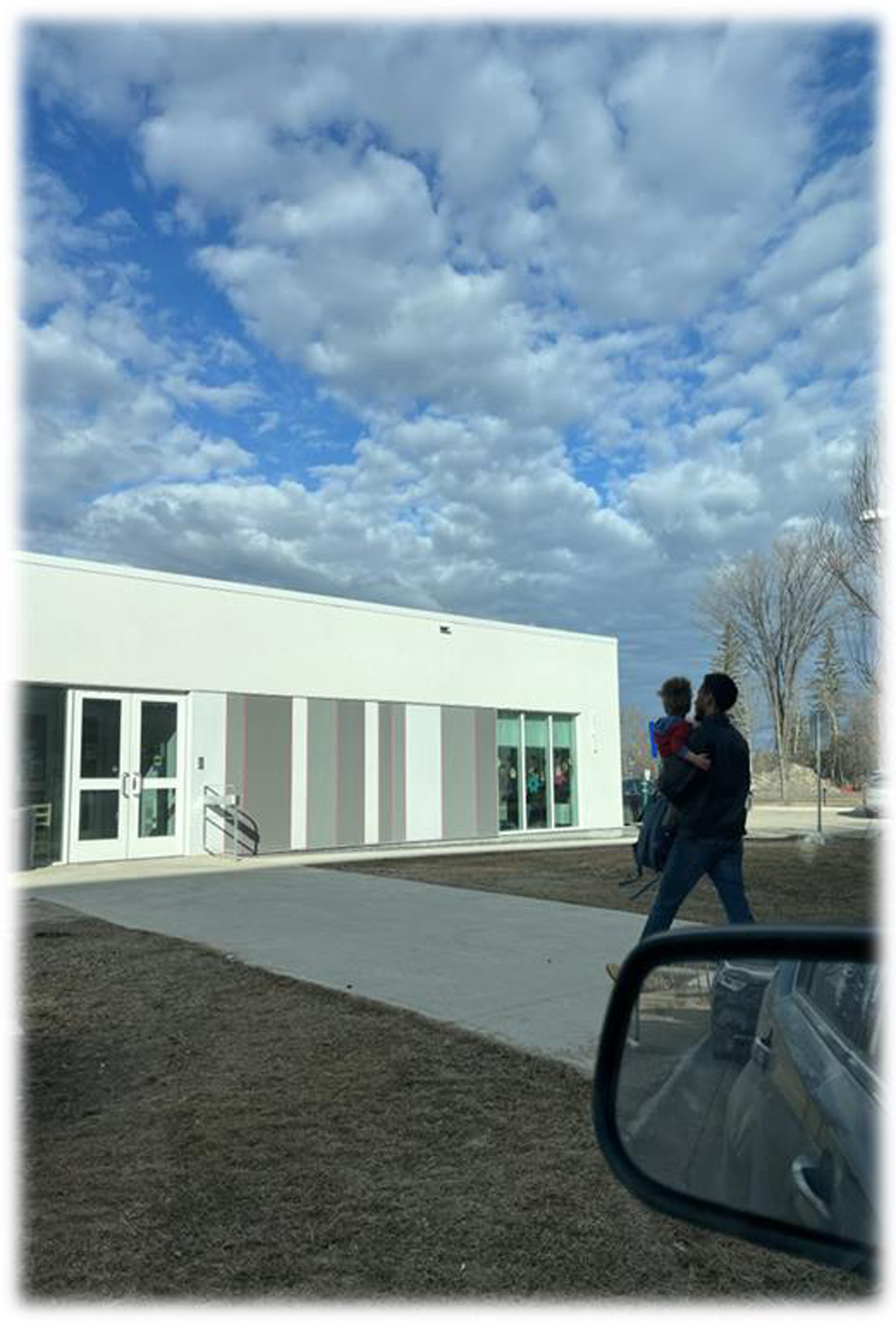
Here in this city, where I walk on concrete and watch nature through my windshield (Figure 4), I spent a long time thinking that I wasn’t on Indigenous land; that I had to travel to the bush, or to some capital L Land somewhere else in order to be connected to it; that flowers and grass that grew up out of cracks in foundation were somehow less wild. The classification of urban spaces as not-Land serves to separate urban Indigenous peoples from their identities and enforces hierarchies of legitimacy – who is enough. We classify ourselves as urban Indigenous or from the bush, tying our identities to spaces as if they explain more about us than where we’re from. I am guilty of it too, of feeling like the city is a place apart, and not listening to the way the world continues to speak to me. My mom told me a story about when she was walking back to the house from the car one day; she has mobility issues and in the wait for surgery her walking has slowed. She moved closer and closer to the door but heard a gentle creaking as she walked. She finally realised that the creaking was the sound of the flower buds on the bush she walked by slowly opening as the sun rose and she said she was reminded in that moment that to slow is to allow connection. We no longer know what it means to hear the world around us, to know the patterns of the flower blooms. Sometimes we are too busy and thinking about the next meeting or the next deadline as we rush along our commute. Sometimes we are drowned out by the cars and planes and lawn mowers, and we miss the way the world speaks to us. When I think about relationships with movement and ongoing connections to what the literature calls physical literacy, I wonder whether these small movements, these micro-relationships, between one person and the world around and beneath their feet, can count.
Concrete communities.
Anxious attachment
Kat
What do I do when I scan my arms, body, and legs to find only my skin. Completed by itself. Indoctrinated into colonial worldings of individualism and separatism, I am reminded that to be an independent thinker and an autonomous mover is a good thing. But what does it mean to be an independent thinker and an autonomous mover if I am severed from Land, or anxiously attached in claiming spaces that are not my own? There needs to be a breaking away from continuous discursive patterns of breaking in that coalesce and repeat through colonial ideologies; working to unsettle our Settler selves in shattering discursive habits of dependability created through the refrain (Figure 5). As Stacy Alaimo (Reference Alaimo2016) reminds us, it is the threat of inertia and stoppage (in the refrain) that prevents movement and calcifies the continuous variation of life, with atrophy proliferating through Western thought landscapes as the disease underlying symptoms of social and ecological system disarray.
Breaking away.

Lucy
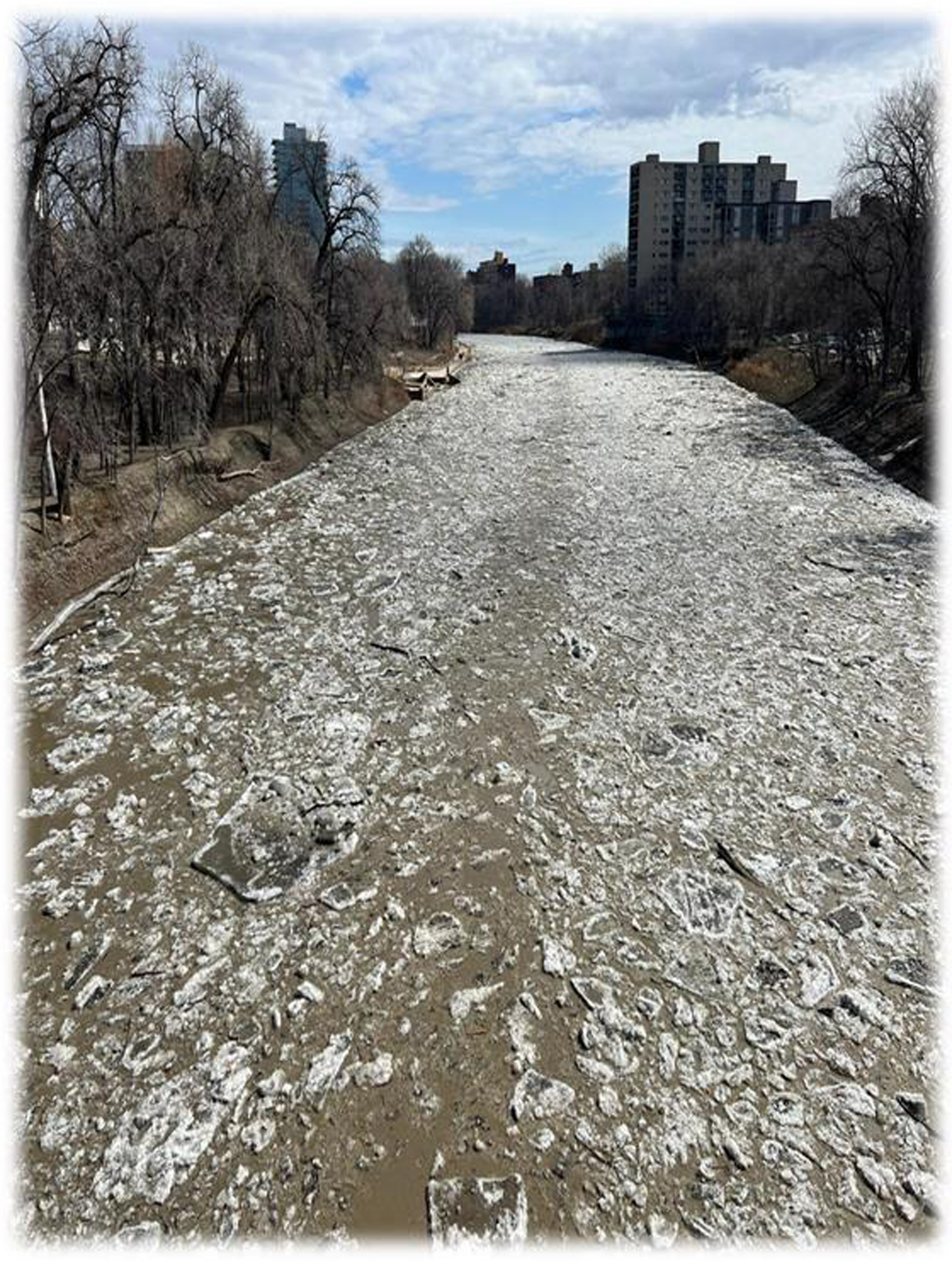
My anxious attachment reflects itself in grasping at the world (Figure 6). Hoping that I could hold this place in my arms and protect it from harm, like I shelter my baby from things that can hurt him. These centuries of devastating ecological terror that have reigned down on Indigenous communities are now catching up to everyone else, and our communities are no longer the only ones receiving direct impacts of climate change in so-called Canada. Fires burn, and smoke chokes out the sky, and the spiral continues. While the essentialisation of Indigenous knowledges and identities and romanticisation of connections to land serve to historicise Indigenous peoples, there is too something to be said for returning stewardship of these spaces to those who know them best.
Grasping.
Moving together as individuated, relational bodies
Kat
To run is to wear down the emotional restlessness that swarms my thoughts. Maybe it is to appease some of the confusion, guilt, bewilderment, of how I could be so complicit in such social and ecological crises. As I run, I wish for my pounding footsteps to etch a path into the pavement below, binding me to place. Granting me permission to take up space upon lands fractured by the relentless onslaught of colonialism’s greedy tentacles. Sometimes exhausted from my competitive edge pushing my pace faster, I would stop for breath and simply be still (Figure 7). Breathe. We share the same breath. We share the same air. I do not know where I begin, and the land ends. I am not an individualised or universalised body, but I am an individuated body, always enfolded within space, time and matter’s dynamic, ongoing, continual, and reiterative becoming. For me, running acts as a moment of rupture, as an obstruction in a line of flight, that helps to make way for the new through the (re)composing of territories and the formation of new assemblages (Deleuze & Guattari, Reference Deleuze and Guattari1987). Thus, I am not physically literate in some static, stable, fixed, and rigid way; I don’t just develop physical literacy and then simply “be” physically literate, but I enact a doing of physical literacy through performative acts of coming into being through moving-with this prairie running-scape.
Running and a moment of rupture.
Lucy
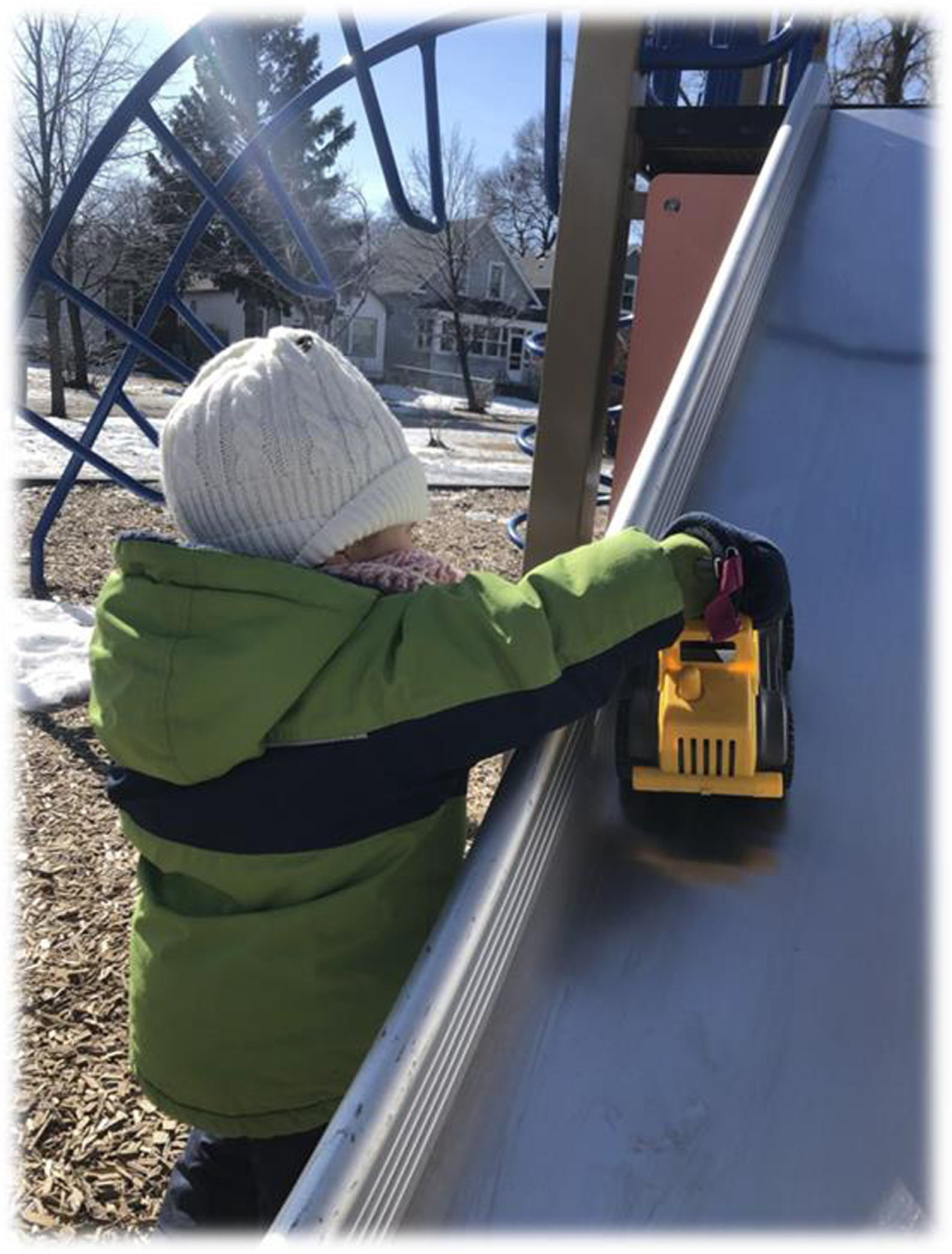
We walk together. When one of us is not quite two years old, and the other is perpetually exhausted from the weight of collapsing capitalism, our walks are more meandering than purposeful. We pause along the concrete, glancing down closely at the blades of grass and dandelions that spring up from the cracks. We chase our shadows and marvel at how quickly they outrun us. We pause to say hello to the tree, good morning to the flower, have a nice day to the bunny. We examine the earth and the grass (easier for one of us than the other, as one is much closer and the other has to stoop down) and the microcosmic world I sometimes forget about when I’m walking up high and alone (Figure 8). Sometimes we watch nature through windows. We spend our time watching the trees flower, then bloom, then shed those flowers, then sleep for the winter, and do it again. We watch the geese as we drive to daycare, or home from daycare, or to work, or home from work, and the geese watch us. We hear the smooth sound of concrete under tires instead of leaves underfoot. While some might say the concrete is a tragedy, we see these concrete spaces as (Indigi)queered sacred landforms. Structures rising up and place making for us, creating new markers for us to guide our walking, new anchors to a space that has been here since time immemorial and will be here still long after we are gone. We are not requiring the land to be “pure” in order to be sacred (Konsmo & Recollet, Reference Konsmo, Recollet, Smith, Tuck and Yang2018, p. 239) and we are moving from a normative to an expansive understanding of what Métis land is and can be.
At play.
Histories that stick
Kat
Upon the land my body, all bodies, are materially bound. Displacing a static, stable, fixed, and rigid identity, perhaps an identity that deems to “be” physically literate, the idea of a me, or my, becomes muddled as I transform through, and with, Other(s). Thus, I am always in a state of becoming physically literate through my relational entanglements in moving-with the world. Dismantling a particular human hubris within colonial imaginaries set in make believe, I am left asking: How can I move more care-fully so that you might go about your dreamings, imaginings, practicings as co-existing in the here and now. Secure attachment. How do I take up just enough space. Not more, not less, just enough. Although the space and time we take up is not the same; but bound by the histories that stick (Ahmed, Reference Ahmed2004). Sensing the contours of tenderness and care, this Land matters to me. While the pulsating rhythms were mostly unavailable to my White/Western/Settler gaze, interconnected with and through the same threads that bind us all together, it matters how I run upon this land.
Lucy
In the city, in these urban spaces, Recollet and Johnson (Reference Recollet and Johnson2019) remind us that “land-ing occurs within and amidst complex entanglements and embodied remembrances of forced exiles” (p. 186). Land-ing (and landing) in the city can be disruptive, or disconcerting, or uncomfortable. Or, land-ing/landing in the city can provide expansive views of where we are and what stories are being told under our feet. Our lessons in understanding where our planet is and what we’ve done to it add to the stories of these places; “there is no blank slate to start from” (Liboiron, Reference Liboiron2021, p. 115). This is the place we are, no matter how we got here, and these city structures and grass-in-the-cracks pathways are our sacred landscapes now.
As I move through these streets with my small baby who is not-so-small anymore, I think about the relationship that I want him to have with these lands. The connection that I want him to grow up with, knowing that beneath this concrete are the Red River cart trails that his ancestors walked on, and the rivers that we walk beside are ones his family took canoes down. The comfort I want him to have in his own skin and familiarity with the spaces that he exists within. The pride in his own ancestry, his family, and the embodied knowledge that he is carrying on traditions from his past ancestors to give to his future ones.
Wandering and wondering at the borders of difference
Grounded in a call for settler reckoning and Indigenous resurgence (Wildcat et al., Reference Wildcat, McDonald, Irlbacher-Fox and Coulthard2014), our article entangles posthumanist and Métis-specific research to eschew the idea of a separate and individualised body charged with autonomy and self-determined agency, to suggest the continual and reiterative (re)configuring of the self with broader ecologies of the world in becoming-with all worldly Other(s) (Barad, Reference Barad2007; Braidotti, Reference Braidotti2019; Haraway, Reference Haraway2016). From a Métis lens, the subjectivities of self are inherently set within the ongoing interrelationships between material landscapes and the histories, events, kinships and spirits of these relationships (Ferland, Reference Ferland2022), and Métis embodied belonging in both rural and urban spaces despite legacies of colonial land displacement (Flaminio et al., Reference Flaminio, Gaudet and Dorion2020; Logan, Reference Logan2015). Therefore, we emphasise the importance of curricular and pedagogical approaches set within deep specificity based in Land/Country/Place; always cognisant of the colonial pull to essentialise or appropriate Indigenous Knowledges and perpetuate universalisms. Without falling into traps of relativism, we are also critically mindful of the colonial tendencies of assimilating Indigenous Knowledges into normalising and universalising Western constructs of knowing. Thus, we are not trying to move Western constructs of physical literacy into Indigenous knowledge systems or vice-versa. Rather, dwelling at the borders of difference between our Western and Métis embodiments of physical literacy, we grapple with how we come into relationship with physical literacy through and with Other(s) in the chiasmic dance of becoming undone and redone. Wondering and wandering at the borders of difference between our Western and Métis embodiments of physical literacy, we consider how different relations make different obligations, which then engender different methods for actualising physical literacy in diverse educational spaces. Juxtaposing our embodiments of physical literacy with, and against, each other, we understand that difference is not the same as mutual exclusion; and therefore, providing entangled/differentiated accounts of physical literacy we seek to address territories of power in the conceptualising of physical literacy.
We are all too aware that habits within the refrain are more robust than others (Evans, Reference Evans2024). For instance, recurring patterns of movement performances within colonial notions of community, often without collective responsibility, are well-worn political ideologies in Western thought/practice. Proposing a deliberate breaking away from imposed order regarding the universalising definitions of physical literacy, we are not interested in what physical literacy means, but what it does, or can do within the epistemological assumptions of logic, objective truths and binary classifications ingrained in the mainstream. In unstopping the stoppage (Evans, Reference Evans2024), we refuse static, stable, fixed and rigid definitions of physical literacy to suggest that physical literacy is a dynamic force that comes into being through moments of rupture in the movement encounter; through shocks to the body that call us to pause, attune and notice our particular relational entanglements with the world and our particular relational obligations to the world within very specific politics of scale. At stake within the conceptualising of physical literacy, therefore, is the asymmetrical flows that shape, inform and influence the relational space.
In response, we call for a critical and performative de/reconstructing of innocence that positions the classroom community as co-constituting more-than-human relations but also response-able to configurations of power and territory (Nelson & Drew, Reference Nelson and Drew2023). Such praxis seeks to nurture complex entanglements without collapsing important differences and distinctions that matter in the co- shaping of worldings (Barad, Reference Barad2017; Haraway, Reference Haraway2016; Nelson & Drew, Reference Nelson and Drew2024); all the while critically questioning whose knowledges, experiences and worlds are inadvertently, or on purpose, prioritised in our educational definitions, agendas, ethics, curricular and pedagogical enactments (Braidotti, Reference Braidotti2019; Riley, Reference Riley2023). This anticolonial praxis is more than a focus on addressing complicated problems, but a project that grapples with complex predicaments as a way to generate different stories, assemblages and worldings (Machado de Oliveira, Reference Machado de Oliveira2021). In the case of promoting culturally responsive and appropriate physical literacy, disrupting Western/Settler privileges in the present within a context of co-existence, so that Indigenous knowledge and practice can safely circulate (Wildcat et al., Reference Wildcat, McDonald, Irlbacher-Fox and Coulthard2014).
The experimental design adopted in this article will continue through a research project enacted in middle-years settings in Winnipeg, Canada, in which we seek to garner empirical evidence of what physical literacy means for Western and Métis teachers and learners. It is our hope that this research will continue the project for a re-membering of relations between all peoples and the Earth, in the bid to adequately promote a healthier and more well citizenry and opportunities for thwarting forms of environmental destruction and decay through localised, place-based caring for and nourishing of Land and Country.
Acknowledgements
Kat and Lucy write from Treaty 1/Red River Territory, the traditional Indigenous territory of the Anishinaabeg, Ininiwak, Anishininiwak, Dakota and Denesuline peoples and the homeland of the Red River Métis Nation. The treaty was to ensure the land was to be shared with all our relations, including more-than-human relations. We include this acknowledgement as a recognition of our personal and professional commitment to disrupting ongoing settler colonial violence and to standing in solidarity with decolonising and anticolonial practices and pedagogies in education and beyond.
Funding statement
This research was supported by the New Investigator Operating Grant from Research Manitoba.
Ethical standards
Nothing to note.
Author biographies
Kathryn Riley (Ph.D.) is a third-generation Settler to Australia and a first-generation Settler to Treaty 1/Red River Territory in Manitoba, Canada. Kathryn is currently an Assistant Professor in Curriculum, Teaching and Learning in the Faculty of Education at the University of Manitoba. As a past teacher of Physical, Health and Outdoor Environmental Education, Kathryn’s research is primarily focused on relational ways of knowing, being, thinking, doing, and feeling, pedagogies for (w)holistic well-being and an anticolonial praxis for social and ecological justice in response to place-based environmental issues. Kathryn recently (Co)Guest Edited a Special Issue with the Australian Journal of Environmental Education (AJEE) called, Relational Ontologies and Multispecies Worlds: Transdisciplinary Possibilities for Environmental Education. Kathryn is an Associate Editor with the AJEE. Kathryn can be contacted at kathryn.riley@umanitoba.ca
Lucy Delgado (Ph.D.) is a Two-Spirit Métis woman from Winnipeg, Manitoba, with Métis family names of Sinclair, Cowie, Cummings, Pruden and others. Lucy is an Assistant Professor in the Faculty of Education at the University of Manitoba and the elected chairperson of the Two-Spirit Michif Local of the Manitoba Métis Federation. Her work focuses mostly on urban Métis experiences and experiences of Two-Spirit or Indigiqueer Métis peoples. Lucy is one of the creators and Circle of Editors of Pawaatamihk: Journal of Métis Thinkers, an open-access academic journal focusing on lifting up the voices of Métis scholars, artists and community members. Lucy can be reached at lucy.delgado@umanitoba.ca


 Open access

