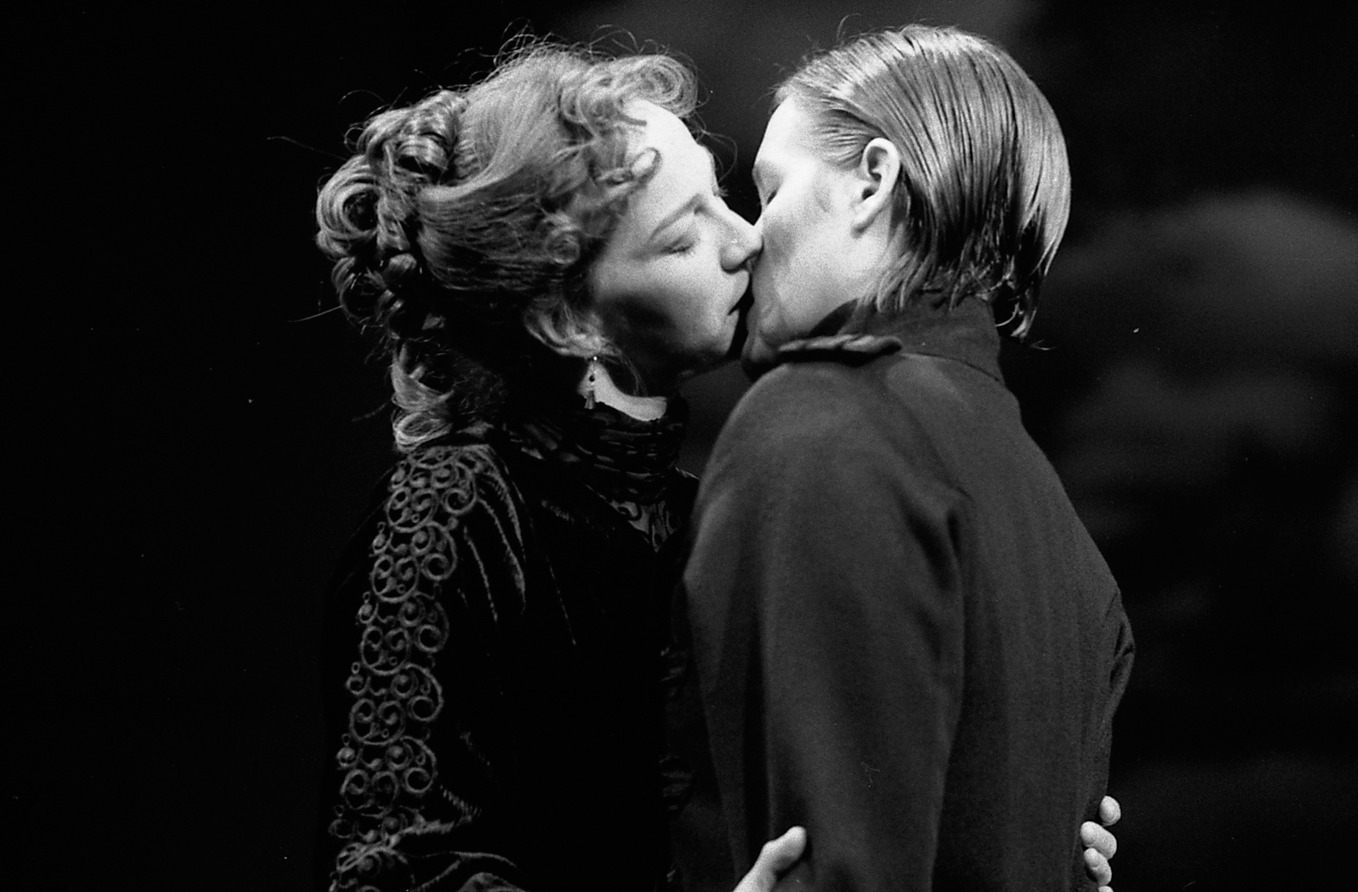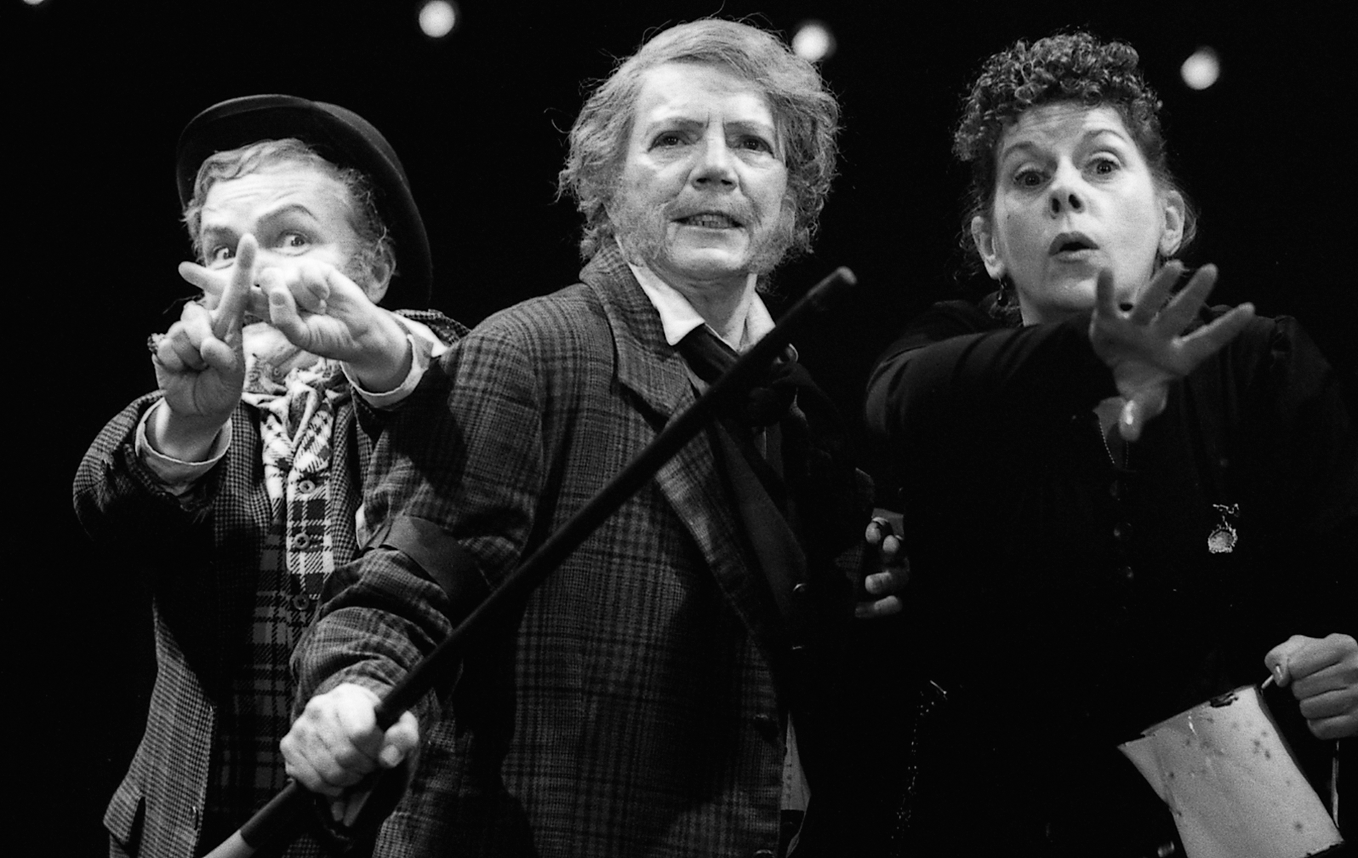


Twelfth Night is a very popular play in the theatre and during the last 100 years in particular it has inspired a staggering variety of approaches and readings by theatre directors and performers. Some directors emphasise the class war that is at the heart of the Malvolio narrative; others focus on sexuality and identity politics, which are fundamental to the Viola narrative. Some directors are seduced by realism, and aspire to create an Illyria that will be plausible and socially coherent, and others respond to the anti-realism in the play and flaunt its implausibility, its magical unrealism, its discontinuities and its topsy-turvy qualities so appropriate, in Shakespeare’s day, to the feast of 6 January, twelfth night.
Various trajectories can be discerned through the four centuries of Twelfth Night’s performance history: over the last 120 years Malvolio has become more of an object of sympathy, sometimes even a tragic hero, especially in the final scenes of the play; Viola having sung her way through much of the eighteenth century, became elegiac for much of the nineteenth, exquisite but essentially passive, before becoming rather more assertive and sexually enquiring by the end of the twentieth century and the beginning of the twenty-first. Feste has grown from being an embarrassment, often marginalised by cutting, to a keynote figure, helping to establish tone and mood, a source of world-weary wisdom. However, the most crucial overall trend has undoubtedly been the move from seeing Twelfth Night securely as a comedy, to finding more unhappiness, misalliance, and indeed to seeing it as a comedy about to collapse into tragedy, a comedy infected by the proximity of Hamlet, which is close in date to Twelfth Night, rather than harking back to the broad comedy of Shakespeare’s other twins play, The Comedy of Errors. The play becomes a comedy haunted by the loss of Shakespeare’s son Hamnet, who would not come back from the dead to greet his twin sister Judith as Sebastian greets Viola, rather than a comedy intersecting, for example, in 2.5, with the technically brilliant physical comedy of The Merry Wives of Windsor. Some modern productions do buck the trend and not all modern Illyrias are full of doom and gloom, but it is currently the fashion to find less and less to laugh at in the play.
In order to discuss something of the territory Twelfth Night has ranged across in the course of its history in the theatre, this introduction begins chronologically, but moves to a more thematic approach when considering the diversity offered by post-Second World War productions. The major areas of investigation here are: the attempt to locate a production geographically, culturally and politically by means of its vision of the world of Illyria; the treatment of the Malvolio narrative; the treatment of the Viola narrative; the radical change in the theatrical fortunes of Feste; and the implied commentary on theatrical practice offered by recorded Twelfth Nights.
The first documented performance of Twelfth Night, in which Shakespeare himself presumably appeared as a performer, took place on 2 February (Candlemas) 1602. John Manningham, a young lawyer at the Middle Temple, records:
At our feast wee had a play called ‘Twelve night, or what you will’; much like the commedy of errores, or Menechmi in Plautus, but most like and neere to that in Italian called Inganni.
A good practise in it to make the steward beleeve his Lady widowe was in Love with him, by counterfayting a letter, as from his Lady, in generall termes, telling him what shee liked best in him, and prescribing his gesture in smiling, his apparraile, &c., and then when he came to practise, making him beleeve they tooke him to be mad.Footnote 1
Manningham’s enthusiasm for the Malvolio plot suggests that Malvolio’s suffering was not an issue for him and his understanding that Olivia was a widow indicates she was dressed in mourning. Given that Viola is now seen to be a star part, it is surprising that Viola’s plot line is only referred to implicitly, in Manningham’s reference to the use of twins in his comparison between Twelfth Night, Comedy of Errors and the Menaechmi. It is possible that Manningham’s omission here may reflect the fact that it takes an astute first time audience to register Viola’s name, which is only identified in the final scene of the play (5.1.225).
Twelfth Night probably premiered, and was mostly performed, at the Globe playhouse around 1600–1. However, relocating Twelfth Night to the Middle Temple for the performance that Manningham enjoyed would not have been difficult, despite different sight lines, acoustics and audience demographic in comparison with the Globe, because the Folio text is not demanding in terms of staging: it requires ‘several doors’ in 2.2; some kind of box tree in 2.5 (although productions have often run the joke of a palpably inadequate ‘box tree’ for the eavesdroppers to hide behind); and Malvolio is described as imprisoned ‘within’ in 4.2, which may have meant behind the doors at the back of the stage, presumably with a grille through which the actor playing Malvolio could speak.Footnote 2 Many of the play’s stage directions, such as the opening one ‘Enter ORSINO, Duke of Illyria, CURIO, and other Lords’ are left permissive, but the flexibility of ‘other Lords’ would be made precise in production. The play demands quite a few props – particularly jewels passing between various characters – and some kind of yellow-stockinged costume for Malvolio in 3.4.Footnote 3 The original casting is not known but boy actors would have played Olivia and Viola, and a small boy may have played Maria as there are references to that character’s height (1.5.168; 2.5.11; 3.2.52). It has been assumed that the role of Feste was written for Robert Armin, who had replaced Will Kemp as the clown of the Lord Chamberlain’s Men, and the large number of songs given to Feste would certainly have provided a showcase for Armin’s singing skills.
In 1954 Leslie Hotson devoted a monograph to arguing that the first performance of the play was on Twelfth Night, 6 January, 1601. Hotson writes in thrilling style but the evidence remains completely circumstantial. Because Shakespeare’s company, the Lord Chamberlain’s Men, played at court before Queen Elizabeth and an Italian guest, Virginio Orsini, duke of Bracciano on 6 January 1601, Hotson imagines Shakespeare writing the play to order between St Stephen’s day, 26 December, and 6 January, and performing in conditions which very much reflect a 1950s vision of how Elizabethan theatre worked.Footnote 4 While Hotson’s case remains unproven, the notion of performing the play on Twelfth Night has appealed to many theatre directors over the centuries.Footnote 5
Twelfth Night was also performed at court for James I on Easter Monday, 6 April 1618, and on Candlemas, 2 February, in 1623, the year that the text of the play first became available for reading. Shakespeare had died in 1616 with Twelfth Night unpublished but in 1623 Shakespeare’s colleagues John Heminges and Henry Condell saw the First Folio through the press, and this included Twelfth Night or What You Will. The records of Henry Herbert, Master of the Revels, use the title ‘Malvolio’ for the 1623 performance and two other early commentators also testify Malvolio’s ability to dominate the play.Footnote 6 Leonard Digges claims:
Meanwhile Charles I, in annotating his Shakespeare Folio, wrote ‘Malvolio’ by the title of the play, something which reads ironically in the light of those twentieth-century productions that have reconfigured the play’s action, casting Malvolio explicitly as a Puritan who is, by the end of the play, ready and waiting to start the English revolution that would deprive Charles of his kingdom and his life.
After the Restoration, Twelfth Night was assigned to Davenant’s Duke of York’s Men. Pepys saw it three times at Lincoln’s Inn Fields: on 11 September 1661, when Charles II was present, but, for Pepys (II 177), the play seemed a ‘burthen’ and he ‘took no pleasure at all in it’;Footnote 8 on 6 January 1663 Pepys (IV 6) thought it ‘acted well, though it be but a silly play and not relating at all to the name or day’; after a performance on 20 January 1669 he complained it was ‘one of the weakest plays that ever I saw on the stage’. By contrast John Downes records that the play ‘had mighty Success by its well Performance’, that ‘All the Parts being justly Acted Crown’d the Play’, which ‘was got up on purpose to be Acted on Twelfth Night’ (Downes 23). Downes records that the leading actor of the company, Thomas Betterton, took the largest role, Toby, but then Downes only lists the actors playing Andrew, Feste, Malvolio and Olivia, something which suggests that the Viola/Orsino narrative failed to make an impact, or may have been deeply cut, possibly even excised. Viola’s narrative, however, did get an airing in reworked form in the 1670s with the first performances of Wycherley’s The Plain Dealer, in which Fidelia, dressed as a man, courts Olivia, on behalf of Fidelia’s beloved master.
In 1703 William Burnaby adapted Twelfth Night as Love Betray’d; or the Agreeable Disappointment.Footnote 9 Love Betray’d was not a success, but it does offer insight into what Burnaby felt needed attention in order for Twelfth Night to work theatrically in 1703. For example, Burnaby has Cæsario (Viola) in love with Moreno (Orsino) for ‘Two years’ (11), rather than having Viola fall rapidly in love between 1.2 and 1.4. Cæsario sings for Moreno, as Shakespeare’s Viola suggests she will (1.2.57–8), although the Folio text gives her no songs. Concern about the cruelty of the plot against Taquilet (a combination of Malvolio and Andrew), is expressed by Emilia (Maria) who comments ‘If he shou’d come to lose his Place for his Love, this Business wou’d end too cruelly’ (25). At Cæsario’s prompting Rodoregue (Antonio) is explicitly pardoned and ‘shall share the blessings of this hour’ (60), whereas Shakespeare does not indicate how Antonio’s narrative ends. In addition Burnaby relocates the play to Venice, a popular location for later productions of Twelfth Night, and the Olivia character, Villaretta, becomes a widow, something which resonates with Manningham’s memory of Olivia in the 1601/2 performance.
Twelfth Night was then absent from the stage until 1741, when under the management of Charles Fleetwood at Drury Lane, Hannah Pritchard played Viola, while the consummate comedienne Kitty Clive began a long association with the role of Olivia. Clive was also famous for her singing skills and her performance helped reshape Olivia into a singing role for most of the rest of the century, although as Olivia, and Viola, sang more, Feste began to sing less.Footnote 10 The 1741 production also featured the Malvolio of Charles Macklin, who one month later was to astound London with a compelling Shylock, which moved away from the standard comic caricature of the time. As Macklin was researching Shylock when he first played Malvolio, it is possible his Malvolio may also have included some gravitas.
In the late eighteenth century Twelfth Night was often revived for one or two performances only, often around Twelfth Night. The fact the play was occasionally used for benefit performances suggests some degree of popularity.Footnote 11 Several of the individual actors who had great success with Twelfth Night during the latter part of the eighteenth century are memorialised by Charles Lamb and although he was writing ‘two-and-thirty years’ after some of the events he was recalling (Lamb 154), he vividly evokes, for example, the performance of James Dodd as Andrew and how ‘In expressing slowness of apprehension this actor surpassed all others’ (159). Lamb also argues for the unusual ‘richness and a dignity’ in Robert Bensley’s performances of Malvolio, and reminds his readers that ‘when Bensley was occasionally absent from the theatre, John Kemble thought it no derogation to succeed to the part’ (157), something which suggests a Malvolio tilting in the direction of decorum.Footnote 12 For Lamb, Bensley ‘threw over the part an air of Spanish loftiness. He looked, spake and moved like an old Castilian’ (158) and he evoked Don Quixote: ‘when the decent sobrieties of the character began to give way, and the poison of self-love, in his conceit of the Countess’s affection, gradually to work, you would have thought that the hero of La Mancha in person stood before you’.Footnote 13 Lamb confesses ‘I never saw the catastrophe of this character, while Bensley played it, without a kind of tragic interest’ (159). Sylvan Barnet produces evidence to suggest that ‘Lamb’s discussion of Bensley […] is Lamb writing of his own Malvolio, rather than of Bensley’s’ (187), and certainly Bensley’s Malvolio is remembered in a rather different vein by James Boaden:
I never laughed with Bensley but once, and then he represented Malvolio, in which I thought him perfection. Bensley had been a soldier, yet his stage walk eternally reminded you of the ‘one, two, three, hop’ of the dancing-master; this scientific progress of legs, in yellow stockings, most villainously cross-gartered, with a horrible laugh of ugly conceit to top the whole rendered him Shakespeare’s Malvolio at all points.
However, Bensley was best known for serious roles, and this plus the ‘grotesque’ element of his performances (Barnet 185) may have created a serio-comic mixture of a Malvolio.
Bensley’s Malvolio had the good fortune to play, from 1785 on, alongside the highly regarded Viola of Dora Jordan. Jordan was a comic actress, a particular favourite in breeches parts, but she also found pathos in the role, and won Charles Lamb over with her performance of spontaneity, particularly during her ‘Patience on a monument’ speech (2.4.106ff.; Lamb 155): Jordan ‘used no rhetoric in her passion; or it was nature’s own rhetoric, most legitimate then, when it seemed altogether without rule or law’ and the speech
was no set speech, that she had foreseen, so as to weave it into an harmonious period, line necessarily following line to make up the music […] but, when she had declared her sister’s history to be a ‘blank,’ and that she ‘never told her love,’ there was a pause, as if the story had ended – and then the image of the ‘worm in the bud’ came up as a new suggestion – and the heightened image of ‘Patience’ still followed after that, as by some growing (and not mechanical) process, thought springing up after thought, I would almost say, as they were watered by her tears.
The Public Advertiser (16 November 1785) also approved Jordan’s Viola which it found ‘serious, gentle, tender and sentimental’. Meanwhile Boaden, in his biography of Jordan, claims ‘the mere melody of her utterance brought tears into the eyes’ and Viola’s ‘passion had never so modest and enchanting an interpreter’ (Boaden, Vol. I, 76). Boaden also quotes Joshua Reynolds’s verdict that Jordan’s Viola ‘combines feeling with sportive effect, and does as much by the music of her melancholy as the music of her laugh’ (Vol. I, 221). Given all this musicality, and the fact that Jordan was famous for her singing ability, it is not surprising that this Viola also sang.
Several images of Jordan in the role of Viola survive. A painting by Hoppner has Jordan as Cesario in a hussar’s high hat and regimental coat, but with delicate, feminine features, whilst an illustration by Henry Bunbury of the duel scene accentuates the ample proportions of Jordan’s bosom and hips to such an extent that it seems impossible that her Cesario could have passed for a boy; nevertheless, it was presumably in a gesture towards a realistic presentation of twins that, on 10 February 1790, Jordan’s brother, George Bland, played Sebastian.Footnote 14
This was the period when many traditional comic routines were developed around the playing of the revelry of 2.3; for example, William Dunlap remembers with enjoyment that:
The picture presented, when the two knights are discovered with their pipes and potations, as exhibited by Dodd and Palmer, is ineffaceable [… Dodd’s] thin legs in scarlet stockings, his knees raised nearly to his chin, by placing his feet on the front cross-piece of the chair (the degraded drunkards being seated with a table, tankards, pipes, and candles, between them), a candle in one hand and pipe in the other, endeavouring in vain to bring the two together; while, in representing the swaggering Sir Toby, Palmer’s gigantic limbs outstretched seemed to indicate the enjoyment of that physical superiority which nature had given him.
Long term it was John Philip Kemble’s production of Twelfth Night which had the most significant impact, although Kemble built on the work of, for example, David Garrick, whose production of Twelfth Night is partly documented in Bell’s Shakespeare edition. Kemble’s published promptbook records the results of over twenty years’ work on the play: cuts, additions, erasures of inconsistencies, as well as his decision to reverse the opening two scenes of the play, an arrangement which has proved enduringly attractive to directors, particularly those wanting to open the proceedings with a tremendous storm.Footnote 15 Kemble also popularised songs that became perennial favourites, such as ‘Which is the properest day to drink?’ in 2.3; he restructured the action to produce strong curtains; and he reshaped the multi-focussed opening act so that Viola is more securely the star (Shattuck, 1974, ii). Meanwhile Andrew was built up, Feste cut back, especially his songs, and Antonio’s love for Sebastian much edited.Footnote 16 Olivia and Viola’s exchanges were trimmed, and rendered more decorous. Kemble was particularly careful about regularising Shakespeare’s text and, for example, Orsino does not fluctuate between ‘count’ and ‘duke’ but is consistently a ‘duke’; and Toby is always Olivia’s ‘uncle’, not her ‘cousin’. Many of Kemble’s adjustments to Twelfth Night became standard theatre practice, and could still be seen at work in later productions by, for example, Henry Irving (1884), Frank Benson (1892) and Herbert Beerbohm Tree (1901).Footnote 17
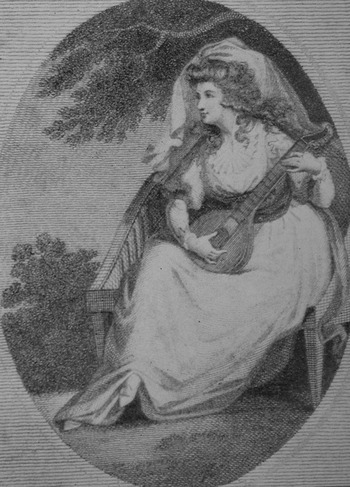
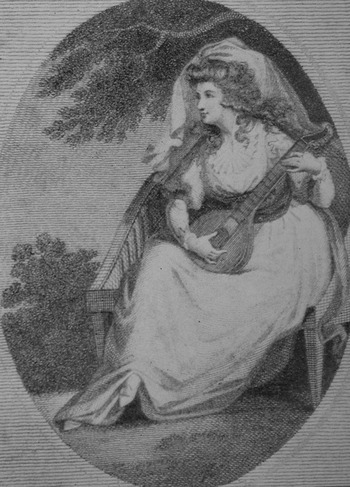
John Liston, who played Malvolio for Kemble in later performances, had only qualified success in the role according to John Genest (Vol. VIII, 227): Liston ‘was truly comic’ in the letter scene (2.5) and ‘when he entered cross-gartered’ (3.4), but ‘on the whole Malvolio was a part out of his line’. However, the singing Olivias (see Figure 1) and Violas continued to be popular and it seems a logical progression that in 1820 Twelfth Night became an opera: Frederick Reynolds adapted the text, and Henry Bishop provided the music.Footnote 18 Introduced songs included ‘Who is Sylvia’ from The Two Gentlemen of Verona, and the production featured ‘The Masque of Juno and Ceres’, which owed something to The Tempest. Maria Tree played Viola, a role her sister Ellen Tree/Kean was later to have great success with; while Leigh Hunt admired Maria Tree’s performance, the fact he spent thirteen lines of his review salivating over the display of her legs indicates he was not merely interested in her acting.Footnote 19 Although the production’s Malvolio, William Farren, was famous for straightforwardly comic roles, this operatic Twelfth Night is also possibly the first production to have staged 4.2, the dark room, with Malvolio visible to the audience, something which, as David Carnegie argues, has profound repercussions in terms of generating sympathy for the character (Carnegie 395; see pp. 44–5).
Elizabeth Farren as a lute-playing, singing Olivia.
For most of the nineteenth century Twelfth Night was only intermittently popular, although some individuals, such as Samuel Phelps, achieved critical and commercial success with the play. Phelps’s 1848 Twelfth Night featured Phelps himself as a Malvolio who had a ‘frozen calm’ and who ‘sails about as a sort of iceberg, towering over spray and tumult […] There is condescension in all he does […] His acceptance of his lady’s love is quite as approving as it is grateful’ (Bayle Bernard, Weekly Dispatch, quoted in W. M. Phelps 162). Henry Morley (Examiner 24 January 1857) provides more detail: this Malvolio was ‘in bearing and attire modelled upon the fashion of the Spaniard, as impassive in his manner as a Spanish king should be’, and Phelps took Olivia’s comment ‘you are sick of self-love, Malvolio’ as the key note to the role. Morley comments that ‘we are not allowed to suppose for a moment that [… Malvolio] loves his mistress’ and he ‘walks […] in the heaviness of grandeur, with a face grave through very emptiness of all expression. This Malvolio stalks blind about the world; his eyes are very nearly covered with their heavy lids, for there is nothing in the world without that is worth noticing, it is enough for him to contemplate the excellence within.’ Morley records that ‘When locked up as a madman [Malvolio] is sustained by his self-content, and by the honest certainty that he has been notoriously abused’ and Phelps’s delivery of Malvolio’s final line was memorable: ‘he is retiring in state without deigning a word to his tormentors’ when suddenly ‘marching back with as much increase of speed as is consistent with magnificence, he threatens all – including now Olivia in his contempt – “I’ll be revenged on the whole pack of you!”’ Although most critical attention was focussed on Phelps’s new reading of Malvolio, there was considerable praise for the decision to cut back on traditional comic business which had accrued particularly around 2.3, the drinking scene. The Phelps promptbook (S11) also indicates a significant return in many respects to Shakespeare, as opposed to Kemble.Footnote 20
In 1850 Charles Kean opened the Princess’s Theatre with a production of Twelfth Night which built on the high reputation of the Viola of Mrs Charles Kean/Ellen Tree.Footnote 21 Tree had first appeared in Twelfth Night as Olivia, when aged seventeen, but from 1832 she had frequently played Viola, to acclaim in England and the US.Footnote 22 In 1840 she played the role for Eliza Vestris at Covent Garden, using the costume of a ‘Greek boy’ for Cesario (T 26 June 1846), that is, a hat with a tassel, and a tunic with full skirts to the knees. Tree’s costume was to be imitated by many Cesarios over the next sixty years although, as Russell Jackson points out, ‘The danger here was of making Sebastian look effeminate in order to allow for the modesty of the leading lady’ (24). Tree’s Viola was appreciated for her ‘intelligence and feminine grace’ and the creation of a ‘lovely, pensive’ characterisation (Charter 8 September 1839); in 1850 her Viola displayed ‘the archness and the poetry, the sportiveness and the pensiveness, the wondrous variety and combination of opposites, the sauciness and the modesty of the assumed boy and the real woman’ (ILN 5 October 1850). John William Cole praises the ‘exquisite pathos’ of this Viola (333), but he also records a comparison with Dora Jordan’s performance which is illuminating. Citing the memories of an elderly man in the audience who remembered Jordan, but preferred Ellen Kean’s performance, Cole characterises Jordan’s Viola as having ‘greater breadth, higher colouring, more exuberant spirits, and a broad-wheeled laugh peculiar to herself’ (334); Cole thus implicitly argues that Viola should be ‘exquisite’. Meanwhile the production’s Malvolio, Drinkwater Meadows, was restrained, ‘a natural man – a disposition perverted by personal conceit, but not dishonourable; one who thinks nobly, but acts vainly; wise of purpose but foolish and overweening in conduct’ (ILN 5 October 1850).
That the ‘feminine grace’ of Ellen Kean’s performance was crucial in garnering such approbation for her Viola/Cesario, is suggested by the contrasting fortunes of Charlotte Cushman’s Cesario, at the Haymarket Theatre in 1846, which, on the evidence of the illustration published in The Illustrated London News (11 July 1846) avoided traditional femininity. The Times reviewer (26 June 1846) records ‘an intelligent version of the part’ and ‘no indolent following of convention’, but the reviewer did feel that ‘the gentle and delicate Viola’ was not suited to Cushman, famed as she was for ‘impulsive, passionate display’. Cushman avoided ‘gaiety’ and emphasised ‘earnestness throughout’; so the famous point ‘I am the man!’ (2.2.22) instead of, as traditionally, being ‘spoken in a tone of mirthful triumph’ and ‘a playful tap on the hat’ was rendered ‘as the expression of a serious conviction’. Cushman also ‘more than usually suppressed’ pathos during ‘She never told her love’ (2.4.106) by ‘assuming the tone of an indifferent narrator’. Cushman’s unconventional Cesario, and the contrast it provides with Ellen Kean’s more popular rendition of the role, reveals much about the formulaic femininity that nineteenth-century reviewers wanted from Viola/Cesario.
Kate Terry’s 1865 Viola, directed by Horace Wigan at the Olympic theatre, was also unconventional, as Terry appeared as Sebastian as well as Viola, with a dummy Sebastian being used for the final scene (Pall Mall Gazette 23 June 1865).Footnote 23 Reviewers felt this trick confused many in the audience, and Wigan’s company were not playing to their strength being ‘accustomed to works of a totally different kind’, generally avoiding Shakespeare, and being known for their ensemble work (T 9 June 1865). However, Terry’s Cesario was praised for maintaining an ‘innate modesty of […] nature, the melancholy consequent upon a hopeless love’ as well as ‘the dashes of gaiety that reveal themselves when she would assume somewhat of the boyish pertness’ (T 9 June 1865). Her ‘earnest delineation of feeling’ was also praised (Era 11 June 1865) but Terry was castigated for employing traditional business in the duel with Andrew: ‘the attempts to run away, and the dragging back and pushing on by main force’ (Fraser’s Magazine August 1865) and reviewers were not impressed that the role of Feste was played by Nelly Farren, who ‘trained in the fatal school of burlesque’, and performed, it was claimed, as if ‘a clown must always dance off the stage’ (Pall Mall Gazette 23 June 1865).
Generally actresses who managed to follow Ellen Tree/Kean in stressing the femininity of Cesario were those who enjoyed critical success with the role of Viola. For example, Adelaide Neilson played the role to acclaim in the United States as well as in her native England, working with a variety of managers including Augustin Daly, and later with Neilson’s partner Edward Compton. Neilson’s early death in 1880 contributed to the legend of her Viola, which was applauded for finding ‘the maidenly, boyish, womanly Viola of the poet’, for ‘artistic finish […] archness and piquancy’, and her finest scene was the duel ‘where she clearly reveals the woman’s heart beneath the garb of the gentle youth’ (CDT 10 December 1879). William Winter concurs, stating that Neilson’s Cesario approached the duel with ‘shrinking feminine cowardice, – commingled of amazement, consternation, fear, weakness, and dread of the disclosure of her sex’ which was ‘deliciously droll’ (Winter 44). Helena Modjeska also achieved critical plaudits as Viola: George Odell thought her ‘incomparably the finest [Viola] I ever saw, in pensive charm, in humour, in grace, in refinement, and in retention of womanly delicacy even in the farcical duel scene’ (Odell, Vol. XII, 23). Of the duel Sprague claims that ‘Madame Modjeska realized that her antagonist was not in the least dangerous’ and ‘had a good opportunity to hit him, and refrained from doing so, out of “womanly generosity”’ (Sprague 9). The Boston Evening Transcript (13 January 1887) also found what it called ‘the natural abhorrence of her sex to shedding blood’. Modjeska’s published acting text indicates that instead of Feste her Cesario sang to Orsino in 2.4, and George Becks’s annotation on a Daly promptbook (S38), which offers a lively discussion on possible stagings of the tormenting of Malvolio in 4.2, notes ‘Modjeska and others have had a barred arch opening under the steps of house and very good too.’
Laurie Osborne argues that the cuts in nineteenth-century performance editions, and the performances based on them, ‘diminished the aggressiveness and persistence of [Viola’s] surrogate wooing of Olivia as well as her self-consciousness about the role she is playing’, whilst simultaneously downplaying Viola’s wit; idealising her according to contemporary standards; undercutting ‘Olivia’s authority over her household’; and reducing Olivia’s wittiness in dealing with Cesario (1996a, 67). The real test for many nineteenth-century Violas, however, was the duel between Cesario and Andrew, which presented serious issues of decorum. In 1904 Elisabeth Luther Cary published an essay on nineteenth-century Violas which records Cary’s complete opposition to the traditional, undignified comic business: the ‘running away and pulling back, the ludicrous fight very literally at the point of the sword’ (Cary 285). Not all Cesarios were cowards; as early as Burnaby’s Love Betrayed the plucky Cæsario overhears Taquilet’s (Andrew’s) expressions of cowardice and resolves to give the duel her best shot. Viola Allen hit and pummelled Andrew on the back (S56) but critic and historian William Winter preferred a less combative approach such as that of Marie Wainwright’s Cesario who showed ‘jaunty demeanor, hampered by fluttering consternation’ which was, Winter pronounced, ‘exactly in the right vein’ (60–1).
While Viola was the focus for many nineteenth-century reviewers of Twelfth Night, that changed in 1884 when Henry Irving’s production found a new level of tragedy for Malvolio in the play, a reading that was at that time extremely controversial. By Irving’s standards his production of Twelfth Night was a failure, and when, after a tough first night, during a heatwave, in a stiflingly hot theatre, Irving made a speech rebuking his audience – after some of them had booed him – he unleashed a ‘furious war of words’ (CDT 13 July).
In some ways the production remained conventional: Irving followed Kemble’s cuts a great deal and indeed owned one of Kemble’s marked up promptbooks (S6). His production was also extremely picturesque: some of the sixteen scenes were designed by Hawes Craven, who was to produce the apotheosis of pictorial Twelfth Night sets for Herbert Beerbohm Tree’s 1901 production. William Archer (Macmillan’s Magazine August) records ‘ornate Renaissance palaces with their cool balconies and colonnades and their mazy arabesque traceries’ which ‘look forth among groves of palms, and plantains, and orangetrees, and cedars, over halcyon seas dotted with bird-like feluccas and high-prowed fishing-boats’. Some thought the production ‘over-dressed and over-mounted’ and that it was inappropriate that Olivia should live ‘in a building larger than Buckingham Palace, constantly attended by a suite of elegant ladies got up regardless of expense in Venetian finery of the sixteenth century’ (Freeman’s Journal 14 July). The cast also included ‘crowds of spearmen, torch-bearers, and richly-attired lords and ladies’ (Reynolds’s Newspaper 13 July). The biggest bone of contention in Irving’s production, however, was vividly summarised in a cartoon in Punch (19 July) where the ghost of Shakespeare appears to Irving in his sleep brandishing a placard with the words ‘Will you play Malvolio in a-merry-key?’ Irving’s Malvolio was ‘scholarly’ but ‘too sombre’ (Reynolds’s Newspaper 13 July); ‘too stern, too grave’ and unlikely to be fooled by the letter trick (Newcastle Courant 18 July); and most damningly he ‘talked through his nose, and the conception, so far from being original, was a rechauffé of Phelps’ (The Drama 12 July).Footnote 24 Archer (Macmillan’s Magazine August) argued that approaching 4.2 ‘in a tone of serious tragedy’, as Irving did, ‘is to introduce a discord’; that Malvolio should not be ‘stretched on the straw of a dungeon worthy of Fidelio’; that this Malvolio was ‘a mere repetition of [Irving’s] Shylock’; and to exit ‘like the baffled villain of melodrama, not the befooled fantast of comedy’ was wrong. By contrast The Times (9 July) thought the production ‘strikingly original in conception’ and felt respect for this Malvolio, ‘an ascetic Puritan, sober and quaint in garb, and moreover, aged in appearance’, whose ‘explosion of wrath at the end’ was ‘wrung from him by a sense of the cruel deception practised upon him’.
Ellen Terry’s Cesario was also controversial. The Times (9 July) found ‘a departure from traditional lines’ in this ‘bright and somewhat mischievous hoyden, who enters thoroughly into the fun of her disguise’. Terry
was acutely aware that Viola thinks first of serving Olivia but, finding that impossible, dons disguise to cover the impropriety of a woman serving a bachelor like Orsino. In his presence she was embarrassed by her garb, but with Olivia she could relax and enjoy the joke.
In the view of Elisabeth Luther Cary, Terry enjoyed the joke too much and Cary disapproved of this ‘laughing Viola, uncontrollably amused by her disguise and smiling at her grief with a most infectious merriment’ (276, 278). Terry was also censured for ‘introducing Cockney pronunciation and London affectations which could not have been known to the Viola of the play’ (CDT 13 July).
The Illustrated London News (16 August 1884) published a full page of sketches showing the characters as they appeared in this production: the three images of Irving’s Malvolio dominate but the sketch of Ellen Terry’s Cesario indicates she would never pass as a boy, even though realism obtained in the casting of Terry’s brother, Fred, as Sebastian.Footnote 25 Sebastian was a token role in this production and when, as a response to the negative press, Irving cut back the text even more, he came close to eliminating Sebastian and Antonio altogether. Irving also substantially reduced the role of Feste and had him played by a performer who couldn’t sing (Freeman’s Journal 14 July). By the time the production was taken to the US, however, reviewers had begun to recover from the first shock of Irving’s conception and the production fared slightly better.
The critical preference for melancholic, piquant and exquisite Violas, Violas who epitomised the (imaginary) wilting sister, ‘smiling at grief’ (2.4.111) rather than the Cesario who is ‘saucy’ at Olivia’s gates (1.5.162) risked depriving the role of energy and drive. For example, Viola Allen’s Cesario was judged too ‘self-confident’, and, because of this, missing in ‘the poetic charm’ of the role, and so, even though Allen managed to avoid ‘the “mannishness” that is apt to offend’, she did not evoke ‘the struggle Viola was undergoing in her endeavor to induce another woman to become the wife of the man she herself loves’ (CDT 22 December 1903). Allen’s Cesario might wear ‘Albanian white kilts’ and a ‘red and gold Zouave jacket’ (NYT 9 February 1904) that looked back to Ellen Tree, but her Cesario was not as successfully feminised as Tree’s had been.Footnote 26 Elisabeth Luther Cary (278–9) went so far as to identify the ideal Viola as that of Edith Wynne Matthison simply because of Matthison’s lack of, as Cary saw it, unbecoming merriment in performance. Non-normative Violas did occasionally appear: according to the New York Herald (24 March 1914) the ‘keynote’ to Margaret Anglin’s interpretation of the role ‘was repression’, but when influential theatre critic William Winter produced a whole essay on the ‘Character of Viola’ (Winter 35–9), his emphasis on patience, self-sacrifice, constancy, all evoke the gold standard, for Winter, as far as Viola was concerned: Ada Rehan’s performance in the 1893 Twelfth Night directed by Augustin Daly.
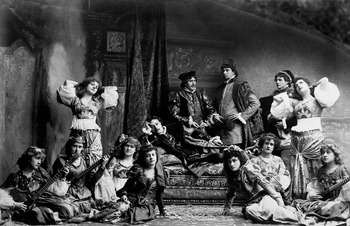
Orsino’s court, from the souvenir of Augustin Daly’s 1893 production.
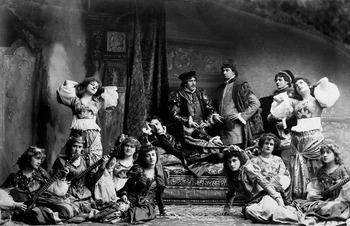
Daly’s Twelfth Night, as with all Daly’s Shakespeare productions, was sumptuous, beautifully upholstered, gorgeously costumed and featured large numbers of extras (see Figure 2). Although Daly rearranged the play radically – opening with Sebastian and Antonio (2.1), and a song from The Tempest, then proceeding to Viola (1.2), before a long Orsino scene (1.1 and 1.4) – the spectacle seduced many.Footnote 27 There was ‘a lovely Oriental dance in Act 1’, music by Bishop, Purcell, Arne and ‘Elizabethan sources’ (NYT 22 February 1893), but 618 lines of the play were cut (Felheim 252). Ada Rehan’s Cesario maintained a ‘pensive melancholy’ and ‘Even in the rare moments of Viola’s frivolity there is still present the echo of the minor key in which the characterization is consistently pitched’ (Illustrated American 15 April 1893).
Daly brought the production to London for a successful run in 1894 and was so pleased with the English reviews that he published an anthology of extracts, not all of them unequivocally admiring, in a souvenir programme. The anthology concentrates on Rehan’s Viola – Malvolio is hardly mentioned – and stresses her femininity: she combined ‘exquisite maidenly reserve’ with ‘a woman’s delight in pleasantly hoaxing the sterner sex’ (Morning Post); she was ‘exquisitely pathetic’ in 2.4 (Daily News); she regards Olivia ‘with pity and sisterly regard’ (Daily Chronicle); she displays ‘tender and subdued womanliness’ (St James’s Gazette). Meanwhile although the Daily Chronicle is quoted as claiming ‘The excuse for the introduction of dances is seized, and a good deal of music is interpolated with happy effect’, the programme does balance this praise with the Athenaeum’s reservation that, ‘delightful’ though the production was, ‘too much stress is laid upon the setting, and accessories are elevated into undeserved and, in a sense, inartistic prominence’. But overall the production was a tribute to Daly’s managerial acumen in adapting Twelfth Night to suit contemporary theatrical taste and he achieved a significant commercial success.
In 1895, a year after Daly’s vision of Twelfth Night played in London, a stark contrast was on offer in the form of a production by William Poel, then embarking on his campaign to remove scenic clutter from the Shakespearean stage and to return to what he claimed to be original staging practices. Poel was not the first to experiment with Twelfth Night and so-called original staging practices: Karl Immermann mounted an original practices Twelfth Night in Germany in 1840 ‘in a (makeshift) hall with an amateur cast’ (Foulkes, 2002, 40). Poel’s claims to authenticity were also often contentious. Gestures towards ‘original practices’ were certainly in evidence: in Poel’s Twelfth Nights, music was by the Dolmetschs, it was composed in imitation of Elizabethan music, and it was played on instruments built in the early modern period. Sword-play was directed by Captain Hutton, who refused to use modern foils. Less obviously authentic were Poel’s decisions to cast primarily according to voice pitch, thus creating an anachronistic sense of orchestration in relation to the verse speaking, and his excision of Malvolio’s dark room scene.Footnote 28 William Archer contended that although the programme described the production as ‘Acted after the manner of the Sixteenth Century’ in fact it was ‘Staged (more or less) after the manner of the sixteenth century and acted after the manner of the Nineteenth Century Amateur’ (Speaight, 1954, 103) and complained that 251 lines were missing (Speaight, 1954, 104).
The provocation of Poel’s claims to ‘authenticity’ gained extra impetus, as far as Twelfth Night was concerned, in February 1897 when Poel staged the play in the Hall at Middle Temple, the venue for the performance John Manningham had enjoyed in 1601/2. Poel was not the first to envisage performing in this location. Elizabeth Robins and Marion Lea had previously made an attempt to stage Twelfth Night at Middle Temple, on twelfth night in 1892. Their proposal was to stage the play ‘in strictly Elizabethan style, with restored text, little or no scenic effect beyond arras hangings, but with rich costumes and special attention to the music’.Footnote 29 Robins and Lea were refused permission, but Poel got the go-ahead and once the precedent of staging a modern Twelfth Night at the Middle Temple had been set, productions of the play in that location became a rather recurrent event.Footnote 30 Poel’s Middle Temple Twelfth Night used a raised platform stage, plus, confusingly, given the original practices agenda, a proscenium with columns holding tapestry curtains (Mazer 70), and a raised gallery at the back of the stage area. It was a grand event, and was attended by the Prince of Wales, but while Poel’s ideas found favour with those reviewers who enjoyed bare boards Shakespeare, theatre practice did not change overnight. Daly’s sumptuous, upholstered, musical Twelfth Night played to the contemporary market while Poel’s Twelfth Nights were seen primarily as a curiosity, even an aberration.
The Early Twentieth Century
The beginning of the twentieth century saw three very different but extremely long-running Twelfth Nights reconfiguring the play for contemporary audiences. Firstly, the Benson Company’s Twelfth Night, which originated in the early 1890s, toured throughout the first three decades of the twentieth century and while the company never achieved a particularly high profile in London, these tours brought the Benson version of Twelfth Night to a very large number of people over the years. Benson’s Illyria was full of comic business, it was athletic, physical and, by the standards of the day, it did not invest heavily in sets because of the demands of touring. The comedy of drunken behaviour was stressed, and there was much farcical hitting and slapping by most characters, including Viola, and during the duel with Andrew, Cesario not only ran at Andrew but beat him on the back with her fists, before Andrew then chased Cesario around the stage (S44). The production made enthusiastic use of songs; the drinking scene included much business such as blowing smoke in Malvolio’s face, tweaking the tassel of Malvolio’s ridiculous night cap etc. (S44). The production usually omitted 4.2 – the tormenting of Malvolio – and cut the final scene so deeply that the pace towards the end must have been frantic.Footnote 31 Frank Benson’s Malvolio was described as a ‘lean pantaloon’ (T 6 February 1901), a commedia reference which suits the comic physicality of this Twelfth Night.
A less physically robust but decidedly pictorial approach to Twelfth Night was adopted by Herbert Beerbohm Tree who, in 1901, opened his production while England was in official mourning for the death of Queen Victoria. The black mourning gowns on display in the stalls on opening night provided a stark contrast to Olivia’s costume, a white Elizabethan dress with black trimmings, which Modern Society (16 February) felt inappropriate for a woman mourning her brother. In fact the costumes and sets for this production stole most of the reviews, and Hawes Craven’s backdrop for Olivia’s garden, which offered a perspective view of steps rising up to dizzying heights, received rave notices.Footnote 32 The glory of this setting for Hearth and Home (16 February), however, did impose a ‘strain on the credulity’, because it meant that quite surprising sections of the action, including Antonio’s arrest, clearly and unequivocally took place in Olivia’s private garden. Orsino’s palace was also impressive and ‘Venetian in its glittering tesseroe’ (Sporting Times 9 March).
Tree played Malvolio ‘mincing, walking with much hip movement, finnicky, smiling, comically dignified, with a wealth of by-play’ (Sporting Times 9 March) (see Figure 3). He was often accompanied by a group of four minions, dressed in clothes identical to Malvolio’s, and the function of these minions was to reflect, and keep the comic focus on Tree. Dramatic World (March) enjoyed this Malvolio’s ‘artificiality […] his consummate coxcombry, his utter ignorance that anyone is laughing at him, his portly arrogance, and his almost sublime indifference to any interest but his own’ but also noted that ‘in the prison scene his awakening is pathetic’. Hearth and Home (16 February) indicates that Olivia allowed Malvolio ‘to toy with her hair’, something Malvolio could easily misread as encouragement, and it records of Malvolio’s final exit that ‘after vowing revenge he tears off his badge of office and stalks away, majestically dignified in his wrath’.Footnote 33 The Manchester City News (16 February) thought this Malvolio ‘a model of dignity and fatuous self-approval, passionately self-enamoured, his mortification in his defeat rises almost into tragedy, and his resentment at the indignities heaped upon him leads to his surrender of office and a contemptuous abandonment of his gold chain’. Several reviewers referred to the, by now traditional, reference to Don Quixote (e.g. Whitehall Review 10 October 1901).
Herbert Beerbohm Tree as Malvolio in Tree’s 1901 production.
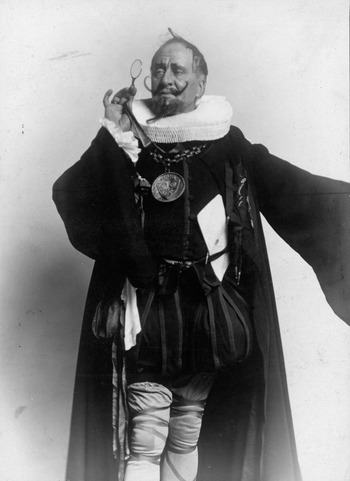
Tree’s biographer, Hesketh Pearson, took a cautious view: ‘Tree was constantly inventing comic business, such as a careful inspection through his glass of the statue of a nude female figure, varying his reactions to it from strong disapproval to leering delight’ and such inventiveness overall gave ‘an unforgettable impression of Beerbohm Tree’s Malvolio, with incidental verbal music by William Shakespeare’ (Pearson 130). Something of the accuracy of this statement can be gauged from the inventive business Tree used to close 2.3. Promptbooks reveal that first Feste returned ‘as ghost. [Toby and Andrew] scream and go out of door. Clown drinks at last bottle. Goes to fire: sinks down & swigs’ (S46). After this Malvolio reappeared ‘in nightshirt and nightcap, with drawn sword and frantically bulging eyes, to seek in the peaceful darkness for imaginary dangers, and to thrust Don Quixotic-like, at candle-sticks and fallen chairs’ (Clarion 16 February 1901). Another comic elaboration was Tree’s entry in 2.5 when:
Descending the steps of the terrace, head in air, with stupendous self-importance, he tripped and almost fell headlong, but recovered his balance in the nick of time and managed to descend in a dignified sitting posture
but ‘to show that it had been his intention to take a seat at that precise spot, he calmly lifted his eyeglass and inspected the surroundings at leisure, the effect being fantastically funny’ (Pearson 130).
Lily Brayton’s Viola was generally praised, and this was an important role for Brayton, who had played Olivia for the Bensons in the previous year, but who was not, at that time, well known in London. As Cesario, Brayton donned ‘white tunic and crimson velvet sash, with crimson leggings, high boots embroidered with gold, and on her dark hair a fisherman’s knitted cap, also crimson’ (Court Circular Fashion Notes 16 February), a costume that looked back to Ellen Tree. Despite the lavish spending on costumes and set, the production recovered its costs in three weeks (People 31 March 1901), and Tree issued a souvenir brochure of twelve colour plates for its fiftieth performance.Footnote 34
Another Twelfth Night that ran for decades was that first mounted by Julia Marlowe and her partner E. H. Sothern in 1905 and which toured the US and Canada. Marlowe originally played Viola as early as 1887 and by 1919 there were suggestions the 54-year-old actress had ‘become rather mature in appearance for Viola’ (GM 2 December 1919) but Marlowe’s femininised Cesario – she ‘affects horror at the idea of drawing a sword’ – and Sothern’s robust characterisation of Malvolio as a ‘thoroughly affected ass’ (GM 25 April 1913) proved enduringly popular. Marlowe’s biographer Charles Russell hails her approach to Viola as innovative in its melancholy, its intelligence and emphasises the ‘diligent study’ Marlowe had devoted to the role.Footnote 35 As an example of Marlowe’s innovation Russell cites Viola’s opening lines, which, he claims, it was customary to play ‘to a somewhat lively tempo and for Viola to show to the world a face of youthful curiosity’ (47). Marlowe felt this was wrong and instead here ‘struck an undertone of melancholy’ (Russell 48). Sothern’s Malvolio was broadly played for comedy: Russell quotes a review recording Sothern’s ‘pursed, reticent mouth, his prim and pompous gestures’ plus ‘that self-consciousness which brings all Malvolio’s troubles upon him’ (547). By 4.2, however, Sothern was playing equally enthusiastically for tragic effects and the scene opened with the sound of Malvolio ‘mumbling’ and ‘clanking his chains’, and closed with groans of despair (S62, 63). The Sothern and Marlowe promptbooks, which Russell states were prepared by Marlowe (xxi), are full of extensive comic business, and this necessitated deep cutting to compensate for the running time added by these comic set pieces. Some aspects of the production, such as the use of mandolin music to accompany the willow cabin speech, or the performance of an eight-minute musical overture at the beginning of the play, might not appeal to modern theatrical taste, but this production of Twelfth Night sold well for twenty years.
Illyrias full of clutter and comic business did not, however, have a complete monopoly. While Poel’s productions were uneven, his ideas had struck a chord with other directors. The Times (4 May 1909) records a Twelfth Night at the Royal Court, produced by Gerald Lawrence and Fay Davis, where ‘The lack of scenery is positively pleasant to the eye’. In 1911 Lewis Casson, at Annie Horniman’s Gaiety theatre in Manchester, stripped back Twelfth Night, drastically trimmed the cakes and ale business, played a streamlined text, and had Edyth Goodall and Irene Rooke alternating Viola, ‘playing it a week in turn’ (Pogson 114). Then in 1912, one of Poel’s former actors, Harley Granville Barker, went a step further in working with Poel’s ideas whilst also adapting them realistically to contemporary taste.
Barker came to Twelfth Night after a controversial production of The Winter’s Tale which had outraged many reviewers.Footnote 36 Barker’s Twelfth Night was better received but it still ruffled the feathers of the traditionalists. The production was fast moving, it only cut around twenty lines, and it used modernist sets as well as an Elizabethan style platform built over the orchestra pit. Most traditional comic business, particularly that associated with Toby, was abandoned, and in directing his then wife, Lillah McCarthy, as Viola (see Figure 4), Barker insisted on the role being played as a boy/girl not as a girl/boy. Both McCarthy’s Viola and her Cesario were gutsy – Cesario made a particularly good showing in the duel with Andrew beginning by imitating ‘almost everything [Andrew] does’ and soon ‘having gained courage, now fights with determination – strikes Andrew’s sword 1st time a direct blow – 2nd and 3rd reverse blows’ (pbk). As Dymkowski comments ‘the audience was left in no doubt about the likely victor if Antonio had not intervened’ (Dymkowski 55). McCarthy’s performance suggests a responsiveness to contemporary debates over women’s emancipation and their right to vote, issues aired in many plays directed, and indeed written, previously by Barker.
Lillah McCarthy in her ‘woman’s weeds’ as Viola at the end of Harley Granville Barker’s 1912 production.

Barker defended his direction of Viola in his preface to Twelfth Night stating that ‘Viola was played, and was meant to be played, by a boy’ (vi) and then lamenting that:
it is the common practice for actresses of Viola to seize every chance of reminding the audience that they are girls dressed up, to impress on one moreover, by childish by-play as to legs and petticoats or the absence of them, that this is the play’s supreme joke.
Barker maintains that, after 2.2, the Viola:
who does not do her best, as far as the passages with Olivia are concerned, to make us believe, as Olivia believes, that she is a man, shows, to my mind, a lack of imagination and is guilty of dramatic bad manners, knocking, for the sake of a little laughter, the whole of the play’s romantic plot on the head.
Barker also stresses that:
Shakespeare’s audience saw Cesario without effort as Orsino sees him; more importantly they saw him as Olivia sees him.
Lillah McCarthy as Viola certainly attempted to play this ‘mannish’ reading (160) and she recalls that during rehearsals
I must have stressed too much the poetry of the part, and by so doing let Viola betray the woman in her. The producer would not have it so. I must play the man – that is the youth that Viola pretends to be.
So McCarthy played the role ‘as a leading man, which the producer insists on’ (161).
Reviewers were divided in their reactions and even a supportive review, such as the Sketch (27 November 1912) was searching for womanliness:
The fact is she eschews deliberately the almost traditional humour of making fun of the equivocations due to her disguise. So much the better, for, in consequence, we have a truer and more womanly Cesario than before […] Moreover, she was mistakable as a youth.
Meanwhile the Athenaeum (23 November) thought this Viola ‘so lacking is a sense of fun that one wonders how she ever brought herself to dress up as a boy’, and The Illustrated London News (23 November) was put out by the fact that McCarthy ‘misses ever so many of the famous points in the heroine’s speeches’.
All this took place in an Illyria that was somewhere ‘Oriental’. In this production Viola’s marriage was clearly going to be interracial as Orsino wore a turban, lush clothes and a pointed beard; he had black turbaned servants, as did Olivia, while Antonio was extremely ‘Arabian Nights’ in appearance.Footnote 37 Although Norman Wilkinson, the designer, was aiming for clothes of ‘a particularly smart good cut of the Elizabethan type, combined with the romance of the Persian type of dressing’ (Evening News 12 November), nevertheless all the servants appeared African. The Daily Mail (16 November), baulked at Olivia’s garden, which it saw as ‘somewhat of a nightmare, with its pink baldachino over a golden throne, its Noah’s Ark trees, “box” hedges, and dead flat white sky’ and detected cubism at work; meanwhile the Referee (17 November) found post-impressionism.
Although Barker’s Twelfth Night broke with many longstanding comic traditions, it still saw Malvolio as securely comic. The Observer (17 November) vividly characterises Henry Ainley’s performance:
From the initial very quiet, utterly supercilious demeanour of the man-servant with a ‘swelled head,’ through the vulgarity that broke out in his supposed elevation down to the shame of his imprisonment in the dark room, and his final spit of rage against his tormentors, Mr. Ainley held the man together and made a single character of him.
And yet the promptbook clearly indicates that general laughter onstage was the response to both the explanation of the trick against Malvolio and to his vow of vengeance.
Something of the range of views on Malvolio at this time is indicated by a promptbook from shortly before Barker’s production, promptbook S72, which records two alternatives for Malvolio’s final exit: either ‘Malvolio at the end shaking his staff of office in good natured reproof & with a smile of forgiveness’ or ‘shaking with rage’ Malvolio tears off his chain and ‘with exaggerated dignity stalks off into house’. Although Irving’s Twelfth Night had been a critical and commercial failure, lead actors were now increasingly beginning to explore how far the play could be pushed in the direction of ‘the tragedy of Malvolio’, starting the move that by the late twentieth century would make uncomplicatedly comic Twelfth Nights a rarity, and Malvolio the star role.
In the early part of the twentieth century, however, much traditional comic business still remained in circulation and some routines proved enduringly popular, something which can be seen, for example, in the work of Robert Atkins. Atkins first performed in Twelfth Night for Herbert Beerbohm Tree but he went on to direct a frequently revived Twelfth Night at the Old Vic in 1920, and Atkins was still directing the play, and playing Toby, in 1959. Atkins did not simply recycle material and did occasionally break new ground: for example, he directed the 1927 curiosity performance of the ‘clan matinee’, a fundraising performance of Twelfth Night cast largely from the Forbes-Robertson family. The Viola of this performance, Jean Forbes-Robertson, later became famous for her performances as Peter Pan, and it was with this reputation that she returned to Viola for Atkins in the 1932 ‘black and white’ Twelfth Night. This production, performed in a ‘setting of black and white and silver’ (T 25 May), ran at the New Theatre, London, but it also, in ‘a commendable innovation’ braved the outdoor venue at Regent’s Park ‘for a few summer afternoons’ (T 14 July), and thus started the tradition of playing Shakespeare in that venue (Atkins 114). Forbes-Robertson was a ‘gravely boyish Viola’ (T 14 July), ‘wistful’ and ‘vocally and visually elegant’ (Atkins 114). But when Phyllis Neilson-Terry’s Olivia sang ‘Come away death’ ‘bending over her broideries’ (Punch 1 June), plus the last verse of Feste’s final song (Atkins 114), the production looked back to the singing Olivias of the eighteenth century. What is more, in his 1945 Stratford production, Atkins’s Toby was still performing the repeated ‘biz’ of 2.3 whereby ‘Sir T puffs at candle. Malv lifts it out of reach each time & brings it back’ (S94), business which again had its roots in eighteenth-century practice and the elaboration of Toby’s scenes with broad physical humour.
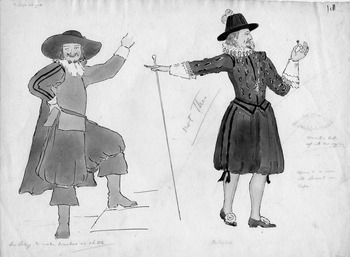
The commercial success of Atkins’s ‘black and white’ Twelfth Night, which was revived several years running came amidst something of a surfeit of Twelfth Nights in England, and certainly some London reviewers started complaining that they had had enough of the play. One seminal production, however, was that programmed for the gala reopening of the Sadler’s Wells theatre, on Twelfth Night, 1931, and directed by Harcourt Williams. This production was praised for its restraint, particularly in relation to traditional comic business and Ralph Richardson’s Toby was much commended for retaining his dignity and displaying the ‘uncommon virtue of remembering, even in his cups, that Toby is no pot-house brawler but Olivia’s kinsman’ (T 7 January). Many reviewers were disappointed with John Gielgud’s puritanical Malvolio, but when Williams decided to use a setting inspired by ‘Dutch pictures of the Puritan age’ (Williams 103) he established something of a fashion for a Cavaliers and Roundheads approach to the play, which became particularly popular with directors wanting to signal that the ‘cakes and ale’ philosophy of aristocrats like Toby would, only forty years after Twelfth Night was first performed, get short shrift from the New Model Army (see Figure 5).
Cavaliers and Roundheads costume design for Harcourt Williams’s 1931 Old Vic production.
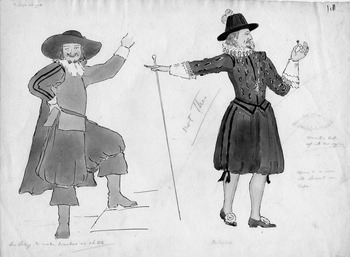
Harcourt Williams’s Caroline Twelfth Night was revived in 1932, and although in the following year Tyrone Guthrie directed a completely new production of Twelfth Night at the Old Vic, Guthrie followed Williams’s lead in making the world of the play Caroline. Guthrie also ‘transposed’ the play to a ‘minor key’ (DM 19 September 1933) and Morland Graham played Feste as decrepit, aged and inspiring ‘curious pathos’ (News Chronicle 19 September). The biggest controversy arose over the casting of prima ballerina Lydia Lopokova as Olivia and the reviewers particularly objected to the fact that Lopokova’s Olivia made ‘violent love to Viola’ (News Chronicle 19 September), and ‘threw herself into a frenzy of passionate love-making’ (Star 19 September).Footnote 38 While Lopokova’s lively, energised Olivia would have been quite at home in many late-twentieth-century Twelfth Nights, the production also looked to the future in another way: Guthrie and the majority of his Twelfth Night cast were rehearsing The Cherry Orchard as they performed Twelfth Night, a creative juxtaposition which bore fruit in Guthrie’s next production of Twelfth Night in 1937. This production turned out to be the first in a very long line of Twelfth Nights labelled ‘Chekhovian’ (see pp. 38–40), although some thought it merely ‘morose’ (G 24 February). John Abbott’s Malvolio was ‘a young, attractive man whose feeling for Olivia is something deeper than mere social ambition’ (DTel 24 February). When this ‘calmly officious’ Malvolio was pitched against Marius Goring’s Feste, who was ‘always suggesting the verge of actual madness’, then ‘the often-boring prison-scene’ became ‘a thing of fierce, tragic-comic intensity, with something of a Chekhovian irony’ (Morning Post 24 February). Meanwhile Laurence Olivier’s scene-stealing comic antics as Toby were particularly remarked upon, even though he went overboard with make-up, prosthetics, and whiskers which affected his audibility.Footnote 39 This Toby indulged in ‘a superabundance of comical crawling, stumbling, and staggering’ (G 24 February), although the Telegraph (24 February) savoured the moment when, as Olivia rebukes him, Olivier’s Toby ‘cocks an eye just like a sky terrier who knows himself in disgrace but hopes shortly to wheedle his way back to his lady’s favour’. Alec Guinness played Andrew to Olivier’s Toby and reminded the Daily Mail (24 February) of Stan Laurel.
In view of the fact that Guthrie started a fashion for so-called Chekhovian Twelfth Nights, it seems ironic that the productions of the play directed by Michael Chekhov were so completely antipathetic to the stereotypical meaning of the adjective ‘Chekhovian’ in Anglophone culture.Footnote 40 Indeed Michael Chekhov’s Twelfth Night for the Habima Players, which premiered in Berlin before touring extensively, was thought to be far too much of a ‘joyous and swiftly moving farce’, unShakespearean and too close to ‘pantomime […] ballet and circus’ (T 7 January 1931). Feste became Harlequin, Olivia was ‘a ninny’, ‘Maria broke frequently into song and everybody danced in pink and yellow clothes’ and the whole experience was a kind of ‘sublimated circus’ performed by ‘super-acrobats and conjurers’ (ES 7 January). Clifford Leech records that Chekhov directed Malvolio as ‘a corpulent buffoon who is made ultimately to see the joke against himself and is persuaded to join Sir Toby and Sir Andrew in throwing paper-darts among the audience’ (Leech 37). Reviews of Michael Chekhov’s later US production, in 1941, also indicate an enthusiastic use of slapstick with an emphasis on ‘Russian horse-play’, ‘excessive makeup’ and ‘false beard and falser noses’ (New York Sun 3 December). The New York Post (3 December) also commented on the ‘prodigious amount of duelling’ and the decision to play Orsino as ‘waited on by tottering octogenarians apparently in the last stages of senile decay’. The World-Telegram (3 December) pronounced the production ‘a heavy handed romp’.
During this period British reviewers continued to search for the woman-beneath-the-boy in Cesario: Dorothy Green’s Viola, under Harcourt Williams’s direction in 1931, was ‘delightful’ because ‘the woman is ever present in the boy’ (T 7 January) but Dorothy Massingham, playing Viola in a revival of W. Bridges-Adams’s production, was disappointing because ‘her assumed boyishness does tend to hide the woman underneath’ (SUAH 26 July 1929). Valerie Tudor, in a revival of Ben Iden Payne’s 1936 Twelfth Night, was applauded for hinting ‘at the woman behind the disguise’ (BP 16 April 1938) and the Birmingham Mail compared Tudor with ‘Vesta Tilley in her heyday’ (16 April 1938).
More deliberately provocative Twelfth Nights, designed to shake up old certainties, also appeared. In 1933 reviewers were mostly stunned by Terence Gray’s production of Twelfth Night at the Festival Theatre Cambridge, a production in which Commedia was the dominant influence, performers wore masks and ‘danced and postured’, while Toby appeared ‘on roller skates in one scene’ and ‘Elizabethan pronunciation’ was used for 1.5 but for no other scenes (Cambridge Daily News 16 May).Footnote 41 In December 1933 the Evening News (21 December) was reporting that the Moscow Art Theatre was to mount the play as a challenge to ‘sanctimonious bourgeois prudery’, although in reviewing the actual production in 1934, the Guardian (25 September) thought the play was ‘treated like “The Marriage of Figaro”’, with an overlay of criticism of ‘the “decadent” social conditions’ of Shakespeare’s time as Feudalism moved into Capitalism. Then in 1939, the first woman to direct at Stratford, Irene Hentschel, produced a Twelfth Night which was lively and eclectic, which ‘shrieks at the conventions, flouts all the traditions’ (BM 13 April), and was grounded in the nineteenth century. Olivia was an Alice in Wonderland figure with long blonde hair down her back and looking, as Hentschel’s husband, the reviewer Ivor Brown, commented, straight out of Tenniel’s illustrations (Observer 16 April). Meanwhile Joyce Bland’s Viola, ‘straight-limbed’ and ‘boyishly brisk’ found Olivia round her neck ‘at almost the first encounter’ (BM 13 April). John Laurie’s Malvolio was Dickensian but while the Birmingham Gazette (13 April) detected Scrooge, The Times (14 April) thought of Pickwick Papers, and the News Chronicle (14 April) saw ‘a cross between the melancholy waiter in “David Copperfield” and a Spy cartoon of a very sick Disraeli’. Meanwhile Illyria, designed by the three-woman team of Motley, was dominated by black Victorian wrought iron, although Orsino was Byronic, and Toby Edwardian. Hentschel’s decision to use an eclectic nineteenth-century context for the play has had many followers since, and, although clichés get circulated – picturesque but cumbersome costumes, adherence to strict etiquette, sexual prudery and an enthusiasm for a cult of mourning – nevertheless a nineteenth-century milieu has proved resonant for many directors.Footnote 42
This period also saw new directions for Twelfth Night in North America and is particularly notable for striking responses to the play by women. In 1926 Eva Le Gallienne directed Twelfth Night, and starred as Viola, in a production which was ‘definitely fantastic’, and which used puppet-like wigs and make-up for all characters except for Olivia (NYT 21 December). Le Galliene herself, as Cesario, wore ‘a yellow rope wig’ with clearly marked-out curls, and she had doll-like red circles of rouge on her cheeks.Footnote 43 Le Gallienne cut 4.2 (S85), treated Olivia with sympathy, and served up the play as a Christmas entertainment. Jane Cowl also placed her stamp on the play when she took the part of Viola in Andrew Leigh’s 1930 production. Cowl’s Viola was ‘glamorously romantic, though lacking in mischief’ (DTel 13 November) but Cowl was also responsible for this production’s staging conceit: that the different scenes of the play should be played as emerging from the turning pages of an enormous book (New York Herald Tribune 26 October), while Feste ‘turns the pages to the settings corresponding to the action’ (Boston Evening Transcript 9 September). This concept clearly appealed to Orson Welles who used a very similar device in the production of Twelfth Night he worked on in association with Roger Hill for the 1932 Chicago Drama Festival Competition.Footnote 44 Welles and Hill published an edition of Twelfth Night based on the work they did for this all male Todd Troopers production, an edition embellished by Welles’s sketches, and Welles’s introductory essay indicates that ‘the prompt-books of the great actors’ have been consulted, although ‘Our business has been with the more respectful actors’ versions’ (Welles, Introduction, 28). The edition includes the text of the imaginative framework which includes Shakespeare talking to his fellow actors about his work and warning Richard Burbage to beware of the Malvolios of the world and their anti-theatricality (Welles, Prologue, 7).
The most commercially successful Twelfth Night in the US in this period was Margaret Webster’s 1940 production which ran for 128 nights on Broadway. Maurice Evans played Malvolio ‘as a commoner of humble beginnings desperately trying to be even more genteel than his masters’, but betrayed by his cockney accent (Evans 144). The New York Herald Tribune (21 November) thought his ‘efforts to get all the h’s in their right place’ all ‘add to the humanity of the unfortunate man’. Helen Hayes was a ‘brisk, boyish, loveable Viola’ (New World-Telegram 20 November). Webster herself was dissatisfied with the production: ‘It was gay, decorative, witty in a slightly sophisticated way, but seldom funny from the heart; charming and even occasionally touching, but lacking in shadows or in depth’. She cut the ‘footnote jokes’ (Webster 97) as much as possible and ‘stole a piece of business from Michael Chekhov’s production for the Habima Players’ (98) whereby in 2.5, the letter scene, Toby, Fabian and Andrew ‘carried round with them little, toy, potted trees which they would plant down in front of themselves as a ludicrous sort of concealment’.Footnote 45 Webster concludes ‘Twelfth Night is one of the most difficult plays in the whole canon to do really well. Yet everybody does it; everybody thinks it’s easy’ (Webster 98).
Illyria
After the Second World War it does seem as if, as Webster put it, ‘everybody’ was doing Twelfth Night and productions significantly increased in number and in diversity. While certain crucial issues get raised over and over again, particularly issues of tone, mood, identity politics and sexuality, what is critical in considering any of these issues is the question of location, where and when a director decides to situate Illyria, and how festive, permissive or repressive that location seems to be. While a director’s decision about the setting for any Shakespeare play in production has significant consequences aesthetically and politically, Illyria has often been a very forceful presence in productions of Twelfth Night, creating a significant impact on mood, tone and characterisation. Directors have placed Illyria in many different locations, time zones, and historical periods, and the location, and relocation, of Twelfth Night has often helped determine whether a production will tip in the direction of holiday spirits or in the direction of gloom. In addition the creation and realisation of many Illyrias onstage has been used to underscore the individual director’s approach to the insider/outsider, privileged/ marginalised dynamics in the play.
Geographical Illyria, the modern Albania, Macedonia and Bosnia, was very popular in nineteenth-century productions but, as Furness (4) points out, because in Shakespeare’s period ‘Dalmatia was under the rule of the Venetian republic’, many nineteenth-century productions rendered the play ‘a romantic and poetic picture of Venetian manners in the seventeenth century’ with occasional use of ‘Greek dresses’. Illyria for Shakespeare also had piratical associations and this is presumably why Antonio is sometimes, despite his protestations in 5.1, costumed as a local pirate:Footnote 46 so Alastair Sim, in Harcourt Williams’s 1932 production, turned Antonio ‘into one of the comic pirates out of “Peter Pan”’ (DTel 30 March) and in Hugh Hunt’s 1946 Twelfth Night Antonio sported a tremendous piratical costume complete with enormous earring.Footnote 47
Later twentieth-century attempts to evoke the geographical Illyria often trade in modern clichés about the eastern Mediterranean region: in 1973 Toby Robertson made Illyria ‘Yugoslavia in the 19th century’, with music provided by ‘peasants in traditional Yugoslav garb’ (or at least what English audiences would read as such), a Malvolio who appeared to be ‘a turbaned and droopily moustachioed Turk’, and a priest who ‘looks like Archbishop Makarios’ (DTel 6 September). Wilford Leach in 1986 produced an Illyria that was Albanian to the New York Post (3 July) but ‘Tatar-Cossack’ to the New York Times (3 July), although the latter also thought that ‘[s]ome of the actors look as if they are outfitted for a bus and truck tour of “Kismet”’. Larry Lillo in 1985 made Illyria ‘Ruritanian’, and included a Scots-accented Andrew who sported ‘Middle Eastern tailoring’, Turkish slippers and ‘a violet fez’ (GM 29 January). In 1986 Nancy Meckler’s production was ‘of vaguely Balkan provenance’ (O 5 October); Bill Alexander, in 1987, settled on a holiday brochure view of Greece with clusters of picturesque white houses; and Raymond Omodei, in 1988, staged a vision of ‘café-Albania’ (West Australian 5 March) with a Toby dressed as a ‘Balkan bandit’ (The Australian 9 March). Geographical Illyrias have occasionally come freighted with a political loading: for example, in 1983, Nicolas Kent evoked Illyria when it was ‘part of the Austro-Hungarian empire, prior to the Great War’, thereby suggesting a world about to change irrevocably.Footnote 48 Meanwhile Cecil Mackinnon, in 1991, evoked an element of ‘Illyria vs Islam’ although this production also dealt in clichés and had Olivia ‘overseeing a harem’ (Boston Globe 31 July).
Given the popularity of Illyrias of Eastern European provenance, it is not surprising that some directors have gone slightly further eastwards and indulged in exoticism and orientalism. Perhaps the most influential, modern vision of Illyria as an orientalist fantasy appeared in Ariane Mnouchkine’s 1982 production of Twelfth Night (La Nuit des Rois) which brought Kathakali, Kabuki and visually splendid theatricality to Illyria.Footnote 49 Brian Singleton describes Mnouchkine’s production as a ‘transdaption’ (Singleton, 1993, 115), which had Feste ‘dressed as an ankle-belled Indian dancer who invoked merriment on stage with his athletic tumbling, and his charismatic power over Sir Toby and Sir Andrew Aguecheek’ (113). Meanwhile Orsino was ‘the personification of sadness’ with ‘an enormous handkerchief and tears painted permanently on his face’ and always accompanied by ‘the tune of an Indian tampura’ (115). The video record of this production indicates that Orsino was so ridiculous, with his wailing theme music and indulgent posturing, that the audience laughed at him every time he appeared; by contrast characters such as Olivia, Antonio and Malvolio became possessed by a more frenzied desire, dancing wildly round the stage when struck by passion. Mnouchkine staged the whole play as ‘a confrontation of the … European Christian with the mystical and mischievous spirit of the East’ and Malvolio was ‘soberly dressed in Calvinist black’ a ‘killjoy and puritan’ (Singleton, 1993, 113). Costumes were ‘doublets and baggy trousers gathered at the ankle’ which managed to evoke ‘exotic, oriental luxury’ as well as the early modern (Kiernander 117). Music, as often with Mnouchkine, played throughout the production, inflecting the audience’s mood and sense of locality, and creating theme music for most of the characters; the production was a visual feast with gorgeous costumes, and huge decorated umbrellas borne by servants attending on the aristocrats.Footnote 50
Some modern productions have signalled Illyria as exotic by the deployment of race markers, especially blackness, in relation to court servants: for example, production photographs show that Michael Benthall’s 1958 Twelfth Night had a blacked-up servant, wearing a white turban and carrying a black fringed umbrella to keep Olivia in the shade. Ian Holm played a black drummer boy in John Gielgud’s 1955 production set in a ‘Persian court as an Italian old master might have imagined it’ (G 15 April). Slightly less loaded, if still conventional, orientalism appeared in Philip Minor’s 1978 production which had ‘Ali Baban costumes’ (The Real Paper 22 July). Nicholas Hytner, in 1998, had a set inspired by ‘Oriental carpets’ and ‘an Indian manuscript’, while Orsino lived ‘in an extraordinary kind of Buddhist temple’, the whole adding up to ‘an Oriental fantasy of the mind’ which required an environmentally challenging 10,000 gallons of water onstage every night (NYT 28 July). One reviewer thought this Illyria ‘straight out of The Arabian Nights’ (FT 17 July), another that it offered a mix of ‘Iberia and India, locating Illyria around Portuguese Goa’ (T 21 July). But in 1991 Virginia Boyle sent up the whole idea of Orientalism and had great fun with it at the same time: the audience were served Turkish delight during the interval and the combination of ‘Palm trees, genie costumes and voluptuous squealing belly dancers’ suggested ‘an exotic Arabian Nights fantasy’ (Tharunka 18 March).
Amidst such exoticism, the Englishness of some characters, especially Toby, can seem incongruous.Footnote 51 In 1978, Michael Elliott coped with this by evoking an Illyria ‘East of Suez’ (Stage 19 January 1978), and stereotypes of the British abroad. Similarly Denise Coffey, in 1983, placed Illyria ‘East of Suez’ in a land ‘occupied by British troops in Khaki and topees’, and permeated by strong elements of ‘a P. G. Wodehouse tea-dance’ (DTel 15 October). A popular variant on this combination of orientalism and the joke of the British abroad is the relocation of Illyria to India under the British Empire: for example, Michael Kahn, in 1989, placed the action in ‘a Last Days of the Raj outpost of English colonialism’ where Toby and Andrew became ‘idle Edwardian boors, pickled in Gordon’s Gin and armed with golf clubs’ (NYT 4 October). The Twelfth Night directed by Leon Rubin in 2006 at Stratford Ontario also had Illyria as India under the Raj; it was colourful and energetic, but several Anglo-Canadian performers had to apply make-up in order to play the Indianised characters. A very Indian Illyria appeared in Cliff Burnett’s 1991 Twelfth Night, with a huge Hindu deity dominating the stage, and Kaleem Janjua as a ‘puritanical and priggish’ Malvolio (Scotsman 9 February). Stephen Beresford’s 2004 West End Twelfth Night had an entirely Indian cast, and played to London audiences’ expectations of Indianness: this had the effect of emphasising caste, as well as mourning and courtship rituals. While most reviewers enjoyed the relocation, many felt Beresford could have taken things much further: for example, the Herald (1 September) felt the result was ‘a fairly conventional, charmingly innocent English reading, mildly coated in Asian flavours and sweetly acted’ although one performance that did go further was Kulvinder Ghir’s Feste. Performed in the tradition of a Baul singer, and including cross-dressed, mock Bollywood dance routines, this Feste was comic and threatening, and always an outsider.
Exoticism has also taken Illyria to a variety of warm climates: Tony Church (1970) chose the ‘warm romantic atmosphere of the Spain of 1800’, with ‘Goya-like costumes’ and ‘sultry and lethargic court scenes’ (Stage 4 June). The South Wales Argus (9 June) enjoyed ‘the borrowing of a bar or two from Carmen and a moment when Malvolio handles his cloak as though he were a matador’. A similar period, and similarly warm weather was chosen by Richard Monette, who, in 1994, located Illyria in post-French-Revolution Africa, with ‘African rhythms and French Revolution costumes’ (Ontario London Free Press 1 June). Here giant hibiscuses unfurled at the beginning of 4.3 to usher in the happy ending, and, as the video record of this performance indicates, got a round of applause. Meanwhile Bram Lewis, in 1992, located Illyria ‘off the coast of Brazil in the 1840s’ (NYT 15 August) and David Chambers, in 1992, had ‘the pulsating rhythms of the West African drummers’ playing alongside ‘tantalizing glimpses of the mystery and magic of African-rooted Santeria’ on a Caribbean island where ‘Apertures high up open to reveal busts and portraits of European gentry who look down on the tropical carousals with quizzical eye’ (Drama-Logue 23 January). Other multicultural Illyrias include that of Jeff Teare who, in 1988, sought to reflect the diverse location of Stratford East, where the production was being staged: ‘Orsino heads an Afro-Caribbean household, while Olivia has an Asian one boasting a white (or part-white?) steward, Malvolio’ and Viola and Sebastian are ‘blonde Anglo-Saxon’ (Morning Star 16 September). For The Times (16 September) the play then became ‘a satire on colonialism, set on a dozy tropical island in the Thirties’. Pip Broughton directed a 1989 Twelfth Night that was so Caribbean in location that only Viola, Sebastian and Andrew (played by Matthew Kelly) were white, marking these three characters out as interlopers (Tamworth Herald 3 November). Harold Guskin’s 1989 Twelfth Night was praised by Time (17 July) for casting four black leads in a production that created an Illyria that was very cosmopolitan, a Riviera resort, ‘Monte Carlo at the turn of the [twentieth] century’ (New York Post 10 July).
An extension of the multicultural Illyria is to mark out Viola and Sebastian as culturally, and sometimes ethnically, different from the Illyrians.Footnote 52 In Philip Grant’s 1975 production for the Ludlow Festival, Viola and Sebastian were black in order ‘to emphasise that … they come from another world’ (Chester Chronicle 4 July 1975). In 1983 Martin Troughton cast all the outsiders – the twins, Antonio, and Feste – as black (G 7 September), and in 1991 Jonathan Petheridge not only cast the twins as black but gave them ‘waist-length dreadlocks (Time Out 19 June). Greg Wanless directed the black twins in his 1994 production to speak ‘with unusual French rhythms’ (Ottawa Citizen 29 August 1994), again marking them as bringing new attitudes, new energy and perhaps new hope to Illyria. Patrick Sandford’s 1999 production added a historical spin and had a black Viola and Sebastian in an Illyria that was ‘a sun-drenched, presumably colonial, island in the inter-war years’ (G 6 October 1999), somewhere in the West Indies. Tim Supple’s 2003 film of Twelfth Night deploys a very cosmopolitan cast and Supple used the casting, especially the representation of the twins as Indian, to raise questions about refugeeism and multicultural societies. The one character who is rarely cast as black is Malvolio although when this does happen, as in Toby Robertson’s casting of Jamaican actor Bari Jonson as Malvolio, in 1968, then the race politics underscore the class politics with a ghastly clarity.
Exoticised Illyrias connect with notions of Illyria as the land of holiday, something which has also been a popular motif in productions of the last sixty years. Illyria clearly has a sea coast, as Viola is wrecked there, and in 1960 Jack Landau transported Illyria ‘to some British seaside resort, in the age, perhaps, of Oscar Wilde’ (NYT 9 June), although Time (4 July) located this ‘seaside resort circa 1830’ and found overtones of HMS Pinafore in the naval uniforms sported by Orsino’s men. The notion of Illyria as a land of holiday, or a fashionable resort has proved very attractive. Giles Havergal’s 1971 Twelfth Night evoked the ‘Plage Sportive at Cannes’ (FT 31 August 1972) or ‘some voluptuous Mediterranean play spot’ (G 30 August 1972). In 1983 Neil Armfield set the play on ‘a holiday-brochure land of ever-present laughter’ (SMH 9 January 1984), and in the film of this production Illyria seemed situated ‘somewhere between Surfer’s Paradise and St Lucia in the Caribbean’ (SMH 21 May 1987). Derek Goldby, in 1978, created a Venetian Illyria that was an eighteenth-century playground of the rich, ‘the equivalent perhaps of a “Club Med” where the emphasis is on pure pleasure’ (programme), and Ian Forrest’s 2001 Twelfth Night placed Illyria in Ibiza 2001, ‘Mediterranean Clubland’ (programme). The Illyrian summer holiday went gloomy at the edges in John Bell’s 1977 Twelfth Night: Illyria was ‘a Venetian bathing resort’, where Orsino ‘spends his spare time in the Casino’, and where the twins ‘in their sailor suits and straw hats’ evoked Death in Venice (SMH 29 April). The Death in Venice mood was increased by the fact that Viola was played by a young man, Russell Kiefel. While Murray Lynch, in 1995, set the action on ‘the SS Illyria, a luxury liner’ in the 1920s (Dominion 3 July), Illyria became a 1920s hotel in Henry Tarvainen’s 1984 Twelfth Night (GM 13 July). In 2003 Lucy Bailey had a bleaker angle on Illyria-as-hotel, and played all the action in a cross between Heartbreak Hotel and the House of the Rising Sun. David William went even further in suggesting a bleak edge to Illyria as his 1974 production, set in a ‘sea-green, coral-encrusted landscape’, suggested to the New York Times (7 July) ‘that Viola’s shipwreck has been utterly fatal, sending one and all down to the ocean floor’.
A variation on creating Illyria as the land of holiday is to explore the play’s festive associations: thus Bill Ludel’s 1980 production had ‘Christmas presents, a tree, a sleigh and bits of carols’ (NYT 14 December); in 1981 Julian Lopez-Morillas evoked the ‘Feast of Misrule’ in a hall ‘festooned with greenery, branches of holly and (electric) candles’ (Potter 50–1); Mark Lamos, in 1985, created ‘a perpetual New Year’s Eve party at an exclusive after-hours club’ (NYT 13 October); Marti Maraden, in 2001, staged ‘a quasi-Dickensian Yuletide fantasy, complete with gently falling snow, Victorian carols and even a … Christmas tree at the end’ (Ottawa Citizen 13 December). The winterfest approach to twelfth night was particularly conspicuous in Terry Hands’s 1979 Twelfth Night: Illyria was so snowy that the Sunday Telegraph (17 June) thought it had been reconfigured as Siberia. In addition, the Financial Times (13 June) complained about the production opening in such deep mid-winter, and moving to spring after the interval: ‘Malvolio would not wait four months before appearing cross-gartered and in yellow stockings.’ The Oxford Mail (13 June) also got distracted by Viola, in 1.2, arriving barefoot in the snow, commenting ‘The poor girl’s going to catch frostbite.’Footnote 53
The holiday offered by Illyria has sometimes been a holiday from reality. Thus, in 1978, John Amiel quoted Alice Through the Looking Glass in the programme and had Viola enter Illyria by stepping through a picture frame that remained onstage for the entire production (pbk). A version of children’s play time was evoked in Kim Selody’s 1990 production, which set Illyria on a giant revolving see-saw, ‘rising and falling, spinning and whirling, in a dizzying mirror-image of the story’s erratic progression’ (Province 4 February 1990). In 1989 John Godber invoked the wrath of the mostly Oxbridge educated reviewers by constructing Illyria as a very particular holiday from reality: here Illyria became a privileged ‘ivy-hung corner of an Oxbridge college’ (T 19 July). Some Illyrians holiday by means of drugs and certainly in Keith Michell’s 1976 Twelfth Night, Orsino was ‘smoking his hookah’, and was a ‘dangerously handsome Sultan, reclining on massive silken cushions’ (Spectator 12 June). In 1973 William Alexander offered a hippy Illyria awash with cheesecloth and John Lennon spectacles.Footnote 54 Steven Pimlott’s 1987 Twelfth Night suggested to the Guardian (11 February): ‘This is Illusia, lady. Illusia, Allusia, Elusia. Lose yourself in the Duchy of Deliria. Dementia. Euphoria.’
If a director wants favourable reviews in the UK, however, their best bet is to render Illyria as Chekhovian as possible. Since Tyrone Guthrie played up the Chekhovian possibilities in the 1930s, Illyria has often been heading in the direction of a very particular concept of Shakespeare-as-Chekhov. The ensemble nature of the play, which needs strong casting across the board, plus the large household locations, and the muted, occasionally dark, nature of the comedy helps keep references to Chekhov very popular; for example, a review of Michael Benthall’s 1958 production opined that the play needs ‘an atmosphere as accommodating as that of Tchekov to subtle changes of mood’ (T 2 April). Consequently John Barton’s 1969 Twelfth Night was largely hailed as a success for being Chekhovian in its balance of mirth and melancholy – although this was more evident in reviews of the London revival than the Stratford production which many felt ‘overweighted with the sadness’ (DM 7 August 1970). Barton’s production was also described as having ‘a Stanislavskian bounty of off-stage sound’ (FT 7 August 1970), which included the ‘constant surging of the sea’ (DTel 7 August 1970), owls hooting in 2.3 etc. So Chekhovian was the pre-revolutionary Russian Illyria of Christopher Martin’s 1973 Twelfth Night that during ‘The wind and the rain’ there was ‘an off-stage pistol shot’, indicating Malvolio’s suicide (Daily News 27 September). This Twelfth Night was morphing into The Seagull, whilst Andrew’s reluctant participation in the duel evoked Tusenbach in Three Sisters, and Feste became ‘Dostoevskian’, as ‘a tall apple-cheeked boy, barefoot and lame, an unhappy, bottled-up, eruptive stammerer, who spends most of his time on the floor like a dog’ (Village Voice 4 October). Kenneth Branagh’s 1987 vision of Illyria was a version of ‘old St Petersburg. The actors wear 19th-century greatcoats and look as if they had stepped out of a Dostoevsky novel’ (STel 6 December) or perhaps ‘deep in some park surrounding Anton Chekhov’s winter residence’ (Punch 16 December). In Sam Mendes’ 2002 production, although Viola and Sebastian both stepped through a large picture frame onstage in order to enter Illyria, this was no Wonderland but a candle-strewn landscape of ‘requiem and romance’ (Toronto Star 27 January 2003), and Chekhovian elements were underlined by the fact that Twelfth Night was playing alongside Uncle Vanya.
The downside of the popularity of Chekhovian Illyrias is that reviewers who prefer their Shakespeare-as-Chekhov get upset when a production of Twelfth Night dares to be ‘too’ funny. So Joan Littlewood’s 1953 production was denounced for presenting the play ‘as though the Crazy Gang have invaded Illyria’ (Stage 5 February); Jane Howell’s 1968 ‘camp costume party’ (T 1 February), which was set in contemporary Carnaby Street, with ‘the Illyrians […] decked out in the wildest fancies of the King’s Road’ (ST 4 February) was a production generally perceived to be playing inventively to a youthful audience base, but it was panned by one of the stalwarts of the Chekhovian approach, Michael Billington, in The Times (1 February). The reviewers’ desire for Chekhovian Twelfth Nights operates alongside their insistence that Twelfth Night is also Mozartian;Footnote 55 certainly in 1991 Bonnie Monte took the Mozartian idea seriously, placing Illyria in the eighteenth century, recasting the action as ‘a Mozart opera’, with Laila Robbins’s Olivia as Contessa to Elizabeth McGovern’s Viola as ‘ardent Cherubino in “The Marriage of Figaro”’ (NYT 8 September). In 1998, Michael Grandage at the Sheffield Crucible Theatre also created a Twelfth Night which exhibited ‘a deeply Mozartian sense of wistful humour’ (ST 29 November).
‘Chekhovian’ Illyrias tend to be gloomy, and the logical extension of this kind of approach can be seen in Mark Babych’s 2004 production, which created ‘a funereal, paranoid Illyria draped in mourning like an early version of Elsinore: an image reinforced by the sight of Sir Toby joshing about with a skull in an open grave’ suggesting that the director wanted ‘to place [the play] on the cusp of tragedy’ (G 30 September). Hamlet has, indeed, sometimes been paired with Twelfth Night, as in Bill Alexander’s productions for the Birmingham Repertory Theatre in 2000. Alexander stated ‘Shakespeare wrote the two plays within a year of each other. In both plays you can see his mind running in similar themes’ (programme). However, carnivalesque Twelfth Nights, which can at least claim some authority from the festival invoked in the play’s title, have not entirely disappeared and some modern directors are still brave enough to play for broad humour. For example, in 1972, Don Colucci produced a commedia-inspired Illyria set in ‘the world of ultimate fantasy – childhood’ where Viola and Sebastian become ‘Raggedy Ann and Raggedy Andy’, Olivia ‘a stiff-kneed musical doll’ and Antonio ‘a gaudy orange-clad Indian with a Tonto-style guttural voice’ (Boston Globe 14 August).
Chekhovian Illyrias also intimate a world heading towards revolution; the most popular revolution-in-waiting for the characters of Twelfth Night is the English Civil War. Tyrone Guthrie adopted a Cavaliers and Roundheads approach to Illyria in all three of his productions of Twelfth Night and his 1957 production at Stratford Ontario evoked ‘a Franz Hals painting’ (Guelph Daily Mercury 3 July), had soldiers who ‘looked like Oliver Cromwell’s roundheads’ (Winnipeg Free Press 3 July), and started something of a fashion for Van Dyck costumes in Illyrias at that particular theatre.Footnote 56 Nine months after Guthrie’s production opened, in April 1958, Michael Benthall, at the Old Vic, had his Malvolio as a steeple-hatted Puritan, a killjoy amongst Restoration revellers, and then just three weeks later Peter Hall’s production opened, combining shades of the Three Musketeers (T 23 April 1958) with what Spectator (23 December) identified as the ‘Caroline period – as seen through the eyes of a Victorian anecdotal painter with a weakness for coaching-inn décor and Christmas-card flower gardens’. The Scotsman (19 May 1960) commented of Derek Godfrey’s Orsino that his ‘melancholia is not “decadent”. His Orsino is robust – even soldierly. We are sure he will fight at Edge Hill, despite his years.’Footnote 57 The notion of Illyria as a society heading for war also appeared in Gordon McCall’s 1998 production, although this Twelfth Night was set around the American civil war, complete with Confederate flags, Dixie music and a ‘Gone-With-the-Wind’ setting (Ottawa Citizen 3 February 1998). In 1981 Graham Watkins evoked yet another imminent conflict in an Illyria that paralleled the 1600s with the 1920s, equating rising Puritanism with rising Nazism, and recasting Illyria as ‘a Berlin Night Club of 1927’.Footnote 58
Modern Illyrias are still occasionally Elizabethan England. Tim Carroll in a 2002 ‘original staging practices’ production for Shakespeare’s Globe, both at the Globe and at the Middle Temple, was resolutely Elizabethan in its setting. Willard Stoker, in 1946, had his cast ‘acting the play as a masque before Elizabeth and her court’ (Birmingham Gazette 6 November), with Elizabeth and the courtiers ‘grouped upon the central balcony’ (BM 6 November). Michael Langham, in his 1982 Twelfth Night, sought to evoke Renaissance England and ‘the English country house in the old sense, a huge estate that was a seat of power’ (NYT 11 April). Fascinatingly, when Ingmar Bergman directed the play in 1975 for the Royal Dramatic Theatre in Stockholm, his setting of an Elizabethan country house produced an Illyria that was, according to The Times (2 July) ‘more English than any English version I have ever seen’, despite the fact the traditional English sexual repression was not much on display as ‘the cast fall to it like rabbits, with a gang-bang (including Malvolio)’.Footnote 59 Bergman also framed the play by having travelling players, including Shakespeare, arrive at the house and set up a stage in order to present Twelfth Night.
Malvolio
The question of where Illyria is located particularly impacts on Malvolio and the portrayal of class warfare in the play, as in some Illryias, where social and class distinctions are very clear, Malvolio’s transgression in daring to contemplate marrying Olivia is emphasised. By contrast in modern Illyrias, located in social contexts where class barriers are usually disguised, Malvolio’s aspirations seem unremarkable. As Malvolio has ranged over the centuries from comic butt to tragic hero, it is worth remembering that Shakespeare’s original audience probably saw more comedy than tragedy in his story, if nothing else because seventeenth-century audiences felt more confident than modern audiences that a steward who thinks he might marry a countess is intrinsically funny. At the same time, the potential for Malvolio to upstage the rest of the characters – whether as comic butt or tragic hero – is clearly attested in Henry Herbert’s use of the title ‘Malvolio’ to refer to the play in 1623 and in John Manningham’s focus on the Malvolio plot line in his memory of the performance of 1602.
Overall, the tendency in recent times has been increasingly to follow the lead of Robert Bensley’s Malvolio – or at least Bensley’s performance as remembered by Charles Lamb – Samuel Phelps’s Malvolio and, most of all, Henry Irving’s Malvolio, and to find tragedy in the role, particularly later on in the play. The dominant norm now is to portray Malvolio as scapegoat, or as outsider, or as victim and yet occasionally modern productions do still play Malvolio for broad comedy. For example, Bev Willis’s Malvolio veered ‘between Rocky Horror and Christopher Lee’ (Stage 6 November 1986), while the ‘splendidly foolish’ Malvolio of Robert Hock suggested ‘Boris Karloff’s Frankenstein monster crossed with Anthony Hopkins’s butler in The Remains of the Day’ (NYT 30 December 1993). Physically funny Malvolios sometimes pick up on Fabian’s comment that Malvolio is ‘a rare turkey-cock’ (2.5.26) and strut with comic pride: for example, the ‘continual turkey-cock strutting and posing’ of Harold Lang’s Malvolio (Cambridge Daily News 23 June 1959); the ‘rooster-like’ Malvolio of Will Rhys (Gazette 21 November 1989); the Malvolio as a ‘pouter-pigeon, complacent but not grotesque’ as in David Collins’s performance of the role (O 31 March 2002). Bernard Bresslaw’s Malvolio was ‘an over-stuffed and preposterously vain penguin, with the hysterical walk of a constipated ballet dancer’ (I 16 June 1989), as well as ‘a much-inflated version of the late Philip Larkin, with the vowels of Edward Heath’ (T 16 June 1989).
Generally, Malvolio’s early scenes are still, usually, securely funny: for example, David Marr produced ‘a Malvolio so uptight with pretension, sobriety and self-absorption that his every manner and expression is Botoxed into a blank stiffness that’s hilarious even before he utters a word’ (Vancouver Sun 18 June 2002). One strategy for trying to keep the laughter quotient relatively high is to evoke contemporary popular comic icons and one particularly inspirational figure here has been John Cleese: Michael Bishop’s Malvolio was seen as ‘almost Cleese-like in his physicality’ and he ‘encapsulates arrogance and awkwardness perfectly’ (Bulletin/Newsweek 12 January 1993); Timothy Davies’s Malvolio was ‘first cousin to […] Cleese’s Basil Fawlty’ (ES 7 July 1992);Footnote 60 John Ramm’s Malvolio was seen by almost all the reviewers of Lucy Bailey’s 2003 production in terms of Cleese and Basil Fawlty.Footnote 61 Cross-referencing iconic comic performers in discussing a successfully funny performance of Malvolio may be primarily reviewers’ shorthand, rather than an indication of artistic intent, but it can be very evocative shorthand nevertheless: so, according to the Daily Mail (19 April 1961), Alec McCowen played Malvolio like a Kenneth Williams character; Jack Shepherd’s Malvolio appeared ‘a cross between a melancholic Bernie Winters and an Eric Sykes’ (Kensington Post 16 February 1968); Tom Courtenay evoked Chaplin and Samuel Beckett (D Tel 23 December 1977), although his confinement in a large rubbish bin in 4.2 also evoked Endgame, and the Guardian (23 December 1977) complained Malvolio became ‘a muddle of Hitler, Chaplin and Mr. Hudson’;Footnote 62 Neil Fitzpatrick’s Malvolio became Buster Keaton meets T. S. Eliot (SMH 29 April 1977). A more canonical ancestry was detected for Lee Richard’s performance of the role and this Malvolio’s ‘permanent sneer of superiority’ and ‘sonorous and ecclesiastical’ voice made ‘you think of his hypocritical French cousin, Tartuffe’ (NYT 15 June 1968). Yet when iconic stand-up comedian Ken Dodd played Malvolio in 1971, the reviewers were impressed most by his restraint, and his avoidance of his celebrated, trademark lunacy: Dodd’s performance was ‘in touch with the darker side of the character’ and Dodd was judged to be putting ‘his eccentric gifts at the service of the play’ (T 12 November 1971).Footnote 63 Dodd’s own view of Malvolio was that he was the sort of man ‘who’d stand up in a strip club and shout, “What time do the jugglers come on?”’ (G 15 September 2005).
A rather different iconic figure was deployed in two productions which deliberately dressed Malvolio up to look like Shakespeare. Ian Holm’s Malvolio, directed by Clifford Williams in 1966, was made up to look like the Droeshout portrait (T 17 June), and this Malvolio seemed, in his last line ‘to be threatening to write a play called “Twelfth Night” showing [everyone] up as a gaggle of silly and cruel ninnies’ (STel 19 June). Holm’s Malvolio used a ‘curious dialect’ to ‘stress Malvolio’s class consciousness’ (South Wales Evening Argus 17 June 1966) and, presumably, also to comment on what the director took to be Shakespeare’s class aspirations. In Ian Judge’s 1994 production Desmond Barritt’s Malvolio was made up to look like a rather portly Shakespeare (TLS 3 June), and while Barritt’s performance style, enthusiastically addressing and interacting with the audience, put most reviewers in mind of comedian Frankie Howerd (DTel 27 May; FT 27 May; DTel 12 April 1995), here, again, Shakespeare’s own class background became implicated in this Malvolio’s hopes for upward social mobility.
Some directors have rewritten the text quite radically in order to achieve the comic mood they desire at the end of Malvolio’s narrative; for example, J. C. Trewin (167) records that Donald Wolfit’s Malvolio ‘presumably entreated to a peace’ knelt ‘before Olivia and in dumb-show receive[d] his chain’. Trewin thought this was wrong and, in a review of one of Allan Wilkie’s performances of ‘Malvolio reinstated’ registered, in headline style, his own version of what ‘really’ happens after the end of the play: ‘Duke gives evidence’ ‘Inquest on Drowned Steward’ and the verdict ‘Suicide while of unsound mind’ (Western Sunday Independent 4 December 1932). Suicide is certainly something that has been on the mind of some late-twentieth-century Malvolios: when Donald Sinden’s Malvolio (see Figure 6) made his final exit he was intent on committing suicide (Sinden 66); and the offstage shot heard after the final exit of Pat Freni’s Malvolio indicated he had killed himself (Daily News 27 September 1973).
Tragic Malvolios are sometimes genuinely in love with, or at least besotted with, Olivia: for example, Nicol Williamson cast ‘adoring, lovesick glances at Olivia’ which ‘tell you he has been hooked on her for years’ (G 6 February 1975). Since ‘we see Olivia sheltering on his bosom’ Malvolio’s ‘later reproaches have right on their side’ (Punch 4 September 1974). Nevertheless, the most crucial factor in determining the relative tragic (or comic) status of Malvolio is the playing of 4.2. David Carnegie has persuasively argued that the staging here, and in particular whether or not the suffering of Malvolio can be seen, is critical. The Folio gives no indication of how this scene was performed originally, beyond specifying that Malvolio is ‘within’, but Manningham’s recollection of the plot suggests this scene was memorable.Footnote 64 John Astington points out that if Malvolio was confined behind upstage doors ‘Feste would have had the entire expanse of the platform stage on which to play his games of changing identities’ (Astington 55), which, with a virtuoso Feste, could be spectacular. An indication of how important this scene can be in dictating the overall tone of a production, however, is also suggested by the sheer number of times it has been cut in sunnier productions.

One staging of 4.2 that has become popular in twentieth-century productions is to have Malvolio held in a dark room under the stage, with only his hands visible. Astington (57–9) identifies this staging as originating with Jacques Copeau in 1914, and it is an arrangement that is potentially extremely demanding in terms of an actor’s powers of projection.Footnote 65 A more recent tendency is to display Malvolio’s humiliation in excruciating detail to the audience, although occasionally audiences have been made to suffer the darkness alongside Malvolio: for example, both Richard Monette (1994) (v) and Antoni Cimolino (2001) (v) plunged the theatre at Stratford Ontario into pitch darkness, with only emergency exit signs providing any light. Peter Hall, in 1958, certainly dwelt on Malvolio’s suffering with ‘ten minutes of pure tragedy, complete with hysterical laughter, anguished groaning and broken appeals for pity’ (O 27 April). In Jonathan Miller’s sombre Twelfth Night in 1969, 4.2 was ‘played with everything in total darkness save where [Malvolio] sits hunched, half naked on a stool, picked out by a spotlight’ (New Law Journal 12 March 1970). Suffering was also emphasised in Bill Alexander’s 1987 production (v) where Anthony Sher’s Malvolio was tied to a stake, and was seen to be toppling over into real madness. The use of reverse lighting – bright white light to indicate pitch darkness – not only gave the scene the atmosphere of a torture room but also allowed Sher’s every wince to be registered. The promptbook for Andy Hay’s 1994 Twelfth Night also suggests a torture room environment listing ‘strait jacket gag leg ties’ as needed for 4.2, and in Declan Donnellan’s 1987 production a blindfolded and straitjacketed Malvolio, wearing a Mad Hatter top hat, complete with 10/6 price tag, was attended to by a rubber-glove-wearing nurse (Maria), and a white-coated Feste wearing a Groucho Marx face mask.Footnote 66 Very contemporary images of torture were invoked by Michael Bogdanov, in 2004, who had Malvolio ‘hooded, leashed with rope (ah, those Iraq allusions get everywhere!) and half-naked’ (T 1 July 2004). Adrian Noble, in 1997, chose to have Malvolio locked in a kennel with dog food, and then excrement, dumped on him (v).
Another crucial factor in determining how tragic the role of Malvolio becomes is the playing of the last scene of the play and broken Malvolios tend to garner sympathy. Simon Russell Beale’s Malvolio was not only broken but also visible throughout 4.3 and 5.1, stranded onstage, ‘showcased’ in a ‘picture frame, blindfolded in a straitjacket’ (Newsday 2 January 2003). Russell Beale’s Malvolio was in repertory with his Uncle Vanya, which invited cross reference between the two roles: at the ‘affecting end’ of Twelfth Night, Russell Beale’s Malvolio sat in the ‘upstage frame, hurt and bewildered (as Vanya was) at how he could be so ill used’ (Nation 17 February 2003). Nicol Williamson’s Malvolio was also clearly tragic in his final moments onstage: he ‘tears Maria’s epistle into miniscule fragments before departing to his own permanent private hell, all dignity destroyed’ (G 23 August 1974); Williamson delivered his final line ‘through the hands with which he is covering his face in shame’ (FT 23 August 1974). As Anthony Sher’s Malvolio had gone mad in response to the trauma of his treatment, he was ‘last seen still essaying cross gartered high kicks as if his wits have finally turned’ (G 9 July 1987). Emrys James held Malvolio’s ‘final cry of vengeance […] until he has left the stage and its notes of appalled grief are as chilling as his final quivering exit’ (G 23 August 1984).
Nevertheless some Malvolios are far more confrontational and threatening in their final moments. Malvolio’s threat, ‘I’ll be revenged on the whole pack of you!’ (5.1.355) can be read, in Cavaliers and Roundheads productions, as signalling the start of the English Civil War, and the closure of the theatres; in productions that are Chekhovian in costume as well as mood this line can look forward to the Russian revolution. Laurence Olivier’s Malvolio suggested a different kind of threat here: ‘something has happened to him, one feels, of the sort which must once have happened to Iago’ (ST 24 April 1955).Footnote 67 While Guy Henry delivered Malvolio’s final cry of revenge as ‘implying he will be in touch with his lawyers’ (G 11 May 2001), in Derek Goldby’s 1978 Twelfth Night, a different threat obtained as Christopher Newton’s Malvolio was ‘a prim proto-Nazi, complete with German accent and lederhosen’ (Hughes 203). And despite appearing in 3.4 in ‘a full-scale pseudo-Elizabethan fetish outfit’ and posturing like an ‘Elvis impersonator at a gay disco’, Gerard Murphy’s ‘physically powerful, sinister Malvolio’, played ‘in [Murphy’s] own native Belfast accent’, always carried with an element of danger (Dobson 310).
Malvolio has also turned on the paying audience in the delivery of his final line: for example, in Walter Hudd’s 1947 production, the Leamington Spa Courier (25 April) found that ‘we feel ourselves to be included in the condemnation, for did not we, too, laugh at his discomfiture in the garden’. The paying audience were certainly implicated when Jamie Jackson’s Malvolio ‘shrieks his cry of revenge from the heavens and refuses to take a curtain call’ (Sydney Sunday Telegraph 17 March 1991) and Bille Brown’s Malvolio appeared ‘his eyes streaming with tears of mortification and rage, pointing to members of the audience in his frenzy’ delivering an ‘embittered’ promise of revenge which ‘is simultaneously funny, pathetic and terrifying’ (Australian 24 August 1992). When Brown returned to the role in David Freeman’s 2004 Twelfth Night, he again performed his final line with chilling inclusiveness, clearly cursing the paying audience, as well as onstage witnesses to his humiliation, before exiting from the theatre building, via a fire door, disgusted with all the onlookers, on and offstage (DVD).
The humiliation of the steward Malvolio by the aristocratic Sir Toby has inspired a variety of class-centred readings which tend to position Malvolio fairly sympathetically: for example, Olivier endowed Malvolio with an accent which indicated not only lower-class origins, but also Jewish outsider status in an Illyria that was largely Persian in costume. Punch (20 April 1955) commented on Malvolio’s ‘tortured lisp, as of an aspiring barrow-boy earnestly improving his English at night-school’, and the FT (21 April 1955) was aware of the possibility of class barriers being broached, commenting that Malvolio was ‘an owlish student determined on self betterment at the “tech”’, and ‘a social-climbing parvenu’. Although some complained at the lack of traditional laughs, there was great interest in Olivier’s approach to the role: the Telegraph (21 April 1955) thought the performance clever but lacking gaiety: Malvolio is not ‘the fantastic egoist of custom’ but ‘an ambitious young Puritan who, having won by sheer dogged merit a position of trust in unexpectedly high social surroundings is now beginning to have ideas above his station’. The prosthetic nose and clever voice were Olivier trademarks but, by deciding to underplay Malvolio, Olivier deliberately chose not to make Malvolio the star turn. Kenneth Tynan commented that ‘Malvolio was seen from his own point of view instead of (as usually) Sir Toby’s’ (Observer 24 April 1955), but the production’s director, John Gielgud, felt Olivier’s ‘ultra-realistic’ concept (Gielgud, 2005, 180) unbalanced the play.
For modern sensibilities Malvolio’s desire to rise socially does not seem so transgressive and indeed can gain him sympathy. Thus in Mary-Anne Gifford’s 2002 Twelfth Night, where Illyria was ‘a World War II American Army base in Australia’, Malvolio was ‘a respectable farm-manager supporting the war effort in food production (and properly decrying time-wasting and inebriation)’ (Gay 48). This Malvolio lost out primarily because of his ‘lack of foreign “class”’, and although ‘a bit starchy’ he was also ‘quite likeable’ (Gay 48). Malvolio has also been seen as ‘comparable to Molière’s Alceste, the dissident voice that keeps the comedy honest’ and this was the version of Malvolio performed by R. O. Ceballos in 1978 (Godshalk 212). Malvolio has even occasionally been attractive: The Times (21 May 1953) records that George Coulouris was ‘ruggedly realistic’ as Malvolio, offering a portrait of ‘a man with a passionate, and therefore pathetic, longing to better himself’ and John Drinkwater rendered the character ‘so gay and charming a fellow that […] Olivia […] would certainly have fallen in love with him’ (T 17 February 1913).
Audience response to Malvolio is also affected by a production’s approach to Toby: even a Malvolio like that of Timothy Davies, played ‘like a frustrated young Hitler’ can actually seem so preferable to ‘his enemies in Olivia’s household’ as to offer ‘a tempting solution to the state’s distress’ (T 9 July 1992). Really repugnant Tobys can make Malvolio the voice of common sense and rationality in a world addicted to alcohol. In recent years, revolting Tobys have been getting more and more disgusting and while, of course Toby’s name asks for belching and related indecorous business, in Lindsay Posner’s 2001 Twelfth Night, Toby was seen ‘throwing up on his already foul suit’ (T 12 May) and in Edward Hall’s 2007 production, Toby, in 1.5, managed to be sick, then slip on, and fall over into, his vomit. Nevertheless clownish Tobys did not disappear entirely at the beginning of the twentieth century; for example, in Ariane Mnouchkine’s 1982 production, Philippe Hottier’s Toby was an out and out clown, with comic theme music playing whenever he was onstage, and a clown who entertained the audience with classic comic routines, such as repeatedly trying to get his shoe onto his foot and repeatedly failing (v).
Toby’s age also has a great impact on how Malvolio is perceived. Almost every character in Twelfth Night can be, and has been, cast very young or very old, or somewhere in between, but if Malvolio is policing the excesses of a Toby with one foot in the grave, that has a very different effect from a Malvolio trying to restrain a young thug who happens to have a title. The dominant tradition still is for Toby to be old, bearded, a Falstaff gone to seed, but the Daily Telegraph waged a lengthy campaign against ancient Tobys, arguing that Toby should be no more than thirty-two. As a consequence the reviewer was extremely pleased with Michael Benthall’s 1958 production which defied convention and refused to present Toby as ‘a kind of minor Falstaff, a paunchy old soak’ (5 April). Toby was also robust when performed by Ian McKellan, in John Amiel’s Twelfth Night (1978), as ‘about 40’ (Peterborough Evening Telegraph 3 August) and in Robin Phillips’s 1980 production, Toby was a ‘vigorous, hard-bitten ex-officer’ (London Evening Free Press 10 June). Toby seemed particularly dangerous in John Caird’s 1983 Twelfth Night when he was played by John Thaw, an actor then best known for playing a tough detective in the television series The Sweeney; this association helped give the violence with which this Toby was involved extra menace. A useful perspective here is provided by Oliver Ford Davies, who played Toby at school but turned the role down later in his career, and who argues that Toby is not only very hard work for an actor (he has the most lines), but he also ends up being hated by the audience, and he doesn’t even get many laughs, as he feeds jokes rather than delivers them.Footnote 68 Indeed it is rare to find much sympathy for Toby in modern productions although David Waller, in Peter Gill’s 1974 Twelfth Night, tried to stress the fact that Toby has ‘just lost a brother and a nephew’ (G 18 September).
One reason the audience often dislike Toby so much by the end of the play is because he turns on Andrew. It is rare to find an Andrew the audience will really dislike – although Michael Pennington (84) felt that the Andrew in Rachel Kavanaugh’s 1999 production was ‘dyspeptic’ and ‘ill-humouredly tolerating the attenuated revelry’ of 2.3. However, the vast majority of Andrews are comic in their hopelessness; for example, Sean O’Shea’s Andrew, for David Fenton in 1995, was ‘somewhere between Mr Bean and every male wallflower at a seedy disco’ (Adelaide Sunday Mail 9 July), and the dafter, more foppish, or more Bertie Woosterish Andrew becomes, then the more vicious Toby’s predation on him appears. Andrew is now often young and foolish and is rarely completely senile but he was, for most of the eighteenth and nineteenth centuries, traditionally played in this way: in 1925 a reviewer of a revival of Bridges-Adams’s 1920 production of Twelfth Night maintained that ‘It is the very essence of the part that Sir Andrew should be an old man of sixty or so trying to “cut a figure” as a gay young spark; an elderly roué doing his best to make out that he has still a hold upon the vigour of his youth’ (SUAH 14 August 1925). Younger versions of Andrew would include that of Michael Redgrave in Michel Saint-Denis’ 1938 Twelfth Night, an Andrew ‘whose intelligence has been, for a whim, deliberately fantasticated’ (NYT 18 December). Alec Guinness’s 1948 production also made Andrew a ‘young fop’ rather than the usual ‘contemporary of Sir Toby’s’ (Spectator 24 September) and in Griff Rhys Jones’s 1991 Twelfth Night, Tim McInnery created an Andrew who was ‘funny and touching’, with a ‘physical presence’ that was ‘like a much-loved bendy toy’ (TLS 10 May), but one who also came trailing associations with McInnery’s goofy young fool characters from the various Blackadder television series.
Andrew is sometimes also seen as part of a comedy duo with Toby: for example, the pair evoked ‘Laurel and Hardy’ in Brian Kulick’s 2002 Twelfth Night (New York Sun 22 July). The role became something of a tour de force in Neil Armfield’s 1983 Twelfth Night when Geoffrey Rush’s Andrew (see Figure 7), a gullible fashion disaster, was ‘also blessed with a pathetic kind of inventiveness’, something particularly on display in his ‘clumsy but hilariously funny bit of newly fashionable break-dancing’ (Milne 22). However, Andrew has also turned gloomy: in Peter Hall’s 1958 Twelfth Night he was ‘a paranoid manic-depressive, strongly reminiscent at times of Lucky in “Waiting for Godot”’ (O 27 April), and Frank Thornton, in Peter Gill’s 1974 Twelfth Night, made Andrew ‘a dejected White Knight’ from Alice in Wonderland (T 23 August). What is crucial here in terms of the impact of the Malvolio in a production is that when Andrew is in any way sympathetic, then the nastiness of Toby, the heartless predator as well as the class conservative, gains additional emphasis, and Malvolio’s attempt to restrain his adversary can seem reasonable, even laudable.
John Wood as Toby and Geoffrey Rush as Andrew in Neil Armfield’s 1983 production for the Lighthouse Company, Adelaide.
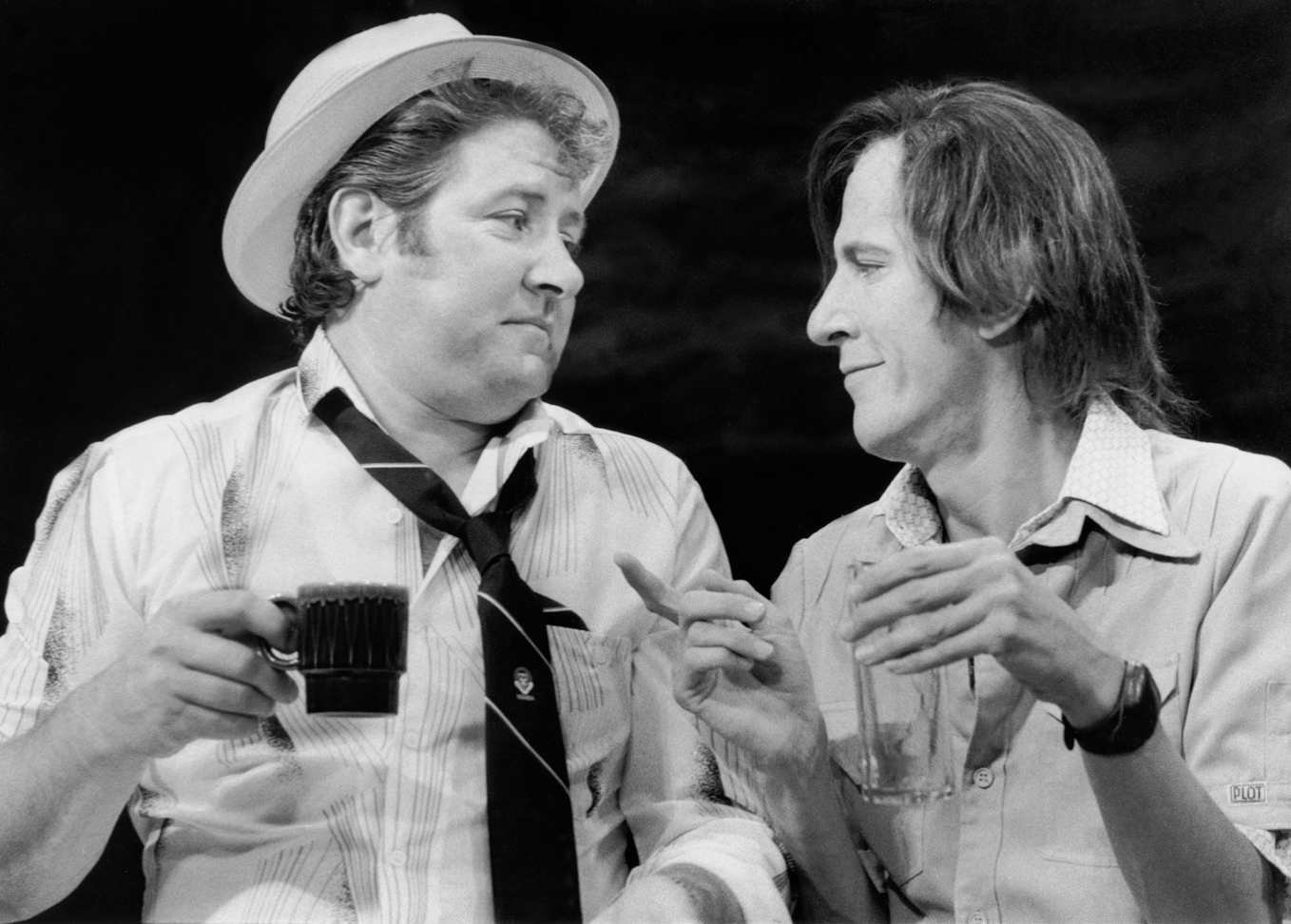
When Toby’s class warfare against Malvolio is particularly pronounced, it is crucial to be precise about Maria’s social standing. As the Daily Telegraph (19 April) pointed out, in reviewing Colin Graham’s 1961 production, ‘Maria ought to be played as a high-spirited lady-in-waiting – it took a good education to write that letter’ and certainly Olivia does not react to the news of her kinsman’s marriage as if it were a serious misalliance. Nevertheless many productions have demoted Maria from her position of gentlewoman: in Kenneth Branagh’s 1988 film she wore a maid’s uniform and did the sweeping; in Neil Armfield’s 1986 film she became a secretary/PA figure. Although the youthful Judi Dench was praised as an energetic, lively Maria in Michael Benthall’s 1958 Twelfth Night, and indeed hailed as ‘almost the chief personage of the carnival’s comic side’ (T 27 August), earlier in the production’s run The Times (2 April) had complained that Maria was ‘a lady-in-waiting’ and should not be played as ‘a soubrette with a northern accent’. Elizabeth Spriggs, in a revival of John Barton’s 1969 Twelfth Night, was a thoughtful, older Maria, much commended by reviewers, but this was definitely Maria ‘as governess rather than soubrette’ (G 7 August 1970), and a Maria who only devised ‘the Malvolio intrigue with the purpose of luring [Toby] into marriage’ (T 7 August 1970). A variation on why Maria might desire to marry Toby appeared in John Retallack’s 1995 touring production as this Maria was visibly pregnant (Scotsman 29 February 1996).
While class is central to the conflict between Malvolio and Toby, a related but different set of hierarchies has often been evoked when Twelfth Night has been set in a colonial or post-colonial Illyria, where Malvolio can carry with him a whiff of the British Empire. So, for example, in Australia, Bille Brown’s Malvolio evoked associations of Englishness and Empire: he was ‘a Noel Coward butler’ but one ‘as darkly menacing as Richard III’ (Bulletin/ Newsweek 8 September 1992). Another Australian Malvolio, John Bell’s in David Fenton’s 1995 Twelfth Night, invited reference to the former colonial administration, and Bell was made to look very specifically like Enoch Powell, the English MP famous for his inflammatory remarks on race.Footnote 69 A different slant on the colonial debate surfaced when Jamaican actor Bari Jonson played Malvolio, and his performance raised troubling questions about the vendetta against the only black person onstage, particularly during the humiliation of his incarceration, here in a beer barrel (Plays and Players March 1968). This Malvolio was ‘reduced to a quivering wreck and, while encased in a barrel, utters tormented rhythmic cries one instantly associates with a negro slave gang’ (G 30 January). Patrick Masefield’s 1977 Twelfth Night also had a Malvolio who was culturally ‘other’, a Malvolio who was ‘a strangely remote figure’ with a ‘tall Arabic appearance carrying just the right suggestion of an aristocratic background which had gone awry and brought him into service’ (Bromsgrove Messenger 11 November).
A variation on the colonial theme is to make Malvolio Scottish, a staging decision which plays to English stereotypes of puritanical Scottishness, and also allows for a kilt to be worn alongside yellow stockings and cross gartering. Markedly Scottish Malvolios include Julian Glover, in Clive Brill’s 2003 audio production, and Patrick Stewart’s steward in Philip Franks’ 2007 Twelfth Night. A specific Scotsman, Queen Victoria’s servant John Brown, has also been evoked: in 1992 Robin Peoples had Olivia ‘as a Queen Victoria figure in heavy mourning, with her pompous little sergeant major of a Malvolio got up as John Brown, in full highland dress’ (G 9 October); in Tim Supple’s 1998 production, Malvolio appeared in 3.4 ‘in green kilt and yellow cross-garters’ resembling ‘a berserk John Brown attending Queen Victoria’ (G 4 June).Footnote 70
While post Second World War Malvolios have run the gamut from pompous ass to torture survivor, the general trend is towards seeing Twelfth Night as the tragedy of Malvolio, and towards constructing Malvolio as the star role rather than Viola. The potential for a bravura star performance can certainly be seen in the work of Brian Bedford (see Figure 8), who has played Malvolio three times, in three quite dissimilar productions at Stratford Ontario (as well as once playing Feste). All three of Bedford’s Malvolios have been quite different, but in his first rendition of the role, where he was described as being ‘a Tudor Jack Benny’ (Stratford Beacon Herald 11 June), he hit a fascinating balance. The blurry, forty-year-old video record of this performance documents a Malvolio who was ghastly to be with, and yet so mesmerising and entertaining in his ghastliness, that the audience constantly yearned for his company. By the end of the letter scene, 2.5, Bedford had the audience eating out of his hand, after a perfectly shameless but virtuoso display of comic over-acting at its very best. When the full comic potential of 2.5 is reached, then 4.2 can really hit the audience in the emotional, and political, solar plexus with a shocking force.
Viola
Modern Violas tend to be less prone to wilting than some of the famous Violas of the nineteenth century, but they are still haunted by the issue of the femininity or otherwise of Cesario, as reviewers continue to insist this is an issue. So when, for example, American star Claire Luce played Viola in the UK, for Robert Atkins in 1945, it was noted that she chose ‘to stress the boyish manner’ as Cesario (BP 8 April), and two years later reviewers were unsettled by Beatrix Lehmann’s Viola, in Walter Hudd’s 1947 production, as Lehmann’s was a Viola who really might pass as a boy.Footnote 71 The bisexual, bohemian, deep-voiced actress was also playing the nurse in Peter Brook’s Romeo and Juliet that season and, at forty-four, was a mature Viola. A recurring trope in the reviews is that (despite the fact that Shakespeare’s boy actors presumably did not have deep voices) Lehmann’s low register evoked the boy actors’ performances. The Guardian (25 April) commented (seemingly oblivious to double entendre) that Lehmann’s Cesario ‘is every inch a man’; that the ‘lower registers of her deep voice are entirely fitted to the masquerade’; and that ‘hers may be the nearest thing to the Violas that Shakespeare saw since the part ceased to be played by boys of flesh and blood’. The Leamington Spa Courier (25 April) also noted Lehmann’s ‘deep voice’ and thought she was ‘lacking some of the grace of the Viola of one’s dreams’. The News Chronicle (9 May) argued Lehmann was offering ‘probably the most boyish Viola–Cesario since the year 1602’ and that her performance reminded audiences that Viola ‘was, after all, first played by a boy-actress’. The Stratford-upon-Avon Herald, which often characterised productions of Twelfth Night as either dominated by ‘cakes and ale’ (broad comedy) or by the ‘roses of the spring’ (romance), felt very strongly that in this production the ‘roses of the spring’ lost out; this Viola showed ‘little of the golden girl’, more ‘the energetic urchin’ and gave heterosexual romance short shrift when her betrothal to Orsino ‘seems a comfortable settlement rather than the realisation of the heart’s desire’ (SUAH 25 April). In the touchstone moment of the duel in 3.4, Lehmann’s formidable Cesario ‘very nearly set about Sir Andrew in good earnest’ (G 25 April), and ‘would obviously have much pleasure in trouncing Sir Andrew if the text allowed’ (SUAH 25 April).
Brian Bedford as Malvolio and Marti Maraden as Olivia in David Jones’s production at Stratford, Ontario in 1975.

Lehmann’s has not been the only action-woman Cesario to approach the duel with Andrew with spirit. A plucky Cesario appeared in Virginia Ness’s performance, a Cesario who used what Other Stages (29 July 1982) called ‘feminine combat strategy – kicking, biting and scratching’ and ‘actually wins the duel’. Imogen Stubbs’s Cesario who, in Trevor Nunn’s 1996 film, was shown learning to fence at Orsino’s court, also put up a good fight in 3.4. However, some modern Cesarios still collapse in supposedly feminine terror at the prospect of fighting Andrew: the generally game, and occasionally ironic, Cesario of Emily Watson, in Sam Mendes’ 2002 Twelfth Night, fainted at the thought of fighting, and in Kenneth Branagh’s 1988 film, Frances Barber’s Cesario fell to the ground, yelling and crying.
Some modern Violas also continue the old tradition of allowing the audiences to see the girl beneath the boy; for example, Judi Dench, in John Barton’s much revived 1969 Twelfth Night, allowed ‘her voice to break endearingly on such phrases as “I am a gentleman” and “I am the man”’ (Nottingham Guardian-Journal 10 April 1971). However, more recent Violas are as likely to follow Beatrix Lehmann and create a Cesario who could pass as a boy; in 1985, director Martin Kinch was criticised for losing ‘the sexual irony’ of the play because ‘Cordelia Strube’s Viola was so convincingly stalwart as a man (GM 23 September); and Zoe Waites in 2001 (see Figure 9) created a Cesario who sometimes achieved convincing boyishness, especially through the use of voice. The costuming of Cesario is, of course, crucial in establishing the balance of boyishness and girlishness, and in modern dress productions, particularly since the 1960s, designers have made the most of androgynous fashions: Gillian Jones’s Cesario, directed by Neil Armfield in 1983, was a ‘David Bowie girl/boy’ (Adelaide Sunday Telegraph 15 January 1984), and in David Freeman’s 2004 production, Caroline Craig’s Cesario was completely convincing as a ‘hoody’ street boy (DVD). However, even an icon like Vivien Leigh could run foul of the femininity police, despite the fact that she appeared for curtain calls in a splendid evening dress.Footnote 72 When Leigh first played Viola in 1955, the Guardian (15 April) worried: ‘It is particularly strange that this Viola does not change her mood back to frightened femininity when she is left alone and can drop the façade of the confident boy.’ The Guardian’s specific notion of femininity here, that it should be ‘frightened’, is more revealing about the reviewers’ prejudices than about Leigh’s performance, but confidence certainly seems to have been an aspect of her Cesario; class confidence here was evident to the Daily Worker (15 April) who thought that this Viola ‘was about as bewildered as a practised society hostess giving a successful party’. And in a related image – as ‘public school’ implies a wealthy background – the Wolverhampton Express and Star (13 April) enjoyed Leigh’s ‘lively’ Viola, ‘on holiday, one imagined, from her second year at a public school’.
Matilda Ziegler as Olivia and Zoe Waites as Cesario in Lindsay Posner’s 2001 RSC production.
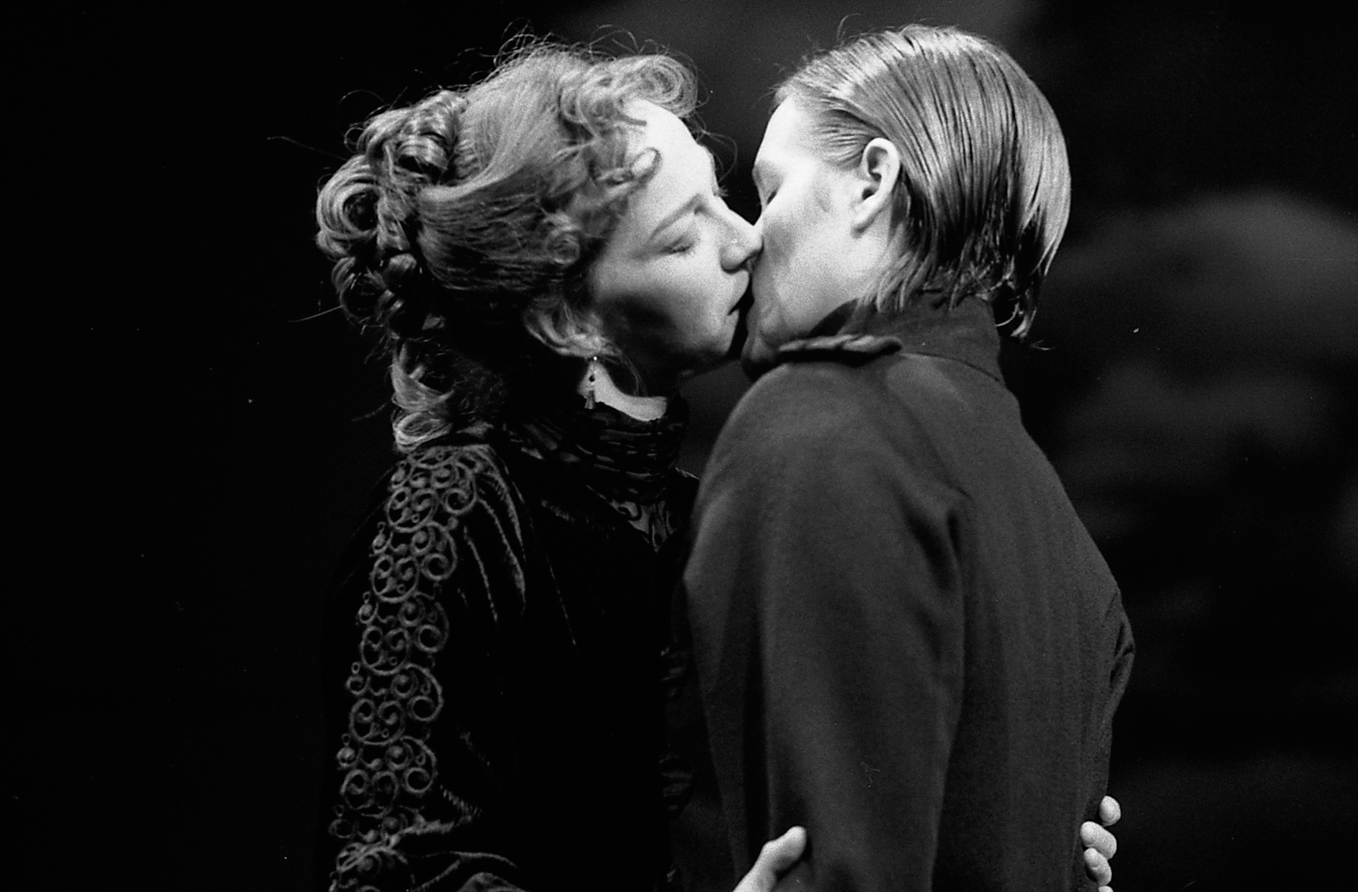
The jolly hockeysticks, active and assertive Viola has proved an enduringly popular approach: for example, in 1958 Barbara Jefford’s energetic Cesario in Michael Benthall’s production was ‘straight off the Roedean hockey field’ (Daily Express 11 December), although Theatre World (May) found that this Viola was ‘conscious of her false position on strange ground’ and of being ‘an illegal immigrant in Illyria’. In the 1962 revival of Colin Graham’s 1961 Twelfth Night, the Sunday Telegraph (21 January) also found a schoolgirl element and described Eileen Atkins’s Cesario as ‘madcap Vi of St. Illyria’s’. Ten years later Celia Bannerman was a ‘cheeky Viola’ who ‘relished her escapades like a naughty schoolgirl dressed up for the annual play’ (STel 16 July 1972). Another motif, which perhaps looks back to Jean Forbes-Robertson’s performances of Cesario, appears when the Daily Express (7 January 1954) pronounces Claire Bloom’s Cesario had too much of ‘Peter Pan’, while the Reynolds News (7 January) found Bloom evoked the ‘panto Principal Boy’. By contrast Lynn Farleigh gave Viola the ‘capable briskness of Mary Poppins’ (STel 25 April 1976), but Viola has occasionally been even more assertive:Footnote 73 Nancy Palk was ‘tough, sarcastic and intense’, a Cesario of ‘unusual, straight-backed fierceness’ (Toronto Star 3 June 1988); and Thusitha Jayasundera completely abandoned the passive Viola, rendering the character ‘hot-tempered’ and ‘easily exasperated’ (G 4 June 1998). But despite these feisty Violas, the reviewers’ desire for elegant, lyrical Violas persists: so the New York Times (15 July 1978) found Lynn Redgrave’s Viola ‘a marvellous clown’, a ‘half-grown puppy, all exuberance and enthusiasm and comic frustration’ and, as a consequence, ‘not very suitable for Viola’. Meanwhile David Mamet’s ‘lighthearted’ Twelfth Night, occupying rather different theatrical territory from Mamet’s own plays, produced a Viola which the same paper found to be ‘a beacon of loveliness’ who ‘magically retains a feminine radiance’ while ‘pretending to be boyish’ (NYT 17 December 1980).
The performance of femininity or masculinity by Viola raises a different set of questions when she is played, as she often has been, by a man. For example, in 1971 Giles Havergal cast Jeremy Blake as Viola in a production which foregrounded issues of sexuality; in 1977 John Bell cast Russell Kiefel in the role; and in 1996 Julian Beckedahl, in a production which cross-cast very enthusiastically, had David Whiteley play Viola while Zoe Stark played Sebastian (Sunday Herald-Sun 13 October). Alan Edwards, in 1972, had Carol Burns and Roger Newcombe alternating the roles of Viola and Sebastian, in a modern dress, unisex costume production. Both of Neil Bartlett’s gender-bending Twelfth Nights, in 1992 at the Goodman, Chicago, and in 2007 at the RSC, have included a Viola played by a man: in Bartlett’s 1992 ‘performance art’ production, Viola, Sebastian and Feste were marked out by being played by African-American males while white females played the other characters (Appler 40); in 2007, for the RSC, Bartlett’s cross-casting was less wholesale: Viola was played by a male actor, Chris New, while Toby, Andrew and Fabian were played by female performers (see Figure 10), something which created particularly fascinating effects when the physically imposing and magnificent Malvolio, played by John Lithgow, was tormented by the physically diminutive Toby, Andrew and Fabian.
Joanne Howarth as Fabian, Marjorie Yates as Toby and Siobhan Redmond as Maria in Neil Bartlett’s 2007 production for the RSC.
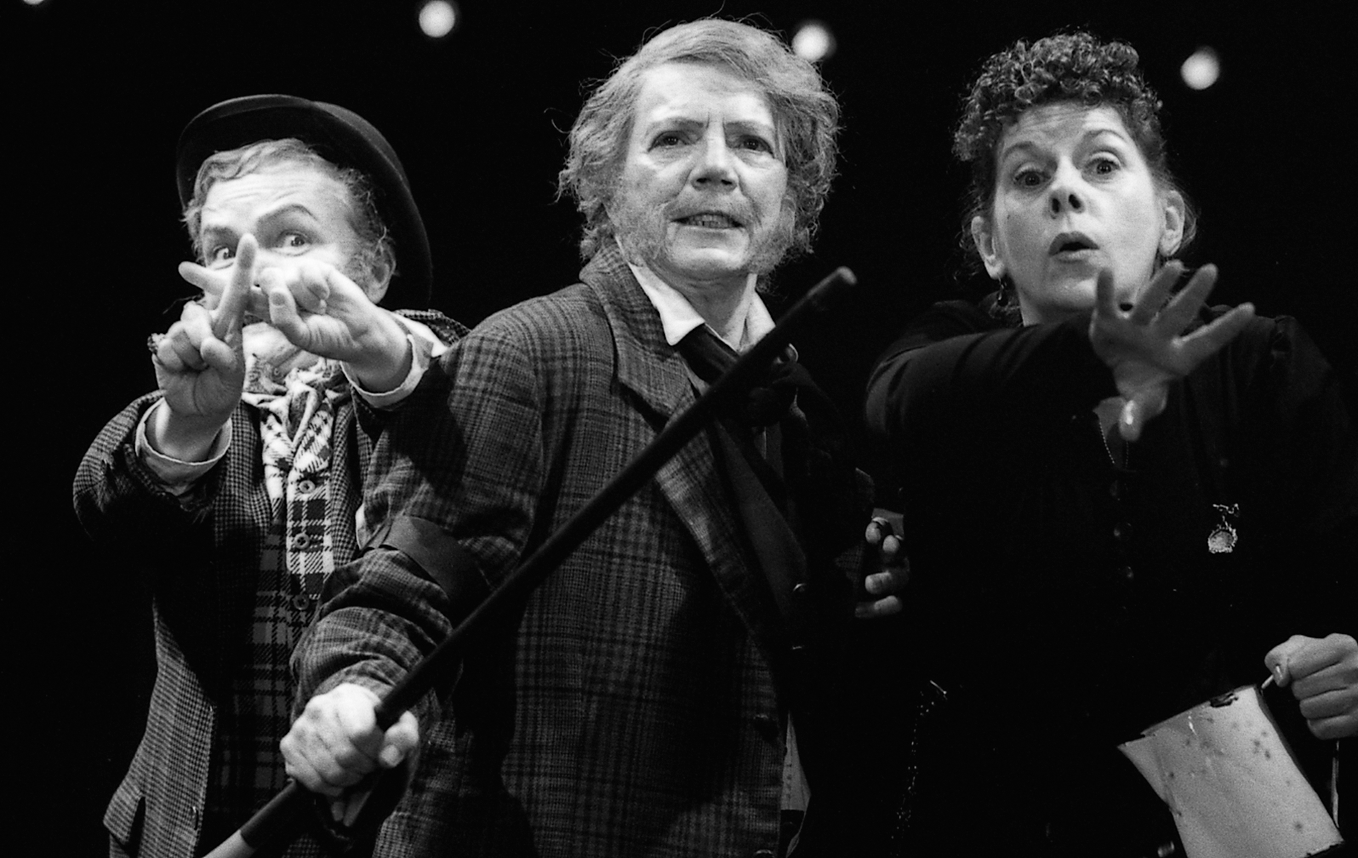
Several modern directors have also chosen to limit Twelfth Night to an all-male cast, thus creating a context for Viola’s femininity or masculinity that makes reference to the original staging, even though, of course, modern all-male productions cannot be read with anything but modern politics, and certainly cannot be read as ‘the norm’, as all-male productions would have been in Shakespeare’s day. These all-male Twelfth Nights have varied in the ‘straightness’ of their approach to gender and sexuality: Edward Hall’s 2007 production had a camp Olivia and a subdued, boyish Viola; Tim Carroll, at Shakespeare’s Globe in 2002, had a scene-stealing Olivia in Mark Rylance who became the star of the show, while Michael Brown as Viola looked astonishingly and plausibly feminine in an Elizabethan dress (see Figure 11). As a counterbalance to the all-male colonisations of Twelfth Night, it is worth also noting that, originally, the 1982 production by Ariane Mnouchkine was planned to feature ‘an all-female cast playing in a harem-setting’ (Singleton, 1995, 316) although in the end only Curio and Andrew were played by women. Away from the dominant Anglophone traditions, the Takarazuka company in Japan produced two notable all-female Twelfth Nights in 1999.Footnote 74
Michael Brown as Viola in Tim Carroll’s 2002 production for Shakespeare’s Globe.
The popular game of gender-bending with Twelfth Night also tends to raise questions about sexuality, and certainly an example of this can be seen in Declan Donnellan’s 2003 all-male production which frequently gestured towards complexity here: for example, just before Cesario, in 5.1, rushed off stage to put on her dress, she put her hand out to Orsino and he was unable to take it so shocked was he by the recent revelations about her identity. While Donnellan was particularly interested in exploring gay issues in this production, a production in which Antonio paired off with Feste, Twelfth Night only went overtly gay circa 1970. The possibility of theatrically exploring gay sexuality explicitly in Twelfth Night only became legally possible in the UK after the relaxation of censorship in 1968 and the first production to venture into this territory openly was not a commercial one but a student production directed in 1969 by Jonathan Miller, a joint Oxford and Cambridge production that toured the UK and the US, and played at the Middle Temple in March 1970 to mark the 400th anniversary of that building’s opening. Miller had ‘Antonio and Sebastian kiss warmly at their first separation’ and ‘Orsino’s attraction to Viola in her boy’s clothes is so pronounced that I couldn’t help reflecting how lucky it was for her that he didn’t see Sebastian first’ (FT 25 September 1969). Olivia was ‘genuinely in love’ with Cesario; and Antonio, in the final moments, was ‘picked out, solitary and horribly deceived, a figure of intense suffering’ (New Statesman 3 October), while the Spectator (4 October) thought that Antonio ‘is given the full lonely hearts treatment’. Professional companies soon followed the lead set by this production. In 1970, in Clive Donner’s production for the Nottingham Playhouse, ‘John Manford as Antonio makes a pathetic gesture towards Sebastian, his lost love’ (FT 23 February). The following year, in 1971, Giles Havergal’s production for the Glasgow Citizens, which was revived in 1972, put ‘emphasis on a homosexual relationship between Sebastian and Antonio’ and had a ‘handsome, pouting’ Orsino surrounded by ‘bejewelled young men’ (DTel 30 August 1972). The Financial Times (31 August 1972) reported ‘pretty epicene boys and girls, strayed in from the pages of Baron Corvo’ and saw Antonio as ‘a fashionable beach-boy with a thing about Sebastian’. The Scotsman (17 May 1971) commented waspishly ‘The undercurrents of homosexuality in the play have been fully exploited, with Orsino fondly embracing his boyfriend, and even Antonio appearing to be less than virile.’ At the RSC it was Peter Gill, the director and playwright, who in 1974 first took Twelfth Night in this direction, and the performances of gay sexuality were especially remarked upon in the reviews of the remounting of Gill’s production in London, directed by Colin Cook. In Stratford the production was seen as dealing primarily with male homosexuality and most reviewers mentioned the huge image of Narcissus, gazing at his own reflection in a pool, that formed the backdrop, and detected decadence; the Observer (25 August), for example, citing Dorian Gray. John Price’s Orsino was introduced lounging on cushions ‘fondling whichever favourite happens to be lying closest’ (T 23 August). The production also referenced the sonnets by displaying the graffiti ‘O learn to read what silent love hath writ’ and ‘O know sweet love, I always write of you’.Footnote 75 Whilst the Guardian (23 August) thought this production was interested in the ‘ambisextrous’, Cook’s restaging was seen to be more open to lesbian inflection; one review records, for example, Viola (Jane Lapotaire) giving Olivia (Mary Rutherford) a kiss ‘with spontaneous lesbian affection’ (Evening News 6 February).
It has become commonplace to play Antonio as gay, and in love with Sebastian, and, for example, Andrei Serban’s 1989 production included a ‘gay bar scene’ which was ‘truly funny’ (Wall St Journal 20 December). Nevertheless there are still some straight Antonios in circulation: Duncan Wass, the Antonio in David Fenton’s 1995 Twelfth Night, commented in the production programme: ‘I have sons about Sebastian’s age, so I immediately identify with Antonio’s over protective obsession with Sebastian’s safety.’ Antonio has also, as in Robin Phillips’s 1988 production, quite frequently been cast as black, presumably to indicate his outsider status. Occasionally, picking up on Orsino’s accusation in 5.1.58 that Antonio is a ‘notable pirate’, he has been a swashbuckler, and sometimes this has edged towards the camp: in Nicholas Hytner’s 1998 Twelfth Night the profoundly piratical Antonio executed an Errol Flynn style sword fight in 3.4 and came close to defeating all three of the officers who were attempting to arrest him.
Straight Antonios make little sense to Neil Bartlett who argues: ‘There is no gay subtext to Twelfth Night […] there is a gay text’, and ‘there is nothing hidden about the relationship between Antonio […] and Sebastian’ because Antonio’s ‘speeches are just ravishing. He says without any hinting, “when that boy walks out of the room I want to die”’ (Theater Week 27 January–2 February 1992). Bartlett also stresses that in Twelfth Night ‘everybody is in love with someone who doesn’t love them’, and, in his 1992 production, he sought to create an Illyria to which the audience might respond appreciatively ‘What country, friends, is this?’ The Chicago Tribune (21 January) found Bartlett’s production ‘erratic’ and ‘clunky’ but conceded it was also full of ‘clever concepts and bright ideas’. When Bartlett returned to a gay reading of Twelfth Night, for the RSC in 2007, his production also stressed Olivia’s dissatisfaction with the ending to her story, and indicated unequivocally that she would have preferred Cesario to Sebastian.
Evidence of the potential for finding gay sexuality in the play can be detected in performances that predate the 1968 watershed in theatre in the UK. While Lydia Lopokova’s physically demonstrative Olivia, with her enthusiastic pursuit of Cesario in Tyrone Guthrie’s 1933 production had clearly made some reviewers nervous (see pp. 27–8), Michael Benthall’s 1958 Twelfth Night may also have been suggestive: the production was read as indicating that Illyria was ‘obviously ripe for something like a Wolfenden report’, a report which recommended decriminalising homosexuality in Britain (ES 2 April). The potential for performing Olivia, and possibly Viola, as lesbian, however, was fairly rarely explored before the 1990s.Footnote 76 David Fenton’s 1995 Twelfth Night had an Olivia who ‘throws both her body and her kisses around with an abandon thoroughly inappropriate to the Countess’ (Financial Review 10 March), and the Gay Times (17 July) was confident it had identified ‘a lesbian kiss’ between Olivia and Cesario. Also in 1995, in David Poutney’s production, Rebecca Egan’s Viola seemed ‘to have the hots for Olivia, and plants passionate kisses on her lips’ (DTel 13 February). In Lindsay Posner’s 2001 Twelfth Night, Matilda Ziegler’s Olivia kissed Zoe Waites’s ‘military uniformed Viola’ (G 12 May) with great enthusiasm (see Figure 9). Waites’ Viola, who was ‘Square-jawed and mannishly strident’ as well as ‘half-liberated, half-incarcerated by her cross-dressing’ (DTel 15 May), at first ‘recoils, but then draws the Countess into an even closer meeting of lips’ (ES 11 May). The Spectator (19 May) felt that ‘the root cause of [Olivia’s] trouble was that her real taste had always been for laddish lasses in uniform’. Olivia’s final action was to kiss Viola in a non-sisterly way, and to lead her off, leaving Sebastian and Orsino together (I 15 May). Nicholas de Jongh felt Posner’s production did not, in the end, have the courage of its convictions but ‘Twelfth Night is the one Shakespeare play that offers disturbingly modern ideas about the way some people are designed to fall for both men and women’ (ES 11 May).
The performance of Olivia’s sexuality can also be affected by the issue of her age. In the late twentieth century, reviewers were still expecting Olivia to be a stately, dignified woman despite the fact that theatre practice had cast Olivia young for decades.Footnote 77 Thus the reviewers reacted strongly to Geraldine McEwan’s 1958 Olivia because she was, as her director Peter Hall put it, ‘vain, a little ditsy, not to say silly. But she was nevertheless heartbreaking – a young girl suddenly thrust into being mistress of a big household. She needed her Malvolio as much as the young Queen Victoria needed her Melbourne’ (Hall 135). A publicity photograph from the ending of the play (see Figure 12) suggests lively engagement between Cesario and Olivia but less vivacity in the Sebastian/Olivia coupling. But a combination of a youthful Olivia and an exploration of lesbian desire in the play can risk evoking the cliché of the schoolgirl crush. In addition, while lesbian Olivias are on the increase, so are Olivias who are just sexually voracious, enthusiastic man eaters who verge on nymphomania. For example, so committed was Helen McCrory’s Olivia to the pursuit of Emily Watson’s Cesario, in Sam Mendes’ 2002 Twelfth Night, that she stripped down to ‘see-through lingerie’ in order to make her intentions towards Cesario abundantly clear (Tablet 2 November).
One reason that Twelfth Night seems to invite such varied responses in terms of sexuality is because the supposedly happy ending, consisting of three heterosexual couplings, seems, in realistic terms, fraught with difficulties. Viola’s success in obtaining a marriage proposal from Orsino can risk seeming ludicrous when Orsino’s volte-face is very sudden, although this conclusion is often prepared for by performances of 2.4 that have Cesario and Orsino physically very close. For example, in John Fraser’s 1982 production ‘the prince and his go-between’ here ‘are engaged in tentative sexual foreplay over the chequers board’ (FT 16 December 1982). The prospective marriage can seem especially problematic when a go-getting Viola is paired with an indolent, or a sybaritic, Narcissus-like Orsino; for example, in Kent Thompson’s 1983 Twelfth Night, the Orsino, Henry Woronicz, ‘is seldom onstage without a hand mirror’ (Boston Globe 10 January). Similarly, production photographs show Keith Michell’s fair complexioned Orsino, in John Gielgud’s 1955 production, spent much stage time lounging around and reading, attended by black(ed up) servants and halberdiers. Frank Hauser, in 1976, directed Orsino as ‘a benevolent playboy of a certain age who stalks the stage as if he were longing to be photographed by David Bailey’ (ST 25 April) and Peter Gill, in 1974, presented Orsino as ‘a very handsome youth surrounded by a retinue of campy pretty-boy followers’ (O 25 August). Perhaps the apotheosis of the languid Orsino appeared in Mnouchkine (1982) where Georges Bigot was
dressed in white and cream with a simple gold embroidered turban, his make-up […] pale, with huge dark eyes emphasised by a row of red dots across his forehead just above the eyebrows. Red lips and a pendant earring created an androgynous quality, and the glistening trace of tears down his cheeks and an enormous white handkerchief which reached down to the floor illustrated, in a gently mocking way, the attitude of the production towards the passions of the self-indulgent characters.
This Orsino’s excessive melancholy, accentuated by the weeping and wailing ‘theme music’ that played whenever he appeared, eventually infected Viola who by 3.1 also began weeping and wailing when she contemplated her predicament (v). The audience’s response to this Orsino was to laugh at him as a figure of fun. Viola’s marriage prospects also looked problematic in Michael Grandage’s 1998 Twelfth Night when the audience witnessed ‘Orsino at the end beamingly bundling Viola into the arms of Olivia and himself jumping gleefully on Sebastian’ (Hopkins 94).
Ian Holm as Sebastian, Geraldine McEwan as Olivia and Dorothy Tutin as Cesario in a publicity shot for Peter Hall’s 1958 production (Olivia did not wear black for this scene in the actual production).
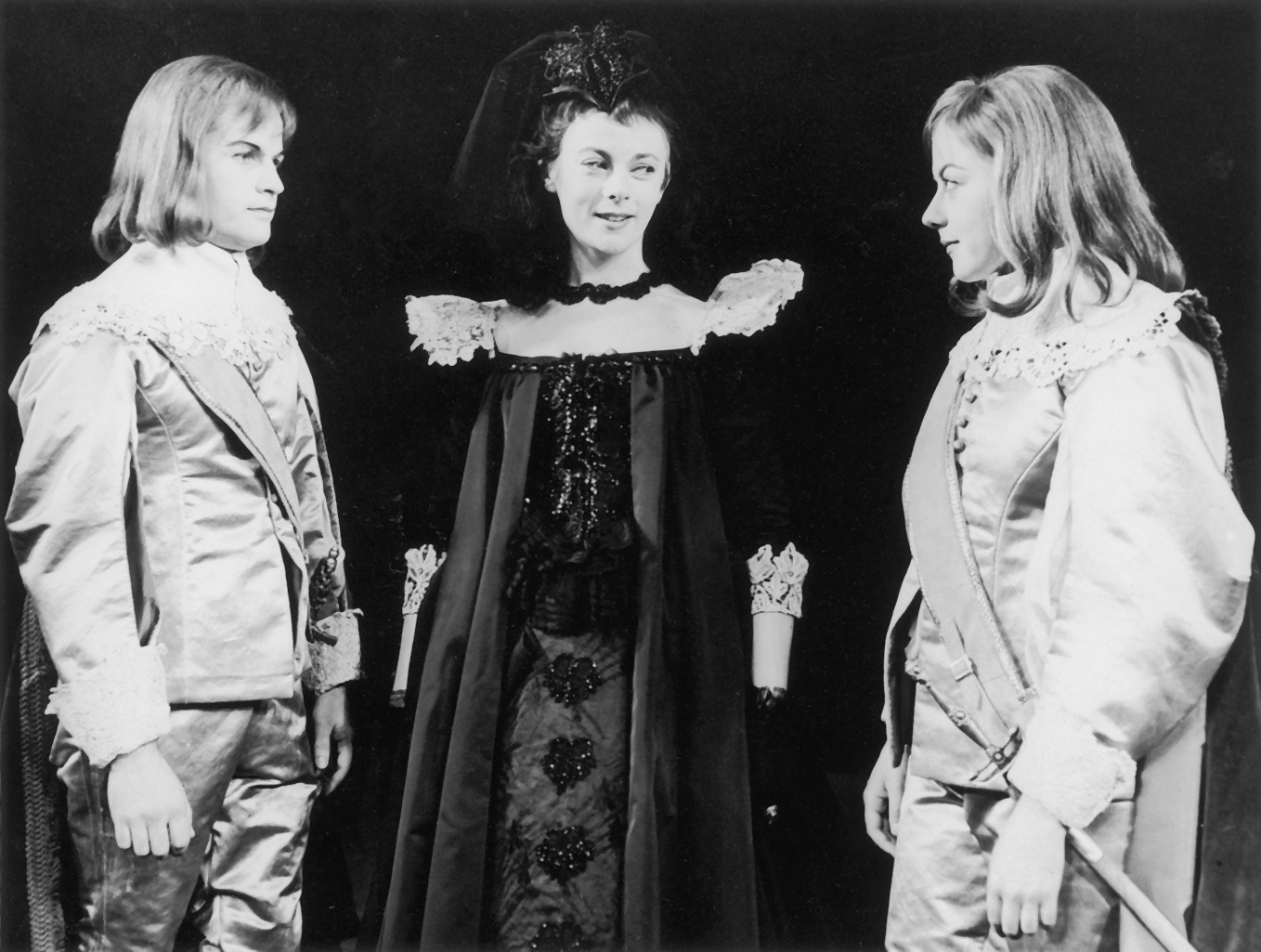
While Orsino was a ‘poor man’s Hamlet’ in Gillian Diamond’s 1992 Twelfth Night (Liverpool Echo 19 November) and he was approaching breakdown in David Farr’s 2004 production, unable to sleep, restless, and haggard, he has occasionally been played in a more macho style: for example, Frank Gallacher’s Orsino, for Roger Hodgman in 1987, displayed such ‘overpowering masculinity’ that the Australian (22 June) felt it understandable that Olivia should be attracted by the ‘total contrast’ of Cesario. In Jeanette Lambermont’s 1993 Twelfth Night Orsino first appeared ‘busily rowing, boxing, doing push-ups and jogging around his court’ (GM 10 July). In Valentine Windt’s 1949 production, Orsino was ‘forthright’ (NY Herald Tribune 4 October) and ‘virile’ (NY World Telegram 4 October). In Terry Hands’s 1979 production Orsino was ‘not the usual droopy musicophage but a grizzled gentleman-pirate dangerously likely to succumb to his unpredictable impulses and cut a throat or two’ (New Statesman 27 June), and ‘the proverbial bear with a sore head which his name suggests’ (Plays and Players July). Lois Potter also records that Robin Midgley, in 1979, wanted a sense ‘of a savage animal’ in Orsino and ‘of the danger that Viola was entering into’, something which helped the actor ‘bring off the homicidal outburst of the final scene without incongruity’ (60).
The performance of Viola is also inextricably linked to the performance of Sebastian so much so that on film Sebastian and Viola have usually been played by the same performer. Sebastians who very closely resemble their sister may run the risk of appearing unmasculine and the Birmingham Mail (3 December 1937) was certainly worried that Heron Carvic, playing Sebastian to his sister Teresa Carvic’s Viola, for Donald Wolfit in 1937, ‘seemed woefully namby-pamby’. Sebastian has sometimes been played by a woman – for example, in France, in 1917, Jacques Copeau had Suzanne Bing play Viola while Madeleine Geoffray played Sebastian ‘and the resemblance was close enough to startle one at times’ (New York Herald 26 December 1917). The opposite extreme is to suggest Sebastian is ‘the real thing’, the man who will sort out Olivia’s delusional love for Cesario. Thus in Walter Hudd’s 1947 Twelfth Night Sebastian took ‘a strong line’ with Olivia ‘from the first’ (SUAH 25 April), and it is difficult to imagine the young Marlon Brando, playing the role for Erwin Piscator in 1944, as anything other than walking testosterone. Modern directors sometimes still present Sebastian as a love-at-first-sight romantic who sweeps Olivia into his arms; certainly this was the line taken in Nicholas Hytner’s 1998 production (v), and it is an approach which paves the way for a conventional happy ending. Occasionally Sebastians become calculating opportunists, but in recent times they are more likely to be half ravished, dragged into bed by Olivia, only to appear in 4.3 clearly post-coital: in Duncan McIntosh’s 1999 Twelfth Night Sebastian entered 4.3 ‘bare-chested, as if they’ve already been to bed’ (Edmonton Journal 20 March); and in Rachel Kavanaugh’s 1999 production Sebastian returns after being ‘swept off to [Olivia’s] boudoir’ ‘wearing only a towel and the look of a man who cannot believe his luck’ (Time Out 9 June). Rather more unnervingly Neil Bartlett, in 1992, directed Maria to spy ‘through a key hole’ on Olivia and Sebastian in bed together, and she registered what was going on ‘with humping movements’ (Appler 44).
Feste
Gender issues have occasionally also inflected the performance of Feste who, since Nelly Farren pioneered this approach in Horace Wigan’s 1865 production, has sometimes been played by a woman; for example, in 1944 Erwin Piscator cast Elaine Stritch as Feste.Footnote 78 But what has become very clear in the late twentieth and early twenty-first centuries is that the role of Feste can be critical in determining the tone of a production of Twelfth Night: if nothing else Feste’s songs, the emotions evoked by their music, whether plangent or upbeat, can make a huge impact on the mood in any Illyria. While post Second World War Festes have generally been getting gloomier and/or angrier, another development has been to make Feste more and more the touchstone of the play: indeed in tracing Feste’s career over the centuries, Karen Greif uses the phrase ‘A Star is Born’ to indicate how steadily Feste has moved from the margins of the play – under, for example, Irving who cut the role deeply – to centre stage. Feste is now often played as a lead role, even a master of ceremonies for the play, and his role is frequently expanded rather than contracted, despite the fact that it takes a consummate comic actor to make sense of some of Feste’s jokes for a contemporary audience. Recent Festes have ranged from sunny to truculent, from lovelorn to carefree. But whether moribund prophet of doom or breath of fresh air in Olivia’s house of mourning, whether musical virtuoso or tone deaf has-been, Feste has certainly evolved into a major force in the stage history of Twelfth Night.
As early as Herbert Beerbohm Tree’s 1901 Twelfth Night, in marked reaction to Irving’s approach, Feste had become ‘the genius of the play’, ‘pervading all the scenes and connecting the several situations with links of music and song’ (Pilot 12 October). By 1950 Hugh Hunt (78) could declare Feste to be ‘the Pivot of the Play’ in his Old Vic production which, for Time and Tide (24 November), turned Twelfth Night ‘into a play about an ageing clown, Feste, who is bitterly jealous of a younger clown, Fabian’, who was clearly ‘a candidate for Feste’s motley’ (John O’London 8 December). Variations on Feste as guiding spirit of the play have ranged widely: in Paul Warner’s 1977 production Feste played ‘all the minor roles’ as well as functioning ‘as a sort of devious Prospero freezing and unfreezing the action by snapping his fingers’ (Village Voice 9 June). Feste became all knowing and ever present for Terry Hands in 1979 (reprising a production Hands had staged for the Comédie Française in 1976) and in this production Feste remained onstage all through the action. Andrew Visnevski, in 1982, directed Feste as a ‘top-hatted ring-master’ who led on ‘five mute characters posing as puppets’ who then performed the play (FT 18 October). For Glenn Elston, in 1992, Feste became ‘the centrepiece’, guiding the audience ‘through the many mazes of the play’ (Sunday Age 20 December). A particularly complex concept of Feste as MC appeared in Albert Schultz’s 2000 Twelfth Night when veteran Shakespeare actor John Neville played a ‘quiet old Feste’ within a production that was framed by the conceit that Neville was playing ‘a literary-minded sea captain’ who was staging Twelfth Night on board his ship (GM 21 August), as well as playing Feste and the Sea Captain of 1.2. The National Post (30 December) thought this conceit gave the role of Feste a weight it ‘has probably never been afforded […] in the preceding 400 years’. Meanwhile for Timothy Sheader, directing the play in 2005, Feste became ‘a voodoo magician’ (FT 10 June) or a ‘witch doctor’ (STel 12 June). Edward Hall, in 2007, directed Feste as a controlling figure who led a chorus of masked performers who provided music and sound effects throughout the performance.
Another popular vision of Feste in recent years has been to see him as a misfit, often melancholic or malcontent: from as early as 1948, when Alec Guinness directed Twelfth Night, Robert Eddison, fresh from playing Hamlet, made Feste ‘something between a Shelley and a seer discovered starving in some Welsh cave’ (Punch 6 October) or ‘a hungry peasant looking for a revolution to join’ (ES 24 September). This Feste also suggested ‘a fakir burdened with cosmic grief’, and was ‘wracked and brooding’ and ‘sepulchral’ (Spectator 24 September). In addition Feste’s ‘revenge is made to seem more important than the fact that the plot discomfits Malvolio’ (G 24 September). When Eddison reprised Feste thirty years later, directed by Toby Robertson in 1978, he again emphasised gloom and old age. Meanwhile in 1957, in Michael Elliott and Casper Wrede’s television production, Feste became ‘a melancholy and somewhat sinister clown, the sort, one guessed, that was always wanting to play Hamlet’ (DTel 11 March).
Peter Hall, in his much revived 1958 Twelfth Night, gave Feste ass’s ears but he was ‘a sort of Archie Rice, at the duke’s court, endlessly cracking his stale jokes in a desperate attempt to win brief smiles’ (Evening News 18 May 1960). It was ‘as if John Osborne’s Archie Rice had been transported to Illyria’ (Scotsman 26 December 1960). In Robin Phillips’s 1988 production, Albert Schultz played Feste as an outsider of a different kind, ‘a cerebral palsy sufferer’ (London Free Press 3 June). A popular variation on the concept of Feste as misfit is also the Feste with attitude. In Kenneth Branagh’s 1987 film, Anton Lesser’s depressed, angry and dangerous Feste became ‘a kind of Elizabethan beatnik’ (City Limits 10 December), a ‘wild haired tramp’ (Time Out 9 December). He was ‘bitterly misanthropic […] a faintly gypsy-like hobo with a carpet bag, whose smouldering anger and contempt reach a natural climax with his furious baiting of the imprisoned Malvolio’ (FT 5 December). In Richard Digby Day’s 1985 Twelfth Night, the Jewish Chronicle (7 June) even felt that the Feste was ‘a red-headed Irishman more likely to mug you than amuse you’.
The angry Feste was a particular feature of Peter Gill’s 1974 production: Ron Pember’s ‘festering Feste’ (Jewish Chronicle 30 August), was an ‘unshaven malcontent’ (T 23 August), who appeared to have wandered in ‘from “The Threepenny Opera”’ (G 23 August). Even more vividly the Sunday Times (25 August) saw this Feste as a ‘life-hater, infiltrating the hedonists like a member of the Angry Brigade at a coming-out ball’, while the Richmond and Twickenham Times (14 February 1975) thought this Feste was ‘a busker on the London Underground, doing at the same time rather well in the Open University’. In interview, Ron Pember certainly indicated that anger fuelled his Feste and that this working-class Feste had no time for self-indulgent aristocrats ‘in love with love like Orsino or making a meal of their grief, like Olivia’ (G 12 February 1975).
Bitter Festes are sometimes, in addition, hopelessly in love with Olivia.Footnote 79 Robert Eddison’s Feste, for Alec Guinness in 1948, was ‘as wracked by desire as Rigoletto and […] equally ravaged by a hopeless passion for Olivia’ (New Statesman 2 October). In Michael Benthall’s 1958 Twelfth Night, Feste was ‘fatalistically and hopelessly in love’ with Olivia (T 2 April), but in Anthony Tuckey’s 1971 production, although Feste’s love for Olivia made it impossible for him to watch the gulling of Malvolio – as he ‘finds it unbearable to mock love’ – Feste also played ‘a dumb show scene of love for Maria’ (T 12 November). Michael Boyd’s 2005 Twelfth Night took this idea even further and this Feste was in love with the ‘two-timing Maria’, and ‘deeply wounded by Maria’s complicity with Sir Toby’ (G 14 December).
It has become a surprisingly popular, if high risk, tactic to inflict on audiences Festes who can’t sing, who are bad at telling jokes, and who are clearly long past retirement.Footnote 80 In Tyrone Guthrie’s 1933 Twelfth Night, Morland Graham was a Feste who exhibited an ‘almost total lack of a singing voice’ (DTel 19 September) and in Hugh Hunt’s 1950 production Feste was facing the sack: ‘Leo McKern as Feste presents the ageing jester who hates Fabian as his probable supplanter and loses no chance to trip him up’ (T 15 November). This Feste was so unwelcome that ‘at the end of the first act, when Olivia’s door is locked against him, the Fool miserably prepares to spend a shivering night in the open air’ (ST 19 November). Angry Festes are often gravel voiced from maintaining their rage, more Bob Dylan than Aled Jones, and in Brent McGregor’s 1991 production, Feste certainly added ‘a valid Bob Dylanish touch to the songs’ (Newcastle Herald 31 May). When Brooks Atkinson (NYT 7 August) complained of the want of ‘daintiness of singing usually associated with [Feste]’ in Joseph Papp’s 1958 Twelfth Night, this comment was very much a sign of the times: ‘daintiness of singing’ in Feste has become uncommon in modern Twelfth Nights.
Top class and professionally entertaining Festes do still appear. In Stephen Beresford’s 2004 Twelfth Night, set in India, Feste became a Baul singer from the ‘Bengali tradition of nomadic minstrels and soothsayers’ (programme). In Neil Armfield’s productions (1983, 1987) Feste, Kerry Walker, was an old trouper singing jazz calypso fusion, in a rich, deep voice. Denise Coffey, in 1983, cast the counter-tenor James Bowman as Feste, and, for Richard Roxburgh in 2000, Stephen Sydenham’s Feste was a strikingly moody, and mood enhancing singer, whose performance helped to locate Illyrian society as in thrall to melancholic posing. Sydenham was compared with Nick Cave, Tom Waits and Lou Reed (Revolver 13 November). While the melancholy nature of the lyrics to Feste’s songs invites less than cheerful music, some productions expand this mournfulness into a soundtrack; for example, Terry Hands, in 1979, had Feste strumming ‘Youth’s a stuff will not endure’ at every opportunity, as the Guardian (13 June) put it, ‘in case we had missed the point’. John Caird’s 1983 production went a step further and ran music between each scene transition, music full of foreboding and gothic horror, pushing the audience sternly away from comedy, but picking up on Feste’s gloomiest lyrics and making them a leitmotif for the production (v).
It is easier to understand why Olivia continues to employ Feste when he puts in a performance such as the one produced by Wayne Sleep, in a production directed by R. J. Williamson and Joyce Branagh (2004). Sleep’s was ‘a sprightly, vaudevillian Feste, throwing a hat on the ground for money, tap-dancing, singing and generally being every inch the old trouper – bitchy, quick, convincingly capable of living off his wits and thinking on his feet’ (ST 15 August). 1970 saw two professional singers play Feste: Adam Faith was Feste in Willard Stoker’s 1970 Twelfth Night and then Tommy Steele played Feste for John Sichel. In 1992 Bryan Andrews had a Feste in Michael Pentecost whose ‘energetic clowning and musical panache’ were declared by the Sydney Morning Herald (31 August) to be a highlight of the production and, in Lindsay Posner’s 2001 Twelfth Night, Feste was a cross between music-hall star Little Tich, with his comically elongated shoes, and Charlie Chaplin (FT 15 May). Modern Festes have occasionally even demonstrated professional skills on period instruments; for example, Trevor Peacock for John Gorrie in 1979, played lute, tabor and pipe, but Feste is very rarely played nowadays as a thoroughly Elizabethan jester, something which was the dominant approach up until the mid-twentieth century.Footnote 81
Given that it is Malvolio’s insult to Feste’s professionalism (1.5.67–72) that Feste quotes when he taunts the humiliated Malvolio at 5.1.352–3, it seems odd that Feste is unexpectedly replaced by Fabian in 2.5, for the gulling of Malvolio. Some directors, such as Andre Van Gyseghem in 1942, have responded to this by removing Fabian and giving his lines to Feste, a strategy that requires surprisingly little modification of the rest of the text:Footnote 82 the opening lines of 5.1 have to go, and Fabian’s final speech of explanation has to be reassigned, but this is easily either given to Feste or, as, for example, in Murray Lynch’s 1995 Twelfth Night, to Maria (Sunday Star Times 9 July 1995).Footnote 83 Part of the attraction of this tactic is that it gets rid of the puzzle of Fabian’s identity in Olivia’s household: J. C. Trewin records that he has seen Fabian ‘as a gardener, a man-servant, a blacksmith wiping his hands on his apron, a farmer with plenty of time to spare’ (Trewin 164). He has been a law student (Potter 34) and Robin Midgley, in 1979, directed him as batman to the wheelchair-bound and elderly Toby (Potter 70).Footnote 84
Cutting Fabian increases Feste’s presence onstage and, potentially, his significance and, although this cut is comparatively rare, it is in tune with the modern tendency to accord increasing significance to Feste, when he often becomes, as Greif puts it, ‘critic and chorus’ (76). One medium in which Feste has fared particularly well, in terms of increasing his significance, is film, and a large proportion of filmed Twelfth Nights have chosen to make Feste a framing character, an MC, the main point of contact for the audience.
Recorded Twelfth Nights
Recorded Twelfth Nights, whether feature films, television programmes, or radio broadcasts, have the capacity to be influential, and to be accessed, well beyond the cultural moment in which they were first produced. This can endow some productions with an inordinate influence, simply because they are so readily accessible: John Sichel’s 1970 television production, for example, is available for sampling up alongside the exciting, if bewilderingly various, independent films of Twelfth Night lodged on YouTube. More importantly from the point of view of a stage history, however, recorded Twelfth Nights, whilst offering their own illuminating commentary on the staging challenges in the play, often also reflect contemporary stage practice.
Feature films of Twelfth Night have often had to grapple with the issue of realism, as the dominant aesthetic in mainstream cinema, and film productions that commit to realism can run into difficulties with the non-realistic aspects of the play, something which most directors deal with by radically adapting, cutting, rewriting and relocating lines from the text. While the realism of the first film of Twelfth Night, the silent film directed by Charles Kent in 1910, seems unrealistic by today’s standards, for the time it was innovative. The focus is on telling the story and the film features the director as Malvolio and Florence Turner as Viola. It also reflects much contemporary stage business: this includes opening with 1.2 when Viola arrives complete with a substantial portmanteau, as was the then fashion for Violas in the theatre. The film also follows stage practice in showing from the beginning that Sebastian has also been saved; in having Malvolio strut like a turkey; in cutting the dark house (4.2); and making a very comic ‘point’ of Viola’s ‘I am the man’ (2.2.22).
A tantalising succession of projects to film Twelfth Night then ensued but did not come to fruition; however, this at least suggests that the play was seen as marketable and potentially attractive to cinema audiences. Warner Brothers, in 1935, announced that Max Reinhardt would direct a film of Twelfth Night for them, a film that would star Marion Davies (Daily Film Renter 4 October). Earlier publicity for this film galvanised Basil Dean into promising to film Twelfth Night as the first of six Shakespeare films, envisaged as a riposte to American film versions of Shakespeare (News Chronicle 27 August 1935). Then two decades later Joseph Mankiewicz was intending to direct a film of Twelfth Night starring Audrey Hepburn as Viola and Sebastian (Chicago Daily Tribune 29 May 1955), but this was yet another film project that did not materialise. However, 1955 did see the release of the Russian feature film, Dvenadtsataya Noch, directed by Yakow Fried. This film achieved widespread distribution in the Anglophone market and was declared ‘excellent’ by the New York Times (5 March 1956), although the reviewer was less impressed by Malvolio being played ‘as an old man play-acting at being a love-harried swain’.Footnote 85 Malvolio’s hairstyle in particular – sticking up on top and at the sides – looks back to nineteenth-century stage traditions (see Figure 3), as does the director’s decision to open with a storm, to show Sebastian saved, and to have Olivia sing to herself of her misfortunes in love (although Olivia is no milksop and when Orsino attempts to throttle Cesario in 5.1, Olivia bites him hard enough to stop him). Klara Luchko plays both Viola and Sebastian in a lively and, as Cesario, often cheeky, manner, and the film was commended for playing ‘the broad comedy in the romantic and lusty spirit of the Bard’ (NYT 5 March 1956). The contemporary theatrical fashion for focussing on Feste is reflected in the way Feste opens and closes the action, although he is costumed as a very traditional Elizabethan jester, complete with jester’s bauble, and is an accomplished singer.Footnote 86 The film confronts the mystery of what happens to Antonio by inserting a sequence when the action-man Antonio, who fends off a whole posse of officers with his sword-fighting skills in 3.4, is seen to be making a timely escape. Andrew is slightly camp, very engaging and, as in many theatre productions, sympathetic. Lois Potter (46) points to the peacocks displaying in Olivia’s garden, as being emblematic of self-love and self-regarding, something presumably in accord with 1950s Russian attitudes towards Renaissance aristocrats with little to occupy their time except love games. While realism is at play in the settings, which include impressively substantial castles, the film keeps everything fairly light-hearted and slightly tongue-in-cheek; certainly Malvolio’s sufferings are not allowed to disturb the audience, and his threat of revenge is laughed at.
A rather different realism dominates Ron Wertheim’s soft porn adaptation of Twelfth Night, funded by Playboy. Orsino is a rock star, Olivia the widow of a film mogul, Malvolio becomes a very minor role, and only snippets of Shakespeare’s text remain, although all the characters speak in excruciating rhyming verse. While the film can be more sexually realistic, and explicit, than the commercial stage, contemporary theatre was being bolder in its exploration of some issues of sexuality in relation to Twelfth Night. While the film’s display of female flesh is enthusiastic, it shies away from what the contemporary stage was suggesting in terms of the Antonio/ Sebastian relationship by having Antonio played by a transsexual; and the film follows contemporary stage fashions by having Feste, played by the director himself, frame the action.Footnote 87
Picturesque realism is what dominates Trevor Nunn’s 1996 adaptation of Twelfth Night, which offered cinema audiences a storm of spectacular proportions before introducing an Illyria which is a cross between a Pre-Raphaelite painting and Jane Campion’s 1993 film, The Piano. The ravishing Cornish landscapes underscore the film’s commitment to realism, which also results in major cutting and rearrangement of text: so, for example, 1.4 and 2.4, the Cesario/Orsino scenes, are chopped up into tiny slices, and eked out until the end of 3.3, taking place in a wide range of different, but lovingly evoked, locations. Viola’s final couplet from 1.4, indicating she wants to become Orsino’s wife, is then delivered far more realistically than in the play, after what appears to be months of laddish intimacy between Cesario and Orsino.Footnote 88 The use of a nineteenth-century milieu, a popular setting for Twelfth Night productions at the time (such as Branagh (1987), Jones (1991)), and the combination of picturesque landscape, gorgeous costumes, and the realistic and plausible back stories that are provided throughout this film make it easy to watch. Feste is yet again master of ceremonies, opening and closing the action, and when, during the final song, the outsiders all leave Olivia’s household, it seems that the lifestyle of the beautiful rich remains unchallenged as the threats to their complacency – dissoluteness, homosexuality, Puritanism – are expelled, and the film rarely escapes an English Heritage atmosphere.
Twelfth Night on television, as opposed to feature film, has evolved rather differently often because of smaller budgets but also because some early television Twelfth Nights were deeply connected to specific theatrical productions; for example Michel Saint-Denis’ 1938 production starring Peggy Ashcroft was screened several times.Footnote 89 Television has also often demanded significant compression of the action, and the addition of advertisements: Fred Coe first directed the play for television in the US in 1947, when he reduced Twelfth Night to seventy minutes for WNBT, a production which was much applauded by Variety (30 April); later, in 1949, Coe managed to compress the play down to forty-five minutes for NBC, a compression which helped make space for advertisements for Philco. While the New York Times (27 February) admired Marsha Hunt’s playing of Viola, it complained of confused cutting, and ‘poor camera work’, especially in the use of close-up, and it disapproved of the interpretation of Toby and Andrew as variants on the Three Stooges. The Herald Tribune (3 November) thought Hunt’s Viola a ‘pert little babe’ and ‘the least convincing boy I have ever seen’; the reviewer also commented ‘The actors had to run like crazy to get it all in, but darned if they didn’t do it.’
Rather more radically, William Nichols’s 1957 hallucinogenic adaptation for television, directed by David Greene, includes a performance by veteran Malvolio Maurice Evans, who played the role for Margaret Webster in 1940, but the play is reconfigured as Feste’s dream, a dream that takes place in a pleasure park where Toby and Andrew are ferried around in wheelchairs; where Olivia’s favourite pet is ‘a human with the head of a unicorn’; Andrew and Cesario both faint over the duel and are revived with smelling salts administered by a monkey; and Malvolio is ‘reduced to a state of mumbling terror’ after his ordeal in ‘a suspended cage’.Footnote 90
Despite Nichols’s inventiveness, Twelfth Night on television has more often fallen victim to the heritage or the educational ethos. So 1970 saw a very conventional television Twelfth Night when John Sichel directed an adaptation by John Dexter, a received pronunciation production, with cutting that looked all the way back to Irving, especially in the massive reduction of the role of Sebastian. Tommy Steele’s Feste casts quizzical looks at the camera at every opportunity; Joan Plowright plays Viola and Sebastian; Ralph Richardson’s Toby has its roots in his theatrical performances of that role at the Old Vic in 1931 and 1932; and Alec Guinness was Malvolio – he had previously played Andrew in the theatre, for Tyrone Guthrie in 1937, and had also directed a particularly melancholy Twelfth Night in 1948. Guinness felt he and Richardson ‘found both ourselves floundering’ in this production (Guinness 192); however, Guinness’s Malvolio managed to flourish his yellow stockings in a wonderful chicken-like silly walk. Heritage was also to the fore in David Giles’s 1974 television film of Twelfth Night, which was filmed on location at Castle Howard. The Regency costumes evoked Jane Austen as well as Shakespeare, although the director himself thought Janet Suzman as Cesario ‘looks like a young Lord Byron’, and Kenneth Gardnier, playing Feste as a black slave, used his own Caribbean accent placing emphasis on Feste as ‘a real outsider’ (Radio Times 11–17 May).
In 1980 John Gorrie directed Twelfth Night for the BBC Shakespeare, a series which very much had its eyes on the educational market. A cast of well known Shakespearean actors plus realistic manor house sets, period furnishings, and beautiful Cavalier costumes result in a production that is clear, respectable, respectful and sometimes dull. By contrast, Tim Supple’s adaptation of Twelfth Night for television in 2003 is never dull but its collaged text works so hard to render the play gloomy and melancholy that, paradoxically, it actually stresses how much laughter can be found in the play.Footnote 91 In many ways a revisiting of Supple’s Young Vic production of 1998, the production is one of unrelenting gloom with most characters on the edge of madness. The wholesale modernisation includes a back story for Sebastian and Viola which situates them as Indian refugees, with a father, a general, who has recently been assassinated. The twins wash up as asylum seekers in ‘a contemporary, multicultural vision of Illyria/London’.Footnote 92 Toby and his cronies become so disgusting that there is a real sense of blame attached to Olivia for failing to control them, and Malvolio seems completely reasonable in his desire for Toby to be restrained. Despite such interventionist editing, updating and collaging of the text, the producers, Channel 4, felt this adaptation had classroom potential and offered educational support material.
The educational rationale is certainly behind most of the potted Twelfth Nights that have also appeared on television; these include a thirty-minute version in 1937, featuring the Viola of Greer Garson, as part of the ‘Play Parade’ series; Roger Jenkins’s 1959 ‘For Schools’ production, which ran at seventy-five minutes, and was transmitted following a series of eight weekly programmes exploring the text of the play in detail (McKernan and Terriss 176); in 1969 Peter Seaborne also produced a very cut-down, edited-highlights version with Elizabethan costumes. The 1992 Animated Tales production reduced the action down to half an hour, and in 1996 Jane Howell directed a version of 2.5 for the BBC’s Shakespeare Shorts in 1996, starring Nigel Planer as Malvolio, using a 1930s country house milieu in order to stress class issues in the play, and using archive film from other productions to help raise points for discussion in the classroom.
Films originating in actual theatrical performances of Twelfth Night continue to be popular: David Giles’s 1985 production at Stratford, Ontario, was opened up for filming by expanding the action of individual scenes and creating a sense of a bustling community in the studio Illyria. A rather more adventurous approach appeared in 1986, with the release of Neil Armfield’s feature film, a film still firmly but playfully grounded in the theatricality of his successful stage production of 1983.Footnote 93 This Illyria is one long party, but the film’s theatrical and non-realistic set, with doors opening out of the exquisite background seascape, not only plays with filmic conventions but also helps create a sense of claustrophobia as no one can actually get away from this party.
1988 also saw a film of Twelfth Night based on a theatrical production when Paul Kafno filmed Kenneth Branagh’s Renaissance Theatre Company production for Thames Television.Footnote 94 Branagh wanted ‘brooding melancholy’, and ‘snow covering a mysterious Victorian garden’ (Branagh 198) and, as with the Armfield film, the theatrical set is in creative tension with the expectations of realism that filming brings. A more energised, and yet also extremely elegant deployment of this film/theatre tension appears in the film of Yukio Ninagawa’s 1998 Twelfth Night. This production was filmed in the theatre space it originally inhabited, but without a theatre audience present, with blocks of empty seats framing part of the stage during the filming.Footnote 95 Combining, and playing wittily with, European and Japanese aesthetics, Ninagawa placed characters culturally, and commented on their aspirations, by their clothing: Olivia rules a Europhilic establishment, but the powerful Orsino is far more Japanese. Malvolio starts off dressed in an impeccable European Edwardian suit, then journeys towards Japaneseness by adopting Japanese clothing and theatrical make-up for his yellow stockings sequence. Ironically, by doing so, Malvolio becomes visually allied to the other characters costumed and made up in this way: Andrew, Toby, Feste and Fabian. Meanwhile Cesario dresses in European style and keeps her moustache even when kissed by Orsino at the close of the play. The overall effect is of a provocative and visually seductive comment on interculturalism, and a Twelfth Night which reflects on the cultural politics of doing Shakespeare in Japan.
Radio and audio Twelfth Nights offer a rather different commentary on the staging challenges of the play, but, although The Listener in 1929 (30 December) argues Twelfth Night is well suited to radio because ‘It has a minimum of pageantry; its action is simple, smooth and rapid’ and it has so many ‘lovely Shakespearean lines’, Twelfth Night often seems dull in audio, and what becomes stressed, inadvertently, is how visual much of the play is: the eavesdropping on Malvolio from the box tree; Malvolio’s appearance in yellow stockings; the duel; the appearance of both twins together; the shock of how Malvolio looks in 5.1. All these are big visual moments and risk anticlimax when performed in audio. In addition if Sebastian and Cesario have identical voices, the play becomes almost impossible to follow for someone without a text.
The first BBC recording of Twelfth Night was broadcast in 1923 but this was very much simply a transmission of a current production. Peter Cresswell’s radio production for the BBC in 1936 is of interest as it cut extremely little but did cut 4.2, suggesting not only how difficult this scene can be per se but also how hard the dark room and the role playing of Feste become without any visuals. A rather bolder approach to Twelfth Night was taken in 1937, in the US, when Brewster Morgan adapted the play for radio in a lively and provocative way, really tailoring the play to what listeners could cope with. Morgan included a narrator, played by Conway Tearle, who introduced characters, commented on them and created continuity. Feste also spoke directly to the listeners but at one point the narrator puts him in his place by remarking: ‘Feste the clown may be clever; but there are a few things he does not know. First, he does not know that Cesario is really the girl Viola. Second, he does not know that Viola has a twin brother Sebastian …’ Orson Welles, who played Orsino for Morgan, made his own recording of the play in 1938, based on his inventive adaptation of Twelfth Night for audio, which includes a framework in which Welles plays a Richard Burbage about to take on the role of Malvolio.Footnote 96 By contrast with these adaptations, which really think about how the radio or audio recording works, an earnest radio production such as Howard Sackler’s 1961 Twelfth Night seems very dull. It is sober, respectful and it has an all-star cast, but what the production primarily demonstrates is that Shakespeare did not write for radio. A more recent radio production, Eoin O’Callaghan’s 1998 Twelfth Night, is enlivened by Nicky Henson’s Noel Coward style Feste, a Feste who is able to carry off the most obscure jokes as self-indulgent, decadent, but somehow witty, posturing. However, even Henson’s virtuoso radio performance runs into problems in 4.2 when his ability to transform his voice is almost as bewildering for the listener as for the imprisoned Malvolio.
Radio has also hosted a large number of Twelfth Nights for the educational market: often these are ‘scenes from …’ in format. In 1946 Herbert Farjeon tracked individual characters presenting short extracts just following one character and in 1948, Jo Marston, in ‘Off the Syllabus’, took a similar approach to Viola and Toby.Footnote 97 Leslie Hotson’s ideas were at the forefront of a 1956 radio production directed by John Gibson, and Marius Goring, the production’s Malvolio, introduced the proceedings with a prologue addressed to the Court of Elizabeth I and ‘Duke Orsino, your Italian guest’.
Recorded Twelfth Nights are likely to be even more dominant in the future as technology savvy artists and researchers deposit, and search for, productions via the internet. The play in performance has been subject to the predictable market forces – a rash of productions around 1964 to celebrate 400 years since Shakespeare’s birth; an avalanche of productions when the play is a set text for schools; a slight increase in productions when a director, like John Barton, suddenly convinces other directors that the play is more interesting than they previously thought – but it is salutary to remember that while Twelfth Night is currently very popular, during much of the eighteenth century it languished in the theatrical doldrums. The stage history of Twelfth Night overall, however, demonstrates that the play’s enduring appeal has been largely the result of many directors following the lead of the (unsuccessful) William Burnaby and adapting the play to speak to contemporary issues and contemporary taste: currently sexuality and gender are usually to the fore but in the past the attractions of Twelfth Night in the theatre have included: a particular brand of wilting femininity; singing Olivias; arguments over the relative comicality of Malvolio; realistic and upholstered Illyrias; and individual star performances.
1 Manningham Folio 12b. Edmondson comments that Manningham’s precision over the alternative title, What You Will, suggests its importance to Shakespeare ‘from an early stage’ (1–2).
2 For a detailed discussion of the staging of 4.2 see Carnegie.
3 For a consideration of essential props and original staging possibilities see Thomson 87–108.
4 Elam is more persuaded of the case for Twelfth Night being performed on this occasion than I am, but he also notes that Gregor Sarrazin and J. W. Draper had explored the possible Italian link before Hotson wrote it all up as a ripping yarn.
5 See, for example, Williams (1931), Clayton (1950), Carey (1954), James (1973).
6 Bawcutt 140. Herbert’s record is for the year 1622/3.
7 Digges’s poem was published posthumously in Poems: written by Wil. Shakespeare Gent., 1640.
8 This was partly because of his feelings of guilt because he had sworn to his wife he ‘would never go to a play without her’.
9 Burnaby, Preface page 1 (n.p.), disingenuously claims he owes only ‘about Fifty of the Lines’ to Twelfth Night and marks some borrowed lines with double inverted commas. Furness (407) converted William Burnaby into Charles Burnaby and a surprising number of other commentators follow this.
10 Bell’s 1774 edition of Twelfth Night, which claims to record contemporary staging, cut Feste’s songs in 2.3 and in 2.4.
11 Benefit performances are not generally recorded in the list of productions. For Twelfth Night and benefits see Laurie Osborne, 1996a, 54–5.
12 Lamb 157. Kemble played Malvolio 19 March, 13, 21 May 1789 (Van Lennep Part 5, Vol. II, 1138, 1154, 1157).
13 Spanishness later became a regular feature of nineteenth-century Malvolios.
14 See Van Lennep Part 5, Vol. II, 1226. Other siblings playing Viola and Sebastian include: Mrs Henry Siddons (Harriet Murray) and William Murray (1815); Ellen and Fred Terry (Irving 1884); Teresa and Heron Carvic (Wolfit 1937); twins performed in Owen (1942) when Marjorie Matthews played Viola and her twin sister, Joan Salberg, played Sebastian, an effect echoed in 1986 when in Armfield’s filmed production Gillian Jones played Viola and Sebastian, with her twin sister, Elspeth Jones, standing in as Sebastian for some shots in 5.1.
15 See Schafer, 2006 for further discussion of Kemble’s reversal of the opening scenes.
16 Brown, Introduction to Kemble’s published promptbook, 2–3.
17 The promptbook was also reprinted with corrections and additional cuts.
18 For more details of operas based on Twelfth Night see the Appendix: adaptations (p. 226).
19 Leigh Hunt, 228. For a detailed consideration of Maria Tree’s performance see Laurie Osborne, 1996b.
20 Phelps played Malvolio for many years and reprised the role for Charles Calvert in 1873.
21 Kean’s Twelfth Night influenced the work of The Meiningen Court Theatre which produced the play in 1872. When they performed later in London (John Osborne 56) The Times (1 June 1881) praised the ensemble acting but claimed overall: ‘It was artistic, it was picturesque, it was amusing, it was, in brief, everything except Shakespearian.’
22 Cole (331). Tree’s appearance as Olivia was in a benefit for her sister Maria Tree.
23 The correspondent to the Pall Mall Gazette comments that this casting had already been tried out in Germany, but opined that audiences in that country know their Shakespeare better than English audiences and would not be confused by the device.
24 Alan Hughes (191) argues that it is ‘quite likely’ that Irving saw a Phelps matinee ‘at the Gaiety in 1876’.
25 This illustration is reproduced in Donno’s introduction (12). It is worth noting that Terry was not on top form as she was ill from a horse-fly bite and she played the first night with her arm in a sling; after developing serious blood poisoning, she was replaced as Viola by Marion Terry.
26 Allen revised the play herself (CDT 20 October 1903), and cut Malvolio so deeply that only a trace of his plot line remained (S56), clearly rendering Allen herself the undisputed star of the show.
27 Illustrations and publicity shots appear in Daly’s souvenir edition of Twelfth Night and also e.g. in The Sketch 10 January 1894.
28 Speaight, 1954, 111 – however the Poel promptbook marks this scene as played.
29 Quoted in Robins 56. See also Mazer (71). Poel had produced several stagings and readings of the play on previous occasions.
30 Other Middle Temple performances include, in 1951, a performance of Donald Wolfit’s production in front of Queen Elizabeth and her daughter Princess Margaret; Graham 1964; Carroll 2002.
31 The Folger Library pbk not listed in Shattuck – FL39 – which is from the 1920s indicates that 4.2 was played.
32 Cary Mazer (47) points out that Tree’s Malvolio could not, as it appears in some illustrations from this production, descend all these steps, but would have entered at the point of connection between stage and backcloth, close to what appeared to be the bottom of the stairs.
33 Tree’s promptbook (S48) records that this gesture was followed by the servants laughing at Malvolio. This laughter eventually died away but there was much laughing and tickling of Malvolio with straws before this happened (S47).
34 The production played London for four months, then toured, and then returned to London in October. Tree also capitalised on the 300th anniversary of the Middle Temple performance of Twelfth Night and this production was in his repertory for many years.
35 Russell xx–xxi. As one of the Folger prompt copies (S58) actually has Marlowe’s stresses marked, it is possible to gain some access to her interpretation of Viola.
36 Illustrations of this production are lavishly reproduced in The Play Pictorial number 126, vol. 21, 1912.
37 This fits with contemporary fashion in musicals, etc., for interracial marriages (see Singleton, 2004).
38 For more on this performance and the reviewers’ fixed views on Olivia see Schafer, 2010.
39 This was Olivier’s first professional Twelfth Night but he had played Maria when he was at school (Daily Mail 24 February 1937).
40 Michael Chekhov also played Malvolio in 1917 in Russia.
41 1.5 was also used in Experimental Hour 3 ‘Take Your Choice’ (6 December 1937 BBC broadcast) when a modern pronunciation version was played alongside an Elizabethan pronunciation.
42 Examples include Landau (1960); Jones (1991); Nunn (1996).
43 See illustration and caption in Sheehy (157).
44 This production was filmed by Welles, and a phonograph sound track was recorded ‘that was to be played in accompaniment whenever [the film] was shown’ (Brady 44). Photographs of the production appear in France 39, 40. See also p. 77 for Welles and Twelfth Night.
45 Webster 98. The NYT (21 December 1926) records similar business in Le Gallienne (1926).
46 The name Ragozine in Measure for Measure suggests associations with the Illyrian town Ragusa, and in 2 Henry 6 4.1, Illyria is home to the pirate Bargulus.
47 Production photographs, Bristol Theatre Collection.
48 Production programme, Bristol Theatre Collection.
49 For images of Mnouchkine’s Illyria see www.lebacausoleil.com/SPIP/article.php3?id_article=95
50 Interview with David Bradby.
51 For stagings of Illyria and exotic Englishness see Schafer 2009.
52 Variations on the twins as cultural outsiders include e.g. Clive Brill’s 2003 audio production, where both Viola and Sebastian had marked Irish accents. While most directors make culturally different twins work for the production, David Farr, in 2004, preferred to make an ‘in-yer-face’ statement about colour-blind casting, with a black Viola and a white Sebastian.
53 As a counterblast to these wintry Illyrias, however, Hunt (1946) was confident that ‘the keynote is Youth. There is about it a quality of the spring which no other play ever written seems to possess.’ Production programme, Bristol Theatre Collection.
54 See production photographs in the Bristol Theatre Collection.
55 Examples include Billington xx; DM 11 May 2001, reviewing Lindsay Posner’s production; DTel 3 May 2005, reviewing Michael Boyd’s production.
56 See William (1966); Jones (1975); Giles (1985); Hopkins (1991).
57 Other Cavalier and Roundheads productions include e.g. Alden (1960), James (1973).
58 Production publicity flyer.
59 For production photographs see http://www.ingmarbergman.se/media.asp?guid=1FD2AA23-F3F4-4CFF-A5C2-9C38A867E1AA&PageNo=3 accessed 25 April 2008.
60 See also the Independent (13 July 1992); the Financial Times.
61 See e.g. Stage (2 October); Oldham Evening Chronicle (16 September); Morning Star (25 September); Chorley Guardian (17 September).
62 Mr Hudson was the butler in the popular television series Upstairs Downstairs.
63 Something of Dodd’s performance can be gauged from a reconstruction of his performance of 2.5 for The South Bank Show 11 March 1978.
64 Carnegie (393) adds that ‘no entry or exit directions for Malvolio are given in the Folio text’.
65 Astington 57–9. See Carnegie (397) for a discussion of Astington’s argument.
66 Photograph in the production programme.
67 The promptbook (S96), however, records Malvolio exiting ‘crying’.
68 Oliver Ford Davies – private communication.
69 Derek Godfrey’s Malvolio, replacing Donald Sinden’s in the revival of Barton (1969) also reminded at least two reviewers of Enoch Powell (Gloucester Citizen 9 April 1971, Morning Star 12 April 1971). For Australian Twelfth Nights see Schafer 2009.
70 The other character in Twelfth Night who frequently becomes Scottish is Andrew, e.g. Barton (1969), Edwards (1972), Bell (1977), Schultz (2000).
71 See Gay, 1994, 19–20 for more on Lehmann.
72 Leigh reprised this business in her later performance of Viola in Helpmann (1961) (Adelaide Mail 25 November 1961).
73 The capable and pragmatic Viola was endorsed by Tyrone Guthrie when he contributed to an acting edition of Twelfth Night where Viola is introduced in 1.2 in these terms: ‘Being a high-spirited girl, desperate and alone in the world, she is ready to seek adventure as an antidote to sorrow.’ While the stage direction is G. B. Harrison’s, Guthrie sanctioned it.
74 For more on the Takarazuka productions see Chen.
75 Gill had Sonnets 2, 20, 33 and 144 printed in the programme. Post Kott the sonnets have often been referenced in production, e.g. Mendes (2002) used the line from Sonnet 23 ‘O learn to read what silent love has writ’ projected on the back wall for his Twelfth Night and Uncle Vanya playing alongside it. Armfield (1983) (programme) also drew very specifically on the sonnets for his vision of the play. Mnouchkine (1982) also saw the play as ‘Shakespeare’s tender and humble mockery of his own pain, of himself as the author of the sonnets’ (Kiernander 118). For the programme statement on Mnouchkine’s Illyria see www.lebacausoleil.com/SPIP/article.php3?id_article=11
76 Ron Wertheim’s Playboy funded film of Twelfth Night contains one lesbian scene between, confusingly, Cesario and Olivia, soon after they first meet. For more on this film see Burt, and Osborne, 1996a.
77 One of very many examples would be Gwynne Whitby in Leigh (1927).
78 Other productions with female Festes include Armfield (1983, 1986), Dowling (1988), Boyle (1991), Wanless (1994), Cherniak and Matamoros (1990), Berkeley (1995), Beagley (1998), Dowling (2000).
79 Potter (40) astutely suggests the introduction of tragic Festes may have been influenced by the popularity of Gilbert and Sullivan’s 1888 Yeoman of the Guard, which features a tragic clown.
80 Irving also cast a Feste who couldn’t sing which suggests Irving saw the potential for his Malvolio to be upstaged by a virtuoso Feste (Freeman’s Journal 14 July 1884).
81 See comments on Barker (1912) (p. 131 n. 33). In Williams (1931) Leslie French, as Feste, sang to virginals and ‘did honour to his musical-comedy training’ (Morning Post 7 January).
82 For Van Gyseghem’s production see the Bath Chronicle and Herald 4 August 1942.
83 Other productions that cut Fabian and gave Feste most of his lines include: Moody (1957) (pbk), Phethean (1963) (Bristol Evening Post 19 October), Bell (1977) (pbk), Retallack (1988) (Oldham Evening Chronicle 22 January), Guskin (1989) (NY Post 10 July). Lynch (1995) absorbed Fabian’s role into Maria’s (David Carnegie email).
84 Fabian has occasionally became Fabia, as in Hickson (1988), Hodgman (1998). In Lambermont (1993) Fabia was an astrologer (GM 10 July). An irresistible curiosity in the stage history of Fabian is that in Jenkins (1963) the role was played by Trevor Nunn.
85 Because my focus is on Anglophone Shakespeare I have only considered non-Anglophone films of Twelfth Night that managed to penetrate the Anglophone market.
86 In the copy dubbed into English all songs are kept in the original Russian.
87 For more on this film see e.g. Burt 264–5 and Laurie Osborne, 1996a, 131–5. I am dating this film 1981 as this is the date its (dubbed) release was advertised in the US. It seems to have been filmed in Italy in the late 1970s but Osborne’s date of 1972 is not corroborated by (admittedly fairly dubious) internet sources. The film is also known as Eros Perversion.
88 Laurie Osborne (2002, 91) argues that cutting is used in this film ‘to invoke depth of character for the twentieth-century spectator’.
89 Broadcast on radio 13 December 1938 and three times on television during 1939. For archival audio recordings of earlier stage performances, such as Julia Marlowe and Viola Allen performing extracts from Twelfth Night, see Voorhees and Foster.
90 Nichols’s script is held in the NYPL.
91 The adaptation was by Andrew Bannerman and Tim Supple.
92 Supple spells this out in an essay appearing in the Guardian (21 April 2003).
93 For the film Armfield cut radically, and, although the film self-consciously flaunts its theatrical roots, the theatrical production did not cut this deeply.
94 Without wanting to detract from Kafno’s work, as the directorial vision was so much Branagh’s, and the production so closely based on the theatre production Branagh directed, this production has been referenced as ‘Branagh (1988)’.
95 Some live audience response is provided by theatre personnel. Ninagawa returned to Twelfth Night in 2005, revived 2007, with a Kabuki adaptation of the play but this has not been filmed.
96 Both recordings could formerly be accessed at http://museumoforsonwelles.blogspot.com/, which no longer exists.
97 The scripts are held in the BCL.