





Management Implications
Chrysanthemoides monilifera subsp. monilifera (boneseed) is a perennial shrub of southern African origin that is a Weed of National Significance in Australia and an eradication target in Western Australia (WA). Like many weed eradication programs, however, management over almost two decades has been inconsistently funded and deployed. Furthermore, the variety of land managers involved across multiple organizations has meant that any data collected on past control efforts cannot be used to generate improved future control. Our work on C. monilifera subsp. monilifera collated more than 2,050 presence records for individual plants and 135 absence records at a population level, spread across 89 sites. The local context for these sites was variable, including urban and rural locations, under both government and private management. By bringing these data together, we were able to first clarify what management had been undertaken in the past for C. monilifera subsp. monilifera across WA. By combining this knowledge with an understanding of C. monilifera subsp. monilifera ecology, we were then able to plan future management requirements at the site level. Near-term management goals included “watch” sites (where evidence suggests no new seed has been produced for at least 15 yr), “extirpate” sites (where delimitation has been or is feasible to achieve, with minimal recent seed production, and where future surveying will be effective), and “contain” sites (where delimitation in the near term is challenging and seed production may continue). Our synthesis supports retaining eradication of C. monilifera subsp. monilifera in WA as a realistic goal, but reinforces that resourcing to achieve this needs to commence immediately and be substantial and sustained. Priority actions include delimitation of all sites, preventing further inputs into the soil seedbank, and systematic field surveys to remove plants. It is not possible to estimate requirements for delimitation and overall program management. However, we expect that it will take at least 1,900 h of on-ground surveying to achieve extirpation for C. monilifera subsp. monilifera in WA. We caution that long-distance dispersal risks could derail management objectives and that any break in existing control efforts now will effectively waste many years of resourcing. An improved data-driven understanding of past management context combined with well-defined future management goals and resourcing has transformed the likelihood of successful C. monilifera subsp. monilifera eradication in WA, with conclusions relevant to weed eradication programs elsewhere.
Introduction
Progression of a weed species along the invasion curve from introduction to establishment and then on to spread is associated with changing options for management and the associated resources to achieve successful outcomes (Blackburn et al. Reference Blackburn, Pysek, Bacher, Carlton, Duncan, Jarosik, Wilson and Richardson2011). The greater the spread of the species, the more challenging it becomes to manage without a considerable increase in resourcing. Management objectives become more likely to fail without substantial and enduring investment (Ahmed et al. Reference Ahmed, Hudgins, Cuthbert, Kourantidou, Diagne, Haubrock, Leung, Liu, Leroy, Petrovskii, Beidas and Courchamp2022). Eradication is often a popular choice among management options, because it appears to permanently solve a weed problem and costs are not recurring once eradication is achieved (Simberloff Reference Simberloff2003). In contrast, indefinite investment is required while containment and control (i.e., a reduction in abundance) are the objectives of a weed management strategy (Panetta Reference Panetta2007).
In deciding which management option is appropriate for the target weed, understanding the context of the invasion is critical. Delimitation of the distribution in space and time is a major strategy in weed management forming the basis for eradication, containment, and control (Panetta Reference Panetta2007; Panetta and Cacho Reference Panetta and Cacho2014; Panetta and Lawes Reference Panetta and Lawes2005). This not only applies to the historical context of the invasion, but the temporal dynamics of future invasion risk. For weeds, the soil seedbank often remains unmanaged once existing plants have been removed, only to become the source of failed management plans in future years (Panetta Reference Panetta2004). Achieving insight on past population dynamics and ecological context is helped by aggregated historical data on any weed management outcomes. Yet these data are often lacking when resources are prioritized toward on-ground action and are rarely aggregated across the diversity of land managers implementing control programs. Even for some of the worst weeds in countries where weed management is relatively well resourced, effective future management is constrained by this common knowledge gap.
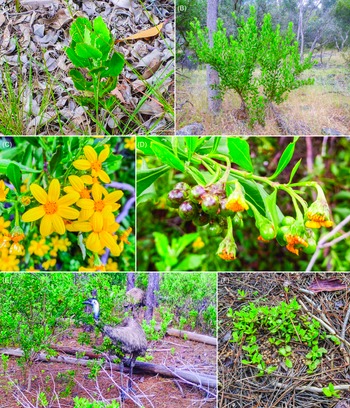
Here we assess the feasibility of effective management for the major weed boneseed [Chrysanthemoides monilifera subsp. monilifera (L.) Norl., Asteraceae] in Western Australia (WA), based on a better understanding of its delimitation, distribution, demography, and ecological context. Chrysanthemoides monilifera subsp. monilifera represents a significant threat to natural ecosystems and is associated with the decline of both flora and fauna in eastern Australia (Duffy Reference Duffy2020; Thomas et al. Reference Thomas, Possingham and Roush2005). Grassy woodland, valley grassy forest, and lowland forest vegetation communities in Victoria are vulnerable to C. monilifera subsp. monilifera invasion, where dense infestations eliminated most native ground flora and prevent virtually all overstory regeneration (Muyt Reference Muyt2001). Australia coordinates the management of major weeds via a program known as the Weeds of National Significance (WoNS). Beginning in 1999, 20 WoNS were endorsed and had management plans developed during 1997 to 2007. More recently a further 12 weeds (some grouped as multiple related species) were added to the WoNS list within the latest update of the Australian Weed Strategy 2017 to 2027. Two of the original WoNS are the two subspecies of Chrysanthemoides monilifera: boneseed (subsp. monilifera; Figure 1) and bitou bush (subsp. rotunda). Both have the management strategy of eradication in WA and containment or asset protection elsewhere. Chrysanthemoides monilifera subsp. monilifera is a perennial shrub native to the southwestern region and southern coasts of South Africa. The genus Chrysanthemoides contains several other subspecies, but only two subspecies have been introduced into Australia.
Chrysanthemoides monilifera subsp. monilifera. (A) seedling, (B) large plant, (C) flowers, (D) unripe fruit, (E) emu feeding on ripe fruits, and (F) mass germination of C. monilifera subsp. monilifera seedlings germinating in a putative emu scat from a previous season. Images (E) and (F) taken September 25, 2022, Para Reservoir, South Australia. Images: Kathryn Batchelor, CSIRO.

In 2000, a national strategy for C. monilifera subsp. monilifera management was drafted (ARMCANZ et al. 2000). The C. monilifera subsp. monilifera National Strategic Plan recommends “eradication of boneseed in lightly infested areas and areas of high conservation value” as a high priority. The strategy was revised in 2012 by the Australian Weeds Committee to advance the legacy of achievements by stakeholders under the previous strategy. The goal of eradication from WA was maintained. The period between 2000 and 2009 saw a considerable increase in awareness of C. monilifera subsp. monilifera in WA facilitated by a national management coordinator.
Chrysanthemoides monilifera subsp. monilifera in WA became a declared plant in 1979 under the Agriculture and Related Resources Protection Act, 1976–1978 (Government Gazette of Western Australia, No. 4, 1980). At the time, it was assigned Category P5: plants that should be treated only on roads or reserves. Chrysanthemoides monilifera subsp. monilifera was first targeted for control in 1983, when it was discovered in Wyalkatchem (Agriculture Protection Board of Western Australia [APB] 1983). By 1987 new infestations in WA were found in Armadale and Narrogin (APB 1987). Between 1988 and 1996 C. monilifera subsp. monilifera is mentioned as being present at an unspecified number of locations in Narrogin and Woodanilling and in more widespread locations. After 1996, C. monilifera subsp. monilifera is not mentioned in subsequent APB annual reports, but its declared weed status remained unchanged. The APB itself ceased to exist in 2010. It is likely that control efforts occurred on an ad hoc basis despite regular reporting of these efforts ceasing.
In 2006, C. monilifera subsp. monilifera was reclassified as P1/P2: plants not to be introduced to the state of WA and that should be targeted for eradication. It is now classified as a Category C2 (Prohibited/Eradication) and is a declared pest under the WA Biosecurity and Agriculture Management Act (2007), and its sale, trade, or movement is prevented. The control of Category C2 weeds is the responsibility of landowners or occupiers. However, the coordination of C. monilifera subsp. monilifera management has been generally resourced and delivered by the Western Australian Department of Primary Industries and Regional Development (DPIRD) regionally, and by Landcare groups and local government in urban areas since 2006.
A more coordinated WA C. monilifera subsp. monilifera eradication program began in 2007, resourced by the national WoNS program. All C. monilifera subsp. monilifera infestations in the state were surveyed, and a WA eradication strategy was written with input from stakeholders (Brougham et al. Reference Brougham, Cherry and Downey2006; Cherry et al. Reference Cherry, Leighton, Clark and Austin2006). By 2008, all known infestations were under active management and restricted to 35 small (i.e., average of <1 ha) isolated infestations; thus eradication of C. monilifera subsp. monilifera in WA was seen as a national priority (Cherry et al. Reference Cherry, Willsher and Whyte2008). A WA-based C. monilifera subsp. monilifera coordinator with Perth Natural Resource Management (Perth NRM) was appointed in 2009 to ensure continuity of the control efforts and oversee a surveillance (which incorporates control) plan for both urban and regional sites to manage the inevitable ongoing germinations from the soil seedbank.
From 2009, staff employed to control C. monilifera subsp. monilifera were funded, where possible, using short-term state and federal natural resource management (NRM) grants. By 2016, the number of discrete infestations had grown to 47 sites, partially assisted by discoveries of additional populations identified as part of annual “boneseed blitz” education campaigns and C. monilifera subsp. monilifera identification workshops held by Perth NRM. Declining funding allocations for the roles resulted in the WA C. monilifera subsp. monilifera state coordinator only being able to oversee surveillance of urban infestations until 2018. Regional infestations continued to be surveyed and managed by DPIRD on an ad hoc basis (often by dedicated individuals in their own time) and among other biosecurity programs. In 2019, the urban surveillance component of the C. monilifera subsp. monilifera program ended due to a lack of funding. This single season allowed existing mature plants to refresh the seedbank at several of the urban infestations in 2020, effectively resetting countless hours of previous control efforts. Perth NRM was able to secure funding for a local NRM body, the South East Regional Centre for Urban Landcare (SERCUL), to manage WA C. monilifera subsp. monilifera from 2020 and into 2021. From 2022, there are no dedicated funds allocated to control C. monilifera subsp. monilifera in WA. However, during 2023, SERCUL and volunteers were able to survey some urban sites as part of other programs.
After more than two decades of targeted management of C. monilifera subsp. monilifera in WA, the threat of this weed remains widespread. This threat primarily consists of the seedbank from 47 populations known to exist at the beginning of this study (early 2020). Due to the number (or lack) of organizations managing some of these populations and a lack of a continuous, coordinated, and consistent approach, there have been breaks in management. Despite an inconsistent approach to management, it appears that it may still be feasible to eradicate C. monilifera subsp. monilifera in WA. Two lines of evidence provide prima facie support for this goal. First, an active eradication campaign has been pursued in WA for the closely related (and visually similar) C. monilifera subsp. rotunda since 2012, and no new populations of C. monilifera subsp. monilifera or C. monilifera subsp. rotunda have been reported or discovered during this time. Second, dedicated land managers have kept working away in a disconnected way on “their own patches” of C. monilifera subsp. monilifera, despite a lack of funding, because of a broad recognition of how damaging the species could be if it was widespread and abundant. Thus, it is likely that the three elements required to achieve eradication—delimitation, containment and effective extirpation methods (Panetta and Lawes Reference Panetta and Lawes2005)—are or could be satisfied for C. monilifera subsp. monilifera in WA, provided there is no delay to program implementation.
If we are to realize this opportunity for eradication, however, there is a need to first understand the current situation across the state with regard to delimitation and demography for all C. monilifera subsp. monilifera populations. Here we aggregate information from a variety of disparate data sources, complemented by a comprehensive and systematic survey of all identified populations with past weed managers. The aim was to establish the first baseline assessment for C. monilifera subsp. monilifera in WA since 2010. We also commenced the process of delimitation to confirm that site-level extirpation is possible with existing surveillance and control tools.
Materials and Methods
Study System
Chrysanthemoides monilifera subsp. monilifera is associated with Mediterranean climates, where it is found in a wide range of vegetation communities, including coastal dunes, estuarine areas, heath, mallee, woodland, and dry and wet sclerophyll forest (Brougham et al. Reference Brougham, Cherry and Downey2006). It occurs on a range of soil types, but does not tolerate water-logged soils (Muyt Reference Muyt2001). Seedlings emerge during winter (Figure 1A). Reproductive maturity does not occur until the second year of growth (Figure 1B). Mature plants are estimated to live 10 to 20 yr (Muyt Reference Muyt2001). In the Southern Hemisphere, flowering occurs August to October, with fruiting September to November (Figure 1D). Flowers are protandrous (Figure 1C) with seeds usually produced by allogamy. There is 1 seed per fruit, up to 6 seeds per inflorescence, and up to 50,000 seeds per plant every year (Weiss et al. Reference Weiss, Adair, Edwards, Winkler and Downey2008; Figure 1D). Seed viability in the soil is expected to range from at least 3 yr (Weiss Reference Weiss1984) to 8.5 yr (Briden and McAlpine Reference Briden and McAlpine2012) and 9 yr (L McMillan, personal communication). Beyond theoretical climate constraints (temperature, moisture), there are no known limits to the distribution, although this aspect has not been researched.
Spread of Chrysanthemoides is mostly by birds (Gosper Reference Gosper2003; Knight Reference Knight1988; Mokotjomela et al. Reference Mokotjomela, Musil and Esler2013a). In South Africa, Knight (Reference Knight1988) recorded that 15 bird species visited C. monilifera subsp. monilifera plants to feed on fruits, with the most frequent visitors being the sombre bulbul (Andropadus importunus), the Cape bulbul (Pycnonotus capensis), and the Rameron pigeon (Columba arquatrix). In Australia, birds are the primary dispersal vectors, although most seeds fall beneath the plant and either enter the seedbank or are consumed by rodents or ants. Gosper (Reference Gosper2003) reported, in a detailed study of frugivores on the closely related C. monilifera subsp. rotunda in southeastern Australia, that 22 bird species feed on the fruit. Emus (Dromaius novaehollandiae) have been observed to consume C. monilifera subsp. monilifera fruit in other states (Figure 1E; image taken under CSIRO Animal Ethics Permit AEC2022-10), and may act as vectors for long-distance dispersal (Brougham et al. Reference Brougham, Cherry and Downey2006). Chrysanthemoides monilifera subsp. monilifera seeds are able to retain viability after being eaten and passed by emus (Figure 1F) although the overall viability of emu-egested seed has not been studied.
Field Identification of Chrysanthemoides monilifera subsp. monilifera
In our surveys, C. monilifera subsp. monilifera was distinguished from the closely related Osteospermum ecklonis (DC.) Norl. (African daisy) by the presence of weblike indumentum on the new leaves. The indumentum (or abundant leaf pubescence) is characteristic of Chrysanthemoides species (Griffioen Reference Griffioen1995), is present on seedlings and new growth on mature plants, and ensures correct identification at the genus level. Other related genera present in Australia, Calendula, Dimorphotheca, and Osteospermum, do not have the indumentum. The indumentum tends to disappear on mature leaves and herbarium specimens (Norlindh Reference Norlindh1943). Seedlings were defined as plants that germinated in the current year and are single stemmed to 10-cm high (Figure 1A). As C. monilifera subsp. monilifera does not produce fruit until late into its second year of growth, plants between the seedling and the mature fruiting stage were classed as juvenile. Fleshy fruits are rare in the Asteraceae, and the presence of fleshy-covered seeds is another certain way of identifying the genus. Leaf shape, petal number, and globular shape of the mature fruits confirmed that the plants found in surveys were C. monilifera subsp. monilifera (Figure 1). Hybrids were not expected, as the only population of C. monilifera subsp. rotunda is isolated by a considerable distance (22 km) and is subject to eradication (Emmett et al. Reference Emmett, Scott, Webber, Severn-Ellis and Bell2023).
Chrysanthemoides monilifera subsp. monilifera Site Visits
All 47 sites, including 5 of the 6 extirpated sites mentioned in Cherry (Reference Cherry2010), were visited in 2021. Additional locations were unearthed in other weed management databases, such as DPIRD’s Field Inspection System historical database (Supplementary Appendix S1) and were visited by either the authors or DPIRD staff to confirm the absence of C. monilifera subsp. monilifera plants. The five populations found since Cherry (Reference Cherry2010) were also visited with Perth NRM or SERCUL staff.
Cherry (Reference Cherry2010) detailed the different C. monilifera subsp. monilifera infestations in WA as “sites,” although terrain, access, and management expectations could vary greatly within each “site.” We added the following hierarchical characterization to these infestations, as (1) the nature of each property has had an impact on past management and therefore contributed to the expectation of future control, and (2) inclusion of an ecological understanding of dispersal and connectivity can help to inform management. The hierarchy was location, population, and then site:
-
Location: Local government area (LGA) or township name for regional areas or suburb for urban areas (i.e., the address). Additionally, we stratified locations into “urban” (i.e., Perth) and “regional,” due to the different surrounding landscapes and organizations that have been primarily engaged in past management. Urban infestations have been mostly managed by staff from Perth NRM and the SERCUL. Regional infestations have been mostly managed by DPIRD or LGA staff.
-
Population: Based on an ecological definition of plants that are within dispersal distance (pollen or seed) of each other. We defined populations as being separated by greater than 500 m, reflecting potential long-distance dispersal events (bird or human mediated) rather than a gradual spread. Within each location (town/suburb), there could be several populations of C. monilifera subsp. monilifera. For example, Manypeaks is considered to be one population that is spread over two linear kilometers along a road verge (Supplementary Appendix S2), but Wandering consists of two populations: Wandering Township area and Moramoking Road gravel pit (>6 km apart with no C. monilifera subsp. monilifera in between). Note that this category aligns broadly with the term “sites” as used in Cherry (Reference Cherry2010).
-
Site: Within each population, C. monilifera subsp. monilifera plants may be found over several landholdings, with ownership (private, government), occupation (residential, vacant land), terrain, vegetation, and access (fences, livestock) all contributing to different types of management that can be and are applied and, therefore, to the likelihood of successful management on that landholding. Sites can be identified by the parcel number on the cadastral map (Landgate 2019). For practical reasons, sites were best grouped by LGA, given that C. monilifera subsp. monilifera management approaches will vary greatly due to resourcing, property ownership, terrain, and the surrounding vegetation.
Delimitation
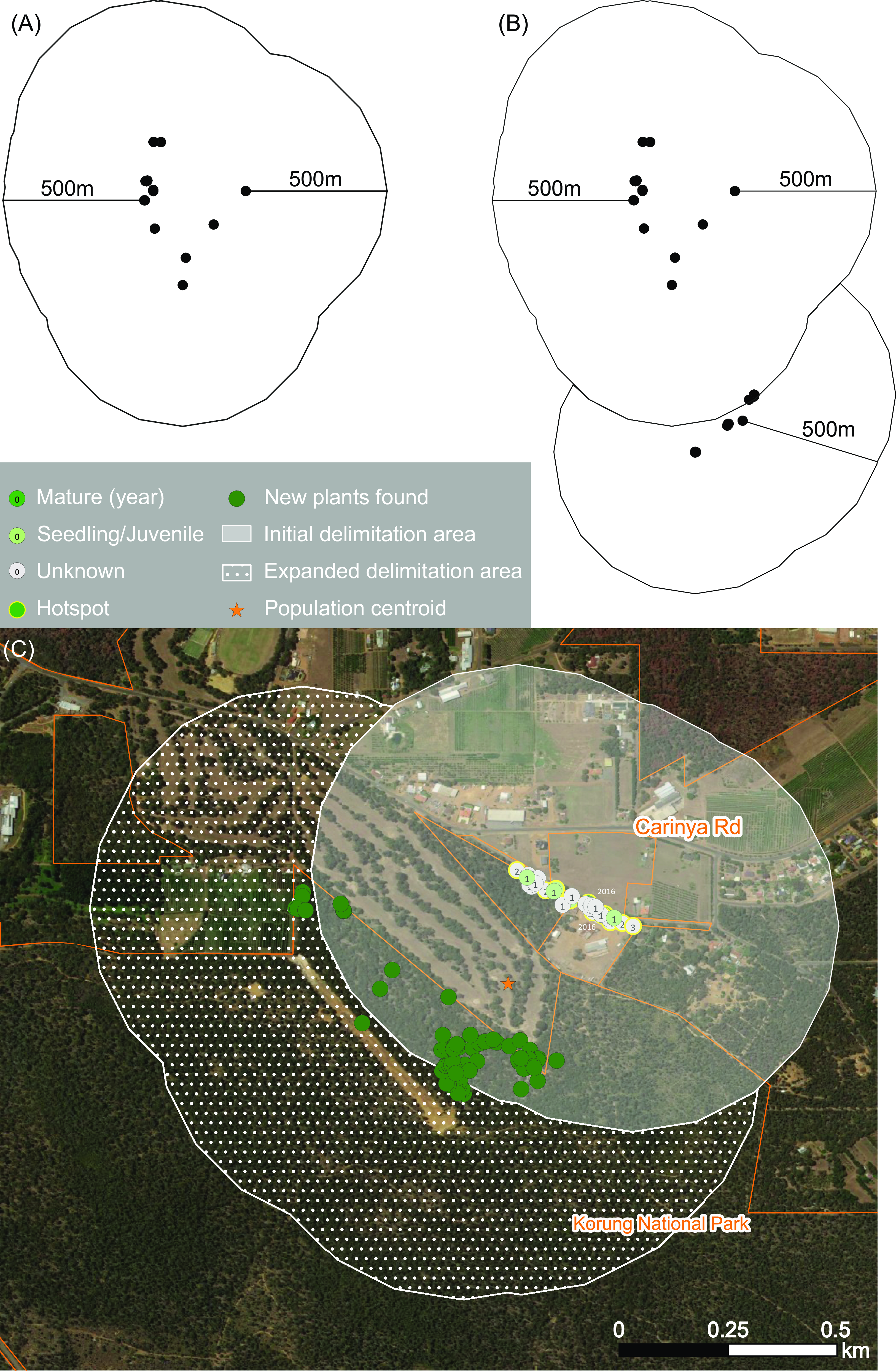
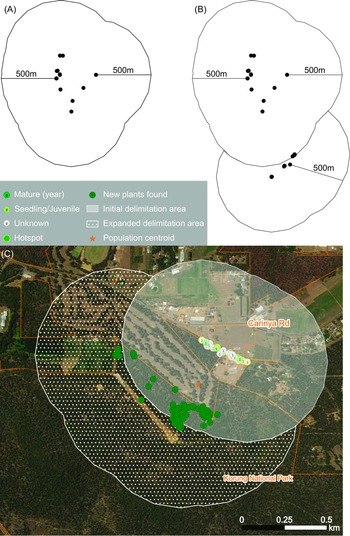
We defined delimitation of an infestation at the population level based on the iterative approach outlined in Scott and Batchelor (Reference Scott and Batchelor2014) and Panetta and Lawes (Reference Panetta and Lawes2005). More specifically, the outer extent of plants at each site was mapped and a buffer of 500 m was added to this (Figure 2A). The distance of 500 m was based on a realistic dispersal kernel for bird-dispersed C. monilifera subsp. monilifera seeds (to a perch site; Mokotjomela et al. Reference Mokotjomela, Musil and Esler2013a). We did not consider longer-distance dispersal by emus to be relevant at C. monilifera subsp. monilifera sites, based on available knowledge when commencing this work. If a C. monilifera subsp. monilifera plant was found during a delimitation survey to be beyond the previously delimited extent but within the buffer, an additional 500-m buffer was applied to the new plant location, and delimitation was continued (Figure 2B and 2C).
Example of delimitation methodology applied for Chrysanthemoides monilifera subsp. monilifera populations with (A) 500-m buffer for initial delimitation survey, then (B) expansion of delimitation with a new 500-m buffer after discovering new plants and (C) an actual example from surveys of C. monilifera subsp. monilifera in Western Australia.
Data Inferred from Weed Surveillance and Management
A critical component for determining the age of the seedbank at all sites is understanding when the last mature fruiting plant was found (i.e., the last known input of seed into the soil seedbank). As most records in the dataset were sourced from waypoints collected on handheld GPS devices, they often contained abbreviated or no information on the life stage of the plant removed, for example, “2 seed” or “1 mature.” Sometimes a lot of information could be gained from a waypoint with a brief annotation (e.g., 5 seedlings) when the date, spatial coordinates, and the collector information was included. Many points had no information other than spatial coordinates.
If no date was attached to the waypoint, then dates were inferred by clarification from relevant land managers via the timing of surveillance activities at adjacent sites with more information. Incorporating reports on past C. monilifera subsp. monilifera management from Landcare groups, volunteers, or local government staff allowed us to generate some understanding of the control history and disturbance context of sites (e.g., controlled fires). Where a land manager contact could still be identified and contacted, a historical picture of work could be pieced together, even if there were no specific data. We sought clarification from 16 data providers on relevant context to allow for clear data interpretation, including the collectors of herbarium records where possible, to explain confounding observations. All point data collected as part of this research were lodged with the Atlas of Living Australia (ALA; https://ror.org/018n2ja79) using Darwin Core standard fields (Wieczorek et al. Reference Wieczorek, Bloom, Guralnick, Blum, Döring, Giovanni, Robertson and Vieglais2012).
Population Demography
For all plant records summarized in the surveys of Cherry (Reference Cherry2010) and the APB annual reports, life stage was categorized as mature in the dataset, unless specifically recorded or described as seedling or juvenile. For all other records, if the waypoint description contained the words “large,” “mature,” “fruiting,” “big,” “M1” or “M,” “clump,” “dropped fruit,” “missed,” it was categorized as a mature plant. If the waypoint contained the words “seedling,” “small plant,” or “S1” or “S,” it was categorized as a seedling. These records for the purposes of mapping and demography were categorized as seedlings but remained in the database. If the record description contained a mixed cohort, it was categorized as mature to correspond to the impact that observation has on demography. Those records that did have not enough information to determine life stage were categorized as “unknown.” The seedbank was considered to still be active for up to 15 yr since the last known seed event, as anecdotal evidence in WA suggests seed longevity to be at least 10 yr with a margin of safety applied. Thus, sites were deemed as successfully extirpated if no fruiting C. monilifera subsp. monilifera was seen for more than 15 yr or substantial changes were applied to the area (e.g., development), resulting in no opportunity for C. monilifera subsp. monilifera to grow or the previous high-risk seedbank area being removed.
Defining Population Parameters
All spatial calculations were performed in QGIS 3.22.9 Białowieża spatial software (QGIS.org, 2022). Populations were identified using vector density-based spatial clustering, with minimum cluster size as 2 and minimum distance between clusters as 500 m. The centroid for each population was calculated as the mean coordinate of each cluster.
Results and Discussion
Historical Context of Chrysanthemoides monilifera subsp. monilifera in Western Australia
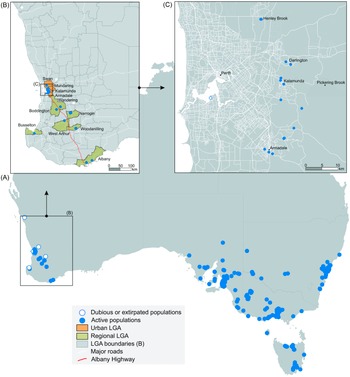
As C. monilifera subsp. monilifera has been under management for at least four decades, we would expect some sites to be successfully extirpated. The current survey identified seven sites as being extirpated (Supplementary Table S1). If the record at Nabawa (northern most point; Figure 3B) is included as a site, then the WA range over which C. monilifera subsp. monilifera has been documented becomes 790 km. However, Nabawa was surveyed in 2006 by JKS and in 2008 and 2010 by DPIRD staff without any C. monilifera subsp. monilifera plants being found. Investigation into how a single plant (that produced flowers and seed as evidenced by the herbarium specimen) was found 400 km north of the next closest infestation suggest it arrived as a contaminant in tree nursery planting and was subsequently removed by the farmer. There is no evidence to suggest the species ever naturalized in Nabawa. Thus, the Nabawa site and the other six extirpated sites (Supplementary Table S1) are not part of the analyses and interpretation of currently active sites that follows.
(A) Distribution of Chrysanthemoides monilifera subsp. monilifera in Australia based on preserved herbarium records from the Atlas of Living Australia at the time this project commenced (ala.org.au; DOI: 10.26197/5ecf5f742fb07, accessed: May 28, 2020), (B) southwest Western Australian herbarium records showing alignment with urban (orange) and regional (mustard) local government areas (LGA), and (C) herbarium records in the Perth urban region.
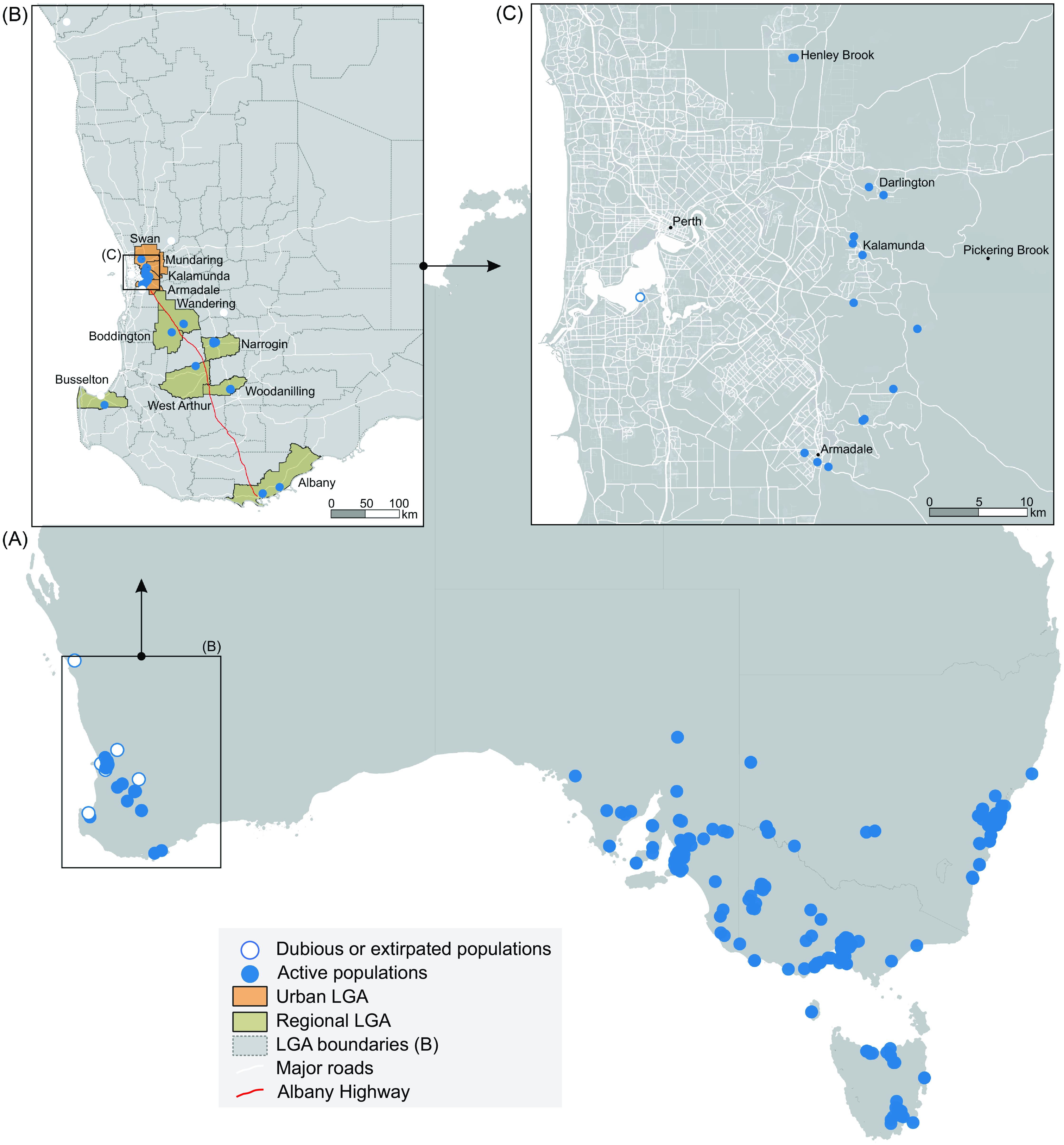
Excluding the Nabawa site, the current range of C. monilifera subsp. monilifera in WA is more than 400 km on its longest axis (Figure 3B). Further observations can be made of the active WA C. monilifera subsp. monilifera populations. First, there appears to be a trend to follow the Albany Highway (Figure 3B). However, sites were not found along the highway itself, but in neighboring towns. Second, the populations in the Perth Hills (Figure 3C) are observed to be associated with loamy gravel soils. Two isolated populations, Busselton (Figure 3B) and Henley Brook (Figure 3C), have existed for a long time (discovered in 1993 and 2003, respectively) growing on sand and without spreading far from an associated watercourse. This indicates that an edaphic factor may be involved in C. monilifera subsp. monilifera naturalization and persistence.
The number of residential properties found to have C. monilifera subsp. monilifera in the Perth Hills and country towns, particularly along the Albany Highway, indicates that at some point C. monilifera subsp. monilifera was probably available for sale at plant nurseries. However, we were not able to find any evidence of listings in historical WA nursery or seed catalogues (J Viska, Australian Garden History Society, personal communication). The mechanisms explaining the invasion across WA remain unknown, but human transport and garden plantings seems to be the most likely, mirroring what happened with C. monilifera subsp. monilifera spread in eastern Australia (Weiss Reference Weiss1986). The origins and pathway to invasion in Australia have been established for C. monilifera subsp. rotunda (Emmett et al. Reference Emmett, Scott, Webber, Severn-Ellis and Bell2023). A similar approach, combining molecular genetics and recorded history would likely provide similar useful information for C. monilifera subsp. monilifera, especially if it can be determined how many introductions occurred into WA. Closing this knowledge gap would also inform the feasibility of eradication (e.g., is WA control compromised by reinvasion?) as well as addressing the prospects for new biological control options (see later discussion).
Spatial Scale of Required Management
Cherry (Reference Cherry2010) described 42 discrete sites from her work, and a further 5 sites were found between 2012 and 2016, resulting in 47 discrete sites across the state. We further separated these sites based on property tenure, terrain, and vegetation differences, as these factors greatly impact upon access for surveillance. Our refined database has a total of 89 sites that will have a different management history and outcome (Table 1; ALA Dataset, https://ror.org/018n2ja79). Chrysanthemoides monilifera subsp. monilifera sites were further categorized by their locations (urban, regional), reflecting past resourcing and the LGA in which the sites were located (Figures 3–5). Based on our compiled data from all organizations across the state, we observe that most C. monilifera subsp. monilifera in WA is on privately owned property or on local government land (Table 1). Overall, the database currently contains 2,050 presence records (at an individual plant level) and 135 absence records (a point-in-time assessment at a local population level).
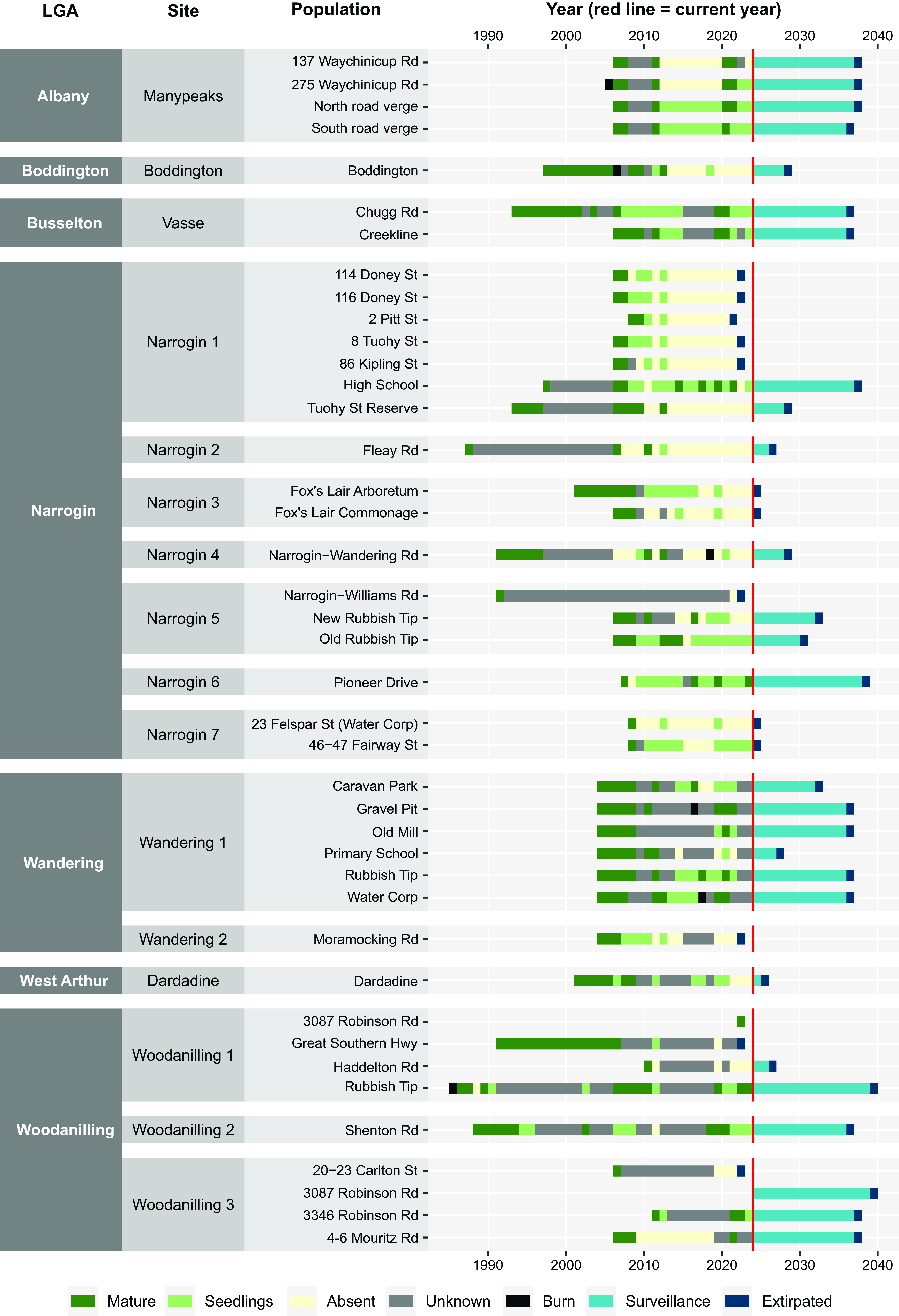
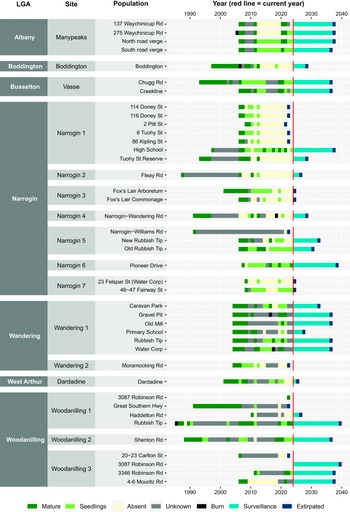
History of site management and surveillance observations for all known regional Chrysanthemoides monilifera subsp. monilifera infestations in Western Australia. Predicted extirpation based on last known observation of a fruiting plant, grouped by local government area (LGA).
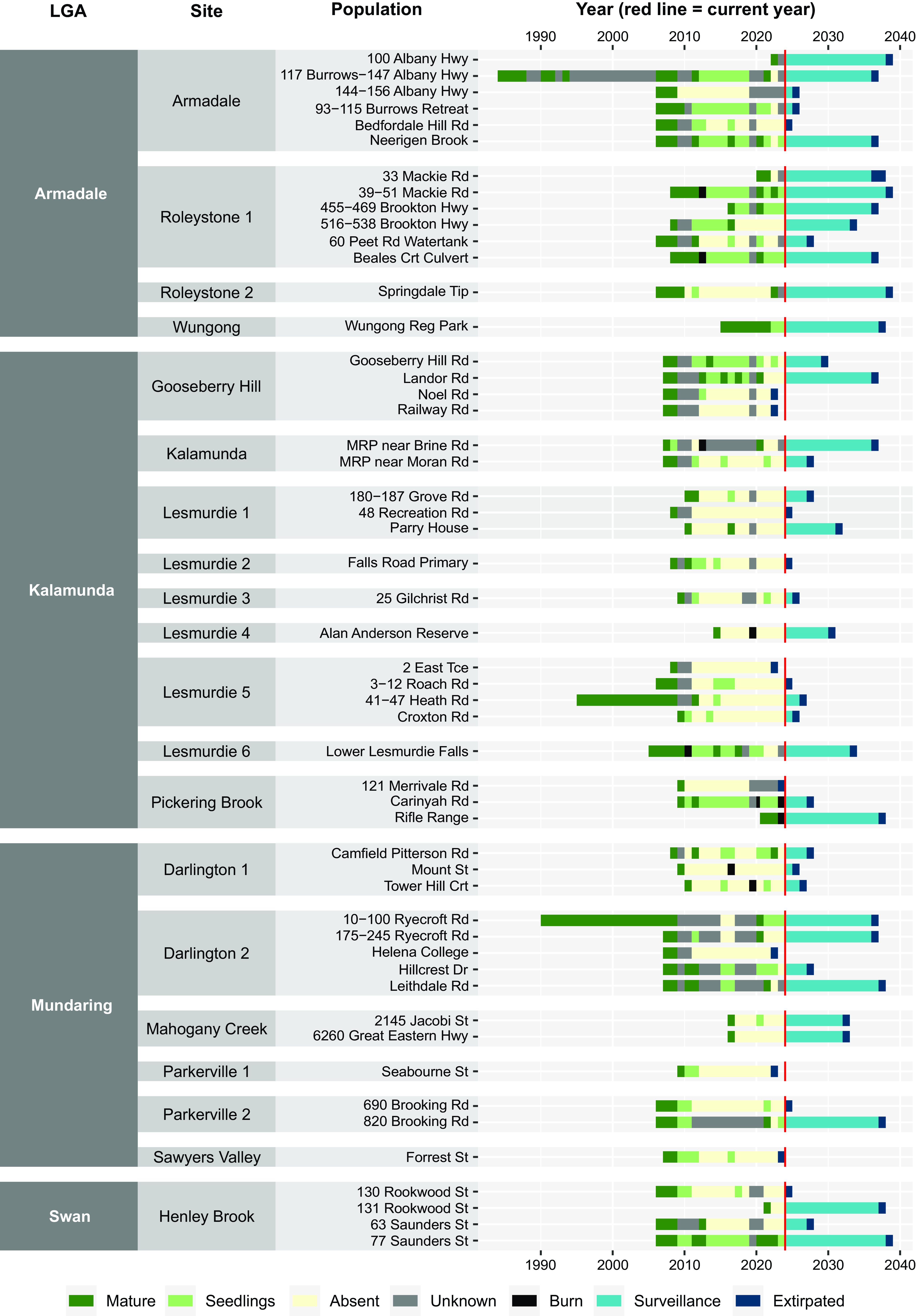
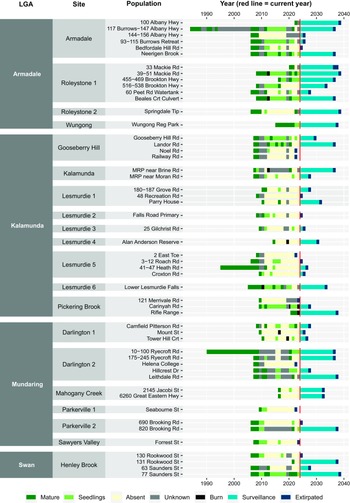
History of site management and surveillance observations for all known urban Chrysanthemoides monilifera subsp. monilifera infestations in Western Australia. Predicted extirpation based on last known observation of a fruiting plant, grouped by local government area (LGA).
Summary of land tenure of sites in Western Australia (WA) with Chrysanthemoides monilifera subsp. monilifera.

Seven populations were delimited as part of the study; the regional populations at Manypeaks, Busselton (Supplementary Appendix S2, Case Studies 1 and 2), Dardadine, and Woodanilling (three populations), and the urban population at Pickering Brook. At Manypeaks, Busselton, and Dardadine and for two of the Woodanilling populations, no further plants were found beyond the known range from the data sources, and those sites were confirmed as delimited. For the third Woodanilling population, the rubbish tip, plants were found further afield, but within the delimitation area that fully encompassed the tenure, which is also surrounded by cleared farmland. At Pickering Brook, the population was known from a road verge, but during delimitation of the 500-m buffer around these plants, several large plants were found farther afield and required the buffer to be redrawn based on the farthest extent of these new plants (Figure 2C). The original delimitation buffer was 120 ha, although the surveillance area was 80 ha due to clearing. The expanded buffer area to accommodate the new plants added another 100 ha to the surveillance area.
No new sites were found or reported during the data aggregation phase of this work (July 2020 to December 2021). We do note, however, that field surveys actively searching for new sites were beyond the scope of this project. Given the increased focus on C. monilifera subsp. monilifera among weed managers across Perth over the course of this project, our findings provide circumstantial evidence for the successful containment of C. monilifera subsp. monilifera with current surveillance and control efforts. However, the aggregation of data from past sources has revealed gaps in knowledge of the extent of C. monilifera subsp. monilifera at three locations. Our surveys documented mature plants beyond the previously understood population distributions at Manypeaks, Woodanilling, and Pickering Brook locations.
The spatial distribution of plants across 35 populations that had data on two or more plants shows most plants (95%; n = 2,050) fall within 500 m of a centroid of the population, and 42% within 100 m of the centroid (Figure 6). For most sites, population density decreases with increasing distance from the centroid. However, for a small number of sites, the population centroid is not associated with plants within 50 to 100 m and can be explained by a barrier (e.g., houses, residential development in Darlington 1 and Roleystone 1) or a clearing (e.g., Pickering Brook golf course; Figure 2; Supplementary Figure S1).
Distance of individual Chrysanthemoides monilifera subsp. monilifera plants to mean centroid for each population, all records combined.

An understanding of seed-dispersal potential is critical to the successful delimitation of a bird-dispersed species such as C. monilifera subsp. monilifera. However, establishing seed-dispersal distance is fraught with difficulties. Díaz Vélez et al. (Reference Díaz Vélez, Ferreras, Paiaro, Traveset and Richardson2020) reviewed the world literature on animal dispersal of nonnative seeds without focusing on dispersal distances other than providing occasional examples. In a pioneering study, Knight (Reference Knight1988) described in his thesis on bird-dispersed seeds, areas cleared of vegetation aside from C. monilifera subsp. monilifera and perches (tall vegetation or telegraph poles). The distance, C. monilifera subsp. monilifera to perch, was noted as 40 m, and it was established that birds feed on fruits and then fly to a nearby perch, where the seeds are voided via regurgitation (Knight Reference Knight1988).
In C. monilifera subsp. rotunda, the prevalence of seed deposition by birds is underneath perches (i.e., trees or infrastructure) well within 500 m of mature C. monilifera subsp. rotunda plants (Scott et al. Reference Scott, Batchelor and Webber2019). When the distribution is plotted for each C. monilifera subsp. monilifera site in this study (Supplementary Figure S1), most plants fall within 500 m and almost all within 1,000 m of the center of the distribution. Some sites (e.g., Roleystone 1, Darlington 1; Supplementary Figure S1) may have more than one distribution center, but aside from these sites being undelimited, it is difficult to determine the impact of construction or development on past dispersal and population spread.
Temporal Scale of Required Management
Of the 2,050 plant location records, 1,060 had associated information on plant maturity (seedling, mature, juvenile, etc.); 2,000 had at least the year of survey, and of these, 500 had the exact date of survey (i.e., for observation and management). By compiling these data at a site level and aligning them with other known events that impact on population dynamics (e.g., controlled burns), we were able to recreate past population dynamics for all sites, including the presence of mature plants (and therefore seed deposition events) and new germinations (Figures 4 and 5). Additionally, for the years for which we had information that surveillance occurred but there were no associated data points provides valuable data on C. monilifera subsp. monilifera absence, an encouraging indicator of a seedbank nearing depletion.
Seed longevity in the soil seedbank is critical for determining the duration of surveys once plants are under consistent control. That is, it is seed longevity that determines the duration of the final stage of eradication, from the year of last mature plant observation to the year that eradication is confirmed. Fire has been shown to greatly stimulate germination (Melland and Preston Reference Melland and Preston2008), but it is not clear whether the mechanism is chemical or physical. Seed germination research on C. monilifera subsp. monilifera has focused on germination microclimates and chemical amendments to stimulate germination. Chrysanthemoides monilifera subsp. monilifera seed germination is highly variable, but faster over a range of temperatures with the application of karrikins (plant growth regulators derived from the smoke of burning vegetation; Reynolds et al. Reference Reynolds, Long, Flematti, Cherry and Turner2014). This study also determined that seed imbibition was rapid (within 48 h) and that dormancy was physiological. Germination occurred over relatively low temperatures (10 to 20 C), characteristic of winter in WA, and ceased at 35 C (Reynolds et al. Reference Reynolds, Long, Flematti, Cherry and Turner2014). Given the above, and based on the longevity of seeds in various studies (McAlpine et al. Reference McAlpine, Timmins and Westbrooke2009; Weiss Reference Weiss1984) and our experience with the C. monilifera subsp. rotunda project, we recommend that the duration of follow-up surveillance should include a margin of safety to account for unanticipated longevity, up to 15 yr.
Past management combined with ecological knowledge has allowed us to create a temporal management profile for each site, documenting historical control efforts as well as outlining future management requirements (Figures 4 and 5; Supplementary Appendix S2). For example, in Manypeaks (Supplementary Appendix S2, Case Study 1), aggregated historical data before 2021 revealed that the last mature plants were found in 2012. Seedlings have been consistently found on nearby road verges since 2012, suggesting either prolonged seed longevity in the soil seedbank or new plants are entering the seedbank via dispersal from elsewhere. The combining of datasets held by different organizations involved in past management showed the extent of the Manypeaks population was larger than what was being surveyed. In 2021, when the population was delimited, large flowering plants at all four sites were an indication that the soil seedbank has been replenished with new seed. For the Vasse population (Supplementary Appendix S2, Case Study 2), gaps in data between 2016 and 2018 were found to be associated with no annual surveillance, and this allowed for plants to establish. As such, by 2019, there were large fruiting plants discovered, requiring a reset of projected timelines for soil seedbank depletion.
Defining Management Goals, Methods, and Required Resourcing
In the nearly four decades since C. monilifera subsp. monilifera was first targeted for control in WA, management outcomes have had mixed success (Figures 4 and 5; Supplementary Tables S1–S5). Despite the dedication of certain land managers, the continuity of management within and between populations has been fragmented due to resourcing (e.g., see Supplementary Appendix S2), with missed years or incomplete surveillance allowing the seedbank to refresh. Moreover, a lack of information about seedbank viability has meant that surveillance at sites ceased before the seedbank was completely extinguished. A clear articulation of achievable management goals for each C. monilifera subsp. monilifera site, an outline of the resourcing, both the magnitude and duration, is required to deliver such a program.
Based on this comprehensive baseline survey of C. monilifera subsp. monilifera populations across the state, we conclude that state-level eradication should still be the medium-term goal of the program. Extirpation is a realistic goal for many sites in the short term and will greatly reduce the area under active management. Containment is the most appropriate initial goal at those sites where the weed is still widespread and population delimitation requires greater effort. If delivered as planned, this program will result in extirpation of all regional sites and reduce the management of C. monilifera subsp. monilifera to between one and three urban LGAs in the Perth Metro area within 10 yr. In time, a realistic goal of eradication of this weed of national significance from the state would involve a further 15 yr following delimitation of the more challenging sites and no further inputs into the soil seedbank.
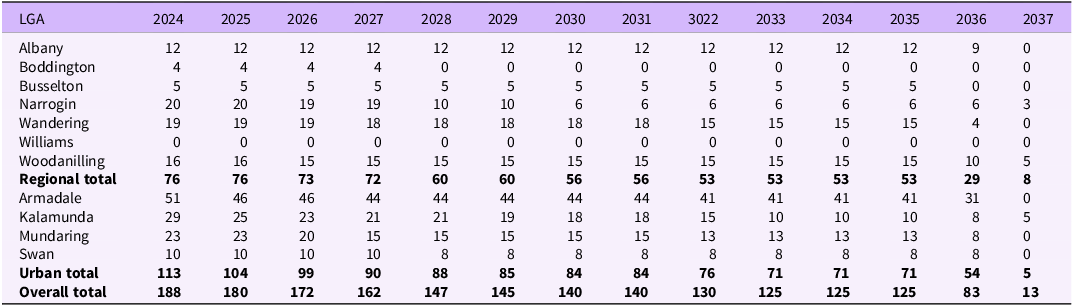
Due to high uncertainty and organizational variation regarding logistics, it is difficult to estimate resourcing requirements for completing site delimitation and to provide overall program management. Delimitation efforts, including designing and implementing a buffer area for each population, will take time and would require significant resourcing in the early years of a control program (we do not see it being possible to achieve across all sites in a single year). From our own experience and that of land managers working on C. monilifera subsp. monilifera control in WA, we estimate that at least 1,900 h of on-site surveillance time with experienced practitioners would be required to achieve extirpation and maintain containment of the 2021 extent of C. monilifera subsp. monilifera plants at each site across WA. Resourcing requirements are highest in the near term, at approximately 188 h in 2024 and then declining to 13 h in 2037 (Table 2). These time estimates assume: no missed years, no excessive plant removal or treatment requirements beyond occasional hand removal of seedlings, and future delimitation of those sites currently undefined not significantly expanding the required survey area. This time estimate does not include what would likely be significant resources to cover the removal of large plants, travel time, and the logistics and resourcing associated with running the control program.
Estimated annual surveillance hours required for the known extent of existing Chrysanthemoides monilifera subsp. monilifera sites in Western Australia until extirpation could be expected, grouped by local government area (LGA), excluding additional activities associated with deploying the management plan (e.g., travel time, logistics, adaptive management), and not factoring in possible efficiencies gained from applying improved control methods.
These resourcing estimates do not include any possible efficiencies gained from methods to enhance the depletion of the soil seedbank, which could reduce the duration and intensity of required surveying effort. Currently, the only effective method to deplete the soil seedbank is fire (Brougham et al. Reference Brougham, Cherry and Downey2006). Managed burns may be possible in isolated populations away from infrastructure but are not realistic for populations in urban environments. As the program progresses, ongoing survey data should be used to refine the efficiency and effectiveness in an adaptive management approach.
To deliver the program, we propose that three management approaches be deployed, based on the current population status and available knowledge at each site—watch, extirpation, and containment (see Batchelor et al. [Reference Batchelor, Scott and Webber2021] for specific recommendations for each of the 89 sites).
First, we recommend a “watch” approach for sites where all the available evidence indicates that the population is locally extirpated or where we have not been able to find any recent evidence of seedling recruitment for a period of 15 yr after the last known fruiting plant or if the original observation was of seedlings or juvenile plants that were weeded (Supplementary Table S2). Watch sites do not necessarily need to be surveyed annually, but because of the plant’s rapid growth, there should be a gap of no more than 2 yr. The land manager should be aware of the historical presence of C. monilifera subsp. monilifera at that site and raise an alert if a suspicious plant is found. This action could be the responsibility of the property owner or the LGA, ideally supported by a community Landcare group.
Second, we recommend extirpation for sites where the current population is either delimited or would be feasible to efficiently delimit; the seedbank has not been replenished in recent years; and terrain, access, and local vegetation allow for effective survey efforts. These sites require annual (or biennial in some instances where the risk of “resetting the seedbank” is very low) surveillance until 15 yr have elapsed from when the last known fruiting plant was found. Thirty-five sites targeted for expiration are in regional areas (Supplementary Table S3). The most feasible for extirpation are the four sites in the Albany LGA, the two sites in the City of Vasse, two sites in West Arthur LGA, and the one site in Boddington LGA (Figures 3B and 6). This strategy would tackle the easiest sites and free most of WA’s southern regions of C. monilifera subsp. monilifera. Logistically, considerable cost savings can be gained by extirpation of southern sites given the long distances involved. Thirty-seven sites are in urban areas (Supplementary Table S4). Extirpating these sites is likely to be more difficult, but priority should be given to the three sites in Swan, as control here would restrict spread northward (Figure 3C). Thirty-two of 79 sites targeted for extirpation are private residential properties, and the landholders may be unaware they even had C. monilifera subsp. monilifera on their property. The Boneseed Blitz community education campaign (run by Perth NRM, 2008 to 2018) found that property owners are not engaged in biosecurity processes or were not confident they could recognize C. monilifera subsp. monilifera as opposed to other species.
Third, we recommend containment for sites where there has been no opportunity for the current population to be delimited due to mature individuals producing seed in recent years, where delimitation survey areas are growing in extent, and where access is difficult. At these sites, delimitation should be prioritized in the short term with increasing effort to reduce local abundance (Supplementary Table S5). All containment sites are in the urban areas around Perth, particularly in the City of Armadale. The property in the City of Swan could be considered a near-term extirpation site if access can be improved to allow for a delimitation survey. The C. monilifera subsp. monilifera infestation at Wungong Regional Park and around the Roleystone suburb are the most difficult sites to survey, and the frequency of missed plants means that it is unlikely that extirpation could be achieved in the near term without considerable resourcing. However, undertaking a prescribed burn at Wungong Regional Park could significantly improve the management prognosis for this site and likely shorten the duration required to achieve delimitation and seedbank control.
Risk Mitigation and Contingency Plans
The greatest risk of failure for the eradication of C. monilifera subsp. monilifera in WA is the delimitation and long-distance dispersal risk for the Manypeaks and Wungong Regional Park populations. In 1997, a flock of starlings (Sturnus vulgaris; 43 adults and 23 juveniles) were found at Manypeaks (Woolnough et al. Reference Woolnough, Massam, Payne and Pickles2005). WA maintains a permanent control line farther to the east, with shooters preventing entry and further spread across the state. The location of these birds was just 5 km north of the current C. monilifera subsp. monilifera infestation. Starlings are well known to be very effective as Chrysanthemoides seed-dispersal vectors (Díaz Vélez et al. Reference Díaz Vélez, Ferreras, Paiaro, Traveset and Richardson2020; Gosper Reference Gosper2003; Knight Reference Knight1988; Mokotjomela et al. Reference Mokotjomela, Musil and Esler2013b), but are not currently naturalized in WA due to the border control efforts. If starling control was to cease or to be breached, then the influx of birds may well considerably change the invasion rate of weed species such as C. monilifera subsp. monilifera. As such, we recommend that the Manypeaks site of C. monilifera subsp. monilifera be prioritized for urgent management. We also recommend that the risk of increased weed spread for C. monilifera subsp. monilifera and other weeds following starling arrival be added into the risk planning for ongoing starling control efforts.
A second risk of long-distance dispersal and spread is via birds already present in WA, primarily the emu. Emus are known to be effective long-distance dispersers of other plant seeds (Calviño-Cancela et al. Reference Calviño-Cancela, Dunn, van Etten and Lamont2006) and Brougham et al. (Reference Brougham, Cherry and Downey2006) described C. monilifera subsp. monilifera seeds from emu scats. Emus are known to be present in the region of the Wungong Regional Park population and possibly other C. monilifera subsp. monilifera populations. Management plans should consider the magnitude of this specific dispersal risk. If the risk is meaningful, it would be worth undertaking viability studies on emu-egested seed.
For whatever reason, should state-level eradication of C. monilifera subsp. monilifera become unrealistic or extirpation of plants across an isolated and contained area become unfeasible, classical biological control is a contingency plan that deserves consideration. Deploying biological control is generally considered incompatible with an eradication program (Morley and Morin Reference Morley and Morin2008). For C. monilifera subsp. monilifera in WA, if an eradication program is commenced soon, then the density of plants is never likely to be sufficient to maintain a population of a given agent. Moreover, places where remaining plants are likely to be most challenging to find (e.g., some of the urban locations) are likely to have plants at very low densities with considerable barriers to agent movement between populations. However, if eradication is abandoned as a management objective, then containment is compatible with deploying biological control agents. Biological control agents are not limited by tenure boundaries and consequently may be particularly suitable for inaccessible areas. Biological control agents, being host specific, must find host plants to survive, and are very likely to be more effective at searching for plants than humans. The trade-off is that a population of weeds is likely to continue to exist if no other control methods are deployed.
Classical biological control of C. monilifera subsp. monilifera has not been attempted in WA despite more than 25 yr of research into biological control in eastern Australia. Biological control programs targeting C. monilifera subsp. monilifera have released seven arthropods— three leaf beetle species (Chyrsolina spp.), a seed fly (Mesoclanis magnipalpis), a leaf buckle mite (Aceria sp.), and two moths (Tortrix sp. and Comostoplopsis germana)—against C. monilifera subsp. monilifera in NSW, Victoria, and South Australia (Cooke Reference Cooke1994). Some established in the closely related C. monilifera subsp. rotunda, but all failed to establish on C. monilifera subsp. monilifera (except possibly the leaf buckle mite) despite multiple releases (Adair et al. Reference Adair, Morley, Morin, Julien, McFadyen and Cullen2012). If biological control was ever to be considered for C. monilifera subsp. monilifera in WA, we first recommend a thorough understanding of genetic variation in the native and introduced Australian range for C. monilifera subsp. monilifera. Such understanding would allow for the identification of source populations in the native range in South Africa that more closely match the biotypes we have in Australia (Emmett et al. Reference Emmett, Scott, Webber, Severn-Ellis and Bell2023). Second, it would be beneficial to obtain further data on predation driving failed agent establishment in eastern Australia (Adair and Edwards Reference Adair and Edwards1996) and whether or not the same drivers are present in WA. Third, research into the inoculation method of the buckle mite could help improve establishment success and dispersal ability and thus overall effectiveness as a biocontrol agent.
A Cautionary Tale
Many thousands of hours of weed control, surveillance, and community engagement have been invested in C. monilifera subsp. monilifera management by a variety of stakeholders across WA. For the first time, our synthesis has aggregated this information in a single location and made it available to inform future management. Testament to the success of past control efforts and regular surveillance is that only a small number of plants are found at many of the sites, and these are easily removed by hand weeding, with no requirement for chemical control or heavy machinery. Moreover, there have been only a limited number of new sites found since the focused work undertaken between 2006 and 2008, all through community education and awareness. It is worth noting that about 53% of the current C. monilifera subsp. monilifera infestation in WA is on land managed by the government, and this rises to 72% of C. monilifera subsp. monilifera sites in regional areas.
A cautionary example to consider in planning future C. monilifera subsp. monilifera management is the site at 77 Saunders Street in the City of Swan. There, after many years of concerted control effort, 2 yr of missed surveillance has now resulted in 50 large fruiting plants, many hundreds of seedlings, and the need for significant resourcing to get the site back under control. Effectively 9 yr of prior effort has been all but wasted. We predict ceasing the C. monilifera subsp. monilifera program in WA or even delaying the commencement of the next phase will revert population numbers to extent and abundance levels equivalent to pre-2006 (or worse) within a decade.
Supplementary material
To view supplementary material for this article, please visit https://doi.org/10.1017/inp.2024.18
Acknowledgments
We thank the Western Australian Department of Primary Industries and Regional Development (DPIRD), the South East Regional Centre for Urban Landcare (SERCUL), the Western Australian Department of Biodiversity, Conservation and Attractions (DBCA), Wagin-Woodanilling Landcare, City of Albany, Shire of Wandering, Shire of Mundaring, City of Kalamunda, City of Armadale, and City of Busselton, who have all worked with us to find and retrieve past C. monilifera subsp. monilifera data from obscure locations. We are extremely grateful to Luke McMillan (Perth NRM), Matt Grimbly (SERCUL), and Mike Clark, Julie Webber, Peter Hennig, and David Hill (DPIRD) for sharing their knowledge of past C. monilifera subsp. monilifera management in Western Australia and for contributing their time and effort to generating a solid understanding of current invasion dynamics. We thank the following people for engaging with us to provide general context on C. monilifera subsp. monilifera invasion histories in Western Australia and beyond: Barry Gibbs, Darralyn Ebsary, Alison Duggand, Brad Rayner, John Moore, Greg Keighery, Alex George, Gen Harvey, Greg Marston, Dan Friesen, and Anthea Kalazich. We thank Cat Williams (SERCUL) for assistance with fieldwork and John Moore (DPIRD) and Mariana Campos (CSIRO) for feedback on earlier versions of this paper. Finally, we thank Hillary Cherry, whose exemplary work on C. monilifera subsp. monilifera between 2006 and 2012 set the foundation for a successful management program.
Funding statement
This work was funded by CSIRO and DPIRD’s Boosting Biosecurity Defences program and made possible by the Royalties for Regions program.
Competing interests
No conflicts of interest have been declared.


 Open access

